Total Articles 196+

All Posts

Explore the latest sustainability news, innovations, insights, and industry stories from around the world.

Showing 12/196

04 Aug 2026

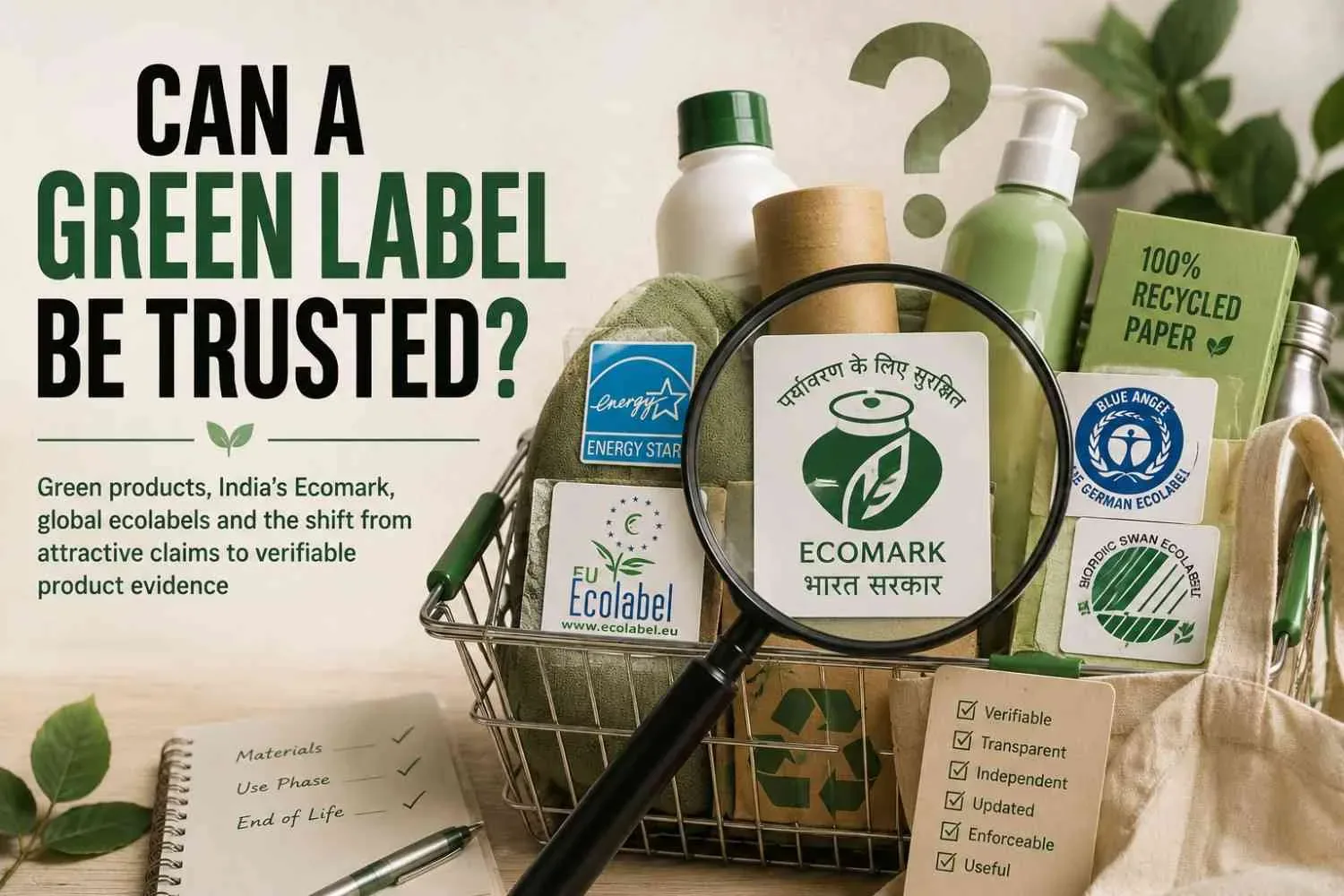
Kolkata | August 4, 2026 As eco-labels, ESG ratings and sustainability badges multiply across supermarket shelves and e-commerce platforms, consumers are finding it harder than ever to distinguish genuine environmental responsibility from sophisticated green marketing. India's evolving certification ecosystem now faces its biggest challenge- not creating more labels, but restoring trust in the ones that already exist. Quick SummaryConsumers today are surrounded by products claiming to be sustainable, eco-friendly or environmentally responsible. From government-backed certifications such as Ecomark to private ESG ratings, retailer sustainability badges and company-generated claims, environmental labels have become an important influence on purchasing decisions. Yet the rapid expansion of certification systems has also increased confusion, making it difficult for shoppers to identify which claims are independently verified and which are simply marketing tools.India is now attempting to strengthen consumer confidence through updated standards, stronger regulations against misleading advertisements and renewed attention to official certification programmes. However, experts argue that transparency, independent verification and consistent enforcement remain essential if eco-labels are to become trusted indicators rather than promotional symbols. KeywordsConsumer Eco-Labelling, Ecomark India, Greenwashing, Sustainable Products, Eco Labels, ESG Ratings, EcoVadis, S&P, ESG, Green Certification, Sustainable Consumption   Can consumers still trust the growing number of green labels, or has identifying genuinely sustainable products become more difficult than ever before? Standing in the cleaning products aisle of a supermarket, a consumer compares two bottles of liquid detergent. Both feature green packaging and environmental claims. One displays a sustainability certification, another highlights the use of recycled packaging, while a third promotes lower carbon emissions during production. Online, similar products carry additional badges such as "eco-friendly," "planet positive" or "green choice," all claiming to represent the more sustainable option.At first glance, the choice appears straightforward-pick the product with the green label. But determining which claim is credible has become far more complicated. Over the past decade, sustainability has shifted from a niche concern to a major factor influencing consumer purchasing decisions. Manufacturers across sectors ranging from FMCG and electronics to automobiles and batteries are gradually marketing products through claims of lower emissions, recyclable materials, responsible sourcing and improved resource efficiency. Retailers and e-commerce platforms have introduced their own sustainability badges, while ESG rating agencies, certification bodies and independent assessors continue expanding their influence across global supply chains. The result is a marketplace crowded with environmental claims.Behind these labels, however, lies a fragmented certification ecosystem where government-backed standards coexist with private certifications, corporate declarations and voluntary rating systems. While some labels are supported by independent verification and transparent assessment methods, others rely largely on company disclosures or proprietary frameworks that remain difficult for consumers to understand or verify. This growing complexity has contributed to what many experts describe as a widening certification trust deficit. Consumers are becoming more conscious of sustainability and are willing to choose environmentally responsible products. At the same time, they expect clear evidence that these claims are genuine. Businesses investing in credible sustainability practices also face a challenge, as their products often compete alongside others making similar environmental claims with far less transparency. Without stronger verification systems and clearer standards, distinguishing authentic sustainability from effective marketing is becoming progressively more difficult. For India, this has emerged as a significant policy priority. As regulators strengthen consumer protection, revive official eco-labelling programmes and promote more sustainable production practices, the objective is no longer simply encouraging businesses to adopt greener practices. The real challenge is ensuring that every environmental claim consumer encounters is credible, transparent and capable of standing up to independent scrutiny. In a marketplace crowded with sustainability claims, trust may ultimately become the most valuable certification a product can carry. The Green Label Dilemma Long before sustainability became a mainstream marketing strategy, India introduced its own official environmental certification system. Launched in 1991 by the Ministry of Environment, Forest and Climate Change (MoEFCC), the Ecomark scheme was created to help consumers identify products with a lower environmental impact throughout their life cycle. While environmental standards were developed under the scheme, the Bureau of Indian Standards (BIS) was responsible for ensuring that certified products also met the required quality benchmarks. The objective was straightforward. A single, government-backed certification would enable consumers to recognise environmentally responsible products without having to interpret complex sustainability claims or corporate environmental reports.Despite this vision, Ecomark never achieved widespread recognition. Industry participation remained limited, public awareness was low and relatively few products carried the certification. For most consumers, the label was rarely seen on store shelves, while many businesses found greater commercial value in promoting their own environmental claims or obtaining internationally recognised certifications. The sustainability landscape has changed considerably since then. Today's products often carry multiple environmental claims at the same time, ranging from "recyclable packaging" and "responsibly sourced" to "carbon conscious," "plastic neutral" and "green product." Retailers and e-commerce platforms have also introduced their own sustainability badges, while brands use environmental messaging as a key differentiator in a highly competitive marketplace.For consumers, however, the growing number of labels has made purchasing decisions more complicated rather than being more transparent. Unlike government-backed certification systems, private eco-labels operate under diverse standards, assessment methods and verification processes. Some are supported by rigorous third-party audits, while others rely primarily on information provided by companies themselves. Even globally recognised ESG assessment platforms such as EcoVadis and S&P Global ESG Scores evaluate the overall sustainability performance of companies rather than certifying the environmental credentials of individual products. This distinction is significant but frequently misunderstood. A company with strong ESG performance does not necessarily mean that every product it sells meets the same environmental standards. Likewise, a retailer's sustainability badge may not undergo the same level of independent verification expected under an official certification programme. Recognising these concerns, the Government of India has initiated efforts to revitalise the Ecomark scheme by expanding product categories, simplifying certification procedures and updating environmental criteria to reflect evolving sustainability priorities. The broader objective is not merely to certify more products, but to establish a credible national benchmark that consumers can recognise and trust. Whether the renewed Ecomark can establish itself in a marketplace crowded with private sustainability labels remains uncertain.Its revival, however, highlights a far broader issue. In a marketplace where environmental claims are becoming a key factor in consumer decisions, the value of a certification will depend not only on the standards it represents, but also on the trust it is able to earn. Official vs Private: Understanding Green Labels Government-backed   Private / Commercial Ecomark (BIS & MoEFCC)     EcoVadisTransparent public criteria    Proprietary assessment frameworksNational certification    Corporate ESG ratingsProduct-focused    Company-focused Regulatory oversight Third-party or company-led verification When Sustainability Becomes a Marketing Strategy As sustainability becomes a growing priority for consumers, the value of being perceived as environmentally responsible has never been higher. Across industries, terms such as eco-friendly, natural, carbon neutral, planet positive and environmentally responsible have become common features of product packaging and advertising. For businesses, these claims offer a competitive advantage in a market where consumers are becoming more conscious of environmental issues. For consumers, however, they raise a fundamental question: who verifies whether these claims are genuine? The issue has gradually moved beyond environmental discussions and become a matter of consumer protection.Recognising that vague or exaggerated sustainability claims can influence purchasing decisions just as much as misleading claims about price or quality, the Central Consumer Protection Authority (CCPA) has stepped up its scrutiny of environmental advertising. Businesses are now expected to support green claims with credible evidence rather than relying on broad marketing language. The challenge is particularly evident on e-commerce platforms. Many online marketplaces now feature sustainability badges, "green choice" labels and eco-friendly filters to help consumers identify environmentally responsible products. While these initiatives encourage sustainable consumption, the criteria behind these labels are often unclear. Consumers may see that a product carries a sustainability badge, but they rarely know who awarded it, the standards used for assessment or whether the claim has been independently verified. This lack of transparency has fuelled growing concerns over greenwashing. Greenwashing occurs when businesses exaggerate or misrepresent the environmental performance of their products. In some cases, marketing highlights a single positive attribute such as recyclable packaging- while overlooking the much larger environmental impacts associated with manufacturing, transportation or disposal. In others, broad claims such as "green," "eco-safe" or "environmentally friendly" are promoted without recognised certification or measurable evidence.Environmental organisations warn that the consequences extend well beyond consumer confusion.Groups such as Toxics Link and Chintan have repeatedly argued that weak verification systems place genuinely sustainable businesses at a disadvantage. Companies investing in cleaner production, responsible sourcing and improved waste management often find themselves competing alongside products making similar environmental claims without meeting comparable standards. When verified and unverified claims appear equally credible, consumer confidence in eco-labels and certification systems begins to erode. The challenge becomes even greater in sectors such as electronics, batteries and automobiles, where environmental performance depends on the entire product life cycle rather than manufacturing alone. Factors such as durability, repairability, recycling infrastructure and end-of-life management play a critical role in determining a product's overall sustainability. A product promoted as environmentally responsible during production may still create significant environmental impacts if effective collection, recycling and producer responsibility systems are absent. As a result, the conversation is gradually shifting from environmental marketing to corporate accountability. Experts argue that sustainability claims should be supported by the same level of transparency expected in financial reporting. Clear assessment methodologies, independent verification, publicly available standards and regular audits are becoming essential for maintaining the credibility of eco-labels. Without stronger oversight, the growing number of environmental claims risks achieving the opposite of their intended purpose- not strengthening consumer confidence, but undermining it. Greenwashing Checklist: Five Questions Every Consumer Should Ask ✔ Who issued the certification?Government, independent third party or the company itself?✔ Is the assessment publicly available?Can consumers understand how the product was evaluated?✔ What exactly is being claimed?The entire product—or only one environmental attribute?✔ Has the claim been independently verified?Or is it based only on company disclosures?✔ Is the certification regularly reviewed?Environmental performance changes over time.  Takeaway: A green label is only as credible as the evidence behind it. From Claims to Credibility As sustainability claims become a stronger influence on consumer decisions, experts argue that eco-labels should meet the same standards expected of financial disclosures- clear methodologies, transparent reporting and independent verification. Without these safeguards, even credible certification systems risk losing public trust.This remains one of the biggest challenges for India's eco-labelling ecosystem.Government-backed certifications such as Ecomark follow publicly defined environmental criteria, with compliance linked to standards developed by the Bureau of Indian Standards (BIS). The framework is transparent, product-specific and subject to regulatory oversight. Many private certifications and ESG ratings, however, rely on proprietary assessment methods that are not always fully disclosed. While these systems may be rigorous, the basis on which products or companies are evaluated is often difficult for consumers to understand.The distinction is especially important when comparing product certifications with corporate sustainability ratings.Experts also point to a wider implementation gap.Companies may announce ambitious sustainability targets or highlight recyclable packaging and lower emissions, but consumers often receive little information on whether these commitments have been independently verified or consistently maintained. Sustainability reports frequently showcase progress through percentages and intensity-based indicators, while providing limited visibility into overall environmental impacts or areas where targets remain unmet.Environmental researchers argue that meaningful sustainability claims require greater transparency. Consumers need to know what has been measured, how it has been assessed and who has verified the findings. They also need clarity on whether a certification evaluates the entire product life cycle or only selected environmental attributes.As India continues strengthening its sustainability framework, experts believe the priority should not be creating more eco-labels, but making existing ones easier to understand, compare and trust. Ultimately, an eco-label can support responsible consumption only when the standards behind it are transparent, independently verified and consistently enforced. Evidence at a Glance Question     Why It Matters Who certifies the product?Government, third party or company? Is the methodology public?    Transparency builds trust. Product or company assessment? ESG ratings and product certifications are different.Independent verification?Reduces greenwashing risk. Regular review and audits?    Ensures claims remain valid over time.            Key takeaway: A credible green label should explain not just what it certifies- but also how it was certified.   The Trust Behind the Label The rise of sustainable consumption has fundamentally changed the way businesses compete. Today, products are evaluated not only on price and performance but also on their environmental credentials. This reflects a positive shift, signalling that sustainability is moving from a niche concern to a core business priority.At the same time, the growing number of eco-labels has created a new challenge.As environmental claims become more common, it is becoming difficult for consumers to distinguish genuinely sustainable products from well-crafted marketing. Government-backed certifications, private ESG ratings, retailer sustainability badges and company-led environmental claims often appear side by side, despite being based on very different standards, assessment methods and levels of verification.Ultimately, the issue is not the number of labels, but the trust behind them.India's efforts to strengthen Ecomark, tighten consumer protection guidelines and increase regulatory oversight reflect an important step towards improving transparency. However, regulation alone cannot build consumer confidence. Businesses must communicate environmental claims responsibly, certification bodies need stronger disclosure and independent verification, and digital marketplaces should clearly explain the basis of their sustainability labels.Consumers, too, have an important role to play. As environmental considerations influence purchasing decisions, informed choices become just as important as responsible production. An eco-label should help consumers make better decisions- not leave them questioning every claim on a product's packaging. As India's sustainability journey gathers pace, the real measure of success will not be the number of green labels in the marketplace, but the confidence consumers place in them. In the end, trust will remain the most valuable certification of all. Primary Sources: 1.    Bureau of Indian Standards (BIS) – Ecomark Certification Schemehttps://www.bis.gov.in/ 2.    Ministry of Environment, Forest and Climate Change (MoEFCC) – Ecomark & Environmental Policies https://moefcc.gov.in/ 3.    Central Consumer Protection Authority (CCPA) – Guidelines for Prevention and Regulation of Greenwashing and Misleading Environmental Claimshttps://consumeraffairs.nic.in/ 4.    Central Pollution Control Board (CPCB) – Waste Management, EPR & Environmental Compliancehttps://cpcb.nic.in/ 5.    EcoVadis – Sustainability Ratings Methodologyhttps://ecovadis.com/ 6.    S&P Global Sustainable1 (ESG Scores & CSA Methodology)https://www.spglobal.com/sustainable1/ 7.    Toxics Link – Research on Green Claims, Packaging, Waste and Circular Economyhttps://toxicslink.org/ 8.    Chintan Environmental Research and Action Group – Sustainable Consumption, Waste & Circular Economyhttps://chintan-india.org/  ...Read more

04 Aug 2026

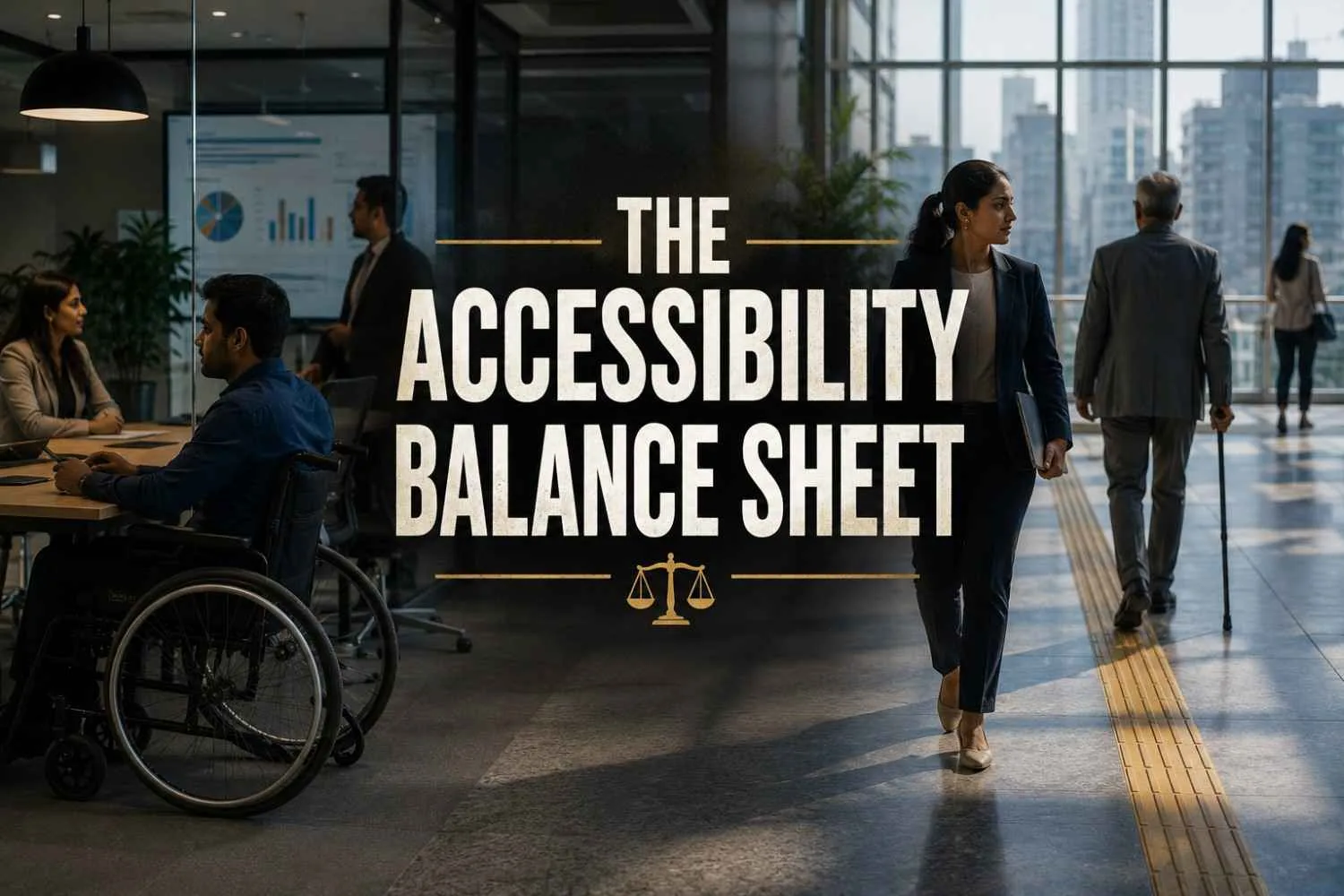
Why Disability Inclusion Must Become India Inc.’s Next Boardroom ESG KPI A ramp, a recruitment drive or an annual award cannot prove inclusion. The real test is whether employees with disabilities are hired, paid fairly, retained, promoted, protected during climate shocks, and able to secure benefits and remedies without fighting the system. BY PROF. UJJWAL K. CHOWDHURY  |  MAGAZINE FEATURE  |  INDIA, AUGUST 2026 “Inclusion should not be viewed as charity.”— Rajesh Aggarwal, at the launch of the CII Award for Excellence in Disability Inclusion, December 20241Accessibility is no longer a feel-good CSR initiative. It is a test of governance maturity, workforce quality, digital competence, operational resilience and the integrity of ESG reporting.Short SummaryThis feature examines CII-style employer awards, physical and digital audits, the hiring-versus-retention gap, disability-inclusive climate resilience, and the implications of ESIC and India’s labour-code transition. Corporate cases are used to test disclosure quality—not to confer unqualified praise.KeywordsDisability inclusion; workplace accessibility; ESG metrics; BRSR; reasonable accommodation; inclusive employment; digital accessibility; climate resilience; ESIC; labour codes; corporate governance.Hashtags #DisabilityInclusion  #WorkplaceAccessibility  #ESG  #SocialSustainability  #InclusiveEmployment  #BRSR  #ClimateJustice  #BoardroomKPI  #IndiaIncEDITORIAL EVIDENCE NOTECorporate examples below rely on official releases and public sustainability disclosures. A missing metric is identified as a disclosure gap, not proof of poor performance. Disability headcounts often depend on voluntary self-disclosure and may understate actual prevalence. The evidence standard used throughout is outcomes over intentions.THE “S” IN ESG HAS A MISSING DENOMINATORIndia’s sustainability vocabulary is fluent in carbon intensity, water positivity, renewable energy and net-zero targets. It remains far less exact about who can enter a workplace, use its systems, build a career and leave with dignity. That imbalance is no longer defensible.SEBI’s Business Responsibility and Sustainability Reporting framework has created an important starting point. It asks listed companies to disclose employees and workers with disabilities, and it separately seeks information on turnover, wages, welfare benefits, accessibility and grievances. The weakness is that many outcome tables are not disability-disaggregated. A company can report a headcount while investors still cannot see whether those employees are underpaid, concentrated at junior levels, denied benefits or leaving faster than comparable colleagues.5Accessibility must therefore become a boardroom KPI: owned by the board or a designated committee, reviewed quarterly, linked to executive accountability and tested by independent evidence. The central question is not, “Do we have a disability policy?” It is, “At every stage of work, where are people being filtered out—and what did management do about it?”AWARDS CAN MOVE MARKETS—IF THEY REWARD PROOFThe Confederation of Indian Industry has worked on disability inclusion through employer sensitisation, recruitment support, workplace guidance and the India Business and Disability Network. Its Award for Excellence in Disability Inclusion, launched in December 2024, gives the market something it badly needs: a visible benchmark. The 2026 framework recognises accessibility, disability-inclusive culture, inclusive recruitment and overall “Champion Company” performance, with separate eligibility thresholds for large enterprises and MSMEs.12Awards matter because reputation affects talent, procurement and investor confidence. But they become ESG instruments only when they reward proof. A credible CII-style award should score workforce denominators; wage and promotion parity; one- and two-year retention; accommodation response times; audit closure; benefit access; disability-inclusive procurement; grievance remedies; emergency preparedness; and actual expenditure against approved budgets.CASE STUDYPersistent Systems: recognition backed by an audit trailPersistent Systems received the 2026 CII award in the “Best Employer—Physical Accessibility” category. Its public account points to independent audits, an accessibility benchmark at its Pune facility, alignment with India’s Harmonised Guidelines, digital platforms designed toward WCAG standards, and governance ownership.The next step for the awards ecosystem is tougher verification: random site visits, confidential interviews with disabled workers without managers present, public scoring bands and evidence that audit findings were closed—not merely identified. Recognition should open the evidence file, not replace it.10 AUDIT THE EMPLOYEE JOURNEY, NOT JUST THE ENTRANCEA workplace can have an accessible entrance and still be institutionally inaccessible. A physical audit must follow the full employee journey: transport and parking; security and reception; paths, doors and lifts; tactile and visual signage; workstations and factory floors; meeting rooms, canteens, washrooms and medical rooms; employee housing; and emergency exits.In industrial settings, the audit must test whether protective equipment, alarms, control panels, evacuation chairs and safety instructions work for people with mobility, visual, hearing, cognitive and neurodivergent needs. Maintenance matters as much as design: a compliant ramp blocked by motorcycles is not accessible.The digital audit begins before employment. It must test the careers page, application form, applicant-tracking system, online assessment, interview platform and document-upload process. After joining, it should cover HRMS, attendance, payroll, leave, insurance, learning, collaboration, travel booking, procurement, appraisal and grievance portals. Automated scanners can flag technical defects, but they cannot substitute for usability testing by people with varied disabilities.For the financial sector, this is now regulatory territory. SEBI’s 2025 circular suite made digital accessibility mandatory for regulated entities, placed review responsibility with the managing director, managing partner or proprietor, required a senior nodal officer, and called for accessible grievance channels and baseline ICT standards. Banks, brokers, exchanges, mutual funds and fintech firms should treat accessibility as an employee right, a customer right and a governance risk at the same time.34CASE STUDYInfosys: a number that opens the questionInfosys reported 1,075 employees with voluntarily disclosed disabilities in FY2025–26. Against a total headcount of 328,594, that is about 0.33 per cent. The company also reports accessibility learning, an InfyAbility employee network with more than 3,900 members, accessibility living labs and accommodation support.This is useful disclosure because it gives a denominator and acknowledges voluntary disclosure. It also reveals the next frontier: applicant-to-hire conversion, probation completion, 12- and 24-month retention, pay parity by comparable grade, promotions, high-value assignments, accommodation requests, and remedies after disability-related grievances. Overall attrition cannot answer whether disabled employees are leaving at a higher rate.67 CASE STUDYTata Steel: inclusion on the industrial floorTata Steel’s FY2025–26 consolidated BRSR reported 149 employees with disabilities out of 73,215 employees—about 0.20 per cent—and separately identified 118 permanent workers with disabilities. Only nine of the 149 employees were women. The company clearly stated that European subsidiaries were excluded because those operations do not collect the data under local privacy practices.That boundary note is exemplary: it prevents a partial figure from masquerading as universal coverage. Tata Steel also describes modifications to workstations and washrooms, tailored laptops and assistive software or hardware, temporary accommodation during onboarding and workplace buddies. The unanswered ESG questions concern disability-specific wages, retention, injuries, promotion, grievance remedies and representation in production, engineering, logistics, maintenance and supervisory roles.8 HIRING MAKES HEADLINES; RETENTION PROVES INCLUSIONRecruitment drives are visible and countable. Retention is quieter—and more revealing. A serious dashboard tracks the complete funnel: applications → accessible assessment → interview → offer → acceptance → joining → probation completion → 12-month retention → 24-month retention → promotion → internal mobility. Each stage should be segmented by disability category, gender, location, employment status, occupational group and grade, with privacy safeguards and minimum reporting thresholds.The most common barriers often appear after onboarding: inaccessible internal software, delayed reasonable accommodation, transport problems, shift allocation, exclusion from travel or client-facing work, weak mentorship, biased appraisal and an absence of career pathways. Disability inclusion fails through everyday management decisions long before it appears in a legal complaint.TCS offers useful architecture. Its ENABLE Disability and Allies Network, launched in 2017, creates an employee forum, while PACT brings parents, allies and caregivers into the inclusion ecosystem. TCS also publicly emphasises accessible recruitment, workplace design, assistive technology and reasonable accommodation. Wipro, ITC, JSW Steel and major banks should be evaluated against the same outcome test: not whether policies exist, but whether disabled employees remain, advance and receive comparable rewards.9THE INCLUSION INFRASTRUCTURE: FROM MITTI CAFÉ TO V-SHESHInclusive employment is not merely a placement transaction. Mitti Café’s model combines experiential training, café and catering jobs, customer interaction, visibility and dignity. It reports more than 50 cafés in institutional and public spaces and thousands of persons with disabilities skilled, while its support model includes health insurance, food and accommodation. The transferable corporate lesson is that retention may require transport, accessible housing, coaching, nutrition, family engagement or health support—not only an appointment letter.11V-Shesh represents another part of the infrastructure. It says it supports 117 leading companies through recruitment, pre- and post-hiring services, sensitisation, policy advice, accessibility services and work trials, and reports more than 2,000 jobs facilitated. Such intermediaries help employers redesign roles instead of rejecting candidates against inherited job descriptions.12National Restaurant Association of India chapters and hospitality groups could scale common accessible-recruitment protocols, model kitchens and hotels, shared trainers, accessible customer-service standards and cross-company apprenticeships. Yet every partnership must publish conversion and retention: how many people were trained, how many received paid jobs, what they earned, how many remained, which benefits they accessed and what happened when difficulties arose.THE OVERLOOKED “E”: CLIMATE RESILIENCE THAT DOES NOT ABANDON PEOPLEA heatwave, flood, cyclone, power failure or transport shutdown does not affect every worker equally. Employees using wheelchairs, hearing aids, powered mobility equipment, ventilators, screen readers, medication refrigeration or caregiver support face risks that conventional business-continuity plans often fail to see.The evidence is alarming. UNDRR’s global survey found that only a small minority of local disaster-risk-reduction plans addressed the specific needs of persons with disabilities, while most respondents reported no participation in community-level decision-making. In India, CEEW’s 2025 heat-risk assessment found 57 per cent of districts—home to 76 per cent of the population—at high to very high heat risk. CEEW’s framework explicitly treats disability and chronic conditions as vulnerability factors. WRI India’s work on industrial transition similarly warns that green transitions do not automatically deliver inclusion without structural change.131415A disability-inclusive corporate resilience plan needs multimodal warnings using sound, text, vibration, visual signals and plain language; accessible evacuation maps, exits, drills and refuge areas; evacuation chairs and trained responders; backup electricity for assistive and medical devices; accessible shelters, transport and temporary accommodation; heat-adjusted shifts and rest periods; remote-work options during severe weather; continuity of medication and caregiver access; and equal protection for contract and outsourced workers.Disabled employees must co-design and test these systems. CSE, WRI India, CEEW and Climate Policy Initiative India can widen corporate climate-risk methodologies; IiAS, InGovern and independent academics can test board ownership, disclosure integrity and incentives. The principle is unforgiving: a climate plan that cannot protect the most exposed employee is not a resilient plan.LABOUR CODES AND ESIC: COVERAGE MUST BECOME VISIBLEIndia’s four labour codes took effect on 21 November 2025, reshaping workforce classification, social-security administration, contractor governance and reporting systems. For disability inclusion, classification is material because people can disappear between the principal employer’s payroll, staffing firms, contractors, apprenticeships, fixed-term work and platform arrangements.16Boards should receive disability-disaggregated data for permanent and fixed-term employees, permanent and contract workers, apprentices, temporary and outsourced personnel, and gig or platform workers where relevant. A consolidated headcount that excludes the most precarious categories can make inclusion look stronger than it is.ESIC is an essential protection but should not be confused with an inclusion policy. Its permanent-disablement benefit can provide lifelong payments linked to loss of earning capacity after an employment injury; permanent total disablement is generally paid at 90 per cent of average daily wages. That protection does not replace accessible recruitment, reasonable accommodation, career progression or freedom from discrimination.17The ESG test is practical: among eligible workers, how many are registered for ESIC, PF and insurance; how many claims were filed and accepted; how long settlement took; whether contractors deposited contributions; whether assistance was available in accessible formats; and what remedy followed a denial. “Covered as per law” is not evidence of access.THE BOARDROOM ACCESSIBILITY SCORECARDA credible dashboard should contain eight linked measures. It should reach the board at least quarterly; material failures should enter the annual report; and remuneration committees should consider whether senior executives delivered agreed outcomes.#KPIEVIDENCE THE BOARD SHOULD SEE1REPRESENTATIONAbsolute number and percentage of persons with disabilities; voluntary-disclosure rate; segmentation by gender, grade, site, employment status and occupational category.2EMPLOYMENT OUTCOMESApplication-to-interview and interview-to-hire conversion; probation completion; 12- and 24-month retention; promotion; internal mobility; disability-specific exit reasons.3PAY & BENEFITSMedian fixed and variable remuneration against comparable work; insurance, ESIC, PF, leave, transport, assistive devices and caregiver provisions.4ACCOMMODATIONRequests received, approved, rejected and pending; median closure time; spend; employee satisfaction; independent appeal route.5PHYSICAL & DIGITAL ACCESSPercentage of sites and critical systems independently audited; barriers by severity; closure and re-test rates; overdue actions.6VOICE, GRIEVANCE & REMEDYConfidential worker interviews without management present; complaints by issue; substantiation; corrective action; compensation; non-retaliation; recurrence.7CLIMATE & EMERGENCY RESILIENCEAccessible warnings and drills; evacuation readiness; backup power; heat and severe-weather protocols; remote-work continuity; contractor coverage.8MONEY, BOUNDARIES & ASSURANCEApproved accessibility capex and opex; money actually spent; baseline year; reporting boundary; methodology; absolute and intensity results; independent assurance scope.REGULATORS, BANKS, AUDITORS: THE ACCOUNTABILITY CHAINSEBI, MCA, RBI, the Ministry of Finance and the stock exchanges can drive convergence through stronger disability-disaggregated indicators, accessible filing and investor platforms, financial-sector enforcement, public-sector-bank leadership and credible assurance standards. The BRSR architecture should evolve from “how many?” to “what happened to them?”Audit firms and ESG-data providers must stop treating a policy, a ramp or a “yes” response as sufficient evidence. Assurance should reconcile payroll, HR, grievance, procurement, facility, IT and benefits data; test a sample of sites and systems; interview workers without management; and verify both approved budgets and money actually spent. Absolute results must be shown alongside intensity measures, because a better percentage can hide a shrinking denominator.Infosys, TCS, Wipro, ITC, Tata Steel, JSW Steel and large banks have the scale to establish sector benchmarks. CII-style awards can accelerate competition. Mitti Café, V-Shesh, organisations of persons with disabilities and disability-led experts can supply implementation intelligence. But persons with disabilities must remain the primary witnesses, auditors, designers and decision-makers—not beneficiaries photographed for annual reports.ACCESSIBILITY IS ENTERPRISE QUALITYThe next phase of disability inclusion will not be won by compassionate language. It will be won by better systems: recruitment that does not reject assistive technology; software that works with a screen reader; managers who deliver accommodations on time; factories that evacuate every worker; benefits that can actually be claimed; and grievance mechanisms that produce remedy without retaliation.A truly accessible company is easier to enter, safer to work in, simpler to transact with and more resilient under stress. It identifies process defects that inconvenience everyone, protects scarce talent, strengthens customer access and exposes governance blind spots before they become litigation, reputational damage or operational failure.Accessibility is not a CSR footnote. It is a balance-sheet issue, a resilience issue and evidence of management quality. The ramp now leads to the boardroom—and the board should be accountable for whether it reaches the door.SELECTED EVIDENCE BASE1. Confederation of Indian Industry: Launch of CII Award for Excellence in Disability Inclusion, 18 December 2024. 2. CII India Business and Disability Network: Award for Excellence in Disability Inclusion—2026 categories and eligibility. 3. Securities and Exchange Board of India: Mandatory compliance by all regulated entities under the RPwD Act, circular dated 31 July 2025. 4. SEBI: Compliance Guidelines for Digital Accessibility, circular dated 25 September 2025. 5. SEBI: Business Responsibility and Sustainability Reporting by listed entities, circular dated 10 May 2021. 6. Infosys: ESG Report 2025–26: social inclusivity, accessibility and voluntary disability disclosure. 7. Infosys: Three-year IFRS data sheet, including FY2025–26 employee headcount. 8. Tata Steel: Business Responsibility and Sustainability Report 2025–26. 9. Tata Consultancy Services: DEI framework, ENABLE and PACT; disability hiring and accessibility guidance. 10. Persistent Systems: CII Award for Excellence in Disability Inclusion—official release. 11. Mitti Café: Employment, training and inclusive café model. 12. V-Shesh: Workforce and workplace inclusion services. 13. UNDRR: Global Survey Report on Persons with Disabilities and Disasters, 2023. 14. CEEW: District-level heat-risk assessment for India, May 2025. 15. WRI India: Challenges and barriers to a fair and equitable transition in India’s SME sector, April 2026. 16. Ministry of Labour & Employment: Year End Review 2025: four labour codes effective from 21 November 2025. 17. Employees’ State Insurance Corporation: ESI Scheme benefits and Permanent Disablement Benefit.   ...Read more

04 Aug 2026

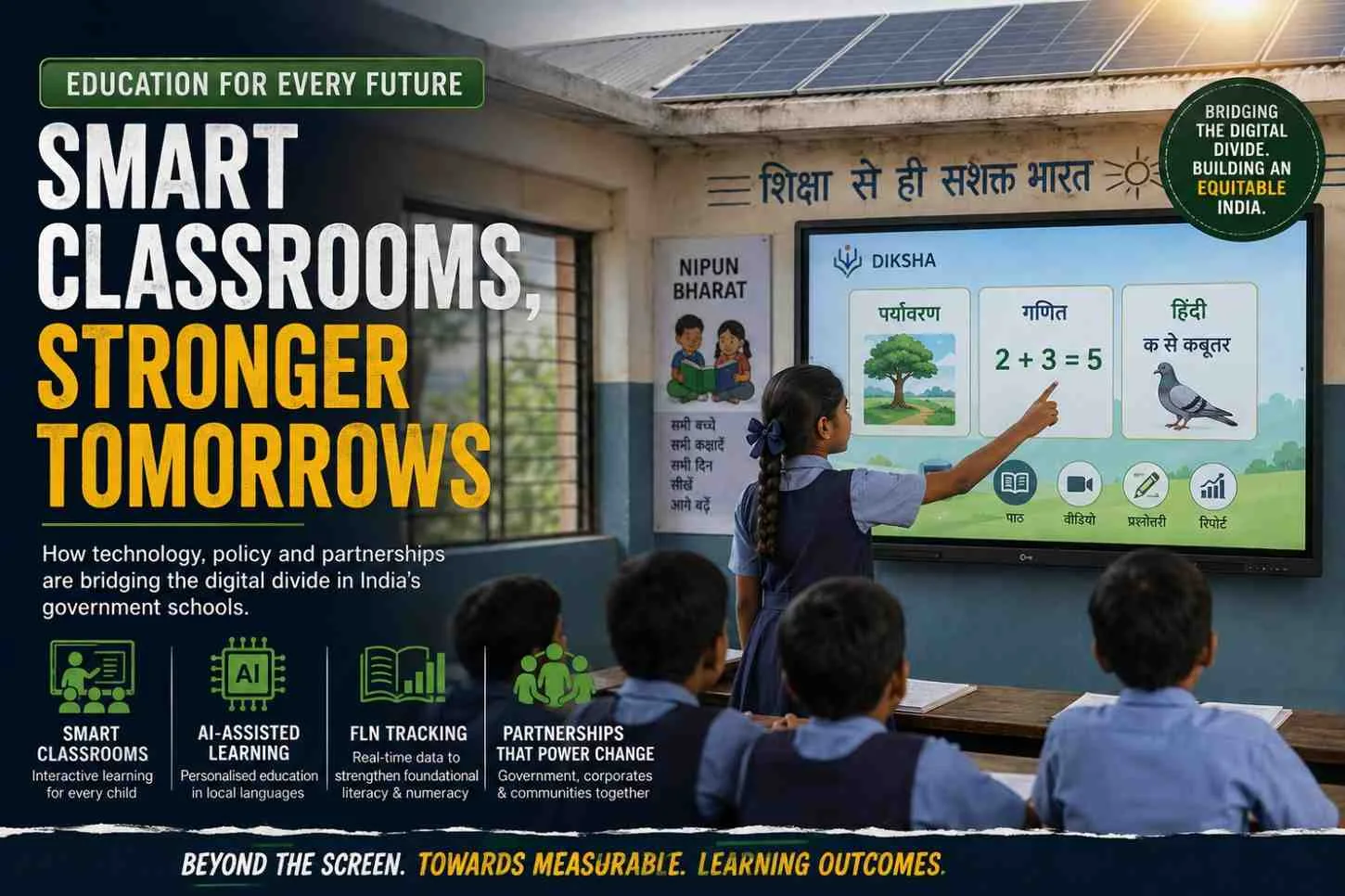
Kolkata | August 3, 2026 As India expands digital classrooms into government schools, the real challenge is no longer connecting villages to technology- but ensuring technology actually improves learning. From AI-powered lessons in regional languages to solar-powered classrooms and foundational literacy tracking, the country's digital education push is entering a decisive phase where infrastructure, teacher readiness and measurable outcomes matter more than announcements. Quick SummaryIndia's digital education journey is entering a new chapter. Classrooms are gradually moving beyond blackboards as smart technologies, AI-enabled learning platforms and digital assessment tools become part of everyday teaching. Backed by governments, private organisations and non-profits, these initiatives are expected to strengthen learning outcomes while expanding educational opportunities for students in rural and underserved communities.Yet technology alone cannot close the learning gap. Its impact depends on reliable electricity, stable internet connectivity, well-trained teachers, quality regional-language content, regular maintenance and continuous evaluation of student progress. As India works towards a more inclusive education system, the focus is moving beyond digital access to a more important goal-ensuring that every technological investment delivers measurable improvements in learning. KeywordsEdTech India, Digital Classrooms, Government Schools, Rural Education, Foundational Literacy and Numeracy, NIPUN Bharat, AI in Education, Smart Classrooms, Digital Learning, Education Technology    Can technology truly bridge India's rural education divide- or does meaningful learning still depend on everything beyond the screen? Shortly after sunrise, children begin arriving at a government primary school in a remote village of Madhya Pradesh. Some have walked several kilometres through fields, carrying well-used schoolbags and notebooks. As they settle into their classroom, a smart display comes to life, using colourful animations to explain basic mathematics in Hindi. For a moment, the familiar blackboard gives way to an entirely different way of learning. For many of these students, it is their first experience inside a digital classroom. The transformation is difficult to ignore. Government schools that once struggled with limited infrastructure are now introducing interactive lessons, AI-powered learning applications, digital attendance systems and online educational resources. Across India, digital classrooms have become a defining image of education reform and technological progress.Yet behind this visible transformation lies a far more challenging question: is digital access translating into better learning? Technology has the potential to reshape education-but only when the basics are already in place. Smart boards require electricity, AI-powered platforms depend on stable internet connectivity, and digital devices remain underutilised without confident, well-trained teachers. More importantly, no technological innovation can replace the foundational literacy and numeracy skills that every child needs to learn effectively. This is the challenge confronting India's education system today. The discussion has moved well beyond introducing technology into classrooms. The real question now is whether digital investments are improving what matters most- how well children learn or whether schools are becoming more technologically equipped without becoming more educationally effective. The reason this question matters is the sheer scale of India's digital education ambition. With more than 250 million school-going children and one of the world's largest public education systems, the country is using technology not simply to modernise schools, but to bridge educational inequalities that have existed for generations. Government initiatives such as Digital India, PM eVIDYA, DIKSHA, NIPUN Bharat and the National Education Policy (NEP) 2020 have accelerated the spread of digital learning. Alongside these efforts, corporate CSR programmes, educational foundations and technology companies are bringing smart classrooms, AI-powered learning platforms and teacher training to thousands of government schools. For millions of children in rural India, these initiatives have expanded access to educational resources that were once concentrated in better-equipped urban classrooms. The experience so far, however, points to a simple reality: technology can support education, but it cannot transform it on its own. The future of digital education will not be shaped by technology alone. Its real impact will depend on whether digital tools strengthen teaching, respond to local needs and help every child learn more effectively.As India builds more digitally enabled classrooms, the success of this transformation will not be reflected in the number of smart boards or tablets deployed. It will be seen in classrooms where learning improves, educational gaps narrow and every child is given a fairer opportunity to succeed. Government's Digital Push: From Access to Learning OutcomesThe pandemic did not introduce India to digital education, but it changed its trajectory.When classrooms fell silent in 2020, millions of students were abruptly disconnected from formal learning. The impact was especially severe in rural India, where limited access to smartphones, internet services and reliable electricity left many children without any meaningful alternative to classroom teaching. In contrast, many students in urban areas were able to continue learning online. The experience fundamentally reshaped the country's approach to digital education, turning a gradual reform into an urgent national priority. The experience of the pandemic reinforced the government's belief that digital infrastructure would become an essential part of India's education system. Rather than allowing technology to remain an emergency alternative, policymakers began embedding it into long-term classroom reforms. The National Education Policy (NEP) 2020 placed digital learning, teacher capacity building and educational technology at the centre of this transformation. Programmes such as DIKSHA and PM eVIDYA expanded digital resources for both students and teachers, while dedicated educational television channels helped extend learning to households with limited internet access. Yet one important lesson soon became clear: digital content alone could not solve India's learning challenges. Long before the pandemic, national assessments had revealed that many children in primary schools were unable to achieve basic reading and arithmetic skills despite attending school regularly. The assessments revealed that the real challenge was not simply making classrooms digital, but ensuring that every child possessed the foundational skills needed to benefit from them. This led to a greater emphasis on Foundational Literacy and Numeracy (FLN), ensuring that every child can read with understanding and perform basic mathematical operations by the end of Grade 3. To achieve this, the government launched NIPUN Bharat in 2021, placing foundational learning at the centre of education reforms. Unlike many earlier programmes that focused largely on expanding access, NIPUN Bharat prioritised measurable learning outcomes. States were encouraged to use digital tools to track student progress, identify learning gaps early and provide timely academic support instead of waiting for annual examinations. The emphasis shifted from using technology to deliver education to using it to understand, monitor and improve how students learn.Digital monitoring is gradually becoming a part of classroom teaching across several states. Teachers now use mobile applications and digital dashboards to record assessments, monitor student progress and identify children who may need extra support, while education departments rely on real-time data to guide interventions more effectively. The challenge, however, lies beyond data collection. Education researchers emphasise that digital information creates value only when it leads to timely action and measurable improvements in student learning. A digital dashboard may indicate that a child is unable to read a simple paragraph, but it cannot reveal the reasons behind that learning gap. Irregular attendance, teacher shortages, language barriers, limited classroom support and socio-economic challenges often remain hidden behind the data. Unless these underlying issues are addressed, experts warn that digital monitoring could become an exercise in collecting information rather than improving education. The challenge is even more pronounced in rural India, where conditions differ widely across districts. While some government schools have introduced smart classrooms supported by reliable internet connectivity and well-trained teachers, others continue to face irregular electricity supply, ageing equipment and inadequate technical support. In many such schools, sustaining digital infrastructure has become just as important as installing it. This is where partnerships are playing a vital role. While government initiatives have laid the foundation for digital education, their implementation is being reinforced through collaborations with corporate CSR programmes, educational technology companies and non-profit organisations. Beyond providing hardware, these partnerships are investing in teacher training, regional-language learning resources and classroom support to ensure that technology is used effectively. As India's digital education ecosystem continues to evolve, the national conversation is also changing. The focus is no longer on how many schools have smart boards or internet connectivity, but on whether these investments are improving how children learn, strengthening foundational skills and keeping students engaged in the classroom. Ultimately, the success of digital education will not be determined by the scale of technology adoption, but by its ability to deliver better learning outcomes and create meaningful opportunities for every child. Evidence Check Are digital classrooms improving learning- or simply increasing digital access? What official reporting often highlights Smart classrooms installed Digital devices distributed Teachers trained Schools connected  What independent evaluations continue to examine Reading proficiency (ASER) Foundational numeracy (NIPUN Bharat) Teacher readiness Regular classroom usage Infrastructure reliability Learning improvements over time  The key challenge: Expanding digital access is measurable. Demonstrating sustained improvements in learning outcomes is considerably more difficult. The Reality Check: Is Digital Learning Delivering Real Results? India's digital education drive is often measured by numbers- how many smart classrooms have been installed, how many tablets have been distributed or how many teachers have been trained. These milestones undoubtedly reflect progress.  But education experts argue that they reveal very little about what truly matters: whether children are learning better than before. This is where the country's digital classroom mission faces its biggest test. Over the past decade, independent learning assessments have repeatedly shown that school enrolment and classroom attendance do not necessarily translate into improved learning outcomes. Annual reports published by Pratham's Annual Status of Education Report (ASER) have consistently found that many children in rural India continue to struggle with reading age-appropriate texts and solving basic arithmetic problems, despite spending several years in school. The results highlight that lasting improvements in learning cannot be achieved through technology alone.Evidence from researchers support this view. Studies conducted by J-PAL South Asia, which has evaluated a wide range of education interventions across the country, consistently show that digital technology delivers the greatest impact when it complements effective teaching, continuous assessment and targeted support for students who are falling behind. Simply introducing computers, tablets or smart boards into classrooms rarely leads to meaningful improvements unless teachers are adequately trained and digital resources are integrated into everyday teaching practices. The experience also varies considerably across states. While some government schools have successfully incorporated digital learning into routine classroom instruction, supported by dependable electricity, internet connectivity and trained educators, others continue to face recurring obstacles. Power outages, unreliable internet services, malfunctioning equipment and limited technical support frequently disrupt implementation. In many rural schools, digital infrastructure may exist, but it often remains underutilised because teachers are unfamiliar with the technology or maintenance and repairs take months to complete. Language adds another layer of complexity. Although AI-enabled learning platforms are now available in Hindi and several regional languages, India's linguistic diversity extends across hundreds of languages and dialects. Education experts point out that language is far more than a medium of instruction- it shapes comprehension, confidence and classroom participation. Digital platforms that fail to reflect local linguistic contexts may struggle to provide the personalised learning experience they are intended to deliver. There is also growing scrutiny over how the success of digital education initiatives is measured. Many programmes report the number of devices distributed, schools covered or students enrolled, yet relatively few present independent evidence demonstrating sustained improvements in literacy, numeracy or classroom engagement. Expanding digital infrastructure is only one part of the story. Without credible baseline data, transparent reporting and regular assessments, it is difficult to know whether technology is improving how children learn or simply changing how classrooms look. The challenge, therefore, is not to justify digital classrooms, but to demonstrate that they are delivering measurable improvements in learning. Education experts believe the next stage of digital education reforms should be defined not by the spread of technology, but by the quality of learning it delivers. Progress will be reflected in stronger reading and numeracy skills, confident teachers who use digital tools effectively and classrooms where technology genuinely enhances everyday learning.Ultimately, India's rural education divide cannot be bridged through technology alone. Sustainable progress will depend on continued investment, skilled educators, dependable infrastructure and rigorous evaluation to ensure that every digital initiative creates meaningful learning opportunities and a stronger future for every child. Reality Check: Beyond the Numbers AnnouncementThe Bigger QuestionSmart boards installedAre they used every day?Tablets distributedDo students have electricity and internet?Teachers trainedHow many actively use digital tools?AI learning launchedIs it available in local languages?Schools digitisedHave reading and maths scores improved? Voices from the Ground: Where Technology Meets Reality India's digital education landscape is no longer being shaped by government initiatives alone. Corporates, non-profit organisations, academic researchers and grassroots institutions have all emerged as key stakeholders in determining how technology is introduced into classrooms and, more importantly, whether it leads to meaningful improvements in learning. For many organisations working closely with government schools, the conversation has already moved beyond simply providing digital devices. The emphasis is now on ensuring that technology addresses learning needs rather than becoming an end in itself. Pratham, one of India's largest education-focused non-profit organisations, has consistently maintained that lasting improvements in learning begin with strong foundational literacy and numeracy. Through its large-scale learning assessments and community-based programmes, the organisation has repeatedly highlighted that many children continue to struggle with basic reading and arithmetic, making foundational learning one of the country's most pressing educational priorities. A similar conclusion emerges from research conducted by J-PAL South Asia. Findings from multiple education evaluations suggest that digital tools are most effective when they strengthen good teaching practices rather than attempt to replace them. Their research indicates that technology delivers stronger outcomes when teachers actively integrate it into classroom instruction, students receive continuous feedback and schools regularly monitor learning progress beyond digital assessments. Grassroots organisations offer another important perspective. Institutions such as SEWA Bharat and Aajeevika Bureau, which work extensively with informal workers and migrant communities, argue that educational inequality often begins long before children enter the classroom. Seasonal migration, unstable household incomes and limited access to digital devices at home continue to interrupt learning for thousands of rural students. Under such circumstances, even well-equipped digital classrooms cannot fully compensate for the broader socio-economic barriers affecting children's education. Similar observations have been made by Smile Foundation through its education programmes in underserved communities. The organisation emphasises that digital inclusion is most effective when it is supported by teacher mentoring, parental engagement and sustained community participation. Without these complementary efforts, the benefits of technology are unlikely to reach every learner equally. Corporate participation has also evolved considerably in recent years. Organisations such as Infosys Foundation, HCL Foundation, Wipro Foundation, Reliance Foundation and Tata Steel Foundation have expanded their education initiatives beyond providing digital infrastructure. Many programmes now combine smart classrooms with teacher capacity building, maintenance support, digital literacy training and locally relevant educational content. At the same time, several technology companies are developing AI-enabled learning platforms designed to operate in regional languages and function effectively even in areas with limited internet connectivity. Despite these advances, educators remain cautious about viewing technology as a complete solution. Teachers involved in various digital education programmes frequently describe digital tools as valuable classroom resources rather than substitutes for effective teaching. Interactive lessons often improve student participation and sustain the attention of younger learners, but explaining concepts, encouraging discussion and supporting students with different learning abilities continue to depend largely on direct teacher engagement. Parents, too, see digital education with both optimism and realism. For many families in rural India, digital classrooms represent an opportunity for their children to access learning resources that were once available mainly in urban schools. At the same time, concerns about unreliable electricity, poor internet connectivity and limited opportunities for learning beyond school hours continue to shape their expectations. Collectively, these observations indicate that the success of digital education extends well beyond the availability of technology. It is shaped by the confidence of teachers, the engagement of students and the broader support systems that enable learning. In practice, the most effective digital classrooms are those where technology is fully integrated into everyday teaching rather than simply being available. Expert Perspectives Pratham Improving foundational literacy and numeracy remains essential before technology can deliver its full potential. J-PAL South Asia Digital interventions are most effective when they strengthen—not replace—good teaching and regular assessment. Smile Foundation Long-term impact depends on teacher support, community engagement and continued investment beyond classroom infrastructure. SEWA Bharat & Aajeevika Bureau Educational inequality is closely linked to migration, livelihoods and socio-economic barriers that technology alone cannot solve. Teachers Digital tools make lessons more engaging, but learning still depends on classroom interaction and teacher guidance. ParentsSmart classrooms offer opportunity, but reliable infrastructure and consistent teaching matter just as much as technology. From Access to ImpactIndia's digital education journey has reached an important turning point. The debate is no longer about whether technology belongs in government schools- it clearly does. The challenge now is ensuring that every digital investment leads to measurable improvements in learning rather than simply increasing the number of connected classrooms. The progress is evident. Smart classrooms are reaching remote villages, AI-powered platforms are expanding access to learning in regional languages, solar-powered schools are reducing dependence on unreliable electricity and digital FLN tracking is helping teachers identify learning gaps much earlier. Together, these initiatives represent one of India's most ambitious efforts to modernise public education. Yet the evidence points to an equally important reality. Technology cannot compensate for weak foundational learning, untrained teachers, irregular attendance or inadequate maintenance. A smart board without electricity, an AI platform that overlooks local languages or a dashboard filled with data but unsupported by timely interventions cannot, on their own, improve learning outcomes. This is why education experts argue that the next phase of reform must prioritise learning outcomes over digital expansion.Progress should be measured not by the number of devices installed or schools digitised, but by stronger literacy and numeracy, better classroom participation and improved student retention. Achieving this will require transparent evaluation, continuous teacher development and sustained investment in the systems that support learning. Corporate partnerships and CSR initiatives will also remain critical. As private investment grows, the focus must move beyond one-time infrastructure towards building long-term educational ecosystems through teacher training, equipment maintenance, local-language content and rigorous assessment of learning outcomes.Perhaps the most important lesson from India's digital education journey is that the rural education divide has never been a technology challenge alone. It is shaped by infrastructure, language, teacher capacity, socio-economic realities and community participation. Technology can help bridge these gaps, but it cannot eliminate them by itself. Ultimately, the success of digital education will depend not on how advanced classroom technology becomes, but on whether it enables every child to learn better. The future of education will be measured not by smarter classrooms, but by smarter learning. Primary Sources: Ministry of Education, Government of India – National Education Policy (NEP) 2020 & School Education Initiativeshttps://www.education.gov.in/NIPUN Bharat Mission – Foundational Literacy and Numeracy (FLN)https://nipunbharat.education.gov.in/DIKSHA – National Digital Learning Platformhttps://diksha.gov.in/ ASER Centre (Pratham) – Annual Status of Education Report (ASER)https://asercentre.org/ J-PAL South Asia – Education Research & Evidence-Based Policyhttps://www.povertyactionlab.org/south-asiaUNICEF India – Digital Learning & Education Programmeshttps://www.unicef.org/indiaNITI Aayog – Digital Public Infrastructure & Education Reportshttps://www.niti.gov.in/ Press Information Bureau (PIB) – Ministry of Education Announcements & Updateshttps://pib.gov.in/ ...Read more

01 Aug 2026

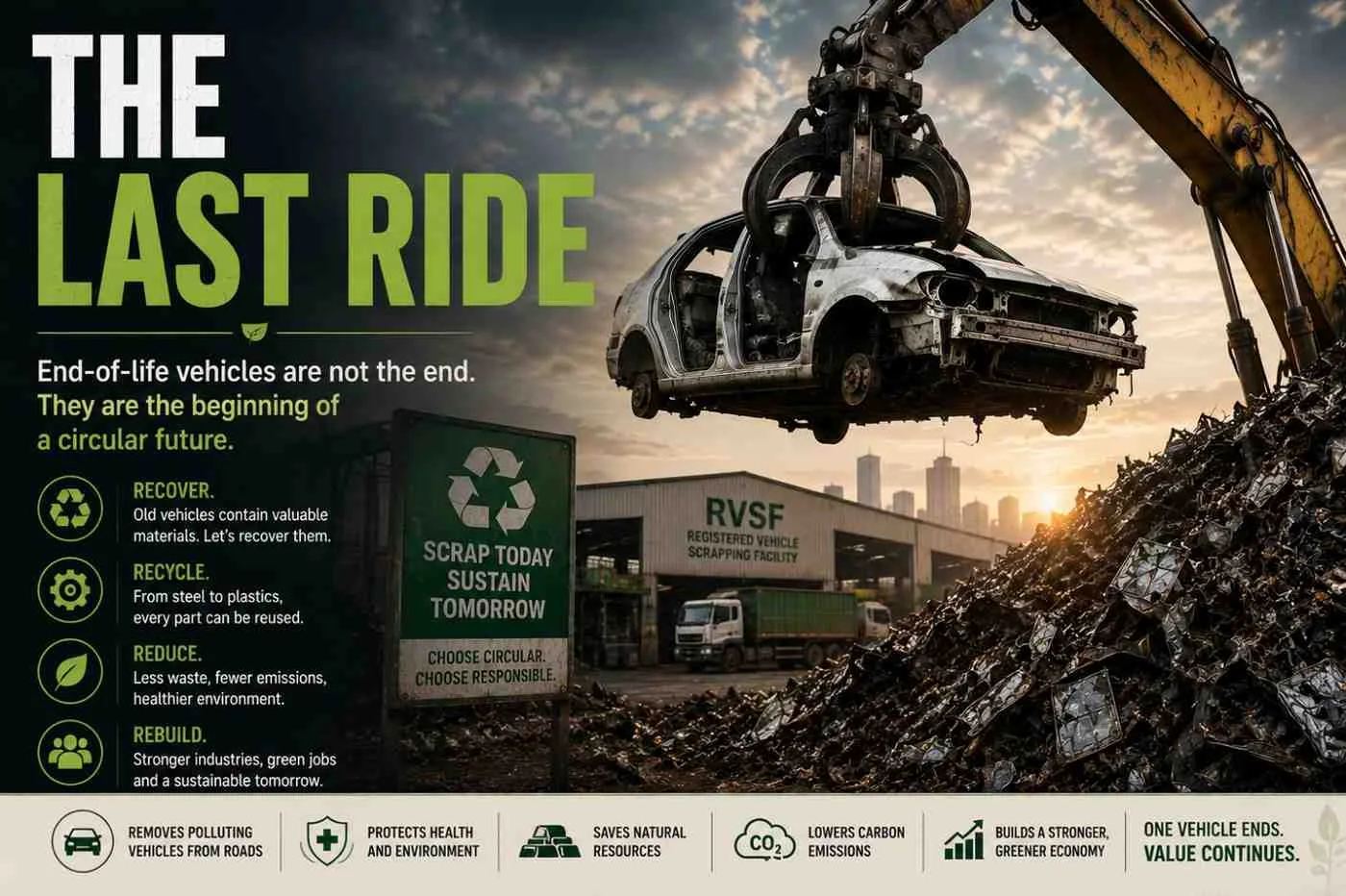
India's growing vehicle scrappage ecosystem is transforming end-of-life vehicles into valuable resources, but the success of a circular material economy will depend on formal recycling, stronger infrastructure and public participation  Kolkata | August 1, 2026:Every vehicle eventually reaches the end of its useful life. The real question is what happens next. For years, old and damaged vehicles in India were largely dismantled in informal scrapyards, where valuable materials were recovered with little environmental oversight or scientific waste management.  Today, that approach is gradually giving way to a more organised system. As India expands its vehicle scrappage programme and establishes authorised recycling facilities, end-of-life vehicles (ELVs) are beginning to play a much larger role in the country's transition towards a circular economy. The shift comes at an important moment. India is one of the world's largest automobile markets, and millions of vehicles are expected to retire from the roads over the next decade. Managing this growing volume is no longer just about disposing of ageing vehicles. It is becoming an opportunity to recover valuable resources, reduce industrial waste and strengthen sustainable manufacturing. Under the government's Vehicle Scrappage Policy, ageing and unfit vehicles are encouraged and in certain cases required- to undergo fitness assessments before being transferred to Registered Vehicle Scrapping Facilities (RVSFs). These authorised centres are designed to dismantle vehicles scientifically, safely handle hazardous components and recover reusable materials such as steel, aluminium, copper, plastics, and rubber. Experts believe this approach could significantly improve India's resource efficiency. Recovering metals from scrapped vehicles requires far less energy than extracting and processing newly mined raw materials, helping reduce both production costs and carbon emissions.Recycled steel and aluminium are also expected to become increasingly valuable as demand continues to grow across the automotive, construction and infrastructure sectors.Yet building an efficient circular material chain remains a complex task. A substantial portion of vehicle dismantling is still carried out by the informal sector, which has supported recycling activities for decades through well-established local networks. While these businesses recover a significant amount of recyclable material, environmental safeguards, worker safety standards and material traceability often remain inadequate. Integrating informal operators into a regulated recycling ecosystem is therefore seen as one of the biggest challenges facing the sector. Infrastructure presents another hurdle. Expanding the number of authorised scrapping facilities is only part of the solution. Experts say the wider ecosystem-including testing centres, dismantling capacity and supporting infrastructure- still falls short in many parts of the country.The transition also faces another obstacle: participation. Public awareness of the scrappage policy remains limited, while logistical constraints and uneven implementation across states continue to slow the growth of formal recycling systems. Experts believe that without meaningful economic incentives, encouraging wider participation from vehicle owners will remain a significant challenge. Vehicle owners are more likely to participate when scrapping offers tangible financial benefits through tax concessions, incentives or discounts on new vehicle purchases. At the same time, manufacturers stand to benefit from a more dependable supply of recycled materials, strengthening supply-chain resilience while reducing dependence on newly extracted resources. The advantages extend well beyond the automobile industry. A well-developed vehicle recycling ecosystem can reduce landfill waste, improve air quality by replacing highly polluting vehicles and create new employment opportunities across dismantling, material recovery, recycling, and secondary manufacturing. It also supports India's wider objectives of improving resource efficiency, lowering industrial emissions and promoting circular economy practices within domestic manufacturing. Environmental experts believe that transition cannot end with vehicle recycling alone.A truly circular automotive sector will require vehicles to be designed for easier recycling, valuable materials to be recovered more efficiently, battery recycling systems to expand and manufacturers to take greater responsibility for the entire life cycle of their products. As India's vehicle population continues to grow, the country's next sustainability milestone may not be measured by how many new vehicles are manufactured, but by how responsibly older ones are managed at the end of their life. The programme's success will not be measured by the number of vehicles it dismantles, but by the value it creates from them. It will be measured by how effectively yesterday's vehicles are transformed into tomorrow's resources, reducing waste, conserving raw materials and strengthening India's circular economy. The journey of a vehicle should not end at the scrapyard. In a truly sustainable economy, it should continue through the materials it leaves behind - fueling new industries, conserving natural resources and reinforcing the idea that the most valuable resources are often those already in our hands. Sources: Ministry of Road Transport and Highways (MoRTH) – Vehicle Scrapping Policy: Notifications and Ruleshttps://www.morth.gov.in/en/Circulars-Notifications-related-to-Vehicle-Scrapping-PolicyPress Information Bureau (PIB) – Vehicle Scrapping Policy: Progress of Registered Vehicle Scrapping Facilities (RVSFs)https://www.pib.gov.in/PressReleasePage.aspx?PRID=2099130&lang=2&reg=48National Government Services Portal – Registered Vehicle Scrapping Facility (RVSF) Portalhttps://services.india.gov.in/service/detail/apply-for-registered-vehicle-scrapping-facilityMinistry of Road Transport and Highways – State-wise Registered Vehicle Scrapping Facility (RVSF) Notificationshttps://www.morth.gov.in/en/rvsf-notificationsCentral Pollution Control Board (CPCB) – Environmentally Sound Management of End-of-Life Vehicleshttps://cpcb.nic.in/NITI Aayog – Reports on Circular Economy and Resource Efficiencyhttps://www.niti.gov.in/Down To Earth – Coverage on vehicle scrappage, recycling and the circular economy in Indiahttps://www.downtoearth.org.in/The Energy and Resources Institute (TERI) – Research on resource efficiency, recycling and circular economyhttps://www.teriin.org/Ministry of Steel, Government of India – Steel recycling and secondary raw materials initiativeshttps://steel.gov.in/Press Information Bureau (PIB) – Voluntary Vehicle Fleet Modernization Programme (Vehicle Scrapping Policy)https://www.pib.gov.in/newsite/erelcontent.aspx?lang=2&reg=48&relid=265928 ...Read more

01 Aug 2026

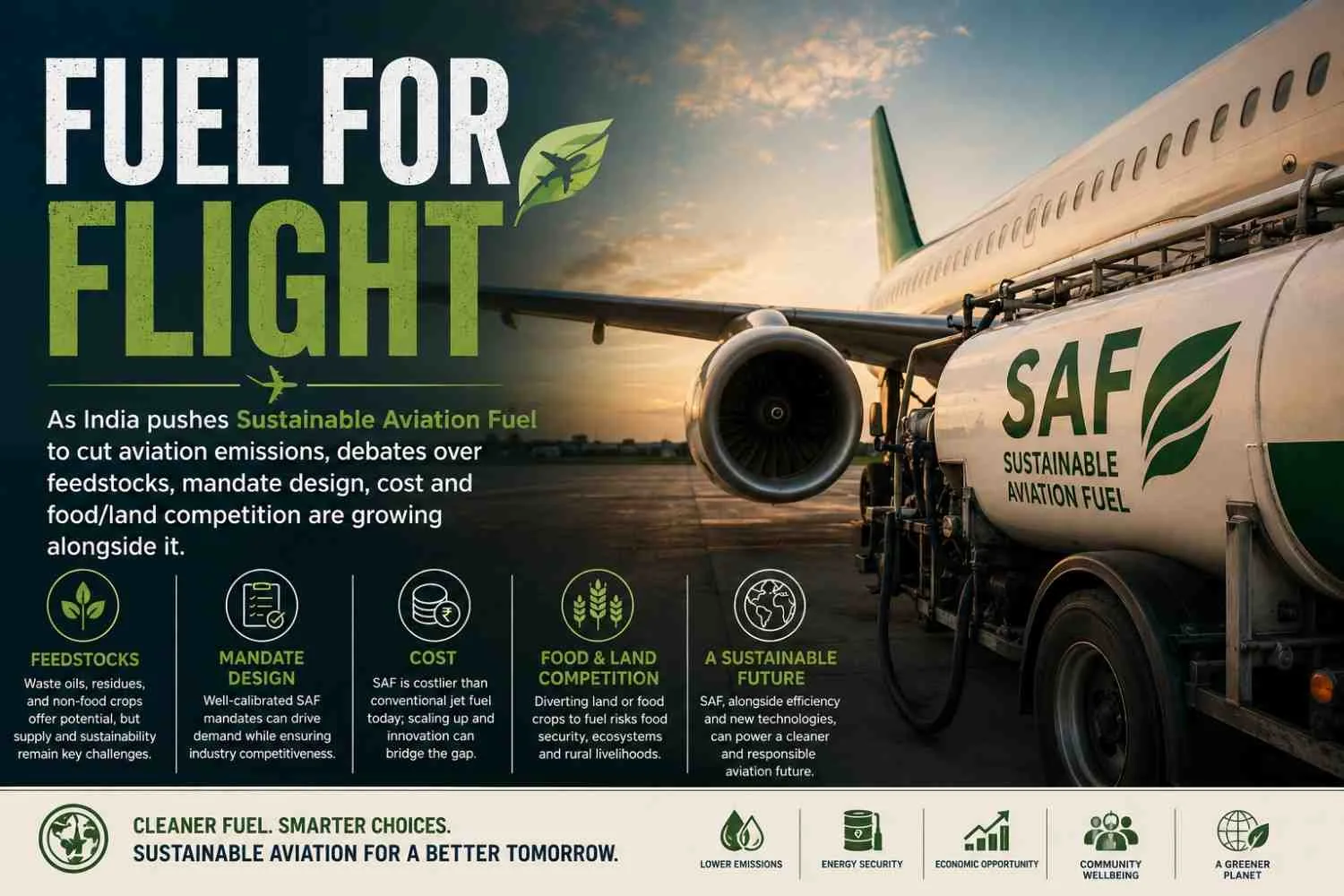
As India pushes sustainable aviation fuel to cut aviation emissions, questions over feedstocks, costs and competition for land and food are beginning to shape the debateKolkata| August 1, 2026: The future of aviation may depend not only on how aircraft are designed, but also on what powers them.Today, aviation contributes around 2–3% of global carbon dioxide emissions, and unlike road transport, long-distance flights still have limited alternatives to conventional liquid fuels. As governments and airlines look for ways to reduce emissions without disrupting air travel, Sustainable Aviation Fuel (SAF) has emerged as one of the sector's most promising solutions. For India, adopting Sustainable Aviation Fuel is not simply a question of replacing one fuel with another. It requires balancing climate ambitions with economic viability, feedstock availability and long-term sustainability. SAF is produced from renewable or waste-based feedstocks instead of conventional crude oil. Depending on the production pathway, it can substantially reduce lifecycle greenhouse gas emissions while remaining compatible with existing aircraft engines and airport infrastructure. Its compatibility with existing aircraft engines and airport infrastructure makes SAF one of the most practical and scalable solutions for reducing aviation emissions. India is gradually bringing Sustainable Aviation Fuel into the centre of its clean energy and climate strategy.Government agencies, airlines, oil marketing companies and research institutions are working to expand domestic production, support pilot projects and prepare for future blending mandates.Beyond reducing aviation emissions, these efforts are intended to strengthen energy security and help India secure a place in the emerging global SAF market. The real challenge, however, extends beyond policy ambition. It lies in ensuring a sustainable and reliable supply of feedstock that can support production on a commercial scale. Experts point to agricultural residues, used cooking oil, municipal solid waste, forestry waste and certain non-food energy crops as the most promising sources for Sustainable Aviation Fuel. Unlike food-based feedstocks, these resources can help reduce emissions without affecting food security. The challenge, however, lies in building efficient supply chains, as collecting, transporting and processing these materials remains expensive and operationally complex. The conversation becomes far more complex when cleaner fuel begins to compete with food and land resources. Using edible oils, sugar crops or fertile agricultural land as feedstocks could place additional strain on food prices, water availability and rural livelihoods. Environmental experts also warn that clearing forests or natural ecosystems to cultivate energy crops may erode many of the climate gains that Sustainable Aviation Fuel seeks to achieve. As a result, the real challenge is not simply producing cleaner aviation fuel- it is ensuring that the path to cleaner aviation does not create new environmental or social pressures along the way.  Cost remains one of the biggest hurdles for Sustainable Aviation Fuel. Production volumes are still limited, supply chains are yet to mature and, as a result, SAF continues to cost significantly more than conventional jet fuel. For airlines already operating in a highly competitive market with narrow profit margins, absorbing these additional costs will not be easy without targeted policy support and market incentives. That is why the design of future blending mandates could determine how quickly SAF moves from ambition to widespread adoption. Rather than imposing immediate large-scale adoption, many countries are introducing phased blending mandates that gradually expand the use of Sustainable Aviation Fuel while supporting domestic production and maintaining industry competitiveness. Experts argue that India will need a similar approach—one that balances climate commitments with commercial realities and gives producers, refiners and airlines the certainty and time needed to expand investments, production capacity and supporting infrastructure.Despite these challenges, experts emphasise that Sustainable Aviation Fuel is only one part of the solution. Reducing aviation emissions will also depend on more fuel-efficient aircraft, improved air traffic management, operational efficiencies and the development of future technologies such as hydrogen-powered aircraft. The future of aviation decarbonisation won’t rest on SAF alone. It will sit alongside efficiency, new aircraft, and operational changes. For India, Sustainable Aviation Fuel represents more than an alternative fuel- it offers an opportunity to reshape the future of cleaner aviation. A successful SAF ecosystem could create economic value from agricultural waste, strengthen energy security, encourage innovation and help the country move closer to its climate commitments. But lasting success will depend on ensuring that the transition protects food security, safeguards ecosystems and supports the communities that depend on them. The future of aviation will not be judged only by how much it reduces emissions, but by how responsibly it achieves that transition. Because sustainable flight truly begins long before it’s take-off - with fuel that is as sustainable in its production as it is in its purpose. Sources: International Civil Aviation Organization (ICAO) – SAF Feedstocks (CORSIA Framework)https://www.icao.int/CORSIA/feedstocksInternational Civil Aviation Organization (ICAO) – Guidance on Policy Measures for SAF Development and Deploymenthttps://www.icao.int/SAF/saf-guidance-policy-measuresInternational Civil Aviation Organization (ICAO) – SAF Rules of Thumb (Feedstocks, Costs & Production Pathways)https://www.icao.int/SAF/saf-rules-of-thumbICAO ACT-SAF Programme – India Sustainable Aviation Fuel Feasibility Studyhttps://www.icao.int/sites/default/files/environmental-protection/Documents/ACT-SAF/Feasibility_Study_India.pdfInternational Air Transport Association (IATA) – Global Feedstock Assessment for SAF Production Outlook to 2050https://www.iata.org/globalassets/iata/publications/sustainability/global-feedstock-assessment-for-saf-production-outlook-to-2050.pdfMinistry of Petroleum and Natural Gas (Government of India) – Biofuels and Sustainable Aviation Fuel policy updateshttps://mopng.gov.in/Ministry of Civil Aviation (Government of India) – Aviation sustainability initiatives and SAF developmentshttps://www.civilaviation.gov.in/NITI Aayog – Reports on biofuels, energy transition and low-carbon transporthttps://www.niti.gov.in/International Energy Agency (IEA) – Aviation and Sustainable Fuelshttps://www.iea.org/Down To Earth – Coverage on SAF, biofuels, feedstock availability and food-versus-fuel concerns in Indiahttps://www.downtoearth.org.in/ ...Read more

01 Aug 2026

As pumped storage gains momentum across India, debates over land, ecology, financing and cleaner alternatives are growing alongside it KOLKATA | August 1, 2026: India's renewable energy capacity is expanding rapidly, but the next phase of the transition will depend on solving a critical challenge: storing clean electricity when renewable sources are not generating power. Pumped storage hydropower (PSH) has emerged as one of the country's most promising solutions and is now playing a central role in India's energy planning. However, as projects begin moving from policy announcements to on-ground development, they are also raising important questions about land, ecology, financial viability and whether alternative storage technologies can deliver the same benefits with fewer trade-offs. Pumped storage hydropower functions like a giant rechargeable battery. Surplus electricity is used to pump water from a lower reservoir to an upper one, where it is stored until demand rises. When additional power is required, the water is released back through turbines to generate electricity. Its ability to provide long-duration energy storage and stabilise the electricity grid has made pumped storage an important part of India's strategy for integrating larger amounts of solar and wind power. Pumped storage hydropower is emerging as a cornerstone of the Union government's long-term clean energy strategy. Across states such as Maharashtra, Andhra Pradesh, Madhya Pradesh, Odisha and Karnataka, a growing pipeline of projects is expected to play a vital role in integrating larger volumes of solar and wind power into the grid. Yet as development gathers pace, the conversation is expanding beyond energy storage to include questions of land, ecology, financial viability and sustainability. While pumped storage offers important benefits for the power sector, many proposed projects are located in ecologically sensitive hilly and forested areas. Developing two reservoirs often requires significant land acquisition and extensive civil works. Experts caution that large-scale construction, forest diversion and changes to natural drainage systems could have lasting impacts on biodiversity, wildlife movement and local ecosystems. In many regions, residents have also expressed concerns about displacement, water availability and the long-term effects on their livelihoods. Financial sustainability is another issue shaping the debate. The financial challenge begins long before a pumped storage project starts generating electricity. While these facilities can operate for decades with relatively low operating costs, they demand substantial upfront investment and long construction timelines. Delays in environmental clearances, land acquisition or financing can sharply increase costs and affect overall project viability. Developers also need reliable revenue mechanisms that recognise the value of energy storage and grid-balancing services, rather than compensating only for electricity generation. These constraints have led to a broader discussion on whether alternative storage technologies could offer faster or more flexible solutions.Battery Energy Storage Systems (BESS) are emerging as a promising alternative, with declining costs and faster deployment making them well suited for a wide range of energy storage applications.Yet experts believe each technology serves a different purpose. While batteries perform well for short-duration storage, pumped storage hydropower remains better suited for storing large amounts of electricity over longer periods. Other solutions, including green hydrogen and advanced battery technologies, are also making steady progress, but they are still some ways from delivering the scale and reliability needed to support India's national electricity grid. Experts argue that pumped storage and batteries should be viewed as complementary rather than competing technologies. As renewable energy expands, India's electricity system is expected to require a combination of storage solutions capable of meeting different grid requirements. At the same time, policymakers face a broader challenge. Future projects will need rigorous environmental assessments, transparent engagement with local communities, fair compensation frameworks and stronger ecological safeguards to support both sustainable development and investor confidence. As India's renewable energy capacity continues to grow, pumped storage hydropower is expected to play a defining role in keeping the power system reliable. But its legacy will not be determined by storage capacity alone. It will be defined by whether development can balance environmental responsibility, financial sustainability and public trust alongside the country's growing energy needs.In the years ahead, the clean energy transition will be judged not only by how much renewable electricity India generates, but by how responsibly it chooses to store it. Sources: Ministry of Power, Government of India – Pumped Storage Projects Guidelines & Policy Initiativeshttps://powermin.gov.in/ Central Electricity Authority (CEA) – National Electricity Plan (Volume II: Transmission & Energy Storage)https://cea.nic.in/ NITI Aayog – Energy Storage Roadmap for Indiahttps://www.niti.gov.in/ International Energy Agency (IEA) – Electricity Storage & Hydropower Analysishttps://www.iea.org/ International Hydropower Association (IHA) – Pumped Storage Hydropowerhttps://www.hydropower.org/ Central Electricity Authority (CEA) – Status of Pumped Storage Projects in Indiahttps://cea.nic.in/hydro/ Down To Earth – Reports on pumped storage projects, environmental clearances and ecological concerns in India.https://www.downtoearth.org.in/ Mongabay India – Coverage of pumped storage projects, biodiversity impacts and community concerns.https://india.mongabay.com/ The Hindu BusinessLine – Coverage on pumped storage investments, project financing and renewable integration.https://www.thehindubusinessline.com/ Ministry of Environment, Forest and Climate Change (MoEFCC) – Environmental clearance notifications and project approvals.https://moefcc.gov.in/ ...Read more

01 Aug 2026

By Dr Kanailal Das Summary: Kolkata is a city shaped by water, wetlands and rivers, yet it faces mounting environmental challenges from both natural processes and human intervention. This article examines the interconnected risks of sea-level rise, tropical cyclones, urban heat islands, earthquakes, air pollution, waterlogging and the degradation of the East Kolkata Wetlands. It also explores how altered drainage systems, disappearing canals, rapid urbanisation and the loss of natural floodplains have increased the city's vulnerability. By linking Kolkata's historical geography with present-day environmental pressures, the article highlights the urgent need for resilient urban planning, wetland conservation and sustainable infrastructure to secure the city's future. Key Topics #Kolkata #ClimateChange #SeaLevelRise #Cyclones #UrbanFlooding #Waterlogging #AirPollution #UrbanHeatIsland #EastKolkataWetlands #WetlandConservation #UrbanResilience #DisasterPreparedness #SustainableCities #EnvironmentalPlanning #SustainVerse Once a premier capital of British India, Kolkata is at present proclaimed to be a dying city. Researches done by Climate Central and Intergovernmental Panel on Climate Change do proclaim that according to the latest projections of sea level rise and climate change certain low-lying areas of Kolkata shall submerge by 2030. Dating back in history, Kolkata in 1690 was under dense forested stretches. In 1622 Kolkata was protected from Portuguese atrocities by Shah Jahan and Nawab Shaista Khan (probably the Bengali word for teaching a lesson, “shayesta” ows its birth from here, well, a wild guess offcourse!). However, the imperial Kolkata faces various kinds of natural and anthropogenic hazards.   Sea Level Rise: According to projections by IPCC, the average rate of global sea level rise was 3.6 mm within 2006-2015 and that of Bay of Bengal was 4.04 mm (Rudra, 2022). This coupled with subsidence shall lead to a relative sea level rise of 7 mm/yr.   Tropical Cyclones: Kolkata is in the vicinity of Bay of Bengal, which is vulnerable to tropical cyclones and 3 out of 10 turn out to be severe cyclones. Sea surface temperature is rising at a rate of 1.6°C per decade which is much higher than the global rate of increase (1.006°C). As a result, sea level is increasing at the rate of 4 mm, while the relative sea level rise of adjacent areas of Kolkata is as high as 9 mm.   The Calcutta cyclone of 1737, also known as the Hooghly River cyclone, is regarded as Kolkata's first recorded super cyclone. This cyclone in the northern Indian Ocean has been described as the worst natural disaster in India. The flooding caused by this cyclone and the accompanying tsunami destroyed the famous Navaratna Temple at Chitpur. On 11 October 1737, a powerful earthquake occurred along with the Great Calcutta Cyclone, causing the water level of the Hooghly River to surge by 13 meters and crash into Kolkata. Later, on 5 October 1864, Kolkata was struck by another cyclone that claimed around 60,000 lives. Mud houses collapsed, boats sank, and even the ports of Khejuri and Hijli were damaged.  Climate change and Urban Heat Island: Heat waves, high intensity rainfall and increasing temperature since the month of March are alarming. Kolkata has turned into an urban heat island because of the urban sprawl, change in landuse and use of building materials which increase heat trapping. The maximum temperature in Kolkata crossed the 30 degrees Celsius mark on 19/2/26, wednesday after close to three months. The last time it was 30 degrees was on November 20. Since November 21, it has stayed below 30 degrees constantly. The minimum temperatures on Wednesday at 17.4 degrees Celsius was below normal. On January 6 it was as low as 18 degrees Celsius.  Earthquakes: Kolkata holds the 4th position among the locations prone to earthquakes. Even tremors were felt at Kolkata on 10th August 2023, with a magnitude of more than 5 on Richter scale. Kolkata was jeopardized due to cyclone, flooding and earthquake even on 30th September 1737.  A report by Gentleman’s magazine stated casualty of 30,000 people, damage of more than 20,000 boats and ships, leading a capsize of 5 tonnes of English ship near present Creek Row. Earthquake along with cyclone was experienced on 11th October 1737.  The western side of Kolkata is higher in elevation. It gradually rises and merges with the Rajmahal Hills to the west. That was once the ancient coastline. Later, sediment carried by Himalayan rivers gradually filled the bowl-shaped Ganges delta region. At one time, the area from the Rajmahal Hills to the Garo Hills of Meghalaya was an elevated, undulating plateau.  About thirty million years ago, during the uplift of the Himalayas, the area between the Rajmahal and Garo Hills subsided into a bowl-like depression. This is the Bengal Basin.  In terms of earthquake vulnerability, Kolkata falls close to Zone 4. The plateau region west of Kolkata was once the continental shelf of the sea. That shelf still exists beneath the ground. To the east of the shelf, deep deposits of sediment from the Ganges and its tributaries have accumulated. Therefore, a deep flexure or fault zone exists along the boundary between the shelf and the sediment deposits. That fault zone is a source of earthquakes. In addition, active tectonic movements in the Darjeeling and Chattogram regions will certainly affect Kolkata. In the past, severe earthquakes caused extensive loss of life and property in Kolkata and surrounding areas. While Kolkata and several parts of south Bengal felt the tremors on Friday, 27 February afternoon, the worst damage was reported from the Villages along the India Bangladesh border, particularly near Taki in Basirhat Subdivision, which is 26 km from the epicentre in Nayabazar.  According to The National Centre for Seismology, NCS, the earthquake measured 5.5 on the Rchter scale and struck at a depth of 10 km in Nayabazar. In Villages bordering Bangladesh, between 19 km and 30 km from Satkhira, atleast five houses suffered structural damage. Portions of concrete ceilings collapsed in some homes, while wall tiles fell off in others.  Small tremors may be signs of bigger quake in Bengal seismic zone, warn experts.    Air Pollution: Pollution in Kolkata – SPM was 511 (Scientific and Environmental Research Institute, 2009). 70% of the residents of Kolkata suffer from loss of breath with 18.4 people in each 1 lakh population experiencing lung cancer (Chittaranjan National Cancer Institute, Kolkata). About 12% of the cancer patients of India hail from Kolkata (Centre for Science and Environment). According to the Scientific and Environmental Research Institute (2009 report), Kolkata's SPM level was 511. According to the institute, Kolkata is India's most polluted metropolitan city, followed by Mumbai, Delhi, and Chennai. A six-year study by the Chittaranjan National Cancer Institute (CNCI) reports that 70% of Kolkata's residents suffer from respiratory illnesses, asthma, and lung cancer. There are 18.4 lung cancer patients per 100,000 people. Recently, Kolkata's air pollution has reached levels comparable to Delhi's. During Kali Puja and Diwali, Kolkata's Air Quality Index now approaches 300. Air pollution in Delhi has recently created "pollution refugees"—residents are being forced to leave the city because of poor air quality. Even in Kolkata, high-rise development is expanding south beyond the Kolkata Metropolitan Area, and more people are moving from the city centre to the suburbs.  Although Air Quality Index (AQI) levels fluctuated marginally throughout the day, pollution levels remained well above safe limits in several areas.  AQI on 21/1/26  Sites 6am 6pm Ballygunge 311 268 Fort William 266 236 Jadavpur University 313 283 Rabindra Bharati University 355 287 Victoria Memorial 281 253    Waterlogging: Just a few days ago, a single night's rainfall left almost all of Kolkata underwater, severely disrupting daily life. Questions were raised about cloudbursts, extreme rainfall, and the poor state of the drainage system. Ignoring Kolkata's natural slope, which was well suited to carrying away rainwater and accumulated drainage water, we built high-rises and a modern city. As a result, waterlogging in Kolkata has increased. From an administrative perspective, Kolkata can be divided into two parts: the core Kolkata and the added areas. The core area had been identified since the British period. It included Wards 1 to 100. Wards 101 to 144 are the added areas. During the British era, a drainage system was introduced according to the design of the British engineer William Clark, in which the drainage channels were located deep underground and built with large bricks. Above these drains ran the drinking water pipelines. As a result, drainage water could not mix with the drinking water.  Kolkata's establishment was completed by amalgamating three villages which had many canals where tides were experienced. Bidyadhari river used to flow through the present day Bidhannagar. Various navigable channels were found passing through Panihati, Kamarhati, Barahanagar, Cossipore and Dumdum. Even 100 years back, Salt Lake and the adjacent wetlands could be seen from Ultadanga railway station, filled with boats. This area was replete with fishing communities, fish godowns from where fish used to be marketed to Shyambazar, Beleghata even Jessore and Khulna in Bangladesh. As river Bidyadhari dried up it lost its connection with river Hugli turning it into a confined waterbody. In the year 1962, the region was reclaimed into Salt Lake City.  Krishnapur Canal was cut during British rule and it moves across Bidyadhari basin and Rajarhat area. VIP road and EM Bypass were constructed over Krishnapur canal. This road construction has created a barrier in the drainage system of Kolkata. East Kolkata Wetlands was used as storage of flood water but it got transformed to reclaimed town. All the garbage of the city gets dumped in Krishnapur Canal and Bagjola khal reducing their capacity.  At present, the situation is different. Biman Bandyopadhyay, an experienced town planner of the Kolkata Improvement Trust (KIT), says that the drainage channels and drinking water pipelines are now located very close to each other. This is extremely dangerous. This arrangement exists not only in the added areas but also in some parts of the core area. In some places, the drinking water pipelines even pass through manholes. In addition, telephone, electricity, and broadband lines run underground at various places beneath the roads. Quite often, when roads are dug up to install these lines, water pipes burst. As a result, toxic substances mix with the drinking water. According to municipal engineers, there are so many different kinds of pipes beneath the roads that the drinking water pipelines laid over the past 30–40 years have had to be placed close to the drainage channels. As a result, contaminated water enters the drinking water pipelines, especially when the water supply through those pipes is shut off.  It has been found that water flowing into Tolly Nullah exceeds its water holding capacity. Also the slope of the area surrounding Tolly Nullah is to the east but that of the canal is to the west. Keorapukur basin stores the accumulated flow from Regent Park, Bansdroni, Tollygunge, Alipur, Khidderpore. The discharge of Keorapukur basin takes place through Keorapukur main and and Keorapukur western channel. One pump of capacity 200 cusecs has been established at Keorapukur western channel. Another pump of capacity of 750 cusecs was installed at Tolly Nullah by Kolkata Environment Improvement Project Authority. 'Invert level' of the outfall drain doesn't match with outfall channel. Also, a fresh assessment regarding the actual water holding capacity of Tolly Nullah is required.  Flow from Keorapukur khal amounts to 1422 cusecs, that from Boat canal, Chetla, Mominpur amounts to 699cusecs and that from Kalighat is 566.9 cusecs. Pump and regulating structure need to be installed at Hugli outfall near Watganj in order to regulate flow of the high tide.  Starting from the airport, the airport channel crossing VIP road to join Cantonment khal and Bagjola khal. This channel is not traceable near Cantonment Khal. Another canal (Donagar khal) joins Noai khal but all these are heavily sedimented and needs dredging.  Paralysis of the Calcutta Canals:  Detachment of main channels (eg Belgachia, Bagjola and Tolly's Nullah) from Hugli River. Increasing human settlements and effluents. Conversion of salt marsh to Salt Lake City; development of Rajarhat New Town without considering the preexisting drainage constraints. Upland flows of Bidyadhari and Ichhamati are almost choked. Semi diurnal tides without any upland discharge have worsened the siltation scenario. Gradual shifting of Saptagram and Tamralipta port to the present position of Calcutta port at Khiderpore; proposals for subsidiary ports at Palta/Sagar Island indicate the gradual lowering of upland discharge level of Bhagirathi Hugli River through time.  The Role of East Kolkata Wetlands: According to NATMO, the Land Revenue Department, and the Fisheries Department, 8,000 wetlands have disappeared over the past thirty years. Kolkata and the areas on three sides of it have undergone rapid urbanization. The East Kolkata Wetlands have shrunk to half their former extent. Bare soil has nearly vanished, so rainwater can no longer infiltrate the ground, and groundwater is therefore not being recharged. Behala, Garden Reach, Tollygunge, Jadavpur, Garia, and surrounding areas are suffering from water scarcity. Nearly thirty million gallons of water are extracted from underground every day.  At one time, the water in these wetlands was saline, which is why the area was known as Salt Lake. At that time, these wetlands were part of the Bidyadhari River, and the tides flowed through them. Fish farming was mainly carried out by creating ponds with small embankments. Later, toward the end of the nineteenth century, when wastewater from the Kolkata metropolitan area began to be discharged into these wetlands, the flow of the Bidyadhari River was blocked. The inflow of saline water into the wetlands stopped. In response to the changed conditions, the fishing communities began farming freshwater fish. Based on local knowledge and experience, fish farming using the city's wastewater continued. The wetlands to the east of Kolkata once covered 20,000 acres. During the 1970s and 1980s, 10,000 acres of wetlands were filled in for the construction of Bidhannagar and the EM Bypass. In 1992, a nongovernmental organization called PUBLIC approached the Calcutta High Court to protect the East Kolkata Wetlands. Following the judgment in that case, an officially recognized map of the wetlands was prepared, and all development and construction activities within the wetlands were prohibited. In 2002, these wetlands were recognized as wetlands of international importance. Covering Kolkata as well as North and South 24 Parganas, they are now included in the Ramsar List. At present, 47 percent of the total area consists of wetlands, 46 percent is agricultural land, and the remainder is residential area. Every year, these wetlands produce 11,000 metric tons of fish, 15,000 metric tons of rice, and 150 metric tons of vegetables every day.    (Kalikata Pukur Katha, Environment, History, Society, Mohit Ray, Ananda, 2019)    About Author   Dr Kanailal DasMasters in Geography from University of Calcutta, former senior research fellow, CSIR, PhD on Vulnerability of Gosaba, Basanti, Sundarban from Vidyasagar University.He has participated in many national and international seminars and has papers and book chapters to his credit. ...Read more

01 Aug 2026

By Dr Karabi Das Rivers are generally considered as open systems within the purview of Geomorphology. The cause behind being them operating in broadly three zones of input, process and output while interacting beyond their boundaries. Thus, there is ample scope of transformations within rivers – both by natural and anthropogenic manners. They are driven by water and sediments so whenever this balance gets modified there occurs a change in the equilibrium of rivers. Well, this can be done both naturally and by controlled environment driven by humans.  Modifications in the catchment area of any drainage basin can effectively alter the natural system, thus jeopardizing the entire hydrologic regime. Alteration by humans can happen in the form of damming the river course, by dredging the channel, by straightening the river pattern, by linking rivers and by constructing other engineering structures. Flood control and control of bank erosion demand widening or deepening of channels, artificial cutoffs from meanders and straightening of channels. Artificial channelization also modifies the fluvial dynamics of a drainage system.   In Indian Sundarbans, the single largest mangrove tigerland, rivers are the arteries. Enmeshed in an intricate network of interlinked rivers and creeks (also duanis), this region is a part of the retrograding Western Ganga Brahmaputra delta. Progradation (advance) and retrogradation (decay) of a delta is largely dependent on occupancy and abandonment of the delta by deltaic distributaries. Also, following the Gallway triangle it can be said that delta building fluvial force and delta modifying wave and tidal action get to decide the fate of deltas. Neotectonic movements leading to subsidence towards Bangladesh Sundarbans have decided the movement of the main flow of river Ganga towards Padma building the eastern Ganga Brahmaputra delta. This is evident from the younging of the eastward deltaic lobes as shown by Allison. Also, the rivers of Indian Sundarbans are severed from their upstream sources. Up country diversion of water, clogging of offtakes have resulted in reduction in discharge degenerating the distributaries of Ganga in the last 225 years. The switching of the distributary channels over time was one of the causes of delta abandonment which was aggravated by loss of sediment supply which bypass through the “Swatch of No Ground” into the deep sea “Bengal fan” . The creeks of Sundarban are tidally fed, governed by bi directional flow. The funnel shaped macrotidal (tidal range>4 m) Hugli estuary is characterised by time velocity asymmetry whereby flood tide takes only 3 hours to get complete while ebb tide takes 9 hours to complete. Therefore, before the ebb tide gets completed, another flood tide sets in resulting in sedimentation. The premature reclamation of Indian Sundarbans has left the landscape polderized as the tidal spill areas are reduced. This results in inchannel sedimentation and further clogging of rivers. Thus the settled portions are at a lesser height than the rivers and this landscape is termed polderized. The river Ichhamati is dry near it’s off take point at Majdia. The gradual decrease of upstream discharge from Ganga to river Mathabhanga is another reason for the decay of river Ichhamati. River Jamuna can be demarcated up to some few km downstream from itsoff take. River Jamuna got decayed as it lost its connection with  Bhagirathi-Hugli River. The angular orientation of the channel at its off-take point has changed to obtuse angle restricting the flow of river Hugli into Jamuna. River Bidyadhari has been encroached by fisheries while the downstream stretch (40 km) up toits outfall has dried up. Excavation of Keshtopur canal in 1910 disconnected a portion of salt lake spill area and this led to disequilibrium in the natural drainage from north and led to the decay of Bidyadhari river. River Matla started decaying as the discharge from West Bidyadhari and the Karatia into the river Matla stopped. A number of lateral connections of the Matla River on and from inland side (like Belladona river, Kultala gang, Piyali-Nabipukur river, Chulkati gang etc) are presently in a decaying state, cutting off freshwater discharge to river Matla. River Piyali can’t be traced properly upstream of Piyali station and it has got disconnected from its parent river Bidyadhari. The outfall of Piyali has been closed contributing to its decay and deterioration of tidal environment there. River Thakuran debouches near Jaynagar and Mathurapur. To its north the river connects Matla and has link with river Saptamukhi. Beyond the junction with river Jagaddal, the river Thakuran gradually thins out in its upper course. Both the reclaimed and non-reclaimed portions of Indian Sundarban have witnessed river discontinuity and decay. Some rivers connecting large rivers have become completely obliterated. Some rivers have become clogged with mud and hyacinths, while some rivers have decreased in width becoming narrower (Das, 2025). Anthropic activities like construction of embankments, aquaculture farms by severing the rivers have also resulted in river discontinuity and decay.    Figure 1: Change in River Matla and landuse of Canning (1920,1968,1993)  In order to cope up with river discontinuity and decay, estuarine reshaping in the form of reviving the lost paths of the channels and creating additional channelization is required. The polderized landscape has got so much altered and juxtaposed with agricultural landscape and settlements that it is quite impossible to return to it’s virginity. However, reviving the lost paths is necessary and can be still done if all the previous interlinking routes are resuscitated.  Five probable routes in and out of Adi Ganga can be traced in all probability. Outfalls can be traced to river Hugli via Diamond Harbour and Kulpi, to Saptamukhi estuary, Thakuran estuary and river Matla.  Diamond Harbour route: Kaorapukur khal (29.005 km) can be used as it emanates from Adi Ganga near Kudghat. Then as it connects with Usthi Nainan outfall channel (10.435 km), the accumulated water is directed towards Diamond Harbour creek (14.531 km) which empties into Hugli River. Also, the same route can be accessed from Surjyapur using Hotor khal (12.305 km).  Kulpi route: Water of Adi Ganga can be directed from Surjyapur along settlements Multi, Magrahat and Lakshmikantapur using the canals Surjyapur khal (10.215 km), Magra Jaynagar khal (14.647 km) and Kulpi kata khal (19.039 km) towards Kulpi. Alternatively, water can be directed towards Kulpi kata khal using Nazra khal and Sangrampur Outfall channel.  Route towards Saptamukhi estuary: From Surjyapur, a westward route along Multi using Surjyapur khal (10.215 km) can be followed, upto Magra Jaynagar Khal (14.647 km), flowing past Jaynagar Majilpur. From there, using Burar khal (2.035 km) and Chitraganja khal (5.324 km), the palaeochannel of Adi Ganga can be accessed upto Sudhirghat. From the settlement of Chandbhasa, Banstala khal (16.658 km) can be accessed. Chora Gangadora khal (5.463 km) can be accessed from the settlement of Bakultala. The rivers Kaloa, Gobadia (18.102 km), Barchara and Walsh creek can then be used to direct the water towards Saptamukhi estuary, though Kaloa river has got decayed at present. Alternatively, Curzon creek also can be used to direct the water towards Saptamukhi estuary.  Route towards Thakuran estuary: The same route can be followed upto Burar khal, then the water can be directed to Moni nadi. Alternatively, Khari khal can be used past Chandbhasa and the water can be directed towards Thakuran via Moni nadi.  Route towards Matla: Water from Adi Ganga can be directed towards Matla River using Surjyapur khal and Piali river.    Figure 2: Scope of reviving Adi Ganga via routes shown    References:  Bandyopadhyay S. (2000): Coastal changes in the perspective of long term evolution of an estuary: Hugli, West Bengal, India, Proc. Int. Quat. Seminar on INQUA shoreline, Indian Ocean Sub Commission: 103-115.   Bandyopadhyay S. and Bandyopadhyay M. K. (1996): Retrogradation of the western Ganga-delta, India and Bangladesh, Possible reasons. In. Tiwary, R.C. (ed.), Proceedings of 6th conference of Indian Institute of Geomorphologists, National Geographer, 31(1&2): 105-128.   Bandyopadhyay S., Kar N.S., Dasgupta S., Mukherjee D. and Das A. (2023): Island area changes in the sundarban region of the abandoned western ganga–brahmaputra– meghna delta, India and Bangladesh, Geomorphology https://doi.org/10.1016/j.geomorph.2022.108482. Das K (2025): Physical and Socioeconomic changes of Indian Sundarban: An Evaluation PhD thesis, University of Calcutta. Das K and Das K (2026): Reviving Decaying Rivers: Case Studies from Indian Sundarbans Natural Sciences and Applied Technology Eissn: 3049-4206 3(1) Majumdar S.C. (1941): Rivers of the Bengal Delta In Biswas K.R. (ed.), Rivers of Bengal, volume 1 West Bengal District Gazetteers, Kolkata. Paul A. K. (2002): Coastal Geomorphology and Environment. Sundarban coastal plain, Kanthi coastal plain, Subarnarekha delta plain. ACB publication, Kolkata.    About Author Dr Karabi Das, Masters in Geography from University of Calcutta, former Senior Research Fellow, UGC, PhD on Physical and Socioeconomic changes in the Indian Sundarban is presently working as Assistant Professor of Geography, Dr Kanailal Bhattacharyya College, Howrah.She has participated in many national and international seminars and has 12 papers and 10 book chapters to her credit.Her areas of interest include Fluvial Geomorphology, river in equilibrium and human environment relationship.   ...Read more

01 Aug 2026

 By Ashlen Summary: Sustainable design is more than eco-friendly labels or recycled materials—it is about creating products, buildings and systems that use fewer resources, last longer and minimise environmental impact throughout their entire life cycle. From repairable smartphones and circular manufacturing to passive architecture and low-energy digital design, this article explores how thoughtful design decisions can reduce waste, challenge planned obsolescence and replace today's linear "take-make-dispose" economy with a truly regenerative future. Key Topics#SustainableDesign #CircularEconomy #CradleToCradle #PlannedObsolescence #RightToRepair  #Greenwashing #CircularDesign #RepairEconomy #EcoInnovation #SustainableArchitecture #Biomimicry #PassiveDesign #ProductLifecycle #LowCarbonDesign #SustainVerse Here’s a small con you’ve probably paid for. You buy a cheap printer, and within a year the replacement ink costs more than the printer did. Or you buy a phone, and around year three the battery swells, and because it’s glued in, there’s nothing to do but buy a new one. Feels like bad luck. It isn’t. Somebody designed those things to work exactly that way, because a product that quietly dies on schedule sells more of itself. That decision, made in a room long before the thing hit a shelf, is where sustainable design either happens or doesn’t. None of this is new. Back in the 1920s, the biggest lightbulb companies in the world got in a room together and agreed to make their bulbs worse. They capped the lifespan at around 1,000 hours, on purpose, so you’d keep buying. They could already build one that lasted far longer, and the proof is still burning: a fire station in Livermore, California, has a hand-blown bulb lit since 1901. Making something die early so people rebuy it has a name, planned obsolescence, and it’s the exact thing good sustainable design sets out to kill. So what is it, really? Stripped of the marketing, sustainable design is the practice of making things (products, buildings, packaging, even websites) so they use less, last longer, and do less damage across their whole life, from raw material to the day you’re done with them. The green leaf on the shampoo bottle isn’t it. Neither are the recycling arrows stamped on plastic that no facility near you will actually take. The real work is invisible, because it happens at the sketch stage, in choices you never see. And here’s the part the brochures skip: the honest choice almost always costs something. A phone you can open is a little thicker than one sealed shut. Recycled paper has faint flecks in it instead of a perfect white. A building designed to cool itself can’t always sit where the best view is. Sustainable design is mostly the discipline of picking the slightly less convenient, slightly less pretty option because it’s the right one, then living with that. Which is why most products don’t bother, and just paint a leaf on the box instead. From a straight line to a loop Most of what we own runs in a straight line. Dig up materials, build a thing, use it, bin it. Take, make, waste. Your morning coffee cup is a perfect example: alive for twenty minutes, then landfill for decades, because that thin plastic lining leaves it neither recyclable nor compostable in most places. Sustainable design tries to bend the line into a circle, so the end of one thing feeds the start of the next. Two designers, William McDonough and Michael Braungart, called this “cradle to cradle,” as opposed to cradle to grave. It clicks the moment you picture a forest. A leaf falls, rots, and feeds the tree that dropped it. Nothing gets loaded onto a truck and driven to a dump. Every output is somebody’s input. That’s the target: make things that either go safely back to the soil or get pulled apart and rebuilt into something new, with no poisonous dead end. [Illustration 1: the closed loop]   Stuff you can actually buy Watch how this plays out in things you can hold. Fairphone makes a smartphone you open with a tiny screwdriver. Battery, screen, camera, all of it comes apart, so when one bit fails you replace that one bit for cheap instead of junking the whole phone. Framework does it with laptops: swap the ports, upgrade the memory, follow a repair guide for every part. Yes, the Fairphone is a touch chunkier than the sealed slab in the shop window. That extra couple of millimetres is the price of a battery you can reach, and somebody decided it was worth paying. Set it against a laptop with the memory soldered down and the battery glued under the case, where one dead component turns the whole machine into e-waste, and you can see the choice for what it is. The best version of this story is a carpet company, of all things. In 1994 the founder of Interface, Ray Anderson, read a book about the environment and had what he later called a spear-in-thechest moment. He looked at his own hugely successful business, which turned oil into carpet tiles and sold them by the millions, and decided he’d been running, in his own words, a plunderer of the earth. Most people would have felt bad and moved on. He turned the company inside out. Interface stopped selling one glued-down carpet you rip up and throw away, and started selling tiles, so a stain in one spot means you swap that single tile, not the whole floor. They kept pulling oil and waste out of how the tiles get made until some of their products now trap more carbon than they release. One man reading one book redirected a global manufacturer. That’s what a decision looks like when someone actually means it. Materials matter as much as lifespan. A Swiss outfit called Freitag makes bags out of used truck tarpaulins, dead seatbelts, and old bike inner tubes, each one unique because it’s cut from a tarp that already did years of hard road time. The rubbish is the material. Packaging is having its own moment: a company called Ecovative grows a styrofoam replacement out of mushroom roots, packed into a mould with farm scraps, that protects the product just fine and then composts in your garden in weeks. Dell and IKEA have both shipped in it. Another, Notpla, makes packaging from seaweed, down to little edible blobs of water handed to London Marathon runners so the race didn’t leave a plastic graveyard behind. Then there’s the quietest move of all: designing things people just keep. Patagonia runs repair workshops, sells the patches, and once ran a full-page ad telling people not to buy its jacket unless they actually needed it. Sounds like a death wish, until you do the maths. One jacket worn fifteen years replaces the four cheap ones you’d have bought and binned in the same span. They lose one sale and keep a customer for life. The repair economy you already live in You don’t need a Swiss brand or a mission statement to see this working. Walk down almost any street in an Indian city and the whole philosophy is already running, for free. The phonerepair stall that swaps a cracked screen while you wait. The cobbler resoling shoes people in richer countries would have thrown out. The tailor taking in a shirt instead of letting you buy another. It’s a repair economy that never stopped existing, keeping millions of objects alive for years past the point a throwaway culture would have dumped them. The fashionable word is “circular.” The older word is just not being wasteful, and a lot of the world has been doing it the whole time, without a hashtag. What we ship Moving things around is its own hidden cost, and design can cut it before a truck even starts. Flat-pack furniture, the kind you build yourself on the floor swearing at an Allen key, does more than save you money. A chair shipped fully built is mostly air; the box is huge and half empty.  Flatten it into a slim carton and one truck carries a crowd of them, burning less fuel per chair. Small design call, enormous saving once you multiply it by every delivery. Mumbai has a better example, and it’s a hundred-odd years old. Every working day, a network of dabbawalas collects thousands of home-cooked lunches from thousands of houses, delivers each to the right office across a sprawling city, and carries the empty tins home the same afternoon. Reusable steel tins, no packaging waste, barely any fuel, run on trains and bicycles and a colour code you can read without being able to read. Silicon Valley would call it a logistics platform. It’s mostly an old idea done extremely well. One rule worth carrying around: refilling beats recycling, and recycling beats the bin. More shops now let you bring your own container for rice or detergent or shampoo, so the packaging never gets made. And when packaging can’t be avoided, aluminium can be melted and reborn again and again with almost no loss in quality, which makes a can a smarter container than most plastics, which degrade a little each time and usually become waste within a cycle or two. Buildings that breathe Buildings are the giants here, gulping huge amounts of energy to stay warm, cool, and lit. But long before air conditioning, builders in hot places beat the heat with the shape of the building itself. In India, the jaali (that carved stone lattice) lets a breeze through while blocking the hard sun, cooling a room on zero electricity. Courtyard homes pull hot air up and out through the open middle. Thick lime walls soak up the night’s cool and release it slowly through the day. Stepwells went further, sinking whole flights of stone stairs down to the water table so a village had cool water and a cool place to sit through the worst of summer. None of it needed a power grid. Some of the smartest sustainable design ever done is centuries old, and it ran on nothing. One architect built a career out of remembering this. Laurie Baker worked across Kerala with local brick and local labour, and got obsessed with waste, right down to a brickwork method full of small gaps that used fewer bricks, cost less, and let air through at once. His houses came out cheaper and cooler than the concrete boxes going up around them, because he refused to waste anything. Today’s architects are relearning all of it under names like passive design: keeping a building comfortable through where it faces, how it’s insulated, and where the shade falls, instead of a wall of humming machines. Some go further and swap concrete and steel, which both belch carbon when they’re made, for engineered timber that stores carbon instead. A few designers skip the theory and copy nature outright, which has a name, biomimicry. An office block in Harare called the Eastgate Centre stays far cooler than a normal glass tower on a fraction of the air conditioning, using a ventilation trick lifted from termite mounds: cool air drawn in low, warm air pushed out high. Copying a few billion years of nature’s trial and error tends to work, because nature is merciless about waste. Anything wasteful died out long ago. The footprint you can’t see Here’s the one almost everybody forgets, and it’s closest to a designer’s actual desk. The website you’re reading this on has a footprint too. Every site, app, and streaming video runs on data centres, warehouses full of computers pulling real electricity every second of the day, and added up, the internet burns roughly as much as the entire airline industry. A heavy, bloated page (autoplay video, a dozen trackers, a pile of fonts) draws more power every time someone loads it, times millions of loads. This is where design choices most people never think about start to bite. Load a page with four custom fonts and every visitor downloads all four before reading a word, which is prettier and heavier. Stick to the fonts already on their device and it loads lighter and faster on less energy, and almost nobody notices. Same with the tricks built to make you consume more: the one-tap reorder, the “buy it again” nudge, the feed with no bottom that keeps you scrolling and buying. Those are design decisions too, aimed the opposite way, and a designer who cares about any of this has to notice when their own craft is pointed at the wrong target. One site takes the idea to its logical, slightly mad end: Low-tech Magazine runs off a small solar panel, and when the sky stays grey for days and the battery drains, it simply goes offline until the sun returns. A stubborn reminder that “always available” has a bill attached, and somebody pays it in energy. [Illustration 4: the weight of the web] How to spot the fakes Because “green” sells, loads of companies fake it, and the fakery has a name, greenwashing. A bottle bragging “made with 30% recycled plastic” is still a single-use plastic bottle. A brand dropping a tiny “conscious collection” while cranking out millions of throwaway clothes the rest of the year is buying applause, not changing anything. A few tells that rarely fail: fuzzy words like “eco” and “natural” with no numbers behind them, a green colour scheme doing all the persuading, and a big song and dance about one small feature while the core product stays exactly as wasteful. Real sustainable design shows its working. It tells you what the thing is made of, how to fix it, and what to do with it when you’re done. If a company won’t tell you those three things, the leaf on the label is decoration. What you can do with any of this None of this needs you to design a thing. You buy stuff and you use stuff, and that alone hands you more power than the marketing wants you to feel. A few habits that genuinely count: Buy less, and pick the one built to last. The cheap option is almost never the cheap option five years out.Fix before you replace. A shocking number of “dead” things need a new battery, a cable, or a ten-minute video and a bit of nerve.Go second-hand first, especially furniture, clothes, and electronics. The greenest product on earth is the one that already exists.Read past the front of the label. Find out what it’s made of and whether the maker tells you how to repair or recycle it.Back the right to repair. Get behind the brands and laws that let you mend what you own instead of forcing you to throw it out and buy again. Strip away the leaves and the labels, and sustainable design comes down to one plain question asked in a quiet room before anything gets built: where does this end up, and who pays for it?  Ask it honestly and you tend to end up with something a little chunkier, a little plainer, a little less convenient, and far better for everyone downstream. Once you start seeing objects that way, the throwaway ones stop looking like convenience. They start looking like a bill somebody quietly forgot to mention.   About Author   Ashlen is a Product Designer and an educator specializing in Deep tech, enterprise and front-end user experiences. ...Read more

01 Aug 2026

By Dr Karabi Das Summary: Ghoramara Island in the Indian Sundarbans has lost more than half of its area over the last five decades. While climate change and sea-level rise are often blamed for this erosion, the island's disappearance is also driven by complex geomorphic processes, altered river dynamics, tidal asymmetry, and human interventions. This article explores why understanding both climate and geomorphology is essential for protecting one of the world's most vulnerable delta landscapes. Key Topics#IndianSundarbans #GhoramaraIsland #ClimateChange #CoastalErosion #Geomorphology #SeaLevelRise #DeltaDynamics #MangroveEcosystem #RiverMorphology #Sedimentation #TidalProcesses #HugliEstuary #CoastalResilience #NatureBasedSolutions   The Indian Sundarban is vulnerable to riverine and coastal erosion. Though many harbour on climate change and sea level rise as the major causative factors behind the erosion of Indian Sundarban but geomorphic uniqueness of this tide country cannot be outdone. Within 1930-2000, about 283.58 sq km was lost due to erosion, while accretion of about 83.97 sq km was observed. Whether a coastline will prograde or retrograde, this will depend on whether the distributary channels are occupying or abandoning the delta. Also if there is any temporary pause in the replenishment of sediments in a portion of the delta causes erosive tidal and wave processes to take over causing erosion (Woodroffe, 2003; Bird, 2010).  Sundarban forms a part of retrograding tidal section interspersed with decaying distributaries (Das, 2025). The sector to the south west between Hugli and Baleswar Haringhata estuaries is macro to mesotidal in nature, growing about 7-1.8 kyr ago with three overlapping deltaic lobes progressing eastwards (Allison et al., 2003; Sarkar et al., 2009).     Ghoramara, popularly known as the sinking island can be cited as a significant instance of geomorphic in equilibrium perturbed by ongoing climate change and relative sea level rise. The Hugli estuary is widely known to be a victim of climate change, the Bay of Bengal being a breeding ground of tropical cyclones. However what remains largely unattended is the geomorphic uniqueness of the Hugli estuary.     The Hugli estuary is a funnel shaped (protruding towards Bay of Bengal and shrinking as we move north) macrotidal estuary, where the tidal range is greater than 4 m. Another notable feature is that the Hugli estuary is a part of the western side of Ganga Brahmaputra delta which is retrograding in nature (no new sedimentation here retards delta progradation towards the sea). Various factors such as neotectonic movements, subsidence of the eastern Ganga Brahmaputra delta, diversion of the flow towards Padma and anthropogenic activities have brought about retrogradation of the western Ganga Brahmaputra delta. In addition to this the Hugli estuary is dominated by tides and due to time velocity asymmetry (flood tides taking 3 hours to complete, ebb tides taking 9 hours to complete), result in in channel sedimentation.     This geomorphic uniqueness leads to an ephemeral character of the islands on Hugli estuary and Ghoramara is one such island. It was attached to Gangasagar island previously, but since 1968, the area of the island is observed to be decreasing.   Nayachar, another island to the west of Ghoramara is increasing in area on the contrary. This was brought about by the initiative of Kolkata port whereby a guide wall was constructed on the north western side of Nayachar island to keep the Hugli estuary navigable and aid the survival of Kolkata port. This in turn brought about a diversion of flow, causing massive erosion of  Ghoramara and Gangasagar island. The areal change of Ghoramara and Nayachar islands are notable -     Areal change of Ghoramara and Nayachar islands (sq km)  Years Area (sq km) Ghoramara Nayachar 1968 8.3845 17.327 1978  7.514 32.280 1991 6.235 48.279 2003  4.430 50.738 2009  4.860 48.847 2013  4.348 46.204 2019  3.999 51.988 2021  3.703 55.117 2025  3.305 50.155     Figure 1: Change of Ghoramara and its surrounding islands : 1991-2019 (prepared by author)    It is clearly evident that only climate change and sea level rise cannot be cited as the causative factors behind the erosion of Ghoramara. Instead a complex geomorphic characteristic and geomorphic inequilibrium are at play. In order to combat erosion the south western part of the island has been fortified with enmeshed boulders and this has arrested erosion to some extent.     Photo plate 1: Erosion of Ghoramara   Photo plate 2: Enmeshed boulder on the south western side has protected this part of the island  (Photograph by author)  The people of Ghoramara opine that the river water should be diverted to Shiber Char to protect Ghoramara and help dredging near Sagar Island. They demand boulder protection on eastern side. A flood shelter should be built on central location near the market with all facilities. A bio-engineering technique, involving the planting or sowing of local plant species can be helpful to reduce erosion. Climate resilient embankment with bioengineered structure needs to be considered. Wherever erosion is constant, tidal basin management should be considered as an option and the rivers should be allowed their spill areas so that the height of the islands gets increased by sedimentation.  References:  Allison M.A., Khan S.R., Goodbred S.L. and Kuehl S.A. (2003): Stratigraphic evolution of the late Holocene Ganges – Brahmaputra lower delta plain, Sedimentary Geology 155(2003): 317 – 342.  Bandyopadhyay S (1997a): Natural environmental hazards and their management: A case study of Sagar Island, India, Singapore J. Tropical Geogr, 18(1997), pp 20-45. •  Bandyopadhyay S (1997b): Coastal Erosion and it's management in Sagar Island,  South 24 Parganas,West Bengal. Indian Journal of Earth Science, 24 (3-4): 51-69.   Bandyopadhyay S (2000): Coastal changes in the perspective of long term evolution of an estuary Hughli, West Bengal, India published in Quaternary Sea Level Variation, Shoreline Displacement and Coastal Environments, edited by Rajamanickam V and Tooley M.J. (New Academic Publishers, New Delhi) pp 103115.   Bandyopadhyay S (2007) Evolution of the Ganga Brahmaputra delta:a review. Geogr Rev India 69(3):235–268 • Bandyopadhyay S, Nandy S (2011) Trends of sea level rise in Hugli estuary, India. Indian J Geomarine Sci 40:802–812  Bandyopadhyay S, Mukherjee D, Bag S, Pal DK, Rudra K (2004): 20th Century Evolution of Banks and Islands of the Hugli estuary. In: Singh S, Sharma HS, De SK (eds) West Bengal, India: Evidence from Maps, Images and GPS Survey, Geomorphology and environment. ACB Publications, Kolkata, pp 235–263   Bird E.C.F. (Ed) (2010): Encyclopedia of the World’s Coastal Landforms Vol.1 Springer Science Business Media B.V. (1493 pp). Das K (2025): Physical and Socioeconomic Changes in the Indian Sundarban: An Evaluation, University of Calcutta  Das K. (2022): Vanishing Islands and Vulnerabilities: Case Studies from selected sites of Indian Sundarban. In Purkait S.K. (ed.), Sundarbans Society, Environment & Development, ISBN 978-8-19-511040-7  Woodroffe C.D. (2003): Coasts, Forms Process and Evolution Cambridge University Press, Cambridge 623 pp.    About Author   Dr Karabi Das, Masters in Geography from University of Calcutta, former Senior Research Fellow, UGC, PhD on Physical and Socioeconomic changes in the Indian Sundarban is presently working as Assistant Professor of Geography, Dr Kanailal Bhattacharyya College, Howrah.She has participated in many national and international seminars and has 12 papers and 10 book chapters to her credit.Her areas of interest include Fluvial Geomorphology, river in equilibrium and human environment relationship.   ...Read more

31 Jul 2026

Kolkata | July 29, 2026  Kolkata-Based Mercstone Unveils Electric Scooter, Announces ₹250 Crore EV Manufacturing Investment In one of the most significant Indo–Thai manufacturing collaborations in India's rapidly expanding electric mobility sector, Kolkata-headquartered Mercstone International Pvt. Ltd. (Mercstone EV) and Assara Electric Company Ltd., Thailand, on Wednesday announced a strategic partnership to manufacture electric scooters in India through a proposed phased investment of nearly ₹250 crore. The first manufacturing facility will be established in West Bengal as part of the companies' long-term pan-India expansion strategy. On the occasion, the company's flagship electric scooter was formally unveiled in the presence of Dr Swapan Dasgupta, Hon'ble Minister of Finance, Shri Arjun Singh, Hon'ble Minister-in-Charge, Department of Labour & Transport, Government of West Bengal, along with senior government officials, industry leaders and an international business delegation. The collaboration marks the beginning of a long-term Indo–Thai partnership aimed at building an integrated electric mobility manufacturing ecosystem in India. Under the partnership, Assara Electric Company Ltd. will provide advanced technology, technical know-how and critical raw materials, while Mercstone International Pvt. Ltd. will establish the manufacturing infrastructure, complete production facilities, skilled manpower, and oversee all manufacturing, operations, marketing, sales and after-sales support across India. The proposed venture will focus on the manufacturing, assembly and distribution of next-generation electric scooters while developing a comprehensive ecosystem comprising component suppliers, technology partners, dealerships, service centres and logistics networks across the country. The project is expected to generate substantial direct and indirect employment opportunities as manufacturing capacity expands in phases. The investment comes at a time when India is accelerating its transition towards electric mobility under its sustainability agenda. The collaboration is expected to strengthen industrial cooperation between India and Thailand through technology transfer, advanced manufacturing, product development and innovation, while supporting India's vision of becoming a global hub for clean mobility manufacturing. Mercstone International Pvt. Ltd., incorporated in 2020, has already established a manufacturing and warehousing facility near the Kalyani Expressway at Barrackpore and has identified an additional location at Nabarand for future expansion. The company plans to scale manufacturing capacity progressively to meet growing demand across India. Its product portfolio will feature smart connected electric scooters equipped with Bluetooth-enabled vehicle tracking, IoT-based anti-theft systems, smartphone integration, keyless start, digital instrumentation, Lithium Iron Phosphate (LFP) battery technology, an Electronic Assisted Braking System (EABS), waterproof motors and advanced thermal management systems. As part of its national growth strategy, Mercstone EV will establish a robust dealership, distribution and after-sales service network across India to ensure seamless customer support and long-term product reliability. Looking ahead, the promoters plan to diversify into electric four-wheelers within the next five years, targeting an annual turnover of ₹500–700 crore while steadily expanding their manufacturing footprint and product portfolio. Industry observers believe the Mercstone–Assara partnership represents an important milestone in strengthening India's electric vehicle manufacturing ecosystem by combining international technology with Indian production capabilities. With India's EV market poised for sustained growth over the coming decade, the collaboration aims to contribute significantly to the country's clean mobility ambitions while enhancing India's position as a competitive global manufacturing destination. Tathagata Mukherjee,Director, Mercstone International Pvt. Ltd. «"This is not merely the launch of a new electric vehicle company; it marks the beginning of a strategic Indo–Thai manufacturing partnership with India at its core. Our proposed ₹250-crore phased investment reflects our long-term commitment to building world-class electric mobility solutions in India. Together with Assara Electric, we aim to create a strong manufacturing ecosystem, generate employment, strengthen the domestic vendor network and contribute meaningfully to India's vision of becoming a global clean mobility manufacturing hub."» Sandip Ghosh, General Manager, Mercstone International Pvt. Ltd. «"This partnership brings together the complementary strengths of both organisations. Assara Electric will provide advanced technology, technical expertise and critical raw materials, while Mercstone International will establish the complete manufacturing infrastructure, production facilities, skilled manpower and manage all manufacturing, operations, marketing and customer support in India. Together, we are committed to delivering technologically advanced, reliable and affordable electric mobility solutions backed by a strong nationwide dealership and after-sales network."» Assara Electric Company Ltd., Thailand «"India has emerged as one of the world's most promising electric vehicle markets, offering tremendous opportunities for innovation and manufacturing. Through our partnership with Mercstone International, we are bringing together Thai technology and Indian manufacturing excellence to develop world-class electric mobility solutions. We believe this collaboration will further strengthen industrial ties between Thailand and India while creating products capable of competing successfully in both domestic and international markets."» About Mercstone International Pvt. Ltd. Mercstone International Pvt. Ltd., headquartered in Kolkata, develops and manufactures smart, sustainable and affordable electric mobility solutions. The company is building an integrated pan-India ecosystem encompassing advanced manufacturing, technology, dealerships, distribution and after-sales services. About Assara Electric Company Ltd. Assara Electric Company Ltd., Thailand, specialises in electric mobility technologies, advanced manufacturing systems and EV components. Under the strategic partnership, the company will provide up technology, technical expertise and key raw materials to support the development of globally competitive electric vehicles for the Indian and international markets. This version is suitable for circulation to the media and follows standard corporate press release style with clearer role allocation, stronger flow and consistent terminology. Indo–Thai EV venture announces proposed ₹250-crore phased investment as Mercstone International and Thailand's Assara Electric forge strategic manufacturing partnership. Smt Papiya Adhikari, Hon'ble Member of Legislative Assembly, West Bengal unveiled the newly launched Infrared Cooktop. This Cooktop is a brand-new innovation to reduce electric consumption and introduce a better and smarter way of cooking. It can be used with every type of utensils of our daily household chores.  Dr Rajesh Kumar, Hon'ble Member of Legislative Assembly was also present at the event. ...Read more

31 Jul 2026

RESEARCH + POLICY + MARKETPLACE Green products, India’s Ecomark, global ecolabels and the shift from attractive claims to verifiable product evidence A critical evaluation of the Ecomark Rules, 2024, with a six-part product-claim test, label glossary, international comparisons, market-readiness scorecard and a roadmap for a credible green marketplace in India. MATERIALSTraceable inputsUSE PHASEDurable + repairableEND OF LIFECollected + recovered Status date: 29 July 2026 Magazine-style research report | 5,000+ words | India and international evidence BOTTOM LINEIndia has moved from a largely dormant 1991 label to a more credible legal framework in 2024. But the Ecomark is still better described as institutionally re-designed than marketplace-ready: certification counts, a consumer-facing registry, procurement preference, retailer integration, repairability scores and measurable public outcomes remain the decisive missing links. Contents 1. The green-shopping problem: abundance of claims, shortage of proof 2. What a credible green-product label must establish 3. How the world built ecolabels: timeline and institutional models 4. India’s Ecomark: why the 1991 scheme failed 5. The Ecomark Rules, 2024: what changed and what did not 6. Critical evaluation: a strong rulebook with a weak market engine 7. Progress through July 2026: rules, draft criteria, claims control and repair information 8. Global lessons and cases: Blue Angel, EU Ecolabel, Nordic Swan, ENERGY STAR and France 9. Product claim test, label glossary and marketplace-readiness scorecard 10. The future: from a logo to a green trust stack 11. Ten actions that can make Ecomark work 12. Sources and further reading Research method and a necessary caution In this report, the current statistics and legal status were then rechecked against official Indian, European, German, Nordic, French and United States sources. This matters because the green-label field changes quickly: for example, current official counts for Blue Angel and the EU Ecolabel are substantially higher than older figures, and the June 2026 Indian criteria are a draft under consultation rather than final law. The phrase “green product” is itself comparative. No credible label proves that a product is environmentally harmless. At best, it establishes that a particular product or service meets stated criteria, within a stated boundary, at a stated time, using a stated method. This report therefore asks not whether a label is perfect, but whether it is specific, independently verifiable, transparent, updated, enforceable and useful at the point of purchase. 1. The Green-Shopping Problem: Plenty of Claims, Too Little Proof Walk through a supermarket, electronics store or online marketplace and the vocabulary of virtue is everywhere: natural, clean, conscious, planet-positive, carbon-neutral, recyclable, biodegradable, sustainable, responsible. The visual grammar is equally familiar—green leaves, blue globes, forests, water droplets and earthy colours. Yet the shopper is rarely told the most important facts: what exactly has improved, compared with what, across which part of the lifecycle, tested by whom, for which product model, and for how long. This is why ecolabelling has become both necessary and controversial. The abundance of labels does not automatically produce clarity. ISO distinguishes between Type I multi-criteria labels independently awarded by a third party; Type II self-declared claims made by manufacturers; and Type III environmental product declarations that disclose quantified lifecycle information. These are not interchangeable. A company’s “100% recyclable” statement is not the equivalent of a government-backed, audited, category-specific ecolabel, and neither is the same as a verified environmental product declaration. THE CENTRAL CONSUMER TESTA claim is not credible merely because it is technically possible. “Recyclable” packaging may be impossible to collect locally. “Compostable” material may require an industrial facility that does not exist nearby. “Carbon neutral” may describe purchased offsets rather than a low-carbon product. The consumer needs evidence of real-world systems, not only laboratory possibilities.   A useful label also has to survive the “quality paradox”. A lightweight product made with fewer materials may be worse for the environment if it breaks in half the time. A refill pack may reduce packaging but increase leakage or contamination. A bio-based material may come from land-intensive or poorly traced feedstock. The green-shopping question is therefore multi-dimensional: materials, performance, durability, repairability, packaging, hazardous substances, use-phase energy and water, and end-of-life responsibility must be examined together. “The future is not trust the leaf. It is verify the product.” 2. What a Credible Green-Product Label Must Establish A serious consumer system should force every important claim through six gates. Each gate answers a different question, and failure at any one can make the overall “green” story misleading. DimensionCredible evidenceRed flagsIndia market readinessMaterialsExact recycled, renewable or bio-based percentage; chain-of-custody or mass-balance method; restricted substances; supplier evidence; product/SKU scope.Vague “made with recycled material”; no percentage; company-wide data applied to one product; bio-based treated as automatically low-impact.Moderate. Mature in paper, metals and simple plastics; weaker in composites, electronics, fashion blends and informal supply chains.DurabilityRecognised stress, wear, cycle or reliability tests; stated expected life under defined use; warranty and failure-rate evidence.“Long-lasting” without test standard; a long warranty with exclusions; environmental savings calculated against unrealistic life.Emerging. Strongest where regulators require a score; otherwise usually hidden from shoppers.RepairabilityDisassembly with common tools; spare-part availability and price; manuals; diagnostic access; software/security support; non-destructive battery replacement.Parts technically available but prohibitively priced; parts paired by software; no manuals; repair voids warranty; support period unstated.Low-to-moderate in India; higher in parts of Europe. Information portals are not yet the same as comparable repair scores.PackagingPackaging-to-product ratio; recycled content; certified compostability and conditions; local recyclability; refill/reuse system; EPR registration.“Plastic-free” outer box around multilayer inner pack; recyclable in theory but not collected; biodegradable without timeframe or conditions.Moderate-to-high for basic formats, but multilayer films, small formats, inks, adhesives and collection gaps remain major barriers.CertificationIndependent, competent and accredited verifier; public criteria; certificate number, scope and expiry; audit evidence; conflict-of-interest controls.Brand-created badge; certificate for factory rather than product; expired licence; audit firm paid without safeguards; no public registry.Transitioning. Strong official schemes exist, but label proliferation and inaccessible registers weaken trust.End of lifeTake-back route; producer/EPR registration; recycler identity; actual collection and recovery rates; safe handling of hazardous residue; geographic availability.“100% recyclable” with no collection channel; take-back only in a few metros; recovery claimed from certificates rather than physical evidence.Moderate in regulated categories; weak where reverse logistics and municipal segregation are poor, especially outside large cities. The unit of truth is the exact product Environmental marketing frequently shifts between levels: a company may have a renewable-energy target, a factory may hold ISO 14001 certification, a package may contain recycled plastic, and a particular product may have none of those advantages. Credible labelling must identify the exact stock-keeping unit or model, production boundary, facility where relevant, validity period and evidence base. A sustainable company claim cannot silently substitute for product evidence; nor can a single greener attribute stand in for overall environmental preferability. 3. How the World Built Ecolabels: Who, When and Where The international history shows three broad waves. The first established visible trust marks. The second standardised claim types and laboratory methods. The third, now under way, connects labels to durability, repair, digital records and anti-greenwashing law. 1978 | GermanyBlue Angel became the first major national ecolabel. It uses product-group criteria, an independent Environmental Label Jury and public product listings.   1989 | Nordic region and JapanThe Nordic Council of Ministers created the Nordic Swan; Japan’s Eco Mark also began. Both apply category criteria and lifecycle thinking.   1991 | IndiaIndia launched Ecomark with the earthen-pot symbol, requiring environmental criteria plus relevant Indian quality standards.   1992 | European Union and United StatesThe EU Ecolabel began as a multi-country Type I scheme. ENERGY STAR began as a focused energy-efficiency label and later became one of the world’s best-known endorsement marks.   1990s–2020s | ISO systemISO 14020-series standards clarified general principles, self-declared claims, Type I labels and Type III environmental declarations.   2021 | FranceA mandatory repairability score out of 10 appeared at the point of sale for selected electronics and appliances.   2024–2026 | EuropeThe EU adopted rules against generic environmental claims, a Right to Repair directive and the Ecodesign for Sustainable Products Regulation with digital product passports.   2024–2026 | IndiaIndia replaced the 1991 scheme with the Ecomark Rules, 2024, issued anti-greenwashing guidelines, expanded repair information, and proposed tougher category criteria in June 2026.   What separated successful schemes from symbolic ones? Successful labels did not rely on the logo alone. They built a surrounding market system: clear criteria, visible product catalogues, recurring review, independent verification, public procurement, retailer display, enforcement against misuse and a consumer benefit that could be understood quickly. ENERGY STAR made operating-cost savings visible. Blue Angel connected criteria to procurement and a large searchable catalogue. France placed a comparative repair or durability score beside the price. In each case, the environmental signal became part of the buying transaction rather than a distant policy aspiration. 4. India’s Ecomark: An Early Idea That Failed to Create a Market India’s 1991 Ecomark was conceptually ahead of its time. The matka symbol represented renewable materials, low-energy production and the fragility of ecosystems. The scheme eventually covered a broad set of categories, including paper, paints, batteries, detergents, textiles, leather, coir, plastics, cosmetics, food items and packaging. Its cradle-to-grave framing was sound: the mark was intended for products that satisfied both environmental criteria and relevant quality standards. But the market barely noticed. A 2006 CUTS International assessment found that only 12 manufacturers had applied over roughly fifteen years and that even licence holders often did not use the mark prominently because it created little market benefit. A 2009 government statement recorded twenty licences awarded to fifteen companies in only three product categories. The exact historic count varies by date and measure, but the conclusion is consistent: the scheme never approached meaningful scale. Why the first Ecomark stalled No demand pull: consumers did not recognise the symbol, retailers did not differentiate it and manufacturers saw no price or volume advantage.An additional compliance layer: firms had to satisfy environmental requirements on top of BIS quality requirements, without offsetting incentives.Weak institutional ownership: fragmented committees, frequent transfers and no dedicated mission-style organisation diluted accountability.No procurement engine: government purchasing did not create a guaranteed initial market for compliant paper, paints, furniture, cleaning products or office supplies.Static or slowly updated criteria: the scheme did not keep pace with new materials, circular design, toxic-substance controls, electronics, repairability or digital traceability.Poor transparency: there was no easy public registry of applications, licences, product models, test reports, expiry dates or enforcement actions.MSME economics: testing, documentation and process upgrades were costly for smaller manufacturers, while the commercial return was uncertain.Product-heavy design: environmental performance of services—hotels, cleaning, logistics, retail, events—received little practical attention. THE ENDURING LESSON FROM 1991–2023Good criteria are necessary, but a label becomes real only when someone wants to buy it, someone can verify it, and someone is punished for misusing it. Ecomark’s first generation had a certification concept without a market-transformation strategy.   5. The Ecomark Rules, 2024: What Changed On 26 September 2024, the Ministry of Environment, Forest and Climate Change notified the Ecomark Rules, 2024 under the Environment (Protection) Act framework and rescinded the 1991 notification. The purpose is broader than branding: the rules link Ecomark to Mission LiFE, resource efficiency, conservation, circular economy, lower adverse environmental impact, consumer information and the prevention of misleading environmental claims. A stronger institutional design Administration shifts to the Central Pollution Control Board in partnership with the Bureau of Indian Standards. A product ordinarily needs the applicable BIS licence, certificate of conformity or Quality Control Order compliance, and must then meet category-specific Ecomark criteria. This two-layer test protects against a common failure of green marketing: a product should not be called environmentally preferable if it cannot also perform safely and effectively. The Steering Committee is wider than the old architecture. It includes representatives from consumer affairs, industry, information and broadcasting, chemicals, agriculture, health, MSME, power, drinking water, expenditure, external affairs, commerce, textiles, scientific institutions, BIS and CPCB, along with experts and industry. On paper, this creates the possibility of linking criteria to consumer protection, trade, public expenditure, industrial policy and communication. Lifecycle criteria—but with flexibility The rules permit category criteria to address raw-material sources, manufacturing processes, natural-resource use, environmental impacts, emissions and waste, recycled content, hazardous substances, recyclability, disposal of product and packaging, and EPR compliance. That breadth is a major improvement over one-attribute green claims. It allows Ecomark to distinguish an environmentally preferable product rather than merely certify one recycled component or one efficient factory. Verification, limited validity and post-market checks Applications are made to CPCB. Verification may be undertaken by CPCB or a registered verifier, with a report to be prepared within sixty days of verification. A granted Ecomark is valid for three years or until the criteria change, whichever is earlier; holders must file annual reports. CPCB may suspend or cancel the mark for false information or wilful concealment, and market verification may be conducted through CPCB or registered agencies. These are meaningful safeguards against the “certify once, drift forever” problem. A portal is not a side feature—it is the credibility infrastructure The rules require CPCB to develop a portal for applications, grants, annual reports and verifier registration. The portal is also expected to publish holders, certified products, the reports on which grants are based, environmental research, benefits and relevant international practices. The rules permit consideration of domestic and foreign ecolabel programmes for recognition or mutual recognition. If fully implemented, this would allow a shopper, buyer, journalist or regulator to move from a logo to auditable evidence. 6. Critical Evaluation: A Stronger Rulebook, an Incomplete Market System The 2024 rules deserve credit for rebuilding the legal and institutional foundation. They do not, however, resolve the commercial and consumer failures that defeated the first scheme. The following scorecard is an analytical assessment, not an official rating. DimensionScoreWhat worksWhat remains weakLegal foundation4/5A formal rule-based scheme under environmental law, with defined authorities, application, validity, cancellation and appeal.The rules do not themselves create a detailed Ecomark-specific penalty schedule for every misuse; effective deterrence depends on wider environmental and consumer law enforcement.Scientific breadth3/5Criteria may cover lifecycle impacts, resources, pollution, hazardous substances, recycled content, recyclability and EPR.The final 2024 framework does not require a uniform, public LCA method, functional unit or comparative “best-in-class” threshold across all product groups.Verification3/5CPCB/registered verifier review, annual reporting and post-market verification are built in.Verifier accreditation, conflict-of-interest controls, audit sampling, fees and public disclosure need operational detail and visible implementation.Transparency2/5A public portal and publication of holders, products and underlying reports are explicitly envisaged.As of this review, an easily discoverable, consumer-facing registry with current product counts and model-level reports could not be located on the main public interfaces.Consumer usability1.5/5A single government-backed mark could reduce label clutter.The rules do not provide a simple comparative score for durability, repairability, carbon, water or lifecycle cost; a static logo cannot answer every consumer question.Market pull1/5The Steering Committee includes public expenditure and multiple market-facing ministries.No automatic purchase preference, retailer display rule, e-commerce filter or fiscal incentive is created by the rules.MSME accessibility1.5/5MSME representation exists in governance.No clear fee subsidy, shared testing infrastructure, transition finance, simplified evidence pathway or small-business technical assistance is guaranteed.Circularity integration3/5EPR, recycled content, recyclability and disposal can be embedded in criteria.No cross-category repairability, spare-parts, take-back performance or digital product passport requirement appears in the final 2024 rules.Services1.5/5The legal concept could potentially evolve.The operative market emphasis remains consumer products; India has not yet matched mature ecolabel coverage of accommodation, cleaning, logistics or other services.OVERALL ASSESSMENTApproximately 2.4/5: a promising certification architecture, but not yet a complete consumer-market institution. The biggest gap is no longer the absence of legal criteria; it is the absence of visible demand, comparable information, measurable uptake and an easily verified product universe.    The BIS gate: protection and bottleneck Requiring basic quality conformity is defensible: environmentally preferable goods must not compromise safety or function. Yet the BIS/QCO gate can also become an entry barrier when no suitable Indian Standard exists, when an innovative product does not fit an established category, or when an MSME faces duplicate documentation and testing. The solution is not to abandon quality control, but to create coordinated, single-window evidence, clear category manuals, recognised test laboratories and subsidised pathways for smaller firms. The “best-in-class” question Mature Type I schemes are usually designed to identify a leading segment of a category and then tighten criteria periodically. The Ecomark Rules state desirable environmental outcomes but do not consistently define the label as the top-performing share of the Indian market. Without a comparative ambition, Ecomark risks becoming “compliant plus” rather than a mark of environmental leadership. Category rules should therefore state the market baseline, expected qualifying share and revision trigger. ISO 14001 is useful—but it is not a green-product certificate The June 2026 draft criteria often require ISO 14001 environmental-management certification. That may improve process discipline, but it certifies a management system, not the lifecycle superiority of a specific product. A factory can operate an ISO 14001 system and still produce a relatively high-impact product. Ecomark must therefore treat management-system certification as supporting evidence, never as a substitute for product-level thresholds and verified outcomes. 7. Actual Progress Through July 2026 The strongest conclusion is mixed: policy construction has accelerated, but public evidence of market penetration remains thin. Four developments matter. 1. Anti-greenwashing rules now flank Ecomark On 15 October 2024, the Central Consumer Protection Authority issued Guidelines for Prevention and Regulation of Greenwashing or Misleading Environmental Claims. They require clear, specific and substantiated claims; generic terms such as sustainable, natural, organic and regenerative need adequate qualification; comparative claims need verifiable evidence; and credible certification or scientific evidence is expected. ASCI’s environmental-claims rules similarly state that broad claims such as eco-friendly or planet-friendly require robust support and cannot be rescued by a distant disclaimer. This is a crucial complement to Ecomark. A voluntary label can reward better products, while consumer-protection rules can police misleading claims across the rest of the market. The unresolved task is enforcement integration: complaints, investigations, Ecomark misuse, advertising decisions and certificate cancellation should flow through interoperable systems and become visible in a public enforcement register. 2. June 2026 draft amendments move from principles to measurable category rules On 8 June 2026, MoEFCC published draft amendments for sixty days of public consultation, ending 6 August 2026. The proposals cover six areas—paints and coatings, batteries, paper and paper products, wood substitutes, fire extinguishers and coir products—and introduce substantially more specific requirements. Examples include QR-linked criteria and end-of-life information; chemical restrictions; renewable-energy thresholds; EPR registration; traceability; recycled-content requirements; accredited testing; ISO 14001; and lifecycle narratives in selected categories. The battery proposals are especially concrete: limits on mercury and cadmium, EPR registration, restrictions on chlorine-containing plastic/PVC, packaging conditions, rising domestic recycled-lead thresholds, collection and recycling obligations, and energy-reduction requirements. Paper criteria include high recovered-paper content for recycled products, bleaching restrictions and a cradle-to-gate LCA narrative. Coir criteria add traceability, heavy-metal testing, renewable-energy and water-management requirements, compostable packaging and QR-linked disposal information. IMPORTANT LEGAL STATUSThese June 2026 provisions are draft amendments under consultation as of 29 July 2026. They are evidence of policy direction, not completed certification outcomes. A rigorous market assessment must not count proposed QR codes, thresholds or category tests as already operating nationwide.   Where the 2026 draft still needs refinement Method consistency: some categories receive numerical limits, others rely on management systems or narrative evidence. A common hierarchy of product outcomes, facility controls and documentation is needed.Lifecycle boundary: a cradle-to-gate narrative is useful but does not capture use, durability, repair or disposal. High-impact categories need cradle-to-grave methods and declared functional units.Packaging language: “biodegradable” or “compostable” requirements must specify test standards, time, conditions, toxicity and the collection system in which the material will actually be treated.MSME transition: renewable-energy shares, laboratory testing, traceability and LCA can be costly. Shared facilities, phased deadlines and financial support are essential.Data architecture: QR codes should point to standardised, machine-readable, persistent product records—not brand marketing pages that can change or disappear.Outcome verification: EPR registration proves legal enrolment, not actual collection. Ecomark should disclose physical collection, reuse and recycling performance. 3. Right to Repair has begun as an information portal, not yet a comparative right India’s Right to Repair portal covers farming equipment, mobiles and electronic devices, consumer durables and automobile equipment, and lists participating brands. It can provide warranty, service-network and spare-part information. This is a useful foundation for extending product life. But product records vary in completeness, and the portal does not yet provide a mandatory, standardised repairability score beside the price. Information availability is therefore emerging; comparable repair performance and enforceable access remain incomplete. 4. BEE shows that Indian labelling can transform a market The Bureau of Energy Efficiency’s Standards and Labelling programme is the clearest domestic counter-example to Ecomark’s historical stagnation. It launched in 2006 with a simple 1-to-5 star comparison tied directly to electricity-bill savings. By 2025, BEE reported 38 covered appliance categories, 3,662 registered brands, 58 crore star-labelled appliances produced and 89.8 billion units of savings. In March 2026, BEE launched a mobile application that lets consumers scan a QR code for authentic model and compliance information. BEE succeeded because it combined mandatory coverage in important categories, a comparative visual language, regular ratcheting of standards, market surveillance, databases, public communication and a wallet benefit. Ecomark cannot copy the same methodology across every environmental dimension, but it can copy the institutional lesson: the consumer must understand the signal in seconds and verify it in one scan. So, how market-ready is Ecomark? As of 29 July 2026, the framework is legally and institutionally more ready than the market. MoEFCC’s 2024–25 annual report records the notification and its intended implementation. The 2026 draft shows active technical development. Yet this research did not find, through the main public CPCB, MoEFCC and BIS interfaces, a readily discoverable product registry displaying current applications, granted marks, exact models, reports, expiry dates and post-market actions. Nor was an official, current aggregate certification count located. That absence does not prove that no applications or grants exist; it does mean that a consumer or buyer cannot yet easily verify scale and availability. Marketplace readiness should therefore be described as nascent. Paints, batteries, paper, cleaning products, packaging, textiles and electronics are technically suitable categories. Retail and e-commerce systems can display the mark. Testing and EPR infrastructures exist in parts. But demand, visibility, searchable evidence, MSME participation and procurement preference have not yet combined into a self-reinforcing market. 8. Global Lessons: What Has Worked—and What Has Not Germany’s Blue Angel: credibility through longevity, criteria and catalogue Launched in 1978, Blue Angel is the foundational example of a government-backed Type I ecolabel. Its official catalogue now reports more than 70,000 products and services from over 1,800 companies. The German Environment Agency develops criteria, the independent Environmental Label Jury decides on new and revised criteria, and RAL handles certification. Product groups publish detailed Basic Award Criteria and certified items are searchable. Its strength is not perfection but institutional repetition: category selection, stakeholder hearings, evidence, award, publication, expiry and revision. Blue Angel also reaches public and institutional purchasing. A recycled-paper label becomes commercially meaningful when offices, schools and government departments buy to the standard. The broader lesson for India is that procurement can create the first reliable market before mass consumers learn the label. EU Ecolabel: scale, services and integration with consumer law The EU Ecolabel began in 1992 and operates through product-group criteria and national competent bodies under a common regulation. As of March 2026, the European Commission reported 3,541 licences covering 116,692 goods and services; 61% of licence holders were SMEs. The scheme includes detergents, paper, paints, textiles and tourist accommodation, demonstrating that ecolabelling can assess operational services as well as manufactured goods. Its influence is being strengthened by adjacent law. Directive (EU) 2024/825 applies from 27 September 2026 and restricts generic environmental claims and sustainability labels that are not based on recognised certification schemes or public authority systems. This does not make the EU Ecolabel mandatory, but it improves the competitive position of credible labels by making unsupported alternatives legally riskier. Nordic Swan: lifecycle thinking that includes service quality The Nordic Swan was created in 1989 by the Nordic Council of Ministers and remains the official ecolabel of Denmark, Finland, Iceland, Norway and Sweden. Nordic Ecolabelling describes it as an ISO 14024 Type I, independent third-party scheme with a holistic lifecycle perspective. Its reported recognition across the Nordic region is exceptionally high. Criteria extend to services and operational systems, while quality and function are treated as environmental variables because a product that lasts longer or works at a lower dose may have lower overall impact. ENERGY STAR: the power of one simple, verifiable benefit ENERGY STAR is narrower than a multi-criteria ecolabel, but its market success is instructive. It is government-backed, uses product performance specifications and third-party certification, and tells a simple story: this model uses less energy and should cost less to operate. The programme reports recognition by about nine in ten United States households and has a substantial cumulative emissions impact. The label works because the benefit is measurable, comparable and financially relevant. France: put repairability and durability beside the price France made repairability visible from 1 January 2021 through a mandatory score out of 10 for selected electrical and electronic products. The score considers documentation, disassembly, spare parts, price and product-specific factors. In 2025, a durability index replaced it for televisions from 8 January and washing machines from 8 April, adding reliability, robustness, maintenance and resistance to wear. Sellers must display the score near the price in stores and online. The French model is not foolproof: much of the calculation is manufacturer-generated and regulators must inspect supporting evidence. But it solves a problem that static ecolabels do not—the shopper can compare competing models on a specific circular-economy attribute at the exact moment of purchase. India should combine Ecomark’s holistic endorsement with mandatory comparative indices in high-impact categories. EU digital product passports: the label becomes a data layer The EU’s Ecodesign for Sustainable Products Regulation, in force since 2024, establishes a framework for durability, repairability, recycled content, environmental footprint and other product requirements. It also creates the Digital Product Passport: a structured record connected to a product through a data carrier such as a QR code. Depending on product rules, the passport can include model or batch identity, compliance documents, materials, substances of concern, repair information, environmental performance and end-of-life instructions. Online marketplaces must be able to expose relevant passport access before purchase. The decisive shift is from “trust this symbol” to “inspect this evidence”. A passport does not eliminate false data; it improves traceability, interoperability and enforcement. India’s 2026 draft QR proposals are a first step, but Ecomark should eventually define common data fields, persistent identifiers, APIs, access rights, retention rules and links to BIS, EPR, customs, ONDC, GeM and consumer-complaint systems. No scheme is foolproof: five recurring failure modes Boundary manipulation: a label covers packaging, a factory or one ingredient while advertising implies the whole product or company is green.Audit dependence: third-party verification can fail through weak sampling, conflicts of interest, competence gaps, fraud or industry capture.Criteria lag: a once-leading threshold becomes average as technology improves, but the label remains unchanged.Burden shifting: reducing carbon can increase toxicity, water stress, land pressure or waste; lifecycle and multi-attribute methods are needed.Real-world system failure: a technically recyclable or compostable product enters a market without collection, sorting, repair or treatment infrastructure. 9. Consumer Label Glossary: What the Words Should Mean TermCredible interpretationEco-friendly / greenNot a technical category by itself. Must be qualified with the specific benefit, lifecycle boundary and evidence. Broad unqualified use is a greenwashing red flag.NaturalDescribes origin, not safety or low impact. Natural substances may be toxic, scarce, land-intensive or non-renewable on the relevant timescale.OrganicShould refer to compliance with a recognised organic standard for the stated agricultural ingredient or product. It does not automatically cover packaging, labour or total carbon impact.Recycled contentThe proportion of input material recovered from pre-consumer or post-consumer waste. The percentage, method and chain of custody should be stated.RecyclableTechnically capable of being recycled under specified conditions. A credible claim should also address collection, sorting and reprocessing availability in the market of sale.Reusable / refillableDesigned for multiple use cycles for the same purpose. The system, cleaning requirement, return route and expected cycles should be disclosed.BiodegradableCapable of biological breakdown under defined conditions and time. The environment—soil, marine, home compost or industrial compost—must be specified.CompostableMeets a recognised compostability standard under stated conditions. Industrial compostability does not mean home compostability or harmless littering.Bio-basedMade wholly or partly from biomass. The percentage and feedstock should be disclosed; bio-based does not automatically mean biodegradable or low-carbon.Carbon footprintQuantified greenhouse-gas emissions for a defined product lifecycle and functional unit, usually expressed as CO2-equivalent. Method and data year matter.Carbon neutralA balance claim often involving reductions and offsets. Product-level claims should disclose gross emissions, reductions, residual emissions, offset type and claim period.Net zeroA long-term state requiring deep emissions reductions and limited neutralisation of residual emissions. It should not be used casually for a single product without a robust standard and boundary.Zero wasteShould identify the waste stream, boundary, period and destination. “Zero waste to landfill” may still include incineration or export.CircularShould demonstrate design for durability, reuse, repair, remanufacture and material recovery—not merely the presence of one recycled component.LCALife Cycle Assessment: a method for evaluating impacts across defined lifecycle stages. Results depend on system boundary, functional unit, allocation and data quality.EPDEnvironmental Product Declaration: a verified, standardised disclosure of quantified environmental data. It reports impacts; it does not necessarily certify that the product is best in class.Type I ecolabelA voluntary, multi-criteria, third-party label under ISO 14024 principles that identifies environmental preferability within a product category.Type II claimA self-declared environmental statement under ISO 14021 principles. It can be valid, but requires precise substantiation and is not independent certification.EPRExtended Producer Responsibility: legal responsibility for managing products or packaging after use. Registration is not the same as demonstrated collection performance.Digital Product PassportA structured digital identity for a product, model or batch carrying sustainability, compliance, repair and end-of-life information through a data carrier such as a QR code.   10. Marketplace Readiness: Where India Can Move First CategoryReadinessWhat must happenPaper and tissueHigh technical readinessEstablished recycled-fibre testing, public procurement potential, simple consumer use. Needs fibre traceability, chemical limits and procurement mandates.Paints and coatingsModerate-highVOC and hazardous-substance tests exist; large institutional market. Needs consumer-readable emissions classes and strong lab surveillance.BatteriesModerate-highEPR and recycler systems exist; draft recycled-lead thresholds are concrete. Needs model-level data, collection proof and safety integration.Detergents and cleanersModerateStrong global criteria examples on toxicity, biodegradability, dosage and packaging. India needs updated category rules and service-cleaning criteria.PackagingModerateEPR creates legal push. Real-world recyclability varies by format and geography; small and multilayer packaging remain difficult.Electronics and appliancesModerateBEE, BIS, e-waste EPR and Right to Repair form building blocks. Missing mandatory durability/repairability scores and unified product passports.Textiles and footwearLow-moderateExport supply chains already use certifications, but fibre blends, chemicals, microfibres, labour issues and traceability make claims complex.Hotels, cleaning and eventsLow but high opportunityGlobal schemes show services can be certified across operations. India needs service-specific audit protocols, periodic performance data and customer-facing display.E-commerce marketplacesTechnically high; institutionally lowPlatforms can filter and verify certificates quickly. They need standard APIs, liability rules, claim fields and a trusted Ecomark registry.Government procurementHigh leverage, underusedGeM and departmental tenders can create immediate demand. Ecomark preference and equivalent-performance clauses are not yet systematic. A practical marketplace product card A consumer should not have to become a lifecycle analyst. The evidence can be translated into a standard product card displayed online and, through QR, in stores. At minimum it should show: exact product/model; Ecomark licence and expiry; two or three reasons it qualified; recycled or renewable content; energy/water performance where relevant; durability or warranty; repair score and support period; packaging route; EPR/take-back link; and disposal instructions for the buyer’s location. The underlying technical report can remain available for experts and enforcement authorities. 11. The Future: A Green Trust Stack, Not One Magic Logo The next decade will not be governed by one universal green symbol. Credible consumption will depend on a layered “trust stack” in which each instrument performs a different function. LAYER 1 | MINIMUM PRODUCT LAWSafety, energy, toxic-substance, waste and ecodesign rules prevent the worst products from entering the market.   LAYER 2 | ANTI-GREENWASHING ENFORCEMENTGeneric, exaggerated or offset-only claims are restricted; scope and evidence must be disclosed.   LAYER 3 | COMPARATIVE SCORESEnergy, water, repairability, durability or carbon ratings permit fast comparison within a category.   LAYER 4 | TYPE I ECOLABELEcomark identifies multi-attribute environmental leaders that exceed minimum compliance.   LAYER 5 | DIGITAL PRODUCT PASSPORTStructured product data allows verification, repair, customs checks, marketplace display and end-of-life handling.   LAYER 6 | EPR AND REVERSE LOGISTICSProducer responsibility is connected to actual take-back, refurbishment and recycling outcomes.   LAYER 7 | PROCUREMENT AND MARKETPLACE DEMANDGovernment, companies, retailers and platforms preference verified products and expose credentials at search and checkout.   LAYER 8 | POST-MARKET ACCOUNTABILITYSampling, complaints, certificate withdrawal, penalties and public enforcement protect the label after award.   Digital does not automatically mean trustworthy QR codes and blockchain can improve traceability, but they cannot repair weak governance. A QR code that opens a marketing page adds little. A digital passport is credible only when the data fields are standardised, claims are linked to evidence, revisions are logged, certificates are signed by recognised bodies, access survives company failure, and regulators can audit the underlying physical flows. AI may identify anomalies in supplier, energy or recycling data, but human accountability and legal responsibility remain essential. Green products will compete on lifetime value The most useful future comparison may not be “green versus ordinary” but cost and impact per year of service. A more expensive appliance that lasts twice as long, consumes less electricity and can be repaired locally may be cheaper and greener over its life. Retailers and public buyers should therefore display lifetime energy cost, expected life, repair support and recovery value alongside upfront price. This also reduces the tension between affordability and sustainability. 12. Ten Actions That Can Make Ecomark Work 1. Make the registry real and searchable. Publish every holder, exact model/SKU, criteria version, verifier, report summary, issue date, expiry, annual status, complaint and enforcement action through a fast public portal and open API. 2. Create market pull through procurement. Require Ecomark or equivalent verified performance in high-impact central and state procurement where adequate supply exists, beginning with paper, paints, furniture, cleaning products, batteries and office equipment. 3. Integrate retail and e-commerce. Develop an official Ecomark data feed for GeM, ONDC and major marketplaces; require certificate validation before environmental badges appear and allow filters for repair, recycled content and end-of-life. 4. Adopt comparative indices. Build mandatory repairability and durability scores for selected electronics and appliances, drawing on France and EU ecodesign methods, while retaining Ecomark as the holistic endorsement. 5. Subsidise MSME compliance. Provide vouchers for accredited testing and LCA, cluster laboratories, shared traceability platforms, technical helpdesks and transition finance tied to verified improvements. 6. Define best-in-class ambition. For every product group, publish the market baseline, intended qualifying share, measurable thresholds, test methods, data quality rules and a three-to-four-year review cycle. 7. Connect claims law to certification. Link CCPA, ASCI, CPCB, BIS and consumer-complaint systems so that false claims, forged labels and certificate violations trigger coordinated, public action. 8. Expand to services. Develop criteria for hotels, institutional cleaning, events, logistics, retail and data centres with periodic operational audits, not one-time policy-document reviews. 9. Move from EPR registration to outcomes. Publish geographic collection coverage, verified quantities, reuse and recycling rates, leakage and recycler destinations at product or producer level where feasible. 10. Measure success publicly. Report applications, grants, processing time, certification cost, MSME share, category sales share, consumer recognition, procurement spend and quantified environmental savings each year. Conclusion: The Matka Must Become a Window, Not a Decoration India’s 2024 Ecomark reform is important. It replaces a weak, fragmented and commercially invisible scheme with clearer authority, lifecycle criteria, registered verification, limited validity, annual reporting, post-market checks and a planned public portal. The June 2026 draft indicates a welcome turn toward QR-linked disclosure, chemical restrictions, renewable energy, recycled content, traceability, EPR and lifecycle evidence. Yet a certification rule is not the same as a functioning green marketplace. The first Ecomark failed not because India lacked an environmental logo, but because consumers could not recognise value, manufacturers could not see demand, buyers did not preference certified goods, and the public could not easily verify products. Those market failures remain the test of the reboot. The most credible future will combine a strict floor for all products, comparative scores for specific attributes, a selective multi-criteria Ecomark, digital product passports, repair and take-back rights, and visible enforcement. The matka can remain the trusted front door—but behind it must sit a transparent product record, measurable environmental performance and a real system for keeping materials in use. Only then will “green” move from marketing language to consumer infrastructure. Sources and Further Reading 1. Ministry of Environment, Forest and Climate Change, Government of India. “Ecomark Rules, 2024,” G.S.R. 596(E), 26 September 2024. 2. MoEFCC. Draft Notification G.S.R. 452(E), 8 June 2026, proposing amendments to the Ecomark Rules, 2024; consultation closes 6 August 2026. 3. MoEFCC. Annual Report 2024–25, section on eco-labelling. 4. Central Consumer Protection Authority / Department of Consumer Affairs. Guidelines for Prevention and Regulation of Greenwashing or Misleading Environmental Claims, 2024, 15 October 2024. 5. Advertising Standards Council of India. Guidelines for Advertisements Making Environmental/Green Claims. 6. Right to Repair India, Department of Consumer Affairs. About, FAQs and registered brands. 7. Bureau of Energy Efficiency. Standards and Labelling Programme: design, current scope and achievements. 8. Bureau of Energy Efficiency. 2025 programme dashboard and achievements. 9. Press Information Bureau. BEE launches Star Label Mobile App, 1 March 2026. 10. CUTS International. “Establish an Independent Board on Ecolabelling in India,” 21 September 2006. 11. Press Information Bureau. “Eco Mark Scheme,” historical status and licences, 2009. 12. International Organization for Standardization. ISO 14024:2018, Type I environmental labelling; ISO 14020 and ISO 14021 family information. 13. European Commission. EU Ecolabel facts and figures, March 2026. 14. European Union. Directive (EU) 2024/825 on empowering consumers for the green transition. 15. European Union. Directive (EU) 2024/1799 on common rules promoting repair of goods. 16. European Union. Regulation (EU) 2024/1781, Ecodesign for Sustainable Products Regulation and Digital Product Passport. 17. Blue Angel. Products and services; Basic Award Criteria and governance information. 18. Nordic Ecolabelling. Official Nordic Swan Ecolabel, history, lifecycle principles and governance. 19. French Ministry for Ecological Transition. Repairability Index, updated July 2025. 20. French Ministry for Ecological Transition. Durability Index, updated June 2025. 21. United States EPA. ENERGY STAR brand, certification and impacts. 22. Global Ecolabelling Network. Type I ecolabelling principles and member programmes. Note: Web sources were checked against their publicly available status on 29 July 2026. Counts and draft legal provisions may change after that date. ...Read more