
In-depth analysis of industries to assess sustainability performance, challenges, and opportunities for greener transformation.
02 Apr 2026
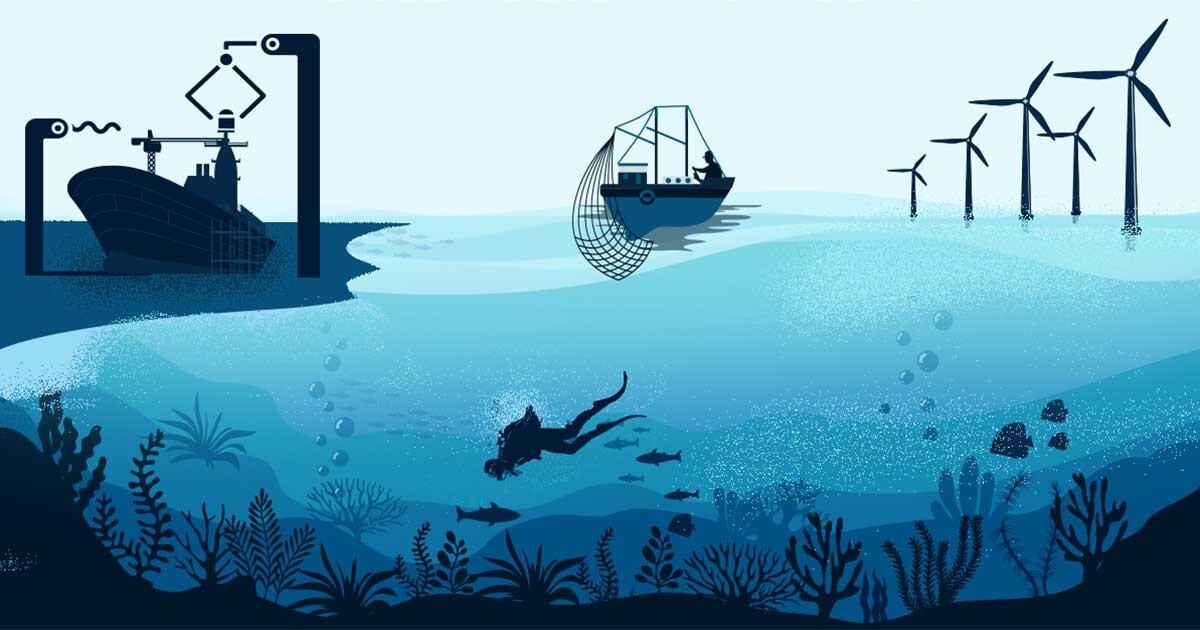
India's 7,500-kilometre coastline is not geography. It is civilisation, economy, crisis, and comeback — all at once. By Prof Ujjwal K Chowdhury | A Deep-Dive Feature on India's Coastal Economy Before the sun lifts fully above the Bay of Bengal, the boats are already gone. In a cluster of mud-and-thatch homes at the edge of the Sundarbans — that vast, drowned forest where the Ganga surrenders itself to the sea — the women are already sorting yesterday's catch. The smell of salt and fish oil hangs over everything. A child runs barefoot across the bank. A mobile phone rings. The world has arrived, but the tide has not waited for it. This is coastal India: ancient, adaptive, and increasingly imperilled. It is also the story of a nation trying to grow fast enough to survive what the sea is slowly taking back. India's coastline stretches 7,516 kilometres if you count only the mainland, and considerably more once you fold in the 1,382 islands of the Andaman, Nicobar, and Lakshadweep archipelagos. Along this edge live roughly 250 million people — more than the entire population of Brazil — whose livelihoods are tied, in one way or another, to the water. They are fishermen, port workers, hotel staff, salt farmers, aquaculture entrepreneurs, mangrove honey collectors, and software engineers whose offices happen to face the sea. Together, they inhabit an economy that contributes approximately four per cent of India's GDP directly through fisheries, shipping, and tourism — and far more if you count the invisible supply chains that move through this littoral corridor every single day. "India's coastal economy is not a sector. It is a civilisation — one that the country is only beginning to understand." That economy is now at a turning point. Climate change, rapid industrialisation, a revolution in deep-sea technology, and a tectonic shift in global maritime trade routes are simultaneously reshaping what it means to live and work on India's shores. The story is not simple, and it is not the same on all three coasts. The west is a story of industrial muscle. The south is a story of human capital. The east is a story of painful reinvention. And threading through all three is a question that no government, no corporation, and no activist has yet fully answered: can you grow an economy and save the sea at the same time? The Invisible Engine Running Beneath the Waves Most Indians think of the coast as a holiday destination or, perhaps, a fishing village seen from a train window. The reality is considerably more complex. India is one of the world's top five fish-producing nations, with an annual output of roughly 195 lakh tonnes, a figure that makes seafood one of the country's most significant agricultural exports. The journey of a single prawn from a shrimp farm in coastal Andhra Pradesh to a dinner table in Tokyo is a sophisticated, multi-stage logistics operation involving feed suppliers, pond managers, processing plants, cold-chain trucks, customs agents, and container shipping lines. It is, in miniature, a portrait of what economists call a blue value chain — and India has hundreds of them running simultaneously. Then there is the port economy. India has 12 major ports and more than 200 notified minor ones, and they handle over 95 per cent of the country's international trade by volume. When a garment made in Tiruppur reaches a wardrobe in Manchester, it has almost certainly passed through Chennai port. When an onion from Nashik reaches a kitchen in Singapore, Mundra or JNPT has handled it. The port is not merely infrastructure; it is the hinge on which India's $600 billion export ambition turns. Beyond fish and freight, there is tourism — Goa's beach shacks and Kerala's houseboats, the diving reefs of the Andamans and the temple-towns of Tamil Nadu's Coromandel coast. India's coastal tourism industry is worth tens of thousands of crores annually. And then there is the emerging frontier: offshore wind energy, seabed mining for polymetallic nodules worth an estimated $110 billion, marine biotechnology, and ocean-based carbon capture. This is where the story of the coast is no longer about yesterday's economy, but tomorrow's life and livelihood. Three Coasts, Three StoriesThe Western Wall: Ports, Petrochemicals, and the Price of Scale If you wanted to understand the economic ambition of modern India, you would start on the western coast. Here, in Gujarat and Maharashtra, the coastline has been transformed over the past three decades from a fishing frontier into an industrial colossus. Gujarat alone accounts for 8.1 per cent of India's GDP, a share that has risen steadily from 6.4 per cent at the turn of the millennium. Its per capita income now sits at 160 per cent of the national average — higher even than Maharashtra's 150 per cent. The engine of this growth is not agriculture or IT services. It is the coast. Mundra Port, operated by Adani Ports and Special Economic Zone, is now the country's largest commercial port by cargo volume. A few hours north, Kandla — officially renamed Deendayal Port — handles the bulk cargo that feeds India's oil refineries and fertiliser plants. The Jamnagar refinery complex, the world's largest single-location refinery, draws its crude through dedicated marine terminals and exports refined products from the same. In economic terms, the western coast is a fully integrated industrial ecosystem, where petroleum, chemicals, automobiles, and textiles move through purpose-built port infrastructure with a precision that rivals Rotterdam or Singapore. Maharashtra adds financial depth to this industrial foundation. Mumbai remains India's commercial capital, and its historic port — now being reimagined as a mixed-use waterfront development — is the symbolic centre of a city whose entire identity is coastal. Jawaharlal Nehru Port, across the harbour, is the country's primary container port. And further south, the Konkan coast, with its dramatic cliffs and protected bays, is being steadily developed for tourism and fisheries. Yet growth here has come with visible costs. The fishing communities of Gujarat's coastline — the Kharwas, the Machhis, the Vadvals — have been squeezed between industrial expansion and a regulatory system that has often prioritised cargo over community. Coastal erosion near industrial zones is measurable and documented. The creek systems around Mumbai, once among the most biodiverse in the subcontinent, have been severely degraded by decades of untreated effluents. In Ratnagiri, Maharashtra, thousands of fishermen and farmers mounted sustained protests against the proposed Nanar oil refinery, succeeding eventually in stalling it. The western coast teaches a clear lesson: scale without ecological accounting is not growth. It is borrowing from the future. "The shrimp on your plate may have been farmed, frozen, packed, and shipped from coastal Andhra to Tokyo in less time than it took you to plan your dinner." The Southern Mind: Brains, Backwaters, and Biodiversity The five southern states — Kerala, Tamil Nadu, Karnataka, Andhra Pradesh, and Telangana — together account for 30 per cent of India's GDP, and their coastlines are among the most economically and ecologically complex in Asia. This is the coast of paradoxes: some of India's most-educated fishing communities live here, alongside some of its most severe coastal erosion. The region hosts world-class ports and ancient temple-towns. It is where traditional catamaran builders and satellite engineers both call themselves children of the sea. Kerala is perhaps the most studied coastal economy in India, not because it is the largest, but because it is the most instructive. With a literacy rate of 96.2 per cent — the highest in the country — and a fishing sector deeply integrated into local culture and cooperative economics, Kerala has built a coastal livelihood model that other states regularly send delegations to study. The backwaters of Alleppey and Kumarakom are not just tourist attractions; they are working waterways that support inland navigation, paddy farming on reclaimed polders, and a freshwater fishery that has its own distinct economy. The Vizhinjam deep-sea transshipment port, currently under construction south of Thiruvananthapuram, promises to be a game-changer — a facility deep enough to handle the world's largest container vessels, potentially pulling trans-oceanic traffic that currently bypasses India for Colombo. Tamil Nadu's Chennai is already a major port, but the state's coastal economy extends far beyond it. The Gulf of Mannar, separating Tamil Nadu from Sri Lanka, hosts one of India's richest marine biospheres — a chain of coral reefs, seagrass meadows, and mangrove patches that support both artisanal fisheries and a growing marine tourism economy. Thoothukudi is a major industrial port, while Nagapattinam and Karaikal are fishing hubs with deep cultural identities shaped by the 2004 Indian Ocean tsunami, which killed over 10,000 people in Tamil Nadu alone. The 2004 tsunami remains the south's defining coastal trauma. It arrived without warning at dawn on December 26, erasing villages in minutes. The reconstruction period that followed revealed something important: communities with higher social capital — better education, stronger women's self-help groups, more responsive local governance — recovered faster and more completely. This lesson has since been absorbed into disaster risk frameworks, and Tamil Nadu and Kerala now have some of India's most sophisticated coastal disaster management systems. Andhra Pradesh contributes enormously to India's seafood exports through its massive shrimp aquaculture industry, particularly in the Krishna and Godavari delta districts. Visakhapatnam is a steel and petroleum port, but it also handles pharmaceutical exports from the Hyderabad hinterland. The coast here is industrial but not entirely so — the Coringa Wildlife Sanctuary near Kakinada protects one of India's largest mangrove forests, a natural buffer between cyclone-prone sea and densely-populated deltaic farmland. The Eastern Comeback: Corridors, Cyclones, and Careful Optimism The eastern coast tells the most complicated story. From the Sundarbans of West Bengal, sweeping south through Odisha and Andhra Pradesh to the northern tip of Tamil Nadu, this is the coastline most battered by cyclones, most challenged by poverty, and most in need of both investment and protection. It is also the coast with perhaps the greatest unrealised potential. West Bengal was once India's industrial heartland. In 1960-61, it accounted for 10.5 per cent of national GDP. By 2023-24, that figure had fallen to 5.6 per cent — a relative decline that mirrors the broader deindustrialisation of the state after the 1970s. Kolkata, once the second city of the British Empire, is no longer a port of global consequence. The Haldia dock complex handles some petroleum and fertiliser traffic, but it is a pale shadow of what this coast once was. The Sundarbans, however, are a world unto themselves. This 10,000-square-kilometre tidal mangrove delta — split between India and Bangladesh — is a UNESCO World Heritage Site, home to the Bengal tiger, the Irrawaddy dolphin, and roughly four million people who make their living from fishing, crab collection, and honey harvesting from the world's most dangerous forest. Cyclone Amphan in 2020 caused losses exceeding Rs 1 lakh crore in West Bengal alone, and much of the damage fell on these delta communities. The Sundarbans are sinking — literally. Ghoramara Island has lost more than half its land area to the sea in the last four decades. Sagar Island, where hundreds of thousands of pilgrims gather each January for Makar Sankranti, is measurably shrinking. Odisha has reversed its decline through mineral wealth and ambitious infrastructure. Its per capita income has climbed from 55.8 per cent of the national average in 2000-01 to 88.5 per cent today. Paradip Port, handling iron ore, coal, and fertilisers, is growing rapidly. The state has also dramatically improved its cyclone resilience: in 1999, the super-cyclone killed nearly 10,000 people. When Cyclone Fani, equally powerful, struck in 2019, fewer than 100 lives were lost — a testament to evacuation systems, improved housing codes, and community preparedness that the world took notice of. The most ambitious plan for the eastern coast is the East Coast Economic Corridor, India's first coastal economic corridor, stretching 2,500 kilometres from Kolkata to Kanyakumari. Its first phase, the Visakhapatnam-Chennai Industrial Corridor, is backed by $500 million from the Asian Development Bank and aims to link mineral-rich Odisha and Andhra Pradesh with Tamil Nadu's manufacturing base. The goal is not just to attract industry but to reduce India's notoriously high logistics costs — currently 13-14 per cent of GDP, against a global average closer to 8 per cent. Cheaper, faster movement of goods through this corridor could make India's exports significantly more competitive. "The Sundarbans are sinking. Ghoramara Island has lost half its land in four decades. This is not a forecast. It is already happening." Neighbours in the Same WaterBangladesh: Resilience Carved from Catastrophe Any serious account of India's eastern coast must cross the border into Bangladesh. The two countries share the Sundarbans, the Bay of Bengal's cyclone belt, and a fisheries ecology that does not respect national boundaries. Bangladesh's ocean economy contributes approximately 3.33 per cent of its GDP — a figure that understates the sector's social importance given that fisheries alone provide 60 per cent of the country's animal protein intake and the sector supports the livelihoods of roughly 30 million people. Chittagong Port, renamed Chattogram, is the country's economic lifeline — handling 92 per cent of import-export cargo and 98 per cent of containerised trade. In 2025, it achieved a historic throughput of 3.4 million TEUs, driven largely by the garment sector, which accounts for 84 per cent of Bangladesh's export earnings. The ready-made garment industry is coastal in a peculiar sense: its goods move through a single port chokepoint, making the country extraordinarily vulnerable to any disruption at that gateway. Bangladesh's disaster risk management is among the most celebrated in the world. In 1970, Cyclone Bhola killed an estimated 500,000 people — one of the deadliest natural disasters in recorded history. Today, Bangladesh's network of cyclone shelters, early warning systems, and trained community volunteers has reduced cyclone mortality by more than 99 per cent relative to those devastating mid-century events. The country has done this on a fraction of the budget that rich nations spend on comparable protections. It is a model that India's eastern coast should study closely. Sri Lanka: Lessons from a Hub that Nearly Sank Sri Lanka's relationship with the sea is total — it is an island, surrounded on all sides. The Port of Colombo is one of the Indian Ocean's great transshipment hubs, a place where container ships from Europe, East Africa, and East Asia cross paths. In 2024, Sri Lanka attracted 2.05 million tourist arrivals — a 38 per cent increase over the previous year — with India remaining the single largest source market, accounting for over 20 per cent of visitors. Tourism earnings exceeded $3 billion, a figure critical to the country's recovery from its 2022 economic meltdown, when foreign reserves fell to a catastrophic $50 million and fuel queues stretched for kilometres. The Sri Lankan crisis — driven by unsustainable debt, a sudden ban on chemical fertilisers that devastated agriculture, and the catastrophic loss of tourism revenue during the pandemic — is a cautionary tale about the fragility of coastal economies over-dependent on a few sectors. The country's recovery has been managed through an IMF programme worth $3 billion and a historic restructuring of $17 billion in external debt. The new government has prioritised anti-corruption reforms and targeted investment in port modernisation and marine tourism. Sri Lanka's eight UNESCO World Heritage Sites and extraordinary marine biodiversity — from the blue whales of Mirissa to the reefs of Pigeon Island — remain assets that, if managed wisely, can sustain the economy for generations. The Laws That Protect — and the Loopholes That Don'tUNCLOS, the Paris Agreement, and India's Shifting CRZ The ocean has a constitution. It is called UNCLOS — the United Nations Convention on the Law of the Sea — and it was adopted in 1982 after nine years of negotiation. UNCLOS divides the sea into zones: the territorial sea (12 nautical miles from shore, under sovereign control), the contiguous zone, and the Exclusive Economic Zone or EEZ (200 nautical miles, where the coastal state has sovereign rights over resources). For India, the EEZ covers 2.3 million square kilometres — an enormous maritime territory rich in fish, minerals, and as-yet-unexploited energy resources. UNCLOS does not directly address climate change, but its provisions requiring the protection and preservation of the marine environment are increasingly being interpreted to cover ocean warming and acidification. The Paris Agreement, meanwhile, obligates signatory nations — including India — to limit greenhouse gas emissions in ways that will reduce sea level rise and cyclone intensity. India has committed to net-zero emissions by 2070 and has pledged that 50 per cent of its electricity will come from renewable sources by 2030. For coastal communities, the pace of this transition is not an abstract policy question. It is an existential one. Domestically, the most contested piece of coastal law is the Coastal Regulation Zone notification. The CRZ rules govern what can be built, farmed, or mined within specified distances from the high-tide line. The 2011 notification established a No Development Zone of 200 metres in rural coastal areas and froze urban construction density at 1991 levels, prioritising conservation. The 2019 notification reversed much of this, reducing the NDZ to 50 metres in densely populated rural areas and unlocking floor space index norms in urban coastal areas. Developers celebrated. Environmentalists called it a systematic dismantling of protection. Crucially, the 2019 rules removed the 'Hazard Line' — a demarcation based on predicted sea-level rise and tidal ingress — from regulatory planning, relegating it to an informative tool rather than a planning constraint. This means that hotels, roads, and residential buildings can be constructed in areas that hydrological models identify as likely to be submerged within decades. Critics argue this is not development; it is the subsidisation of future disaster. India also has the Environment Protection Act of 1986 and the Wildlife Protection Act of 1972, both of which have provisions relevant to coastal ecosystems. The Forest Rights Act of 2006 has been used by coastal communities to assert rights over mangrove areas and traditional fishing grounds. But the gap between law on paper and enforcement on the ground remains wide enough to drive a trawler through. Illegal sand mining along Kerala's beaches has caused severe erosion. Industrial effluents continue to reach the sea in violation of the Water Prevention and Control of Pollution Act. The problem is rarely the absence of law. It is the presence of indifference. Technology at the Water's EdgeFrom GPS Buoys to Deep-Sea Submarines: The Digital Transformation The fisherman from Dakhinpara who once read the sky to predict weather now gets a satellite forecast on his mobile phone. This is not a small change. It is the difference between a boat that sets out into a cyclone and one that stays safely at home. The Indian National Centre for Ocean Information Services disseminates Potential Fishing Zone advisories via SMS and satellite, telling fishermen exactly where ocean temperatures and currents suggest fish are most likely to be concentrated. The result is less fuel burned, fewer empty nets, and more time at home with family. But this is just the visible surface of a deeper technological revolution. At the institutional level, the National Fisheries Digital Platform has created digital identities for over 26 lakh coastal stakeholders, linking them to formal credit, crop insurance, and government schemes. The platform acts as a single window through which a fisherman in Mangaluru can apply for a loan, register his boat, and claim disaster relief — services that once required days of travel to government offices. Simultaneously, 'Blue Port' pilots are being developed in collaboration with the UN Food and Agriculture Organisation at Vanakbara in Diu, Jakhau in Gujarat, and Karaikal in Puducherry, deploying IoT sensors, 5G connectivity, and solar-powered cold chains to transform old fishing harbours into smart, export-ready hubs. For the high seas, India has placed a significant bet on its Deep Ocean Mission — a Rs 4,077 crore programme that is simultaneously the country's most ambitious scientific expedition and its most strategic economic play. The mission's centrepiece is MATSYA 6000, a manned submersible designed to dive 6,000 metres beneath the surface. Its pressure vessel is a sphere of titanium alloy with 80-millimetre walls, built to withstand 600 times atmospheric pressure, welded using electron beam technology developed by ISRO after 700 trials. In 2025, MATSYA successfully dove to 5,000 metres in the Andaman Sea and returned with cobalt-rich polymetallic nodules — early proof of a seabed that India's ocean scientists believe holds 380 million metric tonnes of mineral wealth, including copper, nickel, cobalt, and manganese critical to green energy technologies. In the private sector, a new generation of startups is rewriting the economics of aquaculture. NatureDots uses AI and satellite imagery to monitor coastal pond conditions in real time, detecting early signs of disease outbreaks that can destroy entire shrimp crops. Aquaconnect provides precision feeding and health analytics that reduce the cost and environmental footprint of aquaculture operations. GreenGrahi converts food waste into insect-based protein for fish feed, reducing the industry's dependence on wild-caught fish meal — a practice that depletes the very ocean stocks that coastal communities depend on. These companies are small now. But they represent the direction of travel. "MATSYA 6000 dove to 5,000 metres and returned with mineral nodules worth billions. India's next economic frontier may lie two kilometres below the sea." The Unfinished Story of Coastal JusticeWomen, Work, and the Economy Nobody Counts Walk into any fish market on any Indian coast and you will find women. They sort the catch, set the prices, manage the credit, and run the micro-enterprises that convert raw fish into packaged product. Studies across coastal states consistently find that women control between 60 and 80 per cent of post-harvest fisheries activity. Yet they are counted in almost no official economic data. They do not own the boats. They rarely own the land. Their labour is invisible to GDP calculators and ignored by most credit systems. This is a social injustice, but it is also an economic mistake. Self-help groups of coastal women in Kerala and Tamil Nadu have demonstrated that when women are given access to revolving credit funds and collective marketing channels, the productivity of entire fishing communities rises. In Odisha, women trained in mangrove afforestation through state and NGO programmes have become the primary guardians of coastal forests that protect their own villages from storms. In Bangladesh, women's early warning networks have been instrumental in saving lives during cyclones. The evidence is overwhelming: investing in coastal women is one of the highest-return strategies available to any coastal economy. What Activists, Citizens, Government, and Business Must Do The future of India's coast is not predetermined. It will be shaped by choices made now — by governments, corporations, communities, and individuals. What is required is not a single grand plan but a coordinated set of actions, sustained over decades, that treat the coast as what it actually is: a living system that produces enormous value precisely because it is alive. For governments, the most urgent task is to restore the Hazard Line to regulatory planning — not as bureaucratic obstruction but as common sense protection for the people who live in flood-prone areas. The Sagarmala programme has rightly focused on port-led development, but it needs a parallel ecological accounting system that measures what is lost when a mangrove is cleared or a creek is filled. The MISHTI scheme — India's mangrove restoration programme — must be funded at scale and monitored rigorously, with a mandatory 3:1 replanting ratio enforced when coastal development displaces natural vegetation. State coastal zone management authorities, many of which exist largely on paper, need real budgets, real staff, and real enforcement powers. For the private sector, the model to emulate is not the extractive one but the regenerative one. The Godrej Group voluntarily protected 750 hectares of mangroves in Mumbai decades before any law required it — and that forest now provides measurable flood protection to millions of residents. The port industry needs to accelerate the transition to Green Port standards: electric handling equipment, zero-discharge wastewater systems, and marine litter monitoring programmes. For businesses in fisheries and aquaculture, investing in blockchain-based traceability systems is not just an ethical choice; it is a commercial necessity, as the European Union and US are moving toward mandatory seafood traceability requirements that will exclude non-compliant suppliers. For activists and civil society, the role is to ensure that the voices of coastal communities are present in the rooms where decisions are made. The protests against the Sterlite copper plant in Thoothukudi, which led to its eventual shutdown after 13 people were killed by police fire in 2018, demonstrated both the courage of coastal communities and the extreme price they sometimes pay for that courage. More recently, fisherfolk protests over the construction of Vizhinjam port in Kerala raised legitimate concerns about displacement and compensation that were only partially addressed. Documenting violations, filing environmental impact complaints, litigating in the National Green Tribunal, and building coalitions across caste and community lines: these are the tools of coastal activism, and they have proven effective. For citizens living far from the coast, the connection is closer than it feels. Every piece of single-use plastic discarded in a city eventually reaches a river, and every river reaches the sea. Consumer choices — buying sustainably certified seafood, refusing microplastic-heavy cosmetics, supporting ecotourism operators with genuine community benefit-sharing — transmit real signals to coastal economies. The Versova beach cleanup in Mumbai, led by lawyer Afroz Shah, mobilised over 1,000 volunteers over 85 weeks and removed more than 20 million kilograms of plastic, earning a United Nations Champions of the Earth award. It began with one person who was offended by the state of a beach he loved. That is a model for citizenship, not just environmentalism. The Tide That Does Not Wait There is a word in Bengali — 'nadibandhu' — that means 'friend of the river'. On the Sundarbans islands, fishermen use it to describe someone who truly understands the water: its moods, its generosity, its violence. India needs to become a nadibandhu to its coast — not exploiting it or romanticising it, but genuinely understanding it and taking responsibility for it. The numbers support urgency. Sea levels along India's coast are rising at between 1.3 and 3.2 millimetres per year, with some segments rising faster. Cyclone frequency in the Bay of Bengal has increased, and cyclone intensity — the category of storms — has risen sharply in the Arabian Sea, which historically produced fewer severe storms. Fish catch volumes in inshore waters are declining as overfishing and ocean warming displace fish populations into deeper, cooler waters. Groundwater in coastal districts of Gujarat, Andhra Pradesh, and Tamil Nadu is becoming increasingly saline as sea intrusion advances. Against this, India has genuine assets. Its scientific institutions — the National Institute of Oceanography, the Centre for Marine Living Resources and Ecology, the Indian National Centre for Ocean Information Services — are world-class. Its fisheries cooperatives in Kerala are models studied internationally. Its disaster management systems, built painstakingly after the tragedies of 1999 and 2004, have saved hundreds of thousands of lives. Its blue economy startups are innovating at pace. Its diaspora of coastal engineers, marine biologists, and maritime lawyers brings global knowledge back to Indian shores. The question is whether these assets can be mobilised fast enough, and in coordination with each other, to build a coastal economy that is genuinely sustainable — one that feeds its people, trades with the world, explores the deep sea, and still leaves the mangroves standing. India's target of becoming a $5 trillion economy by the late 2020s will not be met from the hinterland alone. The ports must work. The fisheries must thrive. The tourism coasts must be clean enough to attract visitors and honest enough to share the benefits with the communities that live there. The offshore wind turbines must spin. The MATSYA submersible must return from the deep with knowledge and resources that belong to all Indians, not just the few. "Every river reaches the sea. Every coastal decision eventually comes back to the citizen who made it — or failed to." As the boats return at evening to harbours from Saurashtra to the Sundarbans, carrying the day's catch and the day's stories, the sea behind them holds its counsel. It does not care about GDP targets or election cycles or corporate quarterly results. It cares only about balance. And it will enforce that balance, one way or another — by storm or by surrender, by crisis or by wisdom. India still has the chance to choose wisdom. The tide is not yet fully in. But it is coming. The Nation IndicatorValue/Statistic (2024-2025)ReferenceCoastline Length7,517 km (Mainland + Islands) Exclusive Economic Zone (EEZ)2.3 million sq. km Blue Economy GDP Contribution~4% Real GDP Growth (Q2 FY 2025-26)8.2% Total Fish Production195 lakh tonnes Export Target (2030)$USD\ 1$ trillion (Merchandise) Maritime Trade Volume>90% of national trade volume The West StateGDP Share 1960-61GDP Share 2023-24Per Capita Income vs Nat. Avg (2023-24)MaharashtraHighHighest (Constant)150.0%Gujarat6.4% (in 2000-01)8.1%160.7%Goa-ExceptionalDoubled since 1970-71 The South Region/StateKey Coastal HubsEconomic SpecializationSocial IndicatorKarnatakaMangaluru, KarwarIT, Petrochemicals, Food ProcessingHigh Literacy/SkilledTamil NaduChennai, ThoothukudiAutomobiles, Textiles, Renewable EnergyPioneered Midday MealsAndhra PradeshVisakhapatnam, KakinadaPharmaceuticals, Metallurgy, AquaparksLarge Aquaculture baseKeralaKochi, VizhinjamTourism, Fisheries, Remittances96.2% LiteracyTelanganaHyderabad (Hinterland link)Biotech, IT, VaccinesHigh GVA growth Node/ProjectPhaseFocus IndustryFunding/PartnerVCIC (Visakhapatnam-Chennai)Phase 1 of ECECPharma, Metallurgy, ElectronicsADB ($500 million)Koparthy Industrial AreaVCIC NodeGeneral ManufacturingNICDITParadip Port ModernizationECEC AnchorIron Ore, Coal, PetrochemicalsSagarmalaKakinada NodeVCIC NodeFood Processing, ChemicalsState of AP Bangladesh Bangladesh SectorGDP Contribution / ValueKey DetailOcean Economy (Total)3.33% of GDPValue: ~$6.2 billion (2014-15)Fisheries (Total)3.57% of GDP60% of animal protein sourceChittagong Port Volume3.409 million TEUs (2025)Record handling milestoneLivelihoods Dependent~30 million people~20% of the population Sri Lanka Sri Lanka Indicator2024 StatisticChange/DetailTourist Arrivals2,053,46538.1% YoY increaseTourism EarningsExceeded $USD\ 3$ billionTarget for recoveryTop Source MarketIndia (20.3%)Cultural & Geographic tiesForeign Reserves$USD\ 6.5$ billion (March 2025)Up from $50m in 2022 India: Legal Demarcations FeatureCRZ 2011CRZ 2019NDZ (Rural IIIA)200 meters50 metersFSI/FAR in Urban AreasFrozen at 1991 levelsDe-frozen to current levelsIntertidal ActivitiesHighly restricted18 permissible activities allowedHazard LineMandatory for zoningInformative; removed from limitsTourism HomestaysNot specifically mentionedPermitted in NDZ Indian Coastal Technology TechnologyApplication in Blue EconomyImpact/BenefitIoT SensorsSmart Port MonitoringOperational efficiency & safetySatellite ImageryPotential Fishing Zones (PFZ)Reduces fuel waste & overfishingAI & Big DataAquaculture ManagementYield prediction & disease controlBlock ChainSeafood TraceabilityBoosts export competitivenessOTECOffshore DesalinationClean water for island communities ...Read more
26 Mar 2026
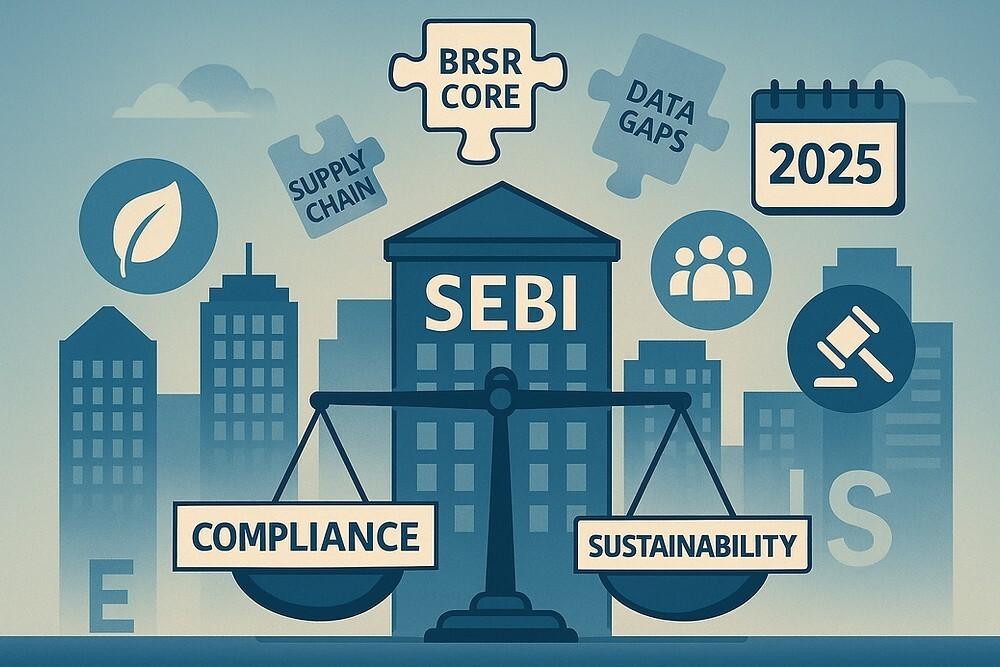
A single email, two report cards, and the moment “sustainability” became operationsThe email that changed the weekIt begins the way most modern disruptions begin: not with a protest, not with a policy speech, but with an email that looks harmless until you open the attachment.A mid-sized manufacturer—supplying components to a large listed company—receives a message addressed with polite corporate warmth: “Dear Partner, we require your ESG data for the upcoming reporting cycle.” The attachment reads like a quiet audit of life inside the factory: electricity consumption, water use, waste handling, worker safety incidents, gender representation, grievance mechanisms. The owner reads it twice and mutters the line that has become India’s most honest ESG definition: “We make parts. Since when did we become a climate report?” That sentence matters because it captures the real arrival of ESG in India. Not as philosophy. Not as a corporate “initiative.” As procurement. As an operational demand that travels down the supply chain with the force of a purchase order. Not CSR 2.0—an entirely different speciesIndia understands CSR. It is familiar, mandated, and often visible: projects, schools, sanitation drives, community initiatives. ESG is different, and the difference is not cosmetic. CSR is largely about what a company contributes outward—money and projects for social good. ESG is about how the company operates inward—its environmental footprint, how it treats people, and how it governs itself. CSR can be meaningful even if the core business remains unchanged. ESG pushes on the core business by design. That is why ESG feels intrusive to many promoters and plant heads: it is not asking for generosity; it is asking for systems. Why ESG became unavoidable: the three pressures that convergedESG did not rise because corporations suddenly became kinder. It rose because three forces converged—investors, regulators, and a generation that treats transparency as the minimum price of trust. Investor pressure came first. Global capital began asking an unforgiving question: what risks will break this business over ten years? Climate risk, labour risk, governance risk. ESG scores became shorthand for long-term resilience. Regulatory pressure followed. Countries started pushing sustainability disclosure out of the voluntary “good news” genre and into standardised reporting. And generational pressure grew louder: employees and consumers increasingly expect purpose, transparency, and ethical conduct—especially where talent and trust are strategic assets. Put together, ESG became a new language of risk, capital, and legitimacy. The world’s ESG machinery: one destination, different routesIf you look across major democratic economies, the direction is broadly shared: less storytelling, more standardisation; fewer glossy claims, more audit trails. The routes, however, differ sharply. Europe: the strict school that is now rewriting its homeworkThe European Union built the world’s most comprehensive ESG architecture: corporate reporting rules, financial product disclosure rules, and a shared definition of what counts as “green.” On corporate reporting, the European Commission notes that the first companies subject to the CSRD apply the new rules for the first time in the 2024 financial year, with reports published in 2025. On financial markets, SFDR has been in application since March 2021. And then there is the EU Taxonomy, a common definition meant to scale sustainable investment and protect against greenwashing. But even Europe is adjusting. Reuters has reported on EU proposals to loosen or cut back parts of sustainability rules to reduce regulatory burden and improve competitiveness. That recalibration matters for India because it underlines a practical truth: ESG frameworks succeed when measurement capacity keeps pace with disclosure ambition. The UK: climate-first discipline, then alignment to global standardsThe UK approach has been pragmatic: start with climate-related disclosure discipline, then build toward broader sustainability reporting alignment. The UK’s FCA has outlined its TCFD-aligned approach, and the UK government has published guidance on UK Sustainability Reporting Standards rooted in the evaluation and potential endorsement of IFRS Sustainability Disclosure Standards (IFRS S1 and IFRS S2). In plain terms, the UK is translating sustainability into the language of financial reporting culture—risk, governance, disclosure controls. The United States: a market that wants disclosure, and a system that litigates itIn the US, ESG has been shaped as much by courts and politics as by investor demand. The text notes that in March 2025 the US SEC stated it had voted to end its defense of climate disclosure rules requiring disclosure of climate-related risks and greenhouse gas emissions, and Reuters reported a US appeals court pausing challenges while awaiting clarity on the agency’s stance. The lesson for India here is operational, not ideological: when ESG becomes politically contested, compliance certainty suffers, even as market pressure continues through global customers and overseas regulations that still force disclosures through supply chains. Japan: disclosure as muscle memoryJapan’s ESG movement has leaned heavily on disciplined corporate disclosure norms. The document cites a Financial Stability Board note that Japan enhanced sustainability disclosure requirements in annual securities reports, applied starting with reports for the financial year ended March 2023.Japan’s advantage is cultural and institutional: systems and governance are treated as core business hygiene, not side projects. Australia and Canada: standards, laws, and a staged runwayAustralia has moved into sustainability standards infrastructure, including climate disclosure standards issued by the AASB, and policy/professional guidance describing a mandatory climate-related disclosure regime beginning from 1 January 2025 under Corporations Act amendments. Canada has issued CSDS 1 and CSDS 2 aligned with ISSB standards, with an effective date of 1 January 2025 on a voluntary basis, as reflected in the IFRS jurisdictional snapshot. Together, these models reinforce one steady truth: ESG becomes real when it is connected to standards, enforcement, and assurance pathways—not merely encouraged. The baseline that keeps showing up: IFRS S1 and IFRS S2Behind all this is an effort to converge. IFRS S1 and IFRS S2—issued by the ISSB—are positioned as a global baseline for sustainability and climate-related financial disclosures, effective for annual reporting periods beginning on or after 1 January 2024. The implication is blunt: India does not need to copy the EU or the US, but Indian disclosures must be credible, comparable, and investment-grade. India’s ESG turning point: when BRSR changed the rules of the roomIf ESG is a global language, India’s most important translator has been SEBI’s Business Responsibility and Sustainability Report (BRSR). The document notes that SEBI introduced BRSR through a circular in May 2021, positioning it as a replacement for older reporting formats and setting the stage for standardised ESG disclosure for listed entities. Over time, BRSR became mandatory for the top 1,000 listed companies (by market capitalisation), beginning with the FY 2022–23 reporting cycle—shifting ESG reporting from “best practice” to “market expectation.” Then came BRSR Core: a subset of key metrics paired with assurance requirements and, crucially, an expanding expectation of value-chain disclosures. It is worth pausing here because this is how ESG becomes operational in the real world: not by speeches, but by templates, metrics, and assurance. The hidden twist: ESG refuses to stay inside the listed companyOn paper, the obligation begins with listed entities—especially the top 1,000. In practice, ESG behaves like an ink spill: it spreads outward into suppliers, logistics partners, contractors, and service providers. That is why value-chain ESG disclosure is such a sensitive issue. It effectively pushes reporting burdens onto smaller firms that may lack the systems to respond. This is not a minor detail. It is the frontline tension in ESG implementation: transparency is necessary, but the capacity to measure accurately is uneven. In this context, the “polite email” is not a request; it is the supply chain being converted into a data system. The text notes that Reuters has reported SEBI’s plan to review ESG disclosure requirements with particular attention to supply chain transparency, after concerns that obligations can be too burdensome for smaller firms and risk producing “paper disclosures,” while SEBI documentation has reflected adjustments to timelines for value-chain disclosures and assurance. India, in other words, is running ESG on two tracks at once: acceleration for large firms, capacity constraints for the rest. How ESG is actually implemented inside companiesStrip away the slogans and ESG implementation looks like a sequence of internal changes.A company has to decide what it will measure—emissions, water, waste, safety, diversity, board oversight—and how those data will be collected across plants, offices, and subsidiaries. It must define responsibility: who owns the data, who verifies it, who signs it. It must build governance: board-level oversight, policies, grievance systems, and internal controls that make reported numbers auditable. And increasingly, it must obtain external assurance—particularly for BRSR Core under the glide path SEBI has outlined. This is why ESG can feel heavy. It requires companies to build measurement muscle, not just publish ambition. The ratings problem: when the report cards do not agreeAs ESG gained popularity, ratings multiplied. Then they began disagreeing—often dramatically—because methodologies vary. India’s regulatory response, as captured in the text, has been to move toward greater oversight. SEBI has issued a Master Circular for ESG Rating Providers (ERPs), embedding them within a regulated framework. The document notes that even rating withdrawal—when and how an ESG rating can be withdrawn—has attracted attention, signalling that India is treating ESG as a market integrity issue, not a marketing trend. When ESG becomes tangible: cases that make the theory sweatThe best way to understand ESG is to see it where it becomes operational. Consider a major airport setting measurable sustainability targets, shifting energy sourcing, and publicly reporting performance highlights. The text points to Mumbai’s international airport ecosystem highlighting milestones such as achieving renewable electricity use and carbon neutrality claims for specific scopes, showing how large infrastructure operators integrate ESG into operations and disclosure. Consider a major engineering and construction group reporting reductions in greenhouse gas emission intensity and embedding disclosures in formal sustainability reporting—turning ESG into year-on-year operational discipline rather than one-time messaging. Consider energy firms building decentralised renewable solutions—such as rural microgrids—where the “E” intersects directly with livelihoods and enterprise. And then consider the “G” that changes behaviour fastest: governance practices where ESG goals influence leadership incentives. When executive compensation is linked to ESG outcomes, ESG stops being an “initiative” and becomes part of how power is rewarded. These are not just good stories. They are signals that ESG is becoming institutional practice in parts of corporate India. How ESG is performing now: progress with frictionThe progress, as your document frames it, is real. BRSR has institutionalised disclosure. Assurance norms are expanding. ESG funds and products are becoming more structured, and SEBI has issued frameworks for ESG investing and related disclosures by mutual funds. Capital is also being aligned with sustainability through instruments such as sovereign green bonds, with government disclosures noting issuances and expenditure alignment under eligible categories. But performance is mixed, and the friction points are serious. One friction is data quality and cost: many MSMEs struggle with data collection, compliance costs, and a lack of standardised frameworks. A second is greenwashing risk—the gap between narrative and reality. The more ESG becomes reputational currency, the stronger the incentive to polish rather than transform. A third is the value-chain burden: recent reporting indicates SEBI has been reviewing ESG disclosure requirements, including supply-chain transparency, in response to concerns that obligations may be too burdensome for smaller firms and may produce “paper disclosures” rather than honest measurement. So ESG today is both a leap forward and a stress test: it is forcing transparency, while exposing measurement inequality. ESG does not sit alone: India’s national trajectory is the background weatherThe document makes a critical connection that companies sometimes forget: ESG is not a corporate island. India’s broader sustainability agenda—net-zero by 2070, increasing renewables, expanding carbon sinks—forms the national context within which corporate ESG strategies evolve. Public systems are also building comparability through frameworks like the SDG India Index, which reports an overall national score and tracks progress across goals—reminding companies that sustainability is not only corporate; it is systemic. This matters because ESG is ultimately about resilience in the same terrain where public policy, climate risk, and social inclusion operate together. Three futures for ESG in India—and the one question that decides which future we getThe current scenario is disclosure-driven acceleration: ESG is spreading because markets and regulators have made it difficult for large companies to ignore. The possible scenario is capacity-building at scale: simplified tools for MSMEs, common measurement standards, phased reporting that prioritises accuracy over speed, and assurance ecosystems that do not become a compliance cartel. The long-term scenario is structural transformation: ESG becomes a driver of industrial competitiveness. Companies that decarbonise early, manage water risk, improve workforce stability, and govern transparently will likely win cheaper capital, stronger partnerships, and more resilient supply chains. But the roadblocks are real. If ESG becomes a documentation race, it produces fatigue, not transformation. If value-chain requirements arrive without measurement capacity, they invite unreliable reporting. If rating systems remain inconsistent or conflicted, they can distort incentives rather than improve behaviour. So the next phase of ESG in India must answer one hard question honestly: are we building the ability to measure, or merely the ability to narrate? The operational close: who must do what, now, without hiding behind jargonThe document closes with a practical compliance reality: ESG execution is not a motivational poster. It is category-specific work that differs depending on what you are.If you are a listed entity—especially a large-cap—the first discipline is to confirm whether you fall within the cohort where ESG disclosure through BRSR has become a market mandate, and to align your reporting calendar accordingly. From there, you must implement the BRSR Core framework and plan for assurance in line with SEBI’s framework direction, while building board-level ESG governance that assigns owners, approvers, and internal controls so ESG numbers are auditable, not ornamental. If you sit within the top cohort relevant to value-chain disclosures, you must also align supplier data processes to value-chain disclosure expectations and the revised timeline adjustments reflected in SEBI documentation—because, for you, “ESG” includes how your supply chain behaves, not only how your own facilities behave. If you are a supplier to a listed entity, you must assume the procurement reality will repeat: ESG data requests will arrive as part of doing business, not as a special initiative. Your defensible position is to maintain a basic ESG data pack—energy, water, waste, safety incidents, workforce demographics, grievance mechanisms—so you are not improvising every reporting cycle. And you must negotiate timelines and scope realistically, because the system itself is acknowledging the risk of “paper disclosures” when measurement capacity is thin. If you are an ESG Rating Provider, your responsibilities rise sharply because your outputs influence investment decisions. The text makes clear that SEBI has brought ERPs under a regulated framework through its Master Circular, and that withdrawal practices are being treated as a market integrity issue, not a marketing accessory. If you are a mutual fund or AMC offering ESG schemes, the expectation is compliance with SEBI’s circular establishing the ESG scheme category and related disclosures—because ESG, in finance, is judged not only by intent but also by disclosure discipline. Across all categories, the document insists on one grounding truth: ESG is not only reporting. It is also compliance mapping. Companies must map the “E” and “S” into Indian law and operational practice—updating workforce compliance systems in light of the four Labour Codes (as referenced in the text), and mapping obligations under E-Waste (Management) Rules, 2022 and the EPR regime where applicable. Finally, if your investors or customers operate globally, you cannot treat ESG as a local paperwork exercise. You must track convergence to global baselines such as IFRS S1 and IFRS S2, and if you operate in or export into the EU ecosystem, you must understand that frameworks like CSRD, SFDR, and the EU Taxonomy shape what your European partners will ask you to prove. And this brings us back to the factory owner and the spreadsheet. The first email feels like an annoyance. The second feels like a new cost. By the fifth, the company realises the truth ESG has been trying to say without slogans: the future belongs to businesses that can prove how they operate—not only explain what they believe. If India gets measurement right, ESG can become more than a reporting regime. It can become a competitiveness and justice framework—one that rewards businesses not for sounding responsible, but for operating responsibly. ...Read more
26 Mar 2026
The Cartography of the InvisibleWhere the Mangroves End and the Map BeginsIn the delta, water is not a backdrop. It is road, market, workplace, weather, and fate—sometimes all in the same afternoon. The tide slides in and out through a maze of creeks, and the mangroves of the Sundarbans rise like an old, stubborn barricade against storms that have grown meaner with time. Beyond that green tangle lies the open pull of the Bay of Bengal, where fishermen have always followed fish the way farmers follow rain: by instinct, by memory, by inherited knowledge that is more lived than taught.But the sea’s indifference is also its cruelty. It does not acknowledge flags, check passports, or pause at a boundary line drawn by diplomats. A boat can drift the way a leaf drifts—one current, one gust, one fog bank, and the crew is suddenly “foreign,” not by intention but by coordinates. In the winter of 2025–26, that invisible arithmetic of latitude and longitude turned ordinary fishing trips into legal crises, and families into waiting rooms.The Bay of Bengal, a vast triangular basin of the northeastern Indian Ocean, has historically functioned as a fluid conduit for culture, commerce, and climate. For centuries, the tangled mangrove roots served not as a hard border but as a shared ecological frontier between the polities of Bengal. Here, the tide does not recognize the Westphalian distinctions of sovereignty; saltwater flows freely, inundating mudflats and receding with a rhythm that dictates the lives of millions. Yet, by late 2025, this indifferent tide had transformed into a rigid theatre of conflict, surveillance, and geopolitical friction.This report offers an exhaustive analysis of the maritime crisis that unfolded between September 2025 and January 2026. Anchored by the specific case of the Indian trawler Subhajatra and the reciprocal seizure of the Bangladeshi vessels FB Ruposi Sultana and FB Sabina, the investigation dissects the systemic drivers of these transgressions. It argues that these incidents are not mere navigational errors but the inevitable output of a complex system involving ecological collapse in the Hooghly estuary, the exploitative Dadni debt structures, technological obsolescence, and the hardening of diplomatic postures following the political upheavals in Dhaka in August 2024.The International Maritime Boundary Line (IMBL)The International Maritime Boundary Line (IMBL) is not a fence you can see. There is no buoy chain you can follow like a lane marker. The demarcation, settled by the Permanent Court of Arbitration in 2014, resolved the legal ambiguity of the waters but could not resolve the ecological and economic realities of the communities living on its fringe. The coordinates defining this line—such as 21° 36' 49.1" N, 89° 01' 37.4" E—are abstract concepts that do not correspond to any physical landmark in the open Bay.For a fisherman on deck, looking out at a horizon of uniform grey-blue, the transition from "sovereign India" to "sovereign Bangladesh" is visually non-existent. The water color does not change; the waves do not break differently. Yet, the consequences of crossing this invisible threshold are concrete and devastating: seizure, incarceration, and financial ruin.In the winter of 2025–26, the maritime space south of the Sundarbans became the stage for a recurring tragedy. As the early winter sun set in December 2025, patrols stepped up to deter illegal fishing, intensifying the frequency of interceptions. In mid-December 2025, for instance, the Indian Coast Guard detained Bangladeshi fishermen after intercepting trawlers found fishing inside Indian waters, a reminder that the boundary is actively policed and that boats can be seized along with crews.1.3 The Sociology of the Periphery: SankijahanTo understand the trajectory of the Subhajatra, one must understand its point of origin. Sankijahan is a village situated in the Kultali Block of the South 24 Parganas district, falling under the jurisdiction of the Kultali Police Station. It is a place where land is constantly negotiated with water; plot numbers in government records (e.g., JL No. 27, KH No. 403) denote a landscape constantly subject to survey and re-survey due to shifting deltaic soil.Sankijahan operates on the margins of the state's infrastructure. Records from disaster management departments indicate that land in Sankijahan is frequently requisitioned or designated for "Multipurpose Cyclone Shelters" (MPCS), such as the one constructed on the land of the Sankijahan FP School. This highlights the primary existential threat to the village: climate-induced displacement. The latitude (22.05°N) and longitude (88.58°E) place it squarely in the path of cyclonic depressions forming in the Bay of Bengal.For the men of Sankijahan, fishing is not a job you "choose." It is lineage. A boy learns the sea the way he learns language—first by listening, then by repeating, then by doing it without thinking. But the village is under siege. The failure of local agriculture due to salinity intrusion leaves the "silver crop" of the ocean as the only viable cash source.Historically, the community in Sankijahan relied on the Matla River for sustenance. Hydrographic surveys of the Matla River (National Waterway 97) describe the right bank near Sankijahan as "fairly populated," with fishing and rain-fed farming as the primary sources of livelihood. However, the ecological carrying capacity of the Matla has been breached. The "Economic Rehabilitation of the Resourceless Fishermen of Sankijahan" projects, dating back decades, have systematically pushed fishermen away from traditional estuarine fishing toward mechanized deep-sea trawling.This transition converted the fisherman from a riverine subsistence worker to a deep-sea labourer, necessitating higher capital investment, higher risk, and consequently, higher debt. Government and NGO interventions provided mechanized trawlers to groups of 12–14 fishermen—exactly the crew size of the Subhajatra—to enable them to access marine resources. This shift was intended to alleviate poverty but paradoxically exposed these communities to the geopolitical risks of the open ocean.The Ecology of DesperationThe Hilsa: A Migrating Fish in National ArgumentsThe conflict in the Bay of Bengal is, at its core, a resource conflict centred on Tenualosa ilisha. The Hilsa is more than a fish; it is the "silver diamond" of the delta, a cultural icon, and the primary economic motivator for the risky voyages undertaken by trawlers like the Subhajatra.The Hilsa does not belong neatly to any one coastline. It is anadromous, migrating from the sea to freshwater rivers to spawn, threading together ecosystems that politics divides. Yet Hilsa also sits at the centre of intense national emotions and economic stakes. Bangladesh’s Hilsa fishery is widely documented as a backbone species—supporting millions and carrying deep cultural value—while contributing a significant share of national fish production and catch.The Production AsymmetryThe fundamental driver of cross-border intrusion is the stark asymmetry in Hilsa availability between Indian and Bangladeshi waters. Bangladesh has successfully conserved and managed its Hilsa stocks, positioning itself as the world's largest producer.Table 1: Comparative Hilsa Fishery Statistics (2021-2025)MetricBangladeshWest Bengal (India)Annual Production~5.65 Lakh Tonnes~0.14 - 0.20 Lakh TonnesGlobal Share~75%~5% (Total India)Fishery TypeArtisanal & Small MechanizedMechanized CoastalEconomic Value~$3 Billion USD/YearMarginal (High Import Dependency)Spawning Ground HealthHigh Productivity (Meghna Estuary)Degraded (Hooghly-Bhagirathi)The data indicates that the "Marine Catch" associated with West Bengal is a fraction of Bangladesh's output. While Bangladesh's total catch exceeds 600,000 tonnes annually, West Bengal's Hilsa catch in the Hooghly estuary has collapsed to a few thousand tonnes in recent seasons. This scarcity creates a powerful economic vacuum that pulls Indian trawlers eastward.The Farakka Effect and the Sinking HooghlyThe collapse of the Indian Hilsa fishery is not an accident of nature but a consequence of infrastructure. The construction of the Farakka Barrage in India in 1975 has had a profound, long-term impact on the hydrology of the Ganges system. By diverting water, the barrage has led to heavy siltation in the Hooghly-Bhagirathi river system in West Bengal.Scientific analysis reveals that the landing of Hilsa in the middle stretch of the Ganga (Farakka to Prayagraj) decreased by over 83% to 98% post-barrage. The obstruction of migration routes and the alteration of flow and salinity patterns have degraded the spawning grounds in Indian waters. The Hooghly estuary, once a thriving nursery, has seen its productivity collapse. The "sandy char islands" that now block migration routes are a direct result of this altered flow.The Meghna MagnetIn contrast, the nutrient-rich outflow of the Meghna and Padma rivers in Bangladesh supports high primary productivity (phytoplankton abundance), which acts as a magnet for the Hilsa shoals. The major spawning areas have shifted eastward to the lower estuarine regions of Hatia, Sandwip, and Bhola in Bangladesh.This ecological reality creates a "magnet effect." Indian fishermen, finding their traditional grounds in the Hooghly barren, are forced to chase the shoals eastward. The fish do not recognize the IMBL, and in following the fish, the fishermen inevitably follow them into the "fairway area" of the Bangladesh maritime zone.The "Gujarat Hilsa" SubstitutionThe scarcity of local Hilsa in West Bengal has led to a market distortion known as the "Gujarat Hilsa" phenomenon. With the collapse of the Bengal fishery and the erratic nature of imports from Bangladesh (which are often restricted by the Dhaka government), West Bengal traders have turned to the Narmada and Tapti estuaries on India's west coast.In 2025, over 4,000 metric tonnes of Hilsa were transported from Gujarat to Kolkata to meet the demand during the Durga Puja season. However, this substitute is culturally inferior; the Gujarat variety is described as "bland" compared to the oily, sweet taste of the Padma Hilsa. This consumer preference maintains a high black-market demand for Bangladeshi Hilsa, incentivizing Indian trawlers to poach in Bangladeshi waters or engage in illicit mid-sea transshipments.The export of Hilsa is strictly regulated by the Bangladesh Ministry of Commerce. In 2024, the government approved the export of 3,000 tonnes to India for Durga Puja, but logistical and bureaucratic hurdles meant only a fraction (approx. 144-577 tonnes) actually reached West Bengal. The erratic nature of this legal trade—often used as a diplomatic signal of goodwill or displeasure—exacerbates the economic pressure on Indian fishermen to bypass legal channels and harvest the fish directly from the source, regardless of the sovereignty of the waters.Climate Change and Shifting SalinityBeyond the barrage, climate change is altering the fundamental chemistry of the delta. Rising sea levels and reduced freshwater flow have led to increased salinity intrusion in the Indian Sundarbans. Hilsa, sensitive to salinity gradients during their spawning migration, are pushing further into the freshwater-heavy discharge of the Bangladesh rivers.As a result, the "old knowledge" of fishing grounds—passed down through generations in villages like Sankijahan—is becoming obsolete. The "safe waters" of the past are now barren, while the fish teem just across the invisible line. The boundary becomes not a political concept but a practical trap: cross it and you might eat; cross it and you might be arrested.The Architecture of DebtThe Dadni System: A Historic TrapBehind every trawler that crosses the IMBL is a shadow structure of finance known as the Dadni system. This institution, deeply embedded in the agrarian and maritime history of Bengal, transforms economic desperation into navigational risk.The term Dadni derives from the Persian word Dadan, meaning "advance." It dates back to the 18th century, where it was used by the British East India Company to procure salt and textiles. Historically, merchants provided advances to producers, binding them to sell their output exclusively to the creditor at fixed rates. The system was briefly abolished in 1753 due to corruption but was reinstated because the company could not procure goods without the leverage of debt.In the modern context of the Sundarbans fisheries, the Dadni system functions as a mechanism of debt bondage. Fishermen receive cash advances from Mahajans (moneylenders) or Aratdars (commission agents) to cover the high costs of deep-sea expeditions—diesel, ice, net repairs, and rations. A single season's capital requirement can range between BDT 70,000 – 80,000 ($640 – $732), a sum impossible for a subsistence fisher to save.This advance is not a loan in the traditional banking sense but a lien on the future catch. The fisherman is obligated to sell his entire haul to the Aratdar at a price determined by the creditor, often significantly below the open market rate. The "books" kept by the Aratdars are legendary for their opacity; as one fisherman noted, "If I borrow a handful of rice, he writes it down. I sometimes think my entire fate is written in that book".The Risk MultiplierThe Dadni system fundamentally alters the risk calculus of the fisherman. Because the catch is already "sold" to the creditor at a predetermined rate to service the debt, the fisherman must catch a significantly higher volume of fish to break even.If a trawler like the Subhajatra spends days in Indian waters with empty nets, the mounting pressure of the Dadni debt forces the captain to make a critical decision: return with a loss and face financial ruin and the loss of the boat, or cross the IMBL into the fish-rich waters of Bangladesh. The debt bond effectively incentivizes the violation of maritime sovereignty.A seized boat is not just a vessel; it is an asset, a loan, a mortgage, a child’s school fees, and a family’s standing with moneylenders. The "operable vessel"—the primary capital asset pledged against the debt—is removed from the equation upon seizure, plunging the family back in Sankijahan into intergenerational poverty.Superstition as ArmourFacing the dual threats of the sea and the debt, the fishermen of the Sundarbans armour themselves with ritual. Before they set out, they perform specific pujas to the forest goddess Bonbibi or the water deities. There are strict taboos: no whistling on board (it calls the wind), no opening cans upside down (it risks overturning the boat), and crucially, no women on the fishing vessels.These rituals are not merely quaint traditions; they are psychological defences against a chaotic environment. They represent an attempt to impose order on a world—both ecological and economic—that feels increasingly out of their control. The Subhajatra, named "Auspicious Departure," carried this hope in its very letters. But in the winter of 2025, neither the name nor the rituals could ward off the radar of the Bangladesh Navy.The Geopolitical FreezeThe Shadow of August 2024The detention of the 151 fishermen occurred against a backdrop of severe diplomatic strain between India and Bangladesh, triggered by the political collapse of the Sheikh Hasina government on August 5, 2024. For fifteen years, the Hasina administration had cultivated close ties with New Delhi. Her ouster by a mass uprising led to the installation of an interim government and a surge in anti-India sentiment.The "July Oikya" (July Unity) movement, which spearheaded the protests, maintained a strong rhetoric accusing New Delhi of supporting the previous "authoritarian" regime. The movement's leaders framed India not just as a neighbour but as a patron of the deposed government, complicating every interaction from trade to border management.The "July Oikya" Protests of December 2025By December 2025, just as the Subhajatra crew sat in Bagerhat jail and the Ruposi Sultana crew in Kakdwip, tensions on the streets of Dhaka reached a boiling point. Following the killing of a young activist, Sharif Osman Hadi, violent protests erupted. On December 17, 2025, hundreds of demonstrators under the banner of "July Oikya" attempted to march on the Indian High Commission in Dhaka.The marchers chanted slogans like "Delhi na, Dhaka; Dhaka, Dhaka" ("Not Delhi, but Dhaka") and demanded the extradition of Sheikh Hasina from India. The protests turned violent, with reports of vandalism against Indian diplomatic premises, including the Assistant High Commission in Chittagong. In response, India summoned the Bangladeshi High Commissioner and temporarily shut down visa services in some missions due to security concerns.This political volatility meant that the maritime border was no longer just a resource boundary; it was a security perimeter. The "unwritten understanding" regarding fishermen—a tradition of leniency for accidental crossings—was replaced by strict application of the law. The Indian Ministry of External Affairs noted the "growing absence of understanding" and the "stricter" application of laws by Bangladesh.Maritime Fallout and Hardened LinesThis hostility spilled over into the maritime domain. Reports surfaced of Bangladeshi vessels ramming Indian trawlers, and the Indian Coast Guard was forced to induct new air-cushion vessels and interceptors into the Sundarbans Creek to deter "illegal intrusions".In this environment, a fishing boat was no longer seen as a civilian vessel seeking livelihood but potentially as a security threat or a pawn in a diplomatic leverage game. The "July Oikya" movement's pressure on the interim government meant that any perceived leniency toward Indian "intruders" could be politically costly in Dhaka. Conversely, New Delhi felt compelled to protect its citizens and assert its territorial integrity. The fishermen were caught in the gears of this grinding geopolitical machine.The Voyage and the ViolationSubhajatra’s September DawnThey left before dawn in the first week of September, when the delta’s mornings can feel deceptively calm—cool air, a pale sky, the first clink of tea glasses in riverside huts. From Sankijahan, the crew of Subhajatra pushed off with nets stacked like folded cloth and fuel measured carefully.The crew of 14 men was a mix of generations. The older crew read the wind and colour of waves with a kind of quiet confidence; the younger ones were learning the trade, driven by the lack of alternatives onshore. They spoke of Hilsa the way others speak of harvest: the "silver diamond," the fish that can lift a season’s earnings—or ruin them if the catch fails.The boat moved northward, then south into the deep Bay. As they chased the elusive shoals, they entered the "grey zone" of navigational uncertainty. While industrial trawlers are mandated to carry Automatic Identification Systems (AIS) and Vessel Monitoring Systems (VMS), small mechanized boats like the Subhajatra often lack robust GPS or dependable devices. Even when they have them, the crew may lack the training to interpret coordinates under stress.The "Fairway" TrapThe Subhajatra inadvertently entered the "fairway area" near the Mongla port in Bangladesh. This zone is marked by buoys for commercial shipping (often red and white vertical stripes for fairway buoys) , but for a fisherman without a digital chart, the open water looks invitingly empty.The technological divide was stark. The Bangladesh Navy had deployed 17 warships and patrol helicopters to enforce fishing bans. In October 2025, reports indicated that the Bangladesh Navy had begun using drones for aerial surveillance to enforce these bans and protect Hilsa breeding grounds. Against this aerial and digital panopticon, the Subhajatra was flying blind.The Intercept: October 18, 2025On October 18, 2025, the Subhajatra’s luck ran out. The Bangladesh Navy ship BNS Shaheed Akhtar Uddin, a Padma-class patrol vessel equipped with modern sensors and armament, detected the intruder.The intercept was procedural but terrifying. The sound of the patrol boat's engine cut through the hum of the fishing trawler. The command to stop was issued. The boat was boarded. The hold was inspected and found to contain a significant haul of Hilsa and other marine species.Under the Territorial Waters and Maritime Zones Act, 1974 of Bangladesh, this was sufficient evidence of illegal entry and resource theft. The doctrine of "Innocent Passage"—which allows vessels to traverse waters if they are not fishing—was nullified by the presence of the catch and the wet nets. The crew was detained, and the boat—the family's livelihood—was seized. They were handed over to the Mongla Police Station and subsequently processed through the Bagerhat court.Reciprocity: The Seizure of Ruposi Sultana and SabinaThe dynamic of transgression was not one-sided. On December 16, 2025, the Indian Coast Guard (ICG) intensified its patrols in the northern Bay of Bengal. Radar blips identified two unauthorized vessels moving within India’s Exclusive Economic Zone (EEZ). These were the Bangladeshi trawlers FB Ruposi Sultana and FB Sabina.Unlike the solitary interception of Subhajatra, this was a coordinated operation involving multiple Indian fishing trawlers aiding the Coast Guard. The Bangladeshi boats were surrounded, seized, and the 35 crew members were detained. They were transported to the Indian coast and produced before the Kakdwip Sub-Divisional Court.This reciprocity—Indians held in Bangladesh, Bangladeshis held in India—created a de facto hostage situation. The simultaneous incarceration of fishing crews created a diplomatic imperative for exchange, complicating the bilateral relations already strained by the "July Oikya" fallout.The Law and the CageLife in DetentionBack onshore, news travels faster than official letters. In riverine villages like Sankijahan, rumours become provisional truth. Families gathered near jetties, phones pressed to ears, measuring time by the tide and the absence of their men.Detention is not only confinement; it is dislocation. Men used to sleeping under open sky were suddenly thrust into the regimented misery of foreign jails. For the crew of Subhajatra, this meant the Bagerhat District Jail.Reports on the conditions varied significantly. Official statements from the Indian Ministry of External Affairs (MEA) claimed the High Commission provided "warm jackets and essentials" and monitored their well-being. However, other accounts painted a grimmer picture. West Bengal Chief Minister Mamata Banerjee alleged that released fishermen had been "stripped, tied up, and beaten," a claim the Bangladeshi Department of Prisons vehemently denied, citing health certificates and the presence of Indian consular officials during release.One released fisherman, Rajesh Das, described the subtle psychological pressure: "On days when beef was cooked for the jail inmates, we were given egg curry. No one tortured us... but we were advised not to discuss political matters". The fear of the volatile political climate outside the prison walls added a layer of dread to their incarceration. They were pawns in a country that was currently burning with anti-India sentiment.The Legal LabyrinthThe legal frameworks governing these detentions are draconian, reflecting the securitization of marine resources.In Bangladesh: The crew faced charges under the Territorial Waters and Maritime Zones Act, 1974 and potentially the Marine Fisheries Bill, 2020. The latter prescribes severe penalties: foreign nationals fishing illegally can face up to three years of rigorous imprisonment and fines up to Tk 5 crore (approx. ₹3.8 crore INR). Section 22 prescribes "rigorous imprisonment," a harsh condition for artisanal fishermen.In India: The Maritime Zones of India (Regulation of Fishing by Foreign Vessels) Act, 1981 is equally punitive. Section 3 explicitly prohibits foreign vessels from using Indian maritime zones for fishing without a license. Penalties under Sections 9 & 10 include the confiscation of the vessel and catch, along with fines exceeding ₹10 lakhs.Table 2: Legal Penalties ComparisonJurisdictionStatutePenalty for Illegal FishingIndiaMaritime Zones Act 1981Confiscation of vessel + Fine ₹10 Lakhs+BangladeshMarine Fisheries Bill 2020Confiscation + 3 Years Rigorous Imprisonment + Fine Tk 5 CroreFor the families, the legal process is a black box. They faced the "double dread": not knowing when the men would return, and not knowing how to repay the Dadni debt that continued to accrue interest while the boat sat impounded in a foreign dock. A wife in Sankijahan put it in words that carried the weight of generations: "The sea gives life, but today it has taken ours into its depths".The Diplomacy of ReleaseBreaking the DeadlockDespite the "July Oikya" tensions and the frozen diplomatic channels, a quiet channel of humanitarian cooperation remained open. The simultaneous holding of 23 Indian fishermen (including the Subhajatra crew) and 128 Bangladeshi fishermen (including the Ruposi Sultana and Sabina crews) created a unique opportunity for a reciprocal exchange.The Indian High Commission in Dhaka played a proactive role, ensuring the welfare of the detainees and negotiating their release. This "compartmentalization" strategy allowed both governments to address a humanitarian crisis without conceding ground on the larger political disputes. The exchange was framed not as a political concession but as a humanitarian necessity, acknowledging the "livelihood concerns" of the coastal communities. January 29, 2026: The HandoverOn the morning of January 29, 2026, the sea offered a different kind of scene—an act of coordinated release. The operation took place along the International Maritime Boundary Line, the very line that had caused the crisis.The Indian Coast Guard ships Samudra Paheredar and Vijaya met with the Bangladesh Coast Guard ships Kamaruzzaman and Sonar Bangla. The atmosphere was one of disciplined procedure, a stark contrast to the chaotic protests in Dhaka weeks earlier.Table 3: The Repatriation Matrix (January 29, 2026)ParameterIndian Action (Repatriation to Bangladesh)Bangladeshi Action (Repatriation to India)Fishermen Released128 Bangladeshi Nationals23 Indian NationalsVessels Returned5 Fishing Boats2 Fishing Boats (including Subhajatra)Naval Assets InvolvedICGS Samudra Paheredar, ICGS VijayaBCG Kamaruzzaman, BCG Sonar BanglaLocation of ExchangeInternational Maritime Boundary Line (IMBL)International Maritime Boundary Line (IMBL)Legal OutcomeCharges Dropped / RepatriatedCharges Dropped / RepatriatedThe return of the "operable vessels" was the most significant aspect of this exchange. In many previous instances, seized trawlers were impounded indefinitely, rotting in police custody and leading to total capital loss for the owners. The return of the Subhajatra meant that the families in Sankijahan had a chance to restart the arithmetic of survival—to catch the fish that would pay the Dadni debt.The Human MomentThe official figures were stark, but the village reality was visceral. It was breath returning to lungs. It was children seeing a father step off a boat. It was the end of the waiting room. But the exchange also carried a quiet warning: humanitarian releases are a bandage, not a cure.If the structural drivers—overfishing, poor navigation access, weak cross-border fisheries coordination—remain, then the same story will replay with new names, new boats, and the same tears. The Subhajatra had returned, but the conditions that sent it across the line in the first place had not changed.Toward a Blue BorderFrom Conflict to Co-ManagementIf sustainability is the goal, then the border cannot be treated only as a security theatre. It must be treated as an ecological seam—one living system stitched to another. Fish do not "reset" at the IMBL. Mangroves do not change species composition because a line exists offshore.The crisis of 2025–26 demonstrates that the "hard border" approach creates a cycle of violation and punishment that solves nothing. The first step toward sustainable border fishing is admitting the difference between deliberate illegal fishing and accidental drift. Treating every fisher as an offender may satisfy a hardline narrative, but it corrodes cooperation and pushes vulnerable communities into riskier behaviour.A smarter model is a graded response: strict action against repeat, organized, high-impact illegal fishing; but rapid administrative handling for first-time or low-risk boundary mistakes, especially by small-scale crews.Technology as a ShieldPreventive safety begins with navigation capability. Many small fishers still cannot afford robust GPS or dependable devices, and even when they have them, they may not have training to interpret coordinates under stress.A practical, scalable solution is the deployment of subsidized, tamper-resistant GPS units paired with "geo-fence" alerts. These devices could warn a boat captain in their local dialect as they approach the IMBL. Global fisheries work increasingly discusses vessel monitoring tools—even for small-scale fleets—as essential not just for enforcement, but for sustainability planning, search and rescue readiness, and reducing accidental violations.India has experimented with Distress Alert Transmitters (DATs) and "Fisher Friend" mobile applications developed by ISRO and INCOIS. However, implementation failure remains high because fishermen often disable trackers to hide their location from competitors or authorities when they intentionally enter restricted zones to chase fish. Incentivizing the use of these tools—perhaps by linking them to fuel subsidies or debt relief—is crucial.Shared Governance for Shared StocksThe Bay of Bengal is distinct in ecology and politics, but the principles of successful shared fisheries elsewhere apply. The Barents Sea cooperation between Norway and Russia offers a global mirror: shared stocks demand shared governance.For the Sundarbans, a "blue border" approach could mean:Joint Stock Assessments: Scientists from India and Bangladesh monitoring the Hilsa population as a single biological unit rather than two competing national resources.Coordinated Bans: Aligning seasonal fishing bans (e.g., the 22-day October ban in Bangladesh) so that one side isn't fishing while the other is conserving.Institutionalized Repatriation: Establishing a standard protocol for rapid repatriation of artisanal fishers, ensuring they are not held as geopolitical pawns.Conclusion: The Horizon of Shared ResponsibilityThe tale of the Subhajatra, lost between the mangroves and the deep sea, is a microcosm of the larger crisis in the Bay of Bengal. It reveals that the maritime border is not just a line of defence but a fault line where ecology, economy, and sovereignty collide.The repatriation of 151 fishermen in January 2026 was a logistical success and a humanitarian relief for the village of Sankijahan. The return of the "operable vessels" saved dozens of families from the crushing weight of Dadni debt. However, the structural drivers of the conflict remain unaddressed.Ecological collapse in the Hooghly will continue to push Indian fishermen eastward. The Dadni system will continue to force them to take risks to service their debts. And without modern navigation aids, the "invisible line" will continue to trap the unwary.The sea does not care for borders, but the law does. Until a cooperative framework for a "Blue Economy" is established—one that allows for regulated, shared access to the Hilsa fishery or joint management of the Sundarbans ecosystem—the tide will continue to be a theatre of conflict. The fishermen of Sankijahan will continue to read the sea like scripture, but they will be judged by the prose of the law. The horizon will remain vast and shared. The question is whether policy can become equally spacious: firm enough to protect nature, wise enough to protect people, and modern enough to keep an invisible line from destroying visible lives. ...Read more