Advisory

Advisory services provide expert guidance to organizations on improving their strategies, processes, and performance in areas like sustainability, compliance, and corporate responsibility. The goal is to help businesses make informed decisions, manage risks, and align their operations with best practices and regulatory expectations.

Showing 2

26 Mar 2026

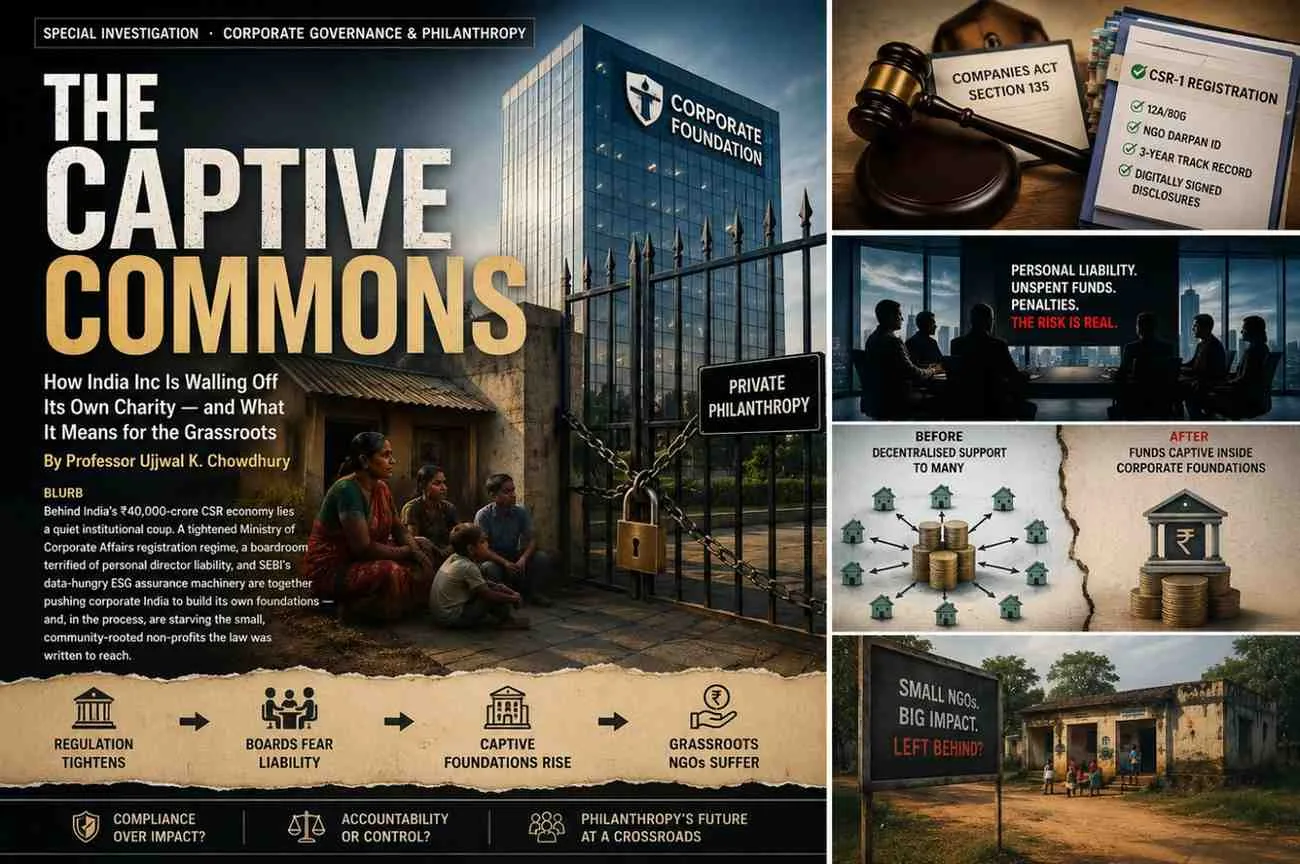
The night the ledger learned the word “society”It is late March. The office lights are still on. Coffee has stopped being a beverage and started behaving like a policy. A finance head, a CSR manager, and an anxious CFO are staring at the same figure—one that feels less like a number and more like a deadline.“Have we spent the CSR amount?” A pause follows. Then the quieter sentence that usually comes next, because it carries the weight of law.“If we don’t, we’ll have to disclose reasons.” “And if we still don’t?” “There are troubles ahead.”That single exchange captures the full arc of India’s mandated Corporate Social Responsibility (CSR) story: it began as a disclosure-first experiment and evolved into a tighter compliance-and-accountability regime—deadlines, designated accounts for unspent money, stronger reporting, and the expectation that impact can be measured, not merely described. Before the law: when CSR meant “philanthropy with a founder’s signature”Long before CSR became statutory, corporate giving in India often looked like a family tradition. A hospital near a plant. A school in a hometown. Scholarships for a district where the brand was born. Some of it was heartfelt, some reputational, but much of it lived outside a national framework. The absence of common standards created a predictable twin outcome: genuine work often stayed invisible beyond local memory, and superficial work could hide behind photo opportunities.Then came the turning point: Section 135 of the Companies Act, 2013, which made India one of the first countries to legally mandate CSR spending at scale. The legal core, in plain language: what the law actually asks companies to doIndia’s CSR design is deceptively simple to state and complicated to execute. If a company is sufficiently large—measured by financial thresholds—it falls under CSR obligations. The headline norm is equally blunt: eligible companies should spend at least 2% of the average net profits of the previous three years on CSR activities. The law nudges companies toward proximity and legitimacy by saying they should give preference to local areas around their operations. And it limits what qualifies as CSR by linking it to Schedule VII, a defined menu of themes—poverty, health, education, sanitation, environment, and allied social priorities. This became the architecture: thresholds, the 2% norm, a defined theme list, and board-level disclosure.A policy that refused to stay still: the decade-plus timeline of tighteningCSR became operational in the mid-2010s, but its real character emerged through iterative redesign. Early on, CSR often behaved like a “comply or explain” system: if you didn’t spend, you explained why in the board report. Over time, policymakers and observers saw the limits of explanation without enforcement. Then came the sharper phase. The Companies (Amendment) Act, 2019 introduced stronger discipline for unspent CSR amounts, including time-bound transfers—an attempt to stop CSR budgets from merely rolling over as an annual excuse. In January 2021, amendments to CSR Rules tightened definitions, formalised implementation norms, and pushed CSR from “best effort” to something that increasingly resembles an auditable process. By 2022, reporting became more structured through Form CSR-2, signalling that CSR would be treated not only as narrative, but also as standardised data. Mandated CSR, in other words, has behaved like a living system—repeatedly corrected by the realities it created. The “who” behind CSR: an ecosystem, not a departmentCSR is often described as “companies spending money.” In practice, it is an ecosystem. Boards and CSR committees approve policies and budgets; CSR managers negotiate between community need, business expectation, and compliance deadlines; implementing agencies—NGOs, trusts, Section 8 companies—turn budgets into work; auditors check whether the narrative aligns with the books; communities experience CSR not as policy but as a water tap, a classroom, a clinic, a livelihood tool—or as a promise that never arrived. As the rules tightened, the ecosystem became more formal. Compliance expectations for implementing entities hardened, including references to CSR-1 registration mechanisms in the evolving CSR architecture. The uncomfortable geography of CSR: money follows corporate comfortIf one wants to understand both the strengths and blind spots of CSR, one must look at maps, not brochures. CSR flows tend to cluster where corporate India clusters. Even within a state, CSR can concentrate heavily in a capital district while multiple districts receive nothing, revealing that CSR funding often follows operational presence and execution comfort more than development need. The preference-for-local-area principle is ethically intuitive—communities living beside industrial sites deserve a share of prosperity. Yet the same preference can reinforce inequality because corporate geography is not human-need geography.The ground reality: why early CSR “worked” and why it still felt thinIn the early years, CSR money flowed toward sectors where outcomes were visible and documentation was easier. Education and healthcare dominated. The pattern was almost cinematic in its repetition: a company adopts a government school, repairs classrooms, distributes learning devices, builds toilets, funds scholarships; another company equips clinics, runs health camps, supports mobile medical vans. Then the first twist arrived. CSR became efficient, but sometimes too shallow. NGOs reported a familiar constraint: short-term, tightly restricted funding with limited support for the organisational capacity that sustains impact. CSR often paid for outcomes without paying for the muscle needed to deliver outcomes reliably year after year. The pandemic chapter: CSR discovers the emergency laneWhen COVID-19 hit, CSR revealed its most valuable trait: speed. Companies pivoted toward healthcare infrastructure, resilience, and digital education, because needs were immediate and undeniable. The boardroom debates changed tone. CSR managers who once argued “education versus environment” began asking “oxygen plant or ICU beds?” NGOs that once wrote proposals for skill training wrote proposals for protective equipment, ration kits, and vaccination awareness. CSR became a rapid-response channel at its best. But the pandemic also made old questions louder: should CSR become a substitute for public expenditure, should corporate funds be routed into central pools or remain close to community delivery, and where does accountability sit when money moves fast? The limitations that forced redesign: why “explain” was not enoughA decade into mandated CSR, several persistent constraints stood out across policy discussions, audit observations, NGO experience, and public scrutiny. Unspent funds were too common; some companies treated CSR as a year-end scramble while others delayed due to project risk or weak partner availability. Measurement was thin; reporting often counted rupees and beneficiaries rather than verified outcomes. Geographic concentration stayed stubborn. Implementing ecosystems struggled with documentation burdens, delayed disbursements, and weak access to corporate networks. And CSR sometimes slid into branding—visibility rewarded more than substance. The summary was hard to ignore: CSR mobilised money, but money alone was not impact.The tightening cycle: how CSR became more auditable without killing initiativeThe redesign logic became clear: keep CSR flexible enough for innovation, but strict enough to prevent negligence and misuse. The 2019 amendment pushed time-bound treatment of unspent funds, often discussed through the lens of an “Unspent CSR Account” mechanism for ongoing projects. The 2021 strengthening of rules moved CSR closer to audit discipline. Penalties for defaults tied to unspent transfers became more explicit. Impact assessment became sharper—especially for large obligations. Reporting, via CSR-2, became more standardised, signalling a shift from “spend and report” to “spend, prove, and learn.” The current scale: big numbers, persistent questionsBy FY 2023–24, CSR spending had reached very large national scale. Parliamentary disclosures showed CSR expenditure totals rising from ₹27,141.45 crore in FY 2021–22 to ₹34,908.75 crore in FY 2023–24. Education and health remained dominant, while newer categories—culture, animal welfare, environment-linked work, contributions to specified funds—also appeared more visibly. This is the paradox of mandated CSR: it can generate reliable national funding, yet it must continuously fight the gravitational pull toward safe, familiar, easy-to-document interventions. The global mirror: how major democracies handle “CSR” without mandating “2% spend”To compare India with other democratic economies, one must first admit the definitional difference. In many jurisdictions, what India calls CSR spending is split into obligations that look more like risk governance than charity: director duties, modern slavery reporting, non-financial reporting, and supply-chain due diligence. The United Kingdom offers a clear example of responsibility embedded in governance. Under Section 172 of the Companies Act 2006, directors are expected to promote the success of the company while having regard to stakeholders—employees, suppliers, customers, community, and environment. That is not CSR spending; it is responsibility embedded into decision-making. The UK also tightened supply-chain accountability through Section 54 of the Modern Slavery Act 2015, requiring certain organisations to publish an annual statement describing steps taken to prevent modern slavery in operations and supply chains, with the commonly referenced turnover trigger. The strength is clarity and transparency; the weakness is equally obvious—statements can become performative if enforcement and market consequences are weak. Denmark is often cited for making CSR reporting itself mandatory for certain companies through its financial statements framework, effectively turning CSR into an accountability-through-disclosure regime rather than a spending mandate. This early institutionalisation of CSR reporting strengthened transparency, but it still relies on market and civil society pressure to convert reporting into transformation. France took a different route, treating responsibility as prevention. Its 2017 duty of vigilance law requires large companies to publish an annual vigilance plan to identify and prevent serious human rights and environmental impacts across operations and certain business relationships. Compared to India’s CSR, France is not saying “spend 2%.” It is saying “prove you are not causing serious harm—and show your plan.” Germany’s supply-chain approach similarly requires covered companies to maintain risk management systems, preventive and remedial measures, complaint procedures, and reporting focused on human rights and environmental harms. Germany also offers a caution that democracies repeatedly face: once responsibility becomes a compliance machine, debates about burden can trigger exemptions or redesigns. At the European Union level, responsibility is increasingly expressed through two big levers: sustainability reporting, where large and listed companies publish regular reports on social and environmental risks and impacts; and sustainability due diligence, with a directive that entered into force in July 2024 aiming to ensure companies identify and address adverse impacts across operations and value chains. The strength is comparability; the risk is checkbox compliance and the politics of scope and phase-ins. Australia’s Modern Slavery Act 2018 similarly uses a reporting-and-registry logic for entities above a revenue threshold, pushing supply-chain transparency through annual statements. Canada’s supply-chain framework, effective from January 1, 2024, follows the same directional philosophy: increase transparency and encourage responsible practices in relation to forced labour and child labour risks. The United States, by contrast, remains largely voluntary and market-driven on CSR: corporate giving and sustainability reporting exist, but there is no India-style statutory spending mandate at the federal level, and responsibility pressure comes through investor expectation, consumer trust, litigation risk, and sector-specific regulation. What India gets right, what India still struggles with, and what the world can learnIndia’s unique strength is predictability. Mandated CSR produces a steady flow of social funding that does not rely solely on leadership goodwill or brand strategy. It institutionalises corporate participation in social development. In voluntary CSR environments, philanthropic budgets can shrink sharply in downturns; India’s model is designed to resist that volatility.India’s core weakness is the temptation of “fast spend” over “deep change.” When the KPI feels like “spend by year-end,” there is a structural bias toward interventions that are easy to approve, disburse, and document—often necessary interventions, but not always transformative interventions. The global lesson is that democracies are converging on “responsibility as risk management.” India’s CSR focuses on outward contribution; many other frameworks focus on preventing inward harm and reporting it, especially across supply chains. These approaches are not rivals. They are complements. The direction of travel globally suggests that CSR-style spending alone will not satisfy expectations if core business operations generate social or environmental harm. The next decade: three futures for India’s CSROne future is already visible: CSR becomes more auditable, but not necessarily more impactful. India is moving toward auditable CSR through CSR-2 standardisation, stricter unspent handling, mandatory impact assessment for large obligations, and tighter control on administrative overhead. This increases integrity, but can also turn CSR into paperwork—especially for companies that treat it as a statutory irritant rather than a strategic instrument. A second future is possible and preferable: CSR becomes multi-year and evidence-led, with fewer but deeper programmes, better partner due diligence, stronger district-level diagnosis, and honest outcome measurement. A third future is structural: CSR merges into a broader responsibility regime. As global rules tighten on supply-chain accountability, Indian exporters and global suppliers will face external responsibility expectations regardless of domestic CSR rules. CSR spending may become one pillar of a wider responsible business architecture that includes human-rights diligence, climate transition planning, workforce protections, and governance transparency. Across all futures, the biggest roadblock is capacity: credible implementing agencies, reliable data systems, and internal governance maturity. Without these, CSR and due diligence frameworks can degrade into documents that look impressive and do little.  The India CSR checklistIf you are a company that crossed any one of the CSR thresholds in the immediately preceding financial year—net worth at or above ₹500 crore, turnover at or above ₹1,000 crore, or net profit at or above ₹5 crore—then CSR compliance is no longer optional. You are expected to compute the CSR obligation as 2% of the average net profits of the preceding three years, approve and follow a CSR policy, ensure spending is on eligible activities under Schedule VII themes, and make the prescribed disclosures in your board/annual reporting. If you are covered, you generally need a CSR Committee. However, you must pay attention to how the law relaxes committee requirements in specific situations. Where an independent director is not required under Section 149, the CSR Committee can be formed without an independent director. If your required CSR spend does not exceed ₹50 lakh in a financial year, the law allows you to skip constituting a CSR Committee; in that case, the Board itself discharges the functions of the CSR Committee. This is not an exemption from CSR—spend discipline, unspent handling, reporting, and compliance expectations still apply. If you implement CSR through an outside agency—an NGO, a trust, or a Section 8 company—you must treat eligibility and registration as non-negotiable compliance hygiene. Many categories of implementing entities are expected to have Income Tax registrations such as 12A and 80G and to be registered through the CSR-1 mechanism, so that the chain of accountability is traceable. If you are spending CSR, remember that CSR is not allowed to become an internal administrative empire. Administrative overheads must remain within the permitted cap and should not exceed 5% of total CSR expenditure for the financial year. If you are a large CSR obligor, impact assessment is no longer a matter of taste. Companies with an average CSR obligation of at least ₹10 crore in the three immediately preceding financial years face mandatory impact assessment expectations for projects above the specified outlay thresholds and with enough time elapsed after completion; the impact report must be placed before the Board and attached to CSR reporting. If you do not spend the full CSR amount in a financial year, you must treat “unspent CSR” as a compliance event, not a footnote. The rule operates on two tracks. If the unspent amount is not linked to an ongoing project, it must be transferred to specified funds under Schedule VII within the prescribed timeline. If it is linked to an ongoing project, it must be transferred to the “Unspent CSR Account” and spent within the permitted window; failing that, it must be transferred as required. Finally, reporting is no longer just narrative. Companies must file CSR disclosures in the prescribed format in board/annual reporting, and CSR-2 has been introduced as a structured reporting mechanism, with timelines governed by the applicable notifications. That is the compliance spine. The strategic question is what separates mature CSR from ritual CSR: whether the company builds multi-year programmes, invests in credible partners, measures outcomes honestly, and resists the temptation to treat CSR as a March transaction rather than a long social contract.   ...Read more

26 Mar 2026

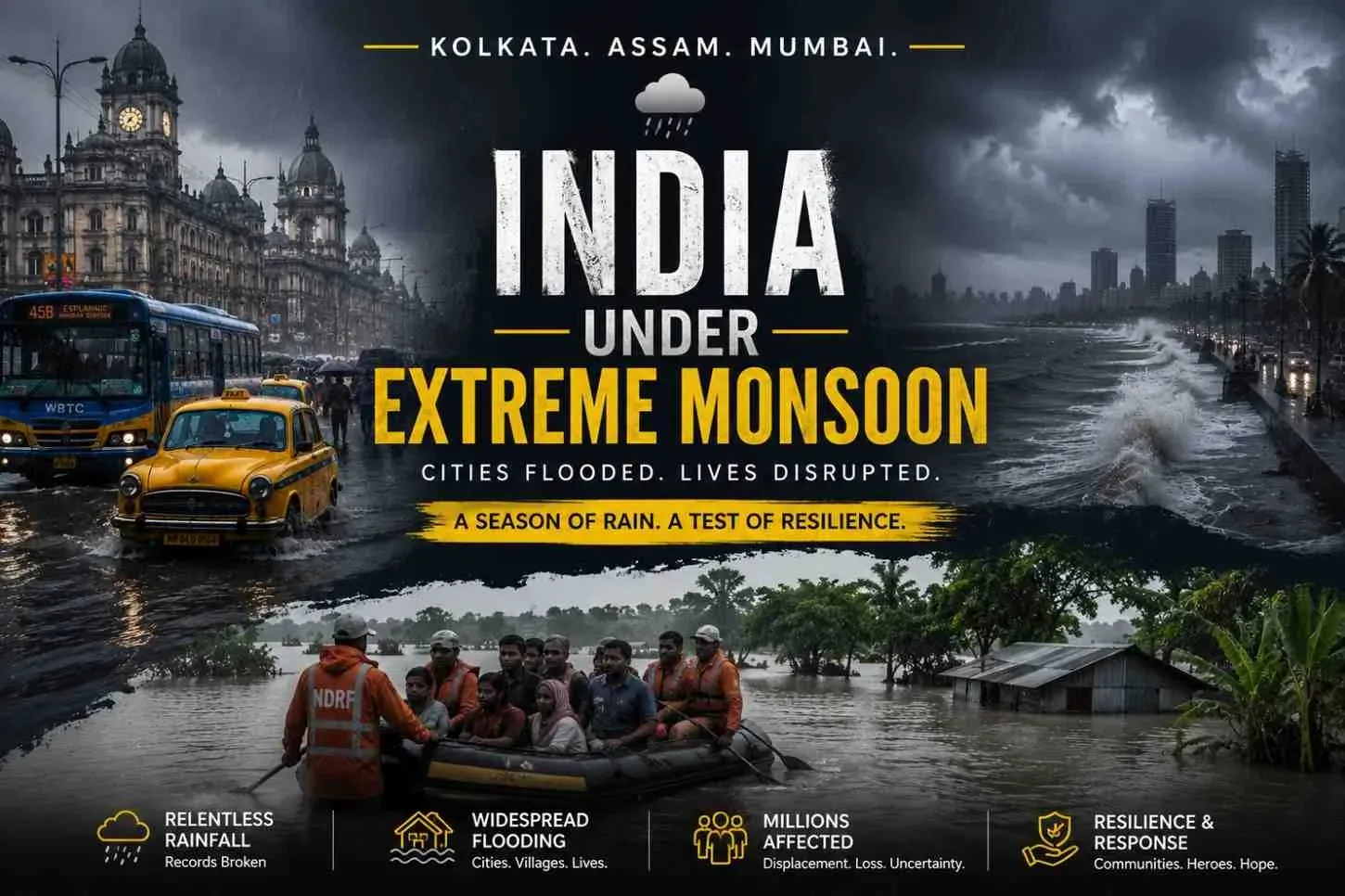
There was a time, not so long ago, when the sky was a promise kept. In the sprawling plains of Punjab, farmers knew that the first clouds of June would bring the monsoon, a rhythmic heartbeat that fed the earth. In the shimmering deserts of the Emirates, the sun was a constant, fierce companion, but one that retreated predictably as evening fell, leaving behind the cool embrace of the dunes. The world had a rhythm. Summers were hot, winters were cool, and the rains were a guest that arrived on time.That rhythm is dead.We have entered an era where the sky no longer bargains; it dictates. The years spanning 2024 to 2026 have dismantled the comfortable assumption that the future will look like the past. This concept of "stationarity"—the statistical reliance on the idea that weather patterns will remain constant—has been obliterated. Instead, we are living through a period of "global weirding," a chaotic unravelling of the seasons that has turned the weather into a violent, unpredictable force. From the melting asphalt of New Delhi to the drowned highways of Dubai, the story of our changing climate is no longer a distant warning from scientists. It is written in the sweat of a construction worker in Abu Dhabi and the despair of a farmer in Haryana. It is a story of fire and flood, of heat that kills and rain that destroys, played out across two vastly different landscapes—India and the United Arab Emirates—that find themselves united by a shared, turbulent destiny.The Furnace of the FutureImagine a heat so physical it feels like a weight on your chest. This is not the heat of a summer vacation; it is a heat that hunts you. In 2024, India witnessed a summer that defied memory. It wasn't just that the mercury climbed; it was that it refused to come down. In the arid town of Churu, Rajasthan, the thermometers groaned under the strain of 50.5 degrees Celsius. The air shimmered with a violence that scorched crops in the fields and forced birds to fall from the sky, dehydrated mid-flight.But the raw number on the thermometer tells only half the story. The true terror of this new era is the "wet-bulb" effect, a term that has moved from physics textbooks to terrifying reality. The human body is a marvel of engineering, designed to cool itself through sweat. But when extreme heat meets suffocating humidity, that mechanism fails. The sweat beads on the skin but does not evaporate, and the body becomes a trapped furnace. A wet-bulb temperature of 35 degrees Celsius is considered the theoretical limit of human survival; beyond this, even a healthy person resting in the shade will overheat and die within hours. In the coastal regions of Odisha and West Bengal, this humid heat turned deadly. It wasn't just hot; it was unlivable. For the millions of outdoor workers—the backbone of India’s economy—the air became a poison.Consider the life of Usha, a domestic worker in a crowded settlement in North Delhi. For her, the "Urban Heat Island" effect is not an academic concept; it is a sleepless night in a tin-roofed home that traps the day's heat like an oven. The concrete jungle of the city absorbs the sun's rage during the day and breathes it out at night, denying the city any respite. In May 2024, Delhi recorded its warmest night in over half a century. Usha and her neighbors poured water on their floors and slept on wet jute mats, ancient survival tactics against a modern, man-made monster. The heat poverty is stark; while the wealthy turn up their air conditioning, pumping more waste heat into the alleyways, the poor are left to bake in homes where the indoor temperature often exceeds the outdoor heat.Across the Arabian Sea, the United Arab Emirates faced its own trial by fire. The desert has always been hot, but the summer of 2025 brought a new kind of ferocity. In Sweihan, a town in the interior, temperatures surged to 51.6 degrees Celsius in May, a record that signaled the arrival of summer before spring had even said goodbye. But in the gleaming cities of Dubai and Abu Dhabi, the enemy was the humidity rising from the warming Persian Gulf. When the air temperature hit the mid-forties and the humidity spiked, the "feels-like" temperature—the heat index—soared to a suffocating 62 degrees Celsius in July 2024.In this steam room, the very air felt viscous. Eyeglasses fogged up instantly upon stepping outdoors. For the legions of delivery riders and construction workers who build and service these metropolises, the "Midday Break"—a mandatory pause in outdoor work during peak afternoon hours—became a lifeline. Yet, even the hours before and after the ban became dangerous. Research using Wet-Bulb Globe Temperature monitors indicates that workers are often in high-risk zones even during the "shoulder hours" of the morning and late afternoon. The heat was no longer a midday event; it was a lingering presence, a silent disaster that claimed productivity and health in equal measure.The statistics are grim. In 2024 alone, extreme climate events claimed over 2,000 lives in India, with hundreds attributed directly to the blistering heat. Heatwave days in India have risen by about 34 percent since 2010, a clear signal that the baseline has shifted. The heat is arriving earlier, with heatwaves striking as early as February in 2025, disrupting the natural rhythm of the seasons.When the Desert DrownsIf heat is the silent killer, rain has become the sudden destroyer. The atmosphere, warmed by our carbon emissions, has become a thirsty sponge. For every degree of warming, the air can hold seven percent more moisture. This simple law of thermodynamics, known as the Clausius-Clapeyron relation, is the engine behind the chaos. It sucks the oceans and the land dry, exacerbating droughts, only to release that pent-up water in violent, explosive torrents.This mechanism turned April 16, 2024, into a day that the UAE would never forget. It began with a darkening sky that looked more like twilight than afternoon. A massive storm system, a "mesoscale convective system" fed by the anomalously warm waters of the Arabian Sea, parked itself over the desert. The atmosphere was carrying a moisture load that was statistically impossible a century ago. When the trigger was pulled, the heavens opened up in Al Ain and dropped 254 millimeters of rain in less than twenty-four hours. To put that in perspective, that is more rain than the country typically receives in two entire years.Dubai, a city engineered for hyper-aridity, was brought to its knees. The celebrated Sheikh Zayed Road, the artery of the city, vanished under churning brown water. Luxury cars floated like toys in a bathtub, and the world's busiest international airport ground to a halt as taxiways turned into lakes. In upscale neighbourhoods, residents watched in disbelief as water rose in their living rooms, ruining furniture and memories alike. Stories of resilience emerged from the chaos; neighbours in the Green Community rallied to share food and water, and 4x4 clubs mobilized to rescue stranded sedans.In the aftermath, whispers and rumours swirled. Was this cloud seeding gone wrong? Had we meddled too much with nature? The scientists were quick to correct the narrative. Cloud seeding might squeeze a little more rain out of a cloud, usually enhancing rainfall by 10 to 15 percent, but it cannot create a deluge of biblical proportions. Attributing such a massive storm to cloud seeding is akin to blaming a bucket of water for the sinking of the Titanic. This was not a lab experiment gone awry; this was the climate crisis knocking on the front door.As if to prove a point, the skies opened up again in late 2025 and early 2026. Ras Al Khaimah saw a month's rain in a day, and widespread flooding returned to Abu Dhabi and Dubai. These floods were not freak accidents; they were the new normal. The warming Indian Ocean is acting like a loaded gun, pointing moisture at the peninsula, and the atmosphere is pulling the trigger. The desert was drowning.The Himalayan FuryWhile the desert grappled with too much water, the mountains of India were facing their own reckoning. The Himalayas, the "Abode of Snow," are warming faster than the plains below. In July 2023, the delicate dance between the monsoon winds and western disturbances faltered, triggering a catastrophe in Himachal Pradesh.The mountains, unable to hold the soil together against the onslaught of intense cloudbursts, gave way. The Beas River, swollen with rage, reclaimed its floodplains. It tore through towns, washing away hotels, bridges, and highways as if they were made of matchsticks. This was a "cloudburst"—a localized, intense downpour dropping 100 millimeters of rain in an hour. As the mountains warm, the air rises faster, carrying more moisture due to that same thermodynamic sponge effect, turning what should be a heavy shower into a water bomb.But the tragedy in the mountains was compounded by human folly. We have built hotels on riverbeds and roads on fragile slopes, ignoring the geography of the land. When the river rose, it simply took back what was hers. Downstream, the story was one of urban paralysis. Cities like Chennai and Mumbai, once defined by their relationship with the sea, are now constantly threatened by it. We have concreted over our wetlands and lakes, the natural sponges that once absorbed the rains. Now, when the sky opens, the water has nowhere to go but into our homes. The floods in Chennai in 2015 and again in 2023 were not just acts of nature; they were the result of a city that had forgotten how to live with water. The Mechanics of ChaosWhy is this happening? Why now? To understand the madness of the weather, we must look at the planetary engine itself. The Jet Stream, that high-altitude river of air that steers weather systems around the globe, is sputtering. Historically, the Jet Stream was driven by the temperature difference between the freezing Arctic and the warm equator. But the Arctic is warming four times faster than the rest of the planet, a phenomenon known as Arctic Amplification. As the ice melts and the dark ocean absorbs the sunlight, that temperature difference shrinks. The Jet Stream, once a fast, tight belt, becomes weak and wavy. It meanders like a lazy river.When it loops northward, it allows hot air to expand and get trapped, creating a "Heat Dome". This high-pressure system acts like a lid on a pot, trapping the heat and compressing it, refusing to let it disperse. This is exactly what baked North India in May 2024, holding temperatures above 50 degrees Celsius for days on end. Conversely, when the Jet Stream dips south, it spills frigid polar air into places that have no business shivering.This explains the strange paradox of cold waves in a warming world. In the winter of 2025-2026, the deserts of the UAE saw temperatures dip near freezing. On Jebel Jais, the highest peak, the thermometer hovered near zero. In Northern India, cold waves have become sharper and more unpredictable, with dense fog paralyzing transport and sudden frosts killing crops overnight. The Indian Meteorological Department noted that some areas in the north saw between eight and eleven cold wave days, nearly double the typical number. It is not that the world is cooling; it is that the refrigerator door has been left open. The climate system is not just getting hotter; it is getting wilder, losing the stability that allowed civilizations to flourish for thousands of years.The Silent ThirstBetween the fire of the heatwaves and the fury of the floods lies the quiet, grinding misery of drought. It is a slow-onset disaster that doesn't make for dramatic television footage, but it erodes the very foundations of society. In India, the "silent drought" has become a perennial visitor to regions like Maharashtra and Karnataka.The mechanism is cruel. The same thirsty atmosphere that fuels the floods also sucks the moisture out of the soil during dry spells. These "flash droughts" can wither a crop in a matter of weeks. For a farmer like Dayaram in Haryana, this volatility is a death sentence. In early 2025, just as his wheat crop was entering its critical grain-filling stage, a sudden heatwave struck. The kernels shriveled before they could mature. The harvest, and his income, dropped by thirty percent. Workers refused to toil in the fields under the furnace-like sun, leaving crops to rot. This agricultural collapse threatens the food security of a nation, complicating the supply of staples like wheat and pulses.In 2019, the city of Chennai gave the world a terrifying glimpse of what happens when the water runs out. They called it "Day Zero". The city's four main reservoirs hit dead storage levels, and taps ran dry. IT companies, the engines of modern India, asked employees to work from home because there was no water to flush the toilets in the glossy office parks. Water tankers became the most valuable vehicles on the road, guarded like gold shipments. It exposed the deep fault lines of inequality: the wealthy could buy their way out of the crisis, purchasing water from private tankers sourced from peri-urban villages, while the poor waited for hours in the sun for a single pot of water.The UAE, lacking rivers, faces a permanent Day Zero risk. It relies on the energy-intensive magic of desalination, turning the salty Gulf into potable water. But recognizing the fragility of this system—vulnerable to oil spills or war—the nation has undertaken a project of pharaonic ambition. Deep in the Liwa desert, they have created one of the world's largest artificial aquifers. They pumped desalinated water back into the ground, creating a strategic reserve that can sustain the entire population of Abu Dhabi for months in an emergency. It is a triumph of engineering, a safety net woven from water and sand.The Wisdom of the AncientsAs our modern glass-and-steel cities fail under the assault of this new climate, there is a growing realization that the answers might lie in the past. Our ancestors lived in these lands for centuries without air conditioning or flood pumps. They built with the climate, not against it. These "vernacular technologies" offer low-energy, high-efficiency solutions that we are now frantically rediscovering.In the blistering heat of Dubai, before the hum of electricity, the skyline was dominated by "Barjeels" or wind towers. These ingenious structures caught the slightest breeze, forced it down a shaft where it cooled, and circulated it through the living quarters. The air accelerated and cooled as it descended, displacing the hot air below without using a single watt of power. Today, this concept is seeing a revival. At Masdar City in Abu Dhabi, a massive, modern interpretation of the wind tower cools a public courtyard, proving that passive cooling is not just history; it is a viable future.In the parched lands of Rajasthan, water was too precious to be left in open tanks where the sun would steal it. The solution was the "Stepwell"—an inverted pyramid of stone that reached down to the groundwater. These structures were not just wells; they were social sanctuaries. The air at the bottom of a stepwell is naturally cooler, often five to six degrees lower than the surface, offering a retreat from the summer blaze. In cities like Jodhpur, restored stepwells like the Toorji Ka Jhalra are now acting as urban sponges, absorbing heavy rains to prevent flooding and recharging the aquifer for the dry months.And in the homes of North India, the humble "Khus" curtain is making a comeback. Woven from the dried roots of vetiver grass and sprayed with water, these curtains turn the hot, dry "Loo" wind into a cool, fragrant breeze through evaporative cooling. It is nature’s air conditioner, zero-carbon and smelling of the earth, providing relief when the power grid fails under the strain of a heatwave.Building the ArkWe cannot stop the extreme weather immediately. The carbon we have already emitted has baked a certain amount of chaos into the system. But we can learn to survive it. Adaptation is no longer a choice; it is the price of admission to the future.Dubai is pivoting. Stung by the floods of 2024, the city has looked east to China's "Sponge City" concept. The goal is to tear up the concrete and replace it with permeable pavements, rain gardens, and bioswales—surfaces that drink the water rather than repel it. The ambition is to turn a flood liability into a groundwater asset, a complete reimagining of urban design that allows the city to breathe and absorb.In India, a quiet revolution is taking place in the villages. The "Amrit Sarovar" mission, launched in 2022, is perhaps the largest community-led water conservation drive in human history. The aim is simple: to restore or build seventy-five water bodies in every single district of the country. By 2025, over sixty-eight thousand of these ponds had been completed. In villages like Surajpura, the water table has risen enough to allow farmers to harvest two crops a year, breaking the cycle of migration that empties the countryside.Cities are learning too. Ahmedabad, after suffering a devastating heatwave in 2010 that killed over a thousand people, developed the Global South's first Heat Action Plan. It is a playbook for survival: color-coded early warning systems, keeping public gardens open for shade, and the "Cool Roof" initiative. By simply painting the roofs of slum dwellings with reflective white paint, indoor temperatures can drop by three to five degrees. It is a low-tech, high-impact solution that saves lives and has been replicated in dozens of Indian cities.Technology is playing its part. Artificial Intelligence is being deployed to predict the unpredictable. In the UAE, AI-driven sensors in parks monitor soil moisture and weather forecasts, adjusting irrigation to save precious water, reducing consumption by thirty percent. In India, AI models are now forecasting floods in the Ganges and Brahmaputra basins with hyper-local precision, giving villagers those few critical hours to evacuate their livestock and families before the water hits.On the global stage, new initiatives are taking root. At COP28 in Dubai, the Global Green Credit Initiative was launched to incentivize environmental actions like water conservation, moving beyond simple carbon offsets. The UAE is also leading the Mangrove Alliance for Climate, aiming to plant 100 million mangroves by 2030 to protect coastlines from rising seas and storms.The New NormalThe years 2024 to 2026 have been a harsh tutor. They have taught us that the idea of "stationarity"—that the future will be like the past—is a dangerous illusion. The extreme has become the routine. The question is not whether the climate is changing; the atmosphere has already answered that. The question is whether we can change fast enough to live within it.For India, the challenge is one of scale. How do you protect a billion people from a heat that cooks the air and a monsoon that has turned into a beast?. The answer lies in decentralized resilience. It is Usha painting her roof white. It is the village of Surajpura digging a pond. It is a government that values the life of a construction worker as much as the GDP.For the UAE, the challenge is existential engineering. A nation built on the conquest of nature must now learn to cooperate with it. It must transform from a fortress against the desert into a sponge that works with the rain. The transition to permeable cities and the strategic decoupling of water security from carbon emissions are not just policy goals; they are survival imperatives.The stories from these two nations are not just local news. They are a preview of the world to come. The fire and the flood are here to stay. We are building the ark while the rain is already falling, stitching together ancient wisdom and modern science in a race against time. The sky may be broken, but our resolve to survive under it remains the one thing that is still whole.  Table 1: Comparative Heat Metrics (2024-2025)MetricNew Delhi (India)Dubai (UAE)Peak Dry Temp52.9°C (Mungeshpur, 2024)51.6°C (Sweihan, 2025)Primary DangerHeat Dome + Urban Heat IslandExtreme Humidity (Wet Bulb)Vulnerable GroupSlum dwellers, farmers, vendorsConstruction workers, delivery ridersNighttime ImpactHigh Min. Temp (35°C+) causes sleep deprivationHigh Humidity causes condensation/moldSurvival StrategyWet curtains (Khus), sleeping outdoorsAC reliance, Midday Break policies      Table 2: Quick Reference: Key Extremes and SolutionsRegionExtreme Event TypeKey Recent ExamplesPrimary CausesAdaptation StrategyIndiaHeatwaveFeb-May 2024/2025 (North India)Heat Dome, Global Warming, UHIHeat Action Plans, Cool RoofsIndiaDroughtChennai Day Zero (2019)Failed Monsoon, UrbanizationRainwater Harvesting, Tank RestorationIndiaCloudburst/FloodHimachal (2023), Kerala (2018)Orographic Lift, Warming OceansEarly Warning Systems, Amrit SarovarUAEExtreme RainApril 2024 Deluge (Dubai)Convective Complex, Moisture PlumeSponge City Infrastructure, AI DrainageUAEHeat/HumiditySummer 2024/2025 (Feels like 62°C)Persian Gulf Warming, HumidityMidday Break, District Cooling, Barjeel techUAECold SpellWinter 2025/2026 (Desert Chill)Siberian High, Wavy Jet StreamWeather Alerts, Infrastructure winterization   ...Read more