
The Cartography of the Invisible
Where the Mangroves End and the Map Begins
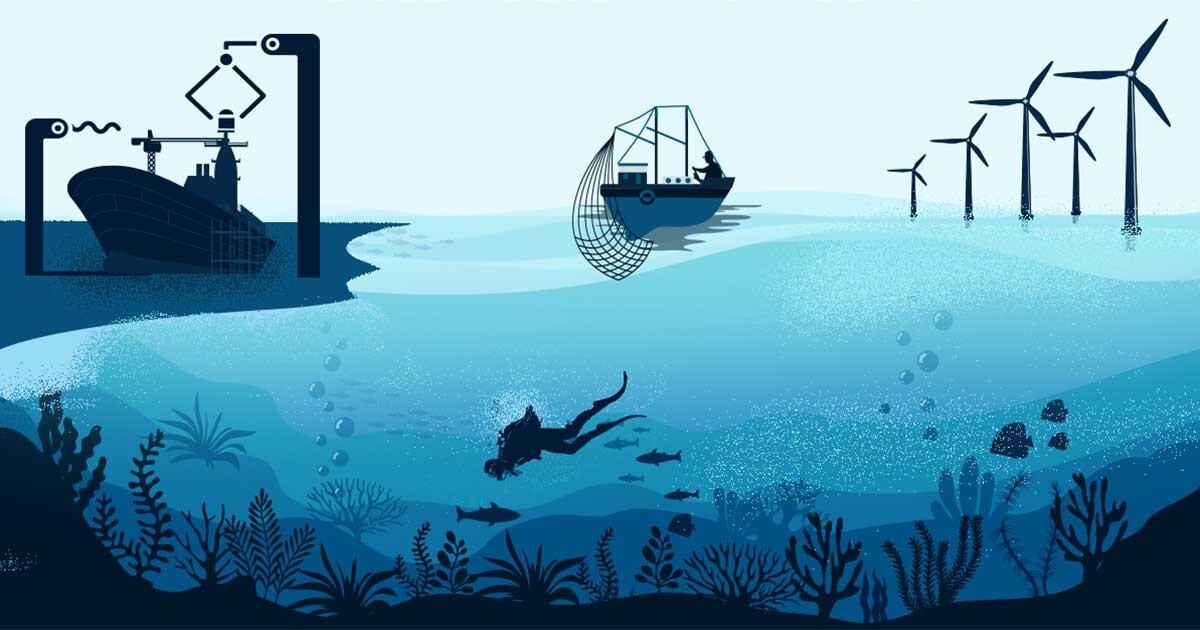
In the delta, water is not a backdrop. It is road, market, workplace, weather, and fate—sometimes all in the same afternoon. The tide slides in and out through a maze of creeks, and the mangroves of the Sundarbans rise like an old, stubborn barricade against storms that have grown meaner with time. Beyond that green tangle lies the open pull of the Bay of Bengal, where fishermen have always followed fish the way farmers follow rain: by instinct, by memory, by inherited knowledge that is more lived than taught.
But the sea’s indifference is also its cruelty. It does not acknowledge flags, check passports, or pause at a boundary line drawn by diplomats. A boat can drift the way a leaf drifts—one current, one gust, one fog bank, and the crew is suddenly “foreign,” not by intention but by coordinates. In the winter of 2025–26, that invisible arithmetic of latitude and longitude turned ordinary fishing trips into legal crises, and families into waiting rooms.
The Bay of Bengal, a vast triangular basin of the northeastern Indian Ocean, has historically functioned as a fluid conduit for culture, commerce, and climate. For centuries, the tangled mangrove roots served not as a hard border but as a shared ecological frontier between the polities of Bengal. Here, the tide does not recognize the Westphalian distinctions of sovereignty; saltwater flows freely, inundating mudflats and receding with a rhythm that dictates the lives of millions. Yet, by late 2025, this indifferent tide had transformed into a rigid theatre of conflict, surveillance, and geopolitical friction.
This report offers an exhaustive analysis of the maritime crisis that unfolded between September 2025 and January 2026. Anchored by the specific case of the Indian trawler Subhajatra and the reciprocal seizure of the Bangladeshi vessels FB Ruposi Sultana and FB Sabina, the investigation dissects the systemic drivers of these transgressions. It argues that these incidents are not mere navigational errors but the inevitable output of a complex system involving ecological collapse in the Hooghly estuary, the exploitative Dadni debt structures, technological obsolescence, and the hardening of diplomatic postures following the political upheavals in Dhaka in August 2024.
The International Maritime Boundary Line (IMBL)
The International Maritime Boundary Line (IMBL) is not a fence you can see. There is no buoy chain you can follow like a lane marker. The demarcation, settled by the Permanent Court of Arbitration in 2014, resolved the legal ambiguity of the waters but could not resolve the ecological and economic realities of the communities living on its fringe. The coordinates defining this line—such as 21° 36' 49.1" N, 89° 01' 37.4" E—are abstract concepts that do not correspond to any physical landmark in the open Bay.
For a fisherman on deck, looking out at a horizon of uniform grey-blue, the transition from "sovereign India" to "sovereign Bangladesh" is visually non-existent. The water color does not change; the waves do not break differently. Yet, the consequences of crossing this invisible threshold are concrete and devastating: seizure, incarceration, and financial ruin.
In the winter of 2025–26, the maritime space south of the Sundarbans became the stage for a recurring tragedy. As the early winter sun set in December 2025, patrols stepped up to deter illegal fishing, intensifying the frequency of interceptions. In mid-December 2025, for instance, the Indian Coast Guard detained Bangladeshi fishermen after intercepting trawlers found fishing inside Indian waters, a reminder that the boundary is actively policed and that boats can be seized along with crews.
1.3 The Sociology of the Periphery: Sankijahan
To understand the trajectory of the Subhajatra, one must understand its point of origin. Sankijahan is a village situated in the Kultali Block of the South 24 Parganas district, falling under the jurisdiction of the Kultali Police Station. It is a place where land is constantly negotiated with water; plot numbers in government records (e.g., JL No. 27, KH No. 403) denote a landscape constantly subject to survey and re-survey due to shifting deltaic soil.
Sankijahan operates on the margins of the state's infrastructure. Records from disaster management departments indicate that land in Sankijahan is frequently requisitioned or designated for "Multipurpose Cyclone Shelters" (MPCS), such as the one constructed on the land of the Sankijahan FP School. This highlights the primary existential threat to the village: climate-induced displacement. The latitude (22.05°N) and longitude (88.58°E) place it squarely in the path of cyclonic depressions forming in the Bay of Bengal.
For the men of Sankijahan, fishing is not a job you "choose." It is lineage. A boy learns the sea the way he learns language—first by listening, then by repeating, then by doing it without thinking. But the village is under siege. The failure of local agriculture due to salinity intrusion leaves the "silver crop" of the ocean as the only viable cash source.
Historically, the community in Sankijahan relied on the Matla River for sustenance. Hydrographic surveys of the Matla River (National Waterway 97) describe the right bank near Sankijahan as "fairly populated," with fishing and rain-fed farming as the primary sources of livelihood. However, the ecological carrying capacity of the Matla has been breached. The "Economic Rehabilitation of the Resourceless Fishermen of Sankijahan" projects, dating back decades, have systematically pushed fishermen away from traditional estuarine fishing toward mechanized deep-sea trawling.
This transition converted the fisherman from a riverine subsistence worker to a deep-sea labourer, necessitating higher capital investment, higher risk, and consequently, higher debt. Government and NGO interventions provided mechanized trawlers to groups of 12–14 fishermen—exactly the crew size of the Subhajatra—to enable them to access marine resources. This shift was intended to alleviate poverty but paradoxically exposed these communities to the geopolitical risks of the open ocean.
The Ecology of Desperation
The Hilsa: A Migrating Fish in National Arguments
The conflict in the Bay of Bengal is, at its core, a resource conflict centred on Tenualosa ilisha. The Hilsa is more than a fish; it is the "silver diamond" of the delta, a cultural icon, and the primary economic motivator for the risky voyages undertaken by trawlers like the Subhajatra.
The Hilsa does not belong neatly to any one coastline. It is anadromous, migrating from the sea to freshwater rivers to spawn, threading together ecosystems that politics divides. Yet Hilsa also sits at the centre of intense national emotions and economic stakes. Bangladesh’s Hilsa fishery is widely documented as a backbone species—supporting millions and carrying deep cultural value—while contributing a significant share of national fish production and catch.
The Production Asymmetry
The fundamental driver of cross-border intrusion is the stark asymmetry in Hilsa availability between Indian and Bangladeshi waters. Bangladesh has successfully conserved and managed its Hilsa stocks, positioning itself as the world's largest producer.
Table 1: Comparative Hilsa Fishery Statistics (2021-2025)
MetricBangladeshWest Bengal (India)Annual ProductionGlobal ShareFishery TypeEconomic ValueSpawning Ground Health
The data indicates that the "Marine Catch" associated with West Bengal is a fraction of Bangladesh's output. While Bangladesh's total catch exceeds 600,000 tonnes annually, West Bengal's Hilsa catch in the Hooghly estuary has collapsed to a few thousand tonnes in recent seasons. This scarcity creates a powerful economic vacuum that pulls Indian trawlers eastward.
The Farakka Effect and the Sinking Hooghly
The collapse of the Indian Hilsa fishery is not an accident of nature but a consequence of infrastructure. The construction of the Farakka Barrage in India in 1975 has had a profound, long-term impact on the hydrology of the Ganges system. By diverting water, the barrage has led to heavy siltation in the Hooghly-Bhagirathi river system in West Bengal.
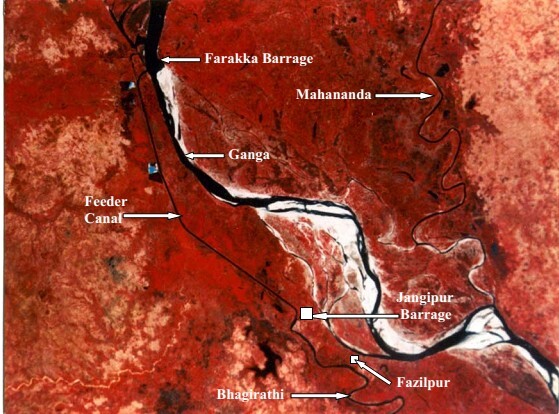
Scientific analysis reveals that the landing of Hilsa in the middle stretch of the Ganga (Farakka to Prayagraj) decreased by over 83% to 98% post-barrage. The obstruction of migration routes and the alteration of flow and salinity patterns have degraded the spawning grounds in Indian waters. The Hooghly estuary, once a thriving nursery, has seen its productivity collapse. The "sandy char islands" that now block migration routes are a direct result of this altered flow.
The Meghna Magnet
In contrast, the nutrient-rich outflow of the Meghna and Padma rivers in Bangladesh supports high primary productivity (phytoplankton abundance), which acts as a magnet for the Hilsa shoals. The major spawning areas have shifted eastward to the lower estuarine regions of Hatia, Sandwip, and Bhola in Bangladesh.
This ecological reality creates a "magnet effect." Indian fishermen, finding their traditional grounds in the Hooghly barren, are forced to chase the shoals eastward. The fish do not recognize the IMBL, and in following the fish, the fishermen inevitably follow them into the "fairway area" of the Bangladesh maritime zone.
The "Gujarat Hilsa" Substitution
The scarcity of local Hilsa in West Bengal has led to a market distortion known as the "Gujarat Hilsa" phenomenon. With the collapse of the Bengal fishery and the erratic nature of imports from Bangladesh (which are often restricted by the Dhaka government), West Bengal traders have turned to the Narmada and Tapti estuaries on India's west coast.
In 2025, over 4,000 metric tonnes of Hilsa were transported from Gujarat to Kolkata to meet the demand during the Durga Puja season. However, this substitute is culturally inferior; the Gujarat variety is described as "bland" compared to the oily, sweet taste of the Padma Hilsa. This consumer preference maintains a high black-market demand for Bangladeshi Hilsa, incentivizing Indian trawlers to poach in Bangladeshi waters or engage in illicit mid-sea transshipments.
The export of Hilsa is strictly regulated by the Bangladesh Ministry of Commerce. In 2024, the government approved the export of 3,000 tonnes to India for Durga Puja, but logistical and bureaucratic hurdles meant only a fraction (approx. 144-577 tonnes) actually reached West Bengal. The erratic nature of this legal trade—often used as a diplomatic signal of goodwill or displeasure—exacerbates the economic pressure on Indian fishermen to bypass legal channels and harvest the fish directly from the source, regardless of the sovereignty of the waters.
Climate Change and Shifting Salinity
Beyond the barrage, climate change is altering the fundamental chemistry of the delta. Rising sea levels and reduced freshwater flow have led to increased salinity intrusion in the Indian Sundarbans. Hilsa, sensitive to salinity gradients during their spawning migration, are pushing further into the freshwater-heavy discharge of the Bangladesh rivers.
As a result, the "old knowledge" of fishing grounds—passed down through generations in villages like Sankijahan—is becoming obsolete. The "safe waters" of the past are now barren, while the fish teem just across the invisible line. The boundary becomes not a political concept but a practical trap: cross it and you might eat; cross it and you might be arrested.
The Architecture of Debt
The Dadni System: A Historic Trap
Behind every trawler that crosses the IMBL is a shadow structure of finance known as the Dadni system. This institution, deeply embedded in the agrarian and maritime history of Bengal, transforms economic desperation into navigational risk.
The term Dadni derives from the Persian word Dadan, meaning "advance." It dates back to the 18th century, where it was used by the British East India Company to procure salt and textiles. Historically, merchants provided advances to producers, binding them to sell their output exclusively to the creditor at fixed rates. The system was briefly abolished in 1753 due to corruption but was reinstated because the company could not procure goods without the leverage of debt.
In the modern context of the Sundarbans fisheries, the Dadni system functions as a mechanism of debt bondage. Fishermen receive cash advances from Mahajans (moneylenders) or Aratdars (commission agents) to cover the high costs of deep-sea expeditions—diesel, ice, net repairs, and rations. A single season's capital requirement can range between BDT 70,000 – 80,000 ($640 – $732), a sum impossible for a subsistence fisher to save.
This advance is not a loan in the traditional banking sense but a lien on the future catch. The fisherman is obligated to sell his entire haul to the Aratdar at a price determined by the creditor, often significantly below the open market rate. The "books" kept by the Aratdars are legendary for their opacity; as one fisherman noted, "If I borrow a handful of rice, he writes it down. I sometimes think my entire fate is written in that book".
The Risk Multiplier
The Dadni system fundamentally alters the risk calculus of the fisherman. Because the catch is already "sold" to the creditor at a predetermined rate to service the debt, the fisherman must catch a significantly higher volume of fish to break even.
If a trawler like the Subhajatra spends days in Indian waters with empty nets, the mounting pressure of the Dadni debt forces the captain to make a critical decision: return with a loss and face financial ruin and the loss of the boat, or cross the IMBL into the fish-rich waters of Bangladesh. The debt bond effectively incentivizes the violation of maritime sovereignty.
A seized boat is not just a vessel; it is an asset, a loan, a mortgage, a child’s school fees, and a family’s standing with moneylenders. The "operable vessel"—the primary capital asset pledged against the debt—is removed from the equation upon seizure, plunging the family back in Sankijahan into intergenerational poverty.
Superstition as Armour
Facing the dual threats of the sea and the debt, the fishermen of the Sundarbans armour themselves with ritual. Before they set out, they perform specific pujas to the forest goddess Bonbibi or the water deities. There are strict taboos: no whistling on board (it calls the wind), no opening cans upside down (it risks overturning the boat), and crucially, no women on the fishing vessels.
These rituals are not merely quaint traditions; they are psychological defences against a chaotic environment. They represent an attempt to impose order on a world—both ecological and economic—that feels increasingly out of their control. The Subhajatra, named "Auspicious Departure," carried this hope in its very letters. But in the winter of 2025, neither the name nor the rituals could ward off the radar of the Bangladesh Navy.
The Geopolitical Freeze
The Shadow of August 2024
The detention of the 151 fishermen occurred against a backdrop of severe diplomatic strain between India and Bangladesh, triggered by the political collapse of the Sheikh Hasina government on August 5, 2024. For fifteen years, the Hasina administration had cultivated close ties with New Delhi. Her ouster by a mass uprising led to the installation of an interim government and a surge in anti-India sentiment.
The "July Oikya" (July Unity) movement, which spearheaded the protests, maintained a strong rhetoric accusing New Delhi of supporting the previous "authoritarian" regime. The movement's leaders framed India not just as a neighbour but as a patron of the deposed government, complicating every interaction from trade to border management.
The "July Oikya" Protests of December 2025
By December 2025, just as the Subhajatra crew sat in Bagerhat jail and the Ruposi Sultana crew in Kakdwip, tensions on the streets of Dhaka reached a boiling point. Following the killing of a young activist, Sharif Osman Hadi, violent protests erupted. On December 17, 2025, hundreds of demonstrators under the banner of "July Oikya" attempted to march on the Indian High Commission in Dhaka.
The marchers chanted slogans like "Delhi na, Dhaka; Dhaka, Dhaka" ("Not Delhi, but Dhaka") and demanded the extradition of Sheikh Hasina from India. The protests turned violent, with reports of vandalism against Indian diplomatic premises, including the Assistant High Commission in Chittagong. In response, India summoned the Bangladeshi High Commissioner and temporarily shut down visa services in some missions due to security concerns.
This political volatility meant that the maritime border was no longer just a resource boundary; it was a security perimeter. The "unwritten understanding" regarding fishermen—a tradition of leniency for accidental crossings—was replaced by strict application of the law. The Indian Ministry of External Affairs noted the "growing absence of understanding" and the "stricter" application of laws by Bangladesh.
Maritime Fallout and Hardened Lines
This hostility spilled over into the maritime domain. Reports surfaced of Bangladeshi vessels ramming Indian trawlers, and the Indian Coast Guard was forced to induct new air-cushion vessels and interceptors into the Sundarbans Creek to deter "illegal intrusions".
In this environment, a fishing boat was no longer seen as a civilian vessel seeking livelihood but potentially as a security threat or a pawn in a diplomatic leverage game. The "July Oikya" movement's pressure on the interim government meant that any perceived leniency toward Indian "intruders" could be politically costly in Dhaka. Conversely, New Delhi felt compelled to protect its citizens and assert its territorial integrity. The fishermen were caught in the gears of this grinding geopolitical machine.
The Voyage and the Violation
Subhajatra’s September Dawn
They left before dawn in the first week of September, when the delta’s mornings can feel deceptively calm—cool air, a pale sky, the first clink of tea glasses in riverside huts. From Sankijahan, the crew of Subhajatra pushed off with nets stacked like folded cloth and fuel measured carefully.
The crew of 14 men was a mix of generations. The older crew read the wind and colour of waves with a kind of quiet confidence; the younger ones were learning the trade, driven by the lack of alternatives onshore. They spoke of Hilsa the way others speak of harvest: the "silver diamond," the fish that can lift a season’s earnings—or ruin them if the catch fails.
The boat moved northward, then south into the deep Bay. As they chased the elusive shoals, they entered the "grey zone" of navigational uncertainty. While industrial trawlers are mandated to carry Automatic Identification Systems (AIS) and Vessel Monitoring Systems (VMS), small mechanized boats like the Subhajatra often lack robust GPS or dependable devices. Even when they have them, the crew may lack the training to interpret coordinates under stress.
The "Fairway" Trap
The Subhajatra inadvertently entered the "fairway area" near the Mongla port in Bangladesh. This zone is marked by buoys for commercial shipping (often red and white vertical stripes for fairway buoys) , but for a fisherman without a digital chart, the open water looks invitingly empty.
The technological divide was stark. The Bangladesh Navy had deployed 17 warships and patrol helicopters to enforce fishing bans. In October 2025, reports indicated that the Bangladesh Navy had begun using drones for aerial surveillance to enforce these bans and protect Hilsa breeding grounds. Against this aerial and digital panopticon, the Subhajatra was flying blind.
The Intercept: October 18, 2025
On October 18, 2025, the Subhajatra’s luck ran out. The Bangladesh Navy ship BNS Shaheed Akhtar Uddin, a Padma-class patrol vessel equipped with modern sensors and armament, detected the intruder.
The intercept was procedural but terrifying. The sound of the patrol boat's engine cut through the hum of the fishing trawler. The command to stop was issued. The boat was boarded. The hold was inspected and found to contain a significant haul of Hilsa and other marine species.
Under the Territorial Waters and Maritime Zones Act, 1974 of Bangladesh, this was sufficient evidence of illegal entry and resource theft. The doctrine of "Innocent Passage"—which allows vessels to traverse waters if they are not fishing—was nullified by the presence of the catch and the wet nets. The crew was detained, and the boat—the family's livelihood—was seized. They were handed over to the Mongla Police Station and subsequently processed through the Bagerhat court.
Reciprocity: The Seizure of Ruposi Sultana and Sabina
The dynamic of transgression was not one-sided. On December 16, 2025, the Indian Coast Guard (ICG) intensified its patrols in the northern Bay of Bengal. Radar blips identified two unauthorized vessels moving within India’s Exclusive Economic Zone (EEZ). These were the Bangladeshi trawlers FB Ruposi Sultana and FB Sabina.
Unlike the solitary interception of Subhajatra, this was a coordinated operation involving multiple Indian fishing trawlers aiding the Coast Guard. The Bangladeshi boats were surrounded, seized, and the 35 crew members were detained. They were transported to the Indian coast and produced before the Kakdwip Sub-Divisional Court.
This reciprocity—Indians held in Bangladesh, Bangladeshis held in India—created a de facto hostage situation. The simultaneous incarceration of fishing crews created a diplomatic imperative for exchange, complicating the bilateral relations already strained by the "July Oikya" fallout.
The Law and the Cage
Life in Detention
Back onshore, news travels faster than official letters. In riverine villages like Sankijahan, rumours become provisional truth. Families gathered near jetties, phones pressed to ears, measuring time by the tide and the absence of their men.
Detention is not only confinement; it is dislocation. Men used to sleeping under open sky were suddenly thrust into the regimented misery of foreign jails. For the crew of Subhajatra, this meant the Bagerhat District Jail.
Reports on the conditions varied significantly. Official statements from the Indian Ministry of External Affairs (MEA) claimed the High Commission provided "warm jackets and essentials" and monitored their well-being. However, other accounts painted a grimmer picture. West Bengal Chief Minister Mamata Banerjee alleged that released fishermen had been "stripped, tied up, and beaten," a claim the Bangladeshi Department of Prisons vehemently denied, citing health certificates and the presence of Indian consular officials during release.
One released fisherman, Rajesh Das, described the subtle psychological pressure: "On days when beef was cooked for the jail inmates, we were given egg curry. No one tortured us... but we were advised not to discuss political matters". The fear of the volatile political climate outside the prison walls added a layer of dread to their incarceration. They were pawns in a country that was currently burning with anti-India sentiment.
The Legal Labyrinth
The legal frameworks governing these detentions are draconian, reflecting the securitization of marine resources.
- In Bangladesh: The crew faced charges under the Territorial Waters and Maritime Zones Act, 1974 and potentially the Marine Fisheries Bill, 2020. The latter prescribes severe penalties: foreign nationals fishing illegally can face up to three years of rigorous imprisonment and fines up to Tk 5 crore (approx. ₹3.8 crore INR). Section 22 prescribes "rigorous imprisonment," a harsh condition for artisanal fishermen.
- In India: The Maritime Zones of India (Regulation of Fishing by Foreign Vessels) Act, 1981 is equally punitive. Section 3 explicitly prohibits foreign vessels from using Indian maritime zones for fishing without a license. Penalties under Sections 9 & 10 include the confiscation of the vessel and catch, along with fines exceeding ₹10 lakhs.
Table 2: Legal Penalties Comparison
JurisdictionStatutePenalty for Illegal FishingIndiaMaritime Zones Act 1981BangladeshMarine Fisheries Bill 2020
For the families, the legal process is a black box. They faced the "double dread": not knowing when the men would return, and not knowing how to repay the Dadni debt that continued to accrue interest while the boat sat impounded in a foreign dock. A wife in Sankijahan put it in words that carried the weight of generations: "The sea gives life, but today it has taken ours into its depths".
The Diplomacy of Release
Breaking the Deadlock
Despite the "July Oikya" tensions and the frozen diplomatic channels, a quiet channel of humanitarian cooperation remained open. The simultaneous holding of 23 Indian fishermen (including the Subhajatra crew) and 128 Bangladeshi fishermen (including the Ruposi Sultana and Sabina crews) created a unique opportunity for a reciprocal exchange.
The Indian High Commission in Dhaka played a proactive role, ensuring the welfare of the detainees and negotiating their release. This "compartmentalization" strategy allowed both governments to address a humanitarian crisis without conceding ground on the larger political disputes. The exchange was framed not as a political concession but as a humanitarian necessity, acknowledging the "livelihood concerns" of the coastal communities.
January 29, 2026: The Handover
On the morning of January 29, 2026, the sea offered a different kind of scene—an act of coordinated release. The operation took place along the International Maritime Boundary Line, the very line that had caused the crisis.
The Indian Coast Guard ships Samudra Paheredar and Vijaya met with the Bangladesh Coast Guard ships Kamaruzzaman and Sonar Bangla. The atmosphere was one of disciplined procedure, a stark contrast to the chaotic protests in Dhaka weeks earlier.
Table 3: The Repatriation Matrix (January 29, 2026)
ParameterIndian Action (Repatriation to Bangladesh)Bangladeshi Action (Repatriation to India)Fishermen ReleasedVessels ReturnedSubhajatraNaval Assets InvolvedSamudra PaheredarVijayaKamaruzzamanSonar BanglaLocation of ExchangeLegal Outcome
The return of the "operable vessels" was the most significant aspect of this exchange. In many previous instances, seized trawlers were impounded indefinitely, rotting in police custody and leading to total capital loss for the owners. The return of the Subhajatra meant that the families in Sankijahan had a chance to restart the arithmetic of survival—to catch the fish that would pay the Dadni debt.
The Human Moment
The official figures were stark, but the village reality was visceral. It was breath returning to lungs. It was children seeing a father step off a boat. It was the end of the waiting room. But the exchange also carried a quiet warning: humanitarian releases are a bandage, not a cure.
If the structural drivers—overfishing, poor navigation access, weak cross-border fisheries coordination—remain, then the same story will replay with new names, new boats, and the same tears. The Subhajatra had returned, but the conditions that sent it across the line in the first place had not changed.
Toward a Blue Border
From Conflict to Co-Management
If sustainability is the goal, then the border cannot be treated only as a security theatre. It must be treated as an ecological seam—one living system stitched to another. Fish do not "reset" at the IMBL. Mangroves do not change species composition because a line exists offshore.
The crisis of 2025–26 demonstrates that the "hard border" approach creates a cycle of violation and punishment that solves nothing. The first step toward sustainable border fishing is admitting the difference between deliberate illegal fishing and accidental drift. Treating every fisher as an offender may satisfy a hardline narrative, but it corrodes cooperation and pushes vulnerable communities into riskier behaviour.
A smarter model is a graded response: strict action against repeat, organized, high-impact illegal fishing; but rapid administrative handling for first-time or low-risk boundary mistakes, especially by small-scale crews.
Technology as a Shield
Preventive safety begins with navigation capability. Many small fishers still cannot afford robust GPS or dependable devices, and even when they have them, they may not have training to interpret coordinates under stress.
A practical, scalable solution is the deployment of subsidized, tamper-resistant GPS units paired with "geo-fence" alerts. These devices could warn a boat captain in their local dialect as they approach the IMBL. Global fisheries work increasingly discusses vessel monitoring tools—even for small-scale fleets—as essential not just for enforcement, but for sustainability planning, search and rescue readiness, and reducing accidental violations.
India has experimented with Distress Alert Transmitters (DATs) and "Fisher Friend" mobile applications developed by ISRO and INCOIS. However, implementation failure remains high because fishermen often disable trackers to hide their location from competitors or authorities when they intentionally enter restricted zones to chase fish. Incentivizing the use of these tools—perhaps by linking them to fuel subsidies or debt relief—is crucial.
Shared Governance for Shared Stocks
The Bay of Bengal is distinct in ecology and politics, but the principles of successful shared fisheries elsewhere apply. The Barents Sea cooperation between Norway and Russia offers a global mirror: shared stocks demand shared governance.
For the Sundarbans, a "blue border" approach could mean:
- Joint Stock Assessments: Scientists from India and Bangladesh monitoring the Hilsa population as a single biological unit rather than two competing national resources.
- Coordinated Bans: Aligning seasonal fishing bans (e.g., the 22-day October ban in Bangladesh) so that one side isn't fishing while the other is conserving.
- Institutionalized Repatriation: Establishing a standard protocol for rapid repatriation of artisanal fishers, ensuring they are not held as geopolitical pawns.
Conclusion: The Horizon of Shared Responsibility
The tale of the Subhajatra, lost between the mangroves and the deep sea, is a microcosm of the larger crisis in the Bay of Bengal. It reveals that the maritime border is not just a line of defence but a fault line where ecology, economy, and sovereignty collide.
The repatriation of 151 fishermen in January 2026 was a logistical success and a humanitarian relief for the village of Sankijahan. The return of the "operable vessels" saved dozens of families from the crushing weight of Dadni debt. However, the structural drivers of the conflict remain unaddressed.
Ecological collapse in the Hooghly will continue to push Indian fishermen eastward. The Dadni system will continue to force them to take risks to service their debts. And without modern navigation aids, the "invisible line" will continue to trap the unwary.
The sea does not care for borders, but the law does. Until a cooperative framework for a "Blue Economy" is established—one that allows for regulated, shared access to the Hilsa fishery or joint management of the Sundarbans ecosystem—the tide will continue to be a theatre of conflict. The fishermen of Sankijahan will continue to read the sea like scripture, but they will be judged by the prose of the law. The horizon will remain vast and shared. The question is whether policy can become equally spacious: firm enough to protect nature, wise enough to protect people, and modern enough to keep an invisible line from destroying visible lives.




Add a Comment