The United Arab Emirates is a modern and rapidly developing country in the Middle East, known for its luxury cities, advanced infrastructure, business hubs, and cultural heritage.

26 Mar 2026
On a winter morning in Dubai, a glass of water can feel like a small miracle. Not because it is rare at the tap—Dubai’s taps run with confidence—but because the city’s certainty is engineered. It is built from coast-hugging pipelines, membranes finer than paper, power agreements measured in decades, and a public philosophy that treats water like a strategic asset. In recent years, that philosophy has become more explicit: build water like you build resilience—produce it reliably, store it prudently, and protect it as if it were national security.Then the story jumps, like a film cut, to coastal India—Chennai in late summer is the most honest stage. The ocean is right there, the air is heavy, and yet water can become the day’s central anxiety. Reservoirs dip, groundwater falls, and a city’s relationship with water turns intimate and immediate: tanker queues, rising prices, neighbourhood WhatsApp alerts, and the uneasy knowledge that rain is both a blessing and a gamble. The truth is that India’s water story is not a desert story; it is a monsoon story—uneven, seasonal, and increasingly unpredictable.Between these two geographies sits one technology with two reputations. One is old: energy-hungry, carbon-heavy, and rough on marine life. The other is new: cleaner, smarter, and increasingly tied to renewables, data, and circular economy thinking. That new identity is what the world now calls green desalination.Desalination, in plain terms, with real-world stakesDesalination is the process of removing dissolved salts and impurities from seawater or brackish water to produce freshwater for cities and industries. The two main families are thermal desalination, which uses heat to evaporate water and condense it back, and membrane desalination, especially seawater reverse osmosis (SWRO), which pushes seawater through membranes that block salts.The Gulf pioneered large thermal systems because heat and fossil energy were abundant. But the modern shift—especially visible in Dubai—is toward SWRO, because it generally uses less energy per unit of water and integrates more naturally with renewable electricity and next-generation efficiency tools. DEWA’s public messaging repeatedly anchors this shift as a sustainability move. What makes desalination “green” is not the machine—it is the choices around itGreen desalination is not a single invention. It is a discipline: how you power the plant, how you pull water from the sea, how you return what you do not use, how you monitor the coast, and how honestly you disclose the data. It aims to reduce lifecycle carbon emissions and marine harm while keeping water reliable and affordable.You can see this shift in the UAE’s flagship direction. The Hassyan seawater desalination project in Dubai is being positioned as a major reverse-osmosis build-out linked to clean-energy intent, backed by long-term procurement structures. UAE state media reported that the first phase has reached around 90% completion and that all phases are scheduled for completion in the first quarter of 2027, with total investments reported in the billions of dirhams. But “green” becomes real only when each promise is backed by design and governance that stands up in public. That is where cases matter.The first green feature is low-carbon power. In Dubai, DEWA has stated that by 2030 it aims to produce 100% of desalinated water through a mix of clean energy and waste heat. This is not just an aspiration line; it is a direction that forces procurement, grid planning, and technology choices to converge. It also matters because it sets a benchmark other cities will be asked to match.Outside the Gulf, the most inspiring examples come from places that had to innovate because they could not afford waste. Perth, in Western Australia, built its desalination story around the principle that water security should not expand carbon insecurity; official environmental documentation for Perth’s desalination development describes the intent to source renewable electricity for plant needs. In Spain’s Canary Islands, where desalination is often essential, UN-linked documentation and research have explored how reverse osmosis can be paired with renewable energy and storage in island contexts. Even more powerfully, El Hierro—one of the Canary Islands—has demonstrated how renewables can underpin essential services, including desalination, by using wind and pumped hydro storage as a system. These are not copy-paste models for India or the UAE, but they show what is possible when energy and water are planned as one ecosystem.The second green feature is energy efficiency, because every kilowatt-hour you save is carbon you do not emit and cost you do not pass to citizens. Israel is the global case study for relentless efficiency and smart contracting. In 2020, Israel’s government announced that the Sorek 2 tender achieved what it described as the world’s lowest price for desalinated water, reflecting a combination of technology maturity and procurement design. The World Bank has similarly documented how policy choices and contracting conditions shaped record-low bid prices in places like Israel’s Sorek. The lesson for governments is straightforward: efficiency is not only an engineering upgrade; it is also a policy and procurement outcome.The third green feature is safer seawater intake—because how you take water from the sea determines how much life you unintentionally take with it. Modern guidance in jurisdictions like California has emphasized intake approaches that reduce marine impacts, including subsurface intakes where feasible, and regulatory frameworks have increasingly pushed in that direction. The best plants no longer treat “intake” as plumbing; they treat it as marine stewardship.The fourth green feature is responsible brine management, and this is where the world still struggles. Brine is not a side note; it is the shadow every desalination plant casts. Research reviews consistently underline the environmental risks: brine discharge, chemical use, energy consumption, and intake impacts are the core environmental issues that must be managed. Studies along coasts where desalination is mature, including Israel’s Mediterranean shoreline, have examined ecological indicators and the need for monitoring, because brine can elevate salinity and stress sensitive marine communities if dispersal is inadequate. The mature approach is not denial; it is design plus measurement. Diffusers, offshore discharge design, and continuous monitoring are the engineering side; transparent data and enforceable standards are the governance side.The fifth green feature is the circular water strategy around the plant, because desalination must be a backbone, not a crutch. The UAE’s national framing is unusually explicit here. The UAE Water Security Strategy 2036, as summarized on official channels, includes targets such as reducing total demand and pushing treated wastewater reuse toward very high levels. In plain language: the UAE is trying to ensure that desalination is one pillar among several, not the only pillar holding up the roof.Singapore’s playbook is also instructive. PUB describes desalinated water as one part of a broader “water loop,” and Singapore’s Keppel Marina East Desalination Plant is celebrated not only for producing water but for being designed with community and land constraints in mind—treatment underground, a green roof, and dual-mode capability to treat either seawater or reservoir water depending on conditions. That is green desalination as urban design, not just infrastructure.Why the UAE needed a new desalination story, and why it is now acceleratingThe UAE is arid; desalination is not a supplement, it is a foundation. Yet the old model carried two heavy costs: carbon and coastal ecology. That is why “more desalination” is no longer the headline. The headline is “better desalination.”Hassyan is central to that narrative. It is not simply a plant; it is a symbol of a transition—from thermal dependence toward RO expansion, from conventional power to cleaner energy intent, and from utility planning to independent water producer models that can accelerate delivery. UAE state media has reported the project’s investment scale, completion progress, and target schedule. But production alone is not resilience. The UAE’s most visionary move is what sits inland: storage. Abu Dhabi’s Liwa strategic water reserve uses aquifer storage and recovery, injecting desalinated water into an aquifer and recovering it when needed. A well-documented project profile describes storage of about 26 million cubic meters—enough to supply Abu Dhabi Emirate with emergency water for about 90 days. This is a mindset shift: water is not only made; it is banked.There is also a global timing factor pushing seriousness. The 2026 United Nations Water Conference will be held in the UAE from 2–4 December 2026, co-hosted with Senegal. When a country hosts the world’s water conversation, it tends to accelerate its own domestic performance—because the world will ask for evidence, not slogans.Why India needs desalination, and why India’s lesson is “distribution before celebration”India is not short of rain in aggregate. India is short of predictability, distribution capacity, and clean reliable delivery. The NITI Aayog Composite Water Management Index warned that India is facing severe water stress, and the “urban groundwater risk” narrative—amplified even in official parliamentary and government communications—has shaped public consciousness. India’s desalination relevance is clearest in coastal megacities, industrial clusters, and islands. Chennai’s experience contains both hope and warning. The 150 MLD Nemmeli desalination plant was inaugurated in February 2024 as a major augmentation effort. Yet news reporting has highlighted an uncomfortable reality: even after the plant became operational, some localities—particularly along OMR—continued to face acute shortages, relying on tankers and questioning why desalinated water was not reaching them consistently. This is the distribution lesson in its rawest form: desalination capacity does not automatically translate into equitable access.Chennai’s second lesson is operational resilience. The Minjur desalination plant—an older, critical asset—has faced prolonged non-operation and restart delays, with residents in North Chennai reporting heavy dependence on tankers and inconsistent quality supplies. This is not a “desalination failure” so much as a governance warning: if maintenance, contracting, and lifecycle upgrades are not treated as mission-critical, the most expensive assets become unreliable at exactly the worst moment.Chennai’s emerging response is also telling. Reporting has discussed efforts like a large ring main project intended to interconnect reservoirs and desal plants to reduce distribution inequity and improve redundancy. That is a mature idea: build a water grid, not isolated sources.India’s third lesson is that desalination is not only municipal. Industry has already been moving. A clean example is Gujarat: VA Tech Wabag received orders related to seawater reverse osmosis desalination at Reliance’s Jamnagar complex, reflecting industrial willingness to finance desalination for process water so that cities and agriculture face less competition for freshwater sources. When industry desalinates for itself, the policy question becomes: can regulation and incentives ensure it is done in a green, transparent way rather than as a hidden coastal footprint?India’s fourth lesson is island innovation. Parliamentary materials and India’s marine-science ecosystem have referenced desalination for Lakshadweep, including reverse-osmosis based supply in Kavaratti and the urgency created when such facilities go offline. Islands teach the world something important: decentralized desalination is not a luxury; it is often the only realistic safety net.The legal spine matters, because “green” is enforceable only if it is regulatedIndia’s desalination projects intersect immediately with coastal regulation and environmental clearance processes. The CRZ Notification 2019 establishes the requirement for CRZ clearance for regulated activities in coastal zones and embeds the role of Coastal Zone Management Authorities. Large infrastructure may also need appraisal under India’s EIA framework under the EIA Notification 2006, which structures how prior environmental clearance is sought and assessed. What this means in practice is that India can, if it chooses, build a truly green desalination regime through enforceable conditions: intake standards, brine discharge design requirements, mandatory marine monitoring, public disclosure of salinity and chemical indicators, and grievance mechanisms for coastal communities.The UAE’s regulatory texture is different. It is strategy-driven, utility-led, and executed through powerful institutions. The official framing of the UAE Water Security Strategy 2036 includes targets for demand reduction and wastewater reuse. Dubai’s utility has publicly stated a 2030 clean-energy direction for desalinated water production. This model is strong at speed and scale; its green credibility will increasingly depend on how deeply marine protections and transparency are institutionalized as the build-out accelerates.Ecology and people do not live in separate departmentsThe sea pays attention to desalination in three predictable places: intake, outfall, and coastal construction. Research syntheses emphasize that brine discharge and chemical use, along with intake impacts, are among the most significant environmental concerns. In India, the people impact often arrives through livelihood anxiety. When fisherfolk hear “new intake” or “new outfall,” they do not think in cubic meters; they think in nets, catch, nearshore behaviour, and safety. If governments treat this as a communications problem, the project will suffer. If governments treat it as participatory coastal governance—baseline studies, transparent monitoring, community observation roles—the social licence becomes possible.Cities also pay attention, but in a different language: tariffs, equity, and reliability. Chennai’s OMR story is a reminder that producing water is not enough if the network is incomplete or inequitable. A desalination plant that serves only the well-connected becomes politically fragile. A desalination plant embedded in a distribution upgrade, leakage control, and transparent service metrics becomes a public confidence engine.What governments in the UAE and India should do next, policy-wise and measure-wiseThe UAE’s next decade should be about proving that scale can be green without being opaque.The first policy move should be to institutionalize marine environmental performance as publicly measurable, not merely internally monitored. Every major desalination asset should publish regular marine indicators around the intake and outfall—salinity gradients, temperature, residual chemicals, and biodiversity proxy measures—paired with independent audits. The technology to do this is no longer exotic; what is needed is the mandate and the culture of disclosure.The second policy move should be to treat brine as a regulated industrial stream with innovation incentives. The UAE should create a national “brine innovation corridor,” offering concessional finance and test permissions for brine concentration, mineral recovery experiments, and low-impact discharge designs, while keeping strict ecological thresholds. Research shows brine is a major environmental challenge; policy should treat its management as a national innovation priority, not a compliance afterthought. The third policy move should be demand-side governance that actually lands in households and landscaping. Targets exist at the strategy level; the next step is a behavioural and pricing architecture that rewards efficiency without punishing vulnerable groups. The UAE’s Water Security Strategy framing on demand and reuse can become meaningful only when utilities translate it into enforceable building codes, smart metering, leak-response SLAs, and public campaigns that feel practical rather than moralistic. The fourth policy move should be to expand the Liwa idea as a regional resilience template. Aquifer storage and recovery is not only an engineering win; it is a geopolitical insurance product. The UAE has already shown what such strategic storage can look like at scale. The next step is to integrate strategic storage into broader emergency planning and regional support frameworks, especially as climate extremes become more frequent.India’s next decade should be about disciplined selectivity and turning desalination into a “green-plus-equity” instrument rather than a prestige project.The first policy move for India’s central government should be to publish a national green desalination framework that states can adopt. This must include minimum standards for intake impact reduction, brine discharge design, mandatory marine monitoring, and transparent public reporting. India already has the regulatory skeleton through CRZ and EIA processes; what is missing is a uniform “green desalination playbook” that reduces project-by-project ambiguity and improves compliance quality. The second policy move should be to link desalination approvals to distribution and equity plans. Chennai’s recent experience shows how politically fragile desalination becomes when distribution gaps persist. Every new plant clearance should require a time-bound network readiness plan: pipelines, storage balancing, pressure management, and last-mile household connections, with measurable milestones. If the network is not ready, the plant becomes a stranded promise.The third policy move should be to create a lifecycle performance regime for existing desalination assets. India’s Minjur experience shows the cost of aging infrastructure, contracting disputes, and delayed renewal. Governments should mandate periodic technical audits, membrane replacement planning, energy performance benchmarks, and resilience budgeting. A plant’s “capex ribbon cutting” should be a small moment; its twenty-year reliability should be the real KPI.The fourth policy move should be to explicitly encourage industry-led desalination for process water, but only under green rules and public disclosure. Gujarat’s industrial desalination orders show industry appetite. India can channel this appetite into a public good by requiring renewable power linkage where feasible, robust brine management, and community consultation where coastal impacts are non-trivial.The fifth policy move should be to treat islands as innovation pilots. Lakshadweep’s desalination dependence illustrates both the value and fragility of such systems. India should build a national island desalination mission that bundles renewable microgrids, storage, smart maintenance contracts, and remote monitoring—because islands are where “green desalination” can be proven in its most honest form.Finally, India’s energy transition is a hidden enabler. India’s updated NDC targets about 50% cumulative electric power installed capacity from non-fossil sources by 2030, and official communications have highlighted progress toward that direction. The cleaner the grid becomes, the greener desalination can become—provided plants are designed to take advantage of that shift rather than lock in inefficient consumption.What corporates should invest in—and why this is a once-in-a-generation marketIf governments set the rules, corporate capital will decide how fast innovation becomes normal. The corporate opportunity here is not merely building plants; it is building the green desalination stack.Membrane technology is the first bet. Better membranes reduce energy demand, improve salt rejection, and extend operational life. Energy recovery devices and high-efficiency pumping are the second bet, because energy efficiency is the biggest lever on both cost and carbon.Digital operations are the third bet. AI-driven optimization, predictive maintenance, and digital twins can reduce downtime, prevent catastrophic failures, and improve water quality stability. India’s operational issues at older assets underscore how valuable reliability engineering is. Intake and outfall innovation is the fourth bet. Subsurface intake solutions, advanced screening, and diffuser design reduce ecological harm; these are investable, scalable engineering markets, not academic niceties. Brine valorisation is the fifth bet, but it must be approached with realism. Research and industry commentary increasingly discuss “brine mining” and resource recovery, yet the economics are still emerging and site-specific. The opportunity is to invest in pilots that can be scaled if mineral recovery proves commercially viable without creating new pollution pathways.Finally, renewables-plus-storage integration is the sixth bet. The most credible green desalination stories globally are the ones where energy and water are engineered together. Masdar’s renewable-energy desalination pilot programme, launched in 2013, explicitly explored energy-efficient desalination technologies powered by renewables, with commercial partners testing approaches. The corporate winners will be those who can package water production with clean power reliability.The role of civil society and environmental activism: from protest to participatory governanceCivil society’s role is not to be “anti-desalination” or “pro-desalination.” It is to be pro-evidence and pro-ecology, while staying grounded in people’s right to water.The most constructive activism in the next decade will do three things consistently. It will demand baseline ecological studies before construction, because you cannot prove “no harm” without knowing what existed before. It will insist on public monitoring data after commissioning, because brine and chemical impacts must be measurable and transparent. And it will create community participation pathways, particularly for fisherfolk, so coastal livelihoods are not treated as an externality.Civil society should also push for a broader truth: desalination is not a moral substitute for conservation. The most responsible water regimes pair desalination with leak reduction, wastewater reuse, demand management, and transparent governance. The UAE’s national strategy language around demand and reuse points in that direction; activism should help ensure it is implemented with credibility. The inspiring global examples that should shape what comes nextIsrael shows how procurement design and long-term national planning can drive costs down and performance up, including record-low bid pricing claims for Sorek 2. Singapore shows how desalination can be integrated into urban planning and public space thinking, as demonstrated by the Keppel Marina East plant’s dual-mode capability and community-integrated design. Australia shows how desalination can be paired with renewably powered planning at a system level, including official moves toward renewably powered new capacity. Island initiatives in Spain’s Canaries show how renewables, storage, and essential services can be engineered together, creating real-world laboratories for the water-energy future. Futuristic trends and possibilities: what “green desalination” could become by the mid-2030sThe next wave will not look like a bigger version of today. It will look like a smarter ecosystem.Expect desalination plants to behave like adaptive software. AI will continuously tune energy use, membrane performance, and chemical dosing based on real-time water quality and power grid signals. Digital twins will simulate failures before they happen, turning maintenance from reactive to predictive.Expect desalination to decentralize in parallel. Mega-plants will remain essential for big cities, but islands and coastal districts will increasingly use modular, containerized, renewable-linked systems with remote monitoring. India’s island needs and the fragility of small systems make this a practical necessity, not a futuristic fantasy. Expect “intake and outfall diplomacy” to become a field. The plants that win public trust will be those that minimize marine harm by design, use advanced intakes where feasible, and publish monitoring data that coastal communities can understand and verify. Expect brine to become an innovation battleground. Some sites will prove mineral recovery viable; others will not. The most valuable breakthroughs may be in brine concentration, selective extraction, and safer dispersion, rather than a single magical “brine-to-profit” story. Expect desalination to merge with advanced reuse. The most water-secure countries will not rely on desalination alone; they will create a circular system where wastewater reuse expands dramatically, desalination fills seasonal gaps, and strategic storage protects against shocks. The UAE’s 2036 strategy framing and the global spotlight of the UN Water Conference in 2026 make this convergence especially relevant now. Finally, expect a cultural shift in how nations measure success. In the old era, success was “how much water we produce.” In the new era, success will be “how cleanly we produce it, how fairly we distribute it, how transparently we prove ecological safety, and how intelligently we reduce demand.”That is the invitation to both the UAE and India. The UAE can prove to the world that scale can be green, fast, and transparent. India can prove that desalination can be selective, equitable, and locally trusted—an insurance policy that strengthens monsoon resilience rather than replacing it. If both succeed, green desalination will stop being a technology story. It will become a governance story—and, quietly, a hope story. Headin: UAE’s green desalination: a produce, store and protect modelUAE’s solar powered desalination programme is scripting a green futureIn the heart of the Rub' al Khali desert, the midday sun usually turns the horizon into a shimmering mirage. Alongside this reality, now there is a new kind of oasis that is gradually rising: potable water extraction that doesn’t rely on ancient aquifers or sparse rainfall, but on the unrelenting power of the sun and the vastness of the Arabian Gulf. Call it Solar desalination.Till last year, desalination meant exploitation of fossil fuels for large amounts of electricity causing a harm to the creatures in the sea.However, as the United Arab Emirates enters 2026, it now stands at a historic crossroads in its perennial battle against water scarcity. The nation, which receives less than 100mm of rain annually, has transformed from a region of wandering well-diggers into a global laboratory that is relentlessly researching the exploration of the highly scarce freshwater in an ecologically compatible fashion.The new-age era of Green DesalinationThe centerpiece of this transformation is the Hassyan seawater desalination plant located in Dubai. As of early January 2026, the first phase of this massive facility has reached 90% completion. Once fully operational in early 2027, it will be the world’s largest solar-powered desalination plant. What’s more, it will be capable of providing 818,000 cubic meters of drinking water daily—enough to sustain two million people of the geography..For decades, the UAE relied on thermal desalination. It’s a process in which "boiled" seawater uses waste heat from power plants. It was highly energy-intensive and carbon-heavy. Albeit effective,the shift toward Seawater Reverse Osmosis (SWRO)—driven by solar energy—marks a major transition. At Hassyan, the cost of water has plummeted to a world-record low of $0.36 per cubic meter, proving that sustainability can also be economically viable without harming the environment..An underground fortressHowever, producing water is only half the battle; the other half is keeping it. In the Al Dhafra region of Liwa, the UAE has completed the world’s largest strategic reserve of desalinated water. This "strategic underground fortress" stores over 20 billion liters (5.6 billion gallons) in natural aquifers, enough to supply Abu Dhabi with 180 liters per person, that too for up to 90 days in an extreme emergency."The era of 'produce and consume in real-time' is over," notes a recent energy report. "We have moved to a 'produce, store, and protect' model, treating water with the same strategic weight as oil."The Thirst of ProgressThe UAE's water narrative is one of explosive growth. From a few hundred thousand people to nearly 10 million, with projections hitting 16.5 million by 2050, the demand for water has skyrocketed, fuelled by construction, agriculture, and a lifestyle that often exceeds global consumption averages. "We're like a thirsty traveler in a vast desert, finding an oasis, but knowing the oasis can only stretch so far," explains Dr. Fatima Al Marzooqi, a water resources specialist. "Our non-renewable groundwater is depleting rapidly, some aquifers dropping over a meter annually, leading to saltwater intrusion. We're literally draining our past to water our present". This is unsustainable in the long run both from an economic as well as ecological perspectives. The Sea's Gift, The Brine's BurdenDesalination plants dot the coastlines, vast humming factories that turn the Arabian Gulf into fresh water. Technologies like reverse osmosis, forcing seawater through membranes, provide the bulk of the UAE's supply, alongside water recycling and reuse. "It's a double-edged sword," admits Engineer Khalid Al Mansouri, overseeing a major plant. "We get the water we need, but the process is energy-intensive, often relying on fossil fuels. And then there's the brine – the super-salty, toxic byproduct. We're producing massive quantities, and its disposal is costly and harms marine ecosystems". Innovation OasisBut the UAE isn't just consuming; it's also innovating. The narrative is shifting towards sustainability, primarily catalysed by national strategies and visionaries at Masdar City. "We're moving beyond just making water," says a Masdar representative. "We're powering desalination with solar, aiming for commercially viable, renewable-energy-driven plants. We're exploring technologies like forward osmosis, which uses half the energy of reverse osmosis, and even extracting valuable minerals from brine". The Water Aid Foundation (Suqia) is pro-actively working to bring water access to underserved communities, while initiatives focus on smart irrigation for green spaces and water-intensive golf courses, using treated sewage water and advanced techniques that helps conserve every drop. The Story is not over yet: A Balancing ActThe UAE's story is far from over. It's a high-stake game of survival. The nation, once solely reliant on finite groundwater, is now a global leader in desalination, but the real victory will be in mastering the environmental footprint of this essential technology. "Our goal," concludes Dr. Al Marzooqi, "is to write a new chapter – one where our ambition doesn't outpace our planet's resources. The future of the UAE, its economy, its people, depends on turning this water crisis into a story of sustainable triumph". The challenge is immense, but the determination, forged in the desert's unforgiving heat, is even greater. The 2036 Roadmap: Efficiency and CircularityThe UAE’s progress in water security and desalination sustainability is guided by the Water Security Strategy 2036, which aims to:Reduce total water demand by 21% through smart meters and efficiency.Reuse 95% of treated wastewater, redirecting it from the sea back into irrigation, cooling systems, and industrial landscaping.Decarbonizing the sector, aiming to reduce CO2 emissions by 100 million metric tons over the life of the entire project.UAE on global stage in 2026The world is taking pro-active note of this transition. In December 2026, the UAE will co-host the United Nations Water Conference in Abu Dhabi, the first time the global community has gathered to center water security as the primary driver of the climate agenda.To support this global leadership, the Abu Dhabi Global Water Platform was launched this month with a $1 billion commitment from the Abu Dhabi Fund for Development (ADFD) to finance water projects in developing nations between 2026 and 2030.Transforming Waste into WealthSustainability efforts have also moved into "circular" brine management. Traditionally, the salty byproduct of desalination was pumped back into the sea, risking all the marine ecosystems. Today, the UAE is pioneering brine mining. This readily involves extracting high-value minerals like magnesium, lithium, and bromine from the waste. What was once an environmental liability is being reinvented as a raw material for the technology and energy sectors.As the calls to prayer echo across the skyline of Abu Dhabi and Dubai this January, the taps remain open, fuelled by a high-tech alchemy that turns salt into life and sunlight into water. For a nation born of the sand, the future is now decidedly blue. Top of Form ...Read more
26 Mar 2026
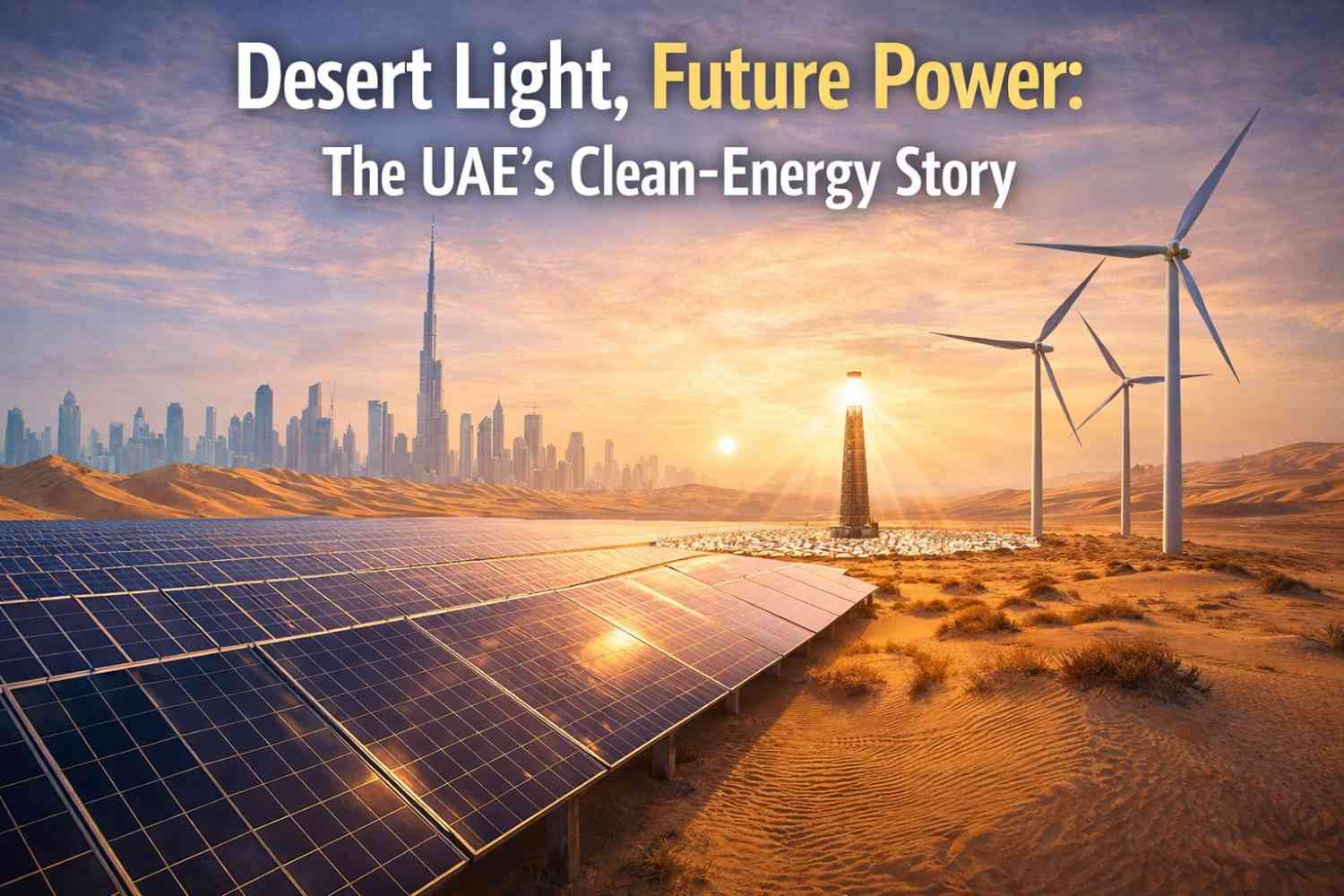
A noon sun, a cooling cityAt midday in the Emirates, the sun does not merely shine—it asserts itself. The glass towers of Dubai and Abu Dhabi throw the light back into the sky, the roads shimmer, and inside homes, malls, metro stations, hospitals, and data centres, cooling becomes the invisible infrastructure of daily life. In a place where heat is not an occasional discomfort but a defining condition, electricity is not a convenience. It is continuity.That is why the UAE’s clean-energy transition cannot be treated as a fashionable climate headline. It is a national resilience project—about powering cities without poisoning the air, about keeping the lights stable in a future of higher temperatures, and about ensuring the economy stays competitive as the world rewires itself away from high-carbon growth. The UAE has explicitly framed this as a net-zero journey to 2050, built through a national strategy and major capital deployment. And like the India-focused narrative in your CleanEnergy document, the real test is whether it becomes a “people’s story” and not only a policy story. In the UAE, that “people” lens looks slightly different: not village electrification, but a heat-stressed urban economy, an energy-intensive water system, globally connected trade and finance, and a society where state capacity and corporate execution move in tight coordination.What “clean energy” means in the UAE contextIn the simplest sense, clean energy is electricity (and, increasingly, fuels) that dramatically reduces greenhouse-gas emissions and local pollution compared to conventional fossil generation. In the UAE’s practical playbook, this is not one technology—it is a portfolio.It includes utility-scale solar—because sunlight is abundant and predictable. It includes nuclear—because a modern economy needs stable baseload power that is not hostage to intermittency. It includes storage and grid intelligence—because high solar penetration requires flexibility. It includes efficiency—because the cheapest unit of clean energy is the unit not consumed, especially in cooling-heavy buildings. And it increasingly includes hydrogen and related derivatives—because some sectors cannot be fully electrified and will still need molecules, not only electrons.This is precisely why the UAE’s stated pathway is structured across multiple sectors—not only power, but also industry, transport, buildings, waste, and agriculture. Why the UAE needs clean energy urgently—beyond reputationThe UAE’s clean-energy story is often narrated internationally as “a post-oil pivot.” That is true, but incomplete.First, the country remains substantially tied to hydrocarbons, and this creates a difficult balancing act: diversifying away from oil while still benefiting from oil revenues and navigating global scrutiny around production and export. Second, the UAE is physically vulnerable to climate impacts—extreme heat, water scarcity, and sea level rise—risks that threaten coastal infrastructure and ecosystems. Clean energy does not solve all of this, but it reduces the problem the country can control: its own emissions trajectory and the carbon intensity of its growth.Third, the UAE’s development model is electricity-intensive. Cooling demand rises as temperatures rise; desalination and water management carry heavy energy loads; and the next economic wave—AI, cloud computing, advanced manufacturing—adds further demand. In this context, clean energy is not austerity. It is a way to keep growth possible without creating a future where the cost of carbon (financially and physically) becomes unmanageable.The net-zero pivot: from announcement to architectureThe UAE’s declared anchor is the “UAE Net Zero by 2050 Strategic Initiative,” positioned as a national climate action plan and an economic-social stimulus. It was publicly announced in 2021. Under this umbrella, the UAE has aligned its energy strategy toward a clean-energy share that is explicitly quantified. The Energy Strategy 2050 envisions a 2050 energy mix including 44% clean energy (with other shares allocated to gas, “clean coal,” and nuclear). Your UAE draft also highlights the ambition of reaching “44% clean energy by mid-century” and tripling renewable share. That is the strategic intent. The more interesting part is how intent becomes infrastructure—and then becomes rules, markets, and behaviour.Three mega-projects that changed the narrativeStep into the UAE’s clean-energy transition and three names come up repeatedly because they signal scale, credibility, and execution.Dubai’s Mohammed bin Rashid Al Maktoum Solar Park is designed to reach 5,000 MW by 2030. It is not simply “a big solar plant”; it is an industrial ecosystem, built in phases, with a strong Independent Power Producer (IPP) model that pulls private capital and global operators into a state-led plan. It also showcases technology ambition: DEWA records include a concentrated solar power tower measured at 263.126 metres, reflecting a push beyond “standard PV” into dispatchable solar systems. Abu Dhabi’s Al Dhafra Solar PV project is emblematic of the UAE’s ability to set world-scale benchmarks and drive down prices through competitive procurement. Your draft cites it at 2 GW. Masdar’s own project description confirms the 2 GW scale and details the ownership structure (TAQA 40%, Masdar 20%, with the remaining 40% split between EDF and JinkoPower). Then there is Barakah, the first nuclear power plant in the Arab world, positioned as the backbone of stable, zero-carbon power. Your UAE document notes four operational reactors providing around 25% of electricity needs. ENEC similarly describes Barakah’s four reactors producing roughly 40 TWh annually, equivalent to around 25% of the UAE’s electricity. Together, these three projects tell a strategic story: solar for scale and cost, nuclear for stability, and a grid that increasingly must behave like a smart balancing machine.Key players: the UAE’s clean-energy coalitionWhat looks like “the UAE” from the outside is, in practice, a well-coordinated coalition of state institutions, regulators, and corporate champions.In Dubai, DEWA is central—both as system operator and as the orchestrator of flagship initiatives like the Solar Park and distributed solar programmes. In Abu Dhabi, Masdar is a principal clean-energy vehicle with an explicitly strengthened shareholder structure: TAQA holds 43%, Mubadala 33%, and ADNOC 24% (with ADNOC leading Masdar’s green hydrogen business under the same overall partnership). Reuters reporting also highlights Masdar’s rapid scale-up and global capacity expansion, reinforcing its role as a flagship player rather than a symbolic entity. On the nuclear side, ENEC and its operating entity Nawah are the defining institutional actors behind Barakah’s delivery and operations. And across the system, TAQA (especially transmission), Mubadala (capital), and ADNOC (energy incumbency and transition bets) shape how fast, how credibly, and how globally the UAE can move.How the new clean-energy regime is being implemented: law, administration, marketsA transition of this magnitude does not succeed on projects alone. It succeeds when rules and routines change.One turning point is the UAE’s Federal Decree-Law No. (11) of 2024 on the Reduction of Climate Change Effects, which establishes a national legal framework—assigning responsibilities, requiring emissions monitoring and reporting approaches, and creating a National Carbon Credit Registry under the Ministry. Your UAE draft explicitly flags this law and the National Register for Carbon Credits as part of the regulatory architecture. This kind of legislation matters because it turns “voluntary sustainability” into compliance behaviour—creating consistent expectations for corporations, including those operating in free zones, as several professional analyses have noted. Alongside federal law, administrative systems operationalise participation:In Dubai, Shams Dubai enables households and building owners to install solar PV and connect to DEWA’s grid, using the electricity onsite and exporting surplus back to the network. This is not only “green”; it is a behavioural mechanism—converting consumers into partial producers and normalising decentralised generation in a city built on centralised infrastructure.The UAE’s grid-balancing ambition is also visible in storage-linked infrastructure. DEWA’s pumped-storage hydro project in Hatta is designed at 250 MW with 1,500 MWh storage capacity—explicitly intended to store clean electricity (including from solar) and release it when needed. This is the kind of “behind-the-scenes” project that makes solar-heavy systems reliable at night, during dust events, or at peak evening demand.Markets and procurement models are the third pillar. The IPP approach—explicitly cited by DEWA in relation to the Solar Park—brings private developers into long-term structured contracts, supporting bankable investment.Corporate and civil participation: what it looks like on the groundCorporate participation in the UAE is not an “add-on”; it is built into the project architecture and finance ecosystem.Large-scale plants like Al Dhafra PV show multi-entity project companies and global partnerships. International partnerships also expand the UAE’s influence beyond its borders—PACE, the U.S.-UAE Partnership for Accelerating Clean Energy, aims to catalyse $100 billion and deploy 100 GW of clean energy globally by 2035, positioning the UAE as a climate-finance and project-deployment node. On the finance side, global reporting points to UAE-backed transition funding platforms—such as ALTERRA-related commitments—aimed at mobilising significantly larger pools of capital into transition projects. Civil and community participation in the UAE tends to be structured through “enabled adoption” rather than grassroots improvisation. Rooftop solar under Shams Dubai is one example. Another is the slow reshaping of demand: Dubai’s Green Building Regulations explicitly aim to reduce energy and water consumption and improve building performance. Mobility is also a visible public interface. DEWA’s EV Green Charger initiative began with early installations in 2015 and has expanded materially since then, reflecting an administrative push to make EV adoption practical rather than aspirational. In short: the UAE’s “civil participation” is often mediated through utilities, building codes, incentive structures, and access to infrastructure—designed to shift millions of small choices in a consistent direction.Trends and possibilities ahead: what the UAE is likely to do nextYour UAE draft points to hydrogen as a strategic frontier, aiming for top-tier production capability by 2031. Multiple external references describe UAE ambitions for low-carbon hydrogen scale by the early 2030s, reinforcing that this is not a rhetorical add-on but a core pillar of the next phase. The second trend is “firm clean power”—renewables that behave like baseload via storage, grid control, and hybridisation. Reuters reporting on Masdar initiatives has underlined this ambition to provide uninterrupted clean power, signalling the country’s intent to solve intermittency at industrial scale rather than accepting it as a limitation. Third, AI and advanced digital optimisation will become a defining layer—both because the UAE is investing heavily in AI as an economic pillar and because AI can materially improve forecasting, predictive maintenance, and grid dispatch at high renewable penetration. Finally, climate-tech capital and innovation ecosystems are likely to deepen. Your UAE draft cites more than $400 million in climate-tech investment in the 2018–2022 period. A regional estimate also suggests the UAE captured a large share of MENA climate-tech funding over that timeframe. Care and caution: what the UAE must guard againstYour UAE draft is clear that ambition does not remove constraints—it reveals them.There is the structural tension of hydrocarbon dependence, which can send mixed signals if fossil expansion and clean-energy leadership appear to move in parallel without a credible decline pathway. There is the technical challenge of integrating intermittent renewables into a grid under fast-growing demand, which requires storage, grid upgrades, and operational sophistication. There is also the risk of over-reliance on carbon capture and storage (CCS) as a substitute for reducing fossil reliance—especially if CCS is treated as a reputational shield rather than a carefully governed, transparently monitored decarbonisation tool. And there are UAE-specific environmental cautions. Solar in desert environments faces dust/soiling challenges; cleaning regimes can create water trade-offs; large footprints can pressure habitats if siting is not rigorous; and extreme heat can affect equipment performance and cooling demand in ways that amplify peak loads. Climate vulnerability—heat, water stress, sea-level risk—adds urgency, but it also raises the bar for resilience planning. The policy lesson here mirrors the global examples your draft invokes: countries that succeed do not only build generation; they build systems—strong targets, grid integration, efficiency-first building policy, and credible phase-down trajectories where possible. For the UAE, the “system build” must also include high-integrity carbon accounting (especially under the new climate law), strong enforcement capacity, and a disciplined approach to avoiding greenwashing.The UAE’s clean energy story, told plainlyThe UAE is attempting something few hydrocarbon economies have pursued with this degree of visible scale: simultaneously funding a clean-energy buildout, creating legal and administrative frameworks for accountability, and positioning itself as a global platform for deployment and finance. But the true success metric will not be whether a strategy document is well-written or a solar park is photographed from space. It will be whether the Emirates can make clean power reliable through the night, affordable through peak summer, credible under global scrutiny, and resilient against the physical climate realities already arriving.That is when the story stops being “UAE builds megaprojects” and becomes what your India narrative calls the real destination: a people’s story—of continuity, health, and dignity—adapted to the unique demands of a modern desert nation. ...Read more
26 Mar 2026
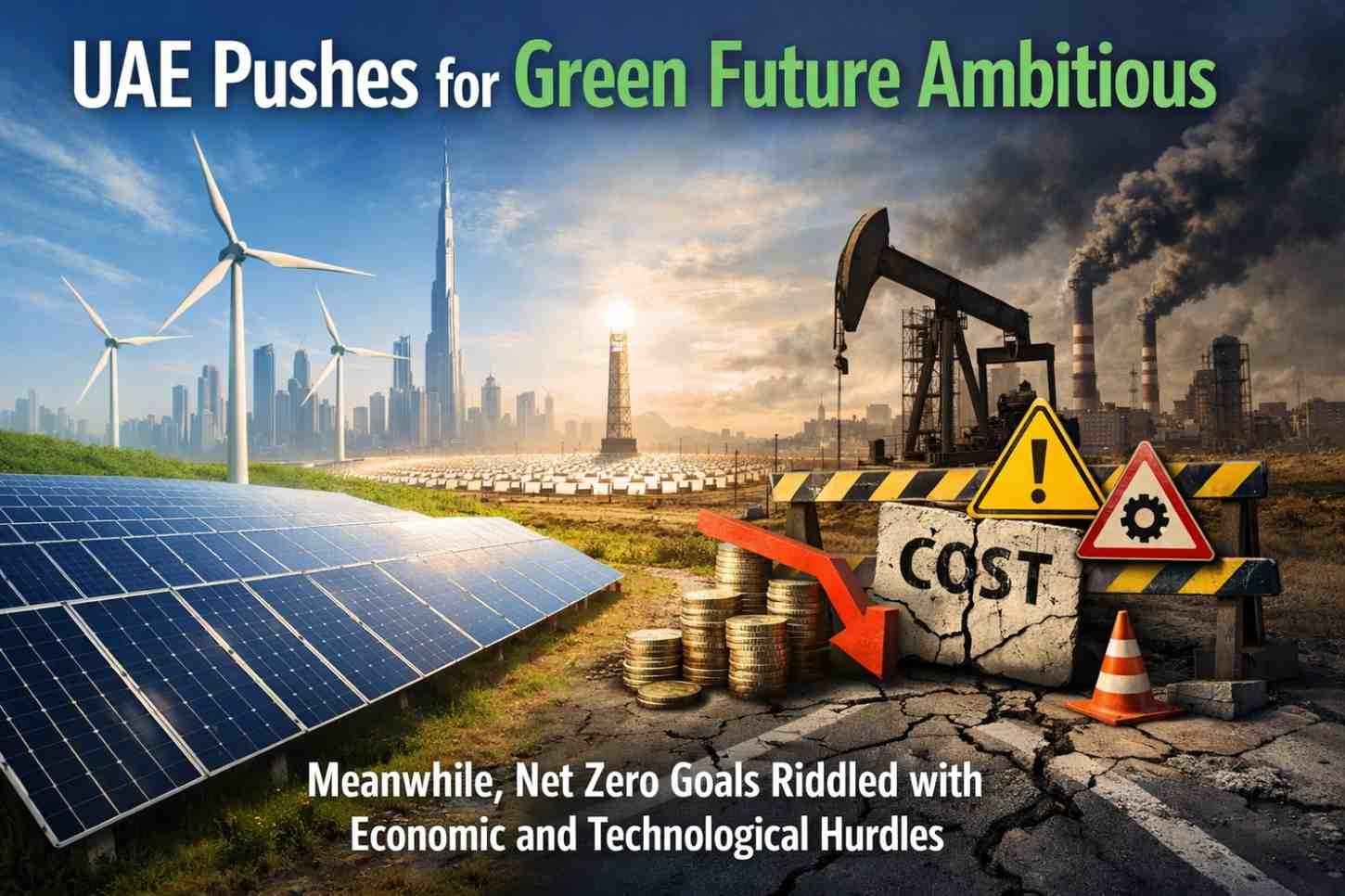
Meanwhile, Net Zero goals are also riddled with Economic and Technological Hurdles The United Arab Emirates (UAE) has embarked on an ambitious journey. It involves achieving net-zero emissions by 2050, a strategic initiative that aims to position the oil-dependent nation as a global leader in clean energy and sustainable development. Backed by significant funding and a well-rounded national strategy, the UAE has made measurable strides. It includes launching some of the world's largest solar projects and the first nuclear power plant in the whole of the Arab world. However, this bold transition is not without considerable challenges, as the country navigates a complex balance between diversifying its economy away from oil yet sustaining growth amidst escalating energy demands. A Visionary Strategy for a Post-Oil Universe The "UAE Net Zero by 2050 Strategic Initiative" has been the cornerstone of the nation's climate action plan. It outlines a pathway to a low-carbon future that also stimulates economic and social advancement. The strategy is built on more than 25 programs across six key sectors: power, industry, transport, buildings, waste, and agriculture. Central to this vision is the updated UAE Energy Strategy 2050, which aims to triple the share of renewable energy and achieve an energy mix of 44% clean energy by mid-century. This progressive shift is evident in flagship projects that have broken world records. Some of them are as follows: Mohammed bin Rashid Al Maktoum Solar Park: This park is poised to be the world’s largest single-site solar park. It’s a project in Dubai that aims for generating a massive capacity of 5,000 MW of clean energy by 2030 and features the world's tallest concentrated solar power (CSP) tower.Barakah Nuclear Energy Plant: The first nuclear power plant in the Arab world, it has four operational reactors and currently provides a significant 25% of the UAE's total electricity needs ,thus effectively ensuring a stable, zero-carbon baseload power.Al Dhafra Solar PV Plant: One of the world's largest solar power facilities, with a capacity of 2 GW, it boasts of record-low electricity prices, demonstrating the economic viability of large-scale solar projects in the UAE's ecosystem.. All these initiatives, alongside the National Hydrogen Strategy, which aims to make the UAE one of the largest producers of hydrogen by 2031, underscores a robust commitment to energy diversification. The Roadblocks on the Green Pathway Despite such monumental momentum, the UAE's transition inherently faces several challenges. Economic Dependence on Hydrocarbons: The most prominent hurdle remains the UAE's heavy reliance on oil and gas exports, which account for approximately 30% of its GDP. Ramping up fossil fuel production for export, while simultaneously investing in domestic clean energy, presents mixed signals to the international community and risks locking the country into a high-emissions trajectory…something that is inconsistent with the 1.5°C warming limit of the Paris Agreement. Technological and Infrastructural Needs: Integrating intermittent renewable sources like solar and wind into the existing grid requires significant investment in cutting-edge energy storage technologies, such as advanced batteries and pumped-hydro storage. The UAE's rapid urbanization and industrial growth fuels an escalating energy demand, that requires consistent expansion of the power grid and infrastructure. The CCS Conundrum: A major component of the UAE's strategy relies on Carbon Capture and Storage (CCS) technology for both power generation and industrial applications. Critics argue that an overreliance on a technology that is not yet proven at scale for power generation can be a "smokescreen" for prolonging fossil fuel use, diverting resources from proven renewable energy alternatives. Environmental Vulnerability: The UAE is highly vulnerable to the physical impacts of climate change, including extreme heat, water scarcity, and rising sea levels, which threaten its huge coastal infrastructure and ecosystems. These environmental risks add urgency to the transition but also present tall challenges in terms of adaptation. Developed nations like Denmark, Germany, the Netherlands, and Portugal demonstrate lot of progress in clean energy transitions through massive wind/solar expansion, phasing out coal, and supportive policies, with Portugal nearing 80% renewables, Denmark leading in wind integration, and the Netherlands seeing huge solar growth, while nations like the UK and France focus on policy, housing retrofits, and nuclear/renewables integration for net-zero goals. Key paradigms of Progress: A pioneer in wind power, Denmark integrates high levels of variable renewables with combined heat & power (CHP) and strategic investments in various offshore wind islands, thus leading to a mammoth wind share in total energy. Meanwhile, Portugal has reached over 75% renewable electricity, phasing out coal by 2021, with rapid solar growth and targets for phasing down gas, thus aiming for near-total clean electricity by 2030. Likewise, Netherlands generated over half its electricity from wind and solar in 2023, with major offshore wind farms (Hollandse Kust Zuid) and widespread residential solar boosting clean energy share. Another major economy that demonstrates how to strategically transition away from fossil fuels is Germany. This European nation integrates significant renewable capacity despite challenges, as reported by German news agencies. On the other hand Lithuania rapidly accelerated the share of renewables to over 60% of the overall energy mix, ending reliance on Russian fossil fuels. It’s now aiming to become a net electricity exporter by 2030, catalysed by rooftop solar. France, on the other hand is phasing out coal and reducing fossil fuel consumption with a focus on energy efficiency in housing (a major emissions source) as part of its net-zero plan. UK too has achieved significant milestones, including its first full day without coal power and record offshore wind capacity, driving towards its net-zero target through a heady cocktail of policy and technology. What are the common Strategies & Success Factors in all these examples? These developed nations took a calibrated and strategic approach towards achieving clean energy and Net Zero goals. Some of them being as below: Strong Policy & Targets: All these nations set out ambitious national targets (e.g., 2030/2050) backed by supportive policies like feed-in tariffs and streamlined planning.Wind & Solar Dominance: There was a massive deployment of offshore and onshore wind, plus residential and utility-scale solar power.Grid Integration: Innovative solutions were deployed for integrating variable renewables, including energy islands and grid upgrades.Energy Efficiency: These countries prioritised tackling housing insulation and building retrofits to cut the net energy demand.Totally phasing Out Fossil Fuels: Deliberate plans were rolled out across the geography to retire coal plants and reduce gas reliance.Incentivising local Investment: They encouraged community-owned energy projects and massive local manufacturing of clean tech. What are the innovative Solutions and a forward outlook for UAE The UAE is not sitting pretty on its hurdles and challenges. The nation is in its own way attempting to tackle these challenges with innovative solutions and a pragmatic approach to energy development Some of them are as depicted below:. Policy and Regulatory Action: The government has established a clear regulatory framework, including Federal Decree-Law No. (11) of 2024 on the Reduction of Climate Change Effects and the National Register for Carbon Credits. These legislative actions provide a clear path for businesses to incorporate climate risk assessments and emissions reporting, fostering a supportive ecosystem for green investment. Technological Innovation and R&D: The UAE has emerged as a hub for climate tech investment, attracting over $400 million in funding between 2018 and 2022. Research and development centers, such as the one at the Mohammed bin Rashid Al Maktoum Solar Park, are actively focusing on smart grid integration, advanced energy storage, and green hydrogen production to overcome intermittency issues. AI is also being leveraged for optimizing energy use. Technologies such as predictive maintenance is being effectively used in power plants. Strategic Partnerships: Collaborations like the Partnership for Accelerating Clean Energy (PACE) with the US aims to mobilize $100 billion in financing for 100 GW of clean energy projects globally by 2035, showcasing the UAE's commitment to international cooperation and leadership in climate diplomacy. The UAE's journey to net zero by 2050 is an evidence to its national commitment and strategic foresight. By leveraging its financial strength by investing in pioneering projects and innovative technologies, the Emirates is charting a distinctive path that harmonises economic imperatives with the urgent need for climate action. It is also aiming to secure a sustainable future for generations to come. ...Read more