26 Mar 2026
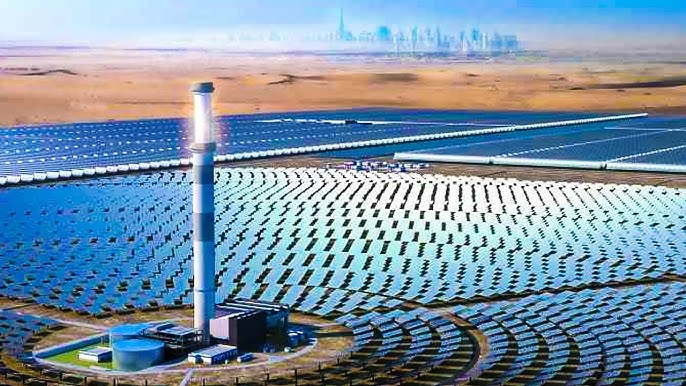
A noon sun, a cooling city At midday in the Emirates, the sun does not merely shine—it asserts itself. The glass towers of Dubai and Abu Dhabi throw the light back into the sky, the roads shimmer, and inside homes, malls, metro stations, hospitals, and data centres, cooling becomes the invisible infrastructure of daily life. In a place where heat is not an occasional discomfort but a defining condition, electricity is not a convenience. It is continuity. That is why the UAE’s clean-energy transition cannot be treated as a fashionable climate headline. It is a national resilience project—about powering cities without poisoning the air, about keeping the lights stable in a future of higher temperatures, and about ensuring the economy stays competitive as the world rewires itself away from high-carbon growth. The UAE has explicitly framed this as a net-zero journey to 2050, built through a national strategy and major capital deployment. And like the India-focused narrative in your CleanEnergy document, the real test is whether it becomes a “people’s story” and not only a policy story. In the UAE, that “people” lens looks slightly different: not village electrification, but a heat-stressed urban economy, an energy-intensive water system, globally connected trade and finance, and a society where state capacity and corporate execution move in tight coordination. What “clean energy” means in the UAE context In the simplest sense, clean energy is electricity (and, increasingly, fuels) that dramatically reduces greenhouse-gas emissions and local pollution compared to conventional fossil generation. In the UAE’s practical playbook, this is not one technology—it is a portfolio. It includes utility-scale solar—because sunlight is abundant and predictable. It includes nuclear—because a modern economy needs stable baseload power that is not hostage to intermittency. It includes storage and grid intelligence—because high solar penetration requires flexibility. It includes efficiency—because the cheapest unit of clean energy is the unit not consumed, especially in cooling-heavy buildings. And it increasingly includes hydrogen and related derivatives—because some sectors cannot be fully electrified and will still need molecules, not only electrons. This is precisely why the UAE’s stated pathway is structured across multiple sectors—not only power, but also industry, transport, buildings, waste, and agriculture. Why the UAE needs clean energy urgently—beyond reputation The UAE’s clean-energy story is often narrated internationally as “a post-oil pivot.” That is true, but incomplete. First, the country remains substantially tied to hydrocarbons, and this creates a difficult balancing act: diversifying away from oil while still benefiting from oil revenues and navigating global scrutiny around production and export. Second, the UAE is physically vulnerable to climate impacts—extreme heat, water scarcity, and sea level rise—risks that threaten coastal infrastructure and ecosystems. Clean energy does not solve all of this, but it reduces the problem the country can control: its own emissions trajectory and the carbon intensity of its growth. Third, the UAE’s development model is electricity-intensive. Cooling demand rises as temperatures rise; desalination and water management carry heavy energy loads; and the next economic wave—AI, cloud computing, advanced manufacturing—adds further demand. In this context, clean energy is not austerity. It is a way to keep growth possible without creating a future where the cost of carbon (financially and physically) becomes unmanageable. The net-zero pivot: from announcement to architecture The UAE’s declared anchor is the “UAE Net Zero by 2050 Strategic Initiative,” positioned as a national climate action plan and an economic-social stimulus. It was publicly announced in 2021. Under this umbrella, the UAE has aligned its energy strategy toward a clean-energy share that is explicitly quantified. The Energy Strategy 2050 envisions a 2050 energy mix including 44% clean energy (with other shares allocated to gas, “clean coal,” and nuclear). Your UAE draft also highlights the ambition of reaching “44% clean energy by mid-century” and tripling renewable share. That is the strategic intent. The more interesting part is how intent becomes infrastructure—and then becomes rules, markets, and behaviour. Three mega-projects that changed the narrative Step into the UAE’s clean-energy transition and three names come up repeatedly because they signal scale, credibility, and execution. Dubai’s Mohammed bin Rashid Al Maktoum Solar Park is designed to reach 5,000 MW by 2030. It is not simply “a big solar plant”; it is an industrial ecosystem, built in phases, with a strong Independent Power Producer (IPP) model that pulls private capital and global operators into a state-led plan. It also showcases technology ambition: DEWA records include a concentrated solar power tower measured at 263.126 metres, reflecting a push beyond “standard PV” into dispatchable solar systems. Abu Dhabi’s Al Dhafra Solar PV project is emblematic of the UAE’s ability to set world-scale benchmarks and drive down prices through competitive procurement. Your draft cites it at 2 GW. Masdar’s own project description confirms the 2 GW scale and details the ownership structure (TAQA 40%, Masdar 20%, with the remaining 40% split between EDF and JinkoPower). Then there is Barakah, the first nuclear power plant in the Arab world, positioned as the backbone of stable, zero-carbon power. Your UAE document notes four operational reactors providing around 25% of electricity needs. ENEC similarly describes Barakah’s four reactors producing roughly 40 TWh annually, equivalent to around 25% of the UAE’s electricity. Together, these three projects tell a strategic story: solar for scale and cost, nuclear for stability, and a grid that increasingly must behave like a smart balancing machine. Key players: the UAE’s clean-energy coalition What looks like “the UAE” from the outside is, in practice, a well-coordinated coalition of state institutions, regulators, and corporate champions. In Dubai, DEWA is central—both as system operator and as the orchestrator of flagship initiatives like the Solar Park and distributed solar programmes. In Abu Dhabi, Masdar is a principal clean-energy vehicle with an explicitly strengthened shareholder structure: TAQA holds 43%, Mubadala 33%, and ADNOC 24% (with ADNOC leading Masdar’s green hydrogen business under the same overall partnership). Reuters reporting also highlights Masdar’s rapid scale-up and global capacity expansion, reinforcing its role as a flagship player rather than a symbolic entity. On the nuclear side, ENEC and its operating entity Nawah are the defining institutional actors behind Barakah’s delivery and operations. And across the system, TAQA (especially transmission), Mubadala (capital), and ADNOC (energy incumbency and transition bets) shape how fast, how credibly, and how globally the UAE can move. How the new clean-energy regime is being implemented: law, administration, markets A transition of this magnitude does not succeed on projects alone. It succeeds when rules and routines change. One turning point is the UAE’s Federal Decree-Law No. (11) of 2024 on the Reduction of Climate Change Effects, which establishes a national legal framework—assigning responsibilities, requiring emissions monitoring and reporting approaches, and creating a National Carbon Credit Registry under the Ministry. Your UAE draft explicitly flags this law and the National Register for Carbon Credits as part of the regulatory architecture. This kind of legislation matters because it turns “voluntary sustainability” into compliance behaviour—creating consistent expectations for corporations, including those operating in free zones, as several professional analyses have noted. Alongside federal law, administrative systems operationalise participation: In Dubai, Shams Dubai enables households and building owners to install solar PV and connect to DEWA’s grid, using the electricity onsite and exporting surplus back to the network. This is not only “green”; it is a behavioural mechanism—converting consumers into partial producers and normalising decentralised generation in a city built on centralised infrastructure. The UAE’s grid-balancing ambition is also visible in storage-linked infrastructure. DEWA’s pumped-storage hydro project in Hatta is designed at 250 MW with 1,500 MWh storage capacity—explicitly intended to store clean electricity (including from solar) and release it when needed. This is the kind of “behind-the-scenes” project that makes solar-heavy systems reliable at night, during dust events, or at peak evening demand. Markets and procurement models are the third pillar. The IPP approach—explicitly cited by DEWA in relation to the Solar Park—brings private developers into long-term structured contracts, supporting bankable investment. Corporate and civil participation: what it looks like on the ground Corporate participation in the UAE is not an “add-on”; it is built into the project architecture and finance ecosystem. Large-scale plants like Al Dhafra PV show multi-entity project companies and global partnerships. International partnerships also expand the UAE’s influence beyond its borders—PACE, the U.S.-UAE Partnership for Accelerating Clean Energy, aims to catalyse $100 billion and deploy 100 GW of clean energy globally by 2035, positioning the UAE as a climate-finance and project-deployment node. On the finance side, global reporting points to UAE-backed transition funding platforms—such as ALTERRA-related commitments—aimed at mobilising significantly larger pools of capital into transition projects. Civil and community participation in the UAE tends to be structured through “enabled adoption” rather than grassroots improvisation. Rooftop solar under Shams Dubai is one example. Another is the slow reshaping of demand: Dubai’s Green Building Regulations explicitly aim to reduce energy and water consumption and improve building performance. Mobility is also a visible public interface. DEWA’s EV Green Charger initiative began with early installations in 2015 and has expanded materially since then, reflecting an administrative push to make EV adoption practical rather than aspirational. In short: the UAE’s “civil participation” is often mediated through utilities, building codes, incentive structures, and access to infrastructure—designed to shift millions of small choices in a consistent direction. Trends and possibilities ahead: what the UAE is likely to do next Your UAE draft points to hydrogen as a strategic frontier, aiming for top-tier production capability by 2031. Multiple external references describe UAE ambitions for low-carbon hydrogen scale by the early 2030s, reinforcing that this is not a rhetorical add-on but a core pillar of the next phase. The second trend is “firm clean power”—renewables that behave like baseload via storage, grid control, and hybridisation. Reuters reporting on Masdar initiatives has underlined this ambition to provide uninterrupted clean power, signalling the country’s intent to solve intermittency at industrial scale rather than accepting it as a limitation. Third, AI and advanced digital optimisation will become a defining layer—both because the UAE is investing heavily in AI as an economic pillar and because AI can materially improve forecasting, predictive maintenance, and grid dispatch at high renewable penetration. Finally, climate-tech capital and innovation ecosystems are likely to deepen. Your UAE draft cites more than $400 million in climate-tech investment in the 2018–2022 period. A regional estimate also suggests the UAE captured a large share of MENA climate-tech funding over that timeframe. Care and caution: what the UAE must guard against Your UAE draft is clear that ambition does not remove constraints—it reveals them. There is the structural tension of hydrocarbon dependence, which can send mixed signals if fossil expansion and clean-energy leadership appear to move in parallel without a credible decline pathway. There is the technical challenge of integrating intermittent renewables into a grid under fast-growing demand, which requires storage, grid upgrades, and operational sophistication. There is also the risk of over-reliance on carbon capture and storage (CCS) as a substitute for reducing fossil reliance—especially if CCS is treated as a reputational shield rather than a carefully governed, transparently monitored decarbonisation tool. And there are UAE-specific environmental cautions. Solar in desert environments faces dust/soiling challenges; cleaning regimes can create water trade-offs; large footprints can pressure habitats if siting is not rigorous; and extreme heat can affect equipment performance and cooling demand in ways that amplify peak loads. Climate vulnerability—heat, water stress, sea-level risk—adds urgency, but it also raises the bar for resilience planning. The policy lesson here mirrors the global examples your draft invokes: countries that succeed do not only build generation; they build systems—strong targets, grid integration, efficiency-first building policy, and credible phase-down trajectories where possible. For the UAE, the “system build” must also include high-integrity carbon accounting (especially under the new climate law), strong enforcement capacity, and a disciplined approach to avoiding greenwashing. The UAE’s clean energy story, told plainly The UAE is attempting something few hydrocarbon economies have pursued with this degree of visible scale: simultaneously funding a clean-energy buildout, creating legal and administrative frameworks for accountability, and positioning itself as a global platform for deployment and finance. But the true success metric will not be whether a strategy document is well-written or a solar park is photographed from space. It will be whether the Emirates can make clean power reliable through the night, affordable through peak summer, credible under global scrutiny, and resilient against the physical climate realities already arriving. That is when the story stops being “UAE builds megaprojects” and becomes what your India narrative calls the real destination: a people’s story—of continuity, health, and dignity—adapted to the unique demands of a modern desert nation. ...Read more

26 Mar 2026
Meanwhile, Net Zero goals are also riddled with Economic and Technological Hurdles The United Arab Emirates (UAE) has embarked on an ambitious journey. It involves achieving net-zero emissions by 2050, a strategic initiative that aims to position the oil-dependent nation as a global leader in clean energy and sustainable development. Backed by significant funding and a well-rounded national strategy, the UAE has made measurable strides. It includes launching some of the world's largest solar projects and the first nuclear power plant in the whole of the Arab world. However, this bold transition is not without considerable challenges, as the country navigates a complex balance between diversifying its economy away from oil yet sustaining growth amidst escalating energy demands. A Visionary Strategy for a Post-Oil Universe The "UAE Net Zero by 2050 Strategic Initiative" has been the cornerstone of the nation's climate action plan. It outlines a pathway to a low-carbon future that also stimulates economic and social advancement. The strategy is built on more than 25 programs across six key sectors: power, industry, transport, buildings, waste, and agriculture. Central to this vision is the updated UAE Energy Strategy 2050, which aims to triple the share of renewable energy and achieve an energy mix of 44% clean energy by mid-century. This progressive shift is evident in flagship projects that have broken world records. Some of them are as follows: Mohammed bin Rashid Al Maktoum Solar Park: This park is poised to be the world’s largest single-site solar park. It’s a project in Dubai that aims for generating a massive capacity of 5,000 MW of clean energy by 2030 and features the world's tallest concentrated solar power (CSP) tower. Barakah Nuclear Energy Plant: The first nuclear power plant in the Arab world, it has four operational reactors and currently provides a significant 25% of the UAE's total electricity needs ,thus effectively ensuring a stable, zero-carbon baseload power. Al Dhafra Solar PV Plant: One of the world's largest solar power facilities, with a capacity of 2 GW, it boasts of record-low electricity prices, demonstrating the economic viability of large-scale solar projects in the UAE's ecosystem.. All these initiatives, alongside the National Hydrogen Strategy, which aims to make the UAE one of the largest producers of hydrogen by 2031, underscores a robust commitment to energy diversification. The Roadblocks on the Green Pathway Despite such monumental momentum, the UAE's transition inherently faces several challenges. Economic Dependence on Hydrocarbons: The most prominent hurdle remains the UAE's heavy reliance on oil and gas exports, which account for approximately 30% of its GDP. Ramping up fossil fuel production for export, while simultaneously investing in domestic clean energy, presents mixed signals to the international community and risks locking the country into a high-emissions trajectory…something that is inconsistent with the 1.5°C warming limit of the Paris Agreement. Technological and Infrastructural Needs: Integrating intermittent renewable sources like solar and wind into the existing grid requires significant investment in cutting-edge energy storage technologies, such as advanced batteries and pumped-hydro storage. The UAE's rapid urbanization and industrial growth fuels an escalating energy demand, that requires consistent expansion of the power grid and infrastructure. The CCS Conundrum: A major component of the UAE's strategy relies on Carbon Capture and Storage (CCS) technology for both power generation and industrial applications. Critics argue that an overreliance on a technology that is not yet proven at scale for power generation can be a "smokescreen" for prolonging fossil fuel use, diverting resources from proven renewable energy alternatives. Environmental Vulnerability: The UAE is highly vulnerable to the physical impacts of climate change, including extreme heat, water scarcity, and rising sea levels, which threaten its huge coastal infrastructure and ecosystems. These environmental risks add urgency to the transition but also present tall challenges in terms of adaptation. Developed nations like Denmark, Germany, the Netherlands, and Portugal demonstrate lot of progress in clean energy transitions through massive wind/solar expansion, phasing out coal, and supportive policies, with Portugal nearing 80% renewables, Denmark leading in wind integration, and the Netherlands seeing huge solar growth, while nations like the UK and France focus on policy, housing retrofits, and nuclear/renewables integration for net-zero goals. Key paradigms of Progress: A pioneer in wind power, Denmark integrates high levels of variable renewables with combined heat & power (CHP) and strategic investments in various offshore wind islands, thus leading to a mammoth wind share in total energy. Meanwhile, Portugal has reached over 75% renewable electricity, phasing out coal by 2021, with rapid solar growth and targets for phasing down gas, thus aiming for near-total clean electricity by 2030. Likewise, Netherlands generated over half its electricity from wind and solar in 2023, with major offshore wind farms (Hollandse Kust Zuid) and widespread residential solar boosting clean energy share. Another major economy that demonstrates how to strategically transition away from fossil fuels is Germany. This European nation integrates significant renewable capacity despite challenges, as reported by German news agencies. On the other hand Lithuania rapidly accelerated the share of renewables to over 60% of the overall energy mix, ending reliance on Russian fossil fuels. It’s now aiming to become a net electricity exporter by 2030, catalysed by rooftop solar. France, on the other hand is phasing out coal and reducing fossil fuel consumption with a focus on energy efficiency in housing (a major emissions source) as part of its net-zero plan. UK too has achieved significant milestones, including its first full day without coal power and record offshore wind capacity, driving towards its net-zero target through a heady cocktail of policy and technology. What are the common Strategies & Success Factors in all these examples? These developed nations took a calibrated and strategic approach towards achieving clean energy and Net Zero goals. Some of them being as below: Strong Policy & Targets: All these nations set out ambitious national targets (e.g., 2030/2050) backed by supportive policies like feed-in tariffs and streamlined planning.Wind & Solar Dominance: There was a massive deployment of offshore and onshore wind, plus residential and utility-scale solar power.Grid Integration: Innovative solutions were deployed for integrating variable renewables, including energy islands and grid upgrades.Energy Efficiency: These countries prioritized tackling housing insulation and building retrofits to cut the net energy demand.Totally phasing Out Fossil Fuels: Deliberate plans were rolled out across the geography to retire coal plants and reduce gas reliance.Incentivising local Investment: They encouraged community-owned energy projects and massive local manufacturing of clean tech. What are the innovative Solutions and a forward outlook for UAE The UAE is not sitting pretty on its hurdles and challenges. The nation is in its own way attempting to tackle these challenges with innovative solutions and a pragmatic approach to energy development Some of them are as depicted below:. Policy and Regulatory Action: The government has established a clear regulatory framework, including Federal Decree-Law No. (11) of 2024 on the Reduction of Climate Change Effects and the National Register for Carbon Credits. These legislative actions provide a clear path for businesses to incorporate climate risk assessments and emissions reporting, fostering a supportive ecosystem for green investment. Technological Innovation and R&D: The UAE has emerged as a hub for climate tech investment, attracting over $400 million in funding between 2018 and 2022. Research and development centers, such as the one at the Mohammed bin Rashid Al Maktoum Solar Park, are actively focusing on smart grid integration, advanced energy storage, and green hydrogen production to overcome intermittency issues. AI is also being leveraged for optimizing energy use. Technologies such as predictive maintenance is being effectively used in power plants. Strategic Partnerships: Collaborations like the Partnership for Accelerating Clean Energy (PACE) with the US aims to mobilize $100 billion in financing for 100 GW of clean energy projects globally by 2035, showcasing the UAE's commitment to international cooperation and leadership in climate diplomacy. The UAE's journey to net zero by 2050 is an evidence to its national commitment and strategic foresight. By leveraging its financial strength by investing in pioneering projects and innovative technologies, the Emirates is charting a distinctive path that harmonises economic imperatives with the urgent need for climate action. It is also aiming to secure a sustainable future for generations to come. ...Read more