Africa is a vast and diverse continent rich in natural resources, wildlife, cultures, and history, featuring a wide range of landscapes from deserts to rainforests.
26 Mar 2026
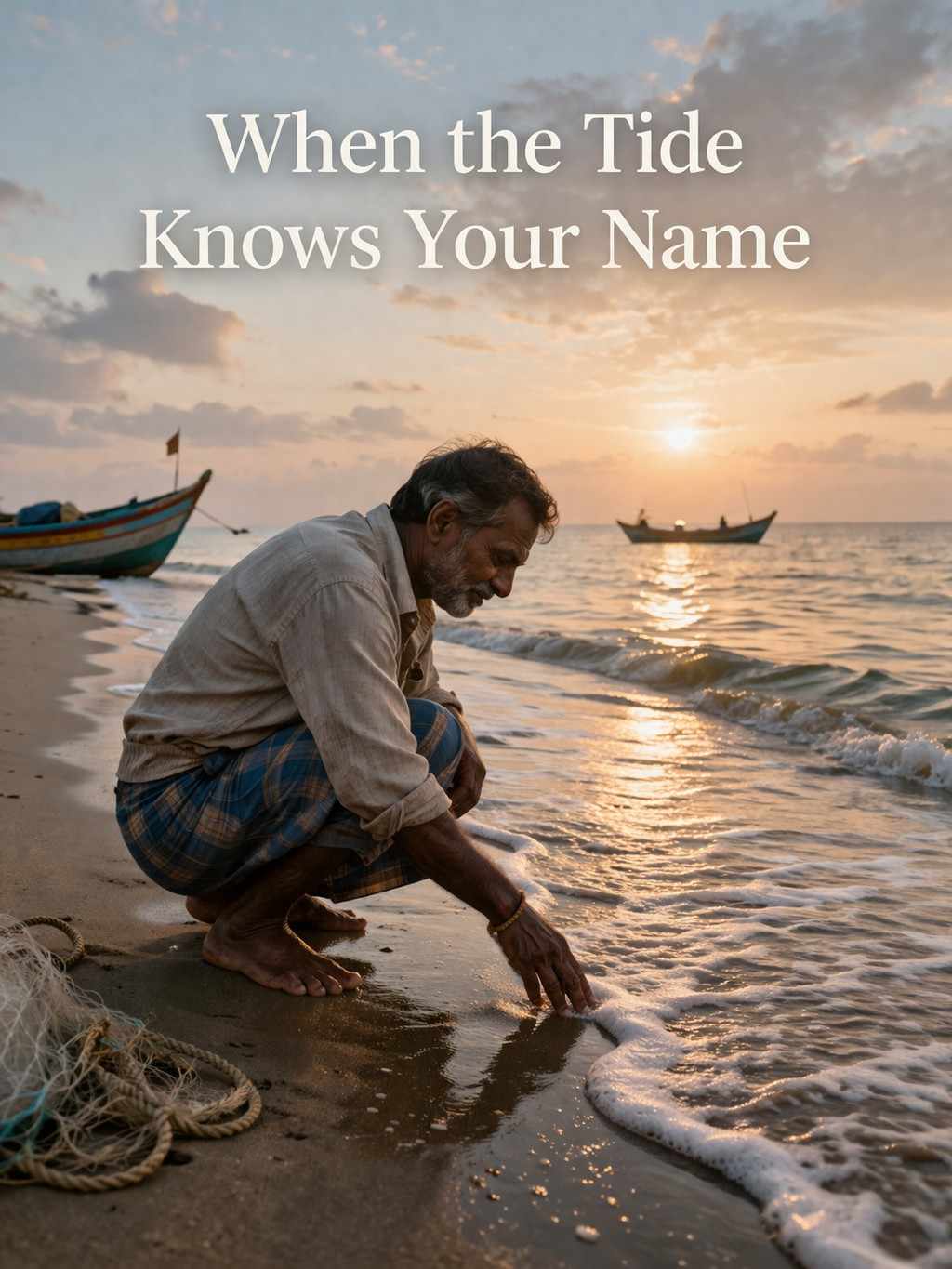
Along India’s western edge, the Arabian Sea does not feel like “nature” in the abstract. It feels like a neighbour with moods, memory, and consequences. In the hours before sunrise, when the first light is still trapped behind the horizon, you can hear a coastline waking up in two different dialects. In Goa, the sea arrives like a storyteller—warm, intimate, full of small signs that people read with their bodies more than their eyes. In Gujarat, the sea arrives like a force—wide, tidal, muscular, sometimes generous and sometimes brutally indifferent.And yet, whether you stand on the palm-lined sands near Betul in South Goa or on the working harbours of Veraval and Porbandar, the same truth holds: marine fisheries are not merely a livelihood. They are a public food system, a coastal economy, a culture, and an ecosystem service—rolled into one daily gamble that millions benefit from and far too few truly understand. This is why the sustainability crisis in marine fisheries is never “only” about fish. It is about how we manage risk, reward, waste, pollution, and power—right at the boundary where land ends and our collective choices begin.Goa’s Dawn: Where Work Looks Like RitualIn a Goan fishing village, the day does not start with a phone alarm. It starts with the texture of the wind. João—he could be any João from any coastal hamlet—steps into the shallows as if stepping into an old conversation. His canoe nudges forward. Nets lie folded like the day’s first prayer. Someone points to the sea’s surface and reads it the way others read headlines. Dolphins arc in the distance. For many fishers, that brief flash is not entertainment; it is reassurance, a sign that the water is alive and the food chain is still intact.Goa’s coastline is short compared to Gujarat’s, yet its marine diversity is outsized because its geography is a mosaic. Sandy beaches, rocky patches, estuaries like the Mandovi and Zuari, mangrove-lined creeks, sheltered bays—each creates nurseries for juvenile fish and corridors for migratory species. This is why Goa’s fisheries have historically been strong even with predominantly small-scale, artisanal practice. The traditional gears—gill nets, hook-and-line, canoe-based fishing—are not “backward.” They are often more selective, more local, and more ecosystem-sensitive than industrial methods.But artisanal does not mean easy. João’s hands know the small cuts of rope, the salt burn, the tension of a net pulled wrong in a sudden current. And when a community shore seine, like the ramponn, is used, the act becomes almost theatrical: more hands, more coordination, more laughter and argument and song—because fishing here is also society at work, not only economics at work.The Fish Market as a Mirror of the CoastWalk through a Goan market in the early morning and you understand sustainability in one glance. Mackerel, sardines, pomfret, prawns, crabs—laid out on ice or in baskets—are not just seafood. They are nutrition, affordability, festival memory, and household budgeting. One family buys mackerel because it stretches, another buys pomfret because guests have come, another buys prawns because a child has passed an exam and joy must be cooked into the day.Markets also reveal the first cracks. When the catch is smaller, prices rise, tempers sharpen, and the smallest fishers feel the squeeze first. When the fish are smaller in size, even if the basket looks full, experienced buyers quietly notice. When the smell is “off,” rumours of pollution travel faster than any official notice. This is the invisible intelligence of coastal communities: they read ecosystems through food.And the market is not only run by “the fishing community” in some generic sense. It is run by women—by the women who sort, dry, bargain, finance small household needs, and keep the fish economy moving when boats are on the water. Their labour rarely appears in policy language with the respect it deserves, yet the stability of the marine fish value chain depends on them as much as it depends on engines and nets.The Monsoon Pause: A Ban That Is Also a Bargain With LifeOne of the most visible sustainability measures along India’s west coast is the monsoon fishing ban. In Goa, the seasonal closure is not simply a government order; it is also something many communities intuitively accept because they understand breeding cycles. The sea needs time to recover. Fish need time to spawn. A pause is not laziness; it is a form of long-term thinking built into tradition and reinforced by regulation.Yet this is where sustainability becomes complicated. A ban on fishing is meaningful only when it is paired with income protection, fair enforcement, and honest monitoring. Otherwise, the ban becomes a period of hunger and debt for small fishers while better-connected operators find loopholes or shift effort elsewhere. A closure without social security is not conservation; it is a test of endurance imposed on the vulnerable.In Goa, many families use the monsoon months to repair nets, maintain boats, and preserve fish through drying and salting. This is not quaint heritage—it is food security engineering. Dry fish markets carry the smell of survival because they are exactly that: survival. But the pressure is rising because the cost of living rises faster than the value of small-scale catch, and younger people watch their parents struggle and ask a hard question: why inherit a life of uncertainty when tourism, services, or urban jobs promise steadier cash?Tourism’s Bright Lights and the Coastal Blind SpotGoa’s story cannot be told without tourism. Tourism brings money, jobs, and global attention, but it also brings a sustainability paradox. When the coast becomes a product, water becomes an accessory. The sea is admired for sunsets but ignored as a working commons that needs protection.Fishers speak, often quietly at first, about what happens when coastal waters receive untreated sewage, when rivers carry pollutants, when construction squeezes wetlands, and when mangroves are treated as “wasteland” instead of nurseries. The impacts rarely arrive as one dramatic disaster. They arrive as slow damage: fewer fish close to shore, more time spent for less catch, strange algae blooms, occasional fish mortality events that trigger panic and then fade from public memory.A coastal economy that sells “clean beaches” but tolerates dirty outflows is living on borrowed credibility. The sea will eventually invoice us—with declining fish stocks, public health scares, and the collapse of livelihoods that once stabilised coastal society.Velsao’s Warning: When Fish Float Up, So Do the TruthsRecent fish mortality incidents on parts of Goa’s coastline have acted like a harsh spotlight, forcing uncomfortable conversations about effluents, regulation, and accountability. When fish die in large numbers and wash up on a shoreline, it is not only an ecological tragedy; it is also a governance test. People ask: who polluted, who permitted, who monitored, who acted quickly, and who will ensure it does not happen again?For fishers, such events are not just environmental news—they are economic shocks. A dead coastline does not sell fish, does not inspire confidence, and does not feed families. It also breeds mistrust because communities often feel they are asked to “prove” their suffering, while the polluting systems are given time, paperwork, and procedural comfort. Sustainability cannot be built on that imbalance. It requires a simple principle that is too often diluted in practice: if a coastal ecosystem is harmed by a human activity, the cost of recovery should not be paid by fishing families.Gujarat’s Scale: Where the Sea Is an Industry and a FrontierIf Goa feels like a close conversation with the sea, Gujarat feels like a vast negotiation. The coastline stretches and stretches, and in places like the Gulf of Kutch the tide itself seems to breathe—pulling back to reveal mudflats that run to the horizon, returning with force that reshapes the day’s possibilities.In towns like Veraval, harbours are crowded with mechanised boats, trawlers, ice plants, transport networks, agents, auctions, and export-oriented infrastructure. This is marine fisheries at scale—powerful, productive, and deeply exposed to global market currents. A catch here is not only a meal; it is a commodity that may travel to distant consumers who will never see the fisher’s face or understand the coastal risks embedded in a neatly packed box.And yet, behind the industrial noise, there are old stories. There is Salim from Okha, whose grandfather may have travelled in wooden dhows and whose father navigated by experience rather than screens. Now Salim uses GPS. The sea has changed, he says—not only in temperature but in temperament. The unpredictability is sharper. Fuel costs bite harder. The margins feel thinner even when the boats look bigger.The High Cost of “Abundance”Gujarat’s waters are rich—ribbonfish, croakers, shrimps, squid, cuttlefish, and seasonal abundance near river mouths. But richness can become a trap when it is treated as infinite. As mechanisation expands, fishing becomes capital-intensive. Each trip carries a bundle of costs: diesel, ice, maintenance, gear repair, labour, harbour fees, loan repayments. For many families, debt is not a rare crisis; it is the background music of the profession.This is where sustainability must be understood as economic design. When fishers are locked into debt, they are pushed toward more effort, riskier weather decisions, and gear choices that maximise short-term catch even if they damage long-term stocks. In such a system, moral lectures about “conservation” land badly. People protect the future when the present is not trying to break them.Women in Gujarat’s fisheries, as in Goa, hold up the invisible half of the economy. They mend nets, peel shrimp, manage household finances, negotiate with agents, and absorb the emotional load when boats are delayed. Their hands smell of brine and diesel because the coast’s prosperity is literally handled into existence by labour that is too easily ignored. If policy continues to treat women as “helpers” instead of economic actors, sustainability planning will remain half-blind.The Trawler Question: When Efficiency Becomes ExtractionFew debates are as emotionally charged along India’s coasts as the conflict between small-scale fishers and trawler operators. Trawling, especially bottom trawling, can be extremely efficient in bringing large quantities of fish to shore. It can also be extremely destructive when it scrapes seabeds, pulls in juveniles, and generates heavy bycatch—life that is killed and discarded because it is not profitable in that moment.In Gujarat, where mechanisation is widespread, the trawler question is not theoretical. It shows up in daily resentment: artisanal fishers complaining that nearshore zones are invaded, that nets are destroyed, that catches shrink, that the sea is being mined rather than harvested. Even many mechanised fishers privately admit that the sea is less generous than it used to be, and that smaller fish in the nets are a warning sign, not a “good day.”Sustainability here is not about choosing one community over another; it is about designing fair rules for a shared commons and enforcing them. Nearshore zones reserved for small-scale fishers exist in law and policy in various forms, but enforcement is often the missing bridge between what is promised and what people experience. When rules are not enforced, the sea becomes a battleground where the strongest technology wins—and ecosystems tend to lose.Climate Change: When Seasons Stop Keeping PromisesNow a deeper disruption is rewriting both Goa’s and Gujarat’s fishing calendars: climate change. Fishers speak in practical terms about what scientists describe in models. The monsoon arrives late, or arrives angry. Wind patterns shift. Sea temperatures rise. Fish migration routes change. Some species move farther, deeper, or become less predictable. Acidification threatens shell-forming species in ways that are slow but serious.On India’s west coast, cyclones have become a sharper fear in recent years, and memories of severe storms have entered fishing communities like permanent caution. When cyclones intensify, “risk” is no longer an abstract term; it is a night when boats do not return, a harbour where families wait without certainty, a reminder that coastal livelihoods live at the edge of safety.Climate change also exposes inequality. Bigger vessels may have better navigation tools, stronger engines, and more access to information. Smaller fishers may have less capacity to outrun a storm or recover from a damaged boat. Adaptation, therefore, must be treated as a public responsibility, not an individual burden. Early warning systems, safe harbours, insurance that actually pays on time, and training in safety protocols are not “benefits.” They are the minimum architecture of climate resilience.Government Initiatives: Useful Starts, Uneven OutcomesAcross India, fisheries governance has grown more visible through schemes and regulatory measures designed to modernise the sector, improve infrastructure, and strengthen sustainability. Harbour upgrades, cold chain investments, and support for value addition can reduce post-harvest losses and improve incomes. Seasonal fishing bans are meant to protect breeding cycles. Newer rules and advisories against destructive practices are signals that the state recognises ecological limits.But a critical examination is necessary. Modernisation is not automatically sustainability. If improved harbours and better logistics simply enable more fishing effort without strong stock assessment, habitat protection, and enforceable limits, then “development” becomes a faster road to depletion. If subsidies reduce operational costs without rewarding selective gear and responsible practices, they can unintentionally accelerate overfishing.Policy also tends to speak loudly about boats and infrastructure and softly about governance quality. Who monitors nearshore zones? Who checks mesh sizes? Who prevents illegal fishing methods? Who ensures industrial units do not treat rivers and creeks as disposal channels? Who defends the rights of small fishers in practice, not only in documents? Sustainability is built not by announcements but by everyday enforcement and transparent accountability.And there is a deeper policy gap that communities feel in their bones: social security. Fishers face occupational risk comparable to some of the hardest professions, yet insurance coverage, pension-like protection, and reliable disaster compensation remain uneven. When a fisher loses a boat, they do not lose a “vehicle.” They lose their workplace, their future earnings, and their dignity. If we want sustainable fisheries, we must treat fishers as essential workers in the food system, not as a romantic coastal backdrop.Quiet Revolutions: Tradition Meets ScienceDespite the pressures, resilience is not absent. It is simply less advertised than crisis. Along stretches of coast, fishers are experimenting with better information, safer practices, and community discipline. There are efforts to reduce fuel use by fishing smarter rather than fishing harder. There are initiatives where data helps predict shoals, where training improves post-harvest handling so value is earned through quality, not only volume.The most promising trend is not a new gadget; it is a new relationship. When communities participate in rules—when they co-manage local zones, voluntarily protect spawning grounds, respect closures, and agree on mesh sizes—compliance rises because dignity rises. Top-down regulation alone often fails because it feels imposed. Co-management works because it feels owned.Women’s collectives in the post-harvest economy are also a sustainability lever waiting to be fully recognised. Better storage, hygienic processing, fair pricing systems, and access to credit can transform the value chain. When women are economically strengthened, households become more resilient, children stay in school longer, and fishing decisions are less desperate. Sustainability is often built in kitchens and markets as much as it is built at sea.Mangroves: The Nurseries We Keep ForgettingIf there is one ecosystem that quietly holds coastal fisheries together, it is mangroves. Mangroves stabilise shorelines, buffer storms, store carbon, and—most crucially for fishers—serve as nurseries where juvenile fish and crustaceans grow before moving into open waters. When mangroves are cut, fisheries weaken like a roof losing its beams.Gujarat has seen significant mangrove-focused attention in parts of its coastline, including restoration efforts that link livelihoods with ecology. Such work matters not only for biodiversity but for economics because it strengthens the base of the marine food chain. Goa, too, depends on estuaries and mangrove-linked systems, and movements to protect river health are inseparable from fisheries sustainability, even if the debates are often framed as “pollution control” rather than “food system survival.”The lesson is simple and uncomfortable: if we treat nurseries as expendable, we will eventually pay for fish scarcity with higher prices, poorer nutrition, and deeper poverty in fishing communities.A New Blue Economy: Beyond Catch to CareThe near future of coastal livelihoods cannot rely only on harvesting wild fish stocks. The sea can support new forms of income that reduce pressure on capture fisheries while strengthening resilience. Seaweed cultivation, for instance, is emerging as a serious opportunity along parts of Gujarat’s coast, creating pathways for supplementary livelihoods tied to the same marine landscape but with different ecological pressures.Diversification is not a way to “push fishers out of fishing.” It is a way to reduce vulnerability. When a bad season arrives—through weather, pollution, market crash, or stock decline—families with diversified income survive without being forced into harmful fishing intensity.Technology, used wisely, can also act as a fairness tool. Transparent auctions, traceability that rewards responsibly caught fish, digital access to weather and market information, and vessel tracking that improves safety can all shift the balance from extraction toward stewardship. But technology must be distributed fairly. A coast where only the largest operators can access modern tools becomes a coast where inequality deepens and conflict grows.A Near-Future Pact With the SeaThe sustainability challenge in Goa and Gujarat is ultimately a question of what kind of relationship we want with the ocean. Do we want a relationship where the sea is treated as an unlimited warehouse until it proves otherwise? Or do we want a relationship where the sea is treated as a living commons, protected by rules that are enforced, supported by science that is shared, and strengthened by communities that are respected?A realistic pact with the sea would look like this: strong protection of nearshore zones for small-scale fishers, enforced without exception; serious action against pollution sources in rivers and creeks because fisheries cannot survive in dirty nurseries; selective gear and bycatch-reduction methods rewarded through policy, not treated as optional morality; seasonal closures paired with income support so conservation does not become hunger; investment in mangroves and estuaries treated as fisheries investment, not as “environment work”; climate resilience built through early warnings, safe harbours, insurance that works, and training that saves lives; and finally, recognition of women as core economic actors whose empowerment is not charity but coastal strategy.If these steps are taken with sincerity, something remarkable becomes possible. Fishers begin to see regulation not as harassment but as protection. Young people begin to see the sea not as a sentence but as a skilled profession with dignity. Consumers begin to understand that sustainable seafood is not a luxury trend; it is a necessary contract between cities and coasts.Goa and Gujarat may speak differently through their landscapes—one with intimate estuaries and cultural closeness, the other with vast gulfs and industrial scale—but both are reading from the same changing ocean. The sea will keep breathing, tides will keep returning, and nets will keep carrying stories. The only question is whether the stories will be of collapse—or of a coast that chose, in time, to become wise. Table 1: The Tale of Two Fisheries (2023-2024 Estimates)FeatureGoa (The Artisan)Gujarat (The Industrialist)Annual Marine Catch~61,000 Tonnes (Declining) ~7,54,000 Tonnes (Dominant) Primary MethodRamponn (Shore Seine), Motorized CanoesMechanized Trawlers, GillnettersKey SpeciesMackerel, Sardines (Local Consumption)Ribbon Fish, Croaker (Export to China)Labor ForceMigrants (Jharkhand/Karnataka)Migrants (Andhra Pradesh/Tribal)Critical ThreatTourism pressure, LED Fishing, Climate MigrationIMBL Arrests (Pakistan), Cyclones, Industrial PollutionCultural SymbolThe Sangodd Festival (River Saints)Kharwa Flags & Pagadiya (Foot Fishing) Table 2: The Cost of the Changing SeaCrisis FactorImpact on GoaImpact on GujaratClimate ChangeNorthward migration of Mackerel reduces local catch; rising sea levels threaten drying beaches.Increased cyclone frequency (Tauktae, Biparjoy) destroys harbor infrastructure and boats.Trade & GeopoliticsHeavy reliance on dried fish imports from Gujarat during monsoon ban.Loss of boats and freedom due to arrests by Pakistan Maritime Security Agency (PMSA).ConflictInternal: Traditional Fishers vs. LED Trawlers.External: Fishers vs. International Borders (IMBL). Bottom of Form ...Read more