28 Jul 2026
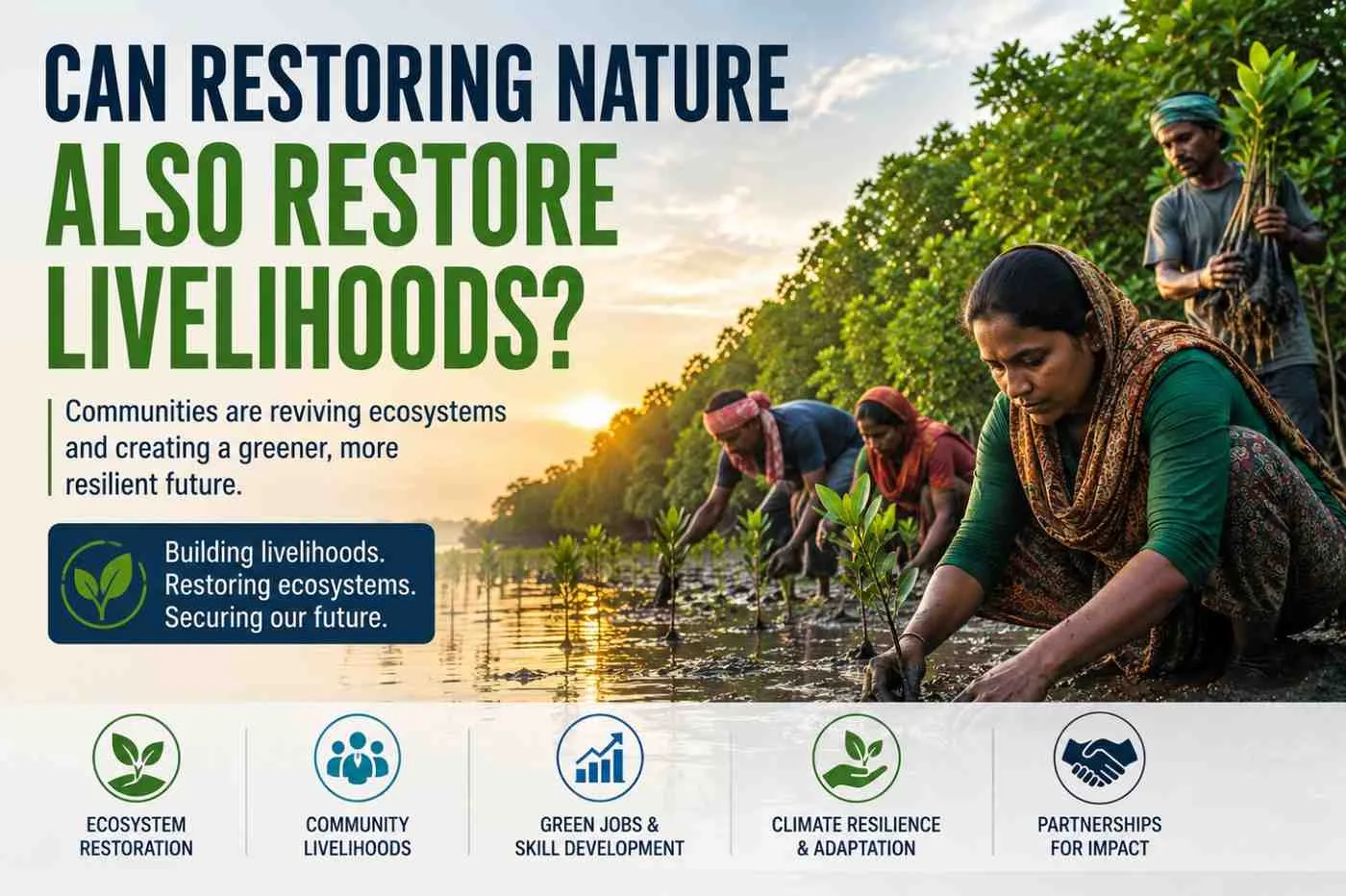
A workshop in Kolkata has sparked a larger conversation about whether restoring ecosystems can also restore livelihoods, especially for communities that have protected nature for generations. Can restoring nature also restore livelihoods? As communities revive forests, wetlands and mangroves, a new conversation is emerging around climate action, employment and long-term resilience. The discussion gained momentum following a recent climate workshop in Kolkata, where experts, researchers, community leaders and environmental practitioners explored how community-led climate action can create meaningful jobs while restoring ecosystems. While the conversations began at the local level, the ideas resonate far beyond the city.As countries invest more in climate action, a bigger opportunity is beginning to emerge. Experts believe community-led restoration can not only revive ecosystems but also create inclusive, long-term livelihoods for the people who depend on them.But an equally important question remains.Can green jobs evolve into stable, long-term careers, or will they continue to depend on short-lived projects and temporary funding? Around the world, climate action is being backed by investments in restoring nature. Whether it involves bringing forests back to life, reviving wetlands, rejuvenating urban lakes or protecting vulnerable coastlines, these efforts require skilled hands and local knowledge. Experts argue that the communities protecting these ecosystems ought to be the primary beneficiaries of the opportunities they generate.For India, this conversation is especially significant. As the country works towards expanding forest cover, restoring degraded landscapes and building climate resilience, the need for a skilled green workforce is becoming important. Experts say achieving these ambitions will depend on professionals trained in ecological restoration, biodiversity monitoring, sustainable agriculture, waste management and other nature-based solutions.Yet the workshop made one point particularly clear- green jobs cannot succeed on numbers alone. Their future will depend on skilled training, reliable career pathways and valuing the traditional knowledge that communities have passed down for generations. This made traditional ecological knowledge one of the defining themes of the discussions. For centuries, communities living closest to nature have learned how to work with it. Across India, Indigenous groups, fisherfolk, farmers and forest-dependent households have built a deep understanding of forests, wetlands, mangroves, biodiversity and changing weather through lived experience. Experts believe this traditional knowledge should play a central role in shaping restoration efforts rather than simply supporting them.Several restoration initiatives have already demonstrated the value of community participation. From mangrove conservation along India's coastlines to watershed restoration in drought-prone regions and community-managed forests across different states, these efforts show that restoration is more likely to succeed when local people are involved in planning, implementation and long-term monitoring. But training people is only the beginning! The real challenge is ensuring that green skills open the door to credible, long-term careers rather than remaining part of short-lived training programmes. Experts say the real opportunity lies in creating skills that remain valuable long after individual restoration projects are completed. Whether it is nursery management, biodiversity surveys, GIS mapping, climate-risk assessment or environmental monitoring, specialised training can help build a workforce prepared for the demands of a greener economy.They also believe stronger collaboration between governments, educational institutions, businesses and civil society organisations will be key to improving certification, creating employment opportunities and supporting continuous learning. In this transition, the private sector is expected to emerge as an equally important partner. As sustainability becomes a bigger priority for businesses, the demand for professionals who understand ecological restoration, climate resilience and environmental reporting is expected to rise. Experts believe this could create meaningful career opportunities for young people while helping India build a greener and more resilient economy.One message echoed throughout the workshop: green jobs should be valued not just for the number of people they employ, but for the livelihoods they sustain. Fair wages, long-term income security, safe working conditions and genuine community participation will decide whether restoration efforts create lasting change or simply fade with project funding. Ultimately, the discussions in Kolkata pointed to a much larger truth- building a greener future does not require choosing between climate action and economic development. A greener future will require both to move forward as one.Every restored forest, wetland, river and coastline represents more than an environmental success- it is an investment in the future of both people and nature. The real task now is ensuring that the opportunities created are inclusive, credible and long-lasting. As countries invest more in climate solutions, the focus must shift from counting projects to creating lasting opportunities for the people leading them. Building a resilient economy will require communities to be recognised not just as participants, but as long-term partners in the journey. Because if restoring nature is about protecting tomorrow, it should also help secure the livelihoods of those shaping that future today! Sources:International Labour Organization (ILO) – Green Jobs Programme United Nations Environment Programme (UNEP) United Nations Development Programme (UNDP) UN Decade on Ecosystem Restoration (2021–2030) Ministry of Environment, Forest and Climate Change (MoEFCC), Government of India Ministry of Skill Development and Entrepreneurship (MSDE), Government of India National Skill Development Corporation (NSDC) Green Skill Development Programme (GSDP), MoEFCC National Mission for Green India National Biodiversity Authority (NBA) Wildlife Institute of India (WII) ...Read more
12 May 2026
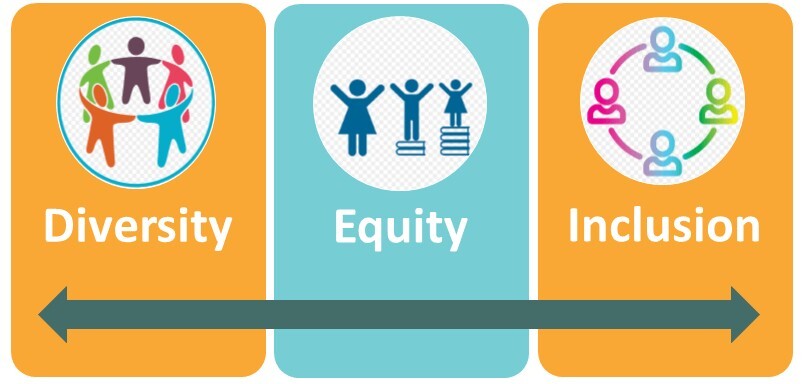
Diversity, Equity, and Inclusion (DEI) have moved from being a department in HR to a core component of labor compliance and corporate strategy. In the past, diversity was often treated as a "numbers game"—meeting certain quotas for gender or ethnicity. Today, the focus is on Systemic Equity, which examines the underlying structures of a company to ensure that all individuals have the same access to opportunities, regardless of their background, neurodiversity, or physical ability. The innovation in this space is the move toward Data-Driven Inclusion Audits. Instead of general surveys, companies are using AI to analyze promotion rates, pay gaps, and "Attrition Velocity" across different demographics. If the data shows that a specific group is leaving the company at twice the average rate, it signals a failure in the social environment that needs immediate intervention. This proactive compliance model helps identify "Micro-exclusions"—subtle, systemic barriers that prevent talented individuals from reaching leadership positions. Community engagement is the final pillar of this strategy. A truly compliant company in 2026 does not exist in a vacuum; it is an active participant in its local ecosystem. This means "Local Sourcing" for labor and services, investing in local education through STEM programs, and ensuring that the company’s presence does not lead to gentrification or displacement. By integrating the company into the social fabric of its community, businesses create a "Mutual Value Exchange." This not only boosts the company’s reputation but also creates a stable, skilled local labor pool, ensuring that social and labor compliance is not just an ethical duty, but a powerful engine for regional economic growth. ...Read more

12 May 2026
Occupational Health and Safety (OHS) has historically focused on the "Hard Hats and Harnesses" aspect of labor—preventing slips, trips, and falls. While physical safety remains paramount, the 2026 compliance landscape has expanded to include Psychological Safety and mental health. With the rise of the digital economy and "Always-On" work cultures, burnout and mental fatigue have become recognized workplace hazards. Regulatory bodies like OSHA and the ILO are now introducing guidelines that treat chronic stress and workplace harassment with the same gravity as mechanical hazards. Modern safety compliance utilizes the Hierarchy of Controls, but it applies them to social environments. For example, rather than simply providing a "resilience workshop" (which is essentially Personal Protective Equipment for the mind), companies are looking to "Eliminate" and "Substitute" the stressors themselves. This involves redesigning workflows to prevent extreme overtime, implementing "Right to Disconnect" policies, and fostering a culture where employees can report misconduct or errors without fear of retribution. This "Just Culture" is essential for high-stakes industries like healthcare and manufacturing, where a fear-based environment leads to hidden mistakes and, eventually, catastrophic physical accidents. Furthermore, technology is playing a vital role through Biometric Safety Monitoring. Wearable devices can now track a worker's fatigue levels, heart rate, and heat stress, alerting supervisors before an accident occurs. However, this creates a new compliance tension: the balance between safety and privacy. Ethical companies are navigating this by ensuring that safety data is anonymized and used exclusively for protection, not for surveillance or punitive measures. By treating the worker as a holistic being—both physical and mental—companies are building more resilient and sustainable workforces. ...Read more

12 May 2026
For decades, labor compliance was defined by the "Minimum Wage"—a legal floor that, in many jurisdictions, failed to keep pace with the actual cost of living. However, a seismic shift is occurring as global brands move toward the Living Wage Standard. A living wage is defined as the minimum income necessary for a worker to meet their basic needs, including food, housing, healthcare, and education, while still allowing for a small margin of discretionary income. For a modern corporation, transitioning to a living wage model is a complex financial and operational challenge, yet it is becoming a mandatory benchmark for ESG (Environmental, Social, and Governance) investors. The primary barrier to this transition is the "Competitive Disadvantage" myth. Critics argue that increasing wages leads to higher product costs, driving consumers toward cheaper, less ethical competitors. However, empirical data from 2024 to 2026 suggests the opposite: companies paying living wages see a drastic reduction in Employee Turnover Costs. The expense of recruiting and training new staff often far exceeds the cost of a wage increase. Furthermore, "Efficiency Wage Theory" posits that better-paid workers are more productive, have lower rates of absenteeism, and exhibit higher levels of loyalty and engagement, which directly impacts the bottom line. To implement this, companies are using Social Impact Auditing tools that map local cost-of-living data against payroll in real-time. This ensures that even in remote parts of the global supply chain, workers are not just surviving, but thriving. This approach also mitigates the risk of child labor and forced labor; when parents earn a dignified wage, the economic necessity to pull children out of school or work in predatory conditions evaporates. In this sense, wage compliance is the ultimate preventative measure for broader human rights violations. ...Read more