
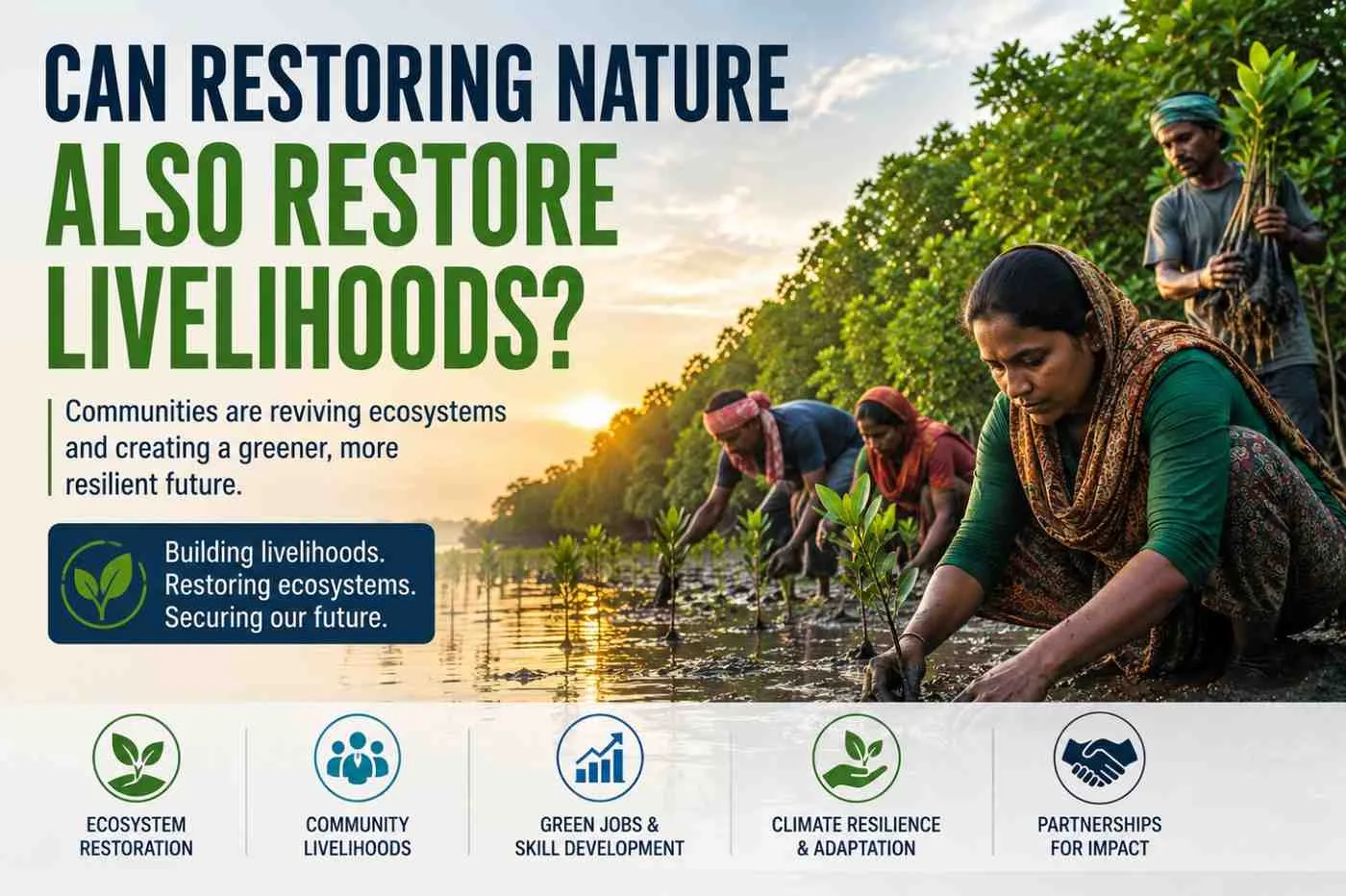
A workshop in Kolkata has sparked a larger conversation about whether restoring ecosystems can also restore livelihoods, especially for communities that have protected nature for generations.
Can restoring nature also restore livelihoods?
As communities revive forests, wetlands and mangroves, a new conversation is emerging around climate action, employment and long-term resilience.
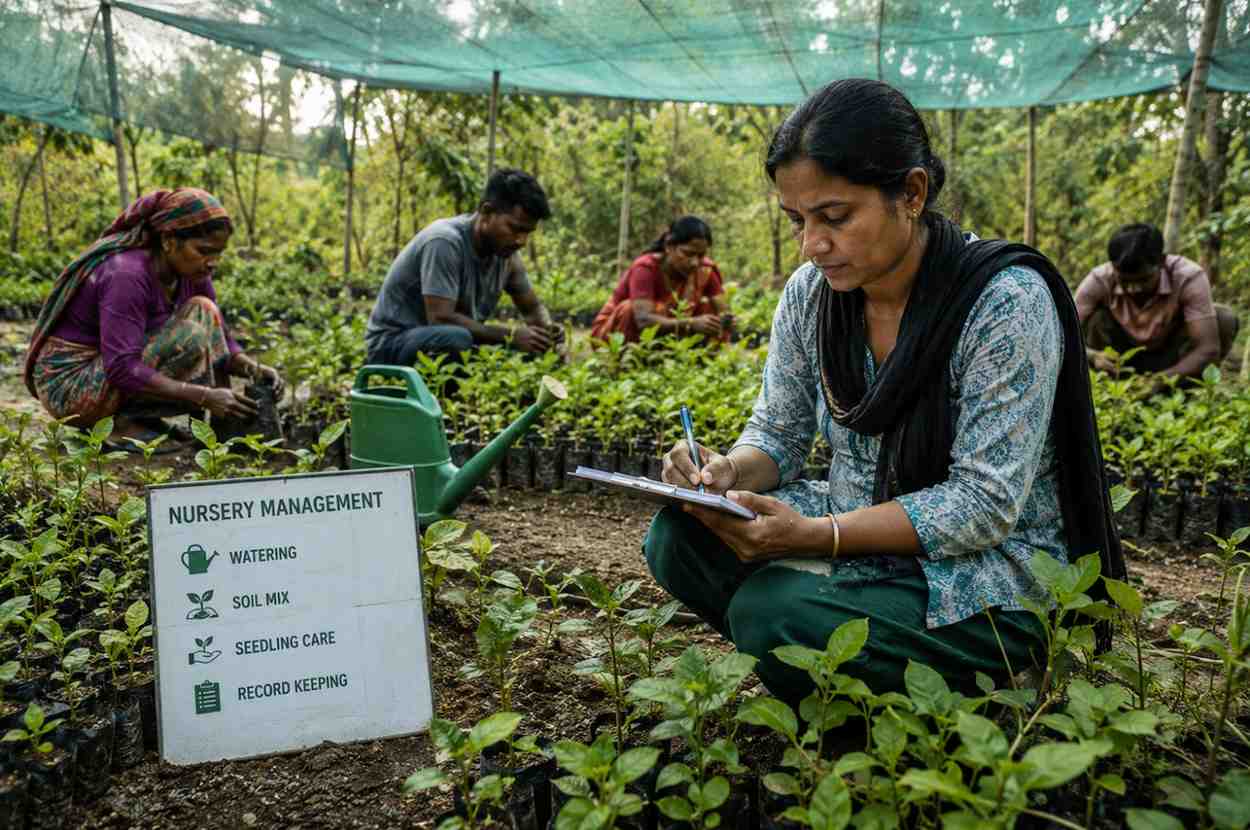
The discussion gained momentum following a recent climate workshop in Kolkata, where experts, researchers, community leaders and environmental practitioners explored how community-led climate action can create meaningful jobs while restoring ecosystems.
While the conversations began at the local level, the ideas resonate far beyond the city.
As countries invest more in climate action, a bigger opportunity is beginning to emerge. Experts believe community-led restoration can not only revive ecosystems but also create inclusive, long-term livelihoods for the people who depend on them.
But an equally important question remains.
Can green jobs evolve into stable, long-term careers, or will they continue to depend on short-lived projects and temporary funding?
Around the world, climate action is being backed by investments in restoring nature. Whether it involves bringing forests back to life, reviving wetlands, rejuvenating urban lakes or protecting vulnerable coastlines, these efforts require skilled hands and local knowledge.
Experts argue that the communities protecting these ecosystems ought to be the primary beneficiaries of the opportunities they generate.
For India, this conversation is especially significant. As the country works towards expanding forest cover, restoring degraded landscapes and building climate resilience, the need for a skilled green workforce is becoming important.
Experts say achieving these ambitions will depend on professionals trained in ecological restoration, biodiversity monitoring, sustainable agriculture, waste management and other nature-based solutions.
Yet the workshop made one point particularly clear- green jobs cannot succeed on numbers alone.
Their future will depend on skilled training, reliable career pathways and valuing the traditional knowledge that communities have passed down for generations.
This made traditional ecological knowledge one of the defining themes of the discussions.
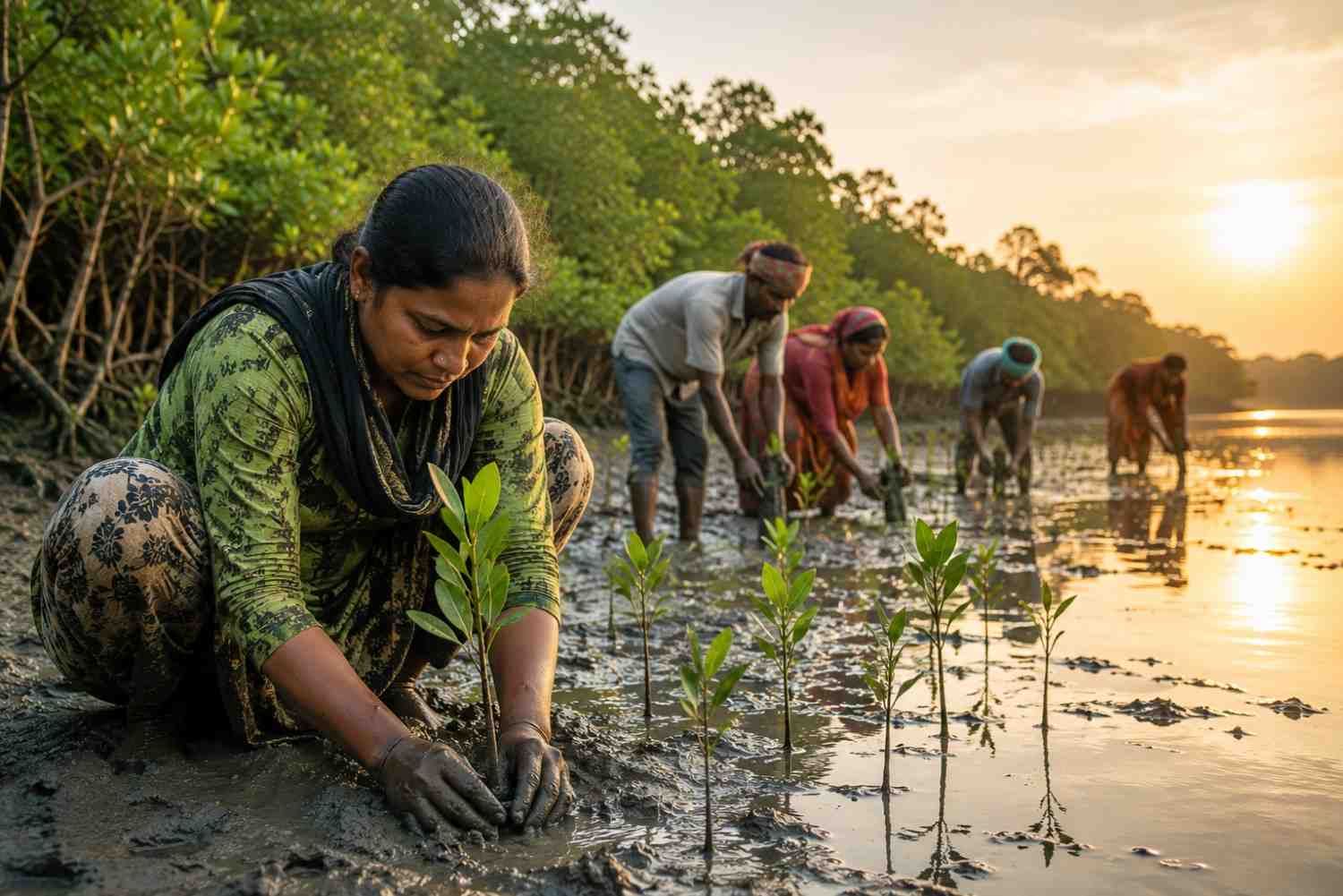
For centuries, communities living closest to nature have learned how to work with it.
Across India, Indigenous groups, fisherfolk, farmers and forest-dependent households have built a deep understanding of forests, wetlands, mangroves, biodiversity and changing weather through lived experience.
Experts believe this traditional knowledge should play a central role in shaping restoration efforts rather than simply supporting them.
Several restoration initiatives have already demonstrated the value of community participation.
From mangrove conservation along India's coastlines to watershed restoration in drought-prone regions and community-managed forests across different states, these efforts show that restoration is more likely to succeed when local people are involved in planning, implementation and long-term monitoring.
But training people is only the beginning!
The real challenge is ensuring that green skills open the door to credible, long-term careers rather than remaining part of short-lived training programmes.
Experts say the real opportunity lies in creating skills that remain valuable long after individual restoration projects are completed. Whether it is nursery management, biodiversity surveys, GIS mapping, climate-risk assessment or environmental monitoring, specialised training can help build a workforce prepared for the demands of a greener economy.
They also believe stronger collaboration between governments, educational institutions, businesses and civil society organisations will be key to improving certification, creating employment opportunities and supporting continuous learning.
In this transition, the private sector is expected to emerge as an equally important partner.
As sustainability becomes a bigger priority for businesses, the demand for professionals who understand ecological restoration, climate resilience and environmental reporting is expected to rise. Experts believe this could create meaningful career opportunities for young people while helping India build a greener and more resilient economy.
One message echoed throughout the workshop: green jobs should be valued not just for the number of people they employ, but for the livelihoods they sustain.
Fair wages, long-term income security, safe working conditions and genuine community participation will decide whether restoration efforts create lasting change or simply fade with project funding.
Ultimately, the discussions in Kolkata pointed to a much larger truth- building a greener future does not require choosing between climate action and economic development.
A greener future will require both to move forward as one.
Every restored forest, wetland, river and coastline represents more than an environmental success- it is an investment in the future of both people and nature. The real task now is ensuring that the opportunities created are inclusive, credible and long-lasting.
As countries invest more in climate solutions, the focus must shift from counting projects to creating lasting opportunities for the people leading them. Building a resilient economy will require communities to be recognised not just as participants, but as long-term partners in the journey.
Because if restoring nature is about protecting tomorrow, it should also help secure the livelihoods of those shaping that future today!
Sources:
International Labour Organization (ILO) – Green Jobs Programme
United Nations Environment Programme (UNEP)
United Nations Development Programme (UNDP)
UN Decade on Ecosystem Restoration (2021–2030)
Ministry of Environment, Forest and Climate Change (MoEFCC), Government of India
Ministry of Skill Development and Entrepreneurship (MSDE), Government of India
National Skill Development Corporation (NSDC)
Green Skill Development Programme (GSDP), MoEFCC
National Mission for Green India
National Biodiversity Authority (NBA)
Wildlife Institute of India (WII)



Add a Comment