Kolkata | August 4, 2026
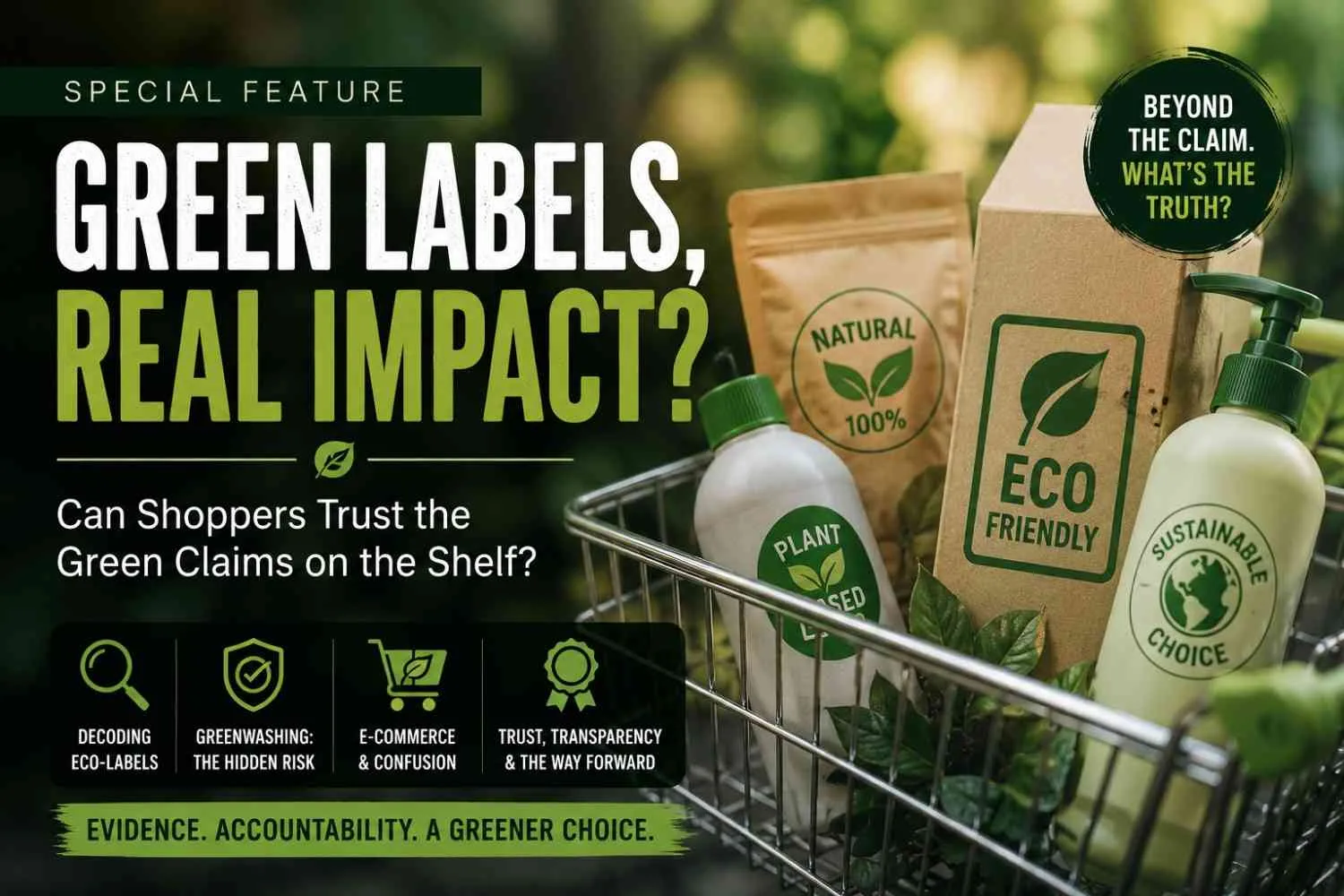
| As eco-labels, ESG ratings and sustainability badges multiply across supermarket shelves and e-commerce platforms, consumers are finding it harder than ever to distinguish genuine environmental responsibility from sophisticated green marketing. India's evolving certification ecosystem now faces its biggest challenge- not creating more labels, but restoring trust in the ones that already exist. |
Quick Summary Consumers today are surrounded by products claiming to be sustainable, eco-friendly or environmentally responsible. India is now attempting to strengthen consumer confidence through updated standards, stronger regulations against misleading advertisements and renewed attention to official certification programmes. However, experts argue that transparency, independent verification and consistent enforcement remain essential if eco-labels are to become trusted indicators rather than promotional symbols. |
Keywords Consumer Eco-Labelling, Ecomark India, Greenwashing, Sustainable Products, Eco Labels, ESG Ratings, EcoVadis, S&P, ESG, Green Certification, Sustainable Consumption |
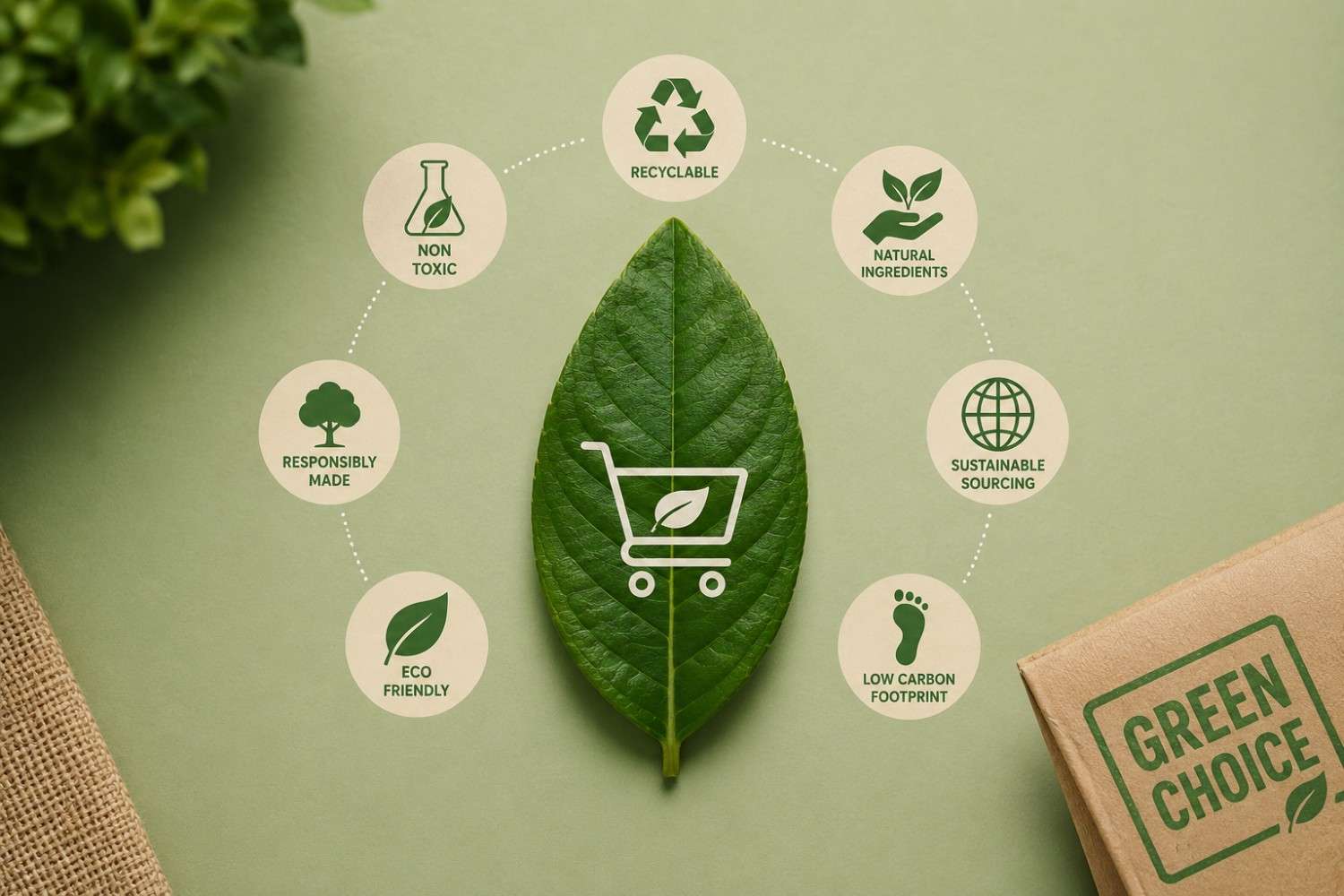
Can consumers still trust the growing number of green labels, or has identifying genuinely sustainable products become more difficult than ever before?
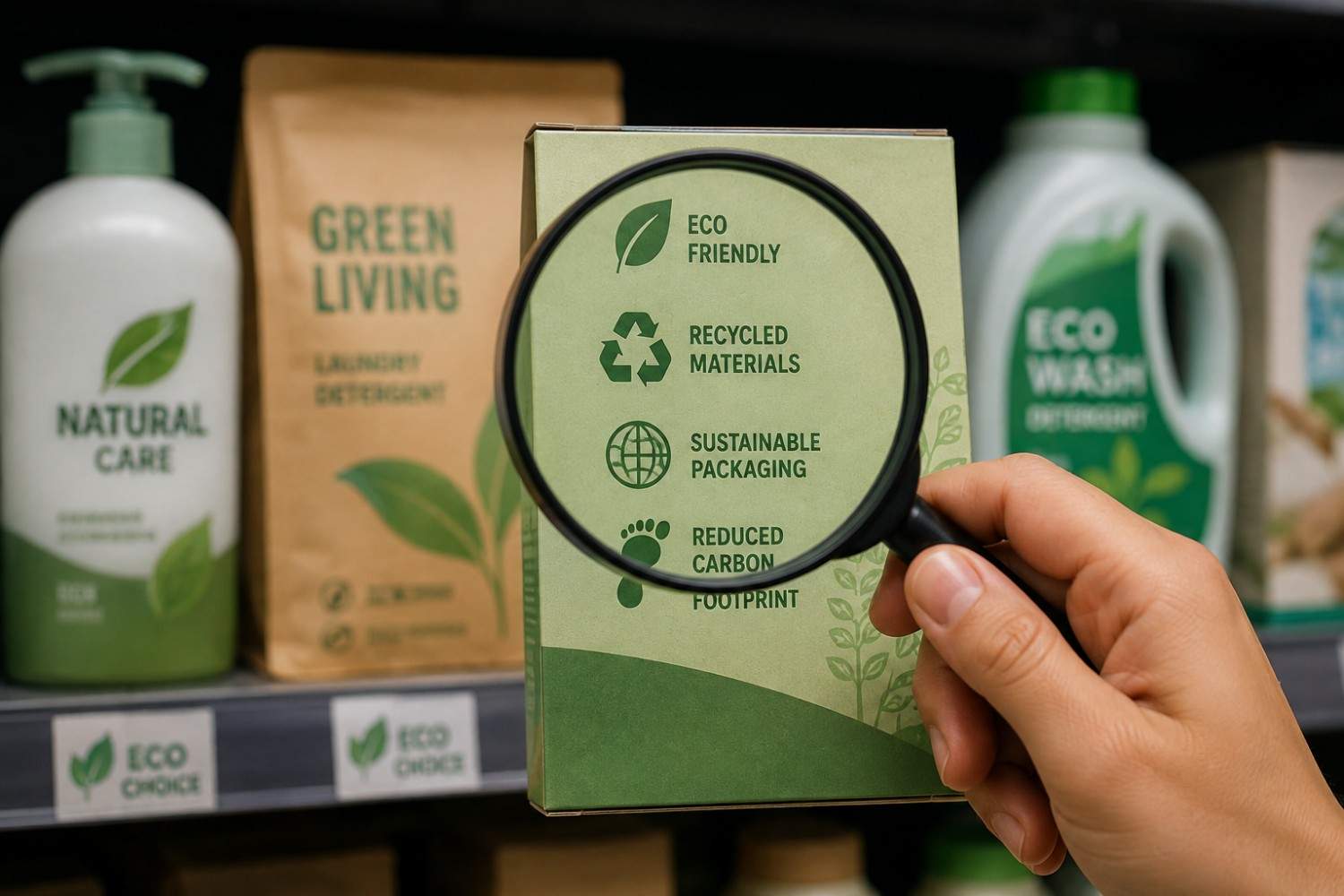
Standing in the cleaning products aisle of a supermarket, a consumer compares two bottles of liquid detergent. Both feature green packaging and environmental claims.
One displays a sustainability certification, another highlights the use of recycled packaging, while a third promotes lower carbon emissions during production. Online, similar products carry additional badges such as "eco-friendly," "planet positive" or "green choice," all claiming to represent the more sustainable option.
At first glance, the choice appears straightforward-pick the product with the green label. But determining which claim is credible has become far more complicated.
Over the past decade, sustainability has shifted from a niche concern to a major factor influencing consumer purchasing decisions.
Manufacturers across sectors ranging from FMCG and electronics to automobiles and batteries are gradually marketing products through claims of lower emissions, recyclable materials, responsible sourcing and improved resource efficiency.
Retailers and e-commerce platforms have introduced their own sustainability badges, while ESG rating agencies, certification bodies and independent assessors continue expanding their influence across global supply chains.
The result is a marketplace crowded with environmental claims.
Behind these labels, however, lies a fragmented certification ecosystem where government-backed standards coexist with private certifications, corporate declarations and voluntary rating systems.
While some labels are supported by independent verification and transparent assessment methods, others rely largely on company disclosures or proprietary frameworks that remain difficult for consumers to understand or verify.
This growing complexity has contributed to what many experts describe as a widening certification trust deficit.
Consumers are becoming more conscious of sustainability and are willing to choose environmentally responsible products.
At the same time, they expect clear evidence that these claims are genuine.
Businesses investing in credible sustainability practices also face a challenge, as their products often compete alongside others making similar environmental claims with far less transparency.
Without stronger verification systems and clearer standards, distinguishing authentic sustainability from effective marketing is becoming progressively more difficult.
For India, this has emerged as a significant policy priority.
As regulators strengthen consumer protection, revive official eco-labelling programmes and promote more sustainable production practices, the objective is no longer simply encouraging businesses to adopt greener practices.
The real challenge is ensuring that every environmental claim consumer encounters is credible, transparent and capable of standing up to independent scrutiny.
In a marketplace crowded with sustainability claims, trust may ultimately become the most valuable certification a product can carry.
The Green Label Dilemma
Long before sustainability became a mainstream marketing strategy, India introduced its own official environmental certification system.
Launched in 1991 by the Ministry of Environment, Forest and Climate Change (MoEFCC), the Ecomark scheme was created to help consumers identify products with a lower environmental impact throughout their life cycle.
While environmental standards were developed under the scheme, the Bureau of Indian Standards (BIS) was responsible for ensuring that certified products also met the required quality benchmarks.
The objective was straightforward.
A single, government-backed certification would enable consumers to recognise environmentally responsible products without having to interpret complex sustainability claims or corporate environmental reports.
Despite this vision, Ecomark never achieved widespread recognition.
Industry participation remained limited, public awareness was low and relatively few products carried the certification.
For most consumers, the label was rarely seen on store shelves, while many businesses found greater commercial value in promoting their own environmental claims or obtaining internationally recognised certifications.
The sustainability landscape has changed considerably since then.
Today's products often carry multiple environmental claims at the same time, ranging from "recyclable packaging" and "responsibly sourced" to "carbon conscious," "plastic neutral" and "green product."
Retailers and e-commerce platforms have also introduced their own sustainability badges, while brands use environmental messaging as a key differentiator in a highly competitive marketplace.
For consumers, however, the growing number of labels has made purchasing decisions more complicated rather than being more transparent.
Unlike government-backed certification systems, private eco-labels operate under diverse standards, assessment methods and verification processes. Some are supported by rigorous third-party audits, while others rely primarily on information provided by companies themselves.
Even globally recognised ESG assessment platforms such as EcoVadis and S&P Global ESG Scores evaluate the overall sustainability performance of companies rather than certifying the environmental credentials of individual products.
This distinction is significant but frequently misunderstood.
A company with strong ESG performance does not necessarily mean that every product it sells meets the same environmental standards.
Likewise, a retailer's sustainability badge may not undergo the same level of independent verification expected under an official certification programme.
Recognising these concerns, the Government of India has initiated efforts to revitalise the Ecomark scheme by expanding product categories, simplifying certification procedures and updating environmental criteria to reflect evolving sustainability priorities.
The broader objective is not merely to certify more products, but to establish a credible national benchmark that consumers can recognise and trust.
Whether the renewed Ecomark can establish itself in a marketplace crowded with private sustainability labels remains uncertain.
Its revival, however, highlights a far broader issue.
In a marketplace where environmental claims are becoming a key factor in consumer decisions, the value of a certification will depend not only on the standards it represents, but also on the trust it is able to earn.
Official vs Private: Understanding Green Labels
| Government-backed | Private / Commercial |
| Ecomark (BIS & MoEFCC) | EcoVadis |
| Transparent public criteria | Proprietary assessment frameworks |
| National certification | Corporate ESG ratings |
| Product-focused | Company-focused |
| Regulatory oversight | Third-party or company-led verification |
When Sustainability Becomes a Marketing Strategy
As sustainability becomes a growing priority for consumers, the value of being perceived as environmentally responsible has never been higher.
Across industries, terms such as eco-friendly, natural, carbon neutral, planet positive and environmentally responsible have become common features of product packaging and advertising.
For businesses, these claims offer a competitive advantage in a market where consumers are becoming more conscious of environmental issues.
For consumers, however, they raise a fundamental question: who verifies whether these claims are genuine?
The issue has gradually moved beyond environmental discussions and become a matter of consumer protection.
Recognising that vague or exaggerated sustainability claims can influence purchasing decisions just as much as misleading claims about price or quality, the Central Consumer Protection Authority (CCPA) has stepped up its scrutiny of environmental advertising.
Businesses are now expected to support green claims with credible evidence rather than relying on broad marketing language.
The challenge is particularly evident on e-commerce platforms.
Many online marketplaces now feature sustainability badges, "green choice" labels and eco-friendly filters to help consumers identify environmentally responsible products.
While these initiatives encourage sustainable consumption, the criteria behind these labels are often unclear.
Consumers may see that a product carries a sustainability badge, but they rarely know who awarded it, the standards used for assessment or whether the claim has been independently verified.
This lack of transparency has fuelled growing concerns over greenwashing.
Greenwashing occurs when businesses exaggerate or misrepresent the environmental performance of their products.
In some cases, marketing highlights a single positive attribute such as recyclable packaging- while overlooking the much larger environmental impacts associated with manufacturing, transportation or disposal.
In others, broad claims such as "green," "eco-safe" or "environmentally friendly" are promoted without recognised certification or measurable evidence.
Environmental organisations warn that the consequences extend well beyond consumer confusion.
Groups such as Toxics Link and Chintan have repeatedly argued that weak verification systems place genuinely sustainable businesses at a disadvantage.
Companies investing in cleaner production, responsible sourcing and improved waste management often find themselves competing alongside products making similar environmental claims without meeting comparable standards.
When verified and unverified claims appear equally credible, consumer confidence in eco-labels and certification systems begins to erode.
The challenge becomes even greater in sectors such as electronics, batteries and automobiles, where environmental performance depends on the entire product life cycle rather than manufacturing alone.
Factors such as durability, repairability, recycling infrastructure and end-of-life management play a critical role in determining a product's overall sustainability.
A product promoted as environmentally responsible during production may still create significant environmental impacts if effective collection, recycling and producer responsibility systems are absent.
As a result, the conversation is gradually shifting from environmental marketing to corporate accountability.
Experts argue that sustainability claims should be supported by the same level of transparency expected in financial reporting.
Clear assessment methodologies, independent verification, publicly available standards and regular audits are becoming essential for maintaining the credibility of eco-labels.
Without stronger oversight, the growing number of environmental claims risks achieving the opposite of their intended purpose- not strengthening consumer confidence, but undermining it.
Greenwashing Checklist: Five Questions Every Consumer Should Ask
✔ Who issued the certification?
Government, independent third party or the company itself?
✔ Is the assessment publicly available?
Can consumers understand how the product was evaluated?
✔ What exactly is being claimed?
The entire product—or only one environmental attribute?
✔ Has the claim been independently verified?
Or is it based only on company disclosures?
✔ Is the certification regularly reviewed?
Environmental performance changes over time.
Takeaway: A green label is only as credible as the evidence behind it.
From Claims to Credibility
As sustainability claims become a stronger influence on consumer decisions, experts argue that eco-labels should meet the same standards expected of financial disclosures- clear methodologies, transparent reporting and independent verification.
Without these safeguards, even credible certification systems risk losing public trust.
This remains one of the biggest challenges for India's eco-labelling ecosystem.
Government-backed certifications such as Ecomark follow publicly defined environmental criteria, with compliance linked to standards developed by the Bureau of Indian Standards (BIS).
The framework is transparent, product-specific and subject to regulatory oversight. Many private certifications and ESG ratings, however, rely on proprietary assessment methods that are not always fully disclosed.
While these systems may be rigorous, the basis on which products or companies are evaluated is often difficult for consumers to understand.
The distinction is especially important when comparing product certifications with corporate sustainability ratings.
Experts also point to a wider implementation gap.
Companies may announce ambitious sustainability targets or highlight recyclable packaging and lower emissions, but consumers often receive little information on whether these commitments have been independently verified or consistently maintained.
Sustainability reports frequently showcase progress through percentages and intensity-based indicators, while providing limited visibility into overall environmental impacts or areas where targets remain unmet.
Environmental researchers argue that meaningful sustainability claims require greater transparency.
Consumers need to know what has been measured, how it has been assessed and who has verified the findings.
They also need clarity on whether a certification evaluates the entire product life cycle or only selected environmental attributes.
As India continues strengthening its sustainability framework, experts believe the priority should not be creating more eco-labels, but making existing ones easier to understand, compare and trust.
Ultimately, an eco-label can support responsible consumption only when the standards behind it are transparent, independently verified and consistently enforced.
Evidence at a Glance
| Question | Why It Matters |
| Who certifies the product? | Government, third party or company? |
| Is the methodology public? | Transparency builds trust. |
| Product or company assessment? | ESG ratings and product certifications are different. |
| Independent verification? | Reduces greenwashing risk. |
| Regular review and audits? | Ensures claims remain valid over time. |
Key takeaway: A credible green label should explain not just what it certifies- but also how it was certified.
The Trust Behind the Label
The rise of sustainable consumption has fundamentally changed the way businesses compete.
Today, products are evaluated not only on price and performance but also on their environmental credentials. This reflects a positive shift, signalling that sustainability is moving from a niche concern to a core business priority.
At the same time, the growing number of eco-labels has created a new challenge.
As environmental claims become more common, it is becoming difficult for consumers to distinguish genuinely sustainable products from well-crafted marketing.
Government-backed certifications, private ESG ratings, retailer sustainability badges and company-led environmental claims often appear side by side, despite being based on very different standards, assessment methods and levels of verification.
Ultimately, the issue is not the number of labels, but the trust behind them.
India's efforts to strengthen Ecomark, tighten consumer protection guidelines and increase regulatory oversight reflect an important step towards improving transparency.
However, regulation alone cannot build consumer confidence. Businesses must communicate environmental claims responsibly, certification bodies need stronger disclosure and independent verification, and digital marketplaces should clearly explain the basis of their sustainability labels.
Consumers, too, have an important role to play. As environmental considerations influence purchasing decisions, informed choices become just as important as responsible production.
An eco-label should help consumers make better decisions- not leave them questioning every claim on a product's packaging.
As India's sustainability journey gathers pace, the real measure of success will not be the number of green labels in the marketplace, but the confidence consumers place in them.
In the end, trust will remain the most valuable certification of all.
Primary Sources:
1. Bureau of Indian Standards (BIS) – Ecomark Certification Scheme
https://www.bis.gov.in/
2. Ministry of Environment, Forest and Climate Change (MoEFCC) – Ecomark & Environmental Policies
https://moefcc.gov.in/
3. Central Consumer Protection Authority (CCPA) – Guidelines for Prevention and Regulation of Greenwashing and Misleading Environmental Claims
https://consumeraffairs.nic.in/
4. Central Pollution Control Board (CPCB) – Waste Management, EPR & Environmental Compliance
https://cpcb.nic.in/
5. EcoVadis – Sustainability Ratings Methodology
https://ecovadis.com/
6. S&P Global Sustainable1 (ESG Scores & CSA Methodology)
https://www.spglobal.com/sustainable1/
7. Toxics Link – Research on Green Claims, Packaging, Waste and Circular Economy
https://toxicslink.org/
8. Chintan Environmental Research and Action Group – Sustainable Consumption, Waste & Circular Economy
https://chintan-india.org/





Add a Comment