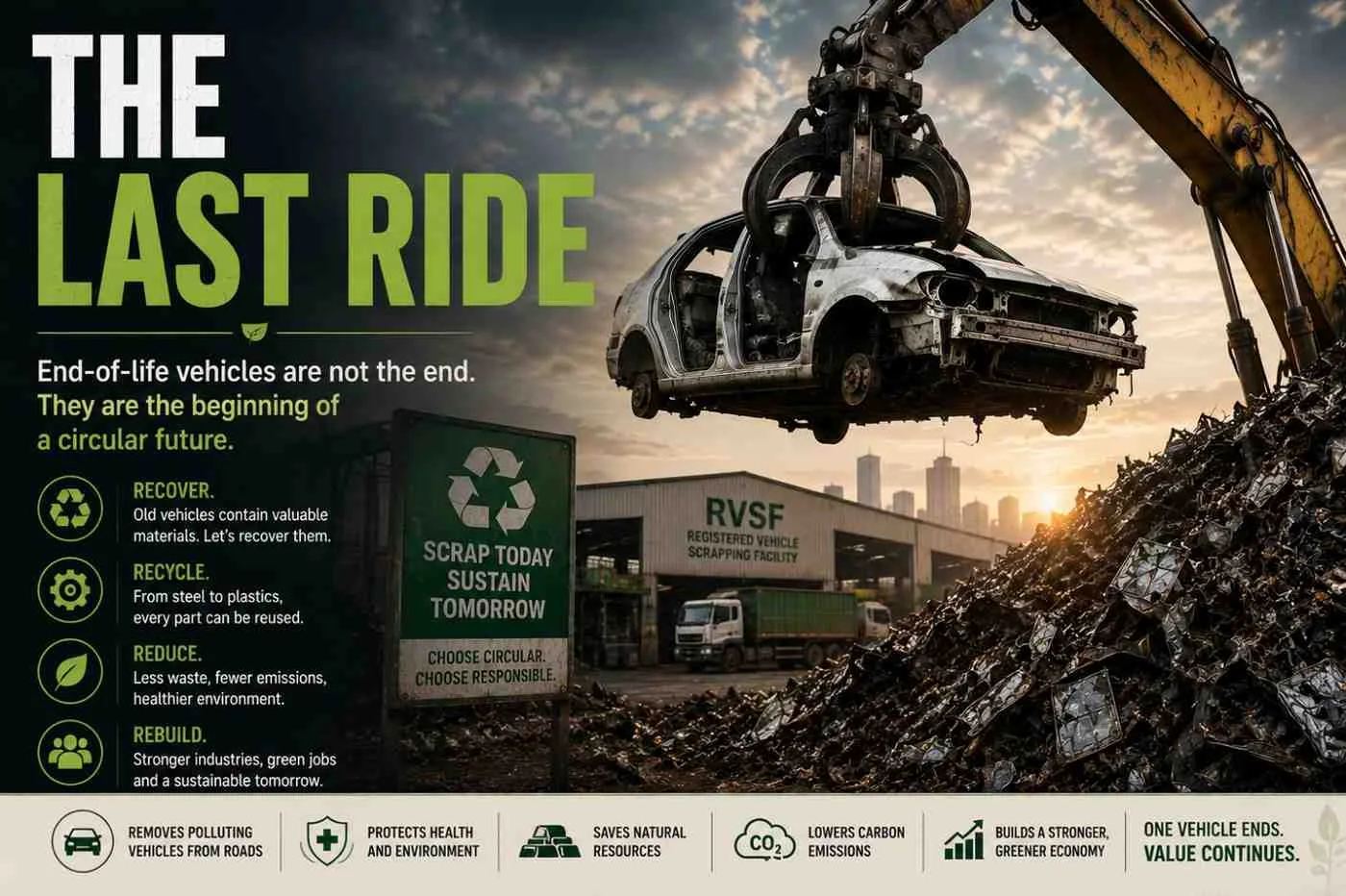
India's growing vehicle scrappage ecosystem is transforming end-of-life vehicles into valuable resources, but the success of a circular material economy will depend on formal recycling, stronger infrastructure and public participation
Kolkata | August 1, 2026:
Every vehicle eventually reaches the end of its useful life. The real question is what happens next.
For years, old and damaged vehicles in India were largely dismantled in informal scrapyards, where valuable materials were recovered with little environmental oversight or scientific waste management.
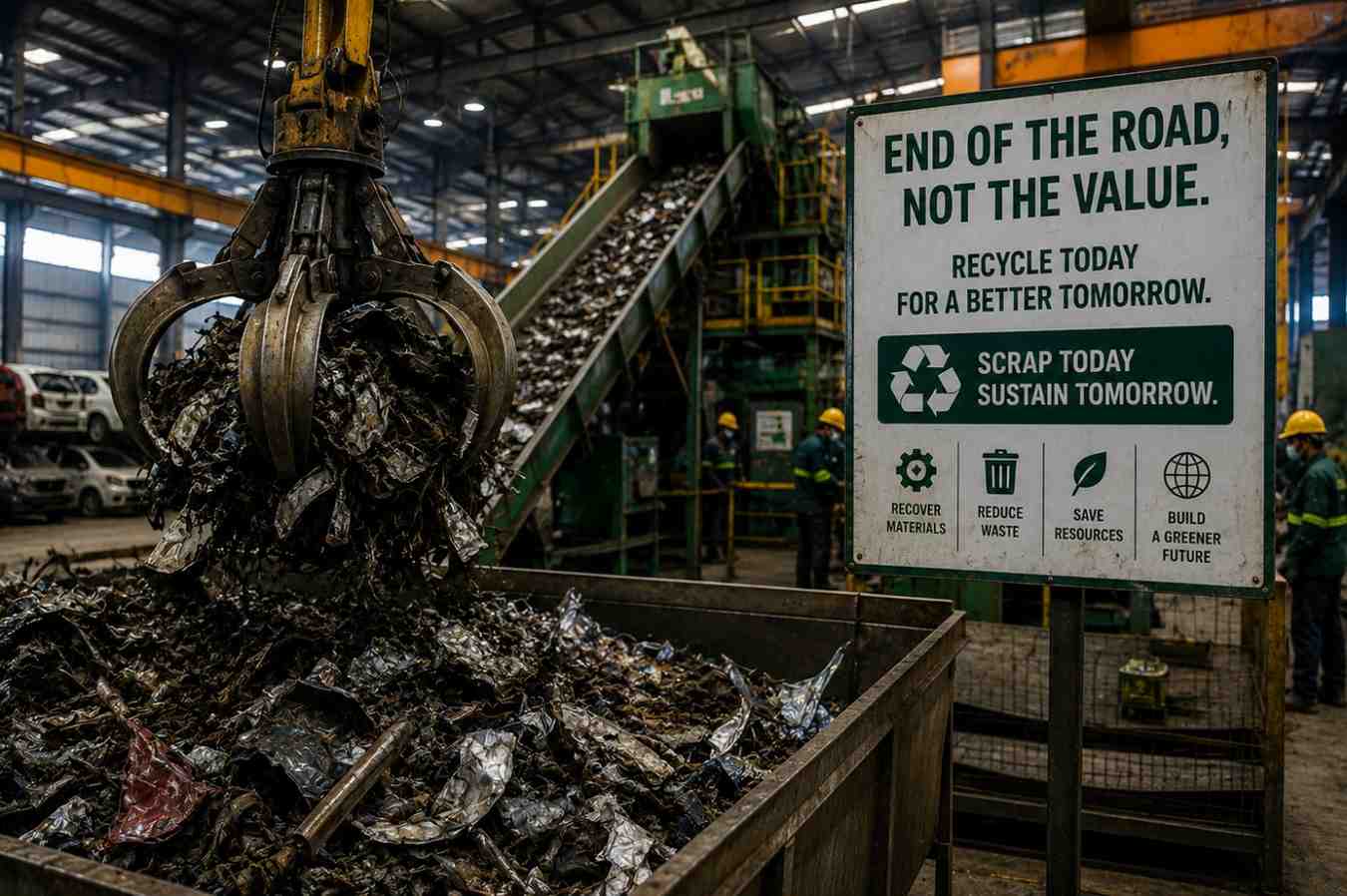
Today, that approach is gradually giving way to a more organised system. As India expands its vehicle scrappage programme and establishes authorised recycling facilities, end-of-life vehicles (ELVs) are beginning to play a much larger role in the country's transition towards a circular economy.
The shift comes at an important moment. India is one of the world's largest automobile markets, and millions of vehicles are expected to retire from the roads over the next decade. Managing this growing volume is no longer just about disposing of ageing vehicles. It is becoming an opportunity to recover valuable resources, reduce industrial waste and strengthen sustainable manufacturing.
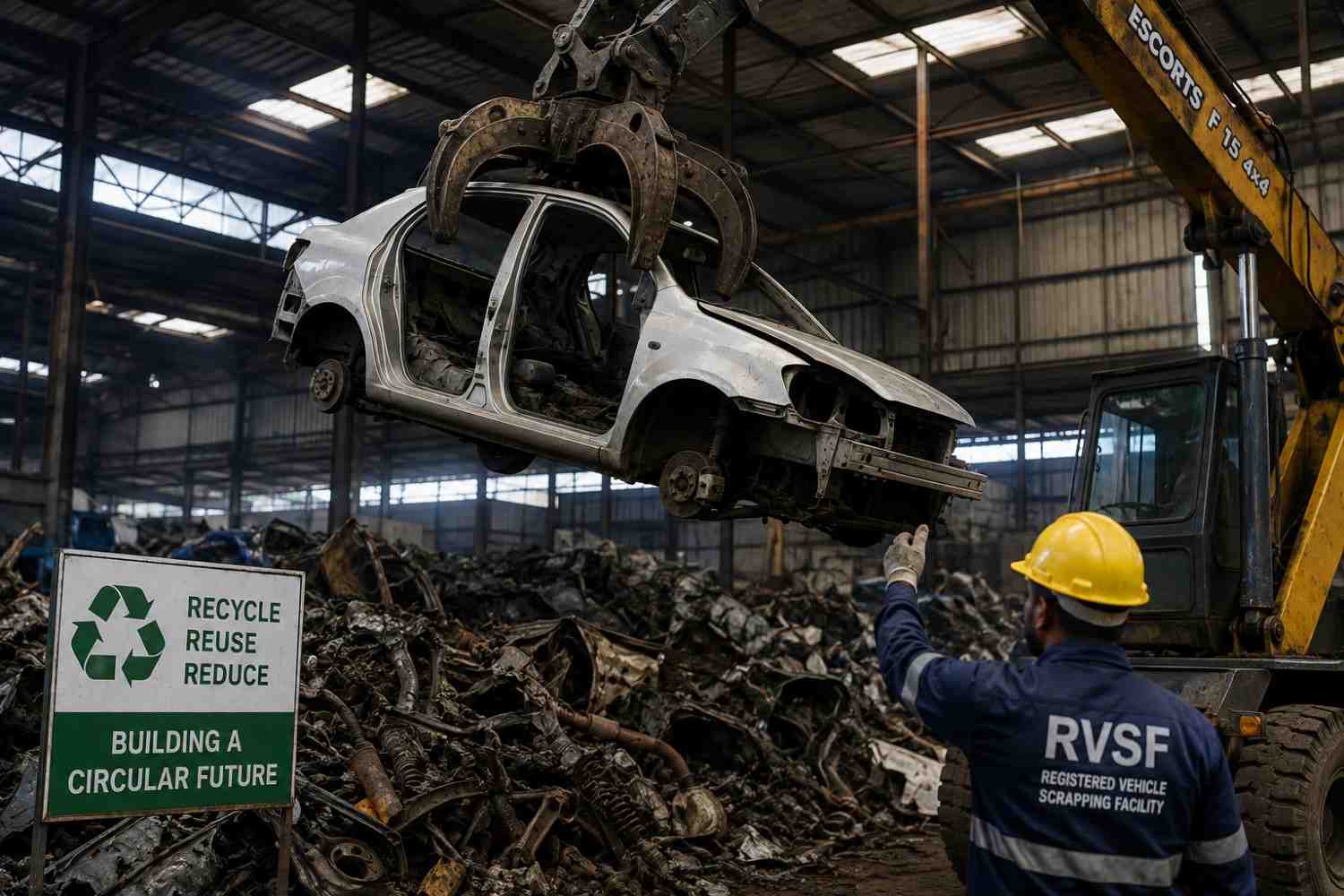
Under the government's Vehicle Scrappage Policy, ageing and unfit vehicles are encouraged and in certain cases required- to undergo fitness assessments before being transferred to Registered Vehicle Scrapping Facilities (RVSFs).
These authorised centres are designed to dismantle vehicles scientifically, safely handle hazardous components and recover reusable materials such as steel, aluminium, copper, plastics, and rubber.
Experts believe this approach could significantly improve India's resource efficiency.
Recovering metals from scrapped vehicles requires far less energy than extracting and processing newly mined raw materials, helping reduce both production costs and carbon emissions.
Recycled steel and aluminium are also expected to become increasingly valuable as demand continues to grow across the automotive, construction and infrastructure sectors.
Yet building an efficient circular material chain remains a complex task.
A substantial portion of vehicle dismantling is still carried out by the informal sector, which has supported recycling activities for decades through well-established local networks.
While these businesses recover a significant amount of recyclable material, environmental safeguards, worker safety standards and material traceability often remain inadequate. Integrating informal operators into a regulated recycling ecosystem is therefore seen as one of the biggest challenges facing the sector.
Infrastructure presents another hurdle.
Expanding the number of authorised scrapping facilities is only part of the solution. Experts say the wider ecosystem-including testing centres, dismantling capacity and supporting infrastructure- still falls short in many parts of the country.
The transition also faces another obstacle: participation.
Public awareness of the scrappage policy remains limited, while logistical constraints and uneven implementation across states continue to slow the growth of formal recycling systems.
Experts believe that without meaningful economic incentives, encouraging wider participation from vehicle owners will remain a significant challenge.
Vehicle owners are more likely to participate when scrapping offers tangible financial benefits through tax concessions, incentives or discounts on new vehicle purchases. At the same time, manufacturers stand to benefit from a more dependable supply of recycled materials, strengthening supply-chain resilience while reducing dependence on newly extracted resources.
The advantages extend well beyond the automobile industry.
A well-developed vehicle recycling ecosystem can reduce landfill waste, improve air quality by replacing highly polluting vehicles and create new employment opportunities across dismantling, material recovery, recycling, and secondary manufacturing. It also supports India's wider objectives of improving resource efficiency, lowering industrial emissions and promoting circular economy practices within domestic manufacturing.
Environmental experts believe that transition cannot end with vehicle recycling alone.
A truly circular automotive sector will require vehicles to be designed for easier recycling, valuable materials to be recovered more efficiently, battery recycling systems to expand and manufacturers to take greater responsibility for the entire life cycle of their products.
As India's vehicle population continues to grow, the country's next sustainability milestone may not be measured by how many new vehicles are manufactured, but by how responsibly older ones are managed at the end of their life.
The programme's success will not be measured by the number of vehicles it dismantles, but by the value it creates from them. It will be measured by how effectively yesterday's vehicles are transformed into tomorrow's resources, reducing waste, conserving raw materials and strengthening India's circular economy.
The journey of a vehicle should not end at the scrapyard. In a truly sustainable economy, it should continue through the materials it leaves behind - fueling new industries, conserving natural resources and reinforcing the idea that the most valuable resources are often those already in our hands.
Sources:
- Ministry of Road Transport and Highways (MoRTH) – Vehicle Scrapping Policy: Notifications and Rules
https://www.morth.gov.in/en/Circulars-Notifications-related-to-Vehicle-Scrapping-Policy - Press Information Bureau (PIB) – Vehicle Scrapping Policy: Progress of Registered Vehicle Scrapping Facilities (RVSFs)
https://www.pib.gov.in/PressReleasePage.aspx?PRID=2099130&lang=2®=48 - National Government Services Portal – Registered Vehicle Scrapping Facility (RVSF) Portal
https://services.india.gov.in/service/detail/apply-for-registered-vehicle-scrapping-facility - Ministry of Road Transport and Highways – State-wise Registered Vehicle Scrapping Facility (RVSF) Notifications
https://www.morth.gov.in/en/rvsf-notifications - Central Pollution Control Board (CPCB) – Environmentally Sound Management of End-of-Life Vehicles
https://cpcb.nic.in/ - NITI Aayog – Reports on Circular Economy and Resource Efficiency
https://www.niti.gov.in/ - Down To Earth – Coverage on vehicle scrappage, recycling and the circular economy in India
https://www.downtoearth.org.in/ - The Energy and Resources Institute (TERI) – Research on resource efficiency, recycling and circular economy
https://www.teriin.org/ - Ministry of Steel, Government of India – Steel recycling and secondary raw materials initiatives
https://steel.gov.in/ - Press Information Bureau (PIB) – Voluntary Vehicle Fleet Modernization Programme (Vehicle Scrapping Policy)
https://www.pib.gov.in/newsite/erelcontent.aspx?lang=2®=48&relid=265928






Add a Comment