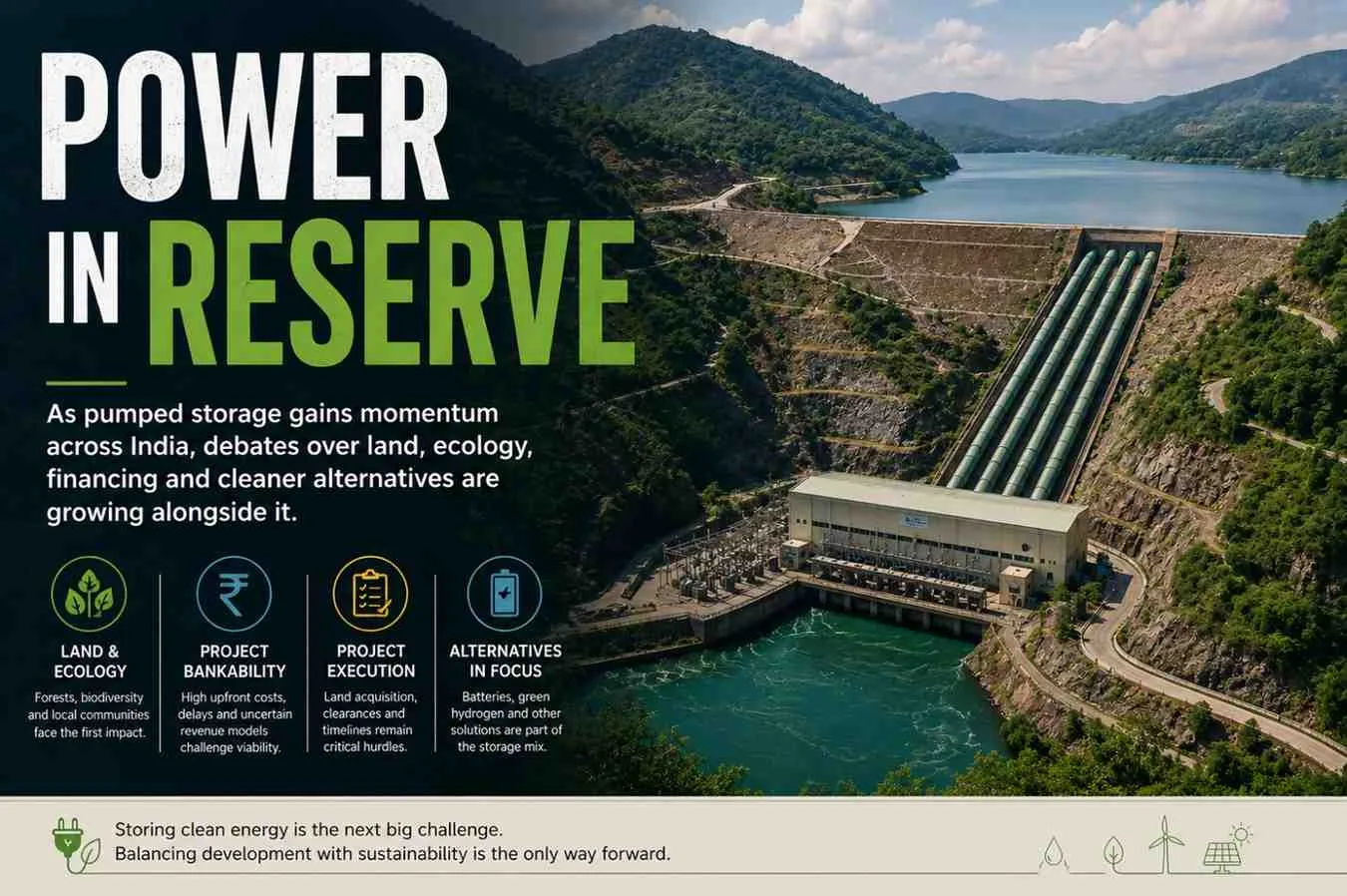
As pumped storage gains momentum across India, debates over land, ecology, financing and cleaner alternatives are growing alongside it
KOLKATA | August 1, 2026:
India's renewable energy capacity is expanding rapidly, but the next phase of the transition will depend on solving a critical challenge: storing clean electricity when renewable sources are not generating power.
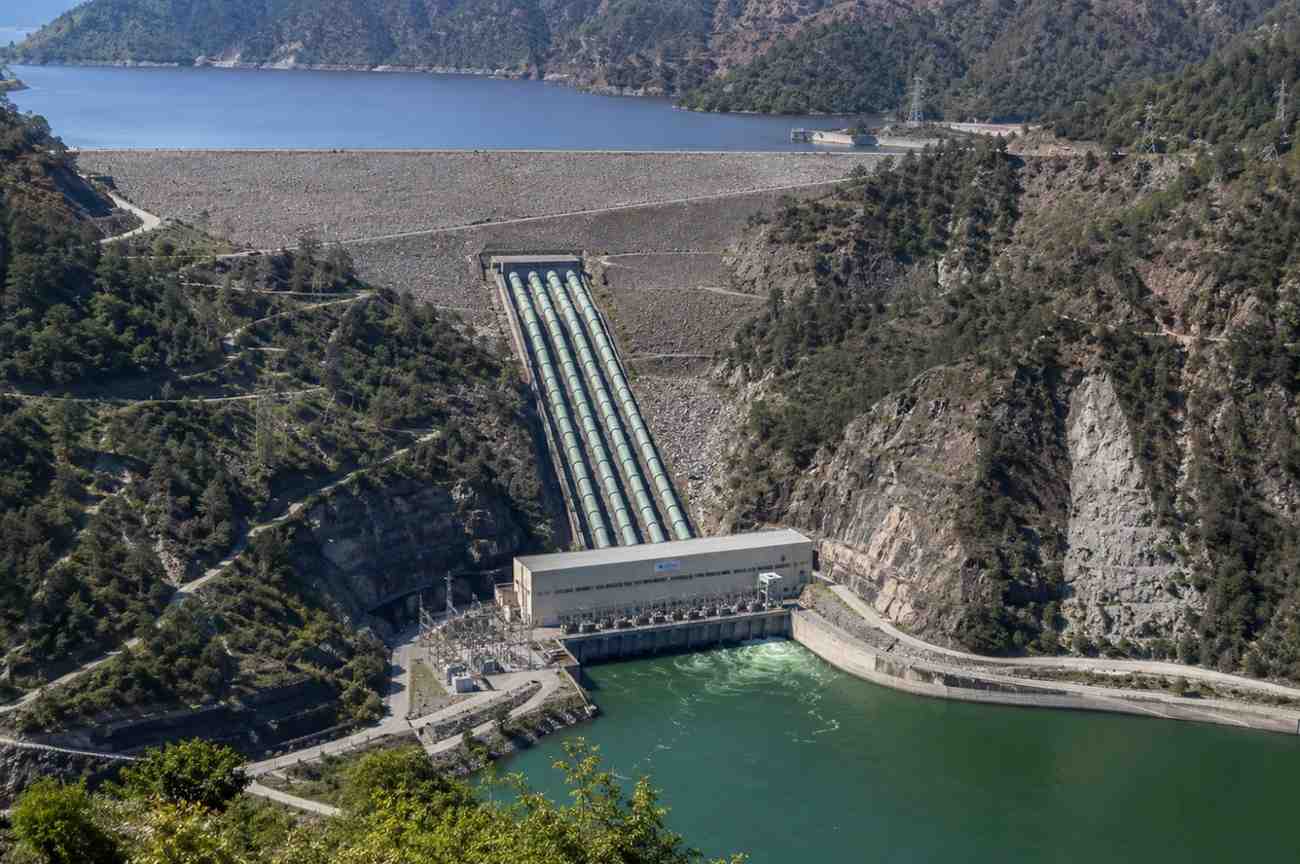
Pumped storage hydropower (PSH) has emerged as one of the country's most promising solutions and is now playing a central role in India's energy planning.
However, as projects begin moving from policy announcements to on-ground development, they are also raising important questions about land, ecology, financial viability and whether alternative storage technologies can deliver the same benefits with fewer trade-offs.
Pumped storage hydropower functions like a giant rechargeable battery. Surplus electricity is used to pump water from a lower reservoir to an upper one, where it is stored until demand rises. When additional power is required, the water is released back through turbines to generate electricity.
Its ability to provide long-duration energy storage and stabilise the electricity grid has made pumped storage an important part of India's strategy for integrating larger amounts of solar and wind power.
Pumped storage hydropower is emerging as a cornerstone of the Union government's long-term clean energy strategy.
Across states such as Maharashtra, Andhra Pradesh, Madhya Pradesh, Odisha and Karnataka, a growing pipeline of projects is expected to play a vital role in integrating larger volumes of solar and wind power into the grid.
Yet as development gathers pace, the conversation is expanding beyond energy storage to include questions of land, ecology, financial viability and sustainability.
While pumped storage offers important benefits for the power sector, many proposed projects are located in ecologically sensitive hilly and forested areas. Developing two reservoirs often requires significant land acquisition and extensive civil works.
Experts caution that large-scale construction, forest diversion and changes to natural drainage systems could have lasting impacts on biodiversity, wildlife movement and local ecosystems.
In many regions, residents have also expressed concerns about displacement, water availability and the long-term effects on their livelihoods.
Financial sustainability is another issue shaping the debate.
The financial challenge begins long before a pumped storage project starts generating electricity. While these facilities can operate for decades with relatively low operating costs, they demand substantial upfront investment and long construction timelines.
Delays in environmental clearances, land acquisition or financing can sharply increase costs and affect overall project viability. Developers also need reliable revenue mechanisms that recognise the value of energy storage and grid-balancing services, rather than compensating only for electricity generation.
These constraints have led to a broader discussion on whether alternative storage technologies could offer faster or more flexible solutions.
Battery Energy Storage Systems (BESS) are emerging as a promising alternative, with declining costs and faster deployment making them well suited for a wide range of energy storage applications.
Yet experts believe each technology serves a different purpose.
While batteries perform well for short-duration storage, pumped storage hydropower remains better suited for storing large amounts of electricity over longer periods.
Other solutions, including green hydrogen and advanced battery technologies, are also making steady progress, but they are still some ways from delivering the scale and reliability needed to support India's national electricity grid.
Experts argue that pumped storage and batteries should be viewed as complementary rather than competing technologies.
As renewable energy expands, India's electricity system is expected to require a combination of storage solutions capable of meeting different grid requirements.
At the same time, policymakers face a broader challenge.
Future projects will need rigorous environmental assessments, transparent engagement with local communities, fair compensation frameworks and stronger ecological safeguards to support both sustainable development and investor confidence.
As India's renewable energy capacity continues to grow, pumped storage hydropower is expected to play a defining role in keeping the power system reliable.
But its legacy will not be determined by storage capacity alone. It will be defined by whether development can balance environmental responsibility, financial sustainability and public trust alongside the country's growing energy needs.
In the years ahead, the clean energy transition will be judged not only by how much renewable electricity India generates, but by how responsibly it chooses to store it.
Sources:
Ministry of Power, Government of India – Pumped Storage Projects Guidelines & Policy Initiatives
https://powermin.gov.in/Central Electricity Authority (CEA) – National Electricity Plan (Volume II: Transmission & Energy Storage)
https://cea.nic.in/NITI Aayog – Energy Storage Roadmap for India
https://www.niti.gov.in/International Energy Agency (IEA) – Electricity Storage & Hydropower Analysis
https://www.iea.org/International Hydropower Association (IHA) – Pumped Storage Hydropower
https://www.hydropower.org/Central Electricity Authority (CEA) – Status of Pumped Storage Projects in India
https://cea.nic.in/hydro/Down To Earth – Reports on pumped storage projects, environmental clearances and ecological concerns in India.
https://www.downtoearth.org.in/Mongabay India – Coverage of pumped storage projects, biodiversity impacts and community concerns.
https://india.mongabay.com/The Hindu BusinessLine – Coverage on pumped storage investments, project financing and renewable integration.
https://www.thehindubusinessline.com/Ministry of Environment, Forest and Climate Change (MoEFCC) – Environmental clearance notifications and project approvals.
https://moefcc.gov.in/






Add a Comment