17 Jul 2026
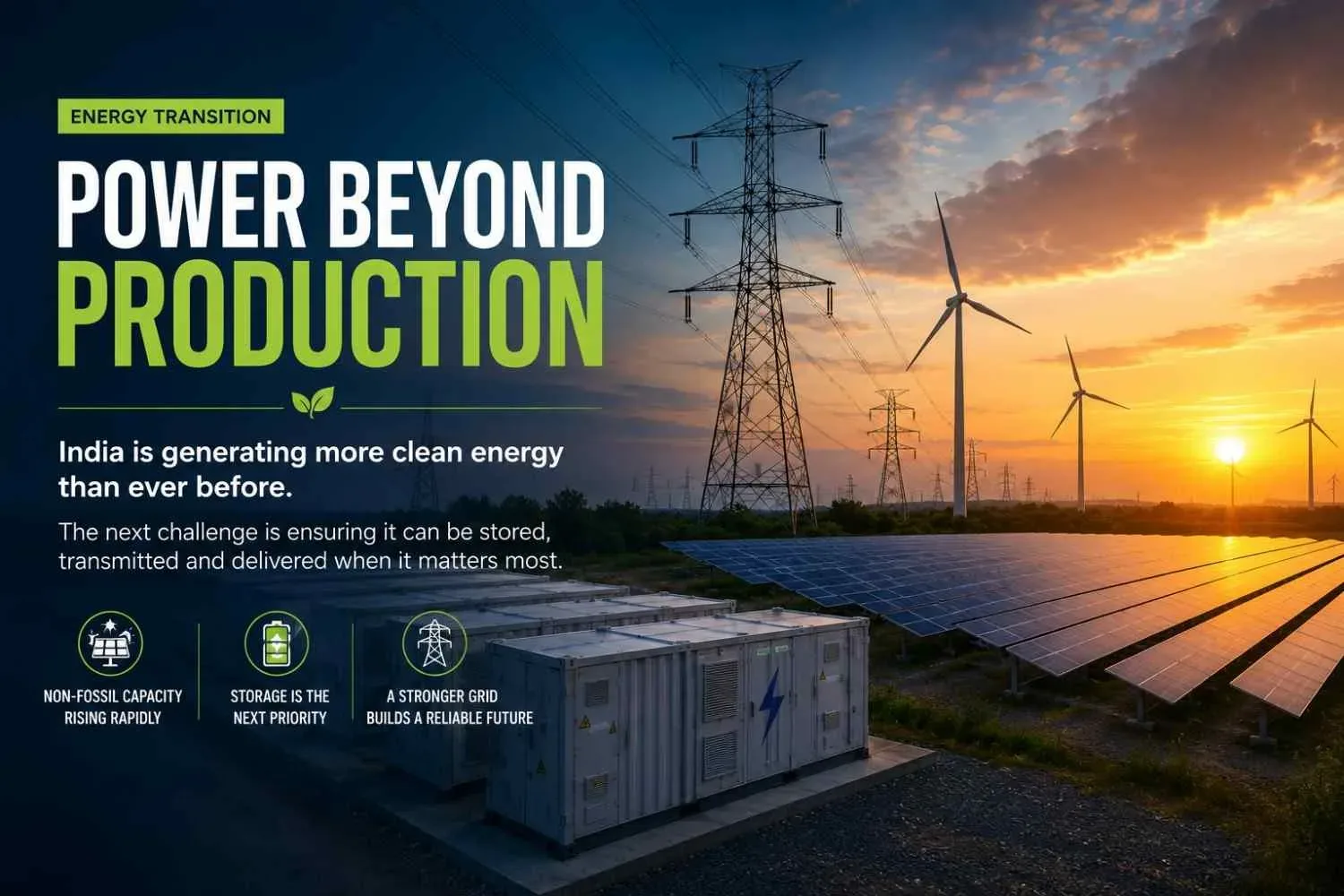
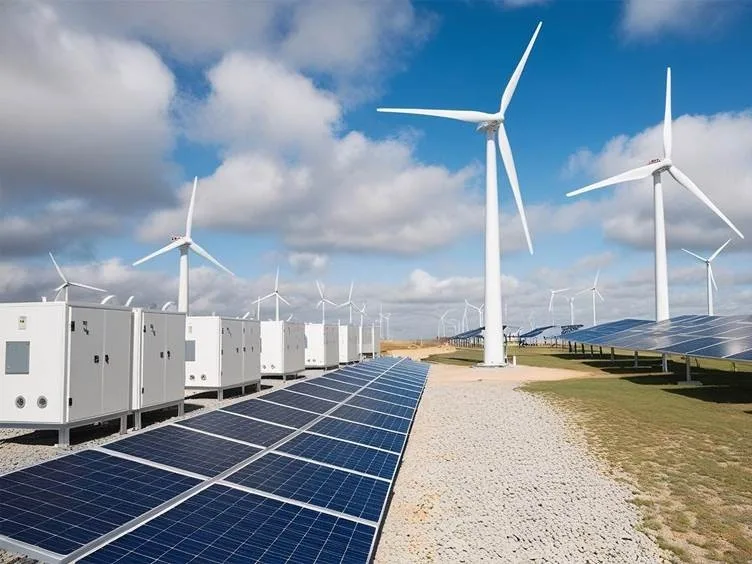
India's Cheapest Battery Storage Deals Are Under Pressure—And Your Future Electricity Could Feel It by Iffat Zareen When the evening is windless and the sun goes down the horizon, our first instinct is to switch on the fans and the lights. This first instinct may slowly turn into our last. The electricity that powers them may soon be dependent on a technology facing an alarming reality check. Hailed as the backbone of the country’s clean energy future – India’s battery energy storage projects – are currently feeling the impact of rising costs, triggering concerns casting doubt on whether the lowest bids can be executed without financial strain. A Reuters analysis issued on July 8th, 2026, has sparked fresh concerns. Against the anticipation of the developers, battery storage projects have become markedly more expensive. This is because of the rising costs of lithium, copper, and aluminium alongside changes in Chinese export incentives and the growing tensions in geopolitics, as suggested by the Reuters analysis. This comes at a crucial juncture. Presently, solar and wind capacity are on the scale of rapid growth in India. However, renewable energy is not always available when it is most needed by the people, making it just one, but a huge drawback. This problem is solved by batteries. They store the electricity generated during sunny or windy hours and later release it. Hence, ensuring uninterrupted power delivery to hospitals, homes and businesses when renewable generation drops. But this is where the financial equation becomes more challenging. Contracts were won by many developers based on exceptionally low storage tariffs – the price paid for storing and supplying electricity. When raw material prices were lower, only then did those tariffs look attractive. With the rising manufacturing costs of batteries, it is becoming harder to finance the same projects. Developers have cautioned that some projects may require renegotiation. Growing uncertainty over cost recovery is making lenders more cautious about financing new projects. To understand battery storage, two terms need to be understood as well: megawatts (MW) and megawatt-hours (MWh). The amount of electricity delivered by a battery at one time is represented by MW, whereas MWh indicates how long it can keep delivering that power. For instance, a 100MW/400MWh battery can supply 100 MW for 4 hours with no interruption. Greater reliability is provided by longer-duration batteries; however, this calls for the requirement of more battery cells, resulting in a significant increase in costs. The challenge for electricity distribution companies, is balancing affordable tariffs with dependable infrastructure. The ability to integrate new solar and wind capacity could slow down if projects are awarded at unrealistically low prices. This would leave beneficial renewable electricity unused during peak generation and create supply gaps during high-demand periods. The story is no longer about just building more batteries – it’s about building projects that can remain financially viable. With India’s acceleration in clean-energy transition, the success of battery storage may ultimately rely less on who bids the lowest but on who can deliver when the country is in the most need of power. ...Read more
08 Jul 2026
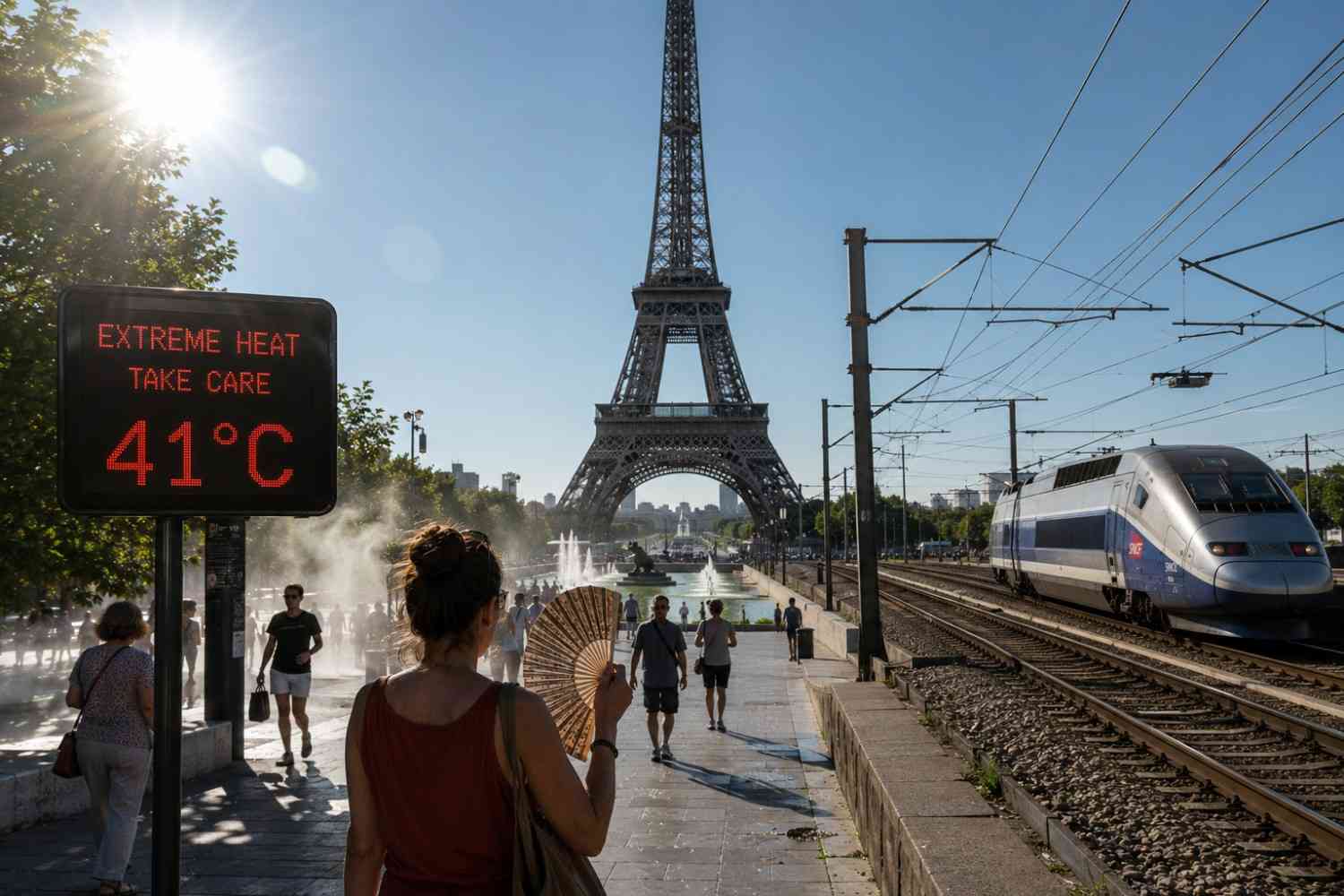
How Europe's Coldest-Built Continent Became Ground Zero for a Warming Planet — and What Its Scramble for Fans, Ambulances and Answers Tells the Rest of Us Paris residents cooling themselves at the Trocadéro fountains. Berlin police training water cannons on crowds at an open-air concert. Belgian rail managers cutting a hundred trains a day because the tracks themselves could buckle. Currys, the British electronics retailer, reporting a nearly 3,000 percent surge in fan sales in a single weekend. These are not scenes from a disaster film set in some distant, parched future. They are dispatches from Europe in the summer of 2026 — a continent famous for its temperate charm, its centuries-old stone cities, and its assumption that extreme heat was somebody else's emergency. That assumption has now collapsed. Since late May, two successive and increasingly ferocious heatwaves have swept from the Atlantic coast to the Balkans, breaking national temperature records in at least a dozen countries, killing thousands, and forcing governments to improvise a public-health response in real time. The World Health Organization's own director-general, Tedros Adhanom Ghebreyesus, has called heat Europe's "silent killer" and confirmed more than 1,300 excess deaths linked to the June episode alone, a number that kept climbing through early July as France, Belgium, Spain and the Netherlands released their own tallies. This is, by the assessment of the World Weather Attribution (WWA) network of scientists, the most severe heatwave ever recorded over the region studied — and one that would have been "virtually impossible" in a pre-industrial climate. The story of Euro Summer 2026 is not simply a story about weather. It is a story about a civilisation built for cold confronting a climate built for heat — and about what happens when decades of warnings arrive all at once, on schedule, exactly as predicted. Why Europe Is Burning: The Anatomy of a Foretold Crisis The proximate trigger has a name meteorologists use with grim regularity now: the "heat dome," or omega block, so called for the shape it traces on a weather map. A persistent zone of high pressure trapped hot, dry air pushed north from Morocco and North Africa, while low-pressure systems on either side blocked cooler Atlantic air from moving in. The first wave arrived on 24 May, delivering the earliest and most extreme spring heat on record across Western Europe. The second, beginning 17 June, was far worse. France recorded 44.3°C in Pissos and its hottest day nationally since records began in 1947, with an average national temperature of 30°C. Germany hit an all-time national high of 41.7°C at Coschen. Hungary broke its national record at 42°C. Spain touched 45.1°C. The Czech Republic recorded 41.9°C, its highest ever. The United Kingdom broke its June record three days running, and for the first time in the history of its warning system, the Met Office issued red extreme-heat alerts on consecutive days. But a heat dome is only the delivery mechanism. The underlying cause, confirmed by rapid-attribution science, is unambiguous: human-caused climate change. WWA's analysis found that a comparable weather pattern would have produced dramatically less extreme outcomes just decades ago — daytime heat like this June's was roughly ten times more likely than it would have been in 2003, and extreme night-time temperatures were more than a hundred times more likely than in 1976. Put simply, the same weather pattern that once nudged a mild day into an uncomfortable one now pushes a warm day past deadly thresholds, because it is operating on top of a baseline climate that has already warmed by roughly 1.3°C globally — and by nearly double that across Europe. The World Meteorological Organization notes that Europe has warmed by around two degrees since the historic 1976 heatwave, making it the world's fastest-warming continent, heating at roughly twice the global average rate. Crucially, this is not a story of a single freakish season. Europe's vulnerability has been accumulating for a generation. The catastrophic 2003 heatwave killed more than 14,800 people in France alone and became the reference disaster that shaped a first generation of heat policy. It was followed by damaging repeats in 2018, 2019 and 2022 — the latter killing more than 60,000 people continent-wide — and a 2023 summer that still recorded over 47,000 heat deaths despite being comparatively "cool." Academic analysis of heatwave trends between 1921 and 2021 shows a clear upward trend across most European regions, with a marked acceleration beginning in the early 1990s and the decade 2011–2021 recording the highest number of heatwaves on record. May 2026 had already broken spring records before June's crisis even began. What is unfolding this summer, in other words, is not a break from the pattern. It is the pattern, arriving earlier and hitting harder than even recent extremes suggested it would. There is also a structural reason the crisis feels so acute: much of Europe's built environment was designed to solve the opposite problem. Thick masonry walls, small windows, heavy insulation and centralised heating reflect centuries of adaptation to long, cold winters — not the cross-ventilation, shading and cooling that a hotter climate demands. Only around one in five European homes has air conditioning, a figure that in France, Germany and the UK has historically sat below five percent. That mismatch between the climate Europe built for and the climate it now has is the structural fault line beneath every headline this summer. The Nature and Extent of the Crisis: A Continent Under Strain What distinguishes 2026 is not only intensity but breadth. Temperature records fell in Austria, Belgium, Czechia, Denmark, France, Germany, Hungary, Italy, the Netherlands, Poland, Romania, Spain and the United Kingdom. By late June, WHO estimated more than 150 million people across the continent were living under extreme heat. Reuters reported at least 3,700 excess deaths across France, Belgium and the Netherlands alone during the June event, with France's figure — around 2,000 to 2,025 — the largest single-country toll; Belgium recorded roughly 1,200 excess deaths (a 39 percent surge in weekly mortality), and the Netherlands close to 480, overwhelmingly among people over 65. Spain's health authorities separately attributed more than 1,000 excess deaths to the June heat, in what was already the country's second-hottest June on record. The human toll is compounded by a cascade of infrastructure failures that reads like a stress test of a system built for a different climate. In France and the UK, rail lines buckled under thermal expansion, forcing speed restrictions and cancellations; in Germany and Belgium, tram tracks softened into the asphalt and networks suspended service; Deutsche Bahn advised against non-essential travel altogether. France's heavily nuclear grid had to throttle reactor output because river water used for cooling had itself become too warm to be safely discharged, contributing to power outages that left roughly 68,000 households without electricity precisely as demand for air conditioning spiked. Electricity prices in Belgium briefly exceeded €1 per kilowatt-hour at peak demand. Roads and traffic infrastructure literally deformed in several countries. Soil moisture fell to record seasonal lows, sharpening drought and wildfire risk; Portugal requested EU, Spanish and Moroccan support for extra firefighting aircraft as temperatures topped 40°C. The public-health burden goes well beyond heatstroke. Heat is a "silent killer" precisely because it rarely appears on a death certificate — instead it forces the cardiovascular system to work harder to push blood to the skin, straining hearts already weakened by age or illness; it accelerates dehydration and kidney strain; and it degrades cognition, contributing to a spike in drownings as people sought relief in unsupervised rivers, lakes and canals. France alone recorded more than 70 drowning deaths since mid-June, including a professional footballer, Kenzo Kies, who drowned in the Rhône; Poland recorded 17 drownings in a single day. Emergency call volumes in France rose by as much as 61 percent week-on-week. Hospitals in the UK, including East Surrey Hospital, declared critical incidents and restricted services to life-threatening cases only. Layered atop the acute crisis is a slower-burning one: the geographic redrawing of disease. The European Centre for Disease Prevention and Control has documented that Europe's climate suitability for dengue transmission has risen by nearly 300 percent over the past decade against the 1981–2010 baseline, and warns that longer, more intense mosquito-borne disease seasons — West Nile virus, chikungunya, dengue — are becoming the region's "new normal." Warmer coastal and river waters have raised the risk of Vibrio bacterial infections. Pollen seasons have lengthened by one to two weeks, aggravating respiratory conditions, while stagnant, heat-trapped air has driven ground-level ozone and smog warnings in places like the Czech Republic. Heat, in short, is not one health emergency but an amplifier of many. The Public Mind: When Summer Becomes a Season of Hazard Perhaps the most striking dimension of Euro Summer 2026 is psychological. For populations across Britain, France, Germany, the Low Countries and Scandinavia who have long regarded extreme heat as a tropical or Mediterranean problem, this summer has delivered a jarring reversal. Nights that will not cool — Vienna's minimum overnight temperature failed to drop below 27.3°C, and one German weather station recorded a night-time low of 29.4°C — have left millions unable to sleep properly for weeks, contributing to chronic exhaustion, irritability and worsening mental health. The London Underground recorded carriage and platform temperatures above 34°C, turning routine commutes into ordeals. Retailers across Britain, France and Germany report fans and portable air-conditioning units selling out within hours, with Asian appliance manufacturers reporting a European sales boom for products that were, until recently, considered unnecessary luxuries in temperate markets. This is where climate change has stopped being an abstraction debated in policy documents and become a lived, domestic experience — playing out in bedrooms, school corridors, supermarket queues and family group chats about whether to check on an elderly parent living alone. Public discourse increasingly frames this summer as a "dress rehearsal" for worse to come, a phrase the WHO itself has used. That anxiety is compounded by a visible unfairness: the burden of heat falls hardest on those least able to escape it. Roughly 60 percent of hospital admissions during the crisis involved people aged 75 and older. Outdoor labourers, migrants, the homeless, low-income tenants in poorly insulated top-floor flats, and people living alone bear disproportionate risk — a pattern that has sharpened public debate over whether cooling is becoming a luxury good rather than a basic protection. Governments Scramble: The Emergency Response So Far Faced with a crisis moving faster than policy cycles, European governments have leaned on — and in places gone well beyond — the heat-action frameworks built after 2003. France placed a record 58 departments under red alert, closed 845 schools outright and adjusted schedules at 13,500 more, restricted public alcohol sales in high-risk areas, opened rivers and canals for supervised public swimming, and installed more than 1,300 free public water fountains alongside a bottle-refill scheme spanning 1,500 shops. Prime Minister Sébastien Lecornu convened a special cabinet meeting to draw lessons even as the crisis continued, and the government has committed more than €130 million to cooling systems and renovation in schools and nurseries, according to utility EDF and lending partners. Interior Minister Laurent Nunez pushed back on opposition criticism, insisting "this is not a fiasco — we were prepared." Italy restricted outdoor construction and agricultural labour during peak afternoon hours, pairing the bans with furlough schemes so workers did not lose income. Barcelona expanded its celebrated climate-shelter network — libraries, civic centres, pharmacies and parks doubling as refuges — to more than 500 sites, building on a model launched in 2020. Belgium cancelled its annual Battle of Waterloo re-enactment on safety grounds and its rail operator cut roughly a hundred trains daily. Portugal activated the EU Civil Protection Mechanism and sought additional firefighting aircraft as wildfire risk soared. At the European level, the Commission — through figures such as executive vice-president Teresa Ribera — has framed the crisis as a decisive rebuttal to climate-policy complacency, while acknowledging that adaptation spending has lagged badly behind mitigation: Reuters reported that between 2021 and 2025, 72 percent of EU climate-related spending went to mitigation, only 18 percent to adaptation, and 9 percent to both. The WHO, for its part, launched a "KeepCool" public campaign built around four simple pillars — keep out of the heat, keep your home cool, keep your body cool and hydrated, and keep in touch with vulnerable people around you — and has repeatedly urged every European country to adopt a comprehensive heat-health action plan, noting that more than half still lack one. Beyond This Season: What Must Change The consensus among health agencies, meteorologists and urban planners is unambiguous: emergency triage cannot remain the primary strategy. Several priorities stand out for the next few years. Universal, coordinated early warning. Sophisticated monitoring exists through Copernicus and the European Centre for Medium-Range Weather Forecasts, but triggering thresholds and alert protocols still vary by country, producing uneven protection. A harmonised EU-wide framework, with automatic cross-border activation of civil protection resources, would close dangerous gaps. Heat-proofing the built environment. Passive cooling — external shutters, awnings, reflective "cool roofs," cross-ventilation, better insulation calibrated for summer as well as winter — must become standard in building codes, not an optional retrofit. Cities including Paris, Barcelona, Vienna and Amsterdam are already expanding tree canopy, converting public buildings into cooling shelters, narrowing car-dominated streets, and replacing asphalt with permeable, reflective surfaces to fight the urban heat-island effect, in which dense concrete and glass store daytime heat and release it at night, denying residents recovery. That work needs to move from pilot projects to policy default, with low-income neighbourhoods — which typically have less tree cover and older housing — prioritised first. Resilient healthcare and labour protections. Hospitals need independent, blackout-resistant cooling systems and staff trained to recognise both classic heatstroke and the newly arriving vector-borne diseases that were absent from European medical curricula a generation ago. Italy's model of restricting outdoor work during dangerous hours while protecting workers' incomes deserves wider adoption, alongside binding heat-exposure limits, mandatory rest breaks and shaded work zones for construction, delivery and agricultural workers. Smarter, cleaner cooling. Demand for air conditioning will keep rising, and that is not inherently a problem — but unmanaged, fossil-fuel-backed cooling would deepen the crisis it is meant to solve, straining grids and raising emissions. The better path runs through efficient heat pumps, strict appliance standards, solar-powered cooling (which conveniently peaks alongside the sunniest, hottest days), demand-response electricity pricing, and district cooling systems in dense cities. The Long Run: Combating Heatwaves as a Permanent Feature of European Life Beyond seasonal fixes, experts converge on a layered, long-run strategy resting on two pillars that must advance together rather than in sequence. The first is mitigation — the still-unfinished work of rapid decarbonisation. Every fraction of a degree of additional global warming worsens the frequency, duration and intensity of these extremes; the WWA's attribution science leaves little room for doubt that fossil fuel emissions are the primary driver. The EU's own 2030 target of drawing 42.5 percent of energy consumption from renewables remains, on current trends, roughly half-met, according to Lancet Countdown analysis — underscoring how much acceleration is still required even in a bloc that considers itself a climate leader. The second is deep, structural adaptation, treated not as an emergency add-on but as permanent public infrastructure. That means heat-resilient power and water systems engineered for 40°C-plus operating conditions; agricultural systems shifting toward heat-resistant crops and adjusted growing calendars as soil moisture hits record lows; nature-based solutions — urban forestry, restored wetlands, green corridors — that cool cities while improving air quality and mental health; and social protection systems explicit about the fact that low-income households already face a measurably higher risk of food insecurity during heatwaves. Disease surveillance, too, must become a permanent adaptation function: expanded entomological monitoring, coastal water testing for Vibrio bacteria, and public health messaging on now-endemic mosquito-borne risks. None of this is cheap, and none of it is optional. The WHO estimates that adaptation measures already in place — early warning, cooling spaces, outreach to isolated elderly residents — prevented heat deaths in 2023 from being roughly 80 percent higher than they were, with the reduction nearly doubling for people over 80. Prevention, in other words, demonstrably works; the cost of inaction, measured in lives and in economic disruption to transport, agriculture and labour productivity, is demonstrably higher than the cost of building resilience now. The Message for the Rest of the World Europe's 2026 summer carries lessons that travel well beyond its borders, and they arrive with unusual authority precisely because they come from a wealthy, well-governed, scientifically sophisticated part of the world that assumed — wrongly — that it had time. No region is climate-proof. If a continent with Europe's institutional capacity, healthcare infrastructure and monitoring systems can lose thousands of people to heat in a matter of weeks, no temperate or high-income region should assume immunity. For hotter, less-resourced regions of the Global South, already living closer to physiological heat limits with far less adaptive capacity, the implications are correspondingly graver. Adaptation is no longer optional alongside mitigation — it is now equally urgent. For decades the global climate conversation centred on emissions reduction as the primary lever. Europe's crisis demonstrates that severe climate impacts are not a future risk to be pre-empted but a present reality to be survived, simultaneously. Both must be pursued at full speed, not in sequence. Heat is deeply, structurally unequal. The people who died this summer were disproportionately elderly, isolated, poor, or working outdoors. Any credible national or global heat strategy has to be built around equity — ensuring cooling, shelter and early warning reach those least able to secure them privately — or it will simply reproduce climate change's existing injustices in sharper form. Infrastructure built for yesterday's climate fails fast under tomorrow's weather. Rail lines, power grids and buildings engineered for a cooler past are now operating past their thermal design limits across Europe. Rapidly urbanising regions elsewhere have a narrow window to build heat resilience into new infrastructure now, rather than retrofitting under emergency conditions later, at far greater cost. Early warning only saves lives if it triggers early action. The technical capacity to forecast heat is well advanced globally; the harder task, which Europe is still learning in real time, is converting a forecast into welfare checks, cooling centres, adjusted work hours and public trust — before hospitals fill and death tolls rise, not after. Europe's 2026 heatwave is not a freak meteorological accident, nor a one-off tragedy to be mourned and then set aside. It is the visible, measurable arrival of a trend that scientists have tracked and forecast for decades, landing precisely where models said it would. The question now facing European governments — and, by extension, every government watching from elsewhere — is whether this becomes the moment resilience is finally built into the everyday fabric of governance, housing, energy and health systems, or whether it is remembered, a few winters from now, as merely an unusually hot summer. The climate system does not offer many more rehearsals. A Continent at a Crossroads There is a version of this story Europe has told itself before, after 2003 and again after 2022: that a shocking summer would be followed by a burst of reform, and then, as memory faded and budgets tightened, by a quiet return to business as usual. The evidence so far in 2026 suggests both continuity and change. On one hand, the emergency playbook — red alerts, school closures, cooling centres, welfare checks — is more practised and better resourced than it was even five years ago, and officials are right to point out that without it, the death toll would almost certainly be higher. On the other hand, the same officials now openly concede that the playbook is being outpaced by the speed of warming itself. France's own interior ministry has had to defend its preparedness in public even as it activated red alerts across a record number of departments; that defensiveness is itself a signal that the political conversation has shifted from "was this predictable" to "were we ready," and the honest answer, in most of Europe, is only partially. What happens next will likely be decided less by any single EU directive than by thousands of local decisions: whether a municipality retrofits a school before or after the next heatwave; whether a housing authority prioritises shading and insulation for its oldest, poorest tenants or waits for market-driven air-conditioning uptake; whether a national labour ministry writes heat-exposure limits into law or leaves them to voluntary guidance. The European Commission's promised climate resilience strategy, expected later this year, will be an important signal of political intent — but the WHO's own data suggests that the interventions that actually save lives are unglamorous and local: a phone call to an elderly neighbour, a shaded bus stop, a cooling centre with its doors actually open during the hottest hours of the day. For a continent that has spent much of the past two decades debating climate change primarily in the language of targets, treaties and future scenarios, summer 2026 has forced a blunter, more immediate vocabulary: fans, ambulances, buckled rails, and body counts. That shift in language may prove to be the most consequential outcome of this season — not because it resolves the crisis, but because it makes further delay much harder to defend, to voters or to history. Sources and Attributions World Weather Attribution (WWA), "Fossil fuel emissions have rapidly worsened European heatwaves in just a few decades," rapid attribution analysis, June–July 2026World Meteorological Organization (WMO), "Record-breaking heat spreads through Europe," WMO News, June 2026World Health Organization (WHO) Regional Office for Europe, statements by Director-General Tedros Adhanom Ghebreyesus; "KeepCool" campaign guidanceReuters, reporting on excess mortality in France, Belgium and the Netherlands; energy grid and nuclear generation impacts; EU adaptation-vs-mitigation spending data (2026)Euronews, "Europe's record-breaking heatwave: what you need to know," June 2026France 24, "More than 1,300 excess deaths linked to record-breaking Europe heatwave, WHO says," June 2026Al Jazeera, "More than 1,300 deaths in Europe amid heatwave: What can countries do?" June 2026The Week, coverage of infrastructure damage and mortality figures, July 2026Wikipedia, "2026 European heatwaves," compiled contemporaneous news sourcing (Météo-France, Robert Koch Institute, BBC, The Guardian, NBC News, AP, CNN, France 24)European Centre for Disease Prevention and Control (ECDC), guidance on mosquito-borne disease trends, dengue climate suitability, and Vibrio bacterial riskThe Lancet Countdown, 2026 Europe report on health impacts of climate change and renewable energy targetsEuropean Commission and EU Mission on Adaptation to Climate Change, urban resilience and climate-shelter reportingAdditional synthesis drawn from contemporaneous reporting compiled in the "EuroHeat" background briefing, including French, German, Spanish, Belgian and UK national meteorological and health authority data This report reflects information available as of early July 2026. Excess mortality figures are preliminary in several countries and are expected to be revised as data collection continues. ...Read more
12 May 2026
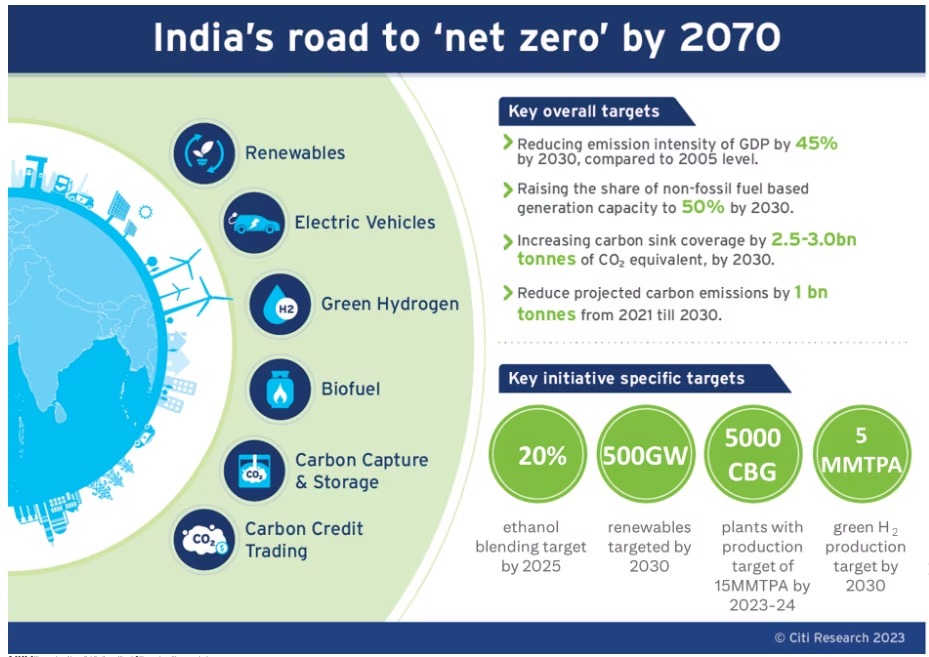
India has set ambitious renewable energy targets. The government aims for 500 gigawatts of non fossil fuel capacity by 2030. But for a business owner or facility manager, national targets matter less than a single practical question. How do I actually install solar panels on my factory roof or buy wind power for my office? The answer involves navigating a complex landscape of central policies, state regulations, subsidy schemes, net metering rules, open access provisions, and utility company procedures. The good news is that the framework exists and is improving. The challenging news is that it varies significantly by state. Understanding the policy pipeline is not optional for a business serious about renewable transition. It is the difference between a smooth, profitable installation and a stalled, frustrating project. The two page electricity bill and the question that started everythingLet us begin with a small scene that might feel familiar. A manufacturing company owner in Gujarat sits down with the monthly electricity bill. It is thick this year. Two pages instead of one. The tariff has gone up again. Diesel for the backup generator is more expensive too. He looks at the roof of his factory, which is flat, wide, and baking under the afternoon sun for ten months of the year. And he asks a simple question. Why is this roof not saving me money? That question, asked in a thousand boardrooms and shop floors across India, is the real engine of the renewable transition. Not climate summits. Not corporate social responsibility reports. Just a business owner looking at an unshaded roof and a rising electricity bill. But that question quickly leads to a second, more complicated question. How do I actually do this? Who do I talk to? What forms do I fill? How much will it cost upfront? When will I see savings? What happens when I generate more power than I need? What happens when I generate less? These are not technical questions. They are policy questions. And they are the subject of this guide. The three pathways. Onsite, open access, and the green choiceBefore we dive into policies, we need to understand the three basic ways a business can use renewable energy in India. Each pathway has different rules, different economics, and different paperwork. » Onsite generation. This is the most common and the most straightforward. You install solar panels on your own rooftop or on unused land within your factory premises. You use the electricity directly. Any excess can be sent back to the grid if your state allows net metering. The main policy questions here involve building permits, grid connection approvals, and metering arrangements. » Open access. This is for businesses that cannot install enough onsite capacity because their roof is too small, shaded, or structurally weak. Under open access, you buy renewable power from a solar or wind farm located elsewhere, and the utility company transmits it through the grid to your facility. You pay the generator for the power and the utility for the transmission. The main policy questions here involve interstate or intrastate transmission charges, banking provisions, and cross subsidy surcharges. » Green power option. Some discoms (distribution companies) now offer tariffs where you pay a small premium to source a portion of your power from renewable sources without installing anything yourself. This is the simplest administratively but often the least economical because the premium may not reflect the true cost savings of renewable energy. Most Indian businesses start with pathway one, move to pathway two if needed, and consider pathway three only if the first two are not feasible. The central government. The architect of the frameworkThe central government sets the broad rules. The Ministry of New and Renewable Energy is the primary agency. It designs schemes, provides subsidies, and issues guidelines. The Central Electricity Regulatory Commission sets tariffs and rules for interstate transmission. The Solar Energy Corporation of India acts as a implementing agency for many large scale schemes. For a business owner, the central government matters most for two reasons. Subsidies and basic rights. The central government offers capital subsidies for rooftop solar installations, particularly for smaller systems. For a typical business, the subsidy might cover twenty to thirty percent of the cost, though the exact percentage and eligibility criteria change over time. The subsidy is usually channeled through state nodal agencies, which means you apply at the state level even though the funding comes from Delhi. More importantly, the central government has established the basic legal right for consumers to generate their own electricity through renewable sources. This is enshrined in various regulations and has been affirmed by the Appellate Tribunal for Electricity. No state can simply ban rooftop solar. They can only regulate it. That said, the central framework is only a framework. The real detail lies with the states. The state government. Where the real decisions happenIf the central government is the architect, the state government is the builder. And every builder works a little differently. Electricity is a concurrent subject in India's constitution, which means both central and state governments have jurisdiction. But operational control over distribution lies firmly with the states. Each state has its own electricity regulatory commission, its own discoms, and its own policies on net metering, banking, cross subsidies, and open access. This is where many businesses get stuck. A policy that works beautifully in Karnataka might be nearly impossible to implement in Uttar Pradesh. A solar installation that pays for itself in three years in Tamil Nadu might take seven years in West Bengal. The technology is identical. The difference is policy. Let us break down the key state level policies you need to understand.Net metering. The policy that makes rooftop solar sing Net metering is the single most important policy for onsite solar. Here is how it works. Your solar panels generate electricity during the day. Your factory uses what it needs immediately. Any excess power flows back into the grid, and your electricity meter runs backwards. At night or on cloudy days, you draw power from the grid as usual. At the end of the billing cycle, you pay only for the net amount you consumed. If you generated more than you consumed, you get a credit on your next bill. Net metering makes rooftop solar financially attractive because it essentially uses the grid as a free battery. You do not need to buy expensive storage to use the power you generate. The grid stores it for you. However, not all states offer true net metering. Some states offer net billing instead, where excess power is purchased by the discom at a lower rate than the retail tariff. Others cap net metering capacity at a certain percentage of your sanctioned load, often at eighty or ninety percent. Others limit net metering to systems below a certain size, typically one megawatt or less for commercial consumers. Before you invest in rooftop solar, you must check your state's net metering policy. Call your discom. Ask for the latest regulations. Speak to a local solar installer who has done projects recently. The policy landscape changes frequently, and outdated information can ruin your financial model. Banking and banking charges. The hidden cost of open accessIf you are using open access to buy power from a remote solar farm, you will encounter a concept called banking. Banking allows you to send excess power generated during sunny months to the grid and withdraw it during less sunny months. This is important because solar generation varies by season. Summer months might produce a surplus. Monsoon months might produce a deficit. Banking is incredibly valuable, but discoms do not offer it for free. They charge banking fees, typically a percentage of the energy banked, often ranging from two to fifteen percent. A high banking fee can significantly reduce the financial benefit of open access solar. Some states also impose cross subsidy surcharges on open access consumers. The logic, from the discom's perspective, is that large commercial and industrial consumers pay higher tariffs that effectively subsidise residential and agricultural consumers. When a large business switches to open access renewable power, the discom loses that high paying customer. The cross subsidy surcharge is meant to recover some of that lost revenue. These charges are not unfair. Discoms have legitimate financial concerns. But they can make open access uneconomical in some states. You must factor them into your calculations. The subsidy maze. How to find your way throughThe central government offers subsidies for rooftop solar, but accessing them requires patience. The process typically works like this. 1. First, you identify an approved vendor. The Ministry of New and Renewable Energy maintains a list of approved solar panel and inverter models. Some state nodal agencies also maintain empanelled lists of installers. Using an unapproved vendor can disqualify you from the subsidy. 2. Second, you submit an application through the national portal for rooftop solar. The portal guides you through the process, connects you to your discom, and tracks your application status. Many businesses find this portal helpful, though it is still evolving. 3. Third, you receive a technical feasibility approval from your discom. They will inspect your roof, check your electrical infrastructure, and confirm that your grid connection can handle the solar system. This step can take anywhere from two weeks to three months depending on your discom. 4. Fourth, you install the system through your approved vendor. The vendor handles all electrical work, mounting structures, and grid integration. 5. Fifth, you submit a completion report and a request for inspection. The discom inspects the installation, installs a bidirectional meter if needed, and authorises interconnection. 6. Sixth, you start generating and the subsidy is released. The subsidy is typically credited to your bank account within a month or two of commissioning. The entire process can take four to eight months for a first time applicant. That sounds slow, and it is. But it has improved significantly in recent years. The national portal has reduced paperwork. Many discoms now have dedicated rooftop solar cells. And once your first system is installed, any future expansion is much faster. The virtual net metering option for smaller businessesNot every business owns its own roof. Many small enterprises, retail shops, and offices rent their premises. For them, rooftop solar is not an option because the landlord may not agree or the lease is too short. Virtual net metering is designed for exactly this situation. Under virtual net metering, a group of consumers can collectively own or subscribe to a solar installation located elsewhere, and the power generated is credited to their individual bills in proportion to their share. For example, a shopping complex with ten small shops could install solar panels on the common roof. Each shop receives a credit on its electricity bill based on its share of the investment. The shops that rent their space benefit even though they do not own the building. Virtual net metering is still in early stages in India. A few states including Delhi, Karnataka, and Tamil Nadu have active virtual net metering policies. Others are developing them. If you are a small business owner or a tenant, this is a policy to watch. The renewable purchase obligation. A hidden driver of changeThere is one more policy that indirectly affects businesses. The renewable purchase obligation requires certain categories of electricity consumers, including large commercial and industrial users, to source a minimum percentage of their power from renewable sources. The percentage is set by the central and state regulators and typically increases every year. If you meet your obligation through your own solar installation or through open access, you are compliant. If you do not, you may have to purchase renewable energy certificates from other generators who have exceeded their obligations. For most businesses, the renewable purchase obligation is not a penalty. It is simply a reinforcement of what you already want to do. But it is worth understanding because it creates a baseline demand for renewable power and gives you another reason to act. The closing thought. The roof is waitingLet us return to that factory owner in Gujarat. He asked his question. He navigated the policy maze. He found a good vendor. He filled the forms. He waited for approvals. And one morning, the discom engineer came, flipped the switch, and his meter started running backwards. He did not become an environmental activist. He did not write a sustainability report. He simply decided that paying for sunshine made more sense than paying for coal. The policies were there to help him, imperfect but functional. He used them. The roof is waiting for you too. The sun is still free. The policies, for all their complexity, are on your side. The only question is when you will start. ...Read more
12 May 2026
The global conversation around the renewable transition is frequently dominated by abstract numbers: gigawatts of installed capacity, billions of dollars in climate finance, and percentage points of carbon reduction. While these metrics are essential for policy benchmarks, they often obscure the most critical element of the entire movement: the people. In a country as vast and as complex as India, the shift from a fossil fuel-dependent economy to a renewable one is not merely a technical swap of solar panels for coal furnaces. it is a profound social evolution that touches every layer of the human experience. For India, the Renewable Transition is a deeply personal story. It is the story of a coal miner in Dhanbad wondering if his son will have a job in twenty years, a farmer in Rajasthan leasing his arid land for a solar park to pay for his daughter’s education, and a young engineer in Bengaluru designing smart grids for a future she hopes to live in. To write about this transition for a professional audience, we must look beyond the hardware and examine the Just Transition—the commitment to ensuring that as we move toward a cleaner planet, we do not leave our people behind. The Architecture of a Just Transition in the Indian ContextIndia stands in a unique position. Unlike many developed nations that built their wealth on centuries of unrestricted carbon emissions, India is attempting to industrialize and lift millions out of poverty while simultaneously decarbonizing its energy grid. This is an unprecedented historical challenge. A Just Transition in India must be defined by three pillars: economic security for legacy workers, energy equity for the underserved, and the massive undertaking of national upskilling. 1. Economic Security and the Coal HeartlandThe Indian economy has long been anchored by the coal sector. States like Jharkhand, Chhattisgarh, and Odisha are not just regions of mining. they are entire ecosystems built around the "black gold." From the formal employees of Coal India Limited to the informal workers who transport coal on bicycles, millions of livelihoods are at stake. A professional analysis of the transition must address the reality that a solar farm requires significantly fewer permanent employees than a coal mine. Therefore, the transition cannot be a "shut down and walk away" approach. It requires a repurposing strategy. We are seeing the early stages of this in discussions around Green Energy Corridors. The goal is to transform aging thermal power plants into hubs for battery storage or green hydrogen production. By doing so, we utilize existing land and grid infrastructure while providing a localized transition path for the existing workforce. 2.Energy Equity: Beyond the GridFor a professional website focusing on sustainability, it is vital to highlight that renewable does not always mean centralized. In India, the humanized version of the transition is often seen in decentralized renewable energy (DRE). In remote villages where grid stability remains a dream, solar microgrids are changing the fundamental quality of human life. When a health clinic in a rural district gets a reliable solar-powered refrigerator, it isn't just a technical achievement. it means vaccines remain viable, and lives are saved. When a woman in a village can use a solar-powered sewing machine, she moves from subsistence to entrepreneurship. The professional narrative here is one of Productive Use of Energy. We are not just giving people light. we are giving them the tools for economic agency. The Great Upskilling: Preparing the Workforce of 2030The transition is often described as a threat to jobs, but for the professional sector, it is more accurately described as a massive shift in required competencies. The skills needed to maintain a wind turbine in Tamil Nadu are vastly different from those needed to operate a boiler in a thermal plant. Bridging the Skill GapIndia’s Skill Council for Green Jobs (SCGJ) has been instrumental in identifying these gaps. However, the professional community must go further. We need to bridge the gap between academic theory and vocational reality. From Mechanical to Digital: The future renewable worker is as much a software specialist as a mechanical one. As we integrate more solar and wind, which are intermittent by nature, the human in the loop must be adept at using AI-driven forecasting tools and automated grid management systems. Localized Manufacturing:The Make in India initiative for solar modules and lithium-ion batteries is not just about reducing imports. it is a massive job creator. The human story here is the birth of a new middle class of technicians and factory floor managers who are building the components of a green future. The Role of the Private Sector: Companies like Tata Power and Adani Renewables are not just building plants. they are becoming educators. Professional articles should highlight corporate social responsibility (CSR) programs that focus on training local youth in the vicinity of renewable projects, ensuring that the local community benefits from the clean air and the green paycheck. The Social Fabric: Gender and Youth in RenewablesOne of the most humanizing aspects of India’s energy shift is its potential to dismantle old social hierarchies. Historically, the energy sector—particularly coal and heavy oil—has been heavily male-dominated due to the physical nature of the work. The renewable sector offers a cleaner, more digitized, and more inclusive entry point. Women as Energy LeadersIn rural India, the Solar Mamas program has gained international acclaim, but the professional sector needs to look at the broader integration of women in the green workforce. From assembling solar modules in factories to managing micro-finance for solar irrigation pumps, women are at the forefront. A professional website should explore how the transition provides a unique "reset button" for gender parity in the corporate energy world. It is about creating workplaces that are safe, accessible, and designed for a diverse workforce from day one. The Aspiration of the YouthIndia is one of the youngest countries in the world. For an Indian professional under the age of 30, climate change isn't a theoretical threat. it is a defining reality of their career. This generation does not want to work for companies that are part of the problem. they want to be part of the solution. This shift in sentiment is forcing traditional Indian conglomerates to accelerate their green pivots to attract top-tier talent. The human story here is the alignment of professional ambition with planetary survival. Overcoming the Human Hurdles: Culture and MindsetsOne of the least discussed barriers to the renewable transition is the human tendency to stick with what is known. In the professional world, this manifests as incumbent bias. Engineers who have spent thirty years perfecting the efficiency of a coal turbine may naturally be skeptical of solar energy's reliability. Policy makers who rely on the steady tax revenue from fossil fuel movements may be hesitant to pivot toward decentralized models. Humanizing the transition means acknowledging these fears and addressing them with data and empathy. The Reliability MythThe professional conversation must pivot from "Is renewable energy reliable?" to "How do we make the grid resilient?" This involves a shift in mindset from centralized control to distributed intelligence. By framing the transition as an upgrade rather than a replacement, we reduce the friction of change. It is not about taking away the reliable power that coal provided. it is about providing a smarter, more reliable, and ultimately cheaper alternative through a hybrid of solar, wind, and sophisticated storage. The Environmental Justice Aspect: Health as a Human RightWe cannot talk about renewables in India without talking about the air we breathe. For many professionals living in NCR, Mumbai, or Bengaluru, the transition is a matter of public health. The humanized argument for renewables is found in the pediatric wards of our hospitals. Reducing our reliance on thermal power plants directly correlates with a reduction in particulate matter and respiratory illnesses. When writing for a professional audience, it is crucial to link energy policy to healthcare costs and productivity. A healthier workforce is a more productive workforce. The renewable transition is, at its heart, a massive public health intervention. India’s Leadership on the Global StageWhen we talk about the renewable transition in India, we are talking about a global bellwether. The success of the International Solar Alliance (ISA), headquartered in Gurugram, is a testament to India’s intent to lead the Global South in this journey. The humanized professional narrative here is about Global Collaboration. It is about Indian engineers sharing best practices for high-temperature solar installations with colleagues in Africa or South America. It is about the One Sun, One World, One Grid (OSOWOG) initiative, which envisions a world where power is shared across borders, ensuring that the sun never sets on the global energy supply. This is not just a geopolitical strategy. it is a vision of human interconnectedness. The Role of Finance: Investing in People, Not Just ProjectsFor the professional reader in the financial sector, the transition is often seen through the lens of ESG (Environmental, Social, and Governance) scores. However, the humanized approach requires a "S" (Social) focus that is as rigorous as the "E" (Environmental). Capital must flow toward projects that demonstrate a clear community benefit. We are seeing the rise of Green Bonds in India, but the next step is the "Social Impact Bond" for energy transitions. These financial instruments should fund the reskilling of coal workers or the electrification of primary health centers. The human story in finance is the shift from "extraction" to "stewardship." Investors are beginning to realize that a project that ignores its local community is a risky project. Case Studies: Human Success Stories in IndiaTo truly humanize this, we must look at where it is already working. Modhera, Gujarat: India’s first round-the-clock solar-powered village. Here, the transition isn't an article. it's the fact that villagers have zero electricity bills and are actually earning money by selling excess power back to the grid. This transforms the consumer from a passive recipient of energy into an active participant in the economy. The Rewa Ultra Mega Solar Park: By providing cheap, clean power to the Delhi Metro, this project connects the rural sun of Madhya Pradesh to the daily commute of millions in the capital. It is a tangible link between rural land and urban mobility. The Road Ahead: A Call to Action for ProfessionalsAs we look toward 2030 and 2070—India’s target for net-zero—the transition will accelerate. For those writing or working in this space, the goal should be to keep the human element at the forefront of every strategy. The professional community in India has a responsibility that goes beyond the balance sheet. We are the architects of a new social contract. One where energy is a right, not a privilege, and where the air we breathe is as clean as the ambitions we hold. Key Takeaways for Professional Strategy:1. Prioritize Social Impact: Every renewable project should have a clear human ROI. How many local jobs are created? How is the local community’s energy access improved? 2. Invest in Human Capital: The hardware of the transition (panels and turbines) is a commodity. the software (the people who design, install, and maintain them) is the true asset. 3.Transparent Communication: Avoid the jargon of carbon credits and sequestration when talking to the public. Talk about cleaner air for our children, cheaper electricity for our small businesses, and a future where India is energy-independent. 4. Embrace Resilience over Perfection: The transition will be messy. There will be grid failures and policy hiccups. The human element requires us to build resilient systems that can learn and adapt, rather than seeking a perfect, static solution. Conclusion: The Legacy of the Green ShiftIn the decades to come, when history books look back at India in the early 21st century, they will not just record the number of megawatts added to the grid. They will record how a nation of over a billion people managed to redefine its relationship with the planet while lifting its people out of poverty. The Renewable Transition is the most significant industrial shift since the dawn of the steam engine. In India, it is a chance to rectify historical inequities and build a nation that is both prosperous and sustainable. By focusing on the Just Transition, we ensure that the green future we are building is a home for everyone. It is a journey from the darkness of the coal mine to the brightness of the solar-powered home, and every step of that journey is taken by a person seeking a better life. That is the story we must tell. That is the future we must build. This transition is not a destination. it is a continuous process of human improvement. As professionals, our role is to ensure that the light of this new energy era reaches every corner of our country, leaving no one in the shadows of the past. Let us build a grid that is not just made of copper and silicon, but of empathy, foresight, and unyielding hope. ...Read more
12 May 2026
India is experiencing one of the most significant periods of transformation in its modern history. Cities are expanding rapidly, industries are growing at unprecedented rates, and millions of people are gaining access to better technology, transportation, education, and economic opportunities. This development has improved living standards for many, but it has also created immense pressure on the country’s natural resources and energy systems. Energy lies at the heart of this transformation. Every home, office, hospital, school, factory, and transportation network depends on a steady and reliable supply of electricity. For decades, India has relied heavily on fossil fuels such as coal, oil, and natural gas to meet these growing energy demands. While these resources played a major role in powering industrial growth and urban expansion, they have also contributed to severe environmental and public health challenges. Today, India finds itself at a critical turning point. The country must continue developing economically while also addressing rising pollution levels, climate change, resource depletion, and energy security concerns. In this context, renewable energy is no longer viewed merely as an alternative source of power. It has become one of the most important pillars of sustainable development and long term economic resilience. The transition toward renewable energy represents more than a technological shift. It reflects a broader change in how societies think about growth, responsibility, and the future. It is about creating systems that support development without exhausting the environment or compromising the well being of future generations. Understanding Renewable Energy and Its ImportanceRenewable energy refers to energy generated from naturally replenishing resources such as sunlight, wind, water, and biomass. Unlike fossil fuels, which are finite and environmentally damaging, renewable resources can provide cleaner and more sustainable energy over long periods of time. Among the various forms of renewable energy, solar and wind power have become especially important for India. The country receives abundant sunlight throughout the year, making solar energy one of the most practical and scalable solutions for both urban and rural regions. Wind energy has also gained momentum, particularly in coastal and high wind states where large wind farms have become increasingly common. What makes renewable energy especially significant is its ability to address multiple challenges at once. It supports economic growth while reducing environmental damage. It improves energy access while lowering pollution levels. It creates employment opportunities while strengthening long term sustainability. For a country as large and diverse as India, these benefits carry enormous importance. The Environmental Cost of Fossil Fuel DependenceIndia remains one of the world’s largest consumers of coal. Coal based thermal plants continue to produce a major share of the country’s electricity. While these plants have supported industrialisation and infrastructure growth for decades, their environmental impact has become impossible to ignore. The effects are visible across many Indian cities. Urban centres such as Delhi, Mumbai, Kolkata, and Chennai frequently struggle with severe air pollution. Thick smog, declining air quality, and rising respiratory illnesses have become common concerns, especially during winter months. Air pollution does not only affect the environment. It directly impacts people’s health and quality of life. Children growing up in polluted urban environments often face respiratory problems at a young age. Elderly populations remain vulnerable to heart and lung diseases aggravated by poor air quality. Even healthy individuals increasingly experience the effects of polluted environments through fatigue, allergies, and breathing difficulties. Beyond urban pollution, fossil fuel dependence also contributes heavily to climate change. Rising temperatures, irregular rainfall patterns, floods, heatwaves, and water scarcity are becoming more frequent across different parts of India. Farmers are among the worst affected, as changing climate conditions directly influence crop productivity and agricultural stability. Renewable energy offers a path toward reducing these environmental and public health risks. Cleaner energy systems can help improve air quality, lower greenhouse gas emissions, and reduce long term ecological damage while still supporting economic development. Renewable Energy and Sustainable DevelopmentThe concept of sustainable development focuses on meeting present needs without compromising the ability of future generations to meet theirs. It requires balancing economic growth with environmental protection and social well being. Renewable energy plays a central role in achieving this balance. Environmentally, renewable energy significantly reduces harmful emissions compared to fossil fuels. Solar panels and wind turbines generate electricity without continuously releasing pollutants into the atmosphere. As renewable adoption increases, dependence on environmentally destructive mining and fuel extraction gradually decreases. Economically, renewable energy is becoming increasingly competitive. A decade ago, renewable technology was often considered expensive and impractical for large scale adoption. Today, technological advancements and falling production costs have made renewable energy more accessible than ever before. India’s solar sector in particular has expanded rapidly due to falling installation costs and supportive government policies. Renewable energy projects are now attracting major domestic and international investment, creating opportunities across manufacturing, infrastructure, engineering, and research sectors. The social impact of renewable transition is equally important. Reliable electricity access can transform entire communities. In rural areas especially, access to stable and affordable energy improves education, healthcare, communication, and economic productivity. Renewable systems can reach regions where traditional grid expansion may be difficult or financially unviable. In this way, renewable energy supports not only sustainability but also social equity and inclusive development. India’s Renewable Energy TransformationOver the last two decades, India has emerged as one of the world’s fastest growing renewable energy markets. The country has invested heavily in solar and wind energy infrastructure, gradually reshaping its energy landscape. States such as Rajasthan, Gujarat, Tamil Nadu, and Karnataka have become major centres for renewable energy development. Vast solar parks now stretch across dry landscapes, while large wind turbines operate along coastal and high wind regions. The growth of solar energy has been particularly remarkable. Rooftop solar systems are becoming increasingly common in residential buildings, educational institutions, offices, and commercial establishments. For many households and businesses, solar adoption offers both financial savings and environmental benefits. In rural India, renewable energy has created new possibilities for decentralised development. Solar powered irrigation systems are helping farmers reduce dependence on diesel pumps, while mini grid systems are bringing electricity to remote villages. These developments reflect a larger shift in how energy is produced and distributed. Instead of relying entirely on centralised fossil fuel systems, renewable energy enables more flexible and locally adaptable solutions. The Human Side of Renewable TransitionConversations about energy often focus heavily on technology, infrastructure, and policy. However, renewable transition is ultimately about people and the lives they lead. In many rural communities, reliable electricity changes everyday life in simple but meaningful ways. Students are able to study after sunset without depending on kerosene lamps. Healthcare centres can store medicines and operate medical equipment more effectively. Small businesses gain the ability to expand operations and improve productivity. Women in particular often benefit from cleaner household energy systems. Reduced reliance on traditional fuels such as firewood improves indoor air quality and lowers health risks associated with smoke exposure. Renewable energy also creates employment opportunities across various skill levels. Engineers, technicians, construction workers, researchers, electricians, and entrepreneurs are all becoming part of the growing green economy. This human dimension is what makes renewable transition especially significant. It is not only about cleaner electricity generation. It is about improving quality of life while creating more sustainable systems for future generations. Businesses and the Shift Toward Clean EnergyRenewable energy is increasingly becoming a strategic priority for businesses across India. Companies are recognising that sustainability is no longer simply a matter of corporate image. It is becoming an essential part of long term operational resilience and economic competitiveness. Many industries are investing in renewable energy to reduce electricity costs, improve energy security, and align with global environmental standards. Corporate sustainability goals, investor expectations, and international market pressures are all encouraging cleaner business practices. Large office campuses, manufacturing facilities, shopping centres, and technology parks are adopting solar energy systems and energy efficient infrastructure. Businesses that embrace renewable transition are often viewed as more future ready and environmentally responsible. The growth of the renewable sector has also created opportunities for startups and innovation driven enterprises. Areas such as battery storage, electric mobility, green hydrogen, energy management systems, and sustainable infrastructure are attracting increasing entrepreneurial interest. India’s renewable transition is therefore not only an environmental movement but also a major economic opportunity. Challenges in the Renewable TransitionDespite impressive progress, India’s renewable journey still faces several challenges. One major concern is energy storage. Solar and wind energy depend on weather conditions, meaning electricity generation can fluctuate. Developing reliable and affordable battery systems remains essential for maintaining consistent energy supply. Infrastructure limitations also continue to affect renewable integration. Electricity grids must evolve to manage decentralised and variable energy systems more efficiently. This requires significant investment in modernisation and smart grid technologies. Initial installation costs can also remain a barrier for some households and smaller businesses, even though renewable systems often reduce expenses over time. Financial support mechanisms and accessible financing options are therefore important for expanding adoption. Public awareness remains another challenge. Many people still lack clear information regarding renewable energy benefits, available subsidies, or long term cost advantages. Greater educational outreach is necessary to encourage broader participation. At the same time, renewable projects themselves must be planned responsibly. Large infrastructure developments should consider environmental protection, biodiversity, and local community concerns to ensure sustainable implementation. The Future of Renewable Energy in IndiaIndia’s future development will depend heavily on how effectively the country manages its energy transition. As urban populations continue growing and industrial demand increases, sustainable energy systems will become even more critical. Future Indian cities are likely to depend increasingly on cleaner transportation, smart energy systems, electric mobility, energy efficient buildings, and decentralised renewable infrastructure. Public transportation networks powered by cleaner energy, solar integrated buildings, and improved urban planning could significantly reduce pollution and environmental stress. Younger generations are also becoming more aware of climate issues and sustainability concerns. Across schools, universities, startups, and social initiatives, there is growing interest in environmental responsibility and green innovation. This cultural shift matters because long term sustainability requires not only technological change but also social participation and collective responsibility. ConclusionRenewable energy has become one of the defining foundations of sustainable development in the twenty first century. For India, the transition toward cleaner energy systems represents an opportunity to pursue economic growth while protecting environmental and public well being. The movement away from fossil fuels is driven by multiple realities: worsening pollution, climate challenges, rising energy demand, technological advancement, and the need for long term resilience. Renewable energy offers solutions that are cleaner, increasingly affordable, and better aligned with the goals of sustainable development. India’s renewable journey is already reshaping industries, communities, and everyday life. Solar farms, wind projects, electric mobility systems, and green technologies are gradually transforming how the country generates and consumes energy. Challenges still exist, particularly in infrastructure, storage, financing, and awareness. However, the momentum toward cleaner energy continues to grow stronger each year. Ultimately, renewable transition is about more than electricity generation. It is about building a future where development does not come at the cost of environmental destruction or public health. It is about ensuring that progress remains sustainable, inclusive, and responsible. For India, renewable energy is not simply the future of power generation. It is increasingly becoming the foundation for a cleaner, healthier, and more sustainable future altogether. ...Read more