
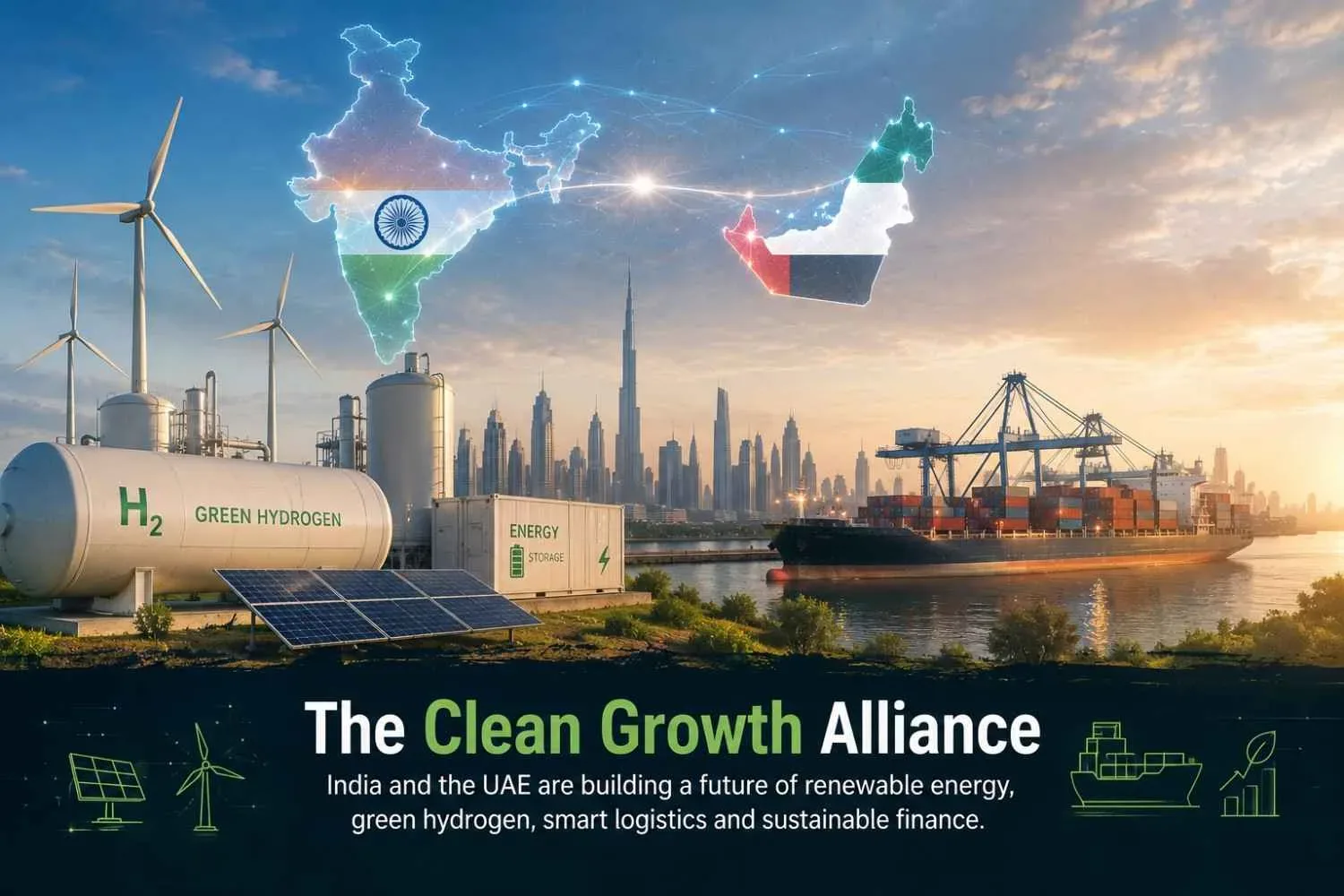
India and the UAE are deepening cooperation in renewable energy, green hydrogen, logistics and sustainable finance, signalling a shift from traditional commerce to long-term clean growth
KOLKATA | July 30, 2026:
For years, the India-UAE partnership has been driven by trade, investment and energy cooperation.
Today, it is being redefined by a new priority- building a low-carbon future together.
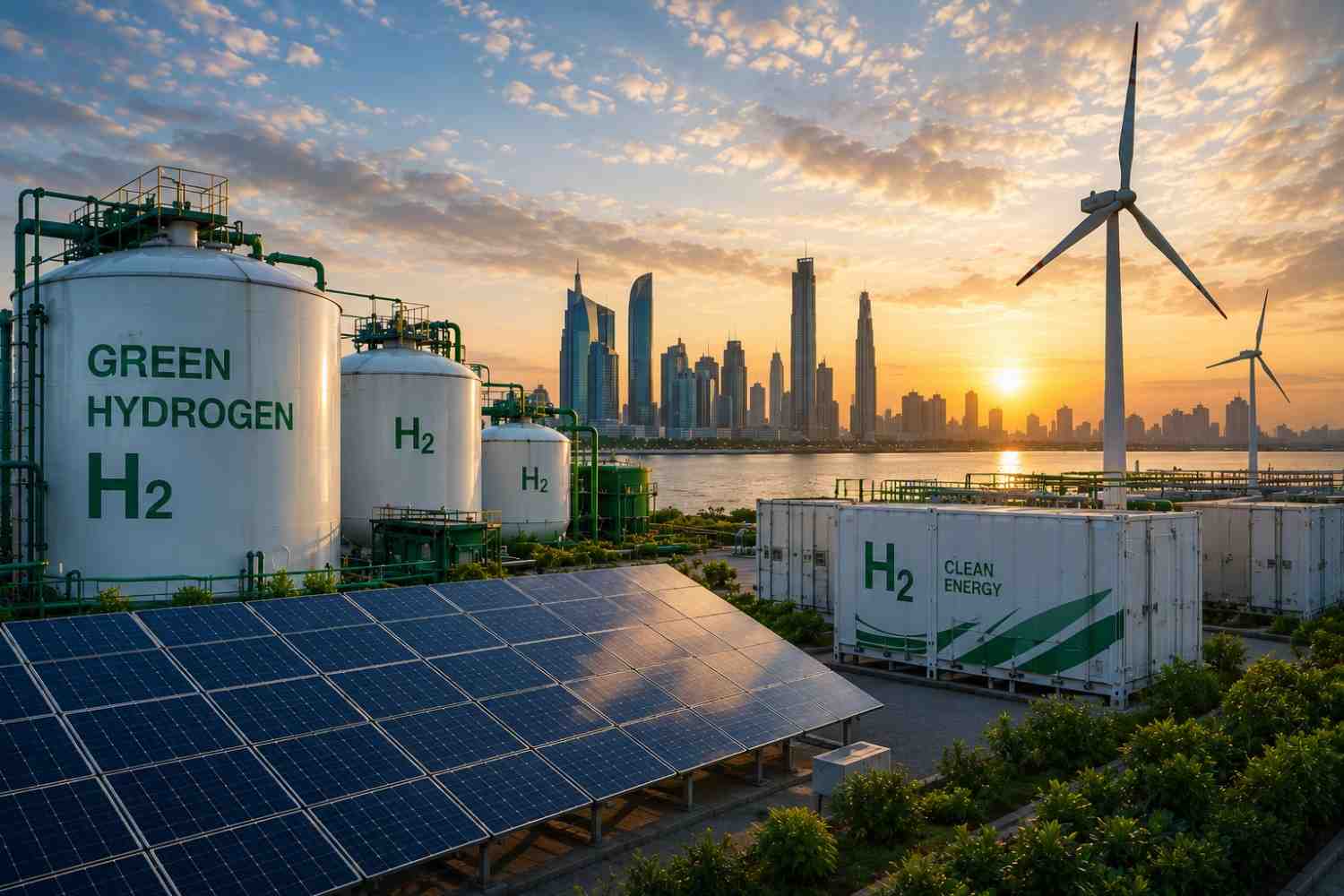
Renewable energy, green hydrogen, sustainable finance and resilient infrastructure are increasingly moving to the centre of bilateral cooperation as both countries respond to the growing demand for cleaner energy and more sustainable economic growth.
For India, the UAE is no longer just an important trading partner. It is emerging as a strategic ally in accelerating the country's clean energy transition.
The partnership is no longer just about strengthening economic ties. It is about shaping the future of clean energy.
This raises an important question: can India and the UAE together accelerate the transition to a low-carbon economy while creating new opportunities for trade and investment?
Recent developments suggest they are moving in that direction. Renewable energy has become a cornerstone of the partnership, with UAE-based companies investing in India's solar and wind sectors and both countries exploring ambitious clean energy projects.
The investments are reinforcing India's clean energy ambitions by supporting renewable energy expansion and reducing long-term dependence on fossil fuels.
Green hydrogen is quickly emerging as the next frontier of cooperation.
With its potential to decarbonise energy-intensive industries such as steel, fertilisers, chemicals and heavy transport, green hydrogen has become a key focus area for both India and the UAE.
While India is implementing the National Green Hydrogen Mission, the UAE is positioning itself as a major global producer and exporter of clean hydrogen.
As these ambitions converge, collaboration through technology partnerships, joint projects and long-term supply agreements is expected to accelerate.
The partnership is also moving beyond energy generation to the infrastructure that supports global trade. Investments in ports, transport corridors, warehousing and digital logistics systems can improve the movement of industrial goods and clean energy equipment while reducing trade costs.
In today’s carbon-conscious economy, efficient logistics are shifting from a speed issue to a strategic advantage.
Another area witnessing growing collaboration is green finance. Sustainable investment funds, climate finance and ESG-linked capital are playing an increasingly important role in supporting renewable energy projects, resilient infrastructure and low-carbon industrial growth.
For Indian businesses, access to these financial resources could accelerate technology upgrades and help meet rising global sustainability expectations.
Sectors such as renewable energy manufacturing, battery storage, hydrogen technologies, sustainable construction materials and clean transport stand to gain from stronger investment flows and expanding market opportunities.
Even so, translating ambition into action will not be easy. Large-scale green projects require supportive policies, timely regulatory approvals, skilled manpower and modern infrastructure. Affordable financing, technology partnerships and long-term commercial viability will also determine whether these initiatives move beyond announcements and turn into implementation.
Experts say continued coordination between India and the UAE will be essential to ensure that investments deliver measurable economic growth alongside meaningful environmental progress.
For most citizens, the effects of this cooperation may not be visible today, but its long-term impact could be significant.
Cleaner energy investments can enhance energy security, generate employment, support technological innovation and contribute to a healthier environment. At the same time, modern logistics can strengthen supply chains and improve the competitiveness of Indian products in international markets.
As climate action reshapes the global economy, the India-UAE partnership is becoming more than an economic relationship - it is emerging as a strategic collaboration for a more sustainable future.
The future of the India-UAE partnership may no longer be measured by trade volumes alone, but by how effectively the two countries work together to build cleaner industries, drive innovation and lead the transition towards a more sustainable global economy.
Sources:
- Ministry of External Affairs (Government of India) – India-UAE Bilateral Relations
https://www.mea.gov.in/Portal/ForeignRelation/India-UAE_Bilateral_Brief.pdf - Ministry of Commerce & Industry (Government of India) – India-UAE CEPA
https://commerce.gov.in/trade/international-trade/trade-agreements/india-uae-cepa/ - Ministry of New and Renewable Energy (MNRE)
https://mnre.gov.in/ - International Renewable Energy Agency (IRENA) – Green Hydrogen & Energy Transition Reports
https://www.irena.org/ - Abu Dhabi Future Energy Company (Masdar)
https://masdar.ae/ - AD Ports Group – India Investments & Logistics Projects
https://www.adportsgroup.com/ - DP World – India Operations & Trade Logistics
https://www.dpworld.com/ - Invest India – UAE Investment & Clean Energy Partnerships
https://www.investindia.gov.in/ - Press Information Bureau (PIB), Government of India
https://pib.gov.in/ - The Economic Times – Energy & Infrastructure
https://energy.economictimes.indiatimes.com/






Add a Comment