
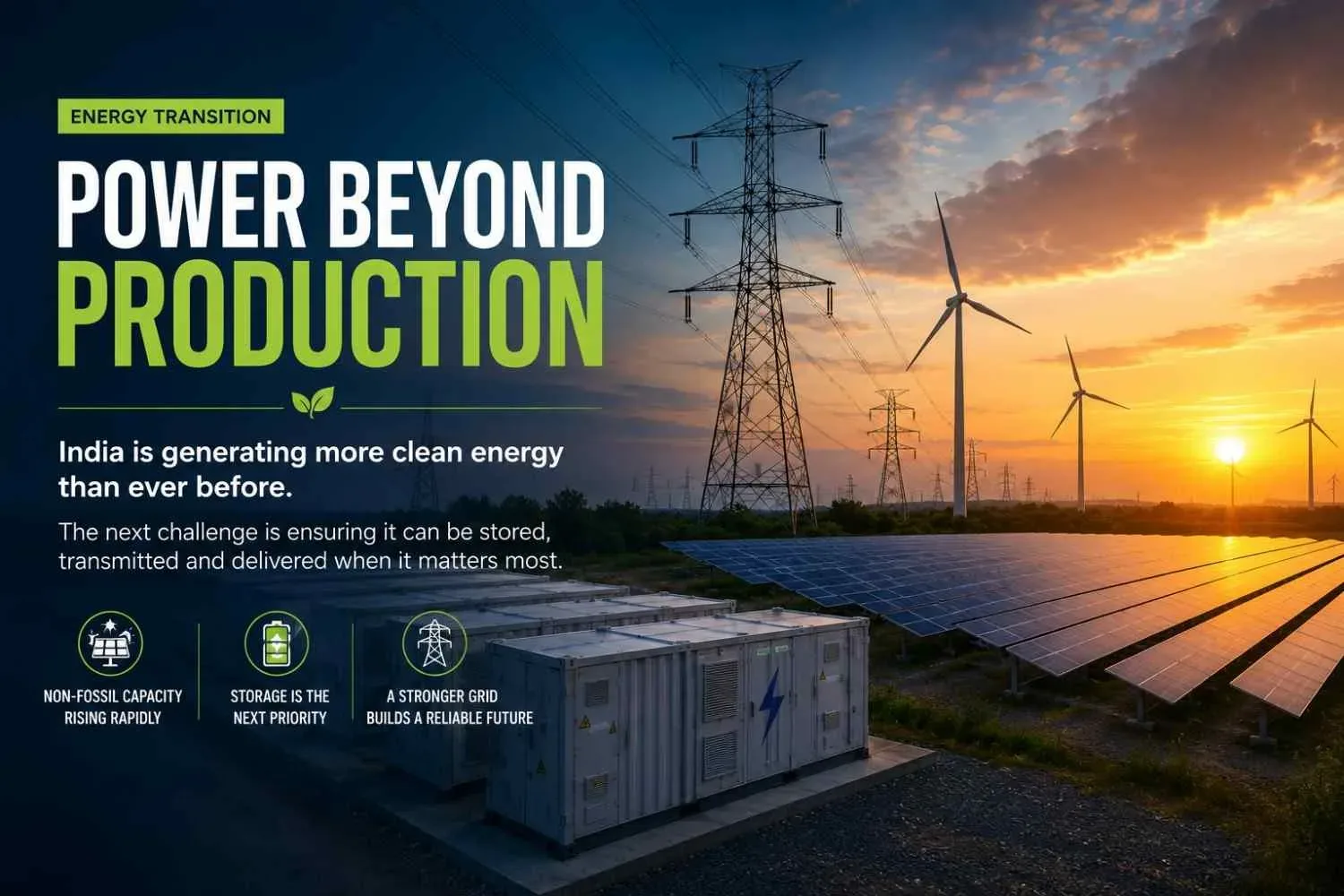
India is generating more clean energy than ever before. The next challenge is ensuring it can be stored, transmitted and delivered when it matters most
KOLKATA | JULY 31,2026
India is making notable strides in its renewable energy transition. The expansion of solar parks, the growth of wind energy projects, and the steady increase in non-fossil fuel capacity highlight the country's progress toward its climate commitments.
At the same time, another fundamental question is coming into sharper focus.
Can India's electricity grid and energy storage systems keep pace with the rapid expansion of renewable power?
The answer will play a decisive role in determining whether India's clean energy ambitions are matched by a resilient electricity system or limited by inadequate grid and storage capacity.
India has made substantial progress in scaling up its non-fossil electricity capacity through sustained investments in solar, wind, hydropower, and nuclear energy.
As a result, the country is steadily advancing toward its target of 500 GW of non-fossil capacity by 2030 while emerging as one of the fastest-growing renewable energy markets globally.
The greater challenge, however, lies beyond generation- it is ensuring that the grid and energy storage systems can efficiently integrate and deliver this growing supply of clean power.
While renewable energy capacity continues to expand, its effective utilisation remains a major challenge.
Solar generation declines after sunset, and wind power fluctuates with changing weather conditions.
For clean electricity to be available whenever and wherever it is needed, sufficient energy storage and a resilient transmission network are essential.
Consequently, the focus of India's energy transition is shifting from merely generating renewable power to integrating it efficiently into the electricity system.
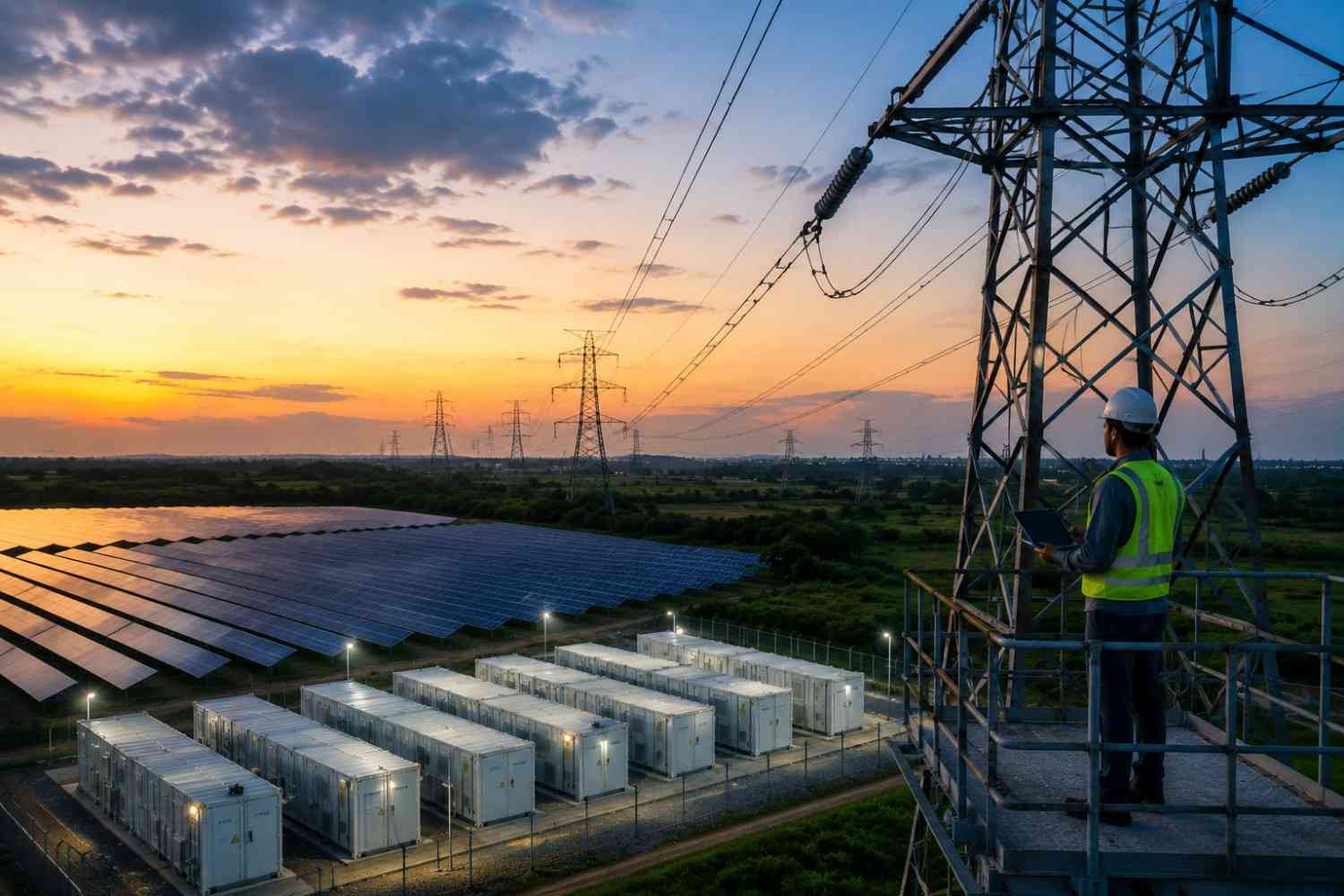
As the share of renewable energy grows, the role of Battery Energy Storage Systems (BESS), pumped hydro storage projects, and modern transmission networks becomes critical. These technologies provide the flexibility required to store excess electricity, balance demand and supply, and maintain grid stability despite the intermittent nature of solar and wind power.
Recent policy initiatives indicate a growing shift towards strengthening these enabling infrastructures alongside renewable energy expansion.
Recognising the need for stronger supporting infrastructure, the government has announced large-scale battery storage programmes, accelerated interstate transmission projects, and encouraged investments in flexible power systems.
Several states are also co-locating energy storage facilities with new renewable energy parks, reflecting an understanding that future electricity systems must expand generation, storage, and transmission in tandem.
Even with these initiatives, critical gaps continue to hinder the pace of the transition.
However, the transition is far from complete. Many energy storage projects remain in the pipeline, and utility-scale battery systems continue to be costlier than conventional power alternatives. Transmission infrastructure, too, has struggled to keep pace with the rapid growth of renewable energy, especially where large solar and wind projects are situated far from major demand centres.
The expansion of storage and transmission infrastructure is further constrained by delays in land acquisition, regulatory approvals, and access to finance. At the same time, integrating increasing volumes of renewable energy into the national grid requires accurate forecasting, real-time digital monitoring, and smarter grid management technologies.
The consequences of these challenges extend beyond the electricity sector, influencing energy security, industrial competitiveness, and the pace of India's broader low-carbon transition.
Reliable renewable electricity is becoming the foundation of India's next-generation industries. Clean manufacturing depends on a dependable supply of low-carbon power, electric mobility requires a stable electricity network, and green hydrogen production demands uninterrupted renewable energy.
Without sufficient storage capacity and modern transmission infrastructure, these sectors could struggle to realise their full potential despite the country's growing renewable energy capacity.
For this reason, experts increasingly argue that India's clean energy transition must now be judged not only by the number of megawatts it adds, but by its ability to build an integrated, resilient, and flexible energy ecosystem capable of delivering clean power whenever and wherever it is needed.
Meeting the next phase of the energy transition will require more than expanding renewable generation. It demands greater investment in domestic battery manufacturing, faster development of pumped hydro storage, modernised grid infrastructure, wider deployment of smart grid technologies, and increased private-sector participation in energy storage.
Equally vital is effective coordination among central agencies, state utilities, and renewable energy developers to accelerate project execution and strengthen grid reliability.
For consumers, the impact of these measures may not be immediately visible.
Over time, however, they will translate into fewer power disruptions, a more dependable electricity supply, stronger support for low-carbon industries, and the ability to deliver clean energy generated during the day whenever demand is highest.
As India approaches its 2030 renewable energy targets, the real challenge is no longer generating more clean electricity-it is ensuring that every unit of that electricity can be stored, transmitted, and delivered reliably. The next chapter of the energy transition will be written not in solar parks or wind farms alone, but in batteries, transmission corridors, and smarter electricity grids.
In the end, India's clean energy future will not be defined by the scale of its renewable capacity, but by the strength of the infrastructure that supports it.
Because renewable energy fulfils its promise only when clean power is available - not just when it is generated, but whenever and wherever it is needed.
Sources:
- Ministry of New and Renewable Energy (MNRE) – Energy Storage Systems (ESS) Overview (https://mnre.gov.in/en/energy-storage-systemsess-overview/)
- Ministry of New and Renewable Energy (MNRE) – Energy Storage Systems Technical Reports (https://mnre.gov.in/en/document-category/energy-storage-systemsess-technical-reports/)
- Central Electricity Authority (CEA) – Integrated Resource Planning (https://cea.nic.in/integrated-resource-planning-division/?lang=en)
- Central Electricity Authority (CEA) – National Electricity Plan (Generation) (https://cea.nic.in/integrated-resource-planning-division/?lang=en)
- Ministry of New and Renewable Energy (MNRE) – State Resource Adequacy Planning (https://mnre.gov.in/en/state-resource-adequacy-planning/)
- Ministry of Power, Government of India (https://powermin.gov.in/)
- Press Information Bureau (PIB), Government of India (https://pib.gov.in/)
- NITI Aayog – India's Energy Storage Mission: A Make-in-India Opportunity for Globally Competitive Battery Manufacturing (https://mnre.gov.in/en/document-category/other-reports/)
- International Energy Agency (IEA) – India Energy Outlook (https://www.iea.org/countries/india)
- International Renewable Energy Agency (IRENA) (https://www.irena.org/)






Add a Comment