
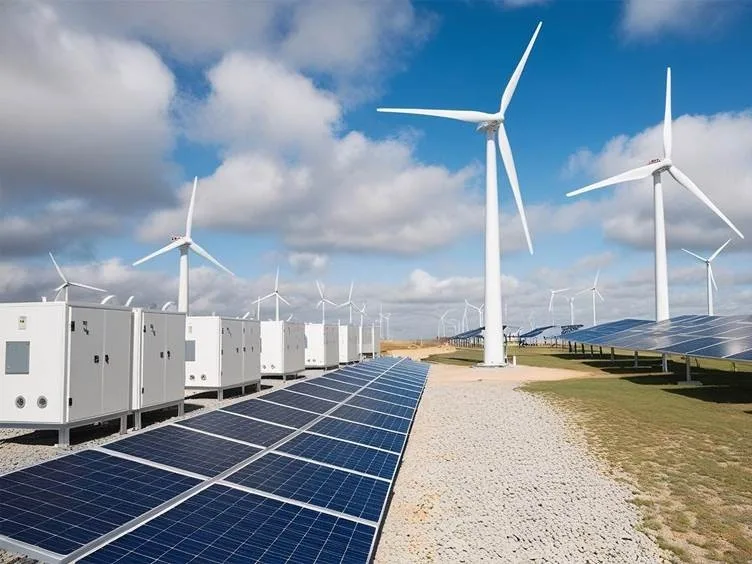
India's Cheapest Battery Storage Deals Are Under Pressure—And Your Future Electricity Could Feel It
by Iffat Zareen
When the evening is windless and the sun goes down the horizon, our first instinct is to switch on the fans and the lights. This first instinct may slowly turn into our last. The electricity that powers them may soon be dependent on a technology facing an alarming reality check. Hailed as the backbone of the country’s clean energy future – India’s battery energy storage projects – are currently feeling the impact of rising costs, triggering concerns casting doubt on whether the lowest bids can be executed without financial strain.
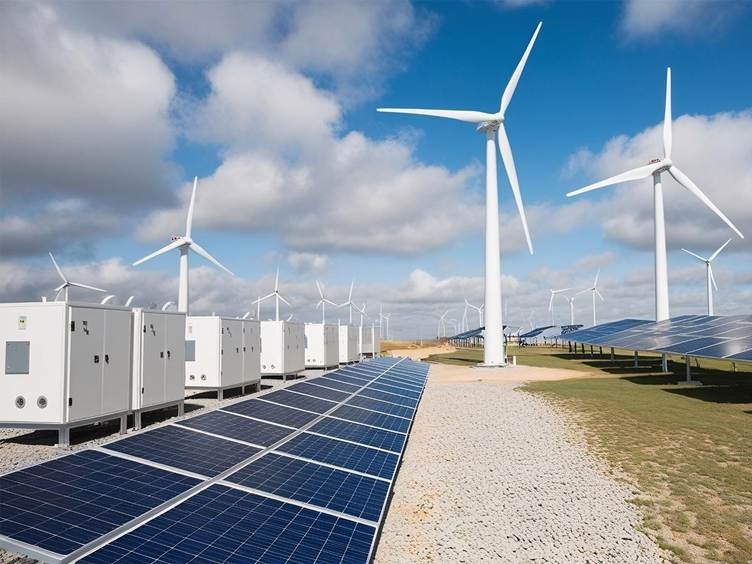
A Reuters analysis issued on July 8th, 2026, has sparked fresh concerns. Against the anticipation of the developers, battery storage projects have become markedly more expensive. This is because of the rising costs of lithium, copper, and aluminium alongside changes in Chinese export incentives and the growing tensions in geopolitics, as suggested by the Reuters analysis.
This comes at a crucial juncture. Presently, solar and wind capacity are on the scale of rapid growth in India. However, renewable energy is not always available when it is most needed by the people, making it just one, but a huge drawback. This problem is solved by batteries. They store the electricity generated during sunny or windy hours and later release it. Hence, ensuring uninterrupted power delivery to hospitals, homes and businesses when renewable generation drops.
But this is where the financial equation becomes more challenging.
Contracts were won by many developers based on exceptionally low storage tariffs – the price paid for storing and supplying electricity. When raw material prices were lower, only then did those tariffs look attractive. With the rising manufacturing costs of batteries, it is becoming harder to finance the same projects. Developers have cautioned that some projects may require renegotiation. Growing uncertainty over cost recovery is making lenders more cautious about financing new projects.
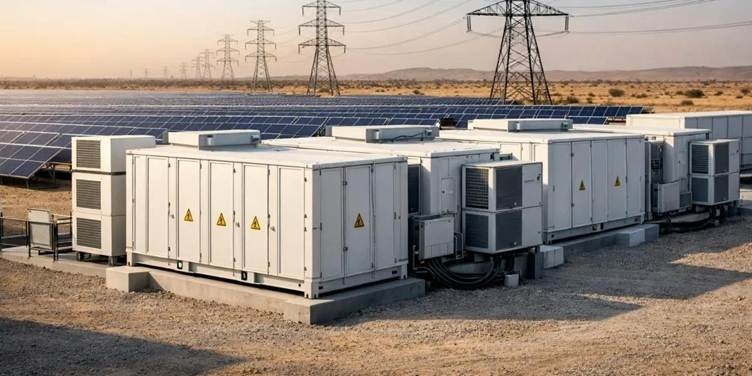
To understand battery storage, two terms need to be understood as well: megawatts (MW) and megawatt-hours (MWh). The amount of electricity delivered by a battery at one time is represented by MW, whereas MWh indicates how long it can keep delivering that power. For instance, a 100MW/400MWh battery can supply 100 MW for 4 hours with no interruption. Greater reliability is provided by longer-duration batteries; however, this calls for the requirement of more battery cells, resulting in a significant increase in costs.
The challenge for electricity distribution companies, is balancing affordable tariffs with dependable infrastructure. The ability to integrate new solar and wind capacity could slow down if projects are awarded at unrealistically low prices. This would leave beneficial renewable electricity unused during peak generation and create supply gaps during high-demand periods.
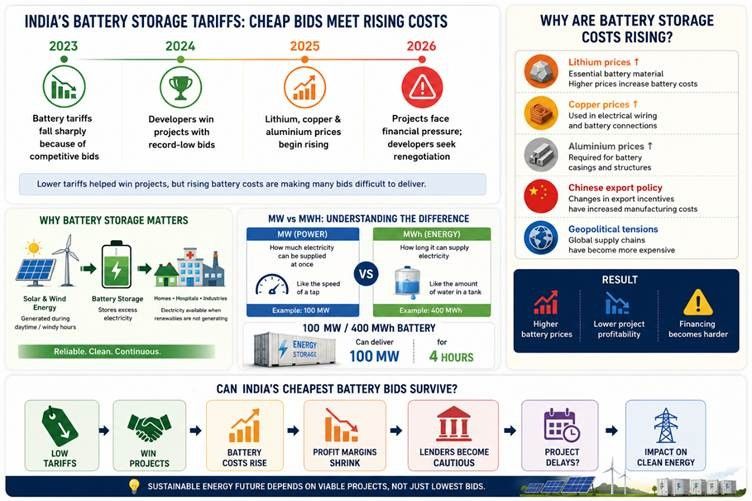
The story is no longer about just building more batteries – it’s about building projects that can remain financially viable. With India’s acceleration in clean-energy transition, the success of battery storage may ultimately rely less on who bids the lowest but on who can deliver when the country is in the most need of power.





Add a Comment