Total Articles 196+

All Posts

Explore the latest sustainability news, innovations, insights, and industry stories from around the world.

Showing 12/196

27 Jul 2026

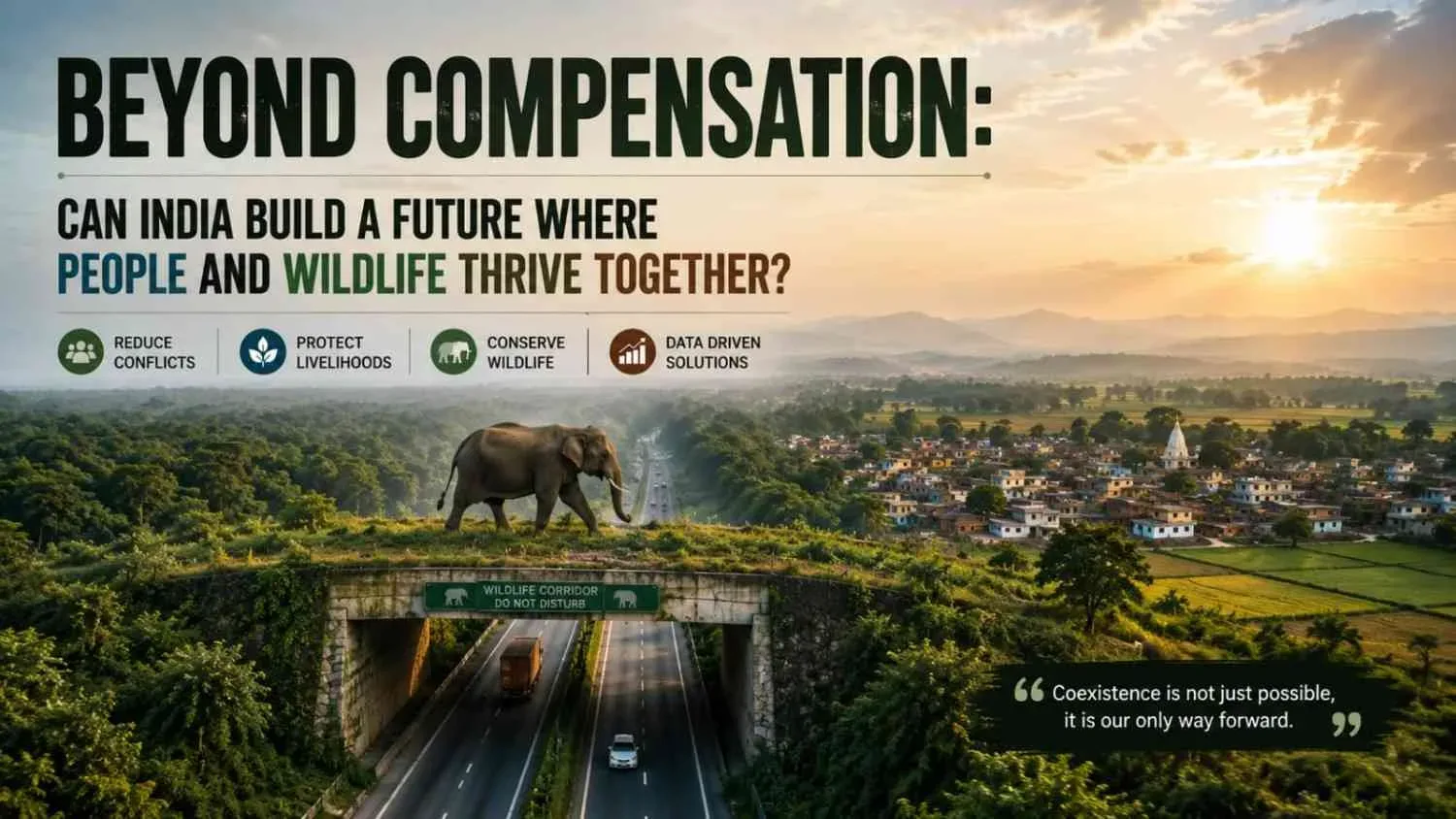
As human-wildlife encounters become more common, the focus is shifting from compensation to prevention. But is India prepared for that change?   For many communities across India, coexisting with wildlife is becoming more challenging.A single night can see elephants destroy standing crops, leopards attacking livestock, crocodiles disrupting fishing activities, or tigers venturing closer to villages. For families who live off the land and water, one encounter can change everything. These incidents are becoming increasingly common rather than being exceptional.Across India, human-wildlife conflict is emerging as a persistent challenge, with consequences for people's lives, livelihoods, and the long-term protection of wildlife. For decades, managing human-wildlife conflict has largely meant responding after the damage is done. Forest officials assess losses, eligible claims are compensated, and affected families receive financial assistance.  Typical Compensation process followed by Indian states: Conflict Occurs       ↓ Incident Reported (Within 24 hours)       ↓ Forest Department Verification (2–7 days)       ↓ Damage Assessment (7–15 days)       ↓ Approval by Competent Authority       ↓ Compensation Released     Stage                                 Typical Timeline   Reporting                             Within 24 hours Field Verification                        2–7 days Damage Assessment                 7–15 days Approval                                Varies by State Payment                               As per State Rules Conservationists, however, argue that the focus must now shift from reacting to preventing conflicts before they occur. The conversation is now shifting towards a more important question.As human-wildlife conflicts become more frequent, the key question is no longer just how to compensate losses, but how to prevent them from happening in the first place. The discussion comes as India's wildlife conservation efforts continue to show results. Stronger protection, expanding protected areas, and stricter wildlife laws have helped several flagship species recover. But conservation success has also highlighted a growing challenge. As roads, railways, industries, farms, and settlements continue to fragment natural habitats, the boundaries between human settlements and wildlife habitats continue to blur, thus, encounters between people and wild animals are becoming more frequent. The growing interaction between people and wildlife is transforming the challenge from an environmental concern into a broader societal issue.The issue now spans environmental, social, economic, and governance domains, that demands coordinated action.The consequences extend far beyond the immediate incident. Farmers who lose crops to elephants often face prolonged financial hardship, while families whose livestock is killed by predators can experience reduced income and greater food insecurity. Fatal encounters leave lasting emotional scars and may weaken public support for wildlife conservation. Wildlife is also affected, with animals involved in repeated conflicts often facing injury, relocation and even death. In many instances, both people and wildlife are paying the price for the same pressures on shared landscapes. The more important question, then, is not just how conflicts are managed, but what meaningful success should look like. Perhaps the better measure of success is not how much compensation is paid each year, but whether human–wildlife conflicts become less frequent, communities feel safer, and wildlife populations continue to thrive. Many conservation experts believe lasting progress will come from preventing human-wildlife conflict rather than simply compensating for its consequences. But making that shift will require more than additional funding - it will demand stronger planning, better coordination, and long-term commitment. Achieving that shift will require better planning, stronger data, and closer collaboration between governments, scientists, and local communities. The challenge is that human-wildlife conflict is rarely caused by a single factor, making long-term solutions far more complex. The causes often vary from one region to another. In some areas, elephants move through villages after traditional migration routes are disrupted by highways or expanding farmland. In others, leopards are drawn into settlements by the easy availability of stray animals as prey. Crocodiles may also be seen more often near fishing communities as wetlands shrink and changing water-use patterns alter their habitats. Every landscape has its own mix of ecological and human pressures.Relying on a single compensation mechanism for all incidents may offer short-term relief, but it does little to resolve the conditions that allow these conflicts to persist.This is where real data beats paperwork!Thousands of humans-wildlife conflict incidents are reported across India each year. But experts say documenting these incidents are no longer enough. Experts say equal attention should be given to identifying recurring conflict areas, understanding the species involved, tracking where incidents are most frequent, and evaluating whether current strategies are working or not. Without this level of understanding, authorities often remain focused on responding to conflicts instead of preventing them. This is why many researchers are calling for stronger national systems to monitor and analyse human-wildlife conflict. A modern human-wildlife conflict portal could become far better than a system for recording compensation claims.If used effectively, it could identify emerging hotspots, monitor patterns across states, and help governments take preventive actions before conflicts escalate. The next question, however, is whether such information will be translated into action. Another key question is whether district-level information on human-wildlife conflict incidents and compensation payments will be made publicly accessible. Transparency matters because reliable data not only improves accountability but also helps shape more effective policies.Recurring conflict patterns can help shape more effective responses. Districts that repeatedly experience elephant-related crop damage may need greater investment in early warning systems instead of relying mainly on seasonal compensation. Similarly, an increase in leopard attacks near expanding urban areas may point to the need for improved waste management, better control of stray animal populations, and more informed land-use planning rather than treating each incident as an isolated event. Reliable public datasets can strengthen both transparency and accountability. They enable researchers to identify long-term trends, allow civil society organisations to assess the effectiveness of government interventions, and help local communities anticipate seasonal risks and prepare more effectively. Without transparent and accessible data, discussions often rely on individual incidents rather than long-term evidence. Another important challenge is determining what should be recognised as human-wildlife conflict.  Should official records include only reported cases, or also repeated crop damage that goes unreported because compensation is delayed or the claims process is too complex? Should indirect economic losses be considered?And whose experiences are ultimately reflected in official data? These questions may appear technical, but they have a direct impact on how governments understand and respond to human-wildlife conflict. When reporting systems fail to capture the full picture, the challenges faced by affected community remains underestimated. That is why experts argue that strengthening conflict data is not just a technological exercise, it is also about building trust between governments, researchers, and the communities living with wildlife. When communities trust that reporting systems are transparent, accessible, and fair, they are more likely to see themselves as partners in conservation rather than as people carrying its costs. Strengthening that trust will be critical as India's changing landscapes continue to redefine how people and wildlife share space. Highways, railway corridors, power transmission lines, and expanding urban settlements are rapidly transforming landscapes across India. While these projects are vital for economic development, they are also reshaping habitats that wildlife has relied on for generations. The conversation has therefore moved beyond choosing between development and conservation. The greater challenge is ensuring that growth is planned in a way that allows people and wildlife to share landscapes more safely. Making this shift will require moving from a reactive approach to a preventive one- supported by stronger planning, reliable data, and informed policy decisions!   Compensation may ease the impact of conflict, but it does not eliminate the causes behind it. That is why conservation experts are increasingly advocating a prevention-first approach. While financial assistance remains essential for families affected by wildlife-related losses, they argue that long-term success depends on reducing the number of conflicts in the first place. This means shifting attention from reacting to incidents towards identifying risks early and preventing them through better planning and management. They believe, the future of human-wildlife conservation, will not depend on how much compensation is paid, but on how many conflicts are prevented. A prevention-first approach is already beginning to shape conservation efforts across India. In several landscapes, communities, forest departments, and researchers are working together to reduce the risk of conflict while promoting safer coexistence between people and wildlife. Some of the strongest lessons from this approach are emerging from India's elephant landscapes. Elephants are among India's most wide-ranging mammals, relying on seasonal migration routes that have connected forests for centuries. Today, many of these natural corridors are being fragmented by expanding agriculture, highways, railway lines, mining projects, and growing settlements. As these pathways disappear, elephants are increasingly forced to move through villages while searching for food or travelling between isolated forest patches. The outcome is often repeated crop damage and, in some cases, dangerous encounters between elephant herds and nearby communities. Rather than responding only after losses occur, several states are investing in prevention. In parts of Odisha, West Bengal, and Karnataka, forest departments and local volunteers monitor elephant movements and issue advance warnings through SMS alerts, WhatsApp groups, public announcement systems, and watch towers, giving communities time to prepare before herds reach their villages. While these systems cannot prevent every incident, they demonstrate the value of acting before conflict occurs.In many situations, timely information can be more effective than responding after the damage is done. Advance warnings give farmers time to avoid entering fields at night, move livestock to safer areas, and reduce the risk of dangerous encounters with elephant herds. Technology is becoming an increasingly important part of human-wildlife conflict management. GPS collars, drones, thermal cameras, and satellite mapping are helping forest departments track wildlife movements more accurately, while artificial intelligence is beginning to identify patterns that could help predict future conflict hotspots.However, experts believe technology works best as part of a broader strategy rather than as a solution on its own.Without effective planning, community participation, and timely action on the ground, even the most advanced tools cannot prevent conflict on their own. Technology can strengthen conservation efforts, but it cannot replace the knowledge and decisions of the people who share landscapes with wildlife.That is why local communities remain at the centre of effective conservation. For generations, Indigenous communities and forest-dependent villages have observed wildlife behaviour through everyday experience, building knowledge that predates modern scientific monitoring. Many understand when elephants are likely to migrate, which streams tigers frequently use, and how shifts in weather can influence the movement of wildlife. Researchers increasingly argue that successful conservation depends not only on scientific knowledge but also on the experience of the communities that have shared these landscapes with wildlife for generations.Instead of treating local communities simply as recipients of compensation, conservation programmes can benefit from involving them as partners in planning, monitoring, and decision-making. Communities that feel heard and included are often more willing to support conservation efforts, while those who feel excluded may become less confident in wildlife protection policies. The value of this partnership is becoming equally prominent in India's tiger landscapes. India is now home to the world's largest wild tiger population, marking a significant conservation success. At the same time, recovering tiger populations are ranging beyond protected reserves into surrounding forests, buffer zones, and agricultural landscapes. This has made the protection of wildlife corridors more important than ever. These natural pathways allow tigers and other species to move safely between forests. When corridors are disrupted or disappear, animals are more likely to cross roads, railway lines, and human settlements, increasing the risk of conflict. Protecting these corridors therefore supports both wildlife conservation and human safety. Well-connected landscapes allow wildlife to move naturally between habitats, reducing the need for animals to pass through villages in search of food or new territories.Although the importance of wildlife corridors is now widely recognised, many continue to come under pressure from expanding infrastructure.  Wildlife Corridors and Infrastructure Risks  Linear Infrastructure                   Impact on Wildlife                  Recommended Mitigation   Highways                                    Blocks animal movement                    Wildlife overpasses & underpasses Railways                                            Animal collisions                        Underpasses, fencing, speed restrictions Canals                                            Animals trapped                               Escape ramps Transmission Lines                Habitat Fragmentation                            Careful route planning Expanding Settlements                   Corridor loss                               Buffer zones and corridor protectionHighways improve connectivity for people but can restrict the movement of animals. Railway lines support trade and transport, yet poorly planned crossings may increase wildlife deaths. Transmission lines, canals, and industrial development further divide habitats that were once connected. The challenge extends beyond building infrastructure- it is about planning it responsibly. Many conservation scientists argue that potential impacts on wildlife should be identified and disclosed before construction begins, allowing risks to be reduced through better design and mitigation measures. Experts argue that Environmental Impact Assessments should place greater emphasis on wildlife movement, habitat connectivity and long-term conflict risks. Where development cannot be avoided, measures such as wildlife crossings, underpasses, overpasses and fencing should become a standard part of project design. Several projects across India have shown that these interventions allow animals to move safely while reducing collisions with vehicles and trains.  Preventing conflict through better planning is often more effective and less costly than addressing it later! Leopard landscapes offer another important lesson. Their ability to survive in forests, farms and urban areas has increased interactions with people. In parts of Maharashtra, forest departments now rely on rapid-response teams that assess situations, manage crowds and prevent unnecessary capture or relocation. Experts say this reflects a broader shift in conservation, where not every wildlife sighting is treated as a crisis. In many cases, informed management and public awareness are more effective than immediate intervention. Simple practices such as securing livestock at night, managing waste responsibly and avoiding crowds around wildlife can significantly reduce risks. A similar approach is evident in India's crocodile habitats. In Gujarat and several other states, crocodiles share rivers, reservoirs and wetlands with nearby communities. Although these encounters receive less attention than conflicts involving elephants or big cats, they highlight the same challenge- coexistence depends on understanding wildlife behaviour rather than reacting out of fear. Awareness programmes promoting safe fishing practices, avoiding nesting areas during breeding seasons and recognising crocodile habitats have helped reduce incidents while protecting wildlife.Across elephant corridors, tiger landscapes, leopard habitats and crocodile wetlands, one message remains clear: the most effective conservation strategies begin not with compensation, but with understanding landscapes and preventing conflict before it occurs.  As conversations around coexistence evolve, another issue is becoming increasingly important- data. Thousands of wildlife-conflict incidents involving crop damage, livestock loss, property destruction and human casualties are reported across India every year. Yet experts say the country still lacks a clear understanding of where conflicts occur most often, which species cause the greatest losses and whether existing prevention measures are actually working. Although many states maintain their own reporting systems, differences in formats and limited public access make nationwide analysis difficult. Researchers therefore argue that India needs a transparent, standardised wildlife-conflict database that goes beyond recording compensation claims. Such a system could identify recurring hotspots, track seasonal patterns and help governments prioritise prevention instead of responding only after incidents occur.   Dataset PurposeIncident IDUnique record for each conflictDate & Time   Identify seasonal and temporal patternsDistrict & State Locate conflict hotspotsGPS Coordinates Precise mapping of incidentsSpecies Involved Elephant, Tiger, Leopard, Crocodile, etc.Type of Conflict Crop damage, livestock loss, property damage, human injury/deathCompensation Claimed  Amount requestedCompensation PaidAmount disbursedClaim Processing Time Days taken for settlementPreventive Measures Used  Fencing, SMS alerts, watch towers, etc.Incident StatusPending / Verified / Resolved However, better data also depends on deciding what counts as human–wildlife conflict. Many crop losses, livestock attacks and indirect livelihood impacts go unreported because compensation is delayed, difficult to claim or considered insufficient. As a result, official records often underestimate the true burden on affected communities.This is more than a data challenge- it is a question of trust!Communities are more likely to support conservation when reporting systems are transparent, accessible and fair. Inconsistent compensation or lengthy procedures can weaken confidence in both authorities and wildlife protection programmes. Experts therefore argue that improving compensation is important, but making it faster, more transparent and consistent is even more critical. At the same time, compensation alone cannot address repeated losses, fear or declining livelihoods. This has shifted the focus from how much people should be compensated to how conflicts can be prevented altogether. That shift also places greater emphasis on infrastructure planning. As highways, railways, renewable energy projects and industrial development expand, experts believe wildlife movement should be considered before construction begins. Measures such as wildlife crossings, underpasses, canopy bridges and connected corridors can reduce conflict while allowing development and conservation to progress together. Community participation is equally important. Local residents often possess detailed knowledge of wildlife movement and seasonal behaviour, making them valuable partners in conservation rather than passive recipients of compensation. Many successful initiatives now rely on village committees, community volunteers and rapid-response networks to strengthen coexistence. International experience reinforces the same lesson. Community-led conservation in Africa, wildlife crossings in Europe and digital monitoring systems in other regions all demonstrate that preventing conflict is more effective than responding after it has escalated.India's success in protecting tigers, elephants, rhinos, crocodiles and other wildlife mark a major conservation achievement. The next challenge is ensuring that people and wildlife can safely share the landscapes beyond protected areas. Achieving this will require better planning, stronger scientific monitoring, greater recognition of traditional ecological knowledge, fairer compensation and meaningful community participation. Ultimately, the future of conservation will depend not only on protecting wildlife, but on creating landscapes where both people and nature can thrive together!   Sources:  Ministry of Environment, Forest and Climate Change (MoEFCC), Government of India  National Tiger Conservation Authority (NTCA)  Wildlife Institute of India (WII)  National Board for Wildlife (NBWL)  Project Elephant, Ministry of Environment, Forest and Climate Change  National Biodiversity Authority (NBA)  Forest Survey of India (FSI)  State Forest Department reports (Odisha, Karnataka, Maharashtra, Gujarat, Madhya Pradesh and West Bengal)  National Wildlife Action Plan (2017–2031)  Wildlife Protection Act, 1972 (as amended)  IUCN (International Union for Conservation of Nature)  WWF-India   Open-source research papers on human-wildlife conflict, wildlife corridors and coexistence strategies  Peer-reviewed journals including Biological Conservation, Conservation Biology, People and Nature and Frontiers in Conservation Science ...Read more

27 Jul 2026

Why mangroves matter to our coasts, climate, livelihoods and future Research-based feature by Prof Ujjwal K Chowdhury A World Mangrove Day feature | July 26, 2026 Mangroves grow where ordinary trees would die. They stand in salt water, breathe through roots, raise land with trapped sediment and protect people who may never know the full value of the forest before them. On World Mangrove Day, their story is also the story of the fisher, the honey collector, the child on an embankment and the city living behind a distant green wall. Where the Tide Enters Everyday Life At dawn in the Sundarbans, the boundary between land and water is never still. A fisher pushes a narrow boat into a creek. A woman checks a honey basket before the heat rises. A child walks along an embankment that may have to face the next cyclone. Around them stand trees that look almost impossible: trunks in salt water, roots rising out of mud, leaves shining above a tide that comes and goes twice a day. These are mangroves, and for millions of coastal people they are not scenery. They are security. July 26 is observed as the International Day for the Conservation of the Mangrove Ecosystem, commonly called World Mangrove Day. UNESCO established the day in 2015 to bring attention to an ecosystem that is rare, productive and deeply vulnerable. Mangroves receive less public affection than mountains, rainforests or charismatic wildlife because much of their life is hidden in muddy creeks and waterlogged soil. Yet their work is visible every time they slow a wave, hold a riverbank, shelter a young fish or protect a village before the first rescue team arrives. This day matters because mangroves are disappearing under pressure from aquaculture, urban growth, ports, roads, pollution, dams and rising seas. It also matters because a ceremonial plantation photograph can create the false belief that the problem has been solved. A mangrove is not simply a sapling placed in wet soil. It is a complete relationship among tides, freshwater, sediment, salinity, wildlife and people. World Mangrove Day should therefore be a yearly public audit: Are existing forests safe? Are newly planted trees surviving? Are tidal channels open? Are local communities gaining rights and livelihoods? Are development projects treating mangroves as living infrastructure rather than vacant land? A mangrove is not just a tree in mud. It is a coastal safety system built by nature. A Forest Built for Salt, Mud and Survival Mangroves are groups of salt-tolerant trees, shrubs and palms that grow in the intertidal zone, the strip of coast covered at high tide and exposed at low tide. They are found around estuaries, deltas, lagoons, creeks and sheltered tropical or subtropical shores. Ordinary plants struggle in salty, waterlogged and oxygen-poor soil. Mangroves have evolved remarkable ways to live there. Some block salt at the roots. Some remove salt through their leaves. Some send pencil-like breathing roots, called pneumatophores, above the mud to take in air. Others grow arching prop roots that act like stilts, steadying the tree while slowing water and trapping sediment. They are not one type of tree. Roughly 80 recognised mangrove tree and shrub species occupy different levels of the tidal landscape. One may tolerate stronger salinity near open water; another may need more freshwater and grow farther inland. This zonation is why a natural mangrove forest looks irregular and layered. It is also why a row of identical saplings cannot automatically replace a mature forest. Diversity is not decoration. It is the system's insurance against disease, salinity change, storms and other shocks. A Rare Green Belt Around the World - and Bengal's Great Share The world's mangroves covered about 14.8 million hectares in 2020 and occurred in 123 countries and territories. Nearly 44 per cent lay in South and Southeast Asia. Indonesia holds the largest area, while Brazil, Nigeria, Mexico and Australia are also major mangrove countries. Together, the five account for almost half of the global resource. Large mangrove landscapes also survive along the Amazon and Atlantic coasts of South America, the Niger Delta and West Africa, northern Australia, Papua New Guinea, the Caribbean and the coasts of South Asia. Globally, mangroves are extensive enough to sustain fisheries and coastal settlements, but rare when compared with other forests. They cover less than one per cent of the world's tropical forest area. FAO estimates show a net global decline of about 284,000 hectares between 2000 and 2020. The rate of loss slowed in the second decade, which proves that protection can work, but the total pressure remains severe. The first global IUCN assessment found that half of assessed mangrove ecosystems are at risk of collapse and nearly one-fifth are at high risk. India has around 5000 square kilometres of mangrove cover, according to the India State of Forest Report 2023. This is only 0.15 per cent of the country's geographical area, yet it performs a disproportionately large role in food security, disaster protection and biodiversity. The main regions are the Sundarbans in West Bengal; the Gulf of Kutch and Gulf of Khambhat in Gujarat; the Andaman and Nicobar Islands; the Krishna and Godavari deltas; Bhitarkanika and the Mahanadi delta; Pichavaram and Muthupet; and the mangrove belts around Mumbai, Thane, Raigad and Ratnagiri. West Bengal is India's mangrove capital. Its 2,119.16 square kilometres amount to more than two-fifths of the national total. Almost all of this lies in the southern coastal districts, especially South 24 Parganas. The Sundarbans, shared by India and Bangladesh, is the world's largest mangrove forest and a vast living maze created by the Ganga, Brahmaputra and Meghna river systems. It is a tiger habitat, a fish nursery, a cyclone buffer and a human landscape of islands, farms, embankments, boats and villages. The future of the Sundarbans is therefore tied not only to remote island communities but also to the safety of Kolkata and the wider Bengal delta. Mangroves Grow When Water Is Allowed to Move Mangroves are hardy, but they cannot be planted anywhere that looks muddy. They grow best in warm, frost-free weather, usually in sheltered tropical and subtropical waters where waves are not continuously violent. They need regular tides that carry water, nutrients, seeds and fine sediment. They need the right balance of salt and fresh water. They need soft soil at the correct height in relation to the tide. Above all, they need a functioning water system. There is no single best month for every Indian coastline. The monsoon and post-monsoon season may provide useful moisture and seed availability in many places, but local tides, rainfall, elevation and species matter more than the date on a plantation calendar. A sapling placed too low may drown or be washed away. One placed too high may not receive enough tidal water. A species suited to a saline outer creek may fail in a freshwater-influenced inner zone, and vice versa. The most important human intervention is often not planting but ecological repair. Illegal pond walls may need to be breached so tides return. Blocked creeks may need to be reopened. Dams, barrages and excessive withdrawal upstream must be managed so freshwater and sediment can still reach deltas. Grazing, dumping, cutting and trampling must be controlled. Native species must be matched to the exact site. Once the hydrology is restored, floating seeds and propagules can settle naturally, creating a more diverse and resilient forest than a hurried monoculture plantation. Mangroves also need space to move inland as sea level rises. Where roads, walls, industries or settlements block that movement, the forest becomes trapped between development and the advancing sea. Scientists call this coastal squeeze. A serious restoration policy must therefore protect migration space, not only today's tree line. One Forest, Many Strengths Different mangroves perform different jobs. Avicennia species are often first settlers on new mud. Their pencil-like breathing roots stabilise soft ground, tolerate considerable salinity and prepare the site for other life. Rhizophora species form dramatic prop-root walls that slow water, trap sediment and create hiding places for young fish, prawns and crabs. Sonneratia commonly grows near channels and estuaries; its roots, flowers, fruit and falling leaves feed a wide aquatic web. Excoecaria agallocha, often called gewa or blind-your-eye mangrove because its sap can irritate the eyes, grows on relatively higher ground and helps bind riverbank soil. Bengal's signature tree is the Sundari, Heritiera fomes, from which the Sundarbans takes its name. It carries ecological and cultural meaning, but it is globally threatened and sensitive to changing salinity and disease. Nypa fruticans, known locally as golpata in parts of the delta, is a mangrove palm whose leaves have long been used for roofing and thatching; elsewhere in Asia its sap is turned into sugar and vinegar. Bruguiera, Ceriops, Aegiceras, Xylocarpus and Phoenix paludosa add further layers of habitat and protection. In some regions, fruits of Sonneratia and processed products from Avicennia are used as food, while mangrove plants remain subjects of research for antioxidant, antimicrobial and other medicinal properties. Such uses should be scientifically tested and harvested within ecological limits. Together, these species create a living wall. The outer roots take the first force of waves. The forest slows currents. The roots hold soil. Sediment settles. Floodwater spreads with less destructive energy. Mangroves cannot stop every cyclone and should not be presented as a magical substitute for embankments, shelters, warning systems or evacuation plans. But a broad, healthy mangrove belt combined with well-designed infrastructure is often safer and more economical than concrete alone. The forest is also a fish factory. Juvenile fish and shellfish shelter among the roots, feed on leaf litter and later move into rivers and the sea. Birds nest and feed there. Crocodiles, turtles, dolphins, fishing cats, insects and countless smaller organisms depend on the connected landscape. For people, the same forest supports fishing, crab collection, honey and beeswax, leaves, crafts, nature guiding and tourism. The commercial benefit begins with the simple fact that a living mangrove keeps producing value year after year. The Crisis Is Not Only Cutting - It Is Bad Restoration The old image of mangrove destruction is a chainsaw. Today's crisis is more complicated. Forests are cleared or enclosed for shrimp ponds, salt pans, ports, roads, tourism and real estate. Urban sewage, plastic, industrial chemicals and oil choke roots and poison the food web. Dams and river engineering reduce freshwater and sediment, raising salinity and weakening the delta. Climate change adds higher seas, stronger storm impacts, erosion and changing rainfall. The second crisis is restoration that looks successful on paper but fails in the mud. Authorities may announce lakhs of planted seedlings without reporting how many remain alive after three or five years. Easy-to-grow Avicennia may be planted in straight rows everywhere, even where another species or natural mudflat should remain. Saplings may be pushed into deep water, exposed shorelines, seagrass beds or sites cut off from tides. Some projects protect the planting for a photograph but not from grazing, waves, garbage or later encroachment. A larger green patch on a satellite image does not necessarily mean a healthier ecosystem. The patch may be a young single-species block with little fish or bird life. It may have poor water exchange or weak soil. Real success must be judged through survival, natural regeneration, species diversity, tidal flow, sediment condition, fisheries recovery, carbon accumulation and benefits to local people. The first rule should be to protect mature forests, because an old, diverse mangrove and its deep soil carbon cannot be recreated quickly by planting new saplings elsewhere. Plantation numbers are easy to announce. A living, diverse forest is much harder to create. Blue Carbon - The Wealth Hidden Under the Mud Mangroves absorb carbon dioxide while growing. Some carbon remains in trunks, branches, leaves and roots, but a very large share enters waterlogged, oxygen-poor soil where decomposition is slow. Carbon held in coastal ecosystems such as mangroves, seagrasses and salt marshes is called blue carbon. UNEP reports a global average mangrove carbon stock of around 1,000 tonnes of carbon per hectare, including soil, though the real figure varies greatly by location, age, depth and ecology. Per unit area, mangroves can hold several times more carbon than many land forests, with much of it safely buried below ground. Two ideas are often confused. Carbon stock is the carbon already stored in an existing forest and its soil. Carbon sequestration is the additional carbon captured over time. Protecting an old mangrove saves a huge existing stock and prevents emissions from damaged or drained soil. Restoring a degraded site may gradually add new carbon, but it does not instantly replace what was lost. Mangrove carbon farming means protecting, restoring or scientifically expanding mangroves in ways that increase storage or avoid emissions. A credible project must prove that the climate benefit is real and additional, meaning it would not have happened without the project. It must measure carbon through field plots, tree data, soil sampling and remote sensing. It must show permanence, prevent destruction from merely shifting elsewhere, avoid double counting and explain what happens if a cyclone damages the forest. Accounting may also need to consider methane and nitrous oxide, especially where water flow has been badly altered. This is why blue-carbon credits are an opportunity, not free money. Measurement, reporting and verification take years. Land and carbon rights must be clear. Independent checks cost money. Carbon prices change. Claims can be exaggerated, and companies can use cheap credits as a public-relations shield while avoiding deeper cuts in their own emissions. Carbon finance should support genuine climate action, not become a licence to pollute. A Mangrove Economy Must Reward the People Who Keep It Alive The commercial value of mangroves is much wider than carbon credits. They support fish, prawns, crabs and shellfish; protect houses, farms, roads and businesses; reduce erosion and embankment repair; improve water quality; sustain honey, wax and plant products; and create work in nurseries, monitoring, guiding, kayaking, wildlife tourism and research. Some insurers and coastal investors are beginning to see mangroves as natural infrastructure because reducing storm and flood damage also reduces financial risk. A World Bank study in Indonesia estimated that the combined services of mangroves average about USD 15,000 per hectare per year, with some locations approaching USD 50,000. These figures cannot be copied directly into an Indian project, because population, fisheries, land value and storm exposure differ. But they show why the standing forest may be worth far more than the one-time profit from clearing it. West Bengal's experience with sustainable aquaculture offers another path. Models such as Sustainable Aquaculture in Mangrove Ecosystems, or SAIME, try to combine fish and shrimp production with the restoration of mangrove vegetation rather than creating closed ponds after total clearance. When carefully managed, such systems can improve water quality, reduce disease risk, diversify incomes and sell responsibly produced seafood at a better price. Carbon revenue can help pay for nurseries, community guards, scientific monitoring, cyclone preparedness, women's self-help groups and alternative livelihoods. Yet a project becomes unjust when outside developers own the contracts while fishers, honey collectors and island residents do the work and lose access to the forest. Every agreement should openly state who owns the carbon rights, who receives the money, who carries the risk, how long protection will continue and how customary access will be respected. The best mangrove economy is not based on fencing people out. It is based on keeping the forest alive while rewarding those who protect it. The greatest commercial benefit of mangroves is a coast that remains alive, productive and safe. From a Government Scheme to a People's Movement India has a policy foundation for action. The Mangrove Initiative for Shoreline Habitats and Tangible Incomes, or MISHTI, was launched on June 5, 2023. Government reporting stated that 22,560.34 hectares of degraded mangrove area had been taken up through convergence across 13 States and Union Territories by August 2025, while additional work received gap funding through National CAMPA. Reporting for 2025 cited 4,536 hectares brought under restoration during that year, and in June 2026 the Union environment minister referred to a national target of restoring 54,000 hectares by 2028. The Coastal Regulation Zone Notification of 2019 classifies mangroves as ecologically sensitive areas and provides a 50-metre buffer where mangrove cover exceeds 1,000 square metres. Where development affects mangroves, compensatory planting at three times the number lost is required. But the ecological lesson is important: three saplings are not the same as one mature tree, and a planted patch is not the same as an old tidal forest. Regulation must prevent destruction first, not merely promise replacement later. For mangroves to become a national environment movement, they must connect causes that are often kept separate: climate action and disaster protection, river health and coastal security, fisher rights and biodiversity, women's livelihoods and community leadership, city planning and wetland protection, science and traditional knowledge. Mumbai, Kolkata, Chennai, Kochi, Visakhapatnam, Surat and other coastal cities depend on healthy creeks and buffers even when citizens rarely see the connection. The movement needs public survival audits for every funded plantation, with locations, species, spending and three-to-five-year results placed online. It needs mangrove clubs in schools and colleges, community nurseries run by women's groups, citizen mapping of blocked creeks and pollution, and green-grey engineering that combines natural buffers with appropriate embankments. Most importantly, fishers, farmers, honey collectors and island residents must sit at the planning table and receive a fair share of benefits. Conservation becomes durable when local people are not treated as threats but as partners and knowledge holders. Mangrove warriors like teachers Uma Shankar Mandal and Ramkrishna Sarkar of the Sundarban area have taken up this battle with the help of local women, creating mangrove armies of women, planting trees, taking care of them, and getting small support in kind for the women from the society at large. Their valiant work has created areas with more than half a million mangrove trees in various blocs of Sundarban. What One Citizen Can Do - Even Far From the Sea A person living hundreds of kilometres inland still sends waste towards the coast through drains and rivers. Reducing single-use plastic and chemical pollution is therefore mangrove action. So is asking where prawns and shrimp come from, because destructive aquaculture remains a major driver of clearing. Travellers can choose community homestays, local guides and responsible boat operators rather than tourism that disturbs wildlife or dumps waste. People who donate to plantation campaigns should ask harder questions. Was the site historically a mangrove area? Is tidal water reaching it? Are native species being used? Are local residents involved? Who will protect the saplings for at least three to five years? Is the project restoring a forest or merely counting trees? Random planting is not helpful; scientific, community-based ecological restoration is. Citizens can photograph and report illegal dumping, burning, creek blockage, land filling and cutting. Students can adopt a creek, document birds and crabs, measure plantation survival, interview coastal residents and create local-language awareness material. Consumers can support legally and sustainably produced honey, handicrafts and seafood. Social media users can make mangroves visible not only on July 26 but whenever a port, road, resort or real-estate project threatens a tidal ecosystem. The message of World Mangrove Day is finally very simple. A mangrove is a storm barrier, fish nursery, carbon vault, wildlife home, water filter and source of work. It protects a village before a rescue vehicle arrives and supports a fishing family without appearing in a conventional balance sheet. We should not merely plant a mangrove. We must protect the water, soil, wildlife and people that allow an entire mangrove forest to live.   Research and Source Note This feature fully synthesises the attached background document and cross-checks time-sensitive figures against official or primary institutional sources available up to July 2026. The economic values cited from Indonesia illustrate the scale of ecosystem services and should not be transferred directly to Indian sites without local valuation. UNESCO - International Day for the Conservation of the Mangrove Ecosystem - Open official source FAO - The World's Mangroves 2000-2020 and global distribution data - Open official source IUCN - Red List of Mangrove Ecosystems global assessment - Open official source Forest Survey of India - India State of Forest Report 2023 - Open official source Press Information Bureau - Mangrove conservation and ISFR 2023 state-wise cover - Open official source Press Information Bureau - MISHTI implementation across States and Union Territories - Open official source UNEP - Mangrove forests and blue-carbon stocks - Open official source IPCC AR6 Working Group III - Reducing conversion of coastal wetlands - Open official source World Bank - Economics of large-scale mangrove conservation and restoration in Indonesia - Open official source ...Read more

27 Jul 2026

  Human civilization has reached a decisive moment. For centuries, progress was measured by how much we could produce, construct, consume and control. Forests became timber. Rivers became resources. Land became real estate. Human beings became workers, consumers and data points. Economic growth became more important than ecological balance, and speed often became more important than wisdom. That model of progress has brought extraordinary scientific and technological advances. But it has also produced polluted air, poisoned water, exhausted soil, disappearing species, crowded cities, climate anxiety, lifestyle diseases, social isolation and widening inequality. The great challenge before humanity is no longer simply how to grow. It is how to grow without destroying the foundations of life. Sustainability is therefore not a fashionable idea, a specialised environmental subject or an optional corporate activity. It is the most important civilizational principle for the future. It is the discipline of meeting human needs without stealing resources, health and opportunities from future generations. Sustainability asks a fundamental question: Can we live well without making the planet, society or ourselves unwell? The answer to that question will shape the future of humanity. And SustainVerse will bring you this answer in myriad ways, every day, through words and visuals, videos and audios, learning and action, stories and advice, in every possible form.  Sustainability Begins with the Human Body A sustainable civilization must begin with sustainable human beings. Modern life is increasingly characterised by processed food, disturbed sleep, long working hours, screen addiction, physical inactivity and constant psychological pressure. Many people are materially connected but emotionally exhausted. They possess more devices, yet experience less peace. They have access to more information, but struggle to find meaning. Sustainable living restores balance. It encourages nutritious and locally available food, regular movement, adequate rest, preventive healthcare, clean surroundings and a healthier relationship with technology. It values moderation over excess and well-being over endless consumption. Physical health cannot be separated from environmental health. Polluted air damages the lungs. Contaminated water spreads disease. Chemical-heavy food affects the body. Extreme heat increases cardiovascular and occupational risks. Noise pollution disturbs sleep and mental stability. A healthy person requires a healthy habitat. Mental and Emotional Sustainability Matter Human beings cannot live permanently in a state of competition, comparison and anxiety. A sustainable life creates space for reflection, relationships, community, creativity and emotional recovery. It recognises that mental health is not merely an individual medical issue. It is influenced by the way our cities, workplaces, schools, digital platforms and social systems are designed. Green spaces, walkable neighbourhoods, meaningful work, supportive communities and access to art and nature can improve emotional well-being. A society that protects time, dignity and human relationships is more sustainable than one that only maximises productivity. Emotional sustainability also means learning to live with empathy. It requires us to care about people whom we may never meet and generations that have not yet been born. Sustainability is, ultimately, an act of responsibility and compassion. Ecological Preservation Is Human Preservation Forests, rivers, wetlands, oceans, mountains, grasslands and mangroves are not decorative features of the planet. They are living systems that protect and sustain civilization. Forests regulate climate and support biodiversity. Wetlands absorb floods. Mangroves protect coastlines from storms. Healthy soil produces nutritious food. Rivers sustain agriculture and settlements. Oceans regulate weather and support millions of livelihoods. When ecosystems collapse, economies and societies collapse with them. Ecological preservation must therefore move from the margins of policymaking to its centre. Development projects must be evaluated not only by the roads, buildings or revenue they generate, but also by the forests, water systems, communities and biodiversity they affect. Human beings are not outside nature. We are part of nature. To protect ecology is not to oppose development. It is to protect the conditions under which development can continue. Education Must Teach Us How to Live The education system of the future cannot remain limited to examinations, degrees and employment. Learners must understand climate change, biodiversity, water, energy, food systems, waste, health and responsible consumption. Sustainability must not be treated as one chapter in a textbook. It must become a way of learning and living. Schools and universities can become living laboratories of sustainability through rainwater harvesting, renewable energy, waste segregation, biodiversity gardens, local food systems, repair workshops and community projects. Students should learn not only how to solve equations, but also how to solve real problems. They should learn to observe nature, work with communities, question wasteful practices and design responsible alternatives. Better learning practices are experiential, interdisciplinary and connected to life. They develop curiosity, cooperation, resilience and ethical judgment. Education must prepare young people not merely to enter the existing world, but to improve it. Mobility Must Move People, Not Pollution Transport is essential to modern civilization, but poorly designed mobility systems damage health, climate and quality of life. Cities cannot remain dependent on endless private vehicles, congested roads and fossil fuels. Sustainable mobility requires reliable public transport, safe walking paths, cycling infrastructure, shared mobility, cleaner fuels and appropriately designed electric transportation. The goal should not simply be to replace every petrol vehicle with an electric vehicle. The deeper goal must be to reduce unnecessary travel, shorten distances between homes and workplaces, improve public transport and design cities around people rather than automobiles. Sustainable mobility saves fuel, lowers emissions, reduces noise, improves public health and gives citizens more time. A good city is not one where the wealthy move rapidly in private cars while others struggle. It is one where every person can move safely, affordably and with dignity. Clean Air, Water and Food Are Fundamental Rights No society can call itself advanced when its citizens must purchase clean air, depend on tankers for water or worry about toxins in everyday food. Sustainability demands that clean air, safe water and nutritious food be treated as public priorities. Cleaner energy and transport can reduce air pollution. Watershed protection, wastewater treatment, rainwater harvesting and responsible groundwater use can strengthen water security. Regenerative agriculture, reduced chemical dependence, crop diversity and shorter supply chains can improve food quality. Food systems must also become fairer. Farmers should receive dignity and viable incomes. Consumers should receive safe and nutritious food. Nature should not be forced to bear the hidden cost of excessive chemical use, packaging, transportation and waste. Every breath, every glass of water and every meal connects human life to ecological systems. Sustainability Can Enrich Art and Culture Sustainability is not only about survival. It is also about beauty. Art, architecture, fashion, design, cinema, music and public culture can help people imagine a more harmonious civilization. Natural materials, local traditions, climate-sensitive architecture and indigenous knowledge can inspire contemporary creativity. Aesthetic sustainability does not mean rejecting modernity. It means creating beauty without waste, exploitation or ecological destruction. Art can transform sustainability from a technical conversation into an emotional experience. A painting can make a forest loss visible. A film can humanise a climate disaster. A song can unite a community. A well-designed public space can restore dignity and belonging. Culture teaches us what to admire, celebrate and desire. When culture glorifies excess, waste grows. When culture celebrates care, balance, craftsmanship and connection with nature, sustainable living becomes aspirational. The future must not only be greener. It must also be more beautiful. Healthcare Must Move from Treatment to Prevention Modern medicine has achieved remarkable success, but healthcare systems are increasingly burdened by diseases linked to pollution, stress, sedentary lifestyles and unhealthy food. Sustainable healthcare begins before a patient enters a hospital. It includes clean surroundings, nutritious food, preventive screening, physical activity, mental health support and public awareness. Hospitals themselves can reduce waste, improve energy efficiency, conserve water, manage biomedical materials responsibly and adopt greener procurement systems. Technology can expand access through telemedicine, remote diagnosis and better data systems. But technology must remain humane, affordable and inclusive. A sustainable healthcare system does not merely treat disease. It creates the conditions in which fewer people fall ill. Sustainable Business Is Better Business The business world is discovering that sustainability is not charity. It is strategy. Companies depend on stable supplies of water, energy, materials, labour and social trust. Climate disruption, resource scarcity, pollution, fragile supply chains and community conflict create direct business risks. Sustainable businesses use resources efficiently, reduce waste, design durable products, protect workers and build responsible supply chains. They invest in renewable energy, circular production, ethical sourcing and innovation. They do not merely ask, “How much profit can we make?” They also ask, “How is that profit being made, and what does it leave behind?” The businesses that understand sustainability will gain consumer trust, attract talent, reduce long-term costs and remain resilient in a changing world. Those that ignore it may find their technologies outdated, their supply chains disrupted and their reputations damaged. Sustainability is not against enterprise. It is the foundation of responsible and lasting enterprise. Stability Is More Valuable Than Reckless Speed Civilizations often become vulnerable when they pursue growth faster than their ecological and social systems can sustain. Unsustainable progress creates temporary prosperity and permanent damage. It can increase production while reducing soil fertility. It can expand cities while destroying water bodies. It can raise incomes while worsening health. It can build infrastructure while displacing communities and weakening ecosystems. Real progress must be stable, inclusive and regenerative. It must create jobs without degrading workers. It must expand infrastructure without destroying natural protection systems. It must increase prosperity without concentrating all benefits in a few hands. Sustainability provides civilization with resilience—the capacity to absorb shocks, recover from disasters and adapt to change. A sustainable society may sometimes move more carefully. But it moves with greater certainty. From Extracting to Regenerating The next stage of civilization must move beyond reducing harm. We must begin repairing what has been damaged. Regenerative agriculture can restore soil. Reforestation can revive landscapes. Wetland restoration can reduce floods. Circular manufacturing can recover materials. Responsible urban planning can bring nature back into cities. Community-led conservation can protect biodiversity while strengthening livelihoods. The future cannot be built only through less pollution, less waste and less destruction. It must also produce more biodiversity, more clean energy, more public health, more dignity and more social trust. The goal is not simply to leave a smaller footprint. It is to leave the Earth healthier because we lived on it. Everyone Has a Role Governments must create strong policies and enforce environmental safeguards. Businesses must redesign products, supply chains and investment priorities. Educational institutions must prepare responsible citizens. Media and cultural organisations must make sustainability understandable and engaging. But individuals also have power. Every purchase is a signal. Every journey is a choice. Every meal has an ecological story. Every unit of electricity and every litre of water connects personal behaviour to a larger system. Individual action alone cannot solve the crisis, but collective individual action can reshape markets, culture and politics. We can consume more thoughtfully, waste less, protect local ecosystems, support responsible businesses, use public transport, conserve water, reduce disposable materials and demand accountability from institutions. Sustainability must move from conferences into kitchens, classrooms, offices, factories, hospitals, farms, streets and homes. The Defining Idea of Our Time Every age is shaped by one great civilizational idea. The industrial age was shaped by production. The digital age was shaped by information and connectivity. The age ahead must be shaped by sustainability. Without sustainability, technological progress may deepen ecological destruction. Economic growth may increase instability. Medical advances may be overwhelmed by environmental disease. Artificial intelligence may become powerful while human wisdom remains weak. With sustainability, however, technology can serve life. Business can create prosperity with responsibility. Education can nurture informed citizens. Cities can become healthier. Agriculture can protect soil. Culture can celebrate balance. Healthcare can focus on prevention. Progress can become more stable and more humane. Sustainability is not a limitation on human ambition. It is the highest expression of human intelligence. It asks us to build without destroying, consume without exhausting, travel without poisoning, create without wasting and prosper without depriving others. The future of civilization will not be decided only by how advanced our machines become. It will be decided by whether humanity learns to live within limits, share resources fairly and protect the living systems that make every economy, society and dream possible. Sustainability is not one issue among many. It is the foundation connecting health, ecology, education, mobility, culture, medicine, business and human progress. There is no lasting prosperity on a dying planet. There is no healthy society in an unhealthy environment. And there is no meaningful future unless sustainability becomes the central promise of human civilization. And this meaningful future and what are we doing for this future, shall be explored every day through words, visuals, stories, news, voices, products, services, technologies, learning, recognition, et al, on the platform of SustainVerse.  ...Read more

27 Jul 2026

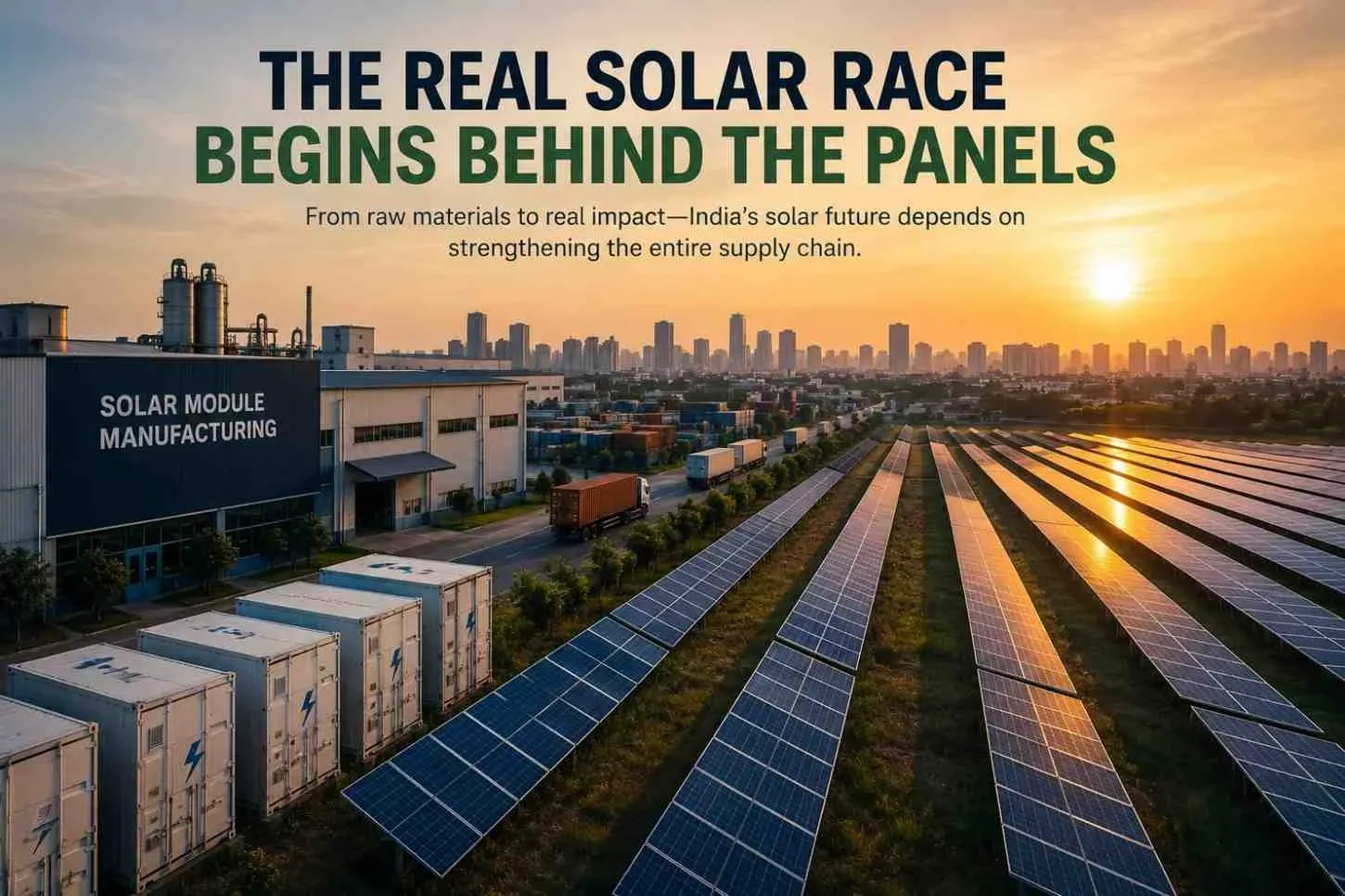
As demand for solar power grows, a less visible challenge is beginning to shape the future of India's clean energy ambitions.   Kolkata | July 27, 2026: India's solar sector has grown rapidly in recent years, accelerating the country's transition towards cleaner energy. But behind the expansion of solar parks and rooftop systems lies a challenge that could shape the pace of future growth! As domestic production grows and the Approved List of Models and Manufacturers (ALMM) continues to evolve, the focus is no longer on installing more solar panels. It is on whether India can build a resilient, self-reliant manufacturing ecosystem capable of overcoming long-term supply chain challenges. The biggest hurdle is the limited availability of solar cells. Although India's module manufacturing capacity has grown rapidly, many manufacturers still rely on imported cells to keep production on track. While experts expect supply pressures to ease in the coming years, companies are gradually adopting vertical integration - expanding in-house manufacturing to strengthen supply chains and build long-term resilience. The challenge extends beyond manufacturing more solar panels. Producing a solar module involves several stages-from processing polysilicon into wafers, converting those wafers into solar cells, and finally assembling them into modules. Experts say strengthening every step of this value chain is essential for reducing import dependence and building a more flexible domestic manufacturing ecosystem.  How a Solar Panel Is Made:   POLYSILICON         │ Purified silicon used as the raw material         ↓  WAFERS Thin slices cut from polysilicon ingots         ↓ SOLAR CELLS Convert sunlight into electricity         ↓ SOLAR MODULES Multiple solar cells assembled into a panel         ↓ SOLAR POWER SYSTEM Installed in homes, industries and solar parks   Source: MNRE, Industry reports The revised Approved List of Models and Manufacturers (ALMM) framework is reinforcing the push for domestic manufacturing. But the next phase will depend on execution.Can local solar-cell production expand fast enough to meet the rising demand? Will manufacturers be able to scale up without increasing costs? And how quickly can new production capacity become operational?   India's Solar Manufacturing Gap Manufacturing SegmentCurrent SituationPolysiliconLimited domestic capacityWafersDevelopingSolar CellsSupply remains constrainedSolar ModulesStrong manufacturing capacity Project developers are closely monitoring these changes. Many say procurement decisions are now being shaped by domestic content requirements. While stronger local manufacturing could improve long-term supply security, companies are also evaluating its impact on equipment availability, delivery timelines, and overall project costs during the transition. Manufacturers believe the long-term solution lies in enhancing the entire supply chain. They say expanding domestic solar-cell production, bringing new manufacturing facilities online, and improving access to advanced technologies can help ease future shortages while making Indian-made solar equipment more competitive in global markets.According to industry experts, the focus shouldn’t be limited to large manufacturers. Smaller technology firms, component suppliers, and equipment makers are also expected to play a crucial role in strengthening India's solar manufacturing ecosystem. Better access to finance, technology partnerships, and supportive policies could let a wider range of businesses fuel the move towards cleaner energy. Experts say stronger collaboration between the government, industry, and project developers will be essential. Clear regulations, reliable procurement policies, and sustained investment in domestic manufacturing can help strengthen the entire solar value chain, pushing India beyond mere panel assembly.     India's clean energy ambitions depend not only on installing more solar panels but also on building a stronger domestic manufacturing ecosystem. While current supply constraints may be temporary, the decisions made today could shape the country's ability to develop a globally competitive solar industry in the coming years. As India's clean energy transition gathers pace, the next phase will depend not only on expanding solar capacity but also on strengthening every stage of the solar manufacturing value chain.    Sources: Ministry of New and Renewable Energy (MNRE)  Approved List of Models and Manufacturers (ALMM)  Solar Energy Corporation of India (SECI)  Ministry of Commerce & Industry (Government of India)   Open-source industry reports on India's solar manufacturing and supply chain ...Read more

24 Jul 2026

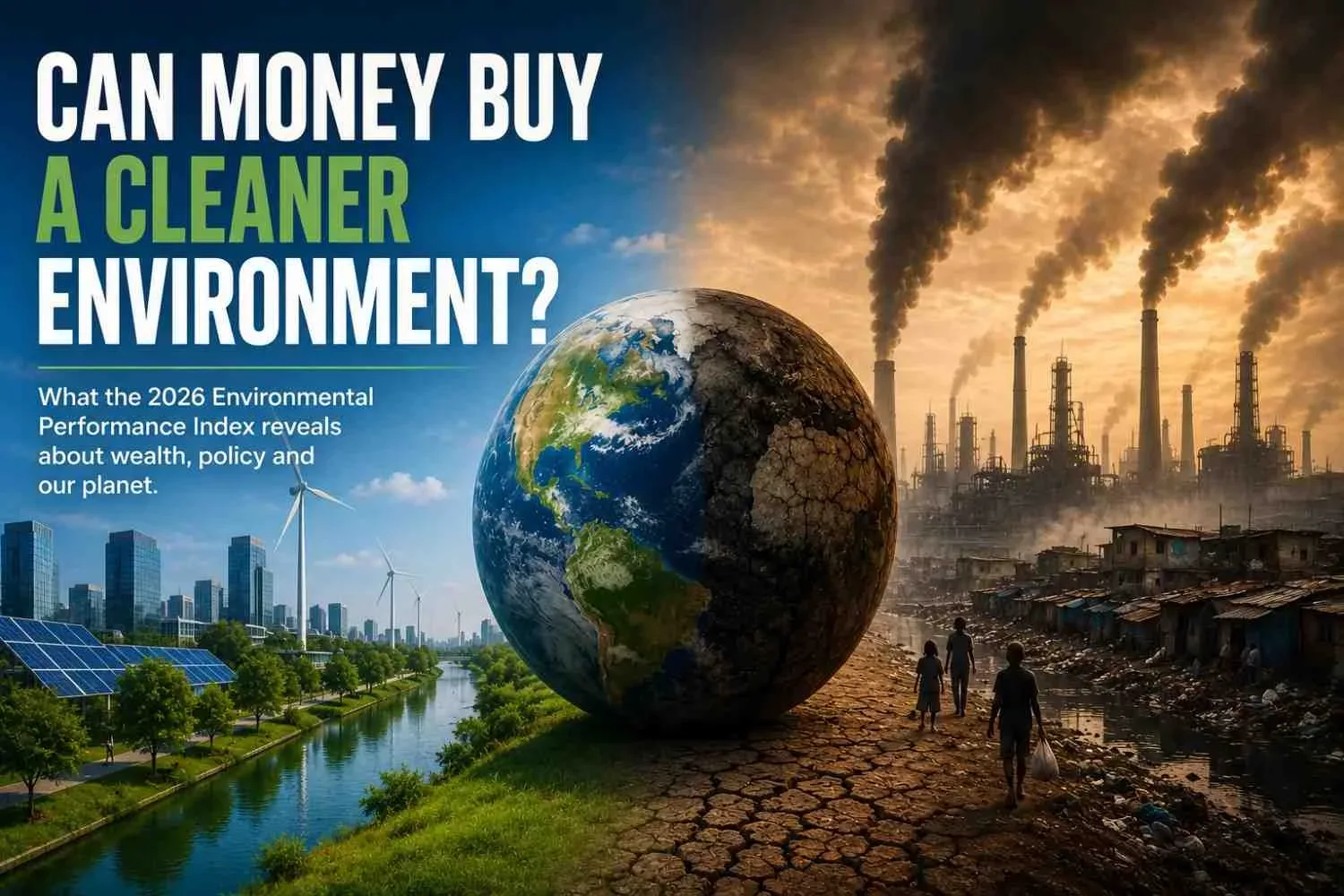
The latest Environmental Performance Index reveals global leaders and laggards, while raising important questions about wealth, policy and environmental progress.   Imagine two countries. One enjoys clean rivers, healthy forests, and fresh air. The other struggles with polluted cities, shrinking biodiversity, and rising climate risks. On the surface, the difference looks financial - richer nations simply have more means to safeguard the environment.  But is it so? The 2026 Environmental Performance Index (EPI) has once again highlighted on how nations rank on nature conservation and public health.Estonia claimed the top position this year, while European countries continued to dominate the rankings.Many lower-income countries continued to rank near the bottom, but the results raise a bigger question: Is environmental performance simply a reflection of economic wealth? It’s not a simple yes-or-no answer! Developed by Yale researchers, the Environmental Performance Index ranks countries based on dozens of environmental indicators. It evaluates factors such as air quality, sanitation, waste, biodiversity, climate policy, and ecosystem protection. The index goes beyond a single environmental measure, evaluating how effectively countries pursue economic growth while safeguarding the environment. The rankings matter every year because they tell a bigger story: not just who’s ahead or behind, but what path each country chose for development.Estonia's climb to the top is the result of long-term planning. Over the years, it has strengthened environmental policies while investing in clean energy, efficient waste management, and digital systems that support better management of natural resources.Across Europe, many countries have shown that economic growth and strong environmental standards can advance together. These results raise a further issue: if the European model is so effective, why has it not been applied globally?For many developing countries, the issue is less about ambition and more about competing priorities. With limited resources, governments must balance environmental action alongside poverty reduction, healthcare, housing, employment, and infrastructure.Many countries lack the financial resources needed to invest in clean technology or to restore degraded ecosystems. Rapid urbanisation makes it worse. Unchecked expansion of roads, housing, and industry often leads to higher pollution, shrinking green spaces, and increasing pressure on natural resources.The challenge is compounded by climate change. Countries with the lowest emissions are often among the most vulnerable to extreme weather, forcing governments to spend scarce resources on recovery instead of long-term environmental improvements. Comparing countries at different stages of economic development can therefore be misleading. A lower ranking does not necessarily indicate weak environmental commitment. It often reflects differences in income, governance, access to technology, and historical development. Similarly, a higher ranking does not mean every environmental challenge has been resolved.Experts say the bigger story lies beyond the rankings. Instead of focusing on who tops the list, they encourage a closer look at how countries are improving and where further action is needed. Ultimately, sustained progress is a better measure of success than rank alone. Countries that steadily improve air quality, expand renewable energy, strengthen waste management, or protect biodiversity are making meaningful progress, even if their rankings remain low. At the same time, top-performing countries cannot afford to be complacent, as environmental and climate challenges continue to evolve. The 2026 EPI also highlights that environmental protection cannot rest solely with governments. Businesses can reduce their environmental impact by adopting cleaner production methods and cutting emissions. Researchers help shape better policies through scientific evidence. Communities protect local ecosystems, while individuals contribute by conserving water, reducing waste, and choosing more sustainable products. Perhaps the biggest takeaway from this year's rankings is that wealth alone does not define environmental success. Lasting progress depends just as much on effective policies, strong institutions, and sustained action. Experts say lasting environmental progress is built on strong institutions, effective policies, public participation, and long-term planning. Countries that treat sustainability as a continuous priority rather than a short-term initiative are often the ones that achieve enduring results. The real value of the 2026 Environmental Performance Index lies beyond the rankings. Instead of debating who stands at the top or bottom, it should prompt every country to focus on a more meaningful challenge: What practical actions can we take today to create a cleaner, healthier, and more resilient future? At the end of the day, environmental progress is measured not by a country's position on a global index but by the difference it makes on the ground-cleaner air, healthier ecosystems, and better lives for the people who rely on them.   Sources:  Centre for Integrated Earth System InformationYale Centre for Geospatial Solutions   ...Read more

24 Jul 2026

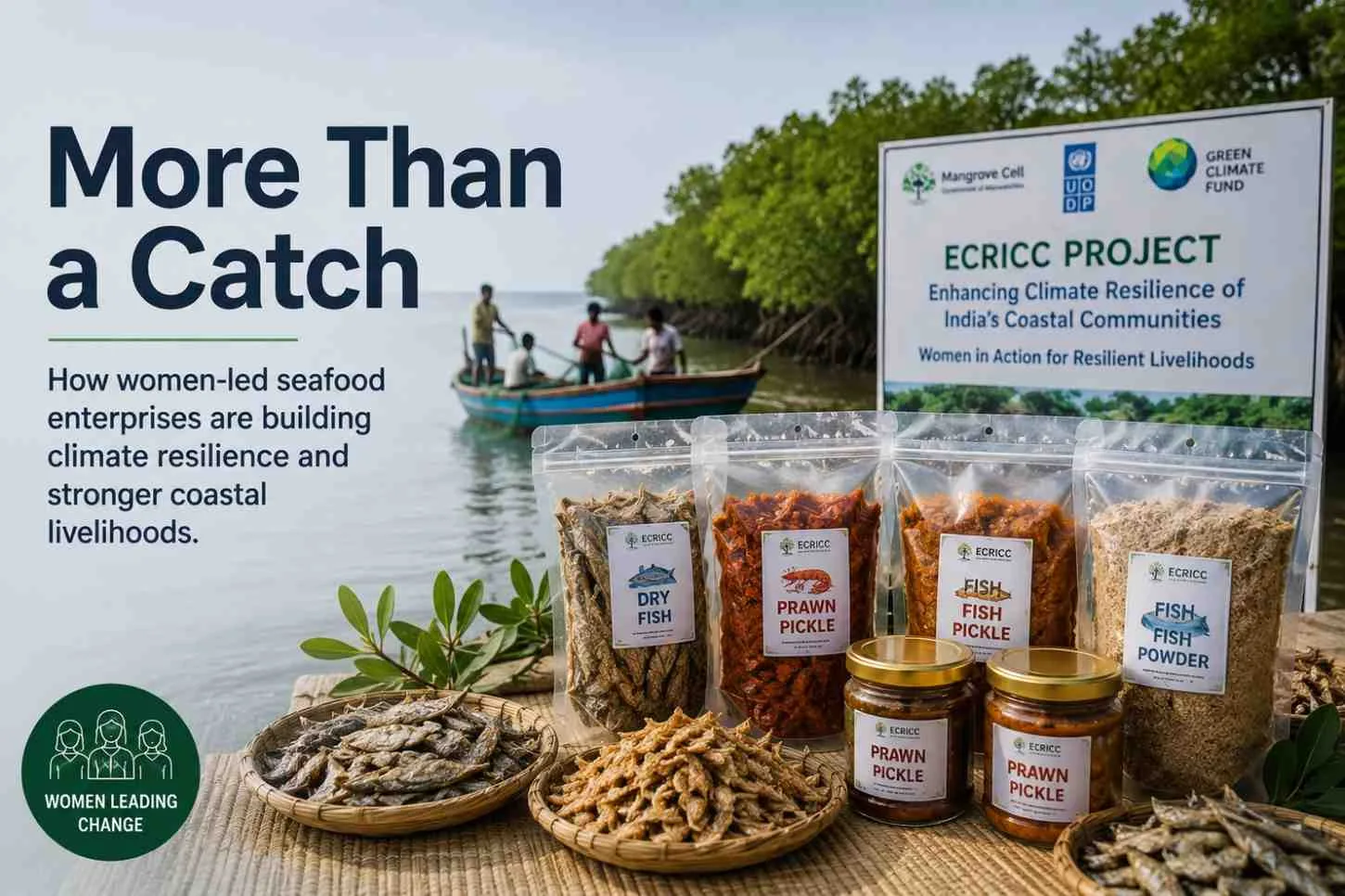
When coastal communities get the right support, the journey from the sea to the market can become a story of resilience, livelihoods and sustainable growth.   Kolkata |24 July, 2026:   For thousands of families along India's coastline, fishing is more than a livelihood- it is a way of life.But rising sea levels, shifting weather patterns, and declining fish stocks are making it harder for coastal communities to sustain their livelihoods. As climate threats increase, communities are exploring new approaches to protect their incomes and natural resources. On July 9, 2026, three women's self-help groups (SHGs) from Maharashtra brought value-added seafood products to a national exhibition under the Enhancing Climate Resilience of India's Coastal Communities (ECRICC) project, highlighting new livelihood opportunities for coastal communities.The initiative proves climate adaptation isn’t just about resilience - it’s about new jobs and income. By backing women entrepreneurs, sustainable fisheries and better market access, it shifts climate action from cost to opportunity. Instead of selling fresh fish at modest prices, the women are creating value-added seafood products through processing, packaging, and branding, helping them earn more from every catch.According to experts, this approach boosts household incomes, raises profit margins, cuts post-harvest losses, and generates new jobs in coastal communities.It also promotes improved food safety standards and gives producers access to wider markets and new customers beyond their local communities. The process begins with seafood sourced responsibly from local fishermen, followed by cleaning, processing, packaging and labelling prior to distribution through exhibitions, retailers and local markets. This coast-to-consumer value chain generates employment at every step - from procurement and processing to packaging, branding and marketing. Experts say models like this help communities earn more from existing resources rather than adding pressure on fish stocks.  Local Fishermen         ↓ Sustainable Fish Harvest         ↓ Cleaning & Processing         ↓ Packaging & Branding         ↓ Food Safety & Licensing         ↓ Exhibitions / Retail Markets         ↓ Consumers   The initiative is supported by the Mangrove Cell, the United Nations Development Programme (UNDP), and the Green Climate Fund under the ECRICC project.The programme equipped women with skills across the entire business chain; including food processing, quality control, branding, packaging, licensing, and enterprise management, while providing financial and business support too. These skills are helping them build businesses that can withstand climate and economic shocks. Experts say the real challenge begins after the exhibition. Long-term success will depend on building reliable supply chains, maintaining food safety standards, strengthening branding, improving logistics, and expanding access to stable markets. Quality products alone are not enough. Without strong support system, community enterprises may find it difficult to compete in larger markets.   Growing coastal businesses is only a part of the solution. Experts say long-term success will depend on balancing economic opportunities with healthy marine ecosystems through sustainable fishing, responsible sourcing, and stronger mangrove conservation. Sustainable management of local fisheries will be crucial to ensuring marine resources remain available for future generations.Experts believe wider access to finance, digital sales platforms, and organised retail networks can help women's self-help groups scale their businesses. Continued institutional support will be equally important to ensure growth is environmentally sustainable and community-driven. ProductValue AdditionCommunity BenefitDried FishHygienic processing & packagingLonger shelf life and higher incomeFish PickleReady-to-eat productBetter profit marginsFish PowderNutrient-rich food ingredientReduced fish wastePrawn PicklePremium branded productAccess to urban marketsDry Fish SnacksRetail-ready packagingEmployment for women The Maharashtra initiative suggests that climate resilience is built not only by protecting the environment but also by strengthening livelihoods. Experts say supporting women-led enterprises, improving seafood value chains, and conserving coastal ecosystemscan create a future where economic development and environmental sustainability reinforce one another.   Document Support:Press Information Bureau (9 July 2026), Mangrove Cell, Government of Maharashtra, Enhancing Climate Resilience of India's Coastal Communities (ECRICC), United Nations Development Programme (UNDP), Green Climate Fund (GCF), Food Safety and Standards Authority of India (FSSAI) – Food processing and licensing guidelines (background reference) Sources: Press Information Bureau (PIB) – 9 July 2026, Mangrove Cell, Government of Maharashtra, Enhancing Climate Resilience of India's Coastal Communities (ECRICC), United Nations Development Programme (UNDP), Green Climate Fund (GCF) ...Read more

23 Jul 2026

India's green hydrogen ambitions are entering a phase where proving claims may matter as much as making them. Kolkata | 23 July, 2026: India is betting big on green hydrogen, with plans to establish itself as a global leader in the emerging clean fuel sector. As policies take shape and investments grow, the focus is shifting from ambition to execution. Can India's green hydrogen meet global expectations and earn international trust? On 2 July 2026, the Ministry of New and Renewable Energy (MNRE) highlighted India's progress under the National Green Hydrogen Mission, with the focus shifting towards certification, quality assurance, and global market preparedness.Experts say it’s time to move beyond promises. The real test begins now: can producers meet global benchmarks and win the confidence of international buyers? Renewable electricity is used to split water into hydrogen and oxygen to produce green hydrogen. It is seen as critical for decarbonising industries that cannot easily switch to electricity, such as steel, fertilisers, refineries and shipping. Experts argue that making green hydrogen is only half of the task. Proving that it is produced with renewable electricity is equally important, keeping emissions low throughout the process, and meeting certification standards expected by both domestic and global markets. The launch of the certification portal in June marked a significant step in that direction. It aims to help producers track renewable power, assess emissions intensity, and demonstrate alignment with global sustainability benchmarks. Renewable Energy       ↓  Electrolyser       ↓Green Hydrogen       ↓Certification & Testing       ↓Storage & Transport       ↓Industrial Users(Steel • Fertiliser • Refineries • Shipping • Heavy Mobility) Industry experts believe such transparency will make Indian hydrogen more competitive, especially with export markets raising their environmental bar high. There’s a gap between promise and plant. Many firms have unveiled green hydrogen plans, but commercial production remains the exception.According to analysts, distinguishing between announced projects and commissioned plants will provide investors, policymakers and buyers with a clearer view of India’s real progress.Certification and testing are becoming essential to building trust and credibility in the green hydrogen sector.Experts argue credibility hinges on four things: certified labs, independent checks, digital certification, and clear rules.In global markets, claims are not enough. Without trusted certification, Indian producers may struggle to earn buyers' confidence. The transition is expected to begin with industries that use the most energy and produce the highest emissions. Experts expect fertiliser manufacturers, oil refineries, steel producers, shipping firms and heavy mobility operators to emerge as the first major users of green hydrogen. They offer the greatest potential for emission reductions while also ensuring steady demand for producers. Experts stress that smaller technology firms should not be overlooked.Numerous start-ups are developing electrolysers, storage systems, sensors, monitoring tools and safety technologies to support India’s hydrogen sector. They argue that better access to funding, testing infrastructure, certification support and government-led pilot programmes would enable these companies to engage more effectively in the expanding market. Industry leaders also emphasize that sustained investment in renewable power, transmission infrastructure and hydrogen storage is essential for scaling production sustainably. They argue that certification should cover more than just renewable electricity - it should also track emissions intensity and additionality to confirm that new clean power is being added, not just existing sources. Smaller tech companies also need improved access to testing facilities, certification support, funding and pilot initiatives to integrate into the growing national green hydrogen sector. According to experts, greater collaboration between the public sector, research bodies and industry will drive down costs, accelerate tech development and create a more resilient supply chain. Current ProgressWhat Still Needs AttentionRenewable energy expansion Internationally accepted certificationGreen hydrogen pilot projects   More commissioned commercial plantsCertification portal launchedAccredited testing laboratoriesGovernment policy supportStrong domestic demandGrowing investmentsFaster support for technology start-ups The National Green Hydrogen Mission offers India a key opportunity to enhance energy security and cut industrial emissions. But experts say the real challenge begins now! India’s green hydrogen ambitions will be measured by credible certification, clear emissions reporting, robust testing and rising demand - not just by targets.    Sources: Ministry of New and Renewable Energy (MNRE), National Green Hydrogen Mission, Green Hydrogen Certification Scheme of India, Bureau of Energy Efficiency (BEE), Press Information Bureau (PIB), Down To Earth (Background), The Hindu BusinessLine (Background)  ...Read more

21 Jul 2026

India's latest Environmental Performance Index ranking has reignited a debate that goes far beyond the final score.     Kolkata | 21 July 2026:   Another year, another low rank. India placed 176th out of 177 in the 2026 Environmental Performance Index, reigniting questions about what’s working, what isn’t, and how we measure success.  Out in July from Yale, the EPI scores 177 countries on 47 measures of health, nature, and climate. The numbers have sparked arguments, but the experts are saying not to read it as a report card but as a trend line Environmental Performance Index (2024)IndiaGlobal Rank176 / 180Overall EPI Score27.6 / 100Environmental Health Rank177Ecosystem Vitality Rank171Climate Change Rank133   The EPI measures performance across air quality, water, sanitation, waste, biodiversity, forests, emissions and more. Experts say this approach captures environmental health more broadly than climate goals or renewable capacity by themselves. Despite strong progress on renewable energy, India still lags in air pollution, waste management, water quality and biodiversity conservation. Experts note that clean power does not automatically address problems such as contaminated water bodies, waste mismanagement, depleting habitats, and urban air pollution. Since 2024, very little has changed. Until India tackles air pollution and gets serious on waste management, water management and ecosystem, the rankings won’t budge – no matter how fast renewable energy grows.The Ministry of Environment, Forest and Climate Change says environmental protection remains a priority, with programmes centred on renewable energy, afforestation, pollution control, and ecosystem conservation. Experts agree the direction is right, but real progress will depend on stronger implementation, consistent monitoring, and better coordination between the Centre and the states. Comparing rankings is only part of the picture. Each country begins its climate journey under different circumstances.Experts say that we need to look at emissions per person, total emissions, and where policy is headed. India is among the world's largest emitters largely because of its population. But on a per-person basis, its emissions remain well below those of many developed countries. India is investing in clean energy, electric mobility, green hydrogen, and forest restoration. But experts say the real measure of success lies elsewhere: cleaner air, safer water, healthier ecosystems, and less pollution. Without visible improvements on the ground, neither environmental outcomes nor EPI rankings are likely to improve. The EPI is more than a ranking- it is a reminder of where improvement is still needed. Experts say the real goal should not be a higher position on a global index, but cleaner air, healthier rivers, stronger ecosystems, and a better quality of life for millions. Source:  Yale Centre for Environmental Law & Policy, Environmental Performance Index 2024 (in partnership with Columbia University Centre for International Earth Science Information Network) ...Read more

21 Jul 2026

The new EV Policy promises cleaner transport, but charging, battery recycling and public mobility will decide whether it delivers.   Kolkata | July 21, 2026:   Buying an electric vehicle is getting easier. But is owning one that easy?  MeasurePurposePurchase incentives Encourage EV adoption Charging stations Improve accessibility Battery swapping Reduce charging time Support for commercial EVs Faster transition for high-mileage vehicles Battery recycling Reduce environmental impact  That’s the central question behind Delhi’s new EV Policy 2026. The plan is to accelerate the shift to cleaner transport through EV incentives, more charging and battery-swapping stations and lower air pollution. But experts say the real test starts once the vehicle is bought. Delhi has struggled with poor air quality for years, as transport continues to be a major source of pollution. The policy goes beyond promoting electric vehicles. It covers two-wheelers, three-wheelers, commercial vehicles and private cars.Policies can boost EV sales. But infrastructure will determine whether the transition succeeds. The real challenge is whether charging networks, battery-swapping services, and the power grid can grow as quickly as per demand.   Experts say the policy's biggest impact will come from commercial vehicles, which spend most of its time on Delhi's roads. Delivery riders, auto-rickshaws, and fleet vehicles are on the road far more than private cars, meaning electrifying them could have the greatest impact on reducing transport emissions.  Operators like the policy, but charging delays and poor infrastructure are still a daily headache. Delivery workers face long charger queues that hurt both work and wages.Charging service providers say keeping up with demand will mean rolling out public chargers faster, expanding battery-swapping networks, and speeding up approvals for new infrastructure.Every new EV sold today also creates a future battery management challenge. With more EVs on the road, more batteries will soon hit the end of their usable life. According to experts, recycling infrastructure must keep pace with EV sales to prevent long-term environmental harm. A sustainable EV ecosystem will depend on proper battery collection, recycling and reuse.  The policy also brings a new challenge: can Delhi's power grid keep pace? As more EVs hit the road, charging thousands of vehicles could place significant pressure on the electricity network, especially during peak hours.   Energy experts say Delhi's long-term EV transition will depend on smart charging, greater use of renewable energy, and better management of electricity demand.  Real impact will come when EVs are paired with reliable public transport and walkable neighbourhoods. Experts argue that cleaner mobility is not only about replacing petrol vehicles with electric ones.Expanding metro connectivity, improving bus services, building safe cycling tracks and creating pedestrian-friendly roads can reduce traffic while reducing emissions further.  Environmental groups have praised the policy's direction but the real challenge begins now. Incentives may encourage adoption, but effective implementation will determine whether the transition succeeds. MeasurePurposePurchase incentivesEncourage EV adoptionCharging stationsImprove accessibilityBattery swappingReduce charging timeSupport for commercial EVsFaster transition for high-mileage vehiclesBattery recyclingReduce environmental impact   EVs are only half the story. The real test is infrastructure, recycling, public transport, and planning that brings everything together.Going green in Delhi will take more than just swapping engines for batteries.The success of Delhi's EV transition will not be measured by the number of vehicles sold, but by whether the transport system can support them.Sustainable mobility requires more than electric vehicles - it requires the infrastructure to keep them going.  Sources: Government of NCT of Delhi, NITI Aayog Ministry of Heavy Industries,      NITI Aayog Ministry of Heavy Industries                      , Central Electricity Authority  Delhi Pollution Control Committee, The Indian Express ...Read more

20 Jul 2026

Floods don't begin in the clouds. They begin in the way we shape our cities.    By Tiyasha Ghosh    Can we keep blaming just the rain for floods? Or are our cities part of the problem even today? The monsoon arrives with hope, every year.Water for our reservoirs, life for our farms, and relief from the heat.However, every year, it leaves behind waterlogged streets, damaged infrastructure, destroyed homes and many lost lives. Two places, two disasters: Mumbai drowned, Wayanad collapsed! One is a city of skyscrapers and the other is a quiet forested district. Different locations but identical warning! The sky changed faster than the concrete below it. Our infrastructure was designed for a climate that no longer exists. We used old rainfall recording system and assumed stability. Today, climate change delivers heavier rain with no warning, everything at once.  Rain is arriving faster than we can handle. Cloudbursts are turning mountains into landslide zones. The question isn’t “how much rain this season?” But the question isn’t “how much?” It’s “how fast?” - and can our land and roads survive it? Which leaves us with one question: Whether India’s design standards use up-to-date rainfall data, or continue to rely on old IDF curves that don’t represent today’s climate.According to engineers, many drainage systems were built to handle rainfall expected once in several decades. However, climate records indicate that extreme rainfall events are occurring more frequently. Events once termed "once-in-a-century" storms may be happening much more often now.You can see the impact all over the country. Roads vanish underwater in hours. Drains can’t keep up. Buildings drown even after crores spent on their upgrades. In the hills, the ground itself gives way - mud, rocks and debris crashing into villages below. According to experts, the cause goes beyond rainfall - it points to failures in urban and infrastructure planning. Wetlands that previously stored excess rainwater have been reclaimed for development. Natural drainage channels have been constricted or obstructed. Hillsides have been cut to accommodate roads, hotels and buildings. In many vulnerable regions, declining forest cover has reduced the land’s capacity to absorb water during heavy rainfall. The cost goes far beyond concrete and steel. People lose homes and income. Kids stay out of school. Businesses close. Transport comes to a standstill. Hospitals get overcrowded. These storms are no longer just environmental problems - they hit our economy and society too. Experts argue that India needs to stop treating floods, landslides and waterlogging as separate events. They point to a larger issue like climate change, rapid urbanisation and weak planning coming all together. Unless cities plan for future rainfall instead of past records, every monsoon will bring the same question: Are we preparing for the next storm- or simply recovering from the last one? Heavy Rain       ↓ Wetlands & Lakes       ↓ Natural Streams       ↓ Rivers       ↓ Groundwater Recharge   (Current Situation)   Heavy Rain       ↓ Concrete Roads       ↓ Blocked Drains       ↓ Waterlogging       ↓ Floods & Landslides Natural drainage systems once absorbed excess rainwater. Urbanisation has disrupted these pathways, increasing flood risks The rain hasn't changed. The ground beneath it, has.Like water on concrete instead of a sponge, India's cities can no longer absorb what falls from the sky. Nature once managed the rain. Wetlands, forests, floodplains, and open land worked together to absorb, slow, and store water. Today, many of these natural safeguards have disappeared. Wetlands are disappearing beneath housing projects. Floodplains are turning into commercial hubs. Hillsides are being cut for development. And across India's cities, concrete has replaced the open ground that once soaked up rain. With heavy downpour, water becomes stagnant with no outlet for respite. It keeps flowing until it floods roads, homes, and entire neighbourhoods. Floods today are shaped as much by land use as by rainfall, experts say. Here's why. How do engineers decide how big a drain should be? They use Intensity-Duration-Frequency (IDF) curves, which estimate how much rain can fall, how quickly it may arrive, and how often such events are expected. The problem? A lot of these rules were made using old rainfall data. But climate change has changed those patterns. Cloudbursts have grown more frequent and short-duration rainfall has become more intense. For example, 100 millimetres of rain that previously fell for an entire day can now occur within two to three hours. Drainage systems have not evolved in line with changing rainfall conditions. Many continue to operate based on historical rainfall patterns that are no longer valid. Experts say India can no longer rely on yesterday's rainfall patterns. Infrastructure must be designed using today's climate realities. The challenge is even greater in the hills. Unlike cities, where water usually causes flooding, mountain regions face another danger- landslides. Cutting down forests and carving slopes for roads or buildings loosens up the soil. When heavy and long rainfall persists, water soaks in, weakens the slope, and everything collapses. The Wayanad landslide was a painful reminder: when heavy rain hits fragile hills and if we ignore the risks, it can turn deadly.Scientists say this is why climate adaptation can no longer remain separated from urban or infrastructure planning. Every new road, bridge, housing project, and drainage system must answer one question: Is it built for tomorrow's rainfall? ParameterEarlier ClimateCurrent ClimateRainfall PatternSpread over longer periodsIntense rainfall in short burstsDrainage DesignBased on historical rainfallFrequently exceededWetlandsLarger natural storageRapidly shrinkingFlood FrequencyLess frequentIncreasingClimate RiskModerateHigh Rain may trigger the disaster. But building for yesterday's climate could make it inevitable. Experts say India must rethink how it builds its cities. Instead of forcing water to adapt to development, development must adapt to water. And that begins with something many places have lost, i.e., space. Protecting floodplains, wetlands, hills, and stormwater channels isn't just about conserving nature- it's about protecting people. Because when nature's defenses disappear, concrete isn't enough. Experts say cities can't plan for tomorrow using yesterday's flood maps. Updated rainfall data should guide every development decision, and flood-prone areas must be identified before new roads, housing projects, or commercial complexes that are built. Experts also say IDF curves should be updated regularly so drainage systems are built for today's climate- not yesterday's. Technology can also make a huge difference. Floods can't always be prevented. But with accurate forecasts and real-time monitoring, their impact can be reduced through timely warnings and faster action. But technology alone is not enough; good governance is equally important. Experts say flood management shouldn't begin when the rain starts- it should begin long before. Drains need to be cleared before the monsoon, natural waterways kept free of invasions, and construction in high-risk areas are strictly regulated. Most importantly, agencies must work together before the disaster strikes. Communities also play a crucial role. Communities hold critical, lived knowledge like which streets flood first, which drains fail annually, and which areas remain mostly exposed. When local knowledge becomes part of disaster planning, warnings arrive sooner and responses become more effective. Small actions can also create a big impact. Keeping drains free of plastic waste, protecting neighbourhood ponds, planting trees, avoiding construction on natural drainage channels and following official weather advisories all help reduce flood risks. The lesson extends beyond Mumbai or Wayanad. Urban growth and climate change are colliding. One is covering the ground with concrete, the other is bringing heavier rain. What we build today will shape tomorrow's disasters. India has a choice: keep rebuilding after every disaster- or start preventing the next one. Or we can act now by investing in smarter planning, stronger natural defences, modern infrastructure and cities built for a changing climate. Because resilience is not built during an emergency. It is built way before the first raindrop falls. The cost of preparing may be high but the cost of not preparing will be higher. Mumbai and Wayanad were more than disasters - they were warnings. AspectMumbaiWayanadMain HazardUrban FloodingLandslidesPrimary CauseBlocked drainage & urbanisationFragile slopes & intense rainfallNatural Buffer LostWetlands & mangrovesForest coverMain ImpactWaterlogging & transport disruptionLoss of lives & infrastructure For decades, India has responded after the damage has been done. But experts say rebuilding after every flood and landslide is no longer enough in a climate where extreme weather is becoming the new normal. The focus must shift now from disaster response to disaster prevention. The solution begins with working alongside nature - protecting wetlands, restoring rivers, safeguarding forests, and modernizing drainage standards. It also means planning every new project around future rainfall, not outdated climate records. Climate resilience begins with collective action.Governments, businesses, planners, engineers, and citizens all have a major role to play. Because every protected wetland, every clear drain, and every preserved green space make a city stronger when the next storm arrives. The cost of acting may seem high today but the cost of doing nothing is higher. Every flooded street, every collapsed hillside, and every displaced family carry the same message: preparing before disaster is less costly than rebuilding after. Nature has always played by its own rules. Water will always find its way. Rivers will always seek their floodplains. Hills will always become unstable when forests disappear and slopes are pushed beyond their limits. The real choice is whether we build with nature- or keep building against it. Resilience isn't about rebuilding faster. It's about ensuring there's less to rebuild. As India enters a warmer and more uncertain future, every road, bridge, neighbourhood, and city will reflect the choices we make today. Because tomorrow's resilience is being built long before the next storm arrives. DOCUMENT & DATA STACK  DocumentPurposeIndia Meteorological Department (IMD) Rainfall DataCompare historical and current rainfall intensity.National Disaster Management Authority (NDMA) – Urban Flooding GuidelinesIndia's official recommendations for urban flood management.Geological Survey of India (GSI) – National Landslide Susceptibility MappingExplains why regions like Wayanad remain highly landslide-prone.IPCC Sixth Assessment Report (AR6)Scientific evidence linking climate change to increasing extreme rainfall events.Ministry of Housing & Urban Affairs (MoHUA)Urban drainage and climate-resilient infrastructure guidelines.Central Water Commission (CWC)Flood monitoring and drainage management data.ISRO National Wetland InventoryWetland loss and land-use changes across Indian cities. Key Data Points: TopicData/ObservationRainfall PatternIndia is witnessing more frequent short-duration, high-intensity rainfall events due to climate change.Urban FloodingExisting stormwater drains in many cities were designed using historical rainfall data that no longer reflects today's climate.WayanadHighly vulnerable due to steep slopes, fragile geology and extreme monsoon rainfall.WetlandsShrinking wetlands and encroached floodplains reduce natural flood storage capacity.Climate AdaptationExperts recommend updating Intensity-Duration-Frequency (IDF) curves using present-day climate observations.   ProblemSolutionUrban FloodingRestore wetlandsWaterloggingPermeable pavementsLandslidesAfforestation & slope stabilisationDrain OverflowRegular desilting & drain maintenanceClimate RiskClimate-resilient urban planning   Sources:India Meteorological Department (IMD) National Disaster Management Authority (NDMA) Geological Survey of India (GSI) Central Water Commission (CWC) Ministry of Housing & Urban Affairs (MoHUA) Intergovernmental Panel on Climate Change (IPCC AR6) ISRO National Wetland Inventory The Times of India (base report) ...Read more

19 Jul 2026

Chatbots feel weightless. The infrastructure behind them is anything but Ujjwal K Chowdhury Strapline: Every AI answer that appears instantly on a screen is the visible tip of an invisible supply chain of electricity, water, minerals and hardware — one that is expanding faster than the systems built to measure, let alone restrain, it. The illusion of weightlessness Type a question into a chatbot and the reply arrives in a second or two, apparently out of nowhere. That apparent weightlessness is the single biggest reason today’s mainstream artificial intelligence has drifted into an anti-ecological pattern: the interface hides a resource system as physical as a steel mill, while feeling as immaterial as thought itself.   Behind that reply sits a chain most users never see: a data centre drawing power from a regional grid; racks of accelerators converting electricity into heat; water or refrigerant carrying that heat away; a supply chain of mined minerals and fabricated silicon that had to exist before any of it could run; and, increasingly, an autonomous “agent” that may have quietly called the model dozens of times — planning, retrieving, verifying, retrying — before it ever answered. None of that shows up in the two seconds a user waits for a reply. That gap between visible convenience and invisible cost is where the ecological problem lives. Four ways today’s AI works against the planet 1. It treats electricity as free and infinite The scale is no longer subtle. Global data-centre electricity demand grew about 17% in 2025 — more than five times the growth rate of overall global electricity demand — while AI-specific facilities grew around 50% in the same year, according to the International Energy Agency’s most recent assessment. The agency’s satellite-tracking programme shows dedicated “AI factory” capacity has more than tripled in the past eighteen months alone. Lawrence Berkeley National Laboratory estimates that data centres already consumed 4.4% of all US electricity in 2023, on a path toward as much as 12% by 2028. This is not evenly distributed misfortune. It concentrates in specific places until local grids buckle: Ireland’s data centres now draw over a fifth of the country’s entire electricity supply, with Dublin’s local share pushing toward 80%; parts of Virginia, Arizona and the Netherlands face similar strain. AI accelerator rack density has risen roughly elevenfold since 2020 and could quadruple again within a couple of years, meaning the same floor space now demands vastly more power and cooling than it did five years ago — a physical fact that data-centre neighbourhoods, substations and transmission lines were never designed around. FACT BOX > - Data-centre electricity growth in 2025: ~17% globally (AI-specific: ~50%) > - AI-factory capacity: more than tripled in 18 months (IEA satellite tracking) > - Rack power density: up roughly 11x since 2020 > - Ireland’s data-centre electricity share: over 20% nationally, near 80% in Dublin 2. It treats water as someone else’s problem Cooling AI hardware consumes water directly, and generating the electricity that powers it consumes water indirectly, through the power plants themselves. A peer-reviewed 2025 review found that water use per AI workload can vary by more than 10,000-fold depending on the cooling system, the water intensity of the local grid, climate and utilisation — an enormous range that makes any single “AI uses X litres” headline close to meaningless without context. Earlier modelling had estimated the direct water cost of training a single large language model at roughly 700,000 litres, and projected global AI-related water withdrawal could reach several billion cubic metres by 2027. The ecological offence is not simply the volume; it is where that volume is drawn. Data centres frequently compete for water in the same watersheds as households, farms and ecosystems, often in drought-prone or rapidly urbanising regions. A company can accurately claim it “replenished” water somewhere else in the world while a local community, in the actual basin where the facility sits, faces real seasonal scarcity. Water taken from a stressed basin in July is not made whole by a replenishment project in a different river system entirely. 3. It hides its hardware and mineral footprint The environmental conversation about AI has focused heavily on electricity, but the physical hardware underneath it carries its own anti-ecological weight. Semiconductor fabrication requires high-temperature processing, fluorinated gases and ultrapure water; servers require aluminium, copper, steel and a list of critical minerals mined and processed through globally concentrated, often environmentally and socially fraught supply chains. Because the industry races to deploy ever more capable accelerators, hardware is frequently retired well before the end of its useful life — front-loading manufacturing emissions and generating electronic waste that is notoriously difficult to refurbish because of security requirements and proprietary designs. A narrow focus on data-centre electricity efficiency can therefore simply displace environmental burden upstream, onto mines and fabrication plants far from public view. 4. It multiplies itself through autonomy The newest and fastest-growing anti-ecological pattern comes from agentic AI — systems that plan, browse, write and execute code, call other software, and retry when something fails, often with limited human supervision. A single user request can silently become a “trajectory” of dozens or hundreds of underlying model and tool calls. Early research has found up to a 9.4-fold difference in energy use between agent architectures solving identical software tasks, driven mainly by unproductive loops, redundant multi-agent “debate,” and overly conservative verification steps. A 2026 study proposing an “Energy per Successful Goal” metric found agentic workflows used, on average, more than four times the energy of simpler linear approaches to reach the same outcome. Because these systems can be scheduled to run continuously, across thousands of accounts, with nobody watching each internal step, agentic AI represents autonomy without accountability — precisely the combination ecological management is built to prevent. The underlying design flaw: rebound Underneath all four patterns sits a single structural problem economists have seen before: rebound. Each time AI becomes more efficient per task, that efficiency tends to make AI cheaper and faster to deploy — which drives organisations to use far more of it, not less. A cheaper model attracts more users; a faster agent gets scheduled more often; saved computing capacity gets redirected into training an even larger model. This is a modern instance of the nineteenth-century Jevons paradox, in which more fuel-efficient steam engines led to more coal being burned overall, because efficiency expanded the ways coal could be profitably used. Today’s AI industry is repeating that pattern at digital speed: intensity per task is falling in many cases, even as total electricity, water and hardware consumption keeps climbing. HIGHLIGHT > “Efficient models can lower energy per task but may stimulate more use — a rebound effect analogous to Jevons’ paradox.” Tackling the challenge: what can actually be done The good news, according to researchers working across computer science, engineering and environmental policy, is that anti-ecological AI is a design failure, not a law of physics — and design failures can be corrected. Make lifecycle accounting mandatory, not voluntary. Model developers should be required to publish energy, water and carbon figures covering research, training, fine-tuning and expected inference use — not just the headline training run. Regulatory movement already exists: the European Union’s data-centre reporting rules and the emerging AI Act standards for general-purpose systems are early attempts to make these disclosures routine rather than exceptional. Measure outcomes, not tokens. “Energy per prompt” is a start, but a genuinely useful metric asks how much energy, water and carbon were spent per successfully completed, quality-adjusted task — capturing failed attempts, retries and wasted agent loops rather than rewarding systems that simply generate more text per watt. Treat water as a local-risk issue, not a global volume. Responsible siting means water-stress screening, seasonal operating limits, non-potable cooling sources and transparent, basin-specific disclosure — replacing vague corporate replenishment claims with site-level accountability. Put budgets and brakes on autonomous agents. Concrete engineering controls — hard limits on tool calls and reasoning steps, loop detection, model routing that defaults to the smallest sufficient model, and outcome-aware verification applied only where risk warrants it — can curb the silent multiplication effect that makes agentic AI so much more resource-hungry than a single chatbot exchange. Extend hardware life and close the supply chain loop. Modular, repairable server designs, transparent recycling, redeployment of older accelerators to less demanding tasks, and procurement rules that reward useful work per lifecycle impact — rather than peak benchmark performance alone — would blunt the upstream mineral and manufacturing burden. Impose absolute limits alongside efficiency targets. Because rebound can erase intensity gains, organisations need annual caps on total energy, water and hardware consumption — not only per-task efficiency goals — paired with an honest test of whether any given deployment is actually necessary. Who ends up paying The anti-ecological pattern is not only an environmental story; it is fast becoming a household economics story too. As data-centre campuses draw more power than entire cities, the cost of grid upgrades, new transmission lines and backup capacity has to be paid by someone — and much of it is landing on ordinary electricity ratepayers rather than the companies building the facilities. US utilities requested tens of billions of dollars in rate increases in a single recent year, with retail electricity prices climbing well ahead of inflation, and energy-policy researchers have begun openly asking whether households should be subsidising the power needs of trillion-dollar technology firms. That question — who bears the cost of AI’s physical footprint — is quietly becoming as contentious as the technology’s better-known debates over jobs, bias or misinformation. Communities near proposed data centres are pushing back for similar reasons. Objections increasingly cite not just water and electricity but noise, construction traffic, backup diesel generators and the strain that a single large campus can place on municipal services — concerns that rarely register in a corporate sustainability report measured in global percentages, because the burden is intensely local even when the company’s overall footprint looks modest on paper. Signs the pattern can be broken None of this is inevitable, and there is genuine evidence of course correction. Regulators in the European Union now require structured data-centre energy and water reporting. Some grid operators are experimenting with letting data centres act as flexible loads — absorbing surplus renewable power and throttling back during scarcity — turning a liability into a grid asset if the incentives are designed correctly. Chip-level closed-loop cooling systems, deployed by major cloud operators, are demonstrably cutting water use at the facilities where they have been installed. And a growing number of enterprises are beginning to ask, before deploying any AI feature, whether a smaller model or a simpler workflow could do the job just as well — a habit of restraint that barely existed in the industry two years ago. None of this requires abandoning AI’s genuine benefits — in climate modelling, grid management, disease research and elsewhere. It requires abandoning the pretence that those benefits are free. The technology that feels weightless on a screen is, underneath, one of the most physically demanding infrastructure projects humanity has ever built at speed. Recognising that is the first step toward building it responsibly rather than merely quickly. ...Read more

19 Jul 2026

Two philosophies are fighting over how artificial intelligence should be built — one chases scale at any cost, the other asks what that cost actually is Ujjwal K Chowdhury Strapline: For a decade, AI research had one scoreboard: accuracy. A new one is forcing its way onto the field — energy, water, carbon and hardware. The contest between “Red AI” and “Green AI” is no longer academic; it is shaping how the world’s most powerful technology gets built. The paper that named the problem In 2020, a small group of computer scientists — Roy Schwartz, Jesse Dodge, Noah A. Smith and Oren Etzioni — published a short, blunt paper in the Communications of the ACM with a title that stuck: “Green AI.” It drew a line through the field. On one side sat what the authors called Red AI: research that chases state-of-the-art results by throwing ever more computation at a problem, treating accuracy as the only currency that matters. On the other side stood Green AI: research that treats efficiency — the resources spent per unit of result — as a first-class scientific goal, not an afterthought. The label was provocative on purpose. Red AI was not, the authors were careful to say, morally wrong. It had produced genuine breakthroughs. But it had also quietly normalised an arms race in which each new record-setting model consumed dramatically more compute than the last, with the environmental bill rarely itemised in the paper’s appendix, let alone its abstract. Six years on, that argument reads less like a provocation and more like a prophecy. Generative and agentic AI systems now sit inside search engines, office software, customer service lines and increasingly autonomous workflows that plan, browse, code and retry without a human in the loop. The scoreboard Schwartz and colleagues warned about has expanded from leaderboard rankings to gigawatts, litres and tonnes of carbon dioxide. Two philosophies, one industry Red AI, at its core, is a bet that more computation reliably buys more capability — bigger models, longer training runs, wider search over architectures, more parameters, more data, more reasoning steps at inference time. It is the logic behind scaling laws, and it has worked spectacularly well as a research strategy. But it has a hidden accounting problem: the “winning” run reported in a paper or press release is usually just the tip of an iceberg of failed experiments, architecture searches, ablations and evaluation runs that never make it into the final number. Recent lifecycle research — including a 2025 study led by Jacob Morrison that traced the full environmental cost of building a language-model family — found that model development contributed roughly half of the total training-related impact, not the celebrated final run alone. Green AI, by contrast, asks a different question of every architectural choice, every training run and every product feature: what is the smallest, most efficient way to achieve an acceptable outcome? It treats efficiency — measured in floating-point operations, energy, water and, increasingly, successful outcomes per unit of resource — as an evaluation criterion sitting alongside accuracy, not subordinate to it. Crucially, Green AI has matured past its original, somewhat narrow framing. In 2020 it was largely about training compute. Today, researchers describe it as the quality- and outcome-constrained minimisation of lifecycle environmental impact — a formulation that captures something Red-versus-Green rhetoric can miss: a computationally hungry model is not automatically the villain, and a lean one is not automatically virtuous. A large model solving a genuinely high-value problem in a handful of steps can outperform, environmentally, a small model that fails repeatedly and triggers costly retries. The real dividing line is not model size; it is whether computation is productive. Why the contest matters now The urgency comes from scale. According to the International Energy Agency’s most recent assessment, global data-centre electricity demand rose roughly 17% in 2025 alone — more than five times faster than overall global electricity growth — while electricity consumption specifically tied to AI-focused facilities surged around 50% in the same year. The IEA’s satellite-tracking programme, which watches construction of dedicated “AI factories” from orbit, found that their combined capacity has more than tripled in eighteen months. Data-centre electricity use worldwide, which stood at roughly 415–485 TWh depending on the estimate and year, is on a trajectory toward roughly 950 TWh to beyond 1,000 TWh by 2030 — comparable to the entire annual electricity consumption of Japan.   FAST FACTS > - Global data-centre electricity demand: ~485 TWh in 2025, heading toward ~950 TWh by 2030 (IEA) > - AI-focused data-centre demand: up ~50% in 2025 alone > - US data-centre share of national electricity: 4.4% in 2023, projected 6.7–12% by 2028 (LBNL) > - AI-rack power density: up roughly elevenfold, 2020–2025 (IEA) > - Ireland’s data centres already draw over a fifth of national electricity; Dublin’s local share runs close to 80% This is precisely the terrain Red AI was warned about: growth compounding on growth, with local grids in Ireland, Northern Virginia and parts of the Netherlands already straining, and utilities in the United States requesting billions of dollars in rate increases partly attributable to data-centre load growth. Energy-policy academics have begun asking, pointedly, whether ordinary electricity customers should effectively subsidise the power appetite of trillion-dollar technology companies — a question with no comfortable answer for regulators. Where the two camps actually clash The Red AI/Green AI split is not simply “big model bad, small model good.” It shows up in concrete engineering and business decisions: 1. Model selection. Red-style practice defaults to the most capable, largest available model for every task, regardless of whether the task warrants it. Green practice builds a portfolio: small or domain-specific models for routine work, escalating to frontier models only when complexity demands it. Systems such as FrugalGPT, which learned to route easy queries to cheaper models and reserve expensive ones for hard cases, demonstrated cost reductions of up to 98% on selected benchmarks without materially sacrificing quality. 2. Reporting practice. Red AI habitually reports only the final training run’s cost. Green AI insists on lifecycle transparency — development experimentation, fine-tuning, evaluation, and the electricity, water and embodied-hardware cost of years of subsequent inference, which can dwarf the original training bill many times over. 3. Agentic design. This is the newest and sharpest fault line. An autonomous agent can quietly multiply a single user request into dozens or hundreds of model calls, tool invocations, retries and multi-agent “debates.” Early benchmark research has found up to a 9.4-fold energy difference between agent-framework designs solving the same software-engineering tasks, driven mostly by wasted loops and redundant verification. A 2026 preprint proposing a metric called Energy per Successful Goal (EpG) found that agentic workflows consumed, on average, 4.33 times more energy per completed goal than equivalent linear, non-agentic approaches. Red AI treats agent autonomy as an unqualified upgrade; Green AI treats it as a resource-management problem requiring budgets, loop detection and outcome-based evaluation. 4. The rebound trap. Perhaps the most uncomfortable insight from Green AI research is that efficiency gains alone do not guarantee lower total impact. If a model becomes twice as cheap to run, organisations often respond by running it far more than twice as often — generating more content, running more experiments, automating tasks nobody previously bothered to automate. This is a version of the century-old Jevons paradox, in which efficiency improvements in coal-fired steam engines led, historically, to more coal consumption, not less, because cheaper power expanded its uses. Green AI researchers now argue that intensity metrics (energy per task) must be paired with absolute-impact accounting (total annual energy, water and carbon) precisely to catch this rebound before it erases hard-won efficiency gains. The measurement mess neither side can ignore Part of what makes the Red/Green debate so combustible is that reliable, comparable numbers are still scarce. A landmark 2025 measurement of Google’s production systems found a median energy cost of just 0.24 watt-hours and 0.26 millilitres of water per text prompt — a strikingly small figure. Around the same time, a separate academic benchmark estimated that complex, long-context reasoning queries on certain models could consume more than 33 watt-hours — over a hundred times more. Both figures are credible within their own scope; they simply describe different systems, different tasks and different accounting boundaries. A 2025 peer-reviewed review of data-centre water use went further, finding that water consumption per workload can vary by more than 10,000-fold depending on cooling technology, grid water intensity, climate and utilisation. This is why serious Green AI researchers are wary of single, universal “footprint per query” numbers circulating in the media — they tend to flatten an extraordinarily heterogeneous reality into a misleadingly precise soundbite. The more defensible approach, gaining traction in both research and emerging regulation such as the European Union’s data-centre reporting rules, is a layered hierarchy: from raw activity counts (tokens, model calls), up through compute energy, facility-adjusted energy, environmental impact (carbon and water, adjusted for time and place), full lifecycle impact including embodied hardware emissions, and finally outcome-normalised impact — energy and water per successfully completed task, not per token generated. Not a morality play — a design discipline It would be easy, and wrong, to read Red AI and Green AI as heroes and villains. Some of the most consequential AI applications — climate modelling, grid forecasting, drug discovery, materials science for batteries and solar cells — are legitimately compute-intensive, and restricting them to “small and frugal” would forfeit real value. The IEA itself estimates that mature AI applications could trim energy costs across several industries by 3 to 10 percentage points, and Google has reported enabling tens of millions of tonnes of avoided CO2-equivalent emissions through AI-optimised products in a single year. Green AI’s actual claim is narrower and more rigorous: that value should be measured against lifecycle cost, that claims of benefit require credible counterfactual evidence, and that scale should be earned by demonstrated necessity rather than assumed by default. HIGHLIGHT > “A Green AI system is not simply smaller or faster. It is appropriately capable, transparently measured, powered and cooled responsibly, designed to avoid waste, and deployed where its verified value exceeds its environmental cost.” What comes next Expect the Red/Green fault line to move from academic papers into contracts and regulation. Procurement teams are beginning to demand model-level energy and water disclosures before signing cloud contracts. The EU’s AI Act ecosystem is developing standards for reporting the resource performance of general-purpose AI systems. Enterprises are experimenting with model-routing rules that default to the smallest sufficient model rather than the flashiest one. And a growing chorus of researchers argues that the next frontier metric will not be accuracy, or even energy per token, but energy per successful goal — a number that punishes both wasteful agents and models that fail so often they need constant escalation. The Red AI era was not a mistake; it built the models the world now depends on. But the bill for that approach is now visible in gigawatts, litres and rising electricity tariffs, and it is arriving at a moment when climate constraints leave little room for waste. Green AI’s proposition is simple, if not easy: intelligence, at any scale, should have to justify its keep. Reading the two camps side by side  Red AIGreen AICore metricAccuracy / benchmark scoreQuality-adjusted efficiency (energy, water, carbon per successful task)Model choiceBiggest available, by defaultSmallest sufficient model, escalate only when neededReportingFinal training run onlyFull lifecycle: development, training, inference, hardwareAgentsAutonomy as unqualified upgradeAutonomy as a budgeted, monitored resourceRiskRebound erases efficiency gainsAbsolute-impact caps alongside intensity targets Framed this way, the contest is less a war between two tribes of researchers than a description of a choice every AI-building organisation now has to make, explicitly or by default, every time it ships a feature. The instinctive path — reach for the largest available model, let an agent iterate until it seems to have solved the problem, publish the headline benchmark and move on — is Red AI, whether or not anyone in the room uses the term. The alternative requires more upfront engineering discipline: measuring what a task actually needs, instrumenting the full resource cost, and being willing to report a less flattering number if that is the honest one. Neither side of the debate disputes that AI can create enormous value. The disagreement is about method — whether that value is pursued by default at maximum scale, or earned deliberately at the scale a task actually requires. As electricity bills, water permits and carbon disclosures increasingly follow AI systems out of the lab and into public scrutiny, that distinction is starting to carry real financial and regulatory weight, not just scientific interest. ...Read more