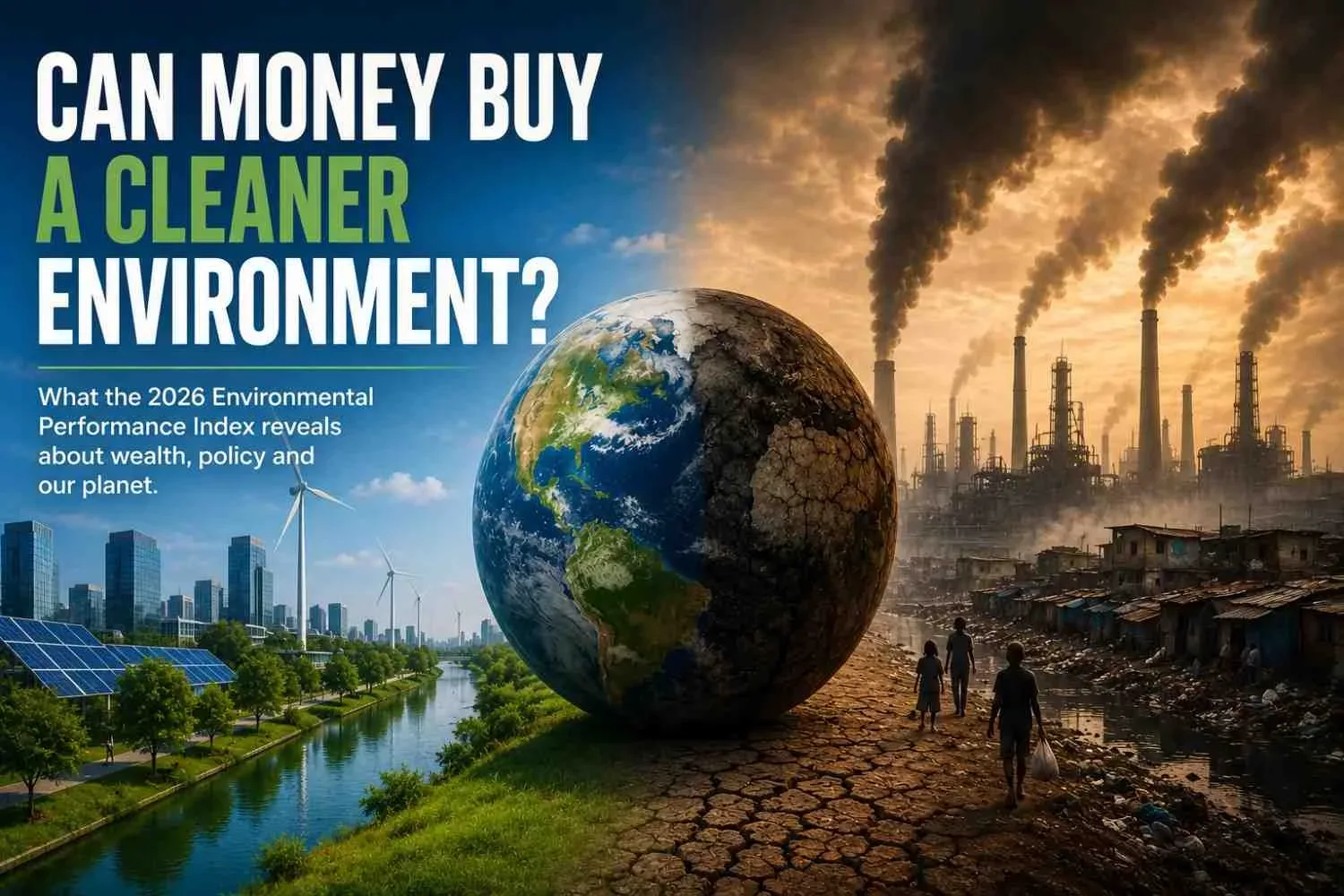
The latest Environmental Performance Index reveals global leaders and laggards, while raising important questions about wealth, policy and environmental progress.
Imagine two countries. One enjoys clean rivers, healthy forests, and fresh air. The other struggles with polluted cities, shrinking biodiversity, and rising climate risks. On the surface, the difference looks financial - richer nations simply have more means to safeguard the environment.
But is it so?
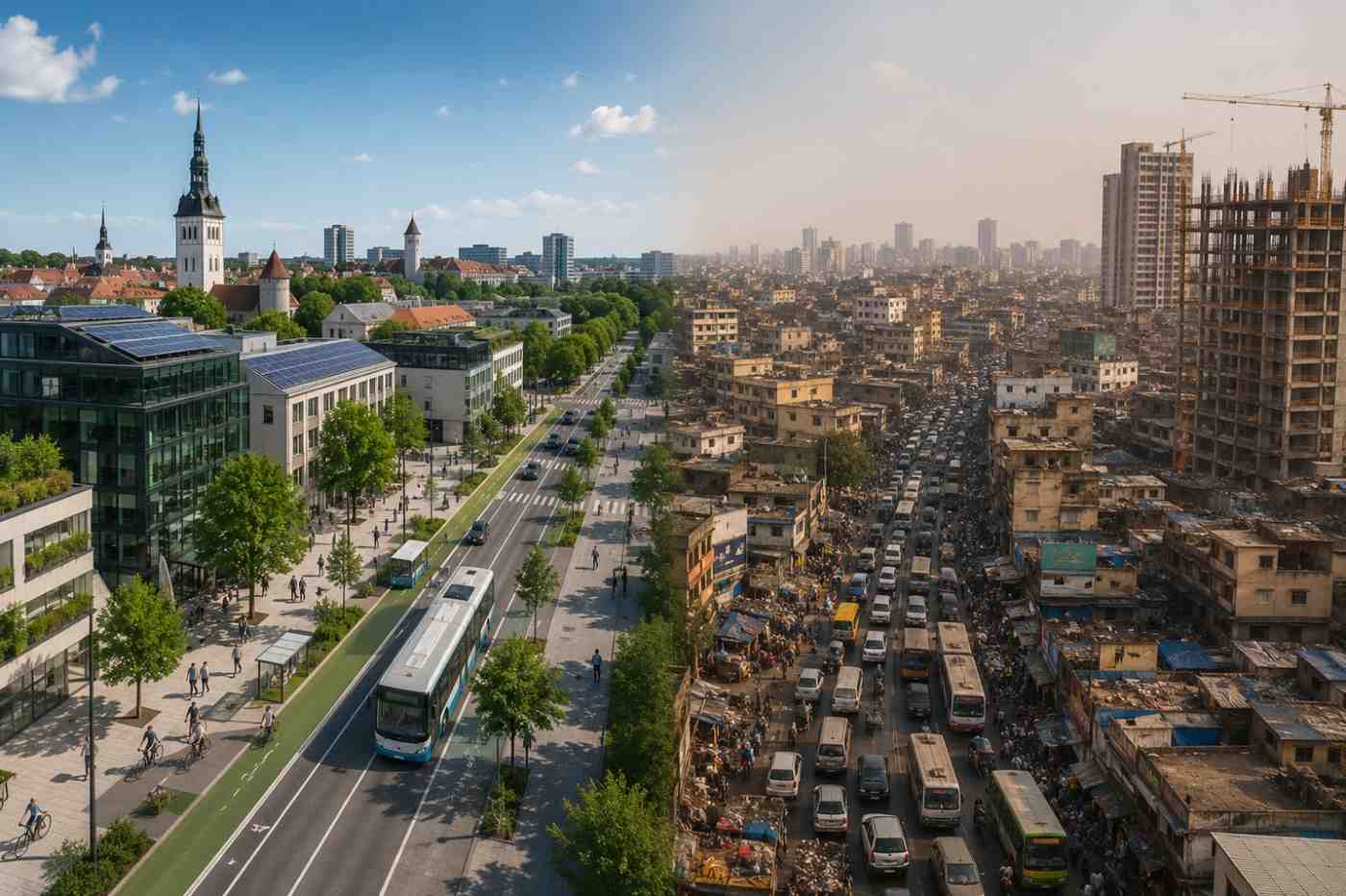
The 2026 Environmental Performance Index (EPI) has once again highlighted on how nations rank on nature conservation and public health.
Estonia claimed the top position this year, while European countries continued to dominate the rankings.
Many lower-income countries continued to rank near the bottom, but the results raise a bigger question: Is environmental performance simply a reflection of economic wealth?
It’s not a simple yes-or-no answer!
Developed by Yale researchers, the Environmental Performance Index ranks countries based on dozens of environmental indicators. It evaluates factors such as air quality, sanitation, waste, biodiversity, climate policy, and ecosystem protection. The index goes beyond a single environmental measure, evaluating how effectively countries pursue economic growth while safeguarding the environment.
The rankings matter every year because they tell a bigger story: not just who’s ahead or behind, but what path each country chose for development.
Estonia's climb to the top is the result of long-term planning. Over the years, it has strengthened environmental policies while investing in clean energy, efficient waste management, and digital systems that support better management of natural resources.
Across Europe, many countries have shown that economic growth and strong environmental standards can advance together.
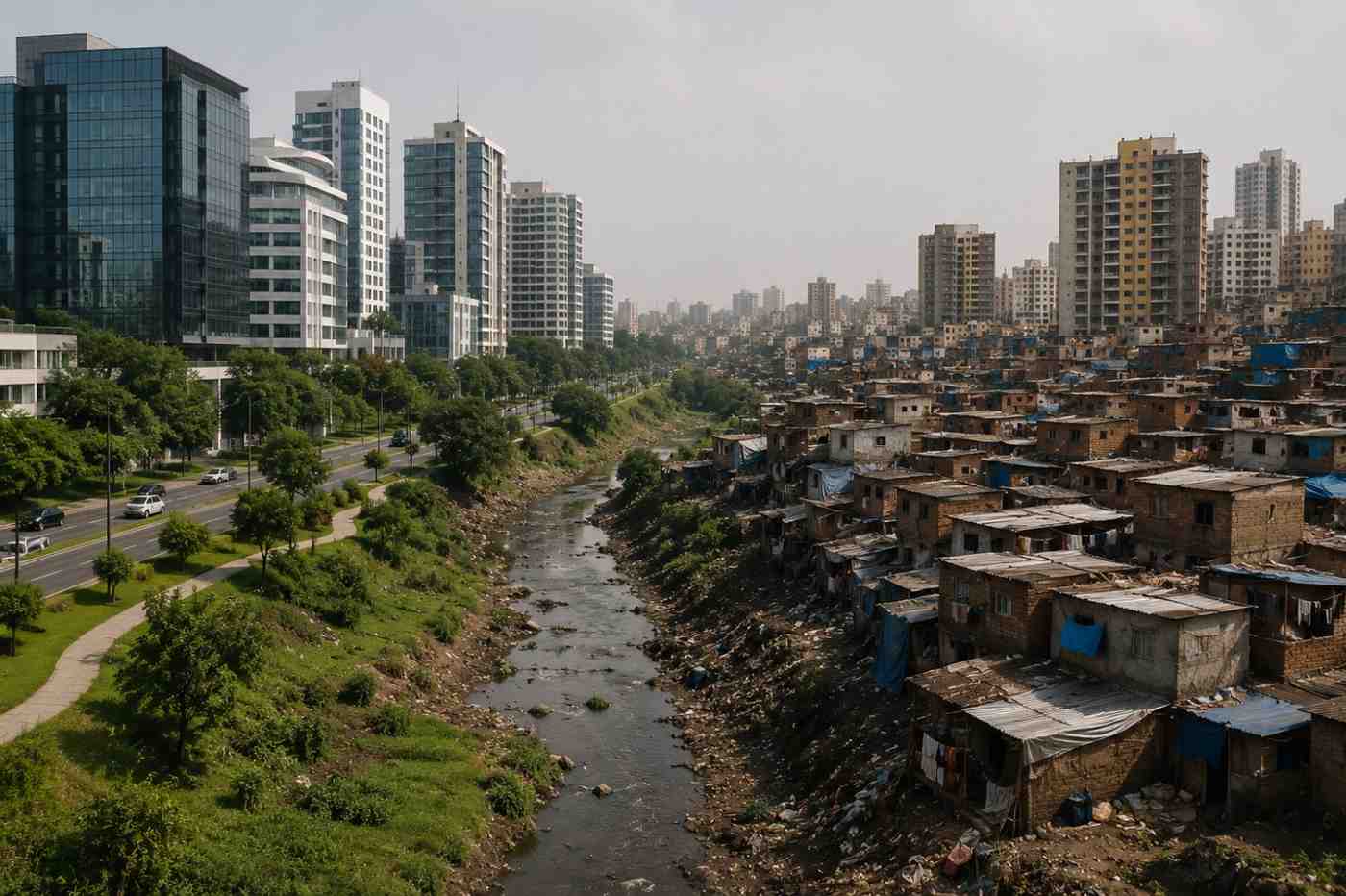
These results raise a further issue: if the European model is so effective, why has it not been applied globally?
For many developing countries, the issue is less about ambition and more about competing priorities. With limited resources, governments must balance environmental action alongside poverty reduction, healthcare, housing, employment, and infrastructure.
Many countries lack the financial resources needed to invest in clean technology or to restore degraded ecosystems.
Rapid urbanisation makes it worse. Unchecked expansion of roads, housing, and industry often leads to higher pollution, shrinking green spaces, and increasing pressure on natural resources.
The challenge is compounded by climate change. Countries with the lowest emissions are often among the most vulnerable to extreme weather, forcing governments to spend scarce resources on recovery instead of long-term environmental improvements.
Comparing countries at different stages of economic development can therefore be misleading. A lower ranking does not necessarily indicate weak environmental commitment. It often reflects differences in income, governance, access to technology, and historical development. Similarly, a higher ranking does not mean every environmental challenge has been resolved.
Experts say the bigger story lies beyond the rankings. Instead of focusing on who tops the list, they encourage a closer look at how countries are improving and where further action is needed. Ultimately, sustained progress is a better measure of success than rank alone.
Countries that steadily improve air quality, expand renewable energy, strengthen waste management, or protect biodiversity are making meaningful progress, even if their rankings remain low. At the same time, top-performing countries cannot afford to be complacent, as environmental and climate challenges continue to evolve.
The 2026 EPI also highlights that environmental protection cannot rest solely with governments.
Businesses can reduce their environmental impact by adopting cleaner production methods and cutting emissions. Researchers help shape better policies through scientific evidence. Communities protect local ecosystems, while individuals contribute by conserving water, reducing waste, and choosing more sustainable products.
Perhaps the biggest takeaway from this year's rankings is that wealth alone does not define environmental success. Lasting progress depends just as much on effective policies, strong institutions, and sustained action.
Experts say lasting environmental progress is built on strong institutions, effective policies, public participation, and long-term planning. Countries that treat sustainability as a continuous priority rather than a short-term initiative are often the ones that achieve enduring results.
The real value of the 2026 Environmental Performance Index lies beyond the rankings. Instead of debating who stands at the top or bottom, it should prompt every country to focus on a more meaningful challenge: What practical actions can we take today to create a cleaner, healthier, and more resilient future?
At the end of the day, environmental progress is measured not by a country's position on a global index but by the difference it makes on the ground-cleaner air, healthier ecosystems, and better lives for the people who rely on them.
Sources:
Centre for Integrated Earth System Information
Yale Centre for Geospatial Solutions



Add a Comment