
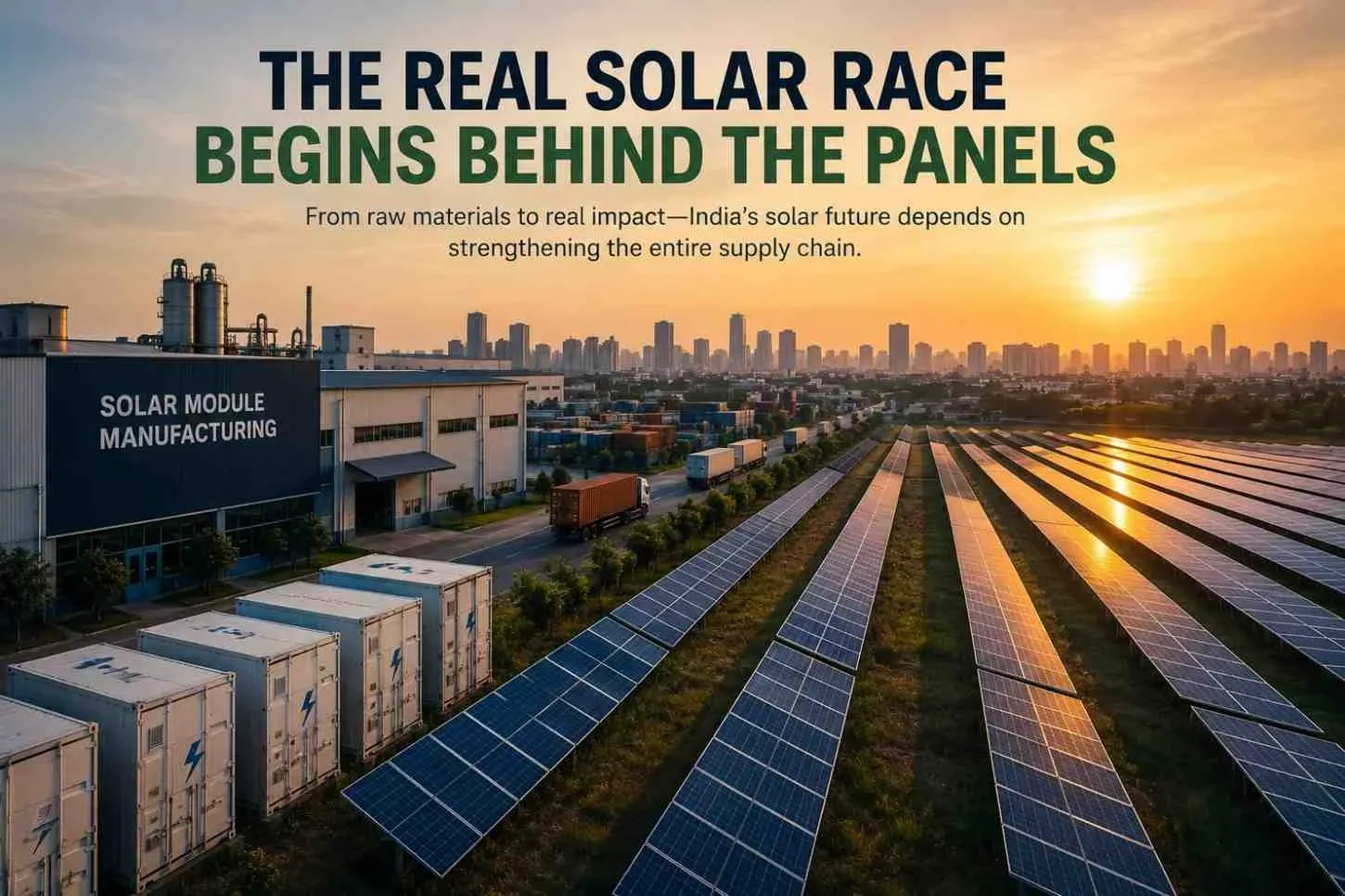
As demand for solar power grows, a less visible challenge is beginning to shape the future of India's clean energy ambitions.
Kolkata | July 27, 2026:
India's solar sector has grown rapidly in recent years, accelerating the country's transition towards cleaner energy. But behind the expansion of solar parks and rooftop systems lies a challenge that could shape the pace of future growth!
As domestic production grows and the Approved List of Models and Manufacturers (ALMM) continues to evolve, the focus is no longer on installing more solar panels. It is on whether India can build a resilient, self-reliant manufacturing ecosystem capable of overcoming long-term supply chain challenges.
The biggest hurdle is the limited availability of solar cells. Although India's module manufacturing capacity has grown rapidly, many manufacturers still rely on imported cells to keep production on track. While experts expect supply pressures to ease in the coming years, companies are gradually adopting vertical integration - expanding in-house manufacturing to strengthen supply chains and build long-term resilience.
The challenge extends beyond manufacturing more solar panels. Producing a solar module involves several stages-from processing polysilicon into wafers, converting those wafers into solar cells, and finally assembling them into modules.
Experts say strengthening every step of this value chain is essential for reducing import dependence and building a more flexible domestic manufacturing ecosystem.
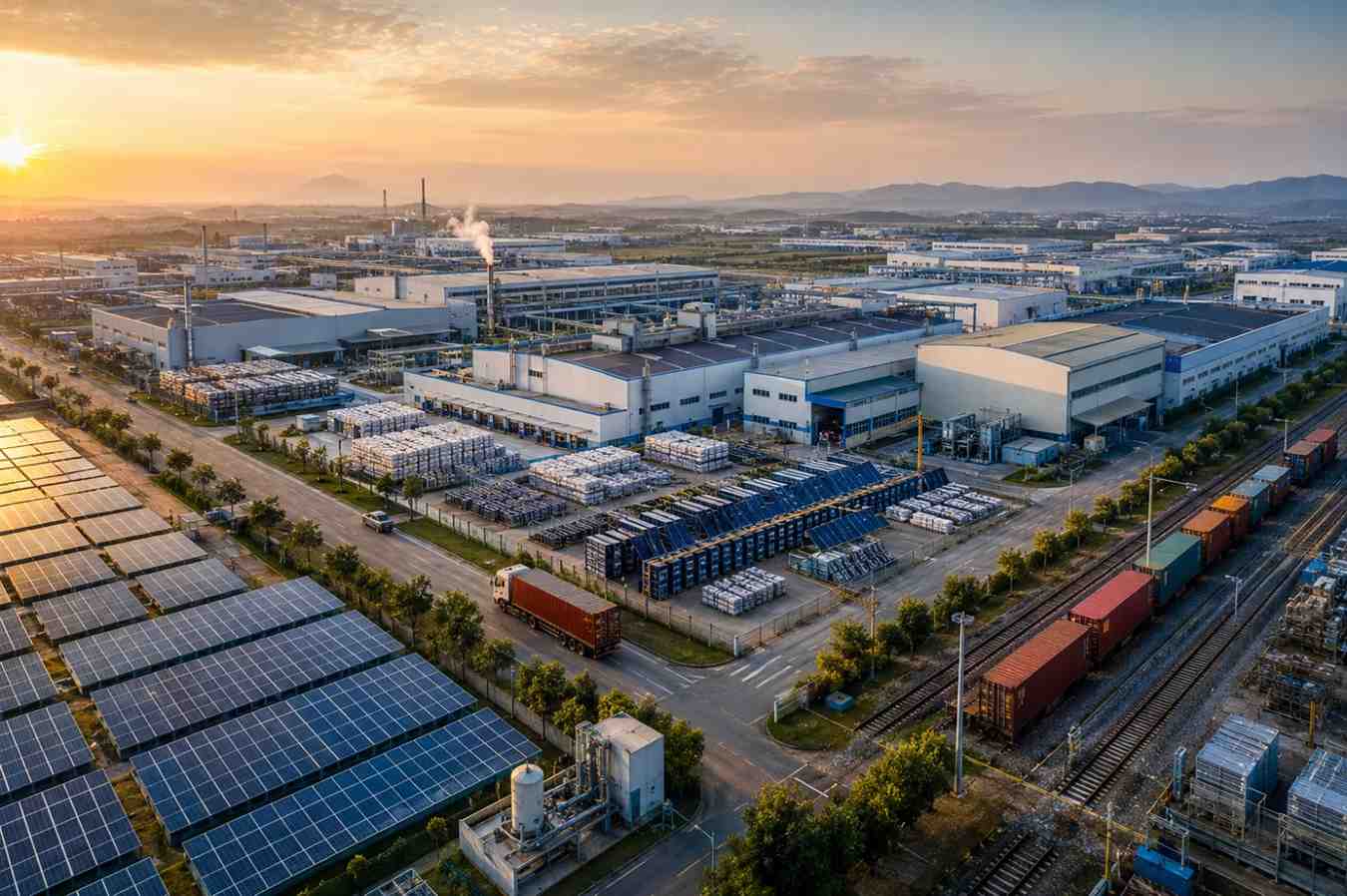
How a Solar Panel Is Made:
POLYSILICON
│
Purified silicon used as the
raw material
↓
WAFERS
Thin slices cut from
polysilicon ingots
↓
SOLAR CELLS
Convert sunlight
into electricity
↓
SOLAR MODULES
Multiple solar cells assembled
into a panel
↓
SOLAR POWER SYSTEM
Installed in homes,
industries and solar parks
Source: MNRE, Industry reports
The revised Approved List of Models and Manufacturers (ALMM) framework is reinforcing the push for domestic manufacturing. But the next phase will depend on execution.
Can local solar-cell production expand fast enough to meet the rising demand? Will manufacturers be able to scale up without increasing costs? And how quickly can new production capacity become operational?
India's Solar Manufacturing Gap
| Manufacturing Segment | Current Situation |
|---|---|
| Polysilicon | Limited domestic capacity |
| Wafers | Developing |
| Solar Cells | Supply remains constrained |
| Solar Modules | Strong manufacturing capacity |
Project developers are closely monitoring these changes. Many say procurement decisions are now being shaped by domestic content requirements. While stronger local manufacturing could improve long-term supply security, companies are also evaluating its impact on equipment availability, delivery timelines, and overall project costs during the transition.
Manufacturers believe the long-term solution lies in enhancing the entire supply chain. They say expanding domestic solar-cell production, bringing new manufacturing facilities online, and improving access to advanced technologies can help ease future shortages while making Indian-made solar equipment more competitive in global markets.
According to industry experts, the focus shouldn’t be limited to large manufacturers.
Smaller technology firms, component suppliers, and equipment makers are also expected to play a crucial role in strengthening India's solar manufacturing ecosystem.
Better access to finance, technology partnerships, and supportive policies could let a wider range of businesses fuel the move towards cleaner energy.
Experts say stronger collaboration between the government, industry, and project developers will be essential.
Clear regulations, reliable procurement policies, and sustained investment in domestic manufacturing can help strengthen the entire solar value chain, pushing India beyond mere panel assembly.
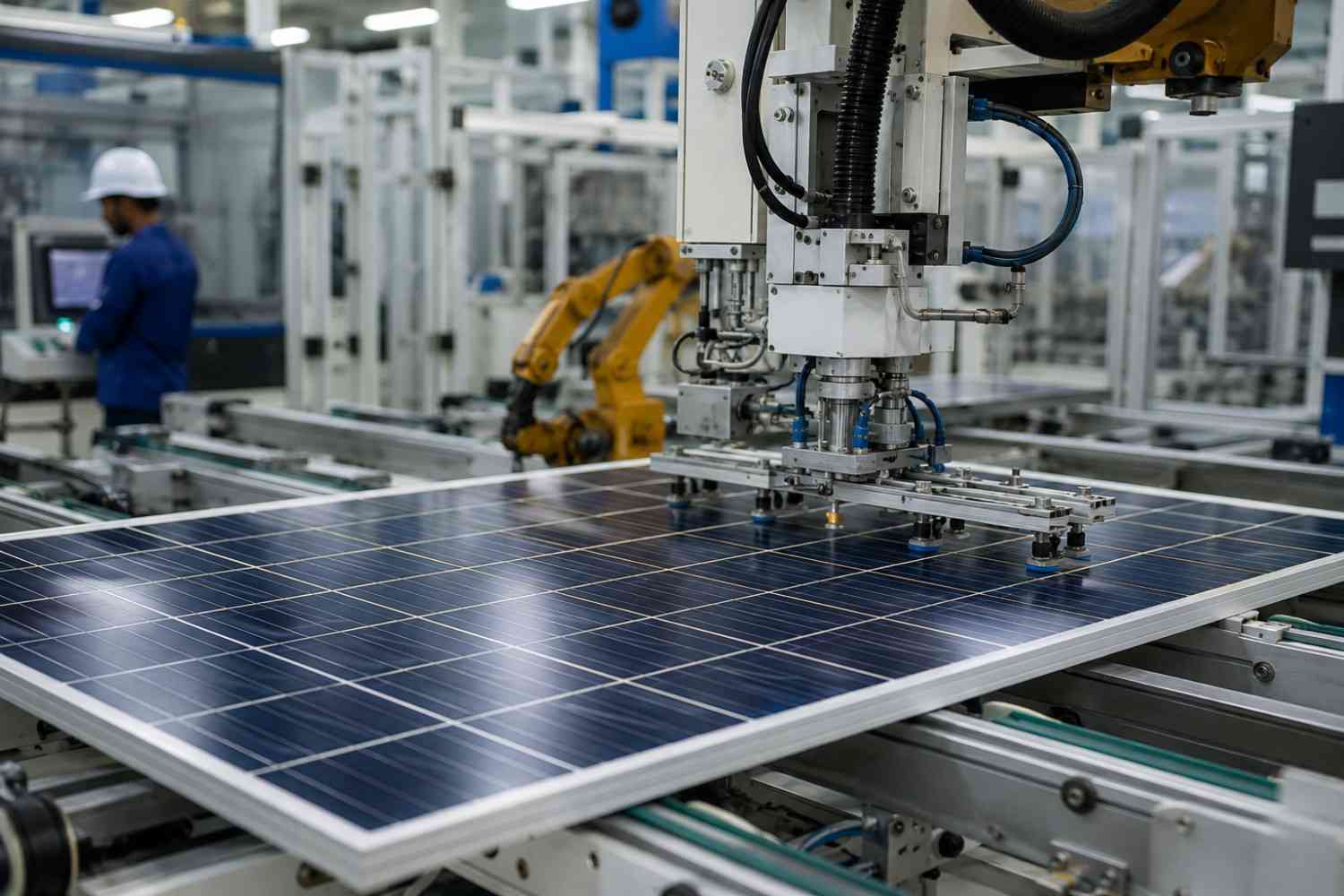
India's clean energy ambitions depend not only on installing more solar panels but also on building a stronger domestic manufacturing ecosystem. While current supply constraints may be temporary, the decisions made today could shape the country's ability to develop a globally competitive solar industry in the coming years.
As India's clean energy transition gathers pace, the next phase will depend not only on expanding solar capacity but also on strengthening every stage of the solar manufacturing value chain.
Sources:
Ministry of New and Renewable Energy (MNRE)
Approved List of Models and Manufacturers (ALMM)
Solar Energy Corporation of India (SECI)
Ministry of Commerce & Industry (Government of India)
- Open-source industry reports on India's solar manufacturing and supply chain





Add a Comment