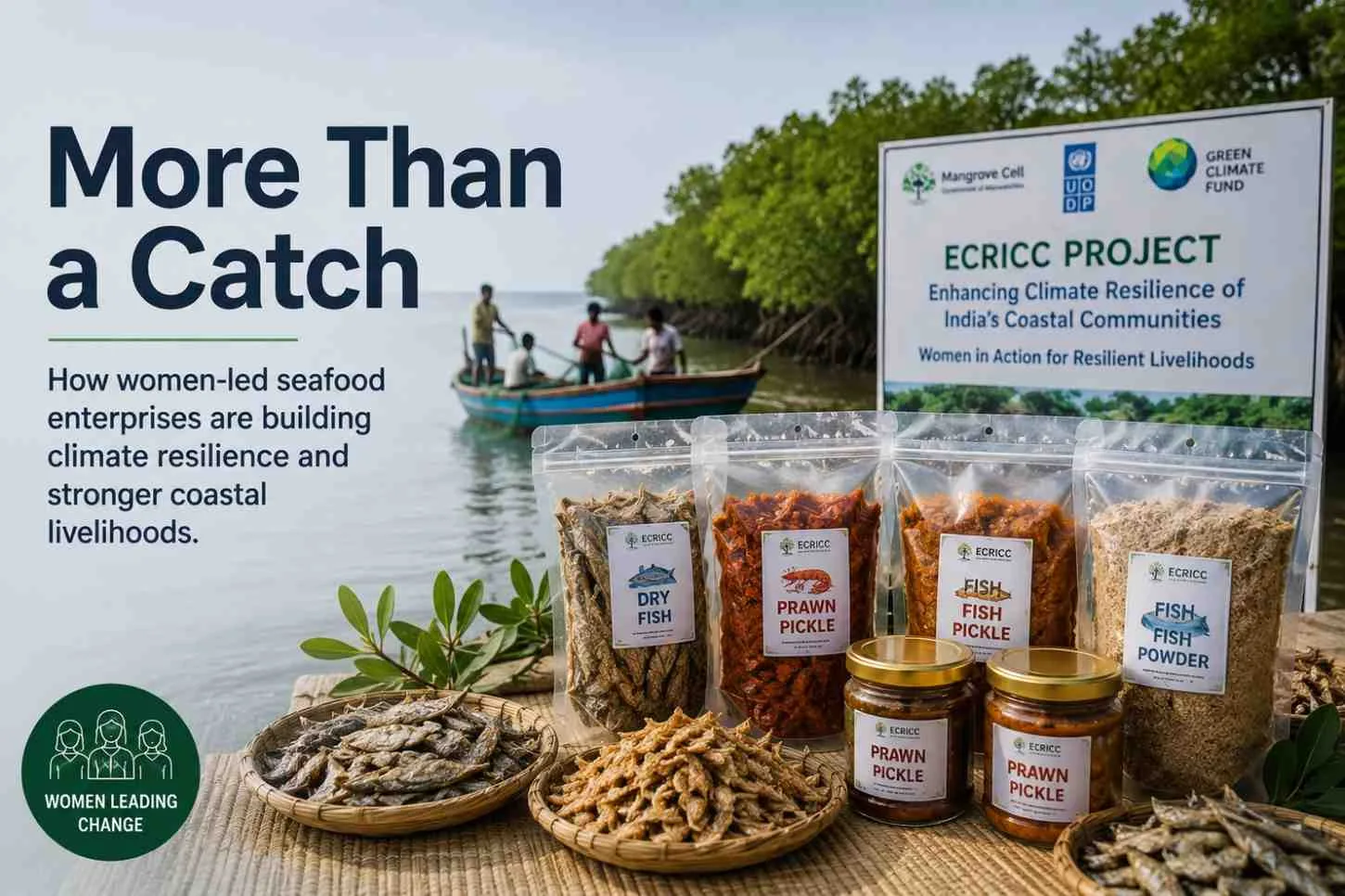
When coastal communities get the right support, the journey from the sea to the market can become a story of resilience, livelihoods and sustainable growth.
Kolkata |24 July, 2026:
For thousands of families along India's coastline, fishing is more than a livelihood- it is a way of life.
But rising sea levels, shifting weather patterns, and declining fish stocks are making it harder for coastal communities to sustain their livelihoods. As climate threats increase, communities are exploring new approaches to protect their incomes and natural resources.
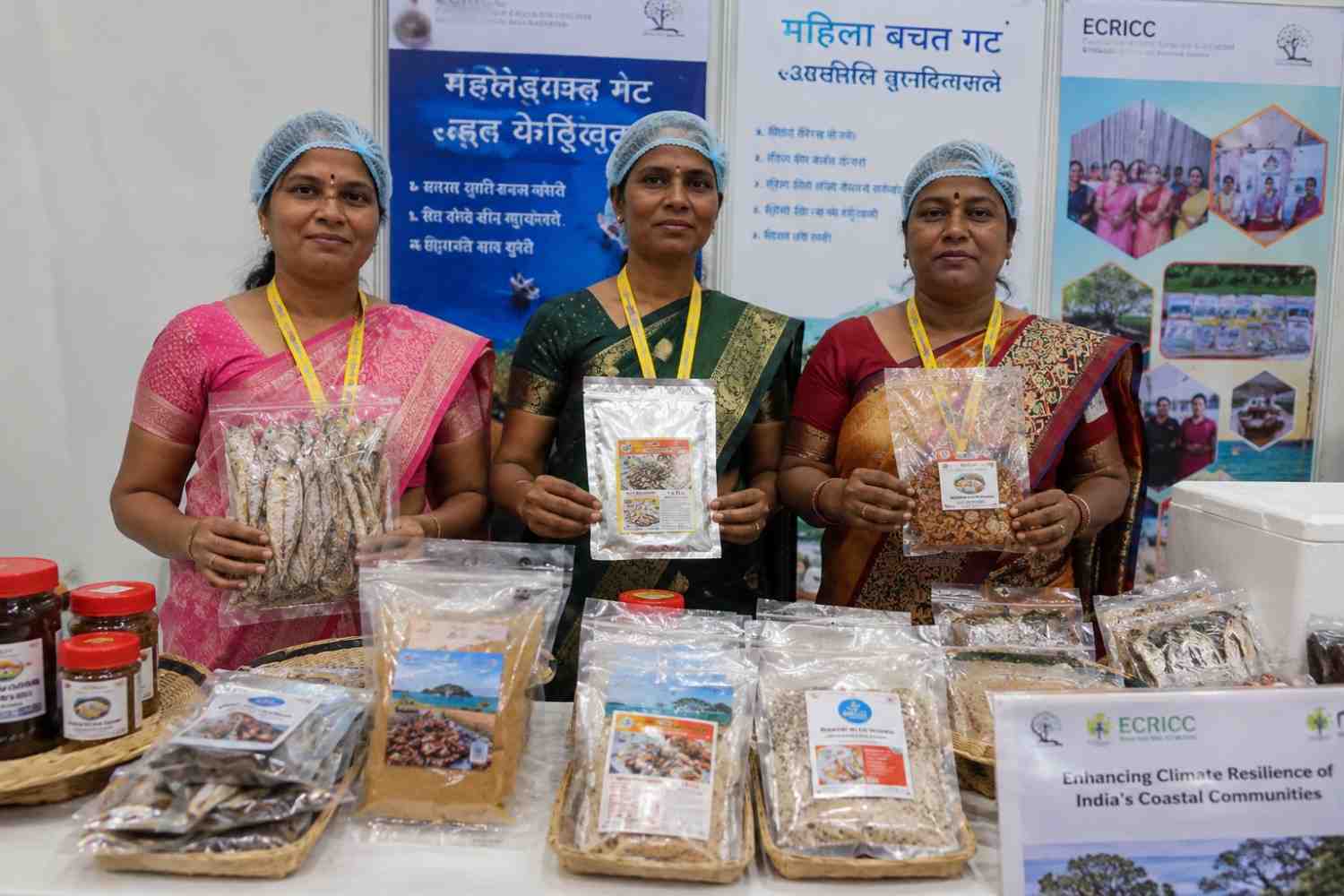
On July 9, 2026, three women's self-help groups (SHGs) from Maharashtra brought value-added seafood products to a national exhibition under the Enhancing Climate Resilience of India's Coastal Communities (ECRICC) project, highlighting new livelihood opportunities for coastal communities.
The initiative proves climate adaptation isn’t just about resilience - it’s about new jobs and income. By backing women entrepreneurs, sustainable fisheries and better market access, it shifts climate action from cost to opportunity.
Instead of selling fresh fish at modest prices, the women are creating value-added seafood products through processing, packaging, and branding, helping them earn more from every catch.
According to experts, this approach boosts household incomes, raises profit margins, cuts post-harvest losses, and generates new jobs in coastal communities.
It also promotes improved food safety standards and gives producers access to wider markets and new customers beyond their local communities.
The process begins with seafood sourced responsibly from local fishermen, followed by cleaning, processing, packaging and labelling prior to distribution through exhibitions, retailers and local markets.
This coast-to-consumer value chain generates employment at every step - from procurement and processing to packaging, branding and marketing. Experts say models like this help communities earn more from existing resources rather than adding pressure on fish stocks.
Local Fishermen
↓
Sustainable Fish Harvest
↓
Cleaning & Processing
↓
Packaging & Branding
↓
Food Safety & Licensing
↓
Exhibitions / Retail Markets
↓
Consumers
The initiative is supported by the Mangrove Cell, the United Nations Development Programme (UNDP), and the Green Climate Fund under the ECRICC project.
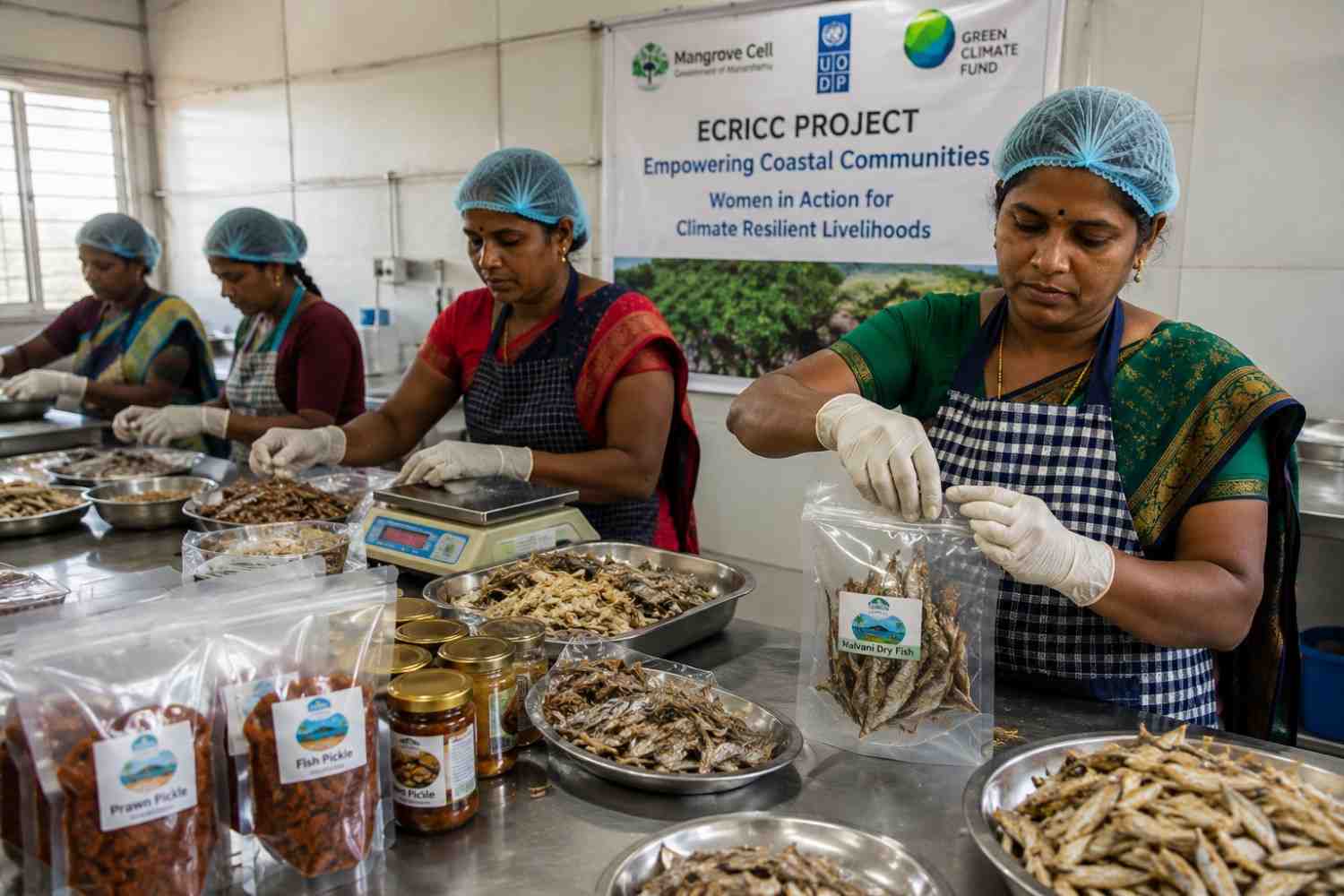
The programme equipped women with skills across the entire business chain; including food processing, quality control, branding, packaging, licensing, and enterprise management, while providing financial and business support too. These skills are helping them build businesses that can withstand climate and economic shocks.
Experts say the real challenge begins after the exhibition. Long-term success will depend on building reliable supply chains, maintaining food safety standards, strengthening branding, improving logistics, and expanding access to stable markets.
Quality products alone are not enough. Without strong support system, community enterprises may find it difficult to compete in larger markets.
Growing coastal businesses is only a part of the solution. Experts say long-term success will depend on balancing economic opportunities with healthy marine ecosystems through sustainable fishing, responsible sourcing, and stronger mangrove conservation.
Sustainable management of local fisheries will be crucial to ensuring marine resources remain available for future generations.
Experts believe wider access to finance, digital sales platforms, and organised retail networks can help women's self-help groups scale their businesses. Continued institutional support will be equally important to ensure growth is environmentally sustainable and community-driven.
| Product | Value Addition | Community Benefit |
|---|---|---|
| Dried Fish | Hygienic processing & packaging | Longer shelf life and higher income |
| Fish Pickle | Ready-to-eat product | Better profit margins |
| Fish Powder | Nutrient-rich food ingredient | Reduced fish waste |
| Prawn Pickle | Premium branded product | Access to urban markets |
| Dry Fish Snacks | Retail-ready packaging | Employment for women |
The Maharashtra initiative suggests that climate resilience is built not only by protecting the environment but also by strengthening livelihoods.
Experts say supporting women-led enterprises, improving seafood value chains, and conserving coastal ecosystems
can create a future where economic development and environmental sustainability reinforce one another.
Document Support:
Press Information Bureau (9 July 2026), Mangrove Cell, Government of Maharashtra,
Enhancing Climate Resilience of India's Coastal Communities (ECRICC), United Nations Development Programme (UNDP), Green Climate Fund (GCF), Food Safety and Standards Authority of India (FSSAI) – Food processing and licensing guidelines (background reference)
Sources:
Press Information Bureau (PIB) – 9 July 2026, Mangrove Cell, Government of Maharashtra,
Enhancing Climate Resilience of India's Coastal Communities (ECRICC), United Nations Development Programme (UNDP), Green Climate Fund (GCF)



Add a Comment