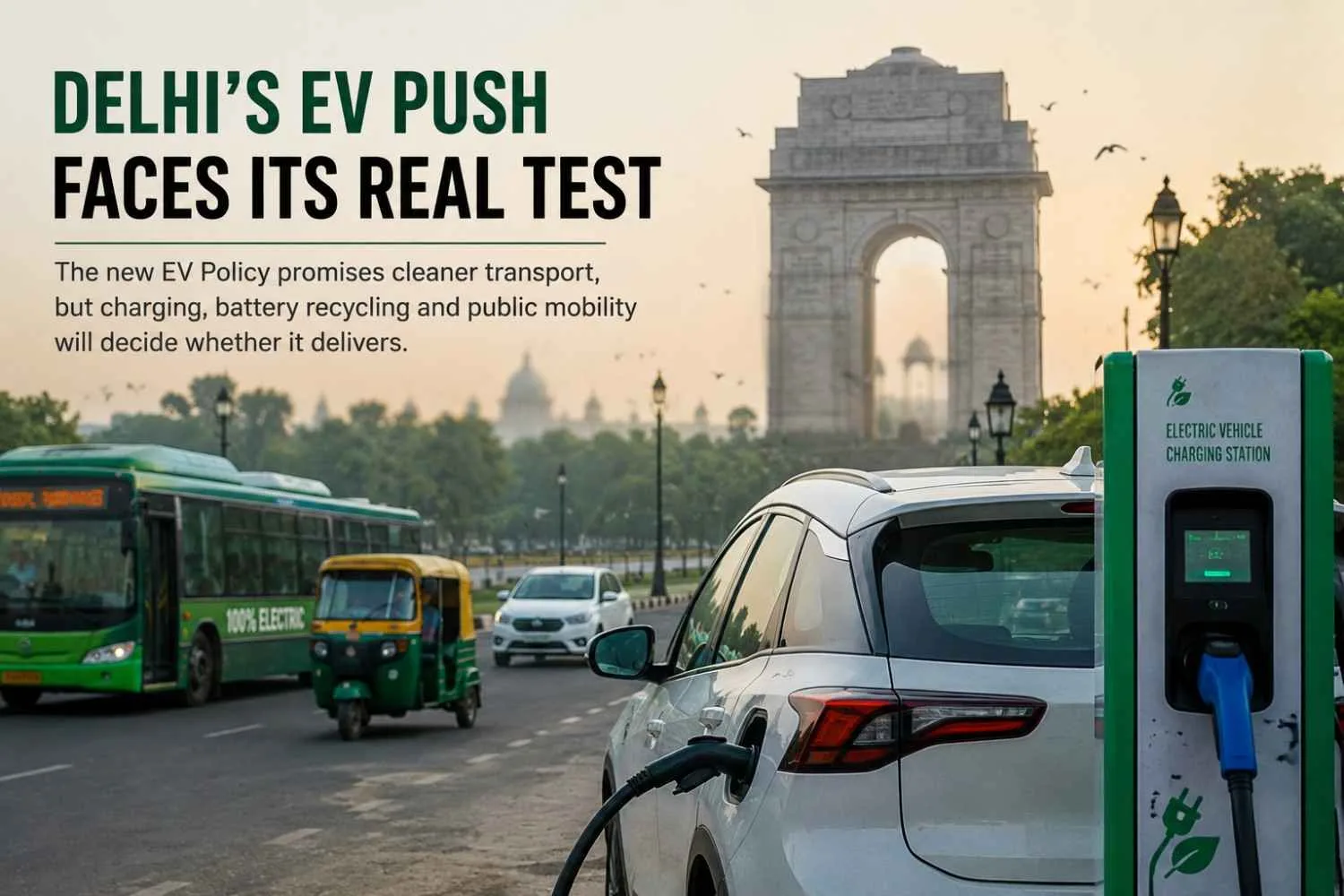
The new EV Policy promises cleaner transport, but charging, battery recycling and public mobility will decide whether it delivers.
Kolkata | July 21, 2026:
Buying an electric vehicle is getting easier. But is owning one that easy?
| Measure | Purpose |
| Purchase incentives | Encourage EV adoption |
| Charging stations | Improve accessibility |
| Battery swapping | Reduce charging time |
| Support for commercial EVs | Faster transition for high-mileage vehicles |
| Battery recycling | Reduce environmental impact |
That’s the central question behind Delhi’s new EV Policy 2026. The plan is to accelerate the shift to cleaner transport through EV incentives, more charging and battery-swapping stations and lower air pollution.
But experts say the real test starts once the vehicle is bought.
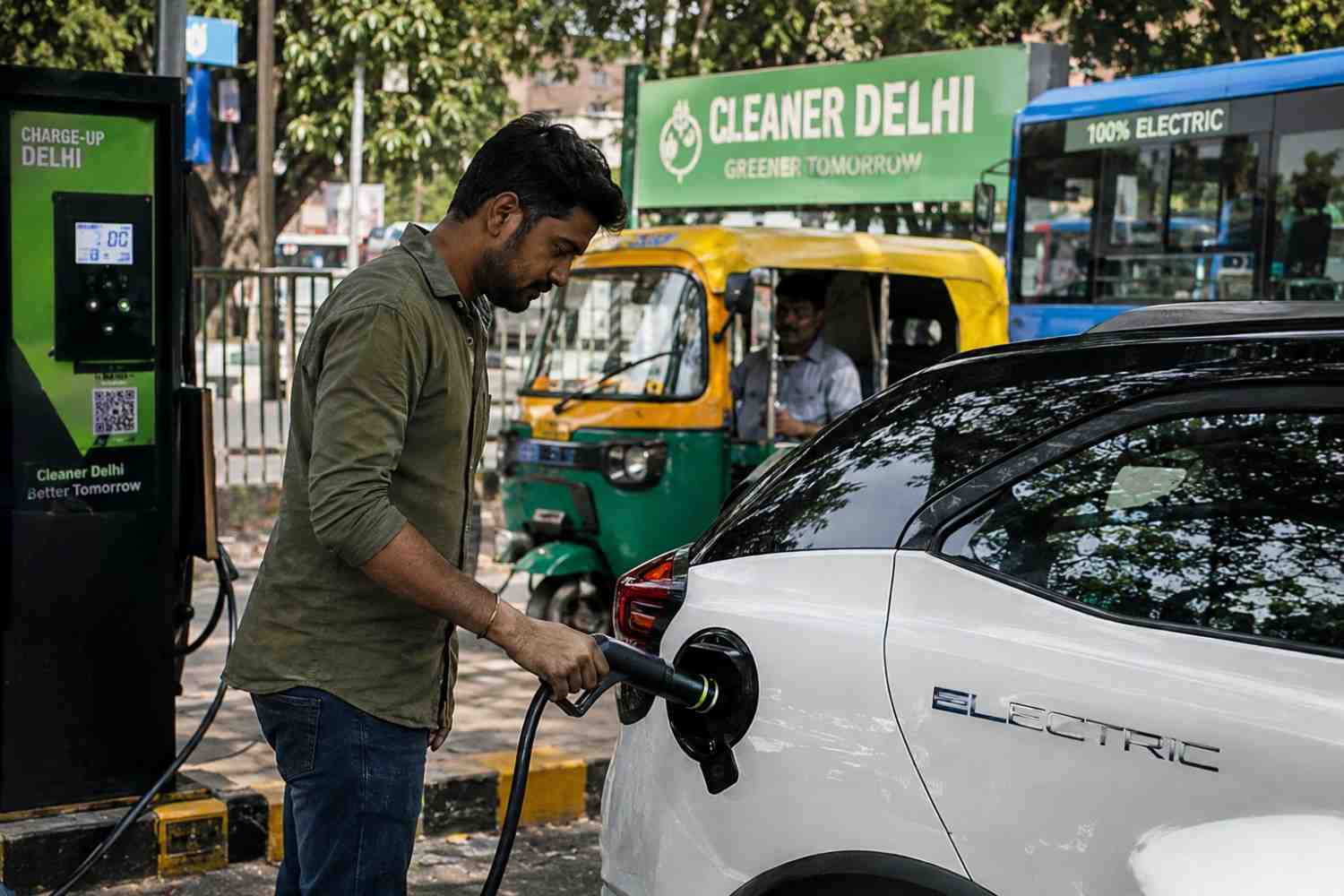
Delhi has struggled with poor air quality for years, as transport continues to be a major source of pollution. The policy goes beyond promoting electric vehicles. It covers two-wheelers, three-wheelers, commercial vehicles and private cars.
Policies can boost EV sales. But infrastructure will determine whether the transition succeeds. The real challenge is whether charging networks, battery-swapping services, and the power grid can grow as quickly as per demand.
Experts say the policy's biggest impact will come from commercial vehicles, which spend most of its time on Delhi's roads. Delivery riders, auto-rickshaws, and fleet vehicles are on the road far more than private cars, meaning electrifying them could have the greatest impact on reducing transport emissions.
Operators like the policy, but charging delays and poor infrastructure are still a daily headache. Delivery workers face long charger queues that hurt both work and wages.
Charging service providers say keeping up with demand will mean rolling out public chargers faster, expanding battery-swapping networks, and speeding up approvals for new infrastructure.
Every new EV sold today also creates a future battery management challenge. With more EVs on the road, more batteries will soon hit the end of their usable life.
According to experts, recycling infrastructure must keep pace with EV sales to prevent long-term environmental harm. A sustainable EV ecosystem will depend on proper battery collection, recycling and reuse.
The policy also brings a new challenge: can Delhi's power grid keep pace? As more EVs hit the road, charging thousands of vehicles could place significant pressure on the electricity network, especially during peak hours.
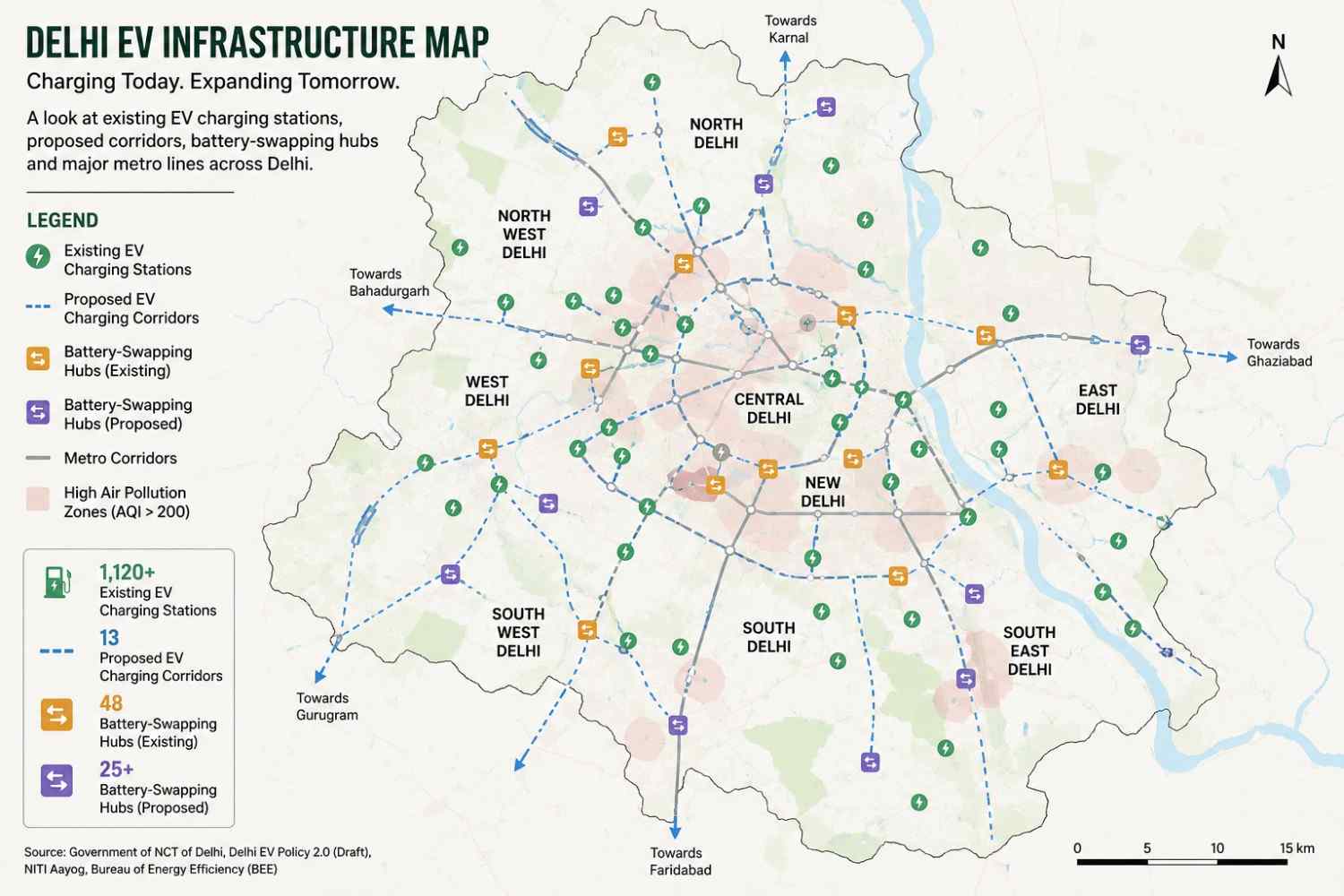
Energy experts say Delhi's long-term EV transition will depend on smart charging, greater use of renewable energy, and better management of electricity demand.
Real impact will come when EVs are paired with reliable public transport and walkable neighbourhoods. Experts argue that cleaner mobility is not only about replacing petrol vehicles with electric ones.
Expanding metro connectivity, improving bus services, building safe cycling tracks and creating pedestrian-friendly roads can reduce traffic while reducing emissions further.
Environmental groups have praised the policy's direction but the real challenge begins now. Incentives may encourage adoption, but effective implementation will determine whether the transition succeeds.
| Measure | Purpose |
|---|---|
| Purchase incentives | Encourage EV adoption |
| Charging stations | Improve accessibility |
| Battery swapping | Reduce charging time |
| Support for commercial EVs | Faster transition for high-mileage vehicles |
| Battery recycling | Reduce environmental impact |
EVs are only half the story. The real test is infrastructure, recycling, public transport, and planning that brings everything together.
Going green in Delhi will take more than just swapping engines for batteries.
The success of Delhi's EV transition will not be measured by the number of vehicles sold, but by whether the transport system can support them.
Sustainable mobility requires more than electric vehicles - it requires the infrastructure to keep them going.
Sources:
Government of NCT of Delhi, NITI Aayog Ministry of Heavy Industries,
- NITI Aayog
- Ministry of Heavy Industries
- , Central Electricity Authority
Delhi Pollution Control Committee, The Indian Express





Add a Comment