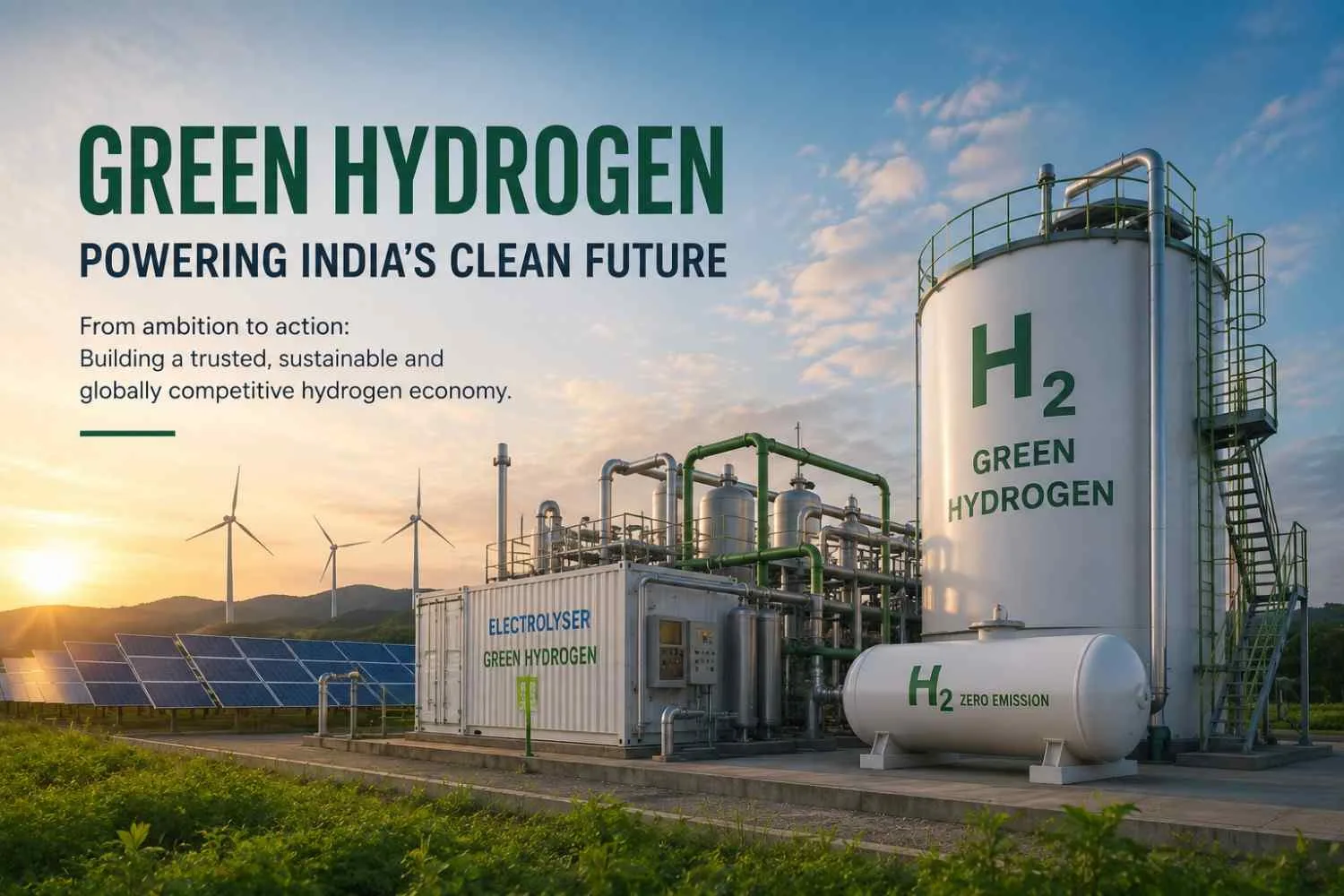
India's green hydrogen ambitions are entering a phase where proving claims may matter as much as making them.
Kolkata | 23 July, 2026:
India is betting big on green hydrogen, with plans to establish itself as a global leader in the emerging clean fuel sector.
As policies take shape and investments grow, the focus is shifting from ambition to execution.
Can India's green hydrogen meet global expectations and earn international trust?
On 2 July 2026, the Ministry of New and Renewable Energy (MNRE) highlighted India's progress under the National Green Hydrogen Mission, with the focus shifting towards certification, quality assurance, and global market preparedness.
Experts say it’s time to move beyond promises.
The real test begins now: can producers meet global benchmarks and win the confidence of international buyers?
Renewable electricity is used to split water into hydrogen and oxygen to produce green hydrogen. It is seen as critical for decarbonising industries that cannot easily switch to electricity, such as steel, fertilisers, refineries and shipping.
Experts argue that making green hydrogen is only half of the task. Proving that it is produced with renewable electricity is equally important, keeping emissions low throughout the process, and meeting certification standards expected by both domestic and global markets.
The launch of the certification portal in June marked a significant step in that direction. It aims to help producers track renewable power, assess emissions intensity, and demonstrate alignment with global sustainability benchmarks.
Renewable Energy
↓
Electrolyser
↓
Green Hydrogen
↓
Certification & Testing
↓
Storage & Transport
↓
Industrial Users
(Steel • Fertiliser • Refineries • Shipping • Heavy Mobility)
Industry experts believe such transparency will make Indian hydrogen more competitive, especially with export markets raising their environmental bar high.
There’s a gap between promise and plant. Many firms have unveiled green hydrogen plans, but commercial production remains the exception.
According to analysts, distinguishing between announced projects and commissioned plants will provide investors, policymakers and buyers with a clearer view of India’s real progress.
Certification and testing are becoming essential to building trust and credibility in the green hydrogen sector.
Experts argue credibility hinges on four things: certified labs, independent checks, digital certification, and clear rules.
In global markets, claims are not enough. Without trusted certification, Indian producers may struggle to earn buyers' confidence.
The transition is expected to begin with industries that use the most energy and produce the highest emissions. Experts expect fertiliser manufacturers, oil refineries, steel producers, shipping firms and heavy mobility operators to emerge as the first major users of green hydrogen. They offer the greatest potential for emission reductions while also ensuring steady demand for producers.
Experts stress that smaller technology firms should not be overlooked.
Numerous start-ups are developing electrolysers, storage systems, sensors, monitoring tools and safety technologies to support India’s hydrogen sector. They argue that better access to funding, testing infrastructure, certification support and government-led pilot programmes would enable these companies to engage more effectively in the expanding market.
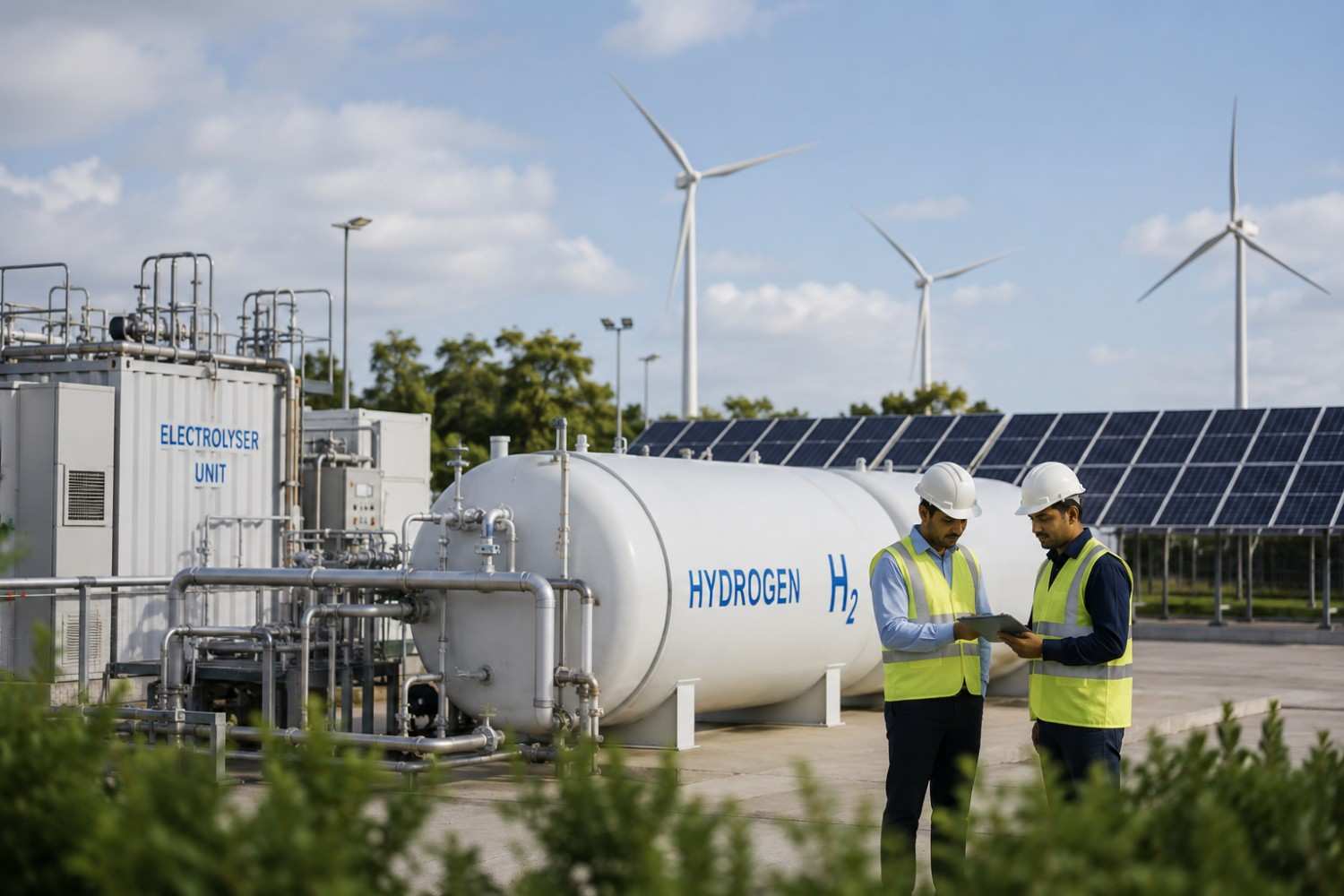
Industry leaders also emphasize that sustained investment in renewable power, transmission infrastructure and hydrogen storage is essential for scaling production sustainably.
They argue that certification should cover more than just renewable electricity - it should also track emissions intensity and additionality to confirm that new clean power is being added, not just existing sources.
Smaller tech companies also need improved access to testing facilities, certification support, funding and pilot initiatives to integrate into the growing national green hydrogen sector. According to experts, greater collaboration between the public sector, research bodies and industry will drive down costs, accelerate tech development and create a more resilient supply chain.
| Current Progress | What Still Needs Attention |
| Renewable energy expansion | Internationally accepted certification |
| Green hydrogen pilot projects | More commissioned commercial plants |
| Certification portal launched | Accredited testing laboratories |
| Government policy support | Strong domestic demand |
| Growing investments | Faster support for technology start-ups |
The National Green Hydrogen Mission offers India a key opportunity to enhance energy security and cut industrial emissions. But experts say the real challenge begins now! India’s green hydrogen ambitions will be measured by credible certification, clear emissions reporting, robust testing and rising demand - not just by targets.
Sources:
Ministry of New and Renewable Energy (MNRE), National Green Hydrogen Mission, Green Hydrogen Certification Scheme of India, Bureau of Energy Efficiency (BEE), Press Information Bureau (PIB), Down To Earth (Background), The Hindu BusinessLine (Background)





Add a Comment