08 Jul 2026
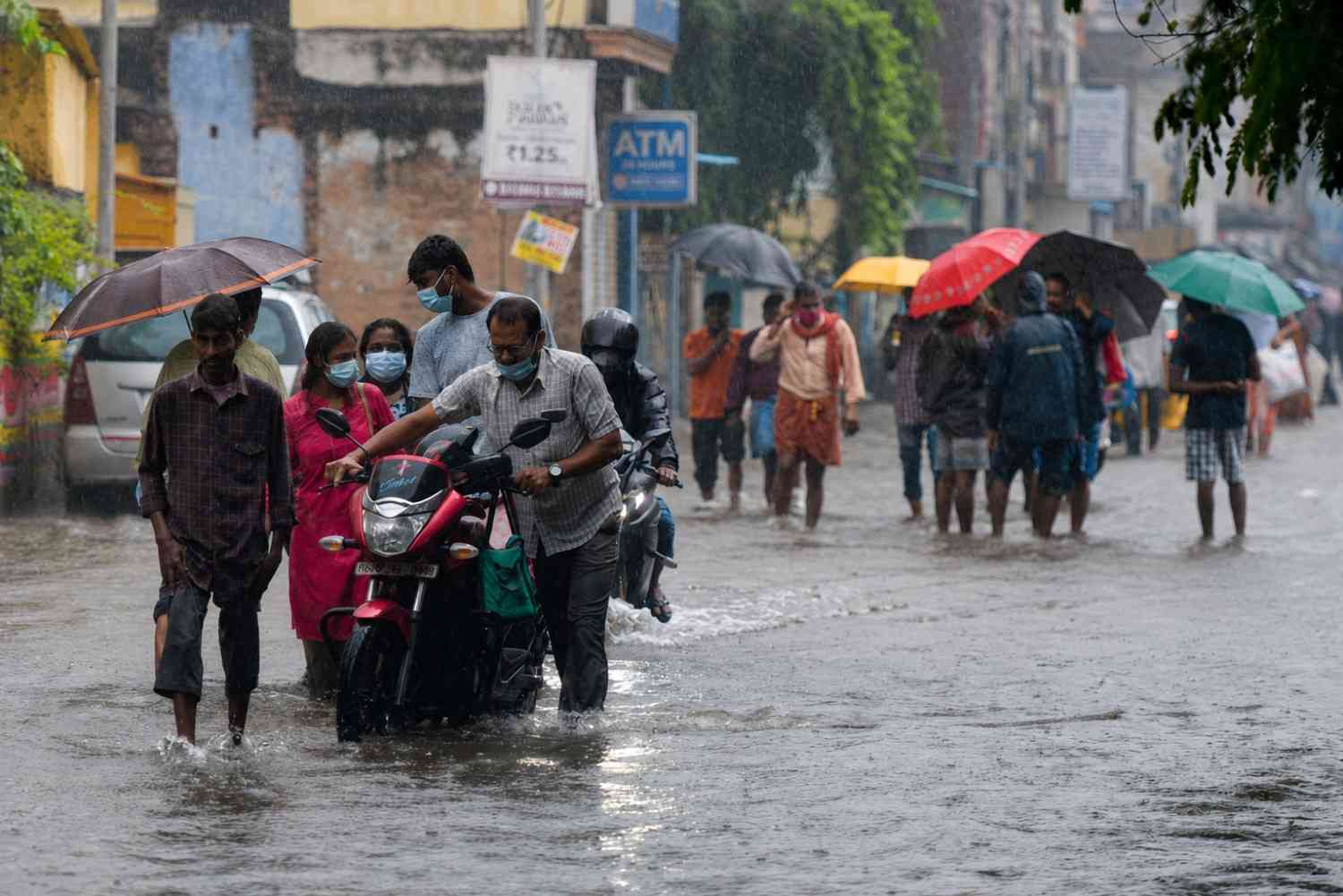
Image courtesy: Imagesbazaar Expensive grocery bills? Neighbourhoods hotter than usual? Unpredictable rains? Well, it’s not your imagination, it’s the present reality. India has been warned about the probability of receiving below-normal rainfall in July 2026. This made June 2026 the driest in over a century. Why you may ask? That is because a monster is awakening in the open waters of the Pacific Ocean for months. Delayed crop sowing, rising vegetable prices and increased pressure on water resources – all of which are influenced by one climate event. A natural climate pattern which happens when sea surface temperatures become warmer in the central Pacific Ocean. How can something so far away, so deep affect India? Distance doesn’t matter; the air circulation is altered at a global level. This leads to the weakening of the southwest monsoon and uneven rainfall patterns in South Asia. This climate event or pattern is known as El Nino. This year, the increasing intensity of El Nino conditions has been observed by the meteorologists. Having triggered concerns related to uneven heavy showers during the crucial monsoon season. But the question is WHY should one care? One should, because this is where your grocery expenses become relevant. Monsoon is more than just a regular season for India’s farmers – it is the backbone of agriculture. The sowing of important crops such as rice, soybean, cotton, and maize may postpone due to delayed rainfall. There have been reports of slower kharif crop planting compared to last year because of late rainfall. When agricultural production becomes less, the consumers pay the price. Decrease in crop yield leads to increase in prices of vegetables, grains, and other food items. This eventually impacts the local market. Image courtesy: Imagesbazaar Another growing concern is Water. Multiple reservoirs depend on monsoon rainfall to restore supplies. Several regions may face lack of water availability if rainfall remains below normal. Which may lead to stricter water management measure both in rural and urban areas. Why does the weather drastically change on a day-to-day basis? One of the recent phenomena faced by some regions in India is very heavy rainfall and thunderstorm one day and heatwaves the very next day. This is the effect of El Nino. One of its most confusing aspects is that it doesn’t just cause less rainfall. It often changes how rain falls. Rather than even showers spread across the whole season, rainfall may occur as sudden bursts of intense storms followed by dry weather conditions. This may cause flash floods in one region while water shortages on another. Such inconsistent weather results in difficulty in irrigation planning by farmers and drainage system management in city authorities. Rise in global temperatures is causing the impacts of El Nino to be more pronounced even though El Nino is a naturally occurring climate cycle. More moisture is held by a warmer atmosphere intensifying extreme weather conditions. Heatwaves become hotter and rainfall becomes increasingly unpredictable. Now, what do we await? The next few weeks will be very crucial for India’s monsoon. El Nino is closely monitored by India Meteorological Department (IMD) since it is expected to persist through the following months. However, some regions may have an improvement in rainfall. For the common people, El Nino is not just a scientific term discussed by the meteorologists. It may be the rising expense of vegetables, lack of water availability in reservoirs, prolonged heat resulting in high electricity bills, and how difficult it is to cope with the uncertain climate changes for the farmers. As the monsoon unfolds, the echoes of a warming Pacific Ocean remind us of a simple truth: in an interconnected climate, even the most distant changes can hit closest to home. Sources World Meteorological Organization (WMO) – Prepare for El Niñohttps://wmo.int/news/media-centre/wmo-prepare-el-ninoScroll.in – El Niño likely to intensify as India's monsoon advances slowlyhttps://scroll.in/article/1093913/el-nino-likely-to-intensify-as-indias-monsoon-advances-slowlyDown To Earth – Tackling the trilemma of El Niño, stagflation and shrinkflationhttps://www.downtoearth.org.in/climate-change/tackling-the-trilemma-of-el-nino-stagflation-and-shrinkflation ...Read more
08 Jul 2026
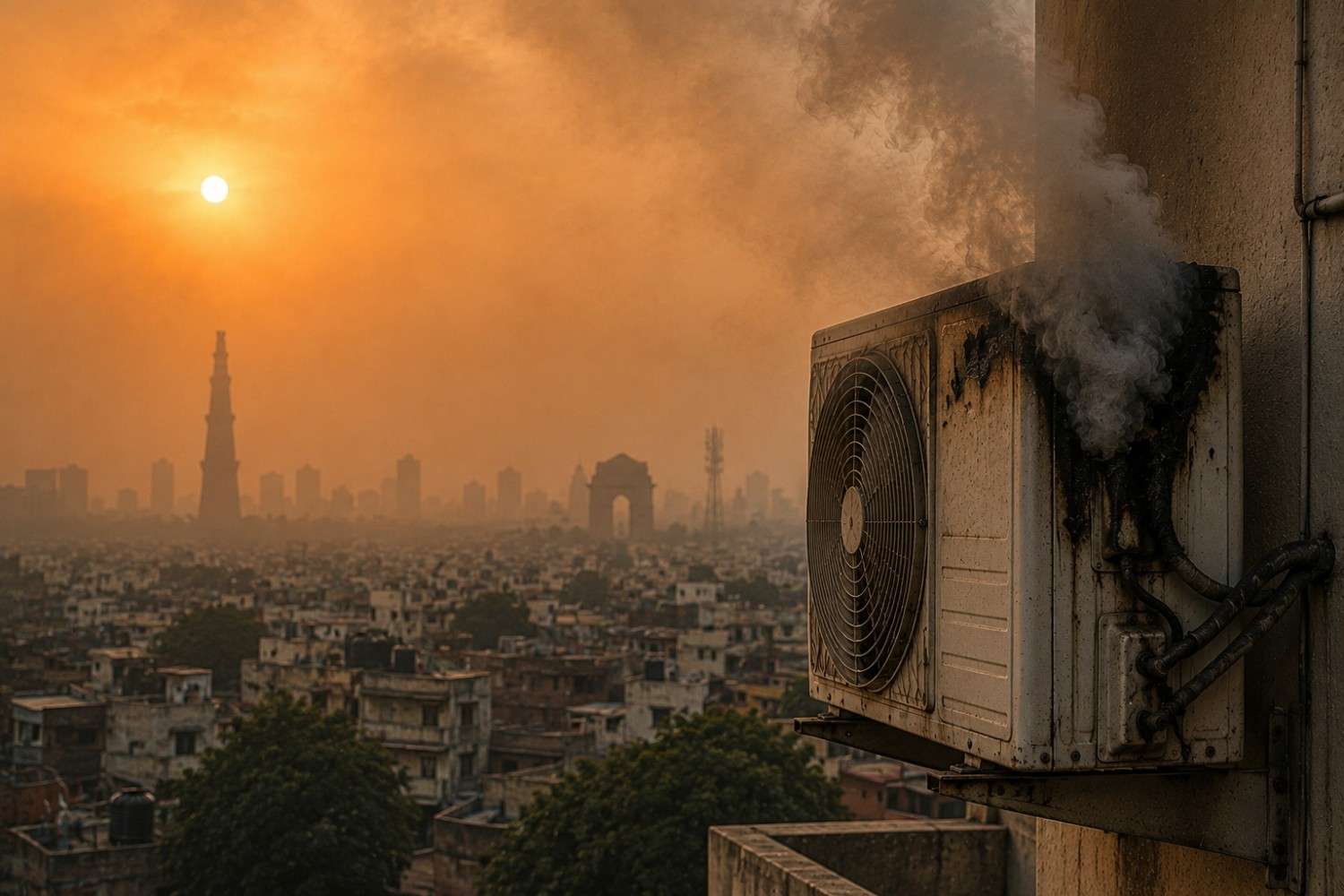
Why Delhi's Air Conditioners Are Turning Into Ticking Time Bombs — And What It Reveals About India's Unfolding Climate Catastrophe A special feature by Prof Ujjwal K Chowdhury, on climate, engineering failure and urban survival, in the context of the bursting air-conditioners in Delhi. | July 2026 By late May 2026, the national capital had become a pressure cooker in more ways than one. As temperatures climbed past 45°C and the asphalt shimmered with trapped heat, Delhi's air conditioners — the very machines bought to guarantee survival — began detonating inside bedrooms, offices, police stations and apartment towers. On May 26, a split AC exploded on the fifteenth floor of a high-rise in Ghaziabad's Indirapuram. Days earlier, nine people had died in a blaze at a residential complex in East Delhi's Vivek Vihar, with investigators pointing to an AC blast and short circuit. Then came the death of retired IAS officer Dhanendra Kumar, who succumbed to smoke inhalation after an explosion in the indoor unit of his air conditioner at his Hauz Khas residence — the third, fourth and fifth such incident inside three weeks. "The Hauz Khas incident is particularly disturbing because the suspected explosion occurred in the indoor unit, which is uncommon," a Delhi Power Department official told the press. “Usually, fires occur in the outdoor compressor due to gas leakage or overheating. But when faulty wiring sparks inside a closed room with a refrigerant leak, the unit itself can become a bomb.” These are not freak accidents. They are the audible, flaming symptoms of a city being pushed past its physical and institutional limits — where a hostile climate, ageing electrical infrastructure, regulatory drift and human negligence have converged into a single, recurring hazard. Why Delhi Is Baking On April 26, 2026, Delhi's temperature crossed 42°C — 3.1°C above the long-term seasonal average. By late June, the city recorded an ambient air temperature of 41.3°C with a heat index, factoring in humidity, of a lethal 51.3°C. This is not a hot spell; it is the acceleration of a structural climatic shift. India's annual average temperature has risen 0.15°C per decade between 1951 and 2016, and the World Meteorological Organization confirms that the eleven years from 2015 to 2025 were the hottest on record globally. Delhi's dense, glass-and-concrete built form compounds this through the urban heat island (UHI) effect: a study by IIT-Delhi's Centre for Atmospheric Sciences found that night-time temperatures in densely built NCR pockets run 2–4°C above surrounding rural areas, because concrete and asphalt absorb solar radiation all day and release it slowly after dark. Consequently, minimum night temperatures have hovered around 31°C — the city never achieves a thermal reset, forcing air conditioners to run continuously against an unwinnable thermal load. A 2026 Centre for Science and Environment (CSE) assessment quantified the damage starkly: 75.78% of Delhi's area is now persistently heat-stressed, with land-surface temperatures crossing 45°C for six or more years running, and 98.72% of the city has crossed that threshold at least once in the past decade. The same study found Delhi's green cover shrinking from 25.36% in 2014 to just 14.14% in 2024, while waterbody footprint fell from 1.25% to 0.99%. "Delhi's infrastructure was not originally built to take on the kind of extreme conditions we're seeing right now," CSE's Rajneesh Sareen has observed. The electricity data mirrors this stress. On June 29, 2026, Delhi's peak power demand touched an all-time high of 8,748 MW — surpassing the previous record of 8,656 MW from June 19, 2024 — and the grid crossed 8,000 MW three times that month alone, with projections of a 9,000 MW peak if conditions persist. This is the cooling trap: rising heat drives longer AC use, which spikes demand, which strains transformers, wiring and building circuits, which in turn raises fire probability. India's national power demand told the same story, peaking at 270.73 GW on May 21, 2026, according to Reuters, even as coal-fired generation surged to 120.20 billion kWh in June — the highest since November 2023 — partly because evening air-conditioning demand outpaced battery storage capacity. The Anatomy of an AC Blast What is loosely called an "AC blast" is technically a violent rupture, arc-fault or fire in the compressor and refrigerant circuit — and Delhi Fire Services estimates that roughly 60% of all fires in the city are of electrical origin, caused by short circuits, overheating, overloading and non-standard appliances. The failure cascade typically unfolds in four stages. 1. Compressor Overheating and Pressure Build-Up The compressor squeezes refrigerant gas to pressures measured in hundreds of psi, and it must reject heat absorbed from indoors into already-scorching outdoor air. When ambient temperatures exceed 43–45°C, or when the condenser coil is clogged with dust, boxed into an unventilated balcony, or paired with a weak fan, "head pressure" climbs beyond the engineered safety threshold. If protective valves fail, the compressor shell can rupture violently, spraying hot oil and refrigerant while producing an explosion-like sound. 2. Flammable Refrigerants India's shift to eco-friendlier refrigerants has quietly introduced a new hazard. Many modern splits use R32 (difluoromethane), classified A2L — "low toxicity, lower flammability" — while some use R290 (propane), classified A3, or highly flammable. R32 has a lower flammability limit of 306 g/m³ and needs 30–100 mJ of ignition energy; R290 is far more dangerous, with a flammability limit of just 38 g/m³ and an ignition energy of only 0.25 mJ — low enough for static discharge to ignite it. When either gas leaks into a poorly ventilated room and meets a spark from faulty wiring or a failing capacitor, ignition follows almost instantly. 3. Electrical Insulation Failure Continuous operation degrades the insulation around internal wiring. Loose terminals, undersized cables, damaged insulation, incorrectly rated MCBs, absent RCCB/ELCB protection, poor earthing and overloaded extension boards generate arcing heat. Many Delhi homes — particularly in older colonies and unauthorised constructions — were wired decades ago for a ceiling fan and a single window unit; today the same panels carry three or four split ACs, refrigerators and washing machines running simultaneously through peak summer hours. 4. The Maintenance Crisis Dust-clogged filters trap heat; gas leaks, damaged insulation and worn capacitors go unnoticed because households routinely skip annual servicing. In several documented incidents, residents had already noticed burning smells, unusual noises or weakening cooling before catastrophe struck — warning signs ignored until it was too late. Industry experts also warn that "turning the AC on during servicing may cause a diesel-like explosion inside the compressor," noting technician deaths from exactly this failure during routine maintenance, often caused by residual nitrogen left in the system after leak-testing, or moisture that corrodes internal parts into acid formation. "A bursting AC is not just a machine failing. It is a city crossing its design limits." Standards, Quality Assurance and the Compliance Gap India is not short of rules. The Bureau of Indian Standards (BIS) mandates compliance under the Air Conditioner and its Related Parts, Hermetic Compressor and Temperature Sensing Controls (Quality Control) Order, 2019, with ISI marking compulsory since October 2023. Key standards include the updated IS 1391 Part 1:2023 for window/unitary ACs up to 10,500 W, IS 1391 Part 2:2023 for split ACs up to 18,000 W (5 TR), IS 8148 for ducted and packaged units, IS 10617 for hermetic compressors, and IS/IEC 60730 for temperature-sensing controls. The problem is not the absence of standards but the absence of a compliance culture stretching from the factory to the wall socket. The Bureau of Energy Efficiency (BEE) star-rating system typically tests efficiency at an ambient temperature of 35°C, yet many standard Climate Class T1 compressors are not engineered for continuous multi-day operation at 50°C — experts argue the government must strictly mandate T3 (Tropical) climate-class compressors, rated for up to 55°C, for all units sold across North India. Meanwhile the aftermarket servicing sector remains largely unorganised: uncertified imports, counterfeit capacitors and cables, incompatible refrigerant mixing, and "bypass fixes" — such as overriding a tripping breaker instead of diagnosing the fault — turn certified appliances into fire traps. As Schneider Electric's technical documentation notes, an MCB's bimetallic strip is meant to trip under overload heat; if the breaker is substandard or wrongly rated, the safety mechanism becomes "a silent accomplice to disaster." Government Response: Parameters and Their Enforcement The Delhi government has not been passive. Chief Minister Rekha Gupta unveiled the Delhi Heatwave Action Plan 2026 as temperatures crossed 42°C, operationalising National Disaster Management Authority (NDMA) guidelines that classify heatwaves as state-specific disasters eligible for State Disaster Response Fund financing. Under the plan, 339 health centres across 13 districts are on high alert, more than 30 hospitals have set up five-bed "cool rooms," 39 Quick Response Teams have been deployed, construction work is banned between noon and 3 p.m. on severe heatwave days, and satellite data has flagged thermal hotspots — Ayanagar, Najafgarh, Safdarjung, Wazirpur, Jahangirpuri, Khayala, Shastri Park and others — for targeted cooling intervention. A Cool Roof Policy 2026 is being rolled out, with reflective coatings already tested at Kashmere Gate ISBT. India's Heat Action Plan framework now covers over 250 cities and districts across 23 heat-prone states, and the Supreme Court's 2024 judgment in MK Ranjitsinh v. Union of India recognised the right to be free from adverse climate-change impacts under Article 21. Yet experts caution these remain emergency responses rather than structural adaptations. Enforcement of AC-specific safety parameters — mandatory pre-summer electrical audits, licensed installation, thermographic panel scanning — is patchy at best, particularly in informal settlements, coaching hostels and older housing societies where inspections are rare and fire NOCs are often paper rituals rather than lived safety records. Health Hazards: The Invisible Epidemic Extreme heat is a mass-casualty event long before any AC bursts. A May 2026 study in Frontiers in Environmental Health estimated that a single day of extreme heat causes approximately 3,400 excess deaths nationally, while a five-day heatwave is linked to nearly 30,000 extra deaths — figures that dwarf the 500 to 1,500 heat-related deaths officially counted by government agencies each year. The study found a two-day heatwave associated with a 14.7% rise in daily mortality across ten major Indian cities, with Delhi, Ahmedabad and Varanasi showing among the strongest heat-mortality associations. "The five states bearing the highest heatwave mortality burden account for 66% of national excess deaths while contributing only 29% of India's GDP," the study's authors noted, calling it "a profound and troubling environmental injustice." Uttar Pradesh alone recorded roughly 8,056 excess deaths in a five-day heatwave scenario. The World Health Organization has separately warned that extreme heat worsens cardiovascular and respiratory disease, exacerbates diabetes-related complications, triggers acute kidney injury, and can cause fatal heatstroke within hours — risks concentrated among the elderly, children, outdoor workers and residents of poorly ventilated homes. Once an AC unit catches fire, a second wave of harm follows: incinerated plastics, printed circuit boards and polyurethane foam release carbon monoxide and cyanide gas, and in many documented Delhi cases it is smoke inhalation — not flame — that proves fatal, as in the death of the retired IAS officer at Hauz Khas. Accident probability cannot be reduced to a single number, because it depends on unit age, refrigerant type, wiring quality, ventilation, installation standards and maintenance discipline. But the pattern is unambiguous: risk climbs sharply whenever several weak links compound — an ageing compressor, a dust-choked coil, substandard wiring and skipped servicing, all operating under 45°C-plus ambient stress. Reuters reported that Delhi Fire Services logged over 9,000 fire calls between April and June 2024 alone — more than double the previous year — with fire deaths more than tripling, and officers attributing nearly three-quarters of summer blazes to electrical failure linked to surging AC and appliance use. Preventing the Next Blast: Technical and Physical Changes Preventing AC explosions inside homes, offices and educational institutions demands a layered, non-negotiable retrofit agenda. Electrical Infrastructure Every AC installation needs a dedicated circuit from the distribution board, correctly sized copper wiring, a properly rated MCB, RCCB/ELCB leakage protection, effective earthing and a voltage stabiliser to shield compressors from summer grid fluctuations. Extension boards for high-draw appliances must be eliminated outright. Homes older than fifteen years should undergo mandatory electrical audits, and multi-AC buildings — offices, schools, hostels, hospitals — should commission annual thermographic scanning of panels and high-load circuits before peak summer. Installation Standards Outdoor units require at least 30 centimetres of clearance from walls and obstruction-free airflow zones — never boxed into a sealed balcony where hot exhaust recirculates into the intake. Indoor units must avoid confined spaces where a refrigerant leak can reach explosive concentration. For R290 systems, charge-size limits under IEC 60335-2-40 must be strictly respected, and only sealed, leak-tested components should be used. Mandatory Servicing Annual pre-summer maintenance must cover filter and coil cleaning, refrigerant-level checks, capacitor inspection for bulging or leakage, and compressor amp-draw testing, carried out only by BIS-certified technicians trained specifically in flammable-refrigerant handling. Warning signs — burning smell, repeated tripping, unusual noise, weak cooling, ice formation, hissing, socket heating or frequent on-off cycling — must trigger immediate shutdown and professional inspection, never another restart. Building-Level Fire Safety Smoke detectors should be installed near every AC-equipped room, Class-C electrical fire extinguishers must be accessible, staircases kept clear and terrace doors never locked during occupancy. Schools and colleges need documented AC maintenance logs, electrical safety certificates, evacuation drills, and automatic gas-leak detection with shutoff valves for larger centralised plants. Housing societies should maintain a summer fire register tracking servicing status, load upgrades and emergency-exit audits. Behavioural Discipline Setting the thermostat between 24°C and 26°C — rather than 18°C in a 45°C environment — prevents the compressor from running endlessly without a natural trip cycle. Smart timers that force 15–20-minute operational breaks every few hours allow compressors to cool physically rather than run continuously against thermal overload. "Cooling cannot remain a private consumer choice when heat has become a public-health emergency." The Ecological Battle: Cooling Delhi Without Burning the Planet Preventing individual AC explosions is, ultimately, a symptom-level fix. The deeper pathology is that Delhi has engineered itself into a city that cannot survive its own climate — and air conditioning, used as the sole remedy, worsens the very crisis it responds to: compressors extract indoor heat and dump it outside, adding to ambient temperature and electricity demand that, if fossil-fuel powered, deepens the warming loop. The International Energy Agency calls cooling demand one of the "critical blind spots" of the energy transition, projecting space-cooling energy use in buildings to rise nearly 4% annually through 2035 under current policy, with each 1°C of outdoor warming in India already associated with a 7 GW rise in peak electricity demand — a figure IEA analysis suggests could reach 12 GW per degree by 2030 without efficiency intervention. Urban Forestry as Thermal Infrastructure Delhi retains roughly 18,000 parks across nearly 20,000 acres and over 8.5 square kilometres of Central Ridge forest, yet an estimated 70% of this green cover is low-density and degraded, offering little real cooling. Research from the Rocky Mountain Institute finds that green cover can lower physiologically equivalent temperatures by 5–14%, urban water bodies can cool localities by up to 8°C, and a single mature tree delivers cooling equivalent to a 7-kilowatt air conditioner through shade and evapotranspiration. The Master Plan for Delhi 2041 must move beyond per-capita green-space metrics to mandate minimum patch sizes, ecological connectivity and protection of the Yamuna floodplain as a city-scale thermal regulator rather than developable real estate. Cool Roofs and Cool Pavements Delhi's Cool Roof Policy must expand from pilot projects into mandatory bylaws for all new construction and major renovation, since reflective roofing can cut indoor temperatures by 2–5°C and reduce AC load by up to 20%. Tamil Nadu's "Green Schools" initiative has already demonstrated classroom temperature reductions of 3–4°C through cool-roof coatings — a replicable model for Delhi's schools and anganwadis. Cool, permeable pavements should replace solid concrete at bus stops and pedestrian corridors to cut surface heat and allow the ground to breathe. Blue-Green Infrastructure A study in the journal Sustainability cautions that in dense megacities, "quantity-focused greening strategies are insufficient" — cooling effectiveness depends on spatial configuration and integration with urban form, and fragmented small parks deliver far less relief than consolidated green cores. Corridors along the Najafgarh drain and Shahdara belt should be retrofitted as multifunctional blue-green infrastructure, pairing vegetation with restored water features to maximise evaporative cooling across dense residential-industrial zones. Passive Cooling and Building Codes India's Cooling Action Plan (ICAP, 2019) targets a 25–40% cut in cooling demand by 2037–38 through passive design. For Delhi this must become enforceable building code: correct orientation, natural cross-ventilation, thermal mass, external shading (chhajjas, brise-soleil, jaalis), stack-effect ventilation through courtyards and atria, and high-thermal-mass or insulated materials such as AAC blocks and double glazing. Government buildings and educational institutions should lead by example, adopting cool roofs, green walls and courtyard designs that reduce mechanical-cooling dependence rather than expand it. Clean, Managed Electricity Delhi's cooling future must be powered by accelerated rooftop solar, battery storage, demand-response tariffs, 5-star inverter AC adoption, and district cooling in institutional clusters, alongside mandatory 24–26°C set-points in public buildings. Discoms should use smart-meter data to flag dangerous load spikes at the transformer and feeder level and mandate local upgrades before failure — treating grid stress as a fire-prevention measure, not merely an efficiency one. Heat Governance and Finance Because the states bearing the highest heatwave mortality burden contribute only 29% of national GDP, they cannot finance adaptation alone. Delhi, as the national capital, should anchor a Centre of Excellence for Heat Resilience and Sustainable Cooling — coordinating research, technician certification, building-compliance audits and neighbourhood-level heat shelters in schools, community halls, libraries, mohalla clinics and metro stations during red-alert days. Living in the Pressure Zone Delhi's exploding air conditioners are not merely mechanical failures. They are the audible, flaming evidence of a city where the built environment, the electrical grid, the regulatory framework and the climate itself have all entered a zone of dangerous pressure. Each explosion signals that appliances depended on for survival are being pushed beyond their engineering limits; that refrigerants designed to protect the ozone layer can burn if mishandled; that wiring installed decades ago cannot carry the electrical load of a warming world; and that the poorest citizens bear the heaviest heat burden even as the wealthy retreat into sealed, climate-controlled interiors. "We are not experiencing a series of hot summers," says Dr Vijaya Kumar, a climate resilience specialist. "We are experiencing the early normalisation of a climate regime for which our cities were never designed. Every AC blast is a signal that our technological adaptations are failing because our ecological foundations have already collapsed." Delhi cannot air-condition its way out of extreme heat: there are not enough compressors, not enough electricity, and not enough time. The only durable answer is to cool the city itself — through trees, water, reflective surfaces and buildings that breathe — while simultaneously enforcing the electrical and installation discipline that keeps individual machines from becoming ignition points. Until both fronts are engaged with equal urgency, the air conditioners will keep running, the pressure will keep building, and the explosions will keep coming. The real question is no longer whether the next unit will burst, but whether Delhi can find the political will to stop the city itself from doing the same. ...Read more
08 Jul 2026
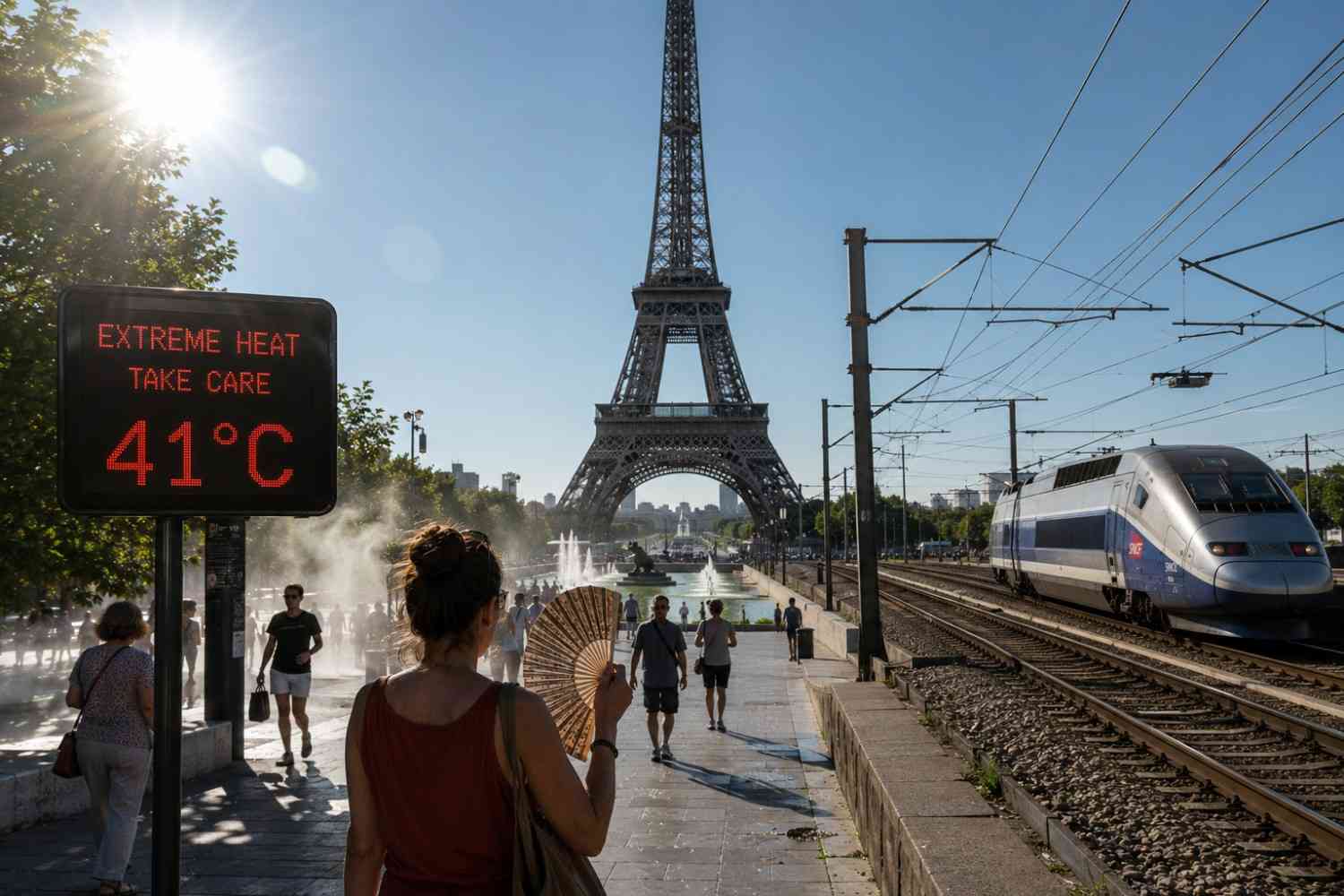
How Europe's Coldest-Built Continent Became Ground Zero for a Warming Planet — and What Its Scramble for Fans, Ambulances and Answers Tells the Rest of Us Paris residents cooling themselves at the Trocadéro fountains. Berlin police training water cannons on crowds at an open-air concert. Belgian rail managers cutting a hundred trains a day because the tracks themselves could buckle. Currys, the British electronics retailer, reporting a nearly 3,000 percent surge in fan sales in a single weekend. These are not scenes from a disaster film set in some distant, parched future. They are dispatches from Europe in the summer of 2026 — a continent famous for its temperate charm, its centuries-old stone cities, and its assumption that extreme heat was somebody else's emergency. That assumption has now collapsed. Since late May, two successive and increasingly ferocious heatwaves have swept from the Atlantic coast to the Balkans, breaking national temperature records in at least a dozen countries, killing thousands, and forcing governments to improvise a public-health response in real time. The World Health Organization's own director-general, Tedros Adhanom Ghebreyesus, has called heat Europe's "silent killer" and confirmed more than 1,300 excess deaths linked to the June episode alone, a number that kept climbing through early July as France, Belgium, Spain and the Netherlands released their own tallies. This is, by the assessment of the World Weather Attribution (WWA) network of scientists, the most severe heatwave ever recorded over the region studied — and one that would have been "virtually impossible" in a pre-industrial climate. The story of Euro Summer 2026 is not simply a story about weather. It is a story about a civilisation built for cold confronting a climate built for heat — and about what happens when decades of warnings arrive all at once, on schedule, exactly as predicted. Why Europe Is Burning: The Anatomy of a Foretold Crisis The proximate trigger has a name meteorologists use with grim regularity now: the "heat dome," or omega block, so called for the shape it traces on a weather map. A persistent zone of high pressure trapped hot, dry air pushed north from Morocco and North Africa, while low-pressure systems on either side blocked cooler Atlantic air from moving in. The first wave arrived on 24 May, delivering the earliest and most extreme spring heat on record across Western Europe. The second, beginning 17 June, was far worse. France recorded 44.3°C in Pissos and its hottest day nationally since records began in 1947, with an average national temperature of 30°C. Germany hit an all-time national high of 41.7°C at Coschen. Hungary broke its national record at 42°C. Spain touched 45.1°C. The Czech Republic recorded 41.9°C, its highest ever. The United Kingdom broke its June record three days running, and for the first time in the history of its warning system, the Met Office issued red extreme-heat alerts on consecutive days. But a heat dome is only the delivery mechanism. The underlying cause, confirmed by rapid-attribution science, is unambiguous: human-caused climate change. WWA's analysis found that a comparable weather pattern would have produced dramatically less extreme outcomes just decades ago — daytime heat like this June's was roughly ten times more likely than it would have been in 2003, and extreme night-time temperatures were more than a hundred times more likely than in 1976. Put simply, the same weather pattern that once nudged a mild day into an uncomfortable one now pushes a warm day past deadly thresholds, because it is operating on top of a baseline climate that has already warmed by roughly 1.3°C globally — and by nearly double that across Europe. The World Meteorological Organization notes that Europe has warmed by around two degrees since the historic 1976 heatwave, making it the world's fastest-warming continent, heating at roughly twice the global average rate. Crucially, this is not a story of a single freakish season. Europe's vulnerability has been accumulating for a generation. The catastrophic 2003 heatwave killed more than 14,800 people in France alone and became the reference disaster that shaped a first generation of heat policy. It was followed by damaging repeats in 2018, 2019 and 2022 — the latter killing more than 60,000 people continent-wide — and a 2023 summer that still recorded over 47,000 heat deaths despite being comparatively "cool." Academic analysis of heatwave trends between 1921 and 2021 shows a clear upward trend across most European regions, with a marked acceleration beginning in the early 1990s and the decade 2011–2021 recording the highest number of heatwaves on record. May 2026 had already broken spring records before June's crisis even began. What is unfolding this summer, in other words, is not a break from the pattern. It is the pattern, arriving earlier and hitting harder than even recent extremes suggested it would. There is also a structural reason the crisis feels so acute: much of Europe's built environment was designed to solve the opposite problem. Thick masonry walls, small windows, heavy insulation and centralised heating reflect centuries of adaptation to long, cold winters — not the cross-ventilation, shading and cooling that a hotter climate demands. Only around one in five European homes has air conditioning, a figure that in France, Germany and the UK has historically sat below five percent. That mismatch between the climate Europe built for and the climate it now has is the structural fault line beneath every headline this summer. The Nature and Extent of the Crisis: A Continent Under Strain What distinguishes 2026 is not only intensity but breadth. Temperature records fell in Austria, Belgium, Czechia, Denmark, France, Germany, Hungary, Italy, the Netherlands, Poland, Romania, Spain and the United Kingdom. By late June, WHO estimated more than 150 million people across the continent were living under extreme heat. Reuters reported at least 3,700 excess deaths across France, Belgium and the Netherlands alone during the June event, with France's figure — around 2,000 to 2,025 — the largest single-country toll; Belgium recorded roughly 1,200 excess deaths (a 39 percent surge in weekly mortality), and the Netherlands close to 480, overwhelmingly among people over 65. Spain's health authorities separately attributed more than 1,000 excess deaths to the June heat, in what was already the country's second-hottest June on record. The human toll is compounded by a cascade of infrastructure failures that reads like a stress test of a system built for a different climate. In France and the UK, rail lines buckled under thermal expansion, forcing speed restrictions and cancellations; in Germany and Belgium, tram tracks softened into the asphalt and networks suspended service; Deutsche Bahn advised against non-essential travel altogether. France's heavily nuclear grid had to throttle reactor output because river water used for cooling had itself become too warm to be safely discharged, contributing to power outages that left roughly 68,000 households without electricity precisely as demand for air conditioning spiked. Electricity prices in Belgium briefly exceeded €1 per kilowatt-hour at peak demand. Roads and traffic infrastructure literally deformed in several countries. Soil moisture fell to record seasonal lows, sharpening drought and wildfire risk; Portugal requested EU, Spanish and Moroccan support for extra firefighting aircraft as temperatures topped 40°C. The public-health burden goes well beyond heatstroke. Heat is a "silent killer" precisely because it rarely appears on a death certificate — instead it forces the cardiovascular system to work harder to push blood to the skin, straining hearts already weakened by age or illness; it accelerates dehydration and kidney strain; and it degrades cognition, contributing to a spike in drownings as people sought relief in unsupervised rivers, lakes and canals. France alone recorded more than 70 drowning deaths since mid-June, including a professional footballer, Kenzo Kies, who drowned in the Rhône; Poland recorded 17 drownings in a single day. Emergency call volumes in France rose by as much as 61 percent week-on-week. Hospitals in the UK, including East Surrey Hospital, declared critical incidents and restricted services to life-threatening cases only. Layered atop the acute crisis is a slower-burning one: the geographic redrawing of disease. The European Centre for Disease Prevention and Control has documented that Europe's climate suitability for dengue transmission has risen by nearly 300 percent over the past decade against the 1981–2010 baseline, and warns that longer, more intense mosquito-borne disease seasons — West Nile virus, chikungunya, dengue — are becoming the region's "new normal." Warmer coastal and river waters have raised the risk of Vibrio bacterial infections. Pollen seasons have lengthened by one to two weeks, aggravating respiratory conditions, while stagnant, heat-trapped air has driven ground-level ozone and smog warnings in places like the Czech Republic. Heat, in short, is not one health emergency but an amplifier of many. The Public Mind: When Summer Becomes a Season of Hazard Perhaps the most striking dimension of Euro Summer 2026 is psychological. For populations across Britain, France, Germany, the Low Countries and Scandinavia who have long regarded extreme heat as a tropical or Mediterranean problem, this summer has delivered a jarring reversal. Nights that will not cool — Vienna's minimum overnight temperature failed to drop below 27.3°C, and one German weather station recorded a night-time low of 29.4°C — have left millions unable to sleep properly for weeks, contributing to chronic exhaustion, irritability and worsening mental health. The London Underground recorded carriage and platform temperatures above 34°C, turning routine commutes into ordeals. Retailers across Britain, France and Germany report fans and portable air-conditioning units selling out within hours, with Asian appliance manufacturers reporting a European sales boom for products that were, until recently, considered unnecessary luxuries in temperate markets. This is where climate change has stopped being an abstraction debated in policy documents and become a lived, domestic experience — playing out in bedrooms, school corridors, supermarket queues and family group chats about whether to check on an elderly parent living alone. Public discourse increasingly frames this summer as a "dress rehearsal" for worse to come, a phrase the WHO itself has used. That anxiety is compounded by a visible unfairness: the burden of heat falls hardest on those least able to escape it. Roughly 60 percent of hospital admissions during the crisis involved people aged 75 and older. Outdoor labourers, migrants, the homeless, low-income tenants in poorly insulated top-floor flats, and people living alone bear disproportionate risk — a pattern that has sharpened public debate over whether cooling is becoming a luxury good rather than a basic protection. Governments Scramble: The Emergency Response So Far Faced with a crisis moving faster than policy cycles, European governments have leaned on — and in places gone well beyond — the heat-action frameworks built after 2003. France placed a record 58 departments under red alert, closed 845 schools outright and adjusted schedules at 13,500 more, restricted public alcohol sales in high-risk areas, opened rivers and canals for supervised public swimming, and installed more than 1,300 free public water fountains alongside a bottle-refill scheme spanning 1,500 shops. Prime Minister Sébastien Lecornu convened a special cabinet meeting to draw lessons even as the crisis continued, and the government has committed more than €130 million to cooling systems and renovation in schools and nurseries, according to utility EDF and lending partners. Interior Minister Laurent Nunez pushed back on opposition criticism, insisting "this is not a fiasco — we were prepared." Italy restricted outdoor construction and agricultural labour during peak afternoon hours, pairing the bans with furlough schemes so workers did not lose income. Barcelona expanded its celebrated climate-shelter network — libraries, civic centres, pharmacies and parks doubling as refuges — to more than 500 sites, building on a model launched in 2020. Belgium cancelled its annual Battle of Waterloo re-enactment on safety grounds and its rail operator cut roughly a hundred trains daily. Portugal activated the EU Civil Protection Mechanism and sought additional firefighting aircraft as wildfire risk soared. At the European level, the Commission — through figures such as executive vice-president Teresa Ribera — has framed the crisis as a decisive rebuttal to climate-policy complacency, while acknowledging that adaptation spending has lagged badly behind mitigation: Reuters reported that between 2021 and 2025, 72 percent of EU climate-related spending went to mitigation, only 18 percent to adaptation, and 9 percent to both. The WHO, for its part, launched a "KeepCool" public campaign built around four simple pillars — keep out of the heat, keep your home cool, keep your body cool and hydrated, and keep in touch with vulnerable people around you — and has repeatedly urged every European country to adopt a comprehensive heat-health action plan, noting that more than half still lack one. Beyond This Season: What Must Change The consensus among health agencies, meteorologists and urban planners is unambiguous: emergency triage cannot remain the primary strategy. Several priorities stand out for the next few years. Universal, coordinated early warning. Sophisticated monitoring exists through Copernicus and the European Centre for Medium-Range Weather Forecasts, but triggering thresholds and alert protocols still vary by country, producing uneven protection. A harmonised EU-wide framework, with automatic cross-border activation of civil protection resources, would close dangerous gaps. Heat-proofing the built environment. Passive cooling — external shutters, awnings, reflective "cool roofs," cross-ventilation, better insulation calibrated for summer as well as winter — must become standard in building codes, not an optional retrofit. Cities including Paris, Barcelona, Vienna and Amsterdam are already expanding tree canopy, converting public buildings into cooling shelters, narrowing car-dominated streets, and replacing asphalt with permeable, reflective surfaces to fight the urban heat-island effect, in which dense concrete and glass store daytime heat and release it at night, denying residents recovery. That work needs to move from pilot projects to policy default, with low-income neighbourhoods — which typically have less tree cover and older housing — prioritised first. Resilient healthcare and labour protections. Hospitals need independent, blackout-resistant cooling systems and staff trained to recognise both classic heatstroke and the newly arriving vector-borne diseases that were absent from European medical curricula a generation ago. Italy's model of restricting outdoor work during dangerous hours while protecting workers' incomes deserves wider adoption, alongside binding heat-exposure limits, mandatory rest breaks and shaded work zones for construction, delivery and agricultural workers. Smarter, cleaner cooling. Demand for air conditioning will keep rising, and that is not inherently a problem — but unmanaged, fossil-fuel-backed cooling would deepen the crisis it is meant to solve, straining grids and raising emissions. The better path runs through efficient heat pumps, strict appliance standards, solar-powered cooling (which conveniently peaks alongside the sunniest, hottest days), demand-response electricity pricing, and district cooling systems in dense cities. The Long Run: Combating Heatwaves as a Permanent Feature of European Life Beyond seasonal fixes, experts converge on a layered, long-run strategy resting on two pillars that must advance together rather than in sequence. The first is mitigation — the still-unfinished work of rapid decarbonisation. Every fraction of a degree of additional global warming worsens the frequency, duration and intensity of these extremes; the WWA's attribution science leaves little room for doubt that fossil fuel emissions are the primary driver. The EU's own 2030 target of drawing 42.5 percent of energy consumption from renewables remains, on current trends, roughly half-met, according to Lancet Countdown analysis — underscoring how much acceleration is still required even in a bloc that considers itself a climate leader. The second is deep, structural adaptation, treated not as an emergency add-on but as permanent public infrastructure. That means heat-resilient power and water systems engineered for 40°C-plus operating conditions; agricultural systems shifting toward heat-resistant crops and adjusted growing calendars as soil moisture hits record lows; nature-based solutions — urban forestry, restored wetlands, green corridors — that cool cities while improving air quality and mental health; and social protection systems explicit about the fact that low-income households already face a measurably higher risk of food insecurity during heatwaves. Disease surveillance, too, must become a permanent adaptation function: expanded entomological monitoring, coastal water testing for Vibrio bacteria, and public health messaging on now-endemic mosquito-borne risks. None of this is cheap, and none of it is optional. The WHO estimates that adaptation measures already in place — early warning, cooling spaces, outreach to isolated elderly residents — prevented heat deaths in 2023 from being roughly 80 percent higher than they were, with the reduction nearly doubling for people over 80. Prevention, in other words, demonstrably works; the cost of inaction, measured in lives and in economic disruption to transport, agriculture and labour productivity, is demonstrably higher than the cost of building resilience now. The Message for the Rest of the World Europe's 2026 summer carries lessons that travel well beyond its borders, and they arrive with unusual authority precisely because they come from a wealthy, well-governed, scientifically sophisticated part of the world that assumed — wrongly — that it had time. No region is climate-proof. If a continent with Europe's institutional capacity, healthcare infrastructure and monitoring systems can lose thousands of people to heat in a matter of weeks, no temperate or high-income region should assume immunity. For hotter, less-resourced regions of the Global South, already living closer to physiological heat limits with far less adaptive capacity, the implications are correspondingly graver. Adaptation is no longer optional alongside mitigation — it is now equally urgent. For decades the global climate conversation centred on emissions reduction as the primary lever. Europe's crisis demonstrates that severe climate impacts are not a future risk to be pre-empted but a present reality to be survived, simultaneously. Both must be pursued at full speed, not in sequence. Heat is deeply, structurally unequal. The people who died this summer were disproportionately elderly, isolated, poor, or working outdoors. Any credible national or global heat strategy has to be built around equity — ensuring cooling, shelter and early warning reach those least able to secure them privately — or it will simply reproduce climate change's existing injustices in sharper form. Infrastructure built for yesterday's climate fails fast under tomorrow's weather. Rail lines, power grids and buildings engineered for a cooler past are now operating past their thermal design limits across Europe. Rapidly urbanising regions elsewhere have a narrow window to build heat resilience into new infrastructure now, rather than retrofitting under emergency conditions later, at far greater cost. Early warning only saves lives if it triggers early action. The technical capacity to forecast heat is well advanced globally; the harder task, which Europe is still learning in real time, is converting a forecast into welfare checks, cooling centres, adjusted work hours and public trust — before hospitals fill and death tolls rise, not after. Europe's 2026 heatwave is not a freak meteorological accident, nor a one-off tragedy to be mourned and then set aside. It is the visible, measurable arrival of a trend that scientists have tracked and forecast for decades, landing precisely where models said it would. The question now facing European governments — and, by extension, every government watching from elsewhere — is whether this becomes the moment resilience is finally built into the everyday fabric of governance, housing, energy and health systems, or whether it is remembered, a few winters from now, as merely an unusually hot summer. The climate system does not offer many more rehearsals. A Continent at a Crossroads There is a version of this story Europe has told itself before, after 2003 and again after 2022: that a shocking summer would be followed by a burst of reform, and then, as memory faded and budgets tightened, by a quiet return to business as usual. The evidence so far in 2026 suggests both continuity and change. On one hand, the emergency playbook — red alerts, school closures, cooling centres, welfare checks — is more practised and better resourced than it was even five years ago, and officials are right to point out that without it, the death toll would almost certainly be higher. On the other hand, the same officials now openly concede that the playbook is being outpaced by the speed of warming itself. France's own interior ministry has had to defend its preparedness in public even as it activated red alerts across a record number of departments; that defensiveness is itself a signal that the political conversation has shifted from "was this predictable" to "were we ready," and the honest answer, in most of Europe, is only partially. What happens next will likely be decided less by any single EU directive than by thousands of local decisions: whether a municipality retrofits a school before or after the next heatwave; whether a housing authority prioritises shading and insulation for its oldest, poorest tenants or waits for market-driven air-conditioning uptake; whether a national labour ministry writes heat-exposure limits into law or leaves them to voluntary guidance. The European Commission's promised climate resilience strategy, expected later this year, will be an important signal of political intent — but the WHO's own data suggests that the interventions that actually save lives are unglamorous and local: a phone call to an elderly neighbour, a shaded bus stop, a cooling centre with its doors actually open during the hottest hours of the day. For a continent that has spent much of the past two decades debating climate change primarily in the language of targets, treaties and future scenarios, summer 2026 has forced a blunter, more immediate vocabulary: fans, ambulances, buckled rails, and body counts. That shift in language may prove to be the most consequential outcome of this season — not because it resolves the crisis, but because it makes further delay much harder to defend, to voters or to history. Sources and Attributions World Weather Attribution (WWA), "Fossil fuel emissions have rapidly worsened European heatwaves in just a few decades," rapid attribution analysis, June–July 2026World Meteorological Organization (WMO), "Record-breaking heat spreads through Europe," WMO News, June 2026World Health Organization (WHO) Regional Office for Europe, statements by Director-General Tedros Adhanom Ghebreyesus; "KeepCool" campaign guidanceReuters, reporting on excess mortality in France, Belgium and the Netherlands; energy grid and nuclear generation impacts; EU adaptation-vs-mitigation spending data (2026)Euronews, "Europe's record-breaking heatwave: what you need to know," June 2026France 24, "More than 1,300 excess deaths linked to record-breaking Europe heatwave, WHO says," June 2026Al Jazeera, "More than 1,300 deaths in Europe amid heatwave: What can countries do?" June 2026The Week, coverage of infrastructure damage and mortality figures, July 2026Wikipedia, "2026 European heatwaves," compiled contemporaneous news sourcing (Météo-France, Robert Koch Institute, BBC, The Guardian, NBC News, AP, CNN, France 24)European Centre for Disease Prevention and Control (ECDC), guidance on mosquito-borne disease trends, dengue climate suitability, and Vibrio bacterial riskThe Lancet Countdown, 2026 Europe report on health impacts of climate change and renewable energy targetsEuropean Commission and EU Mission on Adaptation to Climate Change, urban resilience and climate-shelter reportingAdditional synthesis drawn from contemporaneous reporting compiled in the "EuroHeat" background briefing, including French, German, Spanish, Belgian and UK national meteorological and health authority data This report reflects information available as of early July 2026. Excess mortality figures are preliminary in several countries and are expected to be revised as data collection continues. ...Read more
08 Jul 2026
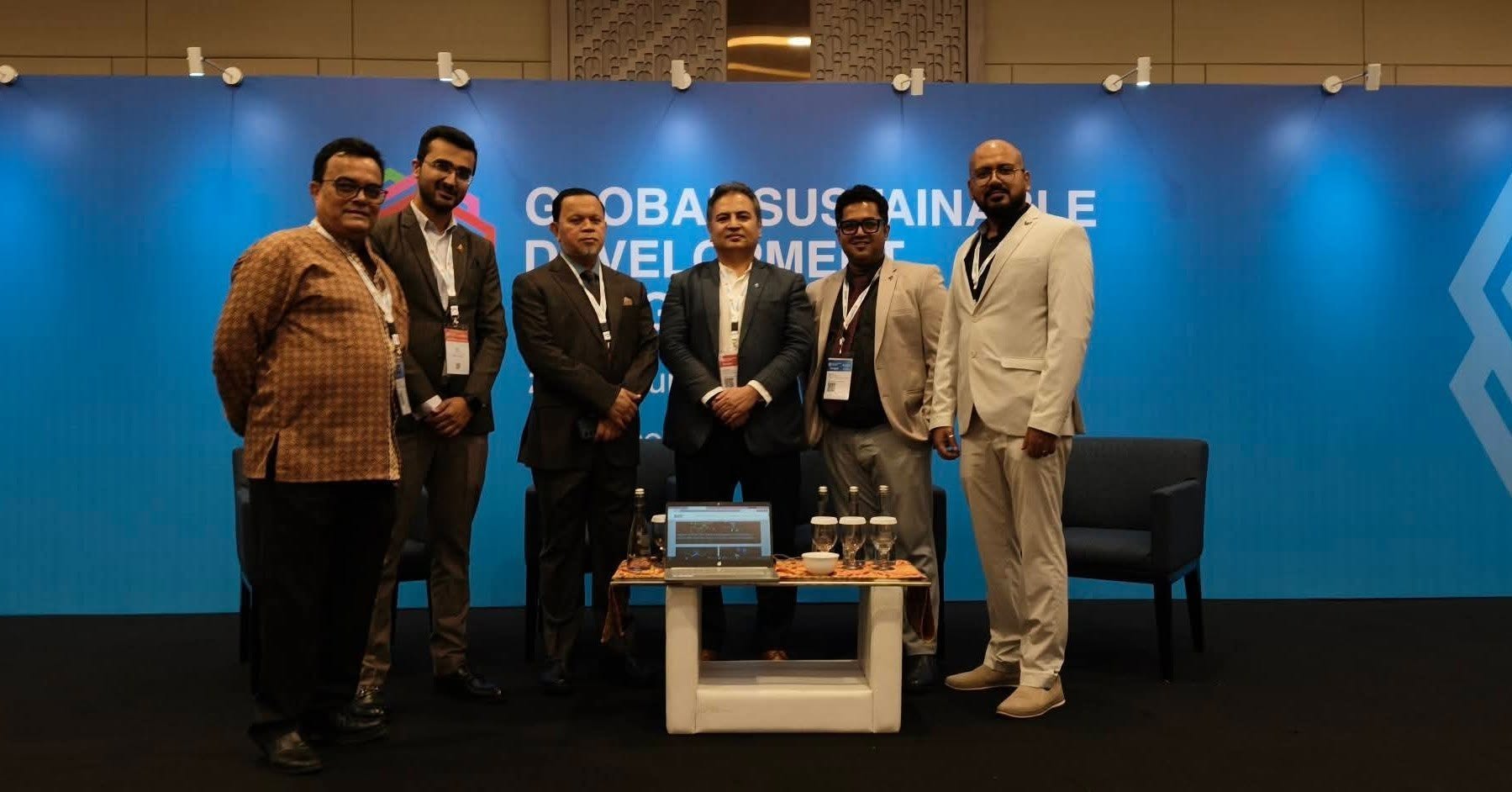
Jakarta Became the World's Sustainability Classroom For four June days in 2026, Jakarta did more than host a congress. It became a live classroom for the world's sustainability conscience. The fifth Global Sustainable Development Congress, convened by Times Higher Education at the Indonesia Convention Exhibition from 22 to 25 June, brought together more than 5,000 people from higher education, government, industry and civil society. Its official post-event description spoke of "thought-provoking discussions, new partnerships and collaborative action" [1]. But the larger story was not merely the scale of attendance. It was the way the congress treated the Sustainable Development Goals as a practical architecture for institutions, rather than as ceremonial vocabulary for banners, annual reports and polite speeches. The attached pre-event report had anticipated exactly this shift. It described Jakarta as a crossroads of culture, commerce, policy and innovation, and argued that the world no longer needed sustainability as a slogan but as a system of action. The subsequent public conversation around #GSDCongress confirmed that this was not an empty line. The congress became a meeting ground where university presidents, ministers, impact-rating experts, ESG professionals, digital entrepreneurs, development practitioners, city planners, investors and students discussed how to move from climate concern to measurable institutional behaviour. That is why the phrase 'from sustainability talk to sustainability architecture' captures the spirit of Jakarta. The congress was not designed as an isolated education conference, a business forum or a climate seminar. It worked as a cross-sector operating table. Universities brought research and legitimacy. Governments brought planning authority. Companies brought capital, technology and value chains. Civil society brought moral pressure and ground truth. Media and digital platforms brought the possibility of public translation. Together, they formed the beginnings of an SDG delivery ecosystem. Why Jakarta Mattered Indonesia was not a neutral venue. It was part of the message. Southeast Asia is one of the most consequential regions for sustainability in the twenty-first century: fast urbanisation, vulnerable coasts, forest and biodiversity tensions, energy-transition dilemmas, youth-heavy demography, emerging middle classes and rapidly expanding higher education systems. Holding the congress in Jakarta placed the SDG conversation inside the development realities of the Global South. It reminded participants that sustainability cannot be shaped only in Western capitals, donor agencies or ranking offices. It has to be negotiated in cities that are growing, in economies that are industrialising, and in communities that live daily with climate risk and opportunity. The official GSDC 2026 agenda covered cities and communities; education, gender and inequality; environment; circular economy and materials; decarbonisation and energy; and supply chain and resources [2]. Those pillars gave the congress its intellectual spine. Cities were treated not only as places of consumption but as laboratories of resilience. Education was presented not only as a human-rights issue but as the platform for green skills and social mobility. Environment was not separated from livelihoods. Circularity was not reduced to recycling. Decarbonisation was not discussed only as technology but as finance, jobs, policy and justice. Supply chains were treated as systems of transparency, responsibility and competitiveness. This framing matters for Asia, South Asia and the Middle East. These regions are exposed to heat, floods, water stress, air pollution and livelihood vulnerability, but they also carry enormous demographic energy, digital capacity, entrepreneurial ambition and institutional expansion. Jakarta therefore allowed a different story to be told: the Global South is not merely a geography of risk. It is a geography of solutions. Phil Baty and the Global Pulse of #GSDCongress Public posts after the congress captured the emotional and institutional charge of the event. Phil Baty, Chief Global Affairs Officer and COO of Times Higher Education and one of the key global figures behind the congress, called it "a truly awe-inspiring event" and pointed to the commitment to "real societal impact" from changemakers across the world [3]. The official GSDC community message, which he amplified, described the week as a demonstration of global collaboration's power to "turn ambition into action" [3]. This was not only celebratory language. It pointed to the real transition that GSDC is trying to force across higher education. In another publicly indexed post connected to the congress, Baty shared the message that educational institutions must equip young people with "skills, knowledge and values" so that they can "create and seize the opportunities" before them [4]. That line matters because it moves sustainability from institutional reputation to student formation. If universities are serious about the SDGs, the proof will not be in brochures; it will be in graduates who can redesign systems, build ethical enterprises, read climate data, communicate risk, fight misinformation, understand ESG evidence, and work with communities. Another pre-congress discussion amplified by Baty carried a harder message for universities: "Excellence in itself is not enough anymore" [5]. The point was clear. Teaching excellence and research excellence remain necessary, but they are no longer sufficient markers of institutional greatness. Universities are now being asked to demonstrate how they address local and global challenges. That is a major reputational shift. It changes the definition of prestige from exclusivity to usefulness, from citation alone to contribution, from institutional image to public good. The Ratings Moment: Accountability Enters the Room The live release of Times Higher Education's Sustainability Impact Ratings 2026 gave the Jakarta congress a powerful accountability dimension. THE states that the 2026 rankings evaluated 1,646 universities from 116 countries and territories across 17 individual SDG tables and one overall ranking [6]. The ranking page also notes that the University of Manchester was number one overall, with Griffith University second [6]. A Times Higher Education LinkedIn post added that Asia had the greatest representation, with more than half of the universities in the global ranking, and that India was the second best represented country with 110 institutions [7]. These figures matter because they show that sustainability performance is no longer peripheral to higher education. It is becoming part of global institutional measurement. The old university brand was built on admissions selectivity, research citations, faculty reputation, industry salaries and alumni power. The new university brand increasingly asks additional questions. Does the campus reduce its footprint? Does the curriculum prepare students for a just transition? Does research solve public problems? Do partnerships help communities? Is equality measurable? Are water, energy, waste and health systems audited? Are students treated as co-creators of sustainable change? For Indian, Bangladeshi, Nepali, Sri Lankan, Gulf and Southeast Asian institutions, the implication is decisive. Sustainability reporting cannot remain a year-end documentation exercise. It has to become strategic planning. Every university should now think in terms of an SDG evidence office, green campus dashboard, community impact registry, sustainability curriculum map, industry partnership pipeline and annual public accountability statement. In this sense, the GSDC ratings moment converted the SDGs from moral aspiration into institutional evidence. South Asia Speaks: From Quality Education to Global Education Services The congress also made space for South Asian voices that linked sustainability with education, innovation and regional development. Dr Md Sabur Khan, representing Bangladesh's Daffodil ecosystem, wrote that he looked forward to sharing South Asia's experiences in sustainable impact through higher education, innovation and cross-sector collaboration, with special focus on "SDG 4" and "SDG 17" [8]. That framing is important. Quality education and partnerships are not two separate goals in the Global South. They are mutually reinforcing. Without partnerships, education reform lacks scale. Without education, partnerships lack human capital. Asish Thakur's publicly indexed reflections from Nepal extended this argument. He asked whether Nepal could become a global destination for education rather than simply a source of students, and pushed the conversation from "Study Abroad" to "Study in Nepal" [9]. He also described Nepal's greatest untapped resource as the "talent, ambition, and potential" of its people [9]. This is one of the most important educational-development insights emerging from Jakarta: sustainability is not only about conserving natural resources. It is also about transforming human capacity into regional value. The South Asian outcome beyond SustainVerse is therefore much larger than a media launch. It includes the possibility of a knowledge-services corridor across India, Bangladesh, Nepal, Sri Lanka and the Gulf; new transnational education models; SDG-led university partnerships; joint degrees in sustainability, development management and green entrepreneurship; and regional youth programmes that turn climate anxiety into employability. Jakarta gave South Asian institutions a global stage to say that they are not waiting to be invited into the future of higher education. They are ready to help design it. SustainVerse: The Launch as a Signal, Not the Whole Story Within this larger congress narrative, the launch of SustainVerse.org became a timely South Asian digital intervention. A public LinkedIn post by Victor Bhattacharya said SustainVerse was launched at the #GSDcongress Summit 2026 in Jakarta and described it as a comprehensive ecosystem for global sustainability, including a global media portal, an education portal and a marketplace [10]. Another post from him framed technology as having to play a deeper role in real-world challenges and called SustainVerse "not just a platform" but a commitment to digital solutions for a "greener, smarter, and more responsible future" [11]. This gives SustainVerse a clear mandate. It should not become merely another sustainability website carrying event reports and generic climate commentary. Its opportunity is to translate complex sustainability knowledge into public learning, professional skills, investment intelligence, CSR opportunities, product discovery, policy explainers, campus action models and short-form media. The SustainVerse marketplace describes the platform's purpose as making sustainability practical, accessible and actionable, exploring climate innovation "not as abstract ideas but as real-world possibilities" [12]. The portal's own blog similarly says the deeper purpose is to convert stories into models that can be studied, adopted, replicated and scaled [13]. The public posts also credited Prof Ujjwal Anu Chowdhury's role in shaping and bringing the SustainVerse vision to the global stage [10]. A publicly indexed Facebook result from his profile showed the journey beginning with the line, "On to Jakarta to attend" GSDC 2026 organised by Times Higher Education [14]. That small travel note now reads as more than a departure post. It became the beginning of a bridge between a global congress and a new South Asian sustainability communication platform. Outcomes Beyond SustainVerse: What Jakarta Actually Set in Motion The first major outcome beyond SustainVerse is the normalisation of sustainability as institutional strategy. GSDC Jakarta made it difficult for universities to treat the SDGs as optional outreach language. Institutions now have to connect sustainability to admissions, research, faculty work, campus operations, community partnerships, rankings and reputation. The second outcome is the rise of the university-industry-city triangle. The congress showed that the future of sustainability will be implemented where campuses, companies and cities work together. Universities can generate research and talent; companies can finance and execute; cities can provide the lived problem field of water, waste, transport, housing, energy, air, health and resilience. The practical next step is to build city sustainability labs anchored by universities and funded by industry. The third outcome is green skills as the new employability grammar. GSDC's audience included HR and people-development leaders, and the official page linked skills, talent and workforce transformation to progress toward a sustainable economy [1]. This is a curriculum revolution waiting to happen. Sustainability must enter engineering, business, media, law, design, architecture, health sciences, education and public administration. The green economy will need carbon accountants, climate communicators, ESG data analysts, circular designers, biodiversity auditors, renewable-energy managers, sustainable procurement professionals and community transition facilitators. The fourth outcome is the mainstreaming of sustainability finance. The attached context emphasised that capital is the missing bridge between vision and delivery. Jakarta reinforced that point by bringing chief financial officers, investors and responsible-investment leaders into the conversation. If universities and civil society want sustainability to move beyond advocacy, they must learn the language of bankable projects, blended finance, green bonds, transition finance, climate-risk disclosure and credible impact measurement. The fifth outcome is evidence-based SDG governance. The Sustainability Impact Ratings made visible the need for verifiable documentation. The danger is that institutions will chase ranking points. The opportunity is that they will build evidence systems that actually improve practice. The best universities will use the ratings not as trophies but as mirrors. The sixth outcome is regional confidence in the Global South. Jakarta affirmed that Asia, South Asia and ASEAN are not peripheral to the SDG future. The THE release showed Asia's numerical strength in sustainability rankings [7]. The congress's setting, speaker diversity and public posts by South Asian leaders created a psychological shift: emerging economies can contribute models, not merely receive advice. The seventh outcome is a new public-media task. Sustainability is still too often trapped in jargon: net zero, ESG, Scope 3, nature-positive, climate resilience, just transition, circularity, blended finance. Media platforms must translate this into everyday meaning. SustainVerse can do that, but so can university media labs, journalism schools, regional broadcasters and independent digital creators. The congress created content; the next challenge is pedagogy. The eighth outcome is youth leadership. The SDGs belong most directly to young people because they will inherit the consequences of today's decisions. GSDC's strongest legacy will emerge if students are not treated as photo-op participants but as researchers, communicators, entrepreneurs, community fellows, data collectors and policy challengers. The ninth outcome is a new model for CSR and ESG in South Asia. Instead of donation-led charity or report-led compliance, Jakarta points toward measurable partnerships: school climate literacy, community adaptation, green skilling, rural clean-energy entrepreneurship, biodiversity restoration, waste-to-value enterprises, sustainable tourism, responsible fashion and campus-community innovation. The tenth outcome is the repositioning of sustainability from fear to agency. The world is fatigued by climate panic without pathways. Jakarta's message was that the future must be built through alliances, metrics, finance, education, technology and courage. The Business and Policy Dividend For business, Jakarta's message was equally demanding. Sustainability can no longer be placed at the edge of the enterprise as CSR storytelling. It has to enter procurement, design, energy use, logistics, employee learning, investor communication and board-level risk management. The Asia-Pacific Sustainable Business Summit element in the attached context was therefore crucial because it joined the language of SDGs with the practical language of value chains. Companies that ignore climate risk, social inclusion, waste, water stress and community trust will increasingly face regulatory, reputational and market penalties. Companies that understand sustainability as innovation will find new products, new financing opportunities, new talent pipelines and new legitimacy. For governments, the policy outcome is a reminder that sustainable development cannot be delivered by ministries working in isolation. Education policy has to speak to industrial policy. Urban planning has to speak to water and health. Climate policy has to speak to employment. Digital policy has to speak to inclusion and data ethics. The Jakarta congress placed ministers, universities, business leaders and civil society in the same institutional room, which is exactly the model that national and state governments should replicate through regional SDG implementation councils. Such councils should not be ceremonial. They should publish indicators, budgets, responsibilities, timelines and citizen-facing dashboards. For philanthropic foundations and CSR leaders, the lesson is to move from activity counts to outcome architecture. Funding a seminar, distributing saplings or sponsoring a report is not enough. The new benchmark should ask: What changed in the community? What skill was acquired? What emission was reduced? What livelihood became more resilient? What policy was influenced? What student group continued the work? What data proves it? This outcome culture is where GSDC's emphasis on ratings, partnerships and evidence can reshape practice beyond higher education. The Communication Dividend: Making Sustainability Understandable One of the quiet but powerful outcomes of GSDC Jakarta is the recognition that sustainability will fail if it remains trapped in expert language. The public cannot act on acronyms alone. ESG, Scope 3, circularity, carbon markets, green taxonomy, nature-positive transition and climate adaptation all need translation into everyday choices, institutional checklists and local stories. This is where journalists, educators, creators and platforms become as important as scientists and financiers. They do not replace technical expertise; they convert expertise into public agency. The interview of Phil Baty by SustainVerse, visible through publicly indexed social posts though not fully fetchable during verification, should be seen in this light. Its value is not only that a senior THE leader spoke to a new platform. Its value is that a global higher education conversation can be carried into a South Asian digital public sphere. Every such interview should now be converted into multiple formats: a full article, a short explainer, reels for students, quote cards for universities, a policy brief for regulators and a checklist for campuses. That is how a congress conversation becomes a knowledge product. From Congress to Consequence The success of GSDC Jakarta should not be measured only by 5,000 attendees, speaker lists, social-media impressions or photo galleries. Those are important, but they are event metrics. The real measurement will come later. How many universities redesign curricula? How many cities create living labs? How many companies decarbonise supply chains? How many CSR projects become measurable? How many students gain green skills? How many impact dashboards are built? How many partnerships survive beyond the exchange of business cards? This is where the post-Jakarta responsibility begins. The official GSDC page says the congress is where strategies are set, partnerships are forged and real progress is made [1]. The challenge now is to turn that statement into a follow-up discipline. Every delegate should return home with a ninety-day action plan: one curriculum change, one partnership, one public communication product, one data dashboard, one student initiative and one measurable community outcome. For SustainVerse, the immediate mandate is to become the memory and explainer of the moment. It should track GSDC outcomes, profile change-makers, publish action toolkits, host interviews, decode sustainability finance, map green careers, build student-facing explainers and expose greenwashing with evidence. But the broader lesson of Jakarta goes far beyond SustainVerse. It is a message to universities, governments, companies, civil society and media: sustainable development has entered the age of execution. The world has spent decades speaking about the SDGs. Jakarta asked a sharper question: who will build them, fund them, teach them, measure them, communicate them and live them? If the congress succeeds in answering that question through partnerships and behaviour change, GSDC 2026 will not be remembered merely as a large event in Indonesia. It will be remembered as a moment when sustainability matured from advocacy into architecture. Research and Quote Source Notes Note: Direct quotations have been kept brief and are drawn only from publicly accessible or search-indexed source text. Public Facebook/Instagram pages connected to the SustainVerse interview with Phil Baty were visible in search results but some could not be fully fetched during verification; no unsupported interview quote has been invented or attributed. [1] Global Sustainable Development Congress 2026 official post-event page: https://www.gsdcongress.com/2026 [2] GSDC 2026 official agenda tracks on the event page: https://www.gsdcongress.com/2026 [3] Phil Baty LinkedIn post amplifying the GSDC wrap-up: https://www.linkedin.com/posts/philbaty_gsdcongress-activity-7475870230251188225-9q71 [4] Phil Baty LinkedIn post/transcript excerpt from GSDC 2026 welcome material: https://www.linkedin.com/posts/philbaty_gsdcongress-activity-7474842140850716673-WaRl [5] Phil Baty LinkedIn post quoting Andy Simmons on sustainability and reputation: https://www.linkedin.com/posts/philbaty_theimpact26-gsdcongress-activity-7469734753139785728-sfPM [6] Times Higher Education Sustainability Impact Ratings 2026: https://www.timeshighereducation.com/impactrankings [7] Times Higher Education LinkedIn post announcing Sustainability Impact Ratings 2026: https://www.linkedin.com/posts/times-higher-education_theimpact-theunirankings-timeshighereducation-activity-7475336764245852161-2Qxq [8] Dr Md Sabur Khan LinkedIn post on speaking at GSDC 2026: https://www.linkedin.com/posts/sabur-khan-2b9a364_gsdc2026-sdg4-sdg17-activity-7474406376815898624-Px86 [9] Asish Thakur LinkedIn post on Nepal as a global education services hub: https://www.linkedin.com/posts/asishthakur_can-nepal-become-a-global-destination-for-activity-7475116019494113280-0DcE [10] Victor Bhattacharya LinkedIn post on the SustainVerse launch at GSDC: https://www.linkedin.com/posts/victor-bhattacharya-682536b8_gsdcongress-sustainverse-sustainverse-activity-7476841930958626816-KSy- [11] Victor Bhattacharya LinkedIn post on technology for sustainable development at GSDC: https://www.linkedin.com/posts/victor-bhattacharya-682536b8_gsdcongress-sustainverse-gsdcongress2026-activity-7477262420068089857-7Uz0 [12] SustainVerse Marketplace About Us page: https://marketplace.sustainverse.org/about-us [13] SustainVerse blog: Where stories become solutions: https://sustainverse.org/home/blog/sustainverse-where-stories-become-solutions-and-sustainability-becomes-a-movement [14] Publicly indexed Facebook search result for Prof Ujjwal Anu Chowdhury's Jakarta/GSDC post: https://www.facebook.com/ujjwalkchowdhury/ ...Read more

17 Jun 2026
A Four-Day Global Call to Turn the SDGs into Lived Reality Jakarta, one of Asia’s most energetic crossroads of culture, commerce, policy and innovation, is preparing to become the global capital of sustainable transformation. From 22 to 25 June 2026, the Indonesia Convention Exhibition in Jakarta will host the fifth annual Global Sustainable Development Congress, a major international gathering designed around one urgent conviction: the world no longer needs sustainability as a slogan; it needs sustainability as a system of action. Convened by Times Higher Education, the Global Sustainable Development Congress 2026 arrives at a critical hour. The 2030 deadline for the United Nations Sustainable Development Goals is no longer distant. It is near enough to demand accountability, yet far enough to permit courage, course correction and collaboration. Against this backdrop, the congress has framed its message around “collective action for a sustainable future,” bringing together the people and institutions capable of translating aspiration into measurable change: university leaders, researchers, government representatives, business executives, investors, NGOs, foundations, civil society actors, HR and people-development leaders, sustainability professionals, students and emerging young leaders. This is not designed as a routine conference of speeches and ceremonial networking. It is being positioned as a working platform where knowledge, capital, policy, entrepreneurship, education and social purpose meet. Over four days, the congress will seek to do what many sustainability forums promise but few achieve: connect the evidence of universities, the authority of governments, the resources of business, the creativity of innovators and the conscience of civil society. Why Jakarta, Why Now? The choice of Indonesia is not incidental. Southeast Asia sits at the centre of several of the twenty-first century’s defining sustainability challenges: rapid urbanisation, coastal vulnerability, biodiversity protection, clean energy transition, food security, sustainable finance, equitable education, responsible industrialisation and the future of work. Indonesia, as one of the region’s largest economies and most strategically important democracies, gives the congress a powerful geopolitical and developmental setting. The Government of Indonesia, through the Ministry of National Development Planning, Bappenas, has joined as co-host, giving the event a sharper policy significance. This is important because sustainability conversations often fail when they remain either academic or corporate GSDC 2026 is attempting to bridge that divide by placing national planning, higher education, business transformation and civil society engagement in the same arena. The participation of Indonesian ministers and regional education leadership also signals that Southeast Asia is not merely hosting the global conversation; it is helping shape it. For the Global South, and particularly for Asia, the congress has the potential to reposition sustainability from a compliance burden to a development opportunity. It asks a decisive question: can emerging economies design a growth model that is cleaner, fairer, more resilient and still ambitious? From Universities to the Real World At the heart of the congress is a strong belief in the transformative role of higher education. Universities are no longer being asked simply to teach sustainability or publish research on the SDGs. They are being asked to become living laboratories of climate action, social inclusion, public health, gender equity, innovation, entrepreneurship and community resilience. Times Higher Education’s involvement gives the congress a distinctive academic spine. THE has built a global reputation through its university rankings and its Impact Ratings framework, which measures how universities contribute to the UN SDGs. At GSDC 2026, the live global reveal of the THE Sustainability Impact Ratings 2026 is expected to be a major moment, bringing visibility to institutions that are not only producing graduates but shaping measurable public good. This is particularly significant for universities in Asia, Africa, the Middle East and Latin America, where institutions often operate close to the lived realities of inequality, climate vulnerability, public health gaps and employment transition. The congress can become a stage where universities from developing and emerging economies showcase not just academic excellence but social relevance. In this sense, GSDC 2026 may help redefine the prestige of a university. The future-facing institution will not be judged only by citations, patents and graduate salaries, but also by how deeply it contributes to clean energy systems, inclusive cities, gender justice, local livelihoods, responsible innovation and ecological restoration. Six Pillars for a Planet Under Pressure The programme brings together research, policy and industry leaders across six broad agenda pillars: cities and communities; education, gender and inequality; environment; circular economy and materials; decarbonisation and energy; and supply chains and resources. Each of these tracks addresses a crisis that is no longer theoretical. Cities and communities will look at the future of urban life, resilience and inclusion. This is crucial in a world where cities are both engines of opportunity and epicentres of climate risk. From heat stress and flooding to affordable housing, transport and waste systems, the urban question is now inseparable from the sustainability question. Education, gender and inequality will examine how social justice must sit at the centre of any credible sustainability agenda. The SDGs cannot be achieved if millions remain excluded from quality education, digital access, health systems, secure livelihoods and leadership pathways. Gender equality, in particular, is not an isolated goal; it is a multiplier across every other goal. The environment pillar speaks to biodiversity, ecosystems, climate adaptation and the delicate balance between development and ecological survival. In a region like Southeast Asia, where forests, seas, agriculture and livelihoods are tightly interconnected, environmental policy is also economic policy and social policy. Circular economy and materials will focus on one of the most important shifts of our time: moving from extract-use-discard models to systems that design out waste, reuse materials, extend product life and create new industrial value chains. For manufacturers, cities and consumers alike, circularity is fast becoming a practical necessity. Decarbonisation and energy will take on the complex challenge of powering economic development while reducing emissions. This is not merely a technology question. It involves finance, policy, grid systems, industrial transitions, skills, political will and just transition frameworks for workers and communities. Supply chains and resources will examine transparency, resilience and responsibility in global production networks. Recent years have shown that fragile supply chains can disrupt economies and deepen inequality. Sustainable supply chains are now central to corporate credibility, investor confidence and national economic security. The Business of Doing Better A defining feature of the 2026 edition is the Asia-Pacific Sustainable Business Summit, co-located with the main congress and running across the four days. Its theme is direct and practical: connecting the value chain for sustainable growth. This summit acknowledges a basic truth: sustainability will not scale unless business models change. Corporate leaders, financiers, innovators, procurement specialists, manufacturers, digital infrastructure players and policymakers will gather to examine how sustainability can drive competitiveness, long-term value and market creation. The business summit’s tracks include AI, digital and finance; decarbonisation, energy and the built environment; natural resources, commodities and agriculture; nature, climate and the environment; social impact, equity and health; and supply chain, manufacturing and circular economy. This is a strong indication that the congress recognises sustainability as an operating system for the economy, not a CSR appendix. Speakers and participants from companies and institutions such as Olam Agri, Bosch Power Tools, Coca-Cola Europacific Partners, Nickel Industries, UltraTech Cement, DBS Bank, Singtel Digital Infraco, the European Investment Bank and others suggest a programme designed to move from good intentions to implementable strategies. The business presence matters because governments can regulate and universities can innovate, but corporations control large parts of production, consumption, logistics, capital flow and employment. The test of the summit will be whether it can push business leaders beyond brand positioning and into measurable commitments: cleaner operations, transparent sourcing, decarbonised supply chains, nature-positive investments, workforce reskilling and credible ESG governance. Finance: The Missing Bridge Between Vision and Delivery One of the most important additions to the GSDC ecosystem is the “Unlocking Capital for Sustainability” initiative, hosted with Eco-Business on 24 June. It focuses on a persistent barrier in sustainability: the gap between ambition and finance. Across Asia, the ideas are present. The technologies are emerging. The policy frameworks are evolving. But the capital needed for renewable energy, resilient infrastructure, low-carbon industry, sustainable agriculture, inclusive health and climate adaptation often remains inadequate, expensive or misaligned. The summit’s theme, “Strengthening governance, securing resilience,” recognises that money follows trust. Investors need credible governance, transparent regulation, bankable projects and long-term policy stability. This finance conversation is especially important for Indonesia and the wider Asia-Pacific region. The just transition cannot be achieved by moral appeal alone. It needs blended finance, carbon market integrity, public-private partnerships, development finance, green bonds, transition finance, climate-risk disclosure and new models of local investment. By bringing financiers, regulators, carbon-market experts and sustainability leaders into the congress, GSDC 2026 gives the SDG agenda a crucial economic engine. Skills for the Green Economy Another major component is the Sustainability Skills Summit, scheduled for 23–24 June. Its central concern is the workforce transformation required for a sustainable economy. This is one of the most practical questions of the decade. The green transition will create new jobs, but it will also disrupt old ones. It will require engineers who understand renewable systems, managers who understand ESG metrics, designers who understand circularity, teachers who can embed sustainability into curricula, financiers who can evaluate climate risk, communicators who can fight misinformation, and public officials who can design integrated policy. The summit’s focus on future-proof workforces, closing skills gaps, strengthening business resilience and driving inclusive growth is therefore essential. Sustainability cannot remain the language of experts. It must become a competence across sectors. For universities, this means redesigning curricula. For companies, it means investing in reskilling rather than treating sustainability as a specialised compliance department. For governments, it means aligning education, industry and employment policy. For young people, it means preparing for a labour market in which green literacy, digital fluency and ethical leadership will be central to employability. Policy, Prosperity and the New Social Contract The Policy Summit, taking place on 22–23 June, adds another decisive layer. It convenes senior decision-makers from government, multilateral institutions, industry and finance to examine sustainable economic growth, trade frameworks, industrial strategy and cross-border cooperation. This matters because the SDGs cannot be achieved through isolated projects. They require national plans, fiscal frameworks, international cooperation, regulatory coherence and institutional capacity. The policy summit appears designed to address the difficult terrain where sustainability meets competitiveness. How can economies remain globally competitive while becoming cleaner and fairer? How can trade systems support climate goals? How can regulation protect people and planet without strangling innovation? How can industrial strategy support both growth and inclusion? These are not abstract questions. They are the core governance questions of the next decade. A Stage of Global Voices The confirmed speaker list reflects the congress’s multi-sector character. It includes Rachmat Pambudy, Indonesia’s Minister of National Development Planning; Brian Yuliarto, Indonesia’s Minister for Higher Education, Science and Technology; Sir Dr Jeffrey Cheah, Founder and Chairman of Sunway Group and Founder and Chancellor of Sunway University; Gita Sabharwal, United Nations Resident Coordinator in Indonesia; Habibah binti Abdul Rahim of the Southeast Asian Ministers of Education Organization; Dominic Jermey, the UK Ambassador to Indonesia and Timor-Leste; and sustainability leaders from major global and regional organisations. The corporate and finance voice is also visible through leaders such as Nikita Asthana of Olam Agri, Elena Kapreeva of Bosch Power Tools, Lucia Karina of Coca-Cola Europacific Partners, Sunita Lukkhoo of the European Investment Bank, Muchtazar Muchtazar of Nickel Industries and others. The wider speaker list brings in experts from universities, technology, urban policy, public health, sustainable finance, ESG, procurement, agriculture, biodiversity and climate innovation. This diversity is one of the strengths of the congress. Sustainability is not one profession. It is an interdisciplinary public mission. What Outcomes Should Matter? The success of GSDC 2026 should not be measured only by attendance, applause or media visibility. Its real test will lie in outcomes. First, it should generate partnerships: university-to-university research collaborations, university-industry innovation projects, government-academia policy frameworks, NGO-business community programmes and cross-border sustainability networks. Second, it should accelerate curriculum reform. Every university represented in Jakarta should return with a clearer commitment to embedding sustainability across disciplines, not confining it to environmental studies. Third, it should push sustainability finance forward. If the congress can help connect bankable projects with credible capital, especially in Asia, it will have moved from conversation to transformation. Fourth, it should strengthen measurement. The THE Sustainability Impact Ratings reveal will matter only if institutions use rankings not as a trophy but as a mirror: a way to examine gaps, improve practices and align strategy with public good. Fifth, it should elevate youth and emerging leaders. The SDGs will ultimately be inherited by today’s students. Their presence must not be symbolic. They must be treated as co-creators of the sustainability agenda. South Asia, the Middle East and the Wider Global South For South Asia and the Middle East, GSDC 2026 has special relevance. These regions face extreme climate exposure, fast urban growth, water stress, youth employment challenges, energy transition pressures and the need for inclusive education. They also possess vast entrepreneurial talent, expanding higher education systems, growing digital economies and increasing capital flows into sustainability. Universities from India, Bangladesh, Nepal, Sri Lanka, Pakistan, the Gulf and the wider Middle East can use the congress as a bridge to global partnerships. Incubators, sustainability portals, green business networks, social enterprises and policy schools can find collaborators in Jakarta. The congress can help shift the Global South from being seen merely as a site of vulnerability to being recognised as a source of solutions. From Declaration to Delivery The Global Sustainable Development Congress 2026 is arriving at a moment when the world is fatigued by promises. Climate pledges, ESG statements and SDG banners are everywhere, but implementation remains uneven. The power of the Jakarta congress will lie in its ability to insist that sustainability must now become institutional behaviour. Its promise is not simply that leaders will gather. Its promise is that leaders from different worlds will be forced to listen to one another: ministers to scientists, CEOs to community actors, investors to educators, universities to young people, and policymakers to those living the consequences of unsustainable development. If GSDC 2026 succeeds, it will not be remembered only as a large congress in Jakarta. It will be remembered as a moment when the sustainability movement matured—from advocacy to architecture, from concern to collaboration, from fragmented good work to connected global action. The world has spoken about sustainable development for decades. In Jakarta, the challenge will be sharper: to build it. ...Read more

17 Jun 2026
A Portal Born at a Planetary Turning Point There are moments when a new platform is not merely launched; it arrives because the time demands it. SustainVerse, emerging through SustainVerse.org, is one such arrival. At a time when climate anxiety, corporate responsibility, green innovation, ESG accountability and sustainable livelihoods are converging into one global imperative, SustainVerse enters the public domain as a media, knowledge and business ecosystem dedicated to sustainability in action. Its promise is captured in three words: “Stories. Solutions. Sustainability.” These are not decorative words. They are the architecture of a new mission. Stories give sustainability a human face. Solutions convert concern into action. Sustainability gives that action a moral, ecological and economic purpose. SustainVerse is not designed to be another green news website. It is envisioned as a universe of knowledge, credibility, community, commerce, education and impact. It seeks to become a trusted platform where corporates, policymakers, students, startups, NGOs, educators, investors, innovators and conscious citizens can meet around one shared question: how do we build a future that is profitable without being predatory, ambitious without being destructive, and modern without being blind to the planet? Why SustainVerse Is Needed Now The world has crossed the stage where sustainability could remain a slogan. For too long, environmental responsibility was treated as a public-relations gesture, a CSR footnote, a conference theme, or an annual-day speech. That era is ending. A new era has begun—one where sustainability is becoming a matter of law, finance, reputation, survival and leadership. Companies are being asked to report more transparently. Consumers are questioning greenwashing. Investors are asking for measurable ESG performance. Governments are tightening climate and CSR regulations. Universities are preparing students for green careers. Startups are building solutions for energy, waste, water, food, mobility and materials. Communities are demanding resilience against heat, floods, pollution and water stress. Yet the ecosystem remains fragmented. Information is scattered. Claims are often unverifiable. NGOs struggle for visibility. Green businesses struggle for market access. Students struggle to understand career pathways. Corporates struggle to identify credible partners. Citizens struggle to separate authentic sustainability from branding theatre. SustainVerse is needed because the sustainability transition requires a trusted knowledge bridge. It must connect information with action, policy with practice, capital with innovation, and aspiration with evidence. From Green Talk to Green Transformation The central strength of SustainVerse lies in its refusal to stop at awareness. Awareness matters, but awareness alone does not change systems. The world does not need more climate panic without pathways. It needs platforms that can identify solutions, explain them clearly, verify their credibility, connect them to users and scale their impact. SustainVerse aims to do precisely that. Its content will tell the stories of renewable energy transitions, circular economy pioneers, green architecture, water security, clean mobility, responsible fashion, climate technology, rural sustainability, ocean conservation, sustainable finance and ESG leadership. But the platform’s purpose is deeper than storytelling. It seeks to convert those stories into models that can be studied, adopted, replicated and scaled. In this sense, SustainVerse becomes a movement from “what is wrong” to “what can be done.” It is a portal of possibility. The Many Doors of the SustainVerse Ecosystem The SustainVerse blueprint imagines an integrated ecosystem with several interconnected segments. Each segment serves a distinct audience, yet all are designed to strengthen one another. The first door is the Digital Knowledge Portal, the public-facing hub for news, analysis, interviews, explainers, data, opinion and sector insights. This is where sustainability becomes readable, searchable and understandable. The second is the YouTube and Podcast Network, designed to make sustainability visual, conversational and emotionally engaging. Through films, interviews, explainers and leadership conversations, it can bring the voices of scientists, entrepreneurs, policymakers, community leaders and young changemakers to a wider audience. The third is Social Media Amplification, where the platform can reach professionals on LinkedIn, young audiences on Instagram, fast-moving policy communities on X, and larger citizen groups through shareable stories and campaigns. The fourth is Events and Community, including flagship summits in India and the UAE. These are not just events; they are marketplaces of ideas, partnerships and commitments. They can bring together capital, talent, policy and enterprise. The fifth is Awards for Excellence, a recognition platform that can celebrate institutions, businesses, NGOs, campuses, startups and individuals who are creating measurable sustainability impact. The sixth is the Sustainability Impact Excellence Rating, or SIER, envisioned as a credibility and verification framework. In a world crowded with ESG claims, a transparent and credible rating system can become one of SustainVerse’s most powerful contributions. The seventh is Online Radio, a low-cost, high-reach thought-leadership stream that can carry conversations in multiple languages and keep sustainability alive as a daily public dialogue. The eighth is Coffee-Table Books, designed to document and showcase outstanding sustainability journeys, corporate leadership and institutional transformation. The ninth is Green E-Commerce, a curated marketplace for verified sustainable products and services. This is where trust can become transaction and responsible consumption can become easier for citizens. The tenth is the Academic and Certification Division, which can build green skills through masterclasses, diplomas, short courses and corporate training. The eleventh is the Green Impact Fund, the long-term capstone of the ecosystem, intended to support and invest in promising green ventures emerging from this network. Together, these segments create a flywheel: content builds audience; audience builds community; community builds credibility; credibility powers ratings, education and commerce; and revenue from these activities strengthens content and impact. The Trust Engine for CSR, ESG and Green Business The deepest crisis in sustainability today is not only climate change. It is trust. Companies claim impact. Products claim to be green. Projects claim transformation. But who verifies? Who explains? Who connects evidence with public confidence? SustainVerse seeks to become a trust engine for this new economy. Its role will be especially valuable in CSR and ESG, where the stakes are rising. CSR can no longer remain charity without accountability. ESG can no longer remain disclosure without depth. Sustainability can no longer remain a glossy report without measurable change. Through its journalism, awards, ratings, advisory pathways, compliance resources and knowledge products, SustainVerse can help create a culture where responsible institutions are recognised, weak claims are questioned, and genuine impact receives the visibility it deserves. This is crucial for corporates, but equally crucial for NGOs and social enterprises. Many grassroots organisations do meaningful work but lack the language, documentation and visibility needed to reach funders. SustainVerse can help bring such work from the margins to the mainstream. South Asia: Turning Vulnerability into Leadership For South Asia, SustainVerse can become especially important. This is one of the world’s most climate-vulnerable regions, facing heat waves, floods, cyclones, water stress, air pollution, agrarian uncertainty and rapid urban pressures. Yet South Asia is also one of the world’s most energetic regions, full of youth, entrepreneurship, social innovation and development ambition. The central question for South Asia is not whether it should grow. It must grow. The question is whether it can grow differently. Can cities expand without choking? Can villages modernise without losing ecological balance? Can industries create jobs without poisoning rivers and air? Can agriculture become productive while using less water and fewer chemicals? Can education prepare young people for the green economy? SustainVerse can help South Asia answer these questions by becoming a knowledge commons for practical sustainability. It can highlight water security in Bangladesh and India, clean energy in Nepal and Bhutan, climate-resilient agriculture in Sri Lanka, urban circularity in Indian metros, coastal resilience in the Sundarbans and Maldives, and grassroots innovations across the region. Most importantly, it can give South Asia a voice in the global sustainability conversation. Too often, sustainability narratives are written from the perspective of the Global North. SustainVerse can help tell the story of the Global South not as a victim alone, but as a source of solutions. India: Scale, CSR, Startups and the Green Economy India stands at the centre of the SustainVerse opportunity. It is a country of vast CSR spending, expanding ESG expectations, rising green entrepreneurship, world-class digital capability and urgent environmental challenges. The Indian sustainability landscape has scale, but it also has complexity. There are thousands of NGOs, but not all are visible or verified. There are thousands of companies, but not all know how to build responsible supply chains. There are countless students interested in sustainability, but many do not know how to turn that interest into a career. There are startups working on waste, clean energy, water, mobility and climate technology, but many need platforms, investors and markets. SustainVerse can become the connector India needs. It can help corporates discover credible partners. It can help NGOs communicate impact. It can help green startups tell their stories. It can help students enter the sustainability workforce. It can help policymakers and citizens see which solutions deserve scaling. In India, SustainVerse can become not only a portal but a public institution of sustainable transformation. The Middle East and UAE: Capital, Climate Ambition and Global Reach If India offers scale, the Middle East—especially the UAE—offers capital, global connectivity and strategic climate ambition. The UAE has positioned itself as a hub for clean energy, sustainable finance, climate diplomacy, green buildings, water innovation and net-zero transition. Businesses operating in the region increasingly need guidance on ESG integration, emissions reporting, sustainability strategy and responsible growth. SustainVerse can serve this market by offering knowledge, training, visibility, advisory pathways and cross-border partnerships. Its India-UAE focus is strategically powerful. India brings talent, implementation depth, frugal innovation and a vast development landscape. The UAE brings investment, commercial platforms, global networks and policy momentum. Together, they can create one of the most important sustainability corridors of the coming decade. Through SustainVerse, an Indian clean-tech startup can find UAE investors. A UAE sustainability model can find Indian scale. A CSR project in India can attract global attention. A green business in Dubai can reach South Asian consumers. A student in Kolkata, Dhaka, Dubai or Mumbai can find a career pathway into the sustainability economy. A Platform for Youth, Careers and Green Skills The future of sustainability will not be built only by governments and corporations. It will be built by young professionals who choose careers in climate, clean energy, ESG, sustainability communication, impact assessment, green finance, responsible design, sustainable tourism, circular economy and social entrepreneurship. SustainVerse’s education and careers vertical can become a launchpad for this generation. Through masterclasses, diplomas, internships, jobs, case studies and leadership conversations, it can prepare youth for the emerging green economy. This is not merely an educational opportunity. It is a civilisational responsibility. The young must not inherit only the consequences of ecological damage. They must inherit tools, training, networks and hope. From Portal to Movement The power of SustainVerse lies in its possibility of becoming larger than a website. If executed with integrity, it can become a movement of informed action. It can bring the credibility of journalism, the discipline of data, the energy of entrepreneurship, the reach of digital media, the seriousness of education and the catalytic power of capital into one ecosystem. It can turn sustainability from an elite conversation into a public resource. It can turn green business from a niche market into a mainstream economy. It can turn CSR from compliance into compassion with evidence. It can turn ESG from jargon into responsible leadership. It can turn climate fear into climate action. The Future Needs a New Language of Hope The launch of SustainVerse comes at a time when the world is searching for a new language of hope. Not blind optimism. Not denial. Not empty celebration. But disciplined, evidence-based hope—the kind that studies problems honestly and builds solutions courageously. That is the promise of SustainVerse. It is a platform for those who believe that the future is not something to be feared, but something to be designed. It is for companies that want to lead responsibly, for communities that want resilience, for innovators who want markets, for students who want purpose, for investors who want impact, and for citizens who want to live with dignity on a healthier planet. SustainVerse begins with stories. It moves towards solutions. Its destination is sustainability. And in that journey, it invites South Asia, the Middle East and the wider world to imagine a future where growth heals, business serves, knowledge empowers and the planet breathes again. ...Read more

13 May 2026
Compliance is a fact of business life in India. Companies must file returns, maintain registers, submit reports, and meet deadlines across multiple regulatory domains. Companies Act, 2013. Goods and Services Tax. Labour laws. Environmental regulations. Data protection. Industry specific requirements. The list is long and growing. For decades, compliance meant manual tracking. Spreadsheets, paper calendars, physical files, and the memory of a dedicated company secretary or compliance officer. But that era is ending. Technology has entered the compliance function. Software tools now automate deadline tracking, manage documentation, generate reports, and provide real time dashboards of compliance status. These tools reduce human error, save countless hours, and give management confidence that nothing has been missed. This article explores how Indian companies are using technology to transform compliance from a source of anxiety into a well managed, predictable process. It covers the types of tools available, the benefits they offer, and practical guidance for selecting and implementing the right solution for your organisation. Consider the compliance landscape for a typical mid sized Indian company. Annual general meeting within six months of the financial year end. Board meetings at least four times a year with specific notice periods and agenda requirements. Annual returns to be filed with the Registrar of Companies. Financial statements to be filed within thirty days of the annual general meeting. Income tax returns by the due date. Goods and Services Tax returns monthly and annually. TDS returns quarterly. Professional tax returns depending on the state. Labour welfare fund returns. Environmental compliance reports if applicable. And that is just a partial list. Each of these obligations has a specific deadline. Each requires specific information. Each demands specific forms and formats. Many carry penalties for late filing, ranging from modest late fees to significant fines and even potential imprisonment for persistent default. Managing this calendar manually is exhausting. A company secretary or compliance officer must maintain a master list of deadlines, track progress against each, ensure documentation is ready, coordinate with internal teams, and actually file the returns. One missed deadline can trigger penalties. One forgotten form can lead to a notice from the regulator. The pressure is constant. This is where technology enters the picture. What compliance technology actually doesCompliance technology, sometimes called regtech for regulatory technology, refers to software tools designed to help companies meet their regulatory obligations. These tools vary in scope and sophistication, but most share a common set of capabilities. ➣ Deadline tracking. The software maintains a master calendar of all compliance deadlines relevant to your company. It knows when annual returns are due, when board meetings must be held, when tax filings are required. It sends reminders days or weeks in advance. It tracks which tasks are complete and which are pending. It provides a single source of truth for the entire compliance function. ➣ Document management. Compliance generates paperwork. Board minutes, resolutions, registers, policies, filings, acknowledgements. A compliance tool stores all these documents in a central, searchable repository. No more hunting through physical files or scattered email attachments. Everything is organised, tagged, and accessible instantly. ➣ Workflow automation. Many compliance tasks follow a predictable sequence. Draft a resolution. Get it approved. Hold the meeting. Prepare the minutes. File the form. A compliance tool can guide users through these workflows, ensuring that no step is skipped and that the right people are involved at the right time. ➣ Report generation. Many compliance filings require similar information year after year. A good compliance tool pre populates repeated information, generates draft reports, and flags missing data. It reduces the manual effort of report preparation and minimises the risk of transcription errors. ➣ Dashboard visibility. A compliance dashboard shows at a glance the status of all obligations. Green for completed or on track. Yellow for approaching deadlines. Red for overdue or at risk. This dashboard gives management and board members confidence that compliance is being managed effectively. The benefits that Indian companies are experiencingCompanies that have adopted compliance technology report several consistent benefits. ✓ Reduced anxiety. When deadlines are tracked manually, there is always a nagging fear that something has been forgotten. A compliance tool with automated reminders replaces that fear with certainty. The system will not forget. The system will remind. The human can focus on completing the work, not on remembering the due date. ✓ Fewer penalties. Late filings are expensive. The late fees for missing a Companies Act filing can run into thousands or even lakhs of rupees. Compliance technology dramatically reduces the risk of missed deadlines. Companies that adopt these tools often find that the software pays for itself in avoided penalties within the first year. ✓ Time savings. A company secretary might spend hours each week manually tracking deadlines, organising documents, and preparing reports. A compliance tool automates much of this work. The time saved can be redirected to higher value activities. Strategic planning. Advisory work. Process improvement. ✓ Audit readiness. When a regulator or auditor requests documentation, a compliance tool provides instant access. No last minute scrambling. No missing files. No embarrassed explanations. The company appears professional, prepared, and credible. ✓ Scalability. A manual compliance process that works for a small company becomes unmanageable as the company grows. More regulations apply. More filings are required. More people are involved. Compliance technology scales with the business. The same tool that works for a private limited company with a few directors also works for a listed company with subsidiaries. Types of compliance tools available in IndiaThe Indian market offers several categories of compliance technology. » Integrated enterprise resource planning solutions. Large companies often use comprehensive enterprise resource planning systems like SAP, Oracle, or Microsoft Dynamics. These systems include compliance modules that track deadlines, manage documentation, and generate reports. They are powerful but expensive, typically suited for large organisations with significant budgets. » Standalone compliance management software. Several Indian and international vendors offer dedicated compliance management platforms. These tools focus specifically on regulatory compliance. They include pre configured calendars for Indian regulations, templates for common filings, and workflows for board processes. Examples include VComply, LegitDoc, and other platforms designed for the Indian market. » Secretarial software for company secretaries. Professional company secretaries often use specialised software like Secretarial Software by Masters India or similar tools. These platforms are designed for practitioners who manage compliance for multiple client companies. They include features for board management, minutes drafting, and ROC filing. » Tax and GST specific tools. For tax compliance, dedicated tools like ClearTax, H&R Block, and GST Suvidha providers offer focused solutions. These tools specialise in return preparation, filing, and reconciliation. They may not cover the full range of corporate compliance, but they excel in their specific domain. » Custom built solutions. Some large companies build their own compliance tracking systems. They may use project management software like Asana or Trello with custom fields, or they may develop proprietary databases. This approach offers flexibility but requires internal expertise to maintain and update. The right choice depends on company size, budget, complexity of compliance obligations, and internal technical capabilities. Features to look for when choosing a compliance toolFor a company evaluating compliance technology, here are the features that matter most. » Comprehensive regulatory coverage. Does the tool cover all the regulations that apply to your company? Companies Act filings? Tax deadlines? Labour law returns? Environmental compliance? Industry specific requirements? A tool that misses key obligations is worse than no tool at all, because it creates false confidence. » Automated deadline reminders. The tool should send reminders through multiple channels. Email. SMS. Dashboard notifications. Ideally, it should allow different reminder schedules for different obligations. Seven days before. Three days before. The day of. » Document repository with version control. The tool should store documents securely, allow searching, and track versions. You should be able to see when a document was uploaded, who uploaded it, and what changes were made. » Role based access. Different people need different levels of access. The board needs dashboard visibility. The company secretary needs editing rights. The finance team needs access to tax filings. An auditor might need read only access for a limited period. The tool should support these distinctions. » Integration with other systems. Does the tool integrate with your existing accounting software, enterprise resource planning system, or document management platform? Integration reduces duplicate data entry and improves accuracy. » Mobile access. Compliance does not only happen at a desk. A mobile app or mobile friendly website allows busy professionals to check deadlines, approve documents, or receive alerts from anywhere. » Audit trail. Every action in the system should be logged. Who viewed a document? Who approved a filing? Who changed a deadline? An audit trail is essential for internal controls and regulatory inspections. » Vendor reputation and support. Who makes the software? How long have they been in business? Do they understand Indian regulations? What do other customers say? What kind of training and support do they offer? These questions matter as much as the features. Implementation challenges and how to overcome themAdopting compliance technology is not always smooth. Companies face several common challenges. 1. Data migration. Existing compliance data may be scattered across spreadsheets, physical files, and email. Moving this data into a new system is time consuming. The solution is to start fresh where possible. Enter only current and forward looking data. Archive old records separately. Do not let perfect data migration delay implementation. 2. User adoption. People resist new systems. The company secretary may be comfortable with their spreadsheet. The board may not want to learn a new portal. The solution is training, communication, and leadership support. Show users how the tool makes their lives easier. Celebrate quick wins. Be patient. 3. Customisation. Every company is slightly different. A standard compliance tool may not match your exact processes. The solution is to choose a tool that allows reasonable customisation without requiring software development skills. Look for tools with configurable workflows and custom fields. 4. Cost. Compliance software ranges from a few thousand rupees per month for basic tools to lakhs per year for enterprise solutions. The solution is to calculate return on investment. Estimate the time savings and penalty avoidance. Most companies find that the software pays for itself quickly. 5. Keeping current. Regulations change. New forms are introduced. Deadlines shift. The tool must stay current. The solution is to choose a vendor that actively maintains its regulatory content. Ask about update frequency and whether updates are included in the subscription price. The human element. Technology supports, not replacesA critical point deserves emphasis. Compliance technology does not replace human judgment. It supports it. A tool can remind you of a deadline, but it cannot draft a board resolution that properly addresses the specific circumstances of your company. It can store documents, but it cannot decide whether a particular transaction requires board approval. It can generate reports, but it cannot interpret a complex regulatory provision. The best compliance technology works in partnership with knowledgeable professionals. A skilled company secretary or compliance officer uses the tool as a force multiplier. They focus their expertise on the substantive work. The tool handles the administrative burden. This partnership is the true promise of compliance technology. Not automation for its own sake. Not replacing people. Freeing people to do the work that only humans can do. The future of compliance technology in IndiaThe compliance technology market in India is evolving rapidly. Several trends are worth watching. Artificial intelligence and machine learning. Emerging tools use artificial intelligence to read regulatory updates, identify which changes affect a specific company, and suggest necessary actions. This capability will reduce the burden of regulatory monitoring. Integration with government portals. The Ministry of Corporate Affairs and the Goods and Services Tax Network already offer digital filing portals. Future compliance tools will integrate more deeply with these government systems, allowing one click filing directly from the compliance platform. Predictive analytics. By analysing patterns of compliance failures, future tools may predict where a company is most at risk and recommend preventive actions. This moves compliance from reactive to proactive. Blockchain for audit trails. Some vendors are exploring blockchain based audit trails that provide tamper proof evidence of compliance activities. This could be valuable for companies facing intense regulatory scrutiny. Affordable solutions for small companies. The market for low cost, simplified compliance tools is growing. Small companies will increasingly have access to technology that was once only affordable for large corporations. A practical path forwardFor a company ready to explore compliance technology, here is a practical path. 1. Document your current compliance obligations. Make a complete list of every regulation that applies to your company, every filing required, and every deadline. This inventory is useful regardless of whether you adopt technology. 2. Identify your pain points. Where are you currently struggling? Missed deadlines? Disorganised documents? Time consuming report preparation? Slow audit responses? Your pain points will guide your technology selection. 3. Research the market. Look at three to five compliance tools that serve Indian companies. Request demonstrations. Ask about pricing. Talk to references if possible. 4. Start with a pilot. Implement the tool for a subset of your compliance obligations, perhaps for one regulatory domain like Companies Act filings or Goods and Services Tax returns. Learn how the tool works in practice. Identify gaps and training needs. 5. Expand gradually. Once the pilot is successful, roll out the tool to additional domains. Add users. Integrate with other systems. Continuously improve your processes. 6. Measure the results. Track metrics before and after implementation. Time spent on compliance. Number of missed deadlines. Penalties paid. Audit preparation time. Use these metrics to justify the investment and identify further improvements. The closing thought. From anxiety to assuranceCompliance should not be a source of constant anxiety. It should be a predictable, manageable business function. Technology makes that possible. The right compliance tool does not eliminate the need for professional judgment. It does not replace the company secretary or the compliance team. But it does remove the burden of manual tracking, the risk of forgotten deadlines, and the chaos of disorganised documents. It transforms compliance from a reactive scramble into a proactive, well managed process. It gives management confidence that nothing has been missed. It provides auditors and regulators with clear, accessible documentation. And it frees talented professionals to focus on the strategic work that truly adds value. For Indian companies navigating an increasingly complex regulatory environment, compliance technology is not a luxury. It is becoming a necessity. The question is not whether to adopt it, but when and how. The tools are available. The benefits are proven. The path forward is clear. It is time to let technology carry the weight of the compliance calendar. ...Read more

12 May 2026
As reporting requirements become more granular and frequent, the reliance on manual spreadsheets has become a major compliance risk. In 2026, Compliance Reporting Automation is the standard for organizations aiming for high data accuracy and reduced reporting cycles. The primary goal of digital readiness is the creation of a "Single Source of Truth"—a centralized data warehouse where all compliance-related information (from carbon emissions to payroll data) is stored, tagged, and verified. By utilizing XBRL (eXtensible Business Reporting Language) and other standardized data formats, organizations can ensure their reports are machine-readable and easily digestible by regulatory bodies. The innovation driving this shift is the RegTech (Regulatory Technology) ecosystem. RegTech tools utilize AI to scan thousands of pages of new regulations daily, highlighting specific changes that apply to the company’s industry and geographic footprint. This "Horizon Scanning" allows compliance teams to adjust their systems in real-time, ensuring that they are never caught off-guard by a new law. Once the data is collected, AI algorithms perform Data Validation and Reconciliation, identifying outliers or missing information that would otherwise lead to an "Incomplete" or "Inaccurate" filing. Furthermore, the integration of Blockchain for Auditability is transforming how reports are shared with stakeholders. By recording compliance milestones on a private blockchain, companies can provide regulators with an immutable, time-stamped log of their activities. This "Permanent Audit Trail" eliminates the need for lengthy manual reviews, as the regulator can verify the integrity of the data instantly. This digital-first approach to reporting doesn't just save time; it builds radical trust with investors and stakeholders by proving that the reported figures are not just estimates, but accurate reflections of the company’s operational reality. ...Read more
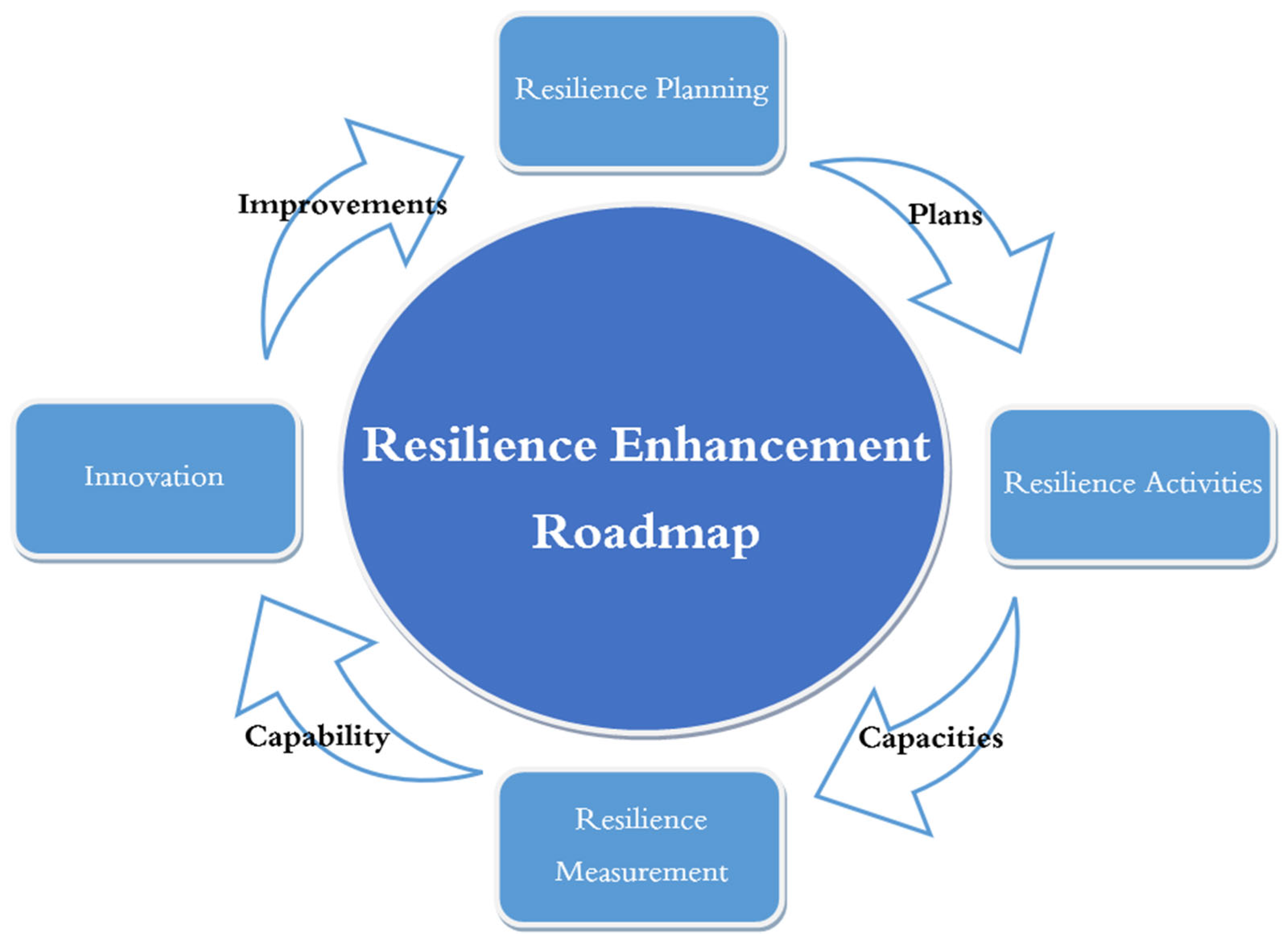
12 May 2026
Compliance readiness begins long before a regulatory deadline; it is rooted in the architecture of the organization’s Governance, Risk, and Compliance (GRC) framework. True readiness is the state of being "audit-ready" at any given moment. This requires a shift from a "check-the-box" mentality to a systemic approach where compliance is integrated into every business process. The first pillar of this infrastructure is Policy Lifecycle Management. Policies must not be static documents; they must be living guidelines that are regularly updated to reflect new laws, such as the Digital Operational Resilience Act (DORA) or evolving ESG mandates. A critical component of readiness is the Internal Control Environment. This involves setting up "defense-in-depth" layers—where operational managers (first line), compliance and risk officers (second line), and internal auditors (third line) work in concert to identify and mitigate risks. Organizations must move toward Continuous Monitoring, where internal controls are tested automatically and frequently, rather than through a once-a-year manual audit. This ensures that if a control fails—such as a security patch not being applied or a mandatory safety training being missed—the organization knows immediately and can remediate before a regulatory breach occurs. Furthermore, readiness is fundamentally a human challenge. No amount of policy can protect an organization if its employees are not "compliance-aware." This requires Behavioral Compliance Training that goes beyond teaching rules to fostering an ethical culture. When employees understand the "why" behind the regulation—whether it is protecting consumer data or ensuring environmental safety—they are more likely to act as the organization’s first line of defense. By documenting these training efforts and culture-building initiatives, companies create a "Compliance Trail" that proves to regulators that the organization has taken every reasonable step to prevent misconduct. ...Read more
12 May 2026
While environmental impacts like carbon reduction are relatively easy to measure in physical units, social impacts—such as increased community resilience or improved mental well-being—are notoriously difficult to quantify. The Social Return on Investment (SROI) framework addresses this by assigning a monetary value to social and environmental outcomes. This allows organizations to speak the "language of finance" while preserving the "heart of social impact." For example, an SROI analysis might reveal that for every $1 invested in a youth mentorship program, $5 of social value is created through reduced crime rates and increased future earnings. The SROI process is deeply participatory, relying on Stakeholder Engagement to define what "value" actually means. It is not enough for an organization to decide what is important; the beneficiaries themselves must identify the changes that matter most to them. This prevents "top-down" assessments that might miss the most significant impacts of a project. The process involves identifying "proxies"—financial values that represent a non-market good. For instance, the value of improved local air quality might be proxied by a reduction in local healthcare expenditures related to respiratory illnesses. The final result is an SROI Ratio, which provides a powerful narrative for stakeholders. However, the true value of the framework lies in the "Social Impact Account"—the detailed story of how the value was created and who benefited. This level of transparency is essential for the growing "Impact Investing" market, where capital is deployed with the dual goal of financial return and measurable social good. By standardizing how social value is reported, SROI helps prevent "social washing" and ensures that organizations are held accountable for the real-world promises they make. ...Read more

12 May 2026
The foundational challenge of Impact Assessment is the "Attribution Problem"—determining whether a positive change was truly caused by the project or by external factors. To solve this, organizations utilize the Theory of Change (ToC) framework. Unlike a standard project plan, a ToC is a comprehensive description of how and why a desired change is expected to happen in a particular context. It maps the causal link between inputs (resources), activities, outputs (direct products), outcomes (short-term changes), and ultimately, the long-term impact. By establishing these indicators before a project begins, managers can design an assessment that measures the right variables at the right time. A robust Impact Assessment requires a baseline study to capture the "pre-intervention" state of the target environment or community. This allows for a Counterfactual Analysis, which asks: "What would have happened if the project had never existed?" In 2026, the use of Randomized Controlled Trials (RCTs) in social impact has become more common, where a "treatment group" receiving the intervention is compared against a "control group." This rigorous approach provides the "gold standard" of evidence, allowing organizations to prove their effectiveness to donors, investors, and regulatory bodies. However, Impact Assessment is not just about success; it is about Adaptive Management. A well-designed IA identifies where the "logic chain" has broken. If the outputs are being delivered but the outcomes are not manifesting, the assessment provides the data necessary to pivot the strategy. This prevents "impact drift," where an organization continues to fund ineffective programs simply because the activities are being completed. In this sense, IA is a governance tool that ensures resources are directed toward the most effective solutions for social and environmental challenges ...Read more
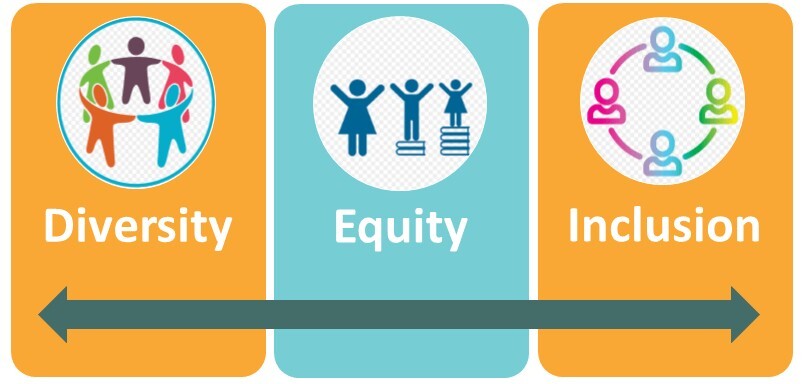
12 May 2026
Diversity, Equity, and Inclusion (DEI) have moved from being a department in HR to a core component of labor compliance and corporate strategy. In the past, diversity was often treated as a "numbers game"—meeting certain quotas for gender or ethnicity. Today, the focus is on Systemic Equity, which examines the underlying structures of a company to ensure that all individuals have the same access to opportunities, regardless of their background, neurodiversity, or physical ability. The innovation in this space is the move toward Data-Driven Inclusion Audits. Instead of general surveys, companies are using AI to analyze promotion rates, pay gaps, and "Attrition Velocity" across different demographics. If the data shows that a specific group is leaving the company at twice the average rate, it signals a failure in the social environment that needs immediate intervention. This proactive compliance model helps identify "Micro-exclusions"—subtle, systemic barriers that prevent talented individuals from reaching leadership positions. Community engagement is the final pillar of this strategy. A truly compliant company in 2026 does not exist in a vacuum; it is an active participant in its local ecosystem. This means "Local Sourcing" for labor and services, investing in local education through STEM programs, and ensuring that the company’s presence does not lead to gentrification or displacement. By integrating the company into the social fabric of its community, businesses create a "Mutual Value Exchange." This not only boosts the company’s reputation but also creates a stable, skilled local labor pool, ensuring that social and labor compliance is not just an ethical duty, but a powerful engine for regional economic growth. ...Read more