As NCRBC 2026 approaches, the conversation is shifting from sustainability reporting to building businesses that are resilient, responsible and future-ready
What if the real value of sustainability is no longer measured by the report a company publishes once a year, but by the decisions it makes every day?
From managing risks and attracting investment to building customer trust and securing long-term growth, sustainability is increasingly becoming part of how businesses operate.
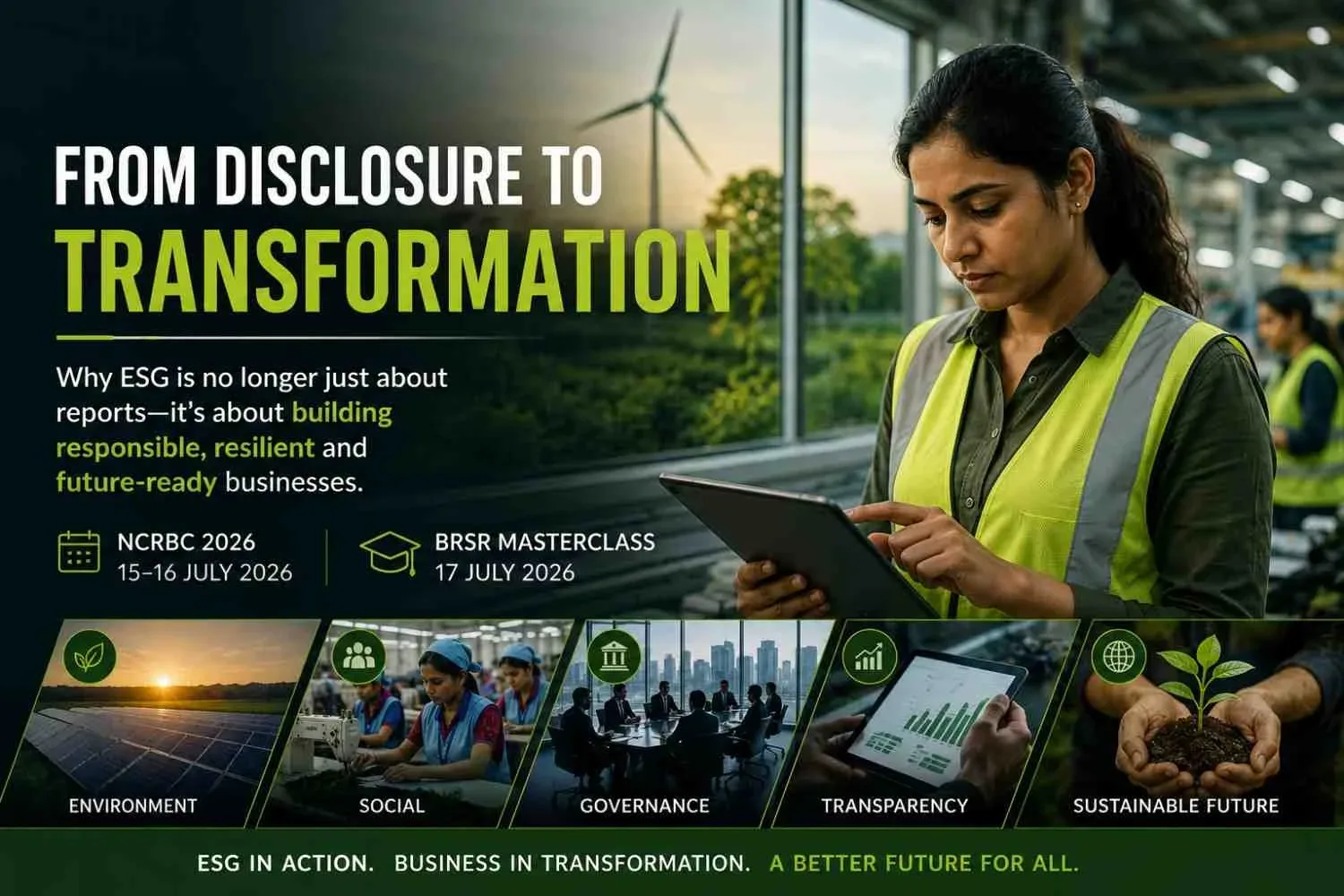
That transformation is expected to drive discussions at the National Conference on Responsible Business Conduct (NCRBC) 2026, organised by the Indian Institute of Corporate Affairs (IICA) on 15–16 July, followed by the Business Responsibility and Sustainability Reporting (BRSR) Masterclass on 17 July.
The conference comes at a time when businesses across India are under growing pressure to demonstrate that sustainability is more than a corporate commitment.
Gradually, Environmental, Social and Governance (ESG) practices are moving beyond annual disclosures and becoming a core element of business strategy.
Why ESG Matters Beyond Business
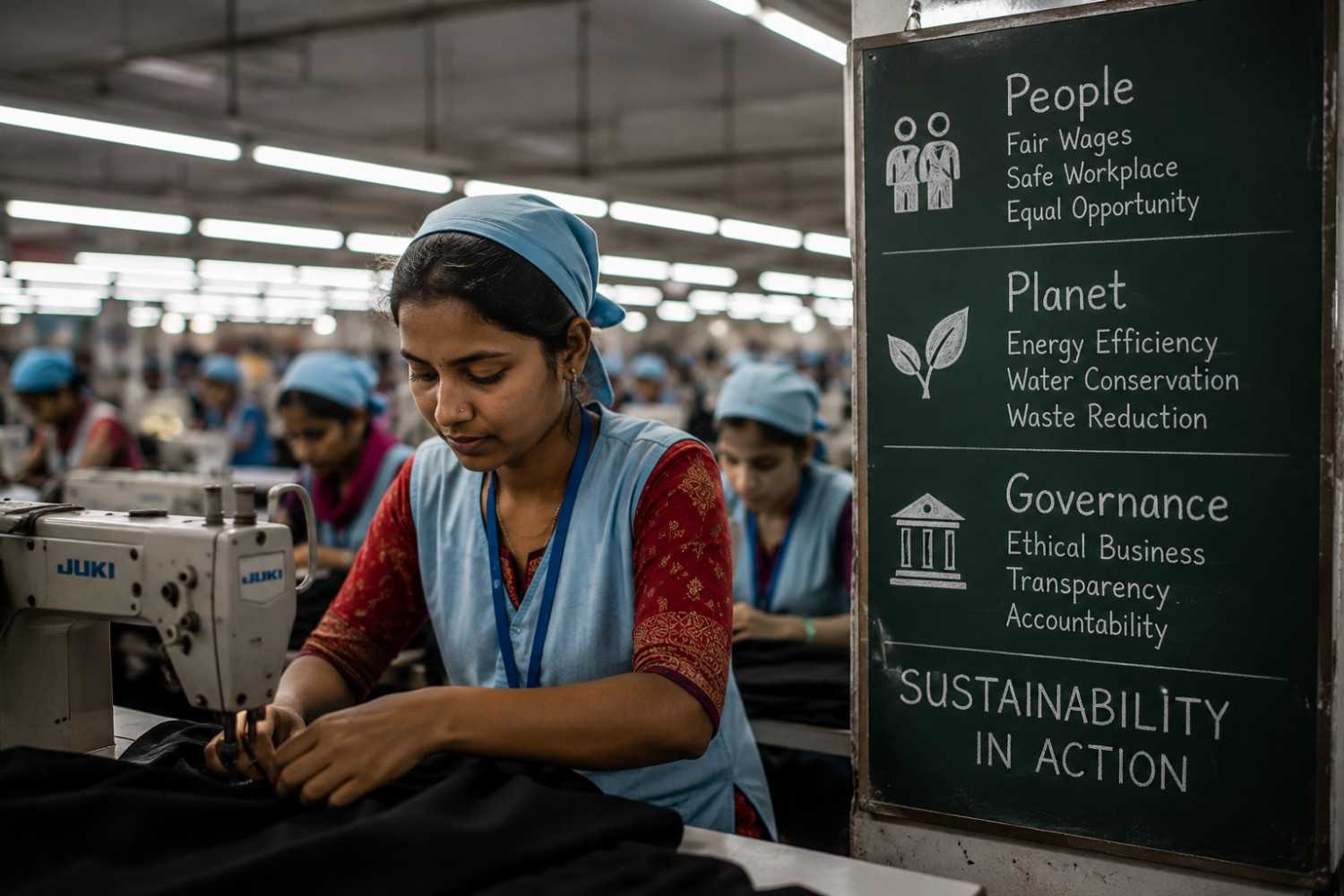
ESG may sound like a term reserved for corporate boardrooms, but its impact reaches far beyond them. It shapes the products people buy, the conditions in which employees work and the way businesses affect the environment and local communities. Cleaner production, ethical sourcing, responsible waste management and transparent governance, influence everyday life.
Public expectations are changing as well. Consumers and investors want businesses to prove that sustainability is reflected in their actions, not just their reports. In a marketplace built on trust, companies that fail to do so risk falling behind.
Why Reporting Alone Is No Longer Enough
For many businesses, sustainability reporting was once viewed as a way to meet regulatory requirements. Today, it is becoming a starting point rather than the final objective.
India's Business Responsibility and Sustainability Reporting (BRSR) framework has strengthened ESG disclosures, but stakeholders now expect more than transparency. Investors compare ESG performance before allocating capital, banks are incorporating sustainability risks into lending decisions, global buyers are demanding responsible sourcing, and customers are rewarding businesses that demonstrate genuine environmental and social responsibility.
The result is a fundamental shift: ESG is moving from an annual reporting exercise to an integral part of business strategy, financial planning and long-term growth.
What Will NCRBC 2026 Focus On?
The conference is expected to bring together policymakers, corporate leaders, regulators, researchers, sustainability professionals and industry experts to discuss the future of responsible business in India.
The discussions are expected to cover several key areas, including
- Integrating ESG into core business strategy.
- Strengthening Business Responsibility and Sustainability Reporting (BRSR) and its implementation.
- Building resilient and responsible supply chains.
- Advancing climate action, corporate governance and ethical leadership.
- Preparing businesses to adapt to evolving global sustainability standards.
- The Business Responsibility and Sustainability Reporting (BRSR) Masterclass, scheduled for 17 July, is also expected to help organisations strengthen their sustainability reporting while encouraging companies to use ESG information as a business planning tool rather than treating it solely as a compliance requirement.
The Bigger Challenge
Publishing a sustainability report may mark an important milestone, but it does not guarantee meaningful change. The real challenge lies in translating commitments into everyday business practices.
Many organisations continue to struggle with collecting reliable ESG data, measuring environmental impacts, engaging suppliers and embedding sustainability across their operations. Small and medium-sized enterprises (SMEs) often face additional barriers because of limited financial resources, technical expertise and dedicated sustainability teams.
Experts say that achieving broader ESG adoption will require stronger policy support, capacity-building initiatives and practical guidance, particularly for smaller businesses.
They also believe that continuous monitoring will become increasingly important. Businesses will need to demonstrate measurable improvements in emissions reduction, resource efficiency, employee well-being and governance practices- not just publish sustainability reports each year.
Looking Ahead
As India strengthens its sustainability ambitions and keeps pace with evolving global responsible business standards, platforms like NCRBC are becoming more than places for discussion. They are helping shape a future where sustainability is no longer viewed as a corporate obligation, but as a driver of innovation, resilience and long-term growth.
The true success of ESG will not be measured by the number of reports released each year. It will be measured by businesses that reduce their environmental impact, strengthen governance, build resilient supply chains and earn the trust of the communities they serve.
Because the future of responsible business will not be defined by what companies say in their disclosures- it will be defined by what they change in their decisions, their operations and their culture. That is the transformation ESG is ultimately expected to deliver.
Sources:
Indian Institute of Corporate Affairs (IICA) – NCRBC 2026 (https://iica.nic.in/esgconference/)
NCRBC 2026 Official Conference Website (https://esgconference.iica.in/)
Press Information Bureau (PIB) – NCRBC 2026 Inaugural Press Release (https://www.pib.gov.in/PressReleasePage.aspx?PRID=2285687&lang=2®=48)
Press Information Bureau (PIB) – NCRBC 2026 Closing Press Release (https://www.pib.gov.in/PressReleasePage.aspx?PRID=2286148&lang=2®=48)
- Indian Institute of Corporate Affairs (IICA) – Certified ESG Professional Programme (https://iica.nic.in/esgcsr/)
Institute of Chartered Accountants of India (ICAI) – Sustainability Reporting Standards Board (https://www.icai.org/post/sustainability-reporting-standards-board)




Add a Comment