

China's climate emergencies highlight a bigger question: Are Asian cities prepared for multiple disasters at once?
When a typhoon approaches, cities usually prepare for strong winds and heavy rain. But what happens when rivers are already overflowing before the storm even arrives?
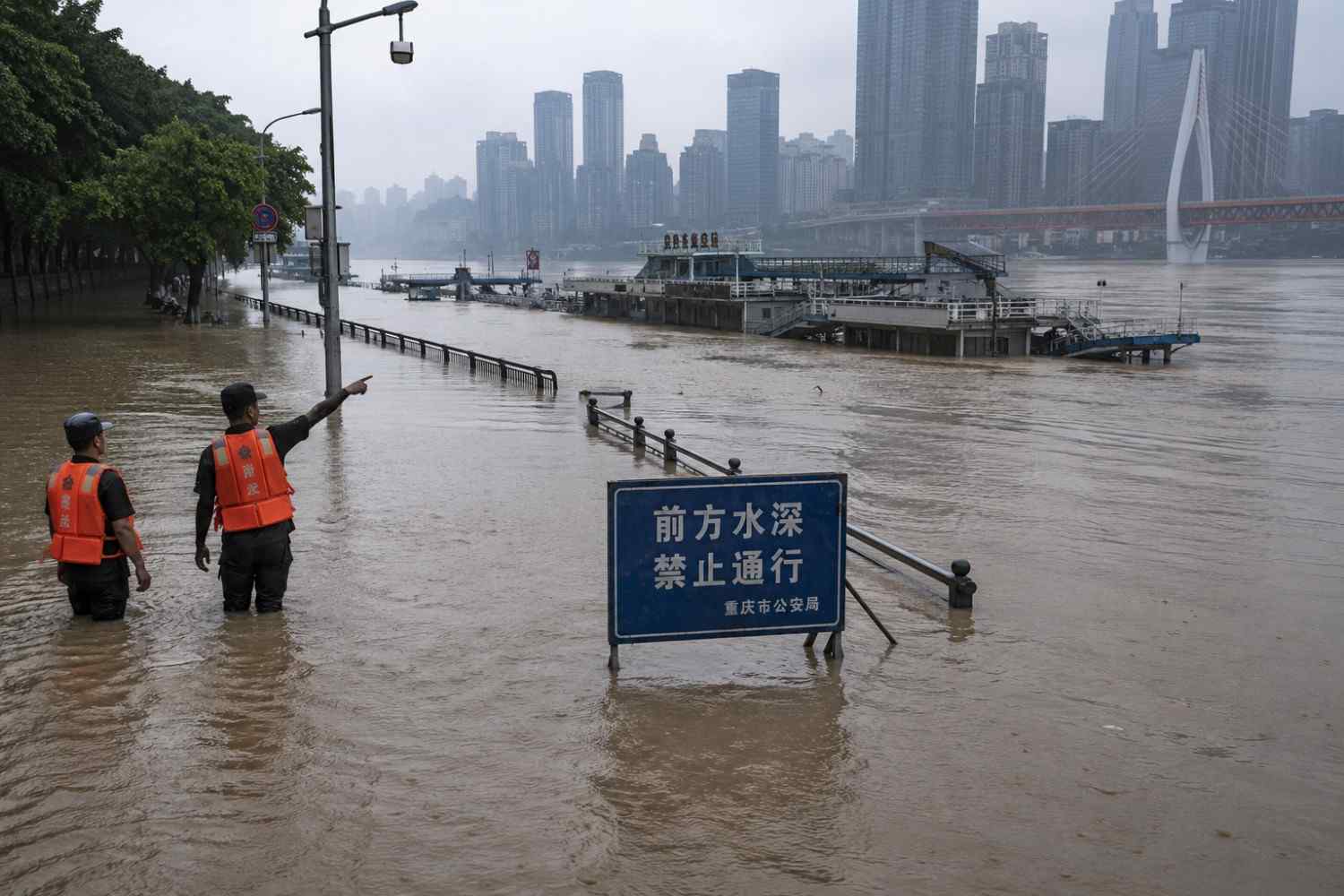
Experts say this is becoming the new reality. Instead of facing isolated disasters, countries are increasingly confronting compound events- multiple climate hazards unfolding together or in rapid succession, making their impacts far more severe and recovery more complex.
China's recent climate emergencies offer a clear example of this growing challenge.
Over a short span of time, several regions have experienced heavy rainfall, widespread flooding and the looming threat of typhoons. Together, these overlapping events have tested emergency response systems, disrupted transport networks, increased pressure on dams and forced thousands of people to evacuate.
China's response may dominate the immediate headlines, but the larger concern reaches beyond its borders.
If one of Asia's largest economies can face multiple climate disasters simultaneously, how resilient are other countries when confronted with the same threat?
Across Asia, rapid urbanisation is unfolding alongside frequent climate hazards. Rising temperatures are intensifying heavy rainfall, while sea-level rise and changing weather patterns are making floods more destructive in densely populated cities.
Experts say this new reality demands a shift in disaster planning- from preparing for single events to managing multiple climate risks at the same time.
The challenge is no longer preparing for a single disaster in isolation. Cities are now being forced to plan for multiple hazards that can occur at the same time or trigger one another.
This shift is making compound-event planning a key priority for disaster preparedness.
The focus is shifting from isolated disasters to understanding how multiple hazards interact. Heavy rainfall can overwhelm drainage systems, flood roads, trigger landslides, and strain dams and reservoirs- leaving communities more vulnerable if another hazard, such as a cyclone, follows soon after.
Disasters can no longer be viewed as separate emergencies, as one event often magnifies the impact of another.
China's recent climate emergencies demonstrate why preparing for interconnected risks is becoming an essential part of disaster planning.
Another issue moving to the forefront is dam safety.
Reservoirs across Asia are vital for water storage, irrigation, hydropower and flood management.
But during extreme rainfall, operators face a difficult choice: retain more water and increase pressure on the dam, or release it quickly and risk worsening floods downstream.
Experts say climate change is making these decisions more difficult, turning dam management into more than just a technical challenge.
Modern dam management depends on accurate weather forecasts, river monitoring, real-time data and close coordination between multiple agencies. Strengthening these systems can help authorities act before risks escalate.
The same principle applies to cities.
Urban flooding is no longer caused by heavy rainfall alone. Rapid urbanisation, shrinking wetlands, expanding paved surfaces and inadequate drainage often prevent water from draining naturally, allowing intense rainfall to quickly develop into a major urban emergency.
Many cities across Asia are now confronting the same challenge.
Whether in China, India, Bangladesh or Southeast Asia, growing populations and expanding infrastructure are increasing exposure to climate-related risks. Experts argue that adaptation must therefore become part of everyday urban planning rather than an emergency response after disasters occur.
This requires stronger drainage systems, the protection of natural flood buffers like wetlands and floodplains, more effective early-warning systems, and resilient infrastructure that can continue operating during extreme weather.
Technology is becoming a powerful ally in climate adaptation. From satellite monitoring and artificial intelligence to advanced forecasting and digital flood mapping, new tools are helping authorities detect risks earlier and give communities more time to prepare.
But technology cannot prevent disasters on its own.
Experts say real preparedness depends on how effectively governments, engineers, emergency responders and local communities work together long before a crisis begins.
For India, the lessons are particularly relevant.
Recurring urban floods, powerful cyclones and rapid infrastructure expansion are increasing the country's exposure to multiple climate hazards. Experts argue that future disaster preparedness will depend not only on responding effectively to individual events but also on planning for the ways different hazards can interact.
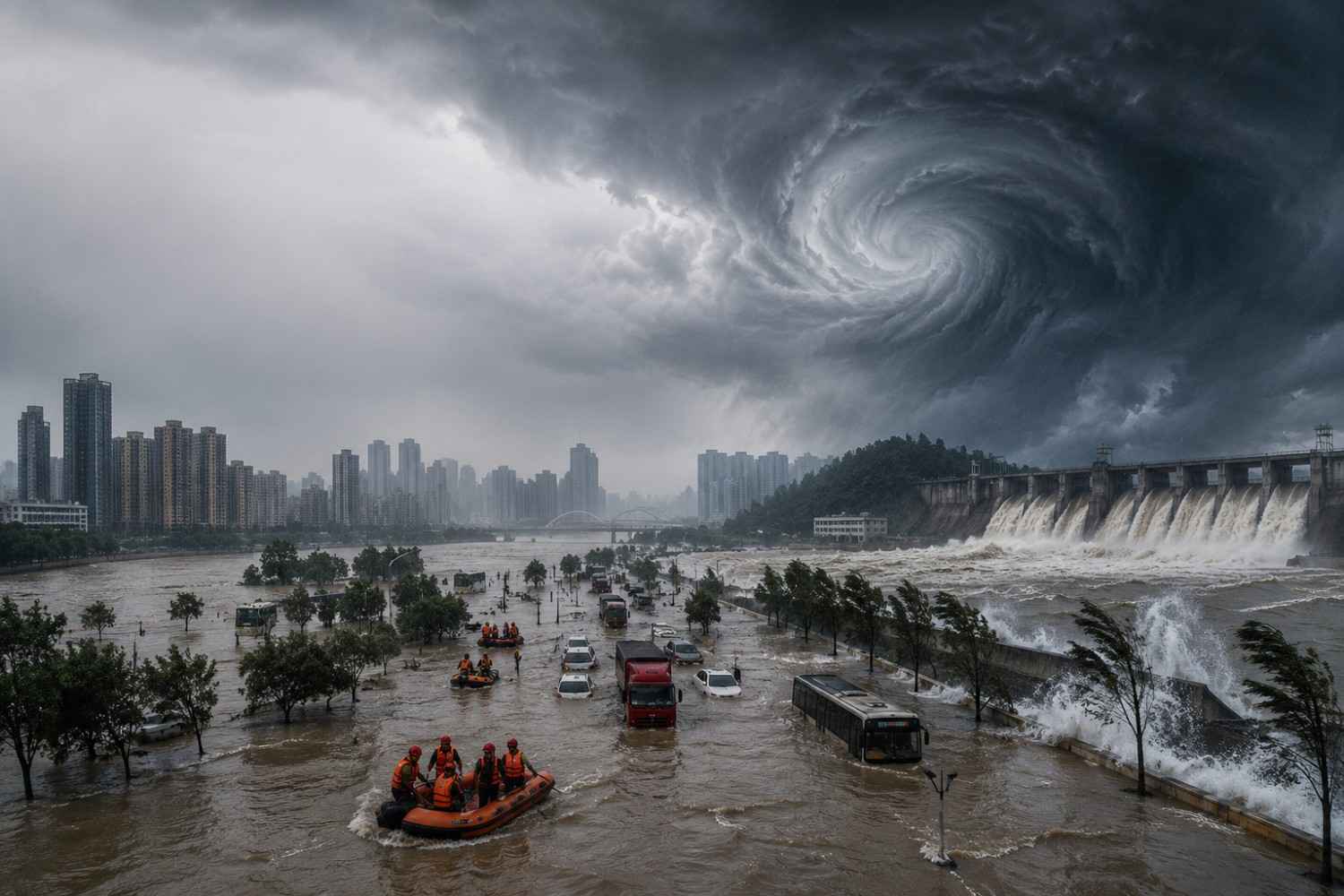
China's recent floods and typhoon threats are therefore more than a national emergency.
They highlight a broader reality: climate disasters are becoming more interconnected, more complex and increasingly difficult to anticipate.
China's floods and typhoon threats are more than a reminder of a changing climate- they are a reminder that the nature of disasters is changing as well.
The real test of resilience will not be how well countries respond to the next disaster, but how effectively they prepare for a future where climate risks no longer arrive alone.
Sources:
- World Meteorological Organization (WMO) – Multi-Hazard Early Warning Systems & Climate Reports
https://wmo.int - United Nations Office for Disaster Risk Reduction (UNDRR) – Compound Disaster Risk & Disaster Resilience
https://www.undrr.org - China Meteorological Administration (CMA) – Typhoon Monitoring, Rainfall & Weather Warnings
https://www.cma.gov.cn/en - Reuters – Coverage of China's floods, typhoons and emergency response
https://www.reuters.com/world/china/ - ReliefWeb (OCHA) – Floods, Humanitarian Updates & Disaster Situation Reports
https://reliefweb.int



Add a Comment