

CAQM's latest inspections in Noida and Greater Noida reveal why road dust remains one of the region's biggest air pollution challenges
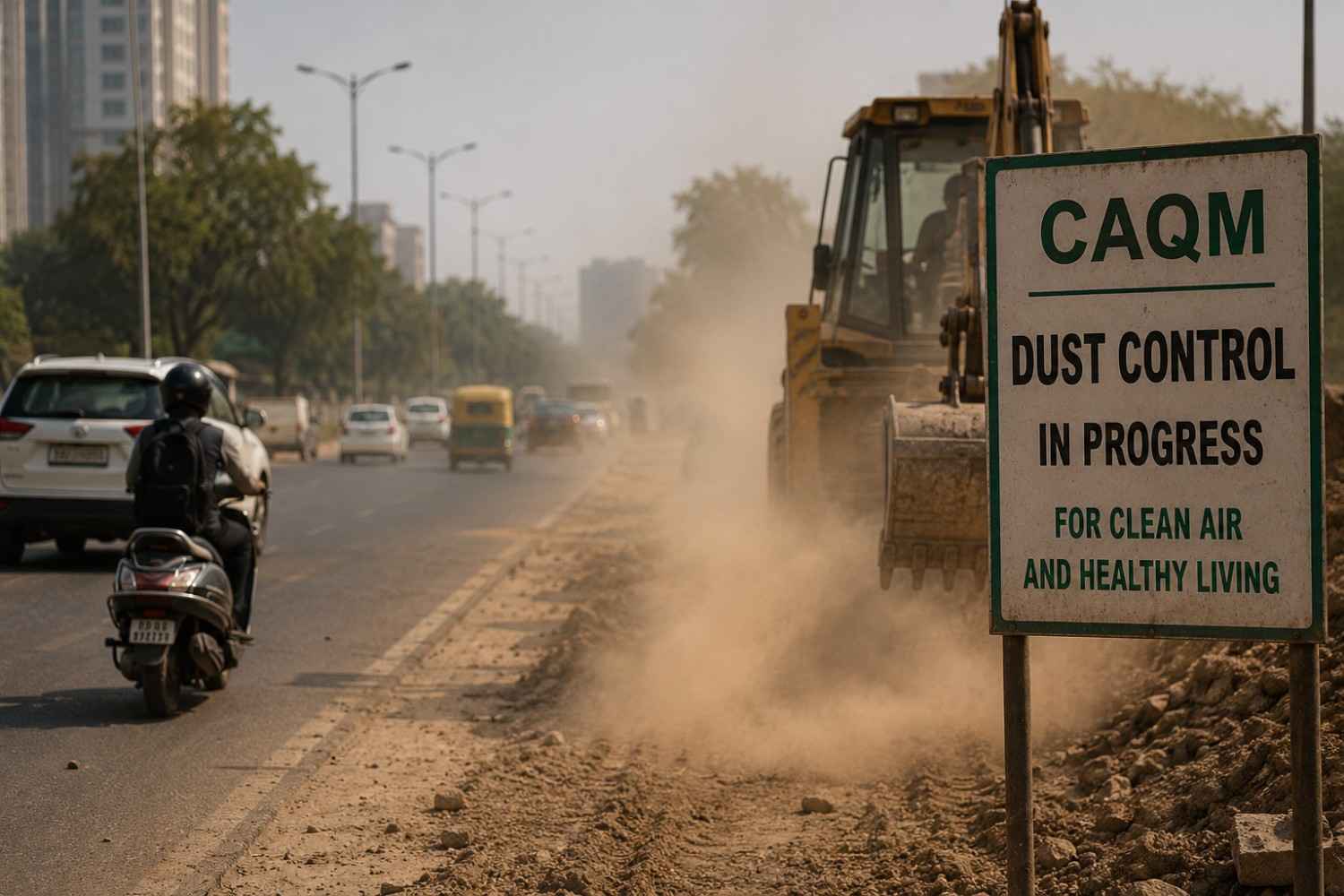
In Noida and Greater Noida, dust is no longer just a sign of construction- it has become part of the city's daily rhythm. It settles on vehicles, homes and streets, only to rise again as traffic moves and construction continues.
For millions of residents, breathing through this haze has become an ordinary part of everyday life.
For many residents, dust has become part of the daily routine. But should it also become the price of development?
Fresh inspections by the Commission for Air Quality Management (CAQM) across Noida and Greater Noida suggest the answer is far from settled. Although improvements are visible in some areas, the review found that persistent gaps continue to limit the effectiveness of road dust control measures.
Why Is Road Dust Under the Spotlight?
Road dust is one of the most persistent sources of air pollution in Delhi-NCR. Damaged roads, construction activity, uncovered debris and constant traffic repeatedly lift fine particles into the air, adding to harmful PM10 and PM2.5 pollution.
Unlike smoke from factories or exhaust from vehicles, road dust often goes unnoticed. Yet it continues to circulate with every passing vehicle.
CAQM's latest inspections were intended to examine whether road-owning agencies are following dust-control norms and whether ongoing infrastructure projects are helping improve air quality instead of making it worse.
A Step Forward, But the Problem Persists
The inspections suggest that while progress is visible, the work is far from complete. Fully paved roads have reduced dust in some locations, but exposed shoulders, unfinished infrastructure and poorly maintained road surfaces continue to allow fine particles to spread.
CAQM has asked the responsible agencies to finish pending work and treat road maintenance as a continuous responsibility rather than a one-time intervention.
The message is clear: despite ongoing clean-air initiatives, road dust remains one of Delhi-NCR's most stubborn sources of pollution.
The Cost of Dust Goes Beyond Dirty Roads
Road dust is easy to overlook, but its impact reaches far beyond what settles on vehicles or buildings.
The fine particles it releases can enter the lungs and bloodstream, increasing the risk of respiratory and cardiovascular illnesses. For children, older adults and people who work outdoors- including delivery workers, traffic police personnel, sanitation workers and street vendors- this exposure is a daily reality.
When dust is left unmanaged, its effects extend beyond the roadside, reducing air quality in nearby homes, schools, parks and neighbourhoods. In that sense, controlling road dust is not only about cleaner cities- it is about protecting public health.
The Real Test Comes After the Inspection
Dust-control measures are not new. Mechanised sweeping, water sprinkling, paved shoulders and stricter construction norms have all been promoted as part of Delhi-NCR's clean-air efforts. Yet residents continue to encounter the same dusty roads.
The question is no longer what needs to be done, but whether it is being done consistently or not. Lasting improvements will depend not just on inspections or announcements, but on effective implementation, regular monitoring and accountability long after the inspections are over.
What Comes Next?
Experts believe lasting improvements will come only when road dust control becomes an everyday responsibility rather than an occasional clean-air campaign. Completing road paving, expanding mechanised sweeping, regularly treating dust-prone stretches and managing construction waste more effectively can all help reduce pollution.
Just as importantly, damaged roads should be repaired before they turn into permanent sources of airborne dust.
Transparency is equally important
Making inspection reports, action-taken reports and follow-up assessments publicly accessible would help residents understand what progress is being made while strengthening accountability among local authorities.
Experts also recommend expanding green buffers along major roads, improving roadside landscaping and ensuring that construction sites consistently comply with dust-control regulations.
Residents have a role to play as well. Reporting damaged roads, excessive construction dust and uncovered debris can help authorities identify pollution hotspots early and take corrective action before conditions worsen.
Cleaner Roads, Healthier Cities
CAQM's latest inspections serve as a reminder that cleaner air is not shaped only by what comes out of exhaust pipes or factory chimneys- it is also influenced by the condition of the roads beneath our feet.
Road dust remains one of the most preventable sources of urban air pollution. With consistent maintenance, effective enforcement and long-term planning, cleaner roads can become an important step towards healthier cities.
The Real Measure of Progress
The challenge is no longer identifying the sources of road dust. It is ensuring that every recommendation is followed by action, every agency is held accountable and every improvement is sustained.
Because the true measure of a city's progress is not just how fast it grows- but how clean and healthy it remains for the people who call it home.
Here are 5 credible open-source references that align with your blog and support the information on CAQM inspections, road dust, enforcement, and air quality management.
Sources:
Commission for Air Quality Management (CAQM) – Official Orders, Directions & Inspection Updates
https://caqm.nic.in
Ministry of Environment, Forest and Climate Change (MoEFCC) – Air Pollution Control Policies & Environmental Regulations
https://moef.gov.in
National Clean Air Programme (NCAP) – Government of India
https://ncap.niua.org
Press Information Bureau (PIB), Government of India – Official releases on CAQM, air quality and dust mitigation initiatives
https://pib.gov.in
Central Pollution Control Board (CPCB) – Air Quality Data, PM2.5/PM10 Information & Dust Pollution Guidelines
https://cpcb.nic.in




Add a Comment