
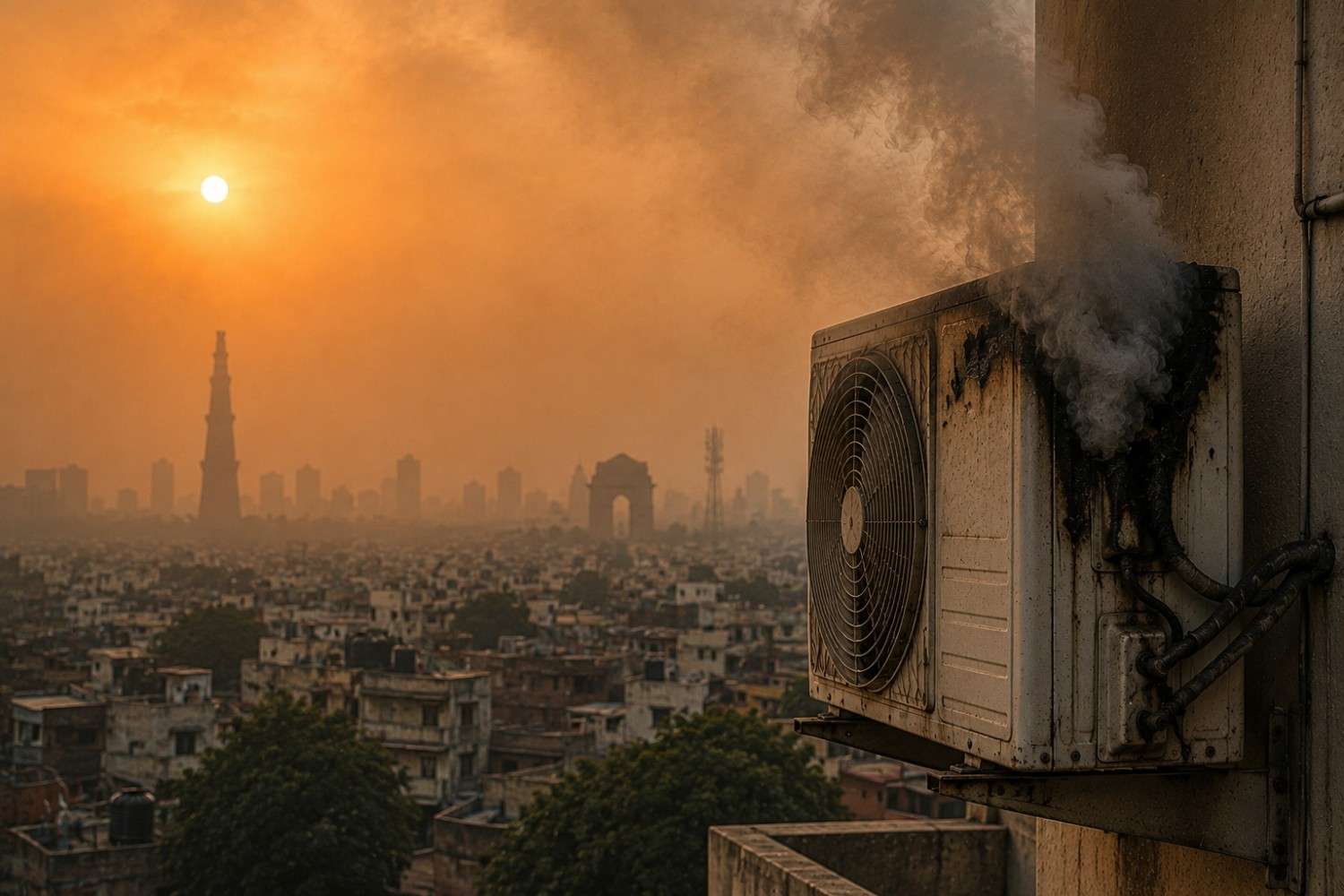
Why Delhi's Air Conditioners Are Turning Into Ticking Time Bombs — And What It Reveals About India's Unfolding Climate Catastrophe
A special feature by Prof Ujjwal K Chowdhury, on climate, engineering failure and urban survival, in the context of the bursting air-conditioners in Delhi. | July 2026
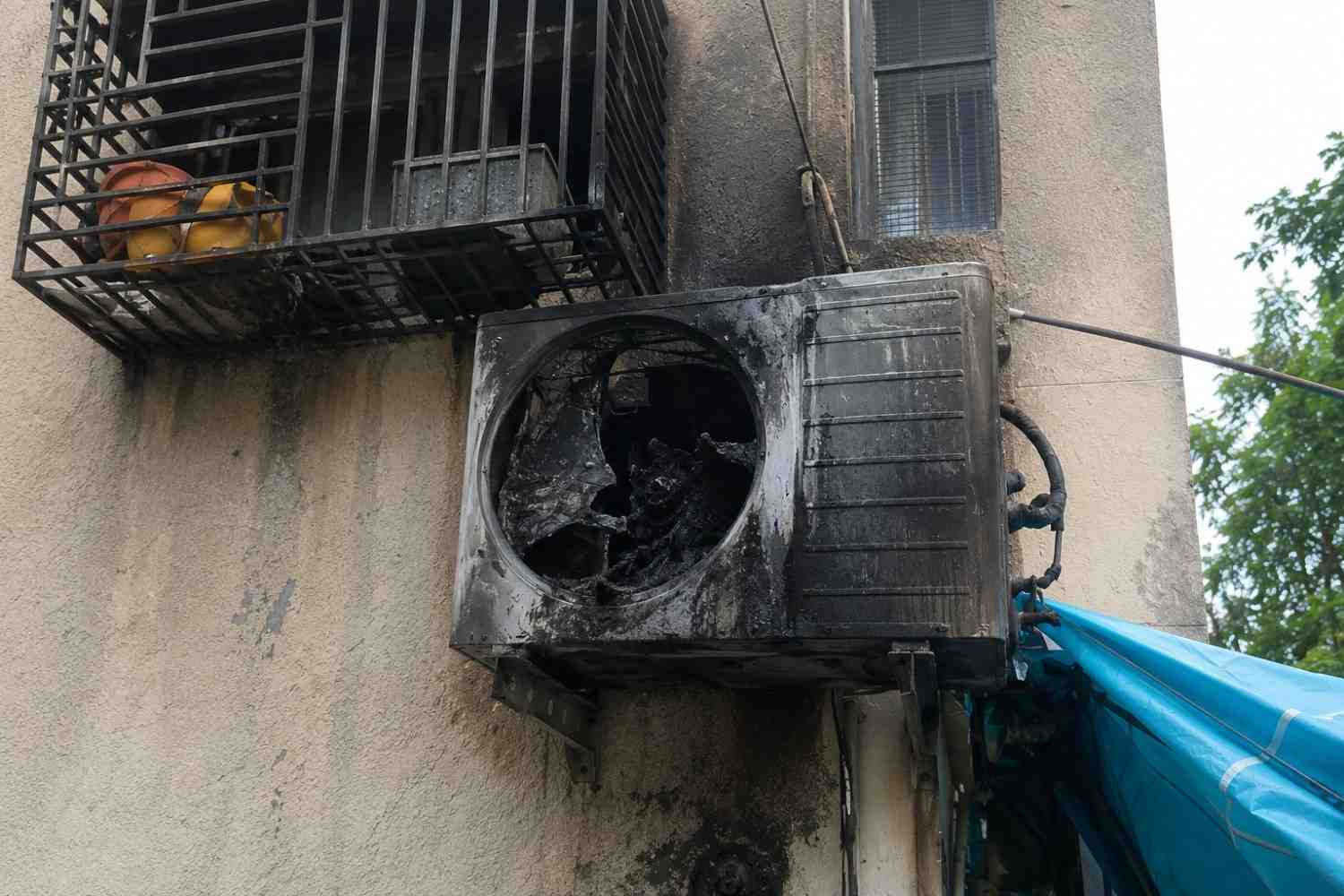
By late May 2026, the national capital had become a pressure cooker in more ways than one. As temperatures climbed past 45°C and the asphalt shimmered with trapped heat, Delhi's air conditioners — the very machines bought to guarantee survival — began detonating inside bedrooms, offices, police stations and apartment towers. On May 26, a split AC exploded on the fifteenth floor of a high-rise in Ghaziabad's Indirapuram. Days earlier, nine people had died in a blaze at a residential complex in East Delhi's Vivek Vihar, with investigators pointing to an AC blast and short circuit. Then came the death of retired IAS officer Dhanendra Kumar, who succumbed to smoke inhalation after an explosion in the indoor unit of his air conditioner at his Hauz Khas residence — the third, fourth and fifth such incident inside three weeks. "The Hauz Khas incident is particularly disturbing because the suspected explosion occurred in the indoor unit, which is uncommon," a Delhi Power Department official told the press. “Usually, fires occur in the outdoor compressor due to gas leakage or overheating. But when faulty wiring sparks inside a closed room with a refrigerant leak, the unit itself can become a bomb.”
These are not freak accidents. They are the audible, flaming symptoms of a city being pushed past its physical and institutional limits — where a hostile climate, ageing electrical infrastructure, regulatory drift and human negligence have converged into a single, recurring hazard.
Why Delhi Is Baking
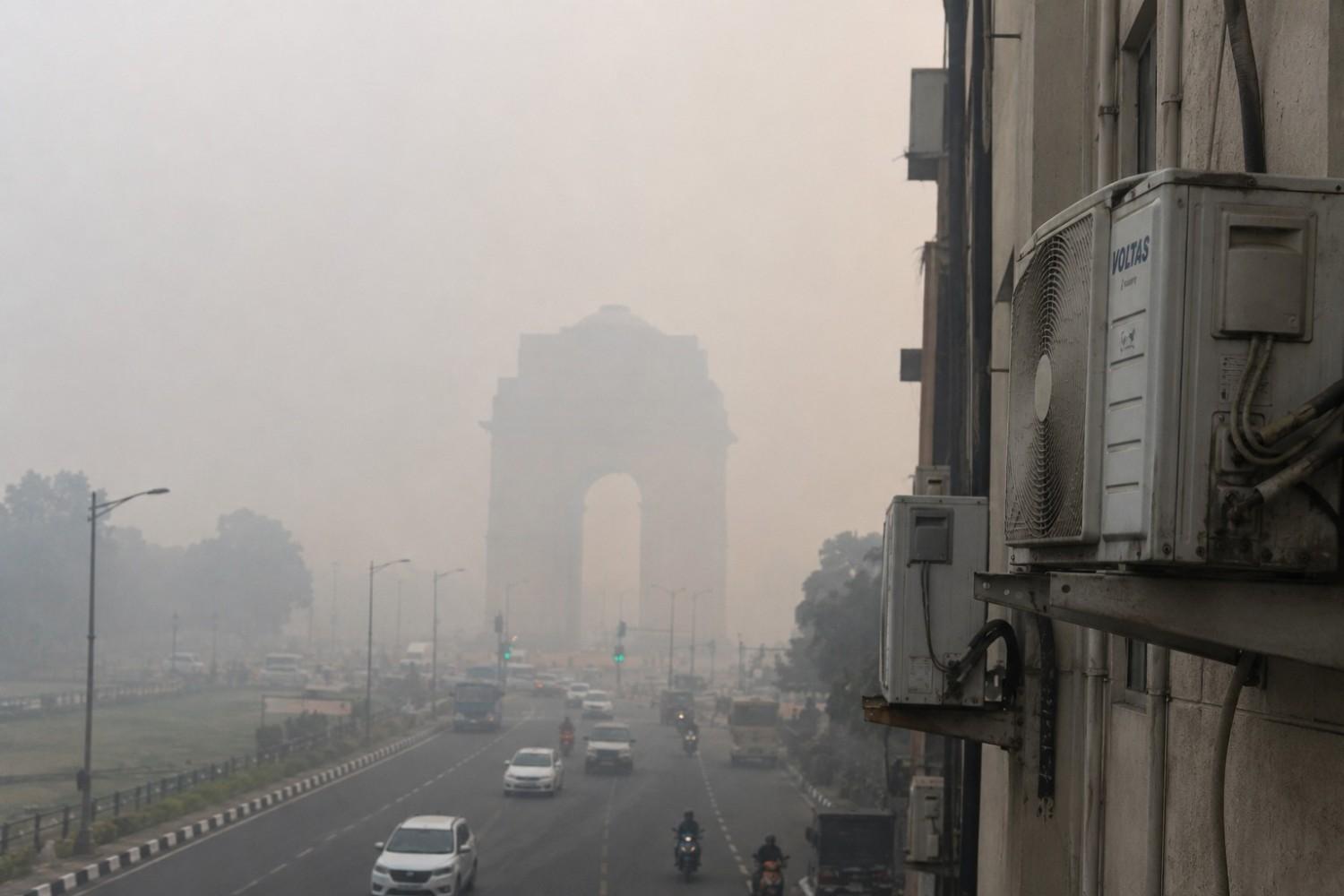
On April 26, 2026, Delhi's temperature crossed 42°C — 3.1°C above the long-term seasonal average. By late June, the city recorded an ambient air temperature of 41.3°C with a heat index, factoring in humidity, of a lethal 51.3°C. This is not a hot spell; it is the acceleration of a structural climatic shift. India's annual average temperature has risen 0.15°C per decade between 1951 and 2016, and the World Meteorological Organization confirms that the eleven years from 2015 to 2025 were the hottest on record globally. Delhi's dense, glass-and-concrete built form compounds this through the urban heat island (UHI) effect: a study by IIT-Delhi's Centre for Atmospheric Sciences found that night-time temperatures in densely built NCR pockets run 2–4°C above surrounding rural areas, because concrete and asphalt absorb solar radiation all day and release it slowly after dark. Consequently, minimum night temperatures have hovered around 31°C — the city never achieves a thermal reset, forcing air conditioners to run continuously against an unwinnable thermal load.
A 2026 Centre for Science and Environment (CSE) assessment quantified the damage starkly: 75.78% of Delhi's area is now persistently heat-stressed, with land-surface temperatures crossing 45°C for six or more years running, and 98.72% of the city has crossed that threshold at least once in the past decade. The same study found Delhi's green cover shrinking from 25.36% in 2014 to just 14.14% in 2024, while waterbody footprint fell from 1.25% to 0.99%. "Delhi's infrastructure was not originally built to take on the kind of extreme conditions we're seeing right now," CSE's Rajneesh Sareen has observed.
The electricity data mirrors this stress. On June 29, 2026, Delhi's peak power demand touched an all-time high of 8,748 MW — surpassing the previous record of 8,656 MW from June 19, 2024 — and the grid crossed 8,000 MW three times that month alone, with projections of a 9,000 MW peak if conditions persist. This is the cooling trap: rising heat drives longer AC use, which spikes demand, which strains transformers, wiring and building circuits, which in turn raises fire probability. India's national power demand told the same story, peaking at 270.73 GW on May 21, 2026, according to Reuters, even as coal-fired generation surged to 120.20 billion kWh in June — the highest since November 2023 — partly because evening air-conditioning demand outpaced battery storage capacity.
The Anatomy of an AC Blast
What is loosely called an "AC blast" is technically a violent rupture, arc-fault or fire in the compressor and refrigerant circuit — and Delhi Fire Services estimates that roughly 60% of all fires in the city are of electrical origin, caused by short circuits, overheating, overloading and non-standard appliances. The failure cascade typically unfolds in four stages.
1. Compressor Overheating and Pressure Build-Up
The compressor squeezes refrigerant gas to pressures measured in hundreds of psi, and it must reject heat absorbed from indoors into already-scorching outdoor air. When ambient temperatures exceed 43–45°C, or when the condenser coil is clogged with dust, boxed into an unventilated balcony, or paired with a weak fan, "head pressure" climbs beyond the engineered safety threshold. If protective valves fail, the compressor shell can rupture violently, spraying hot oil and refrigerant while producing an explosion-like sound.
2. Flammable Refrigerants
India's shift to eco-friendlier refrigerants has quietly introduced a new hazard. Many modern splits use R32 (difluoromethane), classified A2L — "low toxicity, lower flammability" — while some use R290 (propane), classified A3, or highly flammable. R32 has a lower flammability limit of 306 g/m³ and needs 30–100 mJ of ignition energy; R290 is far more dangerous, with a flammability limit of just 38 g/m³ and an ignition energy of only 0.25 mJ — low enough for static discharge to ignite it. When either gas leaks into a poorly ventilated room and meets a spark from faulty wiring or a failing capacitor, ignition follows almost instantly.
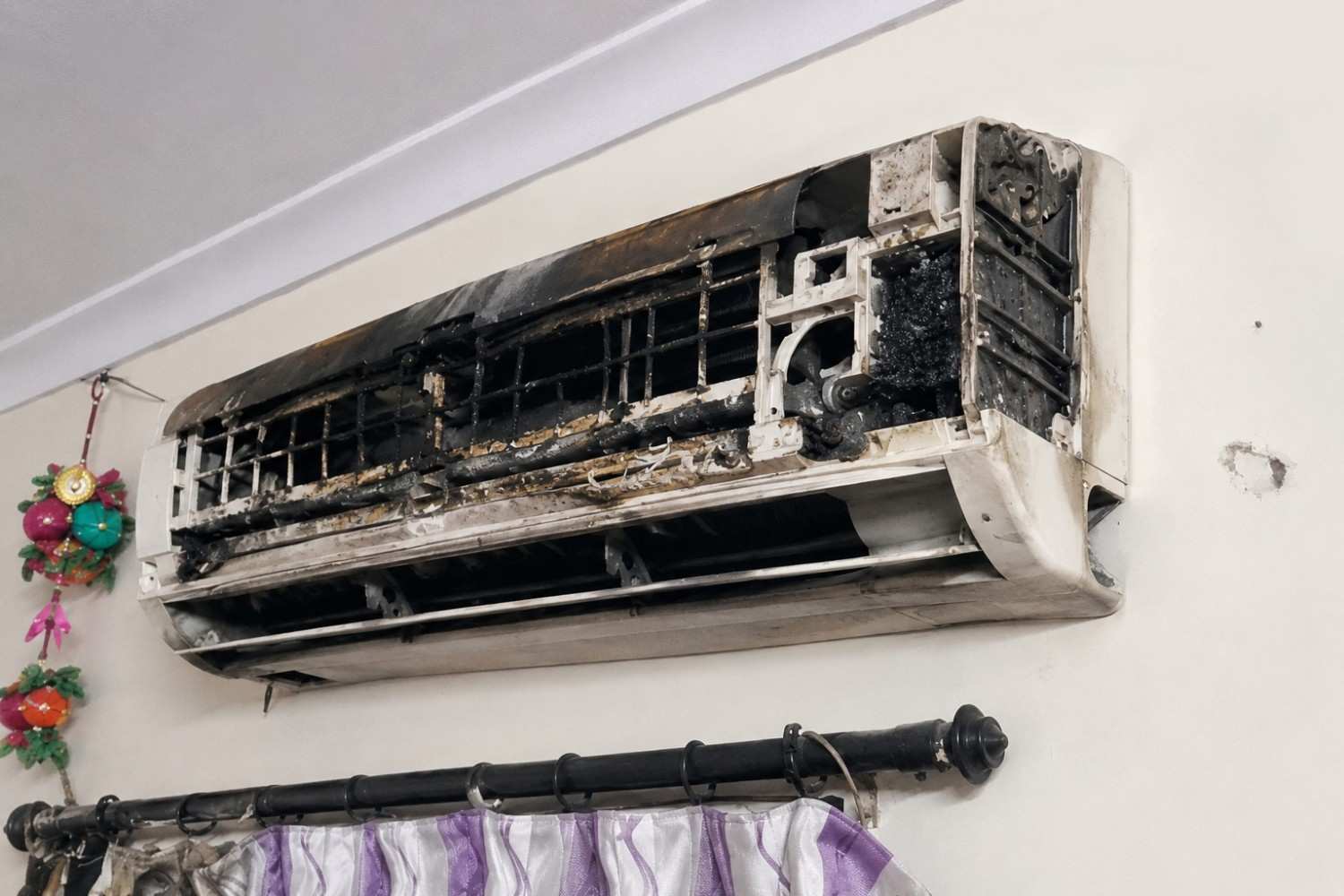
3. Electrical Insulation Failure
Continuous operation degrades the insulation around internal wiring. Loose terminals, undersized cables, damaged insulation, incorrectly rated MCBs, absent RCCB/ELCB protection, poor earthing and overloaded extension boards generate arcing heat. Many Delhi homes — particularly in older colonies and unauthorised constructions — were wired decades ago for a ceiling fan and a single window unit; today the same panels carry three or four split ACs, refrigerators and washing machines running simultaneously through peak summer hours.
4. The Maintenance Crisis
Dust-clogged filters trap heat; gas leaks, damaged insulation and worn capacitors go unnoticed because households routinely skip annual servicing. In several documented incidents, residents had already noticed burning smells, unusual noises or weakening cooling before catastrophe struck — warning signs ignored until it was too late. Industry experts also warn that "turning the AC on during servicing may cause a diesel-like explosion inside the compressor," noting technician deaths from exactly this failure during routine maintenance, often caused by residual nitrogen left in the system after leak-testing, or moisture that corrodes internal parts into acid formation.
"A bursting AC is not just a machine failing. It is a city crossing its design limits."
Standards, Quality Assurance and the Compliance Gap
India is not short of rules. The Bureau of Indian Standards (BIS) mandates compliance under the Air Conditioner and its Related Parts, Hermetic Compressor and Temperature Sensing Controls (Quality Control) Order, 2019, with ISI marking compulsory since October 2023. Key standards include the updated IS 1391 Part 1:2023 for window/unitary ACs up to 10,500 W, IS 1391 Part 2:2023 for split ACs up to 18,000 W (5 TR), IS 8148 for ducted and packaged units, IS 10617 for hermetic compressors, and IS/IEC 60730 for temperature-sensing controls.
The problem is not the absence of standards but the absence of a compliance culture stretching from the factory to the wall socket. The Bureau of Energy Efficiency (BEE) star-rating system typically tests efficiency at an ambient temperature of 35°C, yet many standard Climate Class T1 compressors are not engineered for continuous multi-day operation at 50°C — experts argue the government must strictly mandate T3 (Tropical) climate-class compressors, rated for up to 55°C, for all units sold across North India. Meanwhile the aftermarket servicing sector remains largely unorganised: uncertified imports, counterfeit capacitors and cables, incompatible refrigerant mixing, and "bypass fixes" — such as overriding a tripping breaker instead of diagnosing the fault — turn certified appliances into fire traps. As Schneider Electric's technical documentation notes, an MCB's bimetallic strip is meant to trip under overload heat; if the breaker is substandard or wrongly rated, the safety mechanism becomes "a silent accomplice to disaster."
Government Response: Parameters and Their Enforcement
The Delhi government has not been passive. Chief Minister Rekha Gupta unveiled the Delhi Heatwave Action Plan 2026 as temperatures crossed 42°C, operationalising National Disaster Management Authority (NDMA) guidelines that classify heatwaves as state-specific disasters eligible for State Disaster Response Fund financing. Under the plan, 339 health centres across 13 districts are on high alert, more than 30 hospitals have set up five-bed "cool rooms," 39 Quick Response Teams have been deployed, construction work is banned between noon and 3 p.m. on severe heatwave days, and satellite data has flagged thermal hotspots — Ayanagar, Najafgarh, Safdarjung, Wazirpur, Jahangirpuri, Khayala, Shastri Park and others — for targeted cooling intervention. A Cool Roof Policy 2026 is being rolled out, with reflective coatings already tested at Kashmere Gate ISBT.
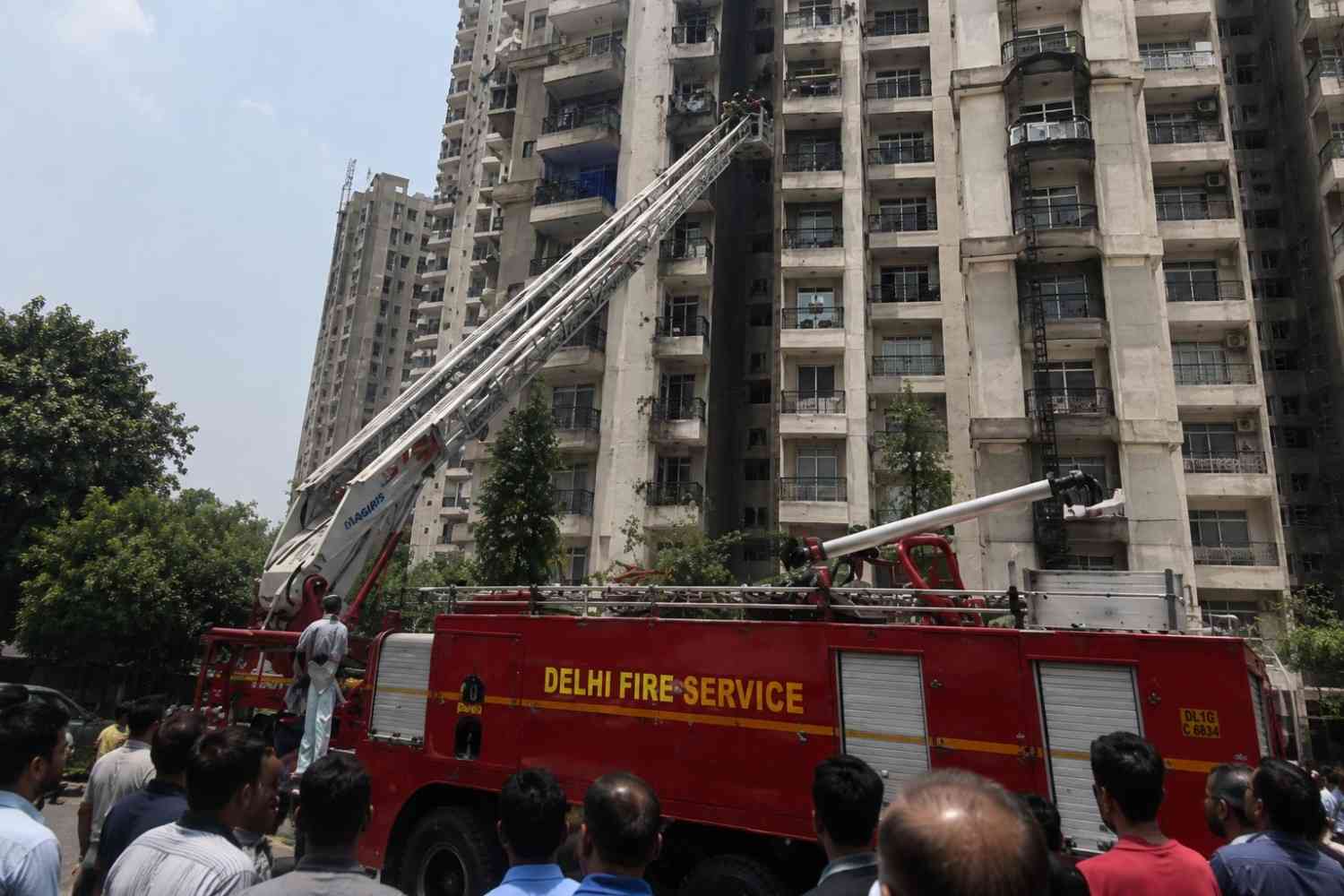
India's Heat Action Plan framework now covers over 250 cities and districts across 23 heat-prone states, and the Supreme Court's 2024 judgment in MK Ranjitsinh v. Union of India recognised the right to be free from adverse climate-change impacts under Article 21. Yet experts caution these remain emergency responses rather than structural adaptations. Enforcement of AC-specific safety parameters — mandatory pre-summer electrical audits, licensed installation, thermographic panel scanning — is patchy at best, particularly in informal settlements, coaching hostels and older housing societies where inspections are rare and fire NOCs are often paper rituals rather than lived safety records.
Health Hazards: The Invisible Epidemic
Extreme heat is a mass-casualty event long before any AC bursts. A May 2026 study in Frontiers in Environmental Health estimated that a single day of extreme heat causes approximately 3,400 excess deaths nationally, while a five-day heatwave is linked to nearly 30,000 extra deaths — figures that dwarf the 500 to 1,500 heat-related deaths officially counted by government agencies each year. The study found a two-day heatwave associated with a 14.7% rise in daily mortality across ten major Indian cities, with Delhi, Ahmedabad and Varanasi showing among the strongest heat-mortality associations. "The five states bearing the highest heatwave mortality burden account for 66% of national excess deaths while contributing only 29% of India's GDP," the study's authors noted, calling it "a profound and troubling environmental injustice." Uttar Pradesh alone recorded roughly 8,056 excess deaths in a five-day heatwave scenario.
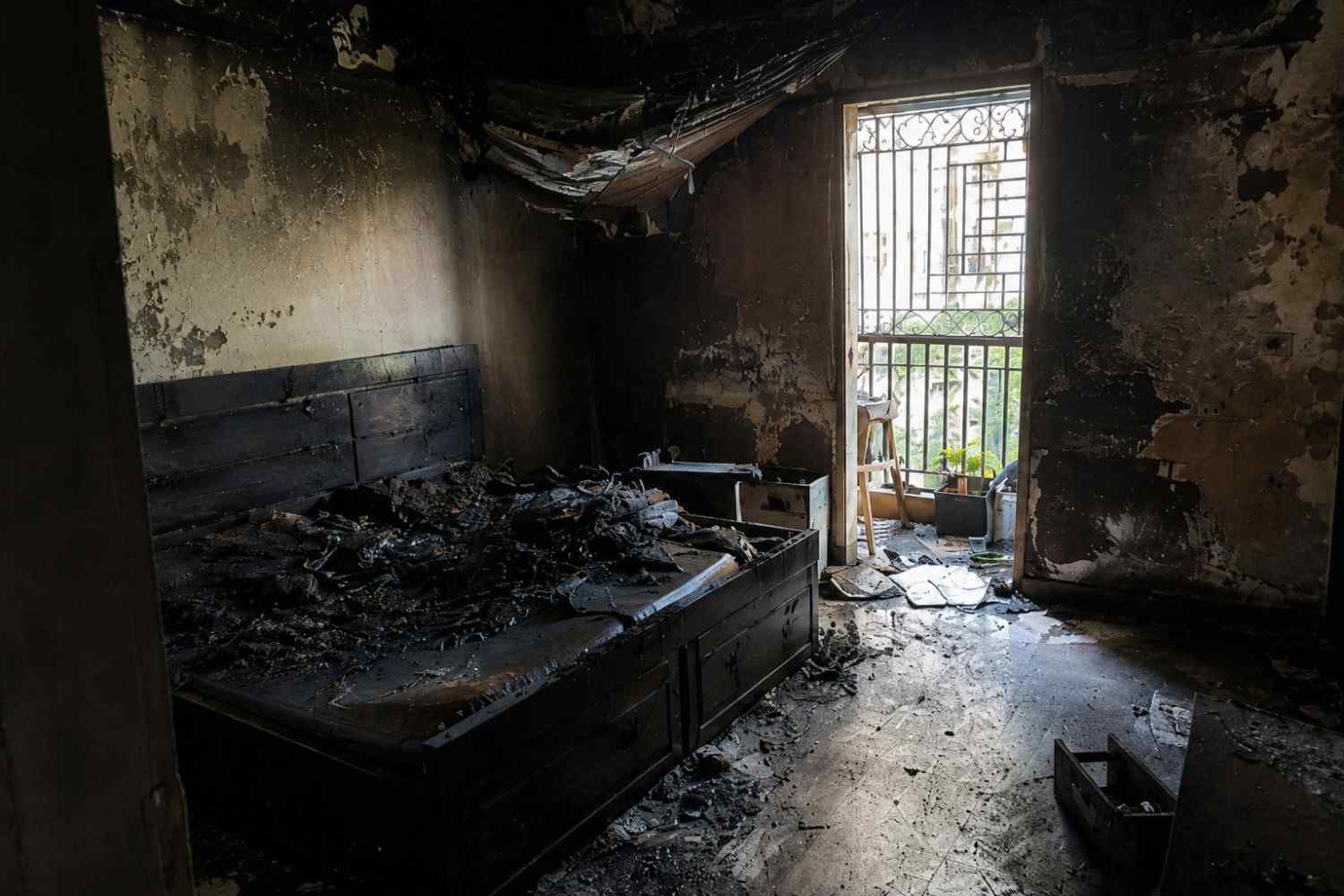
The World Health Organization has separately warned that extreme heat worsens cardiovascular and respiratory disease, exacerbates diabetes-related complications, triggers acute kidney injury, and can cause fatal heatstroke within hours — risks concentrated among the elderly, children, outdoor workers and residents of poorly ventilated homes. Once an AC unit catches fire, a second wave of harm follows: incinerated plastics, printed circuit boards and polyurethane foam release carbon monoxide and cyanide gas, and in many documented Delhi cases it is smoke inhalation — not flame — that proves fatal, as in the death of the retired IAS officer at Hauz Khas.
Accident probability cannot be reduced to a single number, because it depends on unit age, refrigerant type, wiring quality, ventilation, installation standards and maintenance discipline. But the pattern is unambiguous: risk climbs sharply whenever several weak links compound — an ageing compressor, a dust-choked coil, substandard wiring and skipped servicing, all operating under 45°C-plus ambient stress. Reuters reported that Delhi Fire Services logged over 9,000 fire calls between April and June 2024 alone — more than double the previous year — with fire deaths more than tripling, and officers attributing nearly three-quarters of summer blazes to electrical failure linked to surging AC and appliance use.
Preventing the Next Blast: Technical and Physical Changes
Preventing AC explosions inside homes, offices and educational institutions demands a layered, non-negotiable retrofit agenda.
Electrical Infrastructure
Every AC installation needs a dedicated circuit from the distribution board, correctly sized copper wiring, a properly rated MCB, RCCB/ELCB leakage protection, effective earthing and a voltage stabiliser to shield compressors from summer grid fluctuations. Extension boards for high-draw appliances must be eliminated outright. Homes older than fifteen years should undergo mandatory electrical audits, and multi-AC buildings — offices, schools, hostels, hospitals — should commission annual thermographic scanning of panels and high-load circuits before peak summer.
Installation Standards
Outdoor units require at least 30 centimetres of clearance from walls and obstruction-free airflow zones — never boxed into a sealed balcony where hot exhaust recirculates into the intake. Indoor units must avoid confined spaces where a refrigerant leak can reach explosive concentration. For R290 systems, charge-size limits under IEC 60335-2-40 must be strictly respected, and only sealed, leak-tested components should be used.
Mandatory Servicing
Annual pre-summer maintenance must cover filter and coil cleaning, refrigerant-level checks, capacitor inspection for bulging or leakage, and compressor amp-draw testing, carried out only by BIS-certified technicians trained specifically in flammable-refrigerant handling. Warning signs — burning smell, repeated tripping, unusual noise, weak cooling, ice formation, hissing, socket heating or frequent on-off cycling — must trigger immediate shutdown and professional inspection, never another restart.
Building-Level Fire Safety
Smoke detectors should be installed near every AC-equipped room, Class-C electrical fire extinguishers must be accessible, staircases kept clear and terrace doors never locked during occupancy. Schools and colleges need documented AC maintenance logs, electrical safety certificates, evacuation drills, and automatic gas-leak detection with shutoff valves for larger centralised plants. Housing societies should maintain a summer fire register tracking servicing status, load upgrades and emergency-exit audits.
Behavioural Discipline
Setting the thermostat between 24°C and 26°C — rather than 18°C in a 45°C environment — prevents the compressor from running endlessly without a natural trip cycle. Smart timers that force 15–20-minute operational breaks every few hours allow compressors to cool physically rather than run continuously against thermal overload.
"Cooling cannot remain a private consumer choice when heat has become a public-health emergency."
The Ecological Battle: Cooling Delhi Without Burning the Planet
Preventing individual AC explosions is, ultimately, a symptom-level fix. The deeper pathology is that Delhi has engineered itself into a city that cannot survive its own climate — and air conditioning, used as the sole remedy, worsens the very crisis it responds to: compressors extract indoor heat and dump it outside, adding to ambient temperature and electricity demand that, if fossil-fuel powered, deepens the warming loop. The International Energy Agency calls cooling demand one of the "critical blind spots" of the energy transition, projecting space-cooling energy use in buildings to rise nearly 4% annually through 2035 under current policy, with each 1°C of outdoor warming in India already associated with a 7 GW rise in peak electricity demand — a figure IEA analysis suggests could reach 12 GW per degree by 2030 without efficiency intervention.
Urban Forestry as Thermal Infrastructure
Delhi retains roughly 18,000 parks across nearly 20,000 acres and over 8.5 square kilometres of Central Ridge forest, yet an estimated 70% of this green cover is low-density and degraded, offering little real cooling. Research from the Rocky Mountain Institute finds that green cover can lower physiologically equivalent temperatures by 5–14%, urban water bodies can cool localities by up to 8°C, and a single mature tree delivers cooling equivalent to a 7-kilowatt air conditioner through shade and evapotranspiration. The Master Plan for Delhi 2041 must move beyond per-capita green-space metrics to mandate minimum patch sizes, ecological connectivity and protection of the Yamuna floodplain as a city-scale thermal regulator rather than developable real estate.
Cool Roofs and Cool Pavements
Delhi's Cool Roof Policy must expand from pilot projects into mandatory bylaws for all new construction and major renovation, since reflective roofing can cut indoor temperatures by 2–5°C and reduce AC load by up to 20%. Tamil Nadu's "Green Schools" initiative has already demonstrated classroom temperature reductions of 3–4°C through cool-roof coatings — a replicable model for Delhi's schools and anganwadis. Cool, permeable pavements should replace solid concrete at bus stops and pedestrian corridors to cut surface heat and allow the ground to breathe.
Blue-Green Infrastructure
A study in the journal Sustainability cautions that in dense megacities, "quantity-focused greening strategies are insufficient" — cooling effectiveness depends on spatial configuration and integration with urban form, and fragmented small parks deliver far less relief than consolidated green cores. Corridors along the Najafgarh drain and Shahdara belt should be retrofitted as multifunctional blue-green infrastructure, pairing vegetation with restored water features to maximise evaporative cooling across dense residential-industrial zones.
Passive Cooling and Building Codes
India's Cooling Action Plan (ICAP, 2019) targets a 25–40% cut in cooling demand by 2037–38 through passive design. For Delhi this must become enforceable building code: correct orientation, natural cross-ventilation, thermal mass, external shading (chhajjas, brise-soleil, jaalis), stack-effect ventilation through courtyards and atria, and high-thermal-mass or insulated materials such as AAC blocks and double glazing. Government buildings and educational institutions should lead by example, adopting cool roofs, green walls and courtyard designs that reduce mechanical-cooling dependence rather than expand it.
Clean, Managed Electricity
Delhi's cooling future must be powered by accelerated rooftop solar, battery storage, demand-response tariffs, 5-star inverter AC adoption, and district cooling in institutional clusters, alongside mandatory 24–26°C set-points in public buildings. Discoms should use smart-meter data to flag dangerous load spikes at the transformer and feeder level and mandate local upgrades before failure — treating grid stress as a fire-prevention measure, not merely an efficiency one.
Heat Governance and Finance
Because the states bearing the highest heatwave mortality burden contribute only 29% of national GDP, they cannot finance adaptation alone. Delhi, as the national capital, should anchor a Centre of Excellence for Heat Resilience and Sustainable Cooling — coordinating research, technician certification, building-compliance audits and neighbourhood-level heat shelters in schools, community halls, libraries, mohalla clinics and metro stations during red-alert days.
Living in the Pressure Zone
Delhi's exploding air conditioners are not merely mechanical failures. They are the audible, flaming evidence of a city where the built environment, the electrical grid, the regulatory framework and the climate itself have all entered a zone of dangerous pressure. Each explosion signals that appliances depended on for survival are being pushed beyond their engineering limits; that refrigerants designed to protect the ozone layer can burn if mishandled; that wiring installed decades ago cannot carry the electrical load of a warming world; and that the poorest citizens bear the heaviest heat burden even as the wealthy retreat into sealed, climate-controlled interiors.
"We are not experiencing a series of hot summers," says Dr Vijaya Kumar, a climate resilience specialist. "We are experiencing the early normalisation of a climate regime for which our cities were never designed. Every AC blast is a signal that our technological adaptations are failing because our ecological foundations have already collapsed."
Delhi cannot air-condition its way out of extreme heat: there are not enough compressors, not enough electricity, and not enough time. The only durable answer is to cool the city itself — through trees, water, reflective surfaces and buildings that breathe — while simultaneously enforcing the electrical and installation discipline that keeps individual machines from becoming ignition points. Until both fronts are engaged with equal urgency, the air conditioners will keep running, the pressure will keep building, and the explosions will keep coming. The real question is no longer whether the next unit will burst, but whether Delhi can find the political will to stop the city itself from doing the same.





Add a Comment