
11 May 2026
The Architecture of Transparency – Frameworks and Standards the Evolution from Voluntary Reporting to Global Mandatory Standards. The landscape of sustainability reporting has shifted from a "nice-to-have" marketing supplement to a rigorous financial and operational requirement. For decades, the primary barrier to effective ESG performance was the "alphabet soup" of reporting frameworks. Organizations struggled to choose between the Global Reporting Initiative (GRI), the Sustainability Accounting Standards Board (SASB), and the Task Force on Climate-related Financial Disclosures (TCFD). Each offered a different lens: GRI focused on the impact of the company on the world (multi-stakeholder), while SASB focused on the impact of the world on the company (financial materiality). In 2026, we have moved toward a more unified architecture. The International Sustainability Standards Board (ISSB) has successfully integrated many of these frameworks into IFRS S1 and S2. This consolidation allows investors to compare ESG performance across borders with the same rigor as traditional balance sheets. However, the challenge for organizations remains the concept of Double Materiality. This principle requires companies to report not only on how sustainability issues affect their bottom line but also how their operations impact the environment and society. Implementation of these standards requires a massive overhaul of internal data systems. Unlike financial data, which is captured in standardized ERP systems, ESG data is often "unstructured"—hidden in utility bills, manual spreadsheets, or third-party supplier reports. To achieve 1,000-word depth in this area, one must analyze the role of Auditability. As regulators like the SEC in the US and the CSRD in Europe mandate limited and eventually reasonable assurance, sustainability reports must be "investment-grade." This means every data point, from carbon emissions to gender pay gaps, must have a clear audit trail. Organizations are now treating their Sustainability Report with the same gravity as their Annual 10-K, moving the responsibility from the PR department to the CFO’s office. ...Read more

11 May 2026
The transition toward corporate sustainability has evolved from a peripheral "greenwashing" exercise into a core strategic imperative. However, for most organizations, the path from setting ambitious Net Zero goals to achieving operational reality is fraught with systemic challenges. Understanding the friction points—and the innovations designed to overcome them—is essential for any business aiming to survive in an increasingly climate-conscious market. The Barriers to AdoptionThe most significant hurdle remains the short-term financial paradox. Publicly traded companies are often beholden to quarterly earnings reports, creating a conflict between immediate profit margins and the long-term capital expenditure required for sustainable infrastructure. Transitioning to renewable energy or ethical supply chains often carries high upfront costs with "soft" returns that are difficult to quantify on a traditional balance sheet. Beyond finance, supply chain opacity acts as a major deterrent. While a company may control its internal operations (Scope 1 emissions), it often lacks visibility into the environmental practices of third-party suppliers (Scope 3 emissions). This "blind spot" is compounded by a lack of standardized metrics. Without a single, globally recognized framework for ESG (Environmental, Social, and Governance) reporting, businesses struggle to measure their progress accurately, leading to fragmented efforts and "green-hushing"—where companies stay silent about their sustainability goals for fear of being scrutinized or accused of hypocrisy. Innovations Driving ProgressTo dismantle these barriers, a new wave of Sustainability Tech (SusTech) is providing the tools necessary for a transparent transition. Chief among these is Blockchain for Traceability. By utilizing immutable ledgers, corporations can now track raw materials from their source to the retail shelf. This ensures that claims regarding "conflict-free" minerals or "organic" cotton are verifiable, effectively eliminating supply chain ambiguity. Furthermore, Digital Twin Technology is revolutionizing industrial efficiency. By creating a virtual replica of a factory or a logistics network, companies can use AI to run "what-if" scenarios, optimizing energy consumption and waste reduction in a digital environment before committing physical resources. This significantly lowers the financial risk of sustainability experiments. Innovation is also appearing in Green Finance and Transition Bonds. New financial instruments are being designed where interest rates are tied to the company’s sustainability performance; if the firm meets its carbon reduction targets, its cost of debt decreases. This directly aligns the CFO's goals with those of the Chief Sustainability Officer. The Path ForwardThe future of corporate sustainability lies in Radical Collaboration. Innovation is no longer happening in silos; it is occurring through cross-industry partnerships where one company’s waste becomes another’s raw material. As regulatory pressure increases and consumer sentiment shifts, the businesses that view sustainability not as a compliance burden, but as a driver of operational excellence, will be the ones to lead the next industrial era. By integrating advanced data analytics with a circular economic mindset, the "barriers" of today are rapidly becoming the competitive advantages of tomorrow. ...Read more

11 May 2026
Sustainable consumption is a transformative approach to living that prioritizes resource efficiency and ethical responsibility over the traditional "take-make-waste" mindset. At its core, it challenges the linear economic model by advocating for a circular economy, where products are designed for longevity, repairability, and eventual recycling. By choosing goods that minimize environmental impact throughout their entire lifecycle—from the extraction of raw materials to their final disposal—we can significantly reduce the strain on our planet’s finite resources. This shift isn't just about individual sacrifice; it’s about demanding better standards from industries, fostering innovation in green technology, and supporting fair labor practices that ensure long-term global stability. Adopting these responsible patterns requires a conscious move toward mindful purchasing, where the focus shifts from "quantity" to "quality." This involves practicing the "5 R’s"—refusing what we don’t need, reducing what we do, and reusing, repurposing, or recycling everything else. On a broader scale, sustainable consumption lowers carbon emissions, protects biodiversity, and conserves vital energy and water supplies. Every deliberate choice, whether it's opting for seasonal local produce or supporting a brand with a transparent supply chain, acts as a vote for a more resilient and equitable future. Ultimately, by aligning our daily habits with the health of the ecosystem, we ensure that the Earth remains capable of sustaining generations to come. To deepen the impact of sustainable consumption, we must transition from a traditional linear economy—characterized by the "take-make-dispose" model—toward a circular economy that treats waste as a design flaw. In a linear system, raw materials are extracted, processed into short-lived goods, and ultimately relegated to landfills, leading to rapid resource depletion and environmental degradation. Conversely, a circular approach emphasizes resource recovery, where products are maintained, shared, repaired, refurbished, and recycled to create a closed-loop system. This transition is mathematically essential; as global populations rise, the demand for resources would eventually exceed the Earth's biocapacity if we do not decouple economic growth from environmental pressures. Beyond simple waste management, sustainable consumption involves a critical evaluation of the hidden costs and lifecycle impacts of the products we use, often referred to as "cradle-to-grave" analysis. This includes assessing the carbon footprint generated during international shipping, the water intensity required for textile production, and the ecological destruction caused by unregulated mining. By prioritizing biocompatible materials and energy-efficient manufacturing, consumers can drive market shifts that force corporations to adopt "Extended Producer Responsibility" (EPR). This policy framework holds manufacturers accountable for the entire lifecycle of their products, incentivizing them to design for durability rather than planned obsolescence. Furthermore, the social dimension of sustainability ensures that consumption patterns do not exploit vulnerable communities. This involves supporting fair trade ecosystems that guarantee living wages and safe working conditions, recognizing that environmental health is inextricably linked to social equity. On an individual level, adopting a "sufficiency" mindset—choosing "enough" over "excess"—reduces the overall metabolic rate of our society. By shifting toward collaborative consumption, such as tool-sharing cooperatives or digital subscription models for physical goods, we can maintain a high quality of life while drastically lowering the aggregate demand for new raw materials. This holistic strategy not only mitigates climate change but also fosters a more resilient and stable global economy. ...Read more
08 May 2026
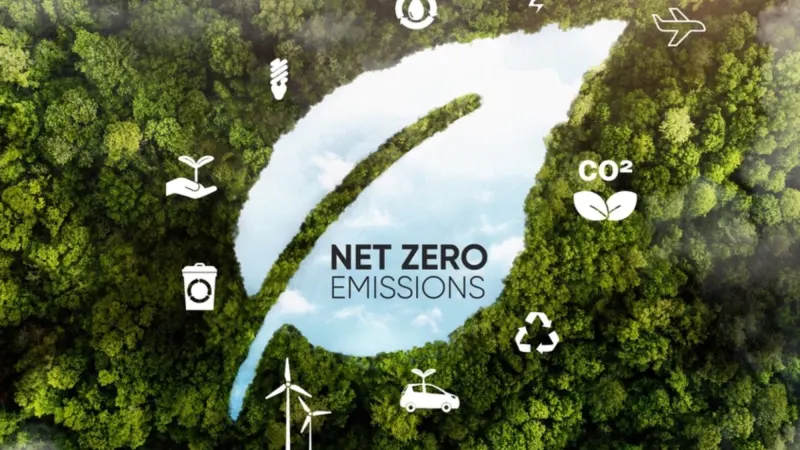
For decades, the skyline of the United Arab Emirates was a monument to the era of hydrocarbons. Today, that same skyline is powered by a different kind of engine. From the gleaming solar arrays of the Empty Quarter to the humming reactors of the Barakah Nuclear Plant, the UAE is orchestrating one of the most ambitious economic pivots in modern history: The Net Zero by 2050 Strategic Initiative. As we move through 2026, the UAE is no longer just talking about sustainability; it is exporting it. This transition is not merely an environmental necessity but a calculated economic strategy to lead the $100 trillion global "Green Economy." The cornerstone of the UAE’s strategy is a radical overhaul of its energy grid. By 2050, the nation aims to derive 50% of its energy from clean sources. Solar Supremacy: The UAE is home to three of the world’s largest single-site solar plants, including the Al Dhafra Solar PV project, which provides enough clean energy to power 200,000 homes. These projects have achieved some of the lowest solar tariffs globally, proving that "green" can also be "cheap." The Barakah Nuclear Milestone: As the first Arab nation to operate a commercial nuclear plant, the UAE now generates 25% of its electricity with zero carbon emissions. By 2026, the four reactors at Barakah prevent roughly 22 million tons of carbon emissions annually—the equivalent of removing nearly 5 million cars from the road. The UAE is positioning itself as a global hub for Green Hydrogen—often called the "fuel of the future." In early 2026, a new $1 billion green hydrogen platform was launched in Abu Dhabi, aimed at decarbonizing heavy industries like shipping and steel. Furthermore, the integration of Artificial Intelligence (AI) into the energy grid is the UAE's "secret weapon." Through smart-grid algorithms, the country can now predict energy demand with 99% accuracy, balancing the intermittent nature of solar power with battery storage and nuclear baseloads to ensure the lights never flicker. The UAE recognizes that reaching net-zero requires more than just cutting emissions; it requires removing them. The Al Reyadah facility was the region's first commercial-scale Carbon Capture, Utilization, and Storage (CCUS) project. In early 2026, Abu Dhabi launched a comprehensive Carbon Capture Policy, establishing a legislative framework to scale this technology. By capturing $CO_2$ from industrial plants and injecting it underground or using it for enhanced oil recovery, the UAE is proving that heavy industry can coexist with climate goals. The UAE's net-zero vision is physically manifest in its urban planning. Masdar City in Abu Dhabi and The Sustainable City in Dubai serve as living laboratories for low-carbon living. Passive Design: Buildings are oriented to maximize natural shade and airflow, reducing the need for energy-intensive air conditioning.Mobility: Autonomous electric shuttles and "green corridors" are replacing traditional car-centric layouts.Water Security: With the 2026 commissioning of the world’s largest solar-powered desalination plant, the UAE is decoupling its water supply from fossil fuels, a critical step in a desert climate. The UAE’s commitment is backed by AED 600 billion ($163 billion) in planned investments over the next three decades. Beyond its borders, the UAE is a major investor in renewable energy projects across 70 countries, positioning itself as a "bridge" between the Global North and South in the climate transition. The UAE’s path to Net-Zero is a masterclass in "Pragmatic Environmentalism." It acknowledges that while the world still needs energy, the source of that energy must change. By blending its vast financial capital with cutting-edge technology and bold policy, the UAE is proving that the transition to a sustainable future isn't a threat to prosperity—it's the engine of it. ...Read more

08 May 2026
World Environment Day serves as more than a ceremonial date; it is a global mandate for a radical shift in human consciousness. Established by the United Nations, this day acts as the primary vanguard for environmental advocacy, challenging us to confront the "triple planetary crisis" of climate instability, habitat destruction, and systemic pollution. It is a moment to recognize that the economy is a wholly-owned subsidiary of the environment—not the other way around. Beyond Sustainability: The Era of RegenerationFor decades, the global discourse centered on "sustainability"—the idea of maintaining the status quo. However, in an era where we have already breached critical planetary boundaries, the focus has evolved toward Ecological Regeneration. This paradigm shift moves us from merely "doing less harm" to "actively doing good." It involves the massive scaling of nature-based solutions: reforesting degraded lands to act as carbon sinks, restoring peatlands to prevent methane release, and transforming "concrete jungles" into sponge cities that breathe and filter water naturally. By mimicking the circularity of nature, we can transition from a linear extraction model to a regenerative loop. The Intelligence of Green Innovation:The bridge to a healthier planet is built with the bricks of innovation. We are witnessing a technological renaissance where green hydrogen, decentralized solar grids, and AI-driven resource management are no longer futuristic concepts but immediate realities. Specifically, in emerging sustainability corridors, the integration of traditional ecological knowledge with high-tech monitoring is creating a new blueprint for growth. By leveraging data to track biodiversity and carbon sequestration, businesses can move toward Radical Transparency, where every product’s environmental footprint is mapped and accounted for. The Collective Momentum:While systemic policy change is the engine of progress, individual action is the spark. World Environment Day democratizes environmentalism, reminding us that the transition to a net-zero world requires a "billion-person" effort. From the conscious consumer choosing plastic-free alternatives to the CEO pivoting their supply chain toward ethical sourcing, every decision ripples through the global ecosystem. A Legacy of Resilience:We are the first generation to witness the profound fragility of our biosphere and likely the last with the agency to reverse its decline. The choice is no longer between "the environment" and "the economy," but between a resilient future and an uninhabitable one. As we celebrate this day, the mission is clear: to reconcile our industrial ambitions with the rhythms of the natural world. By fostering a culture of stewardship rather than ownership, we can ensure that the legacy of the 21st century is one of restoration, resilience, and a renewed harmony with the only home we will ever have. ...Read more

08 May 2026
World Water Day, held annually on March 22nd, is far more than a day of environmental observance; it is a critical summons to safeguard the lifeblood of our civilization. Established by the United Nations in 1993, this day serves as a global spotlight on the 2.2 billion people currently living without access to safe water. It is a moment to reflect on a staggering paradox: while our planet is draped in blue, the freshwater that sustains terrestrial life, industry, and agriculture represents less than 1% of the Earth's total water supply. In the modern era, water is no longer just a natural resource; it is a geopolitical focal point, a human right, and the most vital prerequisite for a sustainable future. The Anatomy of a Global Thirst: Understanding the CrisisTo appreciate the urgency of World Water Day, we must look beyond the tap. The global water crisis is a multifaceted challenge driven by three converging forces: Over-consumption, Climate Instability, and Systemic Pollution. 1. The Scarcity of AbundanceWhile the total volume of water on Earth remains constant, the availability of usable freshwater is plummeting. Agriculture accounts for nearly 70% of global freshwater withdrawals, often utilizing inefficient irrigation techniques that deplete ancient aquifers faster than they can recharge. As the global population marches toward 9 billion, the demand for food—and consequently, water—is reaching a breaking point. 2. Climate Change as a Water CrisisClimate change manifests primarily through the water cycle. We see it in the "too much" and "too little"—catastrophic flooding that destroys infrastructure and prolonged droughts that turn fertile basins into dust bowls. Rising global temperatures accelerate evaporation and alter precipitation patterns, making water availability increasingly unpredictable. The melting of "The Third Pole"—the Hindu Kush-Himalayan glaciers—threatens the water security of over 1.5 billion people who rely on these rivers for survival. 3. The Silent Pandemic of PollutionEvery day, millions of tons of inadequately treated sewage, industrial effluents, and agricultural runoff are discharged into our waterways. This doesn't just kill aquatic life; it seeps into the groundwater, creating a "silent pandemic" of waterborne diseases. The presence of emerging contaminants, such as microplastics and "forever chemicals" (PFAS), has added a new layer of complexity to water purification, challenging even the most advanced filtration systems. The Blue Economy: Bridging Strategy and StewardshipIn the corporate and strategic landscape, water management has moved from the periphery to the center of ESG (Environmental, Social, and Governance) frameworks. We are witnessing the rise of the "Blue Economy"—a sustainable economic model that seeks to balance industrial growth with the health of water ecosystems. The India-UAE Water SynergyA fascinating case study in modern water management is the growing collaboration within the India-UAE corridor. Both regions face unique water challenges—India dealing with groundwater depletion and the UAE navigating the complexities of extreme aridity. The synergy between these nations is driving innovation in: Desalination 2.0: Moving away from energy-intensive thermal processes toward solar-powered Reverse Osmosis (RO), reducing the carbon footprint of "creating" freshwater. Wastewater Circularity: Treating "greywater" not as waste, but as a resource for urban cooling and industrial processes, effectively "closing the loop" on urban water consumption. Smart Irrigation: Leveraging IoT sensors and AI to deliver the precise amount of water needed for crops, drastically reducing agricultural waste. Innovation: The High-Tech ReservoirThe digital revolution is providing us with the tools to manage water with unprecedented precision. We are no longer guessing where the leaks are; we are predicting them. Digital Twins for Water Grids: Cities are now creating virtual replicas of their water infrastructure. By simulating different scenarios, engineers can optimize pressure, detect leaks in real-time, and prevent the loss of "Non-Revenue Water" (water that is produced but lost before it reaches the customer). Atmospheric Water Generation: In regions where groundwater is non-existent, technology is literally pulling water out of thin air. These devices use condensation technology to provide clean drinking water in arid climates, powered by renewable energy. Blockchain for Water Rights: In water-stressed basins, blockchain is being explored to create transparent, unalterable ledgers for water trading, ensuring that water allocations are fair and sustainable. Water as a Human Right: The Social DimensionThe United Nations' Sustainable Development Goal 6 (SDG 6) is clear: Ensure availability and sustainable management of water and sanitation for all by 2030. Water is a "gendered" issue. In many parts of the world, women and girls spend a collective 200 million hours every day fetching water—time that could be spent in school or in the workforce. Solving the water crisis is, therefore, a prerequisite for gender equality and poverty alleviation. When a community gains access to a reliable well or a piped water system, the local economy doesn't just improve; it transforms. The Philosophy of Water: Lessons from the SourceBeyond the science and the strategy, World Water Day invites a philosophical shift. Historically, great civilizations rose and fell based on their relationship with water—from the Indus Valley to the Mesopotamians. Water is a teacher of resilience and adaptability; as the saying goes, "be like water." We must transition from a culture of Exploitation to one of Reverence. This means recognizing the intrinsic value of a river, regardless of its utility to humans. It means acknowledging that every drop of water we use is "borrowed" from the future and must be returned to the cycle in a clean state. A Call to Action: Every Drop CountsIndividual actions, when multiplied by millions, create systemic change. This World Water Day, we can commit to: Water Auditing: Conduct a "water audit" of your home or office. A single leaky faucet can waste over 3,000 gallons of water a year. Conscious Consumption: Be aware of "virtual water"—the amount of water used to produce the food we eat and the clothes we wear. (For example, it takes roughly 2,700 liters of water to make one cotton t-shirt). Advocacy for Policy: Support legislation that protects wetlands, which act as natural "kidneys" for our planet, filtering pollutants and preventing floods. Corporate Responsibility: Encourage businesses to adopt "Water Neutrality" targets, ensuring they replenish as much water as they consume. Conclusion: Writing the New Water StoryThe story of the 21st century will be written in water. We are at a crossroads where we can either continue down a path of depletion, leading to "water wars" and systemic collapse, or we can choose a path of radical collaboration and innovation. World Water Day is our annual reminder that water is not a commodity to be hoarded, but a common heritage of humanity to be protected. By integrating state-of-the-art technology with ancient wisdom and cross-border cooperation, we can ensure that the "blue planet" remains a vibrant, thirst-quenched home for all. Let us act today so that the well never runs dry. Summary of Key Strategic Pillars for SustainVerse:Transboundary Cooperation: Highlighting the India-UAE partnership as a model for arid-region water security. Technological Integration: Showcasing AI and IoT as the new frontier in water conservation. The Circular Water Economy: Moving from waste disposal to resource recovery. ESG Leadership: Helping organizations navigate water risk as a core business strategy. ...Read more
08 May 2026
National Energy Conservation Day, observed annually on December 14th, serves as a pivotal cornerstone in India's journey toward a self-reliant and sustainable future. Orchestrated by the Bureau of Energy Efficiency (BEE), this day is not merely a symbolic gesture; it is a strategic mobilization of the country’s collective intellect and resources. It stands as a reminder that the "greenest" kilowatt-hour is the one that is never generated, and that energy conservation is the most cost-effective and immediate solution to the dual challenges of economic growth and climate change. In a rapidly developing nation like India, where energy demand is projected to grow faster than in any other country over the next two decades, conservation is not just an environmental preference—it is a national security imperative. The Architecture of Efficiency: Conservation vs. GenerationTo understand the significance of this day, one must distinguish between "energy conservation" and "energy efficiency." While conservation involves behavioral changes (such as turning off lights when not in use), energy efficiency involves technological optimization (using LED bulbs or high-efficiency motors to achieve the same result with less power). Together, they form the "First Fuel" of a sustainable economy. 1. Decoupling Growth from ConsumptionFor decades, it was believed that economic growth required a proportional increase in energy consumption. However, through aggressive energy conservation policies, India is proving that it can decouple GDP growth from energy intensity. By optimizing industrial processes and implementing building codes, we are learning to produce more while using less. 2. The Climate ImperativeEnergy production is the largest contributor to greenhouse gas emissions in India. By reducing our total energy demand through conservation, we directly lower the burden on our thermal power plants, thereby accelerating our path toward the "Panchamrit" goals—India's five-fold commitment to climate action, including reaching net-zero emissions by 2070. The Strategic Pillars of National ConservationIndia’s strategy for energy conservation is multifaceted, targeting the sectors with the highest footprints: Industry, Buildings, and Appliances. I. The Industrial Frontier: The PAT SchemeThe Perform, Achieve, and Trade (PAT) scheme is a flagship initiative of the BEE. It targets energy-intensive industries (such as cement, steel, and fertilizers) and sets mandatory specific energy consumption targets. Industries that exceed their targets are rewarded with Energy Saving Certificates (ESCerts), which can be traded. This market-based mechanism has transformed energy efficiency from a regulatory burden into a financial asset. II. Urban Evolution: The Energy Conservation Building Code (ECBC)As India undergoes a massive urban transition, the buildings we construct today will lock in energy consumption patterns for the next 50 years. The Energy Conservation Building Code (ECBC) ensures that new commercial buildings incorporate "passive design" features—utilizing natural light, superior insulation, and ventilation—to minimize the need for artificial cooling and lighting. III. The Domestic Revolution: Standards & LabelingThe iconic "Star Labeling" system on appliances (ACs, refrigerators, geysers) has democratized energy conservation. It empowers the average consumer to make informed decisions, transforming every household into a participant in the national conservation movement. The UJALA scheme, which distributed millions of LED bulbs across the country, stands as one of the world’s largest and most successful energy-efficiency programs, drastically reducing the peak load on the national grid. The India-UAE Energy Corridor: A Synergy of EfficiencyThe dialogue surrounding National Energy Conservation is increasingly global. The burgeoning India-UAE Sustainability Corridor offers a masterclass in how cross-border cooperation can drive efficiency. Green Hydrogen Synergy: As the UAE invests in large-scale green hydrogen production, India provides the technological expertise and market demand. This collaboration focuses not just on producing clean energy, but on ensuring that the process of production and transport is energy-efficient. Knowledge Exchange in Arid Cooling: Both nations face extreme cooling demands. Joint research into "District Cooling" systems—which are up to 40% more efficient than individual air conditioning units—is a key highlight of this partnership. Innovation: The Digital Grid and AIThe future of energy conservation lies in the marriage of power and pixels. The integration of Smart Grids and Artificial Intelligence (AI) is revolutionizing how we monitor consumption. Demand-Side Management (DSM): AI algorithms can now predict peak load times and automatically adjust the energy consumption of industrial equipment or smart home appliances, smoothing out the demand curve and preventing the need for "peaker" power plants (which are often the most polluting). IoT and Real-Time Monitoring: Internet of Things (IoT) sensors allow factory managers and homeowners to see exactly where energy is being wasted in real-time, moving conservation from a monthly bill reflection to a second-by-second action. The Social Dimension: Energy Conservation as a Lifestyle (LiFE)Prime Minister Narendra Modi’s Mission LiFE (Lifestyle for Environment) emphasizes that conservation is rooted in mindful consumption. In the Indian context, conservation is not a new concept; it is an ancestral value. Reclaiming these values—such as the "circularity" of resources and the "frugality" of waste—is essential for a modern sustainable society. When an individual chooses a bicycle for a short commute, or a company chooses to hold a "Green Hour," they are contributing to the national energy reserve. Conservation is a collective effort where the "power of one" translates into the "power of millions." The Economic Dividend: Why Conservation Makes SenseBeyond the environment, the economics of conservation are undeniable: Reduced Energy Bills: For industries, efficiency directly improves the bottom line and global competitiveness. Job Creation: The energy efficiency sector is a major employer, creating "green-collar" jobs in auditing, retrofitting, and high-tech manufacturing. Subsidy Reduction: By reducing the total demand for power, the government can reduce the massive subsidies provided to the power sector, freeing up capital for healthcare and education. Conclusion: A Vision for 2047As India marches toward its centenary of independence in 2047, energy conservation will be the silent engine of its progress. We are transitioning from a period of "energy scarcity" to an era of "energy responsibility." National Energy Conservation Day is a call to move beyond the technical and into the ethical. It asks us to view energy not as an infinite commodity, but as a precious resource that must be managed with wisdom and foresight. By integrating cutting-edge technology with traditional values and strategic international partnerships, we can build a nation that doesn't just grow fast, but grows smart. Let us resolve to make every day an energy conservation day. Through our choices today, we secure the light for tomorrow. Strategic Action Points for Sustain Verse (The 'Features' Perspective):The Audit Advantage: Highlighting the importance of professional energy audits for SMEs to identify hidden waste. The Tech Showcase: Featuring innovations in solid-state cooling and high-efficiency motor technology. Corporate Leadership: Showcasing Indian firms that have achieved "Carbon Neutrality" through aggressive efficiency measures. ...Read more
08 May 2026
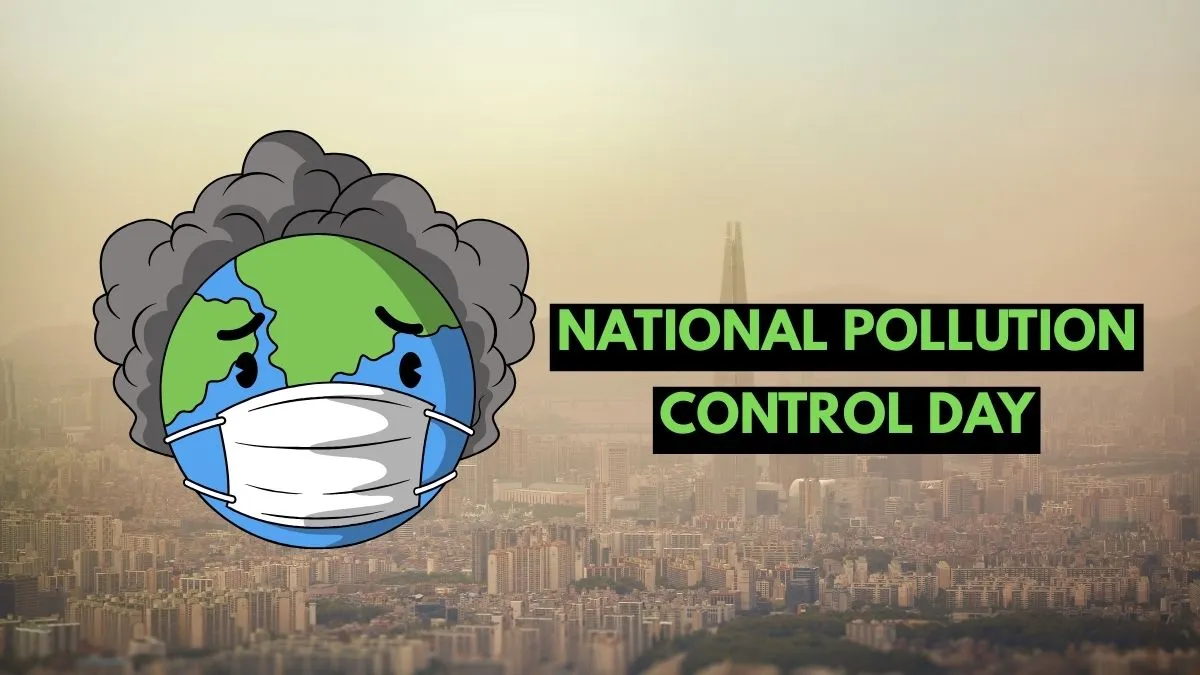
For centuries, we treated water as an infinite background character in the story of human progress. In 2026, water has taken center stage as the world’s most strategic asset. World Water Day is no longer just about conservation; it is about the "Blue Renaissance"—a total reimagining of how we interact with the H2O molecule. Imagine a world where cities don’t just consume water but "breathe" it. Through Atmospheric Water Generation (AWG), we are now pulling high-quality drinking water directly from the humidity in the air, powered entirely by the sun. In the strategic corridors between India and the UAE, we are seeing the birth of "Water-Positive" architecture, where buildings act as giant filters, cleaning the rain and recycling greywater in a closed-loop system that mimics the forest floor. The future of water is not in the scarcity we fear, but in the intelligence we apply. From Digital Twins that predict pipe bursts before they happen to Desalination 2.0 that turns brine into valuable minerals, we are finally learning to respect the "Liquid Gold." This March 22nd, we aren't just saving drops; we are engineering an ocean of opportunity. The Invisible Architect: Energy Conservation as the Ultimate Hack.If energy generation is the muscle of a nation, then National Energy Conservation is its brain. We often think of "saving energy" as a sacrifice—turning off the AC or sitting in the dark. But the new reality is far more exciting: it’s about "Passive Power." We are entering the era of the Invisible Architect. This involves designing cities that use "Phase Change Materials" in their walls—substances that absorb heat during the day and release it at night, maintaining a perfect temperature without a single watt of electricity. On December 14th, we celebrate the innovators who are turning our skylines into "Energy Sponges." The real thrill lies in the Internet of Energy (IoE). Imagine your electric vehicle (EV) talking to your smart fridge and the national grid, shifting power loads in milliseconds to ensure not a single spark is wasted. By mastering the "Power of Less," India is not just meeting its climate goals; it is building the most efficient, high-tech economy the world has ever seen. Conservation is the ultimate "life hack" for a planet that refuses to slow down. The Zero-Harm Vision: Rewriting the Industrial ScriptNational Pollution Control Day (December 2nd) is often viewed through the lens of tragedy, but its future is defined by Radical Transformation. We are moving away from the "Smokestack Era" and into the age of Molecular Responsibility. The most interesting shift in pollution control isn't better filters—it’s Green Chemistry. We are redesigning molecules so that they are "Born to Biodegrade." Imagine an industrial plant where the "waste" isn't a toxic sludge, but a nutrient-rich byproduct used to fertilize local vertical farms. This is the Circular Industrial Bio-system, where the concept of "pollution" is treated as a design failure. With AI-Satellite Sentinels now circling the globe, we have "God’s Eye View" of every carbon plume and chemical leak. Radical transparency is the new standard. For the India-UAE corridor, this means building "Clean-Tech Bridges" where industrial zones are monitored by real-time sensors, ensuring that the air our children breathe is as prioritized as the profits we report. We are finally proving that we can be an industrial powerhouse without being a planetary parasite. ...Read more

08 May 2026
Van Mahotsav, the "Great Festival of Forests," is far more than an annual tree-planting drive in India; it is a profound socio-ecological movement. Established in 1950 by K.M. Munshi, the then Union Minister for Agriculture and Food, this festival was conceived as a crusade to save the "Mother Earth" from the encroaching desert of industrialization. Celebrated during the first week of July—coinciding with the arrival of the life-giving monsoons—Van Mahotsav represents a national pact to restore the green lungs of the subcontinent. In 2026, as we stand at the crossroads of climate volatility and technological revolution, Van Mahotsav has evolved. It is no longer just about putting a sapling in the ground; it is about the strategic design of Living Infrastructure. The Philosophy of the Festival: Beyond the PitTo understand the true spirit of Van Mahotsav, one must look at the tree not as a static object, but as a dynamic biological machine. The festival was founded on the principle that the protection of forests is inseparable from the survival of humanity. 1. The Carbon CurrencyEvery tree planted during Van Mahotsav acts as a carbon sequestering unit. In an era of carbon credits and net-zero targets, the forest has become our most valuable "Carbon Bank." A single mature tree can absorb approximately 22kg of carbon dioxide per year, acting as a natural buffer against global warming. When millions of citizens participate in this festival, they are effectively contributing to a massive, decentralized carbon-capture project. 2. The Hydrological AnchorTrees are the primary regulators of the water cycle. Their roots act as biological anchors, preventing soil erosion during the heavy Indian monsoons and facilitating groundwater recharge. By planting trees, we are essentially "planting water." In water-stressed regions, the afforestation efforts of Van Mahotsav are the first line of defense against drought. The Modern Evolution: Precision AfforestationIn the current decade, Van Mahotsav has integrated high-tech solutions to ensure that the "Green Cover" is both resilient and diverse. We have moved from "mass planting" to "Precision Afforestation." The Miyawaki Method: Urban centers in India are increasingly adopting the Miyawaki technique, which involves planting dozens of native species in close proximity. This creates "Tiny Forests" that grow ten times faster and are thirty times denser than traditional plantations. During Van Mahotsav, these urban forests transform "Heat Islands" into cool, breathable sanctuaries. Drone-Seed Bombing: In inaccessible terrains like the Aravallis or the Western Ghats, drone technology is being used to disperse seed balls. This "aerial afforestation" ensures that even the most rugged landscapes are part of the green resurrection. The Biodiversity Mandate: Modern Van Mahotsav emphasizes Native Species Resilience. Instead of monocultures (like eucalyptus or teak), the focus has shifted to indigenous giants like Banyan, Neem, Peepal, and Jamun, which support local bird and insect populations, restoring the entire ecological food web. The Strategic Corridor: India and the UAE’s Green VisionThe spirit of Van Mahotsav is now echoing across borders, particularly within the India-UAE Sustainability Corridor. Both nations have recognized that green cover is the most effective tool against desertification. Mangrove Synergy: The UAE’s ambitious goal to plant 100 million mangroves by 2030 finds a perfect partner in India’s long-standing expertise in protecting the Sundarbans. Mangroves are "blue carbon" powerhouses, sequestering up to five times more carbon than terrestrial forests. Joint research and exchange programs during Van Mahotsav are helping both nations build "Coastal Bio-Shields" against rising sea levels. Arid Zone Innovation: India’s success in greening the Thar Desert is providing a blueprint for the UAE’s "Green Dubai" initiatives. This exchange of "Arid-Tech" ensures that the trees planted are drought-resistant and require minimal water, maximizing the survival rate of every sapling. The Corporate Sector: ESG and 'Green-Collar' ResponsibilityFor the corporate world, Van Mahotsav is the ultimate ESG (Environmental, Social, and Governance) milestone. Companies are moving away from tokenistic tree-planting photos and toward long-term Forest Stewardship. Leading organizations are now adopting "Corporate Forests," where they take responsibility for the maintenance and growth of a forest patch for a minimum of ten years. This shift ensures that the trees planted during the festival actually survive to maturity. By integrating these efforts into their sustainability reports, businesses are proving that their growth is not just measured in revenue, but in canopy cover. The Individual as an Eco-Warrior: Mission LiFEAt its heart, Van Mahotsav is a grassroots festival. It aligns perfectly with the Mission LiFE (Lifestyle for Environment) initiative, which advocates for mindful living. The "Tree-Birth" Tradition: A growing trend in India involves families planting a tree to celebrate the birth of a child or a significant milestone. This personal connection turns a tree into a family member, ensuring its lifelong protection. Citizen Science: During Van Mahotsav, thousands of students and volunteers use apps to geo-tag the saplings they plant. This "Digital Forest Map" allows citizens to monitor the growth of their trees via satellite imagery, creating a sense of ownership and accountability. The Philosophy of the 'Living Ancestor'In many Indian cultures, trees are revered as "Vanaspati" or "Vriksha-Devata"—living deities. The Peepal and Banyan trees are seen as ancestors that bridge the gap between the earth and the sky. Van Mahotsav is a modern celebration of this ancient reverence. When we plant a tree, we are making a selfless investment. We are planting a shade that we may never sit under, and a fruit that we may never taste. This "Intergenerational Altruism" is the highest form of human consciousness. It is a gift to the children of 2050 and 2100, ensuring they inherit a world that still breathes. Conclusion: The Canopy of HopeAs the monsoon clouds gather over the Indian horizon this July, Van Mahotsav calls us back to our roots. It is a reminder that in the race for digital supremacy and space exploration, we must not lose the ground beneath our feet. The success of Van Mahotsav is not measured by the number of pits dug, but by the number of trees that touch the sky. By combining the ancestral wisdom of K.M. Munshi with the cutting-edge technology of the 21st century, we can transform the "Great Festival of Forests" into a permanent "Era of the Green." Let us resolve to plant not just a tree, but a legacy. Let the "SustainVerse" we build be one where the hum of technology is harmonized by the rustle of leaves. One sapling at a time, we are rewriting the future of the planet. Strategic Highlights for SustainVerse 'Features' Section:The Survival Tracker: Showcasing how IoT and Geo-tagging are increasing sapling survival rates to over 90%. Native Intelligence: A guide to choosing the right native tree for your specific soil and climate. The Blue Carbon Bridge: Exploring the India-UAE partnership in mangrove restoration. Urban Micro-Forests: How businesses can use the Miyawaki method to create green zones in industrial hubs. ...Read more
02 Apr 2026
As climate pressures grow, eco-tourism may be the country’s best chance to align livelihood, conservation and meaningful travel. At dawn in the Sundarbans, the world does not wake up all at once. It loosens itself slowly. First the tide breathes in and out like a great sleeping animal. Then the mangroves begin to take shape, dark and watchful in the half-light. Somewhere in the distance, a bird cuts across the sky. Somewhere closer, a wooden boat engine coughs into life. The river is not exactly silent, yet it feels as though silence is what holds everything together. A visitor standing on the deck, phone still forgotten in pocket, may feel for a fleeting moment that this is what travel was always meant to be: not escape, not consumption, not a checklist, but an encounter. And yet, that same visitor may, by breakfast, be inside a tourism machine that has learned to package wonder too efficiently. The boat ride becomes a product, the forest becomes a background, the village becomes a stopover, the tiger becomes a marketing device, the resort becomes a small island of urban appetite dropped into a delicate ecosystem. The traveller leaves with photographs. The land stays behind with the cost. That, in one scene, is the modern dilemma of tourism in India. Never before have more people wanted to travel. Never before has travel been so central to aspiration, identity, self-expression and leisure. Never before has tourism seemed so indispensable to local economies hungry for income, jobs and infrastructure. But never before has the ecological question been so urgent either. Mountains are more fragile than we believed. Rivers are more burdened. coasts are more vulnerable. forests are more fragmented. wetlands are more threatened. climate shocks are more severe. The old model of tourism — arrive, consume, post, leave — now looks not merely shallow, but dangerous. This is why eco-tourism matters. Not as a fashionable word. Not as a premium branding device. Not as a bamboo-decorated imitation of conscience. It matters because it offers one of the last serious opportunities to rethink what travel can mean in a country like India. It asks whether tourism can support conservation rather than quietly feeding destruction. It asks whether local communities can be central rather than ornamental. It asks whether resorts can become ecologically intelligent rather than simply luxurious in greener clothing. Above all, it asks whether the future of hospitality can be built not on denial of nature’s limits, but on respect for them. India is one of the most consequential places in the world in which to ask these questions. Few countries possess such astonishing ecological diversity compressed into one national geography. There are snow-fed mountains and hot deserts, mangrove deltas and tropical forests, coral-fringed islands and dry grasslands, high-altitude cold deserts and humid backwaters, tiger forests and bird-rich wetlands, tea slopes and riverine plains, tribal landscapes and fishing coasts. Few countries also carry such intense developmental pressure at the same time. India needs jobs, incomes, regional growth and tourism revenue. It also needs biodiversity protection, climate resilience, better land use, water security and social justice. Eco-tourism sits exactly at that crossroads where economy and ethics meet. It is easy to romanticise the term. It is harder to understand it. Harder still to practice it honestly. The truth is that eco-tourism is not merely about travelling to a forest lodge or staying in a mud cottage or eating organic food under lantern light. It is about a complete change in attitude. It is about shifting from sightseeing to stewardship, from extraction to reciprocity, from consuming a place to learning how not to injure it. India has begun speaking the language of sustainable and eco-conscious tourism with increasing seriousness. But language alone is not transformation. The real test lies in what is built, who benefits, what is protected, how water is used, how waste is treated, how much of the land is left alone, and whether the local community feels respected or displaced. The gap between promise and practice remains wide. That is where the story of eco-tourism in India truly begins. Beyond the Brochure The tourism brochure is one of the most deceptive documents of modern life. It shows water without sewage, hills without landslides, beaches without erosion, forests without pressure, villages without poverty and resorts without supply chains. Everything in it appears serene, curated and whole. But landscapes are not brochures. They are living, contested, ecological systems. They have histories, wounds, economies and thresholds. Mass tourism was built on the illusion that destinations are infinitely available for consumption. Build another hotel. Add another road. Expand another parking lot. Run more boats. Bring in more cars. Increase the seasonal rush. The destination was treated as a resource mine with a scenic face. As long as the view remained saleable, the system appeared successful. But this logic is beginning to unravel. One can see it in Indian hill towns groaning under traffic, waste and water scarcity. One can see it on beaches where dunes have been flattened for construction and plastic rides the tide line. One can see it in wetlands converted into picturesque real estate settings while birds retreat and water quality collapses. One can see it in forest-edge destinations where land speculation, noise and poorly regulated safaris have begun to affect both habitat and local social balance. Tourism, unmanaged, does not merely damage nature. It eventually damages itself. The place that loses its ecological integrity also loses the very conditions that once made it desirable. Eco-tourism emerged as a response to this failure. It proposed a different contract between visitor and destination. Travel, it argued, should conserve biodiversity, generate livelihood for local people, deepen awareness and reduce ecological harm. It should be low-impact, interpretive, community-sensitive and landscape-specific. It should not treat nature as décor. It should treat nature as the host. That sounds noble. But every noble idea is vulnerable to imitation. The word “eco” today is so widely used that it often hides more than it reveals. Many properties use the label simply because they have some greenery, some local materials, some handcrafted lighting, a few earthen pots, perhaps a message asking guests to reuse towels, maybe a nature walk, and a website filled with words like sustainable, conscious, rustic and authentic. Yet behind this performance may lie deep contradictions: high water consumption in water-scarce areas, poor sewage handling, luxury intensity imported from urban hospitality, exclusion of local communities from ownership and decision-making, ecological insensitivity in site selection, and a decorative rather than structural commitment to sustainability. That is why eco-tourism must be rescued from marketing and returned to ethics. It is not an aesthetic category. It is a discipline. The Place Must Come First A true eco-tourism vision begins with a simple but radical proposition: the place comes first. Not the investor’s dream. Not the tourist’s fantasy. Not the architecture magazine’s photo spread. The place. What does the landscape permit? What does it forbid? How much pressure can it absorb? What are its seasons, water patterns, wildlife movements, soil conditions, local cultural rhythms and climate vulnerabilities? Is it a floodplain, a slope, a mangrove edge, a nesting coast, a pastoral zone, a snow-fed watershed, a dryland ecosystem, a forest buffer? Every one of these geographies demands different tourism behaviour. This may sound obvious, but modern tourism has often proceeded as though place-specific intelligence were optional. That is why one can still find the same hospitality template copied from coast to hill, from desert to delta, from island to forest. Air-conditioned blocks, manicured lawns, imported menus, ornamental lighting, overbuilt peripheries, swimming pools in ecologically absurd locations, and generic luxury language have flattened geographical intelligence. Such a model does not adapt to landscape; it imposes itself upon it. Eco-tourism does the opposite. It begins by listening. In Ladakh, that means understanding aridity, altitude, thermal design and the preciousness of water. In Kerala’s backwaters, it means understanding wetland hydrology, sewage sensitivity, boat pressure and the pulse of village life. In the Sundarbans, it means understanding tide, cyclone risk, salinity, biodiversity and the limits of human control. In the Thar, it means learning from desert architecture, shade, water harvesting and restraint. In Sikkim or Arunachal, it means respecting slope, seismic sensitivity, drainage, forest continuity and local building traditions. In Kutch, it means recognising both ecological fragility and cultural richness. In the Andamans, it means coral, coastline, waste transport limits and freshwater scarcity. The destination is not an empty canvas. It is already a living argument about how life can be sustained there. Tourism has to enter that argument with humility or not at all. India’s Great Ecological Theatre India’s eco-tourism potential is not a matter of advertising exaggeration. It is real, immense and almost unmatched. The country’s natural range is so dramatic that it can seem like multiple continents stitched together. In one direction lie the high Himalaya, where snowlines, prayer flags, glacial streams and stone villages define a world of beauty under stress. In another stretch the western desert, where silence, wind, craft, camel paths and astonishing thermal intelligence have shaped a culture of survival. To the east lies the Sundarbans, tidal, amphibious, restless, where the land itself appears uncertain and survival depends on mangrove memory. To the south lie coasts, estuaries, lagoons, plantations, tropical forests and islands. Across central India run tiger landscapes, sal forests, tribal regions and river systems. Throughout the country lie wetlands, many underappreciated, where birds, fisheries, agriculture and water security intersect. This diversity is a civilisational asset. It also means that India can never have a single eco-tourism formula. There is no universal ecological resort language suitable for all regions. The eco-tourism model for a Himalayan hamlet cannot be transplanted into a coastal estuary. A forest lodge should not behave like a beach club. A desert property should not pretend to be an urban oasis. A mountain homestay should not imitate a city boutique hotel. The more tourism homogenises, the less ecological it becomes. This is why India’s most promising eco-tourism future lies not in replication but in rootedness. Each region must create its own tourism grammar based on ecology, climate, local economy and culture. Only then can the visitor encounter something real. Consider the Northeast. Meghalaya’s living root bridges are not simply an attraction; they are evidence of a landscape where culture has learned to collaborate with nature over time. Sikkim’s village-based tourism initiatives derive value from mountain agriculture, monasteries, biodiversity and community life rather than urban entertainment. Nagaland’s conservation narratives are intertwined with village institutions and local identity. Arunachal Pradesh’s tourism future depends not on crude scale, but on careful, limited, culturally respectful engagement. Consider Kerala. It has long been one of India’s tourism success stories, but it has also had to confront the ecological consequences of popularity. Houseboat density, waste, sewage stress and overuse in some zones have raised serious concerns. Yet Kerala has also developed important models of responsible tourism that connect visitors with local communities, cuisine, crafts and rural experiences more thoughtfully than many other states. Consider Rajasthan. The desert teaches restraint better than any sustainability manual. Traditional desert life knew how to harvest water, build for heat, travel light and create beauty without excess. The most intelligent eco-tourism in Rajasthan and Kutch is the kind that learns from this deep inheritance rather than merely exploiting desert exoticism. Consider the Sundarbans. Here eco-tourism is not simply leisure. It is education in climate fragility. A visitor who truly experiences the delta should leave understanding cyclones, erosion, salinity, embankment vulnerability, biodiversity and the heroic precarity of local life. The mangrove is not a scenic accessory. It is infrastructure for survival. When “Eco” Becomes Costume There is a quiet crisis in the tourism industry today: the moral inflation of the word “eco.” A property may use some bamboo, avoid plastic straws, employ a local performer on weekends, and serve millet at dinner, then call itself an eco-resort. Yet it may stand on damaged land, overuse groundwater, ignore carrying capacity, treat sewage inadequately, import most of its operational systems from outside, and keep local residents at the margins of ownership and decision-making. What has happened here is not sustainability. It is stagecraft. This matters because greenwashing weakens public understanding. If every attractive resort with handcrafted décor calls itself ecological, then the term loses meaning. Travellers stop asking harder questions. Investors discover that symbolism is cheaper than structural change. Real pioneers, who truly reduce impact and share value, are forced to compete with a market of pretence. An honest eco-resort must do far more than look earthy. It must answer uncomfortable questions. Where does the water come from? How much is used per guest? What happens to wastewater? How is solid waste handled? Is there composting, segregation, recycling, scientific treatment? What kind of energy use defines the property? Is construction climate-responsive or mechanically intensive? How many local people are employed, and at what levels? Are they managers, guides, entrepreneurs and partners, or only staff? What share of food is locally sourced? What proportion of the built footprint was left unbuilt because restraint was exercised? Does the property support restoration, education or conservation? Does it actively help guests understand the ecology of the region? Without such accountability, “eco” is only a costume worn by conventional tourism. The traveller, too, has to change. The modern tourist often wants moral reassurance without behavioural change. A traveller may prefer an eco-label yet still demand long showers in a dry landscape, air-conditioning where natural ventilation would suffice, imported cuisine in a regional setting, loud entertainment in a bird habitat, unnecessary jeep runs in a forest or private speed over ecological rhythm. Eco-tourism cannot survive on the supply side alone. It requires a more mature guest. The question is not whether the room looks rustic. The question is whether the stay is ethically intelligent. The Village Is Not a Backdrop No serious discussion of eco-tourism in India can avoid the question of community. This may be the line between genuine transformation and polished extraction. Many of India’s most attractive eco-tourism destinations are inhabited landscapes. They are not wilderness in the empty, romantic sense often imagined by urban travellers. They are lived spaces: village clusters near forests, pastoral belts, fishing coasts, tribal regions, wetland settlements, tea landscapes, mountain hamlets, island communities. People live there, work there, inherit memory there, and read the landscape in ways outsiders cannot. Too often tourism treats such communities as background. The village becomes a quaint stop. Local culture becomes a performance item. Traditional knowledge becomes a guided anecdote. Labour is taken. Identity is consumed. Profit flows elsewhere. That is the old pattern, and it is deeply unstable. When local people do not feel respected or included, tourism becomes socially brittle. Land conflicts rise. resentment deepens. Conservation loses local legitimacy. Young people are reduced to low-level service roles while outsiders occupy the higher value positions. Culture becomes a commodity emptied of dignity. But where communities are truly central, eco-tourism can become transformative. A homestay managed by a family can generate direct income without requiring migration. Local women’s groups can supply food products, textiles, crafts or hospitality services. Young guides can build careers around biodiversity interpretation, trekking, birding, river knowledge or cultural storytelling. Local transport providers, farmers, fishers and artisans can all be woven into a destination economy. Traditional ecological knowledge can gain new relevance and new respect. India already offers encouraging examples. In several parts of Sikkim, village-based tourism has helped create more intimate and regionally rooted visitor experiences. In some parts of Kerala, responsible tourism initiatives have consciously linked tourism with local procurement and community participation. In Ladakh, certain homestay models have enabled travellers to experience local life without the heavy infrastructure burden of large hotels. In parts of Nagaland and Meghalaya, community participation has been crucial to making nature and culture-based tourism meaningful rather than merely extractive. The village, then, is not a decorative side note. It is often the moral centre of eco-tourism. If the host community is economically and culturally strengthened, tourism has a chance of becoming regenerative. If not, it remains another form of elegant inequality. The Eco-Resort as Test Case The resort is where ideals are exposed. In public discussion, eco-tourism can sound noble and expansive. On the ground, it becomes concrete, plumbing, labour policy, architecture, procurement, waste treatment, guest behaviour and land-use choices. This is why the eco-resort is not just a business unit. It is a test case. The first test is where it stands. Some locations should not be built upon at all. Fragile slopes, wetlands, mangrove edges, dune systems, floodplains, wildlife corridors, turtle nesting beaches, high erosion zones and breeding habitats are not empty investment plots. Ecological intelligence sometimes begins with refusal. The second test is scale. Fragile destinations are often damaged less by one dramatic mistake than by cumulative excess. One extra block. One more road. A larger banquet facility. More vehicles. More ornamental landscaping. More groundwater extraction. More waste. An eco-resort understands that smallness is not a compromise. In many landscapes, it is wisdom. The third test is design. India’s traditional building cultures are among the richest climate-responsive archives in the world. From bamboo and timber systems in the Northeast to mud and lime traditions in dry regions, from shaded courtyards in hot climates to sloped roofs in rain-heavy geographies, from stone massing in mountains to woven ventilation strategies in warm zones, the country’s building intelligence is profound. The best eco-resorts draw from this legacy. They do not imitate it superficially; they adapt its logic. Buildings should breathe with the climate rather than fight it constantly. The fourth test is water, and perhaps no test is more urgent. The future of Indian hospitality will be decided as much by hydrology as by aesthetics. In a water-stressed century, the resort that behaves as though unlimited water is a birthright is not luxurious. It is irresponsible. Rainwater harvesting, greywater reuse, wastewater treatment, low-flow systems, region-appropriate planting, careful laundry policy and guest education are no longer optional extras. They are core design requirements. The fifth test is waste. Tourism is one of the great hidden generators of waste in fragile regions. Plastic bottles, packaging, food waste, disposable amenities, construction debris and untreated sewage all accumulate quietly behind the imagery of leisure. A credible eco-resort must work obsessively on reduction, reuse, segregation, composting and treatment. Cleanliness must not merely be what the guest sees; it must include what the landscape is spared. The sixth test is energy. An ecological hospitality model does not need to be puritanical, but it does need to be sober. Daylight, passive cooling, passive heating where necessary, solar integration, thermal insulation, natural ventilation and reduced dependence on mechanical excess all matter. The seventh test is food. Local food is one of the great underused pillars of meaningful tourism. A regional menu is not merely charming; it is an ecological and cultural statement. It reduces transport intensity, supports farmers and fishers, preserves culinary diversity and introduces the traveller to the logic of the land. The resort that imports generic luxury cuisine into every destination may satisfy habit, but it erases place. The eighth test is interpretation. An eco-resort must teach. It must have the confidence to slow the guest down, to tell stories about the land, the water, the people, the birds, the trees, the climate and the crises. Nature walks, village conversations, biodiversity talks, local history sessions, children’s workshops, craft interactions and guided ecological experiences can turn passive tourism into learning. The final test is fairness. Who owns? Who rises? Who decides? Who is visible only in service uniform and who sits at the management table? The eco-resort that does not answer these questions honestly may still be attractive, but it has not yet become ethical. Lessons from the Mountains There is perhaps no clearer warning for modern tourism than the Indian mountains. For decades, hill destinations were imagined primarily as relief from the plains. They offered cool air, scenic drives, honeymoon escapes and summer crowds. But that old imagination is no longer sufficient. Mountains are now sites of visible ecological stress. Landslides, erratic rainfall, water scarcity, heat anomalies, uncontrolled construction and road pressure have made it impossible to pretend that beauty alone can protect a place. A mountain is not simply an elevated version of the plains. It is a fragile water tower, a climate-sensitive zone, a slope-dependent ecosystem, a difficult infrastructure environment and, increasingly, a disaster-prone region. Tourism that ignores this becomes part of the risk. That is why mountain eco-tourism must be radically careful. Hotels cannot sprawl as though land were stable and infinite. Roads cannot keep multiplying without consequence. Water use cannot expand unchecked. Waste cannot be hidden in ravines. Architecture cannot be imported from lowland habits. Carrying capacity cannot be a bad word. In Sikkim, one sees a more thoughtful possibility. Though not without its own pressures, the state has often projected a stronger environmental consciousness than many comparable destinations. Organic agriculture, village tourism, monastery circuits, trekking discipline and a public culture of ecological sensitivity have together created a more rooted tourism identity. It is not the scale-first model of some other hill destinations. It suggests that the mountain economy need not always be a race to overbuild. In Himachal Pradesh and Uttarakhand, one also finds a contrast between older mass-tourism templates and newer, smaller, more conscious stays. In some valleys, homestays and boutique mountain lodges are beginning to show that low-density, climate-aware hospitality can offer richer experiences than crowded commercial strips. Yet the broader warning remains stark: once the mountain begins to fail, tourism will not escape the consequences. The mountain has never asked to be conquered. It has only asked to be approached with care. The Forest Is Not a Theatre Wildlife tourism occupies a powerful place in India’s eco-tourism imagination. The tiger, the elephant, the rhino, the leopard, the swamp deer, the gharial, the hornbill, the flamingo, the blackbuck, the snow leopard — these creatures and the landscapes they inhabit draw visitors from across the country and the world. Forest lodges, safari circuits and birding camps have created livelihoods, awareness and, in some cases, stronger public support for conservation. But wildlife tourism is also uniquely vulnerable to distortion. Once the forest becomes a site of spectacle, everything begins to bend toward sighting. Silence weakens. vehicle pressure rises. routes are manipulated for animal visibility. visitor expectations become aggressive. guides are pressured to deliver. Resorts compete on proximity, access and thrill. Conservation language remains, but entertainment logic begins to dominate. A genuinely ecological wildlife experience works differently. It teaches the visitor that the forest is larger than the animal they hope to see. A tiger reserve is not an arena where the tiger is obligated to appear. It is an entire web of water, prey, grass, canopy, insects, birds, tracks, alarm calls, soil, shade and time. To understand the forest is already a privilege. To reduce it to a trophy encounter is to impoverish the experience. Some of India’s better wildlife lodges and nature camps have begun to recognize this. They offer birding walks, talks on habitat, discussions on local communities, sessions on ecology for children, and an atmosphere that values stillness. In parts of central India, in birding zones of western India, in wetlands of Bharatpur, in grassland regions where the focus is not just on charisma but on ecology, one can still encounter tourism at its most educational. The challenge is to ensure that wildlife tourism does not become a high-end consumer industry wearing conservation language as camouflage. The forest should not have to perform in order to deserve respect. The Delta, the Coast, the Wetland If the mountains reveal the fragility of slope and water, India’s coasts and wetlands reveal the fragility of edges. These are transitional ecologies, where land meets water, salt meets fresh, river meets sea, tide meets settlement. They are among the most productive ecosystems on earth. They are also among the most vulnerable. Tourism, when careless, can destroy coasts very quickly. A dune flattened for construction may not return easily. Wastewater discharged into a lagoon can alter local ecology. Plastic moves through beaches, estuaries and fisheries with unforgiving persistence. Speed, noise and lighting disturb species. Real estate ambition often arrives disguised as hospitality. Yet coasts and wetlands are also some of the finest teachers of ecological interdependence. A mangrove belt is not just visually striking; it is a buffer against storm surge. A wetland is not an empty watery patch; it is habitat, flood control, water recharge, fisheries support and bird sanctuary. A fishing village is not picturesque residue; it is knowledge, labour, risk, adaptation and food economy. This is why eco-tourism along India’s blue edge must be extraordinarily sensitive. In the Sundarbans, tourism cannot be separated from climate change. Every conversation about beauty must also be a conversation about cyclone vulnerability, salinity intrusion, embankment stress and migration pressures. In Chilika, in Vembanad, in Bhitarkanika, in the estuarine stretches of Bengal and Odisha, in Kerala’s backwaters, the success of tourism depends on whether water remains alive. Kerala is a particularly fascinating case. Its backwaters became iconic, but their popularity also produced environmental stress, especially where boat density and waste handling lagged behind demand. Still, Kerala has also shown something important: tourism can be linked with local procurement, village experiences, craft, food and community more intelligently than a purely hotel-centric model allows. On island systems like the Andamans or Lakshadweep, the stakes are even higher. Freshwater is limited, waste removal is difficult, marine ecology is sensitive and the line between paradise and damage is painfully thin. Eco-tourism in islands cannot be about volume. It must be about vigilance. Desert Wisdom It is one of tourism’s strangest habits that the driest landscapes are often asked to host the wettest fantasies. Lawns in deserts, ornamental pools in fragile regions, imported greenery in ecologically inappropriate contexts — such gestures reveal how deeply hospitality can deny place. And yet the desert may be one of India’s finest classrooms for ecological intelligence. Rajasthan and Kutch have, for centuries, nurtured building forms, water practices, mobility systems, craft cultures and aesthetic languages born from scarcity and adaptation. Desert life knows how to make shade beautiful, how to harvest little rain, how to cool without extravagance, how to move with season and terrain. A true eco-tourism model in desert India does not fight these lessons. It celebrates them. Thick walls, courtyards, vernacular cooling, local textiles, pastoral food traditions, camel pathways, music, craft and night sky experiences can create deeply memorable tourism without the vulgarity of ecological excess. Some of the most evocative desert stays in India succeed not because they offer urban luxury in remote settings, but because they let the desert remain itself. They allow silence. They respect darkness. They do not flood the landscape with infrastructure. They understand that scarcity is not a flaw to be cosmetically erased; it is part of the region’s truth. The desert does not need rescue by design. It needs respect by design. Climate Change Has Entered the Lobby The old tourism industry behaved as though climate change were a background issue for governments, scientists and activists. That fiction is no longer sustainable. Climate change has entered the lobby, the kitchen, the supply chain, the water tank, the insurance desk and the destination itself. Heat alters seasonality. Rainfall unpredictability changes access and safety. coastal erosion affects land stability. cyclones damage infrastructure. forest fires alter destination perception. water scarcity disrupts operations. Biodiversity shifts affect the very ecologies पर्यटन sells. In such a century, eco-tourism becomes more than a niche. It becomes adaptation. The eco-resort of the future is not simply a low-impact holiday property. It is a demonstration of how habitation can be rethought under climatic stress. It can show how to harvest water, reduce heat load, use materials responsibly, restore vegetation, reduce emissions, shorten supply chains and educate visitors about the landscapes they are entering. This gives eco-tourism a larger public role. It can be a bridge between everyday life and ecological literacy. A family staying in a well-run eco-resort may, perhaps for the first time, understand water budgeting, composting, biodiversity, local food systems, dark skies, thermal design or the reality of climate vulnerability in a village or forest edge. Good hospitality can be a gentle teacher. This is why the future of eco-tourism in India is not merely commercial. It is civic. The Business of Restraint For years, restraint has been treated as bad business. The logic seemed simple: more rooms, more guests, more attractions, more revenue. But in ecologically sensitive destinations, this arithmetic is beginning to fail. Overcrowding, ecological decline, social conflict and degraded visitor experience eventually erode value. A place that loses water, quiet, biodiversity and dignity may still attract crowds for a while, but it is no longer building durable wealth. It is liquidating its own future. The smartest tourism entrepreneurs are beginning to understand this. Travellers increasingly want more than generic comfort. They seek story, place, meaning, texture, learning and authenticity. They want destinations that feel coherent. Families want children to return from travel with something more than photographs. Younger travellers are often willing to value experience over standardised luxury. International visitors increasingly look for immersion, not just consumption. In that context, eco-tourism is not anti-business. It is long-term business. It protects the asset by honouring it. It builds trust by being transparent. It can create niche strength, brand distinction and deeper loyalty. It can support local supply chains that are more rooted and resilient. It can open up opportunities in birding, craft tourism, farm-linked hospitality, slow travel, wellness grounded in nature, educational tourism and seasonally distributed travel rather than crush-load peaks. The real question is whether the industry has the patience to choose durability over speed. What India Could Still Become There is still time for India to build a distinctive eco-tourism future. Not perfect, not uniform, but recognisably more intelligent than the old extractive model. One can imagine restored wetlands in eastern India where guided birding, local boats, women-led food services and village interpretation centres create livelihoods while financing conservation. One can imagine forest-edge tourism in central India where local youth become expert naturalists, hospitality is low-density and interpretation-rich, and safari obsession is balanced by ecology education. One can imagine Himalayan circuits where homestays, trails, monasteries and local agriculture form the core of travel rather than unending hotel corridors. One can imagine desert tourism that honours craft, music, architecture and dark sky experience without water-hungry absurdities. One can imagine coastal stays that help restore mangroves, respect fishing communities and treat the shoreline as a living protective system rather than an open construction frontier. One can also imagine institutions stepping up. Design schools could develop climate-responsive hospitality models rooted in region. Architecture programmes could research low-impact building systems for tourism landscapes. management schools could build courses around community enterprise in ecological destinations. media and communication programmes could reshape tourism storytelling away from spectacle and toward stewardship. State governments could align tourism plans with conservation, carrying capacity, waste policy and livelihood equity. Civil society and local cooperatives could become more central. Even travellers themselves could evolve from consumers into participants. This future is not beyond reach. Pieces of it already exist in scattered form across India. The need now is integration, seriousness and courage. A Slower Ending Perhaps the finest thing about a good eco-tourism experience is that, after a while, it stops feeling like a product. The guest begins to notice smaller things: the direction of the wind, the shape of a leaf, the taste of a local grain, the timing of birdsong, the logic of a roof, the memory in a village story, the dignity of a craft, the fragility of a tide. The destination becomes less of a spectacle and more of a relationship. That is what the best Sunday journeys ought to give us: not only pleasure, but perspective. India does not lack destinations. It lacks, at many places, a sufficiently deep moral imagination about how destinations should be lived with. Eco-tourism, at its best, offers that imagination. It says that a forest is not a playground, a coast is not a blank investment zone, a mountain is not an infinite construction platform, a village is not a backdrop, and a resort is not exempt from ecological ethics merely because it serves comfort elegantly. It asks for a different kind of visitor, a different kind of entrepreneur, a different kind of planner and a different kind of dream. That dream is not austere. It is full of beauty. But it is beauty without arrogance. It is comfort without excess. It is pleasure without amnesia. It is development without ecological vandalism. It is livelihood without cultural humiliation. It is travel that understands that the world is not merely available to us; it is entrusted to us. Late at night, in a truly thoughtful eco-resort, there may be a moment when the generator is quiet, the lights are dimmed, the sky is visible, and the sounds of the land return. Insects, water, wind, maybe an owl, maybe faraway voices, maybe the hush of trees. The guest realises that nothing dramatic is happening. And yet everything important is. Because the place is no longer being smothered by hospitality. It is being allowed to breathe. That may be the finest definition of eco-tourism India can aspire to. Not travel that conquers beauty, but travel that leaves beauty alive. Not hospitality that dominates landscape, but hospitality that learns how to belong within it. Not a resort that stands against the land, but one that stands lightly enough for the land to keep speaking. And if India listens carefully — to its forests, deltas, deserts, wetlands, coasts, mountains and villages — it may yet build a tourism future worthy of its landscapes. A future in which the forest is not sold as silence and then drowned in noise. A future in which the coast is not marketed as pristine and then buried in waste. A future in which the mountain is not admired at sunrise and destabilised by afternoon construction. A future in which the village is not photographed for authenticity and then denied dignity. A future in which “eco” is no longer a decorative prefix, but a hard-earned truth. That future will not arrive through slogans. It will arrive through design, discipline, humility, regulation, community leadership, scientific seriousness and better taste. It will require the courage to say no to some kinds of development, the imagination to invent better ones, and the honesty to admit that the old tourism model is already showing its cracks. But the reward could be immense. For travellers, it would mean richer, slower, more meaningful journeys. For communities, it could mean livelihoods anchored in dignity. For landscapes, it could mean space to recover. For India, it could mean one of the rarest things in modern development: economic growth that does not arrive by quietly destroying its own foundation. The dawn will still come to the Sundarbans. The mangroves will still darken the river. The mountains will still hold the first light. The desert will still cool under stars. The wetlands will still wait for birds. The villages will still wake before the tourist does. The question is not whether these places will continue to exist. The question is how they will be visited, and what will remain of them after the visitor has gone. That, finally, is the true story of eco-tourism in India. ...Read more
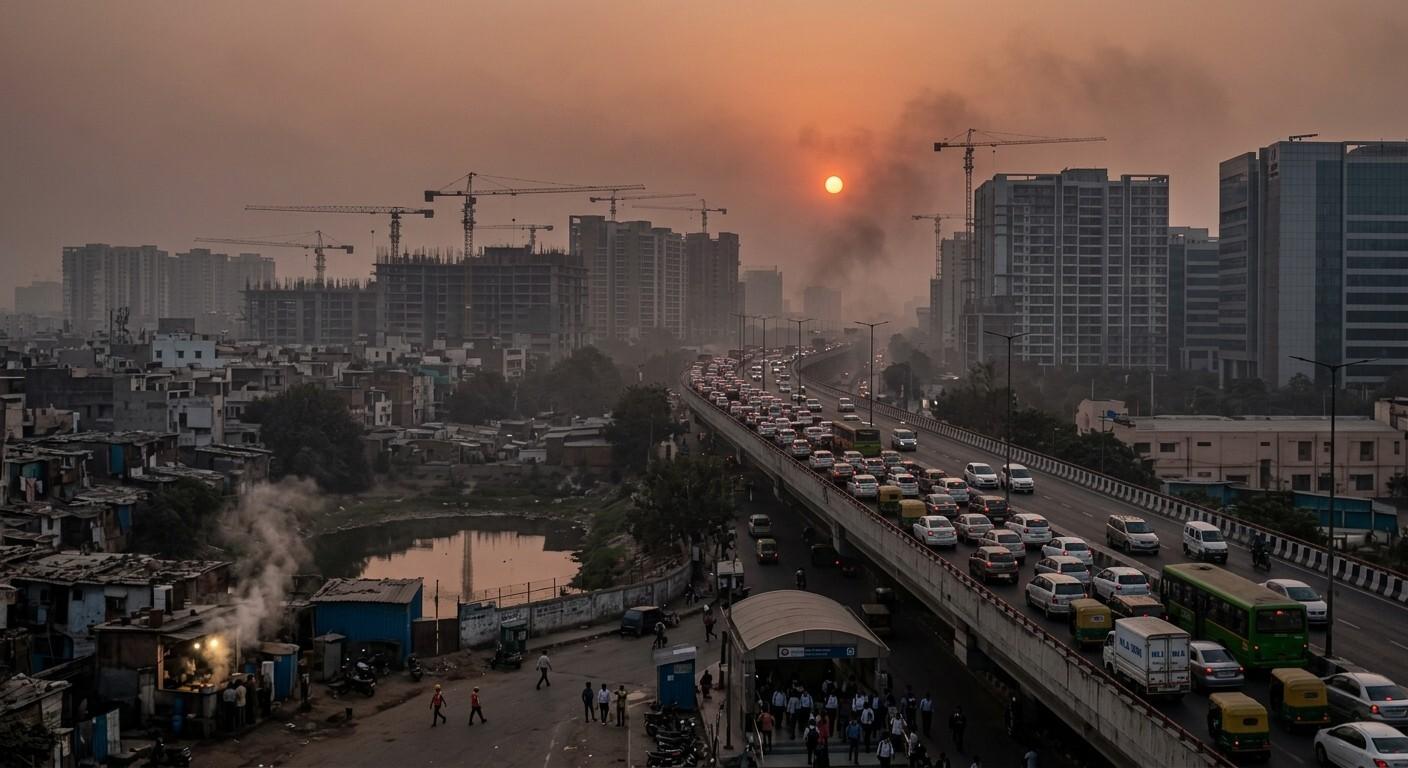
02 Apr 2026
In the haze of pollution and pressure, cities are not just sites of crisis—but places where new ecological futures are quietly being imagined. Every morning, the modern city performs a miracle and a warning at the same time. Milk vans arrive before sunrise. Tea stalls steam into life. Trains unload workers. Schools stir awake. Elevators climb. Screens glow. Tower cranes begin their slow sweep across the skyline. Somewhere a new apartment block is being cast in concrete. Somewhere an old pond is being filled for parking. Somewhere traffic has already formed, long before office hours have officially begun. And above all this movement hangs something nearly invisible, yet deeply intimate: the exhausted breath of development. That is the great urban contradiction of our age. Cities are where humanity concentrates its dreams, but they are also where humanity concentrates its emissions. Urban areas now account for the great bulk of the world’s energy use and a very large share of global emissions, while the United Nations projects that 68 percent of the world’s population will live in urban areas by 2050. In other words, the future is not only urban. The future is urban at climate scale. The note you shared already carried the bones of this story: cities as engines of aspiration, cities as engines of carbon, cities as possible sites of repair. What follows is a fuller, more literary, more publication-ready telling of that same truth—rooted in the realities of India and South Asia, and grounded in the laws, policies, and examples that now shape the debate. The Promise That Built the City No city begins as an environmental crime. It begins as a promise. A young man leaves a village because the city has colleges. A family migrates because the city has hospitals. A woman seeks work because the city offers both a salary and a chance at independence. A trader moves because the city has customers. A builder invests because the city has roads, demand, and speculation. A government expands because the city appears to embody national progress. Urbanization, then, is not a failure of civilization. It is one of its oldest ambitions. That is why the climate story of cities is so emotionally complicated. We do not hate cities. We need them. They generate jobs, wealth, mobility, innovation, and access. In India, this matters enormously. The World Bank has noted that Indian cities are expected to generate around 70 percent of new jobs by 2030, while the country’s urban population could nearly double from 480 million in 2020 to 951 million by 2050. That means that more than half of the infrastructure, buildings, and urban services India will need for that future are still to be built. That is the opportunity. It is also the danger. Because cities do not merely expand in numbers. They expand in material appetite. Every new neighbourhood requires roads, buildings, drainage, electricity, water, transport, and waste systems. Every rising income bracket often brings more appliances, more air-conditioning, more packaged consumption, and more daily travel. Every glass façade in a tropical climate may look like progress, yet quietly lock in years of higher cooling demand. Development, in other words, is never just growth. It is a pattern of energy and land use. Where Carbon Hides in Plain Sight Many people imagine carbon emissions as something far away—coal plants, refinery stacks, distant industries. But in cities, carbon becomes ordinary. It is folded into routine. It is in the car that moves one person through a corridor that could have carried fifty by bus. It is in the traffic jam that turns a twenty-minute commute into ninety minutes of idling fuel burn. It is in the office block that depends on sealed glass and relentless cooling. It is in the apartment tower built with carbon-heavy cement and steel. It is in the backup diesel generator that starts the moment the grid falters. It is in the mountain of organic waste that decomposes into methane on the city’s edge. It is in the hot asphalt that traps heat all day and releases it all night. This is why climate experts no longer speak about urban emissions as a side issue. Cities are where the transport problem, the building problem, the materials problem, the waste problem, and the public health problem all meet each other at once. UN-Habitat states that urban areas account for roughly 71 to 76 percent of CO2 emissions from global final energy use, while UNEP’s latest global buildings report says the buildings and construction sector alone consumes 32 percent of global energy and contributes 34 percent of global CO2 emissions. This should change how we think about the city. The city is not just a place where emissions happen. It is a machine that can either multiply emissions or shrink them. The Commute That Pollutes Transport is the most visible part of the urban carbon story because everyone feels it in their lungs, their wallets, and their lost time. When cities sprawl without thought, they force distance into daily life. Homes move farther from jobs. Schools move farther from affordable neighborhoods. Warehouses move farther from retail areas. Public transport lags behind. Walking becomes unpleasant, unsafe, or impossible. The result is not merely congestion. It is structural dependence on fuel. That is why urban planning and transport planning cannot be separated. A badly planned city manufactures emissions before a single vehicle has entered the road. But the reverse is also true. A well-designed transit system can bend an emissions curve. Hyderabad Metro’s own carbon footprint assessment has argued that a 30-kilometre metro trip produces dramatically less CO2 than equivalent travel by car or bus, while the Government of India continues to position metro systems as energy-efficient urban infrastructure supported by regenerative braking, solar installations, and cleaner modal shift. The real lesson is larger than Hyderabad. Every time a city invests in reliable public transport, shaded walkways, last-mile connectivity, and mixed-use planning, it is not simply improving convenience. It is redesigning the carbon behavior of millions. The Building That Looks Modern but Burns the Future In much of urban India and South Asia, the word “modern” still too often means concrete-heavy, glass-heavy, mechanically cooled, and ecologically indifferent. Yet buildings are among the longest-lasting climate decisions any city makes. A road can be redesigned. A bus fleet can be upgraded. But a badly designed building may stand for fifty years, consuming unnecessary energy every single summer. In hot climates, poor envelopes, dark surfaces, weak ventilation, and over-reliance on artificial cooling can quietly turn entire districts into long-term energy liabilities. India has begun to respond. The Energy Conservation framework and the Bureau of Energy Efficiency’s codes now provide an increasingly serious regulatory pathway. Eco Niwas Samhita was designed to set minimum standards for residential building envelopes to reduce heat gain and improve natural ventilation and daylighting, while the Energy Conservation and Sustainable Building Code 2024 pushes the commercial and institutional building conversation toward deeper efficiency and sustainability. India’s long-term low-emission development strategy explicitly links low-carbon development to improved efficiency, cleaner transport, and better urban systems. This is where architecture stops being a style question and becomes a climate question. A cool roof in Ahmedabad, a shaded courtyard in Jaipur, a naturally ventilated school in Kolkata, a less energy-intensive façade in Hyderabad—these are not tiny gestures. In a warming South Asia, they are acts of intelligent survival. The Waste We Push Out of Sight Every city believes, a little dishonestly, that waste disappears when it is collected .It does not disappear. It migrates.It moves to the edge of the city, where dump yards rise like unofficial hills and the people living nearby inhale what the rest of the city refuses to remember. There, organic waste decomposes into methane, construction debris spreads dust, fires break out, and environmental burden settles with cruel predictability on those with the least political power. Delhi’s landfill crisis has long made this reality impossible to ignore. Proceedings and reports before the National Green Tribunal on the Ghazipur landfill have documented repeated concern over fires, waste handling, and associated public harm. India’s Solid Waste Management Rules, 2016 already impose extensive duties on local authorities, generators, and processors, and the newer Construction and Demolition Waste Management Rules, 2025 add responsibilities around collection, handling, processing, compliance monitoring, and environmental compensation for non-compliance. This is not merely a sanitation issue. It is a climate issue. Methane from landfills is a powerful greenhouse gas. Construction debris means more dust, illegal dumping, and lost recycling opportunities. A city that does not manage its waste does not merely become dirty. It becomes more carbon-intensive and more unjust. When Cities Become Hotter Than the Land Around Them Ask anyone who has walked through a South Asian city in May or June: city heat feels different. It is sharper. It radiates upward from the road, sideways from walls, downward from metal roofs. There are fewer trees, fewer breezes, fewer cool surfaces. The heat lingers even after sunset. This is the urban heat island effect in lived form, and it is becoming one of the defining experiences of contemporary urban life. The tragedy is that urban design often intensifies exactly what it then struggles to protect people from. More concrete means more heat absorption. Less vegetation means less evapotranspiration and shade. More air-conditioners dump more waste heat outdoors. More heat drives more electricity use. If that power still comes substantially from fossil fuels, then cooling itself becomes part of the warming cycle. UNEP and UN statistics together make the broad warning unmistakable: cities are where emissions and vulnerability now increasingly cohabit. In India and South Asia, this is no abstract scientific puzzle. It is about elderly people in poorly ventilated homes, street vendors in unshaded markets, traffic police at blazing intersections, schoolchildren in tin-roofed structures, and urban workers who cannot escape exposure because their labour happens outdoors. When Development Eats Its Own Defences The most reckless city is not the one that builds. It is the one that builds by erasing what protected it .Wetlands are treated as empty land. Lakes are treated as developable parcels. Mangroves are treated as inconvenient vegetation. River edges are treated as land banks. Trees are treated as traffic obstacles. Open soil is treated as an inefficiency waiting to be paved. Then the flood comes. Chennai has become one of India’s clearest warnings. The Comptroller and Auditor General’s performance audit on flood management and response in Chennai and its suburban areas documented repeated weaknesses in planning, drainage, management of water bodies, encroachments, and disaster preparedness, while the executive summary noted the catastrophic human and property losses of the 2015 floods. The city’s tragedy was not only rainfall. It was the urban vulnerability that had been built into the landscape over time. Across South Asia, similar lessons recur in different forms. Dhaka’s air pollution has repeatedly ranked among the worst in the world, underscoring what happens when density, fuel use, construction pressure, industrial activity, and weak control mechanisms converge in one urban basin. The ecological systems cities destroy are often the very systems they later spend billions trying to replace with engineering. A wetland stores water for free until it is filled. A tree cools for free until it is cut. A lake buffers runoff for free until it becomes a housing colony. Nature does not vanish without leaving a bill. The Law Has Entered the City There was a time when urban expansion behaved as if the atmosphere had no legal standing. That time is ending. At the global level, the Paris Agreement is the central climate framework, and UN bodies increasingly place cities at the center of climate mitigation and adaptation. SDG 11 has made sustainable cities a formal development objective rather than a rhetorical afterthought. In India, the legal structure is distributed but substantial. The Air (Prevention and Control of Pollution) Act, 1981 remains a foundational statute for air pollution control. The Environment (Protection) Act, 1986 gives the central government broad powers to regulate environmental pollution and issue rules. The National Clean Air Programme now covers 131 cities and aims for up to a 40 percent reduction in PM10 levels, or attainment of national standards, by 2025-26. Alongside that sit the Solid Waste Management Rules, the C&D Waste Rules, building energy codes, and city-level by-laws that increasingly define how urban development is supposed to happen. The problem, then, is often not absence of law. It is fractured implementation. One arm of government promises clean air. Another tolerates dust and dumping. One agency announces resilience. Another permits ecological destruction. One authority speaks of sustainability. Another approves layouts that guarantee future congestion and heat. The crisis of the city is often a crisis of coordination. Why the Poor Carry the Heaviest Climate Burden The city distributes comfort upward and risk downward .Those who consume the least energy often suffer the highest exposure. They live near dumps, drains, industrial zones, congested roads, or low-lying flood-prone land. They work outdoors. They travel farther. They own fewer cooling devices. They are least likely to have insurance, legal recourse, or political influence. A rich neighborhood may experience heat as inconvenience. A poor neighborhood may experience it as illness, lost wages, or death. That is why low-carbon urbanism must also be just urbanism. A city cannot call itself green because it has a handful of premium eco-buildings while waste workers remain unsafe, informal settlements remain overheated, and peri-urban communities remain sacrifice zones for landfills, sewage, and speculative expansion. The climate question inside the city is never only about tonnes of carbon. It is about whose body carries the cost of that carbon. What Must Be Done Now Activists must continue to do what they often do best: keep evidence alive. They must document disappearing wetlands, broken compliance, toxic waste chains, unsafe labour, illegal dumping, heat inequality, and the gap between law and lived reality. Without public memory, urban environmental damage is quickly normalized. Citizens must become more than consumers of the city. Waste segregation at source, reduced energy waste, support for public transport, neighborhood defence of open spaces and water bodies, and pressure on local authorities for transparent planning all matter. A sustainable city is not built only by ministries. It is also built by what its residents tolerate and what they refuse. Governments must finally govern the city as a climate system. That means compact, transit-linked growth instead of endless sprawl; enforceable building efficiency standards instead of symbolic guidelines; serious waste processing instead of landfill dependence; heat action plans, urban forestry, stormwater restoration, and better local data. It also means empowering city governments with money, technical capacity, and accountability. The private sector must stop treating sustainability as brochure language. Developers, logistics players, infrastructure firms, industrial operators, and technology companies help determine how much carbon a city emits and how much damage it can absorb. They must shift toward material efficiency, cleaner energy, circular waste practices, ecological compliance, and lower-carbon design—not because it sounds progressive, but because the old urban model is becoming financially, legally, and morally indefensible. The Ending Has Not Been Written Yet This is the most important thing to remember: the story is not over. Cities can still become denser without becoming harsher. They can become richer without becoming dirtier. They can grow without erasing lakes, wetlands, and trees. They can move people faster without chaining everyone to private cars. They can build more housing without locking in decades of cooling demand. They can handle waste without poisoning their margins. They can be modern without becoming unlivable. India and South Asia stand at a decisive urban threshold. So much of the infrastructure of the future is still unbuilt. That is frightening, but it is also liberating. It means the mistakes of the past are not destiny. It means planning still matters. Law still matters. Design still matters. Public pressure still matters. The city is a living story. It breathes through roads, rail, roofs, drains, trees, towers, markets, and memory. It can inhale ambition and exhale poison. Or it can learn, at last, to inhale intelligence and exhale hope. The future of climate action will not be settled only in summits, treaties, or scientific reports. It will be settled in the shape of streets, the design of buildings, the fate of wetlands, the discipline of waste systems, and the courage of citizens who decide that development should no longer mean slow self-destruction .That is the fork in the road before us now. One path leads to hotter, dirtier, more unequal cities of smoke .The other leads to cooler, cleaner, fairer cities of hope .Top of Form Bottom of Form ...Read more
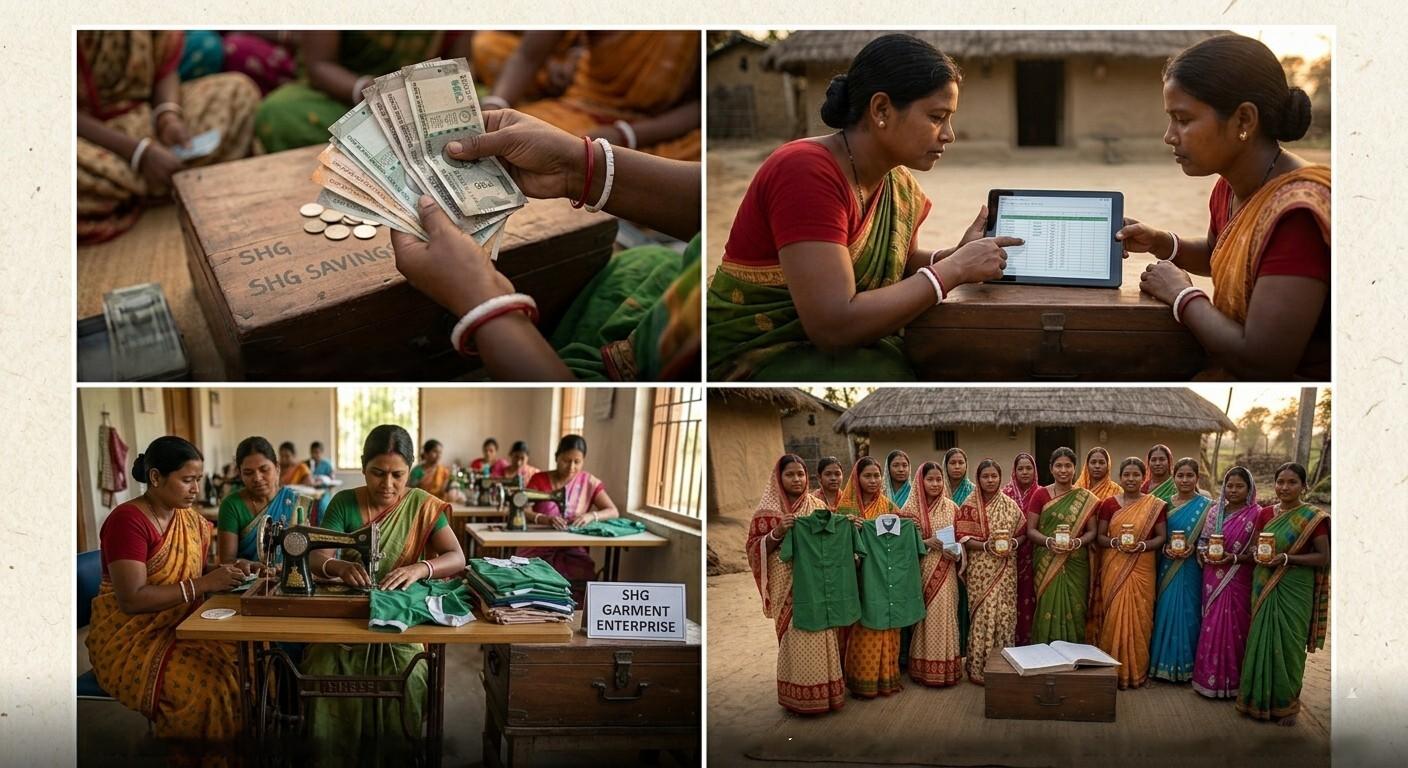
02 Apr 2026
From Bengal’s sewing rooms to Rajasthan’s deserts, women are rewriting the rules of survival, leadership and livelihood—one small saving at a time. Across rural India, change does not always arrive with speeches, slogans, or spectacular announcements. Sometimes it comes quietly, in a circle of women sitting on mats, counting coins, sharing worries, and deciding that their lives will not remain the same forever. That quiet turning point is at the heart of your note on Self-Help Groups, which I have reimagined here as a magazine-style longform feature. The original note’s central spirit—women building strength through solidarity—runs through this retelling. The Revolution Nobody Saw Coming India has often spoken the language of development through highways, factories, digital platforms, and policy missions. Yet one of the most transformative movements in the country has unfolded away from the cameras, in villages where women once had little money, less mobility, and almost no say over household or community decisions. The Self-Help Group, or SHG, changed that equation. At one level, an SHG is simple. A small number of people, usually women, come together regularly, save small amounts, keep records, build trust, and support one another through loans and collective action. But in practice, SHGs do something far bigger than pooling savings. They create a moral and economic commons. They help women move from isolation to association, from dependence to decision-making, and from silence to public voice. India’s institutional support for this movement did not emerge by accident. The SHG-Bank Linkage Programme, supported by NABARD, helped connect women’s groups to formal banking, while the Deendayal Antyodaya Yojana–National Rural Livelihoods Mission built a wider architecture for organizing poor rural women into institutions that can support livelihoods, credit, enterprise, and social development. But the deeper story is not administrative. It is human. It is about what happens when a woman who never handled money begins signing loan papers, managing accounts, negotiating with traders, speaking in public meetings, and telling her daughter, with new conviction, that life can be different. A Bengal Evening, a Small Contribution, a New Beginning Imagine a village in West Bengal at the edge of a paddy landscape. The day is ending. Smoke curls up from kitchens. Children chase each other in dusty lanes. A woman named Madhabi, like so many women around her, has spent years inside a routine of unpaid labour—cooking, cleaning, caring, stretching every rupee, and making sure everyone else survives. Then comes an invitation to join a Self-Help Group. At first, it feels almost absurd. What can a woman with no formal education and no independent income contribute? Yet she goes. Ten women begin meeting. They save ten rupees each. Ten rupees is not much. It buys almost nothing in today’s economy. But that is not the point. The saving is economic, yes, but it is also psychological. It says: I belong to a circle. I can contribute. I can plan. I can participate. Soon the group begins lending among themselves. A sewing machine is purchased. Blouses and school uniforms are stitched. A little money starts coming in. Then confidence follows. That is how many SHG stories begin—not with a miracle, but with rhythm. Small saving, regular meetings, internal lending, shared discipline, and the first taste of economic agency. In Bengal, this pattern has repeated itself in thousands of forms—through tailoring, food processing, poultry, agarbatti-making, mushroom cultivation, jute crafts, and local service enterprises. The earnings may begin modestly, but the identity shift is profound. A homemaker becomes an earner. An earner becomes a decision-maker. A decision-maker becomes, sometimes, a community leader. When the Desert Starts Yielding Possibility Travel west to Rajasthan, to a district where water is scarce, heat is unforgiving, and women often spend hours every day fetching what urban India takes for granted. Here, poverty is not just about income. It is about time, geography, and social hierarchy. For a widow like Rekha, the burden is heavier still. That is where the SHG becomes more than a savings club. It becomes social insurance in a place where formal systems often feel distant. A group of women saves together, learns together, borrows together, and begins investing in something suited to the local ecology—goat rearing. The choice matters. Good SHGs do not impose random enterprise models. They grow around what the land, climate, skill base, and market can realistically support. Goat rearing in Rajasthan is not glamorous. It does not appear on startup panels or investment decks. But it is resilient, practical, and rooted in local knowledge. Women learn breeding, animal care, vaccination schedules, and basic bookkeeping. Within a couple of years, incomes rise. Debt pressure falls. Respect grows. And respect is a currency of its own. In many parts of rural South Asia, one of the most radical outcomes of women’s collectives is not simply income growth but social legitimacy. A widow once pitied or ignored becomes a person others consult. This transition—from being acted upon to becoming an actor—is one of the most important dimensions of empowerment. Cutting Out the Middleman, Restoring the Maker In Tamil Nadu, the story takes a different texture. Here the issue may not be the absence of skill but the unfairness of the market. A weaver can be deeply talented and still remain poor if the chain between craft and customer is controlled by middlemen. For women like Lakshmi, the SHG becomes a platform of collective bargaining. That phrase may sound technical, but its meaning is simple: alone, a woman can be underpaid; together, women can negotiate. They can buy raw materials directly. They can compare rates. They can explore exhibitions, cooperatives, digital marketplaces, and NGO-supported channels. They can learn branding, packaging, pricing, and customer presentation. Across India and South Asia, this is one of the defining battles of rural livelihoods. The poor often do not suffer from lack of effort. They suffer from weak market power. The farmer does not control the mandi. The fisherwoman does not control the cold chain. The artisan does not control the retail shelf. The home-based worker does not control the platform. SHGs help close that gap, not perfectly, but significantly. This is especially visible in craft regions of India, in handloom clusters of Assam, in kantha and jute work in Bengal, in embroidery collectives in Gujarat, in coir and fish-processing units in Kerala, and in hill produce groups in Uttarakhand. Once women organize, the value chain begins to look different. What was once “helping out” becomes recognized as labour. What was once “traditional work” becomes an enterprise. The Mountain Learns to Speak In Uttarakhand, the terrain itself teaches patience and fragility. Landslides, poor connectivity, limited employment, and ecological vulnerability make rural life difficult. Women bear much of that weight. They collect firewood, manage the household economy, care for children and elders, and often absorb the consequences of male migration or unemployment. Here, SHGs often evolve around organic farming, medicinal herbs, local food products, and ecological enterprises. These are not just livelihood choices; they are place-based responses. A well-functioning group learns to align enterprise with geography. Organic vegetables, local pulses, herbs, pickles, and natural products can fetch better prices if the group has enough training, some market access, and a basic understanding of quality and branding. But there is another layer. SHGs in many parts of India do not stop at economics. Once women start meeting regularly, a new public culture emerges. They talk not only about savings and loans but also about alcoholism, domestic violence, sanitation, school dropouts, nutrition, and access to schemes. The circle widens. What begins as thrift becomes citizenship. That is when the village changes most deeply. From the Coast to the Forest: Different Geographies, One Pattern On the Kerala coast, fisherwomen have long done hard work in fish sorting, drying, selling, and household management, often without proportionate control over earnings. SHGs help shift that balance when women move into small processing units, hygienic packaging, dried products, pickles, ready-to-cook items, and collective marketing. One major gain is stability. Daily uncertainty gives way, at least partly, to planned income. In Jharkhand, among tribal communities, the challenge may be less about markets alone and more about access—to finance, training, institutions, and recognition. When women organize around lac cultivation, forest produce, leaf plates, minor agro-processing, or local crafts, the first breakthrough is often financial literacy itself. Opening a bank account, understanding repayment, keeping group records, and interacting with officials can be revolutionary acts. In Bihar, where male migration has shaped rural family life for decades, SHGs have often helped women build local income streams through dairy, poultry, food processing, and small livestock. The emotional consequence is significant. A woman who once waited for remittances begins generating her own earnings. This changes not just her financial position but her standing inside the household. In Assam and the wider North-East, SHGs have played an important role in linking women’s skills in weaving, food products, and handicrafts to wider markets. Here too, the future depends not merely on production but on design, visibility, and fair market access. Different state, different product, different language, different landscape. Yet the pattern remains strikingly similar. Women organize. They save. They learn. They borrow. They build trust. They earn. They speak. They lead. The Law Is Not the Whole Story, But It Matters No movement of this scale can thrive on goodwill alone. It needs legal and policy ecosystems that protect dignity, participation, and access. Globally, the moral architecture is clear. The Convention on the Elimination of All Forms of Discrimination against Women recognizes the rights of rural women to participate in development, access credit, and benefit from rural progress. The UN’s Sustainable Development Goal 5 places gender equality and women’s empowerment at the center of sustainable development. The ILO’s framework on moving workers from the informal to the formal economy also matters because so much of women’s rural labour remains invisible, insecure, and poorly protected. In India, the legal ecosystem around rural women’s empowerment is spread across several domains rather than a single SHG law. The 73rd Constitutional Amendment gave constitutional status to Panchayati Raj and mandated reservation for women in local governance, helping create a generation of rural women with a public role in decision-making. Several states have increased that reservation to 50 percent, and the scale of women’s participation in local bodies is now enormous. Then there are laws that protect the social conditions within which empowerment must happen. The Protection of Women from Domestic Violence Act, 2005 provides a legal framework against abuse inside the family. The Prohibition of Child Marriage Act, 2006 is crucial because child marriage cuts short education, mobility, health, and economic agency. Without confronting these realities, economic empowerment remains incomplete. Government programmes also matter. India’s women’s empowerment architecture includes support systems under the Ministry of Women and Child Development and rural livelihood systems under the Ministry of Rural Development. Together, these create channels through which women’s groups can access training, credit, social support, and local institutional recognition. The law, of course, cannot create courage. But it can make courage more survivable. The Real Issues Beneath the Success Stories: It is tempting to tell SHG stories only as success narratives. But that would make the feature emotionally satisfying and intellectually incomplete. The truth is that SHGs operate in a landscape of persistent structural barriers. Many groups struggle to move beyond savings into sustainable enterprise. Credit may be available, but profitable market access remains weak. Women may produce well but sell poorly. They may have skills but lack logistics, branding, storage, transport, or digital literacy. Some groups suffer from poor bookkeeping or overdependence on one or two stronger members. In conservative settings, women may still face resistance from families unhappy with their mobility or public visibility. The burden of unpaid care work remains huge. A woman may be an entrepreneur at noon and still be expected to perform all domestic labour at dawn and dusk. Then there is the challenge of informality. Large numbers of women’s enterprises operate at the edge of the formal economy—without stable contracts, social protection, strong legal recourse, or reliable business development services. That makes them vulnerable to shocks, especially illness, climate disruption, market downturns, or household crisis. Climate change is emerging as a particularly serious concern. For women dependent on agriculture, livestock, fisheries, forests, or local natural resources, changing rainfall, floods, droughts, salinity, and heat stress can wipe out fragile gains. In South Asia, empowerment can no longer be discussed separately from ecological resilience. And yet, despite all this, the movement endures. Why? Because the social capital created by SHGs often outlasts the immediate economic cycle. Even when an enterprise struggles, the group remains a support system. It carries knowledge, confidence, and collective memory. This Is About Society, Not Just Savings: One of the biggest mistakes outsiders make is to treat SHGs as miniature banks. They are much more than that. A functioning SHG changes the social architecture of a village. It improves the circulation of information. Women learn about health services, school entitlements, insurance, pensions, local schemes, sanitation campaigns, and grievance processes. They start attending gram sabha meetings. They question why a road was not built, why the anganwadi is irregular, why the school lacks toilets, why alcohol abuse is rising, why girls are being pulled out of school. In this sense, SHGs are democratic schools. This is why they matter so much in India and South Asia. In societies where hierarchy often decides who speaks and who stays silent, regular group meetings teach deliberation. Women learn to listen, disagree, record decisions, monitor repayments, and settle conflicts. They acquire procedural confidence. That confidence later travels into public life. A woman who can run a group ledger can often run a village committee. A woman who can question a defaulting borrower can question a negligent official. A woman who can bargain with a trader can bargain with the state .That is why the SHG story is not small. It is one of the grassroots foundations of a more participatory republic. What Activists, Citizens, Government and Business Must Do Next: If SHGs are to become engines of deeper transformation rather than islands of inspiring struggle, different actors have to step up with seriousness. Activists must stop romanticizing rural women and start strengthening their negotiating power. That means sustained training in legal literacy, financial literacy, leadership, digital tools, enterprise planning, climate resilience, and rights awareness. It also means helping women confront uncomfortable issues such as domestic violence, unpaid labour , property exclusion, and caste-based barriers, not merely celebrating entrepreneurship in abstract language. Citizens, especially in towns and cities, need to rethink consumption. Too often, we speak of empowerment and then buy the cheapest thing from the most exploitative supply chain. If urban consumers, resident groups, schools, universities, and community networks consciously source products and services from credible women’s collectives, they can help build fairer local markets. Respect also matters. SHG-made products should not be treated as charity purchases but as value-bearing goods and services. Government has the heaviest responsibility. It must ensure that SHGs are not reduced to targets on paper. What they need is deeper last-mile support: strong field facilitators, reliable bookkeeping systems, easier access to affordable credit, better market intelligence, procurement opportunities, digital infrastructure, transport support, quality certification pathways, and social protection buffers. Governments also need to integrate SHGs more intelligently with agriculture, nutrition, skilling, climate adaptation, panchayats, and local value chains. The private sector, meanwhile, must move beyond symbolic CSR. Companies can help by investing in design, packaging, market access, e-commerce onboarding, logistics, quality systems, climate-smart production, and fair procurement from women-led collectives. Banks and fintech players can build products that reflect rural realities rather than urban assumptions. Retail chains can create shelf space. Platforms can reduce onboarding friction. Agribusiness and food companies can build ethical sourcing partnerships. Media firms can tell better stories that do not flatten women into stereotypes of either victimhood or miracle success. Most importantly, all four actors must understand one core principle: empowerment is not a one-time intervention. It is a process. It takes years for confidence to grow, institutions to mature, and livelihoods to stabilize. SHGs thrive where support is patient, relational, and rooted in local context. The Future Is Already Sitting in a Village Meeting: The next phase of the SHG movement in India will not look exactly like the first. It will be more digital, more networked, more market-aware, and, one hopes, more ambitious. Women’s collectives are beginning to use mobile banking, digital records, e-commerce channels, and platform-based learning. Younger women are entering these spaces with new aspirations. Traditional livelihoods are being reimagined through branding, design, sustainability, and niche markets. But the soul of the movement remains unchanged. It still begins with women coming together. It still depends on trust before transaction. It still grows from the smallest act of shared discipline. And it still proves one of the oldest truths in development: that people change fastest when they are not treated as beneficiaries alone, but as agents. From Bengal’s sewing circles to Rajasthan’s goat herders, from Tamil Nadu’s weavers to Uttarakhand’s organic growers, from Kerala’s fisherwomen to Jharkhand’s tribal collectives, the lesson is the same. Real transformation often begins below the radar of national attention. It begins where women who were told to endure begin instead to organize. India’s villages are full of such circles. Inside them are ledgers, loans, laughter, disputes, recipes, worries, repayment schedules, and plans for the future. But inside them also lies something larger: a new social imagination of who rural women can be. Not dependents. Not shadows. Not “helpers.” Builders Earners Negotiators Leaders and perhaps that is the most powerful part of the story. The SHG is not merely helping poor women survive at its best, it is helping remake the meaning of citizenship, dignity, and development in rural India itself. ...Read more