08 May 2026
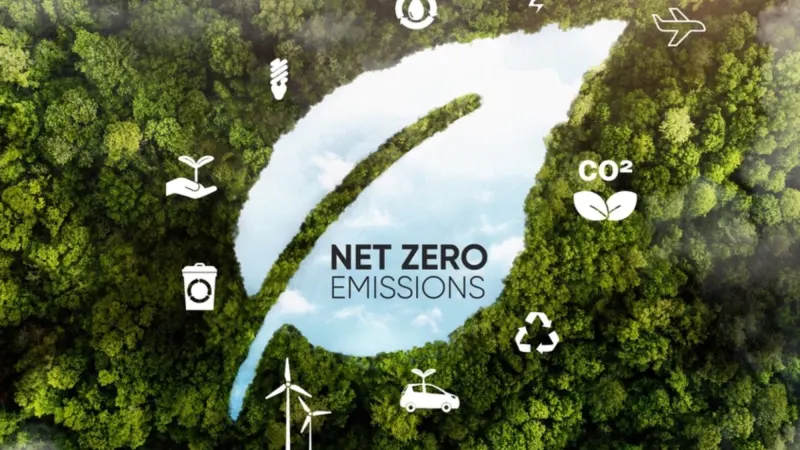
For decades, the skyline of the United Arab Emirates was a monument to the era of hydrocarbons. Today, that same skyline is powered by a different kind of engine. From the gleaming solar arrays of the Empty Quarter to the humming reactors of the Barakah Nuclear Plant, the UAE is orchestrating one of the most ambitious economic pivots in modern history: The Net Zero by 2050 Strategic Initiative. As we move through 2026, the UAE is no longer just talking about sustainability; it is exporting it. This transition is not merely an environmental necessity but a calculated economic strategy to lead the $100 trillion global "Green Economy." The cornerstone of the UAE’s strategy is a radical overhaul of its energy grid. By 2050, the nation aims to derive 50% of its energy from clean sources. Solar Supremacy: The UAE is home to three of the world’s largest single-site solar plants, including the Al Dhafra Solar PV project, which provides enough clean energy to power 200,000 homes. These projects have achieved some of the lowest solar tariffs globally, proving that "green" can also be "cheap." The Barakah Nuclear Milestone: As the first Arab nation to operate a commercial nuclear plant, the UAE now generates 25% of its electricity with zero carbon emissions. By 2026, the four reactors at Barakah prevent roughly 22 million tons of carbon emissions annually—the equivalent of removing nearly 5 million cars from the road. The UAE is positioning itself as a global hub for Green Hydrogen—often called the "fuel of the future." In early 2026, a new $1 billion green hydrogen platform was launched in Abu Dhabi, aimed at decarbonizing heavy industries like shipping and steel. Furthermore, the integration of Artificial Intelligence (AI) into the energy grid is the UAE's "secret weapon." Through smart-grid algorithms, the country can now predict energy demand with 99% accuracy, balancing the intermittent nature of solar power with battery storage and nuclear baseloads to ensure the lights never flicker. The UAE recognizes that reaching net-zero requires more than just cutting emissions; it requires removing them. The Al Reyadah facility was the region's first commercial-scale Carbon Capture, Utilization, and Storage (CCUS) project. In early 2026, Abu Dhabi launched a comprehensive Carbon Capture Policy, establishing a legislative framework to scale this technology. By capturing $CO_2$ from industrial plants and injecting it underground or using it for enhanced oil recovery, the UAE is proving that heavy industry can coexist with climate goals. The UAE's net-zero vision is physically manifest in its urban planning. Masdar City in Abu Dhabi and The Sustainable City in Dubai serve as living laboratories for low-carbon living. Passive Design: Buildings are oriented to maximize natural shade and airflow, reducing the need for energy-intensive air conditioning.Mobility: Autonomous electric shuttles and "green corridors" are replacing traditional car-centric layouts.Water Security: With the 2026 commissioning of the world’s largest solar-powered desalination plant, the UAE is decoupling its water supply from fossil fuels, a critical step in a desert climate. The UAE’s commitment is backed by AED 600 billion ($163 billion) in planned investments over the next three decades. Beyond its borders, the UAE is a major investor in renewable energy projects across 70 countries, positioning itself as a "bridge" between the Global North and South in the climate transition. The UAE’s path to Net-Zero is a masterclass in "Pragmatic Environmentalism." It acknowledges that while the world still needs energy, the source of that energy must change. By blending its vast financial capital with cutting-edge technology and bold policy, the UAE is proving that the transition to a sustainable future isn't a threat to prosperity—it's the engine of it. ...Read more