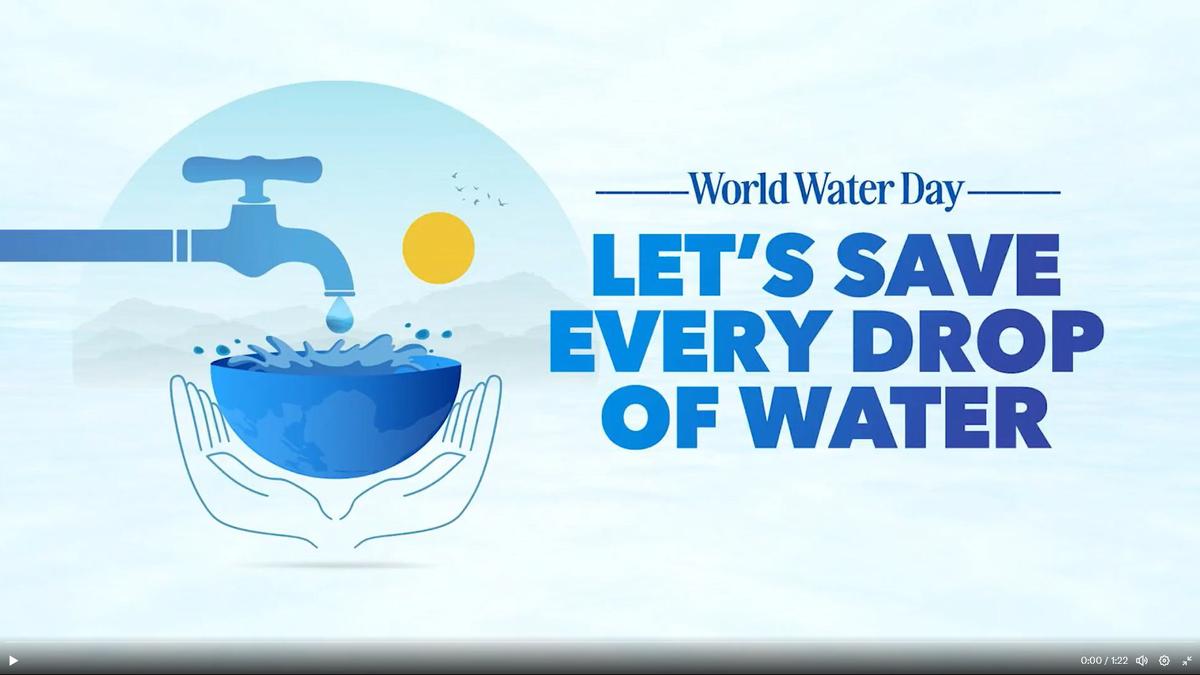
World Water Day, held annually on March 22nd, is far more than a day of environmental observance; it is a critical summons to safeguard the lifeblood of our civilization. Established by the United Nations in 1993, this day serves as a global spotlight on the 2.2 billion people currently living without access to safe water. It is a moment to reflect on a staggering paradox: while our planet is draped in blue, the freshwater that sustains terrestrial life, industry, and agriculture represents less than 1% of the Earth's total water supply.
In the modern era, water is no longer just a natural resource; it is a geopolitical focal point, a human right, and the most vital prerequisite for a sustainable future.
The Anatomy of a Global Thirst: Understanding the Crisis
To appreciate the urgency of World Water Day, we must look beyond the tap. The global water crisis is a multifaceted challenge driven by three converging forces: Over-consumption, Climate Instability, and Systemic Pollution.
1. The Scarcity of Abundance
While the total volume of water on Earth remains constant, the availability of usable freshwater is plummeting. Agriculture accounts for nearly 70% of global freshwater withdrawals, often utilizing inefficient irrigation techniques that deplete ancient aquifers faster than they can recharge. As the global population marches toward 9 billion, the demand for food—and consequently, water—is reaching a breaking point.
2. Climate Change as a Water Crisis
Climate change manifests primarily through the water cycle. We see it in the "too much" and "too little"—catastrophic flooding that destroys infrastructure and prolonged droughts that turn fertile basins into dust bowls. Rising global temperatures accelerate evaporation and alter precipitation patterns, making water availability increasingly unpredictable. The melting of "The Third Pole"—the Hindu Kush-Himalayan glaciers—threatens the water security of over 1.5 billion people who rely on these rivers for survival.
3. The Silent Pandemic of Pollution
Every day, millions of tons of inadequately treated sewage, industrial effluents, and agricultural runoff are discharged into our waterways. This doesn't just kill aquatic life; it seeps into the groundwater, creating a "silent pandemic" of waterborne diseases. The presence of emerging contaminants, such as microplastics and "forever chemicals" (PFAS), has added a new layer of complexity to water purification, challenging even the most advanced filtration systems.
The Blue Economy: Bridging Strategy and Stewardship
In the corporate and strategic landscape, water management has moved from the periphery to the center of ESG (Environmental, Social, and Governance) frameworks. We are witnessing the rise of the "Blue Economy"—a sustainable economic model that seeks to balance industrial growth with the health of water ecosystems.
The India-UAE Water Synergy
A fascinating case study in modern water management is the growing collaboration within the India-UAE corridor. Both regions face unique water challenges—India dealing with groundwater depletion and the UAE navigating the complexities of extreme aridity.
The synergy between these nations is driving innovation in:
Desalination 2.0: Moving away from energy-intensive thermal processes toward solar-powered Reverse Osmosis (RO), reducing the carbon footprint of "creating" freshwater.
Wastewater Circularity: Treating "greywater" not as waste, but as a resource for urban cooling and industrial processes, effectively "closing the loop" on urban water consumption.
Smart Irrigation: Leveraging IoT sensors and AI to deliver the precise amount of water needed for crops, drastically reducing agricultural waste.
Innovation: The High-Tech Reservoir
The digital revolution is providing us with the tools to manage water with unprecedented precision. We are no longer guessing where the leaks are; we are predicting them.
Digital Twins for Water Grids: Cities are now creating virtual replicas of their water infrastructure. By simulating different scenarios, engineers can optimize pressure, detect leaks in real-time, and prevent the loss of "Non-Revenue Water" (water that is produced but lost before it reaches the customer).
Atmospheric Water Generation: In regions where groundwater is non-existent, technology is literally pulling water out of thin air. These devices use condensation technology to provide clean drinking water in arid climates, powered by renewable energy.
Blockchain for Water Rights: In water-stressed basins, blockchain is being explored to create transparent, unalterable ledgers for water trading, ensuring that water allocations are fair and sustainable.
Water as a Human Right: The Social Dimension
The United Nations' Sustainable Development Goal 6 (SDG 6) is clear: Ensure availability and sustainable management of water and sanitation for all by 2030.
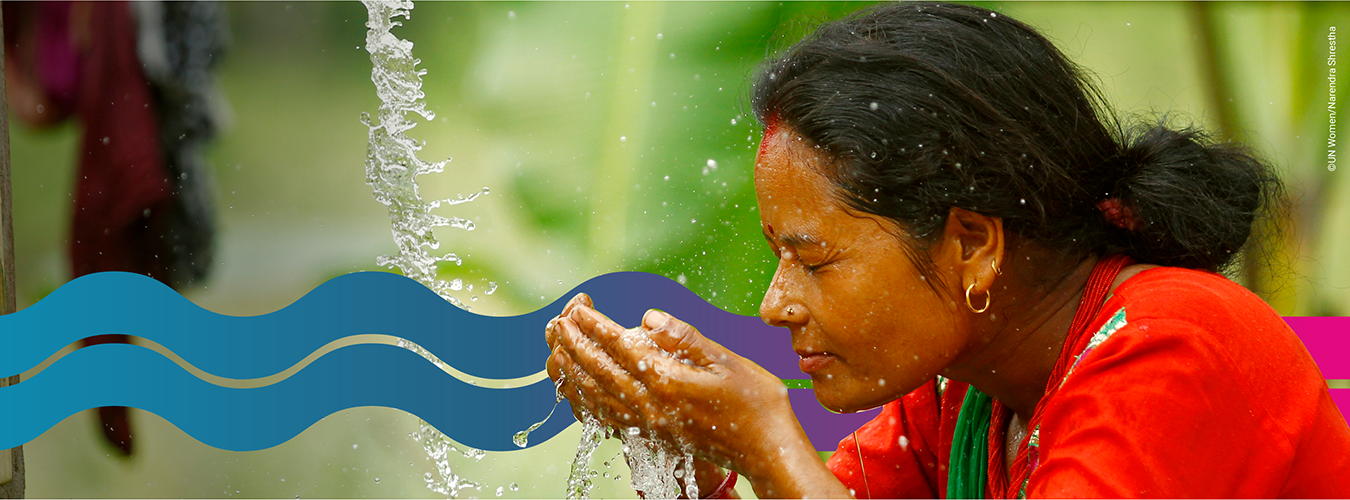
Water is a "gendered" issue. In many parts of the world, women and girls spend a collective 200 million hours every day fetching water—time that could be spent in school or in the workforce. Solving the water crisis is, therefore, a prerequisite for gender equality and poverty alleviation. When a community gains access to a reliable well or a piped water system, the local economy doesn't just improve; it transforms.
The Philosophy of Water: Lessons from the Source
Beyond the science and the strategy, World Water Day invites a philosophical shift. Historically, great civilizations rose and fell based on their relationship with water—from the Indus Valley to the Mesopotamians. Water is a teacher of resilience and adaptability; as the saying goes, "be like water."
We must transition from a culture of Exploitation to one of Reverence. This means recognizing the intrinsic value of a river, regardless of its utility to humans. It means acknowledging that every drop of water we use is "borrowed" from the future and must be returned to the cycle in a clean state.
A Call to Action: Every Drop Counts
Individual actions, when multiplied by millions, create systemic change. This World Water Day, we can commit to:
Water Auditing: Conduct a "water audit" of your home or office. A single leaky faucet can waste over 3,000 gallons of water a year.
Conscious Consumption: Be aware of "virtual water"—the amount of water used to produce the food we eat and the clothes we wear. (For example, it takes roughly 2,700 liters of water to make one cotton t-shirt).
Advocacy for Policy: Support legislation that protects wetlands, which act as natural "kidneys" for our planet, filtering pollutants and preventing floods.
Corporate Responsibility: Encourage businesses to adopt "Water Neutrality" targets, ensuring they replenish as much water as they consume.
Conclusion: Writing the New Water Story
The story of the 21st century will be written in water. We are at a crossroads where we can either continue down a path of depletion, leading to "water wars" and systemic collapse, or we can choose a path of radical collaboration and innovation.
World Water Day is our annual reminder that water is not a commodity to be hoarded, but a common heritage of humanity to be protected. By integrating state-of-the-art technology with ancient wisdom and cross-border cooperation, we can ensure that the "blue planet" remains a vibrant, thirst-quenched home for all. Let us act today so that the well never runs dry.
Summary of Key Strategic Pillars for SustainVerse:
Transboundary Cooperation: Highlighting the India-UAE partnership as a model for arid-region water security.
Technological Integration: Showcasing AI and IoT as the new frontier in water conservation.
The Circular Water Economy: Moving from waste disposal to resource recovery.
ESG Leadership: Helping organizations navigate water risk as a core business strategy.





Add a Comment