08 May 2026
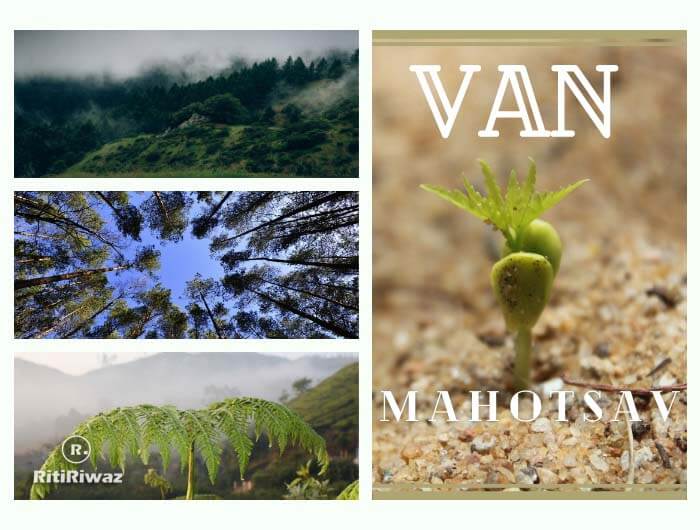
Van Mahotsav, the "Great Festival of Forests," is far more than an annual tree-planting drive in India; it is a profound socio-ecological movement. Established in 1950 by K.M. Munshi, the then Union Minister for Agriculture and Food, this festival was conceived as a crusade to save the "Mother Earth" from the encroaching desert of industrialization. Celebrated during the first week of July—coinciding with the arrival of the life-giving monsoons—Van Mahotsav represents a national pact to restore the green lungs of the subcontinent. In 2026, as we stand at the crossroads of climate volatility and technological revolution, Van Mahotsav has evolved. It is no longer just about putting a sapling in the ground; it is about the strategic design of Living Infrastructure. The Philosophy of the Festival: Beyond the PitTo understand the true spirit of Van Mahotsav, one must look at the tree not as a static object, but as a dynamic biological machine. The festival was founded on the principle that the protection of forests is inseparable from the survival of humanity. 1. The Carbon CurrencyEvery tree planted during Van Mahotsav acts as a carbon sequestering unit. In an era of carbon credits and net-zero targets, the forest has become our most valuable "Carbon Bank." A single mature tree can absorb approximately 22kg of carbon dioxide per year, acting as a natural buffer against global warming. When millions of citizens participate in this festival, they are effectively contributing to a massive, decentralized carbon-capture project. 2. The Hydrological AnchorTrees are the primary regulators of the water cycle. Their roots act as biological anchors, preventing soil erosion during the heavy Indian monsoons and facilitating groundwater recharge. By planting trees, we are essentially "planting water." In water-stressed regions, the afforestation efforts of Van Mahotsav are the first line of defense against drought. The Modern Evolution: Precision AfforestationIn the current decade, Van Mahotsav has integrated high-tech solutions to ensure that the "Green Cover" is both resilient and diverse. We have moved from "mass planting" to "Precision Afforestation." The Miyawaki Method: Urban centers in India are increasingly adopting the Miyawaki technique, which involves planting dozens of native species in close proximity. This creates "Tiny Forests" that grow ten times faster and are thirty times denser than traditional plantations. During Van Mahotsav, these urban forests transform "Heat Islands" into cool, breathable sanctuaries. Drone-Seed Bombing: In inaccessible terrains like the Aravallis or the Western Ghats, drone technology is being used to disperse seed balls. This "aerial afforestation" ensures that even the most rugged landscapes are part of the green resurrection. The Biodiversity Mandate: Modern Van Mahotsav emphasizes Native Species Resilience. Instead of monocultures (like eucalyptus or teak), the focus has shifted to indigenous giants like Banyan, Neem, Peepal, and Jamun, which support local bird and insect populations, restoring the entire ecological food web. The Strategic Corridor: India and the UAE’s Green VisionThe spirit of Van Mahotsav is now echoing across borders, particularly within the India-UAE Sustainability Corridor. Both nations have recognized that green cover is the most effective tool against desertification. Mangrove Synergy: The UAE’s ambitious goal to plant 100 million mangroves by 2030 finds a perfect partner in India’s long-standing expertise in protecting the Sundarbans. Mangroves are "blue carbon" powerhouses, sequestering up to five times more carbon than terrestrial forests. Joint research and exchange programs during Van Mahotsav are helping both nations build "Coastal Bio-Shields" against rising sea levels. Arid Zone Innovation: India’s success in greening the Thar Desert is providing a blueprint for the UAE’s "Green Dubai" initiatives. This exchange of "Arid-Tech" ensures that the trees planted are drought-resistant and require minimal water, maximizing the survival rate of every sapling. The Corporate Sector: ESG and 'Green-Collar' ResponsibilityFor the corporate world, Van Mahotsav is the ultimate ESG (Environmental, Social, and Governance) milestone. Companies are moving away from tokenistic tree-planting photos and toward long-term Forest Stewardship. Leading organizations are now adopting "Corporate Forests," where they take responsibility for the maintenance and growth of a forest patch for a minimum of ten years. This shift ensures that the trees planted during the festival actually survive to maturity. By integrating these efforts into their sustainability reports, businesses are proving that their growth is not just measured in revenue, but in canopy cover. The Individual as an Eco-Warrior: Mission LiFEAt its heart, Van Mahotsav is a grassroots festival. It aligns perfectly with the Mission LiFE (Lifestyle for Environment) initiative, which advocates for mindful living. The "Tree-Birth" Tradition: A growing trend in India involves families planting a tree to celebrate the birth of a child or a significant milestone. This personal connection turns a tree into a family member, ensuring its lifelong protection. Citizen Science: During Van Mahotsav, thousands of students and volunteers use apps to geo-tag the saplings they plant. This "Digital Forest Map" allows citizens to monitor the growth of their trees via satellite imagery, creating a sense of ownership and accountability. The Philosophy of the 'Living Ancestor'In many Indian cultures, trees are revered as "Vanaspati" or "Vriksha-Devata"—living deities. The Peepal and Banyan trees are seen as ancestors that bridge the gap between the earth and the sky. Van Mahotsav is a modern celebration of this ancient reverence. When we plant a tree, we are making a selfless investment. We are planting a shade that we may never sit under, and a fruit that we may never taste. This "Intergenerational Altruism" is the highest form of human consciousness. It is a gift to the children of 2050 and 2100, ensuring they inherit a world that still breathes. Conclusion: The Canopy of HopeAs the monsoon clouds gather over the Indian horizon this July, Van Mahotsav calls us back to our roots. It is a reminder that in the race for digital supremacy and space exploration, we must not lose the ground beneath our feet. The success of Van Mahotsav is not measured by the number of pits dug, but by the number of trees that touch the sky. By combining the ancestral wisdom of K.M. Munshi with the cutting-edge technology of the 21st century, we can transform the "Great Festival of Forests" into a permanent "Era of the Green." Let us resolve to plant not just a tree, but a legacy. Let the "SustainVerse" we build be one where the hum of technology is harmonized by the rustle of leaves. One sapling at a time, we are rewriting the future of the planet. Strategic Highlights for SustainVerse 'Features' Section:The Survival Tracker: Showcasing how IoT and Geo-tagging are increasing sapling survival rates to over 90%. Native Intelligence: A guide to choosing the right native tree for your specific soil and climate. The Blue Carbon Bridge: Exploring the India-UAE partnership in mangrove restoration. Urban Micro-Forests: How businesses can use the Miyawaki method to create green zones in industrial hubs. ...Read more