
31 Jul 2026
From overseas investments to recycling and responsible mining, India's critical minerals strategy is entering a decisive phase Kolkata | July 30, 2026:Every electric vehicle, solar panel, wind turbine and battery storage system relies on a set of resources that often remain out of public view- critical minerals. Lithium, cobalt, nickel, graphite and rare earth elements, have become indispensable to the global clean energy transition, making them strategically important today as fossil fuels were in the past. As countries accelerate efforts to decarbonise their economies, India is also strengthening its approach in securing these resources. Through overseas partnerships, investments in mineral-rich regions, domestic refining, recycling initiatives and policy reforms, the country is working to build a more resilient critical mineral supply chain. The objectives extend beyond supporting renewable energy projects. It is also about strengthening energy security, expanding domestic manufacturing and reducing dependence on imports. The urgency has grown as global competition for critical minerals continues to intensify. Much of the world's refining and processing capacity remains concentrated in a few countries, leaving supply chains vulnerable to geopolitical tensions, trade restrictions and market disruptions.In response, India is focusing on a two-pronged approach-strengthening international cooperation to secure mineral supplies while building domestic refining capacity to convert raw minerals into battery-grade materials at home.Experts say this reflects an important shift in the global conversation. Securing access to mineral deposits is no longer enough. Gradually, countries are seeking greater control over the entire value chain - from extraction and refining to manufacturing, recycling and reusing. Recycling is emerging as another key part of this transition. As electric vehicle adoption grows, used batteries and electronic waste are expected to become valuable secondary sources of lithium, cobalt and nickel. Recovering these materials can reduce pressure on fresh mining, lower environmental impacts and strengthen resource security while creating new opportunities in advanced recycling and material recovery. Although recycling alone cannot meet future demand, experts believe it will play an important role in building a more circular economy.Securing critical minerals is necessary, but far from sufficient. Mining often takes place in ecologically sensitive regions that support forests, rivers and Indigenous communities. Around the world, concerns over biodiversity loss, land acquisition, water stress and community displacement have intensified alongside expanding mineral exploration. Conservationists argue that the transition to clean energy should not come at the expense of environmental protection or local livelihoods. This has elevated responsible mining to a core priority.Experts believe every critical mineral project should include transparent environmental assessments, meaningful community consultation, fair compensation and continuous ecological monitoring. They stress on a fundamental shift: local communities must be partners in building the future, not just recipients of its consequences. The discussion reflects a broader evolution in the sustainability agenda. Climate action is no longer measured only by the number of renewable energy projects or electric vehicles on the road. It also depends on whether the resources powering these technologies are extracted responsibly, processed efficiently and managed sustainably throughout their life cycle.For India, the years ahead will determine whether industrial growth, resource security and environmental responsibility can advance together. Progress will depend not only on overseas agreements or new processing facilities, but on building a supply chain that is transparent, resilient and socially inclusive. Ultimately, the clean energy transition will be defined not just by what we build, but by how we build it. It will also be judged by the choices made long before those technologies reach consumers. The countries that lead the future will not simply be those with the largest mineral reserves, but those that develop supply chains that are ethical, resilient and circular. For India, the real challenge is not only securing the minerals that power a greener economy, but proving that sustainable development begins with responsible decisions at every stage of the journey! The true success of the clean energy transition lies not only in its destination, but in ensuring that every step along the way is sustainable. Sources: Ministry of Mines, Government of India – National Critical Mineral Mission, policy updates and official announcements.Ministry of Mines – Critical MineralsCouncil on Energy, Environment and Water (CEEW) – Analysis on the India–US Critical Minerals Agreement, domestic processing and supply-chain resilience.India–US Critical Minerals: The Midstream Test (CEEW) Ministry of External Affairs (MEA) – Quad Critical Minerals Initiative Framework and international cooperation.Quad Critical Minerals Initiative FrameworkInternational Energy Agency (IEA) – Critical Minerals Policy Tracker covering global supply chains, recycling and responsible mineral policies.IEA Critical Minerals Policy TrackerReuters – Reporting on India's expanding critical mineral partnerships and efforts to strengthen exploration, processing and recycling.India in talks over critical minerals partnerships ...Read more

27 Jul 2026
As demand for solar power grows, a less visible challenge is beginning to shape the future of India's clean energy ambitions. Kolkata | July 27, 2026: India's solar sector has grown rapidly in recent years, accelerating the country's transition towards cleaner energy. But behind the expansion of solar parks and rooftop systems lies a challenge that could shape the pace of future growth! As domestic production grows and the Approved List of Models and Manufacturers (ALMM) continues to evolve, the focus is no longer on installing more solar panels. It is on whether India can build a resilient, self-reliant manufacturing ecosystem capable of overcoming long-term supply chain challenges. The biggest hurdle is the limited availability of solar cells. Although India's module manufacturing capacity has grown rapidly, many manufacturers still rely on imported cells to keep production on track. While experts expect supply pressures to ease in the coming years, companies are gradually adopting vertical integration - expanding in-house manufacturing to strengthen supply chains and build long-term resilience. The challenge extends beyond manufacturing more solar panels. Producing a solar module involves several stages-from processing polysilicon into wafers, converting those wafers into solar cells, and finally assembling them into modules. Experts say strengthening every step of this value chain is essential for reducing import dependence and building a more flexible domestic manufacturing ecosystem. How a Solar Panel Is Made: POLYSILICON │ Purified silicon used as the raw material ↓ WAFERS Thin slices cut from polysilicon ingots ↓ SOLAR CELLS Convert sunlight into electricity ↓ SOLAR MODULES Multiple solar cells assembled into a panel ↓ SOLAR POWER SYSTEM Installed in homes, industries and solar parks Source: MNRE, Industry reports The revised Approved List of Models and Manufacturers (ALMM) framework is reinforcing the push for domestic manufacturing. But the next phase will depend on execution.Can local solar-cell production expand fast enough to meet the rising demand? Will manufacturers be able to scale up without increasing costs? And how quickly can new production capacity become operational? India's Solar Manufacturing Gap Manufacturing SegmentCurrent SituationPolysiliconLimited domestic capacityWafersDevelopingSolar CellsSupply remains constrainedSolar ModulesStrong manufacturing capacity Project developers are closely monitoring these changes. Many say procurement decisions are now being shaped by domestic content requirements. While stronger local manufacturing could improve long-term supply security, companies are also evaluating its impact on equipment availability, delivery timelines, and overall project costs during the transition. Manufacturers believe the long-term solution lies in enhancing the entire supply chain. They say expanding domestic solar-cell production, bringing new manufacturing facilities online, and improving access to advanced technologies can help ease future shortages while making Indian-made solar equipment more competitive in global markets.According to industry experts, the focus shouldn’t be limited to large manufacturers. Smaller technology firms, component suppliers, and equipment makers are also expected to play a crucial role in strengthening India's solar manufacturing ecosystem. Better access to finance, technology partnerships, and supportive policies could let a wider range of businesses fuel the move towards cleaner energy. Experts say stronger collaboration between the government, industry, and project developers will be essential. Clear regulations, reliable procurement policies, and sustained investment in domestic manufacturing can help strengthen the entire solar value chain, pushing India beyond mere panel assembly. India's clean energy ambitions depend not only on installing more solar panels but also on building a stronger domestic manufacturing ecosystem. While current supply constraints may be temporary, the decisions made today could shape the country's ability to develop a globally competitive solar industry in the coming years. As India's clean energy transition gathers pace, the next phase will depend not only on expanding solar capacity but also on strengthening every stage of the solar manufacturing value chain. Sources: Ministry of New and Renewable Energy (MNRE) Approved List of Models and Manufacturers (ALMM) Solar Energy Corporation of India (SECI) Ministry of Commerce & Industry (Government of India) Open-source industry reports on India's solar manufacturing and supply chain ...Read more
23 Jul 2026
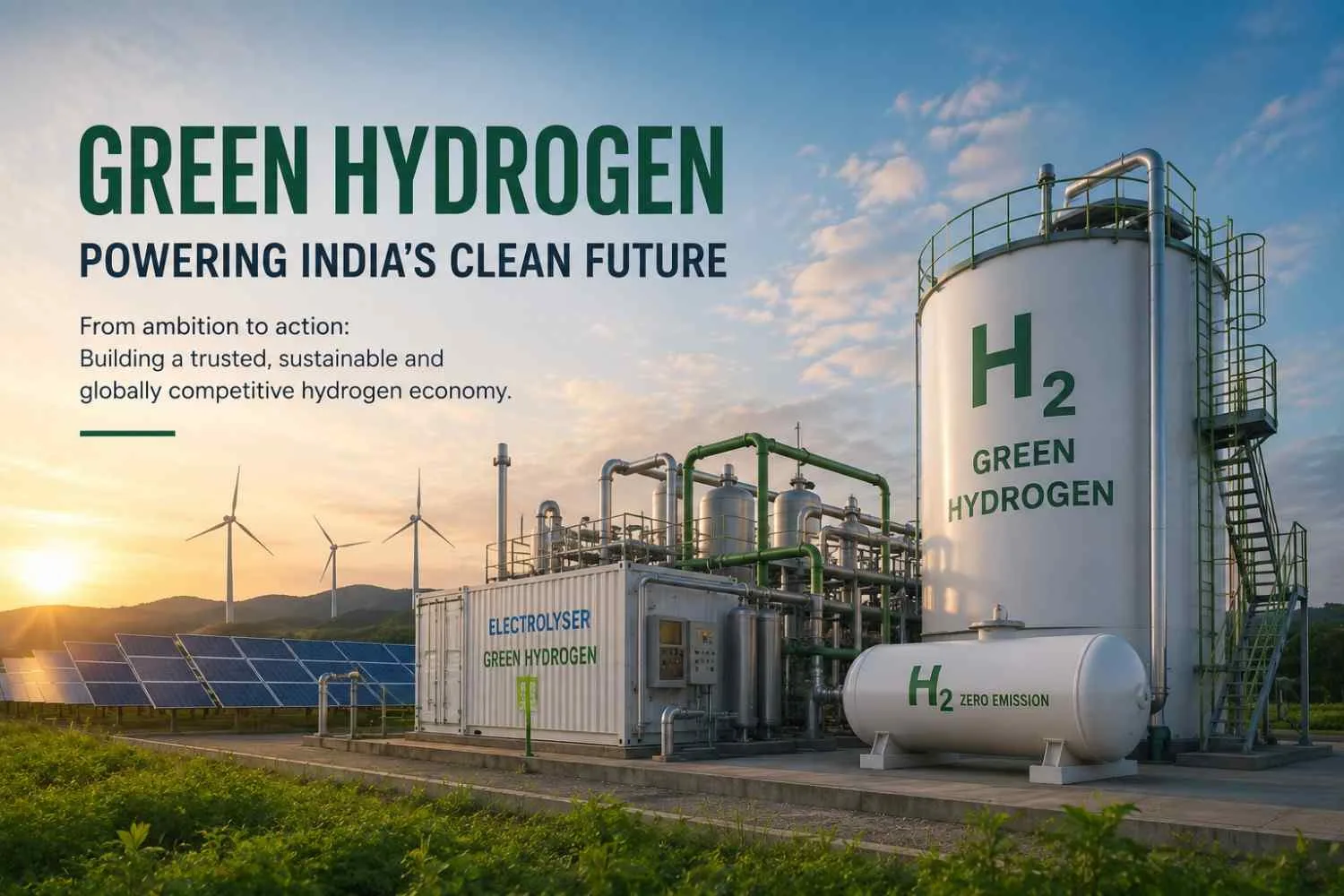
India's green hydrogen ambitions are entering a phase where proving claims may matter as much as making them. Kolkata | 23 July, 2026: India is betting big on green hydrogen, with plans to establish itself as a global leader in the emerging clean fuel sector. As policies take shape and investments grow, the focus is shifting from ambition to execution. Can India's green hydrogen meet global expectations and earn international trust? On 2 July 2026, the Ministry of New and Renewable Energy (MNRE) highlighted India's progress under the National Green Hydrogen Mission, with the focus shifting towards certification, quality assurance, and global market preparedness.Experts say it’s time to move beyond promises. The real test begins now: can producers meet global benchmarks and win the confidence of international buyers? Renewable electricity is used to split water into hydrogen and oxygen to produce green hydrogen. It is seen as critical for decarbonising industries that cannot easily switch to electricity, such as steel, fertilisers, refineries and shipping. Experts argue that making green hydrogen is only half of the task. Proving that it is produced with renewable electricity is equally important, keeping emissions low throughout the process, and meeting certification standards expected by both domestic and global markets. The launch of the certification portal in June marked a significant step in that direction. It aims to help producers track renewable power, assess emissions intensity, and demonstrate alignment with global sustainability benchmarks. Renewable Energy ↓ Electrolyser ↓Green Hydrogen ↓Certification & Testing ↓Storage & Transport ↓Industrial Users(Steel • Fertiliser • Refineries • Shipping • Heavy Mobility) Industry experts believe such transparency will make Indian hydrogen more competitive, especially with export markets raising their environmental bar high. There’s a gap between promise and plant. Many firms have unveiled green hydrogen plans, but commercial production remains the exception.According to analysts, distinguishing between announced projects and commissioned plants will provide investors, policymakers and buyers with a clearer view of India’s real progress.Certification and testing are becoming essential to building trust and credibility in the green hydrogen sector.Experts argue credibility hinges on four things: certified labs, independent checks, digital certification, and clear rules.In global markets, claims are not enough. Without trusted certification, Indian producers may struggle to earn buyers' confidence. The transition is expected to begin with industries that use the most energy and produce the highest emissions. Experts expect fertiliser manufacturers, oil refineries, steel producers, shipping firms and heavy mobility operators to emerge as the first major users of green hydrogen. They offer the greatest potential for emission reductions while also ensuring steady demand for producers. Experts stress that smaller technology firms should not be overlooked.Numerous start-ups are developing electrolysers, storage systems, sensors, monitoring tools and safety technologies to support India’s hydrogen sector. They argue that better access to funding, testing infrastructure, certification support and government-led pilot programmes would enable these companies to engage more effectively in the expanding market. Industry leaders also emphasize that sustained investment in renewable power, transmission infrastructure and hydrogen storage is essential for scaling production sustainably. They argue that certification should cover more than just renewable electricity - it should also track emissions intensity and additionality to confirm that new clean power is being added, not just existing sources. Smaller tech companies also need improved access to testing facilities, certification support, funding and pilot initiatives to integrate into the growing national green hydrogen sector. According to experts, greater collaboration between the public sector, research bodies and industry will drive down costs, accelerate tech development and create a more resilient supply chain. Current ProgressWhat Still Needs AttentionRenewable energy expansion Internationally accepted certificationGreen hydrogen pilot projects More commissioned commercial plantsCertification portal launchedAccredited testing laboratoriesGovernment policy supportStrong domestic demandGrowing investmentsFaster support for technology start-ups The National Green Hydrogen Mission offers India a key opportunity to enhance energy security and cut industrial emissions. But experts say the real challenge begins now! India’s green hydrogen ambitions will be measured by credible certification, clear emissions reporting, robust testing and rising demand - not just by targets. Sources: Ministry of New and Renewable Energy (MNRE), National Green Hydrogen Mission, Green Hydrogen Certification Scheme of India, Bureau of Energy Efficiency (BEE), Press Information Bureau (PIB), Down To Earth (Background), The Hindu BusinessLine (Background) ...Read more
21 Jul 2026
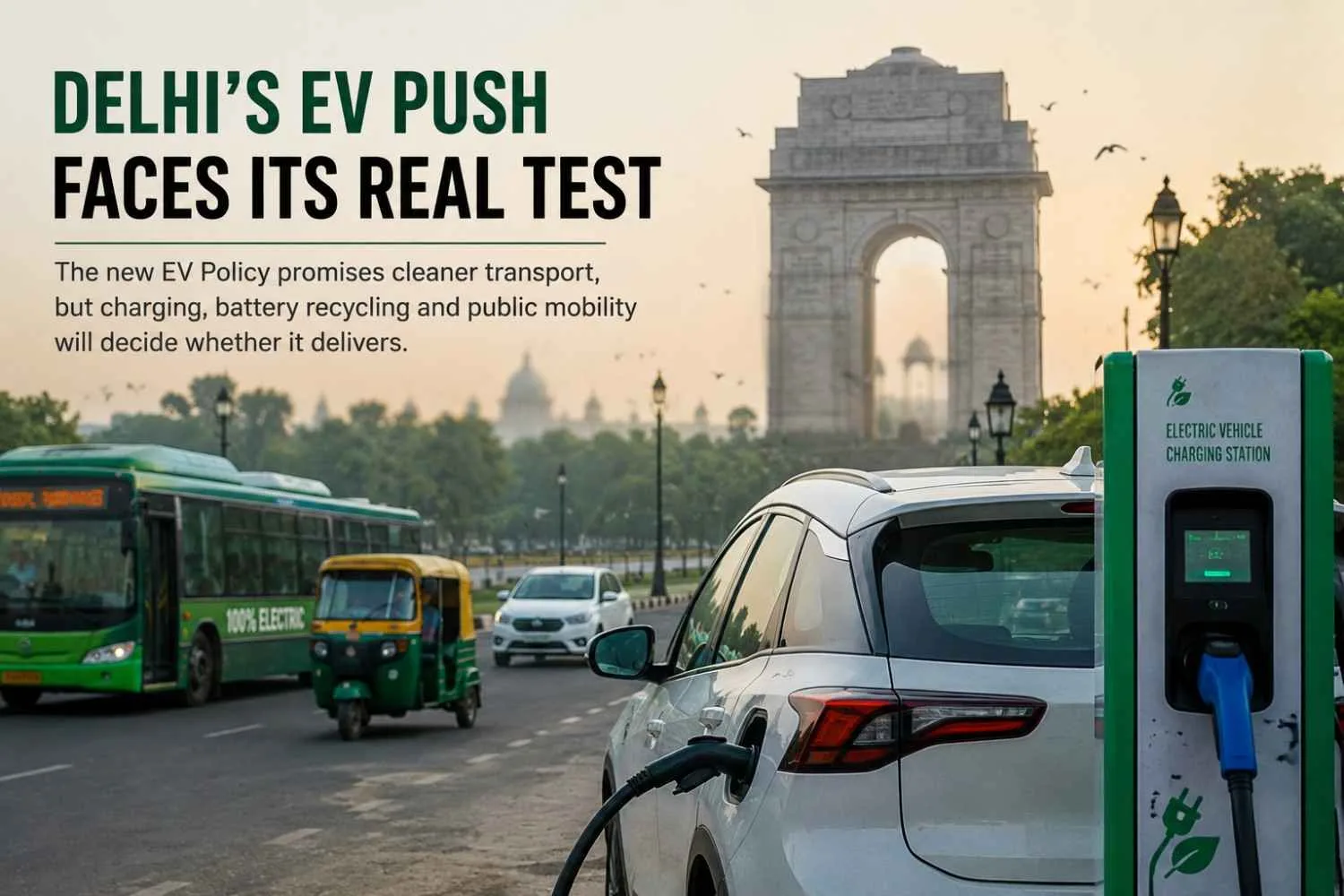
The new EV Policy promises cleaner transport, but charging, battery recycling and public mobility will decide whether it delivers. Kolkata | July 21, 2026: Buying an electric vehicle is getting easier. But is owning one that easy? MeasurePurposePurchase incentives Encourage EV adoption Charging stations Improve accessibility Battery swapping Reduce charging time Support for commercial EVs Faster transition for high-mileage vehicles Battery recycling Reduce environmental impact That’s the central question behind Delhi’s new EV Policy 2026. The plan is to accelerate the shift to cleaner transport through EV incentives, more charging and battery-swapping stations and lower air pollution. But experts say the real test starts once the vehicle is bought. Delhi has struggled with poor air quality for years, as transport continues to be a major source of pollution. The policy goes beyond promoting electric vehicles. It covers two-wheelers, three-wheelers, commercial vehicles and private cars.Policies can boost EV sales. But infrastructure will determine whether the transition succeeds. The real challenge is whether charging networks, battery-swapping services, and the power grid can grow as quickly as per demand. Experts say the policy's biggest impact will come from commercial vehicles, which spend most of its time on Delhi's roads. Delivery riders, auto-rickshaws, and fleet vehicles are on the road far more than private cars, meaning electrifying them could have the greatest impact on reducing transport emissions. Operators like the policy, but charging delays and poor infrastructure are still a daily headache. Delivery workers face long charger queues that hurt both work and wages.Charging service providers say keeping up with demand will mean rolling out public chargers faster, expanding battery-swapping networks, and speeding up approvals for new infrastructure.Every new EV sold today also creates a future battery management challenge. With more EVs on the road, more batteries will soon hit the end of their usable life. According to experts, recycling infrastructure must keep pace with EV sales to prevent long-term environmental harm. A sustainable EV ecosystem will depend on proper battery collection, recycling and reuse. The policy also brings a new challenge: can Delhi's power grid keep pace? As more EVs hit the road, charging thousands of vehicles could place significant pressure on the electricity network, especially during peak hours. Energy experts say Delhi's long-term EV transition will depend on smart charging, greater use of renewable energy, and better management of electricity demand. Real impact will come when EVs are paired with reliable public transport and walkable neighbourhoods. Experts argue that cleaner mobility is not only about replacing petrol vehicles with electric ones.Expanding metro connectivity, improving bus services, building safe cycling tracks and creating pedestrian-friendly roads can reduce traffic while reducing emissions further. Environmental groups have praised the policy's direction but the real challenge begins now. Incentives may encourage adoption, but effective implementation will determine whether the transition succeeds. MeasurePurposePurchase incentivesEncourage EV adoptionCharging stationsImprove accessibilityBattery swappingReduce charging timeSupport for commercial EVsFaster transition for high-mileage vehiclesBattery recyclingReduce environmental impact EVs are only half the story. The real test is infrastructure, recycling, public transport, and planning that brings everything together.Going green in Delhi will take more than just swapping engines for batteries.The success of Delhi's EV transition will not be measured by the number of vehicles sold, but by whether the transport system can support them.Sustainable mobility requires more than electric vehicles - it requires the infrastructure to keep them going. Sources: Government of NCT of Delhi, NITI Aayog Ministry of Heavy Industries, NITI Aayog Ministry of Heavy Industries , Central Electricity Authority Delhi Pollution Control Committee, The Indian Express ...Read more
20 Jul 2026
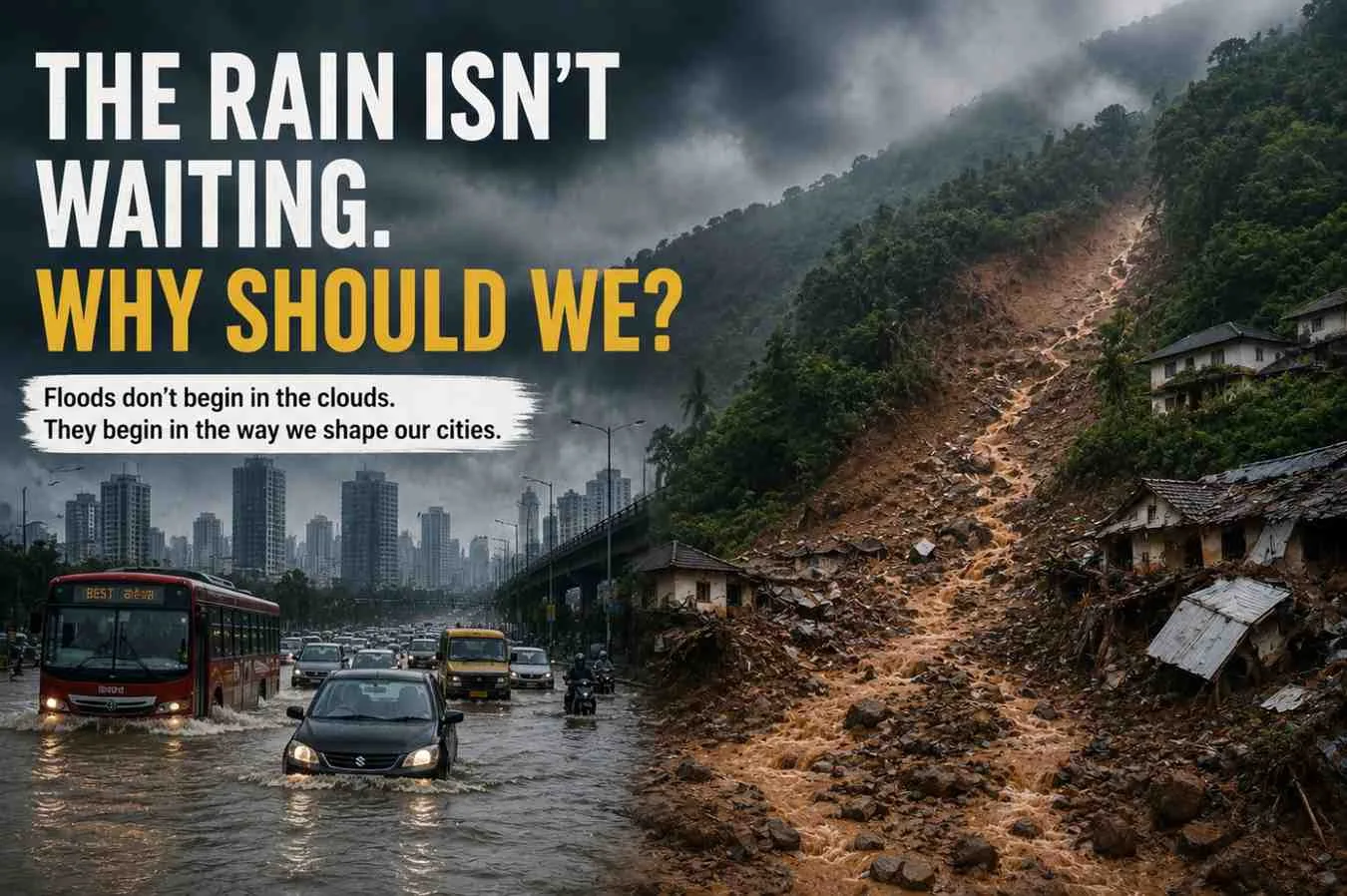
Floods don't begin in the clouds. They begin in the way we shape our cities. By Tiyasha Ghosh Can we keep blaming just the rain for floods? Or are our cities part of the problem even today? The monsoon arrives with hope, every year.Water for our reservoirs, life for our farms, and relief from the heat.However, every year, it leaves behind waterlogged streets, damaged infrastructure, destroyed homes and many lost lives. Two places, two disasters: Mumbai drowned, Wayanad collapsed! One is a city of skyscrapers and the other is a quiet forested district. Different locations but identical warning! The sky changed faster than the concrete below it. Our infrastructure was designed for a climate that no longer exists. We used old rainfall recording system and assumed stability. Today, climate change delivers heavier rain with no warning, everything at once. Rain is arriving faster than we can handle. Cloudbursts are turning mountains into landslide zones. The question isn’t “how much rain this season?” But the question isn’t “how much?” It’s “how fast?” - and can our land and roads survive it? Which leaves us with one question: Whether India’s design standards use up-to-date rainfall data, or continue to rely on old IDF curves that don’t represent today’s climate.According to engineers, many drainage systems were built to handle rainfall expected once in several decades. However, climate records indicate that extreme rainfall events are occurring more frequently. Events once termed "once-in-a-century" storms may be happening much more often now.You can see the impact all over the country. Roads vanish underwater in hours. Drains can’t keep up. Buildings drown even after crores spent on their upgrades. In the hills, the ground itself gives way - mud, rocks and debris crashing into villages below. According to experts, the cause goes beyond rainfall - it points to failures in urban and infrastructure planning. Wetlands that previously stored excess rainwater have been reclaimed for development. Natural drainage channels have been constricted or obstructed. Hillsides have been cut to accommodate roads, hotels and buildings. In many vulnerable regions, declining forest cover has reduced the land’s capacity to absorb water during heavy rainfall. The cost goes far beyond concrete and steel. People lose homes and income. Kids stay out of school. Businesses close. Transport comes to a standstill. Hospitals get overcrowded. These storms are no longer just environmental problems - they hit our economy and society too. Experts argue that India needs to stop treating floods, landslides and waterlogging as separate events. They point to a larger issue like climate change, rapid urbanisation and weak planning coming all together. Unless cities plan for future rainfall instead of past records, every monsoon will bring the same question: Are we preparing for the next storm- or simply recovering from the last one? Heavy Rain ↓ Wetlands & Lakes ↓ Natural Streams ↓ Rivers ↓ Groundwater Recharge (Current Situation) Heavy Rain ↓ Concrete Roads ↓ Blocked Drains ↓ Waterlogging ↓ Floods & Landslides Natural drainage systems once absorbed excess rainwater. Urbanisation has disrupted these pathways, increasing flood risks The rain hasn't changed. The ground beneath it, has.Like water on concrete instead of a sponge, India's cities can no longer absorb what falls from the sky. Nature once managed the rain. Wetlands, forests, floodplains, and open land worked together to absorb, slow, and store water. Today, many of these natural safeguards have disappeared. Wetlands are disappearing beneath housing projects. Floodplains are turning into commercial hubs. Hillsides are being cut for development. And across India's cities, concrete has replaced the open ground that once soaked up rain. With heavy downpour, water becomes stagnant with no outlet for respite. It keeps flowing until it floods roads, homes, and entire neighbourhoods. Floods today are shaped as much by land use as by rainfall, experts say. Here's why. How do engineers decide how big a drain should be? They use Intensity-Duration-Frequency (IDF) curves, which estimate how much rain can fall, how quickly it may arrive, and how often such events are expected. The problem? A lot of these rules were made using old rainfall data. But climate change has changed those patterns. Cloudbursts have grown more frequent and short-duration rainfall has become more intense. For example, 100 millimetres of rain that previously fell for an entire day can now occur within two to three hours. Drainage systems have not evolved in line with changing rainfall conditions. Many continue to operate based on historical rainfall patterns that are no longer valid. Experts say India can no longer rely on yesterday's rainfall patterns. Infrastructure must be designed using today's climate realities. The challenge is even greater in the hills. Unlike cities, where water usually causes flooding, mountain regions face another danger- landslides. Cutting down forests and carving slopes for roads or buildings loosens up the soil. When heavy and long rainfall persists, water soaks in, weakens the slope, and everything collapses. The Wayanad landslide was a painful reminder: when heavy rain hits fragile hills and if we ignore the risks, it can turn deadly.Scientists say this is why climate adaptation can no longer remain separated from urban or infrastructure planning. Every new road, bridge, housing project, and drainage system must answer one question: Is it built for tomorrow's rainfall? ParameterEarlier ClimateCurrent ClimateRainfall PatternSpread over longer periodsIntense rainfall in short burstsDrainage DesignBased on historical rainfallFrequently exceededWetlandsLarger natural storageRapidly shrinkingFlood FrequencyLess frequentIncreasingClimate RiskModerateHigh Rain may trigger the disaster. But building for yesterday's climate could make it inevitable. Experts say India must rethink how it builds its cities. Instead of forcing water to adapt to development, development must adapt to water. And that begins with something many places have lost, i.e., space. Protecting floodplains, wetlands, hills, and stormwater channels isn't just about conserving nature- it's about protecting people. Because when nature's defenses disappear, concrete isn't enough. Experts say cities can't plan for tomorrow using yesterday's flood maps. Updated rainfall data should guide every development decision, and flood-prone areas must be identified before new roads, housing projects, or commercial complexes that are built. Experts also say IDF curves should be updated regularly so drainage systems are built for today's climate- not yesterday's. Technology can also make a huge difference. Floods can't always be prevented. But with accurate forecasts and real-time monitoring, their impact can be reduced through timely warnings and faster action. But technology alone is not enough; good governance is equally important. Experts say flood management shouldn't begin when the rain starts- it should begin long before. Drains need to be cleared before the monsoon, natural waterways kept free of invasions, and construction in high-risk areas are strictly regulated. Most importantly, agencies must work together before the disaster strikes. Communities also play a crucial role. Communities hold critical, lived knowledge like which streets flood first, which drains fail annually, and which areas remain mostly exposed. When local knowledge becomes part of disaster planning, warnings arrive sooner and responses become more effective. Small actions can also create a big impact. Keeping drains free of plastic waste, protecting neighbourhood ponds, planting trees, avoiding construction on natural drainage channels and following official weather advisories all help reduce flood risks. The lesson extends beyond Mumbai or Wayanad. Urban growth and climate change are colliding. One is covering the ground with concrete, the other is bringing heavier rain. What we build today will shape tomorrow's disasters. India has a choice: keep rebuilding after every disaster- or start preventing the next one. Or we can act now by investing in smarter planning, stronger natural defences, modern infrastructure and cities built for a changing climate. Because resilience is not built during an emergency. It is built way before the first raindrop falls. The cost of preparing may be high but the cost of not preparing will be higher. Mumbai and Wayanad were more than disasters - they were warnings. AspectMumbaiWayanadMain HazardUrban FloodingLandslidesPrimary CauseBlocked drainage & urbanisationFragile slopes & intense rainfallNatural Buffer LostWetlands & mangrovesForest coverMain ImpactWaterlogging & transport disruptionLoss of lives & infrastructure For decades, India has responded after the damage has been done. But experts say rebuilding after every flood and landslide is no longer enough in a climate where extreme weather is becoming the new normal. The focus must shift now from disaster response to disaster prevention. The solution begins with working alongside nature - protecting wetlands, restoring rivers, safeguarding forests, and modernizing drainage standards. It also means planning every new project around future rainfall, not outdated climate records. Climate resilience begins with collective action.Governments, businesses, planners, engineers, and citizens all have a major role to play. Because every protected wetland, every clear drain, and every preserved green space make a city stronger when the next storm arrives. The cost of acting may seem high today but the cost of doing nothing is higher. Every flooded street, every collapsed hillside, and every displaced family carry the same message: preparing before disaster is less costly than rebuilding after. Nature has always played by its own rules. Water will always find its way. Rivers will always seek their floodplains. Hills will always become unstable when forests disappear and slopes are pushed beyond their limits. The real choice is whether we build with nature- or keep building against it. Resilience isn't about rebuilding faster. It's about ensuring there's less to rebuild. As India enters a warmer and more uncertain future, every road, bridge, neighbourhood, and city will reflect the choices we make today. Because tomorrow's resilience is being built long before the next storm arrives. DOCUMENT & DATA STACK DocumentPurposeIndia Meteorological Department (IMD) Rainfall DataCompare historical and current rainfall intensity.National Disaster Management Authority (NDMA) – Urban Flooding GuidelinesIndia's official recommendations for urban flood management.Geological Survey of India (GSI) – National Landslide Susceptibility MappingExplains why regions like Wayanad remain highly landslide-prone.IPCC Sixth Assessment Report (AR6)Scientific evidence linking climate change to increasing extreme rainfall events.Ministry of Housing & Urban Affairs (MoHUA)Urban drainage and climate-resilient infrastructure guidelines.Central Water Commission (CWC)Flood monitoring and drainage management data.ISRO National Wetland InventoryWetland loss and land-use changes across Indian cities. Key Data Points: TopicData/ObservationRainfall PatternIndia is witnessing more frequent short-duration, high-intensity rainfall events due to climate change.Urban FloodingExisting stormwater drains in many cities were designed using historical rainfall data that no longer reflects today's climate.WayanadHighly vulnerable due to steep slopes, fragile geology and extreme monsoon rainfall.WetlandsShrinking wetlands and encroached floodplains reduce natural flood storage capacity.Climate AdaptationExperts recommend updating Intensity-Duration-Frequency (IDF) curves using present-day climate observations. ProblemSolutionUrban FloodingRestore wetlandsWaterloggingPermeable pavementsLandslidesAfforestation & slope stabilisationDrain OverflowRegular desilting & drain maintenanceClimate RiskClimate-resilient urban planning Sources:India Meteorological Department (IMD) National Disaster Management Authority (NDMA) Geological Survey of India (GSI) Central Water Commission (CWC) Ministry of Housing & Urban Affairs (MoHUA) Intergovernmental Panel on Climate Change (IPCC AR6) ISRO National Wetland Inventory The Times of India (base report) ...Read more
17 Jul 2026
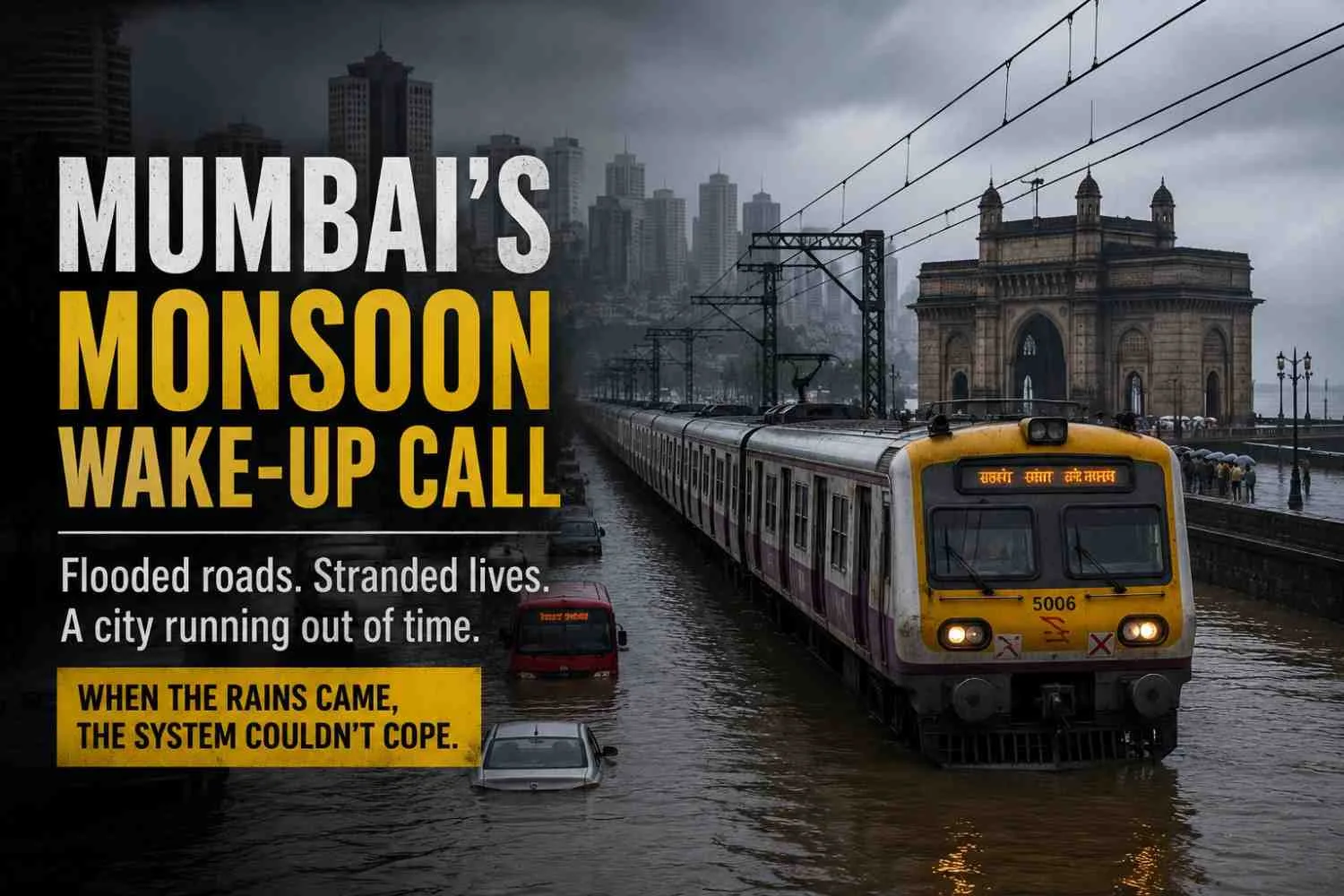
The floods exposed more than clogged drains. They revealed a city struggling to keep pace with a changing climate By Tiyasha Ghosh Kolkata | July 17, 2026: Rain isn’t new to Mumbai. So why is the city still caught off guard? Why does it take just a few hours for roads to become rivers? And if we face this every year, why are we still asking the same questions? Because intense rainfall between June 30 and July 6 brought large parts of Mumbai to a standstill and these questions returned once again!Roads were submerged, train services were disrupted, flights were delayed, and thousands of people found themselves stranded as water quickly flooded homes, markets, and streets. Roads were underwater, trains were hit, flights were delayed, and thousands were stranded as water rushed into homes, markets and streets. But this isn’t just about another rainy week! Experts say it’s not just about how much it rains anymore. What matters is how quickly it falls, where it falls, and if the city can cope or not. In many areas, the intensity of rainfall has outpaced what old drainage systems were built for. Mumbai's drainage system was built decades ago based on rainfall patterns that has changed significantly over time. Today, short but extremely heavy cloudbursts dump large volumes of water within hours, overwhelming stormwater drains before they can carry the water away. At the same time, rapid urbanisation has worsened this issue. The wetlands that soaked up rainwater have vanished. Concrete buildings, roads and parking areas have replaced open land. Instead of draining into the soil, rain now flows over hard surfaces and quickly floods low-lying neighbourhoods. Experts additionally identify solid waste as an escalating concern. We dump plastic, construction waste and household trash into drains all year. So, when the monsoon arrives, the clogged drains don’t just carry water away - they spill it right into people’s houses. The ordinary people suffer the most. Transport shutdown means lost wages for daily workers, missed classes for students, and hours of closure for small businesses. People in informal settlements suffer the most - floodwater gets into houses, damages property, and spreads water-borne illnesses. According to urban planners, Mumbai should shift from tracking only daily rain to measuring rainfall intensity. New drainage systems must be designed for extreme downpours instead of outdated estimates. Experts also say cities should regularly check if drainage capacity matches actual rainfall intensity. These checks can identify problems before the monsoon, not after the roads have already been flooded. Residents and infrastructure experts say that bigger drains alone won’t solve flooding. We also need to restore wetlands, protect rivers and mangroves, improve waste management, add more permeable surfaces, and strengthen disaster planning at the grassroots level. Small steps by residents can make a huge difference. Clearing litter from drains, reporting blockages, avoiding construction debris dumping, and obeying flood advisories will help cut down local flooding. Mumbai just got another wake-up call - climate change means heavier rain. The good news? Not every flood is destiny. Plan better, build stronger, develop smarter, and we can take the hit out of the next storm. We know the rain will come back, hard .The only thing left to ask is: will Mumbai be ready this time? Source: The Economic Times (9 July 2026)India Meteorological Department (IMD)Brihanmumbai Municipal Corporation (BMC). ...Read more
17 Jul 2026
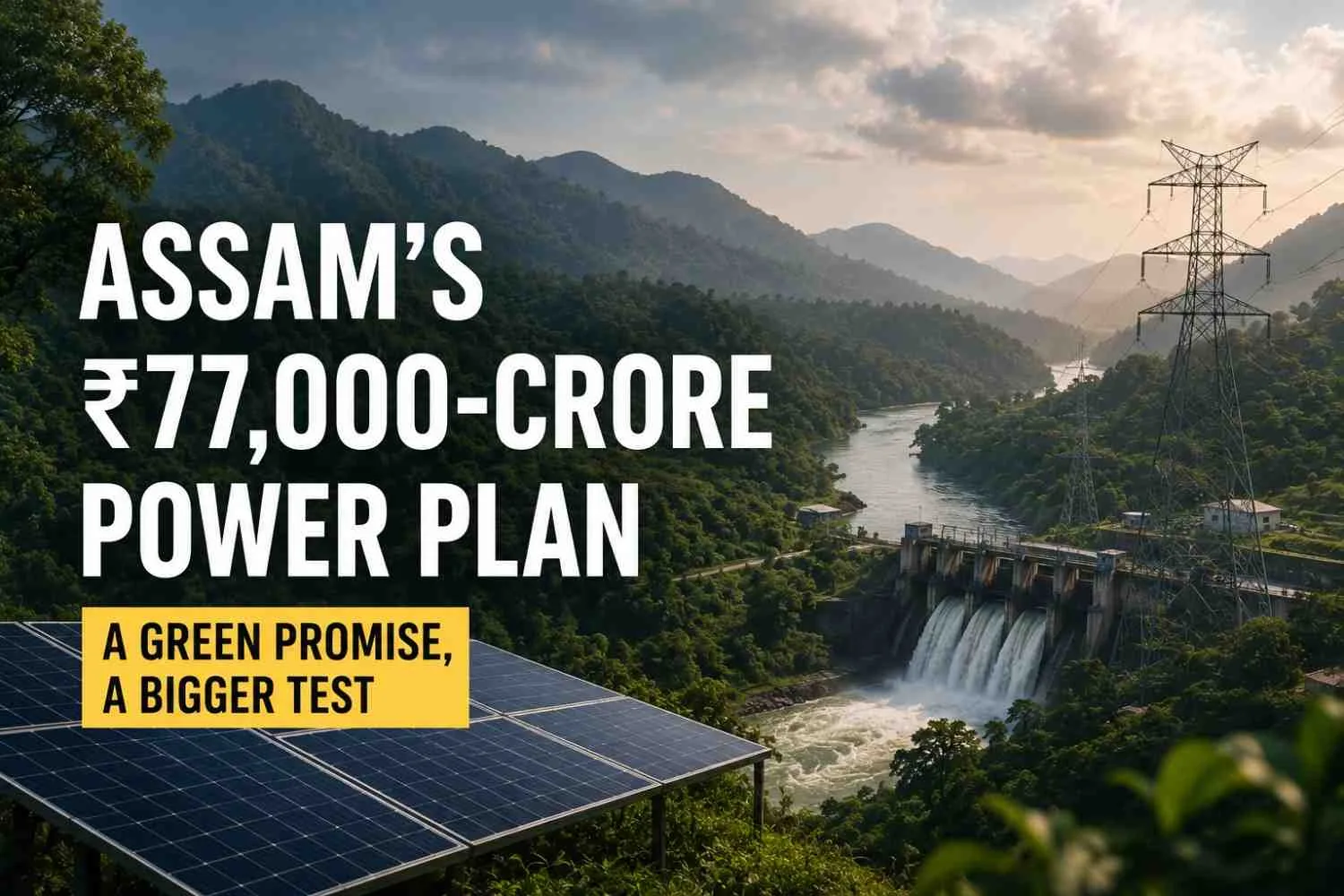
Massive investments promise clean power, jobs and growth. But can development keep up with nature? By Tiyasha Ghosh Kolkata | July 17, 2026: Can one state reshape India’s sustainable energy roadmap? Can thousands of crores drive both growth and environmental protection? And can the Northeast emerge as India’s next green powerhouse? These questions sit at the heart of Assam’s ₹77,000-crore power investment plan - one of the largest clean energy initiatives announced by any Indian state. From hydropower and solar to batteries, transmission, and conventional plants - the investment is built to turn the Northeast into a powerhouse for India’s energy transition. The moment couldn’t be more critical. India's electricity demand is rising every year.EVs are on the rise. Data centres are booming. ACs are now a household need. With industries growing and cities consuming more, electricity demand has never been higher. Balancing increasing electricity demand with the goal of coal reduction represents one of India’s most pressing challenges. Assam aims to be a key part of the answer. The proposed projects are designed to boost clean power generation, reinforce the national grid, and enhance energy security.New power highways will carry electricity from the Northeast to the rest of the country. Battery projects will save clean energy now so we can use it when demand spikes.Together, this is about steadier power today and a cleaner future tomorrow. This goes beyond just funding and megawatts. The central challenge is ensuring that rapid development does not compromise the unique ecological assets of the Northeast. Hydropower projects typically need dams, and transmission lines often run through forests and ecologically fragile zones. Assam and its neighbouring states have rich biodiversity, large river systems, and wildlife habitats that sustain both nature and local communities. Environmental experts and civil society groups are therefore urging thorough ecological studies before proceeding with major projects. According to them, protecting forests, rivers, and biodiversity is as important as growing renewable energy. Another key question is whether these investments will actually benefit local communities. While construction brings short-term employment, experts argue that real success requires local industry, a skilled workforce, and sustainable jobs for people throughout the region.If local businesses, engineers, and workers are included in the clean energy supply chain, Assam’s investment could fuel economic growth for decades. According to experts, successful implementation is key to whether the investment works or not.Speeding up approvals isn’t enough. We also need strong transmission networks, modern battery storage, efficient project management, and clear environmental safeguards to work together.Without these basics in place, even big investments could fall short of providing reliable electricity. For ordinary citizens, the outcome matters more than any investment figure. A stronger electricity network can reduce power cuts, improve access to clean energy, create employment and support new industries. Stronger infrastructure may draw business investment to the Northeast and expand economic opportunities there. With India moving faster toward clean energy, Assam is now at a key turning point.This isn’t just about electricity. The ₹77,000-crore bet is on whether clean energy and growth can go hand-in-hand with responsibility. If we get the balance right, Assam could do much more than power the Northeast - it could help drive India towards a greener and sustainable future! Source: The Times of India (10 July 2026) Ministry of New and Renewable Energy (MNRE); Ministry of Power, Government of India. ...Read more
14 Jul 2026
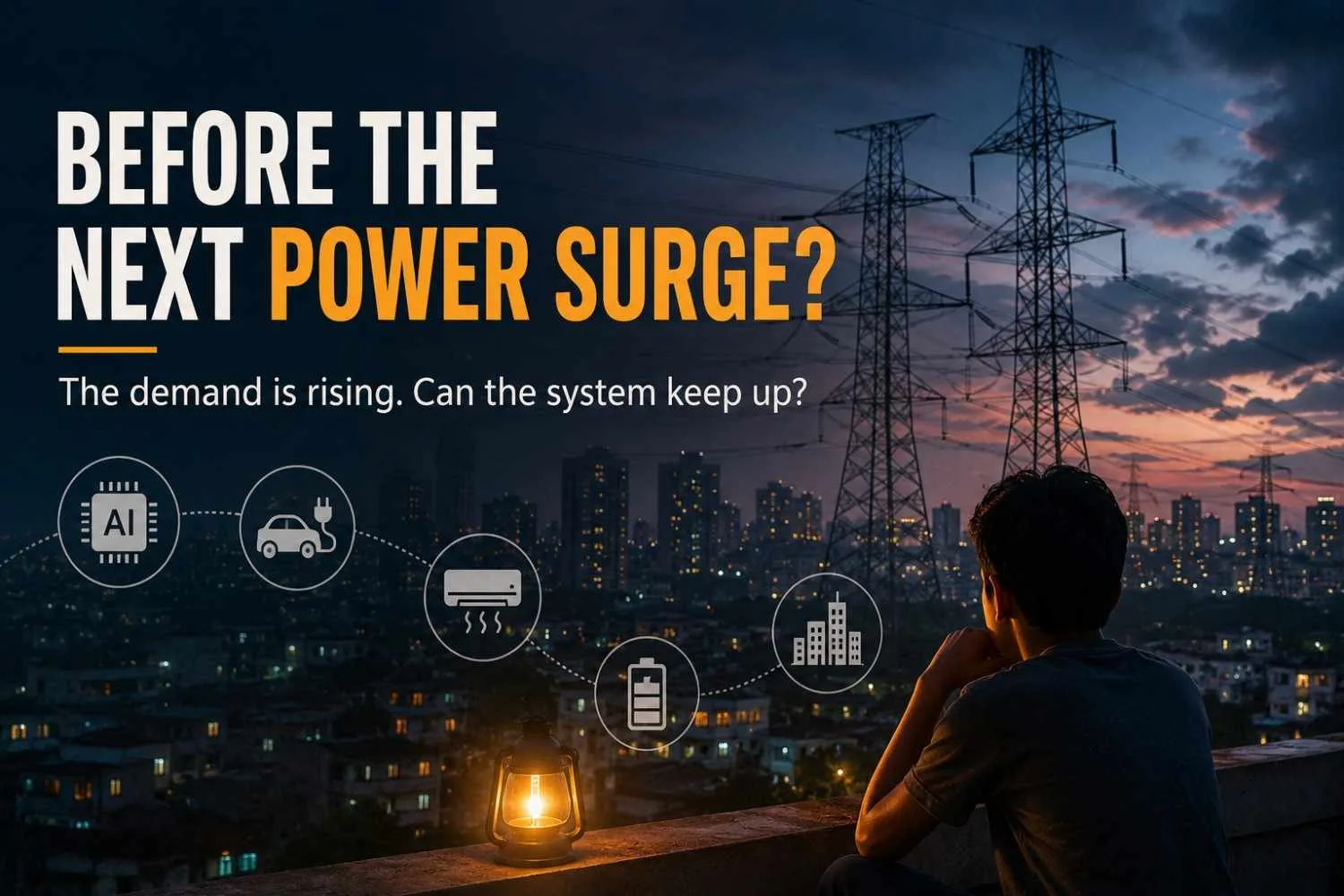
The demand is rising. Can the system keep up? Have you ever thought about a day when your phone won't charge, your office loses its electric supply, or your electric car has nowhere to charge? That seems unlikely. But as India is racing towards a digital future, one important question is still arising in the background, i.e., Will our power supply be sufficient when demand increases? The concern is no longer about using more electricity. It is about whether India can produce, store, and deliver sufficient power to support a rapidly evolving nation or not. According to a Reuters report published on 8 July 2026, India has been preparing for a peak electricity demand of nearly 300 gigawatts (GW) by 2027. This estimate is based on remarks made by the Union Power minister, who highlighted the urgent need to strengthen the country's clean-energy ecosystem before the demand reaches record levels. IndicatorCurrent StatusProjected / Future OutlookPeak Electricity DemandCurrent peak demand continues to rise annually.Expected to reach ~300 GW by 2027.Renewable Energy CapacityIndia has added significant solar and wind capacity in recent yearsFurther expansion is needed to meet rising electricity demand.Major Demand DriversIndustries, households, and urban growth. AI, data centres, electric vehicles, cooling needs, and economic growth.Key ChallengesGrid expansion, storage, and land acquisition.Faster transmission, battery storage, domestic manufacturing, and project approvals will be crucial. So, why is electricity demand rising so quickly? The answer lies in the way India is growing. Artificial Intelligence (AI) is growing fast. Data centres run 24/7. People are switching to electric vehicles more often. As the temperature rises, the use of air conditioners and coolers increases. At the same time, industries, businesses, and cities continue to grow, driving power consumption to record levels. This rising demand is often seen as a sign of economic progress. But every action has its own consequences. The question is- Can India expand its utility infrastructure fast enough to keep up with it? Experts believe that just generating more electricity will not solve the problem. The country must focus on three key pillars—power generation, energy storage and transmission networks. Just like how a water supply system works. Generating electricity is just the first step. It should also be stored even when demand is low. And then seamlessly transported to homes, industries, hospitals, and businesses when there’s a sudden shift in demand. Without stronger transmission lines and storage facilities, sufficient electricity generation might not be enough to prevent shortages during peak hours. Another important factor is domestic production. According to the Union Power Minister, India needs to boost domestic manufacturing of solar panels, batteries, and clean-energy gear. This would reduce dependence on imports, strengthen energy security, create employment opportunities, and support long-term industrial growth. However, the journey towards 300 GW cannot be achieved without obstacles. According to the Reuters report, there are several issues that may slow the progress. Expanding transmission networks requires time and investment. For renewable energy projects, land acquisition remains a challenge. Delays in getting supplies, financial problems, and global supply chain issues can also slow down clean-energy development. These challenges must be addressed if India hopes to build a reliable and next-gen power grid. The report also points towards another emerging market of electricity, i.e., digital infrastructure. Technologies like AI, cloud computing and big data centres use huge amounts of electricity every day. As India's digital economy continues to expand, the electric infrastructure must grow along with it. Okay, but how does this affect us? The electricity we use every day without noticing will play an even more crucial role while going forward. Reliable power supports homes, schools, hospitals, public transport and businesses. A stronger renewable energy network can reduce dependency on fossil fuels, improve air quality, boost EV adoption and help India build a more sustainable future. But this transition cannot happen overnight! It requires smart planning, faster execution, continuous investment, and cooperation between governments, industries, developers, and citizens. For India, the biggest energy challenge is no longer in the future tense, as it is happening now. The road to 300 GW is not just about generating more electricity. It's about creating an energy system that powers future growth while protecting the environment. India’s road to 300 GW Projected peak demand~300 GW by 2027Main demand driversAI, data centres, EVs, cooling, economic growthKey focus areasGeneration, storage, transmissionMajor bottlenecks Land, procurement, financing, supply chainsNeeded responseStronger grid, storage, and domestic manufacturing The real question isn't about whether India will need more power or not. Instead, the question is: Will India be prepared in time? Source Adapted from a Reuters report (8 July 2026) based on remarks by the union Power Minister, with supporting reference from MNRE physical progress updates. ...Read more
14 Jul 2026
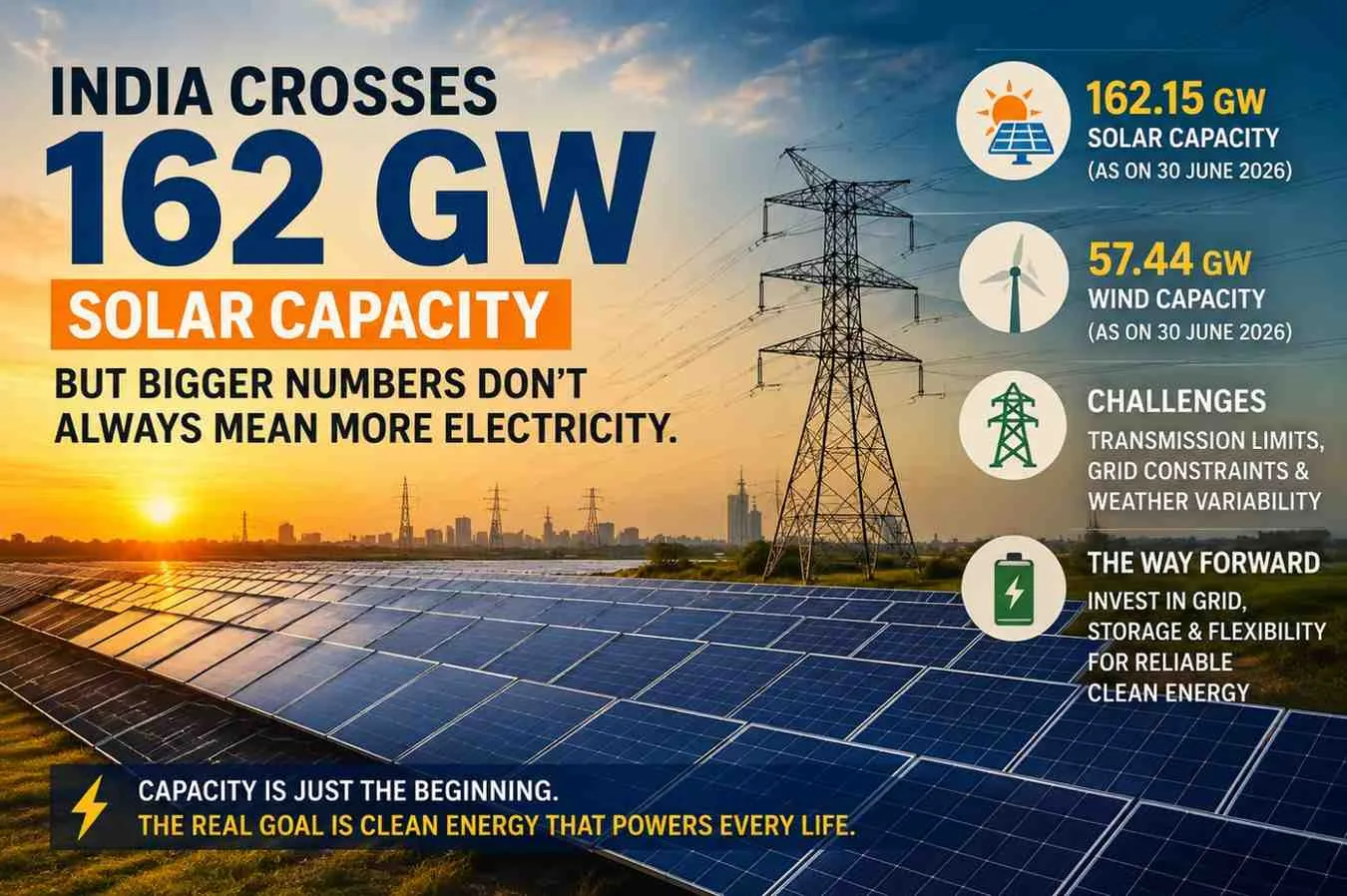
India’s renewable energy dashboard grows a little greener every month. In its latest achievement, it has reached another milestone. According to the latest physical progress update issued on 8th July by the Ministry of New and Renewable Energy (MNRE), India’s cumulative solar capacity has surged to 162.15 GW. Driven by the addition of over 5.1 GW in June alone. Wind Capacity currently stands at 57.44 GW. Highlighting Solar's progressive increase as the nation's fastest-growing source of renewable energy. At first glance, the remarkable advancement is the main focus of the picture. Yet beneath this huge milestone lies a very important question: Is the addition of renewable capacity directly proportional to the generation of more electricity? Not necessarily. The installed capacity simply measures the maximum amount of electricity produced by a power plant under ideal conditions. The real-world challenges are not accounted for. Power is generated by the Solar panels only when the sun is shining. Wind turbines depend on favourable weather. Both of which can face transmission constraints preventing the full absorption of the electricity generated. Installed CapacityElectricity GenerationIndicates the maximum power generation capability of a power plant under ideal conditions.Indicates the actual electricity produced and supplied over a period of time.Measured in MW or GW.Measured in MWh, GWh or Billion Units (BU).Represents infrastructure that has been built.Represents electricity actually delivered to consumers.Does not account for weather, maintenance, curtailment or transmission bottlenecks.Depends on sunshine, wind availability, grid capacity, storage, and electricity demand. The latest June figures unveil another clear trend. With the steady increase in solar, other renewable technologies struggle to keep up. Following this, Wind recorded decent additions, but other technologies such as biomass, small hydro, and waste-to-energy have seen little to no significant growth. Resulting in a renewable energy portfolio progressively driven by a single technology. The sector continues to gain momentum, especially as India works towards its goal of accomplishing 500 GW of non-fossil electricity capacity by 2030. Experts note that capacity additions alone cannot ensure a successful energy transition, even with the rapid expansion of solar capacity. To ensure reliable and efficient delivery of renewable electricity, the investments in transmission infrastructure, battery storage, and grid flexibility are no less critical. TechnologyAddition in June 2026 (MW)FY 2026–27 Addition (Apr–Jun) (MW)Installed Capacity (30 June 2026)Solar Power5,105.5611,891.30162,152.00 MW (162.15 GW)Wind Power636.351,348.5557,443.39 MW (57.44 GW)Biomass (Bagasse)0.000.009,821.32 MWBiomass (Non-Bagasse)0.000.001,048.84 MWWaste-to-Energy0.000.00324.24 MWWaste-to-Energy (Off-grid)0.001.04554.16 MWSmall Hydro Power2.4010.405,181.76 MWTotal RE (Excluding Large Hydro)5,744.3113,251.29236,524.72 MW Source: MNRE Physical Progress Report (as on 30 June 2026). The latest MNRE data reflects the fast mobility of the country towards a cleaner energy future. However, it highlights the next challenge: to ensure the transition of every newly installed megawatt into usable and dependable power for millions of people. At the end of the day, a gigawatt installed is only the beginning. The ultimate benchmark of success is the amount of clean electricity that powers everyday life. ...Read more
08 Jul 2026
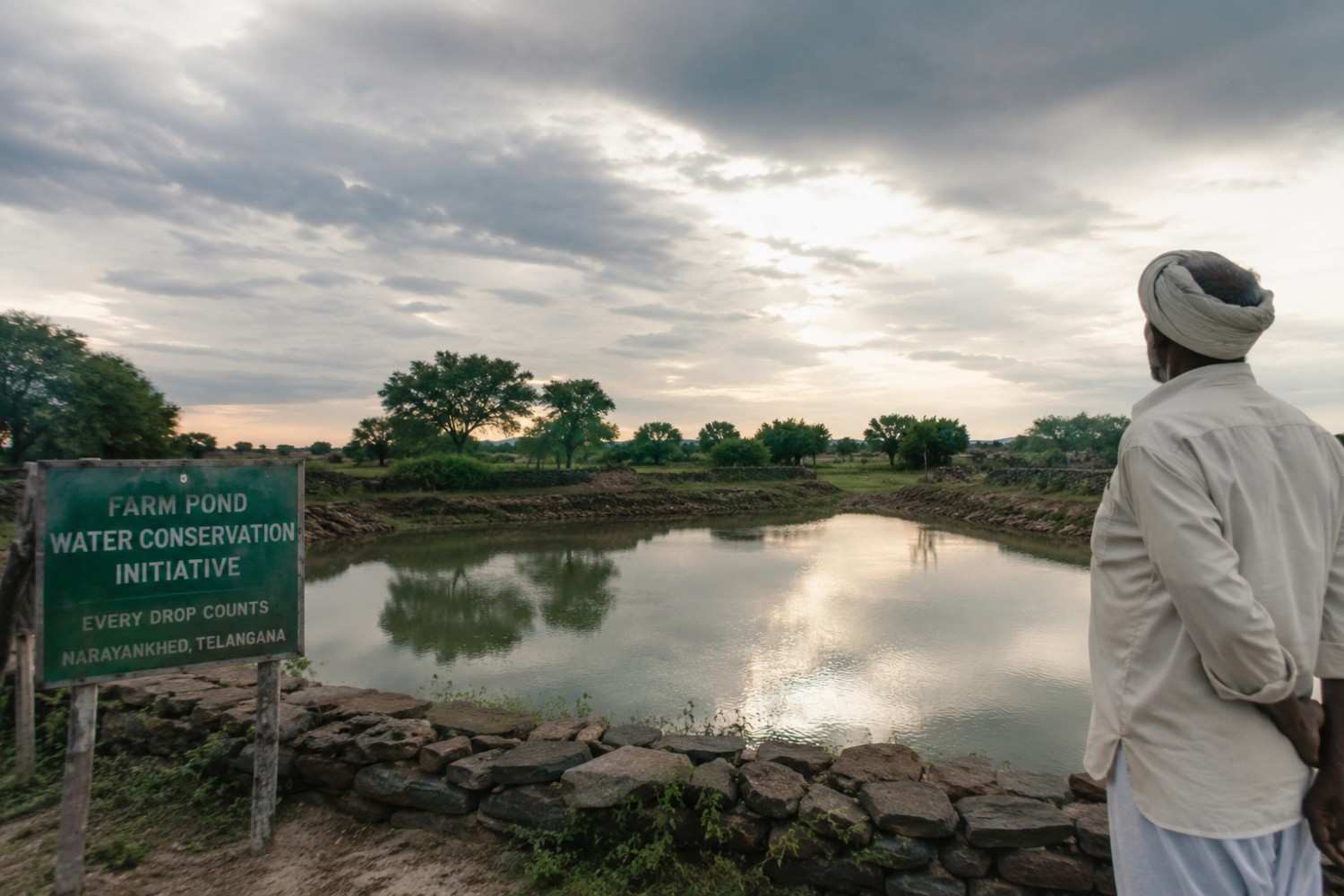
An unexpected initiative is helping villages make every drop of rain count. How can a village receive rainfall every year and still struggle for water? It’s a question – many parts of India continue to face. Wells run dry. Crops suffer. And by the summer season, lack of water becomes a major reason to worry! This is a real-life story covering a small town - Narayankhed, Telangana. The problem wasn’t lack of rain. It was lack of water conservation. Most of the rainwater flowed away before it could reach the roots of the ground. Years passed, and this cycle continued. Farmers were aware of the problem. But addressing the problem wasn’t easy. Till someone showed up unexpectedly from an unexpected place as their ray of hope. Every Friday night, Dr P. Sudhakar Naik, an IRS officer posted in Mumbai, boarded a bus to Telangana. For seven consecutive weekends, he travelled about 600 kilometres to work with the villagers facing the crisis. Environmentalist Paladugu Gnaneshwar, along with the local officials and residents, came together with him and helped him build farm ponds, soak pits and stone barriers. Simple structures. Simpler Ideas. But ones that could preserve rainwater and stop it from being wasted. And the cost? JUST 2 LAKHS! The impact? Water that was nowhere to be seen now has a chance to stay. Groundwater levels are improving gradually. Farmers are becoming hopeful. And villages that suffered miserably due to lack of rain are now learning how to make every drop count. The story carries a larger and more impactful message. Water scarcity isn’t always caused by less rainfall. Sometimes, it’s about how we conserve the rain we already receive. SOURCE- This report is based on a real-life story published by The Better India, an independent digital media platform known for reporting grassroots innovations and addressing positive social changes across India. ...Read more
08 Jul 2026
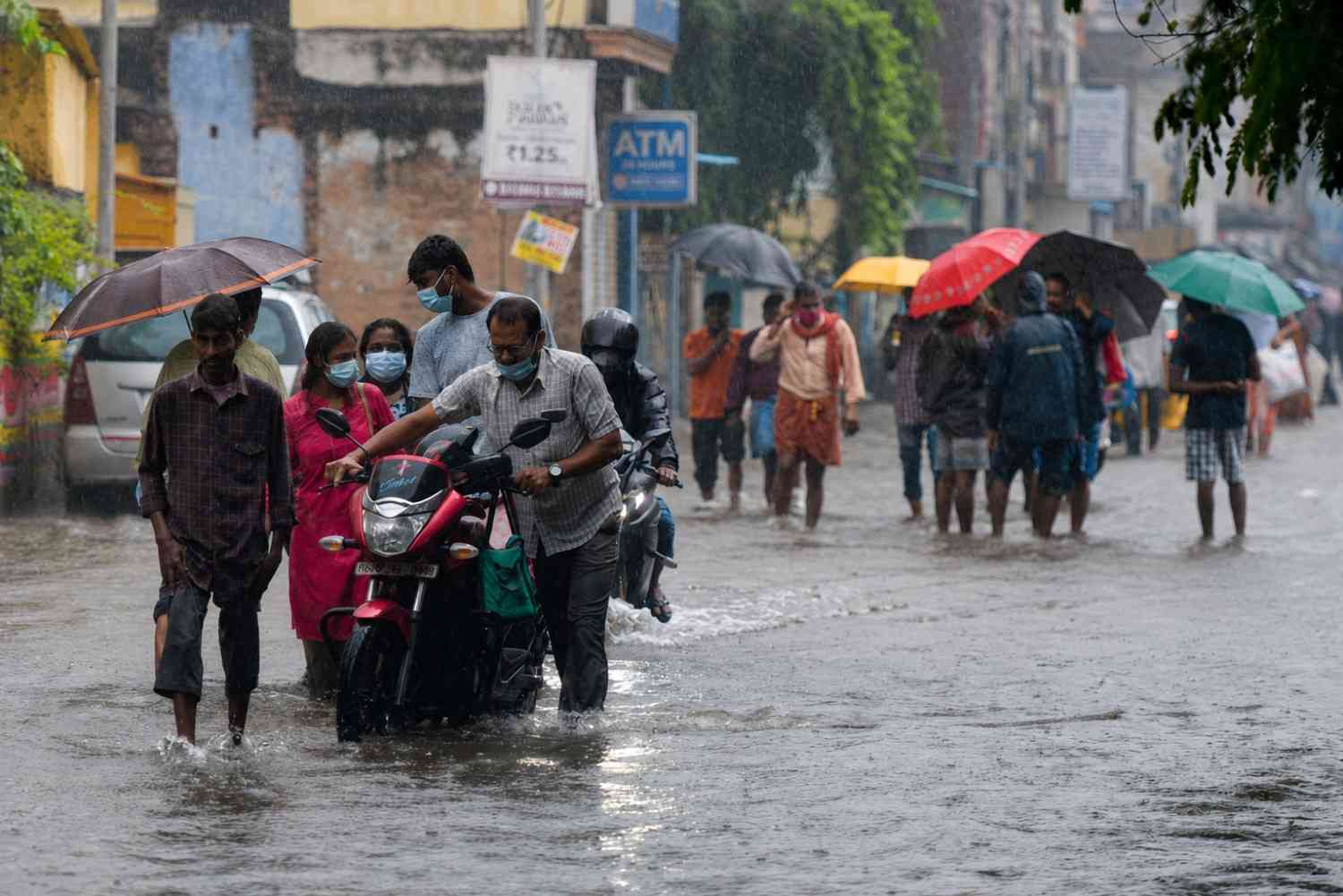
Image courtesy: Imagesbazaar Expensive grocery bills? Neighbourhoods hotter than usual? Unpredictable rains? Well, it’s not your imagination, it’s the present reality. India has been warned about the probability of receiving below-normal rainfall in July 2026. This made June 2026 the driest in over a century. Why you may ask? That is because a monster is awakening in the open waters of the Pacific Ocean for months. Delayed crop sowing, rising vegetable prices and increased pressure on water resources – all of which are influenced by one climate event. A natural climate pattern which happens when sea surface temperatures become warmer in the central Pacific Ocean. How can something so far away, so deep affect India? Distance doesn’t matter; the air circulation is altered at a global level. This leads to the weakening of the southwest monsoon and uneven rainfall patterns in South Asia. This climate event or pattern is known as El Nino. This year, the increasing intensity of El Nino conditions has been observed by the meteorologists. Having triggered concerns related to uneven heavy showers during the crucial monsoon season. But the question is WHY should one care? One should, because this is where your grocery expenses become relevant. Monsoon is more than just a regular season for India’s farmers – it is the backbone of agriculture. The sowing of important crops such as rice, soybean, cotton, and maize may postpone due to delayed rainfall. There have been reports of slower kharif crop planting compared to last year because of late rainfall. When agricultural production becomes less, the consumers pay the price. Decrease in crop yield leads to increase in prices of vegetables, grains, and other food items. This eventually impacts the local market. Image courtesy: Imagesbazaar Another growing concern is Water. Multiple reservoirs depend on monsoon rainfall to restore supplies. Several regions may face lack of water availability if rainfall remains below normal. Which may lead to stricter water management measure both in rural and urban areas. Why does the weather drastically change on a day-to-day basis? One of the recent phenomena faced by some regions in India is very heavy rainfall and thunderstorm one day and heatwaves the very next day. This is the effect of El Nino. One of its most confusing aspects is that it doesn’t just cause less rainfall. It often changes how rain falls. Rather than even showers spread across the whole season, rainfall may occur as sudden bursts of intense storms followed by dry weather conditions. This may cause flash floods in one region while water shortages on another. Such inconsistent weather results in difficulty in irrigation planning by farmers and drainage system management in city authorities. Rise in global temperatures is causing the impacts of El Nino to be more pronounced even though El Nino is a naturally occurring climate cycle. More moisture is held by a warmer atmosphere intensifying extreme weather conditions. Heatwaves become hotter and rainfall becomes increasingly unpredictable. Now, what do we await? The next few weeks will be very crucial for India’s monsoon. El Nino is closely monitored by India Meteorological Department (IMD) since it is expected to persist through the following months. However, some regions may have an improvement in rainfall. For the common people, El Nino is not just a scientific term discussed by the meteorologists. It may be the rising expense of vegetables, lack of water availability in reservoirs, prolonged heat resulting in high electricity bills, and how difficult it is to cope with the uncertain climate changes for the farmers. As the monsoon unfolds, the echoes of a warming Pacific Ocean remind us of a simple truth: in an interconnected climate, even the most distant changes can hit closest to home. Sources World Meteorological Organization (WMO) – Prepare for El Niñohttps://wmo.int/news/media-centre/wmo-prepare-el-ninoScroll.in – El Niño likely to intensify as India's monsoon advances slowlyhttps://scroll.in/article/1093913/el-nino-likely-to-intensify-as-indias-monsoon-advances-slowlyDown To Earth – Tackling the trilemma of El Niño, stagflation and shrinkflationhttps://www.downtoearth.org.in/climate-change/tackling-the-trilemma-of-el-nino-stagflation-and-shrinkflation ...Read more
11 May 2026
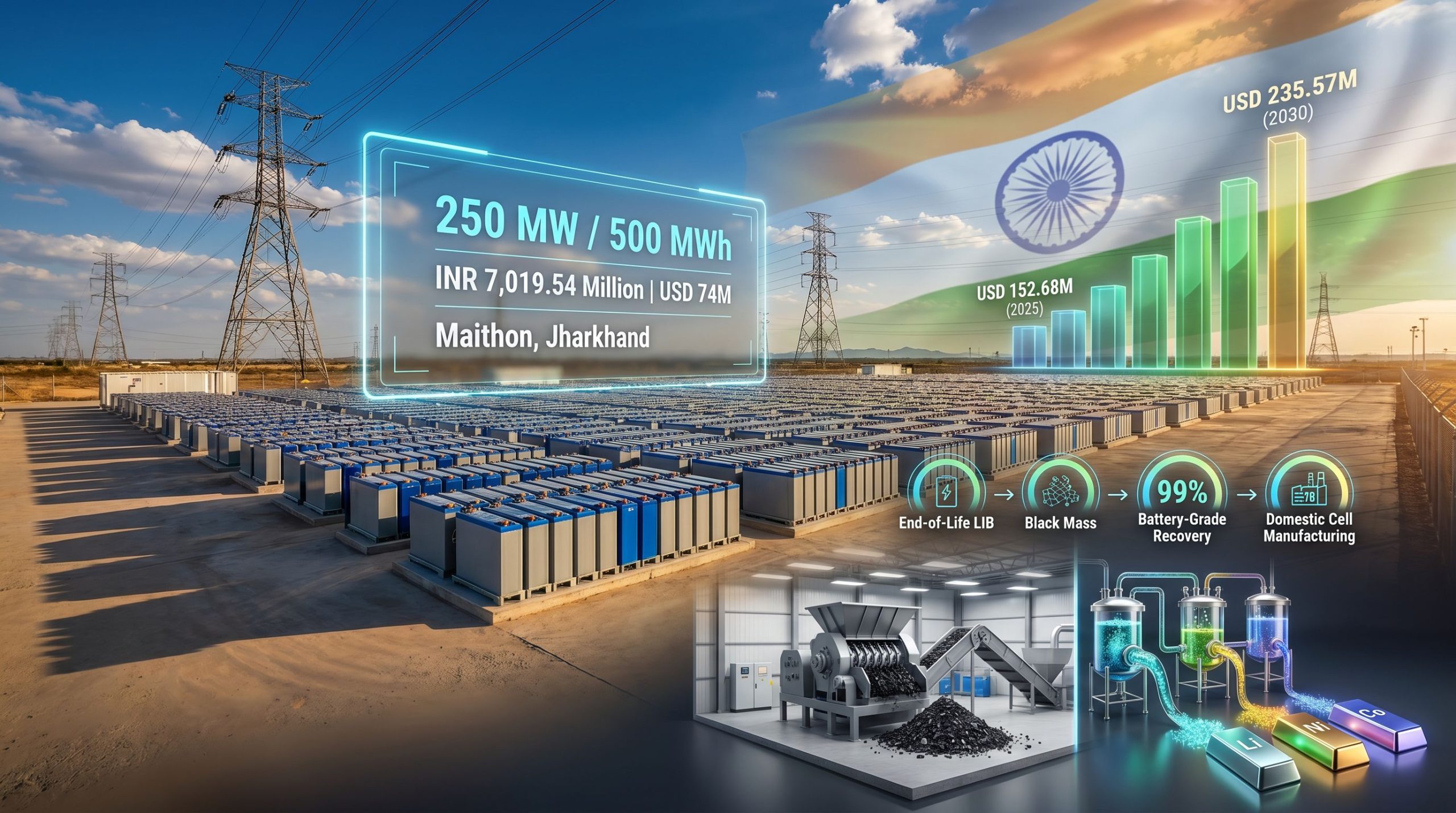
The Battery Waste Management Rules (BWMR) 2022, and their subsequent 2025 amendments, represent a transformative shift in India’s environmental and industrial policy, evolving from a mere waste-disposal framework into a strategic pillar for securing the nation’s critical minerals supply chain. Under the mandate of the Ministry of Environment, Forest and Climate Change (MoEFCC), these rules have institutionalized the principle of Extended Producer Responsibility (EPR), compelling manufacturers, importers, and brand owners—collectively termed "producers"—to take full accountability for the entire lifecycle of batteries, including portable, automotive, industrial, and electric vehicle (EV) types. Central to this framework is the aggressive escalation of material recovery targets; for instance, recyclers are now required to meet a 70% material recovery rate in FY 2024-25, rising to 80% by FY 2025-26, which effectively creates a "secondary mine" within the domestic economy. This is particularly vital as India navigates a high import dependency for primary sources of lithium, cobalt, and nickel—the "big three" minerals essential for the lithium-ion batteries that power the clean energy transition. By mandating that a specific percentage of recycled materials be reintegrated into new batteries from FY 2027-28 onwards, the government is forcing a circular loop that reduces reliance on volatile global markets and geopolitical risks. The 2025 amendments further sharpened these tools by introducing mandatory digital traceability through unique barcodes or QR codes on every battery pack, linking them to a centralized Central Pollution Control Board (CPCB) portal to eliminate the "leakage" of waste into the informal sector, which historically handled the majority of India's battery waste. This formalization is supported by the National Critical Minerals Mission (NCMM), approved in early 2025, which specifically identifies "recovery from end-of-life products" as a strategic priority alongside domestic mining and overseas asset acquisition. As India aims for significant expansion in annual battery production by 2030, the demand for cathode active materials is projected to grow exponentially; in this context, the BWMR serves as a safeguard, ensuring that valuable minerals like manganese and graphite are not lost to landfills but are instead harvested to fuel domestic value addition. Furthermore, the rules provide a legal pathway for "second-life" applications, allowing EV batteries to be refurbished for stationary energy storage before final recycling, thereby maximizing the utility of every gram of imported lithium. Through the interplay of strict EPR credit trading, heavy environmental compensation penalties for non-compliance, and the development of indigenous hydrometallurgical recycling technologies, India is building a resilient, self-reliant ecosystem. This integrated approach not only addresses the environmental hazard of toxic heavy metals like lead and cadmium but also positions battery recycling as a multi-billion dollar industry, ultimately ensuring that India's journey toward its 2070 Net Zero goal is powered by a secure, circular, and strategically independent critical minerals supply chain. ...Read more