
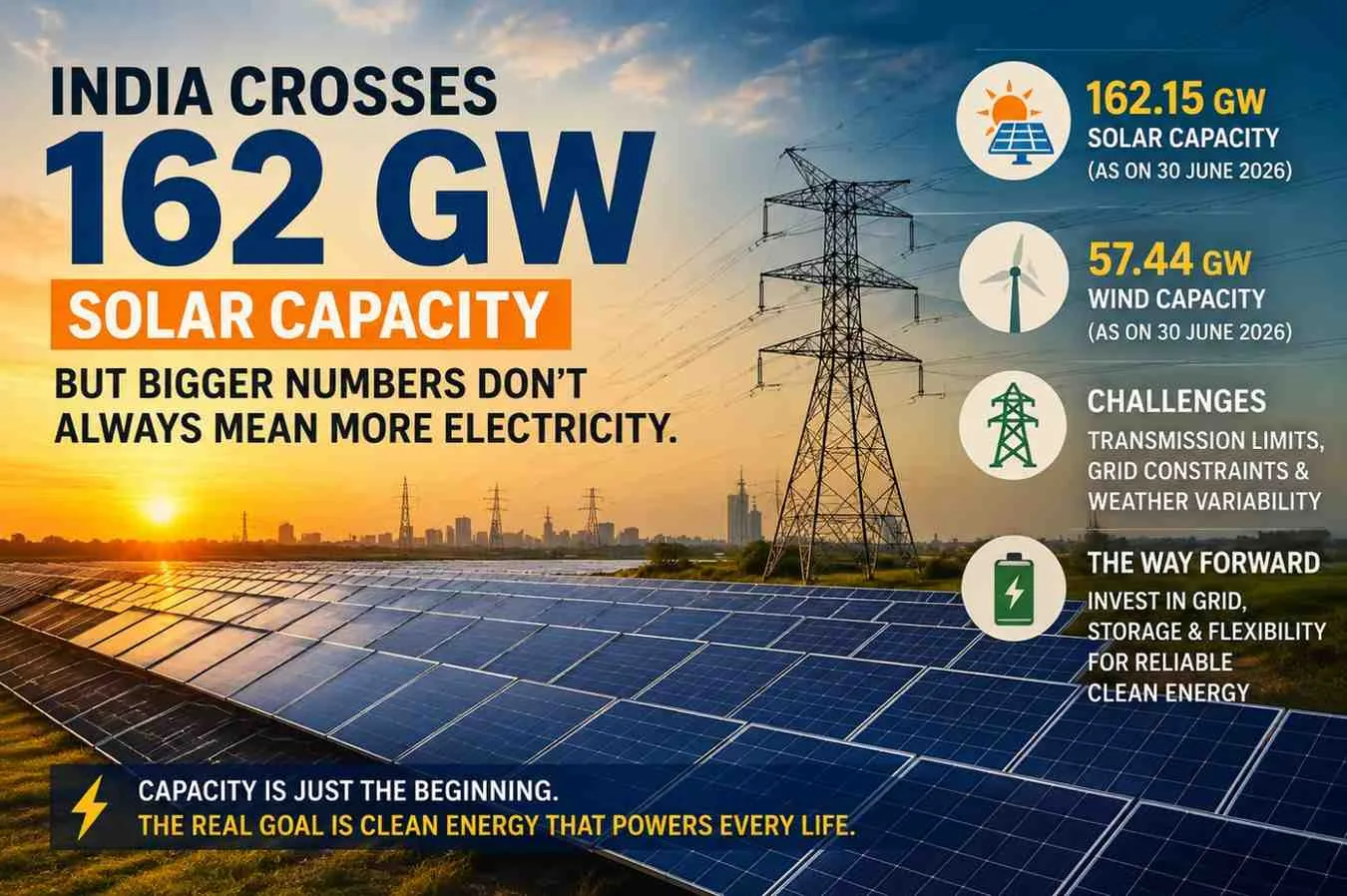
India’s renewable energy dashboard grows a little greener every month. In its latest achievement, it has reached another milestone.
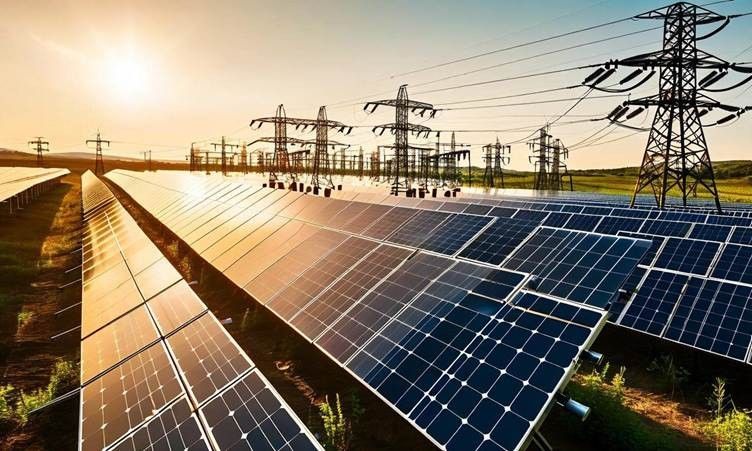
According to the latest physical progress update issued on 8th July by the Ministry of New and Renewable Energy (MNRE), India’s cumulative solar capacity has surged to 162.15 GW. Driven by the addition of over 5.1 GW in June alone. Wind Capacity currently stands at 57.44 GW. Highlighting Solar's progressive increase as the nation's fastest-growing source of renewable energy.
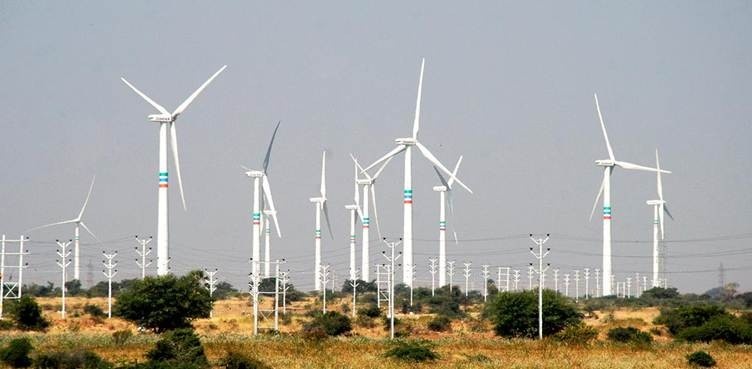
At first glance, the remarkable advancement is the main focus of the picture. Yet beneath this huge milestone lies a very important question: Is the addition of renewable capacity directly proportional to the generation of more electricity?
Not necessarily.
The installed capacity simply measures the maximum amount of electricity produced by a power plant under ideal conditions. The real-world challenges are not accounted for. Power is generated by the Solar panels only when the sun is shining. Wind turbines depend on favourable weather. Both of which can face transmission constraints preventing the full absorption of the electricity generated.
| Installed Capacity | Electricity Generation |
|---|---|
| Indicates the maximum power generation capability of a power plant under ideal conditions. | Indicates the actual electricity produced and supplied over a period of time. |
| Measured in MW or GW. | Measured in MWh, GWh or Billion Units (BU). |
| Represents infrastructure that has been built. | Represents electricity actually delivered to consumers. |
| Does not account for weather, maintenance, curtailment or transmission bottlenecks. | Depends on sunshine, wind availability, grid capacity, storage, and electricity demand. |
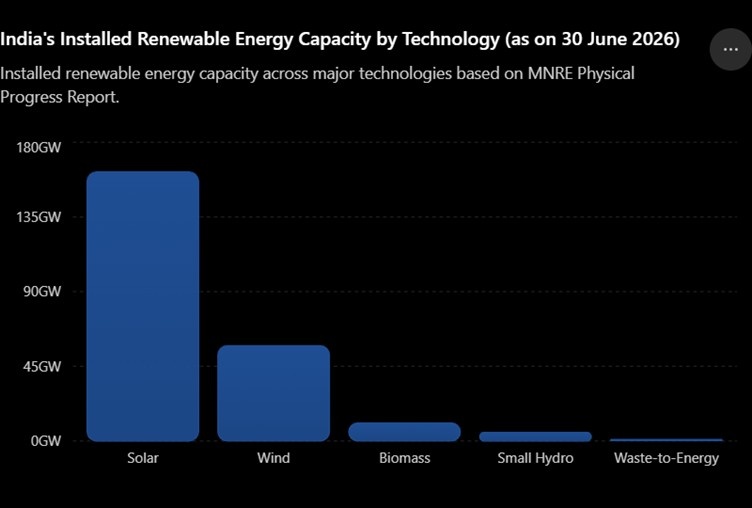
The latest June figures unveil another clear trend. With the steady increase in solar, other renewable technologies struggle to keep up. Following this, Wind recorded decent additions, but other technologies such as biomass, small hydro, and waste-to-energy have seen little to no significant growth. Resulting in a renewable energy portfolio progressively driven by a single technology.
The sector continues to gain momentum, especially as India works towards its goal of accomplishing 500 GW of non-fossil electricity capacity by 2030. Experts note that capacity additions alone cannot ensure a successful energy transition, even with the rapid expansion of solar capacity. To ensure reliable and efficient delivery of renewable electricity, the investments in transmission infrastructure, battery storage, and grid flexibility are no less critical.
| Technology | Addition in June 2026 (MW) | FY 2026–27 Addition (Apr–Jun) (MW) | Installed Capacity (30 June 2026) |
|---|---|---|---|
| Solar Power | 5,105.56 | 11,891.30 | 162,152.00 MW (162.15 GW) |
| Wind Power | 636.35 | 1,348.55 | 57,443.39 MW (57.44 GW) |
| Biomass (Bagasse) | 0.00 | 0.00 | 9,821.32 MW |
| Biomass (Non-Bagasse) | 0.00 | 0.00 | 1,048.84 MW |
| Waste-to-Energy | 0.00 | 0.00 | 324.24 MW |
| Waste-to-Energy (Off-grid) | 0.00 | 1.04 | 554.16 MW |
| Small Hydro Power | 2.40 | 10.40 | 5,181.76 MW |
| Total RE (Excluding Large Hydro) | 5,744.31 | 13,251.29 | 236,524.72 MW |
Source: MNRE Physical Progress Report (as on 30 June 2026).
The latest MNRE data reflects the fast mobility of the country towards a cleaner energy future. However, it highlights the next challenge: to ensure the transition of every newly installed megawatt into usable and dependable power for millions of people.
At the end of the day, a gigawatt installed is only the beginning. The ultimate benchmark of success is the amount of clean electricity that powers everyday life.





Add a Comment