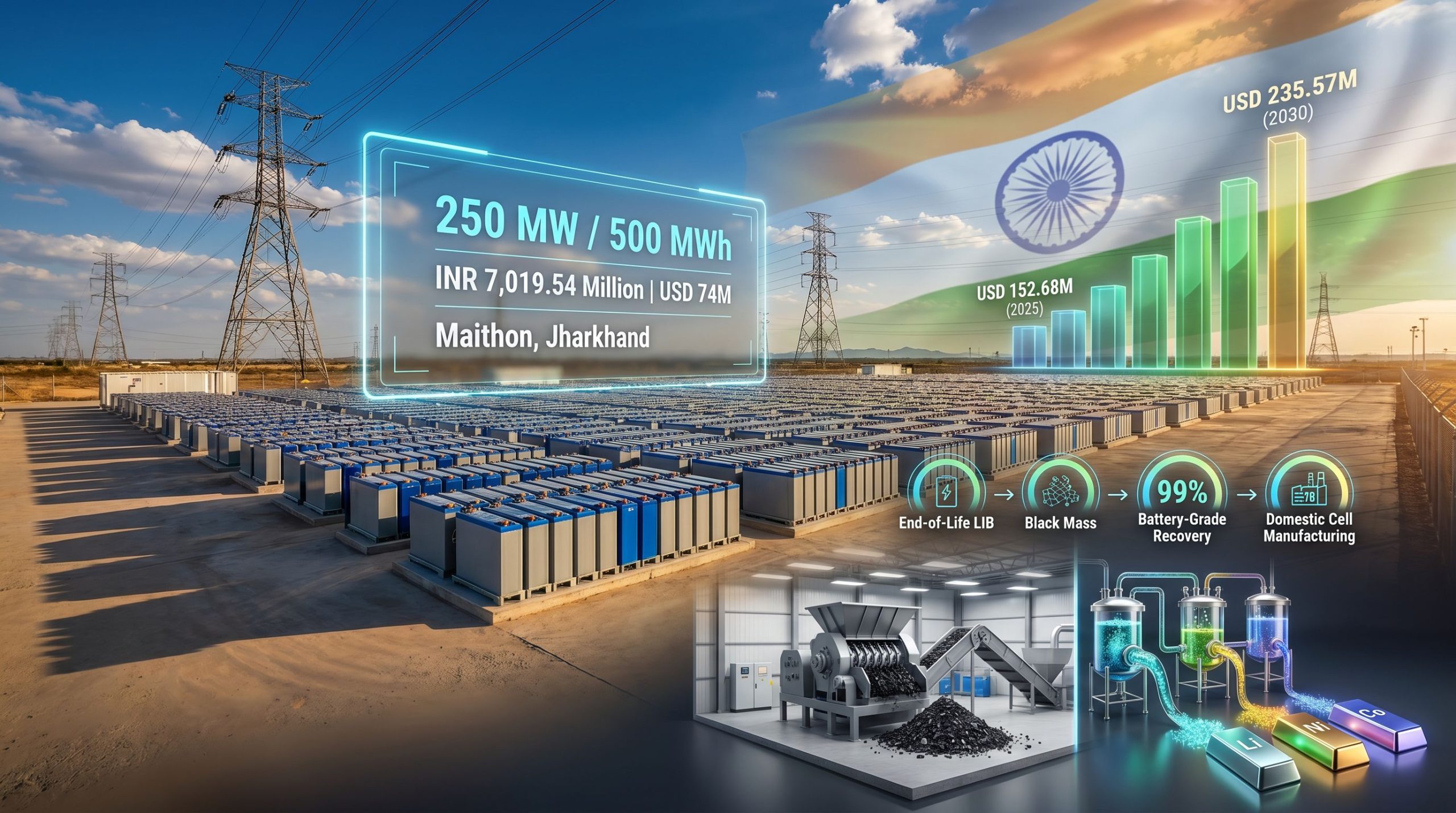
The Battery Waste Management Rules (BWMR) 2022, and their subsequent 2025 amendments, represent a transformative shift in India’s environmental and industrial policy, evolving from a mere waste-disposal framework into a strategic pillar for securing the nation’s critical minerals supply chain. Under the mandate of the Ministry of Environment, Forest and Climate Change (MoEFCC), these rules have institutionalized the principle of Extended Producer Responsibility (EPR), compelling manufacturers, importers, and brand owners—collectively termed "producers"—to take full accountability for the entire lifecycle of batteries, including portable, automotive, industrial, and electric vehicle (EV) types. Central to this framework is the aggressive escalation of material recovery targets; for instance, recyclers are now required to meet a 70% material recovery rate in FY 2024-25, rising to 80% by FY 2025-26, which effectively creates a "secondary mine" within the domestic economy. This is particularly vital as India navigates a high import dependency for primary sources of lithium, cobalt, and nickel—the "big three" minerals essential for the lithium-ion batteries that power the clean energy transition. By mandating that a specific percentage of recycled materials be reintegrated into new batteries from FY 2027-28 onwards, the government is forcing a circular loop that reduces reliance on volatile global markets and geopolitical risks. The 2025 amendments further sharpened these tools by introducing mandatory digital traceability through unique barcodes or QR codes on every battery pack, linking them to a centralized Central Pollution Control Board (CPCB) portal to eliminate the "leakage" of waste into the informal sector, which historically handled the majority of India's battery waste. This formalization is supported by the National Critical Minerals Mission (NCMM), approved in early 2025, which specifically identifies "recovery from end-of-life products" as a strategic priority alongside domestic mining and overseas asset acquisition. As India aims for significant expansion in annual battery production by 2030, the demand for cathode active materials is projected to grow exponentially; in this context, the BWMR serves as a safeguard, ensuring that valuable minerals like manganese and graphite are not lost to landfills but are instead harvested to fuel domestic value addition. Furthermore, the rules provide a legal pathway for "second-life" applications, allowing EV batteries to be refurbished for stationary energy storage before final recycling, thereby maximizing the utility of every gram of imported lithium. Through the interplay of strict EPR credit trading, heavy environmental compensation penalties for non-compliance, and the development of indigenous hydrometallurgical recycling technologies, India is building a resilient, self-reliant ecosystem. This integrated approach not only addresses the environmental hazard of toxic heavy metals like lead and cadmium but also positions battery recycling as a multi-billion dollar industry, ultimately ensuring that India's journey toward its 2070 Net Zero goal is powered by a secure, circular, and strategically independent critical minerals supply chain.



Add a Comment