Community Engagement & Inclusion

Focuses on involving communities in decision-making while ensuring equity, participation, and social inclusion.

Showing 10/22

14 Aug 2026

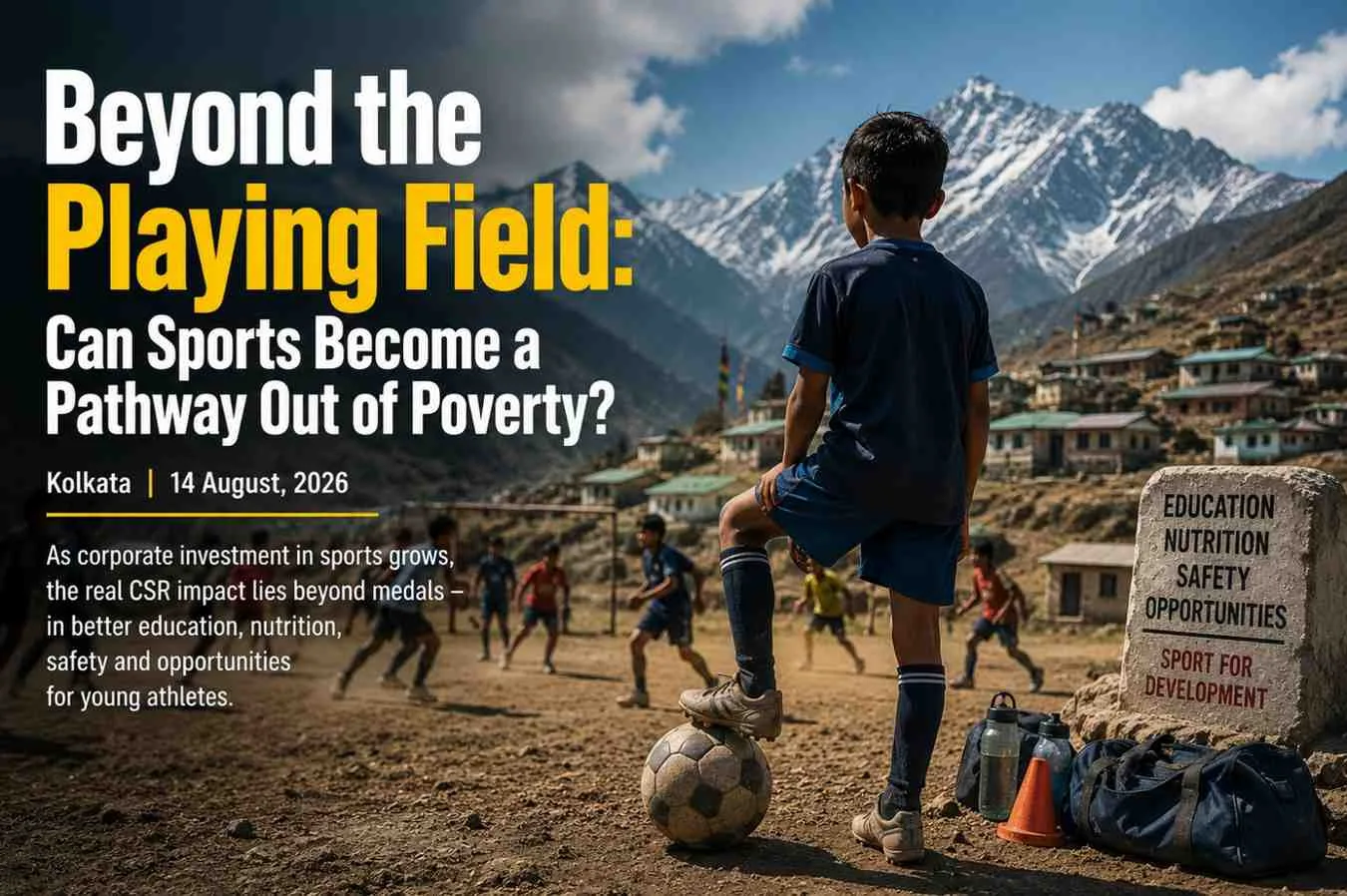
Kolkata | 14 August, 2026 As corporate investment in sports grows, the real CSR impact lies beyond medals - in better education, nutrition, safety and opportunities for young athletes. Summary: Sports is taking on a bigger role in India’s CSR landscape, with spending on “training to promote sports” rising from ₹311.71 crore in FY2021-22 to ₹542.53 crore in FY2022-23 and ₹692.09 crore in FY2023-24.  But higher spending does not automatically translate into greater social impact. The real measure is whether these programmes help young people stay in education, access proper nutrition and healthcare, train and compete safely, and build opportunities both within and beyond sport.  For girls and children from underserved communities, meaningful impact also requires equal access, strong safeguarding and support that continues beyond the CSR funding period. Keywordssports-for-development, sports CSR, CSR in sports, corporate sports initiatives, grassroots sports India, sports and poverty alleviation, CSR and youth development, corporate philanthropy in sports, grassroots sports academies, sports for social development, girls in sports, women in sports India, athlete development,sports nutrition, sports education, athlete safeguarding, sports talent development, CSR impact assessment, sustainable sports development, sports CSR India Can Sport Become More Than Just a Sponsorship? For years, corporate involvement in Indian sport has largely focused on sponsoring teams, tournaments and elite athletes. While this brings funding and visibility to sports, a broader approach is now gaining attention: sports for development. Under this model, sport is not just about competitions or brand promotion.   It becomes a way to give young people access to coaching, education, nutrition, healthcare, mentoring and career opportunities. The timing is important. Corporate spending on sports-related training increased substantially between FY2021-22 and FY2023-24, reflecting growing corporate support for sports development programmes. The bigger question is whether CSR reporting is also moving beyond simply measuring the number of equipment distributed, tournaments organised and participants enrolled. CSR Spending on Training to Promote Sports   Financial YearCSR SpendingFY 2021–22₹311.71 croreFY 2022–23₹542.53 croreFY 2023–24₹692.09 crore   For example, a programme that trains 500 children may look successful on paper. The real test comes after the training ends: How many participants complete the programme, remain in school, continue playing and progress to district, state or national-level competitions?These questions highlight the difference between sports sponsorship and sports for development- one supports the sport, while the other aims to use sport as a pathway to improve young people's lives.   Where Can CSR Make the Biggest Difference in Sports?  India already has a strong public sports ecosystem through programmes such as Khelo India, which supports grassroots participation, talent identification, sports infrastructure, academies and community-level sports development. This gives CSR an opportunity to fill important gaps rather than duplicate existing efforts. Companies can support areas where public resources may be limited, including specialised coaching, sports science, better equipment, technology, nutrition, travel for competitions and academy infrastructure. However, CSR support should not create another standalone programme that operates separately from existing systems. The greater opportunity lies in connecting corporate funding with schools, government sports departments, local academies and communities. Companies can bring in specialised coaches, technology and equipment, while public institutions can provide access to young athletes and existing facilities. This approach can also make the impact of CSR easier to measure. If a programme aims to increase sports participation, companies should first establish what participation looked like before the programme began. If the goal is to improve performance, there should be a clear starting point against which progress can be measured. And if the programme promises to create new opportunities, those opportunities should be visible beyond the training ground - in education, competitions, careers or continued participation in sport. From Participation to Progress: Can Girls Stay in Sport?  Girls’ participation is one of the clearest tests of whether a sports CSR programme is creating lasting opportunities rather than simply increasing enrolment. Government data shows that nearly 3 lakh women have participated in around 2,600 ASMITA leagues across 33 disciplines, while around 1.59 lakh women took part in 1,287 leagues during the 2025-26 season. These figures indicate that opportunities for women and girls to participate in sport are expanding. But getting girls onto the field is only the beginning. For many girls, staying in sport depends on factors beyond training itself. Safe transportation, family support, suitable changing facilities, access to female coaches, proper nutrition and healthcare, and protection from harassment can all play an important role in helping girls continue in sport. A CSR programme should not be considered truly inclusive simply because girls are included in its list of beneficiaries. It should also look beyond enrolment and ask: How many girls joined the programme? How many completed the training? How many continued the following year? How many progressed to competitive levels? And do they have a safe and reliable way to raise concerns or report problems? Most importantly, safeguarding should be built into the programme from the start - not added later as a compliance requirement.   How Sport Can Shape a Child’s Future  A child’s ability to participate in sport is closely linked to the circumstances in which they live. For children from low-income families, regular training can become difficult when access to nutritious food, healthcare and education is limited, or when they struggle to balance school with sporting commitments. This is why effective sports-for-development programmes need to look beyond coaching. Nutrition support can help young athletes stay healthy and recover from training, while education support can help them remain in school. Access to healthcare can also help address injuries and other health concerns that might otherwise force children to leave sport. This broader approach also changes how success should be measured. “Children trained” is an output. “Children who completed training, remained in education and moved towards sporting or other opportunities” is an outcome. The distinction matters because not every child will become a professional athlete and professional success should not be the only measure of a sports CSR programme. For some children, participation may build confidence, discipline, physical fitness, social skills and stronger engagement with education. For others, sport may open the door to district, state or national-level competition and future opportunities. Both forms of progress are meaningful, and a strong CSR programme should be able to recognise them. From Grassroots Training to Sporting Success  Some corporate-backed programmes are moving beyond one-time sponsorships and trying to build long-term pathways for athletes. The Infosys Foundation and GoSports Foundation’s Gear for Gold programme, which builds on the earlier Girls for Gold initiative, now supports male, female and para-athletes across several Olympic disciplines. Its approach combines academies, coaching, sports science, infrastructure, technology, scholarships, nutrition, injury management and competition support. That makes the model different from simply sponsoring a tournament or funding a single event. The aim is to create a complete pathway through which athletes can develop over time: Talent identification → Academy → Coaching → Sports science → Nutrition → Competition → Progression Another example is JSW Sports’ Inspire Institute of Sport, which focuses on high-performance training and athlete development across Olympic disciplines. These programmes show how corporate funding can potentially help strengthen the larger sporting ecosystem, rather than being limited to events and sponsorships. But the real test lies in the results. How many athletes enter the programme? How many continue? How many progress to higher levels of competition? What does it cost to achieve those outcomes? And how much of that progress can reasonably be linked to the CSR intervention? These are the questions that can help distinguish a well-funded sports programme from one that creates a genuine talent pipeline.   Is CSR Creating Lasting Opportunities or Just Counting Activities?  This is where sports CSR needs greater transparency and stronger evidence of impact. Companies should report the full number of people eligible for a programme, rather than highlighting only how many beneficiaries were reached. They should also report how many participants completed the programme, how many dropped out, what outcomes were set at the outset and what the programme ultimately achieved.Financial reporting needs the same level of clarity. Companies should distinguish between money committed and money actually spent. A large CSR commitment may attract attention, but a financial announcement does not necessarily mean the funds have already been used. The same distinction applies to infrastructure. Building an academy is an output. An academy that remains operational, has the right staff and resources, is regularly used and continues to benefit athletes is an outcome. Medals should also be viewed in context. A medal can demonstrate sporting achievement, but it does not automatically measure the wider social impact of a CSR programme. For example, if a programme supports 1,000 children but only 20 reach elite competition, the remaining 980 should not automatically be considered unsuccessful. Their progress may be reflected in better school participation, improved health, greater confidence, stronger social skills or continued involvement in sport. Ultimately, the success of a sports CSR programme should not be judged only by participation numbers or medals won, but by the meaningful and lasting change it creates in the lives of the people it aims to support.   Can CSR Impact Last After Funding Ends? Perhaps the biggest test of a sports CSR programme begins when the funding ends.A company may support an academy for three or four years, but an athlete’s journey does not end when the CSR cycle does. Coaches still need to be paid, equipment needs to be replaced, facilities need to be maintained, and athletes may continue to need support for travel, nutrition, healthcare and competition. If there is no plan for these needs, even a successful programme can become dependent on continuous corporate funding. Long-term sustainability therefore needs to be built into the programme from the very beginning. Companies can work with state sports departments, schools, local organisations and sporting bodies, while also training local coaches and developing systems that communities can continue to manage. The goal should be to make programmes less dependent on a single donor over time, rather than simply extending the CSR funding cycle year after year. This brings us to the bigger question: What should sports-for-development actually measure? The future of sports CSR should not be measured by how many tournaments are organised, kits are distributed or academies are launched, but by the lasting impact these initiatives create. It should be judged by the progress that continues after the activity is over. The real measure of impact lies in what happens to participants over time: Who joined the programme? Who stayed? Who completed the training? What difference did it make in their lives? Did children continue their education? Did girls remain involved in sport? Did athletes receive adequate nutrition and healthcare? Did promising players progress to higher levels of competition? Did the programme open up opportunities beyond sport? And, most importantly, what continued after the funding came to an end? India does not need CSR that simply puts more children on playing fields. It needs corporate investment that makes those fields safe, accessible and connected to real opportunities for growth. The strongest sports CSR story may not always be about the athlete who wins a medal. It could be the girl who found the support to continue her sporting journey, the child who remained in school, the athlete who gained access to essential nutrition and professional coaching, or the young guy who built confidence, developed new skills and found greater opportunities through sport. That is when sport stops being just a CSR activity - and becomes a lasting pathway to opportunity, empowerment and development.  Sources: Ministry of Youth Affairs & Sports — Khelo IndiaFor the article’s discussion of grassroots sports, talent identification, sports academies, women’s participation, disability inclusion and sport as a tool for development. Press Information Bureau — Government of India, Ministry of Youth Affairs & SportsFor the current Khelo India ecosystem, including training centres, academies, athlete support, sports science, nutrition and athlete pathways. Infosys Foundation & GoSports Foundation — Gear for GoldFor the article’s Infosys/GoSports case study covering academies, coaching, infrastructure, sports science, scholarships, nutrition, injury management, competition support and athlete progression. Infosys Foundation — Girls for Gold ProgrammeFor the article’s discussion of girls’ participation, women athletes aged 13–19, scholarships, coaching, academies and the development of sustainable sporting careers. GoSports Foundation — Programmes & Sports DevelopmentFor the broader athlete-development and academy ecosystem, including Gear for Gold and programmes supporting athletes, academies and communities. JSW Foundation / JSW SportsFor the article’s discussion of JSW’s sports-promotion work and its integration of sport with wider community-development areas. JSW Energy — Annual Report 2023–24, “Empowering Communities”Particularly relevant to the article because it documents Project Shikhar, rural boxing development, infrastructure, training and nutrition support, and collaboration with government agencies and sports associations. Infosys Foundation Annual Report 2023–24For the Girls for Gold evidence around academy-driven development, sports-science centres, athlete monitoring, international competition exposure and holistic education/upskilling.  ...Read more

13 Aug 2026

Kolkata | August 13, 2026 As the government pushes development deeper into India’s border areas, corporate CSR could bring money, technology and new livelihood opportunities- but the real test is whether those investments work beyond the launch event. SummaryIndia’s remote border villages are receiving greater attention through the Vibrant Villages Programme and other government-led development efforts. Corporate CSR can complement these initiatives by supporting areas such as off-grid solar, rural infrastructure, digital connectivity and livelihood opportunities. But reaching India’s geographic frontiers requires more than announcing projects or allocating funds. CSR interventions need to respond to documented local needs, coordinate with government programmes, involve communities and demonstrate that the money committed actually translates into functioning infrastructure and lasting benefits. For companies, the real measure of border-area CSR should therefore be what reaches communities, what changes after implementation and what continues to work once the funding ends. KeywordsCSR in border villages, corporate CSR India, CSR and rural development, Vibrant Villages Programme, VVP-II, border area development India, CSR impact, last-mile CSR, corporate philanthropy India, border village development, rural infrastructure, off-grid solar, rural livelihoods, CSR-government convergence, community-led development, CSR impact assessment, sustainable rural development, India border villages, CSR projects India, corporate social responsibility   Can CSR Fill the Gaps in India’s Border Development? For years, corporate CSR in India has largely focused on familiar areas such as education, healthcare, sanitation and rural development. Border villages, however, often require a different kind of approach. Many of these communities are located in remote and difficult terrain, far from major markets and essential services. Limited connectivity can make access to basic facilities difficult, while a lack of local employment opportunities often pushes younger residents to move elsewhere in search of work. The government’s Vibrant Villages Programme aims to address some of these challenges by improving infrastructure, connectivity, renewable energy access, education, healthcare, tourism and livelihood opportunities in border communities. As these efforts expand, corporate CSR could play a useful supporting role. However, that role needs to be clearly defined. CSR should not simply duplicate projects that government agencies are already responsible for delivering. Instead, companies can focus on gaps where private funding, technology, specialised expertise or stronger implementation support can make a meaningful difference. This could allow CSR programmes to complement government efforts while addressing specific needs that may otherwise remain overlooked. CSR support could focus on areas such as decentralised solar power, digital connectivity, livelihood opportunities, skill development and support for local businesses. The key is to address genuine gaps rather than duplicate existing efforts. A village benefits little from repeated funding for the same project when other essential needs continue to go unaddressed. The most effective CSR initiatives should therefore begin with two simple questions: What does the community actually need, and what is already being covered by government programmes? Answering these questions requires coordination with district administrations and local authorities before projects are planned. Most importantly, it means listening to local communities and ensuring that their needs and priorities shape the projects designed for them. A company may see solar power as the most urgent need, while local residents may place greater importance on roads, healthcare, irrigation, market access or livelihood opportunities. Without meaningful community participation, even well-funded CSR initiatives can end up addressing the wrong priorities. The same approach should continue after a project is launched. Installing solar panels alone does not make a project successful.  Its real value depends on whether households receive reliable electricity, whether the system remains functional over time and whether access to power improves everyday activities and livelihoods. This becomes especially important in remote communities, where repairing or maintaining infrastructure can be costly and difficult. The bigger opportunity may lie in linking basic infrastructure directly to local livelihoods and economic opportunities. Reliable electricity, for instance, could support small shops, local businesses, refrigeration, digital services, tourism facilities and small-scale processing units. Better road and digital connectivity could help local producers reach wider markets, while skill-development programmes could have greater value when they are connected to actual jobs or opportunities to start local businesses. However, these benefits should be measured, not simply assumed. Before a project begins, companies should establish a clear baseline: What is the current situation? Who needs support? And what change is the project expected to achieve? After a project is implemented, its success should not be judged only by how many people attended a programme or how many facilities were installed.Instead, companies should ask more meaningful questions: How many households are actually benefiting? Is the infrastructure still functioning? Has access or income improved? Who may still be left out? And can the project continue to deliver benefits after CSR funding ends? Government programme → CSR gap-filling → Community participation → Working infrastructure → Livelihood outcome  Effective border- area CSR should complement public programmes and end with a measurable community outcome- not simply a completed project. The real question is not how much is spent, but how effectively it is used. A large CSR announcement can create the impression of substantial investment, but a financial commitment is not the same as actual expenditure. Transparent reporting should clearly distinguish between the amount promised, the amount actually spent and the number of people who benefited. The same distinction applies to infrastructure projects. A completed building is an output; a facility that remains functional and is regularly used by the community is an outcome.   The real measure of success is not what was delivered, but the lasting difference it makes. To understand the true impact of a CSR project, companies should compare results with the situation before the intervention or with similar villages.This can help determine how much of the change can reasonably be linked to the CSR initiative, rather than to government spending, economic changes or other development programmes in the area. This is particularly important in border regions, where development is rarely the work of a single organisation. In many communities, development efforts involve multiple stakeholders, including government departments, local authorities, NGOs and companies.CSR reporting should therefore be clear about what the company actually contributed. If improved electricity access was achieved through the combined efforts of several agencies, a company should clearly acknowledge the shared contribution rather than presenting the entire outcome as its own impact.The credibility of CSR depends on accurately reporting the change a company has contributed to, rather than taking sole credit for outcomes achieved through collective efforts. The most credible CSR approach should clearly show the entire journey of a project: the problem identified, the solution planned, the money spent, the people reached and, most importantly, the change achieved.It should also explain who will maintain the project after CSR funding ends. This could involve training local operators, working with community groups or setting up a maintenance arrangement with the relevant local administration. Without a plan for what happens next, even a well-funded project can gradually become an unused asset in a village that already has limited resources. For CSR in border areas to create lasting value, companies need to move beyond the traditional question of “How much did we give?” The more important question is: “What changed because we gave it?” India’s border communities do not need CSR that is simply more visible. They need initiatives that are better targeted, better coordinated and more accountable. Ultimately, the success of corporate philanthropy is not measured by the distance between a company’s headquarters and a remote village. It is measured by the distance between a CSR announcement and a lasting improvement in people’s lives.What Should the Last Mile of CSR Really Look Like? For India’s border villages, CSR can play a valuable role-but only when it complements government efforts and responds to the needs of the communities it aims to serve.The opportunity is significant.  VVP-II covers 1,954 villages across 15 states and two Union Territories, focusing on livelihoods, connectivity, energy, infrastructure, skills, tourism and telecom access. But the scale of these efforts should not become the only measure of success. A stronger CSR approach would begin by identifying and documenting a genuine local need, coordinating with the administration and involving residents in planning. Companies should clearly define their own contribution and track more than just the money spent or assets created. The real question is whether those assets continue to function and whether they lead to measurable improvements in people's lives and livelihoods. This becomes even more important because the government has acknowledged that no third-party evaluation has yet been conducted for VVP-I. While hundreds of projects have been completed and many more are being implemented through different government programmes working together, stronger evidence is still needed to understand their long-term impact. For companies, this gap should be seen as an opportunity - not a limitation. Rather than treating border-area CSR as another category of philanthropy, businesses can approach it as a long-term development partnership, where infrastructure, reliable energy, skills and livelihoods work together to create lasting value. Ultimately, the last mile of CSR is not measured by the distance between a corporate office and a remote border village. It is measured by the distance between money being announced and meaningful change being sustained. Hence, the future of corporate philanthropy will be judged by the lasting change it helps create. Primary Sources  Ministry of Home Affairs, Government of India. Vibrant Villages Programme-II (VVP-II). 18 March 2026.Covers the ₹6,839 crore outlay, 1,954 villages, 15 States and 2 UTs, and the programme’s focus on livelihoods, roads, energisation, village infrastructure, skills, tourism, education and telecom connectivity. PIB — Vibrant Villages Programme-IIMinistry of Home Affairs, Government of India. Vibrant Villages Programme. 28 July 2026.Provides the latest VVP-I implementation figures, including projects sanctioned/completed, funds released, road connectivity, electricity, off-grid solar and other convergence projects. It also states that no third-party evaluation has been conducted under VVP-I. PIB — VVP-I Implementation UpdateMinistry of Home Affairs, Government of India. Funds for Border Area Development Programme (BADP). 1 April 2026.Important for the article's discussion of BADP, government convergence and the transition toward VVP. The release states that BADP is currently in its sunset phase, with funds being allocated for committed liabilities. PIB — Border Area Development Programme Ministry of Home Affairs, Government of India. Vibrant Villages Programme — Scheme Details.Useful for the programme's original objectives, including livelihood generation, renewable energy, roads, village infrastructure, telecom connectivity and reversing outmigration, as well as its outcome-oriented approach. PIB — Vibrant Villages Programme Background Ministry of Home Affairs, Government of India. Vibrant Villages Programme-II — Scheme/Programme Document.Details VVP-II's objectives, funding structure and focus areas, including livelihoods, electrification, roads, skills, SHGs/FPOs, tourism, education and telecom connectivity. Ministry of Home Affairs — Scheme Document ...Read more

12 Aug 2026

International Youth Day 2026: from “Different Contexts, Common Aspirations” to youth climate leadership, SDG acceleration, India and Bengal By Prof Ujjwal K Chowdhury International Youth Day 2026 is not officially a “climate day.” Its theme is broader: “Different Contexts, Common Aspirations.” Yet few issues reveal that idea more sharply than climate change. From Samoa to Sudan, Kampala to Stockholm, Tamil Nadu to the Sundarbans, young people are moving from beneficiaries of development to organizers, innovators, litigants, negotiators, translators, journalists and implementers of the SDGs. The challenge now is not to praise their courage from a distance, but to give them the skills, finance, protection and institutional power to shape the future they will live in. SUCCINCT SUMMARYThe UN observes 12 August as International Youth Day following a 1998 ministerial recommendation endorsed by General Assembly Resolution 54/120 in 1999. The 2026 theme, “Different Contexts, Common Aspirations,” is built around Global Solidarity, Shared Challenges and Youth Innovation. This feature uses climate leadership as an SDG lens: climate action intersects with food, health, education, water, clean energy, jobs, inequality, cities, ecosystems, governance and partnerships. It profiles twelve global youth voices, examines practical models of youth-led action, and places India—especially West Bengal—at the centre. Bengal’s opportunity is to graduate from episodic green activities to youth climate governance through a Sundarbans Youth Climate Corps, Kolkata climate labs, Bangla knowledge systems, green-skills pathways, micro-grants and youth seats in decision-making. KEYWORDS  International Youth Day 2026; youth climate leadership; SDGs; climate justice; youth innovation; Indigenous knowledge; climate literacy; green skills; India; West Bengal; Kolkata; Sundarbans; youth governance HASHTAGS  #InternationalYouthDay #YouthDay2026 #DifferentContextsCommonAspirations #YouthClimateLeadership #SDGs #ClimateAction #ClimateJustice #GreenSkills #YouthInnovation #India #Bengal #Sundarbans #Kolkata #ActNow   12 AUGUST: NOT A GREETING CARD, A GOVERNANCE QUESTION On 12 August, the United Nations does more than “celebrate youth.” International Youth Day is a reminder that the generation expected to live longest with today’s decisions must have power in making them. The date itself carries a policy lineage. Young people at the first World Youth Forum of the United Nations System in Vienna proposed an international youth day in 1991. The World Conference of Ministers Responsible for Youth, meeting in Lisbon from 8–12 August 1998, recommended 12 August as the observance. The UN General Assembly endorsed that recommendation on 17 December 1999 through Resolution 54/120, and the first International Youth Day was observed in 2000. The purpose was deliberately larger than ceremony: to draw public attention to youth issues and strengthen awareness of the World Programme of Action for Youth. In other words, 12 August is a day of visibility, participation and accountability. It asks governments, universities, businesses, civil society and the UN system to stop treating young people as a future constituency and start treating them as present-tense partners. That is especially urgent in a decade defined by climate disruption and a race to rescue the Sustainable Development Goals. Young people are not simply inheriting climate change. They are already living through heat stress, floods, wildfire smoke, polluted air, water insecurity, displacement, disrupted education, precarious work and climate anxiety. UNICEF’s 2026 Children’s Climate Risk Report says more than a billion children face at least three overlapping climate hazards. Youth climate leadership therefore is not a fashionable add-on to sustainable development. It is increasingly one of the places where the SDGs become real.   2026: DIFFERENT CONTEXTS, COMMON ASPIRATIONS GLOBAL SOLIDARITYSHARED CHALLENGESYOUTH INNOVATIONFair access to finance, technology, education and opportunity.Jobs, education, climate, digital inclusion and mental well-being cross borders.Youth-led social enterprise, climate tools, community action and civic innovation.   The official UN theme for International Youth Day 2026 is “Different Contexts, Common Aspirations.” That distinction matters. “Youth Climate Leadership and the SDGs” is a powerful lens through which to interpret the day, but it is not the formal UN theme. The 2026 framing begins with a simple truth: a young entrepreneur in a Small Island Developing State, a student in a landlocked country, a climate organizer in a Least Developed Country and a graduate in Kolkata may inhabit radically different economies and ecologies, yet share remarkably similar aspirations—quality education, decent work, health and mental well-being, a voice in decisions, dignity and the chance to build a viable future. UN DESA organizes the 2026 observance around three connected ideas. First, Global Solidarity: opportunities for youth depend on cooperation, fair access to finance, technology, education and resources. Second, Shared Challenges: employment, education gaps, climate change, digital exclusion and mental stress cross borders even when their intensity differs. Third, Youth Innovation: young people are not simply describing problems; they are building social enterprises, climate tools, community networks and new forms of civic action. Climate change runs through all three. It exposes inequality between countries and communities; it multiplies shared risks in food, water, health, cities and jobs; and it is generating some of the most inventive youth-led responses. For young people in SIDS, climate risk can mean the physical survival of homelands. For youth in the Sundarbans, it can mean salinity, embankment failure and migration. For city youth, it can mean lethal heat, air pollution or flooded streets. Different contexts; unmistakably common aspirations.   CLIMATE IS NOT JUST SDG 13 The mistake is to place youth climate action in a box marked SDG 13. Climate leadership is an SDG multiplier. A young farmer using climate-resilient methods touches SDG 2 on hunger, SDG 8 on livelihoods and SDG 13. A student campaign for clean air intersects with SDG 3 on health and SDG 11 on sustainable cities. Mangrove restoration links climate action with SDGs 14 and 15 on oceans and terrestrial ecosystems while protecting incomes and settlements. Climate education connects SDG 4 with future green skills. Clean-energy innovation links SDG 7 with decent work. Youth participation in municipal planning and litigation activates SDG 16 on accountable institutions. Partnerships for finance, technology and scale invoke SDG 17. Young people add a distinctive political force to this web. They translate complex science into peer language. They organize through networks faster than many institutions. They expose the gap between promises and implementation. They experiment with technology and behaviour. Above all, they introduce intergenerational justice into public reasoning: what does a development decision look like when the people who will bear its longest consequences are in the room? KEY IDEA  |  Climate leadership is an SDG multiplier: one youth-led intervention can move health, education, water, energy, jobs, cities, ecosystems, justice and partnerships at the same time.  WHY YOUTH LEADERSHIP WORKS DIFFERENTLY Youth leadership also changes the method of development. Traditional programmes often begin with institutions, budgets and sectoral silos; young organizers frequently begin with lived friction—a flooded lane, an unsafe water source, plastic in a lake, a missing tree canopy, a school without cooling, a community that cannot access climate information. They then connect the problem to networks, media, science and public authority. This “problem-first” approach can make the SDGs legible at neighbourhood scale. A UN example from Mathare in Kenya illustrates the pattern. Youth-led community work around clean-ups, tree planting and water initiatives can simultaneously advance sustainable cities, climate action and clean water while mobilizing residents and local authorities. The point is not that volunteering substitutes for public infrastructure. It is that young people can act as connectors between community evidence and systems that otherwise operate at a distance. Young leaders also insist on intersectionality because their lives do not arrive in ministerial departments. A cyclone is simultaneously an education event if schools close, a health event if water is contaminated, a gender event if care burdens rise, an employment event if livelihoods disappear, and a migration event if families move. Climate anxiety similarly cannot be dismissed as a soft issue when insecurity about heat, jobs, disasters and the future affects mental well-being. The 2026 UN theme recognizes exactly this interconnectedness. Finally, youth networks are unusually capable of combining local identity with global solidarity. A student in Kolkata can learn from Pacific advocacy on sea-level rise; a Sundarbans youth group can exchange tools with mangrove communities elsewhere; an Indigenous Indian activist can connect land rights to global biodiversity debates. Digital platforms make those bridges possible, although unequal access means digital inclusion itself remains part of the agenda.   TWELVE VOICES THAT CHANGED THE CLIMATE CONVERSATION Twelve youth voices show how wide this repertoire has become. Greta Thunberg of Sweden turned a solitary school strike in 2018 into the global Fridays for Future movement. At the 2019 UN Climate Action Summit, her accusation that leaders were “failing us” made the credibility gap between climate science and political action impossible to discuss as a technical matter alone. Her enduring contribution is intergenerational accountability: targets mean little without delivery. Vanessa Nakate of Uganda brought African climate justice into a conversation too often dominated by wealthier countries. Through the Rise Up Climate Movement and work around renewable energy, schools and the Congo Basin, she has insisted that climate change is about people, livelihoods and survival. She helped normalize demands that adaptation, loss and damage and climate finance must reflect those already on the frontlines. Xiye Bastida, an Indigenous Otomi-Toltec activist from Mexico based in the United States, co-founded the Re-Earth Initiative and has pushed climate movements to center Indigenous knowledge and frontline communities. Her public argument is that Indigenous peoples are not decorative “stakeholders” in climate policy; their rights, land stewardship and knowledge must shape decisions. Elizabeth Wathuti of Kenya founded the Green Generation Initiative. Its model joins environmental education with greening schools, fruit-tree planting, food forests and an adopt-a-tree culture. Her example shows why restoration works best when biodiversity, nutrition, education and community ownership reinforce one another. Autumn Peltier, an Anishinaabe water protector from Canada, brought clean water and Indigenous rights to global forums while still very young. Her leadership reframed water security as a moral, treaty and human-rights issue—not merely an infrastructure problem. In a warming world, that is also climate adaptation. Brianna Fruean of Samoa has carried Pacific youth perspectives into global climate spaces, including COP26. Her presence makes an essential point: Small Island Developing States are not marginal to the climate debate. Their experience turns abstract arguments about sea-level rise, adaptation and finance into questions of culture, sovereignty and survival. Nisreen Elsaim of Sudan moved from activism into climate negotiation and served in the UN Secretary-General’s first Youth Advisory Group on Climate Change. Her work connects climate vulnerability with renewable energy, development, governance and security. She embodies the transition from youth being invited to side events to youth participating in policy architecture. Sophia Kianni of the United States founded Climate Cardinals, which has worked to translate climate information into more than 100 languages. That is climate justice through knowledge. If science, warnings and policy options remain linguistically inaccessible, millions are excluded from meaningful participation before a meeting even begins. Archana Soreng of India, from the Kharia Indigenous community, served on the Secretary-General’s Youth Advisory Group and advocates documenting and protecting traditional knowledge. Her core message is radical in its clarity: Indigenous people and young people should be leaders of climate action, not victims of climate policy. She places land rights, identity and ecological knowledge inside contemporary governance. Ridhima Pandey of India showed that the courtroom can also be a youth climate arena. She petitioned the Indian government on climate inaction when she was nine and later joined an international child-rights climate complaint. Her contribution is to frame climate failure as a question of children’s rights and duties owed across generations. Licypriya Kangujam of India began campaigning as a child and has pushed climate education, stronger environmental laws and public attention to pollution and disasters. Her persistence shows the importance of making climate literacy part of basic civic education rather than leaving it to specialist environmental courses. Vinisha Umashankar of Tamil Nadu represents another route: invention. Her solar-powered ironing cart was designed as an alternative to charcoal-fired street irons, linking cleaner air and renewable energy with the livelihoods of ironing vendors. As an Earthshot Prize finalist and a COP26 speaker, she turned a locally observed problem into a globally legible clean-tech idea. Together these leaders break the stereotype of the youth climate activist as only a protester. The contemporary repertoire includes protest, litigation, negotiation, translation, engineering, ecological restoration, Indigenous knowledge, entrepreneurship, journalism and policy design.   FROM PROTEST TO PRACTICE: THREE MODELS THAT SCALE Three case studies reveal why this breadth matters. First, Wathuti’s “school as ecological laboratory” model. When students plant and tend fruit trees or food forests, climate learning leaves the textbook. Children observe soil, water, shade, biodiversity, nutrition and the long time-scale of living systems. The lesson for education systems is profound: sustainability becomes a practice, not a chapter. Second, Kianni’s multilingual climate knowledge. Climate information is still heavily concentrated in English and technical language. Translation expands who can act. In India, this principle should move climate information through Bangla, Hindi, Odia, Tamil and Indigenous languages so that a cyclone warning, heat-risk protocol, farming adaptation guide or waste handbook is genuinely public knowledge. Third, Vinisha’s solar ironing cart. Climate innovation is strongest when it solves several problems together. The cart tackles charcoal smoke and deforestation pressures while preserving a familiar livelihood and adding the possibility of phone charging and mobility. That is the SDG mindset at its best: clean energy without forgetting jobs.   INDIA: FROM BENEFICIARIES TO CLIMATE PARTNERS India is one of the world’s most consequential arenas for youth climate leadership because its scale is immense and its vulnerabilities are diverse. UNICEF describes young Indians organizing in courtrooms, classrooms, neighbourhoods and online spaces; national youth statements have demanded that children and young people be placed at the centre of resilience and climate policy. The UN in India’s #WeTheChange campaign has likewise showcased young people working across renewable energy, forestry, climate finance, sustainable agriculture, disaster-risk reduction, ecosystem restoration, water and waste. There is also an institutional turn. The UNDP-TERI Mission LiFE Youth Ambassadors Programme, launched in 2026, aims to put young leaders and higher-education institutions at the forefront of sustainability through behaviour change and zero-waste campus systems. This is significant because the next phase of youth action cannot depend only on heroic individuals. It needs repeatable pathways: climate education, green skills, grants, procurement opportunities, internships, representation in public bodies and access to data. India’s youth climate agenda should therefore move from “awareness” to co-governance. A climate club is useful; a youth seat on a city climate committee is more consequential. A hackathon is exciting; seed finance and public procurement for its best solution are better. A plantation drive is valuable; youth participation in biodiversity budgeting and survival audits is deeper.   BENGAL: A LIVING CLIMATE CLASSROOM West Bengal may be one of India’s most complete classrooms for climate leadership because the state compresses multiple climate realities into one geography. In the Sundarbans, sea-level rise, cyclones, salinity, embankment stress, erosion, livelihoods, migration and mangrove ecology meet each other every day. In Kolkata, the agenda shifts to urban heat, air quality, mobility, solid waste, ponds, wetlands and development pressure. In the western plateau and northern districts, water, forests, agriculture and Indigenous ecological practices form another set of realities. “Different Contexts, Common Aspirations” could almost have been written for Bengal. The most telling youth stories are often local. In Murshidabad, UNICEF’s Community Youth Reporter Programme, designed with IMAGIN Community Media and the Press Club Kolkata, enabled 17-year-olds Rimjhim Mandal, Soumiki Chakraborty and Shraddha Sarkar to document a pond near their school that had deteriorated into a garbage dump. They did not stop at reporting. They proposed cleaning and deepening the pond, helping trigger conversations among residents and local authorities. In one modest story, SDG 6 on water, SDG 11 on communities, SDG 13 on resilience and SDG 16 on civic accountability meet. In Kolkata in March 2026, NGO SHER, Scottish Church College and TERI School of Advanced Studies brought representatives from 28 schools into a “Knowing Climate Change” workshop and launched a Climate Ambassador Programme. Students encountered climate science, urban resilience, policy, analytical tools and applications of AI in environmental monitoring. The significance lies in the progression: from climate literacy to a role identity—ambassador—and then to local projects. At Subhas Sarobar, a 2026 plogging and wetland-conservation activity organized by the West Bengal Pollution Control Board, WWF West Bengal and KMDA involved 32 students from Classes VI to VIII. A clean-up alone will not solve urban waste systems, but it makes pollution visible, turns a waterbody into a learning site and can recruit long-term citizen stewardship. These examples echo the attached source document’s larger insight: Bengal must move from scattered “green activities” to youth climate governance. SEVEN MOVES BENGAL SHOULD MAKE NOW A serious Bengal strategy could be built around seven moves. One: create a Sundarbans Youth Climate Corps. Train local young people in mangrove ecology, salinity and water monitoring, cyclone preparedness, citizen science, sustainable aquaculture, solar systems, climate communication and resilient livelihoods. Pay them where the work provides public value. Two: establish Kolkata Youth Climate Labs. School, college and university teams could audit ward-level heat, trees, ponds, wetlands, waste, mobility and energy, with standardized data feeding municipal planning rather than ending as exhibition posters. Three: launch a Bangla Climate Knowledge Mission. Translate rigorous climate science, disaster guidance and green-skills material into accessible Bangla and local dialects. Make climate knowledge usable by schools, panchayats, fishers, farmers, self-help groups and local media. Four: reserve meaningful youth participation in climate-relevant governance—municipal consultations, biodiversity committees, wetland dialogues, disaster planning and panchayat-level resilience work. Representation must include girls, rural youth, Indigenous and marginalized communities, not only metropolitan student leaders. Five: create green innovation micro-grants. Small sums, quickly disbursed, could finance prototypes in water, cooling, waste, clean energy, mangroves, sustainable agriculture and climate-tech. Pair grants with mentors and routes to procurement. Six: build a Bengal Green Skills Pathway across schools, ITIs, polytechnics and universities for solar, EV systems, batteries, green buildings, sustainable tourism, biodiversity, environmental data, ESG and climate-resilient agriculture. Climate leadership must also lead to dignified work. Seven: create district youth climate-journalism networks. The Murshidabad model shows why. Environmental damage often remains politically invisible until it is documented. Train young reporters in evidence, mobile storytelling, data, verification and solutions journalism. The principle behind all seven is the same: do not romanticize youth action while withholding power and resources.   DON’T OUTSOURCE THE CRISIS TO THE YOUNG There is a danger in celebrating young climate heroes. Governments, companies and older generations can applaud a teenager planting mangroves while continuing the policies that destroy coasts; praise students carrying steel bottles while failing to regulate industrial pollution; celebrate clean-ups while underfunding waste systems. That reverses responsibility. Youth leadership must supplement, not absolve, state responsibility, corporate accountability and adult political leadership. The right response to youth courage is not to outsource the crisis to them. It is to give them knowledge, finance, safety, institutional authority and access to decisions, while those with larger legal and economic power meet their own obligations.   LEADERS OF TODAY—BECAUSE TOMORROW IS TOO LATE Perhaps the most outdated compliment we still offer young people is: “You are the leaders of tomorrow.” For the climate generation, tomorrow is not an adequate timetable. Greta Thunberg changed political language before she could vote. Autumn Peltier addressed global leaders as a child. Ridhima Pandey used legal institutions before adulthood. Archana Soreng carried Indigenous knowledge into a UN advisory structure. Vinisha Umashankar turned a street-side observation into a clean-energy prototype. Three schoolgirls in Murshidabad used reporting to make a polluted pond a civic question. These are not rehearsals for citizenship. They are citizenship in practice. That is the deeper meaning of International Youth Day 2026. Different contexts: a Samoan island, an African school, an Indigenous forest, a Tamil Nadu street vendor, a Kolkata wetland, a Murshidabad pond, a cyclone-threatened Sundarbans village. Common aspirations: clean water, breathable air, meaningful work, education, dignity, participation, justice and a planet on which adulthood remains worth looking forward to. Young people have already answered the question of whether they care. The harder question is directed at institutions: will we give them the seat, the skills, the finance and the authority to convert concern into measurable change? On 12 August, celebration should become a contract. Listen to youth. Fund youth. Protect youth civic space. Teach climate literacy. Build green skills. Put youth into decision-making. And then judge success not by the number of speeches made on International Youth Day, but by whether a generation with everything at stake is finally allowed to help shape the future it will inherit.   SOURCES & VERIFICATION NOTES This feature integrates the uploaded YouthDay.docx as its editorial base, then independently checks the 2026 theme, UN history and key current/local claims. Current-event facts were verified on 12 August 2026 (IST). The article does not rely on unverified assertions from the source document. 1. United Nations — International Youth Day: Background 2. UN DESA Voice (July 2026) — What unites young people across borders? 3. United Nations — Closing Remarks at the 2026 ECOSOC Youth Forum 4. UNICEF — The Children’s Climate Risk Report 2026 5. UNICEF India — India’s Youth and Climate Change 6. United Nations in India — #WeTheChange youth climate leaders 7. United Nations — Youth Advisory Group on Climate Change 8. United Nations — Archana Soreng: Our voice matters 9. United Nations — Vanessa Nakate: Climate change is about the people 10. UNEP — Elizabeth Wathuti, Young Champions of the Earth 11. The Earthshot Prize — Vinisha Umashankar 12. UNICEF India — West Bengal’s Community Youth Reporters Drive Social Change 13. TERI — Mission LiFE Youth Ambassador Programme (2026) 14. Scottish Church College — “Knowing Climate Change” workshop listing, 30 March 2026 15. Times of India — 2026 Kolkata climate-literacy / Climate Ambassador workshop 16. Times of India — Students help make Subhas Sarobar plastic-free Verification caveat: As this document was prepared at the start of 12 August 2026 in India, it relies on UN DESA’s official July 2026 IYD framing and the April 2026 ECOSOC Youth Forum remarks for the 2026 theme and pillars. No unverified 2026 Secretary-General IYD message is quoted. ...Read more

11 Aug 2026

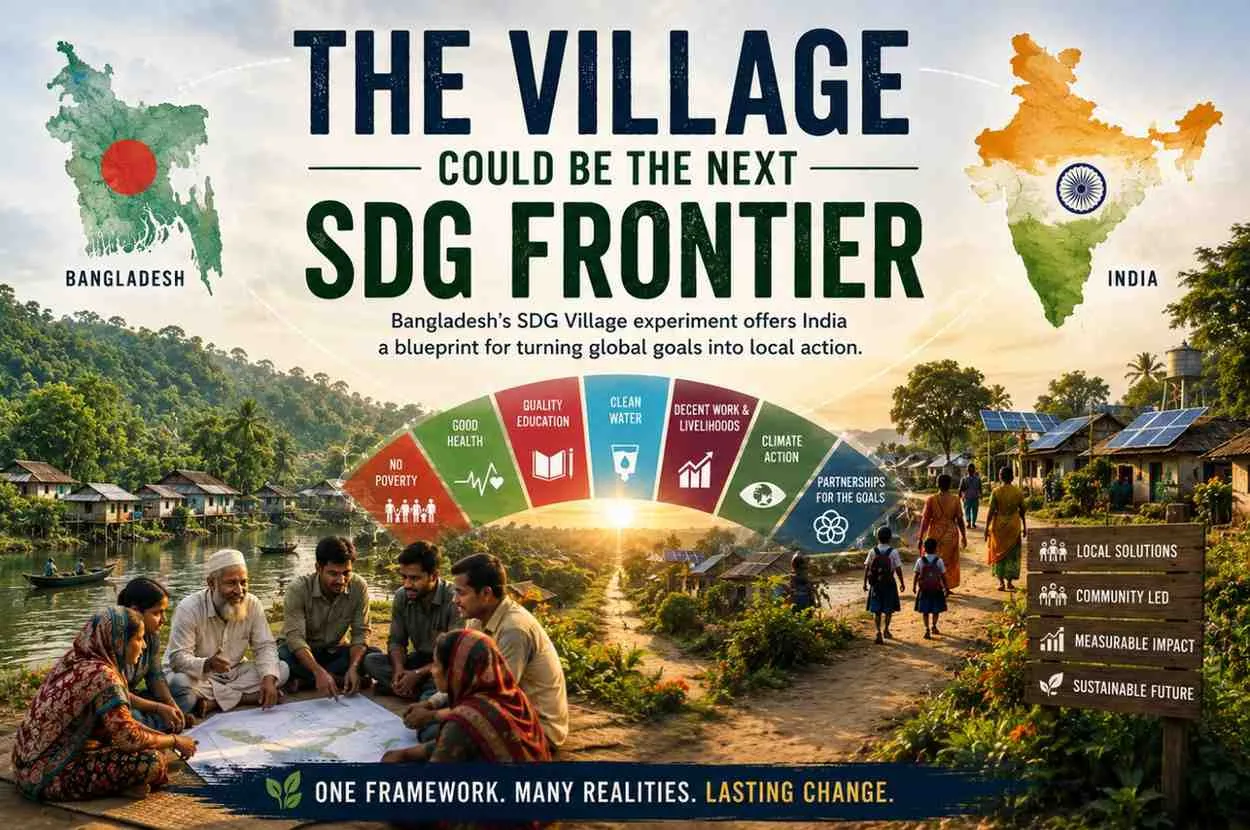
August 11, 2026 | Kolkata Bangladesh has launched three villages as SDG Villages, bringing sustainable development goals closer to everyday rural life. The experiment offers India a possible blueprint - but an Indian model would need to add climate resilience, local livelihoods, digital access and community- led planning to suit the country's diverse villages. SummaryBangladesh has launched an SDG Village pilot across three villages, bringing poverty reduction, healthcare, education, water, sanitation, livelihoods, women's empowerment, environmental protection and infrastructure together under a single local development plan. For India, the initiative highlights the possibility of developing SDG Villages across states, each designed around its own geographical and social challenges while using existing Panchayat-level systems to track and measure progress. KeywordsSDG Villages, Sustainable Development Goals, Bangladesh, India, Rural Development, Panchayati Raj, Sustainable Rural Development, Climate Resilience, Community Development, SDG Localization Can Bangladesh’s SDG Village experiment offer India a blueprint for turning global goals into local action? Bangladesh has taken the Sustainable Development Goals from national policy to the village level through its first SDG Village pilot. On August 10, Prime Minister Tarique Rahman inaugurated three villages under the initiative: Mitingachhari in Rangamati, Pankhali in Khulna and Nafanagar in Dinajpur. The villages were selected to represent different geographical and socioeconomic conditions. The idea is to bring several development priorities together instead of addressing them through separate programmes. Health, education, clean water, sanitation, livelihoods, women's empowerment, renewable energy, environmental protection and digital access are all part of the approach. This matters because rural challenges rarely exist in isolation. Poor connectivity can affect education, healthcare and employment at the same time, while water shortages can influence health, farming and household incomes. The pilot is therefore testing a simple but important idea: Can the SDGs become a local development plan rather than remain mainly national targets?  Why should India pay attention to three Bangladeshi villages? The question is not whether India should copy Bangladesh. India's villages are far more diverse in terms of geography, population and economic conditions. But the broader lesson is relevant: development works better when national goals are connected to local needs. India already has systems that could support such an approach. The SDGs have been localised through Panchayati Raj Institutions, while the Panchayat Advancement Index assesses Gram Panchayats across areas linked to sustainable development. This means India may not need another standalone scheme. Instead, existing systems could be used to identify demonstration villages across states and build development plans around their most urgent needs. The process could begin with a village-level baseline covering health, education, poverty, water, sanitation, livelihoods, energy, environment, digital access and climate risks.   What Would an SDG Village Change on the Ground? For ordinary residents, the SDGs matter only when they improve everyday life. Can families access safe drinking water? Can children receive better education? Can farmers increase their incomes without damaging natural resources? Can women access healthcare and livelihood opportunities more easily? Can villages prepare for floods, droughts, cyclones or extreme heat? An Indian SDG Village should be built around these practical questions. However, every village should not receive the same development package.  A coastal village may need to prioritise cyclone preparedness, mangrove restoration, safe drinking water, fisheries and saline-water management. A drought-prone village may focus on rainwater harvesting, groundwater recharge, efficient irrigation and climate-resilient farming. Himalayan villages could prioritise landslide preparedness, spring-water conservation, resilient infrastructure and responsible tourism. Agricultural regions could focus on soil health, crop diversification, storage, food processing and farmer-led enterprises. The Northeast could place greater emphasis on connectivity, healthcare, biodiversity, digital services and locally owned businesses. Tribal and forest-dependent communities may need stronger support for nutrition, healthcare, forest-based livelihoods and biodiversity protection. The principle should remain simple: one national framework, different local priorities. But who decides what a village needs? This is where community participation becomes essential. An SDG Village cannot be planned entirely from government offices. The Gram Sabha should play a central role in identifying the problems residents consider most urgent. A farmer may prioritise irrigation. Women may identify healthcare, water access or employment as bigger concerns. Young people may want better digital connectivity, skills and local job opportunities. These priorities should directly shape the village development plan. Government departments can then bring existing schemes together around those needs instead of making residents navigate multiple programmes separately. The result could be a more coordinated system: one village plan, multiple government programmes and one set of measurable outcomes. How can India make sure it is more than a label?This may be the biggest challenge. India already has numerous rural development schemes. The problem is often not a lack of programmes, but weak coordination, uneven implementation and limited measurement. An SDG Village should therefore be judged by outcomes, not announcements. If a water project is completed, officials should measure whether households actually receive reliable, safe water. If a skill-development programme is introduced, its success should be reflected in employment or income. If healthcare facilities improve, residents should be able to access services more easily. \Each village could publish an annual SDG scorecard covering a focused set of indicators such as water, health, education, livelihoods, gender, environment and resilience. Funding should follow the village plan. Existing government schemes can form the foundation, while state and local resources fill gaps. Businesses, universities and civil society organisations can provide valuable expertise where needed, but the needs and priorities of local communities should remain at the heart of the model. Most importantly, the approach should allow programmes to be reviewed and improved along the way. If an intervention does not deliver the expected results, it should be changed and strengthened rather than simply marked as successful. Could Bangladesh’s Village Experiment Work for India? Bangladesh's initiative is still a pilot, so its long-term success will depend on implementation and whether the approach can be replicated effectively. But its central idea is worth watching. India already has the policy architecture needed to localise the SDGs. What it can strengthen is the connection between village-level data, community priorities, government schemes and measurable outcomes. A national SDG Village programme could begin with demonstration villages across every state and Union Territory. Each village could follow common national indicators while adding priorities based on its geography, economy and climate risks. The goal should not be to make every village follow the same development model. Instead, each village should receive the resources and support needed to address its own local challenges. As Bangladesh tests whether sustainable development can begin at the village level, India has an opportunity to build on the idea by turning SDG Villages into real-world models for water security, climate resilience, livelihoods, healthcare, education and inclusive rural development.   The true measure of success will not be the signboard at the village entrance, but the difference people can actually see and feel in their everyday lives.  Sources: United Nations in Bangladesh – Sustainable Development Goals (https://bangladesh.un.org/en/sdgs) Bangladesh Planning Commission / Social Security Policy Support – Local Collective Action for Accelerating SDGs (https://socialprotection.gov.bd/2026/01/local-collective-action-for-accelerating-sdgs/) United Nations Statistics Division – Bangladesh SDG Localization (https://unstats.un.org/capacity-development/UNSD-FCDO/bangladesh/) United Nations University – Localisation of Sustainable Development Goals in Bangladesh (https://collections.unu.edu/view/UNU:8935) Sustainability – Localisation of Sustainable Development Goals (SDGs) in Bangladesh: An Inclusive Framework under Local Governments (https://www.mdpi.com/2071-1050/14/17/10817) United Nations in Bangladesh – SDG Localization & Gender-Disaggregated Data (https://bangladesh.un.org/en/316977-advocacy-session-gender-disaggregated-data-collection-advance-sdg-localization-bangladesh) Ministry of Panchayati Raj, Government of India – Panchayat-level SDG Localization (https://panchayat.gov.in/) NITI Aayog – Sustainable Development Goals India (https://sdgindiaindex.niti.gov.in/) UNDP – Sustainable Development Goals (https://www.undp.org/sustainable-development-goals) ...Read more

10 Aug 2026

Tribal India at 79 - The Republic's Unfinished Promise of Rights, Resilience and Renewal International Day of the World's Indigenous Peoples | 9 August 2026 They protected forests before biodiversity became policy language, practised circularity before ESG became a boardroom metric, and built community institutions long before participatory development entered textbooks. Yet tribal India has also carried a disproportionate burden of displacement, poor health, educational exclusion and loss of control over land. On the International Day of the World's Indigenous Peoples, the real question is not how to bring Adivasis into a supposedly superior mainstream, but how India can guarantee mobility without uprooting, prosperity without dispossession and modernity without cultural disappearance. Quick SummaryIndia's Scheduled Tribe population was 10.45 crore, or 8.6% of the population, in Census 2011 - still the latest completed Census benchmark used in official reporting. Globally, the ILO estimates about 476.6 million Indigenous Peoples, 6.2% of humanity. Seventy-nine years after Independence, India has an unusually extensive architecture of reservations, Scheduled Area protections, self-government, forest rights, schools, health missions and livelihood programmes. Progress is visible: ST literacy has risen, EMRS coverage has expanded and major mission-mode investments now target tribal-majority villages and Particularly Vulnerable Tribal Groups. But nutrition, health, land security, community forest rights, local decision-making and enterprise ownership remain unfinished. Ladakh shows the contemporary edge of the debate: job and domicile safeguards were strengthened in 2025, while 2026 negotiations over constitutional protection and democratic representation remain unresolved. The next tribal compact must therefore move from welfare for communities to rights, ownership and governance with them. Keywords: Scheduled Tribes, Adivasi, Indigenous Peoples, Fifth Schedule, Sixth Schedule, PESA, Forest Rights Act, Ladakh, EMRS, tribal health, tribal entrepreneurship, PM-JANMAN, Dharti Aaba, sustainability, Indigenous knowledge, Gen Z Hashtags: #WorldIndigenousPeoplesDay #TribalIndia #Adivasi #IndigenousPeoples #TribalRights #ForestRights #PESA #SixthSchedule #Ladakh #Sustainability #IndigenousKnowledge #TribalEntrepreneurship FACTS AT A GLANCE India10.45 crore ST citizens | 8.6% of population | Census 2011World476.6 million Indigenous Peoples | 6.2% of humanity | ILO estimateLiteracyST 73.4% vs overall 80.9% | PLFS 2023-24HealthST infant mortality 41.6 vs overall 35.2 per 1,000 | NFHS-5EMRS511 functional schools | 167,045 students | 728 sanctioned locationsForest Rights23.88 lakh individual + 1.21 lakh community titles by March 2025Political representation47 of 543 Lok Sabha seats reserved for STs in 2024Mission modePM-JANMAN ₹24,104 crore | Dharti Aaba/PM-JUGA about ₹79,156 crore   The real test is not whether development reaches tribal India, but whether it reaches without requiring people to surrender land, language, memory or the right to decide their own future.   A DAY OF PRIDE - AND A DAY OF RECKONING August 9 is the United Nations' International Day of the World's Indigenous Peoples, widely marked in India as Adivasi Divas or Tribal Day. The 2026 observance carries the theme 'Honouring Indigenous Midwives: Safeguarding Life and Well-being' - a useful reminder that Indigenous knowledge is not decorative heritage. It can be a living system of care, ecology, language and social trust. The statistics need precision. India's constitutional category is Scheduled Tribes, notified under Article 342; 'Adivasi' has deep social and political resonance, while 'Indigenous Peoples' is the international rights vocabulary. These categories overlap substantially but are not perfect synonyms. India has more than 700 notified ST groups, ranging from Gonds, Bhils, Santhals and Mundas to Khasi, Garo, Naga, Mizo, Toda, Dongria Kondh, Nicobarese and Ladakhi communities. There is no single tribal language, economy, religion or ecological practice. Officially, Census 2011 counted 10.45 crore Scheduled Tribe citizens - 8.6% of India. The global ILO estimate is about 476.6 million Indigenous Peoples, or 6.2% of the world's population. The frequently quoted 11% for India and 9% globally are therefore useful reminders of demographic scale, but they are higher than the principal official baselines. The deeper story is a paradox. Tribal cultures are celebrated in festivals, museums, handicraft fairs and tourism campaigns; tribal lands have simultaneously supplied minerals, timber, hydropower, infrastructure corridors and conservation landscapes. The citizen can be protected by the Republic and displaced in the name of the Republic. That contradiction is one of India's longest-running democratic tests.   79 YEARS LATER: PROGRESS, BUT NOT YET PARITY The most defensible assessment is neither despair nor triumph. It is progress with a persistent structural gap. PLFS 2023-24 data cited by the Government put ST literacy at 73.4%, compared with 80.9% for the overall population. This is a major advance over Census 2011, when ST literacy was about 59%, though the two surveys are methodologically different and should not be treated as a single uninterrupted series. Health has improved in access and institutional delivery, but the gap remains visible. NFHS-5 reported infant mortality among STs at 41.6 per 1,000 live births, compared with 35.2 for the general population. Among ST children under five, 40.9% were stunted, 23.2% wasted and 39.5% underweight, all above national levels. Geography is part of the inequality: a health centre that exists on paper is not accessible if a pregnant woman must cross a river, forest track or mountain road to reach it. Education illustrates the same two-sided reality. The National Education Society for Tribal Students currently lists 511 functional Eklavya Model Residential Schools serving 167,045 students, with 728 locations approved. Scholarships, hostels and digital access have expanded opportunity. Yet a school can still alienate if the child's first language is absent, local history appears nowhere in the curriculum, teachers rotate rapidly and achievement is defined as distance from one's own culture. Reservation remains an indispensable ladder. In all-India Central Government direct recruitment through open competition, the ST benchmark is 7.5%; seats are also reserved in legislatures and education under the constitutional and statutory framework. In the 2024 Lok Sabha, 47 of 543 seats are reserved for ST candidates. These measures have helped create generations of tribal teachers, administrators, doctors, engineers, academics, police officers, elected representatives and professionals. But reservation becomes meaningful only when a child reaches the starting line. A reserved seat cannot repair a failed primary school, and a vacancy cannot help a young person pushed out of education at 14.   LAND IS HOME, MEMORY, MARKET - AND POWER For many tribal communities, land is not merely a transferable asset. A hill may be sacred; a grove can be temple, pharmacy, watershed and community archive; a pasture may embody seasonal rights; a forest can carry food, fuel, medicine, ritual and ancestry. When such a landscape is lost, compensation per acre cannot recreate the social ecosystem that disappears with it. This is why displacement is more than moving a house. It can mean loss of common grazing, burial grounds, fishing access, sacred sites, minor forest produce, customary institutions and intergenerational ecological knowledge. It can also shift a household from subsistence security into precarious wage labour. 'Ease of doing business' in tribal territory must therefore be tested against an equally fundamental question: whose ease, whose consent and whose long-term costs? The Forest Rights Act, 2006 attempted a historic correction by recognising individual and community rights that colonial and post-colonial forest administration often failed to record. Government data up to March 2025 reported 23.88 lakh individual titles and 1.21 lakh community titles, covering about 232.66 lakh acres. That is significant. But the next frontier is community forest-resource governance, not merely individual pattas. A forest governed as a commons is institutionally different from a forest fragmented into private plots. The principle should now be rights before irreversible projects. Forest-right claims, community-resource boundaries, Gram Sabha processes, cultural impacts and rehabilitation obligations should be settled before mining, infrastructure, mass tourism or conservation restrictions lock in a new reality. Consultation cannot become a ritual held after the decision has effectively been made.   THE CONSTITUTIONAL SHIELD: STRONG ON PAPER, UNEVEN ON THE GROUND India did not leave tribal citizens constitutionally unprotected. The Fifth Schedule under Article 244(1) creates a special administrative framework for Scheduled Areas in ten states, including protections around tribal land and Tribes Advisory Councils. The Sixth Schedule under Article 244(2) goes further in specified tribal areas of Assam, Meghalaya, Tripura and Mizoram by creating Autonomous District and Regional Councils with legislative, executive, financial and certain judicial powers. PESA - the Provisions of the Panchayats (Extension to the Scheduled Areas) Act, 1996 - carried a radical democratic idea: the Gram Sabha should not be a spectator where community resources, traditions and local development are concerned. Three decades later, implementation still depends on state rules and whether mining, forest, excise, land, water and police procedures genuinely respect that authority. There has been recent movement. By 2026, nine of the ten PESA states had framed rules; the Ministry of Panchayati Raj added Jharkhand's PESA Rules 2025 to its official repository on July 27, 2026, while Odisha's rules were still being finalised. This is progress - and also evidence of how slowly a transformative law can travel from Parliament to the village meeting. The lesson is institutional: constitutional protection is not self-executing. A Gram Sabha needs legal literacy, records, funds, technical support and officials willing to treat it as a democratic authority rather than an inconvenience. The Fifth Schedule, PESA and FRA work best as a connected architecture, not as isolated files in separate departments.   LADAKH: THE NEW FRONTIER OF THE AUTONOMY DEBATE Ladakh has become the clearest contemporary illustration of the difference between welfare protection and political autonomy. When it became a Union Territory without a legislature in 2019, the National Commission for Scheduled Tribes recommended bringing Ladakh under the Sixth Schedule. The Commission noted the region's overwhelmingly tribal character and argued that constitutional devolution could protect culture, agrarian rights and local development. The Centre and Union Territory administration have since strengthened employment and domicile protections. The 2025 recruitment framework reserves 80% of direct-recruitment posts for Scheduled Tribes, 4% for residents of areas adjoining the Line of Control, 1% for Scheduled Castes and 10% for Economically Weaker Sections, leaving 5% unreserved. Domicile rules were also formalised. These measures address an important fear: that local youth could be crowded out of public employment. But Ladakh's movement has never been only about jobs. Its core demands have included statehood, stronger democratic representation, constitutional safeguards for land and culture, a public-service architecture and greater local control over an ecologically fragile high-altitude region. Violent clashes and police firing in Leh in September 2025 left four people dead, deepening mistrust. The 2026 dialogue has therefore evolved. In May and July, representatives of the Leh Apex Body and Kargil Democratic Alliance reported discussions with the Union Home Ministry around an elected territory-level democratic structure and constitutional safeguards modelled partly on Article 371-type provisions. By July 31 they were still awaiting a formal draft, and on August 7 leaders warned of renewed agitation over cases and compensation arising from the 2025 violence. The original statehood and Sixth Schedule demands have not vanished. Ladakh is now a live constitutional negotiation over how land, identity, ecology and democratic power can be secured together.   HEALTH: RESPECT KNOWLEDGE, BUT BUILD A REFERRAL CHAIN The UN's 2026 focus on Indigenous midwives makes a central point: cultural trust can determine whether modern healthcare is reached in time. Tribal communities possess extensive empirical knowledge of medicinal plants, food diversity, childbirth, seasonal disease and local ecology. The correct response is neither to romanticise every traditional remedy nor to dismiss knowledge simply because it did not originate in a laboratory. India's tribal health architecture is increasingly moving toward targeted missions. PM-JANMAN, with an outlay of ₹24,104 crore, focuses on 75 Particularly Vulnerable Tribal Group communities across 18 states and one Union Territory through housing, water, education, nutrition, health, roads, telecom and livelihoods. The National Sickle Cell Anaemia Elimination Mission targets elimination by 2047 and has prioritised screening and management in tribal and high-prevalence regions. The next step should be continuity, not camps: locally recruited health workers, mobile units linked to real referral hospitals, telemedicine where it works, reliable transport, nutrition surveillance, mental-health services and evidence-based engagement with tribal healers and midwives. A trusted community practitioner can become the first node in a safe referral chain rather than the last alternative before a crisis.   EDUCATION: GIVE THE CHILD THE WORLD WITHOUT TAKING AWAY HER WORLD The objective of tribal education should not be assimilation disguised as opportunity. A Santhal child should be able to learn artificial intelligence without being taught that Santhali is a lesser language. A Gond student should encounter global science without finding Gondi knowledge absent from every page. A Khasi or Mizo student should not have to become culturally invisible to become professionally mobile. The strongest model is multilingual in the early years, locally staffed where possible, academically ambitious and technologically enabled without becoming technology-dependent. It should place tribal history, literature, ecology, art, law and contemporary role models beside STEM, English, communication, entrepreneurship and digital skills. Elders, artisans, healers, farmers and storytellers can be knowledge partners, not museum exhibits. This is also a Gen Z question. Young tribal Indians now move between village and university, forest and city, hostel and home, local market and digital platform. The policy challenge is not to force a choice between roots and routers. It is to give young people the capability to carry both.   FROM LIVELIHOOD TO OWNERSHIP: THE ENTERPRISE QUESTION Tribal India is economically active, but too much value still leaves the producer before the product reaches the consumer. Forest-produce gatherers, farmers, pastoralists and artisans often sell raw mahua, lac, bamboo, tamarind, honey, millet, textiles or medicinal products while intermediaries capture the margin through processing, certification, packaging, finance and distribution. Van Dhan, TRIFED, minimum-support-price mechanisms, cooperatives, self-help groups and concessional finance have helped create market access and local value addition. A newer policy signal is equally important: at Dharti Aaba TribePreneurs 2025, more than 45 ST-founded startups were showcased and a ₹50-crore Venture Capital Fund for Scheduled Tribes was highlighted. That begins to expand the image of the tribal entrepreneur beyond souvenirs. The next generation should be able to found food companies, community-owned tourism platforms, design labels, media studios, logistics businesses, drone services, climate-tech ventures and AI enterprises. Ease of enterprise should mean working capital, simpler compliance, broadband, warehousing, laboratories, logistics, procurement preference, design support, intellectual-property protection and patient capital. A Gond artist should not remain the anonymous supplier while a distant company owns the brand built around Gond art. The Dharti Aaba Janjatiya Gram Utkarsh Abhiyan adds a system-level opportunity: about ₹79,156 crore, 17 ministries and 25 interventions aimed at critical gaps in tribal-majority villages. Its promise lies in convergence, because deprivation does not arrive department-wise. A malnourished girl in a village without secondary school, secure forest tenure or transport does not have four separate problems. She has one systems problem.   THE PEOPLE WHO PRACTISED SUSTAINABILITY BEFORE IT HAD A NAME Tribal communities should not be frozen into the romantic stereotype of the 'noble ecological savage'. Poverty, market pressure, population change and shortened fallow cycles can make once-resilient practices unsustainable. But many Indigenous institutions contain principles that modern climate and sustainability policy is urgently rediscovering: collective management of commons, seasonal harvesting, mixed cropping, seed diversity, repair and reuse, climate-responsive architecture, sacred groves, locally adapted food systems and knowledge of ecological indicators. The Apatani landscape of Ziro Valley is an Indian illustration. UNESCO's tentative-list documentation describes meticulous irrigation channels, wet-rice cultivation and forest conservation around the valley's watersheds, reinforced by customary rules. Sacred groves across tribal and Indigenous landscapes similarly show how culture can create de facto conservation zones long before a statutory protected-area notification. Globally, FAO notes that Indigenous Peoples manage roughly 28% of the world's land surface, including some of the most ecologically intact forest areas. Evidence from forest regions also shows a powerful relationship between secure collective tenure and lower deforestation. The lesson is not that tradition is automatically green. It is that people protect landscapes more effectively when they possess long-term rights, local knowledge and a reason to care what the ecosystem will look like two generations later. Modern science and Indigenous knowledge therefore need not behave like rivals. Satellite imagery can meet the herder's route memory. Weather forecasts can meet a farmer's reading of insects and flowering. GIS can map a watershed while villagers identify the spring that fails first in drought. Biotechnology can analyse a medicinal plant while community knowledge identifies where inquiry should begin - with benefit-sharing and consent built in.   GEN Z ADIVASI: ROOTS WITH ROUTERS The most visible transformation may be generational. A young musician can sing in a tribal language and distribute the song globally. An artisan can photograph work on a phone and sell beyond the local haat. A student can learn Python while recording oral folklore. A designer can transform inherited motifs into contemporary fashion while asking the modern legal question: who owns the design? A filmmaker can tell a community's story without waiting for an outsider to arrive with a camera. Digital life can therefore preserve as well as erode culture. It creates archives, audiences, markets and political visibility; it also accelerates language loss, algorithmic homogenisation and commercial appropriation. In the twenty-first century a community can lose something without losing an acre of land: it can lose control over its songs, motifs, medicinal knowledge, biological data or oral history. Cultural copyright, biodiversity benefit-sharing, community-controlled archives and data sovereignty should consequently become part of tribal-rights policy. The smartphone need not silence the drum. It can broadcast it - if the community retains agency over what is recorded, circulated and monetised.   WHAT THE REST OF INDIA CAN LEARN The question cannot remain only, 'What can India do for tribal communities?' It must also ask, 'What can India learn from them?' The answer is not imitation but institutional humility. Tribal and Indigenous experience can remind a hyper-individualised economy that communities are infrastructure; remind cities drowning in waste that repair and reuse were normal before disposability became a business model; remind industrial agriculture that seed diversity and seasonal foods are forms of risk management; remind climate policy that a forest is more than stored carbon; remind democracy that participation is more than voting every five years; remind architecture that climate-responsive design existed before green-building labels; and remind economics that commons can carry immense value even when they have no market price. Most importantly, many tribal worldviews refuse to separate economy, ecology, culture and social responsibility as completely as industrial modernity has done. Prosperity and possession are not identical concepts. The world does not need to 'become tribal'; it needs the humility to recognise that modern industrial systems did not invent every form of intelligence.   WHAT THE STATE MUST DO NEXT: AN EIGHT-POINT COMPACT 1. Rights before projects. Complete and transparently audit FRA claims and community forest-resource rights before irreversible mining, infrastructure, tourism or conservation decisions. Measure cultural and livelihood loss, not only land value. 2. Make PESA real. Align state land, mining, forest, water, excise and minor-forest-produce laws with PESA; give Gram Sabhas legal literacy, records, funds and technical support; complete Odisha's rules and audit implementation in every PESA state. 3. Build multilingual excellence. Recruit local-language teachers, co-create textbooks with communities, digitise languages, bring elders and artisans into classrooms, and pair cultural grounding with first-rate STEM, AI, communication and entrepreneurship. 4. Create a tribal public-health architecture. Strengthen nutrition, maternal and child health, sickle-cell screening, mental health, mobile medicine and referral networks. Engage Indigenous midwives and healers through evidence-based training and referral, not token celebration. 5. Move from livelihood to ownership. Use Van Dhan, TRIFED, concessional credit and startup funds to build producer-owned brands, processing companies, tourism enterprises and technology businesses. Add procurement, certification, logistics and patient capital. 6. Protect land, culture and digital sovereignty. Enforce safeguards against alienation and coercive transfer. Let communities determine how songs, designs, stories, medicinal knowledge, biological resources and digital data are documented and commercialised, with benefit-sharing. 7. Pay for stewardship. Route a greater share of climate finance, watershed restoration, biodiversity and community-forest budgets to Gram Sabhas and accountable local institutions. Conservation should create an economic stake for the people doing it. 8. Govern with tribal citizens. Put tribal youth, women, entrepreneurs, scholars, traditional institutions and Gram Sabhas inside programme design and evaluation. Measure success by health, learning, income, ecological security, mobility and control over the future - not merely allocations and inaugurations.   DEVELOPMENT WITHOUT DISAPPEARANCE For generations, development quietly assumed that the future would make tribal cultures less tribal: forests would give way to markets, customary institutions to formal administration, local languages to dominant ones, and young people would prove their progress by leaving inherited worlds behind. That assumption should end. A young Adivasi woman becoming a surgeon is progress; she should not have to stop speaking her language to prove it. A tribal entrepreneur building a large company is progress; the community's forest should not have to disappear for the company to exist. A highway reaching a remote settlement is progress; it should not become the road through which the settlement loses control of its land. A child learning artificial intelligence is progress; it is richer if that child also knows the songs, plant names and ecological memory of a grandmother. The goal is mobility without uprooting, prosperity without dispossession, education without cultural erasure, conservation without exclusion and modernisation without disappearance. The forest was never empty. The mountain was never empty. The island and grassland were never empty. They held knowledge systems that conventional economics often failed to count because much of their wealth was shared rather than sold. At the precise moment when humanity is searching for resilient food systems, biodiversity protection, low-carbon lifestyles and stronger communities, India's tribal worlds contain knowledge that should be engaged with - not extracted from. The Republic's task is therefore neither to freeze Adivasi citizens in a romantic past nor absorb them into a homogenised future. It is to protect the power to choose: the right to remain, the freedom to move, the opportunity to prosper, the authority to govern, the confidence to modernise and the dignity to remain themselves. That would be a far greater tribute than one commemorative day each year.   SOURCES & VERIFICATION NOTE This feature integrates the substantive themes and arguments of the uploaded 73-page working document, while reconciling duplicated drafts and updating time-sensitive claims to 10 August 2026. Census, PLFS, NFHS and programme dashboards measure different things in different years; figures are therefore labelled by source/year rather than blended into a false single timeline. Ladakh is described as an evolving negotiation, not as a settled constitutional outcome. • United Nations DESA: International Day of the World's Indigenous Peoples 2026 - theme and observance. Source • ILO: Implementing ILO Convention No. 169: estimate of 476.6 million Indigenous Peoples, 6.2% of world population. Source • Press Information Bureau / Ministry of Tribal Affairs: ST population 10.45 crore (8.6%); policy and TRIFED context. Source • Press Information Bureau: PLFS 2023-24 literacy and NFHS-5 health/nutrition comparisons for STs. Source • NESTS: Current EMRS dashboard: functional schools, students and sanctioned locations. Source • Ministry of Panchayati Raj: PESA Rules framed by states; Jharkhand Rules 2025 added July 27, 2026. Source • Press Information Bureau / NCST: 2019 NCST recommendation to include Ladakh under the Sixth Schedule. Source • Ladakh Administration: 2025 domicile and reservation framework / recruitment protections. Source • The New Indian Express: July 31, 2026 status of Ladakh negotiations on elected body and Article 371-type safeguards. Source • Press Information Bureau: PM-JANMAN scope and ₹24,104-crore outlay. Source • Press Information Bureau: Dharti Aaba Janjatiya Gram Utkarsh Abhiyan: convergence across 17 ministries and tribal-majority villages. Source • Press Information Bureau: Dharti Aaba TribePreneurs 2025 and ₹50-crore Venture Capital Fund for ST entrepreneurs. Source • Press Information Bureau: FRA progress to March 2025: individual/community titles and area vested. Source • FAO: Indigenous Peoples manage about 28% of the world's land surface and are key forest/biodiversity stakeholders. Source • UNESCO World Heritage Centre: Apatani Cultural Landscape: customary watershed conservation and irrigation in Ziro Valley. Source • Election Commission of India: 2024 Lok Sabha Atlas: 47 seats reserved for Scheduled Tribes. Source Editorial note: The phrase 'tribal' is used because it remains common in Indian law and public discourse; 'Scheduled Tribes' is the precise constitutional category, while 'Adivasi' and 'Indigenous Peoples' carry wider cultural and international meanings.   ...Read more

04 Aug 2026

Kolkata | August 3, 2026 As India expands digital classrooms into government schools, the real challenge is no longer connecting villages to technology- but ensuring technology actually improves learning. From AI-powered lessons in regional languages to solar-powered classrooms and foundational literacy tracking, the country's digital education push is entering a decisive phase where infrastructure, teacher readiness and measurable outcomes matter more than announcements. Quick SummaryIndia's digital education journey is entering a new chapter. Classrooms are gradually moving beyond blackboards as smart technologies, AI-enabled learning platforms and digital assessment tools become part of everyday teaching. Backed by governments, private organisations and non-profits, these initiatives are expected to strengthen learning outcomes while expanding educational opportunities for students in rural and underserved communities.Yet technology alone cannot close the learning gap. Its impact depends on reliable electricity, stable internet connectivity, well-trained teachers, quality regional-language content, regular maintenance and continuous evaluation of student progress. As India works towards a more inclusive education system, the focus is moving beyond digital access to a more important goal-ensuring that every technological investment delivers measurable improvements in learning. KeywordsEdTech India, Digital Classrooms, Government Schools, Rural Education, Foundational Literacy and Numeracy, NIPUN Bharat, AI in Education, Smart Classrooms, Digital Learning, Education Technology    Can technology truly bridge India's rural education divide- or does meaningful learning still depend on everything beyond the screen? Shortly after sunrise, children begin arriving at a government primary school in a remote village of Madhya Pradesh. Some have walked several kilometres through fields, carrying well-used schoolbags and notebooks. As they settle into their classroom, a smart display comes to life, using colourful animations to explain basic mathematics in Hindi. For a moment, the familiar blackboard gives way to an entirely different way of learning. For many of these students, it is their first experience inside a digital classroom. The transformation is difficult to ignore. Government schools that once struggled with limited infrastructure are now introducing interactive lessons, AI-powered learning applications, digital attendance systems and online educational resources. Across India, digital classrooms have become a defining image of education reform and technological progress.Yet behind this visible transformation lies a far more challenging question: is digital access translating into better learning? Technology has the potential to reshape education-but only when the basics are already in place. Smart boards require electricity, AI-powered platforms depend on stable internet connectivity, and digital devices remain underutilised without confident, well-trained teachers. More importantly, no technological innovation can replace the foundational literacy and numeracy skills that every child needs to learn effectively. This is the challenge confronting India's education system today. The discussion has moved well beyond introducing technology into classrooms. The real question now is whether digital investments are improving what matters most- how well children learn or whether schools are becoming more technologically equipped without becoming more educationally effective. The reason this question matters is the sheer scale of India's digital education ambition. With more than 250 million school-going children and one of the world's largest public education systems, the country is using technology not simply to modernise schools, but to bridge educational inequalities that have existed for generations. Government initiatives such as Digital India, PM eVIDYA, DIKSHA, NIPUN Bharat and the National Education Policy (NEP) 2020 have accelerated the spread of digital learning. Alongside these efforts, corporate CSR programmes, educational foundations and technology companies are bringing smart classrooms, AI-powered learning platforms and teacher training to thousands of government schools. For millions of children in rural India, these initiatives have expanded access to educational resources that were once concentrated in better-equipped urban classrooms. The experience so far, however, points to a simple reality: technology can support education, but it cannot transform it on its own. The future of digital education will not be shaped by technology alone. Its real impact will depend on whether digital tools strengthen teaching, respond to local needs and help every child learn more effectively.As India builds more digitally enabled classrooms, the success of this transformation will not be reflected in the number of smart boards or tablets deployed. It will be seen in classrooms where learning improves, educational gaps narrow and every child is given a fairer opportunity to succeed. Government's Digital Push: From Access to Learning OutcomesThe pandemic did not introduce India to digital education, but it changed its trajectory.When classrooms fell silent in 2020, millions of students were abruptly disconnected from formal learning. The impact was especially severe in rural India, where limited access to smartphones, internet services and reliable electricity left many children without any meaningful alternative to classroom teaching. In contrast, many students in urban areas were able to continue learning online. The experience fundamentally reshaped the country's approach to digital education, turning a gradual reform into an urgent national priority. The experience of the pandemic reinforced the government's belief that digital infrastructure would become an essential part of India's education system. Rather than allowing technology to remain an emergency alternative, policymakers began embedding it into long-term classroom reforms. The National Education Policy (NEP) 2020 placed digital learning, teacher capacity building and educational technology at the centre of this transformation. Programmes such as DIKSHA and PM eVIDYA expanded digital resources for both students and teachers, while dedicated educational television channels helped extend learning to households with limited internet access. Yet one important lesson soon became clear: digital content alone could not solve India's learning challenges. Long before the pandemic, national assessments had revealed that many children in primary schools were unable to achieve basic reading and arithmetic skills despite attending school regularly. The assessments revealed that the real challenge was not simply making classrooms digital, but ensuring that every child possessed the foundational skills needed to benefit from them. This led to a greater emphasis on Foundational Literacy and Numeracy (FLN), ensuring that every child can read with understanding and perform basic mathematical operations by the end of Grade 3. To achieve this, the government launched NIPUN Bharat in 2021, placing foundational learning at the centre of education reforms. Unlike many earlier programmes that focused largely on expanding access, NIPUN Bharat prioritised measurable learning outcomes. States were encouraged to use digital tools to track student progress, identify learning gaps early and provide timely academic support instead of waiting for annual examinations. The emphasis shifted from using technology to deliver education to using it to understand, monitor and improve how students learn.Digital monitoring is gradually becoming a part of classroom teaching across several states. Teachers now use mobile applications and digital dashboards to record assessments, monitor student progress and identify children who may need extra support, while education departments rely on real-time data to guide interventions more effectively. The challenge, however, lies beyond data collection. Education researchers emphasise that digital information creates value only when it leads to timely action and measurable improvements in student learning. A digital dashboard may indicate that a child is unable to read a simple paragraph, but it cannot reveal the reasons behind that learning gap. Irregular attendance, teacher shortages, language barriers, limited classroom support and socio-economic challenges often remain hidden behind the data. Unless these underlying issues are addressed, experts warn that digital monitoring could become an exercise in collecting information rather than improving education. The challenge is even more pronounced in rural India, where conditions differ widely across districts. While some government schools have introduced smart classrooms supported by reliable internet connectivity and well-trained teachers, others continue to face irregular electricity supply, ageing equipment and inadequate technical support. In many such schools, sustaining digital infrastructure has become just as important as installing it. This is where partnerships are playing a vital role. While government initiatives have laid the foundation for digital education, their implementation is being reinforced through collaborations with corporate CSR programmes, educational technology companies and non-profit organisations. Beyond providing hardware, these partnerships are investing in teacher training, regional-language learning resources and classroom support to ensure that technology is used effectively. As India's digital education ecosystem continues to evolve, the national conversation is also changing. The focus is no longer on how many schools have smart boards or internet connectivity, but on whether these investments are improving how children learn, strengthening foundational skills and keeping students engaged in the classroom. Ultimately, the success of digital education will not be determined by the scale of technology adoption, but by its ability to deliver better learning outcomes and create meaningful opportunities for every child. Evidence Check Are digital classrooms improving learning- or simply increasing digital access? What official reporting often highlights Smart classrooms installed Digital devices distributed Teachers trained Schools connected  What independent evaluations continue to examine Reading proficiency (ASER) Foundational numeracy (NIPUN Bharat) Teacher readiness Regular classroom usage Infrastructure reliability Learning improvements over time  The key challenge: Expanding digital access is measurable. Demonstrating sustained improvements in learning outcomes is considerably more difficult. The Reality Check: Is Digital Learning Delivering Real Results? India's digital education drive is often measured by numbers- how many smart classrooms have been installed, how many tablets have been distributed or how many teachers have been trained. These milestones undoubtedly reflect progress.  But education experts argue that they reveal very little about what truly matters: whether children are learning better than before. This is where the country's digital classroom mission faces its biggest test. Over the past decade, independent learning assessments have repeatedly shown that school enrolment and classroom attendance do not necessarily translate into improved learning outcomes. Annual reports published by Pratham's Annual Status of Education Report (ASER) have consistently found that many children in rural India continue to struggle with reading age-appropriate texts and solving basic arithmetic problems, despite spending several years in school. The results highlight that lasting improvements in learning cannot be achieved through technology alone.Evidence from researchers support this view. Studies conducted by J-PAL South Asia, which has evaluated a wide range of education interventions across the country, consistently show that digital technology delivers the greatest impact when it complements effective teaching, continuous assessment and targeted support for students who are falling behind. Simply introducing computers, tablets or smart boards into classrooms rarely leads to meaningful improvements unless teachers are adequately trained and digital resources are integrated into everyday teaching practices. The experience also varies considerably across states. While some government schools have successfully incorporated digital learning into routine classroom instruction, supported by dependable electricity, internet connectivity and trained educators, others continue to face recurring obstacles. Power outages, unreliable internet services, malfunctioning equipment and limited technical support frequently disrupt implementation. In many rural schools, digital infrastructure may exist, but it often remains underutilised because teachers are unfamiliar with the technology or maintenance and repairs take months to complete. Language adds another layer of complexity. Although AI-enabled learning platforms are now available in Hindi and several regional languages, India's linguistic diversity extends across hundreds of languages and dialects. Education experts point out that language is far more than a medium of instruction- it shapes comprehension, confidence and classroom participation. Digital platforms that fail to reflect local linguistic contexts may struggle to provide the personalised learning experience they are intended to deliver. There is also growing scrutiny over how the success of digital education initiatives is measured. Many programmes report the number of devices distributed, schools covered or students enrolled, yet relatively few present independent evidence demonstrating sustained improvements in literacy, numeracy or classroom engagement. Expanding digital infrastructure is only one part of the story. Without credible baseline data, transparent reporting and regular assessments, it is difficult to know whether technology is improving how children learn or simply changing how classrooms look. The challenge, therefore, is not to justify digital classrooms, but to demonstrate that they are delivering measurable improvements in learning. Education experts believe the next stage of digital education reforms should be defined not by the spread of technology, but by the quality of learning it delivers. Progress will be reflected in stronger reading and numeracy skills, confident teachers who use digital tools effectively and classrooms where technology genuinely enhances everyday learning.Ultimately, India's rural education divide cannot be bridged through technology alone. Sustainable progress will depend on continued investment, skilled educators, dependable infrastructure and rigorous evaluation to ensure that every digital initiative creates meaningful learning opportunities and a stronger future for every child. Reality Check: Beyond the Numbers AnnouncementThe Bigger QuestionSmart boards installedAre they used every day?Tablets distributedDo students have electricity and internet?Teachers trainedHow many actively use digital tools?AI learning launchedIs it available in local languages?Schools digitisedHave reading and maths scores improved? Voices from the Ground: Where Technology Meets Reality India's digital education landscape is no longer being shaped by government initiatives alone. Corporates, non-profit organisations, academic researchers and grassroots institutions have all emerged as key stakeholders in determining how technology is introduced into classrooms and, more importantly, whether it leads to meaningful improvements in learning. For many organisations working closely with government schools, the conversation has already moved beyond simply providing digital devices. The emphasis is now on ensuring that technology addresses learning needs rather than becoming an end in itself. Pratham, one of India's largest education-focused non-profit organisations, has consistently maintained that lasting improvements in learning begin with strong foundational literacy and numeracy. Through its large-scale learning assessments and community-based programmes, the organisation has repeatedly highlighted that many children continue to struggle with basic reading and arithmetic, making foundational learning one of the country's most pressing educational priorities. A similar conclusion emerges from research conducted by J-PAL South Asia. Findings from multiple education evaluations suggest that digital tools are most effective when they strengthen good teaching practices rather than attempt to replace them. Their research indicates that technology delivers stronger outcomes when teachers actively integrate it into classroom instruction, students receive continuous feedback and schools regularly monitor learning progress beyond digital assessments. Grassroots organisations offer another important perspective. Institutions such as SEWA Bharat and Aajeevika Bureau, which work extensively with informal workers and migrant communities, argue that educational inequality often begins long before children enter the classroom. Seasonal migration, unstable household incomes and limited access to digital devices at home continue to interrupt learning for thousands of rural students. Under such circumstances, even well-equipped digital classrooms cannot fully compensate for the broader socio-economic barriers affecting children's education. Similar observations have been made by Smile Foundation through its education programmes in underserved communities. The organisation emphasises that digital inclusion is most effective when it is supported by teacher mentoring, parental engagement and sustained community participation. Without these complementary efforts, the benefits of technology are unlikely to reach every learner equally. Corporate participation has also evolved considerably in recent years. Organisations such as Infosys Foundation, HCL Foundation, Wipro Foundation, Reliance Foundation and Tata Steel Foundation have expanded their education initiatives beyond providing digital infrastructure. Many programmes now combine smart classrooms with teacher capacity building, maintenance support, digital literacy training and locally relevant educational content. At the same time, several technology companies are developing AI-enabled learning platforms designed to operate in regional languages and function effectively even in areas with limited internet connectivity. Despite these advances, educators remain cautious about viewing technology as a complete solution. Teachers involved in various digital education programmes frequently describe digital tools as valuable classroom resources rather than substitutes for effective teaching. Interactive lessons often improve student participation and sustain the attention of younger learners, but explaining concepts, encouraging discussion and supporting students with different learning abilities continue to depend largely on direct teacher engagement. Parents, too, see digital education with both optimism and realism. For many families in rural India, digital classrooms represent an opportunity for their children to access learning resources that were once available mainly in urban schools. At the same time, concerns about unreliable electricity, poor internet connectivity and limited opportunities for learning beyond school hours continue to shape their expectations. Collectively, these observations indicate that the success of digital education extends well beyond the availability of technology. It is shaped by the confidence of teachers, the engagement of students and the broader support systems that enable learning. In practice, the most effective digital classrooms are those where technology is fully integrated into everyday teaching rather than simply being available. Expert Perspectives Pratham Improving foundational literacy and numeracy remains essential before technology can deliver its full potential. J-PAL South Asia Digital interventions are most effective when they strengthen—not replace—good teaching and regular assessment. Smile Foundation Long-term impact depends on teacher support, community engagement and continued investment beyond classroom infrastructure. SEWA Bharat & Aajeevika Bureau Educational inequality is closely linked to migration, livelihoods and socio-economic barriers that technology alone cannot solve. Teachers Digital tools make lessons more engaging, but learning still depends on classroom interaction and teacher guidance. ParentsSmart classrooms offer opportunity, but reliable infrastructure and consistent teaching matter just as much as technology. From Access to ImpactIndia's digital education journey has reached an important turning point. The debate is no longer about whether technology belongs in government schools- it clearly does. The challenge now is ensuring that every digital investment leads to measurable improvements in learning rather than simply increasing the number of connected classrooms. The progress is evident. Smart classrooms are reaching remote villages, AI-powered platforms are expanding access to learning in regional languages, solar-powered schools are reducing dependence on unreliable electricity and digital FLN tracking is helping teachers identify learning gaps much earlier. Together, these initiatives represent one of India's most ambitious efforts to modernise public education. Yet the evidence points to an equally important reality. Technology cannot compensate for weak foundational learning, untrained teachers, irregular attendance or inadequate maintenance. A smart board without electricity, an AI platform that overlooks local languages or a dashboard filled with data but unsupported by timely interventions cannot, on their own, improve learning outcomes. This is why education experts argue that the next phase of reform must prioritise learning outcomes over digital expansion.Progress should be measured not by the number of devices installed or schools digitised, but by stronger literacy and numeracy, better classroom participation and improved student retention. Achieving this will require transparent evaluation, continuous teacher development and sustained investment in the systems that support learning. Corporate partnerships and CSR initiatives will also remain critical. As private investment grows, the focus must move beyond one-time infrastructure towards building long-term educational ecosystems through teacher training, equipment maintenance, local-language content and rigorous assessment of learning outcomes.Perhaps the most important lesson from India's digital education journey is that the rural education divide has never been a technology challenge alone. It is shaped by infrastructure, language, teacher capacity, socio-economic realities and community participation. Technology can help bridge these gaps, but it cannot eliminate them by itself. Ultimately, the success of digital education will depend not on how advanced classroom technology becomes, but on whether it enables every child to learn better. The future of education will be measured not by smarter classrooms, but by smarter learning. Primary Sources: Ministry of Education, Government of India – National Education Policy (NEP) 2020 & School Education Initiativeshttps://www.education.gov.in/NIPUN Bharat Mission – Foundational Literacy and Numeracy (FLN)https://nipunbharat.education.gov.in/DIKSHA – National Digital Learning Platformhttps://diksha.gov.in/ ASER Centre (Pratham) – Annual Status of Education Report (ASER)https://asercentre.org/ J-PAL South Asia – Education Research & Evidence-Based Policyhttps://www.povertyactionlab.org/south-asiaUNICEF India – Digital Learning & Education Programmeshttps://www.unicef.org/indiaNITI Aayog – Digital Public Infrastructure & Education Reportshttps://www.niti.gov.in/ Press Information Bureau (PIB) – Ministry of Education Announcements & Updateshttps://pib.gov.in/ ...Read more

29 Jul 2026

China's climate emergencies highlight a bigger question: Are Asian cities prepared for multiple disasters at once?  When a typhoon approaches, cities usually prepare for strong winds and heavy rain. But what happens when rivers are already overflowing before the storm even arrives? Experts say this is becoming the new reality. Instead of facing isolated disasters, countries are increasingly confronting compound events- multiple climate hazards unfolding together or in rapid succession, making their impacts far more severe and recovery more complex. China's recent climate emergencies offer a clear example of this growing challenge. Over a short span of time, several regions have experienced heavy rainfall, widespread flooding and the looming threat of typhoons. Together, these overlapping events have tested emergency response systems, disrupted transport networks, increased pressure on dams and forced thousands of people to evacuate. China's response may dominate the immediate headlines, but the larger concern reaches beyond its borders. If one of Asia's largest economies can face multiple climate disasters simultaneously, how resilient are other countries when confronted with the same threat? Across Asia, rapid urbanisation is unfolding alongside frequent climate hazards. Rising temperatures are intensifying heavy rainfall, while sea-level rise and changing weather patterns are making floods more destructive in densely populated cities.Experts say this new reality demands a shift in disaster planning- from preparing for single events to managing multiple climate risks at the same time.The challenge is no longer preparing for a single disaster in isolation. Cities are now being forced to plan for multiple hazards that can occur at the same time or trigger one another. This shift is making compound-event planning a key priority for disaster preparedness. The focus is shifting from isolated disasters to understanding how multiple hazards interact. Heavy rainfall can overwhelm drainage systems, flood roads, trigger landslides, and strain dams and reservoirs- leaving communities more vulnerable if another hazard, such as a cyclone, follows soon after. Disasters can no longer be viewed as separate emergencies, as one event often magnifies the impact of another. China's recent climate emergencies demonstrate why preparing for interconnected risks is becoming an essential part of disaster planning. Another issue moving to the forefront is dam safety.Reservoirs across Asia are vital for water storage, irrigation, hydropower and flood management.  But during extreme rainfall, operators face a difficult choice: retain more water and increase pressure on the dam, or release it quickly and risk worsening floods downstream.Experts say climate change is making these decisions more difficult, turning dam management into more than just a technical challenge.Modern dam management depends on accurate weather forecasts, river monitoring, real-time data and close coordination between multiple agencies. Strengthening these systems can help authorities act before risks escalate.The same principle applies to cities.Urban flooding is no longer caused by heavy rainfall alone. Rapid urbanisation, shrinking wetlands, expanding paved surfaces and inadequate drainage often prevent water from draining naturally, allowing intense rainfall to quickly develop into a major urban emergency. Many cities across Asia are now confronting the same challenge. Whether in China, India, Bangladesh or Southeast Asia, growing populations and expanding infrastructure are increasing exposure to climate-related risks. Experts argue that adaptation must therefore become part of everyday urban planning rather than an emergency response after disasters occur. This requires stronger drainage systems, the protection of natural flood buffers like wetlands and floodplains, more effective early-warning systems, and resilient infrastructure that can continue operating during extreme weather. Technology is becoming a powerful ally in climate adaptation. From satellite monitoring and artificial intelligence to advanced forecasting and digital flood mapping, new tools are helping authorities detect risks earlier and give communities more time to prepare. But technology cannot prevent disasters on its own. Experts say real preparedness depends on how effectively governments, engineers, emergency responders and local communities work together long before a crisis begins. For India, the lessons are particularly relevant. Recurring urban floods, powerful cyclones and rapid infrastructure expansion are increasing the country's exposure to multiple climate hazards. Experts argue that future disaster preparedness will depend not only on responding effectively to individual events but also on planning for the ways different hazards can interact. China's recent floods and typhoon threats are therefore more than a national emergency. They highlight a broader reality: climate disasters are becoming more interconnected, more complex and increasingly difficult to anticipate. China's floods and typhoon threats are more than a reminder of a changing climate- they are a reminder that the nature of disasters is changing as well. The real test of resilience will not be how well countries respond to the next disaster, but how effectively they prepare for a future where climate risks no longer arrive alone. Sources: World Meteorological Organization (WMO) – Multi-Hazard Early Warning Systems & Climate Reportshttps://wmo.intUnited Nations Office for Disaster Risk Reduction (UNDRR) – Compound Disaster Risk & Disaster Resiliencehttps://www.undrr.orgChina Meteorological Administration (CMA) – Typhoon Monitoring, Rainfall & Weather Warningshttps://www.cma.gov.cn/enReuters – Coverage of China's floods, typhoons and emergency responsehttps://www.reuters.com/world/china/ReliefWeb (OCHA) – Floods, Humanitarian Updates & Disaster Situation Reportshttps://reliefweb.int ...Read more

02 Apr 2026

Not in factories or parliaments, but in rural kitchens, a quiet transformation is underway—where better stoves are rewriting the story of health, time, and survival. At dawn in Madhabpur, the village wakes not to birdsong alone, but to smoke. It rises gently at first—thin, curling threads from mud homes—before thickening into a stubborn grey that clings to everything. To an outsider, it looks almost poetic. A village beginning its day. Fires lit. Tea brewed. Life in motion. But step inside Sita’s kitchen, and that illusion collapses. Her eyes sting. Her lungs protest. Her daughter coughs. The air is heavy, suffocating, almost visible. The fire that feeds the family is also slowly poisoning it. This is not a story of one village. It is the story of millions. And it is also the story of a quiet revolution—of technology meeting tradition, of policy meeting people, and of change beginning not in laboratories, but in kitchens. The Invisible Crisis Nobody Saw: For decades, indoor air pollution remained one of the most underestimated public health crises in South Asia. The science is now unequivocal. Traditional biomass fuels—firewood, crop residue, dung cakes—release a toxic cocktail of pollutants: particulate matter (PM2.5), carbon monoxide, nitrogen oxides, and volatile organic compounds. These are not abstract terms. They are microscopic killers. In homes like Sita’s, exposure levels often exceed safe limits by 10 to 20 times. The consequences are devastating. Chronic obstructive pulmonary disease, lung infections, eye disorders, adverse pregnancy outcomes—these are not rare exceptions but everyday realities. The World Health Organization has long identified household air pollution as a leading environmental health risk .Yet, for generations, it remained invisible. Because it happened inside homes. Because it affected women disproportionately. Because it was normalised. “Dhūā̃ hai”—it’s just smoke, people would say. But it was never just smoke. Fire, Culture, and Compulsion To understand why this problem persisted, one must look beyond health and into culture, economics, and infrastructure. Cooking in rural India is not merely a functional act. It is embedded in tradition. The chulha is not just a stove—it is a cultural object, a symbol of continuity across generations. Biomass fuels, too, come with their own logic. They are locally available, cash-free, and deeply integrated into rural livelihoods. For families with limited income, LPG cylinders—even when subsidized—represent recurring financial commitment. Add to this the infrastructural challenges: inconsistent LPG supply chains in remote areas, lack of awareness, and resistance to change. In such a context, the persistence of traditional chulhas is not ignorance. It is adaptation. And therefore, any solution must respect this complexity.   Technology Enters the Kitchen When Ravi and his team arrived in Madhabpur, they did not come with a replacement. They came with an improvement. The smokeless chulha was not a radical departure. It was a refined evolution. At its core lies a simple yet powerful engineering principle: improved combustion efficiency. Traditional chulhas suffer from incomplete combustion, leading to higher emissions. The smokeless variant introduces a structured combustion chamber that optimizes airflow, ensuring more complete burning of fuel. The addition of a chimney is equally transformative. Instead of allowing smoke to disperse within the kitchen, it channels emissions outside, dramatically improving indoor air quality. Some advanced models incorporate forced draft mechanisms—using small fans powered by batteries or solar panels—to further enhance combustion efficiency. These designs can reduce particulate emissions by up to 80%.This is not just innovation. It is appropriate technology—designed for context, affordability, and usability. And that is why it works.   The First Breath of Change Sita did not adopt the new chulha because of policy. She adopted it because she saw Shanti’s kitchen. She saw clear air. She saw less smoke. She saw possibility. Behavioral change rarely begins with data. It begins with experience. Once she made the switch, the transformation was immediate and deeply personal. Her coughing reduced. Her eyes stopped burning. Her daughter no longer avoided the kitchen. Time, too, began to shift. With more efficient fuel use, Sita spent less time collecting firewood. Hours reclaimed from drudgery began to open new possibilities—education, income, rest. Technology had done what policy alone could not: it had changed daily life. From Kitchen to Climate: The Larger Impact The smokeless chulha is not just a health intervention. It is an environmental one. Traditional biomass burning contributes significantly to black carbon emissions—a potent climate forcer with a warming effect many times stronger than carbon dioxide over short periods. In regions like South Asia, this has implications beyond climate change. Black carbon deposits on Himalayan glaciers accelerate melting, impacting water security for millions. By improving combustion efficiency and reducing emissions, smokeless chulhas directly contribute to climate mitigation. At the same time, reduced firewood consumption eases pressure on local forests. In villages where deforestation has been driven by fuel needs, this is a critical benefit. Thus, a change in the kitchen ripples outward—to forests, to glaciers, to the global climate system.   Policy Steps In: Laws, Schemes, and Frameworks Recognizing the scale of the problem, governments and international bodies have increasingly moved toward clean cooking solutions. In India, the Pradhan Mantri Ujjwala Yojana (PMUY), launched in 2016, marked a watershed moment. By providing subsidized LPG connections to women from low-income households, it aimed to transition millions away from biomass fuels .Complementing this are policies under the National Action Plan on Climate Change, and commitments under the Paris Agreement, where India has pledged to reduce emission intensity and promote sustainable development. Globally, clean cooking is embedded within the United Nations Sustainable Development Goals—particularly SDG 3 (Good Health), SDG 5 (Gender Equality), SDG 7 (Affordable and Clean Energy), and SDG 13 (Climate Action).Frameworks such as the Clean Cooking Alliance bring together governments, NGOs, and private players to accelerate adoption of clean technologies. However, policy alone is not enough. As Madhabpur shows, adoption depends on affordability, accessibility, and acceptance.   The Limits of One-Size-Fits-All Solutions LPG is often presented as the ultimate solution. And in many contexts, it is. But ground realities reveal a more nuanced picture. Refill costs, supply disruptions, and cultural preferences often lead to “fuel stacking”—where households use LPG alongside traditional fuels. In such cases, smokeless chulhas offer a pragmatic bridge. They do not demand complete behavioral overhaul. They improve existing practices. This hybrid approach—combining clean fuels with improved biomass technologies—may be more realistic in many rural contexts. The lesson is clear: solutions must be plural, flexible, and locally adapted. The Human Factor: Why Technology Alone Fails Many development interventions falter not because the technology is flawed, but because the human ecosystem is ignored. In Madhabpur , early challenges were inevitable. Poor construction led to malfunctioning chulhas . Lack of maintenance caused chimneys to clog. Some households reverted to old habits. Ravi understood this. “Technology alone is not enough,” he would say. Training became central. Women were not just users; they became builders, maintainers, and advocates. Knowledge transfer ensured sustainability.This is where development meets empowerment.When Sita learned to build her own chulha, she crossed an invisible threshold—from beneficiary to stakeholder.   When Women Lead Change The transformation of Sita into a community leader is not incidental. It is structural. Women are the primary users of cooking technologies. They are also the most affected by indoor air pollution. Any meaningful intervention must therefore centre them. Across India and South Asia, successful clean cooking initiatives share a common feature: women-led adoption and dissemination. Self-help groups, micro-entrepreneurship models, and community training programs have enabled women to become agents of change.In Nepal, similar improved cookstove programs have been integrated with women’s cooperatives. In Bangladesh, NGOs have created rural supply chains managed by women entrepreneurs. These are not just energy solutions. They are gender transformations.   Technology Meets Innovation: The Next Frontier The evolution of clean cooking technology is far from over. Today, innovation is moving toward smart, data-driven solutions. Sensors embedded in stoves can monitor usage patterns, emissions, and efficiency. IoT-enabled systems can provide real-time feedback and predictive maintenance alerts. Solar-powered induction systems, biogas digesters, and ethanol-based stoves are expanding the spectrum of options. Artificial intelligence is being explored to optimize fuel efficiency and adapt designs to local conditions. Carbon credit mechanisms are also emerging as a financial driver. By quantifying emission reductions, improved cookstove projects can generate carbon offsets, attracting investment .Thus, what began as a simple clay structure is now part of a global technological ecosystem.   The Challenges That Remain Despite progress, the journey is far from complete. Millions still rely on traditional cooking methods. Behavioural inertia, economic constraints, and infrastructural gaps continue to slow adoption. Maintenance remains a critical issue. Without regular cleaning, chimneys lose effectiveness. Without proper training, benefits diminish.Policy implementation often struggles at the last mile. Subsidies may not reach intended beneficiaries. Supply chains may falter.And perhaps most importantly, awareness remains uneven.The battle is not just technological. It is social, economic, and political.   What Must Be Done: A Shared Responsibility The story of the smokeless chulha is ultimately a story of collective action. Activists play a crucial role in awareness building, community mobilization , and holding systems accountable. Their work ensures that issues like indoor air pollution are not ignored. Citizens, particularly in rural communities, are not passive recipients. Their choices, participation, and willingness to adapt determine success. Governments must move beyond schemes to systems—ensuring reliable supply chains, continuous training, and integration of clean cooking into broader development agendas. The private sector has a vital role in innovation, scaling production, and creating sustainable business models. Public-private partnerships can bridge gaps that neither can address alone. Financial institutions can support micro-financing models, enabling households to adopt technologies without upfront burden. Educational institutions can integrate clean energy literacy into curricula, creating long-term behavioral change. No single actor can solve this. But together, they can transform it.   A Village Transformed Years later, Madhabpur is no longer wrapped in smoke. The mornings are clearer. The air is lighter. The kitchens are places of warmth, not suffering. Children spend more time in school. Women have more time and agency. Forests show signs of recovery.Sita, once a silent sufferer, now travels to nearby villages, sharing her story. Her voice carries authority not from data, but from lived experience. Her daughter Meena dreams of becoming a teacher. Change has not just improved lives. It has expanded horizons.   The Fire That Heals As the sun sets, Sita watches the flame inside her smokeless chulha . It is still fire. It still cooks. It still sustains. But it no longer harms. This is the paradox and the promise of innovation. That the most powerful changes are often the simplest. That transformation does not always come from disruption, but from refinement.The smokeless chulha is not just a device. It is a metaphor.For what happens when technology respects tradition. When policy meets people. When change begins at the smallest scale—and grows.In that quiet kitchen in Madhabpur, a new future is being cooked.One breath at a time.   ...Read more

26 Mar 2026

At dawn, the Sundarbans does not wake up; it merely changes state. The darkness that shrouds the delta for twelve hours retreats, not with a burst of light, but with a slow, grey withdrawal, revealing a world that is neither fully land nor fully water. The tide slips away from the creeks with a deceptive calm, exposing vast stretches of glistening mudflats that were liquid only hours ago. Mangrove roots, twisted and ancient, rise from the sludge like knotted fingers, breathing in the heavy, saline air. It is in this transient hour—when the boundary between the village and the wild is most porous—that the wooden boats rock gently in the narrow channels, and men step down into knee-deep mud to begin their day. This is the most dangerous hour of the day. It is not that the men are unaware of the risks; they know this forest with an intimacy that borders on the spiritual. They know which bends in the creek narrow without warning, transforming a navigable passage into a trap. They know where the dense Phoenix paludosa scrub—the Hental bushes—grows thick enough to conceal a four-hundred-pound predator mere feet away. They know the smell of a tiger long before they ever see it, a pungent, musky warning carried on the wind. They know when the birds stop calling, signaling a presence that demands absolute silence. Yet, despite this visceral knowledge, they step into the mud. They do so because in the Sundarbans, hunger has its own undeniable logic, and often, hunger outruns fear. For generations, the people of this archipelago—a sprawling network of 102 islands woven together by a labyrinth of tidal waterways—have lived on the razor's edge of the world’s largest mangrove ecosystem. They have ventured into the dense thickets to collect honey, wax, firewood, fish, and crabs, their local economy intrinsically tied to the bio-resources of the delta. But this dependence forces them into the domain of an apex predator that has adapted remarkably to this semi-aquatic world. The Royal Bengal Tiger of the Sundarbans is not the animal of textbooks or savannah documentaries. It is a creature of the tides, an amphibious phantom that swims kilometres without rest, hunts silently from the water, and ambushes not from behind trees, but from reeds, banks, and shadows. The narrative of this landscape, particularly in the years stretching from 2018 to early 2026, has darkened significantly. What was once a story of occasional, tragic accidents has evolved into a complex saga of climate change-induced habitat loss, rising sea levels squeezing apex predators and humans into shrinking islands, and a socio-economic desperation that drives fishermen into what locals call the "jaws of the tide". The Winter of Loss The fragile nature of this coexistence was shattered in the latter half of 2025, a period that proved particularly deadly for the forest-dependent communities of the Indian Sundarbans. In late November, a series of ambushes sent shockwaves through the fishing villages, challenging the official narratives that conflict was under control. On November 23, 2025, the precarious truce between man and nature broke down completely. A young fisherman, whose identity would soon become a symbol of the collective vulnerability of the crab-collecting community, was ambushed by a tiger deep within the mangroves. The attack followed a harrowing, familiar pattern. It occurred in the early morning, that lethal twilight window. The victim was focused on his gear, anchoring his small boat near a narrow creek to set crab traps, unaware of the tiger lurking in the dense scrub lining the banks. In the Sundarbans, the tiger does not roar before it strikes; it is a force of silence. The predator often swims noiselessly toward the boat or leaps from the high banks, dragging the victim into the forest before companions can even draw a breath. His body was recovered the following morning, a grim task undertaken by a joint team of forest officials and courageous villagers who worked through the night. Tragedy, however, rarely arrives alone in the delta. In that very same week, Sambhu Sardar, a 32-year-old resident, lost his life under strikingly similar circumstances. Sardar was collecting crabs with companions when he was snatched from his boat, the sheer stealth and power of the attack leaving no room for escape. The violence continued bleeding into early December, when Tapas Haldar, aged 45, was killed near the Sindurkathi forest area. Haldar was working in shallow waters—a necessity for certain types of crab and fish collection—when the forest claimed him. These sequential attacks paralyzed the workforce. In villages like Kishorimohanpur, Kultali, Gosaba, and Patharpratima, the fear was palpable. Routine signs of tiger presence, such as fresh pugmarks found near human habitations, were enough to impose a self-declared curfew, emptying entire neighborhoods and keeping children from school. The water, usually a source of life, had become a source of dread. Yet, as one local put it with chilling pragmatism, "We have to feed our stomachs before we can fear the tiger". The Paradox of Conservation To understand why these tragedies are recurring with such grim regularity, one must look beyond the immediate horror of the attacks and examine the ecological engine driving them. The Sundarbans is currently caught in a "paradox of conservation". Global and national conservation efforts have been undeniably successful in stabilizing and even increasing tiger populations. Data indicates that tiger numbers in the Indian sector have risen from 106 in 2014 to approximately 101 by the 2022 census, with the Bangladesh sector reaching 125 by 2024. While this biological recovery is a triumph for biodiversity, it has created a spatial crisis. Tigers are fiercely territorial animals, requiring vast swathes of land to roam and hunt. As their numbers swell, the competition for space intensifies. Dominant males monopolize the prime habitats deep within the forest, forcing sub-adult tigers, the elderly, or weaker individuals to the periphery. In a mainland forest, these marginalized tigers might disperse into a buffer zone. But in the Sundarbans, the "buffer" is a fiction; the land mass is constantly eroding due to rising sea levels, meaning the "real estate" available for tigers is shrinking even as their population grows. This compression effect creates a "pressure cooker" scenario. The tigers are physically pushed closer to the fringes, to the very edges of human settlements like Kultali and Gosaba. They are not invading human territory out of malice; they are refugees of their own success, squeezed by the dual forces of population growth and habitat loss. Compounding this spatial crisis is a critical ecological failure: the decline of the natural prey base. Reports from both sides of the border indicate a worrying reduction in the abundance of spotted deer (Axis axis) and wild boar (Sus scrofa), the tiger's primary food sources. This scarcity is multifaceted, driven by poaching, salinity stress that degrades the grasslands deer rely on, and the devastation of cyclones. When the density of natural prey falls below a critical threshold, tigers are forced to expand their home ranges. A hungry tiger is a risk-taking tiger. In the absence of deer, the predator may view livestock, or tragically, humans crouching in boats, as alternative prey. The tiger explores new islands, follows scent trails, and edges closer to human activity—not because it prefers human flesh, but because the forest is failing to feed it. The Climate Multiplier Looming over this biological drama is the spectre of climate change, acting as a potent conflict multiplier. The Sundarbans is experiencing sea-level rise at a rate nearly double the global average, a hydrological aggression that is physically consuming the mangrove islands. Four islands have been completely submerged in the last two decades, and as the forest recedes, the buffer between the wild and the settled vanishes. The impact is not just physical but chemical. The intrusion of high-salinity water, exacerbated by a relentless parade of cyclones—Amphan in 2020, Yaas in 2021, and Remal in 2024—degrades the quality of the mangrove forest. Salinity affects the distribution of prey species, which prefer freshwater sources. Consequently, tigers must roam further to find freshwater ponds, a search that often brings them perilously close to village ponds and paddy fields. The cyclones also destroy the fragile infrastructure meant to keep the two species apart. Cyclone Amphan, for instance, damaged over 80% of the nylon net fencing that separates the forest from the villages. These fences, often the only line of defense, are rendered useless by the fury of the storms, leaving villages vulnerable to tiger entry for months until repairs can be completed. In this dissolving world, the conflict is elemental; it is a fight for the same shrinking space, the same resources, and the right to survive. The Economics of "Illegality" The human side of this equation is defined by an absolute lack of alternatives. For the four and a half million people living on the Indian side, the forest is not merely a backdrop but a demanding provider. Agriculture, once a staple, is increasingly unviable due to the salinity creeping into the soil. A single failed season, a single inundation of saltwater, can push an entire household toward the forest. However, the state’s management of this resource has created a legal trap for the poorest. The "Boat License Certificate" (BLC) system, which regulates fishing, is woefully inadequate. There are only roughly 924 active BLCs for a population of over 140,000 fishers.  This bureaucratic bottleneck forces the vast majority of fishers to enter the forest "illegally." They venture into the core areas—where fish and crab yields are higher—without permits, not out of defiance, but out of necessity. This illegality has lethal consequences. When a "legal" fisher is killed, there is a recognized pathway to compensation. But when an "illegal" fisher is taken by a tiger, the death often goes unreported to avoid prosecution. The family is left in destitute silence, denied the compensation that could prevent their total economic collapse. The desperation is such that despite knowing the risks—despite the recent deaths of Sambhu Sardar and Tapas Haldar—neighbors continue to launch their boats the very next dawn. They are trapped in a system where they must risk death in the forest to avoid the certainty of hunger at home. The Sociology of the "Tiger Widow" Behind the statistics of conflict lies a profound and gendered tragedy, one that remains largely invisible to the outside world. The phenomenon of the "Tiger Widow" (Bagh-Bidhoba) represents a unique intersection of ecological disaster, patriarchal oppression, and administrative apathy. In the intricate cosmology of the Sundarbans, the tiger is often seen not just as an animal but as the enforcer of the forest deity Bonbibi or the wrath of the demon Dakshin Rai. When a man is killed by a tiger, the blame is frequently, and cruelly, shifted to his wife. A prevailing superstition holds that the husband died because his wife was "impure" or failed to perform her rituals correctly. Consequently, these women face "social death" long before their physical demise. They are branded with derogatory terms like swami kheko ("husband eater") or apoya (cursed). This stigma manifests in tangible exclusion: they are barred from religious functions, auspicious ceremonies like weddings, and sometimes even from communal village life. In extreme cases, they are relegated to "widow hamlets" (Bidhoba Palli), isolated ghettos of grief where they live in ostracized poverty. For decades, the Forest Department utilized the bureaucratic loophole of "illegal entry" to deny compensation to these widows. If a victim died in the "core area" or without a BLC, the death was classified as the result of an illegal act, absolving the state of liability. This policy left thousands of families without the Rs. 500,000 ex-gratia payment that could have provided a lifeline. However, the legal landscape shifted dramatically with the case of Shantibala Naskar vs. The State of West Bengal in 2023. Shantibala, whose husband was killed in a restricted zone, fought a legal battle that resulted in a landmark judgment by the Calcutta High Court. The court ruled that the "transgression of law"—entering the core area—cannot be a ground to deny compensation for the loss of life caused by a wild animal. The judgment established that the state has a duty to protect its citizens and compensate for wildlife conflict regardless of zone boundaries. Despite this victory, implementation remains sluggish. As of 2025, reports indicate that while the policy has changed to remove the core/buffer distinction, bureaucratic hurdles persist. Widows still struggle to obtain the necessary post-mortem reports and police certificates, often facing hostility from local officials who view them as complicit in illegal forest entry. The psychological toll is immense. Recent research utilizing the "Eco-Psychiatry" framework reveals that 72% of Post-Traumatic Stress Disorder (PTSD) cases in these villages are directly linked to tiger attacks. Yet, resilience persists. Driven by the need to feed their children, many widows defy the stigma and return to the creeks to fish, or organize into self-help groups supported by NGOs. The Modern Mitigation Arsenal In the face of this escalating crisis, the response has evolved from passive fencing to proactive, high-tech surveillance. The period of 2025–2026 marks a turning point in the integration of technology into conservation management in the Sundarbans. In February 2025, a groundbreaking pilot project was launched in the Indian Sundarbans involving the deployment of AI-powered cameras. Unlike traditional camera traps that store images on SD cards retrieved weeks later, these "smart cameras" process data in real-time. Positioned along the nylon net fences and vulnerable creek crossings, they use edge computing to identify tigers and instantly transmit alerts to forest range officers. This allows for an immediate response. If a tiger is detected moving toward a village, the Forest Department can dispatch Rapid Response Teams (RRTs) to drive the animal back before it breaches the perimeter. This shifts the strategy from reaction—responding to a mauled body—to prevention—intercepting the tiger before it strikes. Complementing the cameras are thermal-imaging drones, which are critical for night operations. In incidents like the straying case in Deulbari in mid-June 2025, drones allowed teams to track the heat signature of the tiger through dense cover, ensuring safe capture without risking human lives in a blind search. Alongside the high-tech wizardry, the "Kultali Model" of coexistence has emerged as a template for community engagement. Proposed as a national model by the NTCA in 2025, it integrates technology with deep human networks. The model relies on village volunteers known as Bagh Bondhus (Friends of the Tiger), who act as the eyes and ears of the forest department. Trained to secure the perimeter when a tiger strays, they prevent the mob violence that historically resulted in the killing of tigers. This was evident in early 2025, when a tiger strayed into Kishorimohanpur. Instead of retaliatory killing, the villagers alerted forest staff, leading to a successful capture and release—a success story cited as evidence of changing attitudes. Even low-tech innovations have found a place in this arsenal. The practice of wearing tiger deterrent masks on the back of the head—predicated on the theory that tigers prefer to ambush from behind and will avoid prey that appears to be "watching" them—remains in use. Interestingly, this technique, born in the Sundarbans, has been exported to other conflict zones in India, such as Karnataka and Kerala, demonstrating the region's role as a pioneer in conflict adaptation. Livelihoods as Conservation Ultimately, however, no amount of technology can solve the conflict if the human dependence on the forest remains absolute. To stop the killings, one must stop the entry. Reducing this dependence is the holy grail of conflict mitigation. Among the various alternative livelihood schemes, mud crab farming (Scylla olivacea) has shown significant promise. A 2025 economic report highlights its viability, noting a Benefit-Cost Ratio (BCR) of 3.48, significantly higher than traditional agriculture in the saline belt. The logic is simple and effective: unlike open forest collection, farm-based rearing allows widows and fishers to earn a living without entering the tiger's domain. The "fattening" of crabs in cages or ponds within the village provides a steady income, with collectors earning an average monthly profit of Rs. 3,000–4,000. While still male-dominated, the sector is increasingly accessible to women, offering a lifeline to tiger widows who can manage small ponds near their homes. However, the history of the Sundarbans is littered with the failures of "top-down" approaches. Large-scale Social Forestry Programs and centralized apiary initiatives have often failed due to a lack of community ownership. Research indicates that interventions that ignore local power dynamics often result in elite capture—where the benefits are siphoned off by village leaders, leaving the poorest, who are most likely to enter the forest, with nothing. Without transformative institutional change that empowers the marginalized, these programs become "paper successes" that do not effectively reduce the human footprint in the forest. A Borderless Crisis The challenge of the Sundarbans is further complicated by the fact that the ecosystem ignores political borders. Tigers swim across the fluid frontier between India and Bangladesh freely, and effective management requires synchronicity between the two nations. In February 2025, a significant cross-border dialogue was convened in Kolkata, bringing together conservationists and policymakers to address this shared crisis. The meeting underscored the need for a unified "landscape approach," with strategies including the standardization of response protocols for straying tigers and the exchange of data on tiger movements. On the Bangladesh side, the launch of the Conservation and Restoration Initiatives in the Sundarbans Region (CRIS) project in late 2025 marks a major step. Funded by the Agence Française de Développement (AFD), this project aims to restore the ecological health of the Sundarbans Impact Zone, directly benefiting the tiger habitat and potentially reducing the pressure that drives them toward villages. Some experts, like Anamitra Anurag Danda, propose even more radical long-term solutions, such as "managed retreat." This "Vision 2050" argues for the strategic relocation of populations from the most vulnerable, sinking islands to safer zones. While politically controversial due to the deep attachment locals have to their land, economic analyses suggest that the net benefits of such a retreat—in terms of safety and ecosystem services—far outweigh the "business-as-usual" costs of constant disaster relief and conflict. Conclusion: A Fragile Equilibrium As the calendar turns through 2026, the Sundarbans remains a landscape on a knife-edge. The conflict here is not merely a wildlife management issue; it is a climate justice issue, where those who contributed least to global emissions pay with their lives. The narrative is evolving, shifting from fatalism to active management—from the "husband eater" stigma to the empowered entrepreneur, from the helpless victim to the volunteer armed with a thermal drone. The deployment of AI and the legal victories in compensation cases offer glimmers of hope. However, the fundamental drivers—climate change and poverty—remain formidable. As long as the deer population is scarce and the rivers turn salty, the tiger will wander. And as long as the nets are empty and the land is barren, the fisherman will enter the creek. The "fragile harmony" of this UNESCO World Heritage site depends not just on saving the tiger, but on saving the people who live in its shadow. The forest demands humility; it cannot be controlled, only negotiated with. Here, humans are not masters, and tigers are not villains. Both are survivors, navigating a dissolving world, sharing a shrinking space, and testing the limits of coexistence one tide at a time. The question that hangs over the mangroves is not whether the conflict will end, but whether humanity can construct a model that respects the boundaries of the wild while ensuring the dignity of the human. Until then, the dawn will continue to bring both the promise of a catch and the silence of the ambush, in the jaws of the tide. ...Read more

26 Mar 2026

Prologue: When the Mountains Stop Keeping Their Distance In the middle Himalayas, the night does not simply fall; it rises from the deep valleys, swallowing the chir pine ridges in a bruised purple twilight. In the village of Gajald, nestled in the Pauri Garhwal district of Uttarakhand, this specific hour—traditionally known as godhuli bela or "the time of cow dust"—was once the heartbeat of social life. It was a time of return: cattle herded home with distinct whistles, children shouting across harvested terrace fields, and neighbors exchanging news over stone walls. Today, Gajald is silent. As the sun dips behind the Trishul peak, the village undergoes a transformation that resembles a wartime curfew more than a rural dusk. The heavy wooden doors of traditional koti houses are bolted shut. Livestock are pushed into reinforced concrete sheds, their anxiety mirroring that of their owners. The courtyard, once the theatre of Pahadi life, is abandoned to the creeping shadows. Inside, conversations are hushed. Ears are tuned to the slightest sound outside—the snap of a dry twig, the sharp alarm call of a barking deer (Kakar), or the guttural sawing sound of a leopard on the prowl. This silence is not unique to Gajald. It echoes across the entire Indian Himalayan Region, a 2,500-kilometer arc of active geology that stretches from the snow-dusted deserts of Ladakh to the humid rainforests of Arunachal Pradesh. Over the last eight years, specifically between 2018 and 2026, this landscape has become the theatre of an escalating, complex, and structural war. It is not a war of ideology, but of biology and survival. The mountains, which for centuries maintained a respectful distance from human settlement, are no longer keeping that distance. The buffer is gone. What is unfolding is not a series of freak accidents, but a structural reckoning. From the "ghost villages" of Uttarakhand to the apple belts of Himachal, and from the warming winters of Kashmir to the severed elephant corridors of Assam, the conflict between man and animal has shifted from the margins of the wilderness to the absolute center of everyday life. The Geography of Fear: Living Under the Leopard’s Shadow In Uttarakhand, the leopard has become the defining symbol of this new fear—not because it is new to the landscape, but because it has become intimately familiar with human space. The conflict here is not confined to the edges of protected areas like Corbett or Rajaji; it has metastasized into revenue villages and district headquarters. The crisis in Pauri Garhwal offers a grim case study. Here, the phenomenon of palayan (outmigration) has unintentionally reshaped predator behavior. As unemployment drives people to the plains, the "Ghost Village" phenomenon accelerates. Fields that were once manicured terraces revert to wild scrub and Lantana bushes. This ecological succession invites wild boar and barking deer closer to the abandoned homes. Prey moves in. Predators follow. The few residents who remain—often the elderly, women, and children—find themselves living on isolated islands in a recovering forest that is teeming with teeth. In late 2025, Gajald became a grim emblem of this siege when a single leopard held the community hostage for weeks. The attacks did not occur deep in the jungle but in the domestic sphere—near water taps and on school paths. The fear was so palpable that the district administration declared a "lockdown," shutting 55 schools in the Bada, Chardhar, and Dhandhari circles. Children attended class online not because of a pandemic or snow, but because the walk to school had become lethal. When the leopard was finally put down by sharpshooter Joy Hukil after a 48-day operation, the autopsy revealed the tragedy behind the terror: the animal had worn-out claws, broken canines, and an empty stomach. This was not a healthy predator expanding its territory; it was a desperate survivor, old and infirm, pushed into the village by hunger and the inability to hunt wild prey. In villages like Dabra and Bharatpur, where populations have dropped to single digits, the feedback loop is deadly. A farmer named Sudhir Sundriyal captured the existential dread: "If I grow wheat, the wild boar eats it. If I buy a cow, the leopard kills it. If I send my child to school, I have to walk with a sickle in my hand. What is the point of living here?". The abandonment creates a "perfect cave" for predators; in Pithoragarh, a leopardess was found birthing three cubs in the hay-store of an empty house. The structure built by humans had become a maternity ward for the wild. The Bear That Didn’t Sleep: Insomnia in the Apple Belt Cross the Yamuna to the west, and the antagonist changes shape. In Himachal Pradesh and Kashmir, the conflict is dominated by the Himalayan Black Bear (Ursus thibetanus). If the leopard is a stealthy assassin, the bear is a battering ram, and its aggression is being fueled by a force invisible to the naked eye: climate change. The bear’s calendar has been rewritten. Climate data from 2023 to 2025 indicates warmer winters and delayed snowfall across the northwest Himalayas. This biological disruption prevents bears from entering full hibernation. Physiologically, a bear preparing for dormancy enters hyperphagia, a state of intense feeding frenzy. When the temperature fails to drop, the biological switch to sleep never flips. The bear remains awake, in a high-metabolic state, but the mountains are frozen and barren of natural food. A bear awake in January is a "hangry" bear—desperate, aggressive, and without patience. In the apple belts of Kullu, Chamba, and Kinnaur, this desperation meets opportunity. Orchards have expanded steadily into former forest lands, offering a seasonal calorie bonanza. A single bear raid can undo decades of labor; a mature apple tree, snapped in minutes by a foraging bear, represents twenty years of lost future income. In Kashmir, this disruption has taken a dystopian turn. Bears are now appearing in urban and peri-urban spaces like Handwara and the outskirts of Srinagar. They are filmed rummaging through dumpster bins near hotels, fighting with stray dogs. This "garbage habituation" is a one-way street to conflict. Once a bear associates the smell of humanity with the taste of food, its fear erodes. It becomes a "problem animal," and often, the only solution left for the Wildlife Department is lifelong captivity, as relocation rarely works for habituated animals. The human cost is severe. In January 2026, three villagers in Chamba were mauled while trying to chase a bear from a maize field. These incidents highlight a breakdown of the natural order: the seasons are no longer guiding the animals, leaving them to improvise in a landscape dominated by humans. Giants in a Broken Memory: The Northeast’s Corridor Crisis Move east to the humid jungles of Assam and Arunachal Pradesh, and the scale of the conflict becomes immense—both literally and metaphorically. Here, the protagonist is the Asian Elephant (Elephas maximus), a species that requires continuity: vast spaces, predictable routes, and ancestral memory. Elephant corridors once stretched across the forests, linking India, Bhutan, and Bangladesh in a seamless genetic highway. Today, those corridors are severed by the geometry of development: tea estates, highways, railways, transmission lines, and settlements. The conflict here is industrial. The railway tracks cutting through the Deepor Beel and the corridors of Udalguri have become death traps. In late 2024, a speeding train mowed down a matriarch and a calf, an incident that sparked outrage but changed little in the operational reality. The trains continue to run, and the elephants, driven by a memory older than the tracks, continue to walk. In the West Kameng and Tawang districts of Arunachal, the Monpa and Sherdukpen communities have lived with elephants for centuries. But as infrastructure blocks traditional paths, herds are forced into villages. In 2025, the village of Mirem became a flashpoint when a herd, confused by blinding construction lights and blocked by a new wall, rampaged through the settlement. Yet, Mirem also offers a glimpse of resilience. Instead of violent retaliation, the community adopted "bio-fencing". They planted dense hedges of lemon and chili—plants that elephants detest—to guide the herds away from rice paddies. They built Tongis (tree-top watchtowers) to spot the giants early. It is a fragile truce, maintained not by concrete, but by a deep understanding of the animal's biology. The Ghost of the High Desert: The Snow Leopard’s Quiet War In the trans-Himalayan cold deserts of Ladakh and Spiti, the conflict wears a quieter, more elusive face. The Snow Leopard (Panthera uncia), the "Ghost of the Mountains," is increasingly turning to livestock as climate change alters the prey dynamics of the high altitude. In Spiti and Ladakh, the snow line is receding, allowing the Common Leopard (Panthera pardus) to move up into the Snow Leopard’s territory, while simultaneously forcing the Blue Sheep (Bharal)—the snow leopard’s primary prey—to graze on lower pastures used by domestic livestock. This "range compression" brings the predator into direct contact with the herder’s yaks and goats. The violence here is sudden and catastrophic. When a snow leopard enters a poorly protected corral, it often engages in "surplus killing," slaying dozens of animals in a panic-driven frenzy. For a pastoral family, losing 20-30 sheep in a single night is not just a loss; it is economic ruin. However, this region has also birthed one of the most successful coexistence models. The Nature Conservation Foundation (NCF) worked with communities to build predator-proof corrals and launched a community-based livestock insurance scheme. Villagers pay a premium, which is matched by the project. If a snow leopard kills a yak on the open pasture, the community verifies the claim and compensates the herder immediately. The result is a profound shift in attitude. In villages like Kibber, snow leopard tourism now generates crores of rupees. The cat is worth more alive than dead. Retaliatory killings have virtually stopped. It is a powerful demonstration that economics, not just enforcement, determines the fate of the wild. The Drivers of Dissonance: Why Now? Why has this conflict escalated so sharply between 2018 and 2026? The answer lies in a "polycrisis"—a convergence of infrastructure, climate change, and waste. The Concrete Scars: The Indian government’s push for strategic connectivity, exemplified by the Char Dham Pariyojana, has fundamentally altered the landscape. Wide blacktop roads act as "fear barriers" for prey species like goral and deer, preventing them from accessing water or mating grounds. When prey populations fragment, leopards are left with empty forests and turn their gaze toward the village goats on the other side of the road. The road has not just moved people faster; it has brought predators closer. Similarly, the Rishikesh-Karnaprayag Railway, an engineering marvel running mostly through tunnels, has disrupted riparian vegetation with millions of tons of excavated "muck," destroying the prime habitat for bears. While "wildlife crossings" are part of the design, the true test will be whether animals actually use these eco-bridges or if the railway becomes another wall in the mountains. The Trash Trap: Tourism has exploded, and with it, the generation of organic waste. Towns like Manali, Joshimath, and Mussoorie often lack adequate processing, leading to garbage being dumped down hillsides. For a bear, a garbage dump is a restaurant. Studies in 2025 showed bears in the Drass sector of Ladakh consuming plastic wrappers and biomedical waste. This "anthropogenic food subsidy" baits animals into conflict, eroding their natural fear and turning them into "problem animals". The Scars You Cannot See: The Human Toll Statistics count bodies and compensation checks, but they miss the trauma. A groundbreaking 2025 report exposed a hidden epidemic of Post-Traumatic Stress Disorder (PTSD) among conflict survivors in Uttarakhand. Consider the story of Liaqat Ali, a Van Gujjar pastoralist. Attacked by a tiger in 2020, he survived the physical wounds, but his mind remains trapped in the forest. Five years later, the rustle of dry leaves triggers a "freeze" response. He suffers from blinding headaches in the sun and memory lapses that destroyed his livelihood. Estranged from his family and labelled "mad," he is a casualty of a war that has no medical camps for the mind. Or consider Rakhi Rawat, attacked by a leopard at age ten while saving her brother. Now fifteen, she lives with chronic nightmares and cannot walk to school alone. While the state pays for death or injury, there is zero provision for mental health support. Survivors are left to the mercy of jhad-phook (exorcism) or silence. The conflict also wears a gendered face. Women are the primary resource gatherers—fetching water, cutting grass (ghaas), and collecting wood. They are on the front lines. When a woman is killed, the household economy unravels. In Pauri, the fear has altered gender dynamics; men working in cities blame women for "carelessness," while women, terrified, refuse to enter the forest, forcing the sale of livestock and pushing the family into poverty. The "Ghost Village" often begins with a woman who is too afraid to cut grass. The Mitigation Lab: Designing for Coexistence If total separation is impossible—and the last decade proves it is—then the solution lies in adaptation. Across the Himalayas, a "Mitigation Lab" is evolving, moving from crude barriers to sophisticated coexistence strategies. The Digital Fence: Technology is playing a pivotal role. The "Animal Intrusion Detection and Repellent System" (ANIDERS), developed by the Wildlife Trust of India, acts like a digital scarecrow. Using infrared sensors, it detects animal heat signatures and triggers lights and sounds—a tiger's roar or human shouting—to repel them. Crucially, the sounds change pattern to prevent habituation. In trials, ANIDERS reduced crop raids by 80%, offering a passive defense for ghost villages lacking manpower. The Early Warning: In Corbett Tiger Reserve, an AI-based surveillance network now watches the forest boundary. Thermal cameras feed data to an AI that identifies tigers and elephants, sending alerts to rangers and village sirens. This gives villagers a critical ten-minute head start to lock their doors. It shifts the paradigm from reacting to a kill to preventing the encounter entirely. The Green Wall: In the Northeast, "Bio-fencing" has emerged as a sustainable alternative to expensive electric fences. The simple genius of planting lemon and chili hedges leverages the elephant’s natural aversions to protect crops without violence. The Cultural Anchor: Ultimately, the most powerful mitigation is cultural. In Sikkim, the "Himal Rakshaks" (Honorary Mountain Guardians)—local villagers and yak herders—are legally empowered to patrol high altitudes. They bridge the gap between the state and the community, enforcing conservation not as an imposition from outside, but as a duty from within. Conclusion: The Negotiated Wild As we look toward 2030, one truth stands stark against the snow peaks: The Himalayas can no longer be fenced. The "Fortress Conservation" model, where animals stay in parks and humans in villages, has failed. The landscape is too fluid, the animals too adaptable, and the human footprint too pervasive. The leopard will walk through the village. The elephant will cross the railway track. The bear will seek calories where the forest fails it. The choice before us is not between people and wildlife, but between panic and planning—between retaliation and redesign. Coexistence is not a romantic ideal of harmony; it is a gritty, negotiated living. It involves acknowledging fear, loss, and risk, while refusing the illusion that one side can be erased. It requires building infrastructure with corridors in mind before the concrete is poured. It requires restoring degraded forests so animals have a reason to stay. It requires integrating mental health support into compensation, recognizing that a mauling is a wound to the soul as well as the body. As evening falls again in the hill villages, the people still listen for movement beyond the door. The mountains watch, as they always have. But the silence that falls at dusk need not be the silence of abandonment. With wisdom, planning, and a renewed compact with the wild, it can be the silence of a coexistence regained—a world where the leopard and the shepherd navigate the same narrow trails, wary, respectful, but alive. The mountains are asking for new rules of engagement. Whether we listen will determine the future of the Himalayan arc. ...Read more