
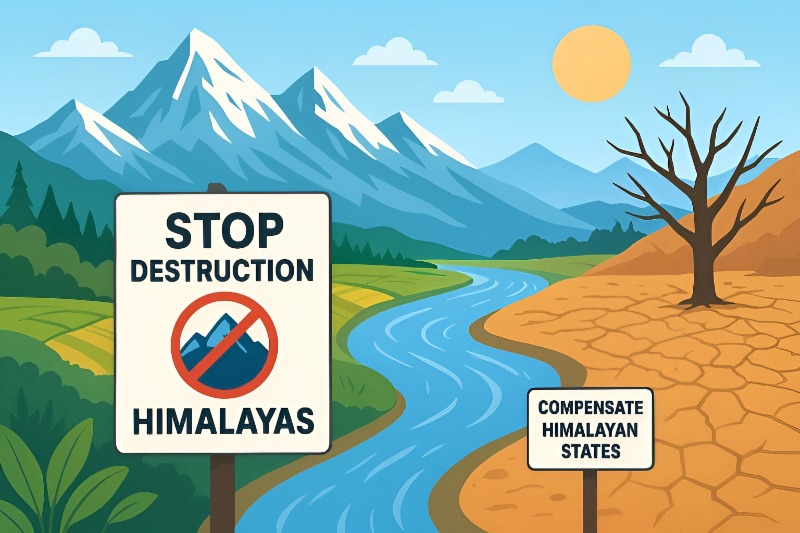
Prologue: When the Mountains Stop Keeping Their Distance
In the middle Himalayas, the night does not simply fall; it rises from the deep valleys, swallowing the chir pine ridges in a bruised purple twilight. In the village of Gajald, nestled in the Pauri Garhwal district of Uttarakhand, this specific hour—traditionally known as godhuli bela or "the time of cow dust"—was once the heartbeat of social life. It was a time of return: cattle herded home with distinct whistles, children shouting across harvested terrace fields, and neighbors exchanging news over stone walls.
Today, Gajald is silent. As the sun dips behind the Trishul peak, the village undergoes a transformation that resembles a wartime curfew more than a rural dusk. The heavy wooden doors of traditional koti houses are bolted shut. Livestock are pushed into reinforced concrete sheds, their anxiety mirroring that of their owners. The courtyard, once the theatre of Pahadi life, is abandoned to the creeping shadows. Inside, conversations are hushed. Ears are tuned to the slightest sound outside—the snap of a dry twig, the sharp alarm call of a barking deer (Kakar), or the guttural sawing sound of a leopard on the prowl.
This silence is not unique to Gajald. It echoes across the entire Indian Himalayan Region, a 2,500-kilometer arc of active geology that stretches from the snow-dusted deserts of Ladakh to the humid rainforests of Arunachal Pradesh. Over the last eight years, specifically between 2018 and 2026, this landscape has become the theatre of an escalating, complex, and structural war. It is not a war of ideology, but of biology and survival.
The mountains, which for centuries maintained a respectful distance from human settlement, are no longer keeping that distance. The buffer is gone. What is unfolding is not a series of freak accidents, but a structural reckoning. From the "ghost villages" of Uttarakhand to the apple belts of Himachal, and from the warming winters of Kashmir to the severed elephant corridors of Assam, the conflict between man and animal has shifted from the margins of the wilderness to the absolute center of everyday life.
The Geography of Fear: Living Under the Leopard’s Shadow
In Uttarakhand, the leopard has become the defining symbol of this new fear—not because it is new to the landscape, but because it has become intimately familiar with human space. The conflict here is not confined to the edges of protected areas like Corbett or Rajaji; it has metastasized into revenue villages and district headquarters.
The crisis in Pauri Garhwal offers a grim case study. Here, the phenomenon of palayan (outmigration) has unintentionally reshaped predator behavior. As unemployment drives people to the plains, the "Ghost Village" phenomenon accelerates. Fields that were once manicured terraces revert to wild scrub and Lantana bushes. This ecological succession invites wild boar and barking deer closer to the abandoned homes. Prey moves in. Predators follow.
The few residents who remain—often the elderly, women, and children—find themselves living on isolated islands in a recovering forest that is teeming with teeth. In late 2025, Gajald became a grim emblem of this siege when a single leopard held the community hostage for weeks. The attacks did not occur deep in the jungle but in the domestic sphere—near water taps and on school paths.
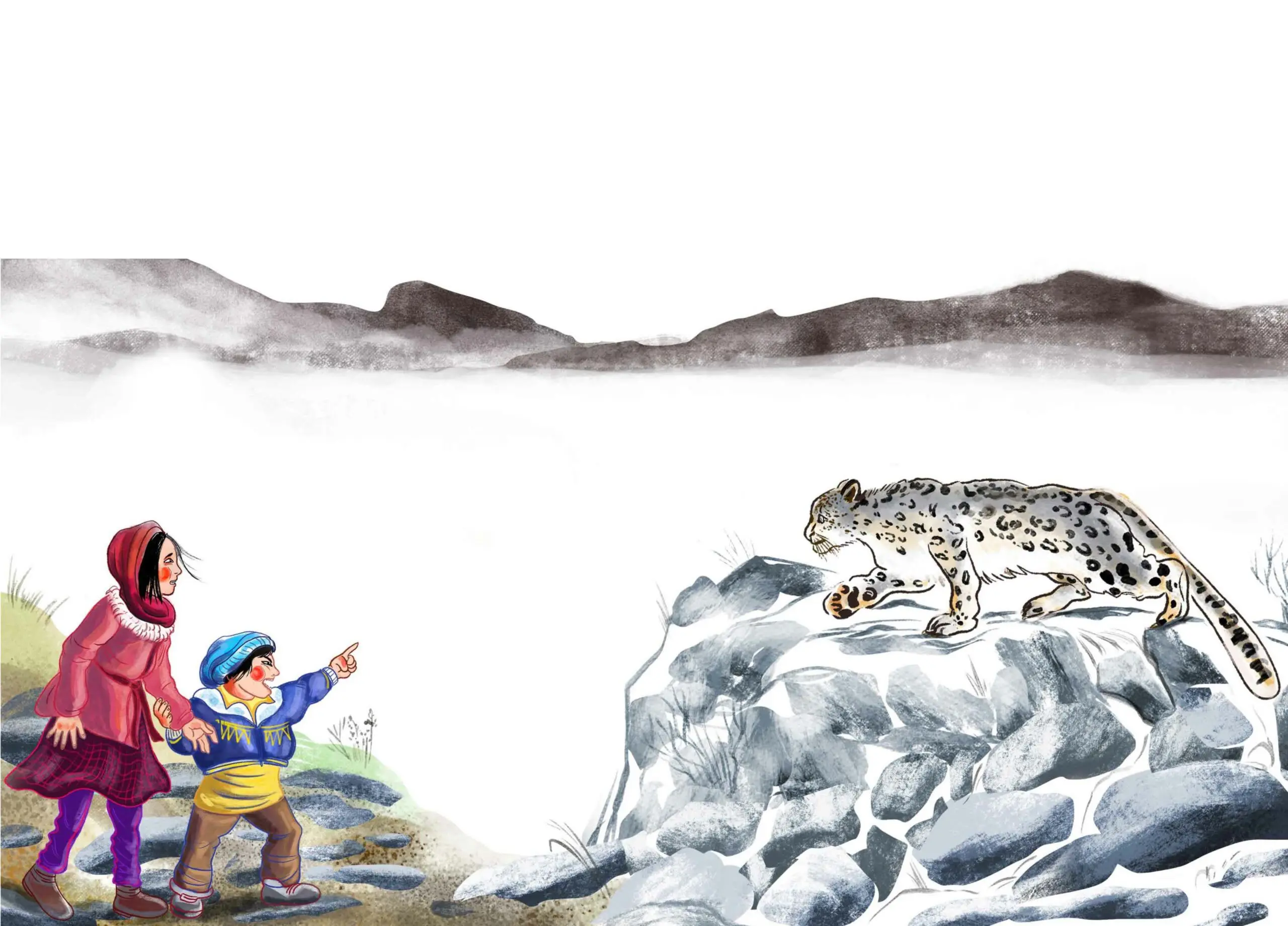
The fear was so palpable that the district administration declared a "lockdown," shutting 55 schools in the Bada, Chardhar, and Dhandhari circles. Children attended class online not because of a pandemic or snow, but because the walk to school had become lethal. When the leopard was finally put down by sharpshooter Joy Hukil after a 48-day operation, the autopsy revealed the tragedy behind the terror: the animal had worn-out claws, broken canines, and an empty stomach. This was not a healthy predator expanding its territory; it was a desperate survivor, old and infirm, pushed into the village by hunger and the inability to hunt wild prey.
In villages like Dabra and Bharatpur, where populations have dropped to single digits, the feedback loop is deadly. A farmer named Sudhir Sundriyal captured the existential dread: "If I grow wheat, the wild boar eats it. If I buy a cow, the leopard kills it. If I send my child to school, I have to walk with a sickle in my hand. What is the point of living here?". The abandonment creates a "perfect cave" for predators; in Pithoragarh, a leopardess was found birthing three cubs in the hay-store of an empty house. The structure built by humans had become a maternity ward for the wild.
The Bear That Didn’t Sleep: Insomnia in the Apple Belt
Cross the Yamuna to the west, and the antagonist changes shape. In Himachal Pradesh and Kashmir, the conflict is dominated by the Himalayan Black Bear (Ursus thibetanus). If the leopard is a stealthy assassin, the bear is a battering ram, and its aggression is being fueled by a force invisible to the naked eye: climate change.
The bear’s calendar has been rewritten. Climate data from 2023 to 2025 indicates warmer winters and delayed snowfall across the northwest Himalayas. This biological disruption prevents bears from entering full hibernation. Physiologically, a bear preparing for dormancy enters hyperphagia, a state of intense feeding frenzy. When the temperature fails to drop, the biological switch to sleep never flips. The bear remains awake, in a high-metabolic state, but the mountains are frozen and barren of natural food.
A bear awake in January is a "hangry" bear—desperate, aggressive, and without patience. In the apple belts of Kullu, Chamba, and Kinnaur, this desperation meets opportunity. Orchards have expanded steadily into former forest lands, offering a seasonal calorie bonanza. A single bear raid can undo decades of labor; a mature apple tree, snapped in minutes by a foraging bear, represents twenty years of lost future income.
In Kashmir, this disruption has taken a dystopian turn. Bears are now appearing in urban and peri-urban spaces like Handwara and the outskirts of Srinagar. They are filmed rummaging through dumpster bins near hotels, fighting with stray dogs. This "garbage habituation" is a one-way street to conflict. Once a bear associates the smell of humanity with the taste of food, its fear erodes. It becomes a "problem animal," and often, the only solution left for the Wildlife Department is lifelong captivity, as relocation rarely works for habituated animals.
The human cost is severe. In January 2026, three villagers in Chamba were mauled while trying to chase a bear from a maize field. These incidents highlight a breakdown of the natural order: the seasons are no longer guiding the animals, leaving them to improvise in a landscape dominated by humans.
Giants in a Broken Memory: The Northeast’s Corridor Crisis
Move east to the humid jungles of Assam and Arunachal Pradesh, and the scale of the conflict becomes immense—both literally and metaphorically. Here, the protagonist is the Asian Elephant (Elephas maximus), a species that requires continuity: vast spaces, predictable routes, and ancestral memory.
Elephant corridors once stretched across the forests, linking India, Bhutan, and Bangladesh in a seamless genetic highway. Today, those corridors are severed by the geometry of development: tea estates, highways, railways, transmission lines, and settlements.
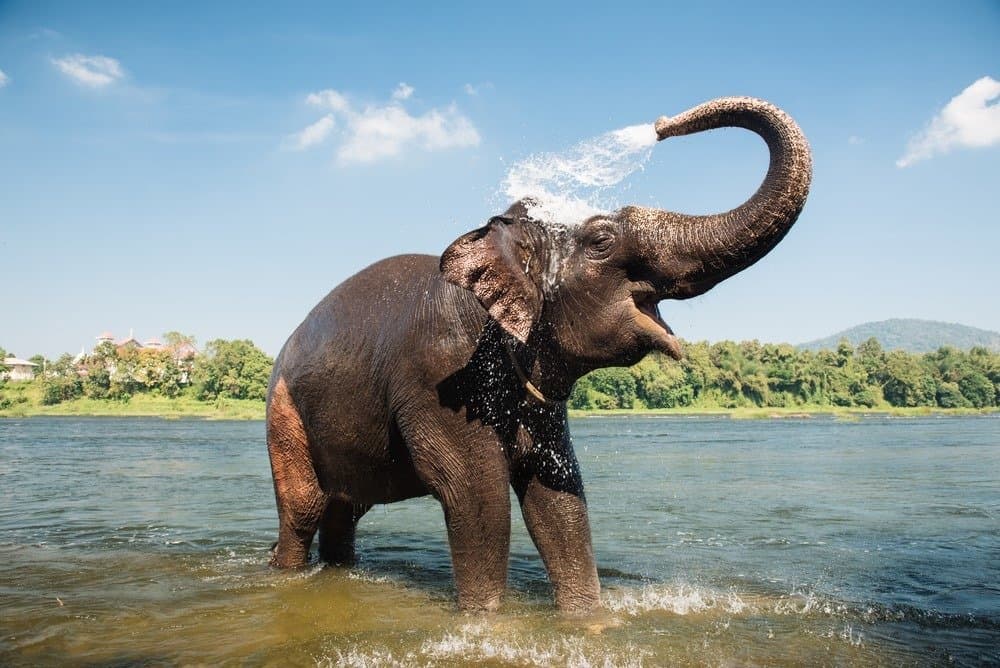
The conflict here is industrial. The railway tracks cutting through the Deepor Beel and the corridors of Udalguri have become death traps. In late 2024, a speeding train mowed down a matriarch and a calf, an incident that sparked outrage but changed little in the operational reality. The trains continue to run, and the elephants, driven by a memory older than the tracks, continue to walk.
In the West Kameng and Tawang districts of Arunachal, the Monpa and Sherdukpen communities have lived with elephants for centuries. But as infrastructure blocks traditional paths, herds are forced into villages. In 2025, the village of Mirem became a flashpoint when a herd, confused by blinding construction lights and blocked by a new wall, rampaged through the settlement.
Yet, Mirem also offers a glimpse of resilience. Instead of violent retaliation, the community adopted "bio-fencing". They planted dense hedges of lemon and chili—plants that elephants detest—to guide the herds away from rice paddies. They built Tongis (tree-top watchtowers) to spot the giants early. It is a fragile truce, maintained not by concrete, but by a deep understanding of the animal's biology.
The Ghost of the High Desert: The Snow Leopard’s Quiet War
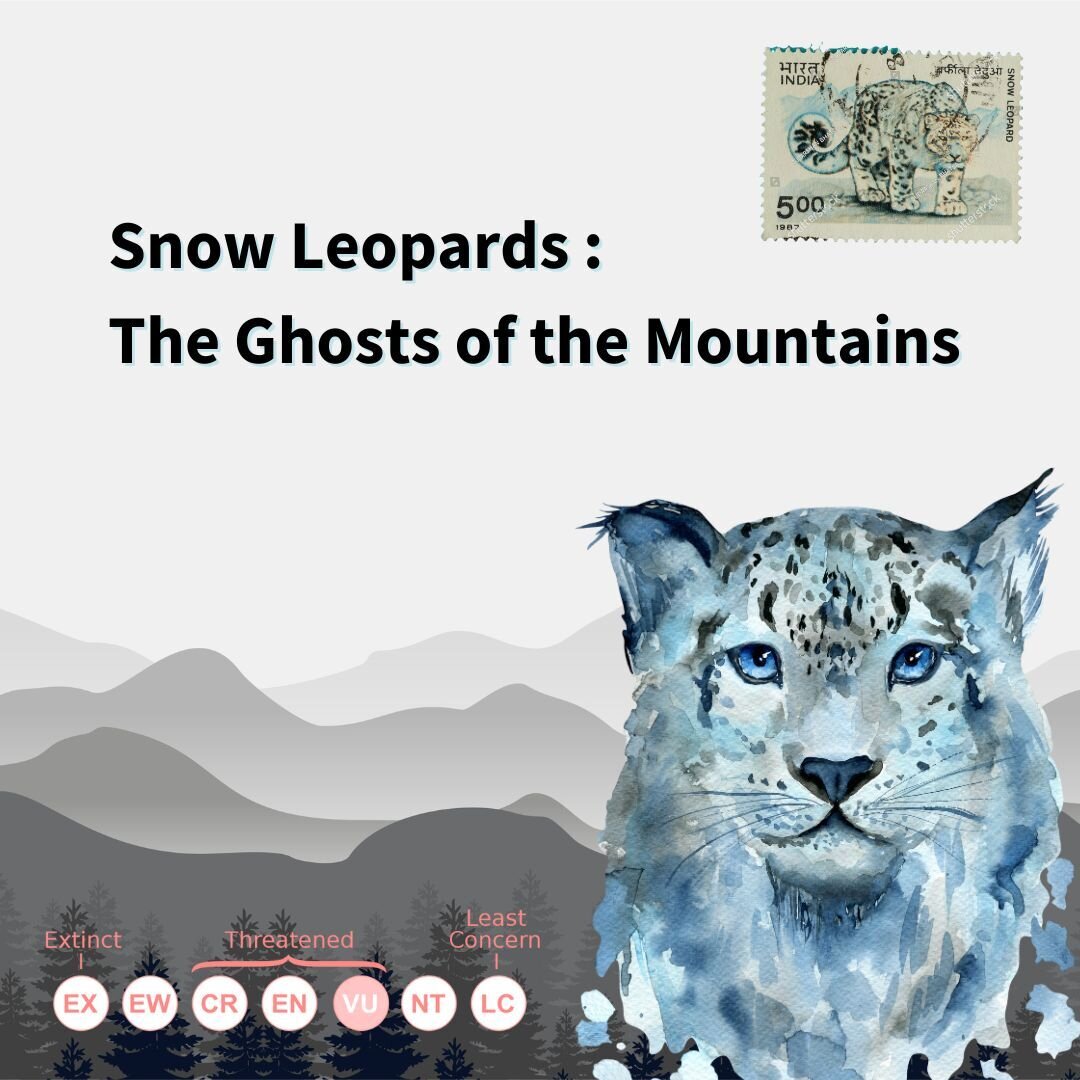
In the trans-Himalayan cold deserts of Ladakh and Spiti, the conflict wears a quieter, more elusive face. The Snow Leopard (Panthera uncia), the "Ghost of the Mountains," is increasingly turning to livestock as climate change alters the prey dynamics of the high altitude.
In Spiti and Ladakh, the snow line is receding, allowing the Common Leopard (Panthera pardus) to move up into the Snow Leopard’s territory, while simultaneously forcing the Blue Sheep (Bharal)—the snow leopard’s primary prey—to graze on lower pastures used by domestic livestock. This "range compression" brings the predator into direct contact with the herder’s yaks and goats.
The violence here is sudden and catastrophic. When a snow leopard enters a poorly protected corral, it often engages in "surplus killing," slaying dozens of animals in a panic-driven frenzy. For a pastoral family, losing 20-30 sheep in a single night is not just a loss; it is economic ruin.
However, this region has also birthed one of the most successful coexistence models. The Nature Conservation Foundation (NCF) worked with communities to build predator-proof corrals and launched a community-based livestock insurance scheme. Villagers pay a premium, which is matched by the project. If a snow leopard kills a yak on the open pasture, the community verifies the claim and compensates the herder immediately.
The result is a profound shift in attitude. In villages like Kibber, snow leopard tourism now generates crores of rupees. The cat is worth more alive than dead. Retaliatory killings have virtually stopped. It is a powerful demonstration that economics, not just enforcement, determines the fate of the wild.
The Drivers of Dissonance: Why Now?
Why has this conflict escalated so sharply between 2018 and 2026? The answer lies in a "polycrisis"—a convergence of infrastructure, climate change, and waste.
The Concrete Scars: The Indian government’s push for strategic connectivity, exemplified by the Char Dham Pariyojana, has fundamentally altered the landscape. Wide blacktop roads act as "fear barriers" for prey species like goral and deer, preventing them from accessing water or mating grounds. When prey populations fragment, leopards are left with empty forests and turn their gaze toward the village goats on the other side of the road. The road has not just moved people faster; it has brought predators closer.
Similarly, the Rishikesh-Karnaprayag Railway, an engineering marvel running mostly through tunnels, has disrupted riparian vegetation with millions of tons of excavated "muck," destroying the prime habitat for bears. While "wildlife crossings" are part of the design, the true test will be whether animals actually use these eco-bridges or if the railway becomes another wall in the mountains.
The Trash Trap: Tourism has exploded, and with it, the generation of organic waste. Towns like Manali, Joshimath, and Mussoorie often lack adequate processing, leading to garbage being dumped down hillsides. For a bear, a garbage dump is a restaurant. Studies in 2025 showed bears in the Drass sector of Ladakh consuming plastic wrappers and biomedical waste. This "anthropogenic food subsidy" baits animals into conflict, eroding their natural fear and turning them into "problem animals".
The Scars You Cannot See: The Human Toll
Statistics count bodies and compensation checks, but they miss the trauma. A groundbreaking 2025 report exposed a hidden epidemic of Post-Traumatic Stress Disorder (PTSD) among conflict survivors in Uttarakhand.
Consider the story of Liaqat Ali, a Van Gujjar pastoralist. Attacked by a tiger in 2020, he survived the physical wounds, but his mind remains trapped in the forest. Five years later, the rustle of dry leaves triggers a "freeze" response. He suffers from blinding headaches in the sun and memory lapses that destroyed his livelihood. Estranged from his family and labelled "mad," he is a casualty of a war that has no medical camps for the mind.
Or consider Rakhi Rawat, attacked by a leopard at age ten while saving her brother. Now fifteen, she lives with chronic nightmares and cannot walk to school alone. While the state pays for death or injury, there is zero provision for mental health support. Survivors are left to the mercy of jhad-phook (exorcism) or silence.
The conflict also wears a gendered face. Women are the primary resource gatherers—fetching water, cutting grass (ghaas), and collecting wood. They are on the front lines. When a woman is killed, the household economy unravels. In Pauri, the fear has altered gender dynamics; men working in cities blame women for "carelessness," while women, terrified, refuse to enter the forest, forcing the sale of livestock and pushing the family into poverty. The "Ghost Village" often begins with a woman who is too afraid to cut grass.
The Mitigation Lab: Designing for Coexistence
If total separation is impossible—and the last decade proves it is—then the solution lies in adaptation. Across the Himalayas, a "Mitigation Lab" is evolving, moving from crude barriers to sophisticated coexistence strategies.
The Digital Fence: Technology is playing a pivotal role. The "Animal Intrusion Detection and Repellent System" (ANIDERS), developed by the Wildlife Trust of India, acts like a digital scarecrow. Using infrared sensors, it detects animal heat signatures and triggers lights and sounds—a tiger's roar or human shouting—to repel them. Crucially, the sounds change pattern to prevent habituation. In trials, ANIDERS reduced crop raids by 80%, offering a passive defense for ghost villages lacking manpower.
The Early Warning: In Corbett Tiger Reserve, an AI-based surveillance network now watches the forest boundary. Thermal cameras feed data to an AI that identifies tigers and elephants, sending alerts to rangers and village sirens. This gives villagers a critical ten-minute head start to lock their doors. It shifts the paradigm from reacting to a kill to preventing the encounter entirely.
The Green Wall: In the Northeast, "Bio-fencing" has emerged as a sustainable alternative to expensive electric fences. The simple genius of planting lemon and chili hedges leverages the elephant’s natural aversions to protect crops without violence.
The Cultural Anchor: Ultimately, the most powerful mitigation is cultural. In Sikkim, the "Himal Rakshaks" (Honorary Mountain Guardians)—local villagers and yak herders—are legally empowered to patrol high altitudes. They bridge the gap between the state and the community, enforcing conservation not as an imposition from outside, but as a duty from within.
Conclusion: The Negotiated Wild
As we look toward 2030, one truth stands stark against the snow peaks: The Himalayas can no longer be fenced. The "Fortress Conservation" model, where animals stay in parks and humans in villages, has failed. The landscape is too fluid, the animals too adaptable, and the human footprint too pervasive.
The leopard will walk through the village. The elephant will cross the railway track. The bear will seek calories where the forest fails it.
The choice before us is not between people and wildlife, but between panic and planning—between retaliation and redesign. Coexistence is not a romantic ideal of harmony; it is a gritty, negotiated living. It involves acknowledging fear, loss, and risk, while refusing the illusion that one side can be erased.
It requires building infrastructure with corridors in mind before the concrete is poured. It requires restoring degraded forests so animals have a reason to stay. It requires integrating mental health support into compensation, recognizing that a mauling is a wound to the soul as well as the body.
As evening falls again in the hill villages, the people still listen for movement beyond the door. The mountains watch, as they always have. But the silence that falls at dusk need not be the silence of abandonment. With wisdom, planning, and a renewed compact with the wild, it can be the silence of a coexistence regained—a world where the leopard and the shepherd navigate the same narrow trails, wary, respectful, but alive.
The mountains are asking for new rules of engagement. Whether we listen will determine the future of the Himalayan arc.




Add a Comment