

At dawn, the Sundarbans does not wake up; it merely changes state. The darkness that shrouds the delta for twelve hours retreats, not with a burst of light, but with a slow, grey withdrawal, revealing a world that is neither fully land nor fully water. The tide slips away from the creeks with a deceptive calm, exposing vast stretches of glistening mudflats that were liquid only hours ago. Mangrove roots, twisted and ancient, rise from the sludge like knotted fingers, breathing in the heavy, saline air. It is in this transient hour—when the boundary between the village and the wild is most porous—that the wooden boats rock gently in the narrow channels, and men step down into knee-deep mud to begin their day.
This is the most dangerous hour of the day. It is not that the men are unaware of the risks; they know this forest with an intimacy that borders on the spiritual. They know which bends in the creek narrow without warning, transforming a navigable passage into a trap. They know where the dense Phoenix paludosa scrub—the Hental bushes—grows thick enough to conceal a four-hundred-pound predator mere feet away. They know the smell of a tiger long before they ever see it, a pungent, musky warning carried on the wind. They know when the birds stop calling, signaling a presence that demands absolute silence. Yet, despite this visceral knowledge, they step into the mud. They do so because in the Sundarbans, hunger has its own undeniable logic, and often, hunger outruns fear.
For generations, the people of this archipelago—a sprawling network of 102 islands woven together by a labyrinth of tidal waterways—have lived on the razor's edge of the world’s largest mangrove ecosystem. They have ventured into the dense thickets to collect honey, wax, firewood, fish, and crabs, their local economy intrinsically tied to the bio-resources of the delta. But this dependence forces them into the domain of an apex predator that has adapted remarkably to this semi-aquatic world. The Royal Bengal Tiger of the Sundarbans is not the animal of textbooks or savannah documentaries. It is a creature of the tides, an amphibious phantom that swims kilometres without rest, hunts silently from the water, and ambushes not from behind trees, but from reeds, banks, and shadows.

The narrative of this landscape, particularly in the years stretching from 2018 to early 2026, has darkened significantly. What was once a story of occasional, tragic accidents has evolved into a complex saga of climate change-induced habitat loss, rising sea levels squeezing apex predators and humans into shrinking islands, and a socio-economic desperation that drives fishermen into what locals call the "jaws of the tide".
The Winter of Loss
The fragile nature of this coexistence was shattered in the latter half of 2025, a period that proved particularly deadly for the forest-dependent communities of the Indian Sundarbans. In late November, a series of ambushes sent shockwaves through the fishing villages, challenging the official narratives that conflict was under control. On November 23, 2025, the precarious truce between man and nature broke down completely. A young fisherman, whose identity would soon become a symbol of the collective vulnerability of the crab-collecting community, was ambushed by a tiger deep within the mangroves.
The attack followed a harrowing, familiar pattern. It occurred in the early morning, that lethal twilight window. The victim was focused on his gear, anchoring his small boat near a narrow creek to set crab traps, unaware of the tiger lurking in the dense scrub lining the banks. In the Sundarbans, the tiger does not roar before it strikes; it is a force of silence. The predator often swims noiselessly toward the boat or leaps from the high banks, dragging the victim into the forest before companions can even draw a breath. His body was recovered the following morning, a grim task undertaken by a joint team of forest officials and courageous villagers who worked through the night.
Tragedy, however, rarely arrives alone in the delta. In that very same week, Sambhu Sardar, a 32-year-old resident, lost his life under strikingly similar circumstances. Sardar was collecting crabs with companions when he was snatched from his boat, the sheer stealth and power of the attack leaving no room for escape. The violence continued bleeding into early December, when Tapas Haldar, aged 45, was killed near the Sindurkathi forest area. Haldar was working in shallow waters—a necessity for certain types of crab and fish collection—when the forest claimed him.
These sequential attacks paralyzed the workforce. In villages like Kishorimohanpur, Kultali, Gosaba, and Patharpratima, the fear was palpable. Routine signs of tiger presence, such as fresh pugmarks found near human habitations, were enough to impose a self-declared curfew, emptying entire neighborhoods and keeping children from school. The water, usually a source of life, had become a source of dread. Yet, as one local put it with chilling pragmatism, "We have to feed our stomachs before we can fear the tiger".
The Paradox of Conservation
To understand why these tragedies are recurring with such grim regularity, one must look beyond the immediate horror of the attacks and examine the ecological engine driving them. The Sundarbans is currently caught in a "paradox of conservation". Global and national conservation efforts have been undeniably successful in stabilizing and even increasing tiger populations. Data indicates that tiger numbers in the Indian sector have risen from 106 in 2014 to approximately 101 by the 2022 census, with the Bangladesh sector reaching 125 by 2024.
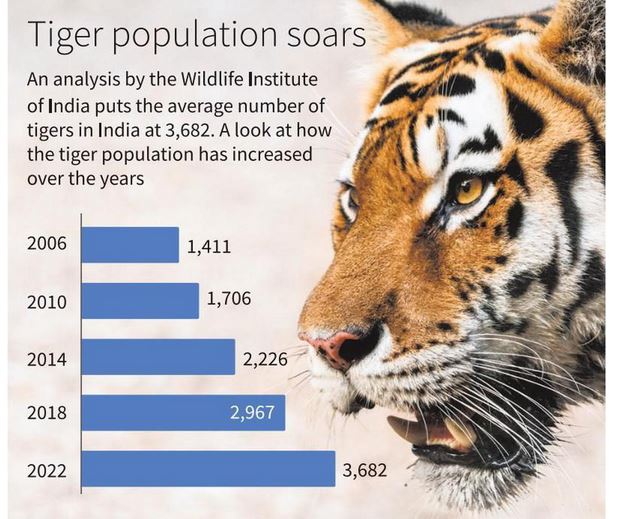
While this biological recovery is a triumph for biodiversity, it has created a spatial crisis. Tigers are fiercely territorial animals, requiring vast swathes of land to roam and hunt. As their numbers swell, the competition for space intensifies. Dominant males monopolize the prime habitats deep within the forest, forcing sub-adult tigers, the elderly, or weaker individuals to the periphery. In a mainland forest, these marginalized tigers might disperse into a buffer zone. But in the Sundarbans, the "buffer" is a fiction; the land mass is constantly eroding due to rising sea levels, meaning the "real estate" available for tigers is shrinking even as their population grows.
This compression effect creates a "pressure cooker" scenario. The tigers are physically pushed closer to the fringes, to the very edges of human settlements like Kultali and Gosaba. They are not invading human territory out of malice; they are refugees of their own success, squeezed by the dual forces of population growth and habitat loss.
Compounding this spatial crisis is a critical ecological failure: the decline of the natural prey base. Reports from both sides of the border indicate a worrying reduction in the abundance of spotted deer (Axis axis) and wild boar (Sus scrofa), the tiger's primary food sources. This scarcity is multifaceted, driven by poaching, salinity stress that degrades the grasslands deer rely on, and the devastation of cyclones. When the density of natural prey falls below a critical threshold, tigers are forced to expand their home ranges. A hungry tiger is a risk-taking tiger. In the absence of deer, the predator may view livestock, or tragically, humans crouching in boats, as alternative prey. The tiger explores new islands, follows scent trails, and edges closer to human activity—not because it prefers human flesh, but because the forest is failing to feed it.
The Climate Multiplier
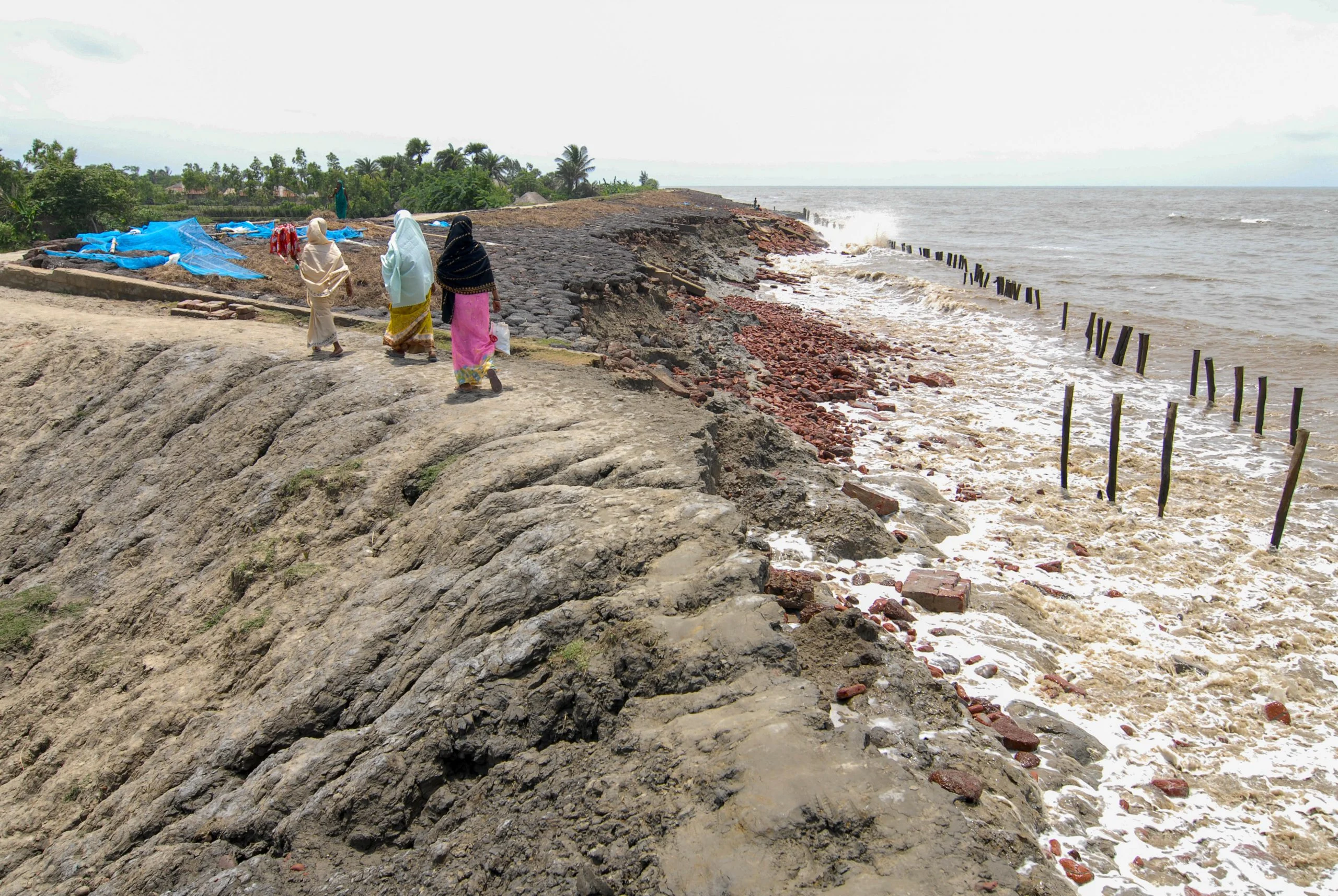
Looming over this biological drama is the spectre of climate change, acting as a potent conflict multiplier. The Sundarbans is experiencing sea-level rise at a rate nearly double the global average, a hydrological aggression that is physically consuming the mangrove islands. Four islands have been completely submerged in the last two decades, and as the forest recedes, the buffer between the wild and the settled vanishes.
The impact is not just physical but chemical. The intrusion of high-salinity water, exacerbated by a relentless parade of cyclones—Amphan in 2020, Yaas in 2021, and Remal in 2024—degrades the quality of the mangrove forest. Salinity affects the distribution of prey species, which prefer freshwater sources. Consequently, tigers must roam further to find freshwater ponds, a search that often brings them perilously close to village ponds and paddy fields.
The cyclones also destroy the fragile infrastructure meant to keep the two species apart. Cyclone Amphan, for instance, damaged over 80% of the nylon net fencing that separates the forest from the villages. These fences, often the only line of defense, are rendered useless by the fury of the storms, leaving villages vulnerable to tiger entry for months until repairs can be completed. In this dissolving world, the conflict is elemental; it is a fight for the same shrinking space, the same resources, and the right to survive.
The Economics of "Illegality"
The human side of this equation is defined by an absolute lack of alternatives. For the four and a half million people living on the Indian side, the forest is not merely a backdrop but a demanding provider. Agriculture, once a staple, is increasingly unviable due to the salinity creeping into the soil. A single failed season, a single inundation of saltwater, can push an entire household toward the forest.
However, the state’s management of this resource has created a legal trap for the poorest. The "Boat License Certificate" (BLC) system, which regulates fishing, is woefully inadequate. There are only roughly 924 active BLCs for a population of over 140,000 fishers.
 This bureaucratic bottleneck forces the vast majority of fishers to enter the forest "illegally." They venture into the core areas—where fish and crab yields are higher—without permits, not out of defiance, but out of necessity.
This illegality has lethal consequences. When a "legal" fisher is killed, there is a recognized pathway to compensation. But when an "illegal" fisher is taken by a tiger, the death often goes unreported to avoid prosecution. The family is left in destitute silence, denied the compensation that could prevent their total economic collapse. The desperation is such that despite knowing the risks—despite the recent deaths of Sambhu Sardar and Tapas Haldar—neighbors continue to launch their boats the very next dawn. They are trapped in a system where they must risk death in the forest to avoid the certainty of hunger at home.
The Sociology of the "Tiger Widow"
Behind the statistics of conflict lies a profound and gendered tragedy, one that remains largely invisible to the outside world. The phenomenon of the "Tiger Widow" (Bagh-Bidhoba) represents a unique intersection of ecological disaster, patriarchal oppression, and administrative apathy. In the intricate cosmology of the Sundarbans, the tiger is often seen not just as an animal but as the enforcer of the forest deity Bonbibi or the wrath of the demon Dakshin Rai.
When a man is killed by a tiger, the blame is frequently, and cruelly, shifted to his wife. A prevailing superstition holds that the husband died because his wife was "impure" or failed to perform her rituals correctly. Consequently, these women face "social death" long before their physical demise. They are branded with derogatory terms like swami kheko ("husband eater") or apoya (cursed). This stigma manifests in tangible exclusion: they are barred from religious functions, auspicious ceremonies like weddings, and sometimes even from communal village life. In extreme cases, they are relegated to "widow hamlets" (Bidhoba Palli), isolated ghettos of grief where they live in ostracized poverty.
For decades, the Forest Department utilized the bureaucratic loophole of "illegal entry" to deny compensation to these widows. If a victim died in the "core area" or without a BLC, the death was classified as the result of an illegal act, absolving the state of liability. This policy left thousands of families without the Rs. 500,000 ex-gratia payment that could have provided a lifeline.
However, the legal landscape shifted dramatically with the case of Shantibala Naskar vs. The State of West Bengal in 2023. Shantibala, whose husband was killed in a restricted zone, fought a legal battle that resulted in a landmark judgment by the Calcutta High Court. The court ruled that the "transgression of law"—entering the core area—cannot be a ground to deny compensation for the loss of life caused by a wild animal. The judgment established that the state has a duty to protect its citizens and compensate for wildlife conflict regardless of zone boundaries.
Despite this victory, implementation remains sluggish. As of 2025, reports indicate that while the policy has changed to remove the core/buffer distinction, bureaucratic hurdles persist. Widows still struggle to obtain the necessary post-mortem reports and police certificates, often facing hostility from local officials who view them as complicit in illegal forest entry. The psychological toll is immense. Recent research utilizing the "Eco-Psychiatry" framework reveals that 72% of Post-Traumatic Stress Disorder (PTSD) cases in these villages are directly linked to tiger attacks. Yet, resilience persists. Driven by the need to feed their children, many widows defy the stigma and return to the creeks to fish, or organize into self-help groups supported by NGOs.
The Modern Mitigation Arsenal
In the face of this escalating crisis, the response has evolved from passive fencing to proactive, high-tech surveillance. The period of 2025–2026 marks a turning point in the integration of technology into conservation management in the Sundarbans. In February 2025, a groundbreaking pilot project was launched in the Indian Sundarbans involving the deployment of AI-powered cameras. Unlike traditional camera traps that store images on SD cards retrieved weeks later, these "smart cameras" process data in real-time. Positioned along the nylon net fences and vulnerable creek crossings, they use edge computing to identify tigers and instantly transmit alerts to forest range officers.

This allows for an immediate response. If a tiger is detected moving toward a village, the Forest Department can dispatch Rapid Response Teams (RRTs) to drive the animal back before it breaches the perimeter. This shifts the strategy from reaction—responding to a mauled body—to prevention—intercepting the tiger before it strikes. Complementing the cameras are thermal-imaging drones, which are critical for night operations. In incidents like the straying case in Deulbari in mid-June 2025, drones allowed teams to track the heat signature of the tiger through dense cover, ensuring safe capture without risking human lives in a blind search.
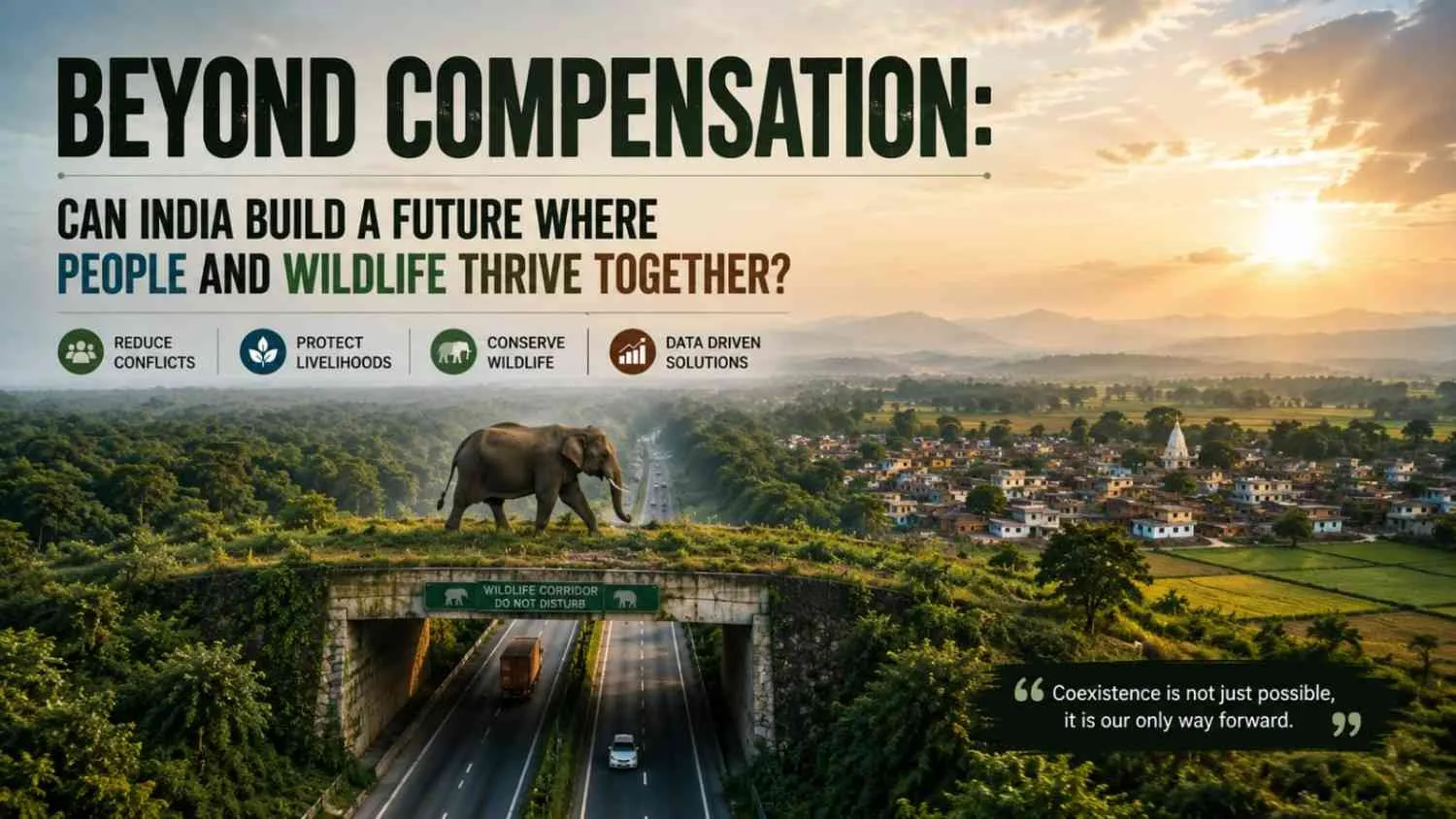
Alongside the high-tech wizardry, the "Kultali Model" of coexistence has emerged as a template for community engagement. Proposed as a national model by the NTCA in 2025, it integrates technology with deep human networks. The model relies on village volunteers known as Bagh Bondhus (Friends of the Tiger), who act as the eyes and ears of the forest department. Trained to secure the perimeter when a tiger strays, they prevent the mob violence that historically resulted in the killing of tigers. This was evident in early 2025, when a tiger strayed into Kishorimohanpur. Instead of retaliatory killing, the villagers alerted forest staff, leading to a successful capture and release—a success story cited as evidence of changing attitudes.
Even low-tech innovations have found a place in this arsenal. The practice of wearing tiger deterrent masks on the back of the head—predicated on the theory that tigers prefer to ambush from behind and will avoid prey that appears to be "watching" them—remains in use. Interestingly, this technique, born in the Sundarbans, has been exported to other conflict zones in India, such as Karnataka and Kerala, demonstrating the region's role as a pioneer in conflict adaptation.
Livelihoods as Conservation
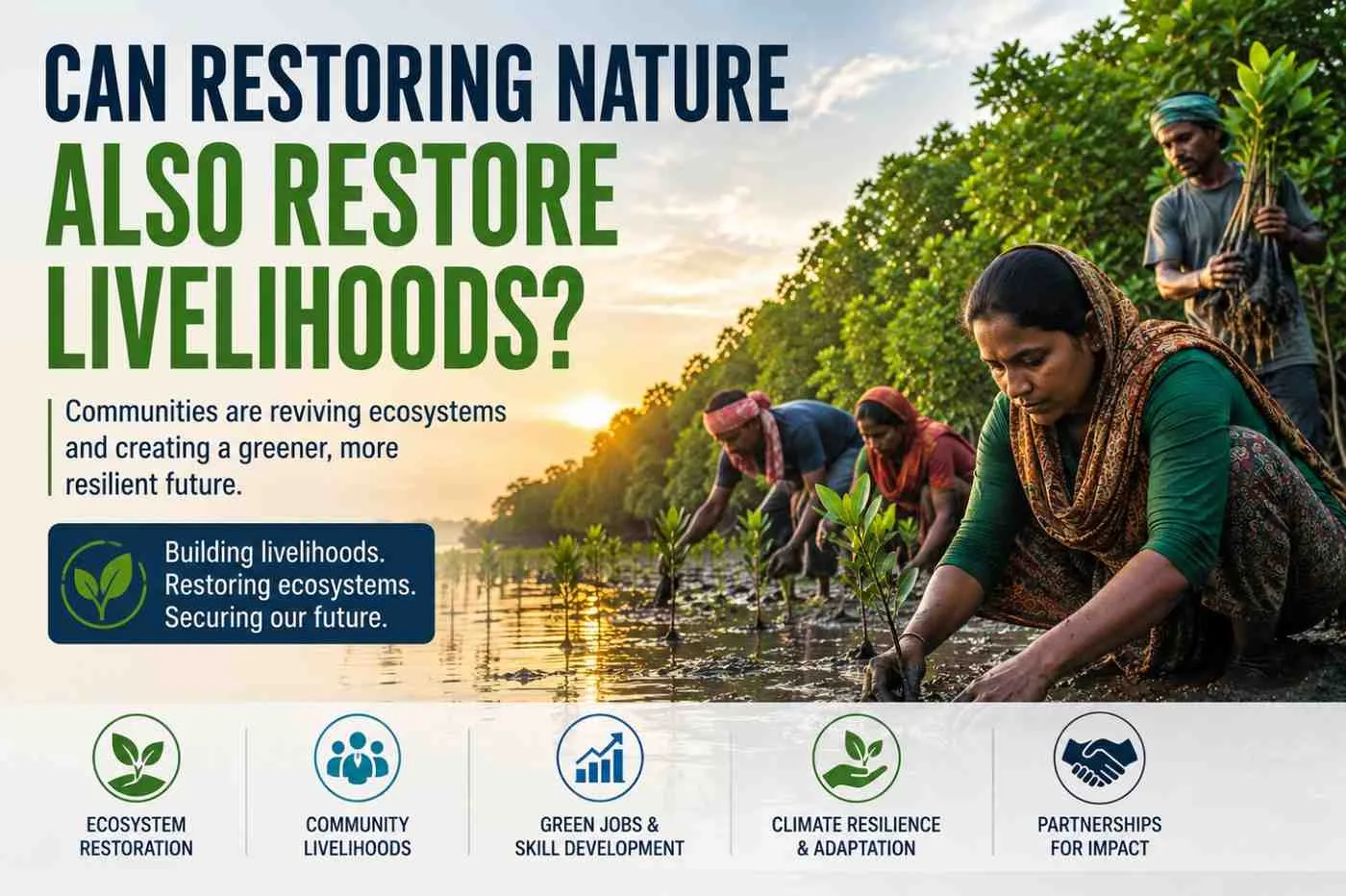
Ultimately, however, no amount of technology can solve the conflict if the human dependence on the forest remains absolute. To stop the killings, one must stop the entry. Reducing this dependence is the holy grail of conflict mitigation. Among the various alternative livelihood schemes, mud crab farming (Scylla olivacea) has shown significant promise. A 2025 economic report highlights its viability, noting a Benefit-Cost Ratio (BCR) of 3.48, significantly higher than traditional agriculture in the saline belt.
The logic is simple and effective: unlike open forest collection, farm-based rearing allows widows and fishers to earn a living without entering the tiger's domain. The "fattening" of crabs in cages or ponds within the village provides a steady income, with collectors earning an average monthly profit of Rs. 3,000–4,000. While still male-dominated, the sector is increasingly accessible to women, offering a lifeline to tiger widows who can manage small ponds near their homes.
However, the history of the Sundarbans is littered with the failures of "top-down" approaches. Large-scale Social Forestry Programs and centralized apiary initiatives have often failed due to a lack of community ownership. Research indicates that interventions that ignore local power dynamics often result in elite capture—where the benefits are siphoned off by village leaders, leaving the poorest, who are most likely to enter the forest, with nothing. Without transformative institutional change that empowers the marginalized, these programs become "paper successes" that do not effectively reduce the human footprint in the forest.
A Borderless Crisis
The challenge of the Sundarbans is further complicated by the fact that the ecosystem ignores political borders. Tigers swim across the fluid frontier between India and Bangladesh freely, and effective management requires synchronicity between the two nations. In February 2025, a significant cross-border dialogue was convened in Kolkata, bringing together conservationists and policymakers to address this shared crisis. The meeting underscored the need for a unified "landscape approach," with strategies including the standardization of response protocols for straying tigers and the exchange of data on tiger movements.
On the Bangladesh side, the launch of the Conservation and Restoration Initiatives in the Sundarbans Region (CRIS) project in late 2025 marks a major step. Funded by the Agence Française de Développement (AFD), this project aims to restore the ecological health of the Sundarbans Impact Zone, directly benefiting the tiger habitat and potentially reducing the pressure that drives them toward villages.
Some experts, like Anamitra Anurag Danda, propose even more radical long-term solutions, such as "managed retreat." This "Vision 2050" argues for the strategic relocation of populations from the most vulnerable, sinking islands to safer zones. While politically controversial due to the deep attachment locals have to their land, economic analyses suggest that the net benefits of such a retreat—in terms of safety and ecosystem services—far outweigh the "business-as-usual" costs of constant disaster relief and conflict.
Conclusion: A Fragile Equilibrium
As the calendar turns through 2026, the Sundarbans remains a landscape on a knife-edge. The conflict here is not merely a wildlife management issue; it is a climate justice issue, where those who contributed least to global emissions pay with their lives. The narrative is evolving, shifting from fatalism to active management—from the "husband eater" stigma to the empowered entrepreneur, from the helpless victim to the volunteer armed with a thermal drone.
The deployment of AI and the legal victories in compensation cases offer glimmers of hope. However, the fundamental drivers—climate change and poverty—remain formidable. As long as the deer population is scarce and the rivers turn salty, the tiger will wander. And as long as the nets are empty and the land is barren, the fisherman will enter the creek.
The "fragile harmony" of this UNESCO World Heritage site depends not just on saving the tiger, but on saving the people who live in its shadow. The forest demands humility; it cannot be controlled, only negotiated with. Here, humans are not masters, and tigers are not villains. Both are survivors, navigating a dissolving world, sharing a shrinking space, and testing the limits of coexistence one tide at a time. The question that hangs over the mangroves is not whether the conflict will end, but whether humanity can construct a model that respects the boundaries of the wild while ensuring the dignity of the human. Until then, the dawn will continue to bring both the promise of a catch and the silence of the ambush, in the jaws of the tide.





Add a Comment