Kolkata | August 13, 2026
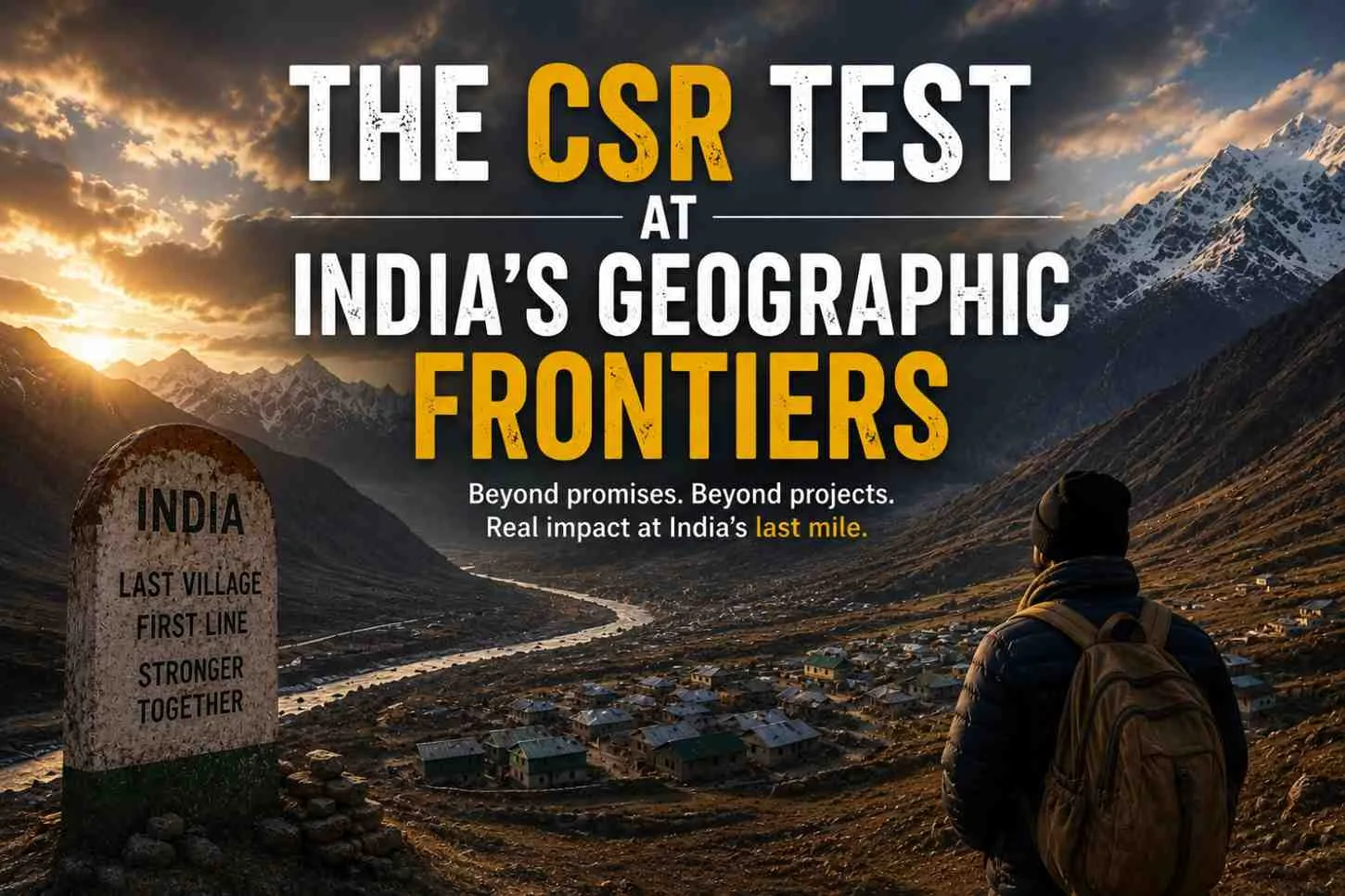
| As the government pushes development deeper into India’s border areas, corporate CSR could bring money, technology and new livelihood opportunities- but the real test is whether those investments work beyond the launch event. |
| Summary India’s remote border villages are receiving greater attention through the Vibrant Villages Programme and other government-led development efforts. Corporate CSR can complement these initiatives by supporting areas such as off-grid solar, rural infrastructure, digital connectivity and livelihood opportunities. But reaching India’s geographic frontiers requires more than announcing projects or allocating funds. CSR interventions need to respond to documented local needs, coordinate with government programmes, involve communities and demonstrate that the money committed actually translates into functioning infrastructure and lasting benefits. For companies, the real measure of border-area CSR should therefore be what reaches communities, what changes after implementation and what continues to work once the funding ends. |
| Keywords CSR in border villages, corporate CSR India, CSR and rural development, Vibrant Villages Programme, VVP-II, border area development India, CSR impact, last-mile CSR, corporate philanthropy India, border village development, rural infrastructure, off-grid solar, rural livelihoods, CSR-government convergence, community-led development, CSR impact assessment, sustainable rural development, India border villages, CSR projects India, corporate social responsibility |
Can CSR Fill the Gaps in India’s Border Development?
For years, corporate CSR in India has largely focused on familiar areas such as education, healthcare, sanitation and rural development.
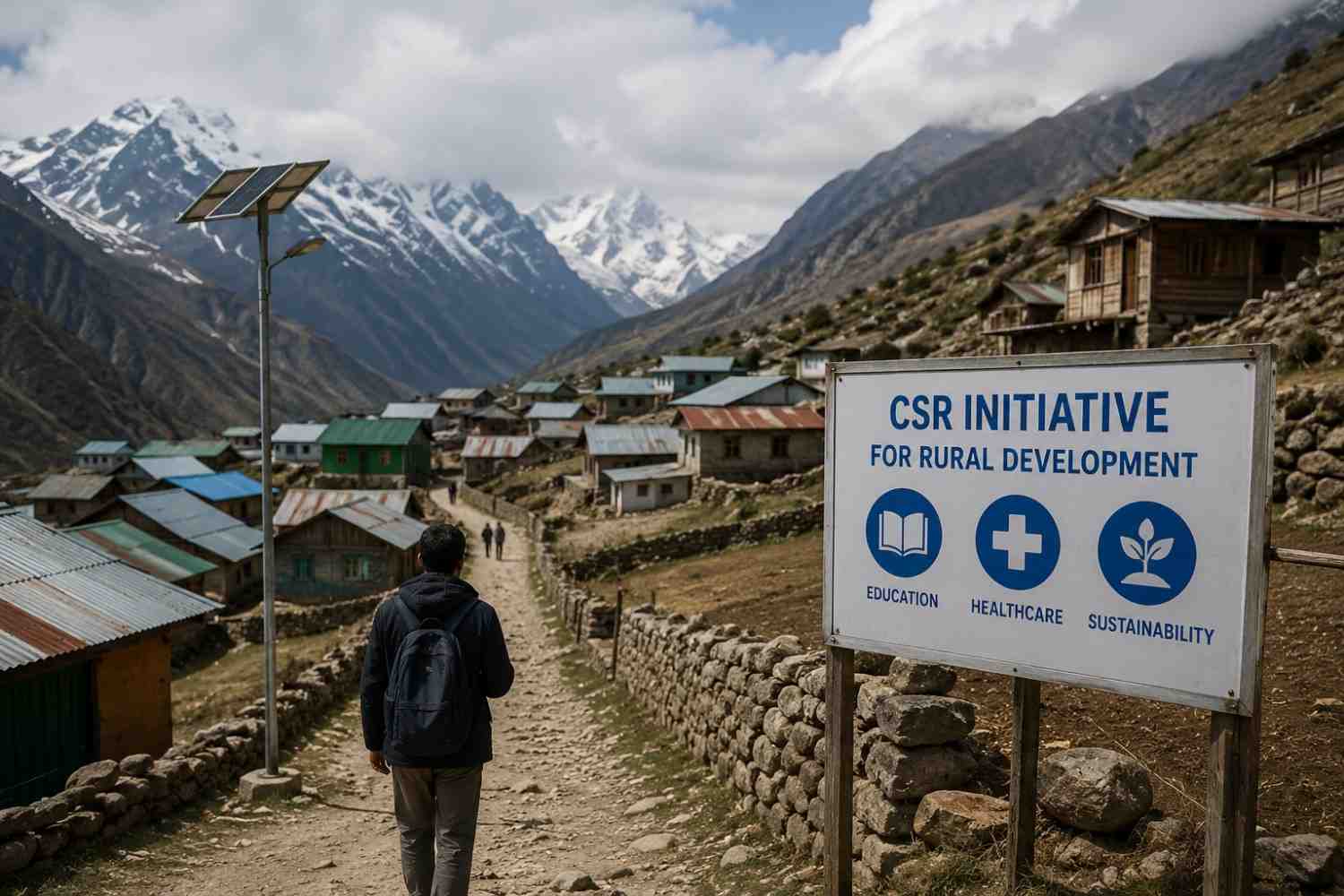
Border villages, however, often require a different kind of approach. Many of these communities are located in remote and difficult terrain, far from major markets and essential services.
Limited connectivity can make access to basic facilities difficult, while a lack of local employment opportunities often pushes younger residents to move elsewhere in search of work.
The government’s Vibrant Villages Programme aims to address some of these challenges by improving infrastructure, connectivity, renewable energy access, education, healthcare, tourism and livelihood opportunities in border communities.
As these efforts expand, corporate CSR could play a useful supporting role. However, that role needs to be clearly defined.
CSR should not simply duplicate projects that government agencies are already responsible for delivering.
Instead, companies can focus on gaps where private funding, technology, specialised expertise or stronger implementation support can make a meaningful difference.
This could allow CSR programmes to complement government efforts while addressing specific needs that may otherwise remain overlooked.
CSR support could focus on areas such as decentralised solar power, digital connectivity, livelihood opportunities, skill development and support for local businesses. The key is to address genuine gaps rather than duplicate existing efforts.
A village benefits little from repeated funding for the same project when other essential needs continue to go unaddressed.
The most effective CSR initiatives should therefore begin with two simple questions: What does the community actually need, and what is already being covered by government programmes?
Answering these questions requires coordination with district administrations and local authorities before projects are planned. Most importantly, it means listening to local communities and ensuring that their needs and priorities shape the projects designed for them.
A company may see solar power as the most urgent need, while local residents may place greater importance on roads, healthcare, irrigation, market access or livelihood opportunities.
Without meaningful community participation, even well-funded CSR initiatives can end up addressing the wrong priorities.
The same approach should continue after a project is launched.
Installing solar panels alone does not make a project successful. Its real value depends on whether households receive reliable electricity, whether the system remains functional over time and whether access to power improves everyday activities and livelihoods.
This becomes especially important in remote communities, where repairing or maintaining infrastructure can be costly and difficult.
The bigger opportunity may lie in linking basic infrastructure directly to local livelihoods and economic opportunities.
Reliable electricity, for instance, could support small shops, local businesses, refrigeration, digital services, tourism facilities and small-scale processing units.
Better road and digital connectivity could help local producers reach wider markets, while skill-development programmes could have greater value when they are connected to actual jobs or opportunities to start local businesses.
However, these benefits should be measured, not simply assumed. Before a project begins, companies should establish a clear baseline: What is the current situation? Who needs support? And what change is the project expected to achieve?
After a project is implemented, its success should not be judged only by how many people attended a programme or how many facilities were installed.
Instead, companies should ask more meaningful questions: How many households are actually benefiting? Is the infrastructure still functioning? Has access or income improved? Who may still be left out? And can the project continue to deliver benefits after CSR funding ends?
Government programme → CSR gap-filling → Community participation → Working infrastructure → Livelihood outcome
Effective border- area CSR should complement public programmes and end with a measurable community outcome- not simply a completed project.
The real question is not how much is spent, but how effectively it is used. A large CSR announcement can create the impression of substantial investment, but a financial commitment is not the same as actual expenditure.
Transparent reporting should clearly distinguish between the amount promised, the amount actually spent and the number of people who benefited.
The same distinction applies to infrastructure projects. A completed building is an output; a facility that remains functional and is regularly used by the community is an outcome.
The real measure of success is not what was delivered, but the lasting difference it makes. To understand the true impact of a CSR project, companies should compare results with the situation before the intervention or with similar villages.
This can help determine how much of the change can reasonably be linked to the CSR initiative, rather than to government spending, economic changes or other development programmes in the area.
This is particularly important in border regions, where development is rarely the work of a single organisation.
In many communities, development efforts involve multiple stakeholders, including government departments, local authorities, NGOs and companies.
CSR reporting should therefore be clear about what the company actually contributed.
If improved electricity access was achieved through the combined efforts of several agencies, a company should clearly acknowledge the shared contribution rather than presenting the entire outcome as its own impact.
The credibility of CSR depends on accurately reporting the change a company has contributed to, rather than taking sole credit for outcomes achieved through collective efforts.
The most credible CSR approach should clearly show the entire journey of a project: the problem identified, the solution planned, the money spent, the people reached and, most importantly, the change achieved.
It should also explain who will maintain the project after CSR funding ends. This could involve training local operators, working with community groups or setting up a maintenance arrangement with the relevant local administration.
Without a plan for what happens next, even a well-funded project can gradually become an unused asset in a village that already has limited resources.
For CSR in border areas to create lasting value, companies need to move beyond the traditional question of “How much did we give?” The more important question is: “What changed because we gave it?”
India’s border communities do not need CSR that is simply more visible. They need initiatives that are better targeted, better coordinated and more accountable.
Ultimately, the success of corporate philanthropy is not measured by the distance between a company’s headquarters and a remote village.
It is measured by the distance between a CSR announcement and a lasting improvement in people’s lives.
What Should the Last Mile of CSR Really Look Like?
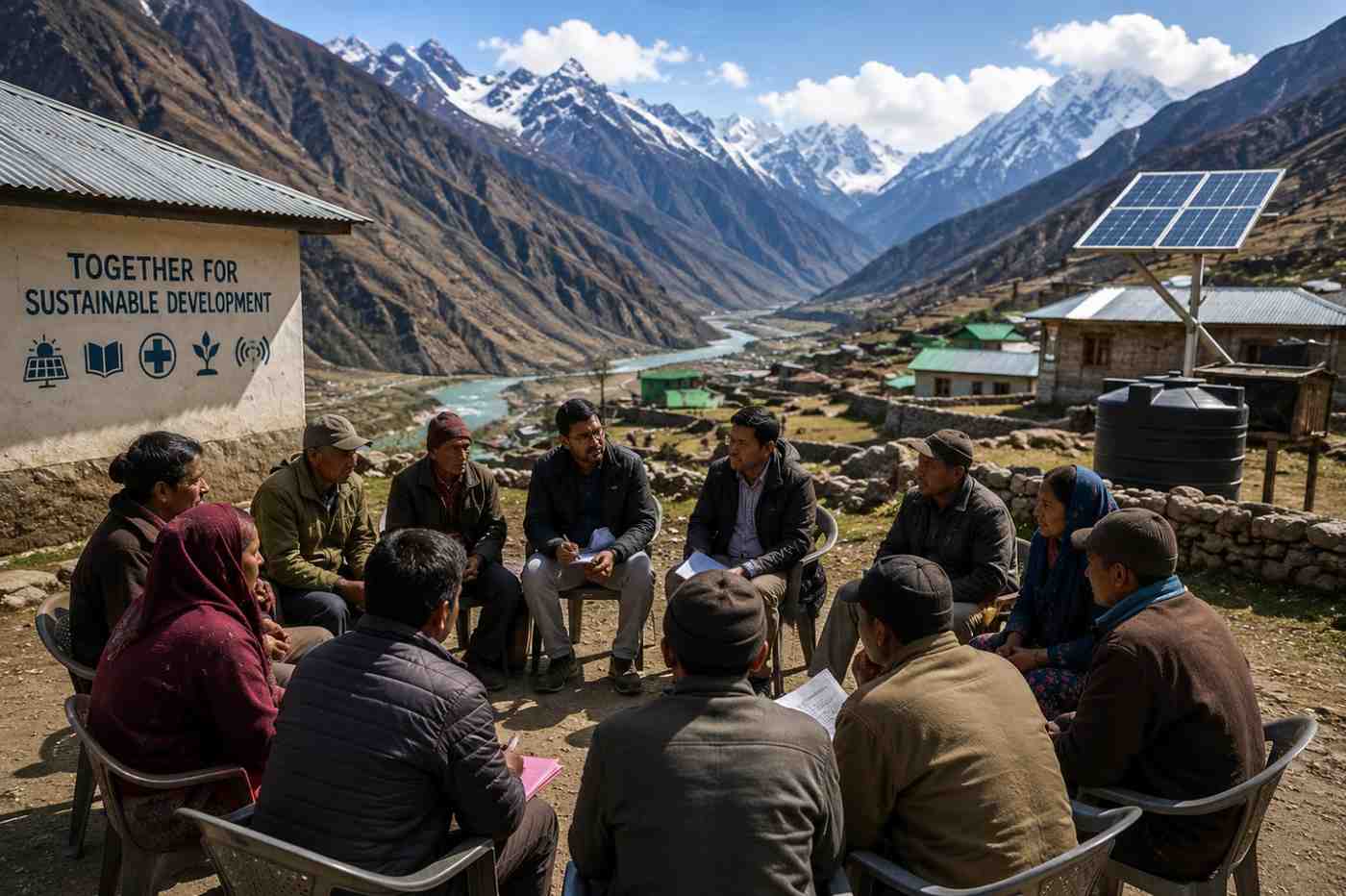
For India’s border villages, CSR can play a valuable role-but only when it complements government efforts and responds to the needs of the communities it aims to serve.
The opportunity is significant. VVP-II covers 1,954 villages across 15 states and two Union Territories, focusing on livelihoods, connectivity, energy, infrastructure, skills, tourism and telecom access.
But the scale of these efforts should not become the only measure of success.
A stronger CSR approach would begin by identifying and documenting a genuine local need, coordinating with the administration and involving residents in planning.
Companies should clearly define their own contribution and track more than just the money spent or assets created.
The real question is whether those assets continue to function and whether they lead to measurable improvements in people's lives and livelihoods.
This becomes even more important because the government has acknowledged that no third-party evaluation has yet been conducted for VVP-I.
While hundreds of projects have been completed and many more are being implemented through different government programmes working together, stronger evidence is still needed to understand their long-term impact.
For companies, this gap should be seen as an opportunity - not a limitation.
Rather than treating border-area CSR as another category of philanthropy, businesses can approach it as a long-term development partnership, where infrastructure, reliable energy, skills and livelihoods work together to create lasting value. Ultimately, the last mile of CSR is not measured by the distance between a corporate office and a remote border village. It is measured by the distance between money being announced and meaningful change being sustained.
Hence, the future of corporate philanthropy will be judged by the lasting change it helps create.
Primary Sources
- Ministry of Home Affairs, Government of India. Vibrant Villages Programme-II (VVP-II). 18 March 2026.
Covers the ₹6,839 crore outlay, 1,954 villages, 15 States and 2 UTs, and the programme’s focus on livelihoods, roads, energisation, village infrastructure, skills, tourism, education and telecom connectivity.
PIB — Vibrant Villages Programme-II - Ministry of Home Affairs, Government of India. Vibrant Villages Programme. 28 July 2026.
Provides the latest VVP-I implementation figures, including projects sanctioned/completed, funds released, road connectivity, electricity, off-grid solar and other convergence projects. It also states that no third-party evaluation has been conducted under VVP-I.
PIB — VVP-I Implementation Update - Ministry of Home Affairs, Government of India. Funds for Border Area Development Programme (BADP). 1 April 2026.
Important for the article's discussion of BADP, government convergence and the transition toward VVP. The release states that BADP is currently in its sunset phase, with funds being allocated for committed liabilities.
PIB — Border Area Development Programme - Ministry of Home Affairs, Government of India. Vibrant Villages Programme — Scheme Details.
Useful for the programme's original objectives, including livelihood generation, renewable energy, roads, village infrastructure, telecom connectivity and reversing outmigration, as well as its outcome-oriented approach.
PIB — Vibrant Villages Programme Background - Ministry of Home Affairs, Government of India. Vibrant Villages Programme-II — Scheme/Programme Document.
Details VVP-II's objectives, funding structure and focus areas, including livelihoods, electrification, roads, skills, SHGs/FPOs, tourism, education and telecom connectivity.
Ministry of Home Affairs — Scheme Document



Add a Comment