Compliances

Compliances refer to the process by which an organization ensures that it follows all applicable laws, regulations, standards, and ethical practices relevant to its operations. This includes adhering to environmental laws, maintaining fair labor practices, and upholding strong governance and transparency standards. Effective compliance helps organizations reduce legal risks, build trust with stakeholders, and operate responsibly within society. It also supports long-term sustainability by aligning business activities with regulatory requirements and ethical expectations.

Showing 2/50

12 May 2026

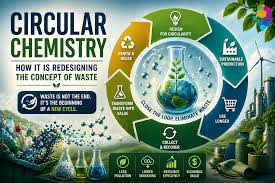
Environmental compliance regarding pollution and waste has moved beyond "end-of-pipe" solutions, such as filters and scrubbers, toward Source Reduction. The traditional linear model of "extract, make, dispose" is being replaced by the Circular Economy, where every byproduct of a manufacturing process is viewed as a potential raw material for another. This is particularly vital in the chemical and textile industries, where water pollution has historically been a major compliance risk. By adopting "Zero Liquid Discharge" (ZLD) systems, factories can treat and recycle 100% of their wastewater on-site, ensuring that no harmful effluents reach local water bodies. In the realm of solid waste, the focus is shifting toward Extended Producer Responsibility (EPR). Regulatory bodies are increasingly holding companies accountable for their products even after they have been sold to the consumer. This has sparked a revolution in "Design for Disassembly." When a product is designed to be easily taken apart, its components can be recovered and fed back into the supply chain. This reduces the need for virgin material extraction and eliminates the environmental harm associated with landfilling. The adoption of Green Chemistry is the final piece of the pollution puzzle. By replacing toxic solvents and reagents with bio-based alternatives, companies can ensure that their processes are inherently safe. This "Benign by Design" philosophy means that even if a leak or spill were to occur, the environmental impact would be negligible. For modern corporations, this represents the ultimate form of compliance: a system so well-integrated with natural cycles that it requires minimal external regulation to remain safe. ...Read more

12 May 2026

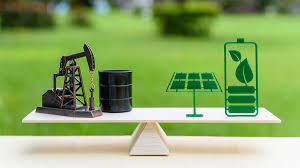
 For decades, industrial growth was synonymous with increased energy consumption, usually derived from fossil fuels. However, the modern compliance landscape—driven by protocols like the Paris Agreement and domestic carbon taxes—now requires a decoupling of productivity from carbon output. This begins with Energy Efficiency First (EE1) principles, where companies audit every motor, HVAC system, and lighting fixture to eliminate "phantom loads." By implementing Variable Speed Drives (VSDs) and high-efficiency heat exchangers, a typical manufacturing plant can reduce its baseline energy consumption by up to 30% without altering its output. Beyond efficiency lies the frontier of On-Site Renewable Generation. Corporate environmental compliance is increasingly defined by the "Power Purchase Agreement" (PPA) and the installation of localized microgrids. By integrating solar arrays, wind turbines, or biomass boilers directly into the industrial site, companies insulate themselves from volatile energy markets while meeting strict renewable energy mandates. In 2026, the gold standard is "Grid-Positive" status, where a company’s facility generates more clean energy than it consumes, feeding the surplus back into the local community. This transforms the factory from an environmental liability into a regional sustainability asset. The final hurdle in energy compliance is the electrification of thermal processes. Many industries, such as cement and steel, require high-grade heat that solar panels cannot easily provide. Innovation in Green Hydrogen and large-scale industrial heat pumps is now allowing these "hard-to-abate" sectors to phase out coal and gas. Compliance in this era is not just about avoiding fines; it is about future-proofing the business against a looming global carbon price that will make carbon-intensive production economically unviable. ...Read more