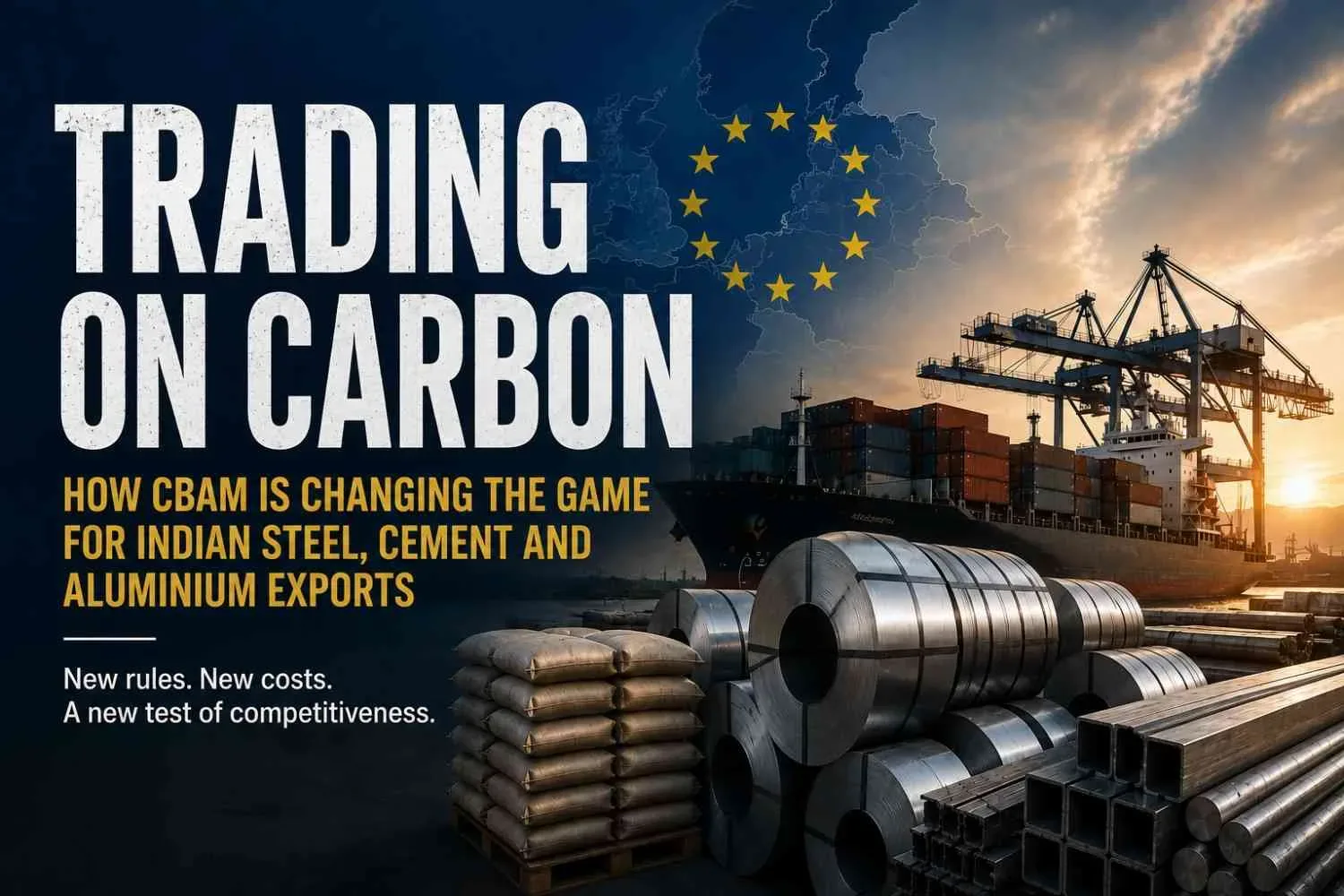
As Europe tightens its carbon border rules, Indian steel, cement and aluminium exporters face a new test of competitiveness
Kolkata | July 31, 2026:
What if the next barrier to global trade is not tariffs or product standards, but carbon emissions?
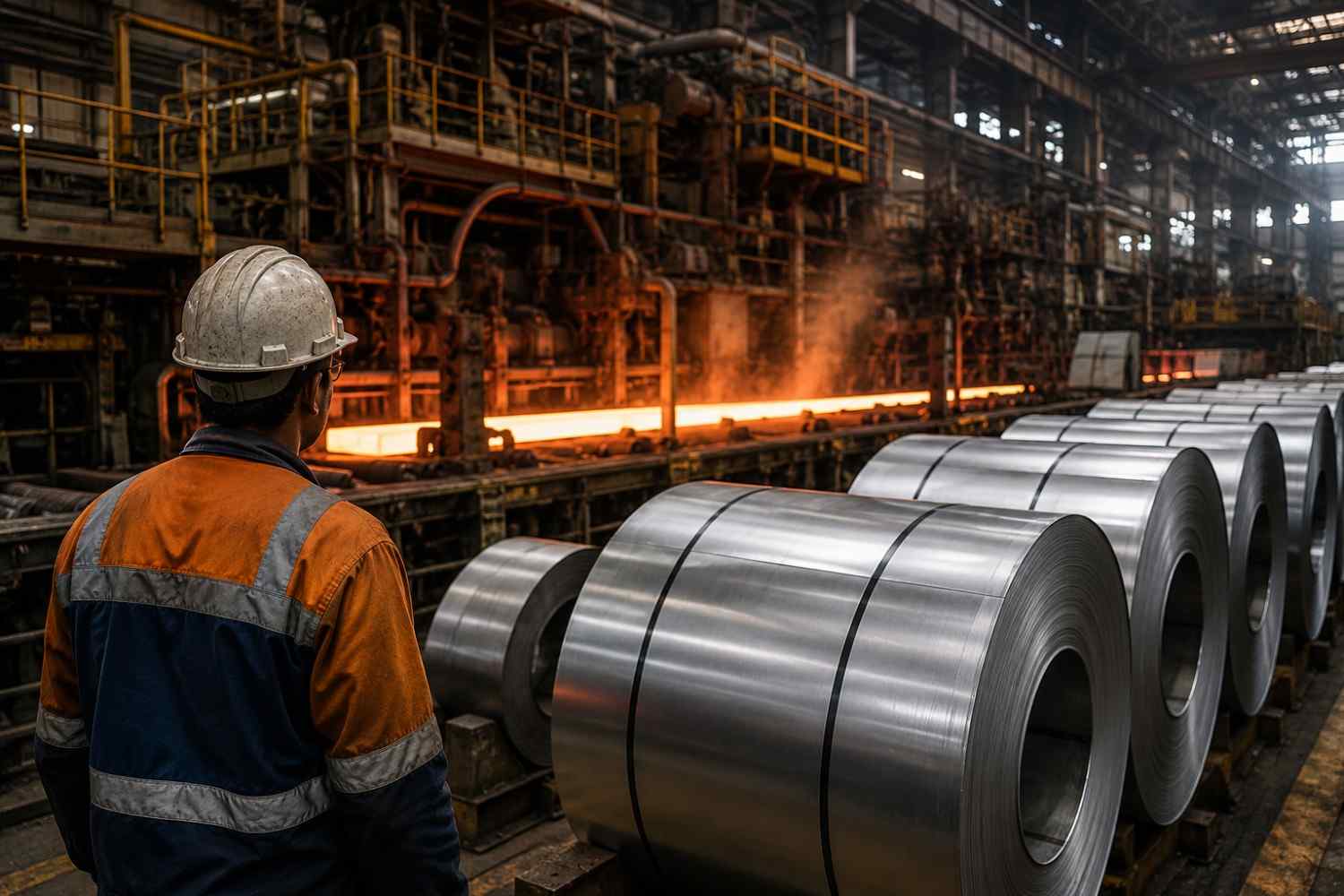
As the European Union moves closer to fully implementing its Carbon Border Adjustment Mechanism (CBAM), that question is becoming relevant. The policy is expected to redefine trade in carbon-intensive products, with Indian exports of steel, cement and aluminium among those likely to feel its impact.
The Carbon Border Adjustment Mechanism is designed to tackle "carbon leakage"- the practice of shifting production to countries with weaker climate regulations while continuing to supply European markets. Under the new system, importers into the EU will have to pay a carbon price on products manufactured in countries that do not have comparable carbon pricing measures.
For Indian exporters, the policy marks a significant shift in the rules of global trade.
For India, the stakes are particularly high. The country is among the world's largest producers of steel and aluminium, with the European Union representing an important export market for both. As CBAM moves into its next phase, exporters will need to provide verified emissions data and may face additional carbon-related costs if their products are produced through carbon-intensive processes.
Experts say the debate is no longer confined to climate policy. It is rapidly becoming a question of who remains competitive in global markets and who risks being left behind.
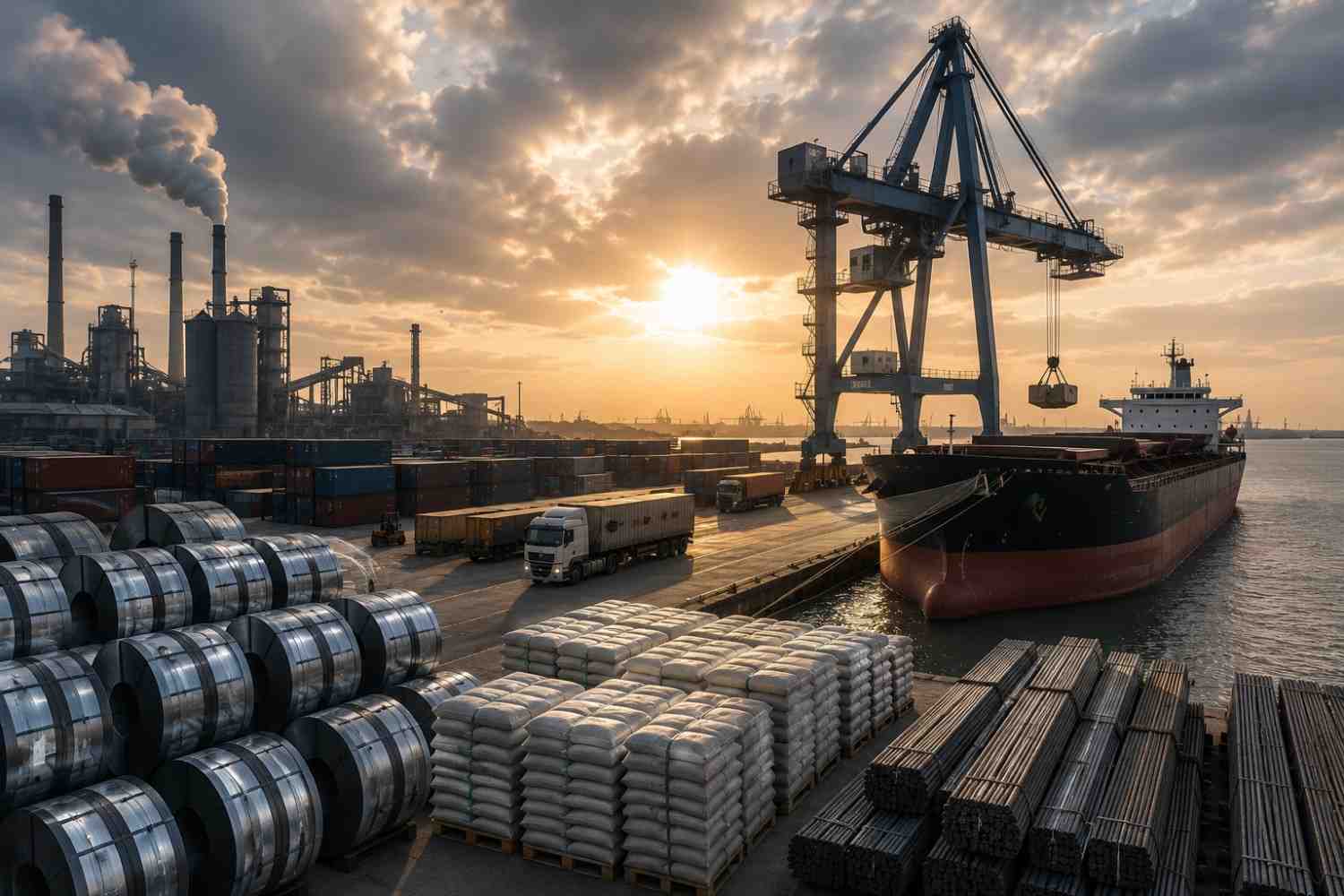
Steel, cement and aluminium form the backbone of India's industrial economy, but they are also among its most carbon-intensive sectors. Coal-based steelmaking, clinker production in cement manufacturing and electricity-dependent aluminium production all contribute significantly to greenhouse gas emissions.
If these industries are unable to reduce their carbon footprint, Indian exports could face higher costs in the European market, making them less competitive than products manufactured using lower-emission technologies.
The transition to CBAM is no longer a future concern- it has already begun.
Exporters are now required to submit emissions data, while carbon-related costs are expected to rise as the mechanism becomes fully operational over the coming years.
Recognising the changing trade landscape, many Indian manufacturers have already started adapting their operations.
Industry response is already beginning to take shape.
Steel manufacturers are investing in renewable energy, energy-efficient technologies and cleaner production methods such as hydrogen-based steelmaking and electric arc furnaces. Cement companies are reducing emissions through alternative fuels, blended cement and waste-heat recovery systems, while aluminium producers are increasing renewable energy use and improving efficiency throughout their operations.
The government is supporting this transition through initiatives aimed at expanding green hydrogen, renewable energy and industrial decarbonisation. At the same time, discussions on carbon markets and green manufacturing standards are gaining momentum as India prepares its industries for evolving global trade requirements.
However, significant challenges remain.
Experts believe CBAM could also redefine global trade patterns. With European buyers placing greater emphasis on products with lower embedded emissions, sustainability is rapidly emerging as a key factor- alongside price, quality and delivery, in determining who remains competitive in international markets.
For businesses, the rules of global trade are beginning to change. Reducing emissions is no longer only about supporting climate action- it is becoming a decisive factor in securing future markets.
As carbon costs gradually become important part of global trade, India's steel, cement and aluminium industries are entering a defining phase.
The companies that move early towards cleaner technologies, lower emissions and transparent reporting could strengthen their global competitiveness.
Those that wait may discover that in tomorrow's marketplace, the cost of inaction is far greater than the cost of transition.
The next chapter of India's export story may be written not only by its factories, but by the carbon footprint they leave behind!
Sources:
- European Commission – Carbon Border Adjustment Mechanism (CBAM)
Official overview of CBAM, covered sectors (including steel, cement and aluminium), reporting requirements, and the definitive regime from 2026.
European Commission – CBAM Definitive Regime - International Energy Agency (IEA) – Carbon Border Adjustment Mechanism (CBAM)
Explains the purpose of CBAM, its link with the EU Emissions Trading System (EU ETS), and its role in industrial decarbonisation.
IEA – Carbon Border Adjustment Mechanism (CBAM) - Economic Survey 2024–25, Government of India
Discusses India's exposure to CBAM, sector-wise export dependence, and the likely impact on iron & steel, aluminium and cement exports. (Invest India)
Economic Survey 2024–25 (Government of India) - Ministry of Statistics & Programme Implementation (MoSPI) – CBAM: An Opportunity for Generating Higher Revenue from Indian Steel Export through Market Diversification
Reviews how CBAM may affect Indian steel exports and explores strategies to maintain export competitiveness. (Ministry of Statistics)
MoSPI – CBAM and Indian Steel Exports Report - The Economic Times – India-EU FTA Includes Dedicated Framework to Address CBAM Concerns
Covers recent developments on how India and the EU are addressing CBAM through ongoing trade negotiations. (m.economictimes.com)
India-EU FTA and CBAM Framework






Add a Comment