
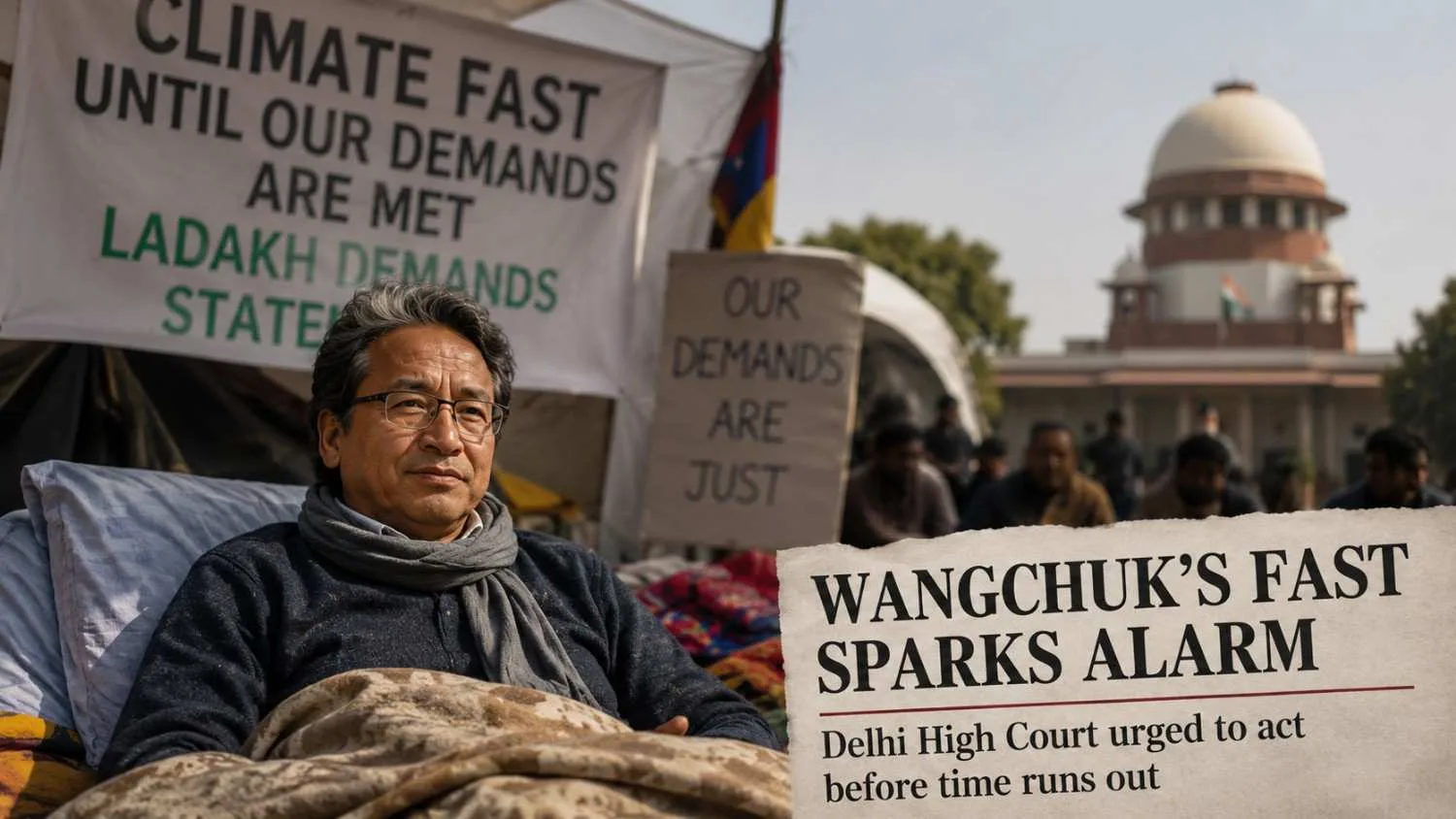
Wangchuk’s Fast Sparks Alarm
Delhi High Court urged to act before time runs out
By Tiyasha Ghosh
How long can a person go without food before the country actually begins to listen?
If the price of protest is a life, does silence become the real tragedy?
And when someone's health starts deteriorating, should we focus on the protest- or on saving the person behind everything?
These questions have taken over as Sonam Wangchuk, the renowned engineer, education reformer and environmental activist from Ladakh, continues his hunger strike in New Delhi.
On 15 July, a Public Interest Litigation (PIL) was filed before the Delhi High Court, seeking urgent medical attention for him. The petition claimed that his condition had worsen after more than two weeks of fasting. It stated that he had lost nearly about 8.5 kilograms and alerted that further delay in treatment could put his life at stake. The court has now urged responses from the Centre and the Delhi Government, bringing the matter into the national spotlight.
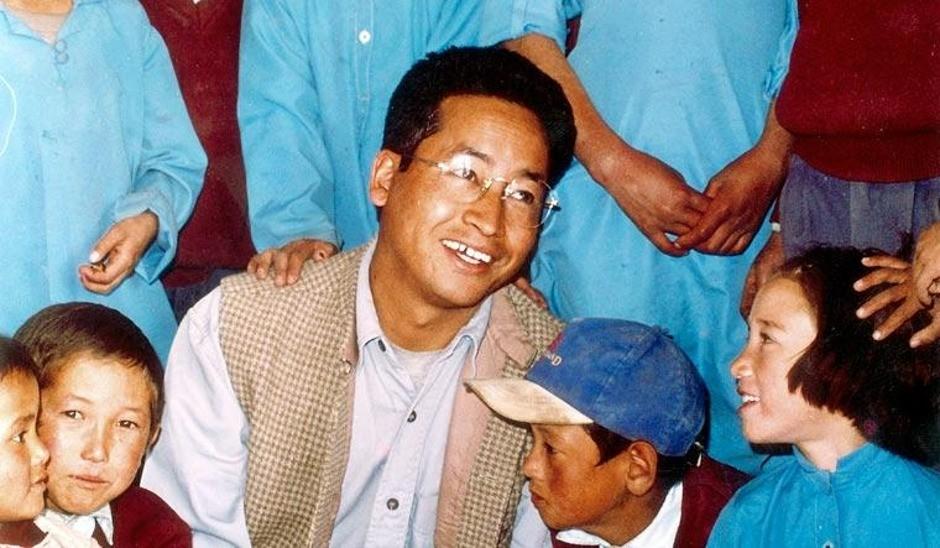
Sonam Wangchuk is known to millions across India.
He is well-renowned for his contribution in education, sustainable development and environmental conservation in the Himalayan region. Born and raised in Ladakh, Wangchuk has spent years promoting innovative learning methods and climate-friendly solutions. His contribution also inspired the popular actor, Amir Khan who played as Phunsukh Wangdu in the Bollywood film - 3 Idiots, making him a prominent figure across the country.
However, this time, it is not one of his inventions making headlines. It is His silence.
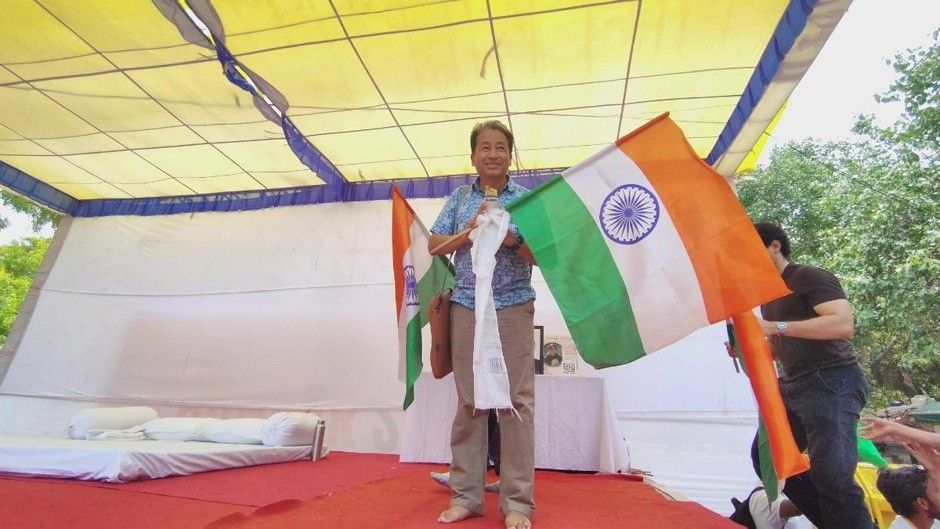
As per court records, Wangchuk's health worsened significantly due to fasting. Doctors have reportedly expressed concerns over rapid weight loss, low blood sugar levels and weakness. The PIL has requested immediate medical support including hospitalisation if necessary, stating that protecting a person's life SHOULD BE the number one priority.
This case has also ignited an important debate.
Should authorities prioritize life over choice and treat hunger strikers?
Some believe immediate involvement is necessary to prevent a tragedy. While others argue that peaceful protest is a democratic right and that any medical action should respect the consent of an individual. The Delhi High Court is expected to audit these legal and ethical questions while considering the plea.
The incident has stirred emotions well beyond the courtroom.
Peaceful protests have been a part of India's democracy since a long time. They have been used often to draw attention to concerns that deserves urgent solution. But when a protest reaches the point where someone's life is at stake, the focus shifts from demands to concerns over human lives.

The situation warns us that dialogue delayed is dialogue denied. Early listening can often stop conflicts before it turns into an emergency.
As the country waits for the next hearing, many people are hoping for two outcomes- one, Sonam Wangchuk receiving the medical aid he needs, and two, open discussions to get to the root of protesters' concerns.
For now, onwards, the court will be deciding the next legal step.
But the real question goes far beyond those four walls.
Is this how a democracy looks like - waiting until a voice is nearly gone?
Source
• Reuters
• NDTV
• The Times of India
• Hindustan Times



Add a Comment