
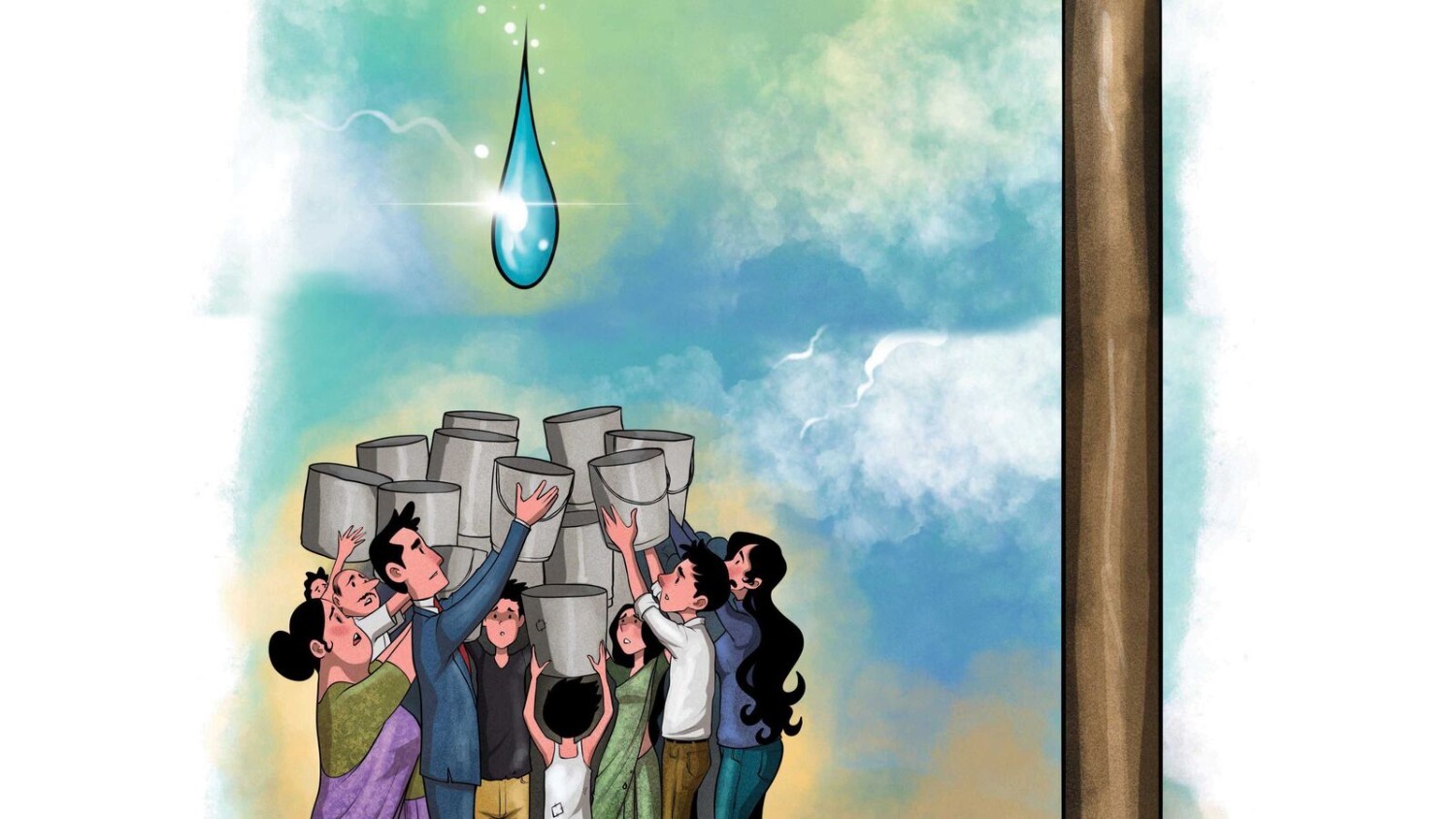
At dawn in a village on Rajasthan’s edge, Meera lowers a rope into the family well the way her mother did. The bucket used to splash before it was half-way down. Now it drops, and drops, and lands with a dry thud that sounds like a door closing. She stands still for a moment, as if listening for an answer from the earth. Then she lifts the empty bucket, balances two pots, and starts walking toward a tanker that may or may not arrive on time.
Two thousand kilometres away, on a Sundarbans island in West Bengal, a handpump coughs and sputters before giving up. The water that comes out is sometimes brackish, sometimes rusty, sometimes just not enough. People speak of boreholes going deeper each year, of tubewells that once felt reliable now turning uncertain, of salty tides and cyclones that leave a taste of the sea in soil and ponds long after the winds have gone.
In coastal Gujarat, the crisis can be quieter and crueler. Water can still be found, but it changes character. It becomes saline. It corrodes pipes, spoils fields, and forces families to choose between expensive treatment and unsafe compromises. The sea does not need to invade on the surface; it can arrive underground.
In Tamil Nadu, the story shifts again. When the summer comes early and the rains behave strangely, cities and farms start drawing harder from the same hidden reserves. In years of stress, water trains, tanker queues, private borewells, and rising salinity become part of urban routine. A city discovers, painfully, that groundwater does not announce its limits until it is already too late.
These are not four separate stories. They are four chapters of one national plot: India’s groundwater is being asked to do more than it was ever designed to do, and it is being extracted faster than nature can replenish it in many places. The result is a slow-motion emergency with sudden moments of shock.
The Invisible Utility Holding Up India
Groundwater is India’s quiet backbone. It cushions drought years, stabilises drinking water supply, and keeps farms alive when canals, tanks, and rivers fall short. It is also the water source that individuals can access privately, through a pump, a borewell, or a handpump, without waiting for a pipeline or a municipal schedule. That ease has made groundwater feel like a personal asset rather than a shared resource. It has also made it dangerously easy to overuse.
Surface water looks finite because you can see it. A river thins, a reservoir shrinks, a lake turns into a field. Groundwater behaves like a hidden bank account. People keep withdrawing because the day-to-day signals stay deceptively normal. The pump still runs. The water still comes. The crisis only becomes visible when the water table falls below suction, when wells fail, when water turns saline, or when contamination becomes concentrated enough to become undeniable.
This is why groundwater is not merely an environmental issue. It is a food security issue because cropping and irrigation are, in large parts of India, groundwater decisions. It is a public health issue because depleted aquifers often become saline or concentrate pollutants. It is an economic stability issue because well failure pushes farmers into higher costs and deeper debt while cities face rising operational risks and water inflation. It is a social equity issue because the poorest households cannot drill deeper, buy tankers, store water, or treat it. It is a climate resilience issue because erratic rainfall reduces predictable recharge, and intense downpours create floods without replenishing aquifers effectively when water runs off too quickly.
A Simple Thermometer That Explains a Complex Crisis
One of the clearest ways to read groundwater stress is through the idea of extraction versus replenishment. If a region withdraws groundwater faster than it is naturally recharged, it is eating into its long-term savings. At the national level, India’s overall extraction-to-availability ratio can look deceptively “manageable.” But groundwater does not fail nationally. It fails locally, aquifer by aquifer, block by block, until a district crosses a threshold and daily life begins to unravel.
India’s true groundwater reality is therefore best understood as a patchwork of extremes. Some areas are structurally water-scarce. Some are water-rich but quality-stressed. Some are stable in average years but collapse under two failed monsoons. Some have enough water underground but lack governance and infrastructure to use it sustainably. That patchwork becomes clearer when we travel through four contrasting states that represent four different kinds of groundwater pressure: Rajasthan, Tamil Nadu, coastal Gujarat, and West Bengal.
Rajasthan: Where the Crisis Is About Quantity and Time Runs Faster
Rajasthan is the most intuitive groundwater story in India because its surface reality mirrors its underground reality. Heat is intense, rainfall is low, and many regions have limited surface storage. The dependence on groundwater is high, and in many places it has become an overdraft economy beneath the soil. When extraction exceeds sustainable replenishment year after year, the water table retreats like a horizon.
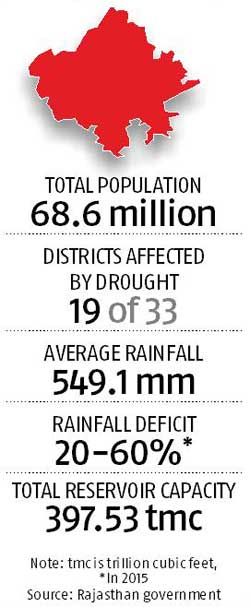
What makes Rajasthan’s groundwater fall so hard is not only the climate. It is the interaction between fragile aquifers and modern extraction. In large parts of Rajasthan, aquifers do not behave like vast underground lakes that refill easily. They behave like limited storage systems, sometimes fractured hard rock systems, which can be drained quickly and recharge slowly. Once depleted, the bounce-back is difficult unless rainfall is captured at scale and allowed to infiltrate.
The state also carries the psychology of drought. When rainfall is uncertain, a borewell becomes insurance. When every farmer pumps “just in case,” the collective result is a tragedy of the commons. Add to this the economics of pumping, where cheap or free electricity can encourage longer run-times, and you get a system that rewards extraction more than efficiency.
Yet Rajasthan also carries a powerful lesson of hope: the land responds when communities treat rainfall as a harvest. Traditional systems of water harvesting and local recharge, revived and adapted through community mobilisation, have shown that groundwater can return seasonally when catchments are protected and small structures are maintained. The sustainability insight is blunt in Rajasthan: in low rainfall zones, groundwater survival depends on both demand discipline and recharge culture. One without the other fails.
Tamil Nadu: Hard-Rock Aquifers, Urban Thirst, and a Monsoon You Must Catch
Tamil Nadu’s groundwater story often gets simplified into the language of drought, but the deeper truth is about variability and storage. Rainfall can be intense but seasonal, and aquifers in many regions are hard-rock with limited capacity. In such systems, recharge is not a slow, forgiving process. It is a narrow window. If rainwater is not captured and infiltrated quickly, it is lost to runoff and the sea.
Tamil Nadu also reveals how groundwater crises emerge in cities. Urban demand can expand faster than water systems can keep up, and when surface sources falter, the city turns to groundwater and tankers. The crisis then shows up in two stages. First, quality changes: as fresh groundwater levels fall, salinity risks rise in coastal aquifers, and contamination risks increase where sanitation and waste management are weak. Then quantity collapses: borewells fail, tankers multiply, and a shadow water economy takes over, where those who can pay get water first.
In Tamil Nadu, there is also a well-known counter-narrative: the state’s push for rainwater harvesting, including rooftop systems, helped mainstream the idea that monsoon water must be captured rather than drained away. Tamil Nadu’s sustainability signature is the insistence that every building and every neighbourhood has a role in recharge. The larger lesson is not that rainwater harvesting alone solves the crisis. It is that in hard-rock and variable rainfall states, groundwater security is built through a layered system: capturing rain, recharging aquifers, reusing treated water, and reducing demand through irrigation efficiency and sensible cropping patterns.
Coastal Gujarat: When Depletion Turns Into Salinity and the Sea Moves In Underground
Gujarat’s groundwater story is split between inland scarcity and coastal vulnerability. Inland regions can experience periodic stress typical of semi-arid landscapes, but the coast carries a different kind of threat. Here the crisis is often not announced by “no water,” but by “water that has turned unusable.”
In coastal belts, freshwater and seawater exist in a delicate balance. When freshwater levels fall because of heavy pumping, saltwater can seep into aquifers through tidal influence and mixing, particularly in low-lying tracts. The sea does not need to breach embankments to damage groundwater; it can travel invisibly through the subsurface. The result is brackish water that is corrosive for infrastructure, harmful for many crops, and unsafe without treatment.
This coastal challenge is intensified by concentrated demand. Farming, expanding settlements, and industrial corridors near ports can combine into high-density extraction zones. When surface water substitution is limited, groundwater becomes the default supply, and the coastal aquifer becomes a battleground between freshwater needs and saline intrusion.
Gujarat also offers an important practical insight for the future: large-scale recharge drives and robust water conservation infrastructure can slow depletion, but coastal sustainability requires explicit salinity management. That means monitoring and regulating extraction in vulnerable zones, creating recharge barriers where feasible, and prioritising surface water and treated water reuse to relieve pressure on aquifers. Coastal groundwater must be treated as a frontier that needs defence, not merely a reservoir that needs refilling.
West Bengal: The Water-Rich Paradox and the Double Threat of Salinity and Quality
West Bengal is often assumed to be safe because it is riverine, rain-fed, and part of a vast deltaic system. Its overall extraction ratios can appear moderate compared to Rajasthan. But West Bengal’s groundwater risk is not captured by one statewide number because the state’s challenges are sharply local. In some belts, depletion rises with irrigation intensity. In coastal and deltaic regions, salinity risk grows when freshwater storage weakens. And across parts of the delta, water quality threats can be as serious as quantity threats.
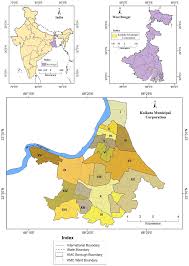
The Sundarbans captures this complexity with painful clarity. In blocks like Gosaba, people are confronting a pattern that feels like a slow retreat of freshwater. Tubewells that once produced dependable water now run dry or turn brackish. Boreholes must be drilled deeper, often at costs that small households can barely bear. Handpumps fail earlier in the season. During cyclones and storm surges, saline water floods land and ponds, contaminating local storage and forcing greater reliance on groundwater at exactly the time when recharge is weakest. When groundwater levels fall, saltwater intrusion accelerates, turning a shortage into a quality collapse.
The Sundarbans story also reveals how groundwater crises become livelihood crises. Farmers who cannot find reliable freshwater for irrigation either invest in deeper wells, abandon crop cycles, or watch yields fall as salinity stresses the soil. Household water chores expand, especially for women and children, who walk farther for water that is often poorer in quality. Food security erodes not in one dramatic event but through repeated small losses: a failed crop, a contaminated pond, a fish stock damaged by salinity, an extra month of tanker costs.
West Bengal also carries a lesson for urban India: not all cities sit on accessible shallow aquifers in a way that makes groundwater a reliable fallback. Urban planning must be based on hydrogeology, not assumptions. Where groundwater is limited or vulnerable, the city must lean harder on surface water resilience, treated water reuse, leak reduction, and decentralised rain capture.
Why the Crisis Deepens: The Human System Behind the Hydrogeology
It is tempting to blame groundwater depletion on climate and geography alone, but the real drivers are largely manmade. The crisis is a product of incentives that reward withdrawal and underinvest in replenishment, governance, and efficiency.
The first driver is the economics of pumping. When electricity is free or heavily subsidised, when metering is weak, and when regulation is inconsistent, groundwater becomes an underpriced input. Farmers pump more because it makes immediate economic sense. Institutions pump because it is convenient. Industries pump because it reduces dependency on uncertain municipal supply. In such a system, individual rational choices add up to collective depletion.
The second driver is cropping and irrigation choices. Groundwater depletion is tightly linked to what India grows, where it grows it, and when it grows it. Water-intensive crops cultivated in unsuitable agro-ecologies force groundwater substitution. Dry-season rice cultivation in certain belts turns groundwater into an invisible canal. Pricing, procurement, and market signals can unintentionally reward water stress by making certain crops profitable regardless of local water realities. Farmers do not choose groundwater depletion; they choose livelihood stability in the incentive landscape they are given.
The third driver is urbanisation that blocks recharge. Cities consume water, but they also alter the land’s ability to absorb water. Paved surfaces reduce infiltration. Stormwater drains speed runoff. Wetlands and lakes that once acted as recharge engines are encroached, polluted, or disconnected from their catchments. The monsoon becomes a flood problem rather than a recharge opportunity.
The fourth driver is fragmented governance. Groundwater is local, but governance is often split across departments that manage drinking water, irrigation, agriculture, rural development, urban infrastructure, and industry. Without aquifer-level budgeting and shared accountability, interventions become scattered. Recharge structures are built without demand control. Subsidies promote extraction while programmes plead for conservation. Data is collected but not always used to enforce limits.
The fifth driver is quality collapse. Even where groundwater quantity remains, it can become unusable. Excess fertiliser can increase nitrate levels. Poor sanitation can contaminate shallow aquifers. Industrial discharge can poison subsurface water. In coastal and arid belts, salinity can rise as freshwater pressure drops. Groundwater then becomes a trap: the more you pump, the more you risk degrading the resource you depend on.
The Corporate Connection: Groundwater as Operations, Risk, and Reputation
Groundwater depletion is often narrated as a farmer’s problem, but it is equally a corporate and institutional problem, because modern India runs on groundwater in ways it rarely acknowledges.
Many hotels, campuses, stadiums, malls, and factories use borewells when municipal supply is inadequate or unreliable. This turns groundwater into an invisible subsidy for urban growth. When regulators push institutions to shift toward treated wastewater and rainwater harvesting, the resistance is often not ideological; it is operational. Groundwater has been easy. Switching requires investment, redesign, and discipline.
For businesses, groundwater is also a major risk variable. Falling water tables mean rising costs for deeper drilling, pumping energy, and treatment. Salinity and contamination add further costs and operational uncertainty. In water-stressed basins, community tensions can rise when local people believe commercial users are drawing down shared reserves. In a world increasingly shaped by ESG expectations, groundwater can become a reputational fault line, especially when corporate water stewardship is limited to CSR projects that do not address the actual extraction footprint.
There is also a quieter connection through supply chains. A company may not pump groundwater directly, yet it may rely on agricultural and industrial suppliers whose production is groundwater-dependent. When water stress intensifies, supply reliability drops and costs rise. This is why serious sustainability strategy must treat groundwater as a basin-level issue rather than a factory-level efficiency metric. The question is not only how efficiently a unit uses water, but whether the water use is sustainable in its local aquifer context.
What India Is Doing: The Toolkit Exists, the Alignment Is Hard
India has not ignored the groundwater crisis. The country has built monitoring systems, mapping programmes, recharge missions, and community-led schemes. The challenge is that the problem is both vast and deeply local, and the hardest part of the solution is not engineering. It is alignment.

Government initiatives increasingly recognise that groundwater must be managed with better data, better planning, and better community engagement. Aquifer mapping and regular assessments aim to move decision-making from guesswork to groundwater intelligence. Large national campaigns have focused on water harvesting, recharge, and water-body rejuvenation, aiming to restore local storage and infiltration capacity. Community-led groundwater management programmes have attempted to shift the conversation from “more wells” to “shared water budgets,” encouraging villages to plan extraction based on recharge realities. Agricultural schemes that promote micro-irrigation and efficiency seek to reduce demand without cutting productivity.
Civil society has played a crucial last-mile role. Across India, NGOs and community groups have repeatedly demonstrated that groundwater is best saved through collective action. One farmer adopting water-saving practices cannot protect an aquifer if neighbouring farms continue to pump without limits. Community initiatives that revive tanks, protect catchments, maintain recharge structures, and create social norms around pumping can be remarkably effective, especially when local leadership is strong and benefits are visible.
And yet, the gap remains demand control. Recharge projects are visible, fundable, and politically attractive. Demand management is harder because it forces changes in incentives and behaviour. It requires crop rationalisation, irrigation discipline, metering, pricing reform, and enforcement against unsustainable extraction by both private and institutional users. Without demand control, recharge becomes a treadmill: water is added back in, but extraction simply rises to match it.
What the World Teaches: Three Global Lessons That India Can Adapt
Other water-stressed regions have learned, often painfully, that groundwater cannot be managed by good intentions alone. Three lessons stand out for India, not as templates to copy but as principles to translate.
The first lesson is governance with accountability. In places like California, groundwater overdraft prompted a legal and institutional shift toward basin-level management where local agencies must create sustainability plans and face consequences if they fail. The critical idea is not central control for its own sake; it is enforceable responsibility at the scale where groundwater actually behaves.
The second lesson is the power of reuse. Countries like Israel treated wastewater not as waste but as a strategic resource, building high levels of treatment and reuse, particularly for agriculture. This reduced dependence on freshwater sources and created a circular water economy. India’s cities and industries can relieve groundwater pressure dramatically if treated wastewater becomes a mainstream supply for non-potable uses, landscaping, construction, and certain categories of industrial demand.

The third lesson is measurement before markets. In parts of Australia, basin governance evolved toward caps, monitoring, and structured allocation systems, with trading mechanisms operating within defined limits. The essential insight is that allocation is only fair when measurement is credible and ecological safeguards are real. India’s immediate need is not a market-first model; it is measurement, caps in over-stressed aquifers, and local institutions empowered to implement and enforce groundwater budgets.
Possibilities Ahead: The Path to a Groundwater-Secure India
India’s groundwater future will not be decided by one mega-project. It will be decided by whether the country can build a culture of water accounting and a politics of sustainability.
In Rajasthan, the path forward demands a relentless focus on catching rainfall where it falls, protecting micro-catchments, reviving and maintaining local recharge systems, and coupling those efforts with serious irrigation efficiency. The goal is not merely to create water structures but to rebuild water commons.
In Tamil Nadu, the future depends on turning cities into recharge-friendly landscapes, treating stormwater as a resource rather than a drainage problem, expanding reuse so that treated wastewater displaces groundwater for non-drinking purposes, and supporting farm transitions toward efficient irrigation and climate-fit cropping.
In coastal Gujarat, groundwater security must be framed as salinity defence. Monitoring must be tight, extraction must be disciplined in vulnerable zones, and surface water substitution and reuse must be scaled to reduce coastal pumping pressure. Industry and ports must treat groundwater stewardship as a core operational responsibility, not an optional CSR narrative.
In West Bengal, especially in the delta, groundwater sustainability must be tied to climate resilience. The Sundarbans needs stronger freshwater storage through rain capture and pond conservation, resilient drinking water infrastructure that reduces emergency over-pumping, and local adaptation planning that acknowledges salinity as a permanent risk. In areas where groundwater quality threats exist, safe sourcing, regular testing, and alternative supply systems become as vital as recharge.
Across all regions, the deeper shift is the same. Farmers need incentives that reward water-smart choices, not water-blind productivity. Cities need design norms that prioritise infiltration, reuse, and leak reduction. Corporations need water stewardship that includes basin health, extraction transparency, and circular systems, not only efficiency claims. Governance needs to move from counting structures to managing aquifers, from celebrating projects to sustaining outcomes.
The Hidden River, and the Choice India Must Make
Groundwater is often described as water beneath our feet, but that phrase does not capture what it truly is. It is a hidden river of stability that runs through India’s food system, health system, and economic system. When it falls, everything becomes more fragile. Crops fail more easily. Diseases spread faster. Inequality sharpens. Migration accelerates. Conflict becomes more likely, not because people want conflict, but because water is the base layer of dignity.
India is at a crossroads that does not look dramatic until it becomes unavoidable. The country can continue pumping as if the underground is infinite, and accept that wells will fail more frequently and water quality will worsen. Or it can choose a groundwater transition that treats water as a shared resource with real limits, invests in recharge and reuse, reforms incentives, and builds local institutions capable of governing aquifers.
If India makes that choice, the scenes that opened this story can change. Meera’s bucket can splash again, not because a miracle happened, but because the village treated rain as wealth and pumping as a shared decision. Gosaba’s handpumps can become more reliable, not because cyclones will stop, but because freshwater storage and supply resilience reduced the need to mine fragile aquifers. Coastal Gujarat’s water can stay usable, not because the sea retreated, but because humans stopped inviting it underground.
Groundwater is not just a resource. It is memory, survival, and the quiet infrastructure of life.




Add a Comment