
New Delhi, July 18:
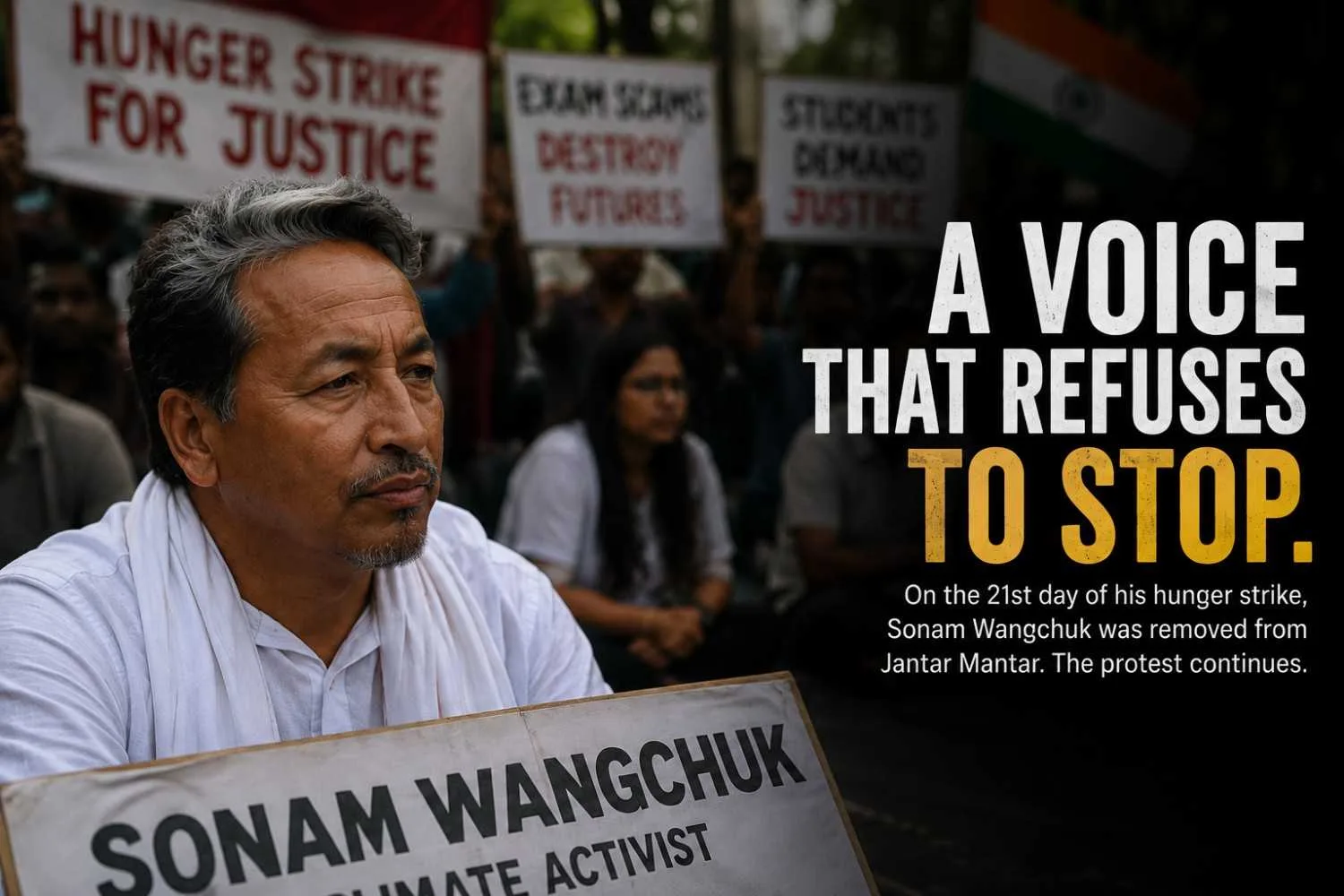
Environmentalist, education reformer and climate activist Sonam Wangchuk was removed from the protest site at Jantar Mantar early on Saturday morning and taken to VMMC–Safdarjung Hospital as his indefinite hunger strike entered its 21st day.
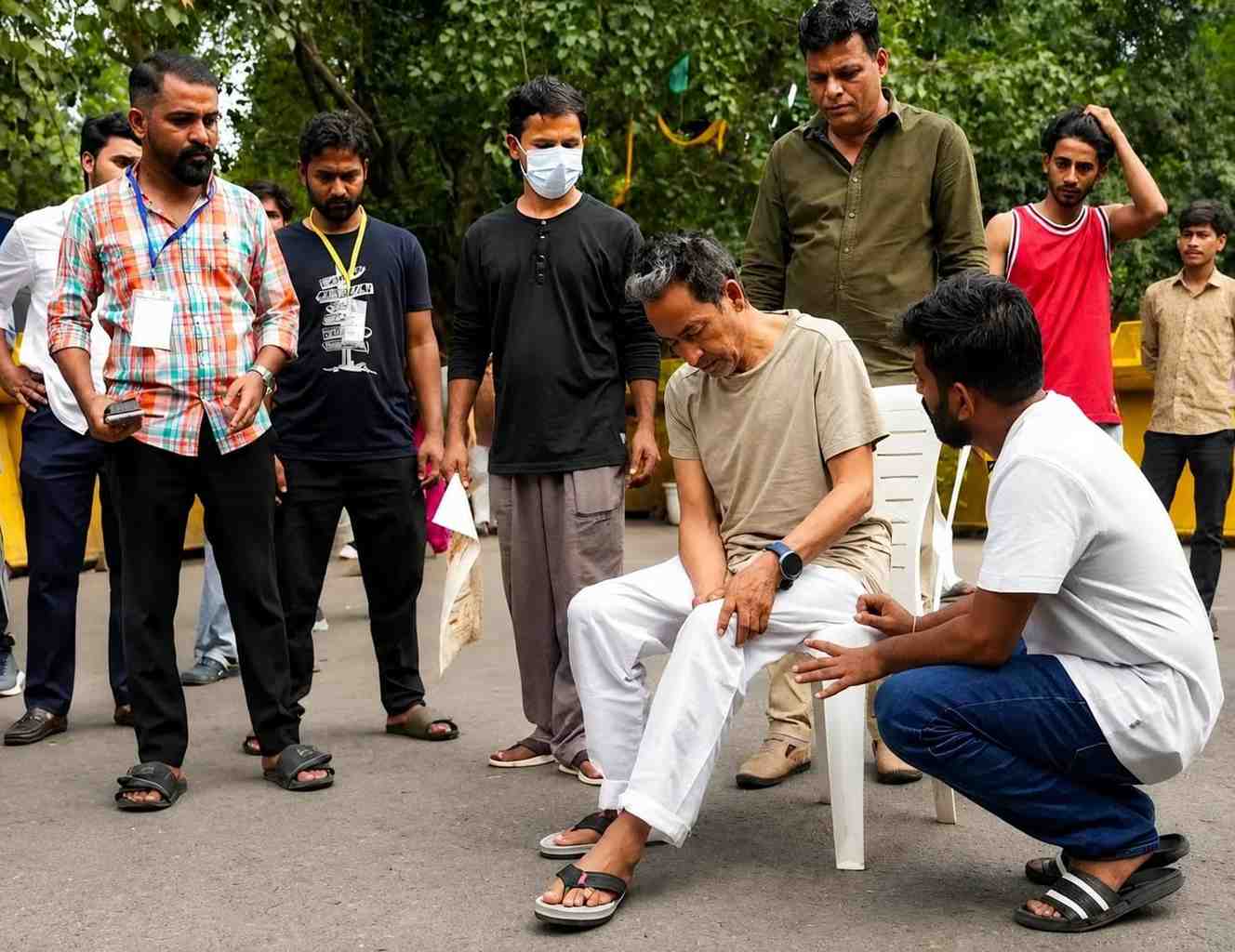
Delhi Police said Wangchuk was shifted to hospital on medical advice after concerns were raised about his deteriorating health. Protest organisers, however, alleged that he was taken away against his wishes. Supporters formed a human chain and attempted to prevent the police from removing him from the site, leading to tense scenes during the early-morning operation.
According to the latest available medical update, Wangchuk was conscious, alert and clinically stable, but weak and mildly dehydrated after fasting for nearly three weeks. Doctors reportedly advised continuous observation and monitoring of his electrolyte levels and other vital parameters.
His wife and fellow educationist, Gitanjali J. Angmo, questioned the manner in which he was hospitalised. She said that medical intervention should be undertaken only with Wangchuk’s informed consent and in consultation with his family and the doctors who had been monitoring him during the protest.
Angmo also reportedly asked that no oral or intravenous medication be administered without proper discussion. She maintained that Wangchuk remained mentally strong and continued his fast while under observation, consuming only water with salt.
Protest Against Examination Irregularities
The agitation at Jantar Mantar began as a youth- and student-led protest against alleged irregularities, paper leaks and failures in the country’s examination system.
Wangchuk joined the movement in solidarity with students affected by repeated examination controversies and began his indefinite hunger strike on June 28. Protesters have demanded an independent investigation into examination-related scandals, greater accountability from the education authorities and structural reforms to restore transparency and credibility to the testing process.
The protest has gradually expanded beyond the immediate issue of examination irregularities. It has become a wider movement seeking accountability in education, protection of students’ futures and a more responsive democratic system.
Following Wangchuk’s removal, organisers said the agitation would continue and that other participants would carry forward the hunger strike and planned protest programmes.
Opposition and Civil Society Extend Support
The protest has received support from a wide range of opposition parties, student organisations, farmers’ groups, academics, writers, filmmakers and civil society representatives.
Leaders associated with the Congress, Aam Aadmi Party, Samajwadi Party, Trinamool Congress, Shiv Sena (Uddhav Balasaheb Thackeray), Nationalist Congress Party–Sharadchandra Pawar, Communist Party of India (Marxist) and Rashtriya Janata Dal have either visited the protest site, expressed solidarity or criticised the manner in which Wangchuk was removed.
Farmer representatives and student activists have also joined the mobilisation. Several civil society figures have appealed to the Union government to open a dialogue with the protesters and address the concerns being raised.
Prominent academics, authors, artists and public intellectuals have urged Wangchuk to end his fast, describing his contribution to education, environmental protection and public life as invaluable. Their appeal has also placed responsibility on the government to initiate meaningful negotiations before the situation worsens.
A Lifetime Dedicated to Education and Sustainability
Wangchuk’s participation in the protest must be viewed in the context of his lifelong engagement with education, ecology and democratic action.
In 1988, he co-founded the Students’ Educational and Cultural Movement of Ladakh, widely known as SECMOL. The initiative emerged in response to an education system that was failing many children in Ladakh because it was disconnected from their language, culture, environment and lived realities.
SECMOL developed an alternative model of education centred on practical learning, community participation, environmental responsibility and self-reliance. Students are involved in managing the campus, farming, construction, renewable-energy systems and everyday decision-making.
The SECMOL campus has become internationally known for its use of solar energy, passive heating, local building materials and sustainable design. It demonstrates how education can be connected with climate responsibility and community life rather than being limited to examinations and classroom instruction.
Wangchuk is also known for developing the “ice stupa” concept, an innovative method of storing winter water in the form of artificial glaciers. These structures release water gradually during the spring and early summer months, when farmers in Ladakh face severe water shortages.
His work has consistently focused on protecting Ladakh’s fragile high-altitude ecosystem from climate change, unregulated construction, excessive tourism and resource-intensive development.
A Gandhian Method of Protest
Wangchuk has repeatedly adopted peaceful and non-violent methods to draw attention to public issues. His campaigns have included climate fasts, marches, public appeals, dialogue and community mobilisation.
He has also advocated constitutional safeguards for Ladakh, protection of local land and natural resources, greater democratic representation and recognition of the rights of indigenous communities.
His hunger strike at Jantar Mantar is therefore consistent with his broader philosophy of public action. It reflects a Gandhian approach in which personal sacrifice, moral persuasion and non-violence are used to awaken public conscience and compel authorities to respond.
His removal from the protest site and hospitalisation have intensified the political and public focus on the agitation. The immediate concern now remains his health, even as the larger questions raised by the protesters-about education, accountability, democracy and the right to peaceful dissent—continue to demand answers.







Add a Comment