

It is not one invention but a discipline — spanning smarter models, honest measurement and hard limits on waste
Prof Ujjwal K Chowdhury
Strapline: Green AI will not arrive as a single breakthrough. It is being assembled, piece by piece, out of smarter algorithms, redesigned data centres, new accounting rules and a willingness to ask whether a task needed a supercomputer in the first place.

Defining the term properly
“Green AI” is often used loosely, as a synonym for “AI that feels less wasteful.” Researchers who work in the field define it more precisely: the quality- and outcome-constrained minimisation of the lifecycle environmental impact of an AI system. Every word in that definition is doing work. “Lifecycle” means the accounting cannot stop at a single training run — it must include research and experimentation, data preparation, fine-tuning, round-the-clock inference, agent orchestration, data-centre construction and cooling, electricity generation, and the mining, fabrication and eventual disposal of hardware. “Quality- and outcome-constrained” means Green AI is not simply “use less compute” — a model that saves energy but fails at its task, or that needs constant human correction, has not achieved anything green at all.
The term traces to a 2020 paper by Roy Schwartz and colleagues that contrasted this approach with “Red AI” — the pursuit of state-of-the-art accuracy through ever-larger computation, with efficiency treated as an afterthought. Since then the field has broadened well beyond machine-learning theory into data-centre engineering, materials science, distributed systems, water science, economics and public policy.
How Green AI actually reduces impact — the toolkit
Researchers and engineers now have a genuine, tested toolkit for cutting AI’s resource footprint, operating at every layer of the stack.
At the model level. Not every task needs a frontier-scale model. Task-specific and domain models can match performance on narrow jobs at a fraction of the memory and compute cost, and can often run on local devices rather than cloud data centres. Model cascades — systems that route easy requests to small, cheap models and escalate only genuinely difficult ones to larger models — have demonstrated dramatic savings; the research system FrugalGPT showed cost reductions of up to 98% on selected tasks while preserving output quality. Quantisation (reducing the numerical precision of a model’s internal weights) and distillation (training a smaller “student” model from a larger “teacher”) both cut deployment energy substantially, at the cost of some upfront retraining effort. Sparse or mixture-of-experts architectures activate only a fraction of a model’s total parameters for any given input, expanding capacity without proportionally expanding energy use per request.
At the inference level. Because generating output token-by-token is often the most expensive part of serving a model, techniques such as speculative decoding (a small draft model proposes text that a larger model merely verifies, rather than generating from scratch), key-value caching (reusing previously computed information instead of recalculating it), and adaptive or “early-exit” reasoning (stopping once a model is confident enough, rather than always running the maximum computation) can cut energy per request without changing the underlying answer. A large 2025 study measuring more than 32,000 configurations across models and GPU hardware found that matching architecture to hardware, and tuning batching and utilisation, mattered as much as model choice itself.
At the infrastructure level. Data-centre engineering has moved from generic efficiency metrics toward site-specific redesign: direct-to-chip and immersion liquid cooling, which can cut water use dramatically compared with evaporative systems in the right climate; heat-reuse schemes that feed data-centre waste heat into district heating or industrial processes; battery storage and demand-response systems that let facilities absorb the rapid power swings AI workloads create; and a shift from annual renewable-energy accounting toward genuine hour-by-hour carbon-free electricity matching, which prevents companies from claiming a “clean” annual average while still drawing fossil-heavy power at peak evening hours.

At the agent level — the newest frontier. Because autonomous, tool-using agents can silently balloon a single request into dozens of model calls, Green AI research has begun proposing agent-specific controls: hard budgets on the number of steps, tokens and tool calls a workflow may use; automatic loop detection to catch agents stuck repeating unproductive cycles; routing that assigns the smallest capable model to each sub-task, escalating only when genuinely necessary; and outcome-based evaluation using a proposed metric called Energy per Successful Goal, which penalises agent designs that waste computation on retries, redundant multi-agent debate or failed verification.
Selected Efficiency Results
| FrugalGPT model-cascade routing | Up to 98% cost reduction on selected tasks |
| Agent-framework redesign | Up to 9.4× difference in energy use for the same completed task (2025 benchmark) |
| Direct chip-level closed-loop cooling | One major operator claims more than 125 million litres of water saved per data centre annually
|
| Reports 12 GW of clean energy contracted in 2025 and 78% of freshwater consumption replenished (company-reported) |
Measuring what matters — and admitting what we don’t know yet
A recurring theme among Green AI researchers is that measurement itself remains immature, and that this is not a minor technical gap but a governance problem. A landmark 2025 study of Google’s production systems reported a median cost of just 0.24 watt-hours and 0.26 millilitres of water per typical text prompt, alongside large year-on-year efficiency gains. A separate academic benchmark, using different models and a different methodology, estimated more than 33 watt-hours for complex, long-context reasoning queries — over one hundred times higher. Both numbers are legitimate; they simply describe different systems and different task complexity, which is exactly the problem: without a shared functional unit and quality threshold, headline “AI footprint” figures cannot be meaningfully compared, and companies can select whichever framing flatters them.
In response, researchers have proposed a seven-level hierarchy of Green AI metrics, moving from crude activity counts (tokens, model calls) through compute energy, facility-adjusted energy (including cooling and idle capacity), full environmental accounting (carbon and water adjusted for time, place and water-basin stress), lifecycle impact (including embodied hardware emissions), outcome-normalised impact (per successfully completed task), and finally absolute organisational impact — the only level capable of catching rebound effects that intensity metrics alone miss. Open measurement tools such as CodeCarbon, Carbontracker and the industry-standard MLPerf Power benchmark are improving reproducibility, but researchers caution that no measurement tool can fix a poorly defined functional unit or a missing supply-chain boundary.
| The next phase of research should make energy, carbon, water and materials first-class optimisation variables. The next phase of policy should make claims auditable and local impacts visible. |
The current state of progress: real, but partial
How far has Green AI actually come? The honest answer is: further than five years ago, but nowhere near far enough to offset AI’s raw growth in scale.
On the positive side of the ledger: efficiency per individual task is, by most credible measures, improving faster than at almost any point in computing history, driven by better model architectures, smarter serving systems and the techniques described above. Major cloud operators report substantial renewable-energy procurement and water-replenishment programmes, alongside progress on closed-loop and liquid cooling that can cut onsite water use sharply where deployed. Regulatory frameworks are catching up: the European Union now requires structured energy and water reporting from data centres, and the EU AI Act ecosystem is developing standardised resource-reporting rules for general-purpose AI models. Independent benchmarking initiatives, including the AI Energy Score project, are beginning to let outside researchers compare model efficiency on defined tasks rather than relying solely on company claims.
On the other side of the ledger: global data-centre electricity demand is still climbing steeply — up roughly 17% in 2025 alone, with AI-specific facilities growing around 50% in the same year — showing that efficiency gains are, so far, being outpaced by sheer volume growth exactly as the rebound-effect research predicted. Agentic AI is expanding faster than the tools built to measure or govern its resource use, and remains, by most researchers’ assessment, in an “early-stage, high research priority” state rather than a solved problem. Water accounting remains inconsistent enough that credible studies report more than a 10,000-fold variation across otherwise comparable workloads — a sign that the industry still lacks agreed, auditable standards. And embodied hardware impact — the minerals, fabrication water and manufacturing emissions locked into every accelerator before it processes a single request — remains the least developed area of lifecycle assessment, largely because supply-chain data is scarce and closely guarded.
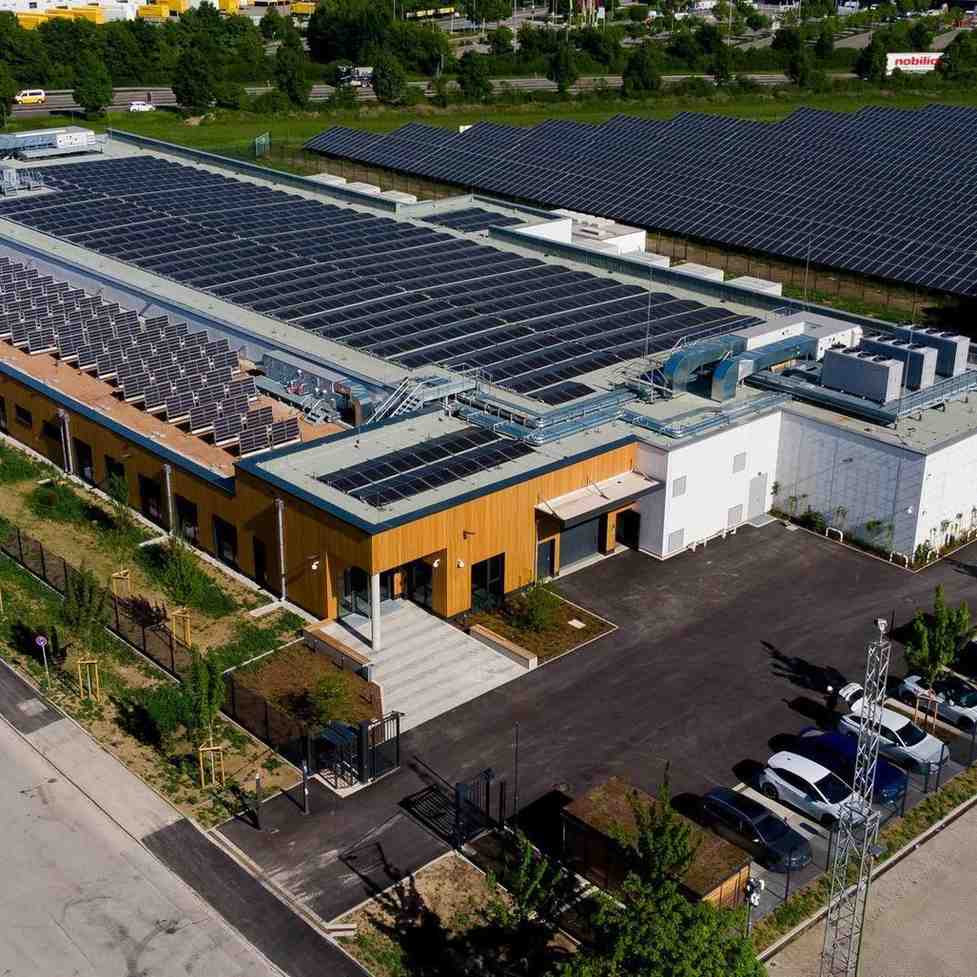
What a genuinely green deployment looks like
Researchers increasingly converge on a simple decision rule for organisations deciding whether to deploy AI at scale: proceed only when four conditions are jointly met. Necessity — the application creates material, demonstrable value. Proportionality — the model and any autonomous agent built around it are no larger or more independent than the task actually requires. Transparency — energy, carbon, water and lifecycle impacts can be measured or credibly estimated, not merely asserted. Net benefit — the quality-adjusted value delivered, socially, economically or environmentally, exceeds the lifecycle cost, with rebound effects actively monitored rather than assumed away.
The opportunity for fast-growing, water-stressed economies
For countries such as India — with rapid digital growth, hot climates, constrained grids and water-stressed cities — Green AI is not only a defensive necessity but an industrial opening. Policy researchers argue that fast-growing digital economies should avoid simply importing data-centre designs optimised for cooler, water-abundant regions, and instead map proposed AI capacity against transmission constraints, renewable supply and urban water plans from the outset — favouring non-potable cooling sources, dry or hybrid cooling systems and seasonal operating limits rather than defaulting to the energy- and water-intensive designs common in temperate markets.
That same constraint creates a market. Efficient small models tuned for Indian languages, energy-aware edge AI that keeps processing on-device rather than in the cloud, low-water cooling technology, power electronics, and auditable sustainability software are all areas where necessity could plausibly drive genuine innovation rather than imitation. Public procurement has real leverage here: governments that require energy and water reporting as a condition of AI contracts can create demand for exactly the transparent, efficient systems Green AI research is trying to build — turning a regulatory requirement into a home-grown industry.
The bottom line
That rule captures what Green AI has become, seven years after the phrase was coined: not a call to make AI smaller for its own sake, but a discipline for making sure every unit of computation has to earn its keep — a shift from celebrating efficiency in isolation to managing absolute impact in full view. The technology is not yet there. But for the first time, the tools, the metrics and the regulatory appetite to get there all exist simultaneously — which is more than could be said even three years ago.





Add a Comment