
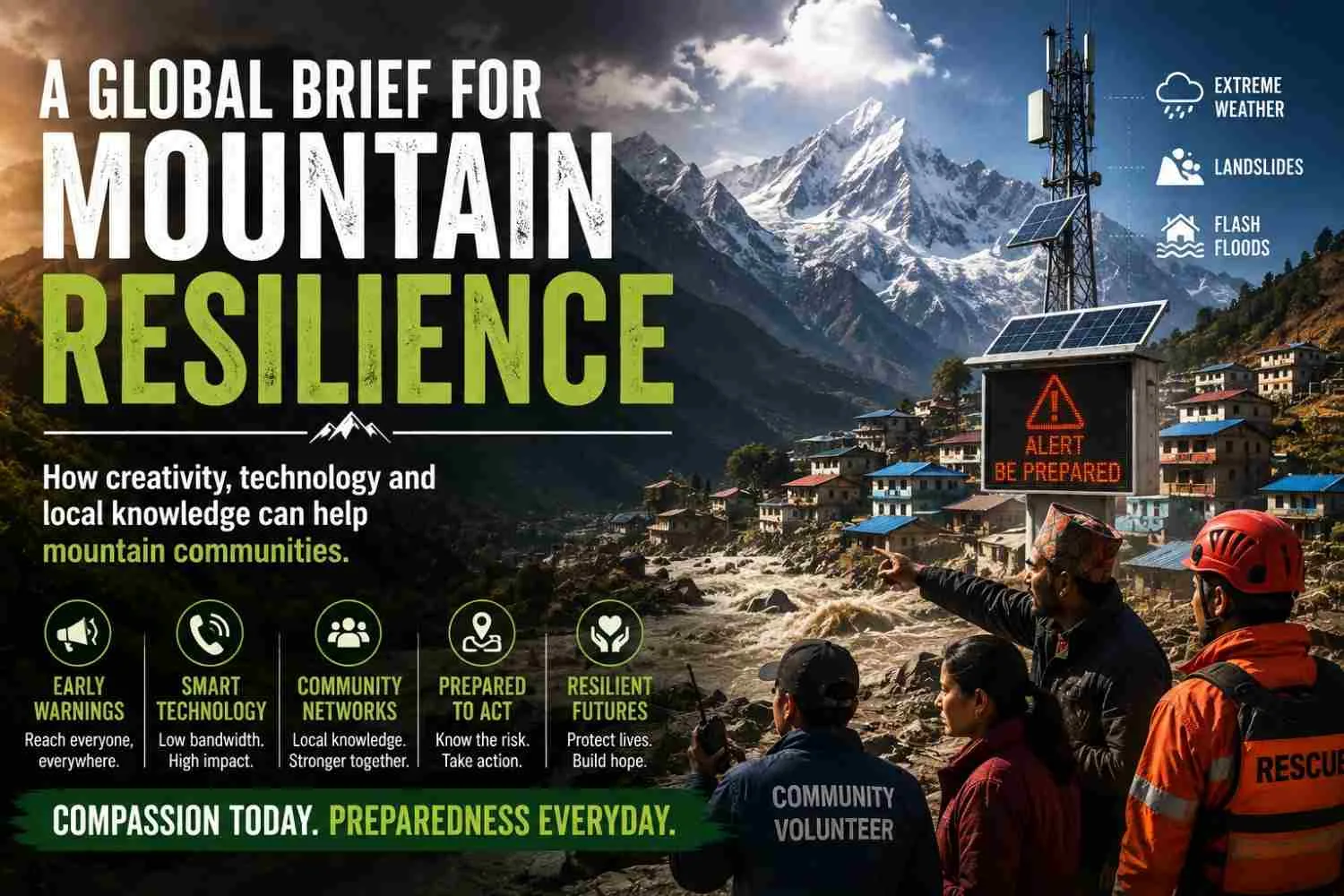
The Himalayas are not merely a development frontier. They are a living ecological system. Nepal’s 2026 debris disaster exposes the urgent need to put ecology, carrying capacity, local livelihoods and resilience at the centre of Himalayan development.
Summary
Nepal’s August 2026 debris disaster shows how fragile Himalayan landscapes can turn infrastructure and human exposure into catastrophe.
The article argues that climate change is increasing background risks, but poor planning, construction and weak warning systems determine the scale of damage.
An ecology-first approach would prioritise restoration, responsible tourism, resilient infrastructure, local livelihoods and stronger cross-border data sharing.
Examples from Bhutan and Sikkim demonstrate how tourism, conservation and community-based economies can be aligned rather than treated as competing priorities.
The central message is clear: Himalayan development must protect the ecological systems that sustain security, livelihoods, water and long-term prosperity.
How creativity, technology and local knowledge can help mountain communities.
The devastating disaster in Rasuwa and surrounding areas of Nepal has left lives lost, families grieving, people missing and communities facing a difficult journey towards recovery. Nepal needs the prayers and support. But it also needs something that must begin before the next disaster: PREPAREDNESS.
Following the tragedy, I wrote an appeal asking the Global Advertising, Branding, Marketing, Media and Technology Communities to help protect Mountain Communities. The response from friends and colleagues around the world reminded me that compassion has no borders.
But compassion must now lead to collaboration.
Our Prime Minister Balendra Shah has also called upon the international community to recognise the growing risks facing the Himalayan region. He described the Rasuwa disaster as a serious indication that these risks are increasing alongside climate change and stressed that managing the effects of a global crisis must be a shared international responsibility.
This is an important global appeal. My appeal is to our community: The people who understand attention, behaviour, communication, storytelling, design, media and technology. It is an appeal to our creative and technology ecosystem.
Climate risk is also a Communication Challenge. Mountain communities are living with increasing uncertainty.
Glacial instability, flash floods, landslides, extreme rainfall and unpredictable weather are placing lives, livelihoods and infrastructure at risk. What happens in the mountains does not remain in the mountains. The Himalayas feed river systems that support drinking water, agriculture, energy, tourism, trade and economies beyond national borders. When mountain ecosystems become unstable, the human consequences travel far downstream. Yet mountain communities often live in places where communication is most difficult. Internet access may be limited. Mobile networks may become unavailable. Messages may need to cross different languages, cultures and different levels of literacy.
Important scientific knowledge exists. Risk assessments are produced. Weather and environmental data are collected. But information does not save lives simply because it exists. It must reach people in time. It must be understood. It must be trusted. It must help people know what to do next. A warning filled with technical language may be accurate but still fail to create action. A mobile alert may arrive but mean little if a family does not understand the level of danger. An evacuation route may exist but remain unknown to the community expected to use it.
The challenge therefore, is not only to predict danger. It is to transform information into Preparedness.
Our industry solves communication problems every day. We simplify complex messages and communicate across cultures. We use design to guide behaviour, storytelling to create emotional understanding and media technology to reach people at scale. We study audiences, identify barriers and create messages intended to move people from awareness to action.
What if we applied those abilities to one of the most urgent challenges facing the world?
How can creativity, communication, media and technology help mountain communities understand risk, prepare earlier and act faster?
This is not a traditional advertising brief. There is no product launch, sales target or market share objective. The desired response is not simply an advertising campaign about climate change. It is a practical system of ideas that can help people before and during an emergency. The work might help answer questions such as:
How can an early warning be understood immediately, regardless of literacy?
How can alerts reach people in areas with limited internet access?
How can families know where to go and what to carry during an evacuation?
How can schools, tourism businesses, transport operators and community leaders become part of a local warning network?
How can verified information travel faster than rumours during a crisis?
How can preparedness become part of everyday life?
Technology companies can help build location-based, multilingual and low-bandwidth warning systems. Telecommunication companies can help urgent information reach people quickly, including those without smartphones. Brands can contribute through their distribution networks, packaging, retail relationships and presence in remote communities.
Media organisations and creators can amplify verified information, reduce confusion and ensure that mountain communities remain visible after the immediate headlines disappear. Creative agencies can transform scientific information into clear visual guidance, memorable messages and culturally relevant tools. Creative festivals, award programs and industry associations can introduce open briefs focused on mountain resilience and disaster preparedness. Instead of recognising ideas only after they have become campaigns, they can help create the partnerships from which useful solutions emerge. Climate scientists, disaster specialists, government institutions and humanitarian organisations must provide the knowledge and technical guidance behind these efforts.
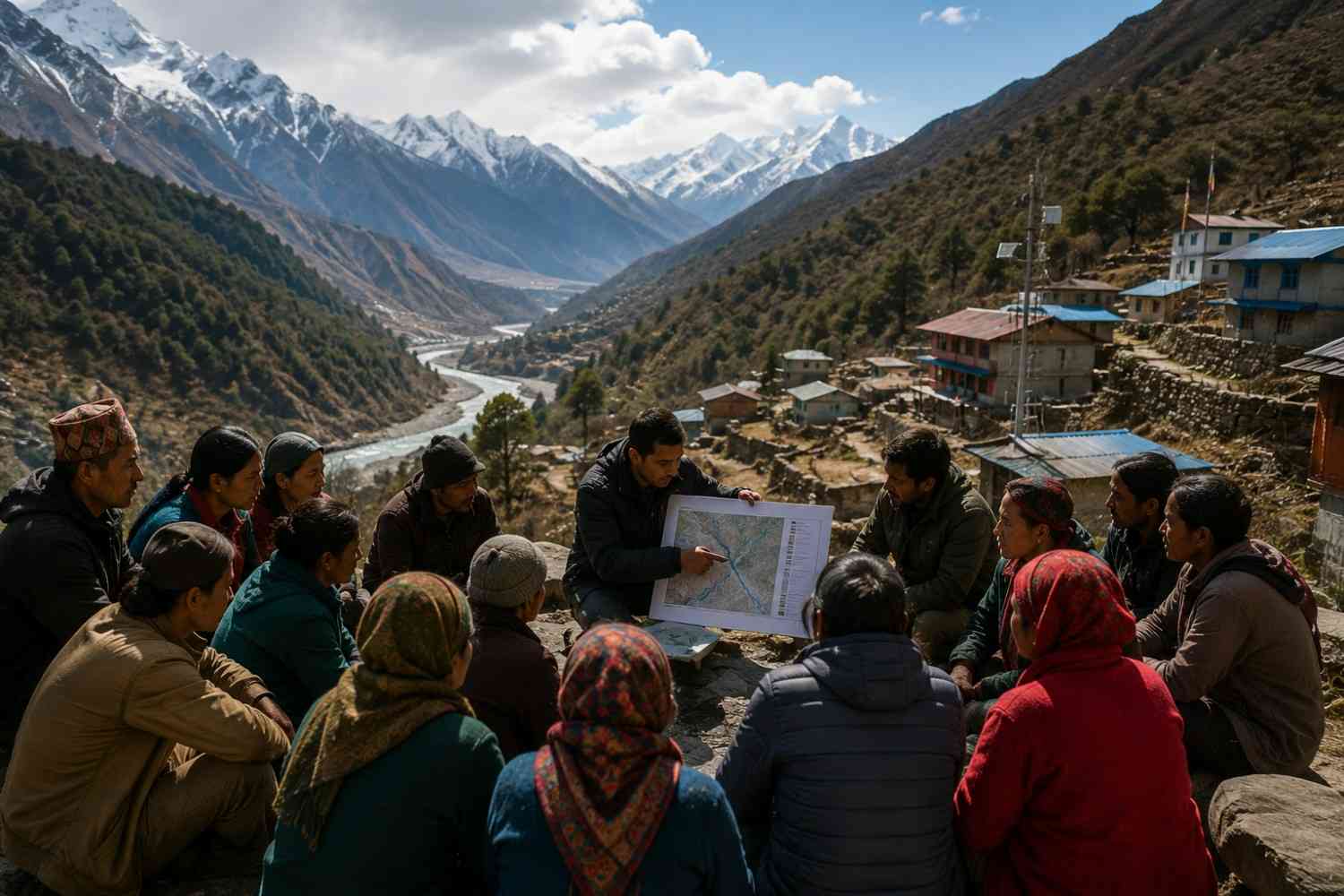
Mountain communities must help lead the process. People living in mountain regions possess generations of knowledge about their landscapes, rivers, weather patterns and local warning signs. They must be partners in defining the problem, shaping the communication and testing whether an idea works in real life. Technology can strengthen local knowledge but it should not replace it. Data may help anticipate danger but trust determines whether people act.
The best creative response may not be the most technologically sophisticated. It will be the one people can access, understand, trust and use at the moment it matters most.
An open invitation from Nepal
I would like to invite Creative Agencies, Brands, Technology Platforms, Media Organisations, Industry Bodies, Climate Experts and Humanitarian Partners to explore an open collaboration for mountain preparedness.
Could we create a shared creative brief?
Could we bring regional and global creative talent together with scientists and mountain communities?
Could we develop open-source solutions that different communities can adapt?
Could our industry platforms create space for this conversation?
Rasuwa is the immediate reason for this appeal. But Rasuwa must not become another tragedy that receives global attention for a few days and is then forgotten. It should become a warning and perhaps the beginning of a new kind of collaboration. Our industry has always responded to briefs about growth, reputation, engagement and transformation. We have used our creativity to sell products, build brands and shape culture. Today, we must ask whether some of our greatest abilities can also be used to build Preparedness.
Because the next important brief may not ask us to make people buy something.
It is asking us to help people understand something. It is asking us to help communities act sooner. It is asking us to help protect lives.
About the writer:

Ujaya Shakya is First Vice President of the Advertising Association of Nepal (AAN), Founder of Outreach and author of Brandsutra (2015) and Brandsutra 2.0 (2026)




Add a Comment