
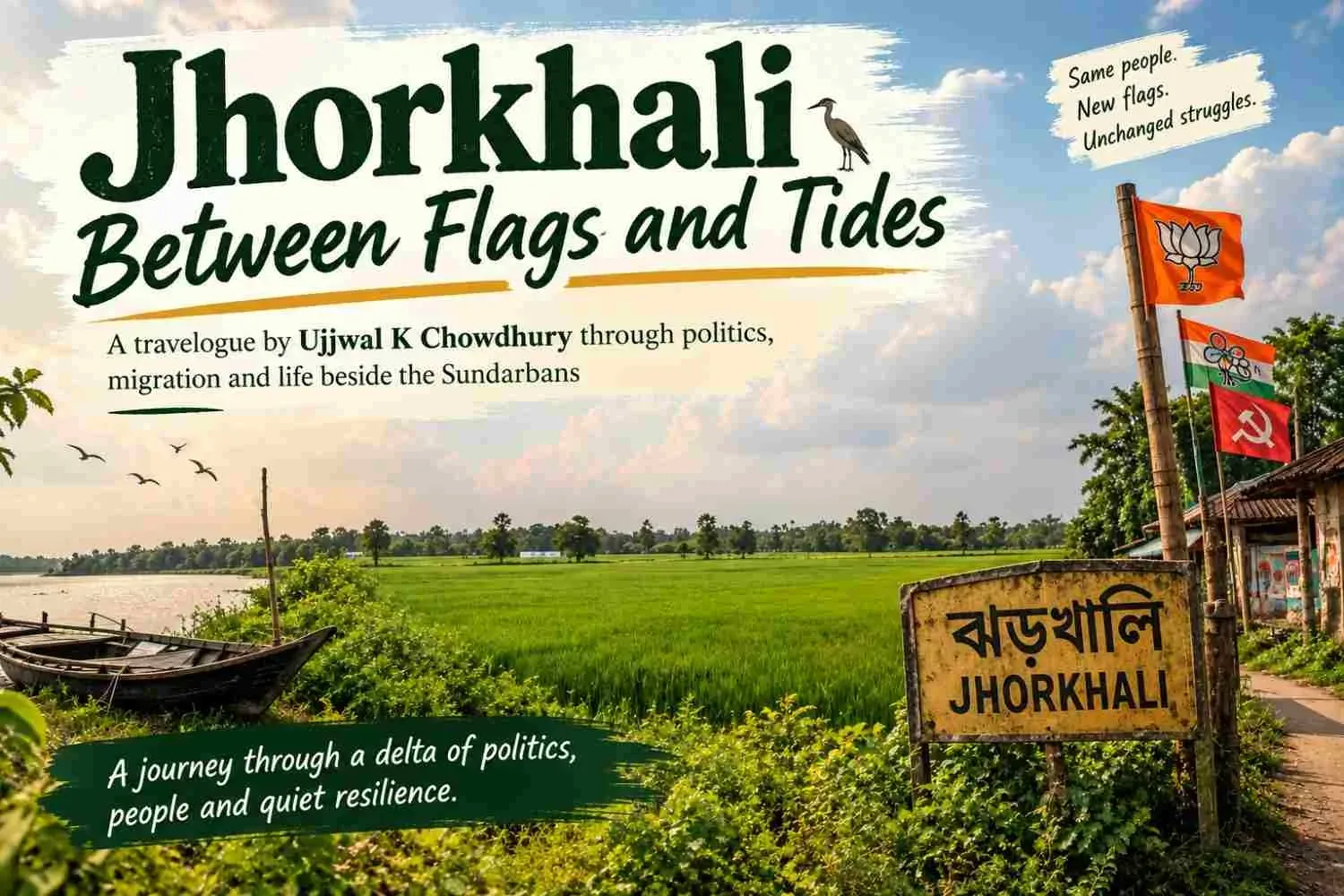
| Jhorkhali is a place where political flags change, but everyday struggles remain. In this travelogue, the author journeys through the village beside the Sundarbans, looking beyond its green fields and waterways to the lives shaped by migration, farming and limited opportunities. The journey traces how families adapt when work takes men away, while women and older people keep homes and farms going. It also explores how salinity, tides, changing livelihoods and tourism are reshaping the local economy. Encounters with people living with the risks of the forest bring a more personal dimension to the journey. Jhorkhali emerges as a place caught between political change, environmental uncertainty and the quiet resilience of its people. |
Summary A travelogue through Jhorkhali explores the intersection of politics, migration, agriculture and life beside the Sundarbans. From changing political landscapes and shrinking local opportunities to salinity, tides, tourism and forest-related risks, the journey captures the everyday realities of its people. At its heart, the article asks whether the next generation can build a sustainable life in Jhorkhali without having to leave. |
The First Sign Was Political
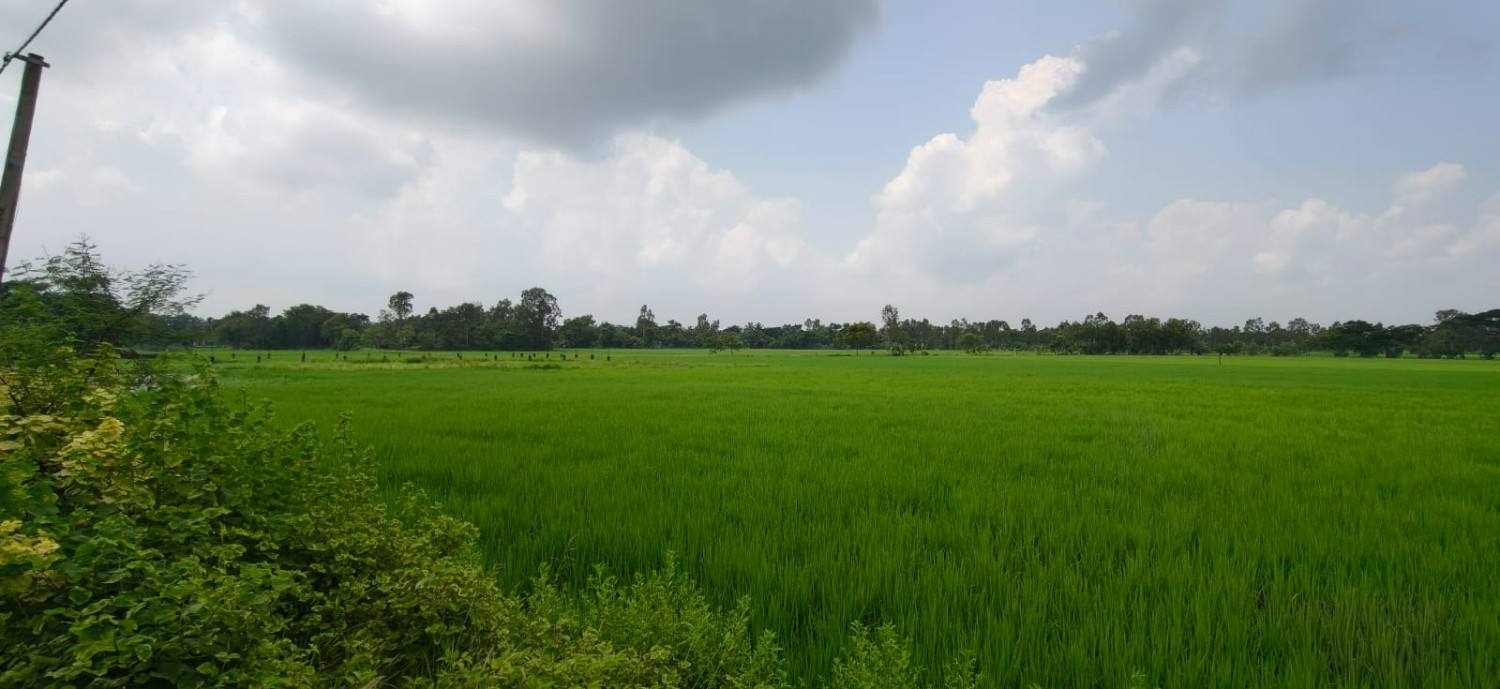
My Sundarbans visit began with party flags, not a tiger. For several hours our car moved through Jhorkhali, where waterways seemed to wait just beyond each bend. On the stretch I crossed, BJP flags and offices dominated the roadside; BMS flags appeared in some market places. That was one traveller’s view from a moving car, not an election survey. Still, it stayed with me: a place’s public colours can change faster than the private worries of the people who live beneath them.
Ramprasad Sarkar, who told me he had lived there for more than twenty years, had watched local party offices shift from CPI(M) to Trinamool Congress and then BJP. “Parties change, colours of the flags change, people are the same,” he said. His sentence held a joke and a warning. Party offices can repaint their walls; families cannot repaint a lost season or a missing wage. In village politics, the signboard is sometimes the fastest public notice. Ordinary people still have to open the shop the next morning.
The Road After School
In the 2011 Census, the place people know as Jhorkhali appears in the village register as Lot No 126, under Jharkhali Gram Panchayat in Basanti Block: 15,695 residents—8,142 males and 7,553 females—in 3,820 households, spread across 4,500 plus hectares, or roughly 45 square kilometres. Its literacy rate was 81%, above West Bengal’s 2011 average of 76%; but that neat total conceals a divide, with male literacy at 88% and female literacy at 72%, a gap of 16 percentage points. By both population and area, Lot No 126 is Basanti Block’s largest village. A census is a photograph, not a live headcount; still, this one catches Jhorkhali at scale. Tables are wonderfully tidy. Opportunities seldom are.
Local figures shared during my visit, fifteen years after the last census, however, put roughly 12,000 families and about 42,000 people across this area, perhaps greater Jhorkhali including nearby hamlets. The school tally in my notes was one higher secondary school, two secondary schools, 17 primary schools and four small private schools, but no college. A nearby NGO in Joygopalpur runs vocational training linked to a Krishi Vigyan Kendra. For young people the hurdle after school is not ambition; it is the next rung. A course in Canning or Kolkata requires fare, time and often a place to stay, costs that rarely appear in a prospectus.
The settlement also carries the memory of families displaced during and after the 1971 war in Bangladesh. Some Hindu refugee families came here after years of hardship elsewhere, and began again on land; farmers’ cooperatives and fishermen’s bodies once helped organize production and income during the Left Front rule. People told me that many of those collective arrangements later weakened under the TMC. Land was divided into small private holdings. The shift changed more than paperwork: it left many households with little scale or bargaining power.
Work Leaves Home Before Dawn
Migration has become a household plan. Men often head to South India for work and may be gone for years. A 2026 farmer survey in Basanti reported higher migration rates than in Hasnabad, alongside greater female participation in farming. That fits the human picture I saw: when wage-earners leave, women and older people keep the home, school routine and sometimes the fields going. A composite local voice puts it this way: “The money comes home; the work never left.”
The River Runs Through the Ledger
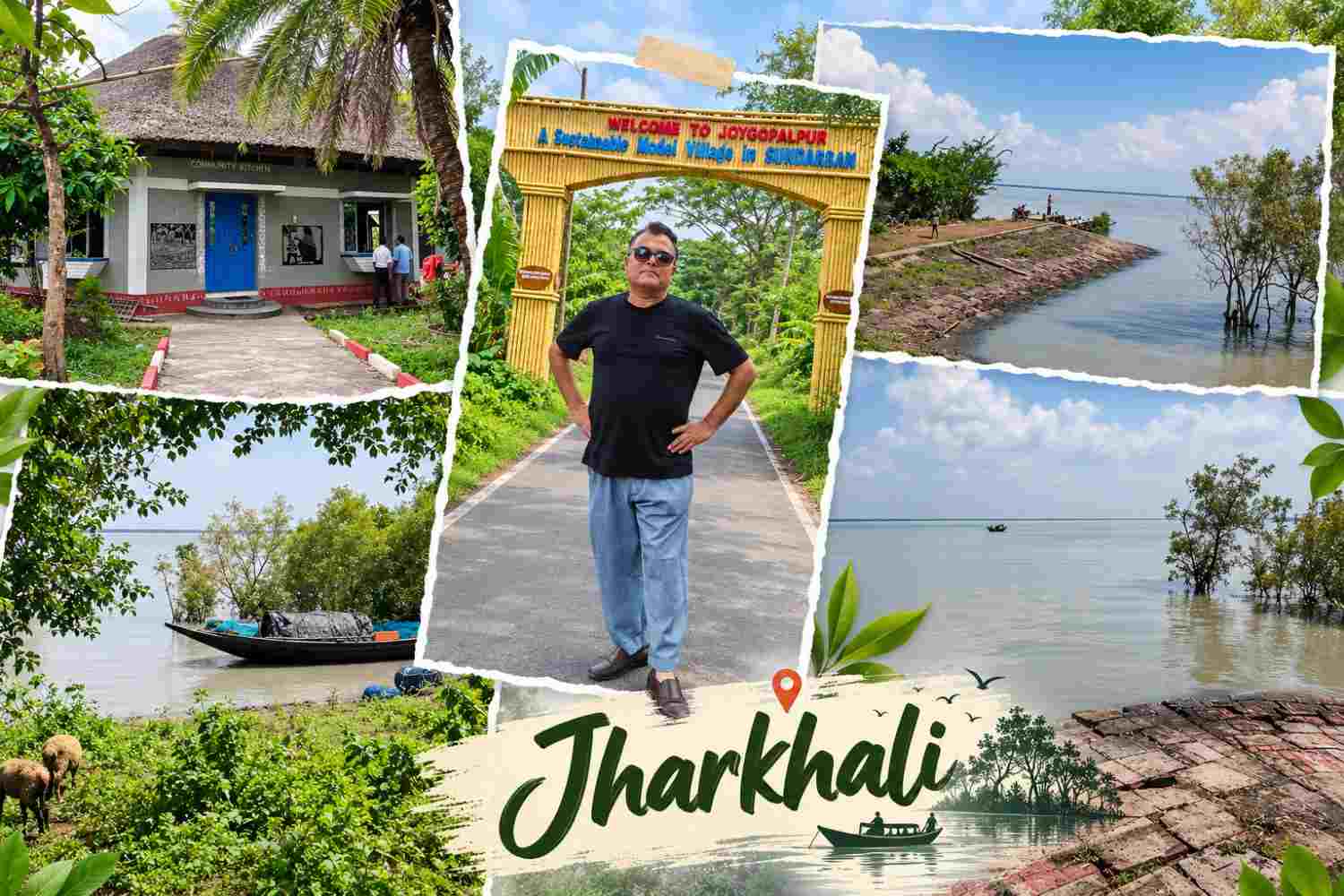
The Matla and Vidyadhari are close companions here. The Jhorkhali and Balikhal jetties remind a visitor that water is infrastructure as well as scenery: it carries fish, goods, commutes and the day’s plans. Fields are still planted with rice and vegetables, but the delta asks for constant adjustment. Salinity, rain, tidal inundation and market access make “two crops a year” an aspiration earned plot by plot.
Jhorkhali’s economy has acquired a new shoreline. In recent years, people from Kolkata have bought land and built homestays and eco-resorts; tourists arrive for a few quiet days by the forest and river. At Jhorey Joley Jangaley, a Techno India Group venture, I found the newer grammar of this economy in a conference hall and a well-kept swimming pool. The visitor can take a dip while the delta outside negotiates with salt, water and work. Even a resort pool cannot persuade a tide to respect check-out time.
UNESCO describes the Sundarbans as the world’s largest mangrove forest and a natural buffer against cyclones. A 2026 study of Basanti reports rain-season freshwater limits, saline dry-season water and weak market infrastructure [2]. That is the background to my own notes: rice and vegetables in the fields, with saline water threatening crops after heavy rain. A composite farmer might say, “We plan the crop; the tide keeps the last appointment.”
The Forest Has Names
The most arresting encounters were not with wildlife but with people marked by its danger. I met a woman known as a tiger widow, whose husband had entered the forest and never returned, and a man whose face bore a tiger’s attack. He did not want a photograph. I put my camera away. UNESCO notes that fishing, honey gathering and other forest livelihoods bring people into contact with tiger habitat. A loss here is never just a dramatic story for a visitor; it reshapes a household’s work, income and future.
The local musical Banabibir Pala keeps the Lady of the Forest in memory. Across the Sundarbans, Bonbibi is revered by Hindus and Muslims, a shared devotion documented by religious scholars. The story belongs to people who know that the forest can feed them and frighten them in the same season. There is an irony in a place where different faiths can share a guardian while families must still face danger with too few choices.
A Farmhouse at the End of the Drive
The air felt so clean that I began composing a farmhouse plan in my head: a vegetable plot, a few animals, integrated farming, mornings beside the water. My plan required no maintenance, which is how I knew it was still a visitor’s fantasy. I can admire the river and drive away; the people who stay must budget for salinity, school choices, jobs and the risks of the forest.
Jhorkhali remains with me as a place where changing flags, a short school list, wages sent home and the tides all appeared in the same frame. The journey began with politics, but ended with a man who declined a photograph and a woman whose loss was more than an anecdote. The question after the visit is simple: can the next generation build a life here without having to leave?
Add a Comment