

12 October 2026 | Kolkata, West Bengal
| Bamboo, fabric, plywood and decorations help create Kolkata’s spectacular pandals. But what happens to these materials when the celebrations end? |
| Summary: Durga Puja pandals are temporary structures built with a wide range of materials. While some can be reused, repaired or recycled, their second life depends on how they are purchased, dismantled, stored and collected. Better planning and clear recovery arrangements can help reduce waste without compromising the festival’s creativity. |
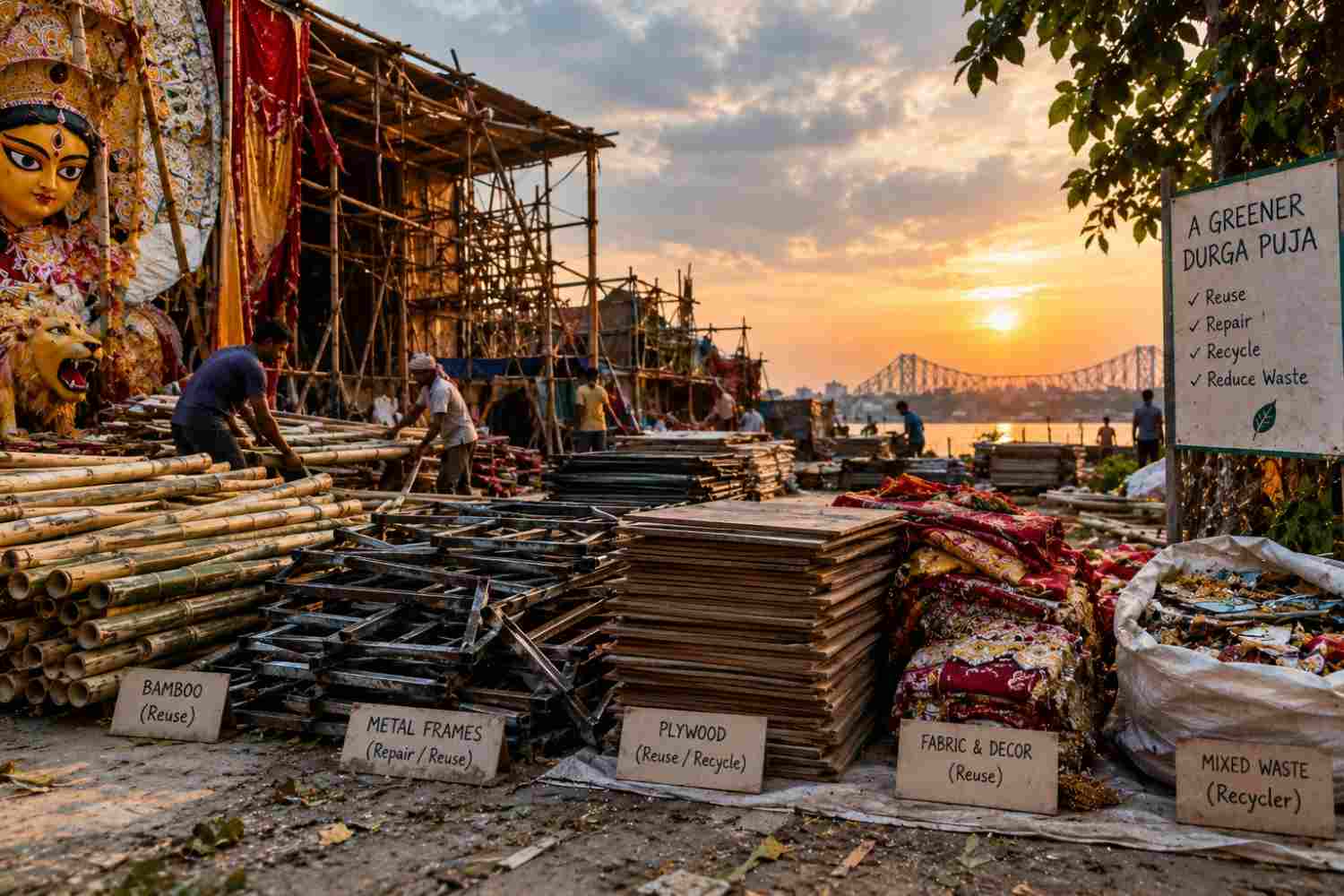
When the Lights Go Out, What Happens to a Pandal’s Materials?
Every year, Durga Puja transforms Kolkata into a city of elaborate pandals, artistic installations and illuminated streets. Bamboo frames, fabric, plywood, steel, ropes, paint and decorative elements come together to create these temporary spaces. But when the last visitor leaves and the lights go out, an important question arises: what happens to all these materials?
A pandal may stand for only a few days, but the materials used to build it can retain their value long after the festival ends. Some can be reused in future installations, while others may be repaired, repurposed or recycled. The challenge is to ensure that they do not simply become waste once the celebrations are over.
The aim is not to make Durga Puja less creative or elaborate. It is to examine whether the materials behind its artistic identity can be planned, managed and recovered more responsibly.
A Temporary Structure with a Longer Story
Although a pandal is dismantled after the festival, its materials do not necessarily have to share the same fate. Bamboo and metal frames may be suitable for future structures, while fabric and decorative elements can be stored for reuse. Plywood may also serve another purpose if it remains in good condition.
However, recovering these materials is not always straightforward. Paint, adhesives, mixed-material decorations and damaged components can make reuse or recycling more difficult. Materials joined together may require additional labour to separate, while poor storage can reduce their chances of being used again.
This makes planning essential. Waste management should not begin only after dismantling. Decisions about material selection, assembly methods, storage and recovery must be considered before construction begins. Designing for disassembly can help preserve the value of materials and reduce the amount that ultimately needs to be discarded.
Reuse Must Be Proven, Not Promised
Calling a pandal sustainable does not establish how much of its material is actually reused. A credible assessment must distinguish between materials that are rented, returned, stored, repaired, resold, recycled or discarded. Each category represents a different outcome.
For instance, renting a frame may reduce the need to purchase new materials, but its condition and subsequent use still matter. Similarly, sending a material to a recycler is not the same as directly reusing it in another pandal.
A practical assessment would begin with an inventory of the materials purchased or rented for construction. After dismantling, organisers could record how much was recovered, where it went and whether it was reused, repaired, recycled or discarded. Any recovery or reuse percentage should also specify how it was calculated, whether by weight, quantity, value or another clearly defined measure.
Such records would help distinguish verified outcomes from general claims. Without them, it remains difficult to determine how much waste was actually prevented and how effectively materials were recovered.
What Do Existing Rules and Examples Tell Us?
The West Bengal Pollution Control Board issued a directive to Durga Puja organisers in 2024 concerning compliance with the Plastic Waste Management Rules, 2021. It addressed specified single-use plastic items and PVC banners, including requirements for handling certain used PVC banners through registered plastic-waste processors.
This provides a regulatory starting point for managing particular waste streams. However, compliance with these requirements does not, by itself, establish that bamboo, plywood, fabric, metal frames and other pandal materials are being recovered or reused.
There have also been examples of organisers considering reuse. A 2022 report by The Times of India described plans announced by some Salt Lake Puja committees to store plywood, reuse cloth and return decorations to artisans. These examples indicate that material recovery can be incorporated into festival planning. However, announced plans should not be treated as proof that the materials were ultimately recovered, nor do a few examples establish a city-wide practice.
The wider question is whether such initiatives can be supported by reliable records, clear responsibilities and arrangements that continue beyond the festival itself.
Designing a Second Life into the Next Pandal
A more circular approach begins before the first frame is assembled. Organisers can assess which materials can be rented or borrowed, which decorations can be repaired, and which components can be separated without unnecessary damage. Choosing durable materials and designing structures for dismantling can make recovery easier at the end of the festival.
Clear agreements are equally important. Rental and return contracts should identify who will collect the materials, where they will be taken, what condition they must be in and who will bear the associated costs. Plans must also account for the workers responsible for dismantling, sorting, transporting and storing these materials.
Organisers and local authorities can strengthen the process through clearer disposal guidance and consistent record-keeping. A simple material ledger could document the quantities purchased or rented, the amount returned or stored, the materials repaired or recycled, and the waste that had to be discarded. Where possible, the final destination of each recovered material should be recorded and verified.
This would allow organisers to compare their initial plans with actual outcomes, identify materials that can be used repeatedly and improve recovery arrangements for future festivals.
Durga Puja’s artistic identity and responsible material management do not have to work against each other. The goal is not to diminish the scale, creativity or cultural significance of the celebration, but to make better use of the resources that bring it to life.
For Bengalis, Durga Puja is far more than a festival. It is a feeling woven into memories, creativity, community and the familiar joy of returning to a pandal year after year. Every structure carries the effort of artisans, the imagination of designers and the emotions of the people who gather around it. Preserving that spirit should also mean caring about what remains when the celebrations end.
Making pandals more sustainable does not mean taking away their grandeur or changing the traditions people hold close. It means extending the value of the materials, skills and resources that make these spaces possible. With thoughtful planning, responsible dismantling and verifiable reuse, the end of a pandal’s life need not mark the end of its usefulness.
The lights may go out, and the pandal may come down, but the story of its materials can continue.
Sources:
- SAHAJ Puja Permission Portal — Government of West Bengal: sahaj.wb.gov.in
- West Bengal Pollution Control Board — Directive to Durga Puja organisers on compliance with Plastic Waste Management Rules, 2021: Read the directive (PDF)
- The Times of India — Report on Salt Lake Puja committees’ reuse plans, 2022: Read the report
- Central Pollution Control Board — Construction and Demolition Waste Rules and resources: CPCB rules · C&D waste system




Add a Comment