Total Articles 231+

Compliances

Compliances refer to the process by which an organization ensures that it follows all applicable laws, regulations, standards, and ethical practices relevant to its operations. This includes adhering to environmental laws, maintaining fair labor practices, and upholding strong governance and transparency standards. Effective compliance helps organizations reduce legal risks, build trust with stakeholders, and operate responsibly within society. It also supports long-term sustainability by aligning business activities with regulatory requirements and ethical expectations.

Showing 12/67

05 Sep 2026

Kolkata | 7 September, 2026 Satellites may be transforming life on Earth, but their afterlife is creating a problem above it. From Cosmoserve’s robotic debris-capture technology to SpaceX’s controlled de-orbiting strategy, new approaches are emerging to keep Earth’s orbital environment sustainable. SummarySpace is no longer an empty frontier. ESA's latest figures show that about 40,000 objects are being tracked in Earth’s orbit, including around 11,000 active payloads, while the actual population of smaller debris is far larger.Cosmoserve Space is approaching the problem from the removal side. Its Mission Embrace is testing soft robotic technology that could eventually help capture inactive satellites and other objects already stranded in the orbit. SpaceX, led by Elon Musk, is approaching it differently: Starlink satellites can adjust their orbits to avoid collisions and are designed to be deliberately de-orbited when they reach the end of their operational life. The two approaches point to the same larger question: Can humanity keep using space without turning its most valuable orbital zones into a dumping ground? But why does space need cleaning in the first place?Every satellite sent into orbit serves a purpose, from communication and navigation to weather forecasting, Earth observation and scientific research. As our reliance on space-based infrastructure grows, so does the amount of hardware orbiting Earth. But when satellites stop functioning, they do not simply disappear and nor do the fragments left behind by previous launches, break-ups and collisions simply disappear. ESA’s 2025 Space Environment Report estimated that around 40,000 objects were being tracked in orbit, of which only about 11,000 were active payloads. The agency also warned that the debris population continues to grow rapidly. The growing number of objects in orbit is only part of the challenge. Their extraordinary speeds make collisions far more dangerous. A collision between two spacecraft or between a satellite and a piece of debris can produce additional fragments, creating new risks for other missions. Those fragments can then trigger further collisions, potentially multiplying the problem. That means orbital debris can continue to become a greater threat even without new satellites being launched.  What counts as space debris?Active satellites Inactive satellites  Rocket remnants Smaller fragmentsCollision-risk zoneSo, what is Cosmoserve actually trying to do?This is where Hyderabad-based Cosmoserve Space enters the picture.  The company is developing Active Debris Removal (ADR) technology, which goes beyond tracking orbital debris to physically capturing objects that are no longer useful. Its Mission Embrace focuses on a soft robotic capture mechanism. Rather than relying solely on conventional docking systems, the technology uses a robotic approach to capture objects in orbit. Cosmoserve has said it took the system from concept to flight-ready hardware in about four months.  But there is an important distinction.  Mission Embrace is a technology demonstration, not proof that Cosmoserve is already removing large quantities of debris from orbit. Its significance lies in testing a technology that could eventually support debris-removal and in-orbit servicing missions. That matters because capturing a defunct satellite is far more complicated than simply locating it.  A servicing spacecraft must identify its target, approach it safely and operate around an object that may no longer be able to communicate, control its movement or manoeuvre away from the approaching spacecraft.  Then what is Elon Musk’s SpaceX doing differently?  SpaceX has built one of the world’s largest satellite constellations through Starlink. As of 27 August 2026, 11,102 Starlink satellites had been launched, with 11,087 reported as operational, according to current tracking data. That scale brings a different sustainability challenge: what happens when thousands of satellites reach the end of their useful lives?  SpaceX’s approach is largely focused on prevention, manoeuvrability and controlled disposal. Starlink satellites are designed with propulsion and manoeuvring capabilities that allow them to adjust their orbits, avoid collisions and eventually descend into the atmosphere. SpaceX’s sustainability documentation states that satellites undergoing de-orbiting retain manoeuvrability and collision-avoidance capabilities during their descent. In 2026, SpaceX also began lowering the orbits of about 4,400 Starlink satellites from approximately 550 km to 480 km. The lower altitude is intended to reduce the amount of time satellites remain in orbit after their operational lives and, in turn, limit long-term debris and collision risks. COMPARISON INFOGRAPHIC  CosmoserveSpaceX / StarlinkDeveloping active debris removalFocuses on satellite life-cycle managementBuilds technology to capture objectsSatellites are designed to manoeuvreTargets inactive or stranded objectsControls its own satellitesSoft robotic capture is a key technologyControlled de-orbiting is a key strategyStill at the technology-development stageAlready operating at constellation scale So, can prevention alone solve the space-junk problem?That is where the difference between preventing new debris and removing existing debris becomes important. SpaceX’s approach can help ensure that its own satellites do not remain in orbit indefinitely after their mission end. But controlled de-orbiting addresses future disposal; it does not remove the older, inactive objects and fragments already circling Earth. That is the gap that active debris-removal companies are trying to address. The challenge is also becoming larger as more satellites are launched. Expanding satellite networks can bring greater connectivity, communication and other services, but they also add more traffic to already crowded orbital regions. In other words, keeping new debris from accumulating is only one part of the solution. The harder question is what to do with the debris that is already there. HOW DO WE KEEP SPACE CLEAN? Design better satellites↓Track objects in orbit↓Avoid collisions↓De-orbit satellites responsibly↓Remove dangerous existing debris Is cleaning space really about Cosmoserve versus Musk?Not quite. The bigger story is not a contest between Cosmoserve and SpaceX. It is whether the space industry can develop a system in which prevention and removal work together to keep Earth’s orbit usable. SpaceX demonstrates what large-scale satellite operators can do when collision avoidance, manoeuvrability and end-of-life disposal are built into a constellation from the beginning. Cosmoserve represents a different but increasingly important need: technology that can deal with objects already left inactive in orbit and potentially difficult to control or remove. Neither approach, on its own, solves the entire space-junk problem. As launches accelerate and more companies enter the space economy, orbital sustainability will depend on several layers working together: better satellite design, accurate tracking, collision avoidance, responsible end-of-life disposal and, where necessary, active removal of high-risk debris. That changes the question at the heart of the space race. It is no longer only about who can launch the most satellites, build the biggest constellation or reach orbit the fastest. It is about who takes responsibility for what happens after those satellites stop working. True space sustainability will not be measured by how much we put into orbit, but by how responsibly we manage what remains there.Primary sources: European Space Agency — Space Environment Report 2025 — Supports the orbital-debris figures, including ~40,000 tracked objects and ~11,000 active payloads, and the need for active debris removal.  ESA Space Debris Environment Statistics — Provides updated 2026 statistics on tracked objects, satellites, debris populations and orbital mass. SpaceX / Starlink — Commitment to Space Sustainability — Supports Starlink’s collision-avoidance, controlled de-orbiting and satellite sustainability approach. SpaceX — Approach to Space Sustainability and Safety — Supports information on satellite manoeuvrability, collision avoidance, low-altitude operation, controlled de-orbiting and design-for-demise.   Cosmoserve / Mission Embrace Cosmoserve Space — Official Website — Supports Cosmoserve’s Active Debris Removal technology, orbital-debris removal mission and its “Reviver”/“Mothercraft” concepts. The New Indian Express — Mission Embrace — Supports the Mission Embrace soft-robotic capture demonstration and its development timeline. Business Standard — Cosmoserve Mission Embrace — Provides additional reporting on the soft robotic capture mechanism and its role in Active Debris Removal. ...Read more

04 Sep 2026

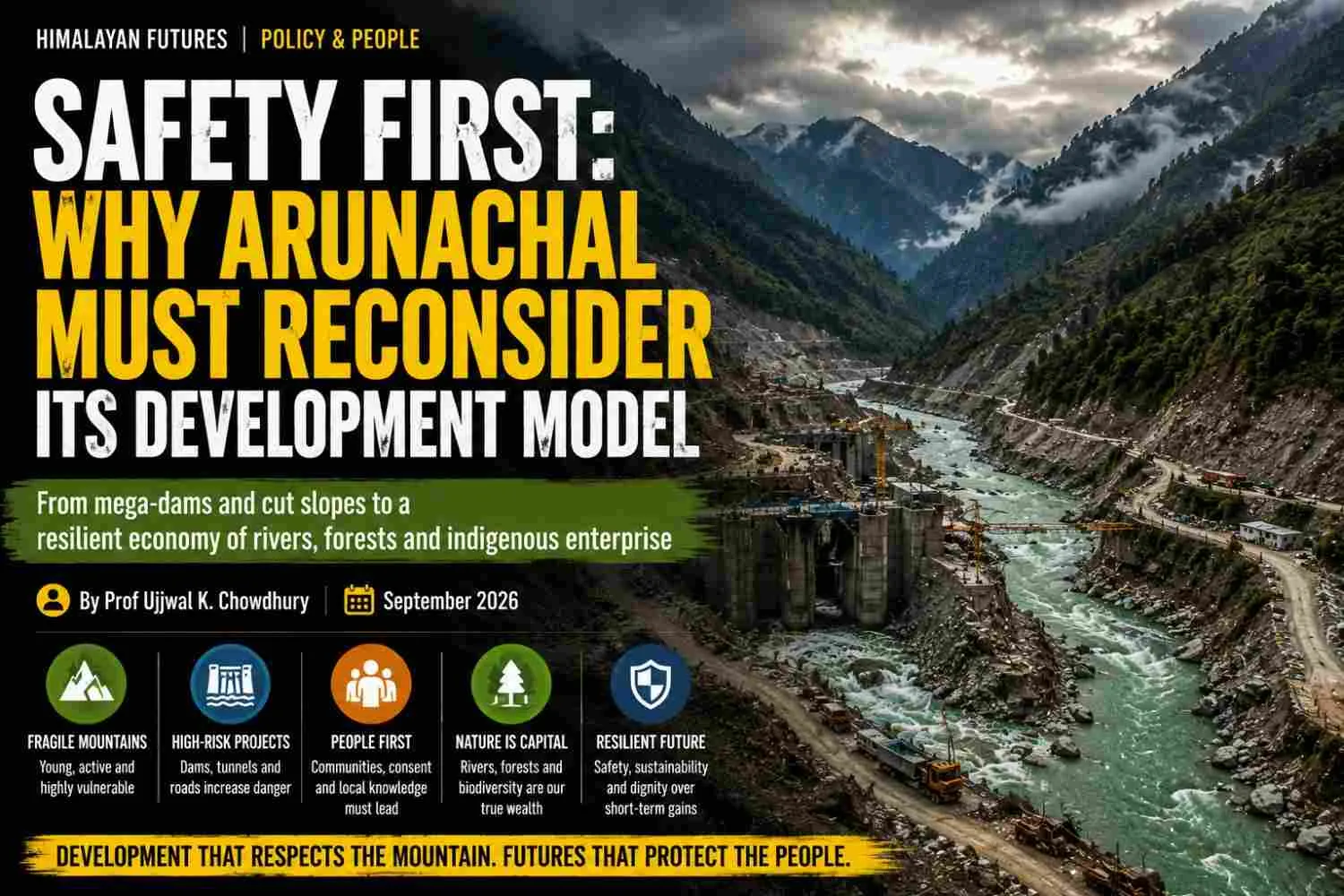
Nepal’s August 2026 debris disaster - and why the Himalayas need an ecology-first development compact The Himalayas are not merely a development frontier—they are a living ecological system. Nepal’s 2026 debris disaster exposes the urgent need to put ecology, carrying capacity, local livelihoods and resilience at the centre of Himalayan development. SummaryNepal’s August 2026 debris disaster shows how fragile Himalayan landscapes can turn infrastructure and human exposure into catastrophe.The article argues that climate change is increasing background risks, but poor planning, construction and weak warning systems determine the scale of damage.An ecology-first approach would prioritise restoration, responsible tourism, resilient infrastructure, local livelihoods and stronger cross-border data sharing.Examples from Bhutan and Sikkim demonstrate how tourism, conservation and community-based economies can be aligned rather than treated as competing priorities.The central message is clear: Himalayan development must protect the ecological systems that sustain security, livelihoods, water and long-term prosperity. Security that ignores the mountain’s carrying capacity is not security. It is deferred catastrophe.A field note for the Himalayan future The news peg: when the mountain arrived as a wave On 4 September, the most improbable image from Nepal’s Bhote Koshi disaster was also the most instructive: two hydropower workers emerged alive after more than a week trapped inside the Trishuli 3A tunnel. Their rescue came as families were still waiting for names, bodies and reliable information. It was a small return from a corridor that had become a geography of absence—washed-out settlements, severed roads, missing workers, missing tourists and a river carrying the mountain itself downstream. The numbers were moving because the disaster crossed borders and administrative systems faster than the official lists could converge. Nepal News, citing Nepal Police, reported 1,290 recovered dead and 4,798 missing on 4 September. The Associated Press reported at least 1,259 dead and more than 5,000 missing in Nepal; Chinese authorities reported 21 deaths and 541 missing on the Tibetan side. Those figures should be read as a live accounting problem, not a settled total: unidentified remains, foreign workers, hydropower rosters and cross-border lists were being reconciled at different speeds. The event began on the morning of 26 August near the Langtang–Gyirong border corridor. Preliminary assessments by the World Meteorological Organization and the International Centre for Integrated Mountain Development point to a large ice–rock avalanche entering the Lhende Khola, temporarily damming the channel and then releasing a violent pulse of water, sediment, boulders and ice. The leading account is not a classic glacial-lake outburst flood and not a simple rain-fed flash flood. It is a cascading cryosphere-and-geomorphology event: a mountain slope failed, the river was plugged, and the plug failed. At Galchhi, the Trishuli reportedly rose by about nine metres in 30 minutes; at Malekhu, the rise was about seven metres. Monitoring stations were themselves damaged or swept away. Reports from the corridor described hydropower sites, highways, bridges, a border port and settlements hit by a moving wall of debris. SANDRP’s central warning is simple: design and disaster plans that model only the volume of water miss the mass and momentum of the mountain. A debris flood can choke tunnels, batter intake structures, bury machinery and carry bridges away even when a conventional flood estimate appears manageable. This is why the news cannot be reduced to an unusually bad monsoon or to climate change as a universal explanation. Warming is thinning ice, thawing permafrost and altering snow and rainfall regimes across the high mountains; it raises the background probability of unstable slopes and cryosphere failures. But ICIMOD experts have cautioned that the specific trigger in this case remains under investigation. The honest conclusion is sharper than a slogan: a changing climate is loading the dice, while construction, exposure and weak warning systems decide how many people are sitting beneath the throw. A flood that carries boulders and sediment is not merely a bigger flood. It is a different engineering and governance problem.The lesson running through SANDRP’s debris-event analysis A disaster is never only natural The useful formula is not nature versus development. It is hazard multiplied by exposure multiplied by vulnerability. A steep, young, seismically active mountain range will always produce landslides, avalanches, cloudbursts and sudden river pulses. The political question is whether a road, tunnel, hotel, dam, pilgrim camp or worker dormitory is placed where the next pulse can reach it—and whether the people in it have warning, escape routes, insurance and a voice before the project is approved. The Himalayas have been teaching this lesson for years. The 2013 Kedarnath disaster showed how extreme rain, a glacial lake breach, river encroachment and unregulated pilgrimage exposure can combine into a catastrophe. The 2021 Rishiganga–Tapovan event in Uttarakhand turned a rock-and-ice avalanche into a debris torrent through a densely engineered valley; workers were among the principal victims. In October 2023, the South Lhonak glacial lake outburst flood in Sikkim damaged the Teesta III hydropower complex and pushed the question of early warning from specialist seminars into public grief. The July 2025 flood in the Lhende Khola–Bhote Koshi corridor was an earlier warning in the same neighbourhood. Hydropower facilities, roads and bridges were damaged, while officials and researchers again pointed to the absence of real-time cross-border information. A warning that arrives after the river has crossed the border is not a warning system; it is a postscript. The August 2026 disaster therefore belongs to a pattern: the hazard is episodic, but the accumulation of exposure is continuous. There is a temptation after each tragedy to demand a bigger wall, a higher road, a stronger dam or a faster evacuation vehicle. Those tools matter, but they cannot substitute for deciding where not to build. Sediment has memory. Old landslide fans, buried channels, river terraces and glacial deposits are not vacant plots. A project that ignores those form transfers its risk to the next village, the next worker shift and the next generation of taxpayers. Before the border, there was a civilisation It is important to name the geography correctly. The Hindu Kush Himalaya is a 3,500-kilometre arc across Afghanistan, Bangladesh, Bhutan, China, India, Myanmar, Nepal and Pakistan. Around 240 million people live in its mountains, while the ten major river systems rising there sustain water security for roughly 1.9 billion people downstream. The range is not a remote rim around national economies. It is their headwater, climate regulator, biodiversity vault and cultural archive. Its social map is older and more intricate than the modern border map. Sherpa, Tamang, Gurung, Thakali, Newar, Lepcha, Bhutia, Bhotia, Kumaoni, Garhwali, Ladakhi, Balti, Kashmiri, Himachali, Tibetan, Arunachali and many other communities have built different ways of living with altitude, cold, slope and scarcity. Pastoralists move sheep, goats, yaks and cattle through seasonal commons. Farmers terrace fragile hills, save seed, grow barley, buckwheat, millets, pulses, potatoes, fruit and medicinal plants, and store food for a winter that no market can guarantee. The sacred geography is equally material. Kailash and Mansarovar, the sources of the Ganga and Brahmaputra, Buddhist monasteries and highland lakes, Hindu pilgrimage routes, Muslim shrines and Sikh sites are not just attractions on a tourism map. They are systems of obligation: to a spring, a grazing ground, a forest, a deity, an ancestor and a neighbour. In Uttarakhand’s van panchayats, Nepal’s community forestry institutions, Bhutan’s village systems and Sikkim’s community-led tourism initiatives, social rules have often done the work that a distant permit office cannot do—rationing use, repairing commons and remembering who bears the cost. Modern geopolitics has overlaid, not erased, that world. Colonial surveys and the Great Game hardened fluid frontiers. The incorporation of Tibet into the People’s Republic of China, India’s independence and partition, the 1962 India–China war, the Kashmir conflict, and the strategic anxieties of Nepal and Bhutan turned high passes into military theatres. Roads, airstrips, telecommunications and river projects now carry a double meaning: civilian connection and strategic reach. The danger begins when the second meaning cancels the first truth—that the mountain has its own operating system. Security has built the road to the cliff edge China’s infrastructure drive on the Tibetan Plateau is not imaginary, and it is not explained by economics alone. In 2025, a Reuters report on a Chinese state-assets regulator’s directive described infrastructure investment, the Sichuan–Tibet railway and the lower Yarlung Zangbo hydropower project as part of efforts expected to improve livelihoods and employment while contributing to border stability and security. Roads, rail, power and communications make it easier to move people, goods and state capacity. They also create a permanent footprint in a landscape where the margin between a transport corridor and a military corridor is deliberately thin. The issue is not denying a remote community a clinic, phone signal, electricity or an all-weather route. It is that a security rationale can compress environmental review, centralise risk decisions and make dissent sound disloyal. The proposed Yarlung Zangbo mega-dam and the concentration of roads, railways and projects in seismically active terrain show how urgency can turn cumulative impacts into an accounting footnote. After the 2025 Tibet earthquake damaged reservoirs, Reuters reported expert concern about a hydropower spree where seismic risk is not a rounding error. India has its own strategic imperative. Border roads, bridges, tunnels, airfields and forward logistics matter in a contested high-altitude frontier. But the same security vocabulary has also fused with pilgrimage and hydropower. The Char Dham all-weather road programme was designed to improve year-round access to four shrines and to support strategic mobility. The Supreme Court’s 2021 decision accepted a wider formation width for strategic roads, while requiring environmental safeguards; a High-Powered Committee had documented unscientific hill cutting, unsafe muck dumping, forest loss, landslides and threats to springs, wildlife and livelihoods. That is the line governments keep trying to avoid: security is legitimate, but security is not a geology waiver. A road that repeatedly closes under landslides is not resilient mobility. A dam that cannot be reached safely after a debris event is not assured power. A border settlement without water, soil and slope stability is not durable national presence. In a transboundary range, ecological security is strategic security. It is the only form of security that does not become more fragile as the concrete multiplies. The current disaster also exposes the diplomatic side of the problem. Rivers and hazard signals do not wait for a memorandum. Nepal needs timely information from the Tibetan side; India needs information from Nepal on upstream pulses; China, India, Bhutan and Pakistan all need to share observations when a watershed is under stress. Data exchange is often treated as a concession. In the Himalayas it is a form of mutual defence—a way to buy minutes that save lives and years that prevent bad projects. India’s tourism machine is a throughput machine On the Indian side, the fastest-growing pressure is not always a dam. It is the idea that a sacred or scenic place has failed unless it can process more vehicles, rooms, restaurants, helicopter sorties and visitors every season. The mountain is turned into a throughput machine. Arrivals become the headline; the cost of water, sewage, slope stabilisation, waste transport, traffic, noise and local housing is scattered across municipal budgets and household labour. A 2025 Scientific Reports study of the Char Dham pilgrimage circuit tracked visitor growth from roughly one million in the early 2000s to more than three million in recent years, with a record of about five million in 2023. It estimated indicative daily capacities—not universal commandments—for Badrinath at 15,778 visitors, Kedarnath at 13,111, Gangotri at 8,178 and Yamunotri at 6,160. The important point is not the precision of any single number. It is that carrying capacity is now measurable enough to govern, yet footfall is still treated as destiny. Joshimath offered a warning in slow motion. The town sits on old landslide debris, and in 2023 cracks appeared across homes, roads and public buildings. Residents blamed hotels, tunnelling and construction; officials said the causes were contested and linked the settlement’s vulnerability to its geological setting. That nuance matters. One cannot honestly attribute every crack to one project. One can still conclude that a town built on unstable deposits needs strict land-use control, drainage, monitoring and a moratorium on additional load until its risk is understood. The word suicidal is not rhetorical when the model combines a changing climate, fragile slopes, mass movement, narrow roads, concentrated pilgrimage calendars and weak local capacity. It is suicidal in the systems sense: the activity that produces short-term revenue destroys the ecological asset and the public balance sheet that make future revenue possible. The choice is not between development and no development. It is between value extracted quickly and value renewed over time. The old growth metricThe ecology-first metricThe immediate gateKilometres of roadSafe access per unit of slope disturbanceGeomorphic red lines and independent reviewTourist arrivalsNet local value per visitor; water and waste per staySeasonal booking, caps and public transportMegawatts commissionedReliable energy with sediment and river risk priced inCumulative basin assessment and retrofitsConstruction daysYear-round local skills in restoration and careLocal procurement and nature-work guaranteesFastest strategic routeResilient access, water security and warning timeEcology–security audit with public data The table is a modest reset of ambition. Stop presenting raw scale as the only evidence of progress. A mountain district can have fewer roads and more reliable access, fewer visitors and more local income, fewer megawatts and more dependable power, and more year-round work. The better metric is value retained without erasing the conditions that produce it. Bhutan: charge for the privilege of entering  Bhutan offers the clearest Himalayan rebuttal to the race for volume. Its sustainable development fee is a policy statement: international adult visitors currently pay US$100 per person per night, while visitors from India pay Nu/INR 1,200, with concessions for children. Bhutan’s official tourism guidance says the money supports free social services, environmental and cultural preservation, infrastructure, training and local businesses. The fee does not magically make tourism sustainable; it gives the state and communities an instrument to ration pressure and reinvest in the public goods that visitors consume. The practical result is a different conversation. The question is not how many coaches can reach Thimphu by breakfast. It is whether a visitor stays longer, pays fairly, uses local guides and accommodation, respects a living culture and leaves behind enough revenue to maintain forests, trails, waste systems and public services. Bhutan’s model has trade-offs: a fee can feel exclusionary, and a state-led brand can hide uneven benefits. But its governing insight is powerful—scarcity can protect value when the revenue is transparent and the host community has standing. There is also a product lesson. An ICIMOD-documented partnership between Bio Bhutan and a community group buys about 2,000 kilograms of fresh dwarf rhododendron leaves annually at Nu 160 per kilogram, processes them into essential oil and sells massage oil, perfume and herbal soap. Nine per cent of gross profit goes to the community group and two per cent to an access-and-benefit-sharing fund. It is a small enterprise, but that is exactly why it matters: biodiversity becomes income without becoming a mine, and conservation is written into the transaction. Bhutan is not a postcard proof that every problem has been solved. Climate shocks, waste, inequality and pressure from neighbouring markets remain real. Its contribution is institutional imagination: a mountain nation can decide that tranquillity, biodiversity and cultural integrity are productive assets. It can charge for pressure, measure what the money repairs and make the visitor a participant in stewardship rather than a unit of arrival statistics. Sikkim: a laboratory, not a postcard  Sikkim shows how an Indian Himalayan state can move in the same direction without pretending to copy Bhutan. Its Organic Mission set out to make the state fully organic, and its tourism system uses permits and group requirements for sensitive parts of North Sikkim. Community-based tourism initiatives in Darap, Pastanga and Kitam have been studied through a triple-bottom-line lens: ecological care, economic viability and social participation. Homestays, local food, village walks, guides, craft and farm experiences can keep value in the settlement rather than exporting it to a highway hotel. The state is also learning the unglamorous side of sustainability. In 2024, tourist vehicles were required to carry large garbage bags as a condition of entering Sikkim, a small producer-responsibility rule aimed at a state receiving more than 20 lakh visitors a year. The measure will not solve waste by itself, but it makes the visitor part of the disposal chain. That kind of mundane accountability is more important than another glossy eco-label. Sikkim should not be advertised as a finished high-value, low-footfall model. It faces rising arrivals, urban pressure, landslide exposure and the familiar gap between an organic brand and a remunerative farm. Its value is as a laboratory. The next step is to link organic production, homestays, biodiversity stewardship and public procurement so that a farmer is not asked to carry the cost of certification while hotels and intermediaries capture the premium. Sustainable tourism becomes credible when the resident can see the money, the work and the reason to protect the landscape. The global lesson: protect the asset, price the pressure The Himalayan debate is not trapped in Himalayan exceptionalism. Rwanda charges US$1,500 for a mountain-gorilla tracking permit in Volcanoes National Park and directs 10 per cent of permit revenue to communities around national parks. The point is not to turn a sacred mountain into a luxury club. It is to demonstrate that a rare ecological experience can be rationed, priced and linked to conservation, local services and employment. Lower-cost local access and public education can coexist with premium international experiences; the principle is that the fragile asset is not free to unlimited demand. Costa Rica makes a different move. Its tourism board says more than 25 per cent of national territory is reserved for conservation and presents protected areas as the foundation of the visitor economy. The country’s lesson is long-term institutional alignment: forests, parks, renewable energy and tourism branding are not separate departments competing for the same landscape. Conservation is economic infrastructure because it protects the reason people come and the water and biodiversity that residents need. New Zealand’s Great Walks show the value of refusing to confuse public access with unlimited access. Hut and campsite stays on popular tracks are booked in advance, managed by season, priced differentially and sometimes closed or restricted outside the safe period. The system is not elitist simply because a track has a cap; it is fairer than allowing the fastest, richest or most connected visitor to overwhelm a public asset. A Himalayan pilgrimage route could use the same logic: a calendar, a quota, a local guide network, transparent exemptions and a public account of where the fee goes. The shared principle is direct: nature is the productive core, not scenery left over after development. The income must keep the gorilla, forest, trail and watershed alive. Himalayan ministries should ask what level of use lets a place renew itself—not how much can be extracted before it fails. What an ecology-first Himalayan economy looks like An alternative is not a return to poverty or a ban on all modern infrastructure. It is a different development grammar. The intrinsic value of the Himalayas is not a philosophical luxury: forests slow runoff, wetlands store water, soils hold slopes, biodiversity pollinates crops, snow and ice regulate rivers, and cultural landscapes organise care. The imposed value system says a mountain is useful when it is cut, dammed, paved or photographed. An ecology-first system says a mountain is already doing work before a project arrives—and the first duty of development is not to destroy that work. First comes restoration as infrastructure. Every watershed should have paid local crews for spring revival, native forest regeneration, wetland protection, slope bioengineering, trail repair, fire management, invasive-species control and community water monitoring. Such work is not beautification. It is risk reduction, rural employment and climate adaptation. MGNREGA, state watershed programmes, forest departments, disaster funds and corporate social responsibility should be able to finance it through multi-year contracts with village institutions, not short campaigns that disappear after a photograph. Second comes slow tourism. Put the cap at the destination, not at the district border after the road and hotel boom have already happened. Use advance bookings, differential fees, seasonal closures, walking and electric mobility, decentralised sanitation, luggage logistics, no-build zones around rivers and fans, and a ban on helicopter exceptions that make carrying capacity meaningless. Spread itineraries across villages only when the villages consent and have water, waste and emergency systems. Measure room-nights retained locally, local procurement, water use and waste recovered—not merely the number of vehicles that crossed a checkpoint. Third comes a mountain bioeconomy. The Himalayas offer a basket with global potential: sea buckthorn, apricot, apple, walnut, pine nut, wild thyme, chamomile, bay leaf, ginger, cardamom, tea, coffee, honey, buckwheat, millets, red rice, kidney beans, pashmina, yak and sheep wool, handmade paper, bamboo and carefully managed medicinal plants. Demand exists in functional foods, ethical fashion, clean beauty, nutraceuticals and wellness. India’s AYUSH and herbal-product exports rose from $649.2 million in 2023–24 to $688.89 million in 2024–25; that is an all-India figure, not a Himalayan windfall, but it signals a market large enough to justify serious quality infrastructure. The rule must be harvest less, earn more. Wild collection needs quotas, regeneration plots, seasonal bans and community monitoring. Cultivation should protect local genetic diversity instead of replacing it with a single export crop. Processing, drying, grading, cold storage, botanical authentication, food safety, lab testing, traceability, geographical indications and benefit-sharing are where value is added. A village that sells raw herbs to a trader remains vulnerable; a cooperative that owns a tested extract, a trusted brand and a buyer contract can finance both livelihoods and the forest. There are already glimpses. A reported Almora project combines MGNREGA and Himalayan research institutions to cultivate rosemary, chamomile, timur, bay leaf and kapoor kachri on 5.5 hectares, with an estimated reach of 400 rural families, 268 self-help groups and 15,500 person-days of employment. In the Darma Valley, agricultural scientists and local institutions have explored processing buckwheat and kidney beans into flour and biscuits while documenting medicinal plants and indigenous practice. These are not substitutes for land rights, fair prices or public services. They are proof that value can be built at altitude without blasting a valley open. Fourth comes a digital layer that serves local agency. A Himalayan product should be traceable to a landscape, a harvest protocol and a benefit-sharing agreement. A visitor should be able to see whether a homestay fee funded a spring, a waste system or a village school. A dam operator should publish sediment assumptions and real-time risk data. A community should own a sensor, not merely be measured by one. Technology is useful when it makes ecological limits visible and power accountable. The employment dividend: jobs that keep the slope standing The most damaging false choice is between a construction boom and unemployment. The Himalayas need work, especially for young people facing outmigration, but not every job must be tied to cutting a new road or pouring a new hotel. A slower economy can be labour-intensive in the right places: restoring springs, maintaining trails, running nurseries, mapping landslides, monitoring snow and wildlife, guiding visitors, hosting travellers, processing foods, repairing solar and micro-hydro systems, managing waste, caring for elderly residents and responding to disasters. Imagine a district-level Mountain Service Corps recruited from local villages. Its members would be trained and paid for three-year cycles in first response, rope rescue, slope and stream observation, community radio, ecological restoration, trail safety, biodiversity surveys and visitor management. Some would become permanent technicians; others would return to farming or enterprises with a recognised skill and a local market. The corps would be cheaper than repeated emergency mobilisation and more dignified than treating mountain residents as casual labour for outside contractors. Natural-product enterprises create a second ladder. Farmers can be paid for cultivation and stewardship; women’s groups can run cleaning, grading, drying and packaging; young people can handle design, digital sales, logistics, laboratory work and hospitality; monasteries and cultural institutions can curate knowledge without surrendering it. Public procurement can create a floor by buying local millets, pulses, herbal teas and certified nursery stock for schools, hospitals, army kitchens and disaster shelters. Private demand can then compete above that floor instead of forcing producers to sell raw material at distress prices. This is also where cultural and social justice become economic design. A community should be able to say that a spring, pasture, forest patch or sacred site is not for sale. Women who carry water and fuel should help decide tourism and energy; pastoral routes must be mapped before roads cut them. Traditional knowledge should be credited and compensated, not mined by a brand with no share for the people who kept it alive. Ethics determines whether the economy can endure. Four decisions governments can take now The Himalayas need rules that survive political urgency, contractor pressure and the next election. Four decisions would change the incentives. 1. Make geology the first permit Create statutory geomorphic zoning for every Himalayan basin: no-build red zones on active debris fans, old landslide toes, floodplains, unstable moraine and critical springs; conditional zones with strict load, drainage and evacuation rules; and buildable zones where cumulative risk is acceptable. Require independent basin-level assessments before a chain of roads, tunnels, dams or hotels is approved. Make muck disposal, sediment routing, worker accommodation, slope monitoring and emergency access enforceable conditions, not annexures. Every existing high-risk project should receive a retrofit or retirement plan, with a public register of overdue actions. 2. Cap the visitor and count the worker Adopt destination-level carrying-capacity rules for pilgrimage towns, national parks, high passes and glacier valleys. Use bookings, seasonal calendars, differential entry fees, waste deposits, public transport, local guide requirements and water budgets. Publish the capacity method and the data; do not turn a number into a secret bureaucratic ceiling. The same system should count every worker in a tunnel, dam and road camp, record shifts and emergency exits, provide multilingual alerts and require a named evacuation plan. If a project cannot account for its workers, it cannot claim to be resilient. 3. Turn natural products into a public mission Upgrade the existing National Mission for Sustaining the Himalayan Ecosystem and the National Mission on Himalayan Studies into a Himalayan Nature-Products and Restoration Mission with state, community and research partners. Finance village processing hubs, botanical and food-safety labs, cold chains, common branding, GI protection, digital traceability, access-and-benefit-sharing agreements and patient working capital. Tie subsidies to regeneration and producer ownership. Use public procurement to create stable demand for climate-resilient local foods, certified medicinal plants, wool, nursery stock and restoration services. The goal is not an extractive herbal rush; it is a diversified portfolio where the forest remains more valuable standing than stripped. 4. Make data sharing a peace dividend Build a transboundary Himalayan risk compact under which China, India, Nepal, Bhutan and Pakistan share agreed, time-stamped observations on river levels, rainfall, snow, glacier lakes, seismic signals and major slope failures. Use satellites, automatic stations, community gauges, sirens, radio and cell broadcast; rehearse the warning chain twice a year. India already has NDMA guidelines on GLOFs, while NMSHE is tasked with assessing Himalayan vulnerability and ecosystem health. The missing step is authority, interoperability and trust. Put the data in the public domain wherever security permits, and treat minutes of warning as a regional public good rather than a diplomatic favour. The mountain’s final warning The rescued workers in the Trishuli 3A tunnel should not become a convenient ending—a miracle that lets the system return to business. Their survival makes the obligation harder. They were not rescued by a growth statistic. They were rescued by people, persistence, local knowledge, equipment and time. A rational Himalayan development model would invest in those capacities before the next river rises, not after the cameras arrive. The choice before India, China, Nepal, Bhutan and the other Himalayan countries is between two futures. One treats the range as a frontier to be secured, accelerated and monetised until valleys are corridors and rivers project sites. The other treats it as a living system whose forests, snow, rivers, cultures and communities are the platform for durable prosperity. The second future is slower, but not smaller. It can create more local ownership, stronger public services, safer pilgrimage, higher-value tourism, natural products and strategic depth that concrete alone cannot provide. It requires saying no—to a road on a debris fan, a hotel above a spring, a dam without a basin assessment, or a security argument without ecological accounting. That boundary allows development to continue. Sunderlal Bahuguna’s old sentence remains the most modern balance sheet: ecology is permanent economy. In the Himalayas, it is also permanent security, permanent culture and permanent livelihood. The mountains are not refusing development. They are refusing to be developed as if they were dead. Sources and further readingEditorial note: The Nepal casualty figures in the feature are time-stamped reports available on 4 September 2026 and may change as unidentified remains and cross-border missing-person lists are reconciled. The event’s precise trigger remains under investigation; the feature distinguishes preliminary scientific findings from policy inference. 1. Counterview, “India’s nuclear power fantasy: A reality check from the Western Ghats”. https://www.counterview.net/2026/09/indias-nuclear-power-fantasy-reality.html — context on development claims, risk and the Western Ghats analogy 2. Bharat Dogra, Counterview, “Beyond relief: Why the Himalayas must now choose ecology over indiscriminate development”. https://www.counterview.net/2026/09/beyond-relief-why-himalayas-must-now.html — ecology-first framing, livelihoods, forests and pilgrimage pressure 3. Counterview, “Beyond a natural disaster: Lessons from the Tibet–Nepal debris flow”. https://www.counterview.net/2026/09/beyond-natural-disaster-lessons-from.html — debris-flow and governance context 4. Counterview News, “Himalayan floods are deadly debris events, not just water surges: SANDRP”. https://www.counterview.net/2026/09/himalayan-floods-are-deadly-debris.html — summary of SANDRP’s debris-event analysis 5. World Meteorological Organization, “Flood tragedy in Nepal highlights cross-border and cascading risks”. https://wmo.int/media/news/flood-tragedy-nepal-highlights-cross-border-and-cascading-risks — preliminary event mechanism, river observations and warning-system lessons 6. ICIMOD, “Kyirong–Rasuwa flood 2026: a tsunami from the sky”. https://www.icimod.org/kyirong-rasuwa-flood-2026-nepal-china-border/ — cryosphere expertise and limits of specific climate attribution 7. Nepal News, “Bhote Koshi flood disaster: death toll reaches 1,290; over 4,700 remain missing”. https://english.nepalnews.com/s/nation/bhote-koshi-flood-disaster-death-toll-reaches-1290-over-4700-remain-missing/ — 4 September 2026 casualty bulletin 8. Nepal News, “Two trapped workers saved alive from Trishuli 3-A tunnel”. https://english.nepalnews.com/s/nation/two-trapped-workers-saved-alive-from-trishuli-3-a-tunnel/ — 4 September 2026 rescue report 9. Nepal News, “Bhote Koshi catastrophe: a 360-degree look at what happened, what went wrong and what comes next”. https://english.nepalnews.com/s/explainers/bhote-koshi-catastrophe-a-360-degree-look-at-what-happened-what-went-wrong-and-what-comes-next/ — event chronology, warning gap and hydropower exposure 10. SANDRP, “Himalayan Disaster August 2026: Bhote Koshi deluge”. https://sandrp.in/2026/08/28/himalayan-disaster-august-2026-bhote-koshi-deluge/ — debris-flood analysis and infrastructure exposure 11. SANDRP, “July 2025 GLOF disaster impact on ten HEPS in Nepal”. https://sandrp.in/2025/07/24/july-2025-glof-disaster-impact-ten-heps-in-nepal/ — earlier warning from the same transboundary corridor 12. ICIMOD, “The Hindu Kush Himalaya”. https://www.icimod.org/who-we-are/the-hindu-kush-himalaya/ — regional geography, population and river-basin context 13. ICIMOD, “The Hindu Kush Himalaya could lead the way towards nature-based solutions”. https://www.icimod.org/the-hindu-kush-himalaya-could-lead-the-way-towards-nature-based-solutions/ — biodiversity and natural-capital context 14. UNEP, “Mountains” and “New report highlights risk of global warming in the Third Pole”. https://www.unep.org/interactive/explore-ecosystems/mountains/en/index.php — mountain livelihoods, water and climate risk 15. Reuters, “China calls on state-owned firms to boost industrial aid to Tibet”. https://www.reuters.com/markets/emerging/china-calls-state-owned-firms-boost-industrial-aid-tibet-2025-08-26/ — officially stated infrastructure, livelihood and border-security rationale 16. Reuters, “Tibet quake highlights earthquake risk of dams on the roof of the world”. https://www.reuters.com/world/asia-pacific/tibet-quake-highlights-earthquake-risk-dams-roof-world-2025-01-10/ — seismic and hydropower context 17. Supreme Court of India, Char Dham road judgment, 14 December 2021. https://api.sci.gov.in/pdfdate/index1.php?dno=223692020&dt=2021-12-14&filename=supremecourt/2020/22369/22369_2020_4_1503_32125_Judgement_14-Dec-2021.pdf — strategic-road width and safeguards 18. RGICS, “Environmental cost of the Char Dham project: High Power Committee highlights”. https://www.rgics.org/environment/environmental-cost-of-the-char-dham-project-highlights-of-the-report-of-high-power-committee-appointed-by-the-honble-supreme-court/ — summary of environmental and social concerns 19. Kuniyal et al., Scientific Reports, “Carrying capacity assessment for sustainable tourism in the Char Dham pilgrimage circuit”. https://www.nature.com/articles/s41598-025-20166-8 — visitor growth and indicative daily capacities 20. Reuters, “Sinking Himalayan town puts spotlight on India’s hydropower rush”. https://www.reuters.com/world/sinking-himalayan-town-puts-spotlight-indias-hydropower-rush--trfn-2023-01-16/ — Joshimath’s geological setting and contested causal claims 21. Bhutan Tourism, official FAQs. https://bhutan.travel/faqs — sustainable development fee, public-good reinvestment and tourism policy 22. ICIMOD, “Community–enterprise partnership in Bhutan for nature-based products”. https://www.icimod.org/adaptation-solutions/communityenterprise-partnership-in-bhutan-for-nature-based-products/ — dwarf-rhododendron value chain and benefit sharing 23. Government of Sikkim, Sikkim Organic Mission. https://www.sikkim.gov.in/Mission/Mission-info/1?Mission=Sikkim+Organic+Mission — organic farming policy 24. Government of Sikkim, Protected Area Permit information. https://www.sikkimtourism.gov.in/pap — permit management in sensitive northern valleys 25. Lex Localis, “Community-based tourism in Sikkim through a Triple Bottom Line lens”. https://lex-localis.org/index.php/LexLocalis/article/view/802817/2952 — Darap, Pastanga and Kitam case comparison 26. FAO, “Agroecology at altitude: how Himalayan communities are reimagining food systems”. https://www.fao.org/agroecology/new-knowledge-module/germinate/detail/agroecology-at-altitude-------how-himalayan-communities-are-reimagining-food-systems-from-the-ground-up/en — agroecology, local food systems and the Himalayan Agroecology Initiative 27. ICIMOD, “Mountain products: a sea of opportunities”. https://www.icimod.org/mountain-products-a-sea-of-opportunities/ — natural-product basket, processing and niche-market potential 28. Press Information Bureau, “AYUSH exports rise to $688.89 million in 2024–25”. https://www.pib.gov.in/PressReleaseIframePage.aspx?PRID=2211272 — national market signal; not a Himalayan-only figure 29. Rwanda Development Board, “Increase of Gorilla Permit Tariffs”. https://rdb.rw/increase-of-gorilla-permit-tariffs/ — US$1,500 permit and 10 per cent community revenue share 30. Visit Rwanda, “Gorilla Tracking”. https://visitrwanda.com/interests/gorilla-tracking/ — permit, community revenue and local employment 31. Visit Costa Rica, “Sustainability”. https://www.visitcostarica.com/sustainability — 25 per cent of national territory in conservation 32. New Zealand Department of Conservation, “Great Walks” and pricing. https://www.doc.govt.nz/parks-and-recreation/things-to-do/walking-and-tramping/great-walks/ — advance booking, seasonality and managed visitor pressure 33. Department of Science and Technology, Government of India, Climate Change Programme. https://dst.gov.in/climate-change-programme — NMSHE mandate and national climate-science capacity 34. National Disaster Management Authority, India, Guidelines. https://ndma.gov.in/ndma-guidelines — 2020 GLOF guidelines and disaster-risk instruments 35. Times of India, “Medicinal plant project in Almora to curb migration and revive hill agriculture”. https://timesofindia.indiatimes.com/city/dehradun/medicinal-plant-project-in-almora-to-curb-migration-and-revive-hill-agriculture/articleshow/121384422.cms — reported employment and medicinal-plant pilot 36. Times of India, “Scientists promote climate-resilient farming in Darma Valley”. https://timesofindia.indiatimes.com/city/dehradun/scientists-promote-climate-resilient-farming-in-darma-valley/articleshow/121734949.cms — reported value addition and indigenous-crop work ...Read more
04 Sep 2026

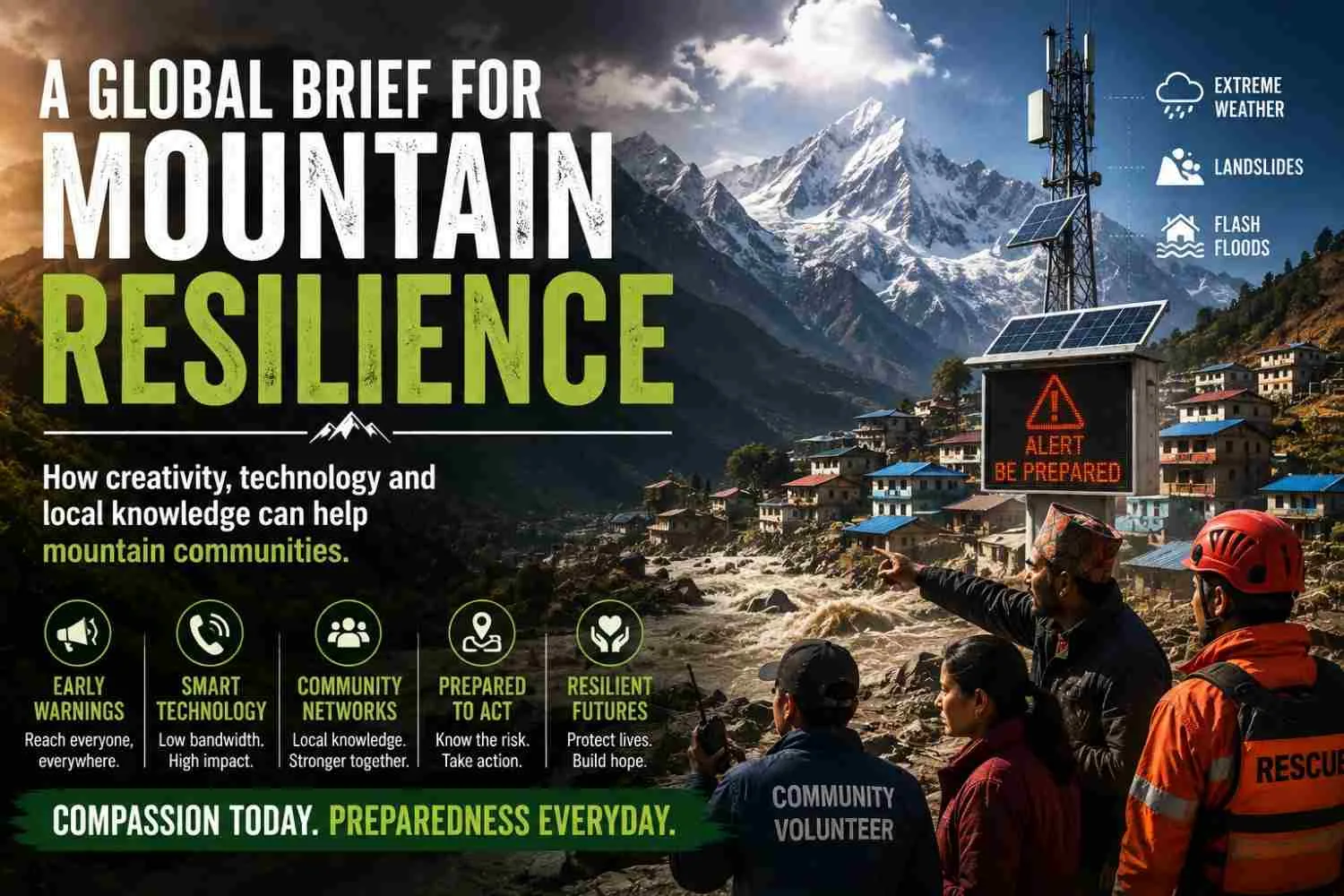
The Himalayas are not merely a development frontier. They are a living ecological system. Nepal’s 2026 debris disaster exposes the urgent need to put ecology, carrying capacity, local livelihoods and resilience at the centre of Himalayan development.SummaryNepal’s August 2026 debris disaster shows how fragile Himalayan landscapes can turn infrastructure and human exposure into catastrophe. The article argues that climate change is increasing background risks, but poor planning, construction and weak warning systems determine the scale of damage. An ecology-first approach would prioritise restoration, responsible tourism, resilient infrastructure, local livelihoods and stronger cross-border data sharing. Examples from Bhutan and Sikkim demonstrate how tourism, conservation and community-based economies can be aligned rather than treated as competing priorities. The central message is clear: Himalayan development must protect the ecological systems that sustain security, livelihoods, water and long-term prosperity.How creativity, technology and local knowledge can help mountain communities.The devastating disaster in Rasuwa and surrounding areas of Nepal has left lives lost, families grieving, people missing and communities facing a difficult journey towards recovery. Nepal needs the prayers and support. But it also needs something that must begin before the next disaster: PREPAREDNESS.Following the tragedy, I wrote an appeal asking the Global Advertising, Branding, Marketing, Media and Technology Communities to help protect Mountain Communities. The response from friends and colleagues around the world reminded me that compassion has no borders.But compassion must now lead to collaboration.Our Prime Minister Balendra Shah has also called upon the international community to recognise the growing risks facing the Himalayan region. He described the Rasuwa disaster as a serious indication that these risks are increasing alongside climate change and stressed that managing the effects of a global crisis must be a shared international responsibility.This is an important global appeal. My appeal is to our community: The people who understand attention, behaviour, communication, storytelling, design, media and technology. It is an appeal to our creative and technology ecosystem.Climate risk is also a Communication Challenge. Mountain communities are living with increasing uncertainty. Glacial instability, flash floods, landslides, extreme rainfall and unpredictable weather are placing lives, livelihoods and infrastructure at risk. What happens in the mountains does not remain in the mountains. The Himalayas feed river systems that support drinking water, agriculture, energy, tourism, trade and economies beyond national borders. When mountain ecosystems become unstable, the human consequences travel far downstream. Yet mountain communities often live in places where communication is most difficult. Internet access may be limited. Mobile networks may become unavailable. Messages may need to cross different languages, cultures and different levels of literacy.Important scientific knowledge exists. Risk assessments are produced. Weather and environmental data are collected. But information does not save lives simply because it exists. It must reach people in time. It must be understood. It must be trusted. It must help people know what to do next. A warning filled with technical language may be accurate but still fail to create action. A mobile alert may arrive but mean little if a family does not understand the level of danger. An evacuation route may exist but remain unknown to the community expected to use it.The challenge therefore, is not only to predict danger. It is to transform information into Preparedness. Our industry solves communication problems every day. We simplify complex messages and communicate across cultures. We use design to guide behaviour, storytelling to create emotional understanding and media technology to reach people at scale. We study audiences, identify barriers and create messages intended to move people from awareness to action.What if we applied those abilities to one of the most urgent challenges facing the world? How can creativity, communication, media and technology help mountain communities understand risk, prepare earlier and act faster? This is not a traditional advertising brief. There is no product launch, sales target or market share objective. The desired response is not simply an advertising campaign about climate change. It is a practical system of ideas that can help people before and during an emergency. The work might help answer questions such as:How can an early warning be understood immediately, regardless of literacy?How can alerts reach people in areas with limited internet access?How can families know where to go and what to carry during an evacuation?How can schools, tourism businesses, transport operators and community leaders become part of a local warning network?How can verified information travel faster than rumours during a crisis?How can preparedness become part of everyday life?Technology companies can help build location-based, multilingual and low-bandwidth warning systems. Telecommunication companies can help urgent information reach people quickly, including those without smartphones. Brands can contribute through their distribution networks, packaging, retail relationships and presence in remote communities. Media organisations and creators can amplify verified information, reduce confusion and ensure that mountain communities remain visible after the immediate headlines disappear. Creative agencies can transform scientific information into clear visual guidance, memorable messages and culturally relevant tools. Creative festivals, award programs and industry associations can introduce open briefs focused on mountain resilience and disaster preparedness. Instead of recognising ideas only after they have become campaigns, they can help create the partnerships from which useful solutions emerge. Climate scientists, disaster specialists, government institutions and humanitarian organisations must provide the knowledge and technical guidance behind these efforts.Mountain communities must help lead the process. People living in mountain regions possess generations of knowledge about their landscapes, rivers, weather patterns and local warning signs. They must be partners in defining the problem, shaping the communication and testing whether an idea works in real life. Technology can strengthen local knowledge but it should not replace it. Data may help anticipate danger but trust determines whether people act. The best creative response may not be the most technologically sophisticated. It will be the one people can access, understand, trust and use at the moment it matters most.An open invitation from NepalI would like to invite Creative Agencies, Brands, Technology Platforms, Media Organisations, Industry Bodies, Climate Experts and Humanitarian Partners to explore an open collaboration for mountain preparedness.Could we create a shared creative brief?Could we bring regional and global creative talent together with scientists and mountain communities?Could we develop open-source solutions that different communities can adapt?Could our industry platforms create space for this conversation?Rasuwa is the immediate reason for this appeal. But Rasuwa must not become another tragedy that receives global attention for a few days and is then forgotten. It should become a warning and perhaps the beginning of a new kind of collaboration. Our industry has always responded to briefs about growth, reputation, engagement and transformation. We have used our creativity to sell products, build brands and shape culture. Today, we must ask whether some of our greatest abilities can also be used to build Preparedness.Because the next important brief may not ask us to make people buy something.It is asking us to help people understand something. It is asking us to help communities act sooner. It is asking us to help protect lives.About the writer:Ujaya Shakya is First Vice President of the Advertising Association of Nepal (AAN), Founder of Outreach and author of Brandsutra (2015) and Brandsutra 2.0 (2026) ...Read more

03 Sep 2026

From mega-dams and cut slopes to a resilient economy of rivers, forests and indigenous enterpriseSeptember 2026 Arunachal Pradesh faces a critical development choice as hydropower, roads and large infrastructure projects expand across a fragile Himalayan landscape. The article calls for a safer model built around resilient communities, local livelihoods and ecological limits. SummaryArunachal Pradesh’s rapid infrastructure development is bringing roads, hydropower and other projects into a landscape shaped by steep slopes, seismic activity, intense rainfall and growing climate risks. The article argues that development cannot be judged only by megawatts generated, kilometres of roads built or investment attracted, but also by safety, ecological impact and community well-being. It examines concerns around projects such as Upper Siang and Etalin, including displacement, forest diversion, biodiversity loss and the risks of building in vulnerable river basins. At the same time, it presents alternatives centred on community tourism, value-added agriculture, local energy systems and indigenous enterprise. The proposed approach places local communities, customary institutions and ecological resilience at the centre of development decisions. Ultimately, the article calls for an Arunachal model that delivers stronger livelihoods and public services without increasing long-term exposure to environmental and climate risks. THE PROPOSITIONArunachal Pradesh does not have to choose between poverty and peril. It has to choose whether its rivers, forests and cultures will be treated primarily as national inputs, or as the living capital of a safer, higher-value local economy. The glacier-and-rock collapse reported in Nepal, the warning from Sikkim and Arunachal's own contested hydropower trajectory make that choice urgent. The Himalayas do not announce a disaster only when a dam breaks. They announce it through a spring that disappears after a tunnel is drilled, a road that slips every monsoon, a river whose sediment no longer reaches downstream fields, a village whose consent is counted only after the map is final. Arunachal Pradesh is at the point where these signals have to become policy. The mountain is not an empty balance sheet The most important fact about Arunachal Pradesh is also the fact most development plans suppress: it is a young mountain system still being made. Steep slopes, fractured rock, intense monsoon rainfall, active faults, fragile soils and a changing cryosphere respond to every road cut, tunnel, quarry, reservoir, settlement and drainage alteration. The three Counterview articles place this reality beside the August 26, 2026 glacier-and-rock collapse reported along the Nepal-Tibet border. A high-mountain failure became a debris flow, flood, infrastructure destroyer and humanitarian crisis downstream. The trigger was geological and cryospheric; the scale of loss was shaped by what had been built in the path of risk. Climate change changed the structure of risk by weakening ice, destabilising slopes, altering rainfall and making old design assumptions unreliable. Arunachal shares the conditions that make the Nepal event a warning: high seismicity, steep river valleys, expanding glacial lakes, cloudbursts, landslides and difficult emergency access. It has also experienced its own cloudbursts, road failures and district isolations. A road celebrated at inauguration but not maintained through the monsoon is not durable connectivity. A dam that multiplies a debris surge is not automatically a resilience asset. The question, therefore, cannot remain: how quickly can Arunachal add megawatts, kilometres of road and concrete? It must become: developed for whom, with what exposure, and at what price to the families who will live on these slopes fifty years from now? When infrastructure becomes exposure For two decades, Arunachal's development story has been narrowed into a familiar template: large hydropower projects for the national grid, strategic roads across unstable terrain, tunnelling through mountains and the rapid conversion of rivers into infrastructure corridors. The needs are genuine - roads, hospitals, schools, communications, jobs, energy and border security. But genuine needs do not make every engineering response wise. Upper Siang and Etalin are the clearest tests of that wisdom. The proposed Siang Upper Multipurpose Project, often described as an approximately 11,000 MW project, and the 3,097 MW Etalin project in the Dibang basin sit in landscapes that are seismically active, biodiverse and socially sensitive. Their proponents may present national power, flood moderation or strategic value; critics see high-consequence exposure in valleys where evacuation, rescue and compensation would be extraordinarily difficult. Project-by-project clearance is not enough when the river basin is the real unit of impact. A dam, access road, transmission corridor, tunnel, quarry and downstream cascade operate as one system. Blasting disturbs slopes and springs; hill-cutting changes drainage; a landslide can block a river, send an impulse wave into a reservoir or sever a village road. A GLOF or debris flow can breach a large structure and magnify the downstream disaster. Tofu-dreg infrastructure - built too quickly or cheaply for its setting - is a governance warning. The ecological bill is equally serious. Reservoirs submerge forests, fragment habitat, trap sediment and alter fisheries, riverine agriculture and downstream geomorphology. High-head barriers obstruct migratory fish; decaying biomass can release greenhouse gases. A centralised plant is also a single point of failure: if its powerhouse, transmission line or bridge is cut, the distant grid and the local community may lose power together. Sikkim offers a caution that Arunachal should not dismiss. The third Counterview article notes that the National Remote Sensing Centre assessed a 42 per cent probability of a South Lhonak Lake breach in 2013. On October 3-4, 2023, the lake breached; the Teesta III dam at Chungthang was destroyed, 55 people died, 74 went missing, more than 7,000 people from 1,756 families lost their homes, and thousands of houses were damaged across Sikkim. The reported proposal to rebuild at the same location, with a structure almost twice as high, illustrates the danger of treating a known risk as a reason for taller concrete rather than better land-use decisions. The missing people in the numbers The Upper Siang debate reveals why displacement cannot be reduced to a compensation spreadsheet. Project-side accounts cited in the dossier speak of around 16 villages and roughly 10,000 people directly affected. Community organisations and researchers speak of at least 27 villages, a 40-300 village impact zone and more than 150,000 people, depending on whether farmland, forest access, fisheries, grazing, sacred sites and downstream livelihoods count. The disagreement asks who is visible to the state. For the Adi people, the Siang is not an empty channel with a calculable flow. Ane Siang, the Mother Siang, is a cultural and ecological relationship. A village contains homes, terraces, orchards, fishing grounds, mithun routes, burial places, ritual spaces, memories and kinship networks. A resettlement colony can reproduce houses, not a river's meaning or the social geography through which knowledge travels. Compensation cannot restore a place-based civilisation. Etalin presents a smaller numerical footprint with the same principle. Project documents cited in the dossier indicate about 265 families in eight affected villages, with around 95 families facing involuntary displacement, while the project requires diversion of roughly 1,175 hectares of forest land. The project's environmental clearance has also faced legal challenge. Whether one supports or opposes the project, the lesson is clear: the burden of proof must rise when the cost is irreversible. Indigenous resistance to Upper Siang and Etalin is not an obstacle that publicity can remove. Adi institutions, farmers' forums, youth groups and human-rights advocates question consent, cultural survival, safety and benefit-sharing. Some affected families and village groups support the projects for expected flood protection or economic opportunity. That diversity makes independent deliberation essential. A signature after the design is fixed is not free, prior and informed consent. WHAT THE UPPER SIANG NUMBERS REVEALOfficial or project-side accounts cited in the dossier: about 16 villages and roughly 10,000 people directly affected. Community and civil-society accounts: at least 27 villages, a wider 40-300 village impact zone and more than 150,000 people. The gap is not a licence to choose the largest figure; it is evidence that the definition of 'affected' must include land, forests, rivers, culture and downstream livelihoods. A moratorium is a responsibility, not a rejection of development Arunachal should declare a time-bound moratorium on new large storage dams and high-risk cascades in the most vulnerable basins. This would create space for independent, cumulative assessments that model earthquakes, GLOFs, landslide impulse waves, sediment, extreme rainfall, upstream operations and failure of roads and communications together. The state needs a public hazard atlas. No-go zones should cover the highest landslide and GLOF susceptibility areas, irreplaceable biodiversity corridors and sites where evacuation is implausible. Low-no zones should permit only light, reversible or strictly conditioned activity. Settlements and critical assets already at risk need voluntary relocation or retrofitting, with land, services, transport and livelihoods planned together. Early warning is a social system, not a dashboard. Satellite and AI tools, weather radar, rain gauges, glacial-lake sensors, river gauges and slope monitors matter only if a village receives a clear alert, knows the safe route and practises the drill. Data-sharing across the India-Bhutan-China-Nepal Himalayan arc should be pursued wherever diplomacy allows. Roads and bridges should follow mountain behaviour: drainage first, slope bioengineering, vegetation reinforcement, controlled spoil disposal, spring protection, geotechnical inspection and dedicated maintenance. Vetiver, alder, bamboo and hydroseeding should complement engineering. The most strategic road may be the one that remains open and repairable, not the widest on inauguration day. Quality of life is the unit of progress A safer development model must answer everyday questions: can a child study during a monsoon outage, can a pregnant woman reach care, can a farmer sell without distress, can an elder remain in a familiar community, can a young person earn without leaving, and can a family sleep without fearing the next slope failure? These are the real measures of resilience. A safe home is infrastructure: Retrofit vulnerable homes and support voluntary, culturally appropriate relocation from the highest-risk zones. Promote earthquake-resilient construction using bamboo, cane, timber and local design knowledge wherever technically suitable.A reachable service is development: Combine district hospitals with telemedicine, mobile health units, emergency transport protocols and digital classrooms, so people need not be concentrated in unsafe places simply to reach a service.A maintained road is better than a grand road: Use geotechnical routing, drainage, bioengineering and slope monitoring. Limit widening, protect springs and accept seasonal or low-capacity routes where necessary. Budget maintenance as a core asset, not a post-disaster appeal.Local energy is strategic energy: Combine safe micro-hydro, rooftop solar, storage and islandable microgrids so border villages, schools, clinics, communication nodes and emergency centres remain powered when landslides cut the main line.  Tourism that pays the village The alternative to mega-project dependence is an economy that earns more from each unit of landscape without consuming it. Tourism can be a pillar, but Arunachal should avoid the familiar sequence in which roads arrive, hotels multiply, waste and water stress follow, and the host community receives the least value. Build high-value, low-density tourism around certified homestay clusters and community lodges regulated by village institutions or Kebangs. Publish carrying-capacity studies before scaling visitors, and use permits, seasonal quotas and route zoning for high-altitude lakes, glacial passes, sacred sites and wildlife corridors. Access must fit slope stability, water availability, cultural dignity and emergency capacity. The product should be experiential: Eaglenest birding, alpine botany, high-altitude treks, monastery and living-heritage circuits in Tawang and West Kameng, cultural and culinary immersion, river interpretation, farm stays, harvests and festivals. Tawang, Ziro, Mechuka, Namdapha and Pasighat can develop distinct identities. Kaimoi's Best Tourism Village recognition and work in Namsai show that cultural revival can be an economic asset. Room revenue, guide fees, permits, conservation fees and craft sales should flow to village committees and households. Cooks, drivers, porters, performers, farmers and artisans should be named beneficiaries. Training should cover hospitality, first aid, rescue, waste, digital booking, language and storytelling. Homestays need water, sanitation, fire, waste and structural standards without being forced to imitate urban hotels. The Lower Subansiri pondage proposal - a controlled tourism, adventure, cultural and inland-fisheries hub - deserves a transparent feasibility test. Reusing an altered site may be preferable to opening new upstream valleys, if safety, carrying capacity, fish ecology and community ownership are secured. Tourism must be a conservation contract: visitors receive meaning, communities receive income and ecosystems receive limits. Agriculture must leave as a product, not a truckload Agriculture should not leave Arunachal only as a truckload of unprocessed produce. Its microclimates can support a premium basket of kiwi, mandarin oranges, pineapple, apples, persimmon, walnuts, large cardamom, ginger, turmeric, chillies, buckthorn, medicinal plants, millets, Khamti rice, yak churpi and distinctive beverages. APEDA's buyer-seller work at Tawang points toward FPOs, FPCs, women's Self-Help Groups, branding, exports and value addition. The missing layer is a distributed system that lets farmers retain more value. Each producing cluster should have small solar-powered processing and packing capacity: grading, pulping, juicing, drying, pickling, fermentation, spice processing, safe packaging and traceability. Five- to ten-tonne community cold rooms can prevent distress sales when landslides block roads. A brand such as Arunachal Organic Himalaya can sit above district and tribal brands only if certification, quality control and producer ownership are real. Geographical indications should protect and premiumise distinctive products, not merely decorate packaging. Farmer Producer Companies should negotiate directly with urban retailers, hotels, institutions and exporters. Digital catalogues can show harvest windows, volumes and quality; public procurement can place local produce in schools, hospitals and tourism kitchens. Finance must cover working capital, cold chains and packaging. Women-led processing, food entrepreneurship and local logistics can create jobs without forcing young people to leave. Climate-smart agriculture should strengthen, not erase, local knowledge. Jhum should not be eliminated by decree; improved fallows, contour planting, water harvesting, agroforestry and community fire management can reduce erosion while preserving food cultures. Nitrogen-fixing alder, Alnus nepalensis, can be integrated with heirloom tea and black pepper. Success is a productive hillside that keeps soil, water, biodiversity and income together. Healing landscapes, not resort landscapes Arunachal's forests, clean air, hot springs, highland climates and spiritual traditions can support a careful nature-wellness economy. This is not a licence for large resorts. It is an invitation to design small, regulated experiences: forest-bathing or Shinrin-yoku trails, meditation retreats, monastery stays, nature-therapy walks, restorative food and hot-spring facilities with strict water and waste limits. Guides should be trained in ecology, mental-health first response, visitor safety and the limits of therapeutic claims. Indigenous dietary, herbal and healing knowledge must be documented with consent and benefit-sharing. Cooperative processing of managed non-timber products such as Mishmi teeta, wild turmeric or Taxus-related resources must prevent overharvesting and bio-piracy. Wellness should complement, never replace, public healthcare. Craft and local design as a living economy The cultural economy should be a productive sector, not an annual festival display. Apatani, Adi, Nyishi, Monpa and other weaving traditions; bamboo, cane and beadwork; Monpa paper; thangka and Buddhist art; and Wancho wood carving carry design intelligence. The challenge is repeatable income without flattening distinct identities into one generic Northeast aesthetic. District craft and design hubs can provide shared tools, natural-dye research, photography, packaging, e-commerce, accounting and market access. Partnerships with design institutes, fashion labels, architects and responsible retailers must protect attribution, intellectual property, fair prices and artisan control. A digital maker passport can connect each product to its maker, village, technique and material story; tourism circuits can add demonstrations, workshops and direct sales. Bamboo and cane bridge heritage with climate resilience. Bamboo anchors soil and can support homeware, furniture, structural alternatives and earthquake-conscious vernacular housing when engineered properly. Documentation and apprenticeships are vital: if craft is poorly paid, the state loses both a livelihood and an irreplaceable knowledge archive. A VILLAGE POWER TEMPLATEIllustrative 500 kW community-owned run-of-the-river model: 800-1,200 households and local institutions served; about Rs 4.5-5.5 crore capital cost; roughly 2.6 million kWh annually at 60 per cent capacity factor; customary council as trustee; Village Energy Management Society with women and youth representation; 35 per cent of revenue for O&M, 25 per cent for debt and 40 per cent for capital reserve, social dividend and watershed protection. Final feasibility, tariff and safety decisions must remain site-specific. Power where people live Arunachal's energy security does not require every river to become a gigawatt corridor. Safe run-of-the-river micro-hydro units, generally 10 kW to 2 MW, combined with solar and storage, can provide power close to where people live. Lower head, negligible storage and small civil footprints can reduce the scale of failure compared with a large reservoir, while allowing community ownership. No micro-hydro site is automatically safe; every site needs hydrology and geotechnical review. An illustrative 500 kW community-owned project could serve 800 to 1,200 households, schools, clinics and micro-enterprises. The dossier models a capital cost of Rs 4.5-5.5 crore and, at a 60 per cent capacity factor, around 2.6 million kWh a year. A customary council - Kebang, Tsumok or equivalent - can hold the land and water-use trust. A Village Energy Management Society can run the plant, with elders, a technical representative, local youth technicians and at least 50 per cent women and youth representation. Local operators should flush abrasive silt traps during the monsoon; four village youths can become primary and apprentice 'barefoot engineers'; the turbine maker can provide an annual maintenance contract; and prepaid smart metering can remove billing friction. A workable financing stack could blend 60 per cent public subsidy, 20 per cent CSR or green-climate finance, 15 per cent concessional debt and 5 per cent community land and labour. Tariffs can protect dignity and reliability: a lifeline domestic rate, a higher commercial rate for homestays and processing, and a regulated feed-in price for surplus. The illustrative revenue waterfall allocates 35 per cent to O&M, 25 per cent to debt service and 40 per cent to resilience - 15 per cent capital reserve, 15 per cent village social dividend and 10 per cent catchment protection. Energy then runs dryers, kiwi sorting lines, grain mills, five- to ten-tonne cold rooms and local EV charging hubs. The ten decisions that can change Arunachal's trajectory The state government can turn the argument into a social contract through ten decisions over the next 24 months. The sequence matters: first reduce irreversible exposure, then build the institutions and markets that make safer livelihoods credible. Pause new large storage dams and high-risk cascades while independent basin studies examine seismicity, GLOFs, landslides, sediment, climate projections and dam-break cascades.Create a public hazard atlas with no-go and low-no zones for heavy infrastructure, biodiversity corridors and high-risk settlements.Install real-time glacier, lake, rainfall, river and slope sensors in districts including Tawang, Dibang Valley and Anjaw, linked to village sirens, drills and last-mile communication.Make cumulative impact assessment and public disclosure mandatory for roads, tunnels, quarries, transmission lines and hydropower.Create a permanent Mountain Maintenance and Resilience Fund for drainage, bioengineering, bridge inspection, road restoration, emergency stocks and local responders.Launch district missions for community tourism, organic value chains, craft, design and nature wellness, with low-interest finance, procurement and ecological standards.Give FPOs, FPCs, women's SHGs, artisan guilds and tourism committees direct access to markets, digital systems, training and working capital.Adopt an enforceable FPIC-like protocol: disclose alternatives, recognise customary institutions, record dissent and share risks and benefits before decisions are final.Build decentralised energy around safe micro-hydro, solar, storage and islandable microgrids, with community, women and youth governance.Measure progress through disaster losses, forest cover, water quality, green-sector income, youth retention, service access and community satisfaction alongside GDP and capacity.  A future measured in more life per unit of concrete Arunachal does not face a binary choice between dams and poverty. It faces two theories of development. One treats the state as a resource warehouse whose rivers are exported, slopes cut faster than they heal and people compensated after decisions. The other treats mountains as the foundation of a local economy: forests that protect water, rivers that sustain culture and fisheries, farms that earn through processing, villages that host visitors on their terms, crafts that carry identity and energy systems that keep communities resilient. National security is not weakened by this second theory. A village with safe housing, a clinic, a digital classroom, a community microgrid, trained responders, maintained roads and dignified livelihoods is stronger than a landscape tied to one vulnerable transmission corridor. Ecological protection and strategic presence can reinforce each other when people are custodians and partners. The Nepal disaster, the Sikkim precedent and Arunachal's monsoon failures are not prophecies. They are choices made visible in advance. The government can still pause, listen, map, maintain and diversify. The goal is more safety, income, health, culture and possibility with less ecological damage. In a fragile Himalaya, that is the only progress that can endure.  Sources and editorial note Wangchuk Tsering. Safety first: Why reconsider hydropower in fragile Arunachal. Read online Neha Desai. Why the Nepal disaster is a warning Arunachal Pradesh cannot ignore. Read online Raj Kumar Sinha. Rising climate risks demand a new Himalayan development model. Read online APEDA / Press Information Bureau. APEDA and Government of Arunachal Pradesh host International Conclave cum Buyer-Seller Meet at Tawang. Read online APEDA. Arunachal Pradesh: GI and agricultural products profile. Read online Shiv Nadar University, Centre of Excellence for Himalayan Studies. Dams in the discourse of development: vulnerabilities and systematic barriers to communities-inclusive policies in Arunachal. Read online ...Read more

03 Sep 2026

An Appeal from Nepal to the World From a devastating disaster in Nepal’s Rasuwa district comes a wider call for action—bringing climate communication, creative industries and local mountain knowledge together to protect vulnerable communities.SummaryThe devastating floods in Rasuwa have renewed attention on the growing vulnerability of mountain communities to climate-related disasters. The article argues that the response cannot end with sympathy after a disaster; it must include stronger preparedness, clearer communication and long-term resilience. It calls on creative professionals, media, technology companies and brands to use their reach to make climate information easier to understand and act upon. At the same time, mountain communities must remain central to these solutions because their local knowledge can complement climate science and early-warning systems. The piece highlights practical needs such as multilingual alerts, accessible evacuation information and communication systems that can reach people with limited internet access. Ultimately, it presents creativity and communication as tools that can help turn climate awareness into preparedness and collective action.I want to begin with a heartfelt thank you. Since the devastating flash floods in Rasuwa and surrounding areas of Nepal, I have received messages and calls from friends and colleagues across the world. Your concern for Nepal, your prayers for those affected n your words of solidarity have meant a great deal during this painful time. These messages reminded me that compassion has no borders. They also encouraged me to make a wider appeal.Lives have been lost. Many people remain missing. Families are waiting for news, communities have been displaced and essential infrastructure has been destroyed. Nepal needs the world’s continued prayers and support. But prayers and expressions of sympathy, however meaningful, cannot be where our response ends. Alongside our grief, we must begin an urgent global conversation about Climate Change, Disaster Preparedness and the Growing vulnerability of Mountain Communities.This is more than a tragedy in Nepal. Rasuwa may be the place currently in the headlines but the warning it carries extends far beyond Nepal. Mountain regions around the world are facing increasingly uncertain environmental conditions. Glacial instability, flash floods, landslides, extreme rainfall and rapidly changing weather patterns are placing lives, livelihoods and infrastructure at greater risk. These risks do not remain confined to remote mountain settlements. Mountains feed the rivers that sustain agriculture, drinking water, energy systems, tourism, trade and economies. When mountain ecosystems become unstable, the human impact can travel across districts, countries and generations. Protecting mountain communities is therefore not a marginal concern. It is connected to the future security of millions of people.The Rasuwa tragedy must become more than another disaster that the world briefly mourns and then forgotten. It must be treated as a global warning n a call to action.Why I am appealing to the Creative Community:Climate change is rightly discussed by scientists, governments, humanitarian organisations and development institutions. Their research, expertise andleadership are essential. But climate vulnerability is also a Communication Challenge. Scientific information is often complex. Important risk assessments can remain inside reports. Early warnings may not reach vulnerable communities in time, in the right language or in a form people can easily understand. Even when information is available, people may not know what it means for their families or what action they should take. The global advertising, branding, marketing, media, design, technology and creative communities possess capabilities that can help bridge this gap.Technology platforms with global reach including companies such as Google, Meta and TikTok, could help strengthen location based and multilingual early warning communication for communities with different levels of digital access. Brands could use their distribution networks, packaging, mobile platforms, retail relationships and media reach to support preparedness in difficult to reach areas.Media organisations and content creators could amplify verified information, reduce the spread of rumours during emergencies and keep mountain communities visible after the immediate headlines have disappeared.Creative festivals, industry bodies and award platforms could introduce global creative briefs focused on mountain resilience, climate communication and disaster readiness. They could create space for agencies, brands and technologists to develop open source ideas that communities can adapt and use. Our industry knows how to capture attention. We simplify complex information, tell memorable stories and influence behaviour. We communicate across languages, cultures and different levels of literacy. We use design, data, media and technology to move people from awareness to action.Can we use these abilities to help protect human lives?No individual campaign can solve climate change. But communication can make risk easier to understand. Good design can make warnings clearer. Technology can help critical information travel faster. Storytelling can help people understand the human impact. Creativity can help move communities from awareness to preparedness. The opportunity is not to turn tragedy into a branding exercise. It is to use our professional abilities responsibly to address an urgent human challenge.Our work should help answer practical questions:Where should families go during an emergency?How can evacuation routes be communicated clearly?How can people without reliable internet receive urgent information?How can schools, tourism businesses and community leaders become part of the warning system?These may not look like traditional advertising briefs. But they are communication problems and communication is where our industry can contribute.Mountain communities must lead the conversation. Any meaningful response must begin by listening to the people who live in mountain regions. They possess generations of knowledge about their landscapes, rivers, weather patterns and local warning signs. They should not be treated only as vulnerable populations or passive recipients of outside solutions. They must be partners in designing these solutions. Technology should help strengthen local knowledges. Data may help anticipate danger but trust determines whether people act. Communication may create awareness but preparedness also requires infrastructure, resources and long term commitment. The most meaningful response will bring together community knowledge, climate science, public institutions, humanitarian experience, responsible brands, media reach, technological capability and creative thinking.A Global Call from Nepal:I appeal to creative professionals, industry associations, agency networks, brands, media platforms, technology companies, designers and storytellers around the world: Help us bring greater attention, ideas and collective action to the protection of mountain regions and their people.Let us begin asking difficult but necessary questions.How can climate information become understandable and actionable?How can warnings travel faster across remote difficult terrain?How can global technology work alongside local knowledge?How can brands support resilience beyond a single campaign cycle?How can our industry help ensure that vulnerable communities remain visible before - not only after disaster strikes?Behind every climate disaster is a community whose future depends on decisions being made today. Nepal needs your prayers and support. But Rasuwa and mountain communities around the world also need your attention, collaboration and ideas. Let this tragedy not become another moment the world mourns and then forgets. Let it become a moment when the global creative community chooses to listen, come together and act.Ujaya Shakya is First Vice President of Advertising Association of Nepal (AAN), Founder of Outreach and author of Brandsutra (2015) & Brandsutra 2.0 ABOUT AUTHORUjaya Shakya is a marketing genius, having written two volumes of BrandSutra, and has established Nepal's homegrown, much awarded integrated communication outfit, Outreach Nepal group. ...Read more

31 Aug 2026

Summary Actively evolving Himalayas have spread their wrath once again, at present the World is gripped with the images of Glacial Lake Outburst Flood (GLOF) of Nepal, this year. Recent episodes of urbanization and developments in the name of mega infrastructure have disturbed Himalayas to such an extent that disasters have become much more frequent than ever. The Kedarnath disaster of 2013 had popularized the term GLOF, acronym of Glacial Lake Outburst Flood. This year has witnessed another such episode in Nepal following the one at South Lhonak Lake of Sikkim in 2023. Glacial lake outburst flood (GLOF) takes place when ice blocks with huge number of rocks fall down in the glacial lakes supplying great amount of water and debris. The water holding capacity of the glacial lakes exceeds and after breaching the morainic embankment, water gushes out flooding the entire surrounding. By Dr Kanailal Das Fig 1: Glacial Lake Outburst Flood, a schematic diagram (Source: Antarcticglaciers.org)  An unimaginable disastrous flash flood flood took place in Nepal Tibet border on 26th August, 2026 at the confluence of Bhote Koshi and Trishuli rivers. Primarily it was established that a huge block of glacier collapsed and fell nearly 1000m downstream. This block of ice with englacial moraines (rocks within the glacier) instantly supplied enormous water and glacial debris. Generally, all glaciers have glacial lakes where glaciers start melting. Snow melt water beneath the glaciers is common in the high mountains. Thousands of glacial lakes beneath the glaciers are commonly found in Indian Himalayas. Fig 2: Locations affected by the flash flood (Source: NDTV Datafy)Nepal -Tibet border disaster has destroyed large number of bridges, roads, buildings and hydro power infrastructure. Rescue operations were very tough due to rugged terrain. The local community of the settlement was under the thick layer of mud and remnants of the collapsed infrastructure.     Course of events in Nepal disaster: High mountains - steep slopes - glacial melting due to warming - detached glacial block - huge amounts of debris and water supplied to glacial lake - breaching of the lake boundary - lake outburst - flow of water, mud and debris - settlement and infrastructure along the river swept away - bridges and road connectivity wiped away - death and missing humans and animals.   Fig 3: Pre and Post scenario of Nepal flood (The Economist, moneycontrolcom, abc news)  The disaster took place of August 26, 2026 occurred at the Gyirong - Rasuwagadhi gorge. It is the point where crossing roads via the Himalayas is possible between Nepal and China. The narrow place between two rivers is associated with hydro power infrastructure, heavily constructed zone of roads, custom facility and trade. The route across the location was being used by thousands of Mount Kailash pilgrims. Before 2011 the crossing was associated with very little infrastructure development with a rough road connectivity. The area experienced earthquake and landslides in the year 2015. A bridge was badly damaged. In 2017, the crossing was upgraded as an international dry port between Nepal and China. China also built a new bridge, 110 m Friendship Bridge beside the earthquake- damaged crossing site. The crossing and the dry port areas became an area of dense infrastructural development. Again, in July, 2025 a flash flood swept away the bridge. After that a temporary Bailey bridge had reopened the crossing. Number of missing people rises to 2,482, including 320 Indians, as Nepal disaster toll hits 584. Nepal accounted for 579 deaths and 1,924 missing and Tibet reported five death and 558 missing.  Rescue teams on both sides of the border were repeatedly forced to reassess and retreat Fryday as an unstable barrier lake overflowed into Bhote Koshi river, sent a fresh surge downstream and halted rescue. After a brief interval, another Avalanche dumped an estimated 50,000 cubic metres of ice debris. Satellite images showed post disaster formation of a great lake in the course of the river. 13 bridges along the river were swept away as the disastrous flood hit Rasuwa district of Nepal. Road connectivity was heavily destroyed. It took an arduous 50 hours after the mighty flash flood for the Chinese rescue teams to reach the core disaster zone around Gyirong dry port on Nepal - Tibet border using boats, ropes and heavily - lift drones. Thirty-seven tourists from West Bengal are missing in Nepal. A total of 39 persons of West Bengal were missing. Two of them have been rescued.    Fig 4: Satellite imagery showing aftermath of Nepal Flash Flood, 2026 (EU Space Program) Nepal is now monitoring the mountain glaciers near the glacier collapse zone. Satellite images show cracks in the glacier raising concern over fresh flash floods. Some information regarding the loss of life: The Times of india,28th August reported : No trace of 50 persons from Maharashtra and 37 from Tamilnadu. Among the Indians untraced in the Nepal Disaster 50 Kailash Manasa Sarovar yatris were from Maharashtra. At least 37 out of 57 pilgrims from Tamil Nadu and Puducherry are missing. Isha Sadhguru X Post :The whereabouts of 77 foreign nationals of Isha Foundation's Kailash Yatra, part of Isha Sacred Walks remained missing after the china immigration check post at Gyirong in Tibet was swallowed by the running water wall.  On August 27, 84 Indian nationals were rescued from Nepal including 63 workers at under - construction Trishuli 1 hydro power project. Around 200 Indian pilgrims on the Tibet side seek help for evacuation. Five groups of Indian pilgrims are missing till date. According to the latest reports the death toll from the Bhote Koshi -Trishuli disaster rose to 675 in Nepal on Saturday night, with 2,426 people still missing. Rescue teams are engaged in searching operations in glacial debris filled valleys, riverbanks and the tunnels of hydro power projects. Chinese authorities reported seven deaths and 554 people missing at Gyirong dry port on Saturday morning. Indian authorities revised down the number of Indian nationals unaccounted for in Nepal to 275 on Saturday evening, saying contact was reestablished with about 50 people. (Vishant Agarwala,The Times of india, August 30, 2026). According to the geologists the speed of Bhote Koshi river flow exceeded 55 km /hour in some stretches of the river. That is 15.3 m per second. A man cannot run so fast, most probably a man can run 3/4 m per second. In some parts of the river valley where there was no highland to take shelter men ran over the pathway along the river valley and got submerged within the swift disastrous flow of water and glacial debris. At the time of disaster there was no such heavy rainfall. The sky was almost fully clear. A shopkeeper of Trishuli market in Nuyakote said, “We were warned by the local authority to leave the market as soon as possible, we got a brief time to save us, but my family is lost." A bus carrying Manas Saravor pilgrims took a shelter in a comparatively high place, but some buses in front of us got no time and washed away in the surge with the pilgrims. Mallinath Kalkundi of Kanatataka told the reporter after the incident. However, danger lurks somewhere: The disaster is not over Satellite images indicate in the upstream there are two glacial lakes, one of the two lakes is full to the brim with huge amount of snow melt water. There is high probability of another glacial lake outburst flood in the same region. Glacial Lake Outburst Flood: Episodes from Indian Himalayas Thirteen glacial lakes in Uttarakhand in India are highly vulnerable for glacial lake outburst flood. In Indian Himalayas around 200 glacial lakes are recorded as unsafe and 25 of these lakes are considered of very high risk. The glacial Lake Outburst Flood, (GLOF) disaster in Nepal Wednesday, 26 August, 2026, has revived discussion on monitoring and management of the glacial lakes in Indian Himalayas. Himalayan ranges are the host of as many as 7,500 of them and 4,700 glacial lakes are situated in Ganga river basin with a catchment area over 2.5 lakh km2. One of the worst GLOF took place on October 3 midnight, 2023 producing 14.7 cubic metres glacial debris in the South Lhonak Lake in Sikkim. Several hydro power assets and settlements downstream were wiped out. This is a classic example of how a GLOF can transform a highaltitude glacial detachment into a major regional disaster.  Glacial block detachment - ice with englacial moraines - supply of water and glacial debris - water holding capacity of South Lhonak Lake exceeded - Lake Outburst took place -- huge amount of water and glacial debris supply to the Teesta water - hydro power infrastructure and part of settlement were wiped away - affected settlements downstream, causing loss of life and resources.   Fig 5: Pre and post South Lhonak Lake outburst (ICIMOD; Sattar et al., 2021) In June 2013 the famous Kedarnath Temple region and the settlements along the river Mandakini experienced rainfall induced glacial lake outburst flood.   Cloud burst, Extreme rainfall - rapid melting of snow and ice - landslides - debris supply to the lake behind Kedarnath Temple - Chora Bari Lake outburst - devastating flood around Kedarnath Temple and Mandakini river valley - Rambara settlement was completely destroyed.  Fig 6: Pre, syn and post flood situation, Kedarnath, 2013 (Bandyopadhyay and Kar, 2014) Other worst affected areas were Gaurikund, Sonprayag - Guptkashi, Agastyamuni and Rudraprayag. According to Government assessment 169 persons were dead and 4,021 people were reported missing. But local information indicated thousands of people were dead. The Kedarnath Disaster affected more than nine million people across Uttarakhand in various ways, including loss of homes, roads, bridges, communication and livelihoods. Rapid climate change causing glacial melting accentuates the genesis of GLOFs. As we tend to speeden up our so-called development in the name of smart cities and macro infrastructure the ensuing flood gups the whole settlement in seconds. Himalayas is still actively evolving, with unstable debris which is geologically very fragile and any unplanned construction without catering to the geology and climate is sure to invite apocalypse.  Response to Glacial Lake Outburst Floods: As a response to the Sikkim disaster National Disaster Management Authority, NDMA had set up a high-level coordination committee on GLOF disaster risk reduction. To take necessary steps to lessen the severity of the GLOF: Identifying the high mountains glacier - monitoring the change in the size of glaciers - Mapping the glacial lakes - monitoring the change in the volume of water in the glacial lakes - identifying the lakes at risk - initiative to stabilize the lakes at risk - controlled outflow of water if possible - establish an early warning system - evacuation of people - vulnerable zones of lake outburst flood, landslides should be avoided for settlement and infrastructure development. References: Bandyopadhyay S and Kar N.S. (2014): The Kedarnath Disaster: in search of scientific reasoning, Current Science, 107(4):557  https://www.icimod.org/press-release/new-scientific-study-confirms-climate-changeplayed-key-role-in-deadly-2023-lake-outburst-in-sikkim/ https://abcnews.com/International/deadly-nepal-flood-caused-enormous-landslideglacier-tumble/story?id=135984405 What caused Nepal flood? Scientist says it was enormous landslide, glacier fall https://eu-space.europa.eu/components/earth-observation-copernicus/image-of-theday/aftermath-nepal-flash-flood https://www.economist.com/science-and-technology/2026/08/27/the-terrifyingmechanics-of-the-nepali-flash-floodSattar A, Goswami A, Kulkarni A.V., Emmer A, Haritasya U.K., Allen S, Frey H and Huggel C (2021): Future Glacial Lake Outburst Flood (GLOF) hazard of the South Lhonak Lake, Sikkim Himalaya, Geomorphology, 388 (2021) 107783 https://doi.org/10.1016/j.geomorph.2021.107783 Vishant Agarwala, Tamaghna Bannerjee Chandrima Bannerjee, The Times of India, Saturday, August 29,2026.ABOUT AUTHOR  Dr Kanailal Das Masters in Geography from University of Calcutta, former senior research fellow, CSIR, PhD on Vulnerability of Gosaba, Basanti, Sundarban from Vidyasagar University.He has participated in many national and international seminars and has papers and book chapters to his credit.  ...Read more

29 Aug 2026

Kolkata| 29 August, 2026 India is looking to its coastline for a new sustainability opportunity, from mangrove restoration and blue carbon to seaweed farming and fisheries. But the real test is whether ocean-based growth can protect ecosystems and improve coastal livelihoods at the same time. Summary India's blue economy is expanding across conservation, fisheries, aquaculture and emerging ocean-based industries. The government is using MISHTI to restore mangroves, while seaweed cultivation and marine fish farming are being promoted as new blue-economy activities. India is also a major global fisheries producer, with the sector supporting millions of livelihoods. But measuring the climate value of coastal ecosystems remains more complicated than simply counting trees or calculating land-based carbon. For communities living along India's coastline, the transition is equally about income, access to resources, markets and benefit sharing. The real challenge is to ensure that blue-carbon projects and ocean-based businesses create measurable environmental gains without turning coastal communities into passive beneficiaries of a transition happening around them. Can India turn its coastline into its next sustainability frontier? India’s relationship with the ocean is economic before it is environmental. The country’s 11,099-km coastline supports fisheries, aquaculture, ports, tourism and millions of coastal livelihoods. The fisheries sector alone supports nearly 30 million livelihoods, according to NITI Aayog, while India accounts for around 8% of global fish production. Fish and fishery products generated about ₹60,523 crore in export earnings in FY2023–24. That makes the blue economy more than an environmental concept. It is equally a question of livelihoods, incomes, jobs and the future of coastal communities. At the same time, India’s coastline contains ecosystems with significant climate value. Mangroves, seagrasses, tidal wetlands and coastal sediments can store carbon while also helping protect coastal communities from erosion, storms and other hazards. This is where the idea of blue carbon enters the conversation. But India’s blue economy is much broader than carbon alone. It includes fisheries, aquaculture, seaweed, marine biotechnology, coastal tourism and ecosystem restoration, alongside emerging opportunities to create economic value from healthy marine ecosystems. The opportunity is substantial. So is the balancing act. A project can produce a strong sustainability headline without creating lasting benefits for the communities living along the coast. The challenge is ensuring that higher incomes do not come at the expense of the ecosystems that make those livelihoods possible. The real question, therefore, is not simply how much economic value India can generate from its coastline. But it is who creates that value, who benefits from it and whether the coastal ecosystem remains healthy enough to support those livelihoods in the long run. INDIA'S BLUE ECONOMY MANGROVES↓BLUE CARBON + COASTAL PROTECTION SEAWEED↓NEW LIVELIHOODS FISHERIES↓FOOD + INCOME MARICULTURE↓AQUACULTURE + ENTERPRISE TOURISM↓LOCAL ECONOMIC VALUE ↓ BLUE ECONOMYEconomic growth + ecosystem protection + coastal livelihoodsIs MISHTI turning mangrove restoration into a climate and livelihood strategy?Mangroves are at the heart of India’s blue-carbon conversation, but their value extends far beyond the carbon they store. They can help protect coastlines, support fisheries and provide livelihoods for communities living along the shore. The government launched MISHTI - Mangrove Initiative for Shoreline Habitats & Tangible Incomes - in June 2023 to promote mangrove restoration across India’s coastline. The programme’s original target covered approximately 540 sq km across nine coastal states and four Union Territories. By 2023–24 and 2024–25, the government reported that 26,396.34 hectares of degraded mangrove area had been brought under restoration through MISHTI, along with convergence with State CAMPA, MGNREGS and other schemes. A national MISHTI workshop held in January 2026 also placed emphasis on scientific restoration, climate resilience, livelihood generation and community participation. Planting mangroves is only the beginning; the real test is whether they survive, restore ecosystems and support the communities that depend on them. The more meaningful test is what happens after planting. How many hectares survive? Are the right species being restored in the right locations? What was the ecological condition before restoration? Has the project affected how local communities access fishing grounds, forests or other coastal resources? Who receives the livelihood benefits? And, critically, how much money was actually spent on restoration and community outcomes? India’s latest official assessment puts the country’s total mangrove cover at 4,991.68 sq km. West Bengal accounts for the largest share at 42.45%, followed by Gujarat at 23.66%. That makes both states particularly important to India’s blue-carbon story, but also places greater importance on ensuring that restoration is ecologically sound, locally relevant and capable of delivering benefits that extend beyond the project period.MISHTI: FROM PLANTING TO PROOFECOLOGICAL BASELINE↓SITE SELECTION↓COMMUNITY PARTICIPATION↓RESTORATION↓SURVIVAL MONITORING↓CARBON MEASUREMENT↓LIVELIHOOD BENEFITS↓ LONG-TERM OUTCOME The measure of restoration is not saplings planted. It is ecosystems that survive. Why is blue carbon harder to measure than carbon on land?This is one of the biggest challenges for India’s emerging blue economy. Carbon stored on land can often be measured within relatively defined boundaries, but coastal ecosystems are constantly changing. In blue-carbon systems, carbon can be stored not only in vegetation but also in coastal sediments. Tides, erosion, sediment movement, changes in land use and ecosystem degradation can all affect how much carbon remains stored and for how long. That makes a credible blue-carbon claim much more demanding than simply counting mangroves or measuring the area restored. A robust assessment needs to establish a clear baseline, identify the relevant carbon pools, define the geographical boundary and monitoring period, use a recognised methodology and assess how permanent the carbon storage is likely to be. India’s blue-economy investment framework identifies mangrove, coral and seagrass restoration and blue-carbon credits as potential investment opportunities, alongside activities such as seaweed farming and aquaculture. But this is where an important distinction needs to be maintained: An ecosystem can have significant environmental value even when its carbon benefit cannot yet be measured precisely enough - or converted into a tradable carbon credit. That means blue-carbon policy should not reduce the value of a mangrove, seagrass bed or coastal wetland to how many carbon credits it can generate. Their role in biodiversity, coastal protection, fisheries and local livelihoods also needs to be counted.THE BLUE-CARBON ACCOUNTING GAP COASTAL ECOSYSTEM Mangrove biomass+Sediment carbon+Ecological services ↓ MEASUREMENT Baseline+Carbon stock+Change over time+Permanence ↓ VERIFICATION Methodology+Monitoring+Audit trail ↓ CREDIBLE BLUE-CARBON CLAIM An ecosystem's carbon value is not automatically a carbon credit.   Can seaweed farming create a new income stream for coastal communities?Seaweed is emerging as one of the most visible livelihood opportunities in India’s blue-economy push. The government identifies the country’s 11,099-km coastline as having significant potential for seaweed cultivation, while research institutions including ICAR-CMFRI and CSIR-CSMCRI have identified 384 potential sites covering 24,707 hectares across coastal states and Union Territories. Government programmes are supporting activities such as rafts, monolines and tubenets, seed banks, hatcheries, training, research and market linkages. The Ministry of Earth Sciences has also identified seaweed farming, seed banks, tissue-culture laboratories, cluster farming, credit and insurance as potential areas for blue-economy investment. But potential is not the same as livelihood success. The stronger evidence would show how many people actually enter seaweed farming, how many continue beyond the first year, what farmers earn, who buys the harvest and how stable those prices are. It should also establish who owns the cultivation infrastructure and what happens when storms, disease or other environmental shocks damage a crop. Training women is only the first step. The real test is whether they stay involved, earn an income and have a say in how that income is used. Could mariculture reduce pressure on wild fisheries - or create new environmental risks? Mariculture and aquaculture can expand seafood production while creating new livelihood opportunities. The government is promoting marine fish farming alongside seaweed cultivation. In February 2026, it said India was developing both activities as part of its blue-economy strategy, including pilot-scale seaweed-farming studies along the Andaman coast. India has also entered into cooperation with Israel on fisheries and aquaculture, with an emphasis on technology-driven and sustainable practices and improving coastal livelihoods. But expanding marine farming brings another set of questions. Where does the feed come from? What happens to the waste? Which species are being farmed? Does the activity affect water quality? How much coastal space does it occupy? And does it restrict access for existing fishing communities? A project cannot be considered sustainable simply because its output comes from the sea. The full production chain and the ecological footprint it leaves behind must be accounted for.What do India’s fisheries numbers tell us about the people behind the blue economy?India is already a global fisheries powerhouse.NITI Aayog’s 2025 blue-economy strategy describes India as the world’s second-largest fish-producing country, accounting for around 8% of global fish production and supporting nearly 30 million livelihoods. The government is also using the Pradhan Mantri Matsya Sampada Yojana (PMMSY) to strengthen fisheries infrastructure and fisher welfare. The scheme has an investment framework of more than ₹20,000 crore and includes measures such as insurance and livelihood support for fishing communities. But national production figures can conceal what is happening at the household level. More fish production does not automatically mean higher fisher incomes. Higher seafood exports do not automatically translate into higher household earnings. And a larger fisheries economy does not necessarily mean better access to credit, insurance or social protection. That is why production data needs to be paired with household-level evidence. The real measure of a blue-economy livelihood programme is not simply how much seafood or seaweed it produces. It is whether coastal households earn more stable incomes, gain greater economic security and remain able to depend on the ecosystems that sustain them. DON'T STOP AT THE NATIONAL RANKINGFISH PRODUCTION ↑ does not automatically mean FISHER INCOME ↑ So, measure: Production+Prices+Household income+Employment+Insurance/social protection+Market access   BLUE-ECONOMY OUTCOME More ocean value + stronger coastal livelihoodsWhy do Gujarat, Tamil Nadu, Odisha and West Bengal matter to India’s blue-economy transition?India’s coastline is not a single ecological or economic zone. Different states face different combinations of fisheries, industry, ports, agriculture, tourism, coastal settlements and climate risks.Gujarat, for instance, combines major fisheries activity with extensive industrial and port infrastructure. Tamil Nadu has a large network of fishing communities alongside fisheries, aquaculture and dense coastal settlements. Odisha brings together vulnerable coastal ecosystems, fisheries, agriculture and industrial development. West Bengal presents a particularly distinctive case through the Sundarbans, where mangroves, fishing, agriculture and climate vulnerability intersect. That makes state-level implementation critical. A restoration or livelihood model that works in one coastal region may not deliver the same results elsewhere. Ecological conditions, community dependence, land-use patterns and economic opportunities can vary significantly from one coastline to another. The government’s blue-economy strategy itself identifies coastal states including Gujarat, Odisha and Tamil Nadu in discussions around fisheries development. The evidence should therefore move beyond national targets and examine what is actually happening in each coastal region - whether ecosystems are recovering, livelihoods are improving and communities are benefiting from the transition.   Can corporate investment protect the coast while delivering measurable returns? The blue economy is also opening a larger role for private capital. Companies connected to steel, infrastructure, mining, ports, agriculture and exports often have direct or indirect links with coastal ecosystems and communities. Their investments could support mangrove restoration, livelihood diversification, research, coastal resilience and more sustainable supply chains. But private investment needs the same level of scrutiny as public spending. A large corporate commitment does not mean the money has actually reached the ground. A CSR allocation does not automatically translate into an outcome. And hectares covered by a restoration programme do not tell us how many hectares actually survived. The evidence test should therefore follow the money from announcement to outcome: What was announced? What was budgeted? What was actually released? How much was spent? What was completed? Who benefited? And what continued after the funding cycle ended? The government’s PMMSY reporting offers a useful benchmark by distinguishing between funds approved and released and reporting both physical and financial progress. Private blue-economy projects should be held to the same standard. If the investment cannot be traced from the announced commitment to actual spending and measurable results, its sustainability value remains difficult to establish. Can India’s blue economy grow without pushing coastal communities aside?This is ultimately the social test of India’s blue-economy transition. Coastal communities are not simply beneficiaries waiting to receive the benefits of conservation or development projects. They already live and work within these ecosystems. Their livelihoods are closely tied to coastal waters, natural resources and the health of the ecosystems around them. That means community participation cannot be added at the end of a project. It has to be built into the design from the beginning. If mangrove restoration restricts access to fishing grounds without meaningful consultation or alternative livelihood support, an environmental intervention can create a real economic cost. If a blue-carbon project generates tradable credits while local communities receive little of the resulting revenue, a new carbon market could reproduce existing inequalities rather than correct them. A credible blue-economy model therefore needs transparent consent, tenure, access and benefit-sharing arrangements. It also needs grievance mechanisms that communities can actually access and use. Most importantly, the people affected by these projects should have a voice in measuring whether they worked. A sustainability claim should not rely entirely on project reports or management data. The strongest proof is on the ground: healthier ecosystems, stronger livelihoods and benefits reaching the communities that depend on them. What should India measure before calling a blue-economy project successful? THE BLUE-ECONOMY SCORECARD  Evidence testWhat to measureEcologyBaseline + habitat condition + survivalBlue carbonCarbon stock + methodology + permanenceLivelihoodsBeneficiary number + income changeWomenParticipation + income control + retentionFisheriesProduction + household income + market accessSeaweedFarmers retained + yield + actual earningsCommunity rightsConsent + tenure + access + benefit sharingCarbon creditsVerified credits + audit trailInvestmentBudget/capex + actual expenditureImplementationAnnounced vs operationalMonitoringMulti-year ecological + livelihood outcomesReportingBaseline + boundary + absolute/intensity results This changes the conversation. Instead of asking how much India is investing in the blue economy, it should ask what that investment is actually achieving. So, can the ocean become India’s next sustainability frontier?India’s coastline presents an enormous opportunity to build an economy around healthy ecosystems, resilient communities and sustainable use of marine resources. Mangroves can protect vulnerable coastlines while storing carbon. Seaweed can open new livelihood opportunities. Responsible aquaculture can expand seafood production. Fisheries can remain a major source of employment and income. And blue-economy investment can create new markets around conservation, restoration and ocean-based resources. But the transition comes with a crucial warning: India’s coastline cannot become the next sustainability frontier simply because it offers new carbon assets, investment opportunities and emerging markets. The people who already live and work along the coast must remain at the centre of the transition. The numbers alone do not tell the full story. Hectares restored, carbon stored and fish produced are only part of the picture.The real test is whether these efforts improved local incomes, protected access to resources, gave communities a meaningful say in decisions, shared benefits fairly and helped ecosystems remain healthy over time. Blue carbon must be measurable before it is monetised. Coastal livelihoods must be protected before they are transformed. And corporate investment must ultimately be judged not by the size of the announcement, but by the money that reaches the ground, the people who benefit and the outcomes that continue after the funding ends. Because India’s blue economy will be truly sustainable only when the value created by the ocean does not come at the cost of the people and ecosystems that depend on it. THE REAL BLUE-ECONOMY TESTProtect the ecosystem.Measure the carbon.Create viable livelihoods.Share the benefits.Track the outcome.Keep it working after the funding ends.Because India's next sustainability frontier cannot simply be blue. It has to be measurable, equitable and capable of surviving beyond the project cycle. Sources: Ministry of Earth Sciences, Government of India — Deep Ocean Mission [Source]Ministry of Earth Sciences, Government of India — Blue Economy Initiative [Source]Ministry of Earth Sciences, Government of India — Blue Economy Policy [Source]Ministry of Environment, Forest & Climate Change — Blue Carbon Ecosystems (Seagrass and Mangroves) of India [Source]Department of Fisheries, Government of India — Strategy for the Seaweed Development [Source]Department of Fisheries, Government of India — Seaweed Culture in India [Source]Department of Fisheries, Government of India — Seaweed Cultivation [Source]Department of Fisheries, Government of India — Pradhan Mantri Matsya Sampada Yojana (PMMSY) [Source]PMMSY — Climate-Resilient Coastal Fishing Villages [Source]PMMSY — Artificial Reefs and Coastal Fisheries Conservation [Source]  ...Read more

25 Aug 2026

Kolkata | 25 August, 2026 India’s fashion industry is experimenting with textile recycling, cleaner production and circular retail models, but the real test is whether discarded clothes actually stay in the material loop - and whether companies can prove where they go. SummaryIndia generates about 70.73 lakh tonnes of textile waste every year, with around 58% coming from post-consumer disposal. At the same time, more than 70% of total textile waste is already being recovered through recycling, reuse, upcycling and downcycling, showing that India has an established recovery ecosystem rather than a complete absence of recycling. The bigger challenge is what happens to clothes after consumers stop wearing them. Garments can be reused, repaired, resold, downcycled or recycled, but blended and damaged textiles can be difficult to recover at their original value. Companies are responding through take-back programmes, recycled fibres, organic cotton sourcing, cleaner dyeing technologies and retail trade-ins. Yet a collection box or sustainability label does not automatically make fashion circular. The stronger test is whether companies can account for the material collected, show an audit trail for its destination, protect the workers handling discarded textiles and demonstrate measurable environmental gains against a clear baseline.   What really happens to a T-shirt after we stop wearing it?For most of the consumers, a garment’s journey seems to end when it is placed in a donation bag, dropped into a collection box or thrown away. For the textile itself, however, that may be only the beginning.A discarded T-shirt can take several different paths. It may be worn again, repaired and resold, converted into wiping cloths or other products, or mechanically recycled into new fibres. But textiles that are heavily damaged, contaminated or made from difficult-to-separate blends can be much harder to recover and may ultimately end up as waste.This is where the idea of a circular fashion economy becomes more complex than simply collecting old clothes. India’s latest government mapping of the textile-waste value chain estimates that the country generates around 70.73 lakh tonnes of textile waste every year. About 42% is pre-consumer waste, generated during manufacturing, while the remaining 58% comes from post-consumer disposal. The study also estimates that more than 70% of total textile waste is already recovered through recycling, upcycling, downcycling or reuse. That changes the way the problem needs to be viewed. India is not starting from zero. A large share of textile waste is already finding its way back into the economy. The bigger challenge is what happens to the remaining material and whether textiles can be collected, sorted and recovered efficiently once they leave the formal manufacturing system. Collecting an old T-shirt does not, by itself, make fashion circular. True circularity begins when the garment has a clear path to its next use. FOLLOW THE FABRICConsumer discards garment↓Collection↓Sorting↓Reuse / Repair → Resale↓Recycling → New Fibre / Product↓Residual Waste → Documented Final Destination  The question: Does every kilogram collected have a documented destination? Can textile collection really make fashion circular?Post-consumer collection is becoming an increasingly visible part of sustainable-fashion efforts. Brands and retailers are encouraging consumers to return unwanted clothes through store collection points, take-back programmes and trade-in schemes. But collection numbers alone can give a misleading picture of circularity. Collecting 10 tonnes of used clothing may sound impressive, but the more important question is what happened to that material after collection.How much was reused? How much was recycled? How much was downcycled? How much was rejected? And where did the rejected material go? This is the difference between collection and actual material recovery.A credible circular-fashion programme therefore needs to maintain a clear mass balance - showing what entered the system, what was recovered, what was converted into another product and what ultimately remained as waste.India’s 2026 government assessment provides an important counterpoint. The country already has a substantial textile-recovery ecosystem, particularly for pre-consumer waste generated during manufacturing. High recovery rates in this segment show that parts of the domestic textile industry already have established systems for collecting and recovering material. The bigger challenge is what happens after a garment leaves the formal manufacturing system and enters the hands of consumers. That is where collection, sorting, logistics and end-market demand become critical to making post-consumer textiles genuinely circular. Is recycling always better than making new clothes?  Not necessarily. The environmental benefit of textile recycling depends on what material is being recycled, which technology is used and what the recovered fibre can replace. Cotton, polyester, nylon and blended fabrics behave differently during recycling. Mechanical recycling, for example, can shorten textile fibres and reduce the quality of the resulting material. More advanced recycling technologies may recover higher-quality fibres from difficult textiles, but they can also require greater investment, energy and specialised infrastructure. This creates an important competing view: Recycling is necessary, but recycling alone cannot solve the problem of overproduction and overconsumption. If brands continue producing large volumes of inexpensive clothing designed for short use, recycling systems may simply end up managing the waste created by a high-consumption model. That is why repair, reuse, resale and longer garment life need to be treated as equally important parts of the circular-fashion system. A garment that is worn for longer, repaired instead of replaced or resold to another consumer can delay the point at which recycling becomes necessary. The goal of circular fashion is therefore not simply to recycle more clothes. It is to keep garments and their materials in productive use for as long as possible. THE CIRCULARITY HIERARCHYLONGER USE↓REPAIR↓REUSE / RESALE↓RECYCLING↓DOWNCYCLING↓DISPOSALKeep the garment in use before breaking it back into material. Can fashion cut its water footprint before a garment even becomes waste?The environmental impact of clothing begins long before a garment reaches the end of its life. Processes such as dyeing and finishing during manufacturing can require significant amounts of water.This has led brands and technology companies to explore waterless and low-water dyeing technologies. Some emerging systems use alternatives such as supercritical carbon dioxide, while others use digital, foam-based or other processes designed to reduce conventional water consumption.The potential benefit is straightforward: using less water for the same production output can reduce pressure on freshwater resources while also lowering the volume of wastewater generated. But the technology still needs to pass an evidence test. A company should not simply state how many litres of water it saves per garment. It should explain what the saving is measured against and what the calculation includes.What exactly does the reported reduction cover? Is it limited to dyeing, or does it include finishing as well? Does the alternative process save water but consume more energy? Has it been proven at commercial scale? And how much has the company actually invested compared with what it originally announced? These questions matter because a technology can look highly efficient in a pilot project but deliver very different results when used across a large manufacturing operation. A water-saving technology becomes meaningful only when its environmental benefits can be demonstrated at commercial scale.Does organic cotton automatically make a garment sustainable?Organic cotton can be part of a lower-impact sourcing strategy, but the label alone cannot tell the complete sustainability story. What matters is how the cotton was produced, verified and traced through the supply chain. Companies need credible certification and traceability systems to establish whether suppliers are meeting the required environmental and production standards. There is also a crucial social question: Who is able to participate in this transition? Who are the farmers producing the cotton? What prices are they receiving? Can small producers afford certification? Who pays for compliance and verification? If sustainable sourcing requirements become too expensive or complicated, smaller farmers may find it harder to participate.Responsible sourcing therefore needs to look at both environmental performance and farmer inclusion. Certification can provide an important layer of verification, but it should be treated as a starting point for scrutiny rather than the final proof that a supply chain is sustainable.Can retail trade-ins actually make fashion more circular?Trade-in programmes are becoming another visible part of the circular-fashion model. Consumers return unwanted clothing to a retailer and receive a discount, store credit or another incentive towards a future purchase. The model can help solve one problem by giving retailers a way to bring used garments back into the system instead of allowing them to disappear into the waste stream. But there is also a potential contradiction. If a trade-in reward simply encourages consumers to buy another garment immediately, the programme could increase consumption rather than reduce it. A truly circular model would prioritise repair, resale and reuse for returned clothing, with recycling serving as the last option.The priority should be to keep the garment in use for as long as possible before breaking it down into fibre or treating it as waste.Who handles India’s discarded textiles?  India’s textile-recovery system cannot be understood without looking at the workers who already operate within it. Waste pickers, sorters, aggregators and small recycling units play an important role in collecting and recovering materials that formal systems may not reach. Yet much of this work remains invisible in corporate sustainability reporting. That raises an important CSR question: If companies want to build a circular fashion economy, what happens to the workers who are already recovering its materials? A responsible transition should consider fair wages, workplace safety, protective equipment, social-security access and stable incomes. Formalisation should not simply push informal workers out of the value chain. It should improve their working conditions, recognise their contribution and give them a more secure role in the circular economy. Organisations working with waste pickers and vulnerable communities, including Chintan and Goonj, can offer an important perspective on this issue. The worker’s voice matters because circularity cannot be considered fully sustainable if material recovery improves while the conditions of the people doing that work deteriorate.How can companies prove that their circularity claims are real?This is where the evidence test becomes the centre of the story. Saying that a company collected textiles, saved water, used organic cotton or launched a trade-in programme tells us what it did. The more important question is what difference those actions actually made.The more important question is what happened because of that activity.Companies should therefore disclose how much material was collected, how much was actually reused or recycled, what happened to rejected material, how much water was saved against a clear baseline, how much was invested and spent, who benefited and whether the programme continued after the initial funding or pilot period.The reporting boundary should also be clear. A garment collected is not necessarily a garment recycled. A garment recycled is not necessarily a garment returned to an equivalent use. And a sustainability claim is not meaningful unless the company can explain how the claimed benefit was calculated and what happened to the material afterwards. Circular fashion is ultimately not about making better claims about old clothes. It is about building a system in which materials, resources and livelihoods can be tracked from the beginning of the supply chain to what happens after the garment is no longer wanted. THE CIRCULAR FASHION EVIDENCE TEST  ClaimWhat should be proved?“We collected textiles”Total material collected and consumer/beneficiary denominator“We recycled them”Mass balance and material destination“We use recycled fibre”Fibre content and chain-of-custody evidence“We reduced water”Baseline, methodology and actual reduction“We use organic cotton”Certification and sourcing audit trail“We support waste workers”Wages, safety, income and benefit access“We invested in circularity”Budget versus actual expenditure“We reduced our footprint”Absolute and intensity results“Our programme is sustainable”Performance that continues over time This is the difference between a sustainability claim and a sustainability result. A percentage on its own does not tell the full story. Companies should clearly disclose what they measured, where they measured it, the period covered and how the improvement was calculated. A reported 30% reduction may sound significant, but the real questions are: 30% compared with what baseline? Across which facilities? Over what period? Did production increase or decrease? Was the saving measured in absolute terms or per garment? Without this context, sustainability figures can be difficult to verify or compare. Clear reporting boundaries and methodologies are therefore essential to show whether an environmental improvement represents a genuine change in performance. Can India turn textile waste into a resource without leaving its workers behind? India’s policy direction is also moving towards greater textile circularity. The Tex-Eco Initiative, announced in the Union Budget 2026–27, aims to promote globally competitive and environmentally sustainable textile and apparel manufacturing while helping the sector align with international sustainability standards and emerging green markets. Government efforts are also gradually focusing on textile-waste management, recycling technologies and value addition from discarded textiles.This creates an opportunity to move beyond isolated brand-led campaigns and build a wider circular textile system. But recycling cannot carry the entire burden. A genuinely circular apparel model would begin much earlier with durable products designed to last longer, followed by repair, reuse and resale before recycling becomes the final recovery option. That requires action across the entire value chain. Brands need to design garments that are easier to repair and recycle. Retailers need transparent take-back systems. Recyclers need reliable and traceable material flows. Governments need effective standards and enforcement. Consumers need clear information about garment durability, care and disposal. And there is one group that cannot be left out of this transition: the informal workers already collecting, sorting and recovering textile waste. They are not outside the circular economy. In many cases, they are already helping make it work. A truly sustainable textile system must therefore account not only for where the waste goes, but also who handles it, who earns from it and whether those livelihoods become safer and more secure as the system evolves.   THE REAL CIRCULAR-FASHION TESTDESIGN FOR LONGER USE↓REPAIR↓REUSE / RESALE↓COLLECT↓SORT↓RECYCLE↓TRACE THE MATERIAL↓MEASURE THE IMPACT   What should companies actually report?For CSR and corporate sustainability programmes, the most important question is not how many clothes were collected. It is what happened to those clothes afterwards, who handled them, who benefited and what environmental impact was actually avoided. A credible programme should report the total quantity of material collected, where it went and how much genuinely re-entered a productive material or product cycle. It should clearly distinguish between pre-consumer and post-consumer waste, disclose relevant certifications and audit trails, and explain how claims based on those certifications were verified. The people behind the system also need to be visible. When informal workers are involved in collecting, sorting or recycling textiles, companies should report their wages, working conditions, safety measures, access to social protection and how they are being brought into the formal circular economy. Financial reporting should be equally transparent: How much was budgeted? How much was actually spent? How much went towards collection, sorting, recycling, technology, worker protection and infrastructure? The reporting boundary must remain clear throughout. A kilogram collected is not automatically a kilogram recycled.A donated garment is not automatically a garment reused.A certified fibre is not automatically proof that the entire garment has a low environmental footprint.And a percentage reduction means little without a credible baseline and clearly defined methodology. Can fashion become circular without simply moving the waste problem somewhere else? That is the real test of India’s sustainable-fashion transition. India already has a significant textile-recovery ecosystem, with the latest government assessment indicating that more than 70% of textile waste is recovered through different pathways. But recovery alone does not equal circularity. The material still needs to be traced. Workers still need to be protected. Recycling processes still have their own environmental costs. Consumers still need to be encouraged to wear, repair, reuse and resell clothes for longer. And companies still need to demonstrate that their sustainability claims reflect what is actually happening on the ground. This is where the next phase of sustainable fashion will be decided. It will not be defined by how many collection bins a brand installs, how many take-back campaigns it runs or how many recycled garments appear in a catalogue. It will be defined by whether companies can follow a garment from the consumer’s wardrobe to its next useful life - and provide evidence for every major step along the way. Because a fashion system is not circular simply because it collects its waste. It becomes circular when materials stay in productive use, value reaches the people who make the system work, and environmental benefits can be measured and proven. That is the real standard India’s circular-fashion economy now needs to meet. Primary sources:  Ministry of Textiles — Mapping of Textile Waste Value Chain in India (2026)Covers the 70.73 lakh tonnes annual textile-waste estimate, 58% post-consumer / 42% pre-consumer split, recovery pathways, recycling technologies and post-consumer infrastructure gaps.Ministry of Textiles — Mapping of Textile Waste Value Chain in IndiaPress Information Bureau — Ministry of Textiles: Mapping of Textile Waste Value Chain in IndiaOfficial government release covering the report's headline findings, including 70.73 lakh tonnes of annual textile waste and more than 95% recovery of pre-consumer textile waste.PIB — Mapping of Textile Waste Value Chain in IndiaPress Information Bureau — Ministry of Textiles: Textile Recycling and Circular EconomyCovers the government's current textile-recycling and circular-economy initiatives, including the Tex-Eco Initiative.PIB — Textile Recycling and Circular EconomyPress Information Bureau — Ministry of Textiles: Innovative Textile Recycling TechnologiesCovers government support for textile-waste management, recycling, recycled fibres, new materials and value addition from discarded textiles under Tex-Eco.PIB — Innovative Textile Recycling TechnologiesPress Information Bureau — Environmentally Sustainable Production PracticesUseful for the article's cleaner-production, water/energy efficiency, hazardous-chemical reduction, organic textiles, natural dyeing and textile-waste management sections.PIB — Environmentally Sustainable Production PracticesCentral Pollution Control Board — Charter for Water Recycling and Pollution Prevention in Textile IndustriesPrimary regulatory material for the water-consumption, wastewater, chemical use and pollution-prevention angle.CPCB — Charter for Water Recycling and Pollution Prevention in Textile IndustriesPress Information Bureau — Textile Waste Innovation ChallengeDocuments the government's “What Is It Made Of?” Textile Waste Innovation Challenge and its focus on circularity, sustainable production and practical textile-waste solutions.PIB — Textile Waste Innovation ChallengePress Information Bureau — Union Budget 2026–27: Strengthening India's Textile Value ChainUseful for the wider policy context around Tex-Eco, sustainable manufacturing, textile modernisation and circularity.PIB — Union Budget 2026–27: Strengthening India's Textile Value ChainPress Information Bureau — Integrated Programme for the Textile SectorCovers the Budget's broader textile programme, including the Tex-Eco Initiative and sustainable textile manufacturing.PIB — Integrated Programme for the Textile SectorMinistry of Textiles — Textile Recovery Facility, Navi MumbaiParticularly useful for the newer collection, traceability and impact-measurement angle. In August 2026, the Ministry documented a proposed digital circular-textile infrastructure platform for collection, traceability and impact measurement.PIB — Textile Recovery Facility, Navi Mumbai ...Read more

24 Aug 2026

Kolkata |24 August, 2026  India’s telemedicine network is bringing specialist care closer to rural patients, but the real challenge is ensuring that a consultation leads to care that is complete, affordable and continuous. SummaryFor rural patients, seeing a specialist can mean a long journey, lost wages and repeated visits to a distant hospital. India’s telemedicine network is changing that equation by bringing specialist expertise closer to rural communities, while corporate partnerships are adding diagnostics, technology, mobile healthcare and specialist access to the mix. But a teleconsultation is only one part of the care journey. The real test is whether patients are diagnosed, treated and followed up without having to bear the same travel and financial burden. For CSR programmes, success also depends on whether public health facilities are strengthened, outcomes are measured against a clear baseline, money is actually spent as reported and systems continue functioning after corporate funding ends.   Can a PHC become the gateway to a specialist hundreds of kilometres away? For many rural patients, the challenge is not simply finding healthcare. But is reaching the right doctor without travelling hundreds of kilometres, losing a day’s wages or making repeated trips to a distant hospital. India continues to face shortages and an uneven distribution of health professionals, particularly in rural and underserved areas, making specialist access a bigger challenge than simply counting the number of doctors available. Telemedicine can help change this equation by bringing specialist expertise closer to patients instead of requiring them to travel long distances for every consultation. India’s eSanjeevani platform has demonstrated the scale of this approach by connecting patients and health workers with doctors and specialists, including in rural and remote communities.But phygital healthcare cannot depend on a screen alone.The physical Primary Health Centre remains an important part of the care journey. A nurse or community health worker can examine the patient, record vital signs, conduct basic diagnostic tests, explain the specialist’s advice and help ensure that medicines, referrals and follow-up care are available. The technology can bring the specialist closer. But it is the local health system that turns a remote consultation into actual care. PHYGITAL CARE JOURNEY Village patient → Local PHC → Physical examination → Point-of-care diagnostics → Remote specialist → Treatment → Follow-up The screen connects the specialist. The PHC completes the care journey. What happens when telemedicine meets diagnostics? A specialist cannot always make a reliable diagnosis through a conversation alone. Basic diagnostic tests can provide the information needed to understand a patient’s condition and decide what treatment or referral is required. A blood-sugar or blood-pressure reading, pregnancy test, haemoglobin level or another point-of-care test can significantly change what happens after a teleconsultation. This makes diagnostics an important part of the phygital healthcare model, where digital specialist access is combined with physical healthcare services at the local level. NITI Aayog’s work across Aspirational Districts and Blocks includes healthcare interventions that bring together community outreach, frontline health workers, diagnostics and digital monitoring. The broader lesson is clear: technology works best when it is connected to the basic healthcare infrastructure patients can access locally. That means a teleconsultation should not end with a video call. It should connect to examination, diagnosis, medicines, referrals and follow-up care.Otherwise, a programme may be able to report thousands of consultations while leaving the more important question unanswered: Did those consultations actually lead to better care for patients? THE SCREEN IS ONLY ONE PART REMOTE SPECIALIST↓DIGITAL PLATFORM↓PHC / HEALTH WORKER↓DIAGNOSTICS + PHYSICAL EXAMINATION↓MEDICINES + REFERRAL↓FOLLOW-UP Technology connects the patient to expertise. Infrastructure turns that expertise into care. Can corporate partnerships strengthen the public health system? This is where corporate participation can become more than a funding exercise. Companies can bring technology, specialist networks, diagnostics, equipment, training and logistics that may help extend healthcare to communities that public facilities struggle to reach on their own.There are already examples of different approaches. Tata Trusts has worked with state governments on telehealth and mobile healthcare initiatives aimed at connecting underserved communities with doctors and specialist services. Apollo’s remote healthcare network offers another hybrid model. Its 2024–25 ESG report states that the network has delivered more than 16.5 million teleconsultations across 95 specialties, combining digital consultations with physical healthcare services. Meanwhile, Smile Foundation’s Smile on Wheels takes doctors, nurses, laboratory services and medicines directly to villages and other hard-to-reach communities through mobile medical units.These models also raise a bigger question for CSR: Should companies create separate healthcare systems of their own, or use their resources to strengthen the government facilities already serving these communities? The second approach could offer greater long-term value. Instead of creating parallel systems that may struggle to continue once funding ends, corporate partners can support existing PHCs with digital infrastructure, diagnostic equipment, specialist access, staff training and logistics, while keeping the public health system at the centre of care. The goal should not simply be to bring corporate healthcare to rural India. It should be to leave the rural healthcare system stronger than it was before the partnership began.WHO DOES WHAT? GOVERNMENT• PHCs• Health workers• Public health infrastructure• Referrals CORPORATES• Technology• Equipment• Diagnostics• Funding• Specialist networks NGOs / COMMUNITY GROUPS• Outreach• Awareness• Inclusion• Local access PATIENTS / COMMUNITIES• Care-seeking• Treatment• Follow-up• Feedback Can preventive healthcare produce a measurable social return? For CSR programmes, the focus needs to move beyond how many services were delivered to what actually changed for patients. Screening 10,000 people is an activity. Identifying patients with hypertension or diabetes, ensuring they begin treatment and helping them complete follow-up is an outcome. This distinction is particularly important when companies use technology to expand preventive healthcare. J-PAL South Asia has evaluated preventive-health interventions in India, including research on demand for hypertension screening and the impact of health camps on preventive-care investment. Its research also highlights an important limitation: technology and better monitoring systems do not automatically lead to better healthcare delivery. In Karnataka, for example, a biometric system successfully tracked the attendance of doctors at Primary Health Centres, but it did not improve attendance because the government struggled to enforce the incentives and penalties linked to the system.The lesson is relevant for corporate healthcare programmes too.A better dashboard does not automatically mean better healthcare.What matters is whether patients are being diagnosed earlier, starting treatment, completing follow-up and ultimately experiencing better health outcomes. The real measure of CSR is not the number of beneficiaries on a report, but the difference the programme makes to their lives. ACTIVITY VS OUTCOME 10,000 people reached↓7,500 screened↓2,100 diagnosed / referred↓1,600 started treatment↓1,200 completed follow-up Measure the care journey, not just the first contact. What do rural workers and migrant families need from these systems? Rural healthcare cannot be separated from the realities of work and income. For many people, accessing specialist care can mean more than a long journey. It can mean lost wages, travel costs, childcare difficulties and time away from work. A worker who has to travel to another town for a specialist consultation may lose a day’s earnings. Migrant workers may face additional barriers when their workplace and place of residence keep changing. Women may delay seeking medical care when travel, childcare responsibilities or the cost of treatment become difficult to manage. The Aajeevika Bureau’s work with migrant workers highlights how informal workers can face gaps in healthcare and social-security access, particularly when migration, low incomes and hazardous working conditions overlap. SEWA Bharat has similarly worked to improve women’s access to healthcare and social-security entitlements through community-based approaches. These experiences point to a simple principle:Healthcare technology should fit into people’s lives, rather than expect people to reorganise their lives around technology.That means rural healthcare systems also need to consider accessibility, language, affordability, mobility and physical access. These are particularly important for persons with disabilities, older people and workers who cannot easily travel. What should companies actually measure? This is where the evidence test becomes critical.Companies should report the full number of people covered, rather than using a single “beneficiaries reached” figure.If 10,000 people were enrolled, how many completed screening? How many were diagnosed? How many started treatments? And how many completed follow-ups? The baseline should be equally clear. If a programme claims that it reduced patients’ travel costs, companies should show what patients were spending before the intervention. If it claims to have improved access to specialist care, it should show how far patients previously had to travel and how that changed.The same applies to consultations. Reporting one lakh consultations does not show how many patients actually received the treatment, medicines or referrals they needed. Money also needs to be accounted for.How much was budgeted? How much was actually spent? How much went towards equipment, technology, staffing, diagnostics, training and maintenance? Companies should also report cost per outcome, rather than stopping at cost per consultation. For example, they could track the cost per completed treatment, cost per successfully screened patient or number of patients served per 1,000 people in the target population. Both absolute and intensity measures can provide a clearer picture. Absolute numbers show the scale of a programme, while intensity measures help show how efficiently resources are being used. Most importantly, the reporting boundary must remain clear.A consultation is not automatically a treated patient. A screening is not automatically a diagnosis. And a person reached by a programme cannot automatically be counted as someone whose health improved. The real evidence lies in what happened after the healthcare service was delivered. THE CORPORATE HEALTHCARE EVIDENCE SCORECARD MeasureWhat to askBeneficiary denominatorHow many people were actually covered?CompletionHow many completed screening, treatment or follow-up?OutcomeWhat changed for patients?BaselineWhat was the situation before the programme?CostHow much was actually spent?Cost per outcomeWhat did each successful outcome cost?IntensityWhat was achieved per 1,000 people or per ₹1 lakh?ContinuityWhat continued after CSR funding ended? Measure outcomes, not just activities. What happens when the CSR funding ends? This may be the most important test of any corporate healthcare partnership. A company can install telemedicine equipment, bring specialists into the system and fund diagnostics for three years. But rural healthcare needs to function long after a CSR funding cycle ends. If a programme cannot continue without corporate support, its long-term impact remains limited. So, who maintains the equipment once the funding ends? Who pays for internet connectivity? Who trains new health workers when trained staff leave? Who ensures medicines and diagnostic supplies remain available? Who manages patient referrals and follow-up? And who is responsible for the infrastructure and patient data? ESIC’s teleconsultation model offers a useful public-sector example. Its hub-and-spoke approach connects dispensaries with hospitals that act as specialist hubs, helping reduce patient travel while keeping local doctors involved in treatment and follow-up.The broader lesson is clear:Telemedicine creates lasting value when it becomes part of the regular healthcare system - not when it remains a temporary CSR project. For companies, that means the success of a partnership should be judged not only by what it delivers during the funding period, but also by what the health system is still able to deliver after the funding ends. WHAT SURVIVES AFTER CSR? DURING CSR FUNDING• Equipment purchased• Specialists connected• Staff trained• Patients reached ↓ FUNDING ENDS WHAT REMAINS?• Equipment maintained?• PHC staff still trained?• Specialist network still available?• Diagnostics still functioning?• Connectivity still paid for?• Patient follow-up still happening? CONTINUITY = REAL SYSTEM STRENGTH So, can corporate partnerships really bridge India’s rural specialist-care gap? Yes - but only if corporate healthcare moves beyond delivering services and starts strengthening the system that delivers them. India already has a network of Primary Health Centres, frontline health workers, digital platforms and an expanding telemedicine system. Corporate partnerships can add what many rural facilities struggle to access: specialists, diagnostics, technology, training, logistics and investment. But the real value of these partnerships will not be measured by how many teleconsultations were delivered or how many devices were installed. Nor should success be defined by the size of a CSR announcement.The stronger model is one in which corporate support makes the existing public health system more capable, more accessible and more sustainable. That means the evidence test has to go much further:Who was actually reached? Who completed care? How many patients received the treatment or referral they needed? What changed compared with the baseline? How much did patients save in travel, time or lost wages? What did the PHC gain? What did each successful outcome cost? And, most importantly, what continued after the corporate funding ended? These questions determine whether phygital healthcare is creating a lasting healthcare solution or simply another successful CSR activity on paper. For rural patients, however, the measure of success is much simpler.It means not having to travel hundreds of kilometres just to see the right specialist. It means being able to get basic diagnostics close to home, receive treatment without unnecessary delays and know that follow-up care will still be available.That is the real promise of phygital healthcare: bringing specialist expertise closer without leaving rural patients dependent on a screen - or on a company’s funding. The real CSR test is not whether a company can bring a doctor to a village once. It is whether its partnership can help build a rural healthcare system that continues to deliver care long after the company steps away. THE REAL TEST ACCESSCan patients reach specialist care?→ OUTCOMEDid their health actually improve?→ VALUEWas the intervention worth the cost?→ CONTINUITYDid the system survive after CSR funding? A consultation is an activity.Completed, affordable and continuous care is the outcome. The promise of phygital healthcare is not to replace the rural doctor with a screen. It is to bring specialist expertise, diagnostics and continuity of care closer to patients through the health system already in place. And ultimately, the strongest corporate partnership will not be the one that creates the biggest programme. It will be the one that leaves the rural health system more accessible, more capable and more sustainable - and less dependent on the corporate partner than it was before. Sources: Ministry of Health & Family Welfare — eSanjeevani National Telemedicine Service SourceMinistry of Health & Family Welfare — Telemedicine Services Guidelines SourceNational Health Authority — Ayushman Bharat Digital Mission (ABDM) SourceNational Health Authority — ABDM and Telemedicine FAQs SourceMinistry of Health & Family Welfare — Ayushman Arogya Mandirs, diagnostics and teleconsultation SourceMinistry of Health & Family Welfare — Annual Report 2024–25: eSanjeevani and digital health SourceMinistry of Health & Family Welfare / ABDM — eSanjeevani’s scale and assisted teleconsultation model Source Press Information Bureau — eSanjeevani integration with ABDM and continuity of care Source ...Read more

21 Aug 2026

Kolkata | 21 August, 2026  As extreme heat reshapes Indian cities, delivery riders, construction workers and street vendors are being asked to keep working through conditions that can threaten both health and income. The real test is whether Heat Action Plans and corporate commitments can protect workers without making them pay the cost of adaptation. SummaryExtreme heat is becoming a workplace issue as much as a weather emergency. India now has Heat Action Plans across 23 states, 195 districts and 64 cities, while the National Disaster Management Authority has specifically advised cities to include street vendors and other informal workers through shaded vending areas, hydration facilities, cooling centres and flexible working hours. Yet the people most exposed to heat are often those who cannot simply stop working. Delivery riders lose income when they take breaks, construction workers spend hours outdoors, and street vendors depend on remaining at their locations through the hottest parts of the day. A 2026 nationwide advisory from the Ministry of Labour and Employment has urged employers and construction companies to provide drinking water, rest areas and cooling measures. Meanwhile, a proposed parametric-insurance pilot for delivery workers in Delhi-NCR is testing whether heat-triggered payouts can protect income when workers reduce labour during extreme temperatures. The larger question is whether India's heat-response system can move from warnings and advisories to enforceable protection for the workforce that keeps cities moving.   Who Bears the Cost of Extreme Heat? For many city residents, extreme heat may mean discomfort or changes in their daily routine. For outdoor workers, however, cutting back on work because of the heat can directly affect their earnings. A delivery rider who delays an order may lose part of the day’s income. A street vendor who closes their stall may lose an entire day’s earnings. A construction worker may take longer breaks to cope with the heat, yet still be expected to meet daily targets.The choice is rarely simple. For many outdoor workers, protecting themselves from extreme heat can also mean risking their livelihood. India’s Heat Action Plans gradually recognise this vulnerability. The National Disaster Management Authority (NDMA) framework calls for early warnings, health preparedness and targeted protection for vulnerable groups. Recent government guidance has also identified informal workers and recommended measures such as shaded vending areas, drinking-water facilities, cooling centres and flexible working hours. The framework is in place. But the real question is whether these protections reach workers on the ground, where they face the greatest heat exposure.  Is a Heat Action Plan Enough to Protect Workers?  India’s heat-response system has expanded significantly. As of 2026, Heat Action Plans have been prepared across 23 states, 195 districts and 64 cities. These plans are intended to establish when authorities should act, identify vulnerable populations and assign responsibilities across government departments.But a plan on paper does not necessarily translate into action on the ground. CEEW’s 2026 analysis has highlighted that many urban local bodies still lack Heat Action Plans tailored to local conditions. It recommends city-specific heat thresholds, ward-level risk assessments, clearly assigned responsibilities and stronger monitoring. Heat warnings may cover an entire city, but the risks are not the same everywhere. A construction site, delivery depot and street market can expose workers to different levels of heat. The real test, therefore, is not simply whether a city has a Heat Action Plan. But it is whether that plan changes working conditions when temperatures cross dangerous levels.  What Does Extreme Heat Mean for the People Who Keep Cities Running? Heat exposure is not distributed equally across a city. An office worker may be able to respond to a heat warning by staying indoors. A delivery rider still has to travel through traffic. A construction worker cannot move a building site into the shade. A street vendor cannot simply walk away from the heat when leaving the market or roadside stall could mean losing the day’s income. The danger is not determined by temperature alone. Long hours of exposure, combined with humidity, direct sunlight, physical exertion and inadequate rest, can increase the risk of heat-related illness. Warmer nights add another layer of problem. When temperatures remain high after sunset, workers get less time to recover before another physically demanding day begins. CEEW’s recent analysis has also highlighted the growing role of humidity and warmer nights in India’s heat risk. Protecting workers from extreme heat requires more than monitoring the temperature at midday. It also means considering how long they work, how physically demanding the work is, whether they get enough breaks and water, and whether they have enough time to recover between shifts. Can Employers Be Held Accountable for Heat Safety?  Government measures are placing greater responsibility on employers to protect workers from extreme heat. In April 2026, the Ministry of Labour and Employment issued a nationwide advisory asking states to direct employers, industries and construction companies to take measures to protect workers during heatwaves. These included drinking water, rest areas and workplace cooling, with particular attention to construction workers, brick-kiln workers, daily-wage earners and casual labourers.The advisory also called on ESIC facilities and labour-welfare authorities to establish support mechanisms for heatstroke cases and maintain supplies such as ORS and ice packs. But an advisory alone does not answer a crucial workplace question:What happens when heat protection comes into conflict with productivity targets? A delivery platform may expect riders to complete a certain number of orders. A construction contractor may have a fixed daily target. In such situations, simply recommending more breaks may not protect workers if taking those breaks means losing wages, incentives or facing penalties. That makes employer responsibility closely linked to income protection. A heat-safety measure works only when workers can actually use it without being financially punished for doing so. Could Changing Work Hours Make Outdoor Work Safer? One of the simplest ways to reduce heat exposure is also one of the hardest to implement: changing when people work. NDMA guidance has recommended flexible working hours and other measures for outdoor workers during heatwaves. Earlier heatwave guidelines have also supported rescheduling working hours and providing drinking-water points and shaded areas. For construction workers, this could mean moving physically demanding tasks away from the hottest part of the day. For delivery workers, it could mean reducing pressure during peak-heat hours. For street vendors, it could involve shaded vending spaces and easy access to water and cooling facilities rather than simply advising workers to stay indoors.But changing working hours can also reduce earnings. If a worker is paid according to hours worked or deliveries completed, reducing heat exposure without compensating for lost income can simply shift the financial cost of climate adaptation from the employer to the worker.That is why heat adaptation is not only a public-health issue. It is also a labour and income-protection issue. Can Cooling Centres Reach the Workers Who Need Them? Cooling centres are becoming part of heat-response planning, but their usefulness depends on whether workers can actually access them during the working day. A delivery rider may not be able to leave a delivery route for 30 minutes. A street vendor may not be able to leave a stall unattended. A construction worker may be working far from any public cooling facility.This means cooling infrastructure should be planned around where workers live, work and move, rather than simply measured by the number of centres established. In some locations, shaded bus stops, drinking-water points, rest areas, shaded markets, construction-site cooling zones and accessible public facilities may provide more practical protection than a small number of centralised cooling centres. The more useful measure, therefore, is not simply how many cooling facilities exist, but how many vulnerable workers can actually access them when they need them. Can Heat Insurance Protect Workers’ Income? Another emerging approach is parametric insurance, which can provide a predetermined payout when specific temperature thresholds are reached.J-PAL South Asia is studying a proposed pilot for outdoor delivery workers in Delhi-NCR. Under the model, payouts would be triggered when temperatures cross defined thresholds, helping workers reduce their exposure to extreme heat without losing as much income. The research also proposes examining the effects on worker health, labour supply and platform businesses. The idea is important because it addresses a basic problem: workers should not have to choose between protecting their health and earning their income during extreme heat.But any such model needs to be tested carefully. How many workers are covered? How often are payouts triggered? How much does each worker receive? Does the payment actually compensate for lost income? And does it help reduce heat exposure?The timing of the support matters too. A payout that arrives only after a worker has already suffered serious health consequences cannot be considered an adequate heat-protection system. What should companies actually measure? THE HEAT-PROTECTION EVIDENCE TEST  Workers Exposed↓Heat Threshold Crossed↓Protection Activated↓Break / Shift Adjustment↓Income Protected↓Health & Grievance Outcome↓Protection Continues Beyond the Heatwave  Companies need to look beyond the number of worksites covered and report how many workers are actually protected.They should track whether heat-related measures affect workers’ wages, job retention, access to benefits and ability to raise complaints. Worker feedback should also be collected independently, without management present, so employees can speak honestly about whether they were allowed to take breaks, whether supervisors followed heat-safety measures and whether taking precautions affected their earnings. Transparency also matters in reporting. If a company protects its permanent employees but leaves contract workers outside its heat-safety measures, that gap should be clearly reported. The same scrutiny should apply to CSR spending. How much was promised? How much was actually spent? Where did the money go? And did it fund cooling infrastructure, worker support, insurance, training or other forms of protection?Most importantly, did these interventions actually reduce workers’ exposure to extreme heat, or did they simply add more activities and numbers to a CSR report?The responsibility for protecting workers cannot rest with one department alone. Municipal corporations manage much of the response in public spaces. Disaster-management authorities coordinate heat preparedness. Health departments respond to heat-related illness. Labour authorities oversee workplace protections. Employers determine working conditions, while delivery platforms can influence schedules, workloads and incentives. Workers experience the combined impact of all these decisions.That is why Heat Action Plans need clear responsibilities that extend beyond issuing warnings. A city can issue a heat alert, but that warning must lead to action at construction sites, markets, delivery depots and on the streets.An employer can provide drinking water, but workers must also be able to take necessary breaks without putting their income at risk. A city can build cooling centres, but the workers most exposed to heat must be able to reach and use them. And a company can fund a heat-adaptation programme, but the money should result in measurable protection - not just a list of activities completed.  Who Protects the People Who Keep Our Cities Running?  India’s urban economy relies heavily on people who work outside offices, malls and air-conditioned buildings. They deliver food and medicines, build homes and roads, sell goods, transport materials and keep neighbourhoods running.As extreme heat becomes a more persistent threat, protecting this workforce cannot remain limited to seasonal warnings and awareness campaigns. The response needs to connect heat alerts with workplace protections, income security, accessible cooling spaces and clear employer accountability.For CSR programmes, success should not be measured by how many water bottles were distributed or how many awareness sessions were conducted. The more important question is whether workers were safer, able to protect their income, able to access essential benefits and able to raise concerns when protections failed. The workers most exposed to India’s rising heat are also among those keeping its cities running.The real test is whether India can turn heat warnings into meaningful protection for the workers who keep its cities moving.WHAT TO CHECK BEFORE CALLING A HEAT CSR PROGRAMME A SUCCESS  MeasureWhat to askDenominatorHow many workers were actually covered?ExposureHow many workers face outdoor/heat-intensive work?IncomeDid workers lose wages when taking heat breaks?ProtectionWere water, shade, cooling and adjusted shifts actually available?BenefitsCould workers access medical/social-security support?GrievancesHow many complaints were raised and resolved?BaselineWhat was the situation before the intervention?OutcomeDid heat exposure or illness actually decline?SpendingWhat was budgeted versus actually spent?ContinuityDoes protection continue after CSR funding ends? Primary sources: NDMA — Guidelines for Preparation of Action Plan: Prevention and Management of Heat Wave (2019)Official national framework for Heat Action Plans, heat preparedness and response. NDMA Heat Wave GuidelinesNDMA — Heat Wave portalOfficial government guidance and heat-wave information. NDMA Heat WaveMinistry of Labour & Employment / PIB — Nationwide Heatwave Advisory (28 April 2026)This is the key primary source for your claims about employers, rescheduling working hours, drinking water, rest areas, workplace cooling, construction workers, daily-wage workers, ORS/ice packs and compliance monitoring. Ministry of Labour & Employment Heatwave Advisory, 2026CEEW — How We Build Scientific Heat Action Plans with Indian Cities (23 June 2026)Supports your points about locally calibrated HAPs, ward-level risk assessments, heat thresholds, outdoor workers, revised work schedules, rest-water-shade measures and monitoring/evaluation. CEEW: Scientific Heat Action PlansCEEW — How Extreme Heat is Impacting India: Assessing District-level Heat Risk (2025)Useful for the claims about humidity, warmer nights, heat risk and the limitations of existing HAPs. CEEW: Extreme Heat Risk in IndiaNDMA — National Guidelines for Cooling Centers (November 2025)This is the strongest primary source for the cooling-centre/infrastructure section. NDMA lists the guideline officially. NDMA: National Guidelines for Cooling CentersJ-PAL South Asia — Take-up and Impacts of Parametric Insurance for Labor Supply under Climate ChangeThis is the primary research source for your section on parametric heat insurance for outdoor delivery workers in Delhi-NCR, including predetermined temperature triggers and income protection. J-PAL: Parametric Insurance for Outdoor Delivery Workers ...Read more

20 Aug 2026

Kolkata | 20 August, 2026  Every day, millions of flowers are offered at India’s temples. Once the prayer is over, however, those flowers become part of a growing waste-management challenge. Across pilgrimage towns, municipalities, temple trusts, women’s self-help groups and private enterprises are trying to give them a second life - as incense, natural colours, compost, flower powder and other products. The bigger opportunity is not simply to prevent flowers from reaching rivers. It is to build a system where ritual waste creates reliable rural livelihoods, supports women and waste workers, and can prove every environmental claim it makes. SummaryTemple flowers can become more than biodegradable waste. They can become products, income and a reason to strengthen local circular economies. But a credible model must answer difficult questions. How much waste was actually collected? Where would it have ended up without the intervention? How much was successfully converted into usable products? Where did the remaining material go? How much did the workers earn? What did the project cost? And, most importantly, can the claimed reduction in river pollution be supported with clear evidence? The future of India’s temple economy may depend less on how many flowers are collected and more on whether the entire chain can be measured and trusted. When Devotion Becomes a Waste-Management ChallengeFor a devotee, flowers are an offering made with faith and devotion. But for temples that receive thousands of visitors every day, those offerings eventually become a large and regular source of organic waste. The problem arises when floral waste is mixed with other garbage or dumped in drains, open spaces and water bodies. Although flowers are biodegradable, that does not make them harmless when large quantities are disposed of, without proper treatment. When floral waste enters water bodies in large amounts, it can increase organic pollution, reduce dissolved oxygen and put additional stress on aquatic ecosystems. The scale of the waste can be significant. At Ujjain’s Mahakaleshwar Temple, which receives an estimated 75,000–100,000 visitors a day, around 5-6 tonnes of floral and other waste are generated daily. A processing plant with a reported capacity of three tonnes per day is part of the temple’s waste-management system, while women’s self-help groups also help turn collected floral waste into useful products. Tirupati offers another example. More than six tonnes of floral waste are reportedly handled every day, with around 150 women from self-help groups involved in recycling the material. These examples highlight an important reality: a major temple is not only a place of worship. It is also a large local ecosystem involving visitors, livelihoods, waste management and the environment. Temple floral-waste scale  Ujjain: 75,000–100,000 visitors/day | 5–6 tonnes floral + other waste/day | 3-tonne/day processing capacityTirupati: 6+ tonnes floral waste/day | 150 women involved in recyclingGulf of Mannar: 849 kg garland waste collected → 155 kg usable flower powder | 60 women involved Can Temple Flowers Become a Source of Livelihood?Floral waste is often discussed as an environmental problem, but it can also become an economic opportunity when it is collected, processed and reused properly. A model in the Gulf of Mannar Biosphere Reserve shows how this can work. Temples were used as collection points, with 15 collection drums installed across five temples, according to UNESCO. Between May and August 2025, around 849 kg of garland waste was collected and processed. After segregation and drying, 155 kg was converted into usable flower powder, while 60 women received training in processing, quality control, packaging, pricing and managing micro-enterprises. The numbers also show why waste processing cannot be measured simply by comparing what is collected with what is sold. 849 kg went into the process, while 155 kg became usable flower powder. That difference is expected. Flowers contain significant moisture, while temple offerings can also contain threads, plastic, synthetic decorations and other unwanted material. Some of the material is removed during sorting, while further losses can occur during drying and processing. Not all collected waste will necessarily be suitable for the final product. This is why credible circular-economy projects need a clear mass balance - tracking how much material enters the system, how much is recovered, how much is converted into products and how much ultimately remains as waste. Collected → segregated → processed → converted into product → sold/used → residual material → final destination. Without that chain, “X tonnes recycled” can hide what happened between collection and the final product.  Who Benefits When Temple Flowers Get a Second Life? The strongest potential of floral-waste circularity may lie in its ability to address waste while creating local livelihoods. Women’s self-help groups can take part in collection, segregation, drying, processing, packaging and sales. This can keep more of the economic value within pilgrimage centres and nearby communities, instead of sending the waste to a distant processing facility.But formalising the waste stream can also affect people who already depend on it for their livelihoods. Before a new floral-waste system is introduced, it is important to ask: Who was collecting, sorting or recovering value from this waste before the project began?Informal waste workers may already be earning an income from these activities. If a formal system replaces their work without including them, it could solve a waste-management problem while creating a new livelihood problem.A responsible circular-economy model should therefore examine whether informal workers are:included in the new system or offered alternative livelihoods;provided formal contracts or predictable payments; given appropriate protective equipment and training;included in decisions that affect their work;given opportunities to participate in higher-value stages of processing and sales; andactually, earning more or receiving a more stable income as a result.The same principle applies to women-led self-help groups. Saying that a project has “created 100 jobs” does not narrate the full story. It is important to know whether these are full-time or occasional jobs, how much workers are paid, who pays them and whether the income will continue after the pilot or CSR funding ends.A circular-economy project should create value not only from discarded flowers, but also for the people whose work keeps that system running.  VALUE-CHAIN FLOW   FLOWER OFFERED → TEMPLE COLLECTION → SEGREGATION → WOMEN/WASTE-WORKER NETWORK → PROCESSING → PRODUCT → MARKET → INCOMEWaste residue → documented destination  Can Temple Trusts Turn Faith-Based Giving into Environmental Action?India’s religious institutions already play a major role in supporting education, healthcare, food distribution, welfare and other community programmes. This gives temple trusts and endowment bodies an opportunity to extend that work into environmental management and circular-economy initiatives.Instead of leaving floral waste entirely to municipal systems, temple administrations could invest in the infrastructure needed to manage it properly, including: separate collection points;storage and transportation systems;processing equipment and facilities;training and protective equipment for workers;support for women-led enterprises;market development for products made from floral waste; andregular monitoring and independent audits. Tirumala Tirupati Devasthanams, for instance, already operates several social-service and charitable programmes through dedicated trusts and institutional structures. This established model of organised giving could be expanded to support environmental stewardship, responsible waste management and sustainable livelihood opportunities for local communities. But funding a circular-economy project is only the beginning. Temple trusts should also be able to demonstrate how that money is being used and what it is achieving. Capital expenditure, operating costs, worker payments, equipment purchases and actual programme spending should be clearly documented. A large budget announcement does not necessarily mean the money has been spent. A large processing facility does not automatically mean the system is functioning. And a finished product on a shelf does not prove that the wider floral-waste stream is being managed responsibly. The real measure of a temple’s circular-economy investment is not how much it announces or builds, but how effectively it turns waste into environmental and social value. Can Private Companies Help Take Temple-Waste Circularity to Scale?Taking temple floral-waste circularity to a larger scale will likely require more than temple trusts and municipal bodies. Private companies can bring the technology, logistics, packaging, market access, training and investment needed to build a more efficient system. Different industries can contribute in different ways. FMCG companies could support product development and distribution, while packaging companies could help create lower-impact packaging for products made from floral waste. Recyclers and producer-responsibility organisations could bring expertise in collection, traceability and material management. Companies in sectors such as automobiles, electronics and batteries could also support floral-waste initiatives through CSR funding, livelihood programmes and wider circular-economy partnerships. Businesses involved in repair and reuse can bring another useful lesson: materials retain greater value when they are kept in productive use instead of being discarded. But corporate participation should not turn floral-waste management into another branding exercise.If a company supports such a project through CSR, there should be clear answers to basic questions: How much money was committed? How much was actually spent? What was built? Who benefited? What results were achieved? And what continued after the funding ended? That transparency is what separates a CSR announcement from a functioning programme that delivers lasting environmental and social impact. Who Is Responsible for Making Temple-Waste Management Work?Temple floral waste does not exist separately from the wider urban waste-management system. In pilgrimage towns, municipal corporations are responsible for local waste collection, sanitation and supporting infrastructure. That makes coordination with temple administrations essential. Running two separate waste systems in the same town can create gaps, duplication and confusion over responsibility. The regulatory framework is equally important. The Central Pollution Control Board (CPCB) and State Pollution Control Boards play a role in pollution monitoring and environmental compliance, while the Ministry of Environment, Forest and Climate Change (MoEFCC) provides the broader policy framework. BIS may be relevant where standards apply to particular products or processes, while the Central Consumer Protection Authority (CCPA) has a role in addressing misleading environmental claims. This becomes especially important as circular-economy projects use environmental benefits as part of their public messaging. India’s 2024 Guidelines for Prevention and Regulation of Greenwashing and Misleading Environmental Claims require environmental claims to be truthful, clear and supported by evidence. Floral-waste projects should meet the same standard. If a project claims to have “saved a river,” the crucial question is whether that claim can be supported by clear, verifiable evidence. Can a Floral-Waste Project Prove Its Environmental Impact?Collecting waste does not automatically tell us how much pollution has been prevented. Suppose a project collects 1,000 kg of flowers. It cannot simply claim that 1,000 kg of waste was diverted from a river. To make that claim, the project needs to establish where that waste would have gone without the intervention. Was it entering a river or other water body? Was it being sent to a landfill? Was it already being composted? Was it being collected separately?The environmental benefit depends on the answer. A credible project should therefore report at least four things: Waste collected: How much floral waste entered the programme?Waste diverted: How much was demonstrably prevented from its documented previous disposal route?Product output: How much was converted into a usable product?Residual waste: Where did the remaining material go? The scale of the project should also be taken into account. Reporting both absolute and intensity-based results can provide a clearer picture.For example: Absolute: 10 tonnes of floral waste diverted in one year. Intensity: 10 kg of floral waste diverted per 10,000 visitors. The second measure can make comparisons between temples of very different sizes more meaningful. Is the Final Product Really the Measure of Circularity?Not necessarily.It is easy to focus on the visible end products - incense sticks, soaps, colours, compost, paper or decorative items made from flowers. But these products represent only one part of the circular-economy process.The system begins with segregation and collection and ends only when the material, money and people involved can be accounted for.That means asking: Material: Where did the collected flowers go?Money: How much was spent and how much revenue was generated?People: Who did the work, who benefited and was anyone’s existing livelihood affected?Environment: What pollution or waste was actually avoided?Market: Were the products actually sold and used, or simply produced?Longevity: Did the model continue after the initial grant, CSR funding or pilot ended?Organisations working on waste management, informal labour and environmental justice - including groups such as Chintan, Toxics Link, Waste Ventures India and Goonj - can bring an important perspective here: a circular system should not only change where waste goes; it should also improve the conditions and opportunities of the people handling it. What Would a Truly Circular Temple-Waste System Look Like?A genuinely circular temple economy would begin before the flower becomes waste.Temples would have dedicated collection systems and ensure that plastic, thread and other contaminants do not enter the floral-waste stream. Municipalities would integrate these systems into local waste-management plans. Temple trusts could support infrastructure, worker training and livelihood development. Women’s self-help groups and existing waste workers could participate across the value chain, rather than being restricted to the lowest-paid collection work. Private companies could contribute technology, logistics, packaging and market access. NGOs and waste-sector organisations could help monitor worker safety, inclusion and environmental outcomes. Regulators could ensure that environmental claims are backed by evidence. The final test is straightforward: Can the project trace the flower from the moment it is offered to its final destination? If it can, that flower becomes more than waste. It can become a product, a source of income, an opportunity for local enterprise and a measurable part of pollution prevention.But if a project cannot show where the waste went, how much became a usable product, how much workers earned, what the system actually cost or how its environmental claims were calculated, then “circularity” risks becoming little more than a label.India does not have to choose between faith and sustainability. It can build systems where faith supports environmental stewardship, environmental action creates local livelihoods and every claimed impact is supported by credible evidence. A flower offered at a shrine should not have to end its journey in a polluted river.But making that journey truly circular requires more than collecting the flowers - it requires tracking their journey and proving what happens to them at every stage.   THE CIRCULARITY TEST” SCORECARD  What a project claimWhat readers should ask“X tonnes recycled”How much was actually collected, processed and converted?“River pollution avoided”Where would the waste have gone without the project?“Women employed”How many women, doing what work, for how much income?“Waste diverted”What was the baseline disposal route?“Circular product”Where did processing residues go?“₹X crore invested”How much was actually spent and on what?“Sustainable”What evidence supports the environmental claim? Before You Call It Circular, Follow the Flower.  “849 KG → 155 KG”Use the Gulf of Mannar case as a simple mass-balance graphic:849 KG GARLAND WASTE↓SEGREGATION + DRYING + PROCESSING↓155 KG USABLE FLOWER POWDER Side panel: 60 women involved15 collection drums5 templesMay - August 2025 “Collected material ≠ final product.”   EDITORIAL EVIDENCE BOX:  For every floral-waste project studied, the reporting checklist should be:  Collection recordsWeighing/mass-balance recordsProcessing capacity vs actual throughputFinal-product quantityResidual-material destinationBaseline disposal routePollution or environmental baselineWorker numbers and actual incomeWorker safety provisionsCSR/temple/municipal budget and actual expenditureSales/market evidenceAudit or certification trailClear reporting boundaryAbsolute and intensity results  Primary sources:  PIB / Ministry of Housing & Urban Affairs — Floral Waste is boosting circularity in economy — Ujjain, Tirupati, temple trusts, SHGs, processing capacity and employment. PIB sourceUNESCO — Advancing Circular Economy and Inclusive Waste Management in the temples of Gulf of Mannar Biosphere Reserve — 5 temples, 15 collection drums, 849 kg collected/processed, 155 kg flower powder, 60 women and processing workflow. UNESCO sourcePIB — Flower Power: India’s Temple Waste Transformation — Ujjain, Siddhivinayak, Phool, HolyWaste and Aaruhi case studies. PIB featureSwachh Bharat Mission Urban — Petals to Profit — official government resource on temple floral-waste recycling and circular-economy models. Swachh Bharat Mission sourceCCPA — Guidelines/Guidance on Prevention and Regulation of Greenwashing, 2024 — substantiation, verifiable evidence and accuracy of environmental claims. CCPA sourceTirumala Tirupati Devasthanams / Andhra Pradesh Endowments material — TTD funds, donations, offerings and permitted social/institutional uses of funds. TTD Endowment Act sourceUNESCO — Phool: A Story of Change — floral waste, river-pollution context, recycling into incense and employment of marginalised women. UNESCO / Phool sourceKolkata Municipal Corporation project — 2026 — temple flowers being collected for incense and herbal aabir, with an initial employment target for 15 women. The available report quotes a senior state municipal-affairs official, so I would treat this as reported municipal information, rather than an independently audited source. Kolkata floral-waste project report ...Read more

18 Aug 2026

Kolkata| 18 August, 2026  As renewable energy, electric mobility and sustainable agriculture create new livelihood opportunities, the real test for CSR is whether women gain lasting access to skills, decent wages, finance and leadership - not just training certificates. SummaryIndia’s green transition is opening opportunities across solar energy, electric mobility, sustainable agriculture and other emerging sectors. Yet women remain underrepresented in many technical clean-energy jobs. A 2026 CEEW-NRDC analysis found that women account for only 11% of the workforce in India’s solar and wind deployment and manufacturing sectors, while more than half of the women working in these sectors are in non-technical roles. At the same time, India’s clean-energy ambitions could create more than 44 lakh full-time-equivalent jobs. The opportunity is therefore significant, but access remains uneven. CSR can help women enter technical occupations and build green enterprises by combining training with employment, finance, market access, safety and social protection. Its success, however, should be measured by wages, retention, benefits and income growth rather than the number of women trained alone. Can Women Become a Key Workforce in India’s Green Transition?India’s green economy is opening up job opportunities in areas that were once seen as highly technical or largely male-dominated. Solar installation and maintenance, electric-vehicle servicing, battery management, climate-resilient agriculture, waste management and energy-efficient construction are creating new career possibilities for women, including jobs with potential for long-term income and growth. But women are still significantly underrepresented in these roles. The latest CEEW-NRDC analysis shows that women account for only 11% of the workforce across solar and wind deployment and manufacturing. Their representation is highest in rooftop solar, at 15%, while wind manufacturing has only around 6% women workers. More than half of the women employed across the clean-energy sectors studied are still working in non-technical roles such as administration, accounting and human resources. This raises an important question for companies supporting green CSR and skilling programmes: Are they actually preparing women for technical careers, or are they mainly directing them towards support roles? India’s clean-energy targets could generate more than 44 lakh full-time-equivalent jobs. If women remain largely excluded from technical positions, a significant share of this employment opportunity could remain out of reach for them. Where Is the Missing Link?India already has programmes aimed at building a skilled renewable-energy workforce. The government’s Suryamitra programme, for instance, trains solar photovoltaic technicians in installation, operation and maintenance, with more than 51,000 Suryamitras trained by the end of 2022. But completing a training programme does not mean automatically securing a job. A woman may earn a technical certificate and still struggle to find employment because of limited transport to project sites, lack of equipment, workplace barriers or the challenge of balancing paid work with unpaid care responsibilities. This is where CSR programmes need to rethink how they measure success. Reporting that 1,000 women completed a training course shows the reach of a programme, but it does not show whether the training improved their livelihoods or not. The more meaningful questions are: How many women found jobs? How much did they earn? How many remained employed after six or 12 months? How many moved into technical roles? How many received social-security benefits? And how many were able to progress in their careers? The focus therefore needs to shift from how many women were trained to how many women are earning, staying employed and moving forward in the green economy.Can Women Turn Green Skills into Real Jobs? Women are already entering technical and clean-energy roles, showing that green-skills training can create real employment opportunities when it is linked to actual jobs and local demand. Government programmes have documented women receiving training in solar installation and maintenance, while other clean-energy initiatives are helping women from communities whose traditional livelihoods are changing to access new opportunities in the renewable-energy sector.The key lesson is clear: training creates greater impact when it is designed around the skills and jobs that are actually in demand in the local economy. For example, A CSR programme in a region experiencing rapid growth in solar installations could equip women with skills in installation, maintenance and after-sales services, helping them access emerging employment opportunities in the sector. Near an electric-mobility hub, training could focus on EV diagnostics, battery maintenance and charging infrastructure. The same approach can work in agriculture. Women farmers could be trained in climate-resilient farming, efficient irrigation, solar-powered agricultural equipment, soil management, livestock services and value-chain activities. The goal should not be to simply add more people to the list of training certificate holders. Instead, it should be to create sustainable local green livelihoods that provide a steady source of income and remain viable even after CSR funding ends. Can Green Skills Help Women Build Their Own Businesses? A job is not the only way women can participate in the green economy. For many, entrepreneurship could offer a more flexible and sustainable route to earning a livelihood. A woman trained in solar maintenance could become a local service provider. A group of women could run a farm-equipment service centre. An EV-trained technician could start a small repair business. A farmer could adopt climate-smart practices and better equipment to improve productivity and access higher-value markets. But training alone is not enough to turn these skills into viable businesses. Women also need working capital, equipment, access to credit, digital payment systems and reliable market connections. India already has a strong institutional network that can support this transition. By February 2026, DAY-NRLM had mobilised more than 10.05 crore rural women into over 90.90 lakh self-help groups, while cumulative bank credit to women’s SHGs had crossed ₹11.10 lakh crore. This creates an opportunity for CSR programmes to connect green skilling with existing women-led financial and community networks, instead of creating separate systems from scratch.The government’s SVEP model similarly supports rural entrepreneurs in setting up businesses and provides assistance until they become more stable. CSR can strengthen these existing systems by providing targeted support for green enterprises, helping women turn their skills into viable businesses, reliable incomes and long-term economic opportunities. Could Financial Inclusion Decide Whether Women Stay in the Green Economy?Access to finance can determine whether green-skills training leads to real economic independence. A woman may have the technical skills to provide solar maintenance or run a green enterprise, but without the money to purchase tools, equipment or basic business inputs, she may remain dependent on an employer. Access to small-business finance, on the other hand, can give her the opportunity to build and manage her own livelihood. But finance alone is not enough. Women also need access to markets. Providing loans without ensuring access to customers, procurement opportunities or business support can leave women with financial obligations but without a stable and sustainable source of income. This is where companies can use their own supply chains to create stronger opportunities. Large businesses in sectors such as construction, logistics, healthcare and education could create procurement opportunities for women-led enterprises providing solar maintenance, waste-management services, sustainable food supplies or energy-related solutions. Such an approach can move CSR from simply training women for employment to helping them build sustainable sources of income and participate in the wider green economy. Are Green Jobs Creating Better Work for Women?The quality of employment matters just as much as the number of women entering the green workforce. Green jobs are often presented as automatically better opportunities, but a job does not become a decent job simply because it is linked to renewable energy or sustainability. Women entering these sectors still need fair wages, safe workplaces, reasonable working conditions, effective grievance mechanisms and access to social protection. These factors also influence whether women remain in technical roles over the long term. If women leave their jobs within a few months because of low wages, unsafe working conditions or limited opportunities for career growth, a programme may appear successful on paper while failing to create lasting employment opportunities. Companies therefore need to look beyond job placements and understand what happens after women enter the workforce. Regular feedback and worker interviews, conducted independently and without management present, can help identify issues that may not appear in official programme reports - such as harassment, wage disputes, unsafe conditions, inadequate transport or difficulties accessing workplace benefits. The real measure of success is not simply whether women get green jobs, but whether those jobs provide the security, dignity and opportunity needed to build lasting livelihoods. What Should Companies Actually Measure? For women-focused green CSR programmes, measuring activities alone is not enough. The real test is whether those activities lead to meaningful and lasting improvements in women’s employment, income and economic opportunities. FROM TRAINING TO GREEN LIVELIHOOD  Women Enrolled↓Training Completed↓Job / Enterprise Started↓Wage or Business Income↓6–12 Month Retention↓Benefits + Grievance Access↓Career / Business GrowthCompanies should also report the starting point or baseline against which changes in income or employment are measured. If a programme reports an increase in women’s earnings, it should clearly establish their income levels before the intervention to demonstrate the actual change achieved. The same clarity is needed when reporting beneficiaries. For example, if an NGO trained 1,000 women, but only 400 completed the course and 180 found employment, these figures should be reported separately rather than combined into one broad “beneficiaries reached” number. Financial reporting should follow the same approach. Companies should clearly state: How much was budgeted? How much was actually spent? How much went towards training, equipment, job placement and support for women-led enterprises? Clear reporting of these numbers helps show the difference between a CSR announcement and a programme that is actually being implemented and creating results.So, Can Women Actually Lead India’s Green Economy?India’s green economy is opening up new opportunities for women, but participation alone will not be enough. The real opportunity lies in ensuring that women can enter the sector, build stable livelihoods and progress into roles with greater skills, responsibility and decision-making power. The clean-energy transition is creating a new employment landscape in India, but women are still underrepresented in the technical roles that will shape its future. CSR can help close this gap by connecting women with opportunities in renewable-energy technology, EV maintenance, sustainable agriculture and green enterprises. But the strongest programmes will not end when the training period does. Training must be the starting point - not the finish line. Its impact should continue through employment, fair wages, access to finance and markets, safe working conditions, social protection and opportunities for career progression. For companies, the real measure of success goes beyond training numbers.They need to ask whether women are earning more, staying employed, receiving workplace benefits and moving into higher-skilled and better-paid roles. For women, being part of the green workforce should only be the beginning. They should have opportunities to grow into technicians, entrepreneurs, supervisors and decision-makers who help shape India’s green future.India is preparing for a greener economy. The real CSR test is whether women are being given the skills, opportunities and support to lead it.Sources: CEEW–NRDC — Driving Energy Transition: Workforce, Skills, and Gender in India’s Renewable Energy Sector (https://www.ceew.in/publications/driving-energy-transition-workforce-skills-and-gender-in-indias-renewable-energy-sector) (CEEW)CEEW–NRDC — India’s clean energy targets could create over 44 lakh jobs by 2030 (https://www.ceew.in/press-releases/india%E2%80%99s-clean-energy-targets-could-create-over-44-lakh-jobs-2030-rooftop-solar) (CEEW)Ministry of New and Renewable Energy (MNRE) — Suryamitra Skill Development Programme (https://mnre.gov.in/en/skill-development-programme/) (Ministry of New and Renewable Energy)Ministry of Rural Development / PIB — DAY-NRLM and Self-Help Groups (https://www.pib.gov.in/PressReleasePage.aspx?PRID=2224571) (Press Information Bureau)Ministry of Rural Development / PIB — DAY-NRLM financial inclusion and SHG credit (https://www.pib.gov.in/PressReleasePage.aspx?PRID=2222697) (Press Information Bureau)Ministry of Rural Development / PIB — Start-up Village Entrepreneurship Programme (SVEP) (https://www.pib.gov.in/PressReleasePage.aspx?PRID=2205172) (Press Information Bureau)Ministry of Rural Development / PIB — Women-led enterprises and public procurement under DAY-NRLM (https://www.pib.gov.in/PressReleasePage.aspx?PRID=2229449) (Press Information Bureau)Ministry of Rural Development / PIB — DAY-NRLM outcomes and financial inclusion, 2026 (https://www.pib.gov.in/PressReleasePage.aspx?PRID=2287316) (Press Information Bureau) ...Read more