
| AI is accelerating the world's appetite for computing. But behind every new server, GPU, laptop and smartphone lies a material chain of metals, energy, labour and waste that rarely appears in the AI conversation. |
The Big Question
Can the AI Economy Become More Productive Without Making the Electronics Economy More Disposable?
Artificial intelligence is usually discussed as a story of algorithms, models and computing power. But every AI system ultimately depends on physical infrastructure: processors, GPUs, memory, storage, networking equipment, servers and the devices through which users access these services. As AI workloads expand and hardware generations change faster, the sustainability question is moving beyond how much electricity these systems consume. It is increasingly becoming a question of what happens to the machines that are replaced.
That matters because the electronics waste problem already exists at an enormous scale. India generated an estimated 1.40 million tonnes of e-waste in 2024–25, up from about 1.25 million tonnes the previous year, according to CPCB estimates cited by the Government of India. The reported share collected, dismantled and recycled or disposed of also increased from 61.94% to 70.71%. These figures, however, are based on sales data from registered producers and the estimated average life of covered equipment. They do not represent a complete account of every device entering India’s formal and informal waste streams.
Globally, the scale is even larger. The UN’s Global E-waste Monitor 2024 estimated that the world generated 62 million tonnes of e-waste in 2022, while only 22.3% was documented as formally collected and recycled. If current trends continue, global e-waste could reach 82 million tonnes by 2030.
AI is entering this already expanding system.
Follow One Machine, Not an Abstract Tonne
The easiest way to understand the problem is not to begin with millions of tonnes. It is to follow one machine through its entire lifecycle.
Consider a laptop purchased by a school or a small business. It is procured, assigned to a user, maintained and eventually upgraded. Over time, its battery begins to deteriorate. Its processor may no longer be capable of handling newer software. Its memory may be expandable - or it may not be. Eventually, a newer device enters the procurement cycle and the old machine is declared obsolete.
At that point, however, its environmental story has only just begun.
Is it repaired? Is it transferred to another employee or student? Is it sold to a refurbisher? Is its data securely erased before resale? Does the organisation maintain a record of where the device goes? If it cannot be reused, does it reach a registered recycler? And even if it does, can the material be traced beyond that first handover?
The same sequence exists inside a data centre, although the equipment and scale are radically different. A server or accelerator system can become economically unattractive long before every component has physically failed.
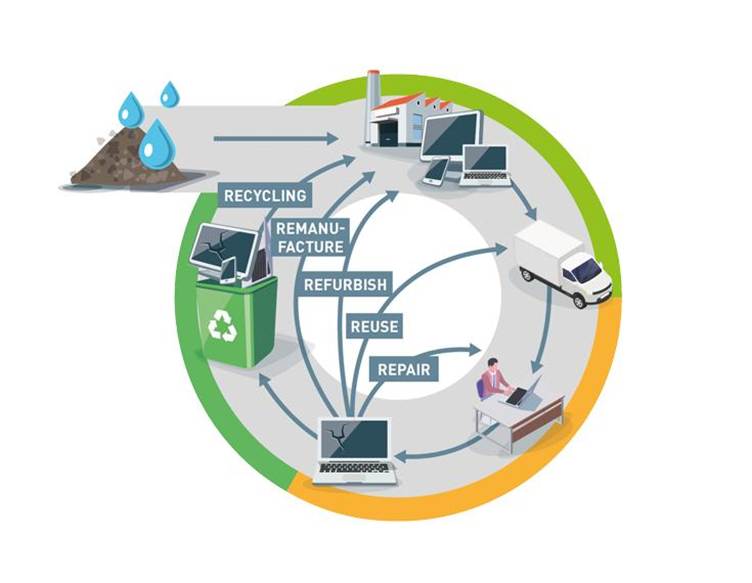
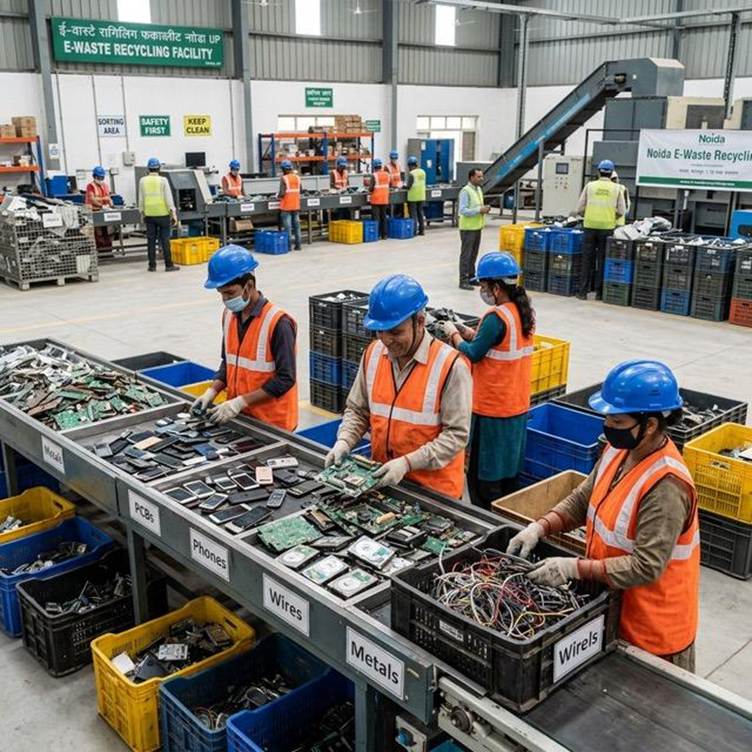
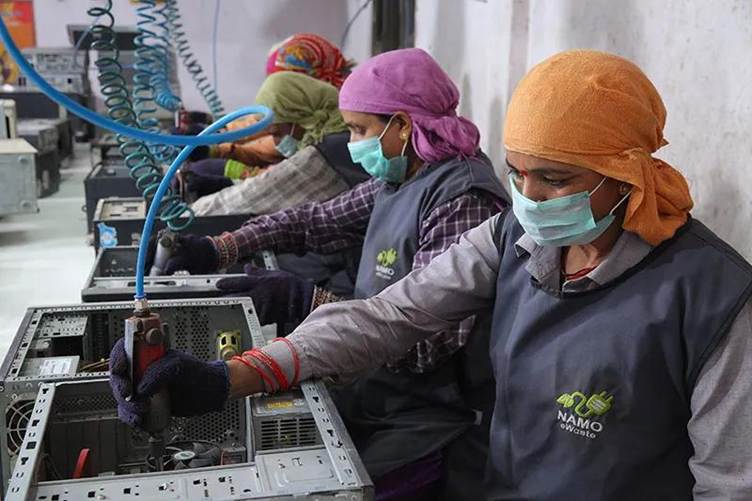
THE LIFE OF ONE MACHINE
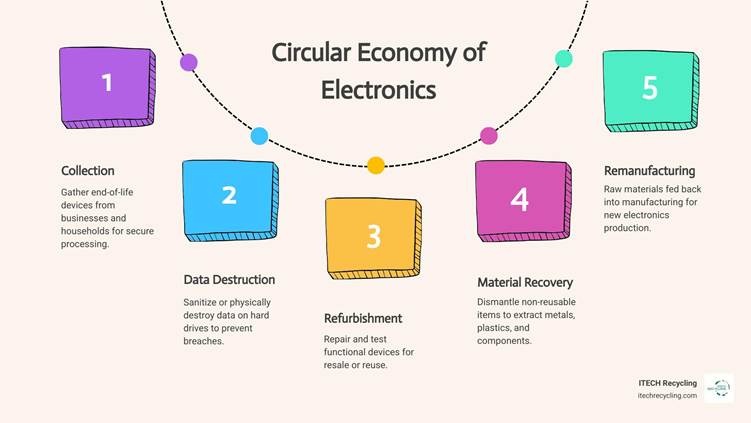
Procurement → Use → Upgrade → Repair → Secure data wipe → Resale/refurbishment → Dismantling → Recycling → Final material destination.
This is where AI changes the conversation. The rapid evolution of computing architectures can create pressure for faster hardware turnover. Research published in Nature Computational Science estimated that generative AI-related e-waste could accumulate to 1.2–5.0 million tonnes between 2020 and 2030 under different development scenarios. The study identifies rapid server turnover and operational cost considerations as factors that could intensify the waste stream, while also finding that circular-economy interventions could significantly reduce it.
That figure is a modelled scenario, not a measurement of future waste. It should therefore not be reduced to the simplistic claim that AI will produce five million tonnes of e-waste. The more useful question is what happens to the hardware chain when demand for computing accelerates.
The Replacement Problem
Replacing older technology is not automatically environmentally irresponsible. Newer hardware can deliver substantially greater computing capacity and, in some cases, improved energy efficiency. Keeping inefficient equipment in operation indefinitely is not necessarily the greener choice.
The real question is whether the environmental benefits of new equipment justify the material and waste consequences of replacing hardware more frequently.
Answering that requires looking beyond a single metric and considering the full life cycle of the equipment.
A new server may consume less electricity per unit of computation. But manufacturing it still requires raw materials, components, energy and complex global supply chains. And when the old server leaves the data centre, it does not simply disappear. It may be refurbished, resold, dismantled, recycled or exported. The environmental cost of manufacturing that equipment does not vanish simply because its accounting value has fallen to zero.
This is why hardware life needs to become part of the AI sustainability conversation.
The Material Hidden Inside the Machine
The word “cloud” makes computing sound almost weightless. The hardware that powers it is anything but.
Electronic equipment contains metals, plastics, circuit boards, batteries and other components. Some contain valuable materials that can be recovered, while others may contain substances that pose environmental and health risks when handled improperly. India’s e-waste framework therefore treats collection, refurbishment, dismantling and recycling as regulated activities rather than leaving discarded equipment to an undefined waste market.
This creates an important contradiction.
An obsolete device can simultaneously be waste, a security risk, a source of recoverable materials and a functioning product with potential second-life value.
What it ultimately becomes depends on the system around it.
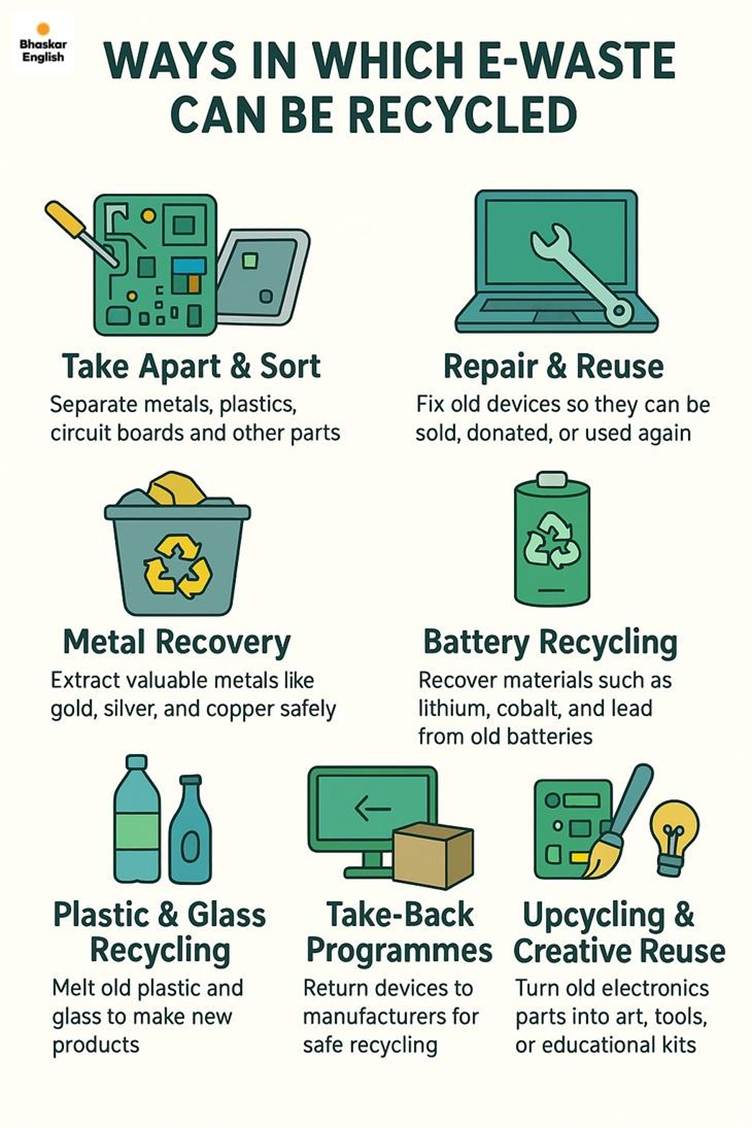
A laptop that is repaired and used for another three years follows a fundamentally different environmental pathway from one that is dismantled immediately for material recovery. Recycling is essential, but preserving the value of a functioning product represents a different form of circularity from breaking that product down into materials.
That makes repair and reuse the first tests of a genuinely circular AI hardware economy.
The School and SME Test
The difference becomes particularly visible outside large technology companies.
A major corporation or data-centre operator can negotiate procurement contracts, maintenance arrangements, take-back programmes and asset-disposition services at scale. A small business or school often cannot.
For a school operating under tight budgets, replacing an ageing laptop may appear easier than paying for diagnostics, spare parts and repairs. For a small business, the cost of repair can approach the machine’s remaining economic value. If replacement is cheaper and faster, an old device can begin its journey towards the waste stream even when it still contains useful components or could serve another user.
This is where the sustainability conversation has to move beyond blaming consumers.
The more relevant question is what the system makes economically rational.
If repairs are expensive, spare parts are difficult to access, software support ends early and replacement devices are readily available, disposal can become the predictable outcome of an otherwise ordinary purchasing decision.
Data Security Can Complicate Circularity
There is another reason perfectly usable electronics may never reach a second life: data.
Corporate laptops and servers can contain confidential information, customer records, intellectual property and other sensitive material. An organisation therefore cannot simply hand a discarded machine to a reseller and assume that reuse automatically follows.
Secure data erasure becomes a critical link between disposal and circularity.
The challenge is whether an organisation can demonstrate that sensitive information has been securely removed while keeping the physical machine reusable.
If destruction is chosen simply because it offers an easier way to guarantee that data cannot be recovered, security procedures can unintentionally work against the circular economy.
An effective asset-disposition process should therefore be able to answer two questions at the same time:
Was the data securely erased? And was the hardware given the longest feasible useful life?
From Refurbisher to Recycler
When a machine remains functional, refurbishment can preserve considerably more of its value than dismantling it. India’s regulatory framework recognises refurbishment as part of the e-waste system, with registered producers, recyclers and refurbishers operating through the CPCB’s EPR framework. CPCB also requires recyclers to maintain records of e-waste collected, dismantled, recycled and transferred to other registered recyclers, making documentation an important part of the formal chain.
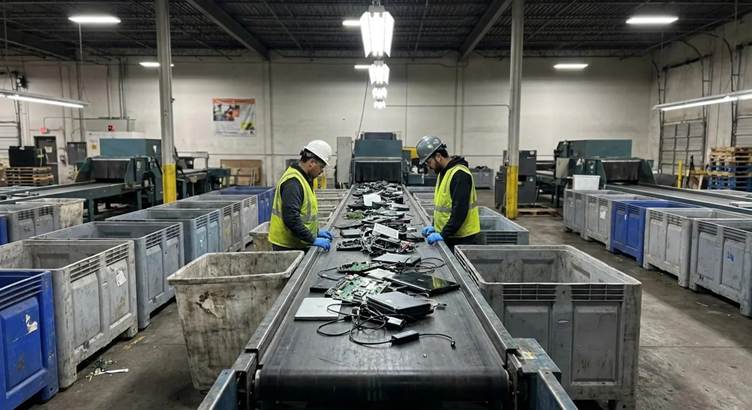
But once reuse is no longer viable, dismantling becomes unavoidable.
That is where the material value of electronics becomes important. Metals and other recoverable components can return to productive use rather than being lost through dumping or poorly controlled processing. Yet the existence of an EPR certificate or a recycling claim does not, by itself, reveal the complete physical journey of an individual device.
A responsible investigation therefore has to follow the chain further.
Who received the equipment? How much did they receive? What weight entered the recycling facility? What materials were recovered? Which downstream recycler handled the fractions the first facility could not process? Were batteries treated separately? Where did the recovered material eventually go?
And if material crossed a national border, what happened after export?
The Worker Cannot Disappear from the Story
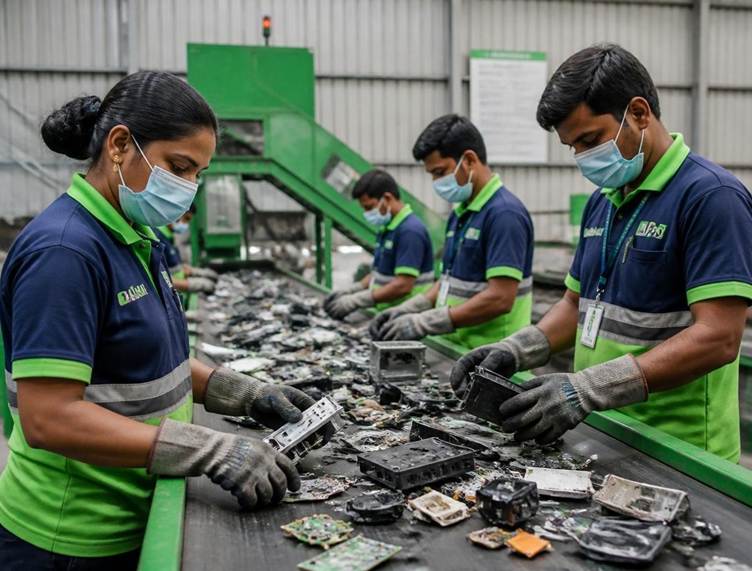
There is also a labour system behind every tonne of e-waste.
Someone dismantles the machine. Someone separates its components. Someone handles batteries and circuit boards. Someone works around dust, sharp components and potentially hazardous substances.
That is why e-waste cannot be assessed only through recycling rates.
A system that reports impressive material recovery while shifting health risks onto poorly protected workers cannot be considered fully circular.
CPCB’s environmentally sound recycling guidelines specify occupational and environmental controls for recycling and refurbishment facilities, including dust control, ventilation and the management of hazardous fractions.
The question, therefore, is not simply:
“Was this device recycled?”
It is:
“Was it recycled safely, and can that be demonstrated?”
The Global Problem Is Bigger Than AI
It is important not to turn AI into the sole explanation for the e-waste crisis.
The global e-waste problem predates generative AI and is driven by broader patterns of consumption, shorter technology cycles, rising device ownership and inadequate collection and recycling systems. The Global E-waste Monitor shows how far the existing system remains from a genuinely circular model.
AI is better understood as a potential accelerator.
More computing can mean greater demand for specialised hardware. More specialised hardware can create greater pressure for upgrades. Faster upgrades can shorten the effective lifetime of equipment. And shorter equipment lifetimes can increase the volume of devices entering repair, resale, refurbishment and recycling systems.
The question is whether those downstream systems can scale quickly enough to keep pace.
One AI Prompt, One Material Chain
This is where the sustainability discussion needs to become more precise.
It is tempting to calculate the environmental impact of a single AI prompt and assign it a neat number of grams of e-waste. But there is no universal figure that can responsibly be applied to every prompt.
The hardware involved, the model being used, the workload, server utilisation, equipment lifetime, allocation of embodied impacts and several other factors can change the result.
A more useful way to understand the issue is to follow the physical chain:
ONE AI PROMPT → COMPUTE DEMAND → GPU/CPU → MEMORY & STORAGE → SERVER CAPACITY → DATA-CENTRE HARDWARE → UPGRADE/REPLACEMENT → REUSE OR DISMANTLING → MATERIAL RECOVERY
The prompt is digital.
The chain is physical.
And that is the material story of AI that often remains hidden behind the cloud.
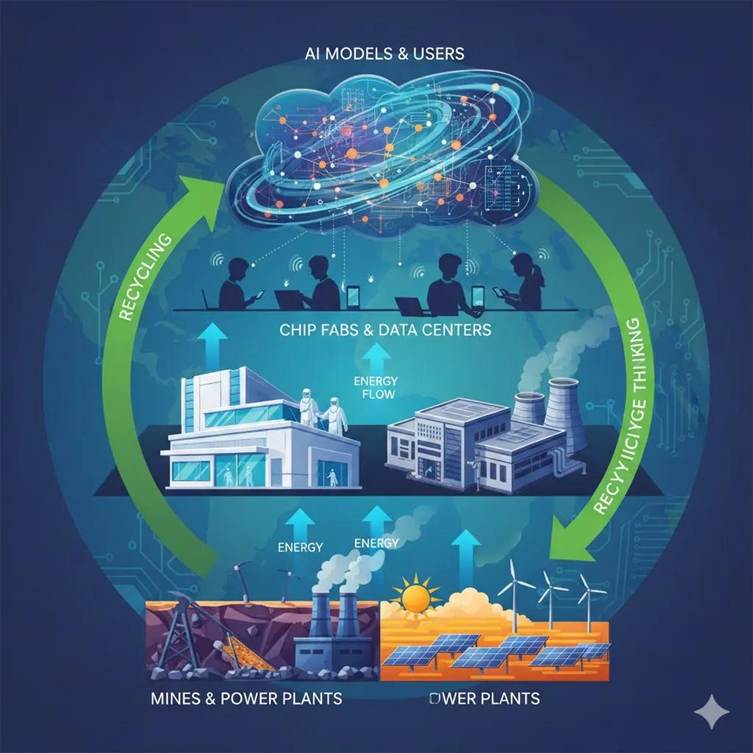
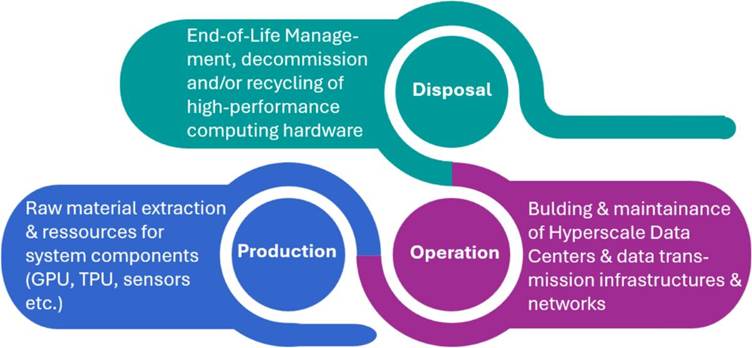
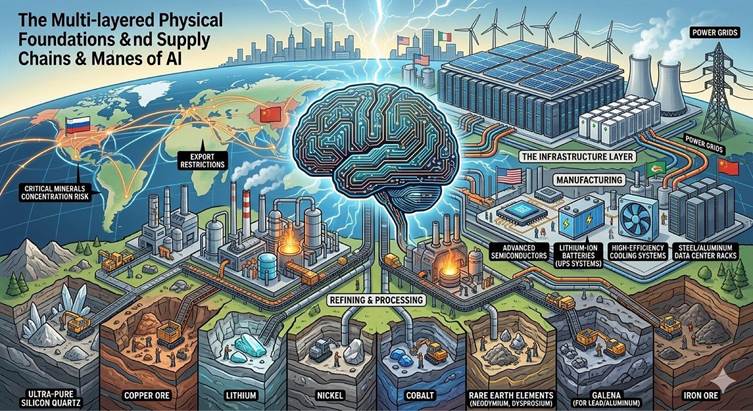
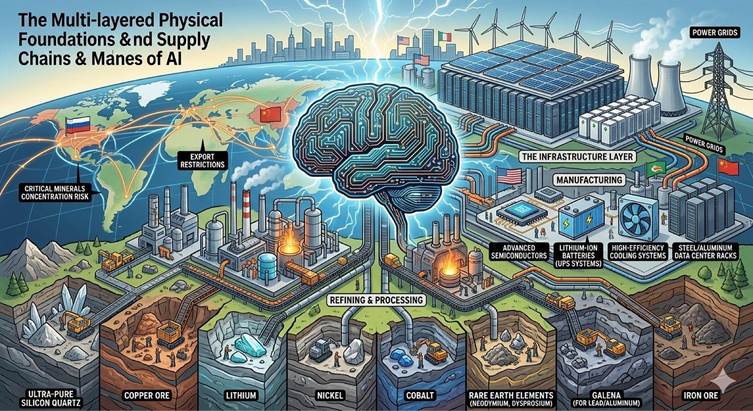
ONE AI PROMPT → ONE MATERIAL CHAIN
AI prompt → compute → GPU/CPU → server → data centre → upgrade → repair/reuse → recycling → material recovery.
Do not assign a fabricated e-waste figure to a single prompt.
What Would a Genuinely Circular AI Hardware System Look Like?
A genuinely circular AI hardware system would begin before the equipment is purchased.
A company should know the expected lifespan of its servers and devices, whether components can be upgraded, how easily spare parts can be sourced, how the equipment will be maintained and what will happen when it reaches the end of its useful life. When equipment is replaced, the organisation should also be able to document why the replacement was necessary.
The next question is what happens before a machine becomes waste.
Was repair considered? Was the data securely erased? Could the equipment be transferred to another user, refurbished or otherwise given a second life? If it was no longer usable, did it enter an authorised recycling chain?
The process should not end when the equipment is collected.
A genuinely circular system should be able to demonstrate where the machine went, what happened to it and what was recovered from it.
That means asset registers, replacement policies, secure-erasure certificates, refurbishment records, EPR documentation, weight tickets, recycler details, worker-protection evidence and downstream material trails should not be treated as routine paperwork completed after the fact.
They are the evidence that allows a circularity claim to be tested.
If the chain cannot be documented, the circularity cannot simply be assumed.
THE CIRCULARITY TEST
LAST LONGER → REPAIR → REUSE → RECYCLE → TRACE
A device passes the circularity test only when its journey can be documented across the chain.
The Evidence Trail
The final test is not whether a company can say that it “recycles responsibly.” It is whether the organisation can prove what happened to its equipment after it was replaced.
For every corporate or institutional case, the reporting should seek the asset register, replacement policy, repair records, secure-erasure certificates, resale or refurbishment records, EPR documentation, weight tickets, recycler details, worker-protection evidence and downstream material trail.
Together, these records can establish whether a device was actually repaired, whether it was given a second life, whether its data was securely erased, how much material reached a recycler and what happened to that material afterwards.
If equipment or recovered material was exported, the investigation should follow the trail as far as the available documentation allows. If the chain ends at the first recycler, that limitation should be reported rather than filled with assumptions.
Because in a circular economy, the evidence trail is not a supporting detail.
It is the proof that the circle was actually completed.
THE E-WASTE ACCOUNTABILITY LEDGER
| Stage | What must be proved |
|---|---|
| Procurement | Asset register |
| Replacement | Disposal/replacement policy |
| Data security | Secure-erasure certificate |
| Reuse | Resale/refurbishment record |
| EPR | EPR documentation |
| Recycling | Weight ticket |
| Dismantling | Registered downstream entity |
| Labour | Worker-protection evidence |
| Export | Customs/downstream trail |
THE REAL TEST
The future of AI will be measured by computing power, productivity, energy use, water consumption and economic value. But one measure must not remain outside the frame: how long its hardware lasts before it becomes waste.
That answer will determine whether AI deepens the world’s e-waste crisis—or helps build a more circular, traceable and responsible electronics economy.
AI does not need to stop advancing. But the physical infrastructure powering that progress can no longer remain invisible.
Because the real sustainability test of AI is not simply how much intelligence we can generate from machines, but how responsibly we design, use, repair, reuse and finally dismantle the machines that make that intelligence possible.
If AI is shaping the future, its hardware must not become the waste of that future.
Primary Sources
- Central Pollution Control Board — E-Waste Management Rules / FAQ
[https://cpcb.nic.in/uploads/Projects/E-Waste/FAQ_ewaste_23012024.pdf] - Government of India / PIB — National E-Waste Generation and Recycling Data
[https://www.pib.gov.in/PressReleasePage.aspx?PRID=2147876&lang=2®=48] - CPCB — E-Waste Management / EPR Framework
[https://cpcb.nic.in/e-waste/] - CPCB — Environmentally Sound Management of E-Waste
[https://cpcb.nic.in/uploads/Projects/E-Waste/Guidelines_Environmentally_Sound_Recycling_E-Waste.pdf] - UN / UNITAR / ITU — Global E-waste Monitor 2024
[https://ewastemonitor.info/the-global-e-waste-monitor-2024/] - Nature Computational Science — E-Waste Challenges of Generative AI
[https://www.nature.com/articles/s43588-024-00712-6]





Add a Comment