
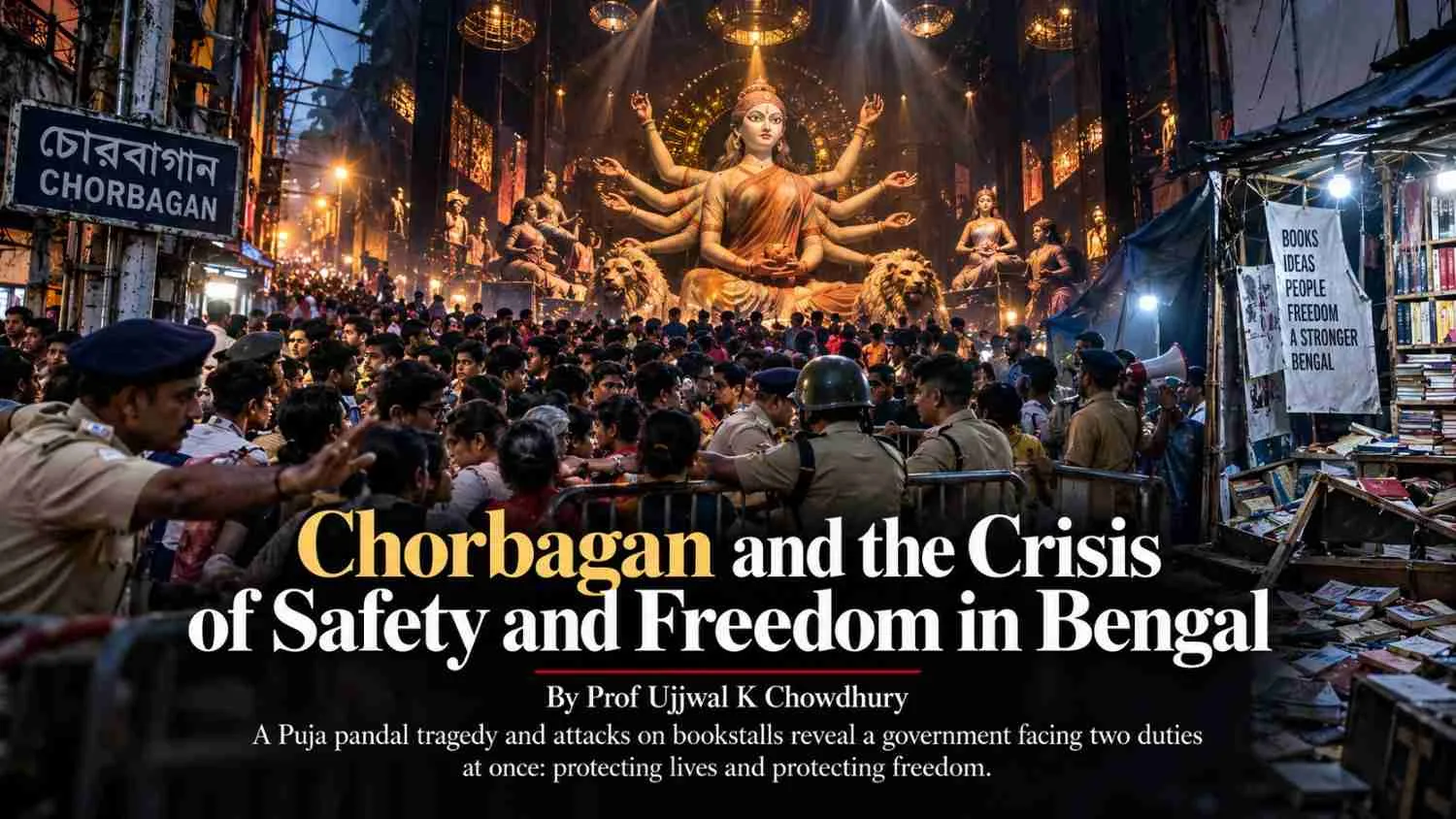
| Nineteen deaths at a Puja pandal and widely reported attacks on bookstalls in Bengal expose a government facing two tests of public responsibility — protecting citizens in a crowd and protecting their freedom to think, explains Prof Ujjwal K Chowdhury. |
Durga Puja promises a temporary enlargement of ordinary life: streets become galleries, neighbourhood welcome strangers, and families reclaim the city after dark. At Chorbagan in north Kolkata on October 17, that promise ended in a crowd disaster. Reports available on October 19 put the toll at 19 dead and around 25 injured. Each death demands an explanation of how a visit to a community festival became fatal. [1]
During the same festival, Left organisations reported attacks on their bookstalls, while municipal and police action against stalls generated separate disputes over permissions and selective enforcement. The CPI(M) blamed BJP supporters for the attacks; BJP state president Samik Bhattacharya denied that his party had directed them. Responsibility for individual incidents requires investigation. The government's obligation to protect lawful activity requires no such clarification. [2]
The BJP government's first Durga Puja has exposed a destructive imbalance in the exercise of power. Its administration must answer for grave failures of public protection, while its leadership's interventions over bookstall language raise disturbing questions about ideological conformity. A government claiming stewardship of Bengal's greatest festival must accept scrutiny of both.
The criticism must remain precise. An elected government is answerable for the institutions it commands; allegations against particular organisers still require evidence. Neither principle cancels the other.
Warnings before the deaths
The early reporting describes a hazardous combination: constricted lanes, a single exit, inexperienced crowd handlers, heavy rain and confusing announcements. The Indian Express reported, citing police sources, that barricades had been breached at least ten times on the preceding Friday. That detail transforms the accountability question. Dangerous pressure apparently announced itself before the fatal evening. Who recorded those breaches, and who decided the arrangements could continue? [3]
The human cost appears in survivor Ram Sarkar's account to the newspaper. He described struggling to extract his wife, Arti, from the crush and attempting resuscitation; she died. Local rescuers described carrying victims through narrow lanes towards the main road. Their efforts deserve recognition. Families should never have had to depend on improvised rescue to survive an officially permitted celebration. [3]
Rain belongs in an explanation of the sequence. It cannot serve as an administrative alibi. A major outdoor festival must anticipate visitors seeking shelter and changing direction. A plan that functions only while everybody continues moving exactly as expected offers inadequate protection.
The Times of India subsequently reported preliminary investigative findings of no structured evacuation plan, poorly regulated movement and inadequate coordination between police, private security and volunteers. These remain findings under investigation, but they indicate failures across several layers of responsibility. [4]
India's National Disaster Management Authority had already identified restricted exits, inadequate holding space, conflicting crowd flows and deficient communication among the dangers at mass gatherings. Its 2014 guide calls for coordinated preparation and monitoring. Bengal's administration did not need to invent the fundamentals after Chorbagan. It needed to implement them before admitting visitors. [5]
The operational questions are concrete. What was the safe capacity? When should incoming visitors have been stopped? Who could order that stop? Could people leave a queue midway? Were emergency routes usable when most needed? A permission certificate means little unless somebody checks whether the arrangements described on paper exist on the ground.
Political patronage and public duty
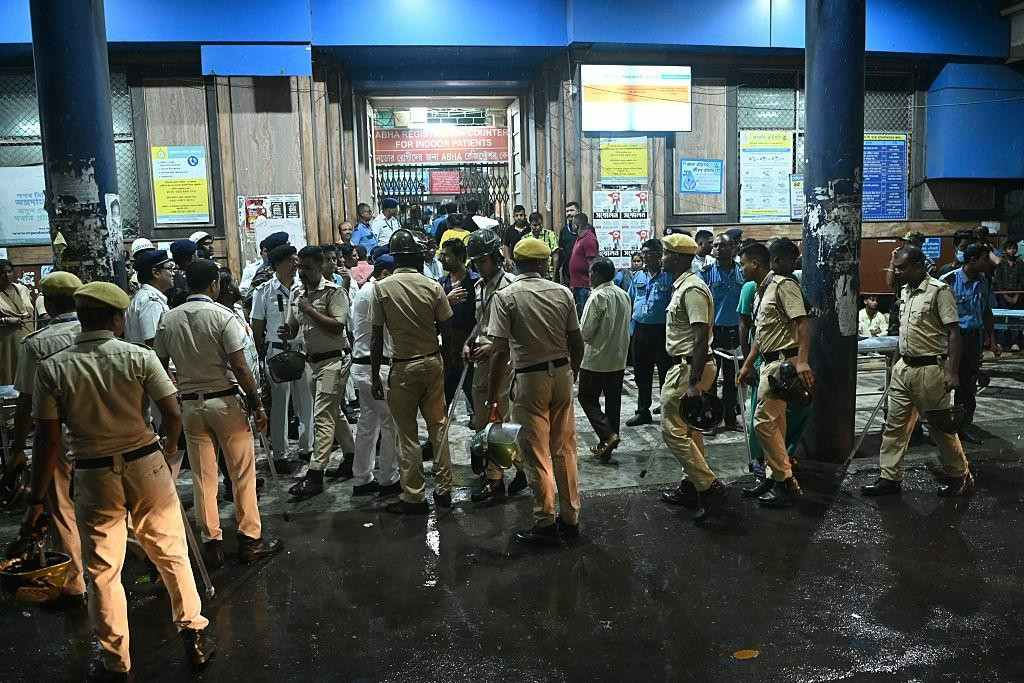
Reporting has brought the organisers' political connections into scrutiny. The New Indian Express described publicity material shared by the Opposition listing the chief minister's nephew Debdeep Adhikari as chief patron, Jorasanko BJP MLA Vijay Ojha as chairman and north Kolkata BJP leader Tamoghna Ghosh as chief adviser. Bhattacharya questioned the allegation concerning the nephew, saying he understood him to be a minor living in Kanthi. These competing accounts must be tested against original committee records. [6]
Political proximity establishes neither criminal guilt nor innocence. It does establish why an investigation must examine the whole decision chain. Did patrons exercise influence over appointments, permissions or operational decisions? Were officials free to insist on restrictions? Were experienced personnel displaced without preserving their knowledge of the locality?
The later Times of India report says organisers acknowledged a change of team and inadequate experience of managing large crowds in the narrow lane. It also reports investigators examining whether police deployment favoured VIP entrances over general access points. Neither finding should be inflated into a completed verdict. Both demand answers from those above the volunteers. [4]
The accountability structure must match the authority structure. If leaders claim ownership of a festival's success, they cannot become ornamental figures when its arrangements collapse. Conversely, prosecution must follow demonstrable responsibility. Arrests cannot be substitutes for identifying who approved an unsafe system and who ignored its warnings.
Seven people, including committee office-bearers, have been arrested, according to reporting. That begins a process; it does not establish guilt or complete the government's account of its own conduct. [6]
When spectacle distorts administration
The danger of publicity-led governance is an incentive problem. Dense crowds produce impressive images; restrictions produce complaints. Inaugurations bring visibility; rehearsing evacuation attracts little attention. Unless institutions resist these incentives, organisers may receive political rewards for attracting people without equivalent pressure to keep numbers manageable.
An authoritarian performance of masculinity can deepen that problem when caution is treated as weakness and domination as competence. Officials then have reasons to conceal limits, while political workers gain approval through aggressive displays. This is an argument about organisational culture, not a diagnosis of individual leaders. Competent administration needs people who can tell a powerful patron that a venue is full, an entry must close or a favoured arrangement is unsafe. A culture that makes such candour costly undermines its own capacity to protect life.
Allegations that crowds were deliberately concentrated for drone footage remain unproven. Photographs of packed venues and quieter streets cannot establish such a design. Investigators would need instructions, deployment records, communications and verified timelines. A serious critique loses force when speculation is allowed to outrun evidence.
There is, however, no need to prove a publicity conspiracy to establish a planning failure. An event can become dangerously crowded through neglect, misplaced confidence or unwillingness to interrupt a successful-looking spectacle. Failure to intervene remains consequential even without an intention to cause harm.
The same discipline applies to claims that visiting time was cut by five days or VIP queues moved five times faster. Those figures need documentation. The principle survives without them: opening schedules should distribute demand, and privileged entry must never obstruct safe movement. NDMA's guide explicitly contemplates refusing VIP entry when safety requires it. [5]
The attempt to prescribe public culture
The bookstall controversy has its own evidence. The Indian Express reported allegations that masked men vandalised CPI(M) stalls in Bardhaman despite an advance request for protection. Its report also recorded a Left leader acknowledging attacks during the previous TMC administration. Bengal's history therefore offers no licence for partisan innocence. Earlier intimidation creates an obligation to break the practice. [2]
There is also documented political context. In September, Chief Minister Suvendu Adhikari urged Puja committees to allow Marxist stalls with banners saying “Durga Puja” rather than “Sharodotsav”. The remarks were reported during an Assembly debate on university administration. [7]
That intervention matters because it makes language a condition of cultural legitimacy. “Sharodotsav” allows people to describe their relationship to the season through a broader cultural vocabulary. Devotees remain entirely free to call their worship Durga Puja. A chief minister should protect both expressions. State authority becomes coercive when one preferred description determines whose participation is acceptable.
This is how regimentation can operate without a formal ban on a book. First establish an approved vocabulary; then portray departures as disrespect; finally make the dissenter defend the right to occupy public space. Readers begin to encounter political permission where they should encounter competing arguments.
Calling this a danger to education concerns the method of learning itself. Education requires the ability to examine an argument, identify its evidence and reject it intelligently. Threatening a seller teaches that a label is sufficient grounds for punishment. It rewards obedience and makes independent judgement socially costly.
Permission cannot become a political weapon
Protecting bookstalls does not exempt them from safety rules. At Jadavpur, The Times of India reported that a municipal earthmover arrived after police alleged missing permission. Stall representatives disputed that account and said they possessed documents. The permits, notices and written instructions should settle the dispute, rather than rival assertions backed by unequal force. [8]
The Bongaon litigation also needs accurate treatment. Court reporting says a division bench stayed an earlier protection order and called for removal of stalls lacking permission, including scrutiny of a Hindu Jagran Manch stall. That cannot fairly be represented as an unconditional judicial endorsement of every Left stall. Equally, it cannot justify selecting stalls for removal according to ideology. [9]
A neutral administration should publish clear requirements, explain refusals and apply equivalent standards to comparable structures. Violence against a seller remains a separate matter requiring investigation even where permission is disputed. An administrative defect gives no political group authority to assault people or destroy property.
Defending this freedom requires no endorsement of Marxism, Stalinism or any other doctrine on sale. Readers must remain free to criticise their histories and conclusions. The democratic failure begins when an organisation replaces that argument with intimidation.
Young people recruited against their futures
The young person who attacks a bookstall is responsible for the act. Understanding how such recruits become useful to political organisations helps explain the damage beyond the immediate victim. A system that offers status through intimidation can give a directionless young person recognition quickly, while asking little intellectual effort and rewarding aggression.
No photograph or brief video establishes someone's education, employment or private motives. Poverty does not make a person violent, and political commitment does not make a young activist a thug. The relevant question concerns recruitment: what conduct earns approval, protection and opportunities within an organisation?
Where coercion earns those rewards, a destructive dependence can develop. An activist becomes known for threats rather than useful skills. Criminal allegations may narrow employment prospects. A patron's promise of protection may make leaving the network harder. These are possible mechanisms of entrapment, not a prediction about any identified individual.
The unequal distribution of risk deserves scrutiny. An influential organiser may have lawyers, income and connections. A recruit may face prosecution, injury and lasting notoriety. Political loyalty provides no reliable compensation for a damaged working life. Any claim of youth empowerment should be judged partly by whether it expands young people's choices or makes them dependent on patrons.
Bookstall intimidation is therefore an educational failure with a political purpose. It trains participants to classify an author as an enemy before considering an argument. It also trains spectators to calculate whether expressing an opinion is worth the risk. A handful of violent acts can narrow the intellectual freedom of many more people.
The alternative is practical. Young volunteers could gain recognised training in crowd safety, first aid, accessible event design and communication. Such work creates transferable abilities and public trust. Those recruited to police other people's reading deserve opportunities to build lives beyond enforcing somebody else's authority.
A government strong where restraint was needed
The juxtaposition of bookstall enforcement and Chorbagan's failures raises a serious question about priorities. It does not, by itself, prove that particular officers were diverted from the pandal to a demolition operation. That requires deployment records. It does require the government to explain how it allocated attention, personnel and command responsibility across the festival.
Administrative force is highly visible when an earthmover confronts a stall. Effective public protection depends on less theatrical work: maintaining routes, monitoring pressure, coordinating responders and acting before danger becomes a disaster. A government can display the first capacity while neglecting the second.
Chorbagan may also reveal a wider inspection problem. The later Times of India report describes post-disaster fire-service notices to Ballygunge Cultural Association and Chetla Agrani over deficiencies including lighting and obstructions. Each venue requires its own assessment. Their discovery nevertheless raises the question of what earlier inspections established. [4]
There is a particularly painful gap between commitment and practice. UNESCO reported before the festival that the Bengal government had joined an accessibility initiative and that organisers had received training. That initiative deserves support. Its promise will be credible only when people with disabilities, older visitors and families can participate safely in the actual streets and pandals. [10]
Accountability while the evidence is fresh
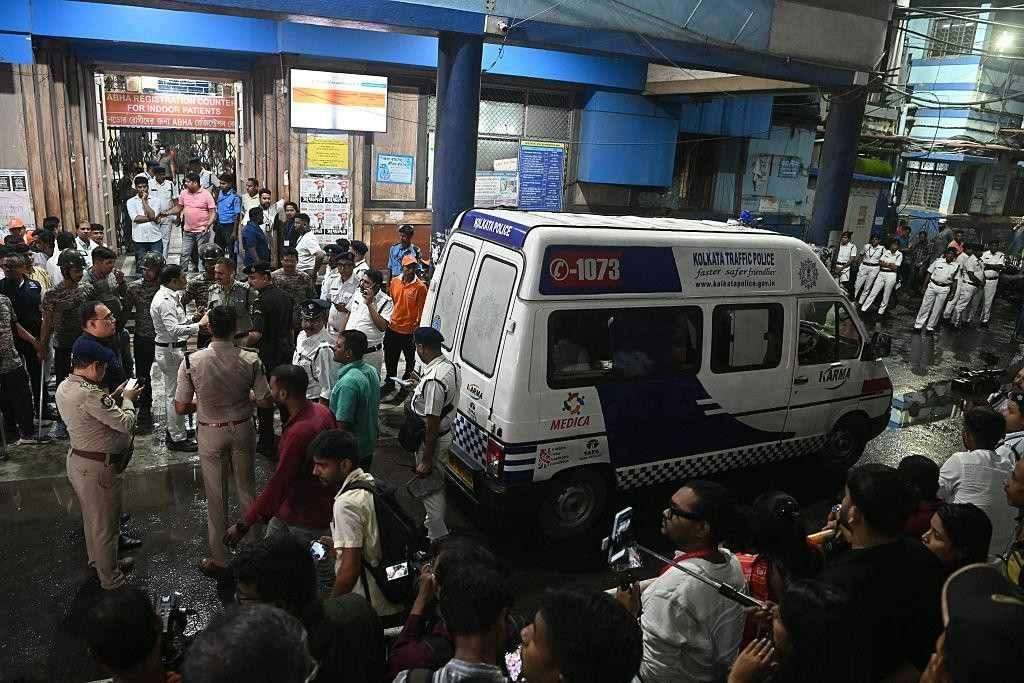
Adhikari has proposed a probe headed by a sitting judge, subject to the High Court's agreement, or a retired judge otherwise. He has said the roles of police and fire officials will be examined. These commitments should be acknowledged and converted into published terms, independent expertise and a deadline. An announced inquiry is still a promise of accountability. [3]
The inquiry should secure CCTV footage, crowd assessments, permissions, deployment rosters and communications before evidence disappears. It must reconstruct the earlier barricade breaches alongside the fatal evening and distinguish organisational decisions from individual conduct. Victims' families need access to findings and a credible way to submit evidence.
Immediate protection cannot await the final report. High-risk venues require independent checks, workable entry limits and authority to pause admission. Emergency arrangements must be rehearsed. Assistance for disabled visitors must preserve their safety and dignity. Survivors need continuing treatment and rehabilitation, while bereaved families need support that extends beyond an announcement.
The BJP government's first year offers no exemption from these duties. It can acknowledge inherited weaknesses and still answer for present decisions. Its treatment of dissent will also shape whether warnings reach officials: a system that punishes uncomfortable voices makes honest reporting harder precisely when public safety depends on it.
Chorbagan's dead and Bengal's threatened booksellers impose a common test on public power. Citizens must be able to enter a festival without surrendering their safety and encounter a book without seeking ideological permission. A government seeking authority over Bengal's public culture must first demonstrate that it can protect the people who create and share it.
Sources:
Reporting available on 19 October 2026



Add a Comment